Spandidos Publications Logo
  • About
    • About Spandidos
    • Aims and Scopes
    • Abstracting and Indexing
    • Editorial Policies
    • Reprints and Permissions
    • Job Opportunities
    • Terms and Conditions
    • Contact
  • Journals
    • All Journals
    • Oncology Letters
      • Oncology Letters
      • Information for Authors
      • Editorial Policies
      • Editorial Board
      • Aims and Scope
      • Abstracting and Indexing
      • Bibliographic Information
      • Archive
    • International Journal of Oncology
      • International Journal of Oncology
      • Information for Authors
      • Editorial Policies
      • Editorial Board
      • Aims and Scope
      • Abstracting and Indexing
      • Bibliographic Information
      • Archive
    • Molecular and Clinical Oncology
      • Molecular and Clinical Oncology
      • Information for Authors
      • Editorial Policies
      • Editorial Board
      • Aims and Scope
      • Abstracting and Indexing
      • Bibliographic Information
      • Archive
    • Experimental and Therapeutic Medicine
      • Experimental and Therapeutic Medicine
      • Information for Authors
      • Editorial Policies
      • Editorial Board
      • Aims and Scope
      • Abstracting and Indexing
      • Bibliographic Information
      • Archive
    • International Journal of Molecular Medicine
      • International Journal of Molecular Medicine
      • Information for Authors
      • Editorial Policies
      • Editorial Board
      • Aims and Scope
      • Abstracting and Indexing
      • Bibliographic Information
      • Archive
    • Biomedical Reports
      • Biomedical Reports
      • Information for Authors
      • Editorial Policies
      • Editorial Board
      • Aims and Scope
      • Abstracting and Indexing
      • Bibliographic Information
      • Archive
    • Oncology Reports
      • Oncology Reports
      • Information for Authors
      • Editorial Policies
      • Editorial Board
      • Aims and Scope
      • Abstracting and Indexing
      • Bibliographic Information
      • Archive
    • Molecular Medicine Reports
      • Molecular Medicine Reports
      • Information for Authors
      • Editorial Policies
      • Editorial Board
      • Aims and Scope
      • Abstracting and Indexing
      • Bibliographic Information
      • Archive
    • World Academy of Sciences Journal
      • World Academy of Sciences Journal
      • Information for Authors
      • Editorial Policies
      • Editorial Board
      • Aims and Scope
      • Abstracting and Indexing
      • Bibliographic Information
      • Archive
    • International Journal of Functional Nutrition
      • International Journal of Functional Nutrition
      • Information for Authors
      • Editorial Policies
      • Editorial Board
      • Aims and Scope
      • Abstracting and Indexing
      • Bibliographic Information
      • Archive
    • International Journal of Epigenetics
      • International Journal of Epigenetics
      • Information for Authors
      • Editorial Policies
      • Editorial Board
      • Aims and Scope
      • Abstracting and Indexing
      • Bibliographic Information
      • Archive
    • Medicine International
      • Medicine International
      • Information for Authors
      • Editorial Policies
      • Editorial Board
      • Aims and Scope
      • Abstracting and Indexing
      • Bibliographic Information
      • Archive
  • Articles
  • Information
    • Information for Authors
    • Information for Reviewers
    • Information for Librarians
    • Information for Advertisers
    • Conferences
  • Language Editing
Spandidos Publications Logo
  • About
    • About Spandidos
    • Aims and Scopes
    • Abstracting and Indexing
    • Editorial Policies
    • Reprints and Permissions
    • Job Opportunities
    • Terms and Conditions
    • Contact
  • Journals
    • All Journals
    • Biomedical Reports
      • Information for Authors
      • Editorial Policies
      • Editorial Board
      • Aims and Scope
      • Abstracting and Indexing
      • Bibliographic Information
      • Archive
    • Experimental and Therapeutic Medicine
      • Information for Authors
      • Editorial Policies
      • Editorial Board
      • Aims and Scope
      • Abstracting and Indexing
      • Bibliographic Information
      • Archive
    • International Journal of Epigenetics
      • Information for Authors
      • Editorial Policies
      • Editorial Board
      • Aims and Scope
      • Abstracting and Indexing
      • Bibliographic Information
      • Archive
    • International Journal of Functional Nutrition
      • Information for Authors
      • Editorial Policies
      • Editorial Board
      • Aims and Scope
      • Abstracting and Indexing
      • Bibliographic Information
      • Archive
    • International Journal of Molecular Medicine
      • Information for Authors
      • Editorial Policies
      • Editorial Board
      • Aims and Scope
      • Abstracting and Indexing
      • Bibliographic Information
      • Archive
    • International Journal of Oncology
      • Information for Authors
      • Editorial Policies
      • Editorial Board
      • Aims and Scope
      • Abstracting and Indexing
      • Bibliographic Information
      • Archive
    • Medicine International
      • Information for Authors
      • Editorial Policies
      • Editorial Board
      • Aims and Scope
      • Abstracting and Indexing
      • Bibliographic Information
      • Archive
    • Molecular and Clinical Oncology
      • Information for Authors
      • Editorial Policies
      • Editorial Board
      • Aims and Scope
      • Abstracting and Indexing
      • Bibliographic Information
      • Archive
    • Molecular Medicine Reports
      • Information for Authors
      • Editorial Policies
      • Editorial Board
      • Aims and Scope
      • Abstracting and Indexing
      • Bibliographic Information
      • Archive
    • Oncology Letters
      • Information for Authors
      • Editorial Policies
      • Editorial Board
      • Aims and Scope
      • Abstracting and Indexing
      • Bibliographic Information
      • Archive
    • Oncology Reports
      • Information for Authors
      • Editorial Policies
      • Editorial Board
      • Aims and Scope
      • Abstracting and Indexing
      • Bibliographic Information
      • Archive
    • World Academy of Sciences Journal
      • Information for Authors
      • Editorial Policies
      • Editorial Board
      • Aims and Scope
      • Abstracting and Indexing
      • Bibliographic Information
      • Archive
  • Articles
  • Information
    • For Authors
    • For Reviewers
    • For Librarians
    • For Advertisers
    • Conferences
  • Language Editing
Login Register Submit
  • This site uses cookies
  • You can change your cookie settings at any time by following the instructions in our Cookie Policy. To find out more, you may read our Privacy Policy.

    I agree
Search articles by DOI, keyword, author or affiliation
Search
Advanced Search
presentation
Oncology Letters
Join Editorial Board Propose a Special Issue
Print ISSN: 1792-1074 Online ISSN: 1792-1082
Journal Cover
November-2025 Volume 30 Issue 5

Full Size Image

Sign up for eToc alerts
Recommend to Library

Journals

International Journal of Molecular Medicine

International Journal of Molecular Medicine

International Journal of Molecular Medicine is an international journal devoted to molecular mechanisms of human disease.

International Journal of Oncology

International Journal of Oncology

International Journal of Oncology is an international journal devoted to oncology research and cancer treatment.

Molecular Medicine Reports

Molecular Medicine Reports

Covers molecular medicine topics such as pharmacology, pathology, genetics, neuroscience, infectious diseases, molecular cardiology, and molecular surgery.

Oncology Reports

Oncology Reports

Oncology Reports is an international journal devoted to fundamental and applied research in Oncology.

Experimental and Therapeutic Medicine

Experimental and Therapeutic Medicine

Experimental and Therapeutic Medicine is an international journal devoted to laboratory and clinical medicine.

Oncology Letters

Oncology Letters

Oncology Letters is an international journal devoted to Experimental and Clinical Oncology.

Biomedical Reports

Biomedical Reports

Explores a wide range of biological and medical fields, including pharmacology, genetics, microbiology, neuroscience, and molecular cardiology.

Molecular and Clinical Oncology

Molecular and Clinical Oncology

International journal addressing all aspects of oncology research, from tumorigenesis and oncogenes to chemotherapy and metastasis.

World Academy of Sciences Journal

World Academy of Sciences Journal

Multidisciplinary open-access journal spanning biochemistry, genetics, neuroscience, environmental health, and synthetic biology.

International Journal of Functional Nutrition

International Journal of Functional Nutrition

Open-access journal combining biochemistry, pharmacology, immunology, and genetics to advance health through functional nutrition.

International Journal of Epigenetics

International Journal of Epigenetics

Publishes open-access research on using epigenetics to advance understanding and treatment of human disease.

Medicine International

Medicine International

An International Open Access Journal Devoted to General Medicine.

Journal Cover
November-2025 Volume 30 Issue 5

Full Size Image

Sign up for eToc alerts
Recommend to Library

  • Article
  • Citations
    • Cite This Article
    • Download Citation
    • Create Citation Alert
    • Remove Citation Alert
    • Cited By
  • Similar Articles
    • Related Articles (in Spandidos Publications)
    • Similar Articles (Google Scholar)
    • Similar Articles (PubMed)
  • Download PDF
  • Download XML
  • View XML

  • Supplementary Files
    • Supplementary_Data.pdf
Article

Novel biomarkers for prognosis in patients with localized prostate cancer 

  • Authors:
    • Maria Goulielmaki
    • Savvas Stokidis
    • Theodoros Anagnostou
    • Angelos D. Gritzapis
    • Ourania E. Tsitsilonis
    • Constantin N. Baxevanis
    • Sotirios P. Fortis
  • View Affiliations / Copyright

    Affiliations: Cancer Immunology and Immunotherapy Center, Saint Savas Cancer Hospital, 11522 Athens, Greece, Department of Urology, Saint Savas Cancer Hospital, 11522 Athens, Greece, Section of Animal and Human Physiology, Department of Biology, National and Kapodistrian University of Athens, 15784 Athens, Greece
  • Article Number: 512
    |
    Published online on: September 4, 2025
       https://doi.org/10.3892/ol.2025.15258
  • Expand metrics +
Metrics: Total Views: 0 (Spandidos Publications: | PMC Statistics: )
Metrics: Total PDF Downloads: 0 (Spandidos Publications: | PMC Statistics: )
Cited By (CrossRef): 0 citations Loading Articles...

This article is mentioned in:


Abstract

The outcome for patients with localized prostate cancer (LPCa) is markedly variable, with different survival rates. The objective of the present study was to investigate how the levels of blood‑related soluble factors and the densities of immune T‑cell subsets could impact the prognosis of LPCa. The progression‑free survival of 139 patients with LPCa was retrospectively analyzed after standard treatments. Survival was revealed to be associated with the levels of circulating HER‑2/neu extracellular domain (HER‑ECD), transforming growth factor β (TGFβ) and interleukin‑8 (IL‑8), as well as with the frequencies of total and prostate‑specific antigen (PSA)‑peptide‑specific CD8+ T‑cell subsets. Based on these analyses, patients with LPCa could be grouped into those having lower levels of HER‑ECD, TGFβ and IL‑8 [designated as the favorable biosignature (FB)] and increased survival, and those with higher levels [designated as the unfavorable biosignature (UB)] and decreased survival. Patients with the FB exhibited significantly higher densities of total circulating effector memory (EM) CD8+ T cells and lower densities of the corresponding CD8+ terminal EM (TEMRA) T cells as compared with the group of patients with localized disease and decreased survival (UB group). Notably, patients bearing the FB had similarly high survival irrespective of their Gleason score. Moreover, patients with the FB had preexisting immunity to PSA, expressed by increased frequencies of PSA(153‑161) peptide‑specific EM CD8+ T cells in the context of decreased numbers of PSA(153‑161) peptide‑specific TEMRA CD8+ T cells. The present data indicated the prognostic potential of circulating HER‑ECD, TGFβ and IL‑8 levels, and of CD8+ EM and TEMRA cell frequencies for risk stratification of patients with LPCa.
View Figures

Figure 1

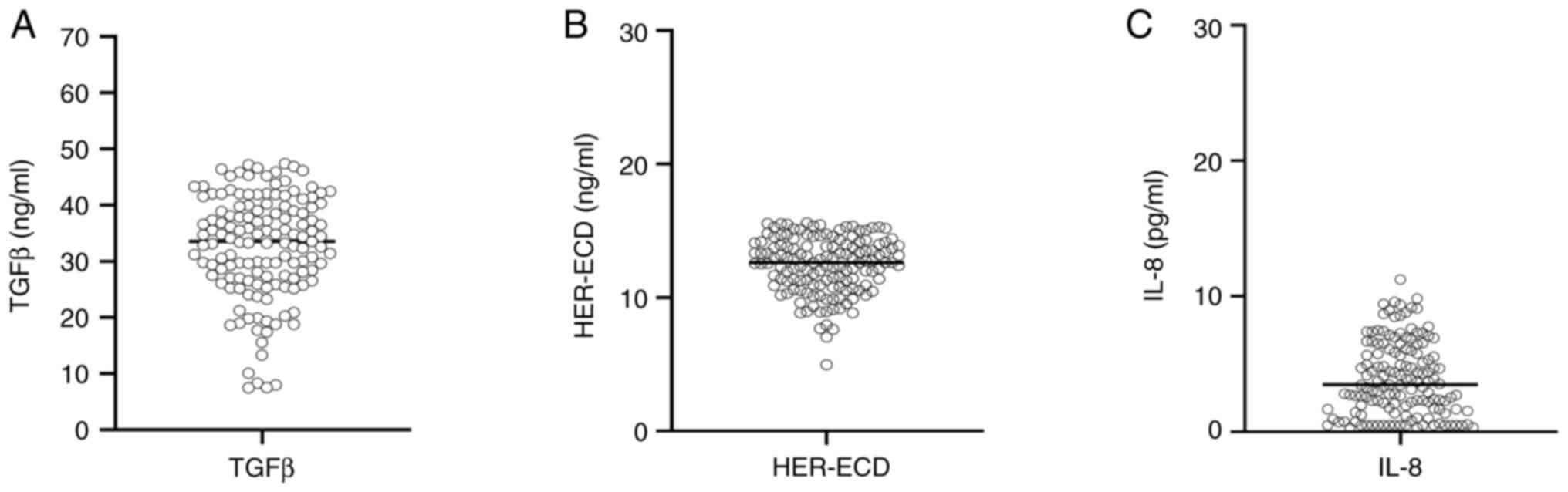
Plasma HER-ECD and cytokine levels of
patients with LPCa (n=139). The graph depicts the levels of (A)
TGFβ, (B) HER-ECD and (C) IL-8 in the peripheral blood of LPCa
patients with biochemical recurrence post-radical prostatectomy and
castration-resistance after the start period of hormonal treatment
as clinical endpoints. Horizontal bars show median values of all
data points. LPCa, localized prostate cancer. HER-ECD, HER-2/neu
extracellular domain; LPCa, localized prostate cancer; TGFβ,
transforming growth factor β; IL-8, interleukin-8.

Figure 2

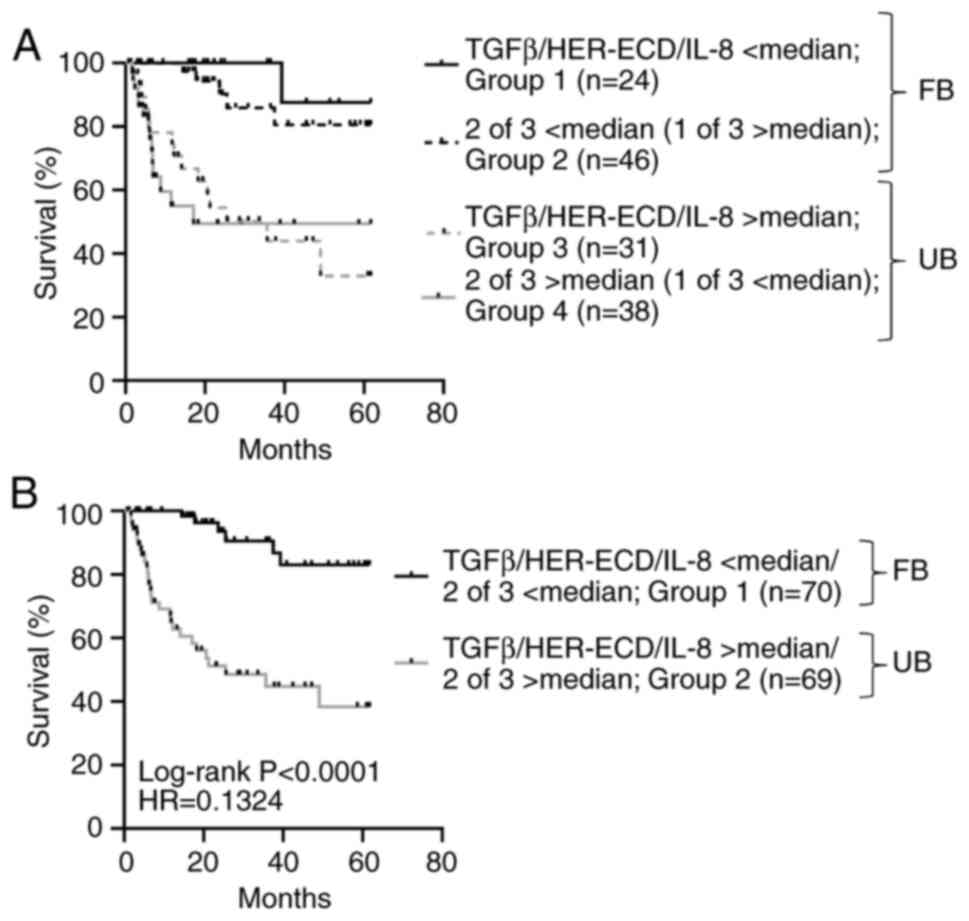
Survival of localized PCa patients is
associated with the levels of plasma cytokines and HER-ECD.
Kaplan-Meier curves for progression-free survival, defined as
time-to-progression to biochemical recurrence post-radical
prostatectomy and to castration-resistance from
castration-sensitive disease, in PCa patients were designed based
on the median plasma levels of TGFβ, IL-8 and HER-ECD. (A) Patients
were categorized into four groups based on the plasma levels of
TGFβ, IL-8 and HER-ECD: All three below median (n=24) (Group 1);
any two of three below median (n=46) (Group 2); all three above
median (n=31) (Group 3); and any two of three above median (n=38)
(Group 4). The first two groups compose the FB while the latter two
compose the UB. Statistically significant differences were revealed
for Group 3 vs. 1 (log-rank P=0.0005, HR=0.06768), Group 3 vs. 2
(log-rank P=0.0001, HR=0.1760), Group 4 vs. 1 (log-rank P=0.0006,
HR=0.07137), and Group 4 vs. 2 (log-rank P<0.0001, HR=0.1652).
(B) Patients were categorized into two groups based on the plasma
levels of TGFβ, IL-8 and HER-ECD: All three below median and any
two of three below median (the FB; n=70) (Group 1); all three above
median and two out of three above median (the UB; n=69) (Group 2).
PCa, prostate cancer; HER-ECD, HER-2/neu extracellular domain;
TGFβ, transforming growth factor β; IL-8, interleukin-8; FB,
favorable biosignature; UB, unfavorable biosignature; HR, hazard
ratio.

Figure 3

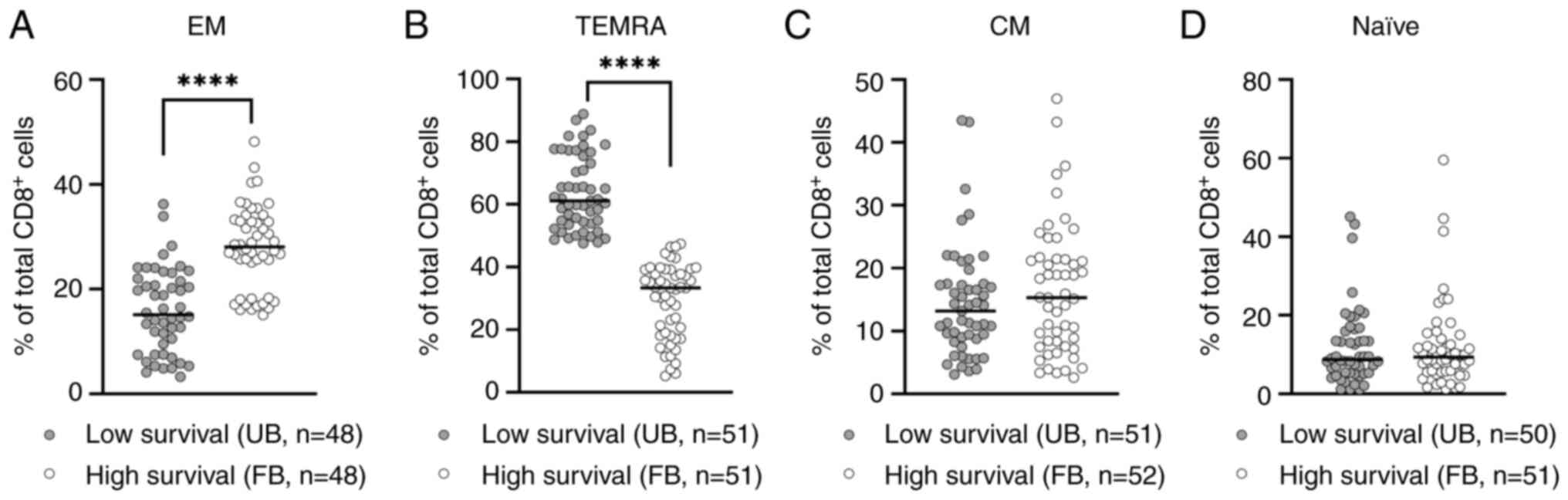
Comparison of the densities of
CD8+ T-cell subsets between localized prostate cancer
patients with the FB and high survival, and those with the UB and
low survival. The graphs depict % frequencies of (A) EM T cells
(n=48 in both patient groups), (B) TEMRA T cells (n=51 in both
patient groups), (C) CM T cells (n=51 for the UB; n=52 for the FB)
and (D) naïve CD8+ T cells (n=50 for the UB; n=51 for
the FB) between the two groups of patients. Black bars show median
values of all data points. Statistically significant differences in
the frequencies of cell subsets between the examined groups of
patients were identified by performing non-parametric Mann-Whitney
(unpaired) tests. P<0.05 was considered statistically
significant. ****P<0.0001. FB, favorable biosignature; UB,
unfavorable biosignature; EM, effector memory; TEMRA, terminal
effector memory; CM, central memory.

Figure 4

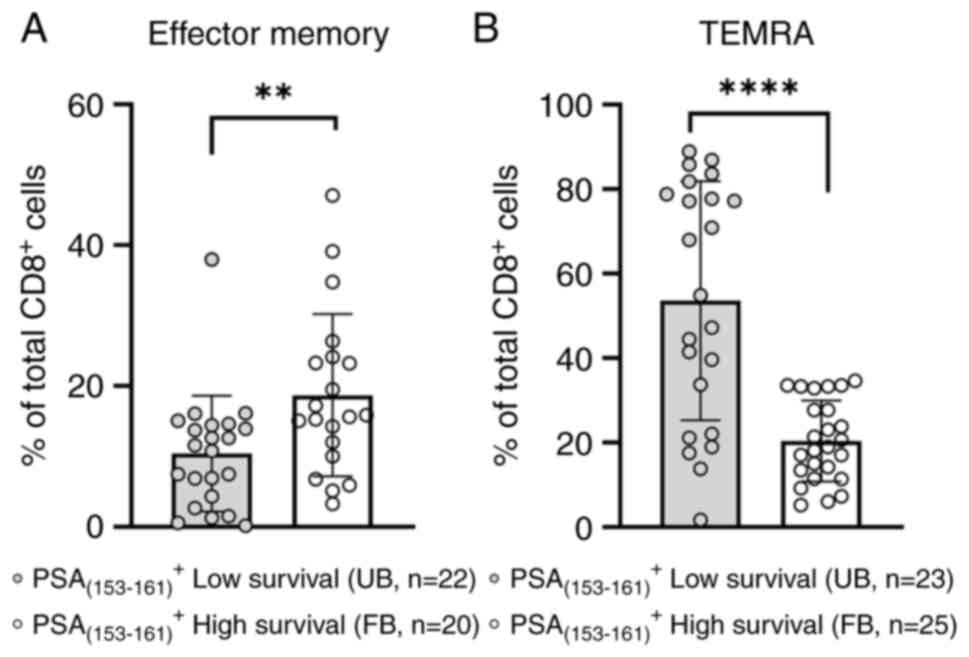
Differences in the densities of
HLA-A24-restricted PSA(153–161) peptide-specific
CD8+ T-cell subsets in the prostate cancer patient
population with localized disease having the FB and high survival
or the UB and low survival. (A) Frequencies of EM
PSA(153–161) peptide-specific CD8+ T cells in
high survival (FB) patients (n=20) and in low survival (UB)
patients (n=22). (B) Frequencies of TEMRA PSA(153–161)
peptide-specific CD8+ T cells in high survival (FB)
patients (n=25) and in low survival (UB) patients (n=23). The
results are presented as mean ± standard deviation. Statistically
significant differences in the frequencies of cell subsets between
the examined groups of patients were identified by non-parametric
Mann-Whitney (unpaired) tests. P<0.05 was considered
statistically significant. **P<0.01; ****P<0.0001. HLA, human
leukocyte antigen; PSA, prostate-specific antigen; FB, favorable
biosignature; UB, unfavorable biosignature; EM, effector memory;
TEMRA, terminal effector memory.

Figure 5

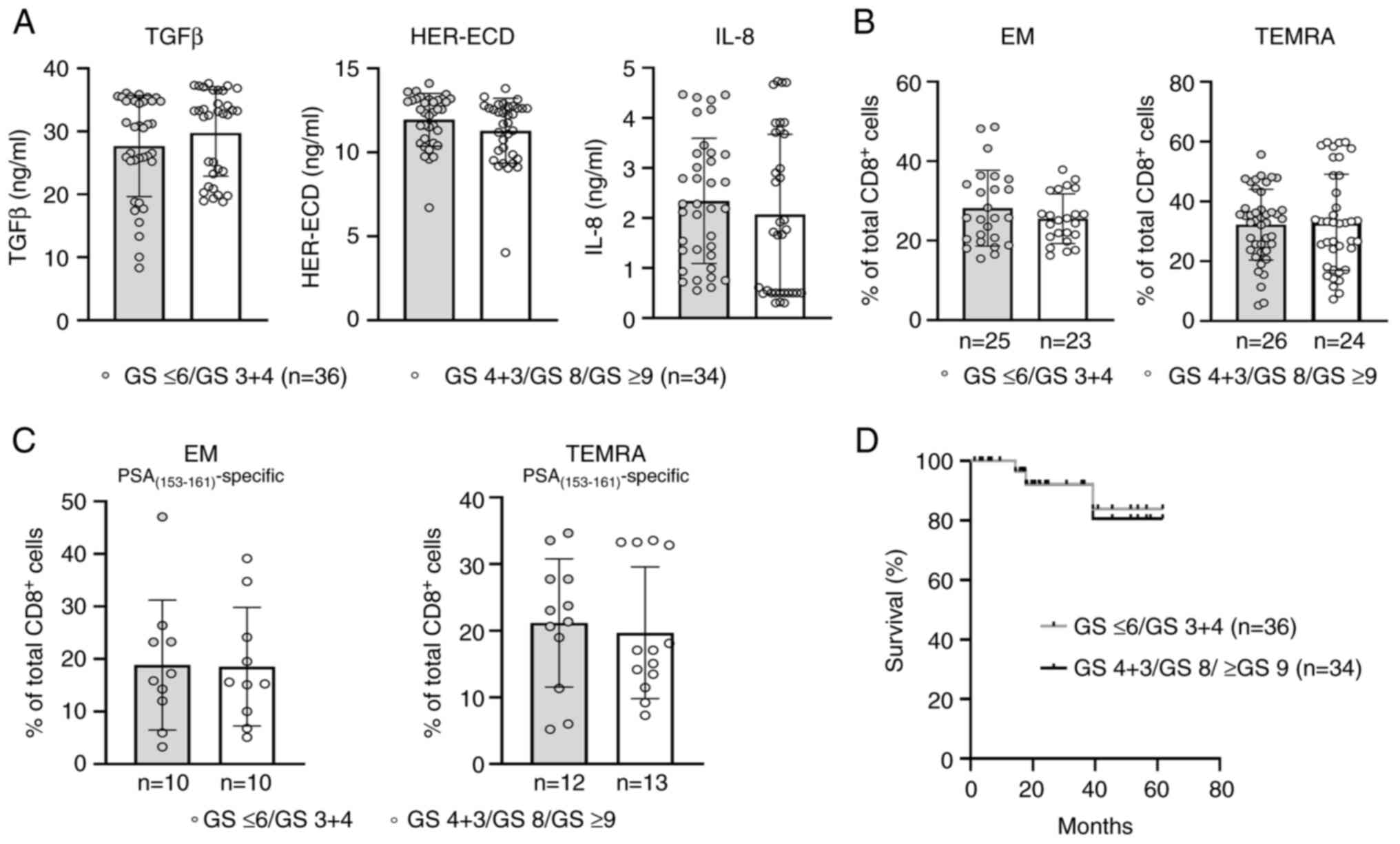
GS-based tumor grading does not
affect plasma cytokine and HER-ECD levels, CD8+ T-cell
subsets, and clinical outcome in patients with localized prostate
cancer and high survival. (A) Comparison of HER-ECD and plasma
cytokine (TGFβ and IL-8) levels between subgroups of patients
stratified by low (n=36) vs. high (n=34) GS. (B) Comparison of the
densities of EM and TEMRA CD8+ T-cell subsets between
subgroups of patients stratified by low (n=25 for EM; n=26 for
TEMRA) vs. high GS (n=23 for EM; n=24 for TEMRA). (C) Differences
in the densities of PSA(153–161) peptide-specific
CD8+ T-cell subsets between subgroups of the HLA-A24
restricted patients stratified by low GS (n=10 for EM; n=12 for
TEMRA) vs. high GS (n=10 for EM; n=13 for TEMRA). Results in A, B
and C are presented as mean ± standard deviation. (D) Kaplan-Meier
curves for progression-free survival, defined as
time-to-progression to biochemical recurrence post-radical
prostatectomy and to castration-resistance from
castration-sensitive disease, in patients stratified by low vs.
high GS. Statistical significance was investigated by performing
(A-C) non-parametric Mann-Whitney (unpaired) tests and the (D)
log-rank test for survival. No statistically significant results
were obtained (P>0.05 in all comparisons). GS, Gleason score;
HER-ECD, HER-2/neu extracellular domain; TGFβ, transforming growth
factor β; IL-8, interleukin-8; EM, effector memory; TEMRA, terminal
effector memory; HLA, human leukocyte antigen; PSA,
prostate-specific antigen.

Figure 6

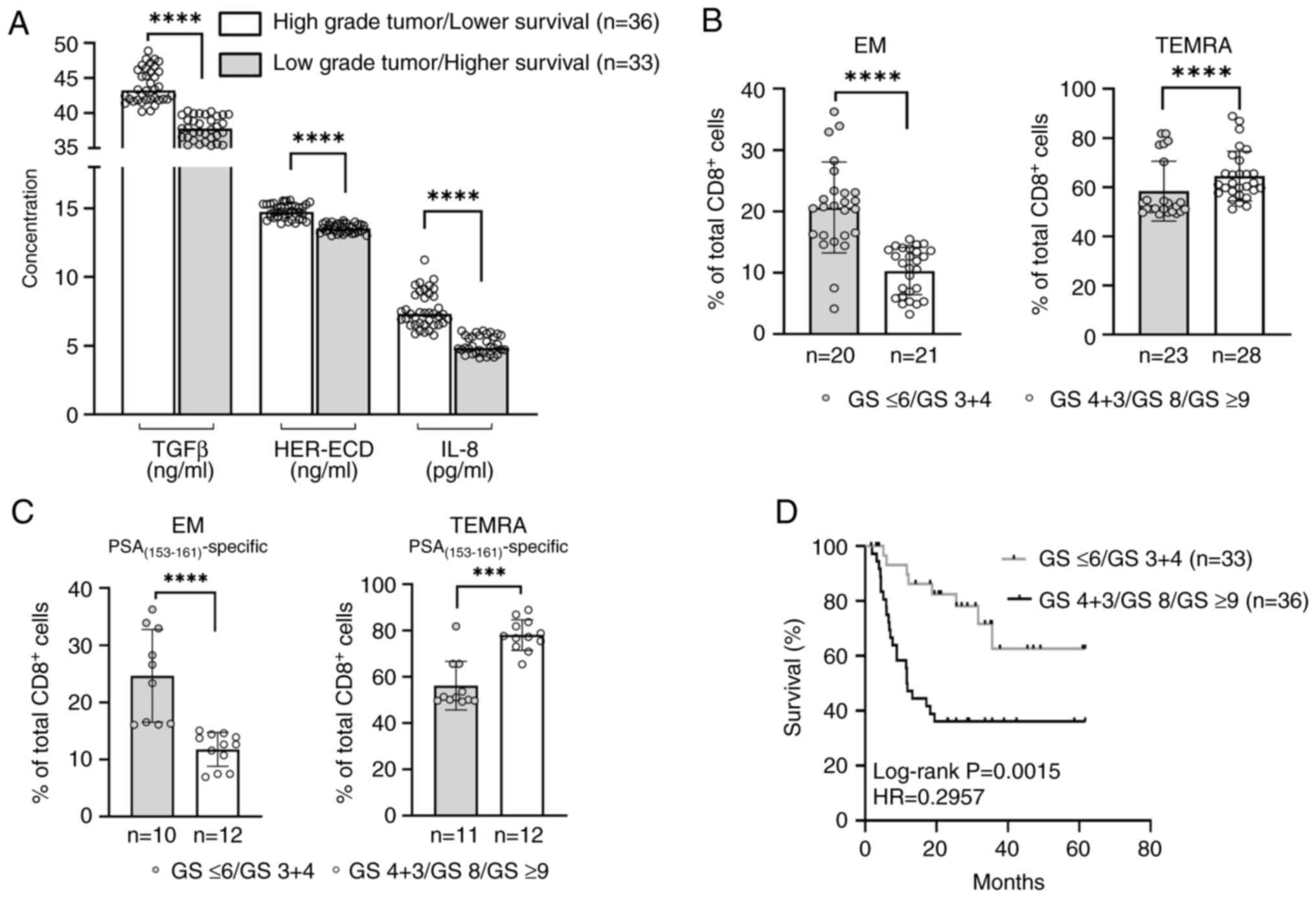
GS-based tumor grading is associated
with plasma cytokine and HER-ECD levels, CD8+ T-cell
subsets, and clinical outcome in patients with localized prostate
cancer. (A) Comparison of TGFβ, HER-ECD, and IL-8 levels between
subgroups of patients stratified by low (n=33) vs. high grade
tumors (n=36). The results are presented as mean ± SD. (B)
Comparison of the densities of CD8+ T-cell subsets
between subgroups of patients stratified by low vs. high GS. For EM
cells and low GS, n=20; for EM cells and high GS, n=21. For TEMRA
cells, n=23 and n=28 for low vs. high GS, respectively. The results
are presented as mean ± SD. (C) Differences in the densities of
PSA(153–161) peptide-specific CD8+ T-cell
subsets between subgroups of the HLA-A24-restricted patients
stratified by low vs. high GS. For EM cells, n=10 and n=12 for low
vs. high GS, respectively; for TEMRA cells, n=11 and n=12 for low
vs. high GS, respectively. Results in A, B, and C are presented as
mean ± SD. (D) Kaplan-Meier curves for progression-free survival,
defined as time-to-progression to biochemical recurrence
post-radical prostatectomy and to castration-resistance from
castration-sensitive disease, in patients stratified by low vs.
high GS. Statistical significance was investigated by (A-C)
non-parametric Mann-Whitney (unpaired) tests and the (D) log-rank
test for survival. P<0.05 were considered statistically
significant. ***P<0.001; ****P<0.0001. GS, Gleason score;
HER-ECD, HER-2/neu extracellular domain; TGFβ, transforming growth
factor β; IL-8, interleukin-8; SD, standard deviation; EM, effector
memory; TEMRA, terminal effector memory; HLA, human leukocyte
antigen; PSA, prostate-specific antigen.
View References

1 

Welch HG and Albertsen PC: Reconsidering prostate cancer mortality-The future of PSA screening. N Engl J Med. 382:1557–1563. 2020. View Article : Google Scholar : PubMed/NCBI

2 

Siegel RL, Miller KD and Jemal A: Cancer statistics, 2020. CA Cancer J Clin. 70:7–30. 2020.PubMed/NCBI

3 

Shelley M, Harrison C, Coles B, Staffurth J, Wilt TJ and Mason MD: Chemotherapy for hormone-refractory prostate cancer. Cochrane Database Syst Rev. 18:CD0052472006.PubMed/NCBI

4 

Rebello RJ, Oing C, Knudsen KE, Loeb S, Johnson DC, Reiter RE, Gillessen S, Van der Kwast T and Bristow RG: Prostate cancer. Nat Rev Dis Primers. 7:92021. View Article : Google Scholar : PubMed/NCBI

5 

Cooperberg MR, Carroll PR, Dall'Era MA, Davies BJ, Davis JW, Eggener SE, Feng FY, Lin DW, Morgan TM, Morgans AK, et al: The state of the science on prostate cancer biomarkers: The San Francisco Consensus statement. Eur Urol. 76:268–272. 2019. View Article : Google Scholar : PubMed/NCBI

6 

Zelic R, Garmo H, Zugna D, Stattin P, Richiardi L, Akre O and Pettersson A: Predicting prostate cancer death with different pretreatment risk stratification tools: A head-to-head comparison in a nationwide cohort study. Eur Urol. 77:180–188. 2020. View Article : Google Scholar : PubMed/NCBI

7 

Baxevanis CN, Fortis SP and Perez SA: The balance between breast cancer and the immune system: Challenges for prognosis and clinical benefit from immunotherapies. Semin Cancer Biol. 72:76–89. 2021. View Article : Google Scholar : PubMed/NCBI

8 

Vesely MD and Schreiber RD: Cancer immunoediting: Antigens, mechanisms, and implications to cancer immunotherapy. Ann N Y Acad Sci. 1284:1–5. 2013. View Article : Google Scholar : PubMed/NCBI

9 

Haen SP, Löffler MW, Rammensee HG and Brossart P: Towards new horizons: Characterization, classification and implications of the tumour antigenic repertoire. Nat Rev Clin Oncol. 17:595–610. 2020. View Article : Google Scholar : PubMed/NCBI

10 

Mittal D, Gubin MM, Schreiber RD and Smyth MJ: New insights into cancer immunoediting and its three component phases-elimination, equilibrium and escape. Curr Opin Immunol. 27:16–25. 2014. View Article : Google Scholar : PubMed/NCBI

11 

Baxevanis CN and Perez SA: Cancer dormancy: A regulatory role for endogenous immunity in establishing and maintaining the tumor dormant state. Vaccines (Basel). 3:597–619. 2015. View Article : Google Scholar : PubMed/NCBI

12 

Baxevanis CN, Anastasopoulou EA, Voutsas IF, Papamichail M and Perez SA: Immune biomarkers: How well do they serve prognosis in human cancers? Expert Rev Mol Diagn. 15:49–59. 2015. View Article : Google Scholar : PubMed/NCBI

13 

Perez SA, Karamouzis MV, Skarlos DV, Ardavanis A, Sotiriadou NN, Iliopoulou EG, Salagianni ML, Orphanos G, Baxevanis CN, Rigatos G and Papamichail M: CD4+CD25+ regulatory T-cell frequency in HER-2/neu (HER)-positive and HER-negative advanced-stage breast cancer patients. Clin Cancer Res. 13:2714–2721. 2007. View Article : Google Scholar : PubMed/NCBI

14 

Perez SA, Kallinteris NL, Bisias S, Tzonis PK, Georgakopoulou K, Varla-Leftherioti M, Papamichail M, Thanos A, von Hofe E, Baxevanis CN, et al: Results from a phase I clinical study of the novel Ii-Key/HER-2/neu(776–790) hybrid peptide vaccine in patients with prostate cancer. Clin Cancer Res. 16:3495–3506. 2010. View Article : Google Scholar : PubMed/NCBI

15 

Okegawa T, Kinjo M, Nutahara K and Higashihara E: Pretreatment serum level of HER2/nue as a prognostic factor in metastatic prostate cancer patients about to undergo endocrine therapy. Int J Urol. 13:1197–1201. 2006. View Article : Google Scholar : PubMed/NCBI

16 

Köstler WJ, Schwab B, Singer CF, Neumann R, Rücklinger E, Brodowicz T, Tomek S, Niedermayr M, Hejna M, Steger GG, et al: Monitoring of serum Her-2/neu predicts response and progression-free survival to trastuzumab-based treatment in patients with metastatic breast cancer. Clin Cancer Res. 10:1618–1624. 2004. View Article : Google Scholar : PubMed/NCBI

17 

Anastasopoulou EA, Voutsas IF, Keramitsoglou T, Gouttefangeas C, Kalbacher H, Thanos A, Papamichail M, Perez SA and Baxevanis CN: A pilot study in prostate cancer patients treated with the AE37 Ii-key-HER-2/neu polypeptide vaccine suggests that HLA-A*24 and HLA-DRB1*11 alleles may be prognostic and predictive biomarkers for clinical benefit. Cancer Immunol Immunother. 64:1123–1136. 2015. View Article : Google Scholar : PubMed/NCBI

18 

Travis MA and Sheppard D: TGF-β activation and function in immunity. Annu Rev Immunol. 32:51–82. 2014. View Article : Google Scholar : PubMed/NCBI

19 

Bierie B and Moses HL: TGFβ: The molecular Jekyll and hyde of cancer. Nat Rev Cancer. 6:506–520. 2006. View Article : Google Scholar : PubMed/NCBI

20 

Steiner MS, Zhou ZZ, Tonb DC and Barrack ER: Expression of transforming growth factor-beta 1 in prostate cancer. Endocrinology. 135:2240–2247. 1994. View Article : Google Scholar : PubMed/NCBI

21 

Barrack ER: TGF beta in prostate cancer: A growth inhibitor that can enhance tumorigenicity. Prostate. 31:61–70. 1997. View Article : Google Scholar : PubMed/NCBI

22 

Perez SA, Anastasopoulou EA, Papamichail M and Baxevanis CN: AE37 peptide vaccination in prostate cancer: Identification of biomarkers in the context of prognosis and prediction. Cancer Immunol Immunother. 63:1141–1150. 2014. View Article : Google Scholar : PubMed/NCBI

23 

Voutsas IF, Anastasopoulou EA, Tzonis P, Papamichail M, Perez SA and Baxevanis CN: Unraveling the role of preexisting immunity in prostate cancer patients vaccinated with a HER-2/neu hybrid peptide. J Immunother Cancer. 4:752016. View Article : Google Scholar : PubMed/NCBI

24 

Goulielmaki M, Stokidis S, Anagnostou T, Voutsas IF, Gritzapis AD, Baxevanis CN and Fortis SP: Frequencies of an immunogenic HER-2/neu epitope of CD8+ T lymphocytes predict favorable clinical outcomes in prostate cancer. Int J Mol Sci. 24:59542023. View Article : Google Scholar : PubMed/NCBI

25 

Dahal S, Chaudhary P, Jung YS and Kim JA: Megakaryocyte-Derived IL-8 acts as a paracrine factor for prostate cancer aggressiveness through CXCR2 activation and antagonistic AR downregulation. Biomol Ther (Seoul). 31:210–218. 2023. View Article : Google Scholar : PubMed/NCBI

26 

Sunaga N, Kaira K, Tomizawa Y, Shimizu K, Imai H, Takahashi G, Kakegawa S, Ohtaki Y, Nagashima T, Kasahara N, et al: Clinicopathological and prognostic significance of interleukin-8 expression and its relationship to KRAS mutation in lung adenocarcinoma. Br J Cancer. 110:2047–2053. 2014. View Article : Google Scholar : PubMed/NCBI

27 

Singh JK, Simões BM, Howell SJ, Farnie G and Clarke RB: Recent advances reveal IL-8 signaling as a potential key to targeting breast cancer stem cells. Breast Cancer Res. 15:2102013. View Article : Google Scholar : PubMed/NCBI

28 

Chen L, Fan J, Chen H, Meng Z, Chen Z, Wang P and Liu L: The IL-8/CXCR1 axis is associated with cancer stem cell-like properties and correlates with clinical prognosis in human pancreatic cancer cases. Sci Rep. 4:59112014. View Article : Google Scholar : PubMed/NCBI

29 

Baxevanis CN, Stokidis S, Goulielmaki M, Gritzapis AD and Fortis SP: Peripheral blood CD8+ T-lymphocyte subsets are associated with prognosis in prostate cancer patients. Onco. 3:165–174. 2023. View Article : Google Scholar

30 

Kim R, Kim S, Oh BB, Yu WS, Kim CW, Hur H, Son SY, Yang MJ, Cho DS, Ha T, et al: Clinical application of whole-genome sequencing of solid tumors for precision oncology. Exp Mol Med. 56:1856–1868. 2024. View Article : Google Scholar : PubMed/NCBI

31 

Huang RJ, Huang YS, An N, Hu JJ, Wu CY, Chen YX, Chen JY, Zhao Q, Xu RH, Yuan SQ and Wang F: Pan-cancer analysis of heterogeneity of tumor mutational burden and genomic mutation under treatment pressure. ESMO Open. 9:1034942024. View Article : Google Scholar : PubMed/NCBI

32 

Tan WY, Nagabhyrava S, Ang-Olson O, Das P, Ladel L, Sailo B, He L, Sharma A and Ahuja N: Translation of epigenetics in cell-free DNA liquid biopsy technology and precision oncology. Curr Issues Mol Biol. 46:6533–6565. 2024. View Article : Google Scholar : PubMed/NCBI

33 

Koukourakis MI, Xanthopoulou E, Koukourakis IM, Fortis SP, Kesesidis N, Kakouratos C, Karakasiliotis I and Baxevanis CN: Next-generation sequencing analysis of mutations in circulating tumor DNA from the plasma of patients with head-Neck cancer undergoing chemo-radiotherapy using a pan-cancer cell-free assay. Curr Oncol. 30:8902–8915. 2023. View Article : Google Scholar : PubMed/NCBI

34 

Lam N, Lee Y and Farber DL: A guide to adaptive immune memory. Nat Rev Immunol. 24:810–829. 2024. View Article : Google Scholar : PubMed/NCBI

35 

Takahashi H, Sakakura K, Ida S, Kawabata-Iwakawa R, Matsuyama T, Tada H, Mito I and Chikamatsu K: Circulating naïve and effector memory T cells correlate with prognosis in head and neck squamous cell carcinoma. Cancer Sci. 113:53–64. 2022. View Article : Google Scholar : PubMed/NCBI

36 

Sun X, Zhai J, Sun B, Parra ER, Jiang M, Ma W, Wang J, Kang AM, Kannan K, Pandurengan R, et al: Effector memory cytotoxic CD3+/CD8+/CD45RO+ T cells are predictive of good survival and a lower risk of recurrence in triple-negative breast cancer. Mod Pathol. 35:601–608. 2022. View Article : Google Scholar : PubMed/NCBI

37 

Cappuyns S, Philips G, Vandecaveye V, Boeckx B, Schepers R, Van Brussel T, Arijs I, Mechels A, Bassez A, Lodi F, et al: PD-1− CD45RA+ effector-memory CD8 T cells and CXCL10+ macrophages are associated with response to atezolizumab plus bevacizumab in advanced hepatocellular carcinoma. Nat Commun. 14:78252023. View Article : Google Scholar : PubMed/NCBI

38 

Wei H, Li Y, Guo Z, Ma X, Li Y, Wei X, Han D, Zhang T, Chen X, Yan C, et al: Comparison of dynamic changes in the peripheral CD8+ T cells function and differentiation in ESCC patients treated with radiotherapy combined with anti-PD-1 antibody or concurrent chemoradiotherapy. Front Immunol. 13:10606952022. View Article : Google Scholar : PubMed/NCBI

39 

Bruni E, Cazzetta V, Donadon M, Cimino M, Torzilli G, Spata G, Leonardi G, Dieli F, Mikulak J and Mavilio D: Chemotherapy accelerates immune-senescence and functional impairments of Vδ2pos T cells in elderly patients affected by liver metastatic colorectal cancer. J Immunother Cancer. 7:3472019. View Article : Google Scholar : PubMed/NCBI

40 

Zou D, Song A and Yong W: Prognostic role of IL-8 in cancer patients treated with immune checkpoint inhibitors: A system review and meta-analysis. Front Oncol. 13:11765742023. View Article : Google Scholar : PubMed/NCBI

41 

Rizzo M, Varnier L, Pezzicoli G, Pirovano M, Cosmai L and Porta C: IL-8 and its role as a potential biomarker of resistance to anti-angiogenic agents and immune checkpoint inhibitors in metastatic renal cell carcinoma. Front Oncol. 12:9905682022. View Article : Google Scholar : PubMed/NCBI

42 

Ni Y, Soliman A, Joehlin-Price A, Rose PG, Vlad A, Edwards RP and Mahdi H: High TGF-β signature predicts immunotherapy resistance in gynecologic cancer patients treated with immune checkpoint inhibition. NPJ Precis Oncol. 5:1012021. View Article : Google Scholar : PubMed/NCBI

43 

Kim BG, Malek E, Choi SH, Ignatz-Hoover JJ and Driscoll JJ: Novel therapies emerging in oncology to target the TGF-β pathway. J Hematol Oncol. 14:552021. View Article : Google Scholar : PubMed/NCBI

44 

Colomer R, Montero S, Lluch A, Ojeda B, Barnadas A, Casado A, Massutí B, Cortés-Funes H and Lloveras B: Circulating HER2 extracellular domain and resistance to chemotherapy in advanced breast cancer. Clin Cancer Res. 6:2356–2362. 2000.PubMed/NCBI

45 

Reix N, Malina C, Chenard MP, Bellocq JP, Delpous S, Molière S, Sevrin A, Neuberger K, Tomasetto C and Mathelin C: A prospective study to assess the clinical utility of serum HER2 extracellular domain in breast cancer with HER2 overexpression. Breast Cancer Res Treat. 160:249–259. 2016. View Article : Google Scholar : PubMed/NCBI

Related Articles

  • Abstract
  • View
  • Download
  • Twitter
Copy and paste a formatted citation
Spandidos Publications style
Goulielmaki M, Stokidis S, Anagnostou T, Gritzapis AD, Tsitsilonis OE, Baxevanis CN and Fortis SP: Novel biomarkers for prognosis in patients with localized prostate cancer&nbsp;. Oncol Lett 30: 512, 2025.
APA
Goulielmaki, M., Stokidis, S., Anagnostou, T., Gritzapis, A.D., Tsitsilonis, O.E., Baxevanis, C.N., & Fortis, S.P. (2025). Novel biomarkers for prognosis in patients with localized prostate cancer&nbsp;. Oncology Letters, 30, 512. https://doi.org/10.3892/ol.2025.15258
MLA
Goulielmaki, M., Stokidis, S., Anagnostou, T., Gritzapis, A. D., Tsitsilonis, O. E., Baxevanis, C. N., Fortis, S. P."Novel biomarkers for prognosis in patients with localized prostate cancer&nbsp;". Oncology Letters 30.5 (2025): 512.
Chicago
Goulielmaki, M., Stokidis, S., Anagnostou, T., Gritzapis, A. D., Tsitsilonis, O. E., Baxevanis, C. N., Fortis, S. P."Novel biomarkers for prognosis in patients with localized prostate cancer&nbsp;". Oncology Letters 30, no. 5 (2025): 512. https://doi.org/10.3892/ol.2025.15258
Copy and paste a formatted citation
x
Spandidos Publications style
Goulielmaki M, Stokidis S, Anagnostou T, Gritzapis AD, Tsitsilonis OE, Baxevanis CN and Fortis SP: Novel biomarkers for prognosis in patients with localized prostate cancer&nbsp;. Oncol Lett 30: 512, 2025.
APA
Goulielmaki, M., Stokidis, S., Anagnostou, T., Gritzapis, A.D., Tsitsilonis, O.E., Baxevanis, C.N., & Fortis, S.P. (2025). Novel biomarkers for prognosis in patients with localized prostate cancer&nbsp;. Oncology Letters, 30, 512. https://doi.org/10.3892/ol.2025.15258
MLA
Goulielmaki, M., Stokidis, S., Anagnostou, T., Gritzapis, A. D., Tsitsilonis, O. E., Baxevanis, C. N., Fortis, S. P."Novel biomarkers for prognosis in patients with localized prostate cancer&nbsp;". Oncology Letters 30.5 (2025): 512.
Chicago
Goulielmaki, M., Stokidis, S., Anagnostou, T., Gritzapis, A. D., Tsitsilonis, O. E., Baxevanis, C. N., Fortis, S. P."Novel biomarkers for prognosis in patients with localized prostate cancer&nbsp;". Oncology Letters 30, no. 5 (2025): 512. https://doi.org/10.3892/ol.2025.15258
Follow us
  • Twitter
  • LinkedIn
  • Facebook
About
  • Spandidos Publications
  • Careers
  • Cookie Policy
  • Privacy Policy
How can we help?
  • Help
  • Live Chat
  • Contact
  • Email to our Support Team