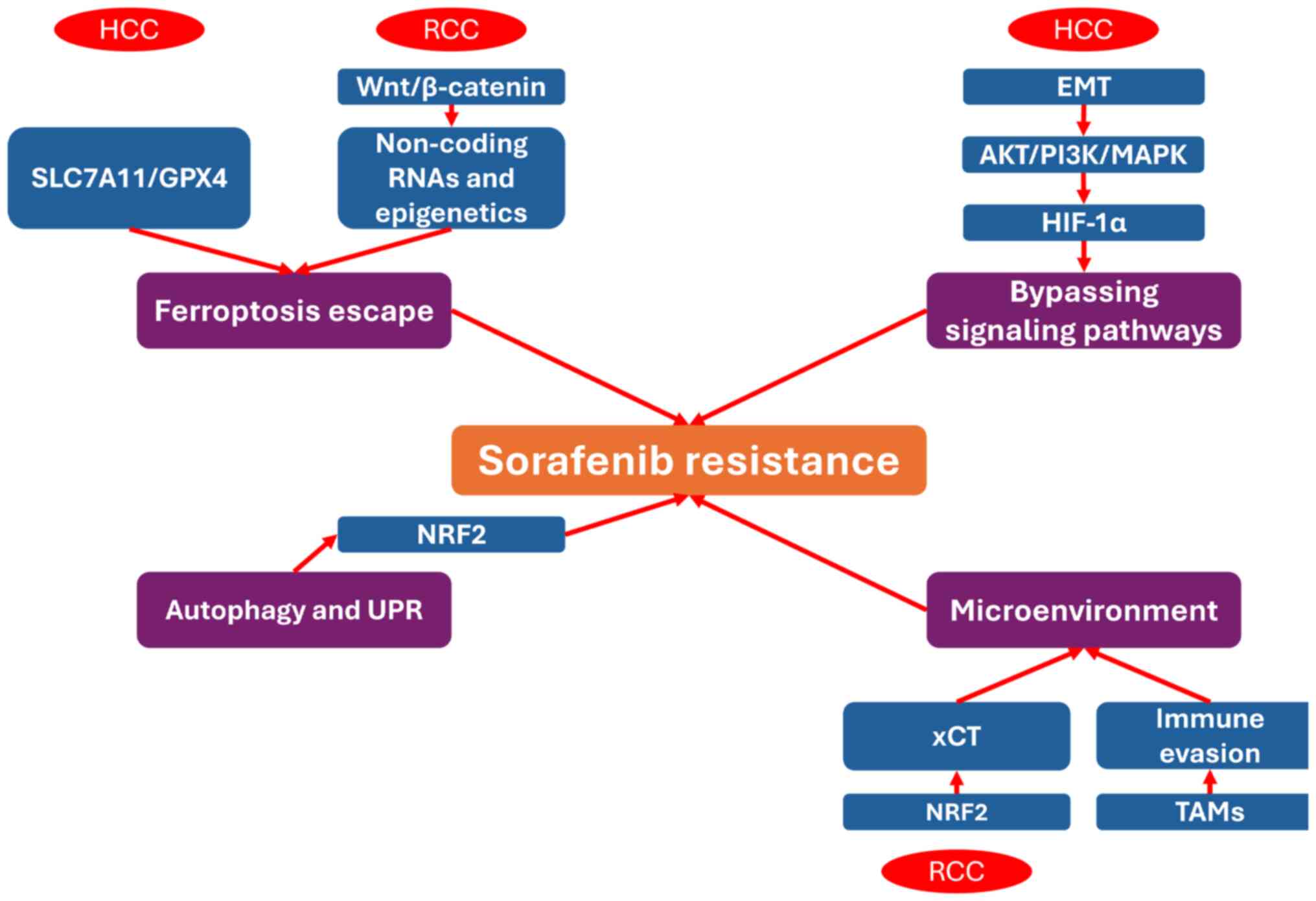
|
1
|
Leicht DT, Balan V, Kaplun A, Singh-Gupta
V, Kaplun L, Dobson M and Tzivion G: Raf kinases: Function,
regulation and role in human cancer. Biochim Biophys Acta.
1773:1196–1212. 2007. View Article : Google Scholar : PubMed/NCBI
|
|
2
|
McDonald OB, Chen WJ, Ellis B, Hoffman C,
Overton L, Rink M, Smith A, Marshall CJ and Wood ER: A
scintillation proximity assay for the Raf/MEK/ERK Kinase cascade:
High-throughput screening and identification of selective enzyme
inhibitors. Anal Biochem. 268:318–329. 1999. View Article : Google Scholar : PubMed/NCBI
|
|
3
|
Padala SA and Barsouk A, Thandra KC,
Saginala K, Mohammed A, Vakiti A, Rawla P and Barsouk A:
Epidemiology of renal cell carcinoma. World J Oncol. 11:79–87.
2020. View Article : Google Scholar : PubMed/NCBI
|
|
4
|
Llovet JM, Ricci S, Mazzaferro V, Hilgard
P, Gane E, Blanc JF, de Oliveira AC, Santoro A, Raoul JL, Forner A,
et al: Sorafenib in advanced hepatocellular carcinoma. N Engl J
Med. 359:378–390. 2024. View Article : Google Scholar
|
|
5
|
Cheng AL, Kang YK, Chen Z, Tsao CJ, Qin S,
Kim JS, Luo R, Feng J, Ye S, Yang TS, et al: Efficacy and safety of
sorafenib in patients in the Asia-Pacific region with advanced
hepatocellular carcinoma: A phase III randomised, ouble-blind,
placebo-controlled trial. Lancet Oncol. 10:25–34. 2009. View Article : Google Scholar : PubMed/NCBI
|
|
6
|
Cheng AL, Guan Z, Chen Z, Tsao CJ, Qin S,
Kim JS, Yang TS, Tak WY, Pan H, Yu S, et al: Efficacy and safety of
sorafenib in patients with advanced hepatocellular carcinoma
according to baseline status: Subset analyses of the phase III
Sorafenib Asia-Pacific trial. Eur J Cancer. 48:1452–1465. 2012.
View Article : Google Scholar : PubMed/NCBI
|
|
7
|
Gauthier A and Ho M: Role of sorafenib in
the treatment of advanced hepatocellular carcinoma: An update.
Hepatol Res. 43:147–154. 2013. View Article : Google Scholar : PubMed/NCBI
|
|
8
|
Yang S and Liu G: Targeting the
Ras/Raf/MEK/ERK pathway in hepatocellular carcinoma (review). Oncol
Lett. 13:1041–1047. 2017. View Article : Google Scholar : PubMed/NCBI
|
|
9
|
Kim MJ, Kim SM, Lee EK, Hwangbo Y, Lee YJ,
Cho SW, Park DJ, Lee Y and Park YJ: Tumor doubling time predicts
response to sorafenib in radioactive iodine-refractory
differentiated thyroid cancer. Endocr J. 66:597–604. 2019.
View Article : Google Scholar : PubMed/NCBI
|
|
10
|
Kontomanolis EN, Koutras A, Syllaios A,
Schizas D, Mastoraki A, Garmpis N, Diakosavvas M, Angelou K,
Tsatsaris G, Pagkalos A, et al: Role of oncogenes and
tumor-suppressor genes in carcinogenesis: A review. Anticancer Res.
40:6009–6015. 2020. View Article : Google Scholar : PubMed/NCBI
|
|
11
|
Ishizawar R and Parsons SJ: c-Src and
cooperating partners in human cancer. Cancer Cell. 6:209–214. 2004.
View Article : Google Scholar : PubMed/NCBI
|
|
12
|
Myers MB, Wang Y, Mckim KL and Parsons BL:
Hotspot oncomutations: Implications for personalized cancer
treatment. Expert Rev Mol Diagn. 12:603–620. 2012. View Article : Google Scholar : PubMed/NCBI
|
|
13
|
Manzari MT, Shamay Y, Kiguchi H, Rosen N,
Scaltriti M and Heller DA: Targeted drug delivery strategies for
precision medicines. Nat Rev Mater. 6:351–370. 2021. View Article : Google Scholar : PubMed/NCBI
|
|
14
|
Kuczynski EA, Lee CR, Man S, Chen E and
Kerbel RS: Effects of sorafenib dose on acquired reversible
resistance and toxicity in hepatocellular carcinoma. Cancer Res.
75:2510–2519. 2015. View Article : Google Scholar : PubMed/NCBI
|
|
15
|
Fairfax BP, Pratap S, Roberts IS, Collier
J, Kaplan R, Meade AM, Ritchie AW, Eisen T, Macaulay VM and
Protheroe A: Fatal case of sorafenib-associated idiosyncratic
hepatotoxicity in the adjuvant treatment of a patient with renal
cell carcinoma. BMC Cancer. 12:5902012. View Article : Google Scholar : PubMed/NCBI
|
|
16
|
Wilhelm SM, Carter C, Tang L, Wilkie D,
McNabola A, Rong H, Chen C, Zhang X, Vincent P, McHugh M, et al:
BAY 43-9006 exhibits broad spectrum oral antitumor activity and
targets the RAF/MEK/ERK pathway and receptor tyrosine kinases
involved in tumor progression and angiogenesis. Cancer Res.
64:7099–7109. 2004. View Article : Google Scholar : PubMed/NCBI
|
|
17
|
Liu L, Cao Y, Chen C, Zhang X, McNabola A,
Wilkie D, Wilhelm S, Lynch M and Carter C: Sorafenib blocks the
RAF/MEK/ERK pathway, inhibits tumor angiogenesis, and induces tumor
cell apoptosis in hepatocellular carcinoma model PLC/PRF/5. Cancer
Res. 66:11851–11858. 2006. View Article : Google Scholar : PubMed/NCBI
|
|
18
|
Reiss KA, Yu S, Mamtani R, Mehta R,
D'Addeo K, Wileyto EP, Taddei TH and Kaplan DE: Starting dose of
sorafenib for the treatment of hepatocellular carcinoma: A
retrospective, multi-institutional study. J Clin Oncol.
35:3575–3581. 2017. View Article : Google Scholar : PubMed/NCBI
|
|
19
|
Woo HY, Heo J, Yoon KT, Kim GH, Kang DH,
Song GA and Cho M: Clinical course of sorafenib treatment in
patients with hepatocellular carcinoma. Scand J Gastroenterol.
47:809–819. 2012. View Article : Google Scholar : PubMed/NCBI
|
|
20
|
Dahiya M and Dureja H: Sorafenib for
hepatocellular carcinoma: Potential molecular targets and
resistance mechanisms. J Chemother. 34:286–301. 2022. View Article : Google Scholar : PubMed/NCBI
|
|
21
|
Ashman LK and Griffith R: Therapeutic
targeting of c-KIT in cancer. Expert Opin Investig Drugs.
22:103–115. 2013. View Article : Google Scholar : PubMed/NCBI
|
|
22
|
Lei J, Dai H, Zhang Y, Ou G, Liang Z, Lu Y
and Li H: Prognostic impact of primary versus secondary resistance
to sorafenib in patients with HCC. Ther Adv Med Oncol.
17:75883592412996782025. View Article : Google Scholar : PubMed/NCBI
|
|
23
|
Carmeliet P and Jain RK: Molecular
mechanisms and clinical applications of angiogenesis. Nature.
473:298–307. 2011. View Article : Google Scholar : PubMed/NCBI
|
|
24
|
Liu C, Chen Z, Chen Y, Lu J, Li Y, Wang S,
Wu G and Qian F: Improving oral bioavailability of sorafenib by
optimizing the ‘Spring’ and ‘Parachute’ Based on molecular
interaction mechanisms. Mol Pharm. 13:599–608. 2016. View Article : Google Scholar : PubMed/NCBI
|
|
25
|
Ghassabian S, Rawling T, Zhou F,
Doddareddy MR, Tattam BN, Hibbs DE, Edwards RJ, Cui PH and Murray
M: Role of human CYP3A4 in the biotransformation of sorafenib to
its major oxidized metabolites. Biochem Pharmacol. 84:215–223.
2012. View Article : Google Scholar : PubMed/NCBI
|
|
26
|
Ye L, Yang X, Guo E, Chen W, Lu L, Wang Y,
Peng X, Yan T, Zhou F and Liu Z: Sorafenib metabolism is
significantly altered in the liver tumor tissue of hepatocellular
carcinoma patient. PLoS One. 9:e966642014. View Article : Google Scholar : PubMed/NCBI
|
|
27
|
Porta C, Paglino C, Imarisio I and Bonomi
L: Uncovering pandora's vase: The growing problem of new toxicities
from novel anticancer agents. The case of sorafenib and sunitinib.
Clin Exp Med. 7:127–134. 2007. View Article : Google Scholar : PubMed/NCBI
|
|
28
|
Wei S, Wei F, Li M, Yang Y, Zhang J, Li C
and Wang J: Target immune components to circumvent sorafenib
resistance in hepatocellular carcinoma. Biomed Pharmacother.
163:1147982023. View Article : Google Scholar : PubMed/NCBI
|
|
29
|
Wu J, Chai H, Li F, Ren Q and Gu Y: SETD1A
augments sorafenib primary resistance via activating YAP in
hepatocellular carcinoma. Life Sci. 260:1184062020. View Article : Google Scholar : PubMed/NCBI
|
|
30
|
Zhu Y, Zheng B, Wang H and Chen L: New
knowledge of the mechanisms of sorafenib resistance in liver
cancer. Acta Pharmacol Sin. 38:614–622. 2017. View Article : Google Scholar : PubMed/NCBI
|
|
31
|
Sun T, Mao W, Peng H, Wang Q and Jiao L:
YAP promotes sorafenib resistance in hepatocellular carcinoma by
upregulating survivin. Cell Oncol. 44:689–699. 2021. View Article : Google Scholar : PubMed/NCBI
|
|
32
|
Faleti OD, Alsaadawe M, Long J, Luo Q, Hu
L, Zhang Y, Deng S, Wu G, Fang W, He M and Lyu X: Dimethyl fumarate
abrogates hepatocellular carcinoma growth by inhibiting Nrf2/Bcl-xL
axis and enhances sorafenib's efficacy. Sci Rep. 15:167242025.
View Article : Google Scholar : PubMed/NCBI
|
|
33
|
Tutusaus A, Stefanovic M, Boix L, Cucarull
B, Zamora A, Blasco L, de Frutos PG, Reig M, Fernandez-Checa JC,
Marí M, et al: Antiapoptotic BCL-2 proteins determine
sorafenib/regorafenib resistance and BH3-mimetic efficacy in
hepatocellular carcinoma. Oncotarget. 9:16701–16717. 2018.
View Article : Google Scholar : PubMed/NCBI
|
|
34
|
Chen KF, Chen HL, Tai WT, Feng WC, Hsu CH,
Chen PJ and Cheng AL: Activation of phosphatidylinositol
3-Kinase/Akt signaling pathway mediates acquired resistance to
sorafenib in hepatocellular carcinoma cells. J Pharmacol Exp Ther.
337:155–161. 2011. View Article : Google Scholar : PubMed/NCBI
|
|
35
|
Maurer U, Charvet C, Wagman AS, Dejardin E
and Green DR: Glycogen synthase Kinase-3 regulates mitochondrial
outer membrane permeabilization and apoptosis by destabilization of
MCL-1. Mol Cell. 21:749–760. 2006. View Article : Google Scholar : PubMed/NCBI
|
|
36
|
Gilley J, Coffer PJ and Ham J: FOXO
transcription factors directly activate bim gene expression and
promote apoptosis in sympathetic neurons. J Cell Biol. 162:613–622.
2003. View Article : Google Scholar : PubMed/NCBI
|
|
37
|
Chong C, Tan L, Lim L and Manser E: The
mechanism of PAK activation: Autophosphorylation events in both
regulatory and kinase domains control activity. J Biol Chem.
276:17347–17353. 2001. View Article : Google Scholar : PubMed/NCBI
|
|
38
|
Xie L, Zeng Y, Dai Z, He W, Ke H, Lin Q,
Chen Y, Bu J, Lin D and Zheng M: Chemical and genetic inhibition of
STAT3 sensitizes hepatocellular carcinoma cells to sorafenib
induced cell death. Int J Biol Sci. 14:577–585. 2018. View Article : Google Scholar : PubMed/NCBI
|
|
39
|
Dai Z, Wang X, Peng R, Zhang B, Han Q, Lin
J, Wang J, Lin J, Jiang M, Liu H, et al: Induction of IL-6Rα by
ATF3 enhances IL-6 mediated sorafenib and regorafenib resistance in
hepatocellular carcinoma. Cancer Lett. 524:161–171. 2022.
View Article : Google Scholar : PubMed/NCBI
|
|
40
|
Zang M, Hayne C and Luo Z: Interaction
between Active Pak1 and Raf-1 is necessary for phosphorylation and
activation of Raf-1. J Biol Chem. 277:4395–4405. 2002. View Article : Google Scholar : PubMed/NCBI
|
|
41
|
Zhou B, Lu Q, Liu J, Fan L, Wang Y, Wei W,
Wang H and Sun G: Melatonin increases the sensitivity of
hepatocellular carcinoma to sorafenib through the PERK-ATF4-Beclin1
pathway. Int J Biol Sci. 15:1905–1920. 2019. View Article : Google Scholar : PubMed/NCBI
|
|
42
|
Rodríguez-Hernández MA, González R, de la
Rosa ÁJ, Gallego P, Ordóñez R, Navarro-Villarán E, Contreras L,
Rodríguez-Arribas M, González-Gallego J, Álamo-Martínez JM, et al:
Molecular characterization of autophagic and apoptotic signaling
induced by sorafenib in liver cancer cells. J Cell Physiol.
234:692–708. 2019. View Article : Google Scholar : PubMed/NCBI
|
|
43
|
Shi YH, Ding ZB, Zhou J, Hui B, Shi GM, Ke
AW, Wang XY, Dai Z, Peng YF, Gu CY, et al: Targeting autophagy
enhances sorafenib lethality for hepatocellular carcinoma via ER
stress-related apoptosis. Autophagy. 7:1159–1172. 2011. View Article : Google Scholar : PubMed/NCBI
|
|
44
|
Shimizu S, Takehara T, Hikita H, Kodama T,
Tsunematsu H, Miyagi T, Hosui A, Ishida H, Tatsumi T, Kanto T, et
al: Inhibition of autophagy potentiates the antitumor effect of the
multikinase inhibitor sorafenib in hepatocellular carcinoma. Int J
Cancer. 131:548–557. 2012. View Article : Google Scholar : PubMed/NCBI
|
|
45
|
van Malenstein H, Dekervel J, Verslype C,
Van Cutsem E, Windmolders P, Nevens F and van Pelt J: Long-term
exposure to sorafenib of liver cancer cells induces resistance with
epithelial-to-mesenchymal transition, increased invasion and risk
of rebound growth. Cancer Lett. 329:74–83. 2013. View Article : Google Scholar : PubMed/NCBI
|
|
46
|
Chow AK, Ng L, Lam CS, Wong SK, Wan TM,
Cheng NS, Yau TC, Poon RT and Pang RW: The enhanced metastatic
potential of hepatocellular carcinoma (HCC) cells with sorafenib
resistance. PLoS One. 8:e786752013. View Article : Google Scholar : PubMed/NCBI
|
|
47
|
Bao MH and Wong CC: Hypoxia, metabolic
reprogramming, and drug resistance in liver cancer. Cells.
10:17152021. View Article : Google Scholar : PubMed/NCBI
|
|
48
|
Dong N, Shi X, Wang S, Gao Y, Kuang Z, Xie
Q, Li Y, Deng H, Wu Y, Li M and Li JL: M2 macrophages mediate
sorafenib resistance by secreting HGF in a feed-forward manner in
hepatocellular carcinoma. Br J Cancer. 121:22–33. 2019. View Article : Google Scholar : PubMed/NCBI
|
|
49
|
Arrondeau J, Mir O, Boudou-Rouquette P,
Coriat R, Ropert S, Dumas G, Rodrigues MJ, Rousseau B, Blanchet B
and Goldwasser F: Sorafenib exposure decreases over time in
patients with hepatocellular carcinoma. Invest New Drugs.
30:2046–2049. 2012. View Article : Google Scholar : PubMed/NCBI
|
|
50
|
Gao R, Buechel D, Kalathur RKR, Morini MF,
Coto-Llerena M, Ercan C, Piscuoglio S, Chen Q, Blumer T, Wang X, et
al: USP29-mediated HIF1α stabilization is associated with Sorafenib
resistance of hepatocellular carcinoma cells by upregulating
glycolysis. Oncogenesis. 10:522021. View Article : Google Scholar : PubMed/NCBI
|
|
51
|
Zeng Z, Lu Q, Liu Y, Zhao J, Zhang Q, Hu
L, Shi Z, Tu Y, Xiao Z, Xu Q and Huang D: Effect of the hypoxia
inducible factor on sorafenib resistance of hepatocellular
carcinoma. Front Oncol. 11:6415222021. View Article : Google Scholar : PubMed/NCBI
|
|
52
|
Wang S, Cai L, Zhang F, Shang X, Xiao R
and Zhou H: Inhibition of EZH2 attenuates sorafenib resistance by
targeting NOTCH1 Activation-dependent liver cancer stem cells via
NOTCH1-related MicroRNAs in hepatocellular carcinoma. Transl Oncol.
13:1007412020. View Article : Google Scholar : PubMed/NCBI
|
|
53
|
Azumi J, Tsubota T, Sakabe T and Shiota G:
miR-181a induces sorafenib resistance of hepatocellular carcinoma
cells through downregulation of RASSF1 expression. Cancer Sci.
107:1256–1262. 2016. View Article : Google Scholar : PubMed/NCBI
|
|
54
|
Hutson TE, Figlin RA, Kuhn JG and Motzer
RJ: Targeted therapies for metastatic renal cell carcinoma: An
overview of toxicity and dosing strategies. Oncologist.
13:1084–1096. 2008. View Article : Google Scholar : PubMed/NCBI
|
|
55
|
Tovar V, Cornella H, Moeini A, Vidal S,
Hoshida Y, Sia D, Peix J, Cabellos L, Alsinet C, Torrecilla S, et
al: Tumour initiating cells and IGF/FGF signalling contribute to
sorafenib resistance in hepatocellular carcinoma. Gut. 66:530–540.
2017. View Article : Google Scholar : PubMed/NCBI
|
|
56
|
Jang JW, Song Y, Kim SH, Kim JS, Kim KM,
Choi EK, Kim J and Seo HR: CD133 confers cancer stem-like cell
properties by stabilizing EGFR-AKT signaling in hepatocellular
carcinoma. Cancer Lett. 389:1–10. 2017. View Article : Google Scholar : PubMed/NCBI
|
|
57
|
Hagiwara S, Kudo M, Nagai T, Inoue T,
Ueshima K, Nishida N, Watanabe T and Sakurai T: Activation of JNK
and high expression level of CD133 predict a poor response to
sorafenib in hepatocellular carcinoma. Br J Cancer. 106:1997–2003.
2012. View Article : Google Scholar : PubMed/NCBI
|
|
58
|
Wang M, Wang Z, Zhi X, Ding W, Xiong J,
Tao T, Yang Y, Zhang H, Zi X, Zhou W and Huang G: SOX9 enhances
sorafenib resistance through upregulating ABCG2 expression in
hepatocellular carcinoma. Biomed Pharmacother. 129:1103152020.
View Article : Google Scholar : PubMed/NCBI
|
|
59
|
Giovannini C, Baglioni M, Baron Toaldo M,
Ventrucci C, D'Adamo S, Cipone M, Chieco P, Gramantieri L and
Bolondi L: Notch3 inhibition enhances sorafenib cytotoxic efficacy
by promoting GSK3β phosphorylation and p21 down-regulation in
hepatocellular carcinoma. Oncotarget. 4:1618–1631. 2013. View Article : Google Scholar : PubMed/NCBI
|
|
60
|
Wang S, Wang Y, Xun X, Zhang C, Xiang X,
Cheng Q, Hu S, Li Z and Zhu J: Hedgehog signaling promotes
sorafenib resistance in hepatocellular carcinoma patient-derived
organoids. J Exp Clin Cancer Res. 39:222020. View Article : Google Scholar : PubMed/NCBI
|
|
61
|
Leung HW, Leung CON, Lau EY, Chung KPS,
Mok EH, Lei MML, Leung RWH, Tong M, Keng VW, Ma C, et al: EPHB2
activates β-catenin to enhance cancer stem cell properties and
drive sorafenib resistance in hepatocellular carcinoma. Cancer Res.
81:3229–3240. 2021. View Article : Google Scholar : PubMed/NCBI
|
|
62
|
Guan D, Shi J, Zhang Y, Zhao JS, Long LY,
Chen TW, Zhang EB, Feng YY, Bao WD, Deng YZ, et al: Sorafenib
enriches epithelial cell adhesion molecule-positive tumor
initiating cells and exacerbates a subtype of hepatocellular
carcinoma through TSC2-AKT cascade. Hepatology. 62:1791–803. 2015.
View Article : Google Scholar : PubMed/NCBI
|
|
63
|
Hu Z, Zhao Y, Li L, Jiang J, Li W, Mang Y,
Gao Y, Dong Y, Zhu J, Yang C, et al: Metformin promotes ferroptosis
and sensitivity to sorafenib in hepatocellular carcinoma cells via
ATF4/STAT3. Mol Biol Rep. 50:6399–6413. 2023. View Article : Google Scholar : PubMed/NCBI
|
|
64
|
Ahmed TA, Adamopoulos C, Karoulia Z, Wu X,
Sachidanandam R, Aaronson SA and Poulikakos PI: SHP2 drives
adaptive resistance to ERK signaling inhibition in molecularly
defined subsets of ERK-dependent tumors. Cell Rep. 26:65–78.e5.
2019. View Article : Google Scholar : PubMed/NCBI
|
|
65
|
Kane RC, Farrell AT, Saber H, Tang S,
Williams G, Jee JM, Liang C, Booth B, Chidambaram N, Morse D, et
al: Sorafenib for the treatment of advanced renal cell carcinoma.
Clin Cancer Res. 12:7271–7278. 2006. View Article : Google Scholar : PubMed/NCBI
|
|
66
|
Han T, Xiang DM, Sun W, Liu N, Sun HL, Wen
W, Shen WF, Wang RY, Chen C, Wang X, et al: PTPN11/Shp2
overexpression enhances liver cancer progression and predicts poor
prognosis of patients. J Hepatol. 63:651–660. 2015. View Article : Google Scholar : PubMed/NCBI
|
|
67
|
Ichikawa K, Watanabe Miyano S, Minoshima
Y, Matsui J and Funahashi Y: Activated FGF2 signaling pathway in
tumor vasculature is essential for acquired resistance to anti-VEGF
therapy. Sci Rep. 10:29392020. View Article : Google Scholar : PubMed/NCBI
|
|
68
|
Kanzaki H, Chiba T, Ao J, Koroki K,
Kanayama K, Maruta S, Maeda T, Kusakabe Y, Kobayashi K, Kanogawa N,
et al: The impact of FGF19/FGFR4 signaling inhibition in antitumor
activity of multi-kinase inhibitors in hepatocellular carcinoma.
Sci Rep. 11:53032021. View Article : Google Scholar : PubMed/NCBI
|
|
69
|
Gao L, Wang X, Tang Y, Huang S, Hu CAA and
Teng Y: FGF19/FGFR4 signaling contributes to the resistance of
hepatocellular carcinoma to sorafenib. J Exp Clin Cancer Res.
36:82017. View Article : Google Scholar : PubMed/NCBI
|
|
70
|
Allen E, Walters IB and Hanahan D:
Brivanib, a dual FGF/VEGF inhibitor, is active both first and
second line against mouse pancreatic neuroendocrine tumors
developing adaptive/evasive resistance to VEGF inhibition. Clin
Cancer Res. 17:5299–5310. 2011. View Article : Google Scholar : PubMed/NCBI
|
|
71
|
Huynh H, Ngo VC, Fargnoli J, Ayers M, Soo
KC, Koong HN, Thng CH, Ong HS, Chung A, Chow P, et al: Brivanib
alaninate, a dual inhibitor of vascular endothelial growth factor
receptor and fibroblast growth factor receptor tyrosine kinases,
induces growth inhibition in mouse models of human hepatocellular
carcinoma. Clin Cancer Res. 14:6146–6153. 2008. View Article : Google Scholar : PubMed/NCBI
|
|
72
|
Abou-Alfa GK: Selection of patients with
hepatocellular carcinoma for sorafenib. J Natl Compr Canc Netw.
7:397–403. 2009. View Article : Google Scholar : PubMed/NCBI
|
|
73
|
Donnem T, Hu J, Ferguson M, Adighibe O,
Snell C, Harris AL, Gatter KC and Pezzella F: Vessel co-option in
primary human tumors and metastases: An obstacle to effective
anti-angiogenic treatment? Cancer Med. 2:427–436. 2013. View Article : Google Scholar : PubMed/NCBI
|
|
74
|
Bridgeman VL, Wan E, Foo S, Nathan MR,
Welti JC, Frentzas S, Vermeulen PB, Preece N, Springer CJ, Powles
T, et al: Preclinical evidence that trametinib enhances the
response to antiangiogenic tyrosine kinase inhibitors in renal cell
carcinoma. Mol Cancer Ther. 15:172–183. 2016. View Article : Google Scholar : PubMed/NCBI
|
|
75
|
Ma L, Chen Z, Erdjument-Bromage H, Tempst
P and Pandolfi PP: Phosphorylation and functional inactivation of
TSC2 by Erk implications for tuberous sclerosis and cancer
pathogenesis. Cell. 121:179–193. 2005. View Article : Google Scholar : PubMed/NCBI
|
|
76
|
Mills JR, Hippo Y, Robert F, Chen SM,
Malina A, Lin CJ, Trojahn U, Wendel HG, Charest A, Bronson RT, et
al: mTORC1 promotes survival through translational control of
Mcl-1. Proc Natl Acad Sci. 105:10853–10858. 2008. View Article : Google Scholar : PubMed/NCBI
|
|
77
|
Dufies M, Verbiest A, Cooley LS, Ndiaye
PD, He X, Nottet N, Souleyreau W, Hagege A, Torrino S, Parola J, et
al: Plk1, upregulated by HIF-2, mediates metastasis and drug
resistance of clear cell renal cell carcinoma. Commun Biol.
4:1662021. View Article : Google Scholar : PubMed/NCBI
|
|
78
|
Mazumder S, Higgins PJ and Samarakoon R:
Downstream targets of VHL/HIF-α signaling in renal clear cell
carcinoma progression: Mechanisms and therapeutic relevance.
Cancers (Basel). 15:13162023. View Article : Google Scholar : PubMed/NCBI
|
|
79
|
Ge Y, Weygant N, Qu D, May R, Berry WL,
Yao J, Chandrakesan P, Zheng W, Zhao L, Zhao KL, et al: Alternative
splice variants of DCLK1 mark cancer stem cells, promote
self-renewal and drug-resistance, and can be targeted to inhibit
tumorigenesis in kidney cancer. Int J Cancer. 143:1162–1175. 2018.
View Article : Google Scholar : PubMed/NCBI
|
|
80
|
Lagas JS, van Waterschoot RAB, Sparidans
RW, Wagenaar E, Beijnen JH and Schinkel AH: Breast cancer
resistance protein and P-glycoprotein limit sorafenib brain
accumulation. Mol Cancer Ther. 9:319–326. 2010. View Article : Google Scholar : PubMed/NCBI
|
|
81
|
Huang WC, Hsieh YL, Hung CM, Chien PH,
Chien YF, Chen LC, Tu CY, Chen CH, Hsu SC, Lin YM and Chen YJ:
BCRP/ABCG2 inhibition sensitizes hepatocellular carcinoma cells to
sorafenib. PLoS One. 8:e836272014. View Article : Google Scholar : PubMed/NCBI
|
|
82
|
Singh A, Wu H, Zhang P, Happel C, Ma J and
Biswal S: Expression of ABCG2 (BCRP) is regulated by Nrf2 in cancer
cells that confers side population and chemoresistance phenotype.
Mol Cancer Ther. 9:2365–2376. 2010. View Article : Google Scholar : PubMed/NCBI
|
|
83
|
Wang H, Luo F, Zhu Z, Xu Z, Huang X, Ma R,
He H, Zhu Y, Shao K and Zhao J: ABCG2 is a potential prognostic
marker of overall survival in patients with clear cell renal cell
carcinoma. BMC Cancer. 17:2222017. View Article : Google Scholar : PubMed/NCBI
|
|
84
|
Shibayama Y, Nakano K, Maeda H, Taguchi M,
Ikeda R, Sugawara M, Iseki K, Takeda Y and Yamada K: Multidrug
resistance protein 2 implicates anticancer Drug-resistance to
sorafenib. Biol Pharm Bull. 34:433–435. 2011. View Article : Google Scholar : PubMed/NCBI
|
|
85
|
Colombo F, Trombetta E, Cetrangolo P,
Maggioni M, Razini P, De Santis F, Torrente Y, Prati D, Torresani E
and Porretti L: Giant lysosomes as a chemotherapy resistance
mechanism in hepatocellular carcinoma cells. PLoS One.
9:e1147872014. View Article : Google Scholar : PubMed/NCBI
|
|
86
|
Zheng B, Zhu H, Gu D, Pan X, Qian L, Xue
B, Yang D, Zhou J and Shan Y: MiRNA-30a-mediated autophagy
inhibition sensitizes renal cell carcinoma cells to sorafenib.
Biochem Biophys Res Commun. 459:234–239. 2015. View Article : Google Scholar : PubMed/NCBI
|
|
87
|
He J, He J, Min L, He Y, Guan H, Wang J
and Peng X: Extracellular vesicles transmitted miR-31-5p promotes
sorafenib resistance by targeting MLH1 in renal cell carcinoma. Int
J Cancer. 146:1052–1063. 2020. View Article : Google Scholar : PubMed/NCBI
|
|
88
|
Xu Z, Yang F, Wei D, Liu B, Chen C, Bao Y,
Wu Z, Wu D, Tan H, Li J, et al: Long noncoding RNA-SRLR elicits
intrinsic sorafenib resistance via evoking IL-6/STAT3 axis in renal
cell carcinoma. Oncogene. 36:1965–1977. 2017. View Article : Google Scholar : PubMed/NCBI
|
|
89
|
Liu F, Chen N, Gong Y, Xiao R, Wang W and
Pan Z: The long non-coding RNA NEAT1 enhances
epithelial-to-mesenchymal transition and chemoresistance via the
miR-34a/c-Met axis in renal cell carcinoma. Oncotarget.
8:62927–62938. 2017. View Article : Google Scholar : PubMed/NCBI
|
|
90
|
Amato RJ, Flaherty AL and Stepankiw M:
Phase I trial of everolimus plus sorafenib for patients with
advanced renal cell cancer. Clin Genitourin Cancer. 10:26–31. 2012.
View Article : Google Scholar : PubMed/NCBI
|
|
91
|
Jin Y, Huang R, Xia Y, Huang C, Qiu F, Pu
J, He X and Zhao X: Long noncoding RNA KIF9-AS1 regulates
transforming growth Factor-β and autophagy signaling to enhance
renal cell carcinoma chemoresistance via microRNA-497-5p. DNA Cell
Biol. 39:1096–1103. 2020. View Article : Google Scholar : PubMed/NCBI
|
|
92
|
Qin C, Cao Q, Li P, Wang S, Wang J, Wang
M, Chu H, Zhou L, Li X, Ye D, et al: The influence of genetic
variants of sorafenib on clinical outcomes and toxic effects in
patients with advanced renal cell carcinoma. Sci Rep. 6:200892016.
View Article : Google Scholar : PubMed/NCBI
|
|
93
|
Escudier B, Rini BI, Motzer RJ, Tarazi J,
Kim S, Huang X, Rosbrook B, English PA, Loomis AK and Williams JA:
Genotype correlations with blood pressure and efficacy from a
randomized Phase III trial of Second-line axitinib versus sorafenib
in metastatic renal cell carcinoma. Clin Genitourin Cancer.
13:328–337.e3. 2015. View Article : Google Scholar : PubMed/NCBI
|
|
94
|
Han KS, Raven PA, Frees S, Gust K, Fazli
L, Ettinger S, Hong SJ, Kollmannsberger C, Gleave ME and So AI:
Cellular adaptation to VEGF-targeted antiangiogenic therapy induces
evasive resistance by overproduction of alternative endothelial
cell growth factors in renal cell carcinoma. Neoplasia. 17:805–816.
2015. View Article : Google Scholar : PubMed/NCBI
|
|
95
|
Sarbassov DD, Guertin DA, Ali SM and
Sabatini DM: Phosphorylation and regulation of Akt/PKB by the
Rictor-mTOR complex. Science. 307:1098–1101. 2005. View Article : Google Scholar : PubMed/NCBI
|
|
96
|
Zhao CX, Luo CL and Wu XH: Hypoxia
promotes 786-O cells invasiveness and resistance to sorafenib via
HIF-2α/COX-2. Med Oncol. 32:4192014. View Article : Google Scholar : PubMed/NCBI
|
|
97
|
Bielecka ZF, Malinowska A, Brodaczewska
KK, Klemba A, Kieda C, Krasowski P, Grzesiuk E, Piwowarski J,
Czarnecka AM and Szczylik C: Hypoxic 3D in vitro culture models
reveal distinct resistance processes to TKIs in renal cancer cells.
Cell Biosci. 7:712017. View Article : Google Scholar : PubMed/NCBI
|
|
98
|
Bae T, Hallis SP and Kwak MK: Hypoxia,
oxidative stress, and the interplay of HIFs and NRF2 signaling in
cancer. Exp Mol Med. 56:501–514. 2024. View Article : Google Scholar : PubMed/NCBI
|
|
99
|
Chang K, Chen Y, Zhang X, Zhang W, Xu N,
Zeng B, Wang Y, Feng T, Dai B, Xu F, et al: DPP9 stabilizes NRF2 to
suppress ferroptosis and induce sorafenib resistance in clear cell
renal cell carcinoma. Cancer Res. 83:3940–3955. 2023. View Article : Google Scholar : PubMed/NCBI
|
|
100
|
Siska PJ, Beckermann KE, Rathmell WK and
Haake SM: Strategies to overcome therapeutic resistance in renal
cell carcinoma. Urol Oncol. 35:102–110. 2017. View Article : Google Scholar : PubMed/NCBI
|
|
101
|
Tang S, Tan G, Jiang X, Han P, Zhai B,
Dong X, Qiao H, Jiang H and Sun X: An artificial lncRNA targeting
multiple miRNAs overcomes sorafenib resistance in hepatocellular
carcinoma cells. Oncotarget. 7:73257–73269. 2016. View Article : Google Scholar : PubMed/NCBI
|
|
102
|
Gedaly R, Angulo P, Hundley J, Daily MF,
Chen C, Koch A and Evers BM: PI-103 and Sorafenib inhibit
hepatocellular carcinoma cell proliferation by blocking
Ras/Raf/MAPK and PI3K/AKT/mTOR pathways. Anticancer Res.
30:4951–4958. 2010.PubMed/NCBI
|
|
103
|
Weygant N, Qu D, May R, Tierney RM, Berry
WL, Zhao L, Agarwal S, Chandrakesan P, Chinthalapally HR, Murphy
NT, et al: DCLK1 is a broadly dysregulated target against
epithelial-mesenchymal transition, focal adhesion, and stemness in
clear cell renal carcinoma. Oncotarget. 6:2193–2205. 2015.
View Article : Google Scholar : PubMed/NCBI
|
|
104
|
Patel TV, Morgan JA, Demetri GD, George S,
Maki RG, Quigley M and Humphreys BD: A preeclampsia-like syndrome
characterized by reversible hypertension and proteinuria induced by
the multitargeted kinase inhibitors sunitinib and sorafenib. J Natl
Cancer Inst. 100:282–284. 2008. View Article : Google Scholar : PubMed/NCBI
|
|
105
|
Schmidinger M, Zielinski CC, Vogl UM,
Bojic A, Bojic M, Schukro C, Ruhsam M, Hejna M and Schmidinger H:
Cardiac toxicity of sunitinib and sorafenib in patients with
metastatic renal cell carcinoma. J Clin Oncol. 26:5204–5212. 2024.
View Article : Google Scholar
|
|
106
|
Altena R, Perik PJ, van Veldhuisen DJ, de
Vries EGE and Gietema JA: Cardiovascular toxicity caused by cancer
treatment: Strategies for early detection. Lancet Oncol.
10:391–399. 2009. View Article : Google Scholar : PubMed/NCBI
|
|
107
|
Wu S, Chen JJ, Kudelka A, Lu J and Zhu X:
Incidence and risk of hypertension with sorafenib in patients with
cancer: A systematic review and meta-analysis. Lancet Oncol.
9:117–123. 2008. View Article : Google Scholar : PubMed/NCBI
|
|
108
|
Winnik S, Lohmann C, Siciliani G, von
Lukowicz T, Kuschnerus K, Kraenkel N, Brokopp CE, Enseleit F,
Michels S, Ruschitzka F, et al: Systemic VEGF inhibition
accelerates experimental atherosclerosis and disrupts endothelial
homeostasis-implications for cardiovascular safety. Int J Cardiol.
168:2453–2461. 2013. View Article : Google Scholar : PubMed/NCBI
|
|
109
|
Pomej K, Scheiner B, Park D, Bauer D,
Balcar L, Meischl T, Mandorfer M, Reiberger T, Müller C, Trauner M
and Pinter M: Vascular complications in patients with
hepatocellular carcinoma treated with sorafenib. Cancers (Basel).
12:29612020. View Article : Google Scholar : PubMed/NCBI
|
|
110
|
Choueiri TK, Schutz FAB, Je Y, Rosenberg
JE and Bellmunt J: Risk of arterial thromboembolic events with
sunitinib and sorafenib: A systematic review and Meta-analysis of
clinical trials. J Clin Oncol. 28:2280–2285. 2010. View Article : Google Scholar : PubMed/NCBI
|
|
111
|
Pearson JD: Endothelial cell function and
thrombosis. Best Pract Res Clin Haematol. 12:329–341. 1999.
View Article : Google Scholar
|
|
112
|
Herrmann J, Yang EH, Iliescu CA,
Cilingiroglu M, Charitakis K, Hakeem A, Toutouzas K, Leesar MA,
Grines CL and Marmagkiolis K: Vascular toxicities of cancer
therapies. Circulation. 133:1272–1289. 2016. View Article : Google Scholar : PubMed/NCBI
|
|
113
|
Brose MS, Frenette CT, Keefe SM and Stein
SM: Management of Sorafenib-related adverse events: A clinician's
perspective. Semin Oncol. 41 (Suppl 2):S1–S16. 2014. View Article : Google Scholar : PubMed/NCBI
|
|
114
|
Je Y, Schutz FAB and Choueiri TK: Risk of
bleeding with vascular endothelial growth factor receptor
tyrosine-kinase inhibitors sunitinib and sorafenib: A systematic
review and Meta-analysis of clinical trials. Lancet Oncol.
10:967–974. 2009. View Article : Google Scholar : PubMed/NCBI
|
|
115
|
Dai C, Zhou F, Shao JH, Wu LQ, Yu X and
Yin XB: Bleeding risk in cancer patients treated with sorafenib: A
meta-analysis of randomized controlled trials. J Cancer Res Ther.
14 (Suppl 1):S948–S956. 2018. View Article : Google Scholar : PubMed/NCBI
|
|
116
|
Chu D, Lacouture ME, Fillos T and Wu S:
Risk of hand-foot skin reaction with sorafenib: A systematic review
and meta-analysis. Acta Oncol (Madr). 47:176–186. 2008. View Article : Google Scholar
|
|
117
|
Yeh CN, Huang WK, Lu CW, Chen CP, Lin SH,
Pan YR and Wu CE: A potential association of zinc deficiency and
tyrosine kinase Inhibitor-induced Hand-foot skin reaction. Biol
Trace Elem Res. 201:5540–5545. 2023. View Article : Google Scholar : PubMed/NCBI
|
|
118
|
Luo P, Yan H, Chen X, Zhang Y, Zhao Z, Cao
J, Zhu Y, Du J, Xu Z, Zhang X, et al: s-HBEGF/SIRT1
circuit-dictated crosstalk between vascular endothelial cells and
keratinocytes mediates sorafenib-induced hand-foot skin reaction
that can be reversed by nicotinamide. Cell Res. 30:779–793. 2020.
View Article : Google Scholar : PubMed/NCBI
|
|
119
|
Lacouture ME, Reilly LM, Gerami P and
Guitart J: Hand foot skin reaction in cancer patients treated with
the multikinase inhibitors sorafenib and sunitinib. Ann Oncol.
19:1955–1961. 2008. View Article : Google Scholar : PubMed/NCBI
|
|
120
|
Shah VH, Supekar BB, Singh RP and Mukhi
JI: Sorafenib induced Hand-Foot skin reaction at low dose. Indian
Dermatol Online J. 11:997–1000. 2020. View Article : Google Scholar : PubMed/NCBI
|
|
121
|
Wang P, Tan G, Zhu M, Li W, Zhai B and Sun
X: Hand-foot skin reaction is a beneficial indicator of sorafenib
therapy for patients with hepatocellular carcinoma: A systemic
review and meta-analysis. Expert Rev Gastroenterol Hepatol. 12:1–8.
2018. View Article : Google Scholar : PubMed/NCBI
|
|
122
|
Wang E, Xia D, Bai W, Wang Z, Wang Q, Liu
L, Wang W, Yuan J, Li X, Chen H, et al: Hand-foot-skin reaction of
grade ≥ 2 within sixty days as the optimal clinical marker best
help predict survival in sorafenib therapy for HCC. Invest New
Drugs. 37:401–414. 2019. View Article : Google Scholar : PubMed/NCBI
|
|
123
|
Mir O, Coriat R, Blanchet B, Durand JP,
Boudou-Rouquette P, Michels J, Ropert S, Vidal M, Pol S, Chaussade
S and Goldwasser F: Sarcopenia predicts early Dose-limiting
toxicities and pharmacokinetics of sorafenib in patients with
hepatocellular carcinoma. PLoS One. 7:e375632012. View Article : Google Scholar : PubMed/NCBI
|
|
124
|
Escudier B, Szczylik C, Eisen T, Stadler
WM, Schwartz B, Shan M and Bukowski RM: Randomized phase III trial
of the Raf kinase and VEGFR inhibitor sorafenib (BAY 43-9006) in
patients with advanced renal cell carcinoma (RCC). J Clin Oncol.
23:LBA4510. 2025. View Article : Google Scholar
|
|
125
|
FAN L and Iseki S: Immunohistochemical
localization of vascular endothelial growth factor in the endocrine
glands of the rat. Arch Histol Cytol. 61:17–28. 1998. View Article : Google Scholar : PubMed/NCBI
|
|
126
|
Zheng W, Kuhlicke J, Jäckel K, Eltzschig
HK, Singh A, Sjöblom M, Riederer B, Weinhold C, Seidler U, Colgan
SP and Karhausen J: Hypoxia inducible factor-1 (HIF-l)-mediated
repression of cystic fibrosis transmembrane conductance regulator
(CFTR) in the intestinal epithelium. FASEB J. 23:204–213. 2009.
View Article : Google Scholar : PubMed/NCBI
|
|
127
|
Xu Y, Mo Y, Zhou W, Qin M, Li M, Yin G, Yu
H, Chen Y, Du H, Jin Y, et al: Sorafenib induces intestinal
toxicity by disturbing gut microbiota and activating the
LPS/TLR4/NF-κB signaling pathway in mice. Toxicology.
517:1542202025. View Article : Google Scholar : PubMed/NCBI
|
|
128
|
Izzedine H, Massard C, Spano JP,
Goldwasser F, Khayat D and Soria JC: VEGF signalling
inhibition-induced proteinuria: Mechanisms, significance and
management. Eur J Cancer. 46:439–448. 2010. View Article : Google Scholar : PubMed/NCBI
|
|
129
|
Tufro A and Veron D: VEGF and podocytes in
diabetic nephropathy. Semin Nephrol. 32:385–393. 2012. View Article : Google Scholar : PubMed/NCBI
|
|
130
|
Azad NS, Posadas EM, Kwitkowski VE,
Steinberg SM, Jain L, Annunziata CM, Minasian L, Sarosy G, Kotz HL,
Premkumar A, et al: Combination targeted therapy with sorafenib and
bevacizumab results in enhanced toxicity and antitumor activity. J
Clin Oncol. 26:3709–3714. 2024. View Article : Google Scholar
|
|
131
|
Kuroda D, Hayashi H, Nitta H, Imai K, Abe
S, Hashimoto D, Chikamoto A, Ishiko T, Beppu T and Baba H:
Successful treatment for sorafenib-induced liver dysfunction: A
report of case with liver biopsy. Surg Case Rep. 2:42016.
View Article : Google Scholar : PubMed/NCBI
|
|
132
|
Van Hootegem A, Verslype C and Van
Steenbergen W: Sorafenib-induced liver failure: A case report and
review of the literature. Case Rep Hepatol.
2011:9413952011.PubMed/NCBI
|
|
133
|
Fernando J, Sancho P, Fernández-Rodriguez
CM, Lledó JL, Caja L, Campbell JS, Fausto N and Fabregat I:
Sorafenib sensitizes hepatocellular carcinoma cells to
physiological apoptotic stimuli. J Cell Physiol. 227:1319–1325.
2012. View Article : Google Scholar : PubMed/NCBI
|
|
134
|
Stępniak J, Krawczyk-Lipiec J, Lewiński A
and Karbownik-Lewińska M: Sorafenib versus lenvatinib causes
stronger oxidative damage to membrane lipids in noncancerous
tissues of the thyroid, liver, and kidney: Effective protection by
melatonin and Indole-3-Propionic acid. Biomedicines. 10:28902022.
View Article : Google Scholar : PubMed/NCBI
|
|
135
|
Zaafar D, Khalil HMA, Rasheed RA,
Eltelbany RFA and Zaitone SA: Hesperetin mitigates
sorafenib-induced cardiotoxicity in mice through inhibition of the
TLR4/NLRP3 signaling pathway. PLoS One. 17:e02716312022. View Article : Google Scholar : PubMed/NCBI
|
|
136
|
Qiu X, Li M, Wu L, Xin Y, Mu S, Li T and
Song K: Severe Fatigue is an important factor in the prognosis of
patients with advanced hepatocellular carcinoma treated with
Sorafenib. Cancer Manag Res. 12:7983–7992. 2020. View Article : Google Scholar : PubMed/NCBI
|
|
137
|
Tamaskar I, Bukowski R, Elson P,
Ioachimescu AG, Wood L, Dreicer R, Mekhail T, Garcia J and Rini BI:
Thyroid function test abnormalities in patients with metastatic
renal cell carcinoma treated with sorafenib. Ann Oncol. 19:265–268.
2008. View Article : Google Scholar : PubMed/NCBI
|
|
138
|
Beukhof CM, van Doorn L, Visser TJ, Bins
S, Visser WE, van Heerebeek R, van Kemenade FJ, de Rijke YB, de
Herder WW, Chaker L, et al: Sorafenib-induced changes in thyroid
hormone levels in patients treated for hepatocellular carcinoma. J
Clin Endocrinol Metab. 102:2922–2929. 2017. View Article : Google Scholar : PubMed/NCBI
|
|
139
|
Biondi B and Cooper DS: The clinical
significance of subclinical thyroid dysfunction. Endocr Rev.
29:76–131. 2008. View Article : Google Scholar : PubMed/NCBI
|
|
140
|
Antoun S, Birdsell L, Sawyer MB, Venner P,
Escudier B and Baracos VE: Association of skeletal muscle wasting
with treatment with sorafenib in patients with advanced renal cell
carcinoma: Results from a Placebo-controlled study. J Clin Oncol.
28:1054–1060. 2010. View Article : Google Scholar : PubMed/NCBI
|
|
141
|
Mir-Bonafé JF, Saceda-Corralo D and
Vañó-Galván S: Adverse hair reactions to new targeted therapies for
cancer. Actas Dermosifiliogr (Engl Ed). 110:182–192. 2019.
View Article : Google Scholar : PubMed/NCBI
|
|
142
|
Kim KI, Jung KE, Shin YB, Kim CD and Yoon
TJ: Sorafenib induces pigmentation via the regulation of β-catenin
signalling pathway in melanoma cells. Exp Dermatol. 31:57–63. 2022.
View Article : Google Scholar : PubMed/NCBI
|
|
143
|
Li W, Man XY, Li CM, Chen JQ, Zhou J, Cai
SQ, Lu ZF and Zheng M: VEGF induces proliferation of human hair
follicle dermal papilla cells through VEGFR-2-mediated activation
of ERK. Exp Cell Res. 318:1633–1640. 2012. View Article : Google Scholar : PubMed/NCBI
|
|
144
|
Hartmann JT and Kanz L: Sunitinib and
periodic hair depigmentation due to temporary c-KIT inhibition.
Arch Dermatol. 144:1525–1526. 2008. View Article : Google Scholar : PubMed/NCBI
|
|
145
|
Gole P, Madke B, Khopkar U, Kumar P,
Noronha V and Yadav M: Side effects of Sorafenib and sunitinib: A
new concern for dermatologist and oncologist. Indian Dermatol
Online J. 5:89–91. 2014. View Article : Google Scholar : PubMed/NCBI
|
|
146
|
Jeong SM and Yoon TJ: Development of
pigmentation-regulating agents by drug repositioning. Int J Mol
Sci. 22:38942021. View Article : Google Scholar : PubMed/NCBI
|
|
147
|
Hansen T, Little AJ, Miller JJ and
Ioffreda MD: A case of inflammatory nonscarring alopecia associated
with the tyrosine kinase inhibitor nilotinib. JAMA Dermatol.
149:330–332. 2013. View Article : Google Scholar : PubMed/NCBI
|
|
148
|
Galanis A and Levis M: Inhibition of c-Kit
by tyrosine kinase inhibitors. Haematologica. 100:e77–e79. 2015.
View Article : Google Scholar : PubMed/NCBI
|
|
149
|
Ibrahim N, Yu Y, Walsh R. W and Yang JL:
Molecular targeted therapies for cancer: Sorafenib monotherapy and
its combination with other therapies (Review). Oncol Rep.
27:1303–1311. 2012.PubMed/NCBI
|
|
150
|
Hsu CH, Shen YC, Shao YY, Hsu C and Cheng
AL: Sorafenib in advanced hepatocellular carcinoma: Current status
and future perspectives. J Hepatocell Carcinoma. 1:85–99.
2014.PubMed/NCBI
|
|
151
|
Gedaly R, Angulo P, Chen C, Creasy KT,
Spear BT, Hundley J, Daily MF, Shah M and Evers BM: The role of
PI3K/mTOR inhibition in combination with sorafenib in
hepatocellular carcinoma treatment. Anticancer Res. 32:2531–2536.
2012.PubMed/NCBI
|
|
152
|
Dai N, Ye R, He Q, Guo P, Chen H and Zhang
Q: Capsaicin and sorafenib combination treatment exerts synergistic
anti-hepatocellular carcinoma activity by suppressing EGFR and
PI3K/Akt/mTOR signaling. Oncol Rep. 40:3235–3248. 2018. View Article : Google Scholar : PubMed/NCBI
|
|
153
|
Yao J, Man S, Dong H, Yang L, Ma L and Gao
W: Combinatorial treatment of Rhizoma Paridis saponins and
sorafenib overcomes the intolerance of sorafenib. J Steroid Biochem
Mol Biol. 183:159–166. 2018. View Article : Google Scholar : PubMed/NCBI
|
|
154
|
Man S, Yao J, Lv P, Liu Y, Yang L and Ma
L: Curcumin-enhanced antitumor effects of sorafenib via regulating
the metabolism and tumor microenvironment. Food Funct.
11:6422–6432. 2020. View Article : Google Scholar : PubMed/NCBI
|
|
155
|
Li ZJ, Dai HQ, Huang XW, Feng J, Deng JH,
Wang ZX, Yang XM, Liu YJ, Wu Y, Chen PH, et al: Artesunate
synergizes with sorafenib to induce ferroptosis in hepatocellular
carcinoma. Acta Pharmacol Sin. 42:301–310. 2021. View Article : Google Scholar : PubMed/NCBI
|
|
156
|
Ma Y, Xu R, Liu X, Zhang Y, Song L, Cai S,
Zhou S, Xie Y, Li A, Cao W and Tang X: LY3214996 relieves acquired
resistance to sorafenib in hepatocellular carcinoma cells. Int J
Med Sci. 18:1456–1464. 2021. View Article : Google Scholar : PubMed/NCBI
|
|
157
|
Chiou JF, Tai CJ, Wang YH, Liu TZ, Jen YM
and Shiau CY: Sorafenib induces preferential apoptotic killing of a
drug- and radio-resistant hep G2 cells through a
mitochondria-dependent oxidative stress mechanism. Cancer Biol
Ther. 8:1904–1913. 2009. View Article : Google Scholar : PubMed/NCBI
|
|
158
|
Tang K, Chen Q, Liu Y, Wang L and Lu W:
Combination of metformin and sorafenib induces ferroptosis of
hepatocellular carcinoma through p62-Keap1-Nrf2 pathway. J Cancer.
13:3234–3243. 2022. View Article : Google Scholar : PubMed/NCBI
|
|
159
|
Honma Y and Harada M: Sorafenib enhances
proteasome inhibitor-mediated cytotoxicity via inhibition of
unfolded protein response and keratin phosphorylation. Exp Cell
Res. 319:2166–2178. 2013. View Article : Google Scholar : PubMed/NCBI
|
|
160
|
Duval AP, Troquier L, de Souza Silva O,
Demartines N and Dormond O: Diclofenac potentiates Sorafenib-based
treatments of hepatocellular carcinoma by enhancing oxidative
stress. Cancers (Basel). 11:14532019. View Article : Google Scholar : PubMed/NCBI
|
|
161
|
Chen MY, Yadav VK, Chu YC, Ong JR, Huang
TY, Lee KF, Lee KH, Yeh CT and Lee WH: Hydroxychloroquine (HCQ)
modulates autophagy and oxidative DNA damage stress in
hepatocellular carcinoma to overcome sorafenib resistance via
TLR9/SOD1/hsa-miR-30a-5p/Beclin-1 axis. Cancers (Basel).
13:32272021. View Article : Google Scholar : PubMed/NCBI
|
|
162
|
Rong LW, Wang RX, Zheng XL, Feng XQ, Zhang
L, Zhang L, Lin Y, Li ZP and Wang X: Combination of wogonin and
sorafenib effectively kills human hepatocellular carcinoma cells
through apoptosis potentiation and autophagy inhibition. Oncol
Lett. 13:5028–5034. 2017. View Article : Google Scholar : PubMed/NCBI
|
|
163
|
Jakubowicz-Gil J, Langner E, Bądziul D,
Wertel I and Rzeski W: Quercetin and sorafenib as a novel and
effective couple in programmed cell death induction in human
gliomas. Neurotox Res. 26:64–77. 2014. View Article : Google Scholar : PubMed/NCBI
|
|
164
|
Abdu S, Juaid N, Amin A, Moulay M and
Miled N: Effects of sorafenib and quercetin alone or in combination
in treating hepatocellular carcinoma: In vitro and in vivo
approaches. Molecules. 272022.doi: 10.3390/molecules27228082.
|
|
165
|
Leung CON, Tong M, Chung KPS, Zhou L, Che
N, Tang KH, Ding J, Lau EYT, Ng IOL, Ma S and Lee TKW: Overriding
adaptive resistance to sorafenib through combination therapy with
src homology 2 Domain-containing phosphatase 2 blockade in
hepatocellular carcinoma. Hepatology. 72:155–168. 2020. View Article : Google Scholar : PubMed/NCBI
|
|
166
|
Nojiri K, Sugimoto K, Shiraki K, Tameda M,
Inagaki Y, Ogura S, Kasai C, Kusagawa S, Yoneda M, Yamamoto N, et
al: Sorafenib and TRAIL have synergistic effect on hepatocellular
carcinoma. Int J Oncol. 42:101–108. 2013. View Article : Google Scholar : PubMed/NCBI
|
|
167
|
Jiang Z and Dai C: Potential treatment
strategies for hepatocellular carcinoma cell sensitization to
sorafenib. J Hepatocell Carcinoma. 10:257–266. 2023. View Article : Google Scholar : PubMed/NCBI
|
|
168
|
Abdu S, Juaid N, Amin A, Moulay M and
Miled N: Therapeutic effects of crocin alone or in combination with
sorafenib against hepatocellular carcinoma: In vivo & in vitro
insights. Antioxidants. 11:16452022. View Article : Google Scholar : PubMed/NCBI
|
|
169
|
Youssef MM, Tolba MF, Badawy NN, Liu AW,
El-Ahwany E, Khalifa AE, Zada S and Abdel-Naim AB: Novel
combination of sorafenib and biochanin-A synergistically enhances
the anti-proliferative and pro-apoptotic effects on hepatocellular
carcinoma cells. Sci Rep. 6:307172016. View Article : Google Scholar : PubMed/NCBI
|
|
170
|
Rouleau L, Antony AN, Bisetto S, Newberg
A, Doria C, Levine M, Monti DA and Hoek JB: Synergistic effects of
ascorbate and sorafenib in hepatocellular carcinoma: New insights
into ascorbate cytotoxicity. Free Radic Biol Med. 95:308–322. 2016.
View Article : Google Scholar : PubMed/NCBI
|
|
171
|
Liu Y, Liu J, Cheng L, Fan L, Wang F, Yu
H, Li Y, Bu L, Li X, Wei W, et al: Melatonin increases the
anti-tumor effects of sorafenib on human hepatoma cell lines via
down-regulating autophagy. Int J Clin Exp Med. 10:14109–14120.
2017.
|
|
172
|
Lin S, Hoffmann K, Gao C, Petrulionis M,
Herr I and Schemmer P: Melatonin promotes sorafenib-induced
apoptosis through synergistic activation of JNK/c-jun pathway in
human hepatocellular carcinoma. J Pineal Res. 62:e123982017.
View Article : Google Scholar
|
|
173
|
Prieto-Domínguez N, Méndez-Blanco C,
Carbajo-Pescador S, Fondevila F, García-Palomo A, González-Gallego
J and Mauriz JL: Melatonin enhances sorafenib actions in human
hepatocarcinoma cells by inhibiting mTORC1/p70S6K/HIF-1α and
hypoxia-mediated mitophagy. Oncotarget. 8:914022017. View Article : Google Scholar : PubMed/NCBI
|
|
174
|
Prieto-Domínguez N, Ordóñez R, Fernández
A, Méndez-Blanco C, Baulies A, Garcia-Ruiz C, Fernández-Checa JC,
Mauriz JL and González-Gallego J: Melatonin-induced increase in
sensitivity of human hepatocellular carcinoma cells to sorafenib is
associated with reactive oxygen species production and mitophagy. J
Pineal Res. 61:396–407. 2016. View Article : Google Scholar : PubMed/NCBI
|
|
175
|
Long F, Dong C, Jiang K, Xu Y, Chi X, Sun
D, Liang R, Gao Z, Shao S and Wang L: Melatonin enhances the
anti-tumor effect of sorafenib via AKT/p27-mediated cell cycle
arrest in hepatocarcinoma cell lines. RSC Adv. 7:21342–21351. 2017.
View Article : Google Scholar
|
|
176
|
Chen W, Yang J, Zhang Y, Cai H, Chen X and
Sun D: Regorafenib reverses HGF-induced sorafenib resistance by
inhibiting epithelial-mesenchymal transition in hepatocellular
carcinoma. FEBS Open Bio. 9:335–347. 2019. View Article : Google Scholar : PubMed/NCBI
|
|
177
|
Zhao F, Feng G, Zhu J, Su Z, Guo R, Liu J,
Zhang H and Zhai Y: 3-Methyladenine-enhanced susceptibility to
sorafenib in hepatocellular carcinoma cells by inhibiting
autophagy. Anticancer Drugs. 32:386–393. 2021. View Article : Google Scholar : PubMed/NCBI
|
|
178
|
Li S, Dai W, Mo W, Li J, Feng J, Wu L, Liu
T, Yu Q, Xu S, Wang W, et al: By inhibiting PFKFB3, aspirin
overcomes sorafenib resistance in hepatocellular carcinoma. Int J
Cancer. 141:2571–2584. 2017. View Article : Google Scholar : PubMed/NCBI
|
|
179
|
Shen YC, Ou DL, Hsu C, Lin KL, Chang CY,
Lin CY, Liu SH and Cheng AL: Activating oxidative phosphorylation
by a pyruvate dehydrogenase kinase inhibitor overcomes sorafenib
resistance of hepatocellular carcinoma. Br J Cancer. 108:72–81.
2013. View Article : Google Scholar : PubMed/NCBI
|
|
180
|
Mao J, Yang H, Cui T, Pan P, Kabir N, Chen
D, Ma J, Chen X, Chen Y and Yang Y: Combined treatment with
sorafenib and silibinin synergistically targets both HCC cells and
cancer stem cells by enhanced inhibition of the phosphorylation of
STAT3/ERK/AKT. Eur J Pharmacol. 832:39–49. 2018. View Article : Google Scholar : PubMed/NCBI
|
|
181
|
Gu HR, Park SC, Choi SJ, Lee JC, Kim YC,
Han CJ, Kim J, Yang KY, Kim YJ, Noh GY, et al: Combined treatment
with silibinin and either sorafenib or gefitinib enhances their
growth-inhibiting effects in hepatocellular carcinoma cells. Clin
Mol Hepatol. 21:49–59. 2015. View Article : Google Scholar : PubMed/NCBI
|
|
182
|
Singh D, Khan MA, Akhtar K, Arjmand F and
Siddique HR: Apigenin alleviates cancer drug Sorafenib induced
multiple toxic effects in Swiss albino mice via anti-oxidative
stress. Toxicol Appl Pharmacol. 447:1160722022. View Article : Google Scholar : PubMed/NCBI
|
|
183
|
Sharma A, Sinha S and Shrivastava N:
Apigenin and kaempferol as novel renoprotective agent against
cisplatin-induced toxicity: An in vitro study. Nat Prod Res.
36:6085–6090. 2022. View Article : Google Scholar : PubMed/NCBI
|
|
184
|
Jiang H, Wang C, Zhang A, Li Y, Li J, Li
Z, Yang X and Hou Y: ATF4 protects against sorafenib-induced
cardiotoxicity by suppressing ferroptosis. Biomed Pharmacother.
153:1132802022. View Article : Google Scholar : PubMed/NCBI
|
|
185
|
Li Y, Yan J, Zhao Q and Zhang Y and Zhang
Y: ATF3 promotes ferroptosis in sorafenib-induced cardiotoxicity by
suppressing Slc7a11 expression. Front Pharmacol. 13:9043142022.
View Article : Google Scholar : PubMed/NCBI
|
|
186
|
Fatma H, Jameel M, Akhtar K, Ansari MA and
Siddique HR: Implication of Lupeol in compensating
Sorafenib-induced perturbations of redox homeostasis: A preclinical
study in mouse model. Life Sci. 322:1216472023. View Article : Google Scholar : PubMed/NCBI
|
|
187
|
Sargazi S, Arshad R, Ghamari R, Rahdar A,
Bakhshi A, Karkan SF, Ajalli N, Bilal M and Díez-Pascual AM:
siRNA-based nanotherapeutics as emerging modalities for
immune-mediated diseases: A preliminary review. Cell Biol Int.
46:1320–1344. 2022. View Article : Google Scholar : PubMed/NCBI
|
|
188
|
Fathi-karkan S, Zeeshan M, Qindeel M,
Eshaghi Malekshah R, Rahdar A and Ferreira LFR: NPs loaded with
zoledronic acid as an advanced tool for cancer therapy. J Drug
Deliv Sci Technol. 87:1048052023. View Article : Google Scholar
|
|
189
|
Pourmadadi M, Gerami SE, Ajalli N, Yazdian
F, Rahdar A, Fathi-karkan S and Aboudzadeh MA: Novel pH-responsive
hybrid hydrogels for controlled delivery of curcumin: Overcoming
conventional constraints and enhancing cytotoxicity in MCF-7 cells.
Hybrid Adv. 6:1002102024. View Article : Google Scholar
|
|
190
|
Fathi-Karkan S, Qindeel M, Arshad R,
Moafian Z, Ghazy E, Rahdar A and Ghotekar S: Recent advancements in
Irinotecan-loaded nanomaterials as a smart drug delivery system for
cancer therapy: A state-of-art-review. Inorg Chem Commun.
161:1120282024. View Article : Google Scholar
|
|
191
|
Naderi J, Valizadeh N,
Banimohamad-Shotorbani B, Shahgolzari M, Shayegh F, Maleki-baladi R
and Sargazi S and Sargazi S: Exploring the biomedical potential of
iron vanadate Nanoparticles: A comprehensive review. Inorg Chem
Commun. 157:1114232023. View Article : Google Scholar
|
|
192
|
Pourmadadi M, Abdouss H, Memarzadeh A,
Abdouss M, Fathi-karkan S, Rahdar A and Díez-Pascual AM: Innovative
chitosan-polyacrylic acid-MoS2 nanocomposite for enhanced and
pH-responsive quercetin delivery. Mater Today Commun.
39:1087242024. View Article : Google Scholar
|
|
193
|
Yi H, Ye X, Long B, Ye T, Zhang L, Yan F,
Yang Y and Li L: Inhibition of the AKT/mTOR pathway augments the
anticancer effects of sorafenib in thyroid cancer. Cancer Biother
Radiopharm. 32:176–183. 2017.PubMed/NCBI
|
|
194
|
Hamza R: Protective effect of antioxidants
combinations (Vit A, C, E and Selenium) (Antox Drug) against
oxidative stress and cellular toxicity induced by sorafenib in male
albino rats. J Chem Pharmaceutical Res. 10:43–50. 2018.
|
|
195
|
Schott E, Ebert MP and Trojan J: Treatment
of hepatocellular carcinoma with Sorafenib-focus on special
populations and adverse event management. Z Gastroenterol.
50:1018–1027. 2012. View Article : Google Scholar : PubMed/NCBI
|
|
196
|
Faivre S, Rimassa L and Finn RS: Molecular
therapies for HCC: Looking outside the box. J Hepatol. 72:342–352.
2020. View Article : Google Scholar : PubMed/NCBI
|
|
197
|
Wen F, Zheng H, Zhang P, Liao W, Zhou K
and Li Q: Atezolizumab and bevacizumab combination compared with
sorafenib as the first-line systemic treatment for patients with
unresectable hepatocellular carcinoma: A cost-effectiveness
analysis in China and the United states. Liver Int. 41:1097–1104.
2021. View Article : Google Scholar : PubMed/NCBI
|
|
198
|
Li J, Zhang F, Yang J, Zhang Y, Wang Y,
Fan W, Huang Y, Wang W, Ran H and Ke S: Combination of
individualized local control and target-specific agent to improve
unresectable liver cancer managements: A matched case-control
study. Target Oncol. 10:287–295. 2015. View Article : Google Scholar : PubMed/NCBI
|
|
199
|
Galmiche A, Chauffert B and Barbare JC:
New biological perspectives for the improvement of the efficacy of
sorafenib in hepatocellular carcinoma. Cancer Lett. 346:159–162.
2014. View Article : Google Scholar : PubMed/NCBI
|
|
200
|
Huang A, Zhao X, Yang XR, Li FQ, Zhou XL,
Wu K, Zhang X, Sun QM, Cao Y, Zhu HM, et al: Circumventing
intratumoral heterogeneity to identify potential therapeutic
targets in hepatocellular carcinoma. J Hepatol. 67:293–301. 2017.
View Article : Google Scholar : PubMed/NCBI
|
|
201
|
Rani S, Kataria A, Bhambri P, Pareek PK
and Puri V: Artificial Intelligence in Personalized Health Services
for Better Patient Care BT-revolutionizing Healthcare: AI
Integration with IoT for Enhanced Patient Outcomes. Gupta SK,
Karras DA and Natarajan R: Springer Nature Switzerland; Cham: pp.
89–108. 2024, PubMed/NCBI
|
|
202
|
Fung AS, Tam VC, Meyers DE, Sim HW, Knox
JJ, Zaborska V, Davies J, Ko YJ, Batuyong E, Samawi H, et al:
Second-line treatment of hepatocellular carcinoma after sorafenib:
Characterizing treatments used over the past 10 years and
real-world eligibility for cabozantinib, regorafenib, and
ramucirumab. Cancer Med. 9:4640–4647. 2020. View Article : Google Scholar : PubMed/NCBI
|
|
203
|
Rallis KS, Makrakis D, Ziogas IA and
Tsoulfas G: Immunotherapy for advanced hepatocellular carcinoma:
From clinical trials to real-world data and future advances. World
J Clin Oncol. 13:4482022. View Article : Google Scholar : PubMed/NCBI
|
|
204
|
Zheng L, Fang S, Wu F, Chen W, Chen M,
Weng Q, Wu X, Song J, Zhao Z and Ji J: Efficacy and safety of TACE
combined with sorafenib plus immune checkpoint inhibitors for the
treatment of intermediate and advanced TACE-refractory
hepatocellular carcinoma: A retrospective study. Front Mol Biosci.
7:6093222021. View Article : Google Scholar : PubMed/NCBI
|
|
205
|
Turcios L, Vilchez V, Acosta LF, Poyil P,
Butterfield DA, Mitov M, Marti F and Gedaly R: Sorafenib and FH535
in combination act synergistically on hepatocellular carcinoma by
targeting cell bioenergetics and mitochondrial function. Dig Liver
Dis. 49:697–704. 2017. View Article : Google Scholar : PubMed/NCBI
|
|
206
|
Abbadessa G, Rimassa L, Pressiani T,
Carrillo-Infante C, Cucchi E and Santoro A: Optimized management of
advanced hepatocellular carcinoma: Four Long-lasting responses to
sorafenib. World J Gastroenterol. 17:24502011. View Article : Google Scholar : PubMed/NCBI
|
|
207
|
Chen F, Fang Y, Chen X, Deng R, Zhang Y
and Shao J: Recent advances of sorafenib nanoformulations for
cancer therapy: Smart nanosystem and combination therapy. Asian J
Pharm Sci. 16:318–336. 2021.PubMed/NCBI
|