Spandidos Publications Logo
  • About
    • About Spandidos
    • Aims and Scopes
    • Abstracting and Indexing
    • Editorial Policies
    • Reprints and Permissions
    • Job Opportunities
    • Terms and Conditions
    • Contact
  • Journals
    • All Journals
    • Oncology Letters
      • Oncology Letters
      • Information for Authors
      • Editorial Policies
      • Editorial Board
      • Aims and Scope
      • Abstracting and Indexing
      • Bibliographic Information
      • Archive
    • International Journal of Oncology
      • International Journal of Oncology
      • Information for Authors
      • Editorial Policies
      • Editorial Board
      • Aims and Scope
      • Abstracting and Indexing
      • Bibliographic Information
      • Archive
    • Molecular and Clinical Oncology
      • Molecular and Clinical Oncology
      • Information for Authors
      • Editorial Policies
      • Editorial Board
      • Aims and Scope
      • Abstracting and Indexing
      • Bibliographic Information
      • Archive
    • Experimental and Therapeutic Medicine
      • Experimental and Therapeutic Medicine
      • Information for Authors
      • Editorial Policies
      • Editorial Board
      • Aims and Scope
      • Abstracting and Indexing
      • Bibliographic Information
      • Archive
    • International Journal of Molecular Medicine
      • International Journal of Molecular Medicine
      • Information for Authors
      • Editorial Policies
      • Editorial Board
      • Aims and Scope
      • Abstracting and Indexing
      • Bibliographic Information
      • Archive
    • Biomedical Reports
      • Biomedical Reports
      • Information for Authors
      • Editorial Policies
      • Editorial Board
      • Aims and Scope
      • Abstracting and Indexing
      • Bibliographic Information
      • Archive
    • Oncology Reports
      • Oncology Reports
      • Information for Authors
      • Editorial Policies
      • Editorial Board
      • Aims and Scope
      • Abstracting and Indexing
      • Bibliographic Information
      • Archive
    • Molecular Medicine Reports
      • Molecular Medicine Reports
      • Information for Authors
      • Editorial Policies
      • Editorial Board
      • Aims and Scope
      • Abstracting and Indexing
      • Bibliographic Information
      • Archive
    • World Academy of Sciences Journal
      • World Academy of Sciences Journal
      • Information for Authors
      • Editorial Policies
      • Editorial Board
      • Aims and Scope
      • Abstracting and Indexing
      • Bibliographic Information
      • Archive
    • International Journal of Functional Nutrition
      • International Journal of Functional Nutrition
      • Information for Authors
      • Editorial Policies
      • Editorial Board
      • Aims and Scope
      • Abstracting and Indexing
      • Bibliographic Information
      • Archive
    • International Journal of Epigenetics
      • International Journal of Epigenetics
      • Information for Authors
      • Editorial Policies
      • Editorial Board
      • Aims and Scope
      • Abstracting and Indexing
      • Bibliographic Information
      • Archive
    • Medicine International
      • Medicine International
      • Information for Authors
      • Editorial Policies
      • Editorial Board
      • Aims and Scope
      • Abstracting and Indexing
      • Bibliographic Information
      • Archive
  • Articles
  • Information
    • Information for Authors
    • Information for Reviewers
    • Information for Librarians
    • Information for Advertisers
    • Conferences
  • Language Editing
Spandidos Publications Logo
  • About
    • About Spandidos
    • Aims and Scopes
    • Abstracting and Indexing
    • Editorial Policies
    • Reprints and Permissions
    • Job Opportunities
    • Terms and Conditions
    • Contact
  • Journals
    • All Journals
    • Biomedical Reports
      • Information for Authors
      • Editorial Policies
      • Editorial Board
      • Aims and Scope
      • Abstracting and Indexing
      • Bibliographic Information
      • Archive
    • Experimental and Therapeutic Medicine
      • Information for Authors
      • Editorial Policies
      • Editorial Board
      • Aims and Scope
      • Abstracting and Indexing
      • Bibliographic Information
      • Archive
    • International Journal of Epigenetics
      • Information for Authors
      • Editorial Policies
      • Editorial Board
      • Aims and Scope
      • Abstracting and Indexing
      • Bibliographic Information
      • Archive
    • International Journal of Functional Nutrition
      • Information for Authors
      • Editorial Policies
      • Editorial Board
      • Aims and Scope
      • Abstracting and Indexing
      • Bibliographic Information
      • Archive
    • International Journal of Molecular Medicine
      • Information for Authors
      • Editorial Policies
      • Editorial Board
      • Aims and Scope
      • Abstracting and Indexing
      • Bibliographic Information
      • Archive
    • International Journal of Oncology
      • Information for Authors
      • Editorial Policies
      • Editorial Board
      • Aims and Scope
      • Abstracting and Indexing
      • Bibliographic Information
      • Archive
    • Medicine International
      • Information for Authors
      • Editorial Policies
      • Editorial Board
      • Aims and Scope
      • Abstracting and Indexing
      • Bibliographic Information
      • Archive
    • Molecular and Clinical Oncology
      • Information for Authors
      • Editorial Policies
      • Editorial Board
      • Aims and Scope
      • Abstracting and Indexing
      • Bibliographic Information
      • Archive
    • Molecular Medicine Reports
      • Information for Authors
      • Editorial Policies
      • Editorial Board
      • Aims and Scope
      • Abstracting and Indexing
      • Bibliographic Information
      • Archive
    • Oncology Letters
      • Information for Authors
      • Editorial Policies
      • Editorial Board
      • Aims and Scope
      • Abstracting and Indexing
      • Bibliographic Information
      • Archive
    • Oncology Reports
      • Information for Authors
      • Editorial Policies
      • Editorial Board
      • Aims and Scope
      • Abstracting and Indexing
      • Bibliographic Information
      • Archive
    • World Academy of Sciences Journal
      • Information for Authors
      • Editorial Policies
      • Editorial Board
      • Aims and Scope
      • Abstracting and Indexing
      • Bibliographic Information
      • Archive
  • Articles
  • Information
    • For Authors
    • For Reviewers
    • For Librarians
    • For Advertisers
    • Conferences
  • Language Editing
Login Register Submit
  • This site uses cookies
  • You can change your cookie settings at any time by following the instructions in our Cookie Policy. To find out more, you may read our Privacy Policy.

    I agree
Search articles by DOI, keyword, author or affiliation
Search
Advanced Search
presentation
Oncology Letters
Join Editorial Board Propose a Special Issue
Print ISSN: 1792-1074 Online ISSN: 1792-1082
Journal Cover
December-2025 Volume 30 Issue 6

Full Size Image

Sign up for eToc alerts
Recommend to Library

Journals

International Journal of Molecular Medicine

International Journal of Molecular Medicine

International Journal of Molecular Medicine is an international journal devoted to molecular mechanisms of human disease.

International Journal of Oncology

International Journal of Oncology

International Journal of Oncology is an international journal devoted to oncology research and cancer treatment.

Molecular Medicine Reports

Molecular Medicine Reports

Covers molecular medicine topics such as pharmacology, pathology, genetics, neuroscience, infectious diseases, molecular cardiology, and molecular surgery.

Oncology Reports

Oncology Reports

Oncology Reports is an international journal devoted to fundamental and applied research in Oncology.

Experimental and Therapeutic Medicine

Experimental and Therapeutic Medicine

Experimental and Therapeutic Medicine is an international journal devoted to laboratory and clinical medicine.

Oncology Letters

Oncology Letters

Oncology Letters is an international journal devoted to Experimental and Clinical Oncology.

Biomedical Reports

Biomedical Reports

Explores a wide range of biological and medical fields, including pharmacology, genetics, microbiology, neuroscience, and molecular cardiology.

Molecular and Clinical Oncology

Molecular and Clinical Oncology

International journal addressing all aspects of oncology research, from tumorigenesis and oncogenes to chemotherapy and metastasis.

World Academy of Sciences Journal

World Academy of Sciences Journal

Multidisciplinary open-access journal spanning biochemistry, genetics, neuroscience, environmental health, and synthetic biology.

International Journal of Functional Nutrition

International Journal of Functional Nutrition

Open-access journal combining biochemistry, pharmacology, immunology, and genetics to advance health through functional nutrition.

International Journal of Epigenetics

International Journal of Epigenetics

Publishes open-access research on using epigenetics to advance understanding and treatment of human disease.

Medicine International

Medicine International

An International Open Access Journal Devoted to General Medicine.

Journal Cover
December-2025 Volume 30 Issue 6

Full Size Image

Sign up for eToc alerts
Recommend to Library

  • Article
  • Citations
    • Cite This Article
    • Download Citation
    • Create Citation Alert
    • Remove Citation Alert
    • Cited By
  • Similar Articles
    • Related Articles (in Spandidos Publications)
    • Similar Articles (Google Scholar)
    • Similar Articles (PubMed)
  • Download PDF
  • Download XML
  • View XML

  • Supplementary Files
    • Supplementary_Data1.pdf
    • Supplementary_Data2.xlsx
Article

Machine learning‑based programmed cell death‑related index to predict prognosis and immunotherapy response in skin cutaneous melanoma

  • Authors:
    • Xinyi Wang
    • Yuzhi Zheng
    • Shan Yang
    • Hongli Si
    • Wenqiu Chen
    • Siyuan Shen
  • View Affiliations / Copyright

    Affiliations: Department of Dermatology, Shenzhen Yantian District People's Hospital, Shenzhen, Guangdong 518000, P.R. China, Department of Dermatology, Dapeng New District Nan'ao People's Hospital, Shenzhen, Guangdong 518000, P.R. China, Department of Dermatology, Affiliated Cixi Hospital, Wenzhou Medical University, Ningbo, Zhejiang 315300, P.R. China
  • Article Number: 581
    |
    Published online on: October 9, 2025
       https://doi.org/10.3892/ol.2025.15327
  • Expand metrics +
Metrics: Total Views: 0 (Spandidos Publications: | PMC Statistics: )
Metrics: Total PDF Downloads: 0 (Spandidos Publications: | PMC Statistics: )
Cited By (CrossRef): 0 citations Loading Articles...

This article is mentioned in:


Abstract

Skin cutaneous melanoma (SKCM) is a highly aggressive malignancy with heterogeneous outcomes and a variable response to immunotherapy. Programmed cell death (PCD) serves a key role in tumor progression and immune regulation, but its prognostic and therapeutic relevance in SKCM remains to be elucidated. An integrative machine learning strategy encompassing 77 algorithm combinations was employed to construct a PCD‑related index (PCDI). Associations between the PCDI and immune microenvironment, immunotherapy response and drug sensitivity were also investigated. Subsequently, a 13‑gene risk signature was identified via the Lasso algorithm and used to calculate a PCDI-based risk score. Functional enrichment and experimental validation were conducted to explore potential biological functions of stratifin (SFN), which had the highest positive coefficient in the formula used to calculate the PCDI‑based risk score. The PCDI robustly stratified patients into high‑ and low‑risk groups with markedly different overall survival across The Cancer Genome Atlas and Gene Expression Omnibus cohorts. The risk score outperformed traditional clinical parameters in predicting prognosis and served as an independent prognostic factor. Low‑risk patients exhibited higher immune cell infiltration, immune checkpoint expression and tumor immunogenicity, as well as lower tumor immune dysfunction and exclusion, and immune escape scores. The model predicted improved immunotherapy responses in low‑risk groups, which was further validated in three independent immunotherapy cohorts. By contrast, high‑risk patients were more sensitive to chemotherapeutic and targeted agents. Using the Cell Counting Kit‑8 assay, SFN, one of the key genes in the signature, was experimentally validated as an oncogenic driver in SKCM. The present study developed and validated a machine learning‑based PCDI that effectively predicts prognosis and immunotherapy response in SKCM. This PCDI provides novel insights into PCD‑mediated tumor‑immune interactions and demonstrates potential for personalized therapeutic decision‑making in melanoma.
View Figures

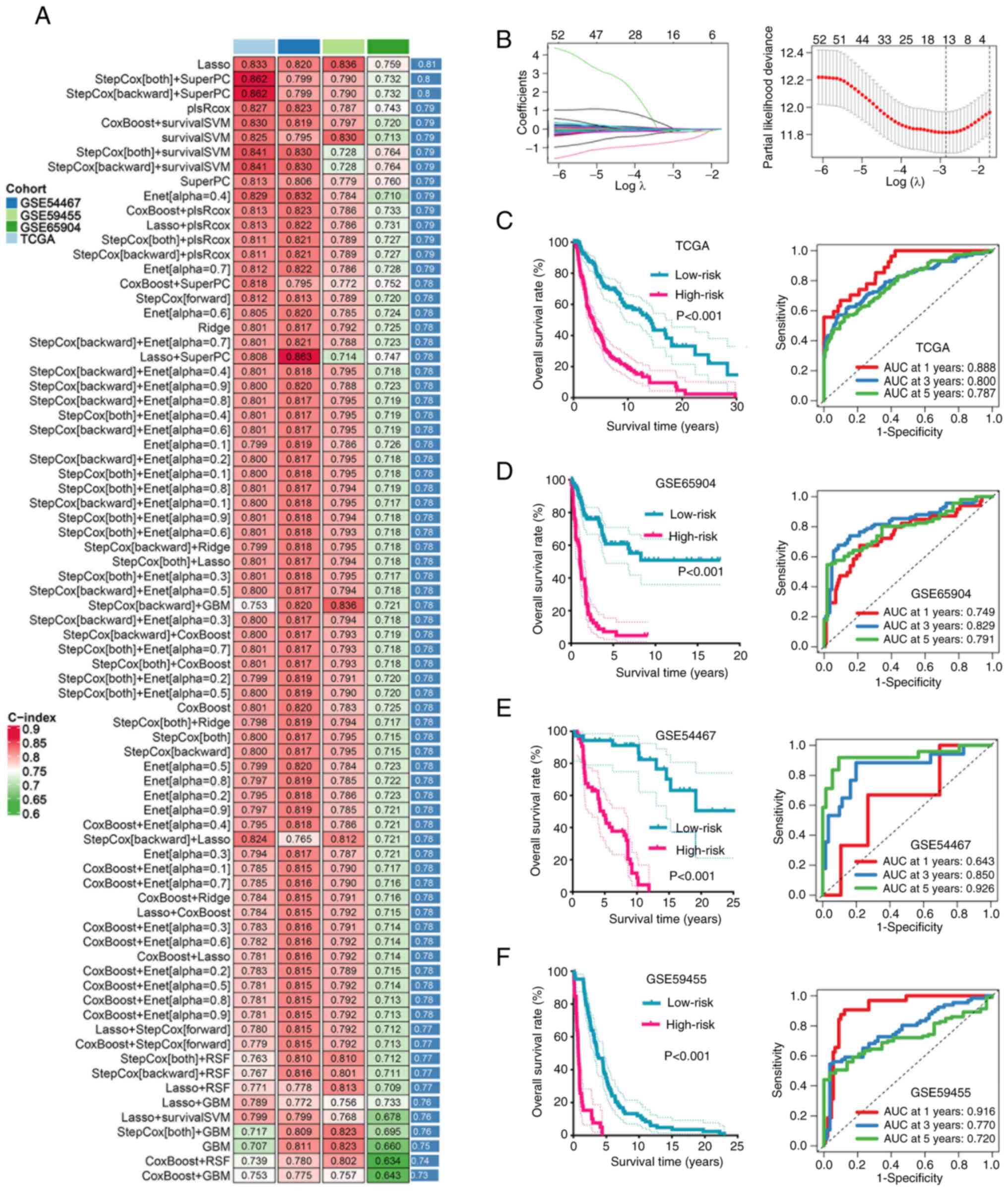
Figure 1

Machine learning developed programmed
cell death-related signature. (A) The C-index of 77 types of
prognostic models of TCGA and GEO cohorts. (B) Determination of the
optimal λ was obtained when the partial likelihood deviance reached
the minimum value in the TCGA cohort and further generated Lasso
coefficients of the most useful prognostic genes. The survival
curve and their corresponding ROC curve in SKCM with different risk
score in (C) TCGA, (D) GSE65904, (E) GSE54467 and (F) GSE59455
dataset. C-index, concordance index; TCGA, The Cancer Genome Atlas;
GEO, Gene Expression Omnibus; GSE, gene expression data series;
SKCM, skin cutaneous melanoma; RSF, random survival forest;
survivalSVM, survival-support vector machines; Enet, efficient
neural network; plsRCox, partial least squares regression for Cox;
SuperPC, super partial correlation; GBM, gradient boosting machine;
AUC, area under the curve.

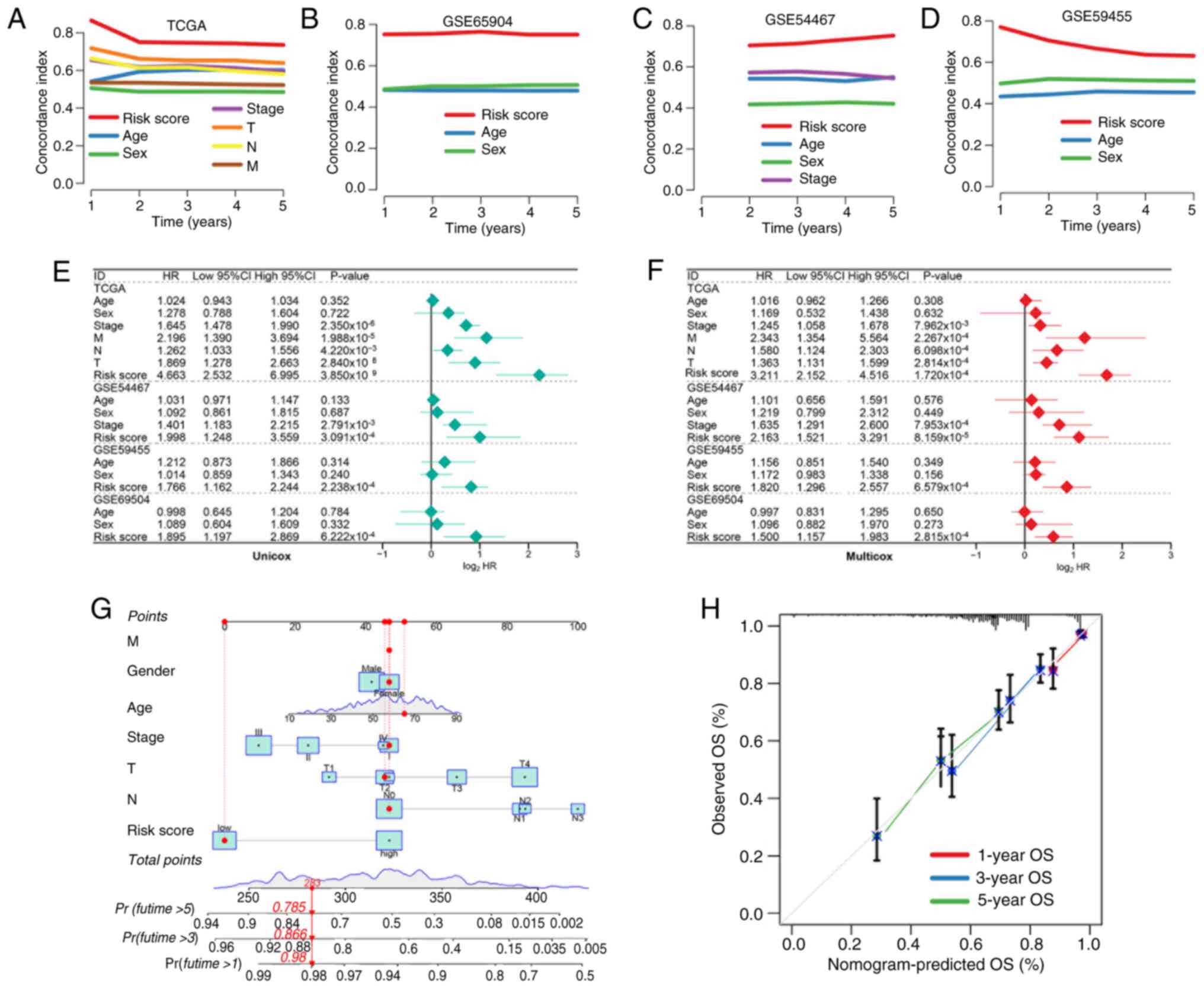
Figure 2

Performance of programmed cell
death-related signature in predicting the prognosis in SKCM.
C-index comparing the performance of programmed cell death-related
signature and clinical characteristics in predicting the prognosis
of SKCM in (A) TCGA, and (B) GSE65904, (C) GSE54467 and (D)
GSE59455 cohorts. (E) Univariate and (F) multivariate Cox
regression analysis identified the risk factors for the overall
survival of patients with SKCM. (G) A nomogram constructed using
programmed cell death-related signature and clinical
characteristics. (H) Calibration plots suggested that the actual
1-, 3- and 5-year survival times were highly consistent with the
predicted survival times. C-index, concordance index; TCGA, The
Cancer Genome Atlas; SKCM, skin cutaneous melanoma; GSE, gene
expression data series; HR, hazard ratio; OS, overall survival.

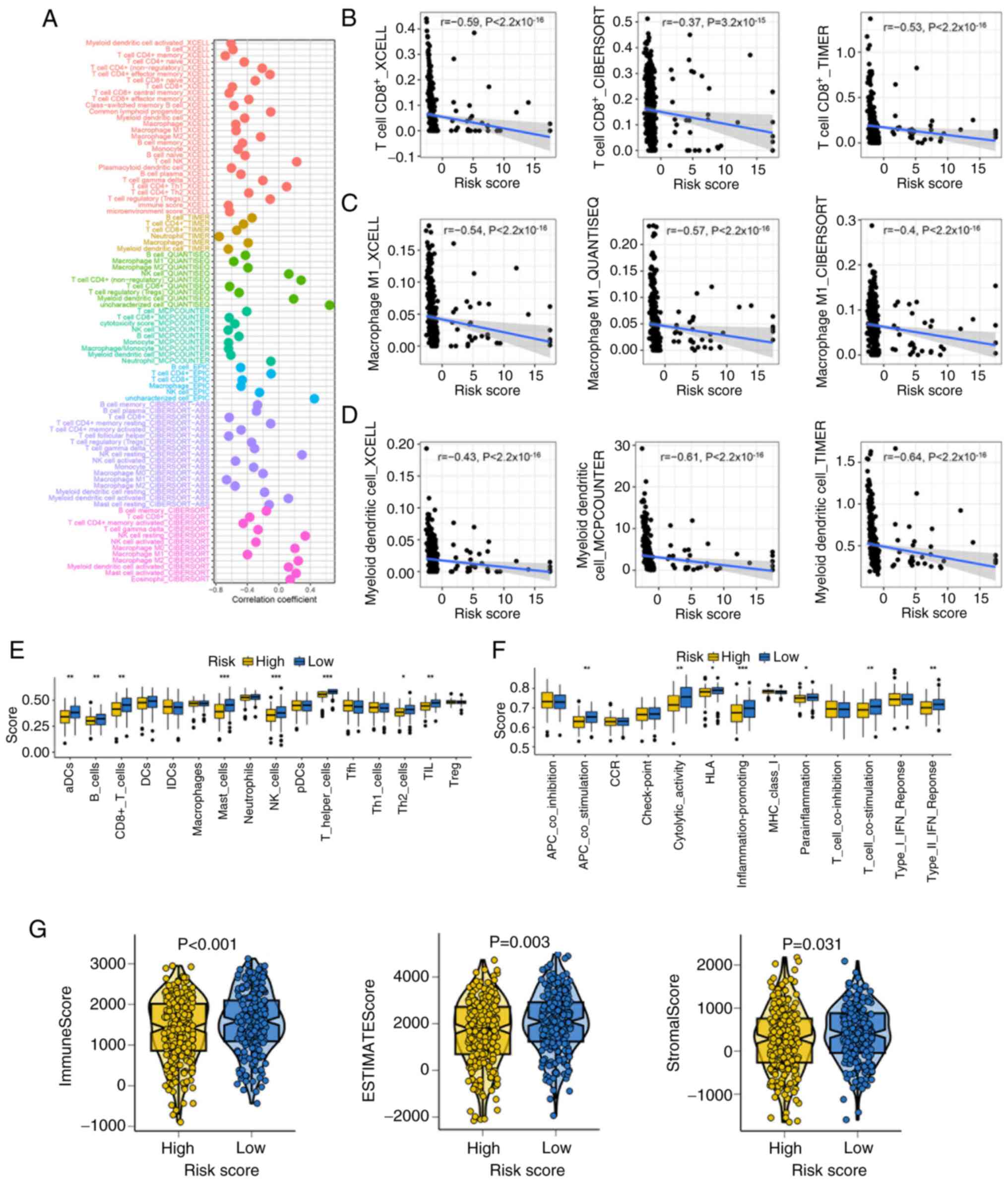
Figure 3

Landscape of the immune infiltration
among various risk score groups. (A) Correlation between risk score
and immune cell abundance, determined using seven algorithms. The
correlation between the risk score and the number of (B)
CD8+ T cells, (C) M1 macrophages and (D) dendritic
cells. ssGSEA study assessing (E) immune cell and (F)
immune-related function levels across several risk score
categories. (G) The stromal, immune and ESTIMATE scores across
various risk score categories. *P<0.05, **P<0.01 and
***P<0.001. ssGSEA, single sample gene set enrichment analysis;
aDCs, antibody-drug conjugates; DCs, dendritic cells; NK, natural
killer; Tfh, T follicular helper cells; Th, T helper cells; TIL,
tumor infiltrating lymphocytes; Treg, regulatory T cells; APC,
antigen presenting cells; CCR, chemokine receptor; MHC, major
histocompatibility complex; iDCs, immature dendritic cells; pDCs,
plasmacytoid dendritic cells.

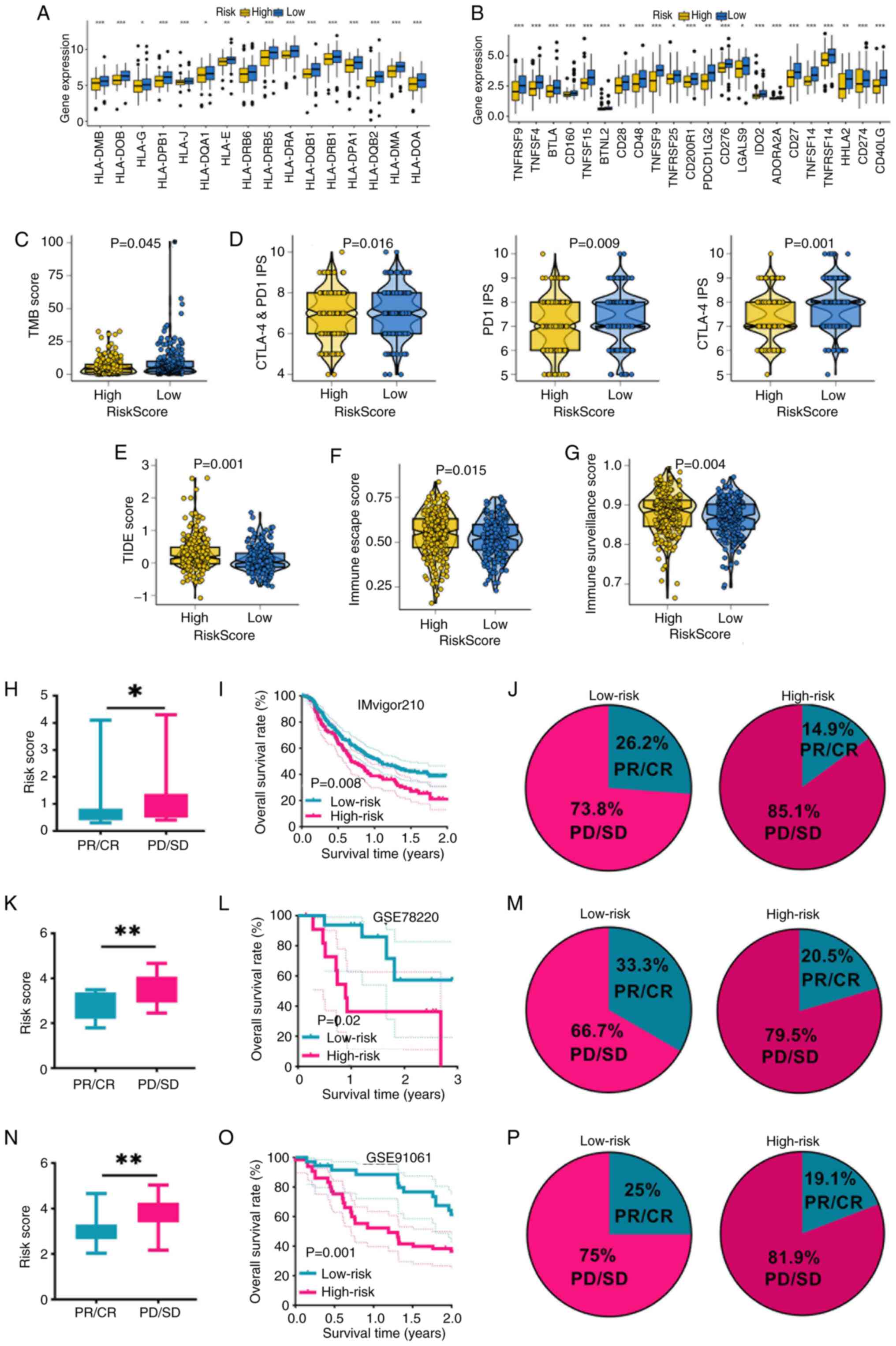
Figure 4

Programmed cell death-related
signature acted as a biomarker for predicting the immunotherapy
benefits in SKCM. (A) Level of HLA-related genes, (B) immune
checkpoints, (C) TMB score, (D) PD1 and CTLA-4 immunophenoscore,
(E) TIDE score, (F) immunological escape score and (G) immune
surveillance score in patients with SKCM in different risk score
categories. (H) Risk score, (I) survival rates and (J)
immunotherapy response rate in patients with SKCM with different
risk score in the IMvigor210 cohort. (K) Risk score, (L) survival
rates and (M) immunotherapy response rate in patients with SKCM
with different risk scores in the GSE78220 cohort. (N) Risk score,
(O) survival rates and (P) immunotherapy response rate in patients
with SKCM with different risk scores in the GSE91061 cohort
*P<0.05, **P<0.01 and ***P<0.001. SKCM, skin cutaneous
melanoma; HLA, human leukocyte antigen; TMB, tumor mutation burden;
PD1, programmed cell death protein-1; CTLA4, cytotoxic T-lymphocyte
associated protein 4; TIDE, tumor immune dysfunction and exclusion;
GSE, gene expression data series; CR, complete response; PR,
partial response; SD, stable disease; PD, progressive disease.

Figure 5

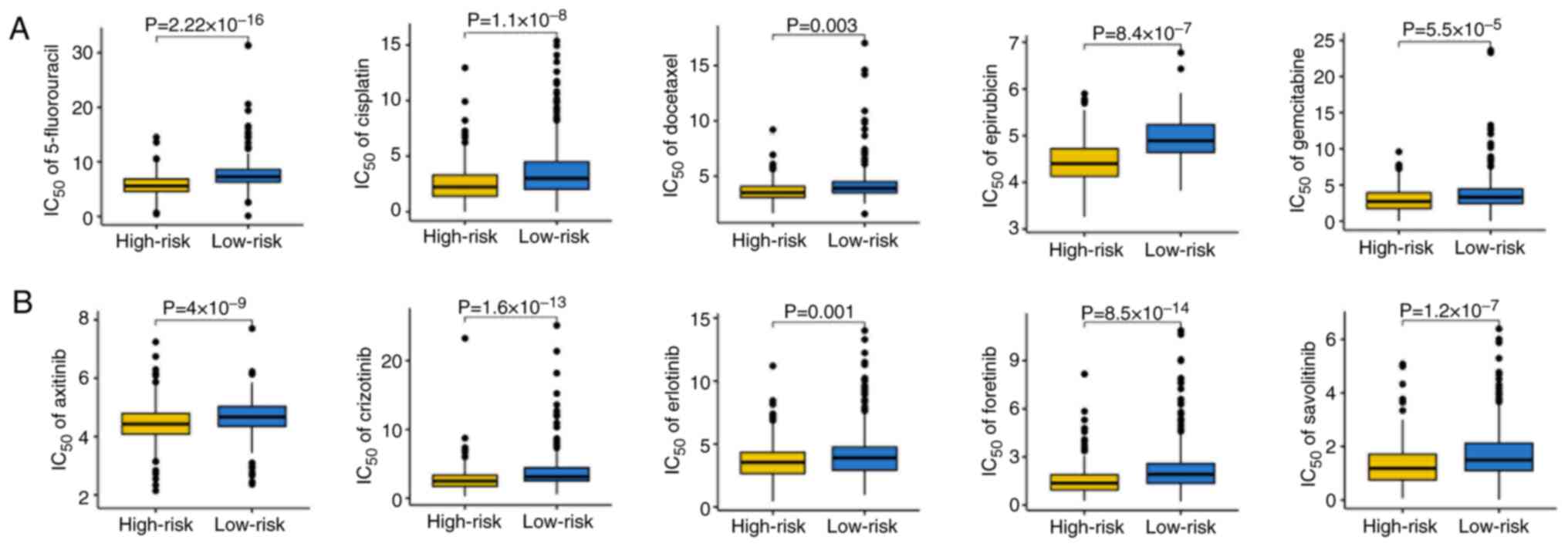
IC50 value of drugs in
different risk score groups. Patients with SKCM with low-risk score
had higher IC50 values for drugs correlated with (A)
chemotherapy and (B) targeted therapy. SKCM, skin cutaneous
melanoma.

Figure 6

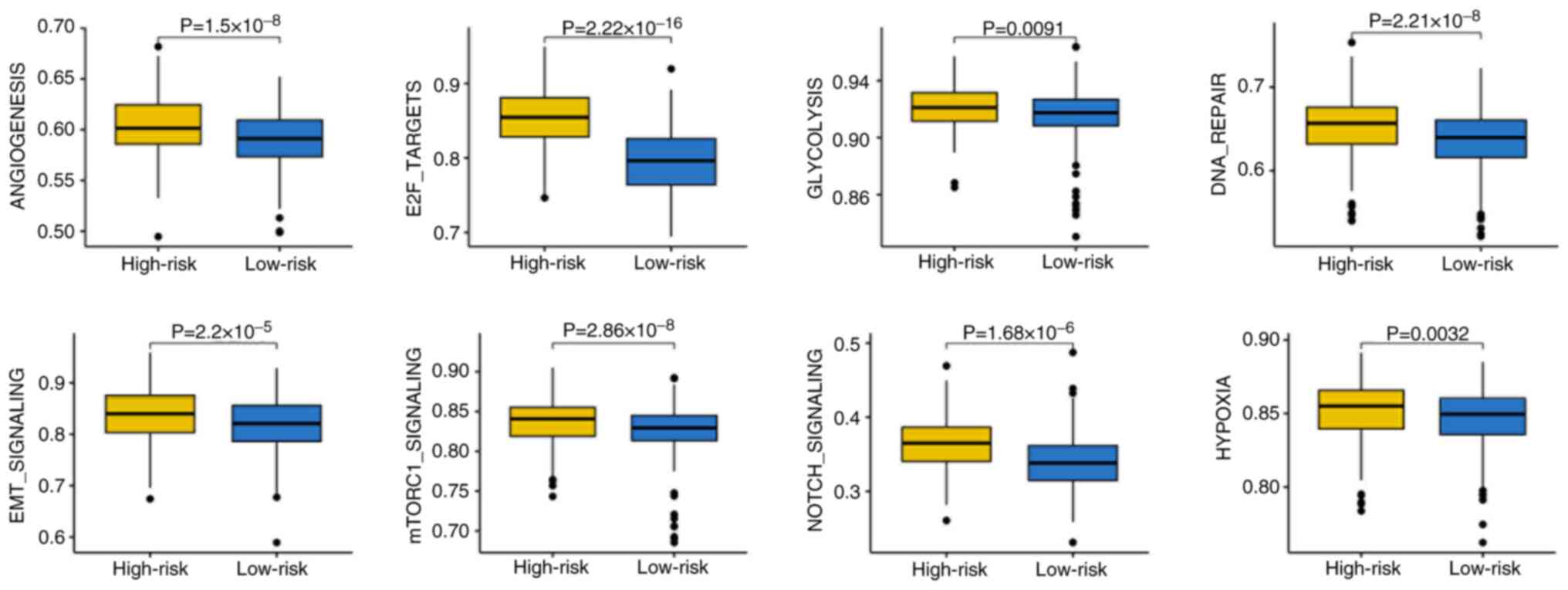
Correlation between cancer-related
hallmarks and risk score in SKCM. The gene sets scoring for cancer
hallmarks were lower in patients with SKCM with low-risk scores.
SKCM, skin cutaneous melanoma; E2F, early region 2 binding factor;
EMT, epithelial-mesenchymal transition.

Figure 7

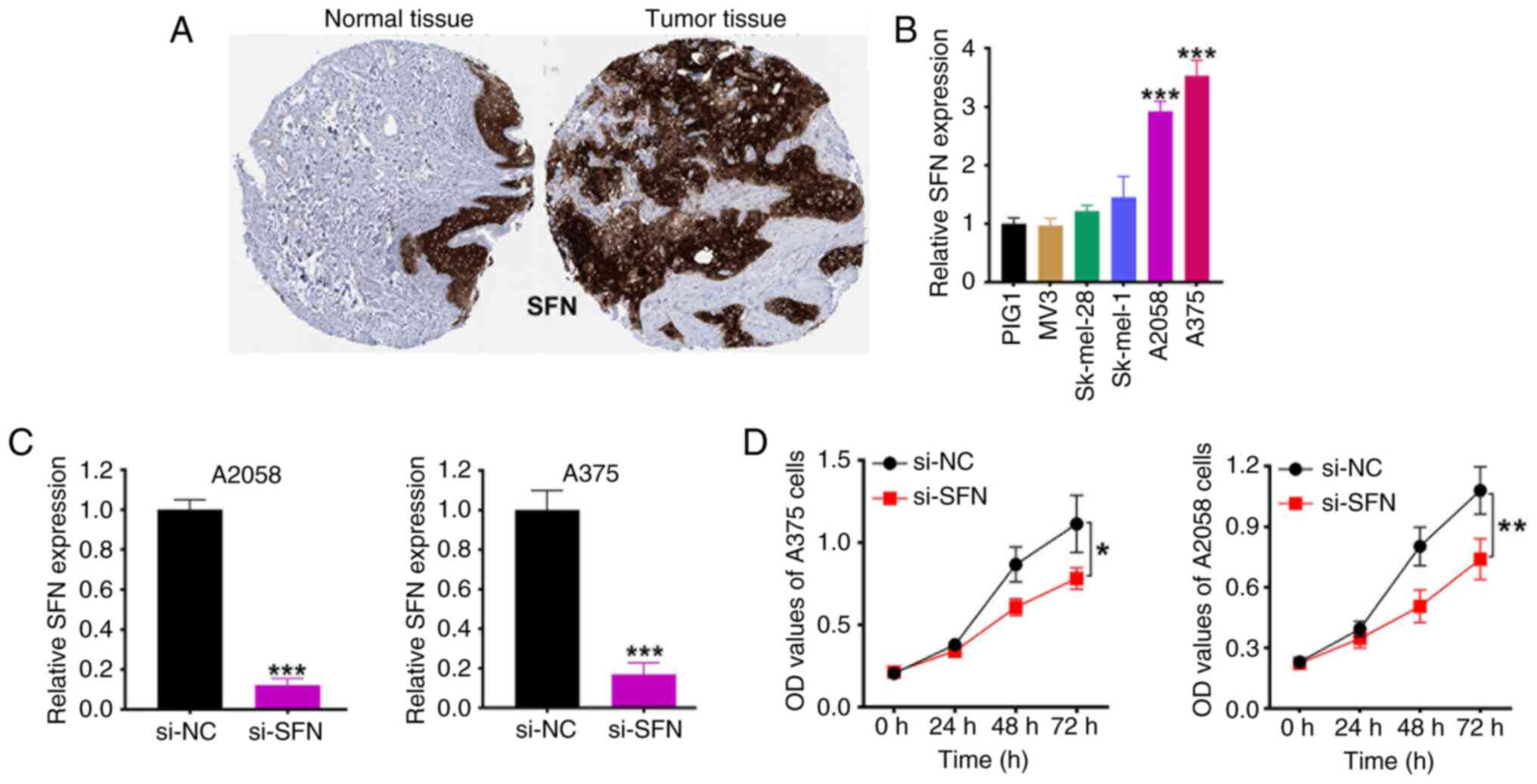
Validating the role of SFN in SKCM.
(A) Typical SFN immunohistochemistry in normal and SKCM tissues
obtained from the Human Protein Atlas database. (B) The relative
SFN expression levels in SKCM and normal cell lines. ***P<0.001
vs. PIG1. (C) Verification of the knockdown effect of SFN. (D) The
CCK-8 experiment demonstrated that downregulation of SFN clearly
reduced A375 and A2058 cell proliferation. *P<0.05, **P<0.01
and ***P<0.001. SFN, stratifin; SKCM, skin cutaneous melanoma;
CCK-8, Cell Counting Kit-8; NC, negative control.
View References

1 

Long GV, Swetter SM, Menzies AM, Gershenwald JE and Scolyer RA: Cutaneous melanoma. Lancet. 402:485–502. 2023. View Article : Google Scholar : PubMed/NCBI

2 

Arnold M, Singh D, Laversanne M, Vignat J, Vaccarella S, Meheus F, Cust AE, de Vries E, Whiteman DC and Bray F: Global burden of cutaneous melanoma in 2020 and projections to 2040. JAMA Dermatol. 158:495–503. 2022. View Article : Google Scholar : PubMed/NCBI

3 

Lopes F, Sleiman MG, Sebastian K, Bogucka R, Jacobs EA and Adamson AS: UV exposure and the risk of cutaneous melanoma in skin of color: A systematic review. JAMA Dermatol. 157:213–219. 2021. View Article : Google Scholar : PubMed/NCBI

4 

Leonardi GC, Falzone L, Salemi R, Zanghì A, Spandidos DA, Mccubrey JA, Candido S and Libra M: Cutaneous melanoma: From pathogenesis to therapy (Review). Int J Oncol. 52:1071–1080. 2018.PubMed/NCBI

5 

Newton K, Strasser A, Kayagaki N and Dixit VM: Cell death. Cell. 187:235–256. 2024. View Article : Google Scholar : PubMed/NCBI

6 

Liu J, Hong M, Li Y, Chen D, Wu Y and Hu Y: Programmed cell death tunes tumor immunity. Front Immunol. 13:8473452022. View Article : Google Scholar : PubMed/NCBI

7 

Liang T, Gu L, Kang X, Li J, Song Y, Wang Y and Ma W: Programmed cell death disrupts inflammatory tumor microenvironment (TME) and promotes glioblastoma evolution. Cell Commun Signal. 22:3332024. View Article : Google Scholar : PubMed/NCBI

8 

Liu Y, Shou Y, Zhu R, Qiu Z, Zhang Q and Xu J: Construction and validation of a ferroptosis-related prognostic signature for melanoma based on single-cell RNA sequencing. Front Cell Dev Biol. 10:8184572022. View Article : Google Scholar : PubMed/NCBI

9 

Nedaeinia R, Dianat-Moghadam H, Movahednasab M, Khosroabadi Z, Keshavarz M, Amoozgar Z and Salehi R: Therapeutic and prognostic values of ferroptosis signature in glioblastoma. Int Immunopharmacol. 155:1145972025. View Article : Google Scholar : PubMed/NCBI

10 

Wang S, Wang R, Hu D, Zhang C, Cao P and Huang J: Machine learning reveals diverse cell death patterns in lung adenocarcinoma prognosis and therapy. NPJ Precis Oncol. 8:492024. View Article : Google Scholar : PubMed/NCBI

11 

Zhang L, Cui Y, Zhou G, Zhang Z and Zhang P: Leveraging mitochondrial-programmed cell death dynamics to enhance prognostic accuracy and immunotherapy efficacy in lung adenocarcinoma. J Immunother Cancer. 12:e0100082024. View Article : Google Scholar : PubMed/NCBI

12 

Cai X, Lin J, Liu L, Zheng J, Liu Q, Ji L and Sun Y: A novel TCGA-validated programmed cell-death-related signature of ovarian cancer. BMC Cancer. 24:5152024. View Article : Google Scholar : PubMed/NCBI

13 

Wang Y and Zhang Q: Leveraging programmed cell death signature to predict clinical outcome and immunotherapy benefits in postoperative bladder cancer. Sci Rep. 14:229762024. View Article : Google Scholar : PubMed/NCBI

14 

Gu X, Pan J, Li Y and Feng L: A programmed cell death-related gene signature to predict prognosis and therapeutic responses in liver hepatocellular carcinoma. Discov Oncol. 15:712024. View Article : Google Scholar : PubMed/NCBI

15 

Nayarisseri A, Khandelwal R, Tanwar P, Madhavi M, Sharma D, Thakur G, Speck-Planche A and Singh SK: Artificial intelligence, big data and machine learning approaches in precision medicine & drug discovery. Curr Drug Targets. 22:631–655. 2021. View Article : Google Scholar : PubMed/NCBI

16 

Ngiam KY and Khor IW: Big data and machine learning algorithms for health-care delivery. Lancet Oncol. 20:e262–e273. 2019. View Article : Google Scholar : PubMed/NCBI

17 

Jayawardana K, Schramm SJ, Haydu L, Thompson JF, Scolyer RA, Mann GJ, Müller S and Yang JY: Determination of prognosis in metastatic melanoma through integration of clinico-pathologic, mutation, mRNA, microRNA, and protein information. Int J Cancer. 136:863–874. 2015. View Article : Google Scholar : PubMed/NCBI

18 

Budden T, Davey RJ, Vilain RE, Ashton KA, Braye SG, Beveridge NJ and Bowden NA: Repair of UVB-induced DNA damage is reduced in melanoma due to low XPC and global genome repair. Oncotarget. 7:60940–60953. 2016. View Article : Google Scholar : PubMed/NCBI

19 

Cabrita R, Lauss M, Sanna A, Donia M, Skaarup Larsen M, Mitra S, Johansson I, Phung B, Harbst K, Vallon-Christersson J, et al: Tertiary lymphoid structures improve immunotherapy and survival in melanoma. Nature. 577:561–565. 2020. View Article : Google Scholar : PubMed/NCBI

20 

Riaz N, Havel JJ, Makarov V, Desrichard A, Urba WJ, Sims JS, Hodi FS, Martín-Algarra S, Mandal R, Sharfman WH, et al: Tumor and microenvironment evolution during immunotherapy with nivolumab. Cell. 171:934–949.e16. 2017. View Article : Google Scholar : PubMed/NCBI

21 

Hugo W, Zaretsky JM, Sun L, Song C, Moreno BH, Hu-Lieskovan S, Berent-Maoz B, Pang J, Chmielowski B, Cherry G, et al: Genomic and transcriptomic features of response to Anti-PD-1 therapy in metastatic melanoma. Cell. 165:35–44. 2016. View Article : Google Scholar : PubMed/NCBI

22 

Rosenberg JE, Galsky MD, Powles T, Petrylak DP, Bellmunt J, Loriot Y, Necchi A, Hoffman-Censits J, Perez-Gracia JL, van der Heijden MS, et al: Atezolizumab monotherapy for metastatic urothelial carcinoma: Final analysis from the phase II IMvigor210 trial. ESMO Open. 9:1039722024. View Article : Google Scholar : PubMed/NCBI

23 

Ritchie ME, Phipson B, Wu D, Hu Y, Law CW, Shi W and Smyth GK: Limma powers differential expression analyses for RNA-sequencing and microarray studies. Nucleic Acids Res. 43:e472015. View Article : Google Scholar : PubMed/NCBI

24 

Liu Z, Liu L, Weng S, Guo C, Dang Q, Xu H, Wang L, Lu T, Zhang Y, Sun Z and Han X: Machine learning-based integration develops an immune-derived lncRNA signature for improving outcomes in colorectal cancer. Nat Commun. 13:8162022. View Article : Google Scholar : PubMed/NCBI

25 

Sturm G, Finotello F and List M: Immunedeconv: An R package for unified access to computational methods for estimating immune cell fractions from bulk RNA-sequencing data. Methods Mol Biol. 2120:223–232. 2020. View Article : Google Scholar : PubMed/NCBI

26 

Yoshihara K, Shahmoradgoli M, Martínez E, Vegesna R, Kim H, Torres-Garcia W, Treviño V, Shen H, Laird PW, Levine DA, et al: Inferring tumour purity and stromal and immune cell admixture from expression data. Nat Commun. 4:26122013. View Article : Google Scholar : PubMed/NCBI

27 

Palmeri M, Mehnert J, Silk AW, Jabbour SK, Ganesan S, Popli P, Riedlinger G, Stephenson R, de Meritens AB, Leiser A, et al: Real-world application of tumor mutational burden-high (TMB-high) and microsatellite instability (MSI) confirms their utility as immunotherapy biomarkers. ESMO Open. 7:1003362022. View Article : Google Scholar : PubMed/NCBI

28 

Fu J, Li K, Zhang W, Wan C, Zhang J, Jiang P and Liu XS: Large-scale public data reuse to model immunotherapy response and resistance. Genome Med. 12:212020. View Article : Google Scholar : PubMed/NCBI

29 

Charoentong P, Finotello F, Angelova M, Mayer C, Efremova M, Rieder D, Hackl H and Trajanoski Z: Pan-cancer immunogenomic analyses reveal genotype-immunophenotype relationships and predictors of response to checkpoint blockade. Cell Rep. 18:248–262. 2017. View Article : Google Scholar : PubMed/NCBI

30 

Sun Y, Wu L, Zhong Y, Zhou K, Hou Y, Wang Z, Zhang Z, Xie J, Wang C, Chen D, et al: Single-cell landscape of the ecosystem in early-relapse hepatocellular carcinoma. Cell. 184:404–421.e16. 2021. View Article : Google Scholar : PubMed/NCBI

31 

Maeser D, Gruener RF and Huang RS: oncoPredict: An R package for predicting in vivo or cancer patient drug response and biomarkers from cell line screening data. Brief Bioinform. 22:bbab2602021. View Article : Google Scholar : PubMed/NCBI

32 

Livak KJ and Schmittgen TD: Analysis of relative gene expression data using real-time quantitative PCR and the 2(−Delta Delta C(T)) Method. Methods. 25:402–408. 2001. View Article : Google Scholar : PubMed/NCBI

33 

Balch CM, Gershenwald JE, Soong SJ, Thompson JF, Atkins MB, Byrd DR, Buzaid AC, Cochran AJ, Coit DG, Ding S, et al: Final version of 2009 AJCC melanoma staging and classification. J Clin Oncol. 27:6199–6206. 2009. View Article : Google Scholar : PubMed/NCBI

34 

Lin A and Yan WH: HLA-G/ILTs targeted solid cancer immunotherapy: Opportunities and challenges. Front Immunol. 12:6986772021. View Article : Google Scholar : PubMed/NCBI

35 

Lin A, Zhang J and Luo P: Crosstalk between the MSI status and tumor microenvironment in colorectal cancer. Front Immunol. 11:20392020. View Article : Google Scholar : PubMed/NCBI

36 

Siegel RL, Miller KD, Wagle NS and Jemal A: Cancer statistics, 2023. CA Cancer J Clin. 73:17–48. 2023.PubMed/NCBI

37 

Gershenwald JE, Scolyer RA, Hess KR, Sondak VK, Long GV, Ross MI, Lazar AJ, Faries MB, Kirkwood JM, McArthur GA, et al: Melanoma staging: Evidence-based changes in the American Joint Committee on Cancer eighth edition cancer staging manual. CA Cancer J Clin. 67:472–492. 2017.PubMed/NCBI

38 

Wang J, Yang F, Sun Q, Zeng Z, Liu M, Yu W, Zhang P, Yu J, Yang L, Zhang X, et al: The prognostic landscape of genes and infiltrating immune cells in cytokine induced killer cell treated-lung squamous cell carcinoma and adenocarcinoma. Cancer Biol Med. 18:1134–1147. 2021. View Article : Google Scholar : PubMed/NCBI

39 

Tien FM, Lu HH, Lin SY and Tsai HC: Epigenetic remodeling of the immune landscape in cancer: Therapeutic hurdles and opportunities. J Biomed Sci. 30:32023. View Article : Google Scholar : PubMed/NCBI

40 

Rooney MS, Shukla SA, Wu CJ, Getz G and Hacohen N: Molecular and genetic properties of tumors associated with local immune cytolytic activity. Cell. 160:48–61. 2015. View Article : Google Scholar : PubMed/NCBI

41 

Sun R, Limkin EJ, Vakalopoulou M, Champiat S, Han SR, Verlingue L, Brandao D, Lancia A, Ammari S, Hollebecque A, et al: A radiomics approach to assess tumour-infiltrating CD8 cells and response to anti-PD-1 or anti-PD-L1 immunotherapy: an imaging biomarker, retrospective multicohort study. Lancet Oncol. 19:1180–1191. 2018. View Article : Google Scholar : PubMed/NCBI

42 

Jiang P, Gu S, Pan D, Fu J, Sahu A, Hu X, Li Z, Traugh N, Bu X, Li B, et al: Signatures of T cell dysfunction and exclusion predict cancer immunotherapy response. Nat Med. 24:1550–1558. 2018. View Article : Google Scholar : PubMed/NCBI

43 

Liu D, Schilling B, Liu D, Sucker A, Livingstone E, Jerby-Arnon L, Zimmer L, Gutzmer R, Satzger I, Loquai C, et al: Integrative molecular and clinical modeling of clinical outcomes to PD1 blockade in patients with metastatic melanoma. Nat Med. 25:1916–1927. 2019. View Article : Google Scholar : PubMed/NCBI

44 

Gide TN, Quek C, Menzies AM, Tasker AT, Shang P, Holst J, Madore J, Lim SY, Velickovic R, Wongchenko M, et al: Distinct immune cell populations define response to anti-PD-1 monotherapy and anti-PD-1/Anti-CTLA-4 combined therapy. Cancer Cell. 35:238–255.e6. 2019. View Article : Google Scholar : PubMed/NCBI

45 

Yang W, Soares J, Greninger P, Edelman EJ, Lightfoot H, Forbes S, Bindal N, Beare D, Smith JA, Thompson IR, et al: Genomics of drug sensitivity in cancer (GDSC): A resource for therapeutic biomarker discovery in cancer cells. Nucleic Acids Res. 41((Database Issue)): D955–D961. 2013.PubMed/NCBI

46 

Hu Y, Zeng Q, Li C and Xie Y: Expression profile and prognostic value of SFN in human ovarian cancer. Biosci Rep. 39:BSR201901002019. View Article : Google Scholar : PubMed/NCBI

47 

Du N, Li D, Zhao W and Liu Y: Stratifin (SFN) regulates cervical cancer cell proliferation, apoptosis, and cytoskeletal remodeling and metastasis progression through LIMK2/cofilin signaling. Mol Biotechnol. 66:3369–3381. 2024. View Article : Google Scholar : PubMed/NCBI

Related Articles

  • Abstract
  • View
  • Download
  • Twitter
Copy and paste a formatted citation
Spandidos Publications style
Wang X, Zheng Y, Yang S, Si H, Chen W and Shen S: Machine learning‑based programmed cell death‑related index to predict prognosis and immunotherapy response in skin cutaneous melanoma. Oncol Lett 30: 581, 2025.
APA
Wang, X., Zheng, Y., Yang, S., Si, H., Chen, W., & Shen, S. (2025). Machine learning‑based programmed cell death‑related index to predict prognosis and immunotherapy response in skin cutaneous melanoma. Oncology Letters, 30, 581. https://doi.org/10.3892/ol.2025.15327
MLA
Wang, X., Zheng, Y., Yang, S., Si, H., Chen, W., Shen, S."Machine learning‑based programmed cell death‑related index to predict prognosis and immunotherapy response in skin cutaneous melanoma". Oncology Letters 30.6 (2025): 581.
Chicago
Wang, X., Zheng, Y., Yang, S., Si, H., Chen, W., Shen, S."Machine learning‑based programmed cell death‑related index to predict prognosis and immunotherapy response in skin cutaneous melanoma". Oncology Letters 30, no. 6 (2025): 581. https://doi.org/10.3892/ol.2025.15327
Copy and paste a formatted citation
x
Spandidos Publications style
Wang X, Zheng Y, Yang S, Si H, Chen W and Shen S: Machine learning‑based programmed cell death‑related index to predict prognosis and immunotherapy response in skin cutaneous melanoma. Oncol Lett 30: 581, 2025.
APA
Wang, X., Zheng, Y., Yang, S., Si, H., Chen, W., & Shen, S. (2025). Machine learning‑based programmed cell death‑related index to predict prognosis and immunotherapy response in skin cutaneous melanoma. Oncology Letters, 30, 581. https://doi.org/10.3892/ol.2025.15327
MLA
Wang, X., Zheng, Y., Yang, S., Si, H., Chen, W., Shen, S."Machine learning‑based programmed cell death‑related index to predict prognosis and immunotherapy response in skin cutaneous melanoma". Oncology Letters 30.6 (2025): 581.
Chicago
Wang, X., Zheng, Y., Yang, S., Si, H., Chen, W., Shen, S."Machine learning‑based programmed cell death‑related index to predict prognosis and immunotherapy response in skin cutaneous melanoma". Oncology Letters 30, no. 6 (2025): 581. https://doi.org/10.3892/ol.2025.15327
Follow us
  • Twitter
  • LinkedIn
  • Facebook
About
  • Spandidos Publications
  • Careers
  • Cookie Policy
  • Privacy Policy
How can we help?
  • Help
  • Live Chat
  • Contact
  • Email to our Support Team