Spandidos Publications Logo
  • About
    • About Spandidos
    • Aims and Scopes
    • Abstracting and Indexing
    • Editorial Policies
    • Reprints and Permissions
    • Job Opportunities
    • Terms and Conditions
    • Contact
  • Journals
    • All Journals
    • Oncology Letters
      • Oncology Letters
      • Information for Authors
      • Editorial Policies
      • Editorial Board
      • Aims and Scope
      • Abstracting and Indexing
      • Bibliographic Information
      • Archive
    • International Journal of Oncology
      • International Journal of Oncology
      • Information for Authors
      • Editorial Policies
      • Editorial Board
      • Aims and Scope
      • Abstracting and Indexing
      • Bibliographic Information
      • Archive
    • Molecular and Clinical Oncology
      • Molecular and Clinical Oncology
      • Information for Authors
      • Editorial Policies
      • Editorial Board
      • Aims and Scope
      • Abstracting and Indexing
      • Bibliographic Information
      • Archive
    • Experimental and Therapeutic Medicine
      • Experimental and Therapeutic Medicine
      • Information for Authors
      • Editorial Policies
      • Editorial Board
      • Aims and Scope
      • Abstracting and Indexing
      • Bibliographic Information
      • Archive
    • International Journal of Molecular Medicine
      • International Journal of Molecular Medicine
      • Information for Authors
      • Editorial Policies
      • Editorial Board
      • Aims and Scope
      • Abstracting and Indexing
      • Bibliographic Information
      • Archive
    • Biomedical Reports
      • Biomedical Reports
      • Information for Authors
      • Editorial Policies
      • Editorial Board
      • Aims and Scope
      • Abstracting and Indexing
      • Bibliographic Information
      • Archive
    • Oncology Reports
      • Oncology Reports
      • Information for Authors
      • Editorial Policies
      • Editorial Board
      • Aims and Scope
      • Abstracting and Indexing
      • Bibliographic Information
      • Archive
    • Molecular Medicine Reports
      • Molecular Medicine Reports
      • Information for Authors
      • Editorial Policies
      • Editorial Board
      • Aims and Scope
      • Abstracting and Indexing
      • Bibliographic Information
      • Archive
    • World Academy of Sciences Journal
      • World Academy of Sciences Journal
      • Information for Authors
      • Editorial Policies
      • Editorial Board
      • Aims and Scope
      • Abstracting and Indexing
      • Bibliographic Information
      • Archive
    • International Journal of Functional Nutrition
      • International Journal of Functional Nutrition
      • Information for Authors
      • Editorial Policies
      • Editorial Board
      • Aims and Scope
      • Abstracting and Indexing
      • Bibliographic Information
      • Archive
    • International Journal of Epigenetics
      • International Journal of Epigenetics
      • Information for Authors
      • Editorial Policies
      • Editorial Board
      • Aims and Scope
      • Abstracting and Indexing
      • Bibliographic Information
      • Archive
    • Medicine International
      • Medicine International
      • Information for Authors
      • Editorial Policies
      • Editorial Board
      • Aims and Scope
      • Abstracting and Indexing
      • Bibliographic Information
      • Archive
  • Articles
  • Information
    • Information for Authors
    • Information for Reviewers
    • Information for Librarians
    • Information for Advertisers
    • Conferences
  • Language Editing
Spandidos Publications Logo
  • About
    • About Spandidos
    • Aims and Scopes
    • Abstracting and Indexing
    • Editorial Policies
    • Reprints and Permissions
    • Job Opportunities
    • Terms and Conditions
    • Contact
  • Journals
    • All Journals
    • Biomedical Reports
      • Information for Authors
      • Editorial Policies
      • Editorial Board
      • Aims and Scope
      • Abstracting and Indexing
      • Bibliographic Information
      • Archive
    • Experimental and Therapeutic Medicine
      • Information for Authors
      • Editorial Policies
      • Editorial Board
      • Aims and Scope
      • Abstracting and Indexing
      • Bibliographic Information
      • Archive
    • International Journal of Epigenetics
      • Information for Authors
      • Editorial Policies
      • Editorial Board
      • Aims and Scope
      • Abstracting and Indexing
      • Bibliographic Information
      • Archive
    • International Journal of Functional Nutrition
      • Information for Authors
      • Editorial Policies
      • Editorial Board
      • Aims and Scope
      • Abstracting and Indexing
      • Bibliographic Information
      • Archive
    • International Journal of Molecular Medicine
      • Information for Authors
      • Editorial Policies
      • Editorial Board
      • Aims and Scope
      • Abstracting and Indexing
      • Bibliographic Information
      • Archive
    • International Journal of Oncology
      • Information for Authors
      • Editorial Policies
      • Editorial Board
      • Aims and Scope
      • Abstracting and Indexing
      • Bibliographic Information
      • Archive
    • Medicine International
      • Information for Authors
      • Editorial Policies
      • Editorial Board
      • Aims and Scope
      • Abstracting and Indexing
      • Bibliographic Information
      • Archive
    • Molecular and Clinical Oncology
      • Information for Authors
      • Editorial Policies
      • Editorial Board
      • Aims and Scope
      • Abstracting and Indexing
      • Bibliographic Information
      • Archive
    • Molecular Medicine Reports
      • Information for Authors
      • Editorial Policies
      • Editorial Board
      • Aims and Scope
      • Abstracting and Indexing
      • Bibliographic Information
      • Archive
    • Oncology Letters
      • Information for Authors
      • Editorial Policies
      • Editorial Board
      • Aims and Scope
      • Abstracting and Indexing
      • Bibliographic Information
      • Archive
    • Oncology Reports
      • Information for Authors
      • Editorial Policies
      • Editorial Board
      • Aims and Scope
      • Abstracting and Indexing
      • Bibliographic Information
      • Archive
    • World Academy of Sciences Journal
      • Information for Authors
      • Editorial Policies
      • Editorial Board
      • Aims and Scope
      • Abstracting and Indexing
      • Bibliographic Information
      • Archive
  • Articles
  • Information
    • For Authors
    • For Reviewers
    • For Librarians
    • For Advertisers
    • Conferences
  • Language Editing
Login Register Submit
  • This site uses cookies
  • You can change your cookie settings at any time by following the instructions in our Cookie Policy. To find out more, you may read our Privacy Policy.

    I agree
Search articles by DOI, keyword, author or affiliation
Search
Advanced Search
presentation
Oncology Letters
Join Editorial Board Propose a Special Issue
Print ISSN: 1792-1074 Online ISSN: 1792-1082
Journal Cover
January-2026 Volume 31 Issue 1

Full Size Image

Sign up for eToc alerts
Recommend to Library

Journals

International Journal of Molecular Medicine

International Journal of Molecular Medicine

International Journal of Molecular Medicine is an international journal devoted to molecular mechanisms of human disease.

International Journal of Oncology

International Journal of Oncology

International Journal of Oncology is an international journal devoted to oncology research and cancer treatment.

Molecular Medicine Reports

Molecular Medicine Reports

Covers molecular medicine topics such as pharmacology, pathology, genetics, neuroscience, infectious diseases, molecular cardiology, and molecular surgery.

Oncology Reports

Oncology Reports

Oncology Reports is an international journal devoted to fundamental and applied research in Oncology.

Experimental and Therapeutic Medicine

Experimental and Therapeutic Medicine

Experimental and Therapeutic Medicine is an international journal devoted to laboratory and clinical medicine.

Oncology Letters

Oncology Letters

Oncology Letters is an international journal devoted to Experimental and Clinical Oncology.

Biomedical Reports

Biomedical Reports

Explores a wide range of biological and medical fields, including pharmacology, genetics, microbiology, neuroscience, and molecular cardiology.

Molecular and Clinical Oncology

Molecular and Clinical Oncology

International journal addressing all aspects of oncology research, from tumorigenesis and oncogenes to chemotherapy and metastasis.

World Academy of Sciences Journal

World Academy of Sciences Journal

Multidisciplinary open-access journal spanning biochemistry, genetics, neuroscience, environmental health, and synthetic biology.

International Journal of Functional Nutrition

International Journal of Functional Nutrition

Open-access journal combining biochemistry, pharmacology, immunology, and genetics to advance health through functional nutrition.

International Journal of Epigenetics

International Journal of Epigenetics

Publishes open-access research on using epigenetics to advance understanding and treatment of human disease.

Medicine International

Medicine International

An International Open Access Journal Devoted to General Medicine.

Journal Cover
January-2026 Volume 31 Issue 1

Full Size Image

Sign up for eToc alerts
Recommend to Library

  • Article
  • Citations
    • Cite This Article
    • Download Citation
    • Create Citation Alert
    • Remove Citation Alert
    • Cited By
  • Similar Articles
    • Related Articles (in Spandidos Publications)
    • Similar Articles (Google Scholar)
    • Similar Articles (PubMed)
  • Download PDF
  • Download XML
  • View XML

  • Supplementary Files
    • Supplementary_Data1.pdf
    • Supplementary_Data2.pdf
Article Open Access

Intratumoral and peritumoral radiomics of MRI predict pathological differentiation in patients with rectal cancer

  • Authors:
    • Huanhui Liu
    • Hanjing Zhang
    • Qian Zou
    • Jianquan Yang
  • View Affiliations / Copyright

    Affiliations: Department of Oncology, Affiliated Hospital of North Sichuan Medical College, Nanchong, Sichuan 637000, P.R. China
    Copyright: © Liu et al. This is an open access article distributed under the terms of Creative Commons Attribution License.
  • Article Number: 10
    |
    Published online on: October 29, 2025
       https://doi.org/10.3892/ol.2025.15363
  • Expand metrics +
Metrics: Total Views: 0 (Spandidos Publications: | PMC Statistics: )
Metrics: Total PDF Downloads: 0 (Spandidos Publications: | PMC Statistics: )
Cited By (CrossRef): 0 citations Loading Articles...

This article is mentioned in:


Abstract

The histopathological differentiation of rectal cancer (RC) is a key determinant of treatment strategy and prognosis, as tumors with varying differentiation demonstrate notable differences in therapeutic approach selection and survival outcomes. Consequently, accurate preoperative prediction of tumor differentiation is clinically essential for formulating initial surgical plans and adjuvant therapy strategies. The aim of the present study was to develop a magnetic resonance imaging (MRI)‑based radiomics strategy that integrates features from both intratumoral and peritumoral (margin, 5 mm) regions to construct a non‑invasive predictive model capable of distinguishing well differentiated RC (glandular structures ≥95%) from non‑well differentiated RC. A retrospective analysis was performed using data from 224 patients with RC who underwent preoperative MRI. Radiomic features were extracted from T1‑weighted images (T1WI), T2‑weighted images (T2WI) and diffusion‑weighted imaging (DWI) of the tumor and peritumoral 5 mm. The adaptive synthetic technique was used to address class imbalance, and ReliefF was applied to select 20 features. A total of three machine learning algorithms, logistic regression, Light Gradient‑Boosting Machine (LightGBM) classifier and Gaussian Naive Bayes, were used to build MRI radiomic models combining the tumor and the peritumoral areas to predict pathological differentiation of RC. The models were evaluated by comparing the area under the curve (AUC) and binary classification metrics, with the best performing T1‑LightGBM model selected. Subsequently, intratumoral and peritumoral and intratumoral (T1‑LightGBM) models were established. Discriminative ability, calibration and clinical applicability were assessed using receiver operating characteristic curves, calibration curves and decision curves, with Shapley Additive explanations (SHAP) analysis employed for interpretation. Among the nine models constructed using T1WI, T2WI and DWI from the tumor and 5‑mm surrounding region, the AUC range was 0.510‑0.756 across all validation sets. The T1‑LightGBM model incorporating both tumor and peritumoral areas demonstrated the best performance for predicting pathological differentiation in RC, with an AUC of 0.756, accuracy of 0.700 and sensitivity of 0.707. SHAP analysis identified wavelet_HHH_glszm_Size_Zone_Non_Uniformity_Normalized as the most significant feature for predicting pathological differentiation and evaluating non‑well differentiated patients. In conclusion, the integrated model employing the LightGBM algorithm on T1WI, which combined both intratumoral and 5‑mm peritumoral features, demonstrated promising predictive potential for individualized RC differentiation.
View Figures

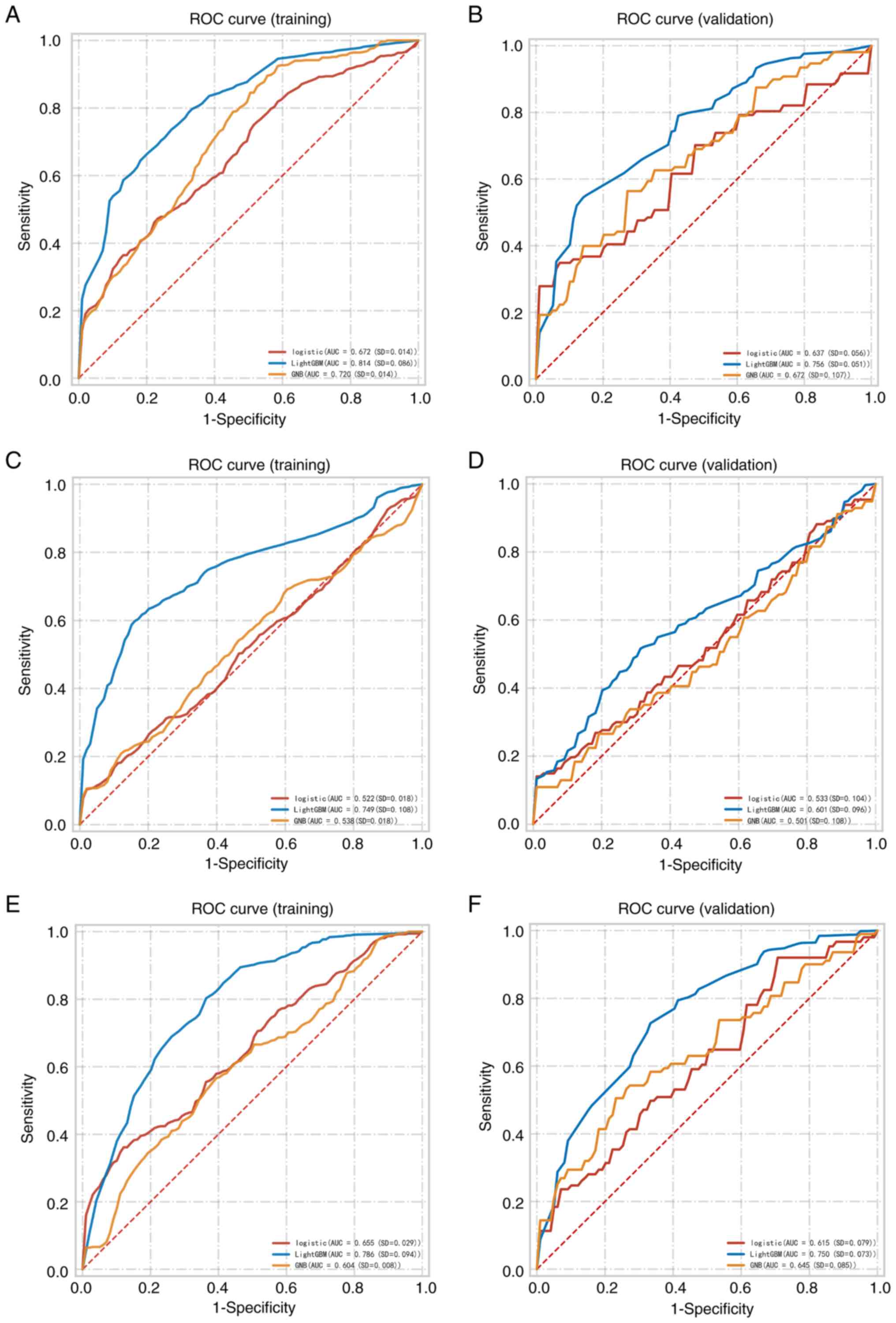
Figure 1

ROC curves for the peritumoral +
intratumoral prediction model for pathological differentiation of
rectal cancer. ROC (A) training and (B) validation curves for T1WI
imaging. ROC (C) training and (D) validation curves for T2WI
imaging. ROC (E) training and (F) validation curves for
diffusion-weighted imaging. ROC, receiver operating characteristic;
WI, weighted image; AUC, area under the curve; LightGBM, Light
Gradient Boosting Machine; GNB, Gaussian Naive Bayes.

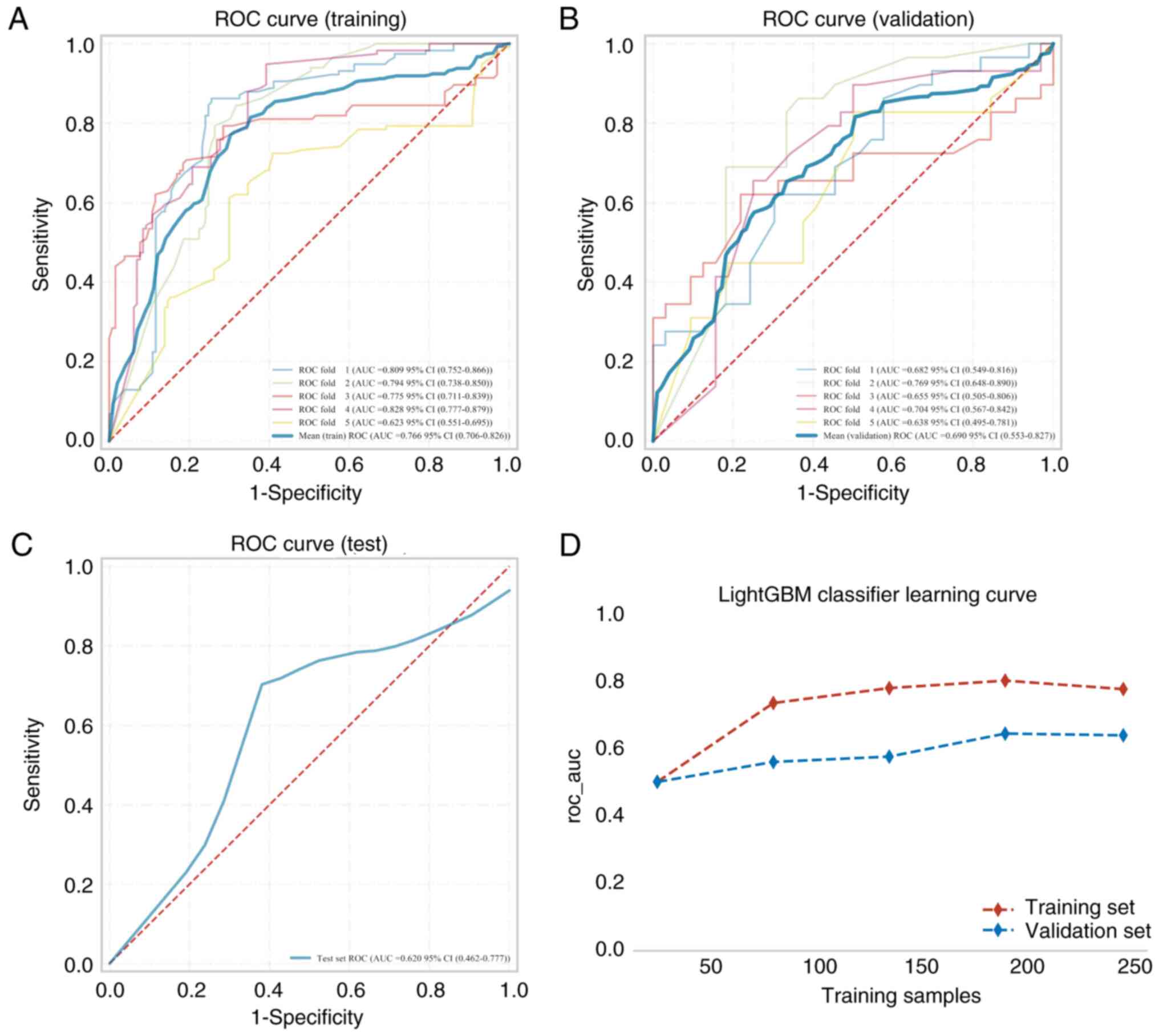
Figure 2

ROC curves of the intratumoral +
peritumoral 5-mm T1-LightGBM model for the training, validation and
test groups. ROC curves and AUC values for the (A) training set,
(B) validation set and (C) test set. (D) Learning curves. The red
dashed line represents the training set, whilst the blue dashed
line represents the validation set. ROC, receiver operating
characteristic; LightGBM, Light Gradient-Boosting Machine; AUC,
area under the curve; CI, confidence interval.

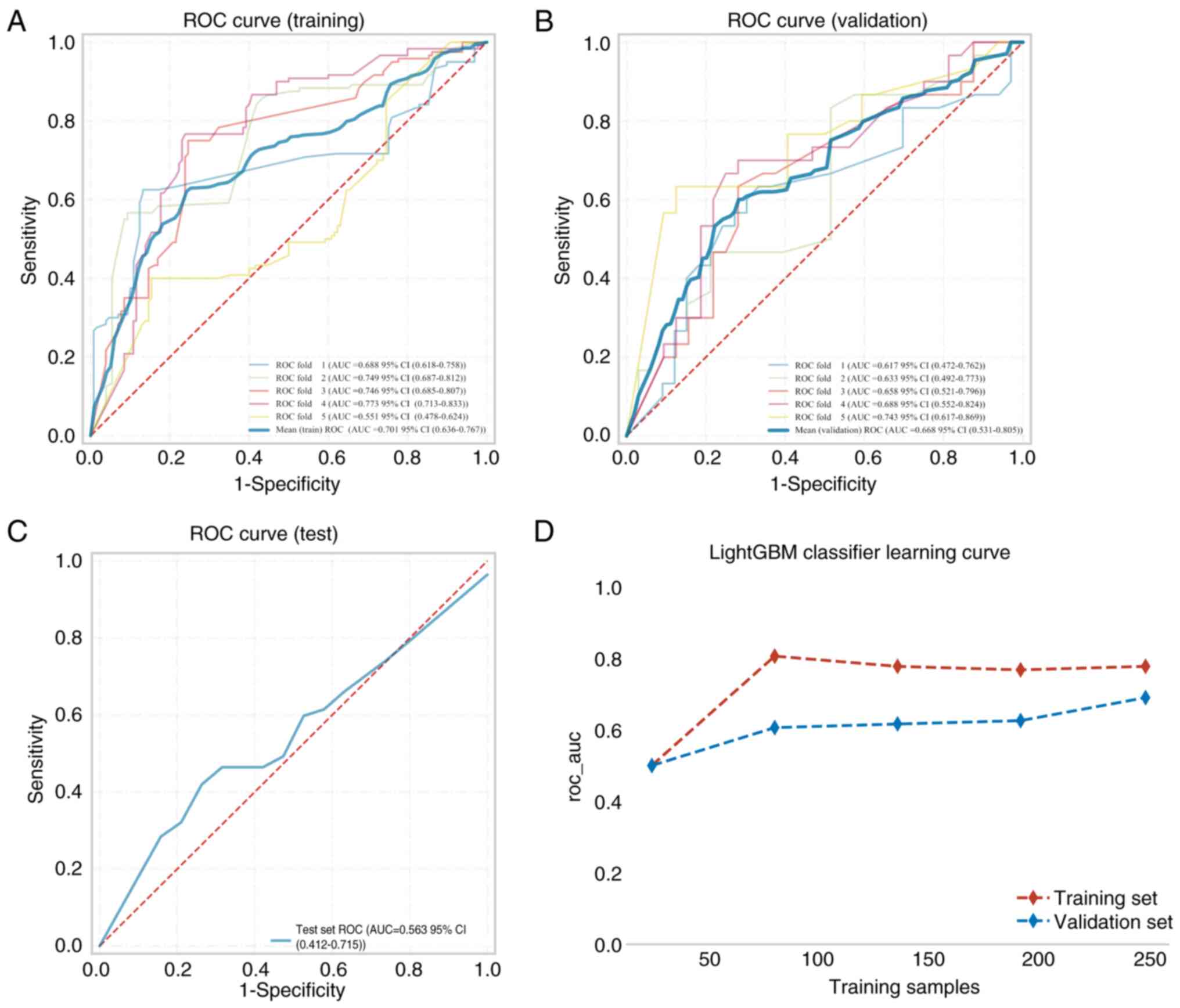
Figure 3

ROC curves of the intratumoral
T1-LightGBM model for the training, validation and test groups. ROC
curves and AUC values for the (A) training set, (B) validation set
and (C) test set. (D) Learning curves. LightGBM, Light
Gradient-Boosting Machine; ROC, receiver operating characteristic;
AUC, area under the curve; CI, confidence interval.

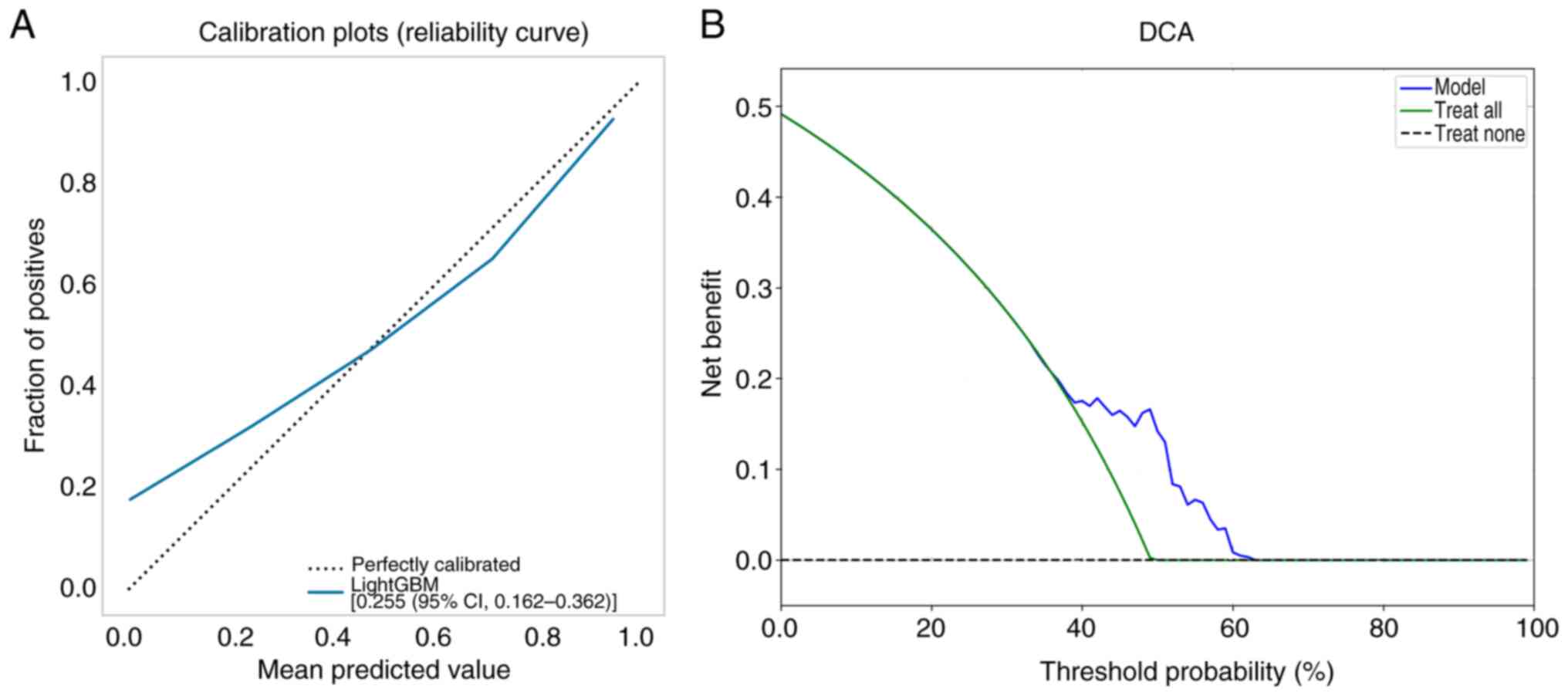
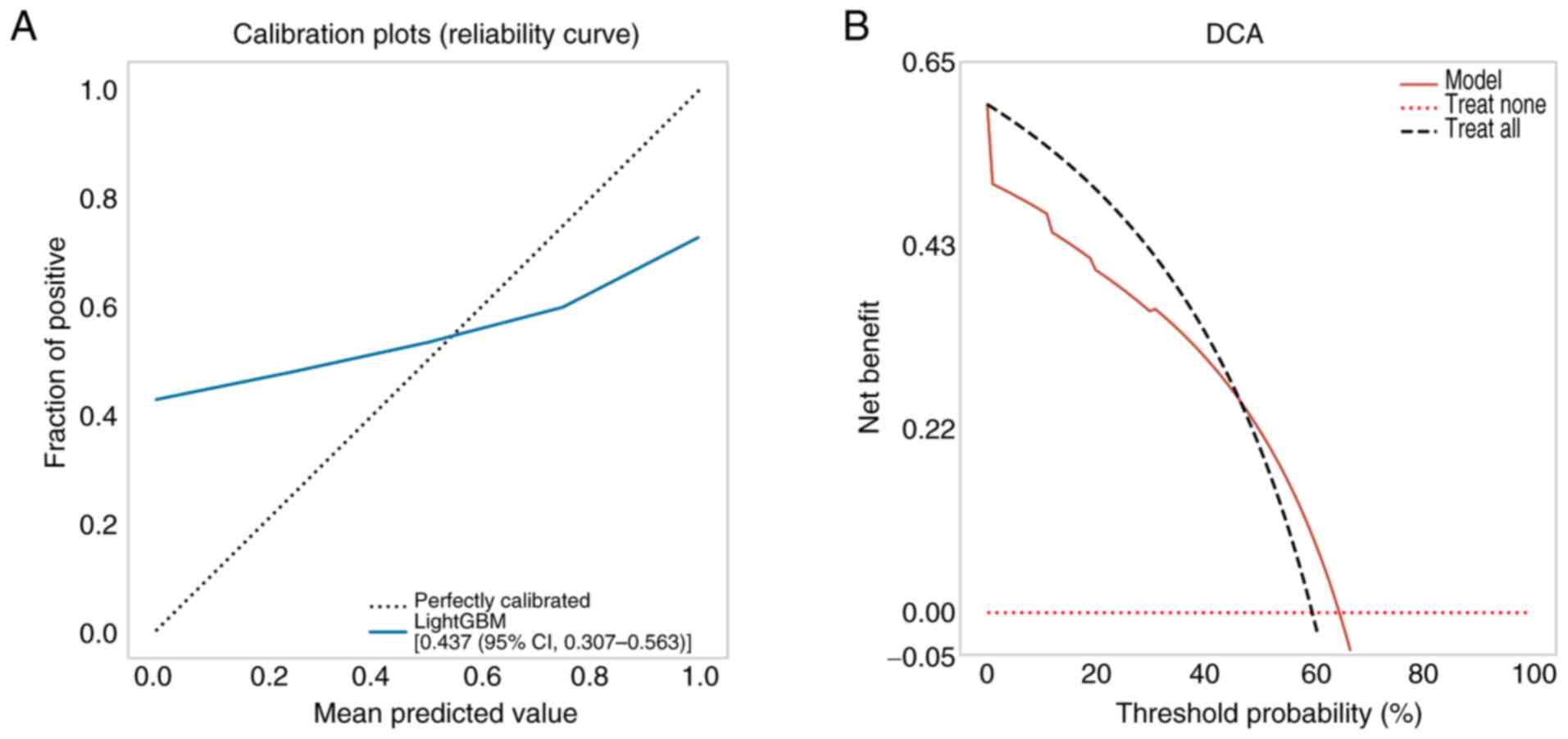
Figure 4

Calibration plots and DCA for the
intratumoral + peritumoral 5-mm T1-LightGBMmodel for predicting
pathological differentiation. (A) Calibration curve depicts the
extent of consistency between the predicted probability and
observed probability. (B) DCA of the LightGBM model. DCA, decision
curve analysis; LightGBM, Light Gradient-Boosting Machine; CI,
confidence interval.

Figure 5

Calibration plots and DCA of the
intratumoral T1-LightGBM model for predicting pathological
differentiation. (A) Calibration curve depicts the extent of
consistency between the predicted probability and observed
probability. (B) DCA of the LightGBM model. DCA, decision curve
analysis; LightGBM, Light Gradient-Boosting Machine; CI, confidence
interval.
View References

1 

Sung H, Ferlay J, Siegel RL, Laversanne M, Soerjomataram I, Jemal A and Bray F: Global cancer statistics 2020: GLOBOCAN estimates of incidence and mortality worldwide for 36 cancers in 185 countries. CA Cancer J Clin. 71:209–249. 2021.PubMed/NCBI

2 

Nagtegaal ID, Odze RD, Klimstra D, Paradis V, Rugge M, Schirmacher P, Washington KM, Carneiro F and Cree IA; WHO Classification of Tumours Editorial Board, : The 2019 WHO classification of tumours of the digestive system. Histopathology. 76:182–188. 2020. View Article : Google Scholar : PubMed/NCBI

3 

Jiang C, Liu Y, Xu C, Shen Y, Xu Q and Gu L: Pathological features of lymph nodes around inferior mesenteric artery in rectal cancer: A retrospective study. World J Surg Oncol. 19:1522021. View Article : Google Scholar : PubMed/NCBI

4 

Junginger T, Goenner U, Hitzler M, Trinh TT, Heintz A, Wollschlaeger D and Blettner M: Long-term oncologic outcome after transanal endoscopic microsurgery for rectal carcinoma. Dis Colon Rectum. 59:8–15. 2016. View Article : Google Scholar : PubMed/NCBI

5 

Garcia-Aguilar J, Renfro LA, Chow OS, Shi Q, Carrero XW, Lynn PB, Thomas CR Jr, Chan E, Cataldo PA, Marcet JE, et al: Organ preservation for clinical T2N0 distal rectal cancer using neoadjuvant chemoradiotherapy and local excision (ACOSOG Z6041): Results of an open-label, single-arm, multi-institutional, phase 2 trial. Lancet Oncol. 16:1537–1546. 2015. View Article : Google Scholar : PubMed/NCBI

6 

Glynne-Jones R, Wyrwicz L, Tiret E, Brown G, Rödel C, Cervantes A and Arnold D; ESMO Guidelines Committee, : Rectal cancer: ESMO Clinical Practice Guidelines for diagnosis, treatment and follow-up. Ann Oncol. 29 (Suppl 4):iv2632018. View Article : Google Scholar : PubMed/NCBI

7 

Ueno H, Hase K, Hashiguchi Y, Shimazaki H, Yoshii S, Kudo SE, Tanaka M, Akagi Y, Suto T, Nagata S, et al: Novel risk factors for lymph node metastasis in early invasive colorectal cancer: A multi-institution pathology review. J Gastroenterol. 49:1314–1323. 2014. View Article : Google Scholar : PubMed/NCBI

8 

Doornebosch PG, Ferenschild FT, de Wilt JH, Dawson I, Tetteroo GW and de Graaf EJ: Treatment of recurrence after transanal endoscopic microsurgery (TEM) for T1 rectal cancer. Dis Colon Rectum. 53:1234–1239. 2010. View Article : Google Scholar : PubMed/NCBI

9 

Hahnloser D, Wolff BG, Larson DW, Ping J and Nivatvongs S: Immediate radical resection after local excision of rectal cancer: An oncologic compromise? Dis Colon Rectum. 48:429–437. 2005. View Article : Google Scholar : PubMed/NCBI

10 

Fields AC, Lu P, Hu F, Hirji S, Irani J, Bleday R, Melnitchouk N and Goldberg JE: Lymph node positivity in T1/T2 rectal cancer: A word of caution in an era of increased incidence and changing biology for rectal cancer. J Gastrointest Surg. 25:1029–1035. 2021. View Article : Google Scholar : PubMed/NCBI

11 

Horvat N, Carlos Tavares Rocha C, Clemente Oliveira B, Petkovska I and Gollub MJ: MRI of rectal cancer: Tumor staging, imaging techniques, and management. Radiographics. 39:367–387. 2019. View Article : Google Scholar : PubMed/NCBI

12 

Kleiner DE: Hepatocellular carcinoma: Liver biopsy in the balance. Hepatology. 68:13–15. 2018. View Article : Google Scholar : PubMed/NCBI

13 

Song M, Li S, Wang H, Hu K, Wang F, Teng H, Wang Z, Liu J, Jia AY, Cai Y, et al: MRI radiomics independent of clinical baseline characteristics and neoadjuvant treatment modalities predicts response to neoadjuvant therapy in rectal cancer. Br J Cancer. 127:249–257. 2022. View Article : Google Scholar : PubMed/NCBI

14 

Ameli S, Venkatesh BA, Shaghaghi M, Ghadimi M, Hazhirkarzar B, Rezvani Habibabadi R, Aliyari Ghasabeh M, Khoshpouri P, Pandey A, Pandey P, et al: Role of MRI-derived radiomics features in determining degree of tumor differentiation of hepatocellular carcinoma. Diagnostics (Basel). 12:23862022. View Article : Google Scholar : PubMed/NCBI

15 

Liu HF, Lu Y, Wang Q, Lu YJ and Xing W: Machine learning-based CEMRI radiomics integrating LI-RADS features achieves optimal evaluation of hepatocellular carcinoma differentiation. J Hepatocell Carcinoma. 10:2103–2115. 2023. View Article : Google Scholar : PubMed/NCBI

16 

Hirata E and Sahai E: Tumor microenvironment and differential responses to therapy. Cold Spring Harb Perspect Med. 7:a0267812017. View Article : Google Scholar : PubMed/NCBI

17 

Liu HF, Wang M, Wang Q, Lu Y, Lu YJ, Sheng Y, Xing F, Zhang JL, Yu SN and Xing W: Multiparametric MRI-based intratumoral and peritumoral radiomics for predicting the pathological differentiation of hepatocellular carcinoma. Insights Imaging. 15:972024. View Article : Google Scholar : PubMed/NCBI

18 

Park H, Kim KA, Jung JH, Rhie J and Choi SY: MRI features and texture analysis for the early prediction of therapeutic response to neoadjuvant chemoradiotherapy and tumor recurrence of locally advanced rectal cancer. Eur Radiol. 30:4201–4211. 2020. View Article : Google Scholar : PubMed/NCBI

19 

Kim JH, Shin JK, Lee H, Lee DH, Kang JH, Cho KH, Lee YG, Chon K, Baek SS and Park Y: Improving the performance of machine learning models for early warning of harmful algal blooms using an adaptive synthetic sampling method. Water Res. 207:1178212021. View Article : Google Scholar : PubMed/NCBI

20 

Khan TM, Xu S, Khan ZG and Uzair Chishti M: Implementing multilabeling, ADASYN, and relieff techniques for classification of breast cancer diagnostic through machine learning: Efficient computer-aided diagnostic system. J Healthc Eng. 2021:55776362021. View Article : Google Scholar : PubMed/NCBI

21 

Bates DDB, Homsi ME, Chang KJ, Lalwani N, Horvat N and Sheedy SP: MRI for rectal cancer: Staging, mrCRM, EMVI, lymph node staging and post-treatment response. Clin Colorectal Cancer. 21:10–18. 2022.PubMed/NCBI

22 

Xu F, Hong J and Wu X: An integrative clinical and intra- and peritumoral MRI radiomics nomogram for the preoperative prediction of lymphovascular invasion in rectal cancer. Acad Radiol. 32:3989–4001. 2025. View Article : Google Scholar : PubMed/NCBI

23 

Nayak P, Sinha S, Goda JS, Sahu A, Joshi K, Choudhary OR, Mhatre R, Mummudi N and Agarwal JP: Computerized tomography-based first order tumor texture features in non-small cell lung carcinoma treated with concurrent chemoradiation: A simplistic and potential surrogate imaging marker for survival. J Cancer Res Ther. 19:366–375. 2023. View Article : Google Scholar : PubMed/NCBI

24 

Bernatowicz K, Amat R, Prior O, Frigola J, Ligero M, Grussu F, Zatse C, Serna G, Nuciforo P, Toledo R, et al: Radiomics signature for dynamic monitoring of tumor inflamed microenvironment and immunotherapy response prediction. J Immunother Cancer. 13:e0091402025. View Article : Google Scholar : PubMed/NCBI

25 

Wang X, Dai S, Wang Q, Chai X and Xian J: Investigation of MRI-based radiomics model in differentiation between sinonasal primary lymphomas and squamous cell carcinomas. Jpn J Radiol. 39:755–762. 2021. View Article : Google Scholar : PubMed/NCBI

26 

Hanahan D: Hallmarks of cancer: New dimensions. Cancer Discov. 12:31–46. 2022. View Article : Google Scholar : PubMed/NCBI

27 

Zhang L, Yang Y, Wang T, Chen X, Tang M, Deng J, Cai Z and Cui W: Intratumoral and peritumoral MRI-based radiomics prediction of histopathological grade in soft tissue sarcomas: A two-center study. Cancer Imaging. 23:1032023. View Article : Google Scholar : PubMed/NCBI

28 

Lin P, Xie W, Li Y, Zhang C, Wu H, Wan H, Gao M, Liang F, Han P, Chen R, et al: Intratumoral and peritumoral radiomics of MRIs predicts pathologic complete response to neoadjuvant chemoimmunotherapy in patients with head and neck squamous cell carcinoma. J Immunother Cancer. 12:e0096162024. View Article : Google Scholar : PubMed/NCBI

29 

Jiang Y, Wang H, Wu J, Chen C, Yuan Q, Huang W, Li T, Xi S, Hu Y, Zhou Z, et al: Noninvasive imaging evaluation of tumor immune microenvironment to predict outcomes in gastric cancer. Ann Oncol. 31:760–768. 2020. View Article : Google Scholar : PubMed/NCBI

30 

Pérez-Morales J, Tunali I, Stringfield O, Eschrich SA, Balagurunathan Y, Gillies RJ and Schabath MB: Peritumoral and intratumoral radiomic features predict survival outcomes among patients diagnosed in lung cancer screening. Sci Rep. 10:105282020. View Article : Google Scholar : PubMed/NCBI

31 

Li Y, Wang P, Xu J, Shi X, Yin T and Teng F: Noninvasive radiomic biomarkers for predicting pseudoprogression and hyperprogression in patients with non-small cell lung cancer treated with immune checkpoint inhibition. Oncoimmunology. 13:23126282024. View Article : Google Scholar : PubMed/NCBI

32 

Wang X, Wei M, Chen Y, Jia J, Zhang Y, Dai Y, Qin C, Bai G and Chen S: Intratumoral and peritumoral MRI-based radiomics for predicting extrapelvic peritoneal metastasis in epithelial ovarian cancer. Insights Imaging. 15:2812024. View Article : Google Scholar : PubMed/NCBI

33 

Barge P, Oevermann A, Maiolini A and Durand A: Machine learning predicts histologic type and grade of canine gliomas based on MRI texture analysis. Vet Radiol Ultrasound. 64:724–732. 2023. View Article : Google Scholar : PubMed/NCBI

34 

Scaife CL and Curley SA: Complication, local recurrence, and survival rates after radiofrequency ablation for hepatic malignancies. Surg Oncol Clin N Am. 12:243–255. 2003. View Article : Google Scholar : PubMed/NCBI

35 

Margonis GA, Sergentanis TN, Ntanasis-Stathopoulos I, Andreatos N, Tzanninis IG, Sasaki K, Psaltopoulou T, Wang J, Buettner S, Papalois ΑE, et al: Impact of surgical margin width on recurrence and overall survival following R0 hepatic resection of colorectal metastases: A systematic review and meta-analysis. Ann Surg. 267:1047–1055. 2018. View Article : Google Scholar : PubMed/NCBI

36 

Tang X, Huang H, Du P, Wang L, Yin H and Xu X: Intratumoral and peritumoral CT-based radiomics strategy reveals distinct subtypes of non-small-cell lung cancer. J Cancer Res Clin Oncol. 148:2247–2260. 2022. View Article : Google Scholar : PubMed/NCBI

37 

Cheng J, Liu J, Yue H, Bai H, Pan Y and Wang J: Prediction of glioma grade using intratumoral and peritumoral radiomic features from multiparametric MRI images. IEEE/ACM Trans Comput Biol Bioinform. 19:1084–1095. 2022. View Article : Google Scholar : PubMed/NCBI

38 

Kim HR, Kim SH and Nam KH: Association between dynamic contrast-enhanced MRI parameters and prognostic factors in patients with primary rectal cancer. Curr Oncol. 30:2543–2554. 2023. View Article : Google Scholar : PubMed/NCBI

39 

Shen FU, Lu J, Chen L, Wang Z and Chen Y: Diagnostic value of dynamic contrast-enhanced magnetic resonance imaging in rectal cancer and its correlation with tumor differentiation. Mol Clin Oncol. 4:500–506. 2016. View Article : Google Scholar : PubMed/NCBI

40 

Curvo-Semedo L, Lambregts DM, Maas M, Beets GL, Caseiro-Alves F and Beets-Tan RG: Diffusion-weighted MRI in rectal cancer: Apparent diffusion coefficient as a potential noninvasive marker of tumor aggressiveness. J Magn Reson Imaging. 35:1365–1371. 2012. View Article : Google Scholar : PubMed/NCBI

41 

Zhou B, Zhou Y, Tang Y, Bao Y, Zou L, Yao Z and Feng X: Intravoxel incoherent motion MRI for rectal cancer: Correlation of diffusion and perfusion characteristics with clinical-pathologic factors. Acta Radiol. 64:898–906. 2023. View Article : Google Scholar : PubMed/NCBI

42 

Barresi V, Reggiani Bonetti L, Branca G, Di Gregorio C, Ponz de Leon M and Tuccari G: Colorectal carcinoma grading by quantifying poorly differentiated cell clusters is more reproducible and provides more robust prognostic information than conventional grading. Virchows Arch. 461:621–628. 2012. View Article : Google Scholar : PubMed/NCBI

43 

Yuan Y, Chen XL, Li ZL, Chen GW, Liu H, Liu YS, Pang MH, Liu SY, Pu H and Li H: The application of apparent diffusion coefficients derived from intratumoral and peritumoral zones for assessing pathologic prognostic factors in rectal cancer. Eur Radiol. 32:5106–5118. 2022. View Article : Google Scholar : PubMed/NCBI

44 

Lou S, Huang Y, Du F, Xue J, Mo G, Li H, Yu Z, Li Y, Wang H, Huang Y, et al: Development and validation of a deep learning-based pathomics signature for prognosis and chemotherapy benefits in colorectal cancer: A retrospective multicenter cohort study. Front Immunol. 16:16029092025. View Article : Google Scholar : PubMed/NCBI

45 

Huang YQ, Chen XB, Cui YF, Yang F, Huang SX, Li ZH, Ying YJ, Li SY, Li MH, Gao P, et al: Enhanced risk stratification for stage II colorectal cancer using deep learning-based CT classifier and pathological markers to optimize adjuvant therapy decision. Ann Oncol. 36:1178–1189. 2025. View Article : Google Scholar : PubMed/NCBI

46 

Oh SY, Park JY, Yang KM, Jeong SA, Kwon YJ, Jung YT, Ma CH, Yun KW, Yoon KH, Kwak JY and Yu CS: Oncologic outcomes of surgically treated colorectal cancer in octogenarians: A comparative study using inverse probability of treatment weighting (IPTW). BMC Gastroenterol. 25:2762025. View Article : Google Scholar : PubMed/NCBI

47 

Yang Y, Xu H, Chen G and Pan Y: Stratified prognostic value of pathological response to preoperative treatment in yp II/III rectal cancer. Front Oncol. 11:7951372021. View Article : Google Scholar : PubMed/NCBI

48 

Tjandra JJ, Kilkenny JW, Buie WD, Hyman N, Simmang C, Anthony T, Orsay C, Church J, Otchy D, Cohen J, et al: Practice parameters for the management of rectal cancer (revised). Dis Colon Rectum. 48:411–423. 2005. View Article : Google Scholar : PubMed/NCBI

49 

Cho SH, Park BS, Son GM, Kim HS, Kim SJ, Park SB, Choi CW, Kim HW, Shin DH and Yun MS: Differences in factors predicting lymph node metastasis between pT1 rectal cancer and pT1 colon cancer: A retrospective study. Am Surg. 89:5829–5836. 2023. View Article : Google Scholar : PubMed/NCBI

50 

Emile SH, Horesh N, Garoufalia Z, Gefen R, Wignakumar A and Wexner SD: Development and validation of a predictive score for preoperative detection of lymphovascular invasion in rectal cancer. J Surg Oncol. 131:1081–1089. 2025. View Article : Google Scholar : PubMed/NCBI

51 

Keller DS, Berho M, Perez RO, Wexner SD and Chand M: The multidisciplinary management of rectal cancer. Nat Rev Gastroenterol Hepatol. 17:414–429. 2020. View Article : Google Scholar : PubMed/NCBI

52 

Shibutani M, Maeda K, Nagahara H, Ohtani H, Sakurai K, Toyokawa T, Kubo N, Tanaka H, Muguruma K, Ohira M and Hirakawa K: Significance of CEA and CA19-9 combination as a prognostic indicator and for recurrence monitoring in patients with stage II colorectal cancer. Anticancer Res. 34:3753–3758. 2014.PubMed/NCBI

53 

Ryuk JP, Choi GS, Park JS, Kim HJ, Park SY, Yoon GS, Jun SH and Kwon YC: Predictive factors and the prognosis of recurrence of colorectal cancer within 2 years after curative resection. Ann Surg Treat Res. 86:143–151. 2014. View Article : Google Scholar : PubMed/NCBI

54 

Wang J, Wang X, Yu F, Chen J, Zhao S, Zhang D, Yu Y, Liu X, Tang H and Peng Z: Combined detection of preoperative serum CEA, CA19-9 and CA242 improve prognostic prediction of surgically treated colorectal cancer patients. Int J Clin Exp Pathol. 8:14853–14863. 2015.PubMed/NCBI

55 

Farag CM, Antar R, Akosman S, Ng M and Whalen MJ: What is hemoglobin, albumin, lymphocyte, platelet (HALP) score? A comprehensive literature review of HALP's prognostic ability in different cancer types. Oncotarget. 14:153–172. 2023. View Article : Google Scholar : PubMed/NCBI

Related Articles

  • Abstract
  • View
  • Download
  • Twitter
Copy and paste a formatted citation
Spandidos Publications style
Liu H, Zhang H, Zou Q and Yang J: Intratumoral and peritumoral radiomics of MRI predict pathological differentiation in patients with rectal cancer. Oncol Lett 31: 10, 2026.
APA
Liu, H., Zhang, H., Zou, Q., & Yang, J. (2026). Intratumoral and peritumoral radiomics of MRI predict pathological differentiation in patients with rectal cancer. Oncology Letters, 31, 10. https://doi.org/10.3892/ol.2025.15363
MLA
Liu, H., Zhang, H., Zou, Q., Yang, J."Intratumoral and peritumoral radiomics of MRI predict pathological differentiation in patients with rectal cancer". Oncology Letters 31.1 (2026): 10.
Chicago
Liu, H., Zhang, H., Zou, Q., Yang, J."Intratumoral and peritumoral radiomics of MRI predict pathological differentiation in patients with rectal cancer". Oncology Letters 31, no. 1 (2026): 10. https://doi.org/10.3892/ol.2025.15363
Copy and paste a formatted citation
x
Spandidos Publications style
Liu H, Zhang H, Zou Q and Yang J: Intratumoral and peritumoral radiomics of MRI predict pathological differentiation in patients with rectal cancer. Oncol Lett 31: 10, 2026.
APA
Liu, H., Zhang, H., Zou, Q., & Yang, J. (2026). Intratumoral and peritumoral radiomics of MRI predict pathological differentiation in patients with rectal cancer. Oncology Letters, 31, 10. https://doi.org/10.3892/ol.2025.15363
MLA
Liu, H., Zhang, H., Zou, Q., Yang, J."Intratumoral and peritumoral radiomics of MRI predict pathological differentiation in patients with rectal cancer". Oncology Letters 31.1 (2026): 10.
Chicago
Liu, H., Zhang, H., Zou, Q., Yang, J."Intratumoral and peritumoral radiomics of MRI predict pathological differentiation in patients with rectal cancer". Oncology Letters 31, no. 1 (2026): 10. https://doi.org/10.3892/ol.2025.15363
Follow us
  • Twitter
  • LinkedIn
  • Facebook
About
  • Spandidos Publications
  • Careers
  • Cookie Policy
  • Privacy Policy
How can we help?
  • Help
  • Live Chat
  • Contact
  • Email to our Support Team