Spandidos Publications Logo
  • About
    • About Spandidos
    • Aims and Scopes
    • Abstracting and Indexing
    • Editorial Policies
    • Reprints and Permissions
    • Job Opportunities
    • Terms and Conditions
    • Contact
  • Journals
    • All Journals
    • Oncology Letters
      • Oncology Letters
      • Information for Authors
      • Editorial Policies
      • Editorial Board
      • Aims and Scope
      • Abstracting and Indexing
      • Bibliographic Information
      • Archive
    • International Journal of Oncology
      • International Journal of Oncology
      • Information for Authors
      • Editorial Policies
      • Editorial Board
      • Aims and Scope
      • Abstracting and Indexing
      • Bibliographic Information
      • Archive
    • Molecular and Clinical Oncology
      • Molecular and Clinical Oncology
      • Information for Authors
      • Editorial Policies
      • Editorial Board
      • Aims and Scope
      • Abstracting and Indexing
      • Bibliographic Information
      • Archive
    • Experimental and Therapeutic Medicine
      • Experimental and Therapeutic Medicine
      • Information for Authors
      • Editorial Policies
      • Editorial Board
      • Aims and Scope
      • Abstracting and Indexing
      • Bibliographic Information
      • Archive
    • International Journal of Molecular Medicine
      • International Journal of Molecular Medicine
      • Information for Authors
      • Editorial Policies
      • Editorial Board
      • Aims and Scope
      • Abstracting and Indexing
      • Bibliographic Information
      • Archive
    • Biomedical Reports
      • Biomedical Reports
      • Information for Authors
      • Editorial Policies
      • Editorial Board
      • Aims and Scope
      • Abstracting and Indexing
      • Bibliographic Information
      • Archive
    • Oncology Reports
      • Oncology Reports
      • Information for Authors
      • Editorial Policies
      • Editorial Board
      • Aims and Scope
      • Abstracting and Indexing
      • Bibliographic Information
      • Archive
    • Molecular Medicine Reports
      • Molecular Medicine Reports
      • Information for Authors
      • Editorial Policies
      • Editorial Board
      • Aims and Scope
      • Abstracting and Indexing
      • Bibliographic Information
      • Archive
    • World Academy of Sciences Journal
      • World Academy of Sciences Journal
      • Information for Authors
      • Editorial Policies
      • Editorial Board
      • Aims and Scope
      • Abstracting and Indexing
      • Bibliographic Information
      • Archive
    • International Journal of Functional Nutrition
      • International Journal of Functional Nutrition
      • Information for Authors
      • Editorial Policies
      • Editorial Board
      • Aims and Scope
      • Abstracting and Indexing
      • Bibliographic Information
      • Archive
    • International Journal of Epigenetics
      • International Journal of Epigenetics
      • Information for Authors
      • Editorial Policies
      • Editorial Board
      • Aims and Scope
      • Abstracting and Indexing
      • Bibliographic Information
      • Archive
    • Medicine International
      • Medicine International
      • Information for Authors
      • Editorial Policies
      • Editorial Board
      • Aims and Scope
      • Abstracting and Indexing
      • Bibliographic Information
      • Archive
  • Articles
  • Information
    • Information for Authors
    • Information for Reviewers
    • Information for Librarians
    • Information for Advertisers
    • Conferences
  • Language Editing
Spandidos Publications Logo
  • About
    • About Spandidos
    • Aims and Scopes
    • Abstracting and Indexing
    • Editorial Policies
    • Reprints and Permissions
    • Job Opportunities
    • Terms and Conditions
    • Contact
  • Journals
    • All Journals
    • Biomedical Reports
      • Information for Authors
      • Editorial Policies
      • Editorial Board
      • Aims and Scope
      • Abstracting and Indexing
      • Bibliographic Information
      • Archive
    • Experimental and Therapeutic Medicine
      • Information for Authors
      • Editorial Policies
      • Editorial Board
      • Aims and Scope
      • Abstracting and Indexing
      • Bibliographic Information
      • Archive
    • International Journal of Epigenetics
      • Information for Authors
      • Editorial Policies
      • Editorial Board
      • Aims and Scope
      • Abstracting and Indexing
      • Bibliographic Information
      • Archive
    • International Journal of Functional Nutrition
      • Information for Authors
      • Editorial Policies
      • Editorial Board
      • Aims and Scope
      • Abstracting and Indexing
      • Bibliographic Information
      • Archive
    • International Journal of Molecular Medicine
      • Information for Authors
      • Editorial Policies
      • Editorial Board
      • Aims and Scope
      • Abstracting and Indexing
      • Bibliographic Information
      • Archive
    • International Journal of Oncology
      • Information for Authors
      • Editorial Policies
      • Editorial Board
      • Aims and Scope
      • Abstracting and Indexing
      • Bibliographic Information
      • Archive
    • Medicine International
      • Information for Authors
      • Editorial Policies
      • Editorial Board
      • Aims and Scope
      • Abstracting and Indexing
      • Bibliographic Information
      • Archive
    • Molecular and Clinical Oncology
      • Information for Authors
      • Editorial Policies
      • Editorial Board
      • Aims and Scope
      • Abstracting and Indexing
      • Bibliographic Information
      • Archive
    • Molecular Medicine Reports
      • Information for Authors
      • Editorial Policies
      • Editorial Board
      • Aims and Scope
      • Abstracting and Indexing
      • Bibliographic Information
      • Archive
    • Oncology Letters
      • Information for Authors
      • Editorial Policies
      • Editorial Board
      • Aims and Scope
      • Abstracting and Indexing
      • Bibliographic Information
      • Archive
    • Oncology Reports
      • Information for Authors
      • Editorial Policies
      • Editorial Board
      • Aims and Scope
      • Abstracting and Indexing
      • Bibliographic Information
      • Archive
    • World Academy of Sciences Journal
      • Information for Authors
      • Editorial Policies
      • Editorial Board
      • Aims and Scope
      • Abstracting and Indexing
      • Bibliographic Information
      • Archive
  • Articles
  • Information
    • For Authors
    • For Reviewers
    • For Librarians
    • For Advertisers
    • Conferences
  • Language Editing
Login Register Submit
  • This site uses cookies
  • You can change your cookie settings at any time by following the instructions in our Cookie Policy. To find out more, you may read our Privacy Policy.

    I agree
Search articles by DOI, keyword, author or affiliation
Search
Advanced Search
presentation
Oncology Letters
Join Editorial Board Propose a Special Issue
Print ISSN: 1792-1074 Online ISSN: 1792-1082
Journal Cover
January-2026 Volume 31 Issue 1

Full Size Image

Sign up for eToc alerts
Recommend to Library

Journals

International Journal of Molecular Medicine

International Journal of Molecular Medicine

International Journal of Molecular Medicine is an international journal devoted to molecular mechanisms of human disease.

International Journal of Oncology

International Journal of Oncology

International Journal of Oncology is an international journal devoted to oncology research and cancer treatment.

Molecular Medicine Reports

Molecular Medicine Reports

Covers molecular medicine topics such as pharmacology, pathology, genetics, neuroscience, infectious diseases, molecular cardiology, and molecular surgery.

Oncology Reports

Oncology Reports

Oncology Reports is an international journal devoted to fundamental and applied research in Oncology.

Experimental and Therapeutic Medicine

Experimental and Therapeutic Medicine

Experimental and Therapeutic Medicine is an international journal devoted to laboratory and clinical medicine.

Oncology Letters

Oncology Letters

Oncology Letters is an international journal devoted to Experimental and Clinical Oncology.

Biomedical Reports

Biomedical Reports

Explores a wide range of biological and medical fields, including pharmacology, genetics, microbiology, neuroscience, and molecular cardiology.

Molecular and Clinical Oncology

Molecular and Clinical Oncology

International journal addressing all aspects of oncology research, from tumorigenesis and oncogenes to chemotherapy and metastasis.

World Academy of Sciences Journal

World Academy of Sciences Journal

Multidisciplinary open-access journal spanning biochemistry, genetics, neuroscience, environmental health, and synthetic biology.

International Journal of Functional Nutrition

International Journal of Functional Nutrition

Open-access journal combining biochemistry, pharmacology, immunology, and genetics to advance health through functional nutrition.

International Journal of Epigenetics

International Journal of Epigenetics

Publishes open-access research on using epigenetics to advance understanding and treatment of human disease.

Medicine International

Medicine International

An International Open Access Journal Devoted to General Medicine.

Journal Cover
January-2026 Volume 31 Issue 1

Full Size Image

Sign up for eToc alerts
Recommend to Library

  • Article
  • Citations
    • Cite This Article
    • Download Citation
    • Create Citation Alert
    • Remove Citation Alert
    • Cited By
  • Similar Articles
    • Related Articles (in Spandidos Publications)
    • Similar Articles (Google Scholar)
    • Similar Articles (PubMed)
  • Download PDF
  • Download XML
  • View XML
Article Open Access

Enhanced expression of CXCL1 in renal cell carcinoma facilitates tumor cell malignancy via PI3K/AKT‑dependent mechanisms

  • Authors:
    • Shiliang Gui
    • Hongrui Zhang
    • Huiting Xiao
    • Chen Liu
    • Yuhang Wang
    • Baotian Wang
    • Hongbin Qiu
  • View Affiliations / Copyright

    Affiliations: Key Laboratory of Microecology‑immune Regulatory Network and Related Diseases, Basic Medical College, Jiamusi University, Jiamusi, Heilongjiang 154002, P.R. China, Department of Urology, First Affiliated Hospital, Jiamusi University, Jiamusi, Heilongjiang 154002, P.R. China, Department of Medical Technology, Collaborative Innovation Center for Translation Medical Testing and Application Technology in Zhangzhou, Zhang Zhou Health Vocational College, Zhangzhou, Fujian 363000, P.R. China
    Copyright: © Gui et al. This is an open access article distributed under the terms of Creative Commons Attribution License.
  • Article Number: 19
    |
    Published online on: November 3, 2025
       https://doi.org/10.3892/ol.2025.15372
  • Expand metrics +
Metrics: Total Views: 0 (Spandidos Publications: | PMC Statistics: )
Metrics: Total PDF Downloads: 0 (Spandidos Publications: | PMC Statistics: )
Cited By (CrossRef): 0 citations Loading Articles...

This article is mentioned in:


Abstract

The expression of CXC motif chemokine ligand 1 (CXCL1) is elevated in numerous types of human cancers, and CXCL1 is also able to act as an autocrine/paracrine factor to accelerate the malignant progression of malignancies. However, at present, there is limited understanding of the role of CXCL1 in renal cell carcinoma (RCC). The present study aimed to investigate the mRNA and protein expression levels of CXCL1 in RCC tissues, which were found to be markedly elevated compared with normal and paracancerous tissues using bioinformatics and immunohistochemical analyses. In addition, high expression of CXCL1 was shown to be closely associated with higher stage, grade, tumor, lymph node and metastasis status of clear cell RCC, as well as with poor prognosis in patients. In addition, the expression level of CXCL1 mRNA was found to be associated with the expression of various tumor‑associated genes, including numerous chemokines and their receptors, immune cell recruitment of B cells, CD4+ T cells and neutrophils, as well as microsatellite instability in RCC. Functional studies were also performed, which demonstrated that both exogenous and overexpression of CXCL1 led to a marked enhancement of the proliferative and migratory capacities of RCC cells, whereas downregulation of CXCL1 exerted a suppressive influence on the malignant behaviors of the tumor cells. In addition, western blot analysis experiments revealed that overexpression of CXCL1 in RCC cells was able to regulate the expression levels of phosphoinositide 3‑kinase (PI3K)/AKT pathway‑associated proteins, including Bcl‑2‑associated X protein, B‑cell lymphoma‑2, PI3K and AKT. Finally, the AKT‑specific inhibitor GDC‑0068 was shown to reverse the promoting effects of CXCL1 on the malignant behaviors of RCC cells. Taken together, the findings of the present study have shown that CXCL1 exhibits high expression patterns in RCC tissues and may serve diverse functions in facilitating various aspects of RCC advancement.
View Figures

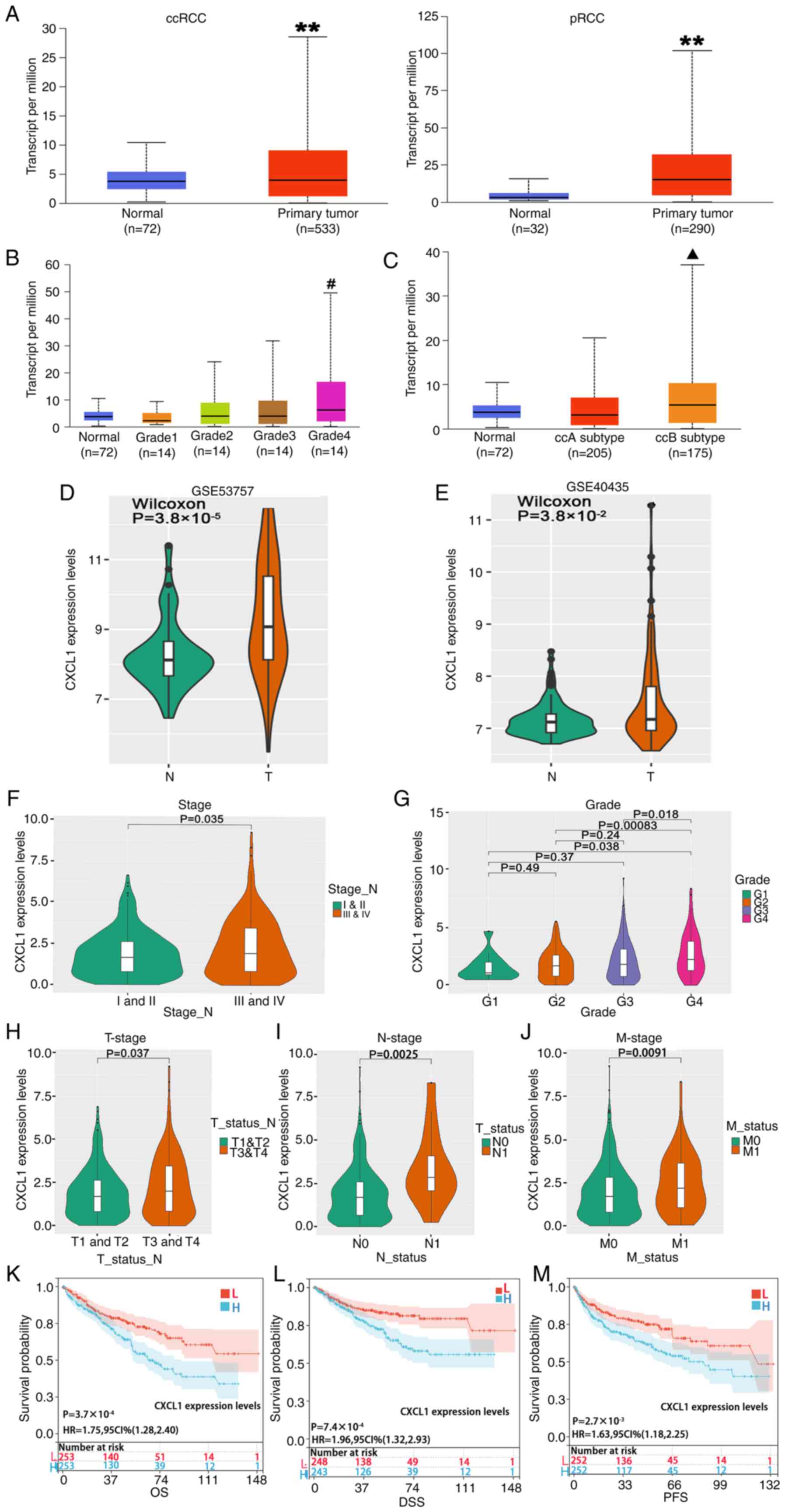
Figure 1

Increased expression of CXCL1 mRNA
levels is associated with the clinical characteristics of patients
with RCC. (A) The expression profiles of CXCL1 mRNA in normal
tissues compared with ccRCC or pRCC tissues. The different levels
of expression of CXCL1 mRNA within (B) different clinical grades
and (C) subtypes of ccRCC tissues. Expression levels of CXCL1 mRNA
in the (D) GSE53757 and the (E) GSE40435 datasets. The different
levels of expression of CXCL1 mRNA within different (F) clinical
grades and (G) stages of ccRCC tissues. Analysis of the expression
level of CXCL1 within the clinical (H) T-status, (I) N-status and
(J) M-status categories in ccRCC tissues. (K-M) A prognostic
assessment was performed among the various groups. **P<0.01 vs.
normal; #P<0.01 vs. normal, grade 1 and 2;
▲P<0.01 vs. normal and ccA subtype. CXCL1, CXC motif
chemokine ligand 1; RCC, renal cell carcinoma; ccRCC, clear cell
RCC; pRCC, papillary RCC; T, tumor; N, lymph node; M, metastasis;
OS, overall survival; DSS, disease-specific survival; PFS,
progression-free survival.

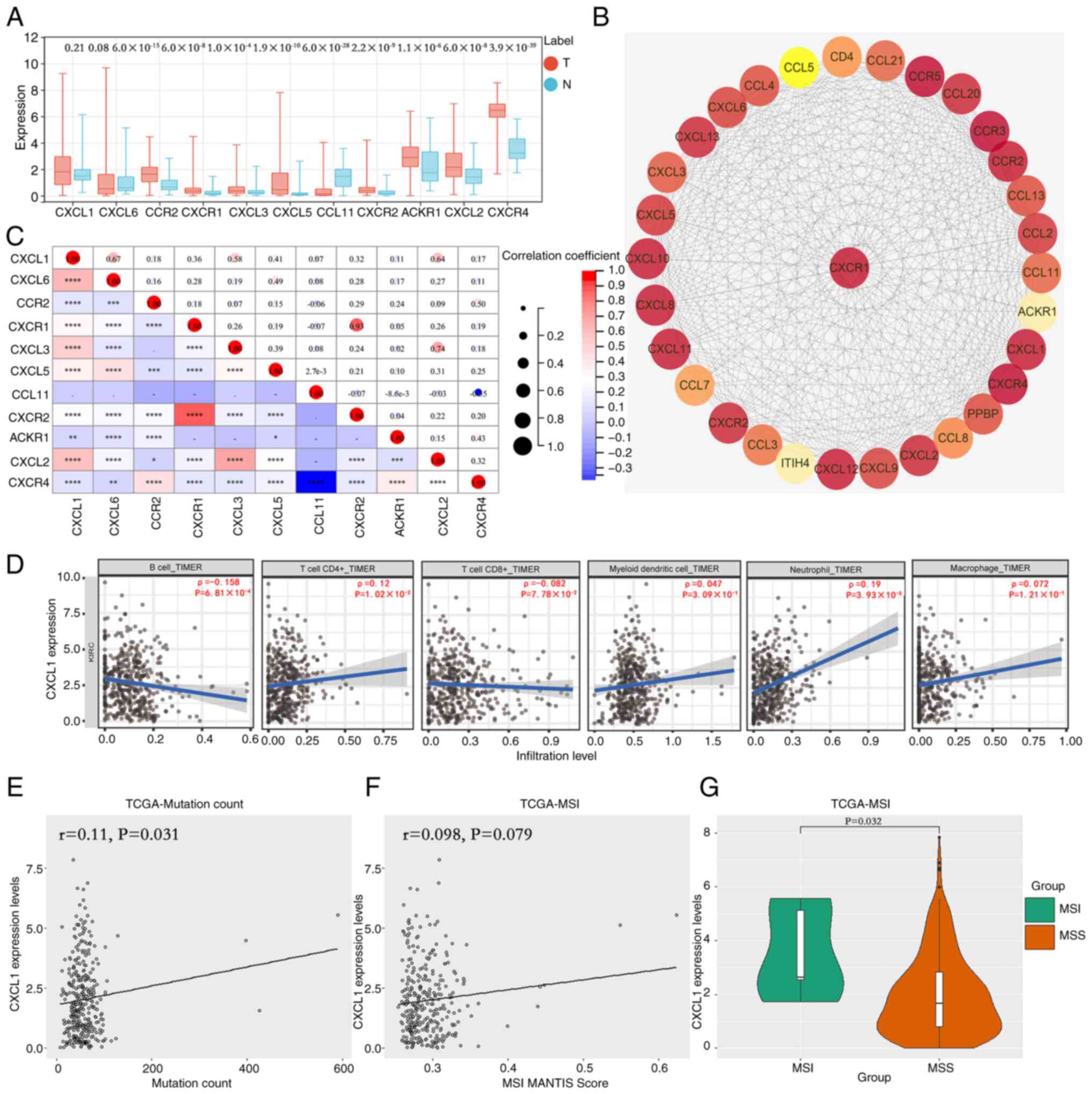
Figure 2

Expression levels of CXCL1 mRNA are
correlated with the expression of genes implicated in
tumorigenesis, recruitment of immune cells and presence of MSI in
renal cell carcinoma. (A) Identification of 10 hub genes exhibiting
co-expression with CXCL1. (B) Analysis of the protein-interaction
network involving CXCL1. (C) Analysis of the correlation between
CXCL1 and the aforementioned 10 hub genes. (D) Analysis of the
correlation between CXCL1 expression and immune cell recruitment.
The correlation between CXCL1 expression and the (E) number of
mutations is presented, as well as (F) MSI scores. (G) The
expression levels of CXCL1 in the MSI group compared with the MSS
group. *P<0.05; **P<0.01; ***P<0.001; ****P<0.0001.
CXCL, CXC motif chemokine ligand; ACKR1, atypical chemokine
receptor 1; CCR, C-C chemokine receptor type 2; MSI, microsatellite
instability; MSS, microsatellite stable or no apparent MSI; TIMER,
tumor immune estimation resource; TCGA, The Cancer Genome Atlas; T,
tumor; N, normal.

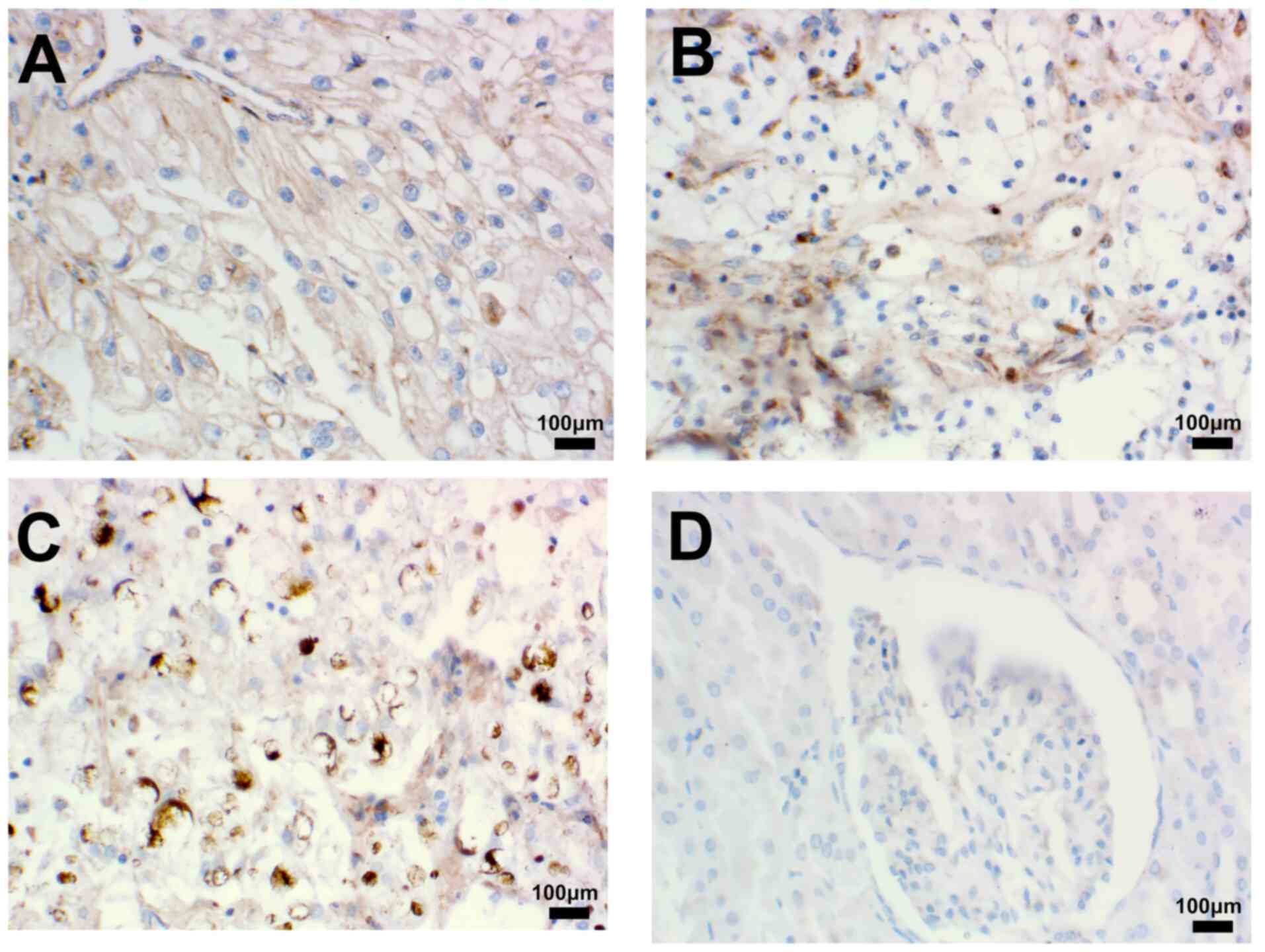
Figure 3

Protein levels of CXCL1 expression
are markedly elevated in the tissues of patients with RCC.
Representative images, illustrating strong-intensity staining of
CXCL1 in (A) grade I, (B) grade II and (C) grade III RCC tissues.
(D) Representative image, illustrating weak-intensity staining of
CXCL1 in paracancerous tissues. CXCL1, CXC motif chemokine ligand
1; RCC, renal cell carcinoma.

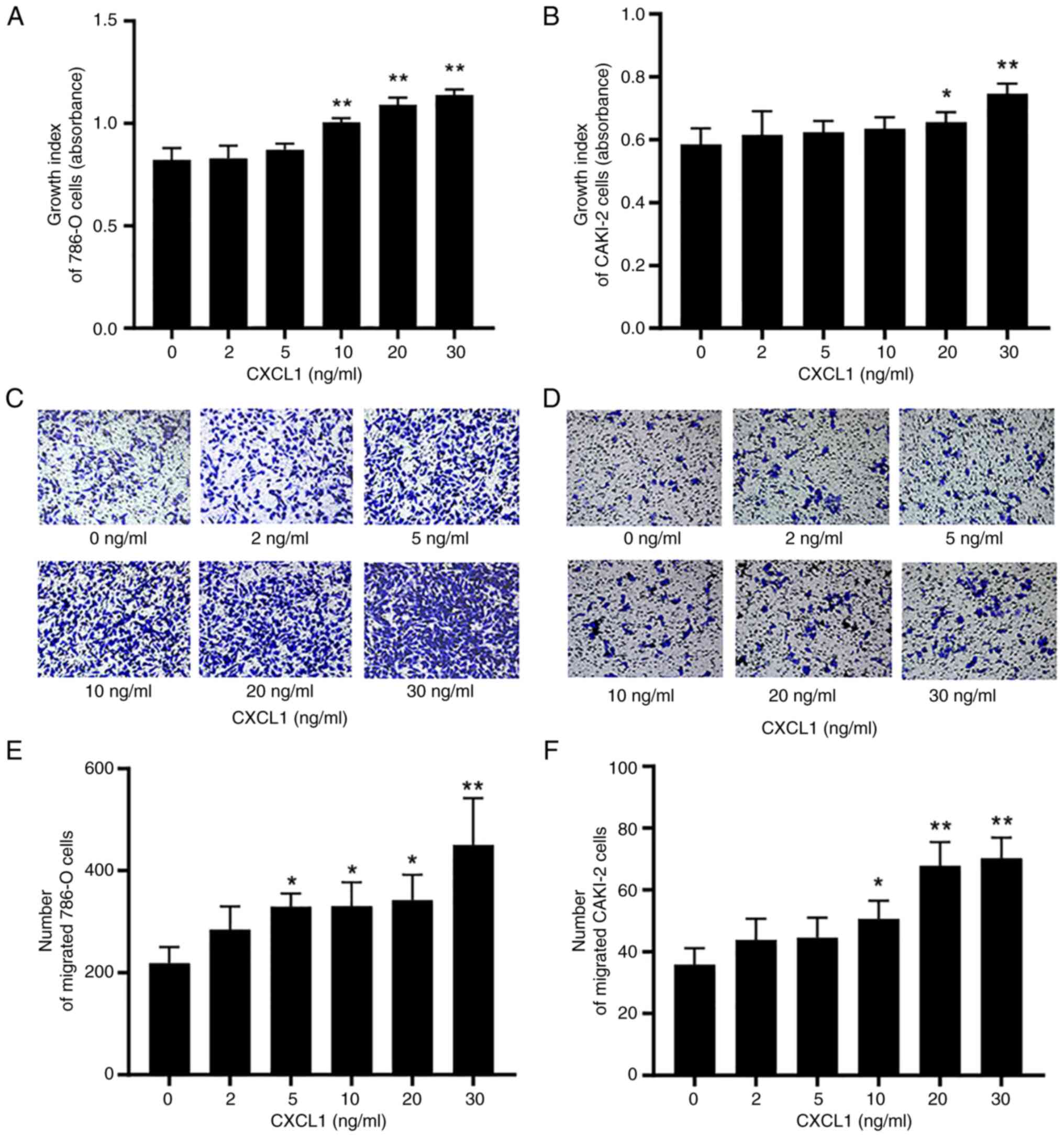
Figure 4

Exogenous CXCL1 treatment enhances
the malignant phenotype of renal cell carcinoma cells. Assessment
of cell proliferation using a Cell Counting Kit-8 assay in (A)
786-O and (B) CAKI-2 cells. Representative images from Transwell
assays with (C) 786-O and (D) CAKI-2 cells (magnification, ×100).
Assessment of cell migration using a Transwell assay in (E) 786-O
and (F) CAKI-2 cells. *P<0.05; **P<0.01 vs. 0 ng/ml. CXCL1,
CXC motif chemokine ligand 1.

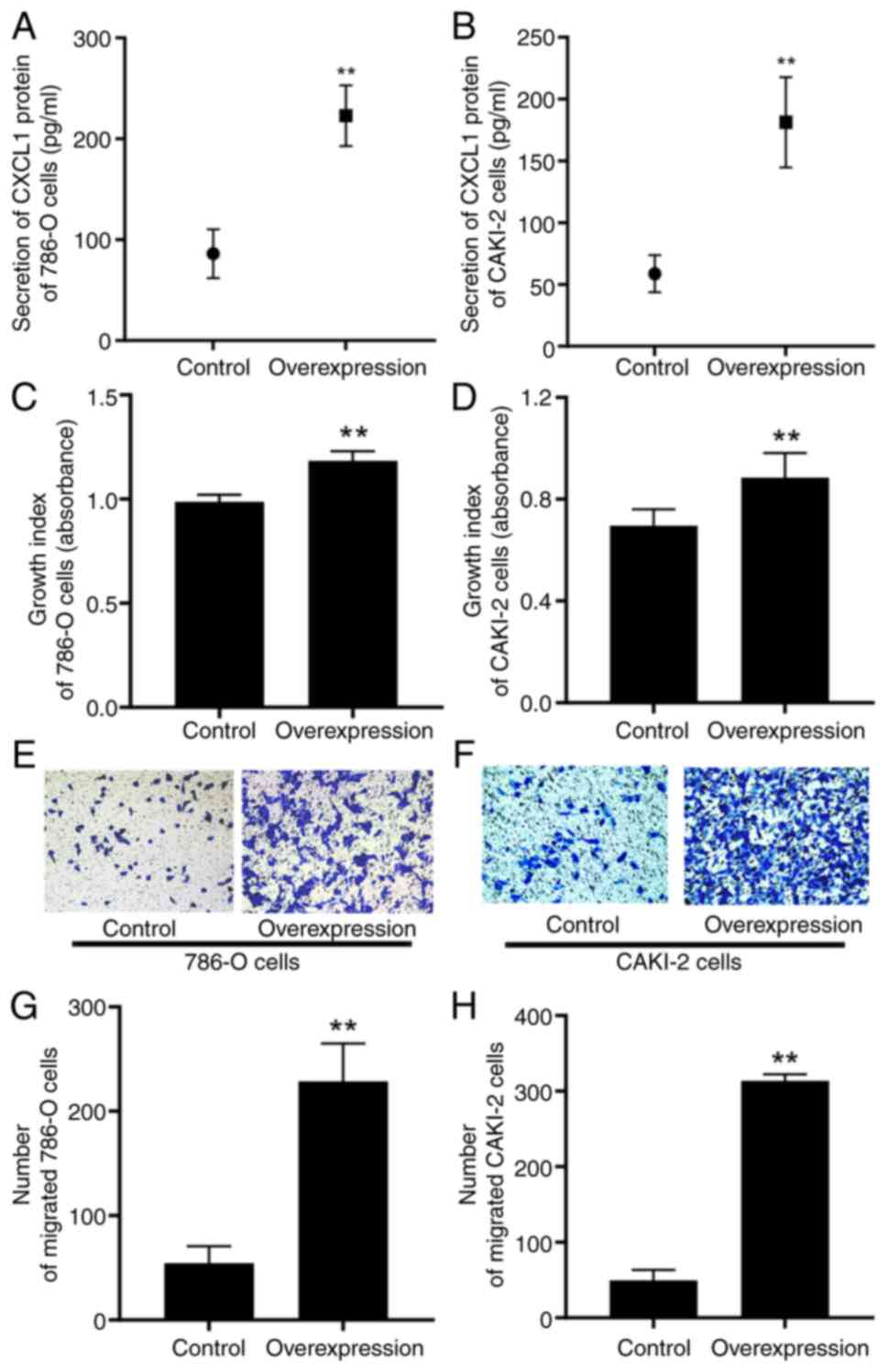
Figure 5

Overexpression of CXCL1 stimulates
the malignant phenotype of renal cell carcinoma cells. Evaluation
of CXCL3 expression in the supernatant from cell medium using ELISA
assay in (A) 786-O and (B) CAKI-2 cells. Assessment of cell
proliferation using a Cell Counting Kit-8 assay with (C) 786-O and
(D) CAKI-2 cells. Representative images from Transwell assay
experiments with (E) 786-O and (F) CAKI-2 cells (magnification,
×100). Assessment of cell migration using Transwell assay with (G)
786-O and (H) CAKI-2 cells. **P<0.01 vs. control. CXCL1, CXC
motif chemokine ligand 1.

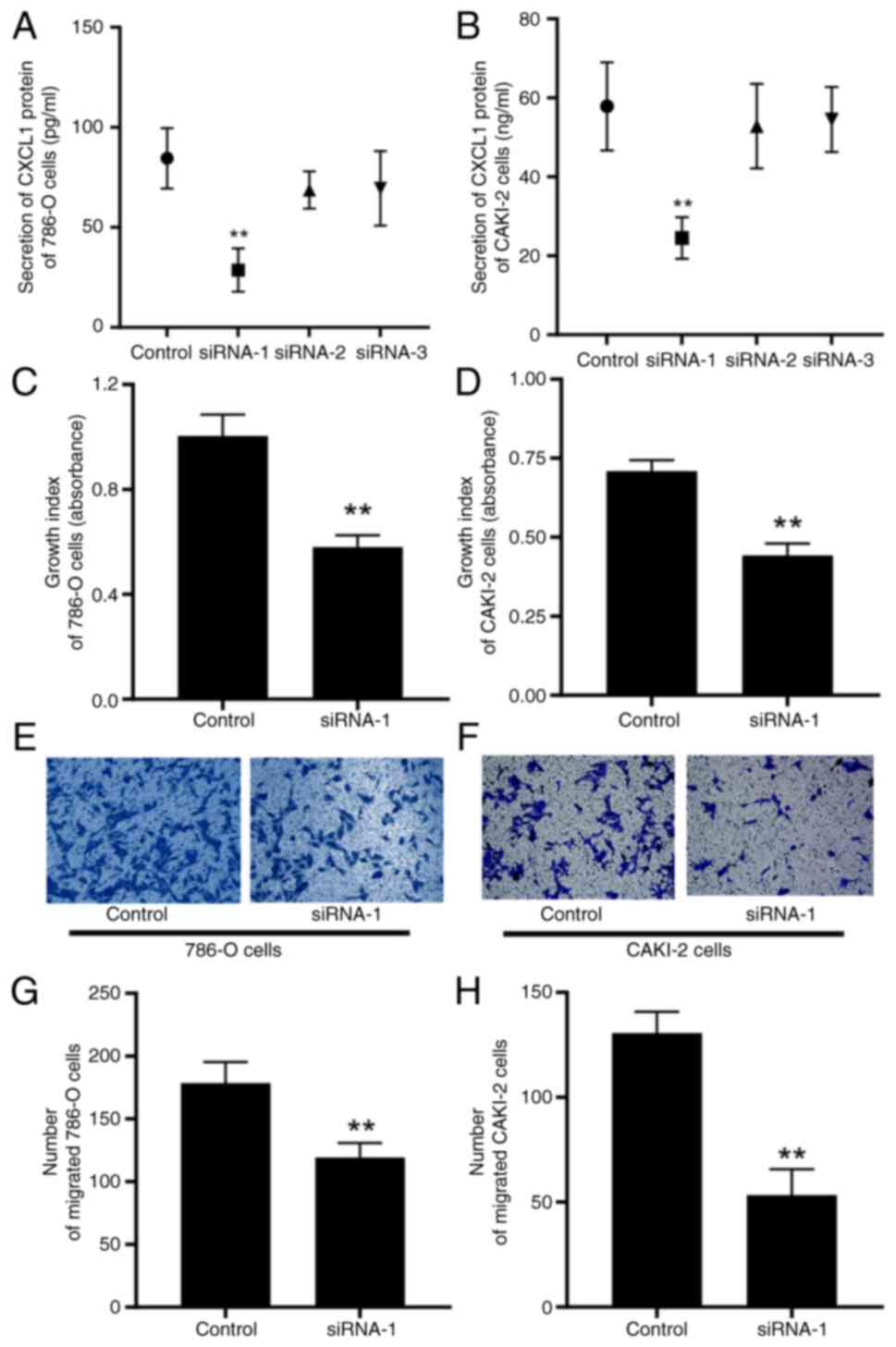
Figure 6

Low expression of CXCL1 suppresses
the malignant phenotype of renal cell carcinoma cells. Evaluation
of CXCL3 expression in the supernatant from cell medium using ELISA
assay with (A) 786-O and (B) CAKI-2 cells. Assessment of cell
proliferation using a Cell Counting Kit-8 assay with (C) 786-O and
(D) CAKI-2 cells. Representative images from Transwell assay
experiments (magnification, ×100) with (E) 786-O and (F) CAKI-2
cells. Assessment of cell migration using Transwell assay with (G)
786-O and (H) CAKI-2 cells. **P<0.1 01 vs. control. CXCL1, CXC
motif chemokine ligand 1; siRNA, small interfering RNA.

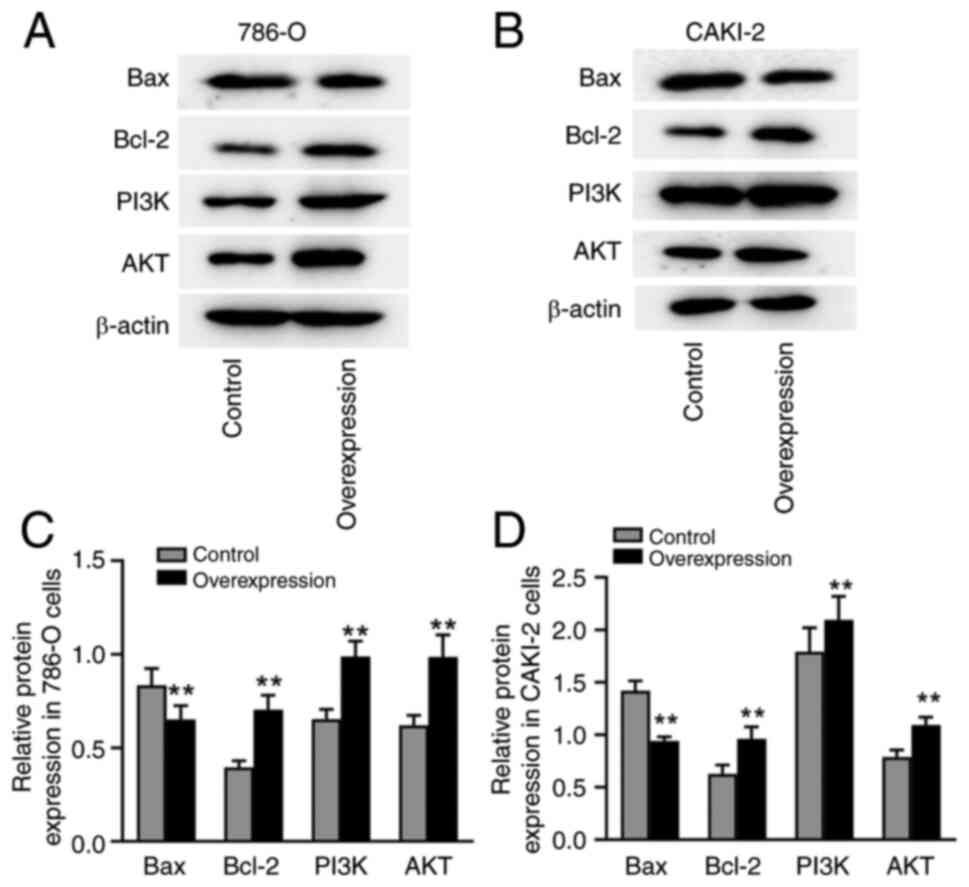
Figure 7

Overexpression of CXCL1 modulates the
expression of PI3K/AKT pathway-associated proteins in renal cell
carcinoma cells. Representative images from western blotting assays
in (A) 786-O and (B) CAKI-2 cells. Semi-quantification of the
protein expression levels of Bax, Bcl-2, PI3K and AKT in (C) 786-O
and (D) CAKI-2 cells. **P<0.01 vs. control. CXCL1, CXC motif
chemokine ligand 1; Bax, Bcl-2-associated X protein; Bcl-2, B-cell
lymphoma-2; PI3K, phosphoinositide 3-kinase.

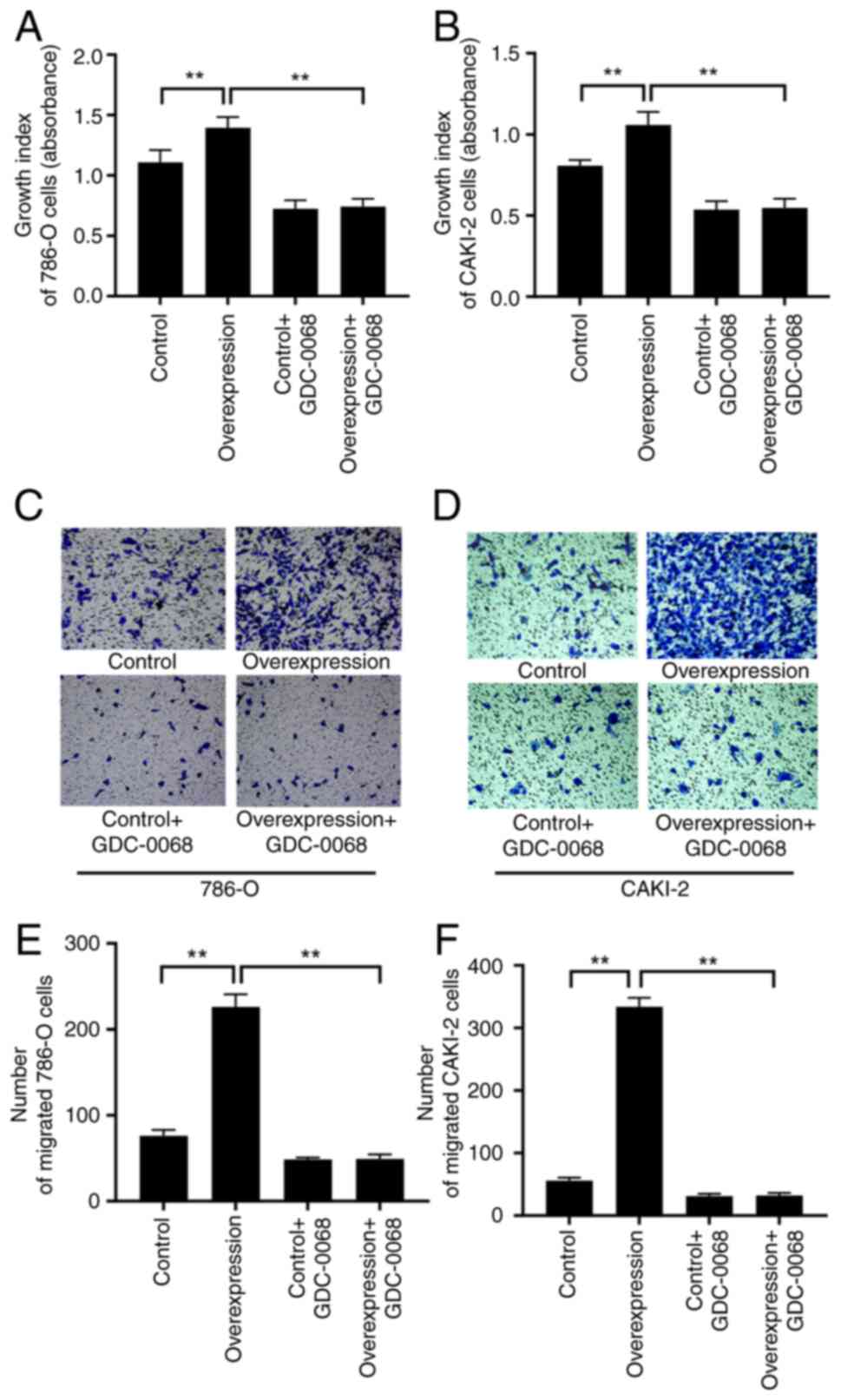
Figure 8

Blocking AKT reverses the promoting
effect of overexpression of CXCL1 on the malignant behaviors of
renal cell carcinoma cells. Assessment of cell proliferation using
a Cell Counting Kit-8 assay in (A) 786-O and (B) CAKI-2 cells.
(Representative images from Transwell assay experiments
(magnification, ×100) with (C) 786-O and (D) CAKI-2 cells.
Assessment of cell migration using Transwell assay with (E) 786-O
and (F) CAKI-2 cells. (magnification, ×100). **P<0.01 compared
with overexpression. CXCL1, CXC motif chemokine ligand 1.
View References

1 

Siegel RL, Miller KD and Jemal A: Cancer statistics, 2019. CA Cancer J Clin. 69:7–34. 2019.PubMed/NCBI

2 

Baldewijns MM, van Vlodrop IJ, Schouten LJ, Soetekouw PM, de Bruïne AP and van Engeland M: Genetics and epigenetics of renal cell cancer. Biochim Biophys Acta. 1785:133–155. 2008.PubMed/NCBI

3 

Linehan WM, Schmidt LS, Crooks DR, Wei D, Srinivasan R, Lang M and Ricketts CJ: The metabolic basis of kidney cancer. Cancer Discov. 9:1006–1021. 2019. View Article : Google Scholar : PubMed/NCBI

4 

Rijnders M, de Wit R, Boormans JL, Lolkema MPJ and van der Veldt AAM: Systematic review of immune checkpoint inhibition in urological cancers. Eur Urol. 72:411–423. 2017. View Article : Google Scholar : PubMed/NCBI

5 

Lalani AA, McGregor BA, Albiges L, Choueiri TK, Motzer R, Powles T, Wood C and Bex A: Systemic treatment of metastatic clear cell renal cell carcinoma in 2018: Current paradigms, use of immunotherapy, and future directions. Eur Urol. 75:100–110. 2019. View Article : Google Scholar : PubMed/NCBI

6 

Rot A and von Andrian UH: Chemokines in innate and adaptive host defense: Basic chemokinese grammar for immune cells. Annu Rev Immunol. 22:891–928. 2004. View Article : Google Scholar : PubMed/NCBI

7 

Griffith JW, Sokol CL and Luster AD: Chemokines and chemokine receptors: Positioning cells for host defense and immunity. Annu Rev Immunol. 32:659–702. 2014. View Article : Google Scholar : PubMed/NCBI

8 

Nagarsheth N, Wicha MS and Zou W: Chemokines in the cancer microenvironment and their relevance in cancer immunotherapy. Nat Rev Immunol. 17:559–572. 2017. View Article : Google Scholar : PubMed/NCBI

9 

Ozga AJ, Chow MT and Luster AD: Chemokines and the immune response to cancer. Immunity. 54:859–874. 2021. View Article : Google Scholar : PubMed/NCBI

10 

Bule P, Aguiar SI and Aires-Da-Silva Fal Dias JN: Chemokine-directed tumor microenvironment modulation in cancer immunotherapy. Int J Mol Sci. 22:98042021. View Article : Google Scholar : PubMed/NCBI

11 

Märkl F, Huynh D, Endres Sal and Kobold S: Utilizing chemokines in cancer immunotherapy. Trends Cancer. 8:670–682. 2022. View Article : Google Scholar : PubMed/NCBI

12 

O'Hayer KM, Brady DC and Counter CM: ELR+CXC chemokines and oncogenic Ras-mediated tumorigenesis. Carcinogenesis. 30:1841–1847. 2009. View Article : Google Scholar : PubMed/NCBI

13 

Korbecki J, Bosiacki M, Barczak K, Łagocka R, Brodowska A, Chlubek D and Baranowska-Bosiacka I: Involvement in tumorigenesis and clinical significance of CXCL1 in reproductive cancers: breast cancer, cervical cancer, endometrial cancer, ovarian cancer and prostate cancer. Int J Mol Sci. 24:72622023. View Article : Google Scholar : PubMed/NCBI

14 

Yao M, Tabuchi H, Nagashima Y, Baba M, Nakaigawa N, Ishiguro H, Hamada K, Inayama Y, Kishida T, Hattori K, et al: Gene expression analysis of renal carcinoma: Adipose differentiation-related protein as a potential diagnostic and prognostic biomarker for clear-cell renal carcinoma. J Pathol. 205:377–387. 2005. View Article : Google Scholar : PubMed/NCBI

15 

Wozniak MB, Le Calvez-Kelm F, Abedi-Ardekani B, Byrnes G, Durand G, Carreira C, Michelon J, Janout V, Holcatova I, Foretova L, et al: Integrative genome-wide gene expression profiling of clear cell renal cell carcinoma in Czech Republic and in the United States. PLoS One. 8:e578862013. View Article : Google Scholar : PubMed/NCBI

16 

Richmond A and Thomas HG: Melanoma growth stimulatory activity: Isolation from human melanoma tumors and characterization of tissue distribution. J Cell Biochem. 36:185–198. 1988. View Article : Google Scholar : PubMed/NCBI

17 

Schumacher C, Clark-Lewis I, Baggiolini M and Moser B: High- and low-affinity binding of GRO alpha and neutrophil-activating peptide 2 to interleukin 8 receptors on human neutrophils. Proc Natl Acad Sci USA. 89:10542–10546. 1992. View Article : Google Scholar : PubMed/NCBI

18 

Zhuo C, Ruan Q, Zhao X, Shen Y and Lin R: CXCL1 promotes colon cancer progression through activation of NF-κB/P300 signaling pathway. Biol Direct. 17:342022. View Article : Google Scholar : PubMed/NCBI

19 

Man X, Yang X, Wei Z, Tan Y, Li W, Jin H and Wang B: High expression level of CXCL1/GROα is linked to advanced stage and worse survival in uterine cervical cancer and facilitates tumor cell malignant processes. BMC Cancer. 22:7122022. View Article : Google Scholar : PubMed/NCBI

20 

Purdue MP, Rhee J, Moore L, Gao X, Sun X, Kirk E, Bencko V, Janout V, Mates D, Zaridze D, et al: Differences in risk factors for molecular subtypes of clear cell renal cell carcinoma. Int J Cancer. 149:1448–1454. 2021. View Article : Google Scholar : PubMed/NCBI

21 

Do HTT, Lee CH and Cho J: Chemokines and their receptors: Multifaceted roles in cancer progression and potential value as cancer prognostic markers. Cancers (Basel). 12:2872020. View Article : Google Scholar : PubMed/NCBI

22 

Qi YL, Li Y, Man XX, Sui HY, Zhao XL, Zhang PX, Qu XS, Zhang H, Wang BX, Li J, et al: CXCL3 overexpression promotes the tumorigenic potential of uterine cervical cancer cells via the MAPK/ERK pathway. J Cell Physiol. 235:4756–4765. 2020. View Article : Google Scholar : PubMed/NCBI

23 

Chow MT and Luster AD: Chemokines in cancer. Cancer Immunol Res. 2:1125–1131. 2014. View Article : Google Scholar : PubMed/NCBI

24 

Ha H, Debnath B and Neamati N: Role of the CXCL8-CXCR1/2 axis in cancer and inflammatory diseases. Theranostics. 7:1543–1588. 2017. View Article : Google Scholar : PubMed/NCBI

25 

Zhang W, Wang H, Sun M, Deng X, Wu X, Ma Y, Li M, Shuoa SM, You Q and Miao L: CXCL5/CXCR2 axis in tumor microenvironment as potential diagnostic biomarker and therapeutic target. Cancer Commun (Lond). 40:69–80. 2020. View Article : Google Scholar : PubMed/NCBI

26 

Gui SL, Teng LC, Wang SQ, Liu S, Lin YL, Zhao XL, Liu L, Sui HY, Yang Y, Liang L, et al: Overexpression of CXCL3 can enhance the oncogenic potential of prostate cancer. Int Urol Nephrol. 48:701–709. 2016. View Article : Google Scholar : PubMed/NCBI

27 

Xin H, Cao Y, Shao ML, Zhang W, Zhang CB, Wang JT, Liang LC, Shao WW, Qi YL, Li Y, et al: Chemokine CXCL3 mediates prostate cancer cells proliferation, migration and gene expression in an autocrine/paracrine fashion. Int Urol Nephrol. 50:861–868. 2018. View Article : Google Scholar : PubMed/NCBI

28 

Largeot A, Pagano G, Gonder S, Moussay E and Paggetti J: The B-side of cancer immunity: The underrated tune. Cells. 8:4492019. View Article : Google Scholar : PubMed/NCBI

29 

Vilgelm AE and Richmond A: Chemokines modulate immune surveillance in tumorigenesis, metastasis, and response to immunotherapy. Front Immunol. 10:3332019. View Article : Google Scholar : PubMed/NCBI

30 

Sionov RV, Fridlender ZG and Granot Z: The multifaceted roles neutrophils play in the tumor microenvironment. Cancer Microenviron. 8:125–158. 2015. View Article : Google Scholar : PubMed/NCBI

31 

Yuan M, Zhu H, Xu J, Zheng Y, Cao X and Liu Q: Tumor-Derived CXCL1 promotes lung cancer growth via recruitment of tumor-associated neutrophils. J Immunol Res. 2016:65304102016. View Article : Google Scholar : PubMed/NCBI

32 

Han KQ, He XQ, Ma MY, Guo XD, Zhang XM, Chen J, Han H, Zhang WW, Zhu QG and Zhao WZ: Targeted silencing of CXCL1 by siRNA inhibits tumor growth and apoptosis in hepatocellular carcinoma. Int J Oncol. 47:2131–2140. 2015. View Article : Google Scholar : PubMed/NCBI

33 

Miyake M, Hori S, Morizawa Y, Tatsumi Y, Nakai Y, Anai S, Torimoto K, Aoki K, Tanaka N, Shimada K, et al: CXCL1-Mediated interaction of cancer cells with tumor-associated macrophages and cancer-associated fibroblasts promotes tumor progression in human bladder cancer. Neoplasia. 18:636–646. 2016. View Article : Google Scholar : PubMed/NCBI

34 

Noorolyai S, Shajari N, Baghbani E, Sadreddini S and Baradaran B: The relation between PI3K/AKT signalling pathway and cancer. Gene. 698:120–128. 2019. View Article : Google Scholar : PubMed/NCBI

Related Articles

  • Abstract
  • View
  • Download
  • Twitter
Copy and paste a formatted citation
Spandidos Publications style
Gui S, Zhang H, Xiao H, Liu C, Wang Y, Wang B and Qiu H: Enhanced expression of CXCL1 in renal cell carcinoma facilitates tumor cell malignancy via PI3K/AKT‑dependent mechanisms. Oncol Lett 31: 19, 2026.
APA
Gui, S., Zhang, H., Xiao, H., Liu, C., Wang, Y., Wang, B., & Qiu, H. (2026). Enhanced expression of CXCL1 in renal cell carcinoma facilitates tumor cell malignancy via PI3K/AKT‑dependent mechanisms. Oncology Letters, 31, 19. https://doi.org/10.3892/ol.2025.15372
MLA
Gui, S., Zhang, H., Xiao, H., Liu, C., Wang, Y., Wang, B., Qiu, H."Enhanced expression of CXCL1 in renal cell carcinoma facilitates tumor cell malignancy via PI3K/AKT‑dependent mechanisms". Oncology Letters 31.1 (2026): 19.
Chicago
Gui, S., Zhang, H., Xiao, H., Liu, C., Wang, Y., Wang, B., Qiu, H."Enhanced expression of CXCL1 in renal cell carcinoma facilitates tumor cell malignancy via PI3K/AKT‑dependent mechanisms". Oncology Letters 31, no. 1 (2026): 19. https://doi.org/10.3892/ol.2025.15372
Copy and paste a formatted citation
x
Spandidos Publications style
Gui S, Zhang H, Xiao H, Liu C, Wang Y, Wang B and Qiu H: Enhanced expression of CXCL1 in renal cell carcinoma facilitates tumor cell malignancy via PI3K/AKT‑dependent mechanisms. Oncol Lett 31: 19, 2026.
APA
Gui, S., Zhang, H., Xiao, H., Liu, C., Wang, Y., Wang, B., & Qiu, H. (2026). Enhanced expression of CXCL1 in renal cell carcinoma facilitates tumor cell malignancy via PI3K/AKT‑dependent mechanisms. Oncology Letters, 31, 19. https://doi.org/10.3892/ol.2025.15372
MLA
Gui, S., Zhang, H., Xiao, H., Liu, C., Wang, Y., Wang, B., Qiu, H."Enhanced expression of CXCL1 in renal cell carcinoma facilitates tumor cell malignancy via PI3K/AKT‑dependent mechanisms". Oncology Letters 31.1 (2026): 19.
Chicago
Gui, S., Zhang, H., Xiao, H., Liu, C., Wang, Y., Wang, B., Qiu, H."Enhanced expression of CXCL1 in renal cell carcinoma facilitates tumor cell malignancy via PI3K/AKT‑dependent mechanisms". Oncology Letters 31, no. 1 (2026): 19. https://doi.org/10.3892/ol.2025.15372
Follow us
  • Twitter
  • LinkedIn
  • Facebook
About
  • Spandidos Publications
  • Careers
  • Cookie Policy
  • Privacy Policy
How can we help?
  • Help
  • Live Chat
  • Contact
  • Email to our Support Team