Spandidos Publications Logo
  • About
    • About Spandidos
    • Aims and Scopes
    • Abstracting and Indexing
    • Editorial Policies
    • Reprints and Permissions
    • Job Opportunities
    • Terms and Conditions
    • Contact
  • Journals
    • All Journals
    • Oncology Letters
      • Oncology Letters
      • Information for Authors
      • Editorial Policies
      • Editorial Board
      • Aims and Scope
      • Abstracting and Indexing
      • Bibliographic Information
      • Archive
    • International Journal of Oncology
      • International Journal of Oncology
      • Information for Authors
      • Editorial Policies
      • Editorial Board
      • Aims and Scope
      • Abstracting and Indexing
      • Bibliographic Information
      • Archive
    • Molecular and Clinical Oncology
      • Molecular and Clinical Oncology
      • Information for Authors
      • Editorial Policies
      • Editorial Board
      • Aims and Scope
      • Abstracting and Indexing
      • Bibliographic Information
      • Archive
    • Experimental and Therapeutic Medicine
      • Experimental and Therapeutic Medicine
      • Information for Authors
      • Editorial Policies
      • Editorial Board
      • Aims and Scope
      • Abstracting and Indexing
      • Bibliographic Information
      • Archive
    • International Journal of Molecular Medicine
      • International Journal of Molecular Medicine
      • Information for Authors
      • Editorial Policies
      • Editorial Board
      • Aims and Scope
      • Abstracting and Indexing
      • Bibliographic Information
      • Archive
    • Biomedical Reports
      • Biomedical Reports
      • Information for Authors
      • Editorial Policies
      • Editorial Board
      • Aims and Scope
      • Abstracting and Indexing
      • Bibliographic Information
      • Archive
    • Oncology Reports
      • Oncology Reports
      • Information for Authors
      • Editorial Policies
      • Editorial Board
      • Aims and Scope
      • Abstracting and Indexing
      • Bibliographic Information
      • Archive
    • Molecular Medicine Reports
      • Molecular Medicine Reports
      • Information for Authors
      • Editorial Policies
      • Editorial Board
      • Aims and Scope
      • Abstracting and Indexing
      • Bibliographic Information
      • Archive
    • World Academy of Sciences Journal
      • World Academy of Sciences Journal
      • Information for Authors
      • Editorial Policies
      • Editorial Board
      • Aims and Scope
      • Abstracting and Indexing
      • Bibliographic Information
      • Archive
    • International Journal of Functional Nutrition
      • International Journal of Functional Nutrition
      • Information for Authors
      • Editorial Policies
      • Editorial Board
      • Aims and Scope
      • Abstracting and Indexing
      • Bibliographic Information
      • Archive
    • International Journal of Epigenetics
      • International Journal of Epigenetics
      • Information for Authors
      • Editorial Policies
      • Editorial Board
      • Aims and Scope
      • Abstracting and Indexing
      • Bibliographic Information
      • Archive
    • Medicine International
      • Medicine International
      • Information for Authors
      • Editorial Policies
      • Editorial Board
      • Aims and Scope
      • Abstracting and Indexing
      • Bibliographic Information
      • Archive
  • Articles
  • Information
    • Information for Authors
    • Information for Reviewers
    • Information for Librarians
    • Information for Advertisers
    • Conferences
  • Language Editing
Spandidos Publications Logo
  • About
    • About Spandidos
    • Aims and Scopes
    • Abstracting and Indexing
    • Editorial Policies
    • Reprints and Permissions
    • Job Opportunities
    • Terms and Conditions
    • Contact
  • Journals
    • All Journals
    • Biomedical Reports
      • Information for Authors
      • Editorial Policies
      • Editorial Board
      • Aims and Scope
      • Abstracting and Indexing
      • Bibliographic Information
      • Archive
    • Experimental and Therapeutic Medicine
      • Information for Authors
      • Editorial Policies
      • Editorial Board
      • Aims and Scope
      • Abstracting and Indexing
      • Bibliographic Information
      • Archive
    • International Journal of Epigenetics
      • Information for Authors
      • Editorial Policies
      • Editorial Board
      • Aims and Scope
      • Abstracting and Indexing
      • Bibliographic Information
      • Archive
    • International Journal of Functional Nutrition
      • Information for Authors
      • Editorial Policies
      • Editorial Board
      • Aims and Scope
      • Abstracting and Indexing
      • Bibliographic Information
      • Archive
    • International Journal of Molecular Medicine
      • Information for Authors
      • Editorial Policies
      • Editorial Board
      • Aims and Scope
      • Abstracting and Indexing
      • Bibliographic Information
      • Archive
    • International Journal of Oncology
      • Information for Authors
      • Editorial Policies
      • Editorial Board
      • Aims and Scope
      • Abstracting and Indexing
      • Bibliographic Information
      • Archive
    • Medicine International
      • Information for Authors
      • Editorial Policies
      • Editorial Board
      • Aims and Scope
      • Abstracting and Indexing
      • Bibliographic Information
      • Archive
    • Molecular and Clinical Oncology
      • Information for Authors
      • Editorial Policies
      • Editorial Board
      • Aims and Scope
      • Abstracting and Indexing
      • Bibliographic Information
      • Archive
    • Molecular Medicine Reports
      • Information for Authors
      • Editorial Policies
      • Editorial Board
      • Aims and Scope
      • Abstracting and Indexing
      • Bibliographic Information
      • Archive
    • Oncology Letters
      • Information for Authors
      • Editorial Policies
      • Editorial Board
      • Aims and Scope
      • Abstracting and Indexing
      • Bibliographic Information
      • Archive
    • Oncology Reports
      • Information for Authors
      • Editorial Policies
      • Editorial Board
      • Aims and Scope
      • Abstracting and Indexing
      • Bibliographic Information
      • Archive
    • World Academy of Sciences Journal
      • Information for Authors
      • Editorial Policies
      • Editorial Board
      • Aims and Scope
      • Abstracting and Indexing
      • Bibliographic Information
      • Archive
  • Articles
  • Information
    • For Authors
    • For Reviewers
    • For Librarians
    • For Advertisers
    • Conferences
  • Language Editing
Login Register Submit
  • This site uses cookies
  • You can change your cookie settings at any time by following the instructions in our Cookie Policy. To find out more, you may read our Privacy Policy.

    I agree
Search articles by DOI, keyword, author or affiliation
Search
Advanced Search
presentation
Oncology Letters
Join Editorial Board Propose a Special Issue
Print ISSN: 1792-1074 Online ISSN: 1792-1082
Journal Cover
January-2026 Volume 31 Issue 1

Full Size Image

Sign up for eToc alerts
Recommend to Library

Journals

International Journal of Molecular Medicine

International Journal of Molecular Medicine

International Journal of Molecular Medicine is an international journal devoted to molecular mechanisms of human disease.

International Journal of Oncology

International Journal of Oncology

International Journal of Oncology is an international journal devoted to oncology research and cancer treatment.

Molecular Medicine Reports

Molecular Medicine Reports

Covers molecular medicine topics such as pharmacology, pathology, genetics, neuroscience, infectious diseases, molecular cardiology, and molecular surgery.

Oncology Reports

Oncology Reports

Oncology Reports is an international journal devoted to fundamental and applied research in Oncology.

Experimental and Therapeutic Medicine

Experimental and Therapeutic Medicine

Experimental and Therapeutic Medicine is an international journal devoted to laboratory and clinical medicine.

Oncology Letters

Oncology Letters

Oncology Letters is an international journal devoted to Experimental and Clinical Oncology.

Biomedical Reports

Biomedical Reports

Explores a wide range of biological and medical fields, including pharmacology, genetics, microbiology, neuroscience, and molecular cardiology.

Molecular and Clinical Oncology

Molecular and Clinical Oncology

International journal addressing all aspects of oncology research, from tumorigenesis and oncogenes to chemotherapy and metastasis.

World Academy of Sciences Journal

World Academy of Sciences Journal

Multidisciplinary open-access journal spanning biochemistry, genetics, neuroscience, environmental health, and synthetic biology.

International Journal of Functional Nutrition

International Journal of Functional Nutrition

Open-access journal combining biochemistry, pharmacology, immunology, and genetics to advance health through functional nutrition.

International Journal of Epigenetics

International Journal of Epigenetics

Publishes open-access research on using epigenetics to advance understanding and treatment of human disease.

Medicine International

Medicine International

An International Open Access Journal Devoted to General Medicine.

Journal Cover
January-2026 Volume 31 Issue 1

Full Size Image

Sign up for eToc alerts
Recommend to Library

  • Article
  • Citations
    • Cite This Article
    • Download Citation
    • Create Citation Alert
    • Remove Citation Alert
    • Cited By
  • Similar Articles
    • Related Articles (in Spandidos Publications)
    • Similar Articles (Google Scholar)
    • Similar Articles (PubMed)
  • Download PDF
  • Download XML
  • View XML

  • Supplementary Files
    • Supplementary_Data.pdf
Article Open Access

Long non‑coding RNA RP11‑196G11.6 inhibits neuroblastoma progression by regulating the miR‑376a‑3p/RYBP signaling axis

  • Authors:
    • Jie Zhang
    • Kai Huang
    • Jianwu Zhou
    • Wenge Liao
    • Fei Li
    • Zhenzhen Zhao
    • Shan Wang
  • View Affiliations / Copyright

    Affiliations: Department of Pediatric Surgical Oncology, The Children's Hospital of Chongqing Medical University, National Clinical Research Center for Child Health and Disorders, Ministry of Education Key Laboratory of Child Development and Disorders, Chongqing Key Laboratory of Pediatric Metabolism and Inflammatory Diseases, Chongqing 400014, P.R. China, Department of Pediatric Surgery, Guizhou Provincial People's Hospital, Guiyang, Guizhou 550002, P.R. China
    Copyright: © Zhang et al. This is an open access article distributed under the terms of Creative Commons Attribution License.
  • Article Number: 23
    |
    Published online on: November 6, 2025
       https://doi.org/10.3892/ol.2025.15376
  • Expand metrics +
Metrics: Total Views: 0 (Spandidos Publications: | PMC Statistics: )
Metrics: Total PDF Downloads: 0 (Spandidos Publications: | PMC Statistics: )
Cited By (CrossRef): 0 citations Loading Articles...

This article is mentioned in:


Abstract

Long non‑coding RNAs (lncRNAs) are emerging as key regulators of neuroblastoma (NB) progression; however, their interplay with MYCN‑driven mechanisms remains to be elucidated. The present study aimed to characterize the expression profile of lncRNA RP11‑196G11.6 in NB, and to further explore its functional role and mechanism in the pathogenesis of this disease. Transcriptomics data from NB and disseminated tumor cell (DTC) samples (Gene Expression Omnibus; accession no. GSE94035) were analyzed via principal component analysis (PCA), differential expression analysis and CIBERSORT immune profiling. The biological function was assessed using gain‑ and loss‑of‑function experiments in IMR‑32 (MYCN+) and SH‑SY5Y (MYCN‑) cells. Dual‑luciferase reporter assays were performed to identify the interaction between RP11‑196G11.6, microRNA (miR)‑376a‑3p and RING1 and YY1‑binding protein (RYBP). Rescue experiments were performed by co‑transfecting RP11‑196G11.6‑overexpressing cells with a miR‑376a‑3p mimic to identify the hypothetical regulatory role of RP11‑196G11.6 in NB progression in vitro. The present analysis results demonstrated that the PCA could distinguish tumor and DTC samples, with MYCN amplification driving distinct clustering in tumors but not in DTCs. Differential expression analysis based on MYCN+/‑ in both tumor and DTC groups identified 161 differentially expressed lncRNAs (73 upregulated and 88 downregulated). Notably, RP11‑196G11.6 was highly expressed in MYCN+ tumors, and silencing RP11‑196G11.6 promoted the viability, migration, invasion and epithelial‑mesenchymal transition in MYCN+ cells, whereas RP11‑196G11.6 overexpression induced the opposite effects in MYCN‑ cells. Mechanistically, RP11‑196G11.6 directly inhibited miR‑376a‑3p, which targeted RYBP. Overexpression of miR‑376a‑3p reversed the tumor suppressor phenotype driven by RP11‑196G11.6. In summary, the present study demonstrated that RP11‑196G11.6 may inhibit NB progression by sponging miR‑376a‑3p, leading to the upregulation of RYBP expression and consequently inhibiting NB progression. These findings revealed a novel lncRNA‑miRNA axis involved in NB pathogenesis.
View Figures

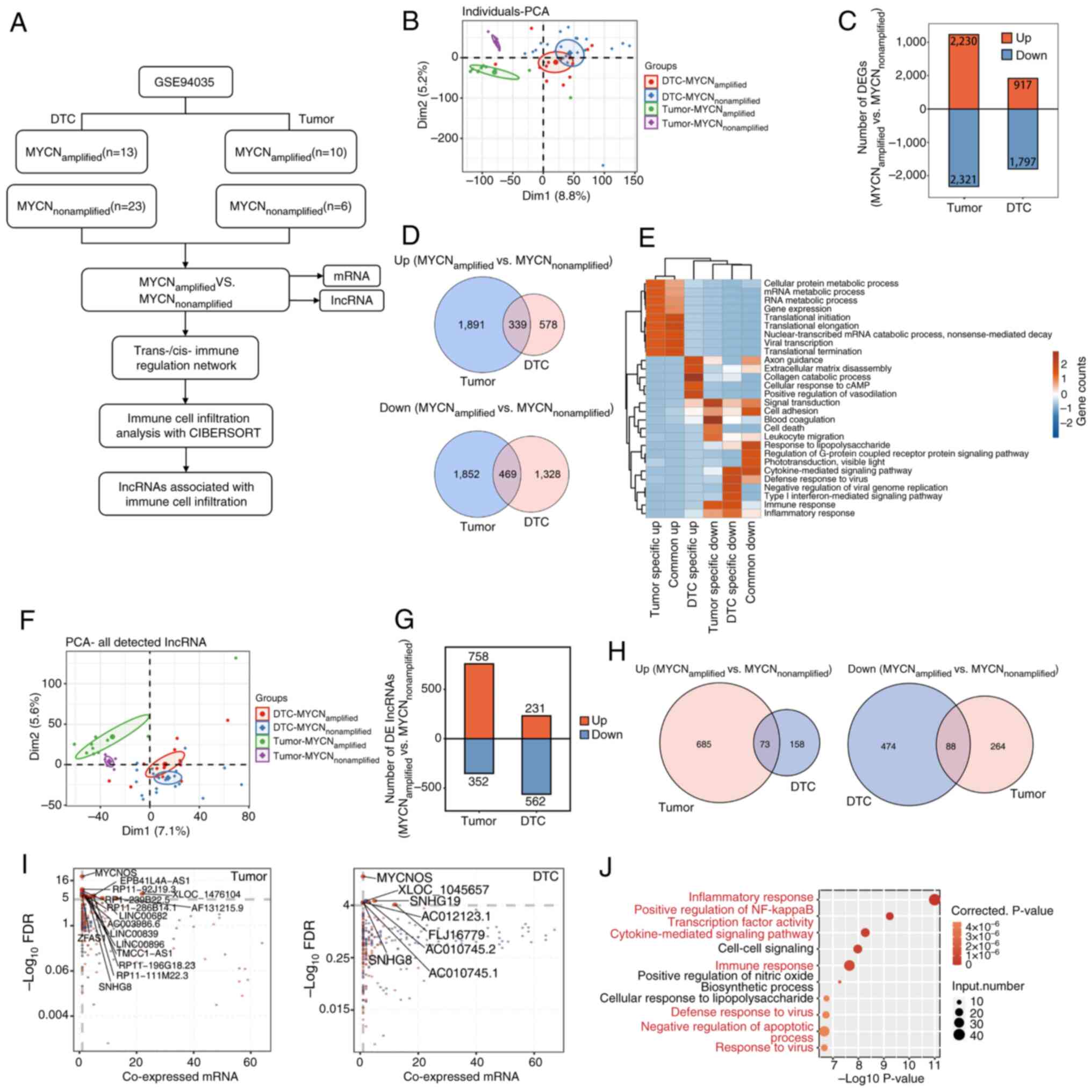
Figure 1

Analysis of DElncRNAs in tumor and
bone marrow metastatic tissues. (A) Schematic diagram of the
bioinformatics analysis process. (B) PCA between tumor and DTC
samples, and between MYCN amplification statuses. (C) Analysis of
DEGs between MYCN+ and MYCN− samples in tumor
and DTC samples. (D) Venn diagrams depicting commonly upregulated
and downregulated DEGs in the four groups of samples. (E) GO
enrichment analysis showing the GO terms that were most
significantly enriched in 808 DEGs. The color scale represents the
enrichment intensity of gene sets across different groups, based on
the number of genes enriched in each pathway and normalized to a
range of −2 to 2. (F) PCA of the lncRNAs among the DEGs. (G)
DElncRNA analysis between MYCN+ and MYCN−
samples in tumor and DTC samples. (H) Venn diagrams indicating
commonly upregulated and downregulated DElncRNAs in the four groups
of samples. (I) Weighted gene co-expression network analysis and
co-expression analysis. Scatter plots of DElncRNAs and their
co-expressed DEmRNAs in MYCN+ vs. MYCN−
samples across tumor and DTC cohorts. Red points denote upregulated
lncRNAs involved in co-expression pairs and blue points denote
downregulated lncRNAs. The straight lines represent correlations
between the two variables. Cutoffs of P≤0.01 and Pearson
coefficient >0.8 were applied to identify the co-expression
pairs. (J) Top 10 most enriched GO terms (biological processes) in
DEmRNAs co-expressed with the DElncRNAs; the highlighted terms in
red are associated with immune and inflammatory responses. lncRNA,
long non-coding RNA; PCA, principal component analysis; DTC,
disseminated tumor cell; DEG, differentially expressed gene; GO,
Gene Ontology; DElncRNA, differentially expressed lncRNA; DEmRNA,
differentially expressed mRNA; FDR, false discovery rate.

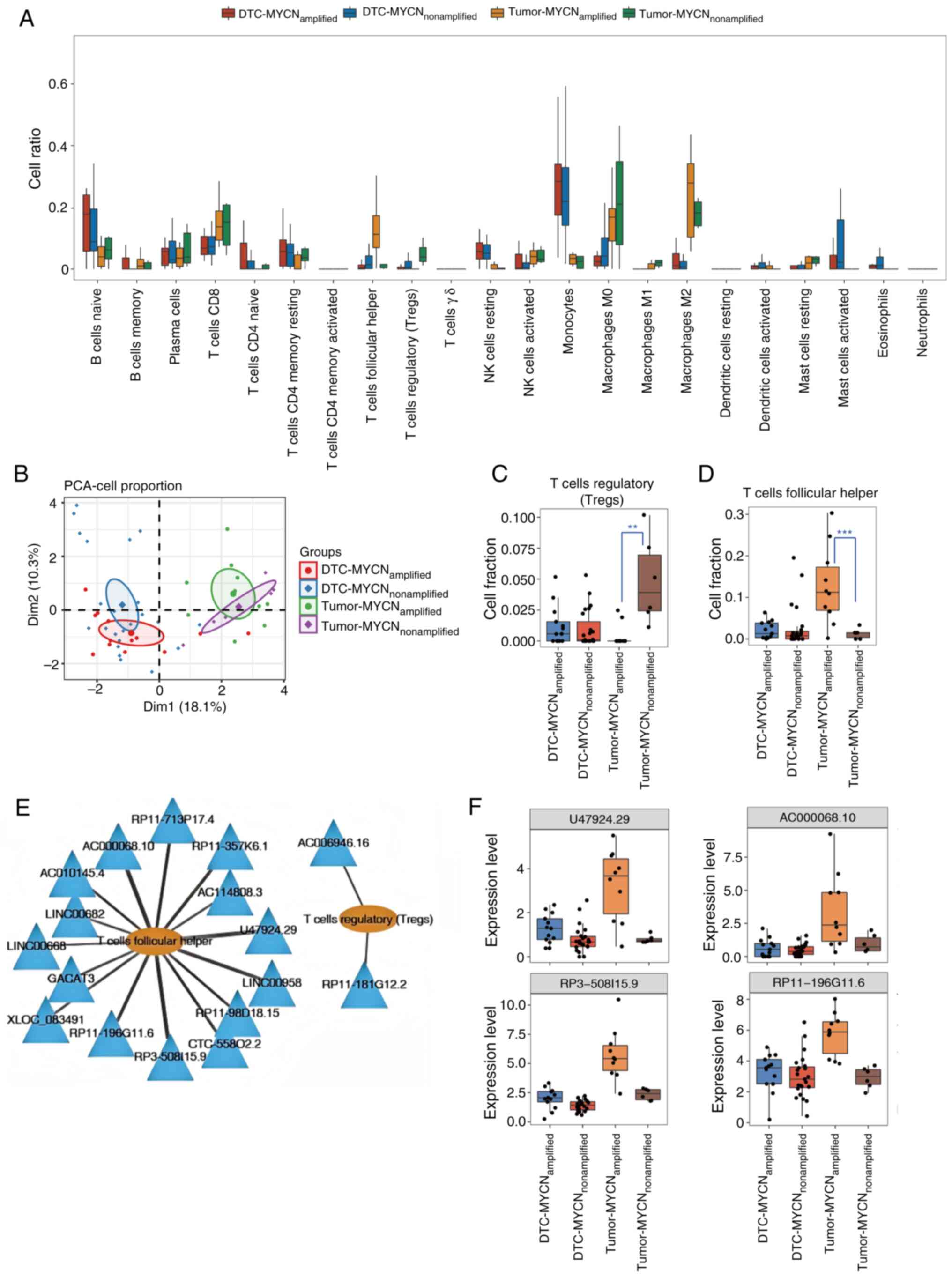
Figure 2

Analysis of DElncRNAs associated with
Tregs and Tfhs. (A) CIBERSORT analysis of the proportion of each
immune cell type in MYCN+ and MYCN− samples
from tumors and DTCs. (B) PCA of the different types of cells. (C)
Specific proportions of Tregs in the four types of samples.
**P<0.01 vs. Tumor-MYCNnonamplified. (D) Specific
proportions of Tfhs in the four types of samples. ***P<0.001 vs.
Tumor-MYCNnonamplified. (E) lncRNA-immune cell
infiltration networks. (F) Expression levels of four DElncRNAs
associated with Tfh infiltration. lncRNA, long non-coding RNA;
DElncRNA, differentially expressed lncRNA; DTC, disseminated tumor
cell; Treg, regulatory T cell; Tfh, T follicular helper cell; PCA,
principal component analysis.

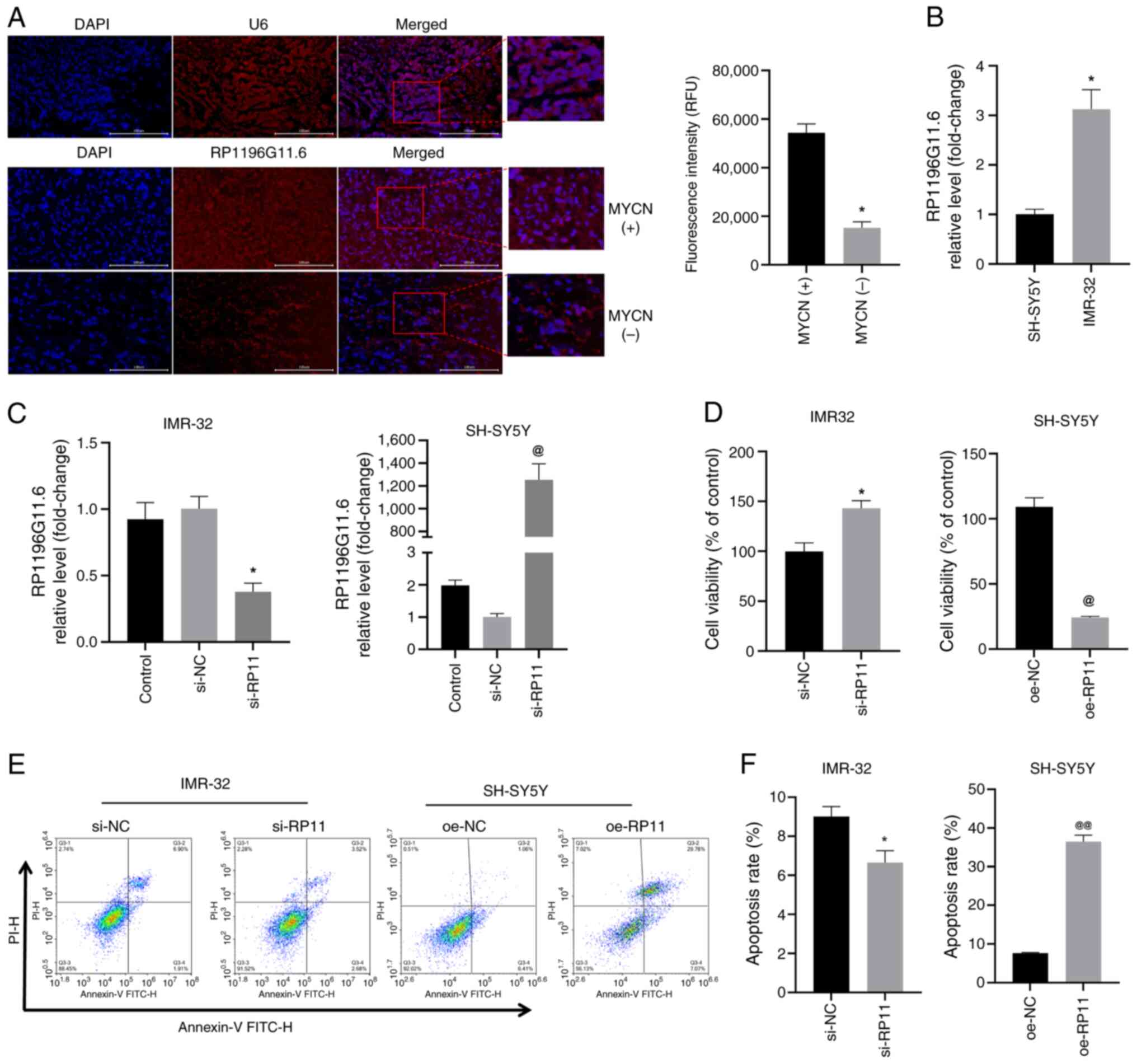
Figure 3

RP11is highly expressed in
MYCN+ NB tumor tissues and MYCN+ NB cells,
and RP11 upregulation inhibits NB cell viability. (A) FISH analysis
revealed the expression level of RP11 in MYCN+ and
MYCN− NB tumor tissue specimens (scale bar, 100 µm; U6,
control probe). *P<0.05 vs. MYCN+ group. (B)
Quantification of RP11 levels in SH-SY5Y and IMR-32 cells by
reverse transcription-quantitative PCR. *P<0.05 vs. SH-SY5Y. (C)
Quantification of RP11 levels in IMR-32 cells following
transfection with si-RP11 and RP11 levels in SH-SY5Y cells
following transfection with oe-RP11. *P<0.05 vs. si-NC,
@P<0.05 vs. oe-NC. (D) Viability of IMR-32 and
SH-SY5Y cells was assessed using a Cell Counting Kit-8 assay.
*P<0.05 vs. si-NC, @P<0.05 vs. oe-NC. (E) Levels
of apoptosis were assessed using flow cytometry in IMR-32 and
SH-SY5Y cells. (F) Apoptosis rate of IMR-32 and SH-SHY5Y cells
*P<0.05 vs. si-NC or @@P<0.01 vs. oe-NC. RP11,
RP11-196G11.6; si, small interfering; oe, overexpression; NB,
neuroblastoma; FISH, fluorescence in situ hybridization; NC,
negative control.

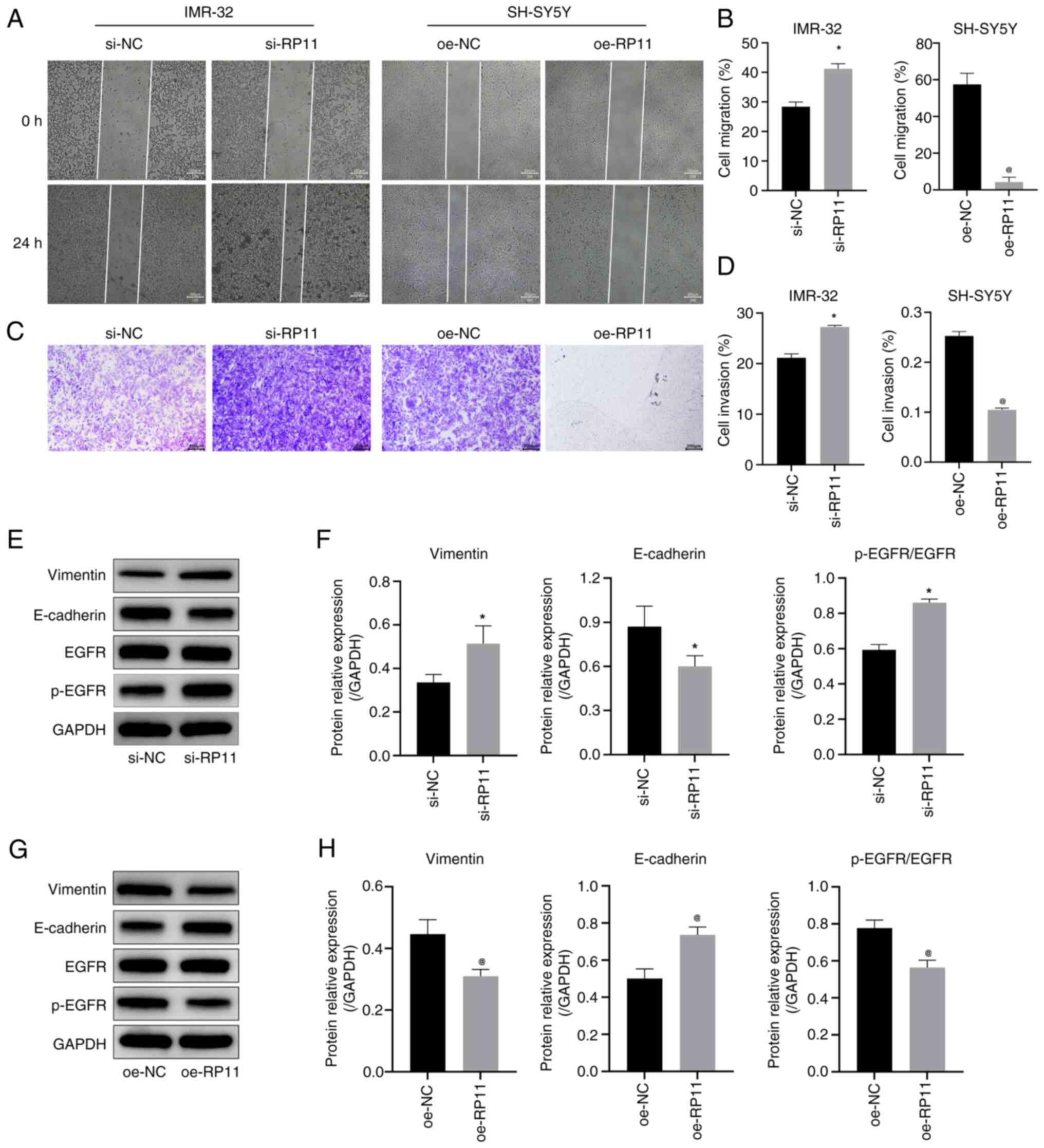
Figure 4

RP11 upregulation inhibits
neuroblastoma cell migration and invasion. (A) Cell scratch assay
results indicated that knockdown of RP11 expression promoted
migration in IMR-32 cells and oe-RP11 suppressed migration in
SH-SY5Y cells (scale bar, 200 µm). (B) Comparison of cell migration
rates in IMR-32 and SH-SY5Y cells in the cell scratch assay.
*P<0.05 vs. si-NC, @P<0.05 vs. oe-NC. (C)
Transwell assay results indicated that knockdown of RP11 expression
promoted invasion in IMR-32 cells and oe-RP11-196G11.6 suppressed
invasion in SH-SY5Y cells (scale bar, 200 µm). (D) Quantitative
analysis of cell invasion rate in the Transwell assay. *P<0.05
vs. si-NC, @P<0.05 vs. oe-NC. (E) Representative WB
images in IMR-32 cells. (F) Expression levels of vimentin,
E-cadherin and p-EGFR/EGFR in IMR-32 cells *P<0.05 vs. si-NC.
(G) Representative WB images in SH-SY5Y cells. (H) Expression
levels of vimentin, E-cadherin and p-EGFR/EGFR protein in SH-SY5Y
cells. @P<0.05 vs. oe-NC. RP11, RP11-196G11.6; si,
small interfering; oe, overexpression; WB, western blotting; p-,
phosphorylated; NC, negative control.

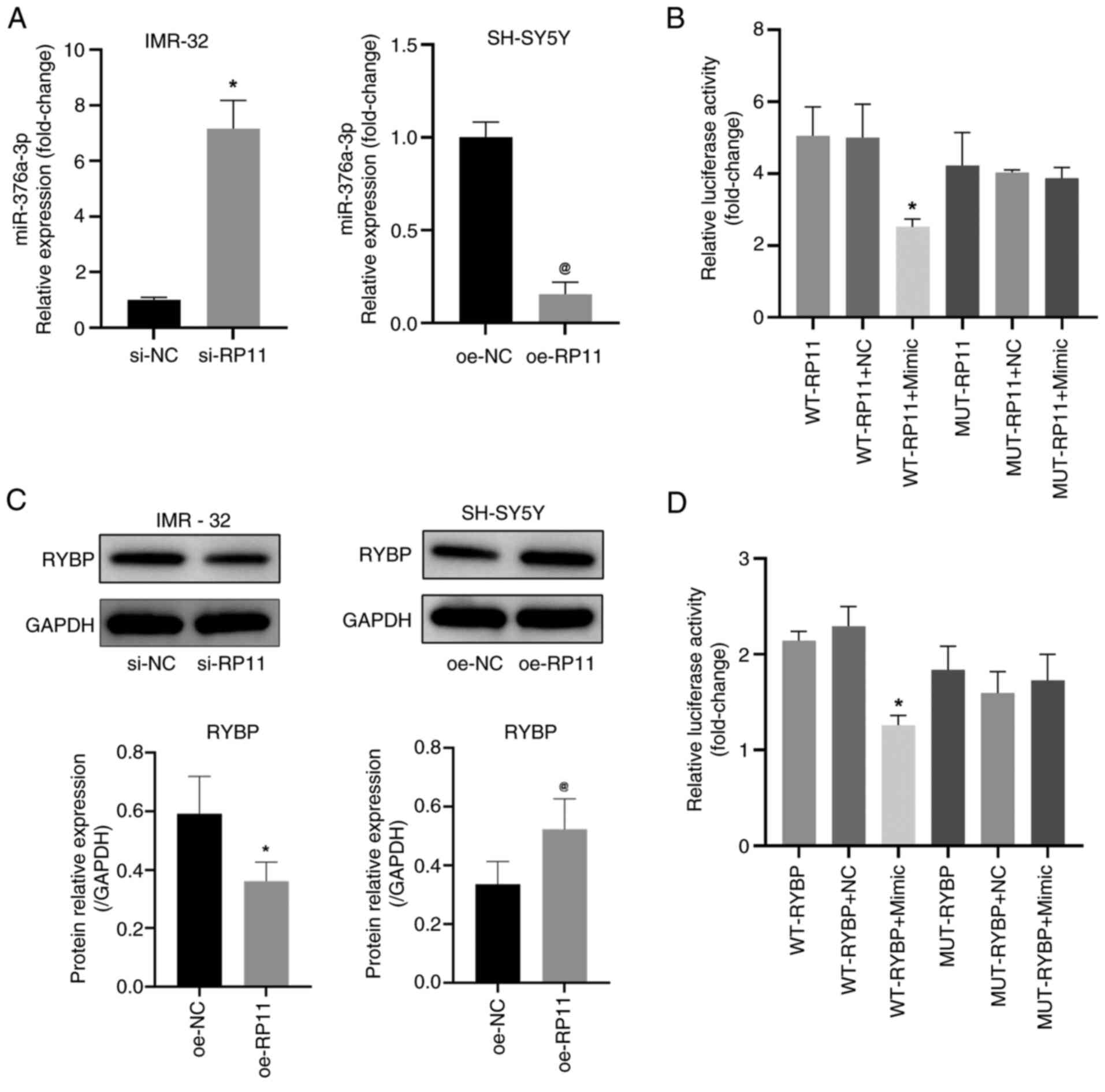
Figure 5

RP11 inhibits miR-376a-3p expression
in neuroblastoma cells. (A) Quantification of miR-376a-3p levels in
IMR-32 cells following transfection with si-RP11 and in SH-SY5Y
cells following transfection with oe-RP11. *P<0.05 vs. si-NC,
@P<0.05 vs. oe-NC. (B) Luciferase reporter assay was
performed to measure the activity of the WT or MUT RP11 3′UTR
vector in 293T cells that were co-transfected with either
miR-376a-3p or NC mimics. *P<0.05 vs. WT-RP11 + NC. (C) RYBP
protein levels detected by WB in IMR-32 and SH-SY5Y cells.
*P<0.05 vs. si-NC, @P<0.05 vs. oe-NC. (D)
Luciferase reporter assay was performed to measure the activity of
the WT or MUT RYBP 3′UTR vector in 293T cells that were
co-transfected with either miR-376a-3p or NC mimics. *P<0.05 vs.
WT-RYBP + NC. RP11, RP11-196G11.6; si, small interfering; oe,
overexpression; NC, negative control; WB, western blotting; WT,
wild-type; RYBP, RING1 and YY1-binding protein; MUT, mutant;
miR-376a-3p, microRNA-376a-3p.

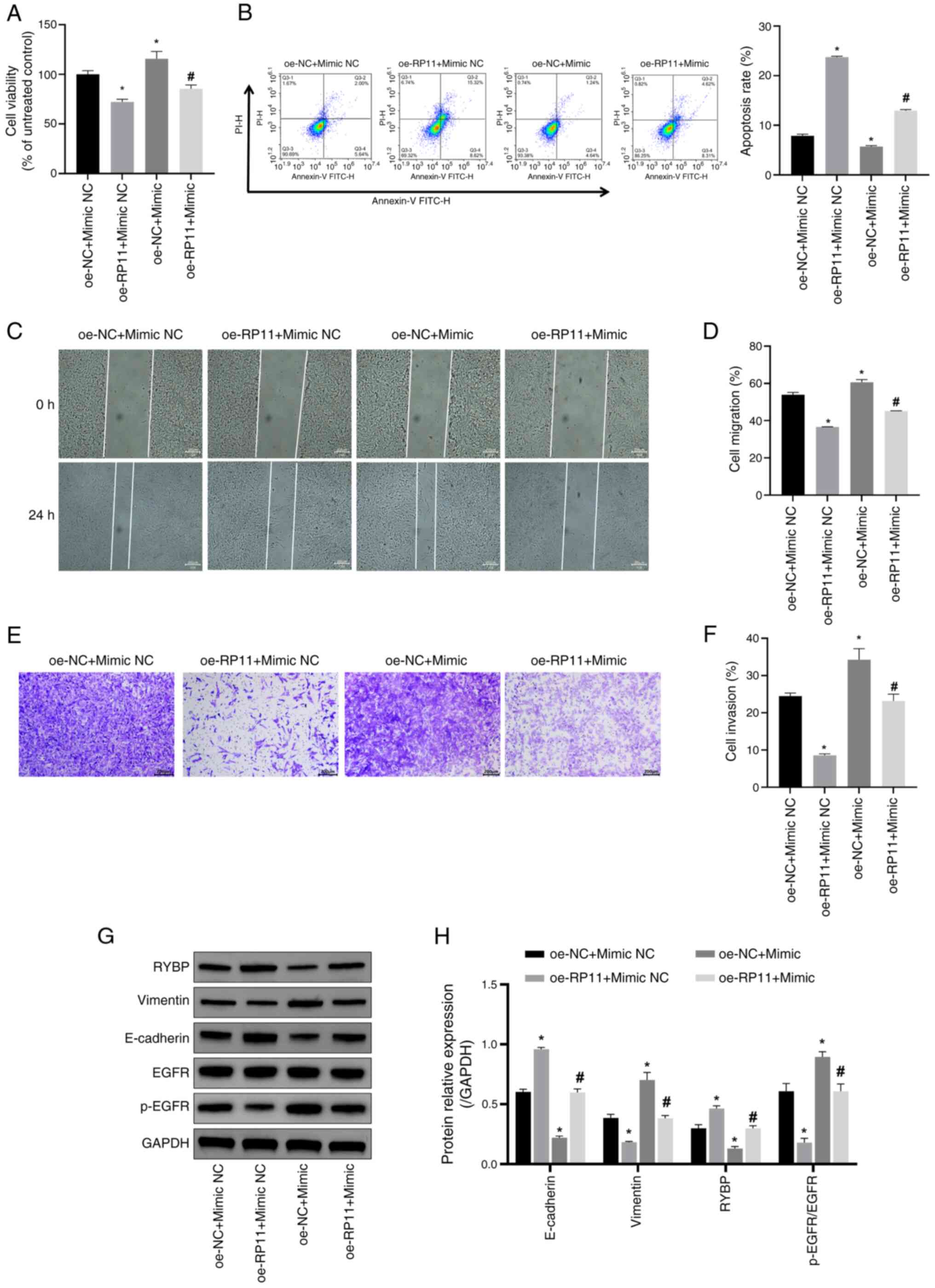
Figure 6

RP11 inhibits SH-SY5Y cell viability,
migration and invasion by downregulating miR-376a-3p expression.
(A) SH-SY5Y cell viability was assessed using a Cell Counting Kit-8
assay. *P<0.05 vs. oe-NC + mimic NC; #P<0.05 vs.
oe-RP11 + mimic NC. (B) SH-SY5Y apoptosis was assessed using flow
cytometry to assess the levels of SH-SY5Y apoptosis. *P<0.05 vs.
oe-NC + mimic NC; #P<0.05 vs. oe-RP11 + mimic NC. (C)
SH-SY5Y cell migration ability was detected using a cell scratch
assay (scale bar, 200 µm). (D) Comparison of cell migration rates
between the four groups in the cell scratch assay. *P<0.05 vs.
oe-NC + mimic NC; #P<0.05 vs. oe-RP11 + mimic NC. (E)
SH-SY5Y cell invasive ability was detected using a Transwell assay
(scale bar, 200 µm). (F) Quantitative analysis of cell invasion
rate in the four groups. *P<0.05 vs. oe-NC + mimic NC;
#P<0.05 vs. oe-RP11 + mimic NC. (G) Representative
western blotting image. (H) Semi-quantification of RYBP, vimentin,
E-cadherin and p-EGFR/EGFR protein expression levels. *P<0.05
vs. oe-NC + mimic NC; #P<0.05 vs. oe-RP11 + mimic NC.
oe, overexpression; NC, negative control; RP11, RP11-196G11.6;
RYBP, RING1 and YY1-binding protein; miR-376a-3p, microRNA-376a-3p;
p-, phosphorylated.
View References

1 

Irwin MS and Park JR: Neuroblastoma: Paradigm for precision medicine. Pediatr Clin North Am. 62:225–256. 2015. View Article : Google Scholar : PubMed/NCBI

2 

Suh E, Stratton KL, Leisenring WM, Nathan PC, Ford JS, Freyer DR, McNeer JL, Stock W, Stovall M, Krull KR, et al: Late mortality chronic health conditions in long-term survivors of early-adolescent, young adult cancers: A retrospective cohort analysis from the childhood cancer survivor study. Lancet Oncol. 21:421–435. 2020. View Article : Google Scholar : PubMed/NCBI

3 

Ponzoni M, Bachetti T, Corrias MV, Brignole C, Pastorino F, Calarco E, Bensa V, Giusto E, Ceccherini I and Perri P: Recent advances in the developmental origin of neuroblastoma: An overview. J Exp Clin Cancer Res. 41:922022. View Article : Google Scholar : PubMed/NCBI

4 

Körber V, Stainczyk SA, Kurilov R, Henrich KO, Hero B, Brors B, Westermann F and Höfer T: Neuroblastoma arises in early fetal development and its evolutionary duration predicts outcome. Nat Genet. 55:619–630. 2023. View Article : Google Scholar : PubMed/NCBI

5 

Monclair T, Brodeur GM, Ambros PF, Brisse HJ, Cecchetto G, Holmes K, Kaneko M, London WB, Matthay KK, Nuchtern JG, et al: The international neuroblastoma risk group (INRG) staging system: An INRG task force report. J Clin Oncol. 27:298–303. 2009. View Article : Google Scholar : PubMed/NCBI

6 

Castel V, García-Miguel P, Cañete A, Melero C, Navajas A, Ruíz-Jiménez JI, Navarro S and Badal MD: Prospective evaluation of the international neuroblastoma staging system (INSS) and the international neuroblastoma response criteria (INRC) in a multicentre setting. Eur J Cancer. 35:606–611. 1999. View Article : Google Scholar : PubMed/NCBI

7 

Shimada H, Ambros IM, Dehner LP, Hata J, Joshi VV, Roald B, Stram DO, Gerbing RB, Lukens JN, Matthay KK and Castleberry RP: The international neuroblastoma pathology classification (the Shimada system). Cancer. 86:364–372. 1999. View Article : Google Scholar : PubMed/NCBI

8 

Pinto NR, Applebaum MA, Volchenboum SL, Matthay KK, London WB, Ambros PF, Nakagawara A, Berthold F, Schleiermacher G, Park JR, et al: Advances in risk classification and treatment strategies for neuroblastoma. J Clin Oncol. 33:3008–3017. 2015. View Article : Google Scholar : PubMed/NCBI

9 

Steliarova-Foucher E, Colombet M, Ries LAG, Moreno F, Dolya A, Bray F, Hesseling P, Shin HY and Stiller CA: IICC-3 contributors: International incidence of childhood cancer, 2001-10: A population-based registry study. Lancet Oncol. 18:719–731. 2017. View Article : Google Scholar : PubMed/NCBI

10 

Diede SJ: Spontaneous regression of metastatic cancer: Learning from neuroblastoma. Nat Rev Cancer. 14:71–72. 2014. View Article : Google Scholar : PubMed/NCBI

11 

Brodeur GM, Seeger RC, Schwab M, Varmus HE and Bishop JM: Amplification of N-myc in untreated human neuroblastomas correlates with advanced disease stage. Science. 224:1121–1124. 1984. View Article : Google Scholar : PubMed/NCBI

12 

Ruiz-Pérez MV, Henley AB and Arsenian-Henriksson M: The MYCN protein in health and disease. Genes (Basel). 8:1132017. View Article : Google Scholar : PubMed/NCBI

13 

Huang M and Weiss WA: Neuroblastoma and MYCN. Cold Spring Harb Perspect Med. 3:a0144152013. View Article : Google Scholar : PubMed/NCBI

14 

Taniue K and Akimitsu N: The functions and unique features of LncRNAs in cancer development and tumorigenesis. Int J Mol Sci. 22:6322021. View Article : Google Scholar : PubMed/NCBI

15 

Yang R, Liu N, Li T, Liu F, Zhang J, Zhao H, Zou L and He X: LncRNA AC142119.1 facilitates the progression of neuroblastoma by epigenetically initiating the transcription of MYCN. J Transl Med. 21:6592023. View Article : Google Scholar : PubMed/NCBI

16 

Hsu CL, Yin CF, Chang YW, Fan YC, Lin SH, Wu YC, Huang HC and Juan HF: LncRNA SNHG1 regulates neuroblastoma cell fate via interactions with HDAC1/2. Cell Death Dis. 13:8092022. View Article : Google Scholar : PubMed/NCBI

17 

Hu Z, Xu W, Wang H, Li M, Wang J, Sun C and Yang X: CARM1-induced lncRNA NEAT1 synchronously activates MYCN and GalNAcT-I to accelerate the progression of neuroblastoma. Gene. 938:1491642025. View Article : Google Scholar : PubMed/NCBI

18 

Kim D, Pertea G, Trapnell C, Pimentel H, Kelley R and Salzberg SL: TopHat2: Accurate alignment of transcriptomes in the presence of insertions, deletions and gene fusions. Genome Biol. 14:R362013. View Article : Google Scholar : PubMed/NCBI

19 

Robinson MD, McCarthy DJ and Smyth GK: edgeR: A bioconductor package for differential expression analysis of digital gene expression data. Bioinformatics. 26:139–140. 2010. View Article : Google Scholar : PubMed/NCBI

20 

Liu S, Wang Z, Chen D, Zhang B, Tian RR, Wu J, Zhang Y, Xu K, Yang LM, Cheng C, et al: Annotation and cluster analysis of spatiotemporal- and sex-related lncRNA expression in rhesus macaque brain. Genome Res. 27:1608–1620. 2017. View Article : Google Scholar : PubMed/NCBI

21 

Trapnell C, Roberts A, Goff L, Pertea G, Kim D, Kelley DR, Pimentel H, Salzberg SL, Rinn JL and Pachter L: Differential gene and transcript expression analysis of RNA-seq experiments with TopHat and Cufflinks. Nat Protoc. 7:562–578. 2012. View Article : Google Scholar : PubMed/NCBI

22 

Sturm G, Finotello F and List M: Immunedeconv: An R package for unified access to computational methods for estimating immune cell fractions from bulk RNA-sequencing data. Methods Mol Biol. 2120:223–232. 2020. View Article : Google Scholar : PubMed/NCBI

23 

Langfelder P and Horvath S: WGCNA: An R package for weighted correlation network analysis. BMC Bioinformatics. 9:5592008. View Article : Google Scholar : PubMed/NCBI

24 

Xie C, Mao X, Huang J, Ding Y, Wu J, Dong S, Kong L, Gao G, Li CY and Wei L: KOBAS 2.0: A web server for annotation and identification of enriched pathways and diseases. Nucleic Acids Res. 39((Web Server Issue)): W316–W322. 2011. View Article : Google Scholar : PubMed/NCBI

25 

Livak KJ and Schmittgen TD: Analysis of relative gene expression data using real-time quantitative PCR and the 2(−Delta Delta C(T)) method. Methods. 25:402–408. 2001. View Article : Google Scholar : PubMed/NCBI

26 

Tan K, Zhang X, Cong X, Huang B, Chen H and Chen D: Tumor suppressor RYBP harbors three nuclear localization signals and its cytoplasm-located mutant exerts more potent anti-cancer activities than corresponding wild type. Cell Signal. 29:127–137. 2017. View Article : Google Scholar : PubMed/NCBI

27 

Zhu X, Yan M, Luo W, Liu W, Ren Y, Bei C, Tang G, Chen R and Tan S: Expression and clinical significance of PcG-associated protein RYBP in hepatocellular carcinoma. Oncol Lett. 13:141–150. 2017. View Article : Google Scholar : PubMed/NCBI

28 

Morinaka T, Sakai N, Takayashiki T, Kuboki S, Takano S, Ohira G, Matsubara H and Ohtsuka M: RYBP contributes to improved prognosis in colorectal cancer via regulation of cell cycle, apoptosis and oxaliplatin sensitivity. Int J Oncol. 63:1202023. View Article : Google Scholar : PubMed/NCBI

29 

Zafar A, Wang W, Liu G, Wang X, Xian W, McKeon F, Foster J, Zhou J and Zhang R: Molecular targeting therapies for neuroblastoma: Progress and challenges. Med Res Rev. 41:961–1021. 2021. View Article : Google Scholar : PubMed/NCBI

30 

Qiu B and Matthay KK: Advancing therapy for neuroblastoma. Nat Rev Clin Oncol. 19:515–533. 2022. View Article : Google Scholar : PubMed/NCBI

31 

Floros KV, Cai J, Jacob S, Kurupi R, Fairchild CK, Shende M, Coon CM, Powell KM, Belvin BR, Hu B, et al: MYCN-amplified neuroblastoma is addicted to iron and vulnerable to inhibition of the system Xc-/glutathione axis. Cancer Res. 81:1896–1908. 2021. View Article : Google Scholar : PubMed/NCBI

32 

Vaid R, Thombare K, Mendez A, Burgos-Panadero R, Djos A, Jachimowicz D, Lundberg KI, Bartenhagen C, Kumar N, Tümmler C, et al: METTL3 drives telomere targeting of TERRA lncRNA through m6A-dependent R-loop formation: A therapeutic target for ALT-positive neuroblastoma. Nucleic Acids Res. 52:2648–2671. 2024. View Article : Google Scholar : PubMed/NCBI

33 

Heward JA and Lindsay MA: Long non-coding RNAs in the regulation of the immune response. Trends Immunol. 35:408–419. 2014. View Article : Google Scholar : PubMed/NCBI

34 

Otte J, Dyberg C, Pepich A and Johnsen JI: MYCN function in neuroblastoma development. Front Oncol. 10:6240792021. View Article : Google Scholar : PubMed/NCBI

35 

Braoudaki M, Hatziagapiou K, Zaravinos A and Lambrou GI: MYCN in neuroblastoma: ‘Old wine into new wineskins’. Diseases. 78:782021. View Article : Google Scholar

36 

Chen L and Tweddle DA: p53, SKP2, and DKK3 as MYCN target genes and their potential therapeutic significance. Front Oncol. 28:1732012.PubMed/NCBI

37 

Kobayashi K, Jakt LM and Nishikawa SI: Epigenetic regulation of the neuroblastoma genes, Arid3b and Mycn. Oncogene. 32:2640–2648. 2013. View Article : Google Scholar : PubMed/NCBI

38 

Weiss WA, Aldape K, Mohapatra G, Feuerstein BG and Bishop JM: Targeted expression of MYCN causes neuroblastoma in transgenic mice. EMBO J. 16:2985–1995. 1997. View Article : Google Scholar : PubMed/NCBI

39 

Winkle M, van den Berg A, Tayari M, Sietzema J, Terpstra M, Kortman G, de Jong D, Visser L, Diepstra A, Kok K and Kluiver J: Long noncoding RNAs as a novel component of the Myc transcriptional network. FASEB J. 29:2338–2346. 2015. View Article : Google Scholar : PubMed/NCBI

40 

Zhang Q, Wei J, Li N and Liu B: LINC00839 promotes neuroblastoma progression by sponging miR-454-3p to Up-regulate NEUROD1. Neurochem Res. 47:2278–2293. 2022. View Article : Google Scholar : PubMed/NCBI

41 

Xin X, Xu Z, Wei J and Zhang Y: MiR-376a-3p increases cell apoptosis in acute myeloid leukemia by targeting MT1X. Cancer Biol Ther. 23:234–242. 2022. View Article : Google Scholar : PubMed/NCBI

42 

Wang Y, Jiang F, Xiong Y, Cheng X, Qiu Z and Song R: LncRNA TTN-AS1 sponges miR-376a-3p to promote colorectal cancer progression via upregulating KLF15. Life Sci. 244:1169362020. View Article : Google Scholar : PubMed/NCBI

43 

Xie F, Li L, Luo Y, Chen R and Mei J: Long non-coding RNA LINC00488 facilitates thyroid cancer cell progression through miR-376a-3p/PON2. Biosci Rep. 41:BSR202016032021. View Article : Google Scholar : PubMed/NCBI

44 

Shan F, Somasundaram A, Bruno TC, Workman CJ and Vignali DAA: Therapeutic targeting of regulatory T cells in cancer. Trends Cancer. 8:944–961. 2022. View Article : Google Scholar : PubMed/NCBI

45 

Yan S, Zhang Y and Sun B: The function and potential drug targets of tumour-associated Tregs for cancer immunotherapy. Sci China Life Sci. 62:179:1862019. View Article : Google Scholar

46 

Overacre-Delgoffe AE, Bumgarner HJ, Cillo AR, Burr AHP, Tometich JT, Bhattacharjee A, Bruno TC, Vignali DAA and Hand TW: Microbiota-specific T follicular helper cells drive tertiary lymphoid structures and anti-tumor immunity against colorectal cancer. Immunity. 54:2812–2824.e4. 2021. View Article : Google Scholar : PubMed/NCBI

47 

Zhou H, Li J, Zhang Z, Ye R, Shao N, Cheang T and Wang S: RING1 and YY1 binding protein suppresses breast cancer growth and metastasis. Int J Oncol. 49:2442–2452. 2016. View Article : Google Scholar : PubMed/NCBI

48 

Xian Y, Wang L, Yao B, Yang W, Mo H, Zhang L and Tu K: MicroRNA-769-5p contributes to the proliferation, migration and invasion of hepatocellular carcinoma cells by attenuating RYBP. Biomed Pharmacother. 118:1093432019. View Article : Google Scholar : PubMed/NCBI

49 

Ganesan K, Xu C, Wu S, Sui Y, Du B, Zhang J, Gao F, Chen J and Tang H: Ononin inhibits tumor bone metastasis and osteoclastogenesis by targeting mitogen-activated protein kinase pathway in breast cancer. Research (Wash D C). 7:05532024.PubMed/NCBI

50 

Zeng Y, Du W, Huang Z, Wu S, Ou X, Zhang J, Peng C, Sun X and Tang H: Hsa_circ_0060467 promotes breast cancer liver metastasis by complexing with eIF4A3 and sponging miR-1205. Cell Death Discov. 9:1532023. View Article : Google Scholar : PubMed/NCBI

51 

Han M, Yang J, Chen P, Li S, Tang H, Fan H, Wang Y, Li X, Pan W, Koutouratsas V, et al: Isocucurbitacin B inhibits gliomas through the promotion of anoikis by targeting caveolin 1. Cancer Lett. 629:2178732025. View Article : Google Scholar : PubMed/NCBI

52 

Dinglin X, Ding L, Li Q, Liu Y, Zhang J and Yao H: RYBP inhibits progression and metastasis of lung cancer by suppressing EGFR signaling and epithelial-mesenchymal transition. Transl Oncol. 10:280–287. 2017. View Article : Google Scholar : PubMed/NCBI

53 

Tong AH, Tan J, Zhang JH, Xu FJ, Li FY and Cao CY: Overexpression of RYBP inhibits proliferation, invasion, and chemoresistance to cisplatin in anaplastic thyroid cancer cells via the EGFR pathway. J Biochem Mol Toxicol. 33:e222412019. View Article : Google Scholar : PubMed/NCBI

Related Articles

  • Abstract
  • View
  • Download
  • Twitter
Copy and paste a formatted citation
Spandidos Publications style
Zhang J, Huang K, Zhou J, Liao W, Li F, Zhao Z and Wang S: Long non‑coding RNA RP11‑196G11.6 inhibits neuroblastoma progression by regulating the miR‑376a‑3p/RYBP signaling axis. Oncol Lett 31: 23, 2026.
APA
Zhang, J., Huang, K., Zhou, J., Liao, W., Li, F., Zhao, Z., & Wang, S. (2026). Long non‑coding RNA RP11‑196G11.6 inhibits neuroblastoma progression by regulating the miR‑376a‑3p/RYBP signaling axis. Oncology Letters, 31, 23. https://doi.org/10.3892/ol.2025.15376
MLA
Zhang, J., Huang, K., Zhou, J., Liao, W., Li, F., Zhao, Z., Wang, S."Long non‑coding RNA RP11‑196G11.6 inhibits neuroblastoma progression by regulating the miR‑376a‑3p/RYBP signaling axis". Oncology Letters 31.1 (2026): 23.
Chicago
Zhang, J., Huang, K., Zhou, J., Liao, W., Li, F., Zhao, Z., Wang, S."Long non‑coding RNA RP11‑196G11.6 inhibits neuroblastoma progression by regulating the miR‑376a‑3p/RYBP signaling axis". Oncology Letters 31, no. 1 (2026): 23. https://doi.org/10.3892/ol.2025.15376
Copy and paste a formatted citation
x
Spandidos Publications style
Zhang J, Huang K, Zhou J, Liao W, Li F, Zhao Z and Wang S: Long non‑coding RNA RP11‑196G11.6 inhibits neuroblastoma progression by regulating the miR‑376a‑3p/RYBP signaling axis. Oncol Lett 31: 23, 2026.
APA
Zhang, J., Huang, K., Zhou, J., Liao, W., Li, F., Zhao, Z., & Wang, S. (2026). Long non‑coding RNA RP11‑196G11.6 inhibits neuroblastoma progression by regulating the miR‑376a‑3p/RYBP signaling axis. Oncology Letters, 31, 23. https://doi.org/10.3892/ol.2025.15376
MLA
Zhang, J., Huang, K., Zhou, J., Liao, W., Li, F., Zhao, Z., Wang, S."Long non‑coding RNA RP11‑196G11.6 inhibits neuroblastoma progression by regulating the miR‑376a‑3p/RYBP signaling axis". Oncology Letters 31.1 (2026): 23.
Chicago
Zhang, J., Huang, K., Zhou, J., Liao, W., Li, F., Zhao, Z., Wang, S."Long non‑coding RNA RP11‑196G11.6 inhibits neuroblastoma progression by regulating the miR‑376a‑3p/RYBP signaling axis". Oncology Letters 31, no. 1 (2026): 23. https://doi.org/10.3892/ol.2025.15376
Follow us
  • Twitter
  • LinkedIn
  • Facebook
About
  • Spandidos Publications
  • Careers
  • Cookie Policy
  • Privacy Policy
How can we help?
  • Help
  • Live Chat
  • Contact
  • Email to our Support Team