Spandidos Publications Logo
  • About
    • About Spandidos
    • Aims and Scopes
    • Abstracting and Indexing
    • Editorial Policies
    • Reprints and Permissions
    • Job Opportunities
    • Terms and Conditions
    • Contact
  • Journals
    • All Journals
    • Oncology Letters
      • Oncology Letters
      • Information for Authors
      • Editorial Policies
      • Editorial Board
      • Aims and Scope
      • Abstracting and Indexing
      • Bibliographic Information
      • Archive
    • International Journal of Oncology
      • International Journal of Oncology
      • Information for Authors
      • Editorial Policies
      • Editorial Board
      • Aims and Scope
      • Abstracting and Indexing
      • Bibliographic Information
      • Archive
    • Molecular and Clinical Oncology
      • Molecular and Clinical Oncology
      • Information for Authors
      • Editorial Policies
      • Editorial Board
      • Aims and Scope
      • Abstracting and Indexing
      • Bibliographic Information
      • Archive
    • Experimental and Therapeutic Medicine
      • Experimental and Therapeutic Medicine
      • Information for Authors
      • Editorial Policies
      • Editorial Board
      • Aims and Scope
      • Abstracting and Indexing
      • Bibliographic Information
      • Archive
    • International Journal of Molecular Medicine
      • International Journal of Molecular Medicine
      • Information for Authors
      • Editorial Policies
      • Editorial Board
      • Aims and Scope
      • Abstracting and Indexing
      • Bibliographic Information
      • Archive
    • Biomedical Reports
      • Biomedical Reports
      • Information for Authors
      • Editorial Policies
      • Editorial Board
      • Aims and Scope
      • Abstracting and Indexing
      • Bibliographic Information
      • Archive
    • Oncology Reports
      • Oncology Reports
      • Information for Authors
      • Editorial Policies
      • Editorial Board
      • Aims and Scope
      • Abstracting and Indexing
      • Bibliographic Information
      • Archive
    • Molecular Medicine Reports
      • Molecular Medicine Reports
      • Information for Authors
      • Editorial Policies
      • Editorial Board
      • Aims and Scope
      • Abstracting and Indexing
      • Bibliographic Information
      • Archive
    • World Academy of Sciences Journal
      • World Academy of Sciences Journal
      • Information for Authors
      • Editorial Policies
      • Editorial Board
      • Aims and Scope
      • Abstracting and Indexing
      • Bibliographic Information
      • Archive
    • International Journal of Functional Nutrition
      • International Journal of Functional Nutrition
      • Information for Authors
      • Editorial Policies
      • Editorial Board
      • Aims and Scope
      • Abstracting and Indexing
      • Bibliographic Information
      • Archive
    • International Journal of Epigenetics
      • International Journal of Epigenetics
      • Information for Authors
      • Editorial Policies
      • Editorial Board
      • Aims and Scope
      • Abstracting and Indexing
      • Bibliographic Information
      • Archive
    • Medicine International
      • Medicine International
      • Information for Authors
      • Editorial Policies
      • Editorial Board
      • Aims and Scope
      • Abstracting and Indexing
      • Bibliographic Information
      • Archive
  • Articles
  • Information
    • Information for Authors
    • Information for Reviewers
    • Information for Librarians
    • Information for Advertisers
    • Conferences
  • Language Editing
Spandidos Publications Logo
  • About
    • About Spandidos
    • Aims and Scopes
    • Abstracting and Indexing
    • Editorial Policies
    • Reprints and Permissions
    • Job Opportunities
    • Terms and Conditions
    • Contact
  • Journals
    • All Journals
    • Biomedical Reports
      • Information for Authors
      • Editorial Policies
      • Editorial Board
      • Aims and Scope
      • Abstracting and Indexing
      • Bibliographic Information
      • Archive
    • Experimental and Therapeutic Medicine
      • Information for Authors
      • Editorial Policies
      • Editorial Board
      • Aims and Scope
      • Abstracting and Indexing
      • Bibliographic Information
      • Archive
    • International Journal of Epigenetics
      • Information for Authors
      • Editorial Policies
      • Editorial Board
      • Aims and Scope
      • Abstracting and Indexing
      • Bibliographic Information
      • Archive
    • International Journal of Functional Nutrition
      • Information for Authors
      • Editorial Policies
      • Editorial Board
      • Aims and Scope
      • Abstracting and Indexing
      • Bibliographic Information
      • Archive
    • International Journal of Molecular Medicine
      • Information for Authors
      • Editorial Policies
      • Editorial Board
      • Aims and Scope
      • Abstracting and Indexing
      • Bibliographic Information
      • Archive
    • International Journal of Oncology
      • Information for Authors
      • Editorial Policies
      • Editorial Board
      • Aims and Scope
      • Abstracting and Indexing
      • Bibliographic Information
      • Archive
    • Medicine International
      • Information for Authors
      • Editorial Policies
      • Editorial Board
      • Aims and Scope
      • Abstracting and Indexing
      • Bibliographic Information
      • Archive
    • Molecular and Clinical Oncology
      • Information for Authors
      • Editorial Policies
      • Editorial Board
      • Aims and Scope
      • Abstracting and Indexing
      • Bibliographic Information
      • Archive
    • Molecular Medicine Reports
      • Information for Authors
      • Editorial Policies
      • Editorial Board
      • Aims and Scope
      • Abstracting and Indexing
      • Bibliographic Information
      • Archive
    • Oncology Letters
      • Information for Authors
      • Editorial Policies
      • Editorial Board
      • Aims and Scope
      • Abstracting and Indexing
      • Bibliographic Information
      • Archive
    • Oncology Reports
      • Information for Authors
      • Editorial Policies
      • Editorial Board
      • Aims and Scope
      • Abstracting and Indexing
      • Bibliographic Information
      • Archive
    • World Academy of Sciences Journal
      • Information for Authors
      • Editorial Policies
      • Editorial Board
      • Aims and Scope
      • Abstracting and Indexing
      • Bibliographic Information
      • Archive
  • Articles
  • Information
    • For Authors
    • For Reviewers
    • For Librarians
    • For Advertisers
    • Conferences
  • Language Editing
Login Register Submit
  • This site uses cookies
  • You can change your cookie settings at any time by following the instructions in our Cookie Policy. To find out more, you may read our Privacy Policy.

    I agree
Search articles by DOI, keyword, author or affiliation
Search
Advanced Search
presentation
Oncology Letters
Join Editorial Board Propose a Special Issue
Print ISSN: 1792-1074 Online ISSN: 1792-1082
Journal Cover
February-2026 Volume 31 Issue 2

Full Size Image

Sign up for eToc alerts
Recommend to Library

Journals

International Journal of Molecular Medicine

International Journal of Molecular Medicine

International Journal of Molecular Medicine is an international journal devoted to molecular mechanisms of human disease.

International Journal of Oncology

International Journal of Oncology

International Journal of Oncology is an international journal devoted to oncology research and cancer treatment.

Molecular Medicine Reports

Molecular Medicine Reports

Covers molecular medicine topics such as pharmacology, pathology, genetics, neuroscience, infectious diseases, molecular cardiology, and molecular surgery.

Oncology Reports

Oncology Reports

Oncology Reports is an international journal devoted to fundamental and applied research in Oncology.

Experimental and Therapeutic Medicine

Experimental and Therapeutic Medicine

Experimental and Therapeutic Medicine is an international journal devoted to laboratory and clinical medicine.

Oncology Letters

Oncology Letters

Oncology Letters is an international journal devoted to Experimental and Clinical Oncology.

Biomedical Reports

Biomedical Reports

Explores a wide range of biological and medical fields, including pharmacology, genetics, microbiology, neuroscience, and molecular cardiology.

Molecular and Clinical Oncology

Molecular and Clinical Oncology

International journal addressing all aspects of oncology research, from tumorigenesis and oncogenes to chemotherapy and metastasis.

World Academy of Sciences Journal

World Academy of Sciences Journal

Multidisciplinary open-access journal spanning biochemistry, genetics, neuroscience, environmental health, and synthetic biology.

International Journal of Functional Nutrition

International Journal of Functional Nutrition

Open-access journal combining biochemistry, pharmacology, immunology, and genetics to advance health through functional nutrition.

International Journal of Epigenetics

International Journal of Epigenetics

Publishes open-access research on using epigenetics to advance understanding and treatment of human disease.

Medicine International

Medicine International

An International Open Access Journal Devoted to General Medicine.

Journal Cover
February-2026 Volume 31 Issue 2

Full Size Image

Sign up for eToc alerts
Recommend to Library

  • Article
  • Citations
    • Cite This Article
    • Download Citation
    • Create Citation Alert
    • Remove Citation Alert
    • Cited By
  • Similar Articles
    • Related Articles (in Spandidos Publications)
    • Similar Articles (Google Scholar)
    • Similar Articles (PubMed)
  • Download PDF
  • Download XML
  • View XML

  • Supplementary Files
    • Supplementary_Data.pdf
Article Open Access

CRISPR/Cas9‑mediated claudin‑2 knockout in HCT116 cells reveals its key role in colorectal cancer progression

  • Authors:
    • Rana A. Alghamdi
    • Maryam H. Al‑Zahrani
  • View Affiliations / Copyright

    Affiliations: Department of Chemistry, Science and Arts College, King Abdulaziz University, Rabigh 21911, Saudi Arabia, Department of Biochemistry, Faculty of Science, King Abdulaziz University, Jeddah 21589, Saudi Arabia
    Copyright: © Alghamdi et al. This is an open access article distributed under the terms of Creative Commons Attribution License.
  • Article Number: 54
    |
    Published online on: November 27, 2025
       https://doi.org/10.3892/ol.2025.15407
  • Expand metrics +
Metrics: Total Views: 0 (Spandidos Publications: | PMC Statistics: )
Metrics: Total PDF Downloads: 0 (Spandidos Publications: | PMC Statistics: )
Cited By (CrossRef): 0 citations Loading Articles...

This article is mentioned in:


Abstract

Colorectal cancer (CRC) progression involves complex mechanisms of invasion and metastasis. Claudin‑2 (CLDN2), a tight junction protein, has emerged as a key regulator paracellular permeability and its dysregulation is implicated in chronic inflammatory diseases and cancer. The present study aimed to determine the mechanisms by which CLDN2 deletion affects genes associated with motility and invasion of colon cancer cells. CRISPR/Cas9 was used to knock out CLDN2 in HCT116 cells. Subsequently, gene expression was analyzed using reverse transcription‑quantitative PCR and migratory capacity was assessed using wound healing assays. CLDN2 deletion led to the downregulation of genes associated with motility and metastasis, including zonula occludens‑1‑associated nucleic acid binding protein, N‑Myc downstream‑regulated gene 1, CLDN14, CLDN23, Bcl‑2, p53 and Bcl‑6, suggesting that CLDN2 supports pro‑migratory gene networks. These findings demonstrated that CLDN2 regulates metastatic gene expression in CRC. Although further mechanistic studies are warranted, the present study provided notable genetic and phenotypic evidence of the role of CLDN2 in promoting cancer cell migration and invasion, offering a potential foundation for future studies into its signaling interactions and therapeutic potential.
View Figures

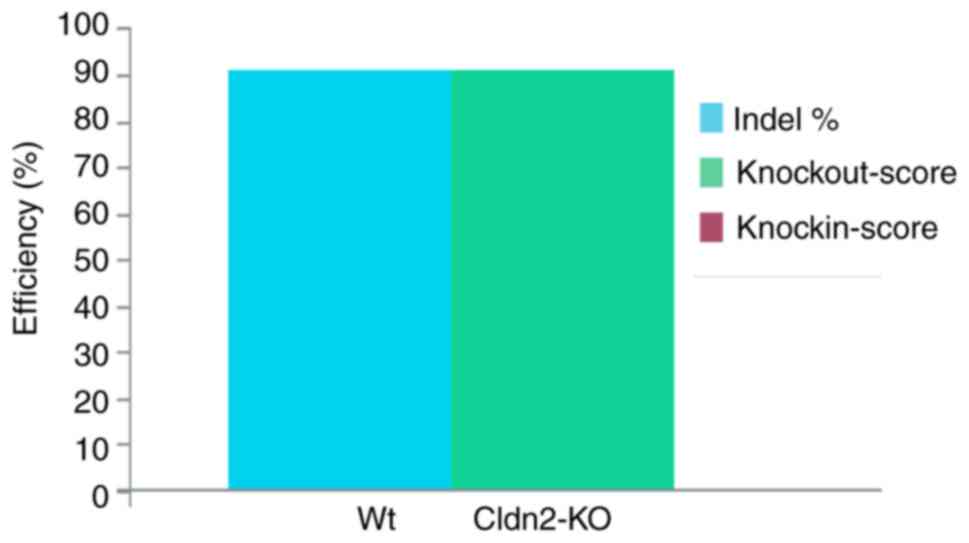
Figure 1

ICE analysis of CRISPR/Cas9-mediated
CLDN2-KO efficiency in HCT116 cells. ICE software analysis
confirmed successful editing of the CLDN2 locus with an
efficiency of ~91%. The editing score reflects the proportion of
indels detected in the cell population. ICE, Inference of CRISPR
Edits; CLDN2, claudin-2; Wt, wild-type; KO, knockout; indel,
insertion-deletion.

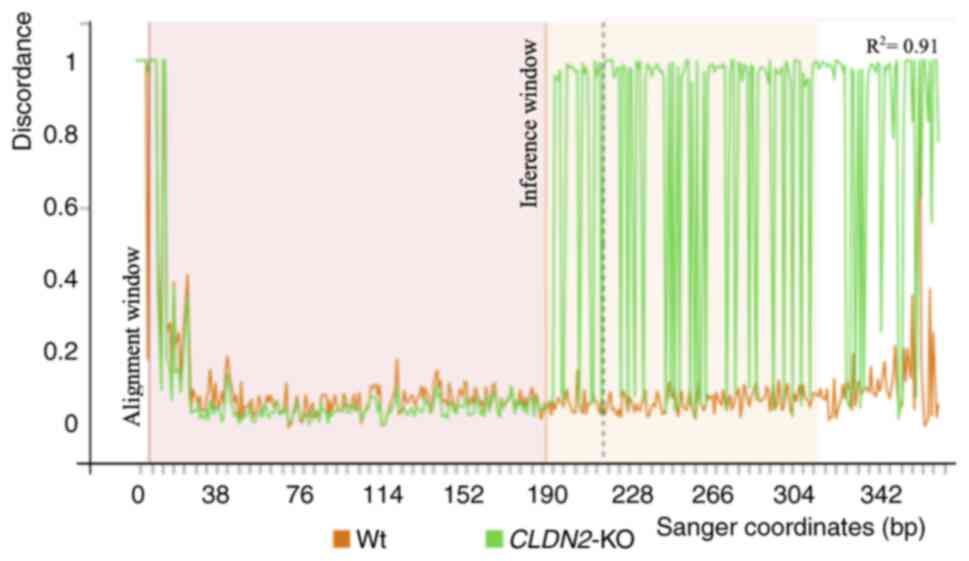
Figure 2

Sanger discordance plot displays the
alignment/base between the Wt and CLDN2-KO samples and
inside the inference window (the area around the cute site)
indicates the average proportion of signal that differs from the
reference sequence obtained from the Wt trace. In the plot, the
proximity between the green line and orange line is seen before to
the cut site. However, a typical CRISPR edit leads to a notable
increase in sequence discordance at the cut site, causing the green
and orange lines to stay far apart afterwards. Wt, wild-type;
CLDN2-KO, claudin-2 knockout.

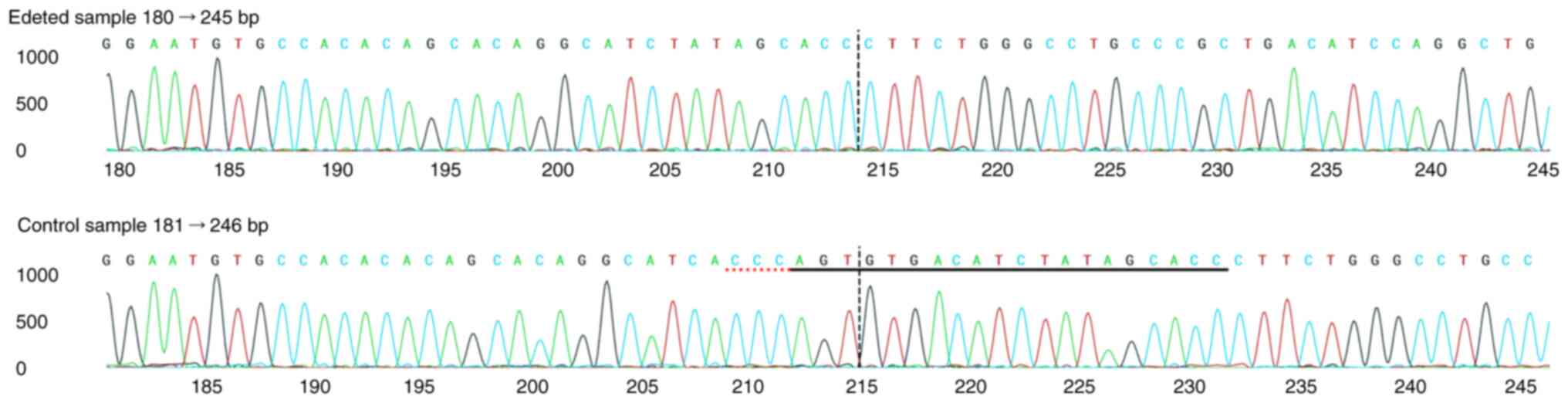
Figure 3

Sanger sequence view displays the
knockout and Wt sequences in the immediate area of the guide
sequence. This displays the sequence base calls obtained from Wt)
and CLDN2-KO). The guide sequence is represented by the
horizontal black underlined section. The PAM location is indicated
with a horizontal red underline. The vertical line, indicated by
the black dots, depicts the precise location of the incision.
Performing a cut and attempting to repair it often leads to the
presence of mixed sequencing bases. PAM, protospacer adjacent
motif; Wt, wild-type; CLDN2-KO, claudin-2 knockout.

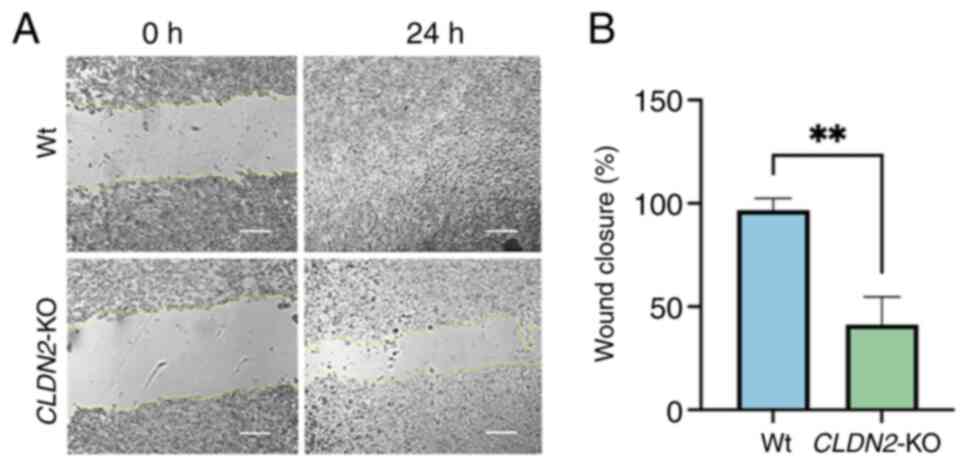
Figure 4

Wound healing assay assessing cell
migration in Wt and CLDN2-KO HCT116 cells. (A)
Representative images of wound closure at 0 and 24 h post-scratch
(scale bar, 100 µm). (B) Quantification of wound closure
percentage. Wt cells achieved ~96% closure, while CLDN2-KO
cells demonstrated 41% closure after 24 h (P=0.0027; unpaired
two-tailed t-test; n=3). Data are presented as the mean ± SEM.
**P<0.01. Wt, wild-type; CLDN2-KO, claudin-2 knock
out.

Figure 5

Gene expression analysis of invasion-
and metastasis-related genes in CLDN2-KO vs. Wt HCT116
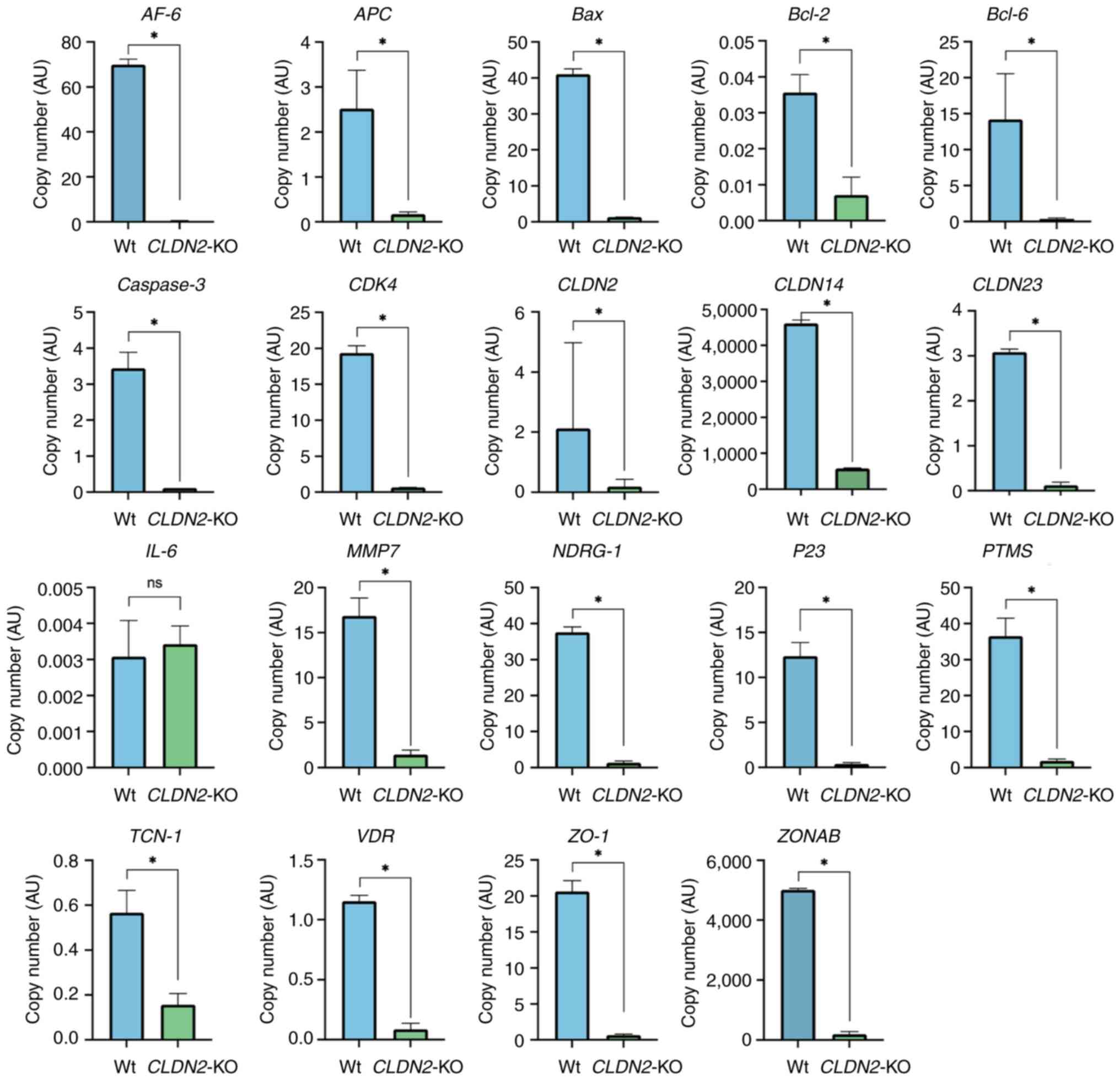
cells. Reverse transcription-quantitative PCR exhibited significant
downregulation of multiple target genes, including ZONAB, NDRG1,
CLDN14, CLDN23, Bcl-2, p53 and Bcl-6. Gene expression
levels were normalized to GAPDH. Data are represented as mean ± SEM
(n=3). Statistical comparisons were made using unpaired two-tailed
t-tests. *P<0.05. ns, not significant; Wt, wild-type;
CLDN2-KO, claudin-2 knock out; ZO-1, zonula occludens-1;
VDR, vitamin D receptor; ZONAB, ZO-1-associated
nucleic acid binding protein; NDRG1, N-Myc downstream-regulated
gene 1; APC, adenomatous polyposis coli; AF-6/AFDN, Afadin;
TJP1, tight junction protein 1; YBX3, Y-box binding protein 3;
PTMS, parathymosin; TCN-1, transcobalamin 1.

Figure 6

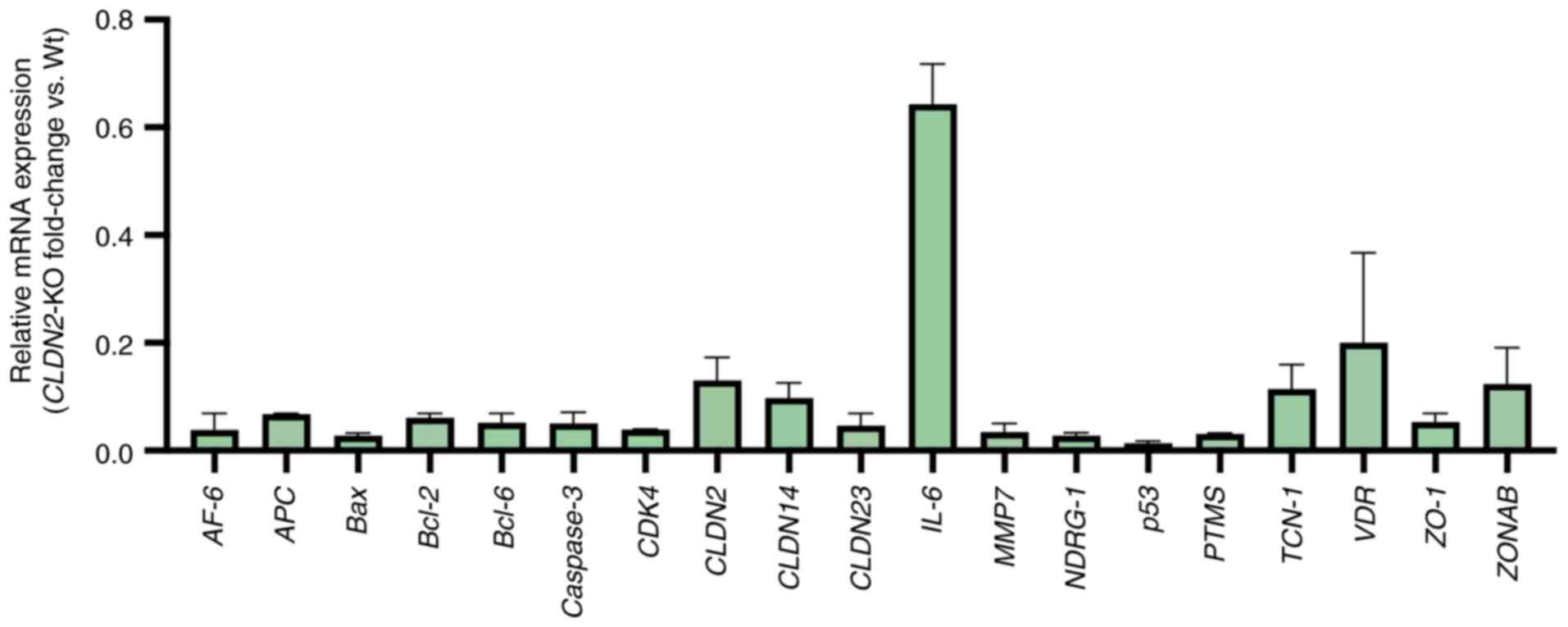
Relative expression levels of
metastasis-associated genes in Wt and CLDN2-KO HCT116 cells.
Gene expression was quantified using reverse
transcription-quantitative PCR. Each bar represents the mean ± SEM
of three independent experiments. Values were calculated using the
2−ΔΔCq method and normalized to GAPDH. Expression in Wt
cells was set to 1.0 and knock out values were expressed relative
to this baseline. Each bar corresponds to a specific gene and the
height of the bars indicates the magnitude of the fold-change
observed in the CLDN2-KO samples compared with the Wt
samples. The highest bars on the figure represent the gene with the
lowest degree of expression variation. IL-6 exhibited the
lowest degree of downregulation (fold-change, 0.718), whereas AF-6
demonstrated the most pronounced reduction (fold-change, 0.008).
Wt, wild type; ZO-1, zonula occludens-1; VDR, vitamin
D receptor; ZONAB, ZO-1-associated nucleic acid binding
protein; NDRG1, N-Myc downstream-regulated gene 1; APC, adenomatous
polyposis coli; AF-6, Afadin; PTMS, parathymosin; TCN-1,
transcobalamin 1; CLDN2-KO, claudin-2 knock out; AU,
arbitrary Units.
View References

1 

Siegel RL, Wagle NS, Cercek A, Smith RA and Jemal A: Colorectal cancer statistics, 2023. CA Cancer J Clin. 73:233–254. 2023.

2 

Xi Y and Xu P: Global colorectal cancer burden in 2020 and projections to 2040. Transl Oncol. 14:1011742021. View Article : Google Scholar

3 

Mousavi SE, Ilaghi M, Hamidi Rad R and Nejadghaderi SA: Epidemiology and socioeconomic correlates of colorectal cancer in Asia in 2020 and its projection to 2040. Sci Rep. 15:266392025. View Article : Google Scholar

4 

Sarkar S: Proteogenomic approaches to understand gene mutations and protein structural alterations in colon cancer. Physiologia. 3:11–29. 2023. View Article : Google Scholar

5 

Tabariès S, Dupuy F, Dong Z, Monast A, Annis MG, Spicer J, Ferri LE, Omeroglu A, Basik M, Amir E, et al: Claudin-2 promotes breast cancer liver metastasis by facilitating tumor cell interactions with hepatocytes. Mol Cell Biol. 32:2979–2991. 2012. View Article : Google Scholar

6 

Cherradi S, Ayrolles-Torro A, Vezzo-Vié N, Gueguinou N, Denis V, Combes E, Boissière F, Busson M, Canterel-Thouennon L, Mollevi C, et al: Antibody targeting of claudin-1 as a potential colorectal cancer therapy. J Exp Clin Cancer Res. 36:892017. View Article : Google Scholar

7 

Tabariès S, Annis MG, Lazaris A, Petrillo SK, Huxham J, Abdellatif A, Palmieri V, Chabot J, Johnson RM, Van Laere S, et al: Claudin-2 promotes colorectal cancer liver metastasis and is a biomarker of the replacement type growth pattern. Commun Biol. 4:6572021. View Article : Google Scholar

8 

Venugopal S, Anwer S and Szászi K: Claudin-2: Roles beyond permeability functions. Int J Mol Sci. 20:56552019. View Article : Google Scholar

9 

Alghamdi RA and Al-Zahrani MH: Identification of key claudin genes associated with survival prognosis and diagnosis in colon cancer through integrated bioinformatic analysis. Front Genet. 14:12218152023. View Article : Google Scholar

10 

Weber CR, Nalle SC, Tretiakova M, Rubin DT and Turner JR: Claudin-1 and claudin-2 expression is elevated in inflammatory bowel disease and may contribute to early neoplastic transformation. Lab Invest. 88:1110–120. 2008. View Article : Google Scholar

11 

Rosenthal R, Milatz S, Krug SM, Oelrich B, Schulzke JD, Amasheh S, Günzel D and Fromm M: Claudin-2, a component of the tight junction, forms a paracellular water channel. J Cell Sci. 123:1913–1921. 2010. View Article : Google Scholar

12 

Dhawan P, Ahmad R, Chaturvedi R, Smith JJ, Midha R, Mittal MK, Krishnan M, Chen X, Eschrich S, Yeatman TJ, et al: Claudin-2 expression increases tumorigenicity of colon cancer cells: Role of epidermal growth factor receptor activation. Oncogene. 30:3234–3247. 2011. View Article : Google Scholar

13 

Wei M, Zhang Y, Yang X, Ma P, Li Y, Wu Y, Chen X, Deng X, Yang T, Mao X, et al: Claudin-2 promotes colorectal cancer growth and metastasis by suppressing NDRG1 transcription. Clin Transl Med. 11:e6672021. View Article : Google Scholar

14 

Al-Zahrani M, Lary S, Assidi M, Hakamy S, Dallol A, Alahwal M, Al-Maghrabi J, Sibiany A, Abuzenadah A, Al-Qahtani M and Buhmeida A: Evaluation of prognostic potential of CD44, Claudin-2 and EpCAM expression patterns in colorectal carcinoma. Adv Environmental Biol. 10:147–156. 2016.

15 

Vogelstein B, Papadopoulos N, Velculescu VE, Zhou S, Diaz LA Jr and Kinzler KW: Cancer genome landscapes. Science. 339:1546–1558. 2013. View Article : Google Scholar

16 

Kim D and Cho KH: Hidden patterns of gene expression provide prognostic insight for colorectal cancer. Cancer Gene Ther. 30:11–21. 2022. View Article : Google Scholar

17 

Cancer Genome Atlas Network, . Comprehensive molecular characterization of human colon and rectal cancer. Nature. 487:330–337. 2012. View Article : Google Scholar

18 

Zhao Z, Li C, Tong F, Deng J, Huang G and Sang Y: Review of applications of CRISPR-Cas9 gene-editing technology in cancer research. Biol Proced Online. 23:142021. View Article : Google Scholar

19 

Meng H, Nan M, Li Y, Ding Y, Yin Y and Zhang M: Application of CRISPR-Cas9 gene editing technology in basic research, diagnosis and treatment of colon cancer. Front Endocrinol (Lausanne). 14:11484122023. View Article : Google Scholar

20 

Neumann E, Schaefer-Ridder M, Wang Y and Hofschneider P: Gene transfer into mouse lyoma cells by electroporation in high electric fields. EMBO J. 1:841–845. 1982. View Article : Google Scholar

21 

Enzmann BL and Wronski A: Synthego's engineered cells allow scientists to ‘Cut Out’ CRISPR optimization [SPONSORED]. CRISPR J. 1:255–257. 2018. View Article : Google Scholar

22 

Roginsky J: Analyzing CRISPR editing results: Synthego developed a tool called ICE to be more efficient than other methods. Genet Eng Biotechnol News. 38 (Suppl):S24–S26. 2018. View Article : Google Scholar

23 

Bentley DR, Balasubramanian S, Swerdlow HP, Smith GP, Milton J, Brown CG, Hall KP, Evers DJ, Barnes CL, Bignell HR, et al: Accurate whole human genome sequencing using reversible terminator chemistry. Nature. 456:53–59. 2008. View Article : Google Scholar

24 

Gross A, Schoendube J, Zimmermann S, Steeb M, Zengerle R and Koltay P: Technologies for single-cell isolation. Int J Mol Sci. 16:16897–16919. 2015. View Article : Google Scholar

25 

Liang CC, Park AY and Guan JL: In vitro scratch assay: A convenient and inexpensive method for analysis of cell migration in vitro. Nat Protoc. 2:329–333. 2007. View Article : Google Scholar

26 

Schneider CA, Rasband WS and Eliceiri KW: NIH Image to ImageJ: 25 years of image analysis. Nat Methods. 9:671–675. 2012. View Article : Google Scholar

27 

Bustin SA, Benes V, Garson JA, Hellemans J, Huggett J, Kubista M, Mueller R, Nolan T, Pfaffl MW, Shipley GL, et al: The MIQE guidelines: Minimum information for publication of quantitative real-time PCR experiments. Clin Chem. 55:611–622. 2009. View Article : Google Scholar

28 

Livak KJ and Schmittgen TD: Analysis of relative gene expression data using real-time quantitative PCR and the 2(−Delta Delta C(T)). Method. 25:402–408. 2001. View Article : Google Scholar

29 

Zhu L, Han J, Li L, Wang Y, Li Y and Zhang S: Claudin family participates in the pathogenesis of inflammatory bowel diseases and Colitis-associated colorectal cancer. Front Immunol. 10:14412019. View Article : Google Scholar

30 

Al-Zahrani MH, Assidi M, Pushparaj PN, Al-Maghrabi J, Zari A, Abusanad A, Buhmeida A and Abu-Elmagd M: Expression pattern, prognostic value and potential microRNA silencing of FZD8 in breast cancer. Oncol Lett. 26:4772023. View Article : Google Scholar

31 

Ahmad R, Kumar B, Thapa I, Tamang RL, Yadav SK, Washington MK, Talmon GA, Yu AS, Bastola DK, Dhawan P and Singh AB: Claudin-2 protects against colitis-associated cancer by promoting colitis-associated mucosal healing. J Clin Invest. 133:e1707712023. View Article : Google Scholar

32 

Sourisseau T, Georgiadis A, Tsapara A, Ali RR, Pestell R, Matter K and Balda MS: Regulation of PCNA and Cyclin D1 expression and epithelial morphogenesis by the ZO-1-regulated transcription factor ZONAB/DbpA. Mol Cell Biol. 26:2387–2398. 2006. View Article : Google Scholar

33 

Balda MS: The tight junction protein ZO-1 and an interacting transcription factor regulate ErbB-2 expression. EMBO J. 19:2024–2033. 2000. View Article : Google Scholar

34 

Kovacevic Z and Richardson DR: The metastasis suppressor, Ndrg-1: A new ally in the fight against cancer. Carcinogenesis. 27:2355–2366. 2006. View Article : Google Scholar

35 

Sun J, Zhang D, Bae DH, Sahni S, Jansson P, Zheng Y, Zhao Q, Yue F, Zheng M, Kovacevic Z and Richardson DR: Metastasis suppressor, NDRG1, mediates its activity through signaling pathways and molecular motors. Carcinogenesis. 34:1943–1954. 2013. View Article : Google Scholar

36 

Tao D, Guan B, Li H and Zhou C: Expression patterns of claudins in cancer. Heliyon. 9:e213382023. View Article : Google Scholar

37 

Amoozadeh Y, Anwer S, Dan Q, Venugopal S, Shi Y, Branchard E, Liedtke E, Ailenberg M, Rotstein OD, Kapus A and Szászi K: Cell confluence regulates claudin-2 expression: Possible role for ZO-1 and Rac. Am J Physiol Physiol. 314:C366–C378. 2018. View Article : Google Scholar

38 

Yang L and Zhang W, Li M, Dam J, Huang K, Wang Y, Qiu Z, Sun T, Chen P, Zhang Z and Zhang W: Evaluation of the prognostic relevance of differential claudin gene expression highlights Claudin-4 as Being Suppressed by TGFβ1 inhibitor in colorectal cancer. Front Genet. 13:7830162022. View Article : Google Scholar

39 

Chen W, Zhu XN, Wang J, Wang YP and Yang JL: The expression and biological function of claudin-23 in colorectal cancer. Sichuan Da Xue Xue Bao Yi Xue Ban. 49:331–336. 2018.(In Chinese).

40 

Tabariès S, McNulty A, Ouellet V, Annis MG, Dessureault M, Vinette M, Hachem Y, Lavoie B, Omeroglu A, Simon HG, et al: Afadin cooperates with Claudin-2 to promote breast cancer metastasis. Genes Dev. 33:180–193. 2019. View Article : Google Scholar

41 

Zhang X, Wang H, Li Q and Li T: CLDN2 inhibits the metastasis of osteosarcoma cells via down-regulating the afadin/ERK signaling pathway. Cancer Cell Int. 18:1602018. View Article : Google Scholar

42 

González-Mariscal L, Miranda J, Gallego-Gutiérrez H, Cano-Cortina M and Amaya E: Relationship between apical junction proteins, gene expression and cancer. Biochim Biophys Acta Biomembr. 1862:1832782020. View Article : Google Scholar

43 

Dang CV: MYC on the path to cancer. Cell. 149:22–35. 2012. View Article : Google Scholar

44 

Hirota C, Takashina Y, Ikumi N, Ishizuka N, Hayashi H, Tabuchi Y, Yoshino Y, Matsunaga T and Ikari A: Inverse regulation of claudin-2 and −7 expression by p53 and hepatocyte nuclear factor 4α in colonic MCE301 cells. Tissue Barriers. 9:18604092021. View Article : Google Scholar

45 

Kim HY, Jeon H, Bae CH, Lee Y, Kim H and Kim S: Rumex japonicus Houtt. alleviates dextran sulfate sodium-induced colitis by protecting tight junctions in mice. Integr Med Res. 9:1003982020. View Article : Google Scholar

46 

Sena P, Mariani F, Benincasa M, De Leon MP, Di Gregorio C, Mancini S, Cavani F, Smargiassi A, Palumbo C and Roncucci L: Morphological and quantitative analysis of BCL6 expression in human colorectal carcinogenesis. Oncol Rep. 31:103–110. 2014. View Article : Google Scholar

47 

Li J: Context-dependent roles of claudins in tumorigenesis. Front Oncol. 11:6767812021. View Article : Google Scholar

48 

Nehme Z, Roehlen N, Dhawan P and Baumert TF: Tight junction protein signaling and cancer biology. Cells. 12:2432023. View Article : Google Scholar

49 

Miwa N, Furuse M, Tsukita S, Niikawa N, Nakamura Y and Furukawa Y: Involvement of claudin-1 in the beta-catenin/Tcf signaling pathway and its frequent upregulation in human colorectal cancers. Oncol Res. 12:469–476. 2001. View Article : Google Scholar

50 

Mankertz J, Hillenbrand B, Tavalali S, Huber O, Fromm M and Schulzke JD: Functional crosstalk between Wnt signaling and Cdx-related transcriptional activation in the regulation of the claudin-2 promoter activity. Biochem Biophys Res Commun. 314:1001–1007. 2004. View Article : Google Scholar

51 

Clements WM, Wang J, Sarnaik A, Kim OJ, MacDonald J, Fenoglio-Preiser C, Groden J and Lowy AM: Beta-Catenin mutation is a frequent cause of Wnt pathway activation in gastric cancer. Cancer Res. 62:3503–3506. 2002.

52 

Chiurillo MA: Role of the Wnt/β-catenin pathway in gastric cancer: An in-depth literature review. World J Exp Med. 5:84–102. 2015. View Article : Google Scholar

53 

Jang JH, Jung J, Kang HG, Kim W, Kim WJ, Lee H, Cho JY, Hong R, Kim JW, Chung JY, et al: Kindlin-1 promotes gastric cancer cell motility through the Wnt/β-catenin signaling pathway. Sci Rep. 15:24812025. View Article : Google Scholar

54 

Zhang N, Wei P, Gong A, Chiu WT, Lee HT, Colman H, Huang H, Xue J, Liu M, Wang Y, et al: FoxM1 promotes β-catenin nuclear localization and controls Wnt target-gene expression and glioma tumorigenesis. Cancer Cell. 20:427–442. 2011. View Article : Google Scholar

55 

Dey N, Young B, Abramovitz M, Bouzyk M, Barwick B, De P and Leyland-Jones B: Differential activation of Wnt-β-catenin pathway in triple negative breast cancer increases MMP7 in a PTEN dependent manner. PLoS One. 8:e774252013. View Article : Google Scholar

56 

Zhang YG, Wu S, Lu R, Zhou D, Zhou J, Carmeliet G, Petrof E, Claud EC and Sun J: Tight junction CLDN2 gene is a direct target of the Vitamin D receptor. Sci Rep. 5:106422015. View Article : Google Scholar

57 

Pereira F, Fernández-Barral A, Larriba MJ, Barbáchano A and González-Sancho JM: From molecular basis to clinical insights: A challenging future for the vitamin D endocrine system in colorectal cancer. FEBS J. 291:2485–2518. 2024. View Article : Google Scholar

58 

Mariadason JM, Nicholas C, L'Italien KE, Zhuang M, Smartt HJM, Heerdt BG, Yang W, Corner GA, Wilson AJ, Klampfer L, et al: Gene expression profiling of intestinal epithelial cell maturation along the crypt-villus axis. Gastroenterology. 128:1081–1088. 2005. View Article : Google Scholar

Related Articles

  • Abstract
  • View
  • Download
  • Twitter
Copy and paste a formatted citation
Spandidos Publications style
Alghamdi RA and Al‑Zahrani MH: CRISPR/Cas9‑mediated claudin‑2 knockout in HCT116 cells reveals its key role in colorectal cancer progression. Oncol Lett 31: 54, 2026.
APA
Alghamdi, R.A., & Al‑Zahrani, M.H. (2026). CRISPR/Cas9‑mediated claudin‑2 knockout in HCT116 cells reveals its key role in colorectal cancer progression. Oncology Letters, 31, 54. https://doi.org/10.3892/ol.2025.15407
MLA
Alghamdi, R. A., Al‑Zahrani, M. H."CRISPR/Cas9‑mediated claudin‑2 knockout in HCT116 cells reveals its key role in colorectal cancer progression". Oncology Letters 31.2 (2026): 54.
Chicago
Alghamdi, R. A., Al‑Zahrani, M. H."CRISPR/Cas9‑mediated claudin‑2 knockout in HCT116 cells reveals its key role in colorectal cancer progression". Oncology Letters 31, no. 2 (2026): 54. https://doi.org/10.3892/ol.2025.15407
Copy and paste a formatted citation
x
Spandidos Publications style
Alghamdi RA and Al‑Zahrani MH: CRISPR/Cas9‑mediated claudin‑2 knockout in HCT116 cells reveals its key role in colorectal cancer progression. Oncol Lett 31: 54, 2026.
APA
Alghamdi, R.A., & Al‑Zahrani, M.H. (2026). CRISPR/Cas9‑mediated claudin‑2 knockout in HCT116 cells reveals its key role in colorectal cancer progression. Oncology Letters, 31, 54. https://doi.org/10.3892/ol.2025.15407
MLA
Alghamdi, R. A., Al‑Zahrani, M. H."CRISPR/Cas9‑mediated claudin‑2 knockout in HCT116 cells reveals its key role in colorectal cancer progression". Oncology Letters 31.2 (2026): 54.
Chicago
Alghamdi, R. A., Al‑Zahrani, M. H."CRISPR/Cas9‑mediated claudin‑2 knockout in HCT116 cells reveals its key role in colorectal cancer progression". Oncology Letters 31, no. 2 (2026): 54. https://doi.org/10.3892/ol.2025.15407
Follow us
  • Twitter
  • LinkedIn
  • Facebook
About
  • Spandidos Publications
  • Careers
  • Cookie Policy
  • Privacy Policy
How can we help?
  • Help
  • Live Chat
  • Contact
  • Email to our Support Team