Spandidos Publications Logo
  • About
    • About Spandidos
    • Aims and Scopes
    • Abstracting and Indexing
    • Editorial Policies
    • Reprints and Permissions
    • Job Opportunities
    • Terms and Conditions
    • Contact
  • Journals
    • All Journals
    • Oncology Letters
      • Oncology Letters
      • Information for Authors
      • Editorial Policies
      • Editorial Board
      • Aims and Scope
      • Abstracting and Indexing
      • Bibliographic Information
      • Archive
    • International Journal of Oncology
      • International Journal of Oncology
      • Information for Authors
      • Editorial Policies
      • Editorial Board
      • Aims and Scope
      • Abstracting and Indexing
      • Bibliographic Information
      • Archive
    • Molecular and Clinical Oncology
      • Molecular and Clinical Oncology
      • Information for Authors
      • Editorial Policies
      • Editorial Board
      • Aims and Scope
      • Abstracting and Indexing
      • Bibliographic Information
      • Archive
    • Experimental and Therapeutic Medicine
      • Experimental and Therapeutic Medicine
      • Information for Authors
      • Editorial Policies
      • Editorial Board
      • Aims and Scope
      • Abstracting and Indexing
      • Bibliographic Information
      • Archive
    • International Journal of Molecular Medicine
      • International Journal of Molecular Medicine
      • Information for Authors
      • Editorial Policies
      • Editorial Board
      • Aims and Scope
      • Abstracting and Indexing
      • Bibliographic Information
      • Archive
    • Biomedical Reports
      • Biomedical Reports
      • Information for Authors
      • Editorial Policies
      • Editorial Board
      • Aims and Scope
      • Abstracting and Indexing
      • Bibliographic Information
      • Archive
    • Oncology Reports
      • Oncology Reports
      • Information for Authors
      • Editorial Policies
      • Editorial Board
      • Aims and Scope
      • Abstracting and Indexing
      • Bibliographic Information
      • Archive
    • Molecular Medicine Reports
      • Molecular Medicine Reports
      • Information for Authors
      • Editorial Policies
      • Editorial Board
      • Aims and Scope
      • Abstracting and Indexing
      • Bibliographic Information
      • Archive
    • World Academy of Sciences Journal
      • World Academy of Sciences Journal
      • Information for Authors
      • Editorial Policies
      • Editorial Board
      • Aims and Scope
      • Abstracting and Indexing
      • Bibliographic Information
      • Archive
    • International Journal of Functional Nutrition
      • International Journal of Functional Nutrition
      • Information for Authors
      • Editorial Policies
      • Editorial Board
      • Aims and Scope
      • Abstracting and Indexing
      • Bibliographic Information
      • Archive
    • International Journal of Epigenetics
      • International Journal of Epigenetics
      • Information for Authors
      • Editorial Policies
      • Editorial Board
      • Aims and Scope
      • Abstracting and Indexing
      • Bibliographic Information
      • Archive
    • Medicine International
      • Medicine International
      • Information for Authors
      • Editorial Policies
      • Editorial Board
      • Aims and Scope
      • Abstracting and Indexing
      • Bibliographic Information
      • Archive
  • Articles
  • Information
    • Information for Authors
    • Information for Reviewers
    • Information for Librarians
    • Information for Advertisers
    • Conferences
  • Language Editing
Spandidos Publications Logo
  • About
    • About Spandidos
    • Aims and Scopes
    • Abstracting and Indexing
    • Editorial Policies
    • Reprints and Permissions
    • Job Opportunities
    • Terms and Conditions
    • Contact
  • Journals
    • All Journals
    • Biomedical Reports
      • Information for Authors
      • Editorial Policies
      • Editorial Board
      • Aims and Scope
      • Abstracting and Indexing
      • Bibliographic Information
      • Archive
    • Experimental and Therapeutic Medicine
      • Information for Authors
      • Editorial Policies
      • Editorial Board
      • Aims and Scope
      • Abstracting and Indexing
      • Bibliographic Information
      • Archive
    • International Journal of Epigenetics
      • Information for Authors
      • Editorial Policies
      • Editorial Board
      • Aims and Scope
      • Abstracting and Indexing
      • Bibliographic Information
      • Archive
    • International Journal of Functional Nutrition
      • Information for Authors
      • Editorial Policies
      • Editorial Board
      • Aims and Scope
      • Abstracting and Indexing
      • Bibliographic Information
      • Archive
    • International Journal of Molecular Medicine
      • Information for Authors
      • Editorial Policies
      • Editorial Board
      • Aims and Scope
      • Abstracting and Indexing
      • Bibliographic Information
      • Archive
    • International Journal of Oncology
      • Information for Authors
      • Editorial Policies
      • Editorial Board
      • Aims and Scope
      • Abstracting and Indexing
      • Bibliographic Information
      • Archive
    • Medicine International
      • Information for Authors
      • Editorial Policies
      • Editorial Board
      • Aims and Scope
      • Abstracting and Indexing
      • Bibliographic Information
      • Archive
    • Molecular and Clinical Oncology
      • Information for Authors
      • Editorial Policies
      • Editorial Board
      • Aims and Scope
      • Abstracting and Indexing
      • Bibliographic Information
      • Archive
    • Molecular Medicine Reports
      • Information for Authors
      • Editorial Policies
      • Editorial Board
      • Aims and Scope
      • Abstracting and Indexing
      • Bibliographic Information
      • Archive
    • Oncology Letters
      • Information for Authors
      • Editorial Policies
      • Editorial Board
      • Aims and Scope
      • Abstracting and Indexing
      • Bibliographic Information
      • Archive
    • Oncology Reports
      • Information for Authors
      • Editorial Policies
      • Editorial Board
      • Aims and Scope
      • Abstracting and Indexing
      • Bibliographic Information
      • Archive
    • World Academy of Sciences Journal
      • Information for Authors
      • Editorial Policies
      • Editorial Board
      • Aims and Scope
      • Abstracting and Indexing
      • Bibliographic Information
      • Archive
  • Articles
  • Information
    • For Authors
    • For Reviewers
    • For Librarians
    • For Advertisers
    • Conferences
  • Language Editing
Login Register Submit
  • This site uses cookies
  • You can change your cookie settings at any time by following the instructions in our Cookie Policy. To find out more, you may read our Privacy Policy.

    I agree
Search articles by DOI, keyword, author or affiliation
Search
Advanced Search
presentation
Oncology Letters
Join Editorial Board Propose a Special Issue
Print ISSN: 1792-1074 Online ISSN: 1792-1082
Journal Cover
February-2026 Volume 31 Issue 2

Full Size Image

Sign up for eToc alerts
Recommend to Library

Journals

International Journal of Molecular Medicine

International Journal of Molecular Medicine

International Journal of Molecular Medicine is an international journal devoted to molecular mechanisms of human disease.

International Journal of Oncology

International Journal of Oncology

International Journal of Oncology is an international journal devoted to oncology research and cancer treatment.

Molecular Medicine Reports

Molecular Medicine Reports

Covers molecular medicine topics such as pharmacology, pathology, genetics, neuroscience, infectious diseases, molecular cardiology, and molecular surgery.

Oncology Reports

Oncology Reports

Oncology Reports is an international journal devoted to fundamental and applied research in Oncology.

Experimental and Therapeutic Medicine

Experimental and Therapeutic Medicine

Experimental and Therapeutic Medicine is an international journal devoted to laboratory and clinical medicine.

Oncology Letters

Oncology Letters

Oncology Letters is an international journal devoted to Experimental and Clinical Oncology.

Biomedical Reports

Biomedical Reports

Explores a wide range of biological and medical fields, including pharmacology, genetics, microbiology, neuroscience, and molecular cardiology.

Molecular and Clinical Oncology

Molecular and Clinical Oncology

International journal addressing all aspects of oncology research, from tumorigenesis and oncogenes to chemotherapy and metastasis.

World Academy of Sciences Journal

World Academy of Sciences Journal

Multidisciplinary open-access journal spanning biochemistry, genetics, neuroscience, environmental health, and synthetic biology.

International Journal of Functional Nutrition

International Journal of Functional Nutrition

Open-access journal combining biochemistry, pharmacology, immunology, and genetics to advance health through functional nutrition.

International Journal of Epigenetics

International Journal of Epigenetics

Publishes open-access research on using epigenetics to advance understanding and treatment of human disease.

Medicine International

Medicine International

An International Open Access Journal Devoted to General Medicine.

Journal Cover
February-2026 Volume 31 Issue 2

Full Size Image

Sign up for eToc alerts
Recommend to Library

  • Article
  • Citations
    • Cite This Article
    • Download Citation
    • Create Citation Alert
    • Remove Citation Alert
    • Cited By
  • Similar Articles
    • Related Articles (in Spandidos Publications)
    • Similar Articles (Google Scholar)
    • Similar Articles (PubMed)
  • Download PDF
  • Download XML
  • View XML
Article Open Access

Construction of a human epidermal growth factor receptor 2‑related gene risk model for predicting breast cancer prognosis

  • Authors:
    • Limin Huang
    • Chunhong Xu
    • Yining Song
    • Furong Sun
    • Xuemei Sun
    • Hanyi Yao
    • Mingchen Liu
    • Nan Luo
  • View Affiliations / Copyright

    Affiliations: Department of Oncology III, Weifang Hospital of Traditional Chinese Medicine, Weifang, Shandong 261041, P.R. China, Department of Breast Thyroid Surgery, Weifang Hospital of Traditional Chinese Medicine, Shandong 261041, P.R. China, Intensive Care Unit, Weifang Hospital of Traditional Chinese Medicine, Shandong 261041, P.R. China, First Clinical Medical College, Shandong University of Traditional Chinese Medicine, Jinan, Shandong 250013, P.R. China
    Copyright: © Huang et al. This is an open access article distributed under the terms of Creative Commons Attribution License [CC BY 4.0].
  • Article Number: 61
    |
    Published online on: December 1, 2025
       https://doi.org/10.3892/ol.2025.15414
  • Expand metrics +
Metrics: Total Views: 0 (Spandidos Publications: | PMC Statistics: )
Metrics: Total PDF Downloads: 0 (Spandidos Publications: | PMC Statistics: )
Cited By (CrossRef): 0 citations Loading Articles...

This article is mentioned in:


Abstract

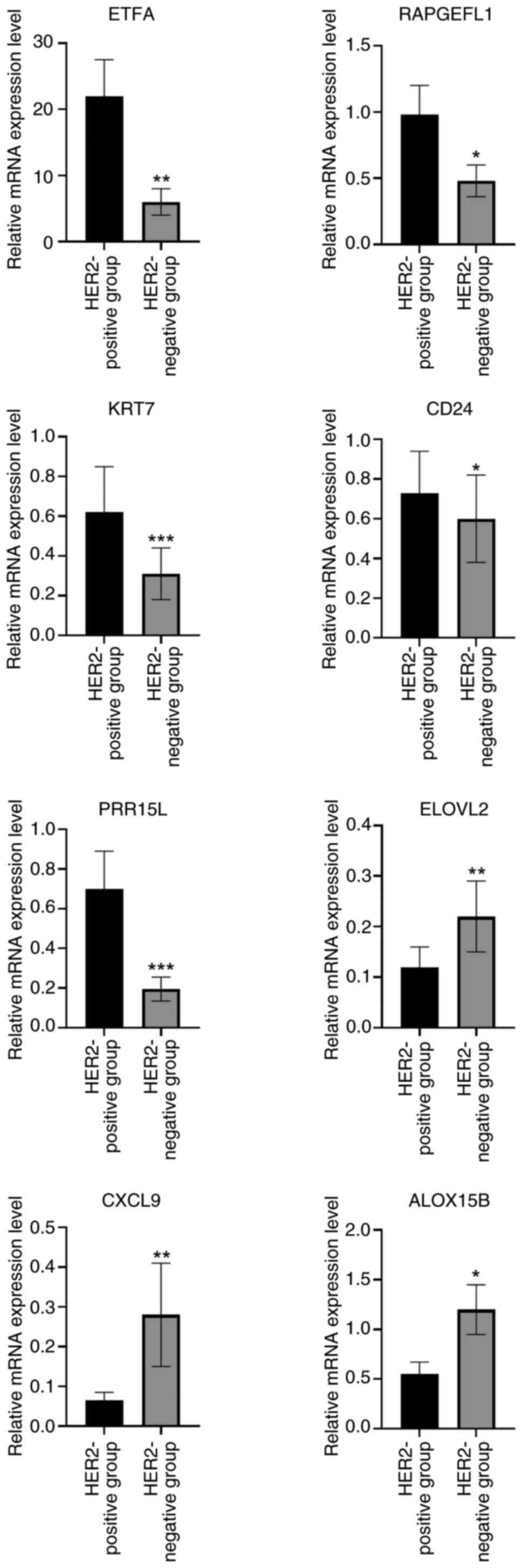
The present study aimed to construct a human epidermal growth factor receptor 2 (HER2)‑related gene risk model to predict breast cancer prognosis. Gene expression and clinical follow‑up data were extracted from The Cancer Genome Atlas database, while the GSE7390 dataset was obtained from the Gene Expression Omnibus database. Prognostic and clinical feature analyses were performed. In addition, differentially expressed genes (DEGs) between HER2‑negative and ‑positive groups were screened, followed by enrichment analysis. Subsequently, a prognostic model was established, and prognosis was predicted using a nomogram. In addition, the association of risk score with immunity was analyzed, and single‑cell analysis was performed. Next, key genes were identified by reverse transcription‑quantitive PCR (RT‑qPCR) analysis. The results revealed that HER2 was significantly associated with estrogen receptor status, progesterone receptor status, N stage, American Joint Committee on Cancer stage, mutation count and tumor mutation burden of breast cancer. AS601245, AP.24534 and roscovitine were the top three chemotherapeutic agents showing the highest sensitivity differences between the risk groups. A total of 251 DEGs between HER2‑negative and ‑positive groups were screened, which were found to be significantly involved in the Kyoto Encyclopedia of Genes and Genomes pathway of estrogen signaling, PI3K‑AKT signaling pathway and chemical carcinogenesis‑receptor activation. Eight prognostic gene models were constructed, and it was found that patients in the high‑risk group had significantly shorter survival times than those in the low‑risk group. A nomogram, incorporating risk groups and clinicopathological features, demonstrated strong predictive ability and high accuracy. The RT‑qPCR results indicated that the expression of electron transfer flavoprotein subunit α, rap guanine nucleotide exchange factor‑like 1, keratin 7, cluster of differentiation 24, proline rich 15‑like, arachidonate 15‑lipoxygenase type B, ELOVL fatty acid elongase 2 and C‑X‑C motif chemokine ligand 9 was consistent with the results of bioinformatic analysis. In conclusion, the HER2‑related risk model and nomogram developed in the present study demonstrated high accuracy in predicting patient survival.
View Figures

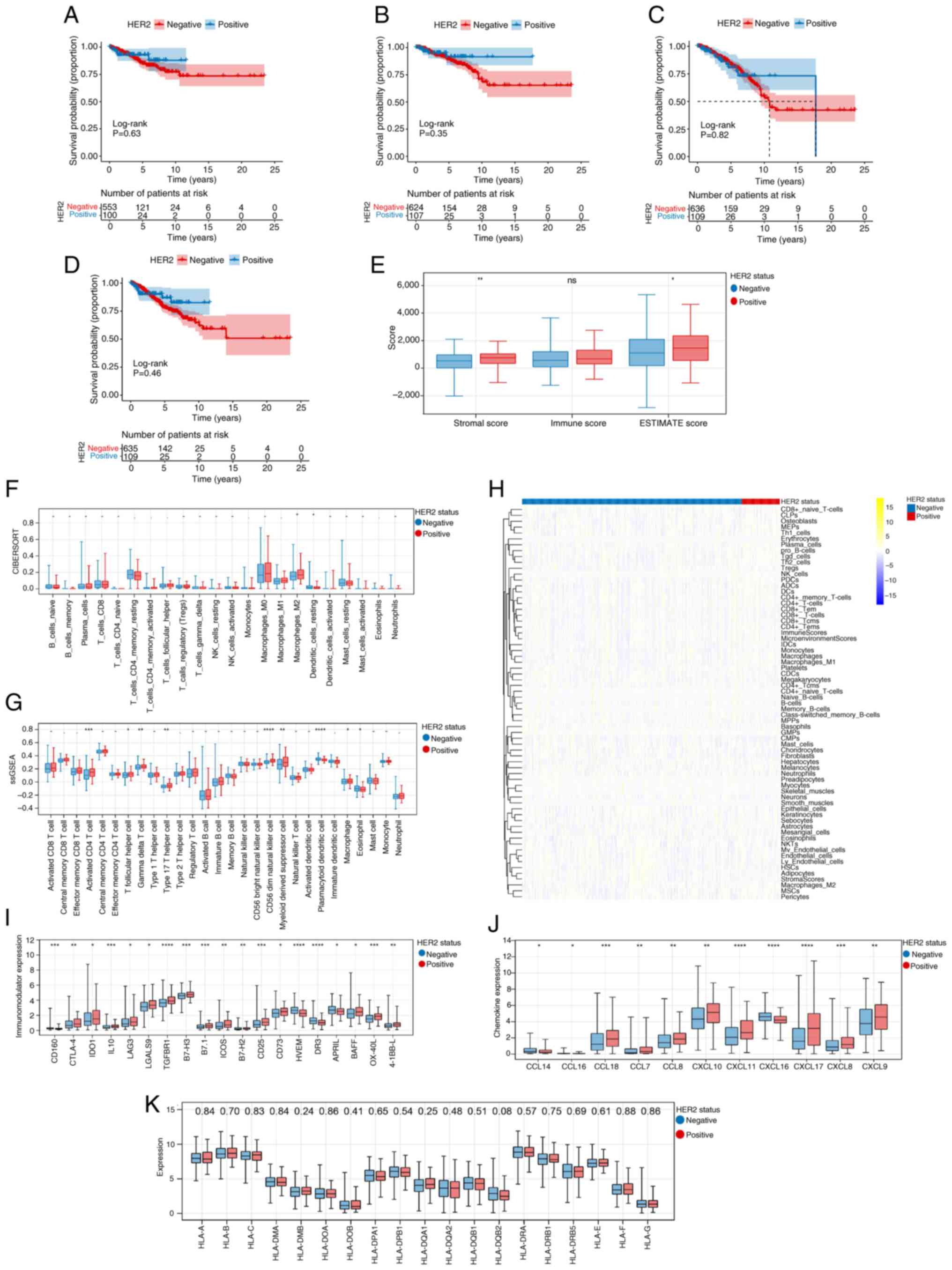
Figure 1

Prognosis, clinical features and
tumor microenvironment analysis. Kaplan-Meier curves of (A)
disease-free survival, (B) disease-specific survival, (C) overall
survival and (D) progression-free survival in HER2-negative and
positive groups. Note: Survival curves were constructed using the
Kaplan-Meier method, and the log-rank test was employed to compare
survival differences between groups, provided the proportional
hazards assumption held. The two-stage survival analysis method
from the two-stage Hazard Rate Comparison package was applied when
this assumption was violated. (E) Differences in stromal, immune
and ESTIMATE scores between HER2-negative and positive groups. The
(F) ‘CIBERSORT’, (G) ‘Single-sample Gene Set Enrichment Analysis
(ssGSEA)’ and (H) ‘xCELL’ algorithms revealed the fraction of
immune cells in the HER2-negative and -positive groups. The numbers
displayed in the yellow/blue legend represent the standardized
expression levels (Z-scores). Differences in (I) Immunomodulator
expression levels, (J) chemokine genes and (K) HLA family genes
between HER2-negative and -positive groups. The numerical values
displayed at the top of the panel refer to P-values. *P<0.05,
**P<0.01, ***P<0.001, ****P<0.0001. ns, -, and . indicate
no significant difference; HER2, human epidermal growth factor
receptor 2; CIBERSORT, Cell-type Identification By Estimating
Relative Subsets Of RNA Transcripts; ssGSEA, single-sample Gene Set
Enrichment Analysis; NK, natural killer; T helper; HLA, human
leukocyte antigen; CCL, Chemokine (C-C motif) ligand; CXCL,
Chemokine (C-X-C motif) ligand; CLP, common lymphoid progenitors;
MEP, megakaryocyte-erythroid progenitors; Th, T helper cells; Tgd,
Tgd-like cells; iDC, immature dendritic cells; cDC, conventional
dendritic cells; MPP, multipotent progenitors; GMP,
granulocyte-macrophage progenitors; CMP, common myeloid
progenitors; NKT, natural killer T-cells; mv, mv-like cells; HSC,
hematopoietic stem cells; MSC, mesenchymal stem cells; Tregs,
regulatory T cells.

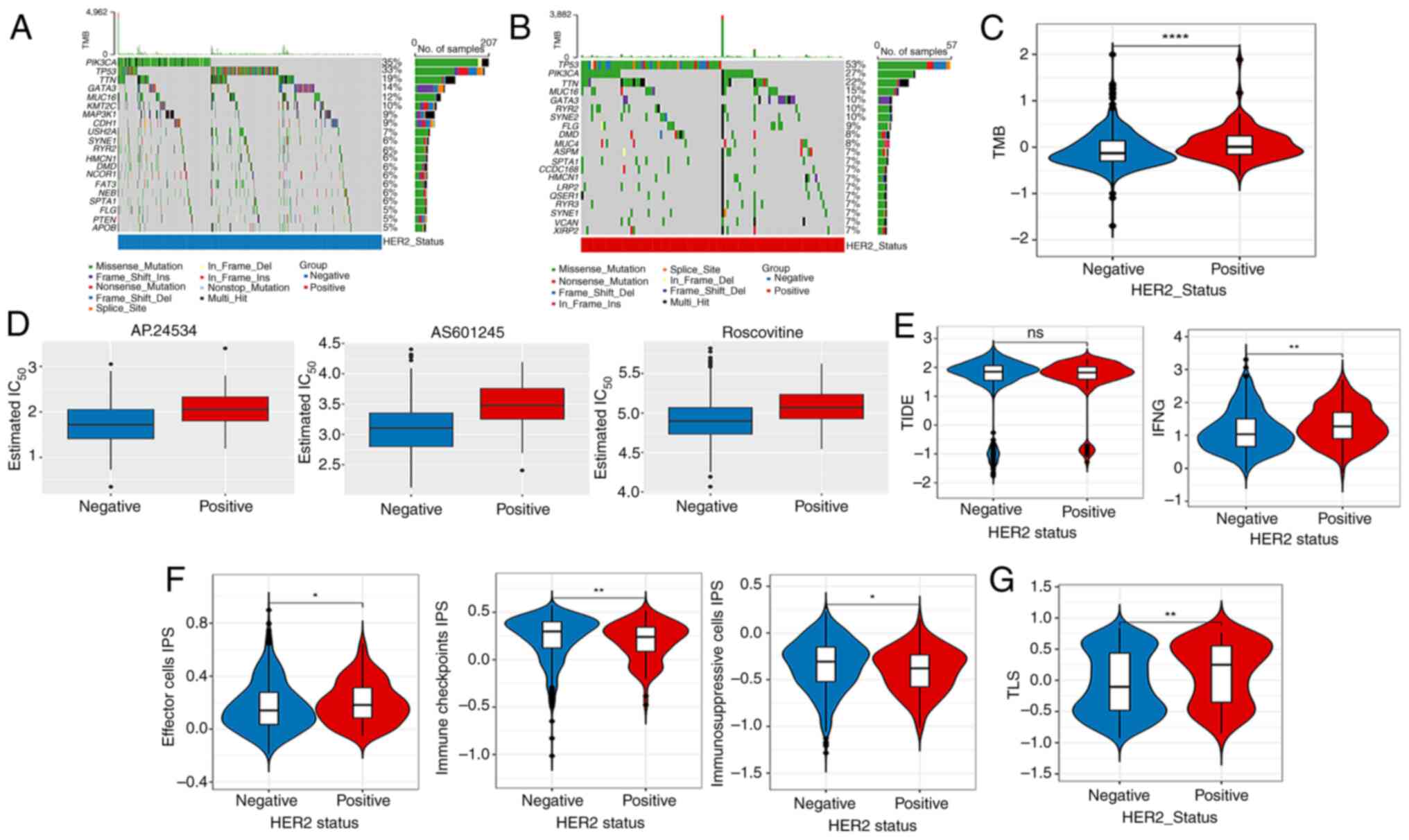
Figure 2

Mutation analysis, drug sensitivity
analysis and immunotherapy response. Top 20 mutation genes in (A)
HER2-negative and (B) -positive samples. (C) Differences in TMB
values between the HER2-negative and -positive groups. (D) Top 3
chemotherapeutics with notable differences in their IC50
between the HER2-negative and -positive groups. Differences in (E)
TIDE, IFNG, (F) IPS, (G) TLS scores between HER2-negative and
-positive groups. ns, no obvious difference, *P<0.05,
**P<0.01, ****P<0.0001. ns, no significant difference; TMB,
tumor mutation burden; HER2, human epidermal growth factor receptor
2; Ins, insertion; Del, deletion; IC50, half maximal
inhibitory concentration; TIDE, Tumor Immune Dysfunction and
Exclusion; IFNG, interferon γ; IPS, immunophenoscore; TLS, tertiary
lymphoid structure.

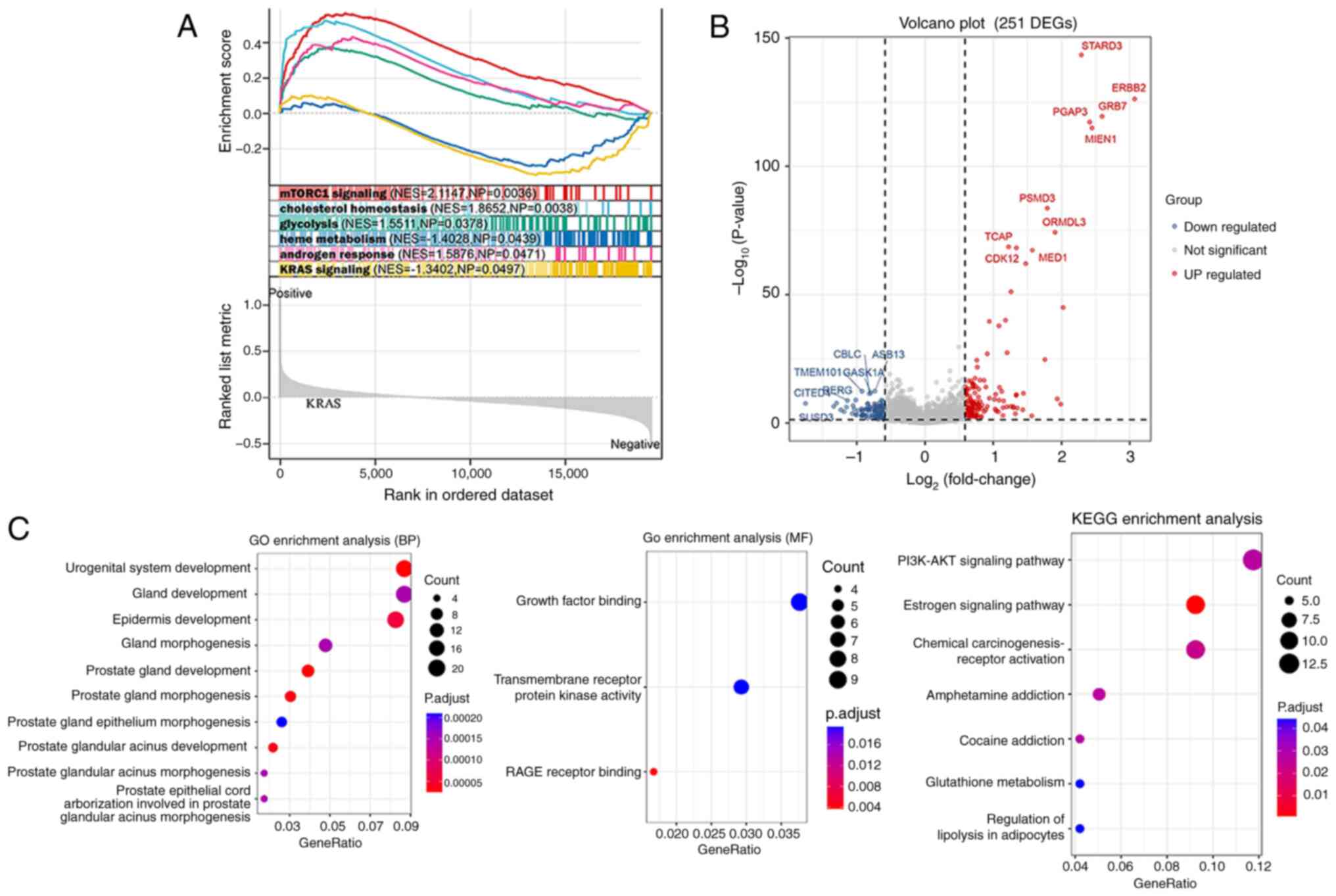
Figure 3

Identification of DEGs and enrichment
analysis. (A) Gene Set Enrichment Analysis. (B) Volcano plot of
DEGs between human epidermal growth factor receptor 2-negative and
-positive groups. (C) Functional enrichment of DEGs. DEGs,
differentially expressed genes; NES, normalized enrichment score;
NP, normalized P-value; GO, Gene Ontology; BP, biological process;
MF, molecular function; p.adjust, adjusted P-value; KEGG, Kyoto
Encyclopedia of Genes and Genomes.

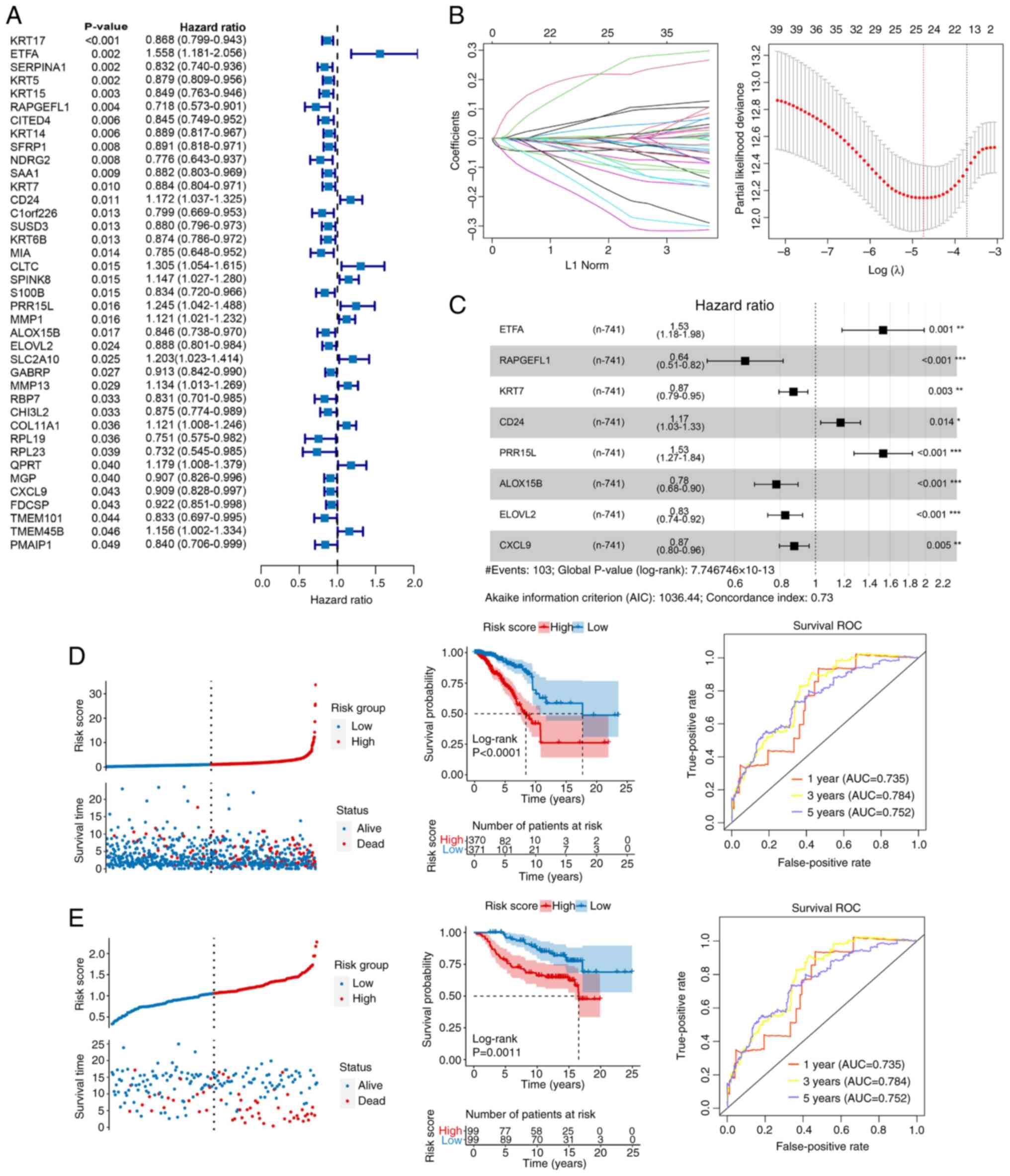
Figure 4

Prognostic model established in the
current study. (A) Prognosis-related genes identified. (B)
Characteristic genes screened by least absolute shrinkage and
selection operator. (C) Stepwise Cox regression analysis. (D and E)
RiskScore distribution, survival status, prognosis and ROC curves
in (D) The Cancer Genome Atlas and (E) the GSE7390 dataset.
*P<0.05, **P<0.01, ***P<0.001. AUC, area under the curve;
ROC, receiver operating characteristic.

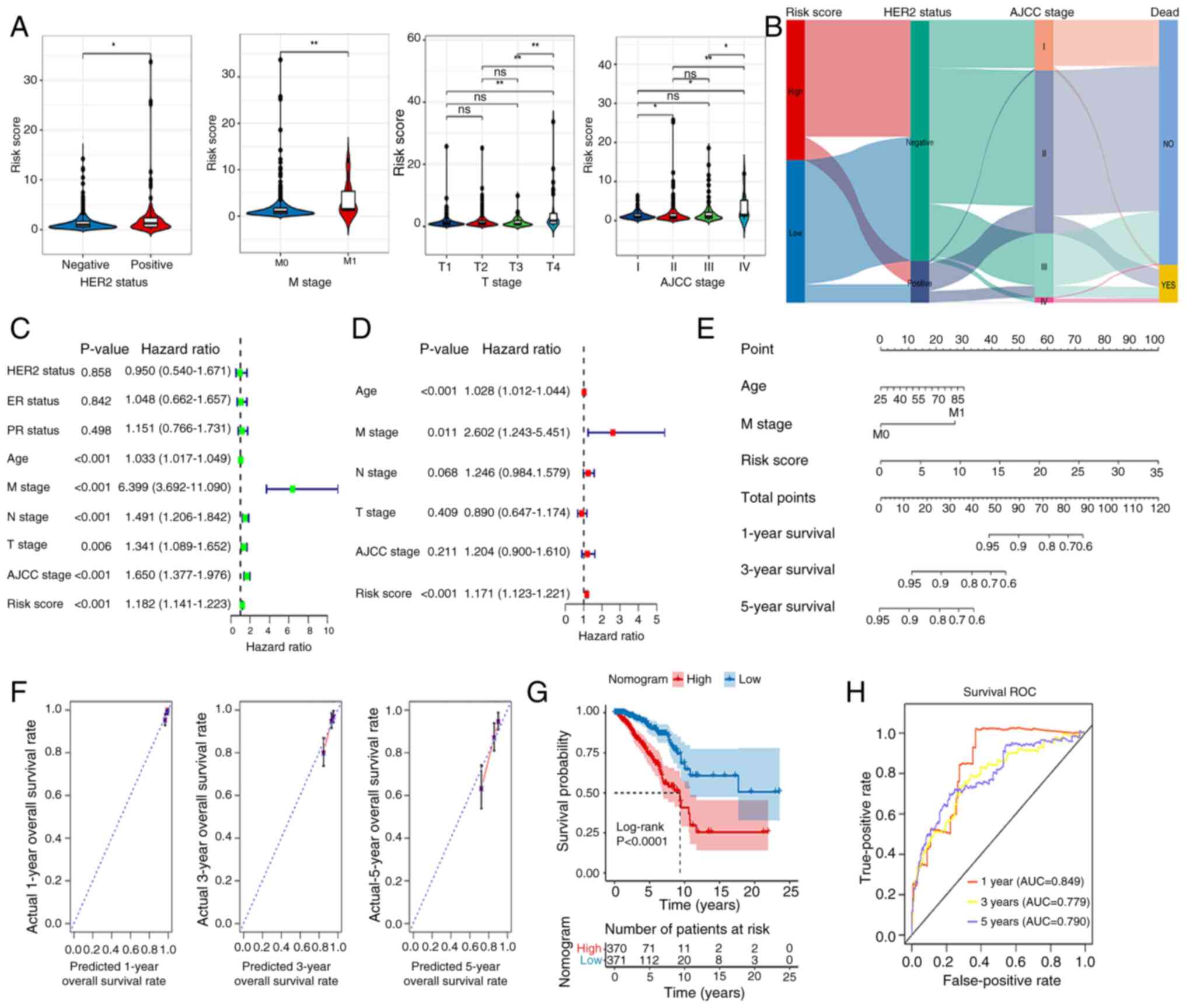
Figure 5

Construction of a nomogram. (A)
Differences in RiskScore between different HER2-status groups and
clinical features. (B) Association between HER2 and RiskScores. (C)
Univariate and (D) multivariate analyses of clinical data and risk
group. (E) Nomogram for predicting 1-, 3- and 5-year overall
survival. (F) Calibration curve analysis of nomogram. (G)
Kaplan-Meier analysis of the nomogram. (H) AUCs for predicting 1-,
3- and 5-year OS. *P<0.05, **P<0.01. ns, no significant
difference; HER2, human epidermal growth factor receptor 2; ER,
estrogen receptor; PR, progesterone receptor; M, metastasis; N,
node; T, tumor; AJCC, American Joint Committee on Cancer; OS,
overall survival; AUC, area under the curve; ROC, receiver
operating characteristic.

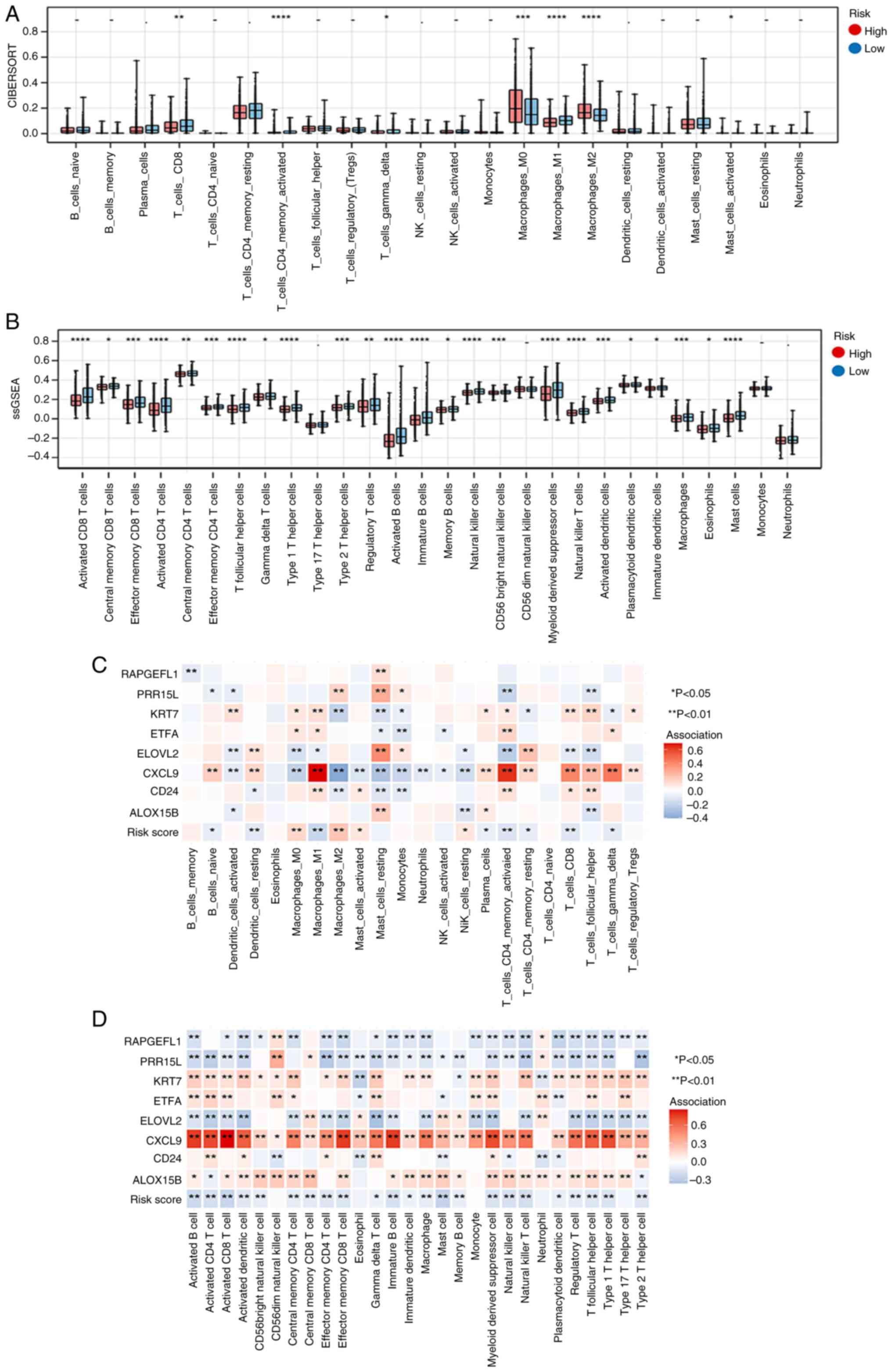
Figure 6

Association analysis of immunity and
RiskScore. The (A) ‘CIBERSORT’ and (B) ‘ssGSEA’ algorithms were
adopted to compare the score differences of 22 and 28 immune cells
between the high- and low-risk groups. Association between 22
immune cell types (C), 28 immune cell types (D) and eight key
genes. *P<0.05, **P<0.01, ***P<0.001, ****P<0.0001. -,
no significant difference; ssGSEA, single-sample Gene Set
Enrichment Analysis; Tregs, regulatory T cells; NK, natural
killer.

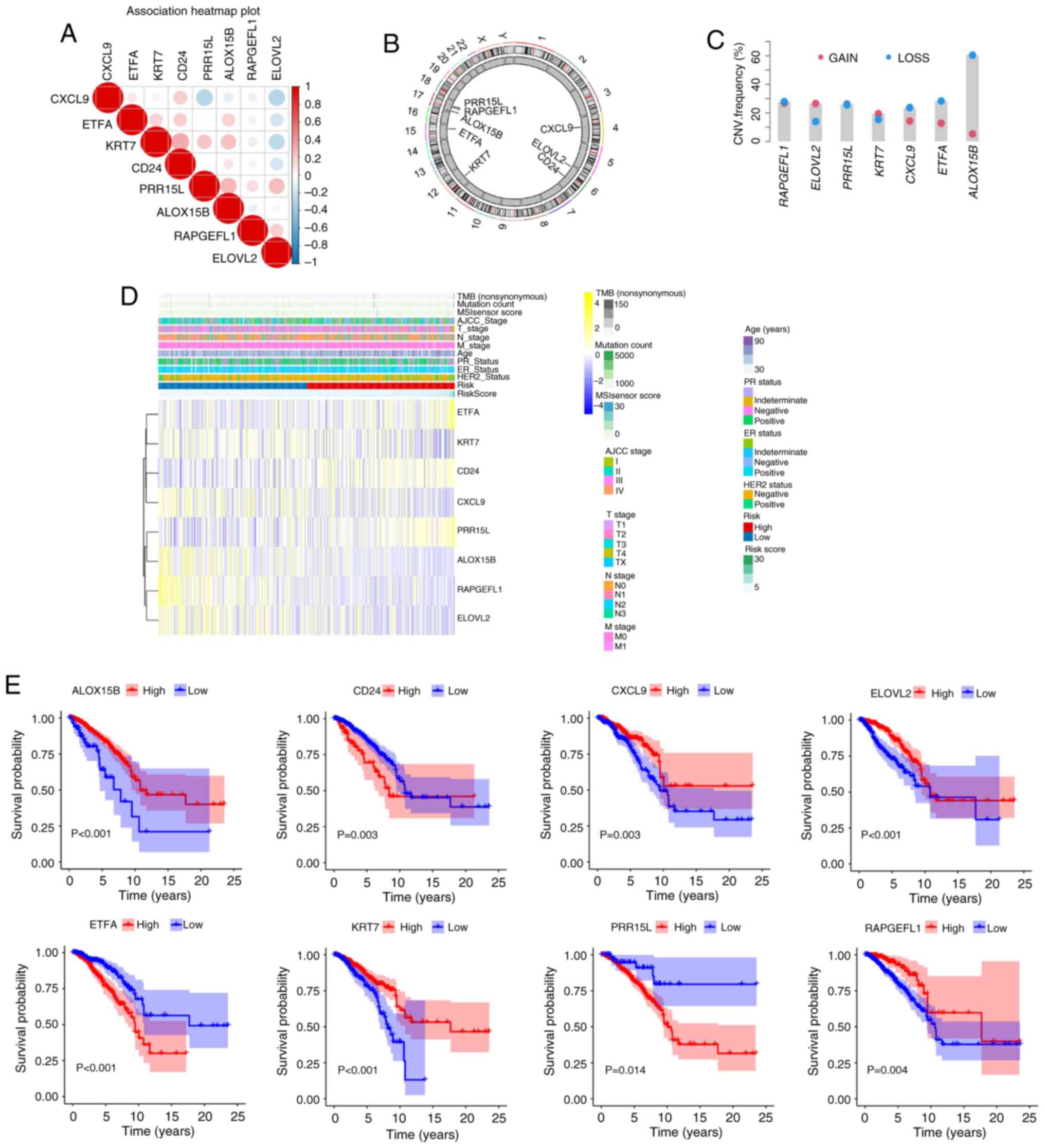
Figure 7

Characteristics of key genes (ETFA,
RAPGEFL1, KRT7, CD24, PRR15L, ALOX15B, ELOVL2 and CXCL9). (A)
Analysis of the association between the expression levels of the
eight key genes and the prognosis of patients with breast cancer
was analyzed revealed a positive trend in general. (B) CNV changes
of the above eight key genes on chromosomes. (C) CNV changes (gain
and loss trends) of the aforementioned eight key genes (there is no
relevant information about gene CD24 so a graph cannot be drawn).
(D) Heatmap of the expression of eight crucial genes. (E) Survival
analysis patients with different levels of expression of the
aforementioned eight crucial genes. Note: Survival curves were
constructed using the Kaplan-Meier method, and the log-rank test
was employed to compare survival differences between groups,
provided the proportional hazards assumption held (ETFA, RAPGEFL1,
KRT7, PRR15L, ALOX15B, and CXCL9 genes). For time-to-event data
with intermediate events, the two-stage survival analysis method
from the Two Stage Hazard Rate Comparison (TSHRC) package (Version
0.1-6) was applied when the proportional hazards assumption was
violated (CD24 and ELOVL2 genes). CNV, copy number variation; TMB,
tumor mutation burden; M, metastasis; N, node; T, tumor; AJCC,
American Joint Committee on Cancer; HER2, human epidermal growth
factor receptor 2; ER, estrogen receptor; PR, progesterone
receptor. ETFA, electron transfer flavoprotein subunitα; RAPGEFL1,
rap guanine nucleotide exchange factor-like 1; KRT7, keratin 7;
CD24, cluster of differentiation 24; PRR15L, proline rich 15-like;
ALOX15B, arachidonate 15-lipoxygenase type B; ELOVL2, ELOVL fatty
acid elongase 2; CXCL9, C-X-C motif chemokine ligand 9.

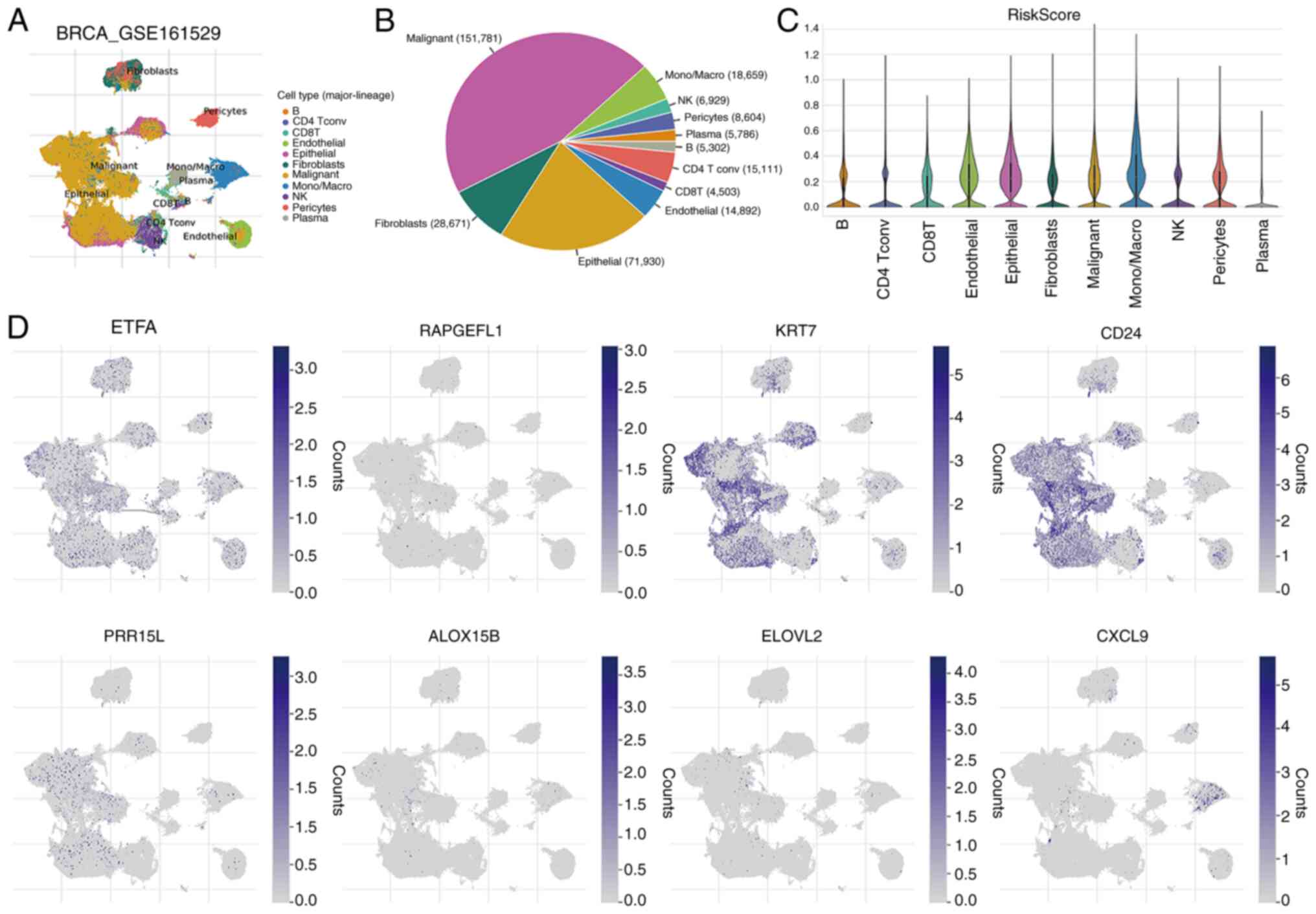
Figure 8

Single cell analysis. (A) Levels of
eight key genes in 11 cell types based on the single-cell dataset
GSE161529. (B) Distribution and percentage of 11 cell types. (C)
Distribution of RiskScore in the above 11 cell types. (D)
Expression pattern of the aforementioned eight key genes in immune
cells. NK, natural killer; BRCA, breast invasive carcinoma; Tconv,
Tconvoluted; Mono/Macro, monocyte/macrophage; ETFA, electron
transfer flavoprotein subunitα; RAPGEFL1, rap guanine nucleotide
exchange factor-like 1; KRT7, keratin 7; CD24, cluster of
differentiation 24; PRR15L, proline rich 15-like; ALOX15B,
arachidonate 15-lipoxygenase type B; ELOVL2, ELOVL fatty acid
elongase 2; CXCL9, C-X-C motif chemokine ligand 9.

Figure 9

RT-qPCR was performed to validate the
expression of eight crucial genes (ETFA, RAPGEFL1, KRT7, CD24,
PRR15L, ALOX15B, ELOVL2 and CXCL9). *P<0.05, **P<0.01,
***P<0.001. HER2, human epidermal growth factor receptor 2;
ETFA, electron transfer flavoprotein subunitα; RAPGEFL1, rap
guanine nucleotide exchange factor-like 1; KRT7, keratin 7; CD24,
cluster of differentiation 24; PRR15L, proline rich 15-like;
ALOX15B, arachidonate 15-lipoxygenase type B; ELOVL2, ELOVL fatty
acid elongase 2; CXCL9, C-X-C motif chemokine ligand 9.

Figure 10

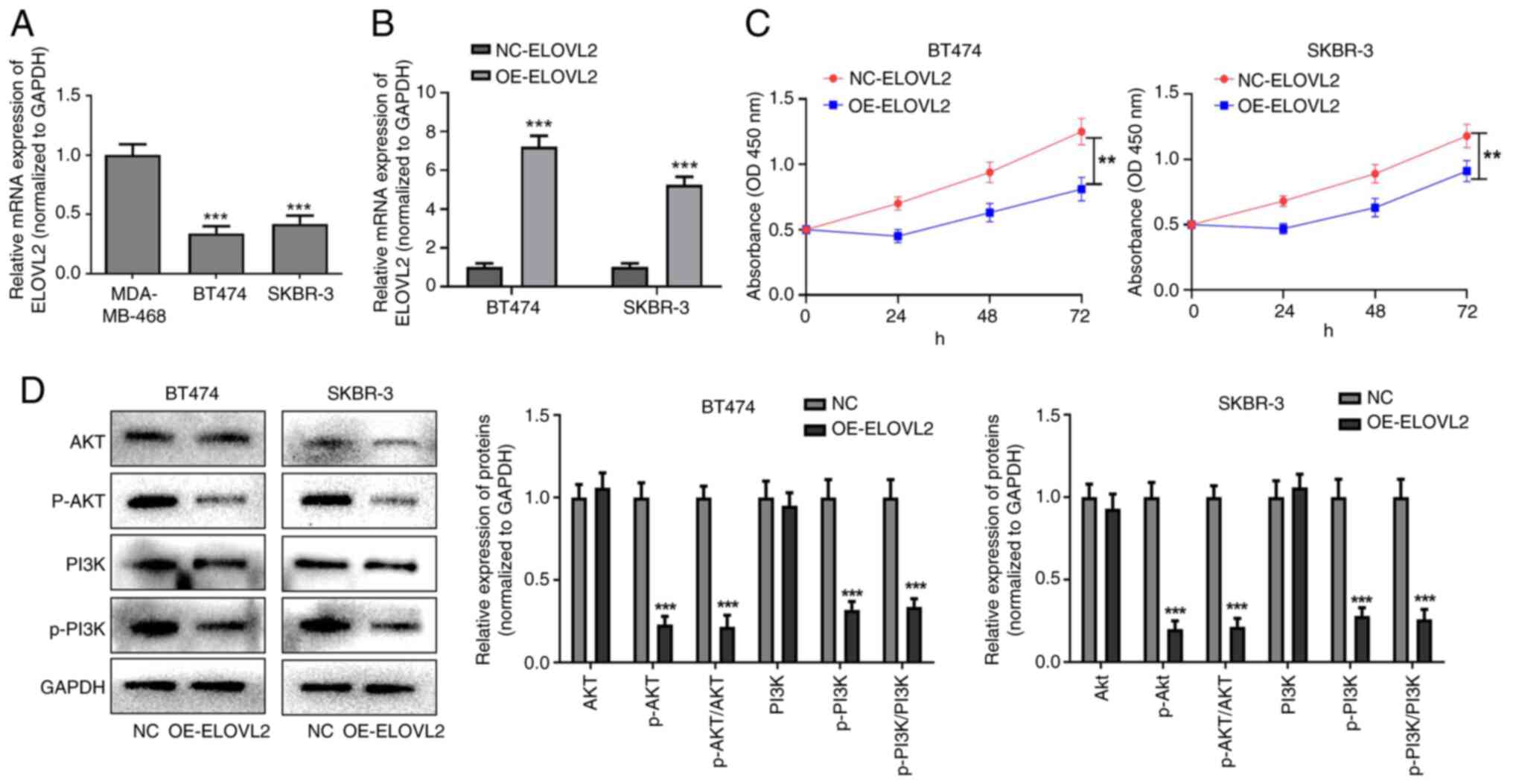
OE-ELOVL2 inhibits the proliferation
of human epidermal growth factor receptor 2-positive breast cancer
cells. (A) Expression level of ELOVL2 in MDA-MB-468, BT474 and
SKBR-3 cells. (B) Reverse transcription-quantitative PCR was used
to detect the transfection efficiency of OE-ELOVL2 in BT474 and
SKBR-3 cells. (C) OE-ELOVL2 inhibited the proliferation of BT474
and SKBR-3 cells. (D) Effect of OE-ELOVL2 on the levels of PI3K,
p-PI3K, AKT and p-AKT in BT474 and SKBR-3 cells. **P<0.01,
***P<0.001. OD, optical density; p, phosphorylated; NC, negative
control; OE, overexpression.
View References

1 

Giaquinto AN, Sung H, Newman LA, Freedman RA, Smith RA, Star J, Jemal A and Siegel RL: Breast cancer statistics 2024. CA Cancer J Clin. 74:477–495. 2024.

2 

Xiong X, Zheng LW, Ding Y, Chen YF, Cai YW and Wang LP: Huang L, Liu CC, Shao ZM and Yu KD: Breast cancer: Pathogenesis and treatments. Signal Transduct Target Ther. 10:492025. View Article : Google Scholar

3 

Xia C, Dong X, Li H, Cao M, Sun D, He S, Yang F, Yan X, Zhang S, Li N and Chen W: Cancer statistics in China and United States, 2022: Profiles, trends, and determinants. Chin Med J (Engl). 135:584–590. 2022. View Article : Google Scholar

4 

Yin Y, Song L, Shi D, Liu B, Li X, Yang M, Liu B, Wang D and Qin J: Identification of recurrent insertions and deletions in exon 18 and 19 of human epidermal growth factor receptor 2 as potential drivers in non-small-cell lung cancer and other cancer types. JCO Precis Oncol. 6:e21003252022. View Article : Google Scholar

5 

Cheng X: A comprehensive review of HER2 in cancer biology and therapeutics. Genes (Basel). 15:9032024. View Article : Google Scholar

6 

Marchiò C, Annaratone L, Marques A, Casorzo L, Berrino E and Sapino A: Evolving concepts in HER2 evaluation in breast cancer: Heterogeneity, HER2-low carcinomas and beyond. Semin Cancer Biol. 72:123–135. 2021. View Article : Google Scholar

7 

Chen Z, Yang L, Yang Z, Wang Z, He W and Zhang W: Ultrasonic-responsive piezoelectric stimulation enhances sonodynamic therapy for HER2-positive breast cancer. J Nanobiotechnology. 22:3692024. View Article : Google Scholar

8 

Ocaña A, Amir E and Pandiella A: HER2 heterogeneity and resistance to anti-HER2 antibody-drug conjugates. Breast Cancer Res. 22:152020. View Article : Google Scholar

9 

Kang S and Kim SB: HER2-low breast cancer: Now and in the future. Cancer Res Treat. 56:700–720. 2024. View Article : Google Scholar

10 

Shi Z, Liu Y, Fang X, Liu X, Meng J and Zhang J: Efficacy and prognosis of HER2-low and HER2-zero in triple-negative breast cancer after neoadjuvant chemotherapy. Sci Rep. 14:168992024. View Article : Google Scholar

11 

Rizvi AA, Karaesmen E, Morgan M, Preus L, Wang J, Sovic M, Hahn T and Sucheston-Campbell LE: gwasurvivr: An R package for genome-wide survival analysis. Bioinformatics. 35:1968–1970. 2019. View Article : Google Scholar

12 

Chen B, Khodadoust MS, Liu CL, Newman AM and Alizadeh AA: Profiling tumor infiltrating immune cells with CIBERSORT. Methods Mol Biol. 1711:243–259. 2018. View Article : Google Scholar

13 

Xiao B, Liu L, Li A, Xiang C, Wang P, Li H and Xiao T: Identification and verification of immune-related gene prognostic signature based on ssGSEA for osteosarcoma. Front Oncol. 10:6076222020. View Article : Google Scholar

14 

Aran D: Cell-type enrichment analysis of bulk transcriptomes using xCell. Methods Mol Biol. 2120:263–276. 2020. View Article : Google Scholar

15 

Hu D, Zhou M and Zhu X: Deciphering immune-associated genes to predict survival in clear cell renal cell cancer. Biomed Res Int. 2019:25068432019. View Article : Google Scholar

16 

Mayakonda A, Lin DC, Assenov Y, Plass C and Koeffler HP: Maftools: Efficient and comprehensive analysis of somatic variants in cancer. Genome Res. 28:1747–1756. 2018. View Article : Google Scholar

17 

Geeleher P, Cox N and Huang RS: pRRophetic: An R package for prediction of clinical chemotherapeutic response from tumor gene expression levels. PLoS One. 9:e1074682014. View Article : Google Scholar

18 

Reimand J, Isserlin R, Voisin V, Kucera M, Tannus-Lopes C, Rostamianfar A, Wadi L, Meyer M, Wong J, Xu C, et al: Pathway enrichment analysis and visualization of omics data using g:Profiler, GSEA, Cytoscape and EnrichmentMap. Nat Protoc. 14:482–517. 2019. View Article : Google Scholar

19 

Ritchie ME, Phipson B, Wu D, Hu Y, Law CW, Shi W and Smyth GK: limma powers differential expression analyses for RNA-sequencing and microarray studies. Nucleic Acids Res. 43:e472015. View Article : Google Scholar

20 

Yu G, Wang LG, Han Y and He QY: clusterProfiler: An R package for comparing biological themes among gene clusters. OMICS. 16:284–287. 2012. View Article : Google Scholar

21 

Tibshirani R: The lasso method for variable selection in the Cox model. Stat Med. 16:385–395. 1997. View Article : Google Scholar

22 

Zhang S, Tong YX, Zhang XH, Zhang YJ, Xu XS, Xiao AT, Chao TF and Gong JP: A novel and validated nomogram to predict overall survival for gastric neuroendocrine neoplasms. J Cancer. 10:5944–5954. 2019. View Article : Google Scholar

23 

Wang L, Peng F, Li ZH, Deng YF, Ruan MN, Mao ZG and Li L: Identification of AKI signatures and classification patterns in ccRCC based on machine learning. Front Med (Lausanne). 10:11956782023. View Article : Google Scholar

24 

Gustavsson EK, Zhang D, Reynolds RH, Garcia-Ruiz S and Ryten M: ggtranscript: An R package for the visualization and interpretation of transcript isoforms using ggplot2. Bioinformatics. 38:3844–3846. 2022. View Article : Google Scholar

25 

Zhang H, Meltzer P and Davis S: RCircos: An R package for Circos 2D track plots. BMC Bioinformatics. 14:2442013. View Article : Google Scholar

26 

Pal B, Chen Y, Vaillant F, Capaldo BD, Joyce R, Song X, Bryant VL, Penington JS, Di Stefano L, Tubau Ribera N, et al: A single-cell RNA expression atlas of normal, preneoplastic and tumorigenic states in the human breast. EMBO J. 40:e1073332021. View Article : Google Scholar

27 

Han Y, Wang Y, Dong X, Sun D, Liu Z, Yue J, Wang H, Li T and Wang C: TISCH2: Expanded datasets and new tools for single-cell transcriptome analyses of the tumor microenvironment. Nucleic Acids Res. 51(D1): D1425–D1431. 2023. View Article : Google Scholar

28 

Livak KJ and Schmittgen TD: Analysis of relative gene expression data using real-time quantitative PCR and the 2(−Delta Delta C(T)) method. Methods. 25:402–408. 2001. View Article : Google Scholar

29 

Kokot A, Gadakh S, Saha I, Gajda E, Łaźniewski M, Rakshit S, Sengupta K, Mollah AF, Denkiewicz M, Górczak K, et al: Unveiling the molecular mechanism of trastuzumab resistance in SKBR3 and BT474 cell lines for HER2 positive breast cancer. Curr Issues Mol Biol. 46:2713–2740. 2024. View Article : Google Scholar

30 

Ogitani Y, Hagihara K, Oitate M, Naito H and Agatsuma T: Bystander killing effect of DS-8201a, a novel anti-human epidermal growth factor receptor 2 antibody-drug conjugate, in tumors with human epidermal growth factor receptor 2 heterogeneity. Cancer Sci. 107:1039–1046. 2016. View Article : Google Scholar

31 

Jeong D, Ham J, Kim HW, Kim H, Ji HW, Yun SH, Park JE, Lee KS, Jo H, Han JH, et al: ELOVL2: A novel tumor suppressor attenuating tamoxifen resistance in breast cancer. Am J Cancer Res. 11:2568–2589. 2021.

32 

Hu T, Zhang H, Du Y, Luo S, Yang X, Zhang H, Feng J, Chen X, Tu X, Wang C and Zhang Y: ELOVL2 restrains cell proliferation, migration, and invasion of prostate cancer via regulation of the tumor suppressor INPP4B. Cell Signal. 96:1103732022. View Article : Google Scholar

33 

Vranić S, Bešlija S and Gatalica Z: Targeting HER2 expression in cancer: New drugs and new indications. Bosn J Basic Med Sci. 21:1–4. 2021.

34 

Rittler D, Baranyi M, Molnár E, Garay T, Jalsovszky I, Varga IK, Hegedűs L, Aigner C, Tóvári J, Tímár J and Hegedűs B: The antitumor effect of lipophilic bisphosphonate BPH1222 in melanoma models: The role of the PI3K/Akt pathway and the small G protein Rheb. Int J Mol Sci. 20:49172019. View Article : Google Scholar

35 

Soltani A, Torki S, Ghahfarokhi MS, Jami MS and Ghatrehsamani M: Targeting the phosphoinositide 3-kinase/AKT pathways by small molecules and natural compounds as a therapeutic approach for breast cancer cells. Mol Biol Rep. 46:4809–4816. 2019. View Article : Google Scholar

36 

Ye X, Liu J, Yuan X, Yang S, Huang Y and Chen Y: Molecular mechanism of Salvia miltiorrhiza bunge in treating cerebral infarction. Evid Based Complement Alternat Med. 2022:59923942022. View Article : Google Scholar

37 

Wu X, Pan J, Yu JJ, Kang J, Hou S, Cheng M, Xu L, Gong L and Li Y: DiDang decoction improves mitochondrial function and lipid metabolism via the HIF-1 signaling pathway to treat atherosclerosis and hyperlipidemia. J Ethnopharmacol. 308:1162892023. View Article : Google Scholar

38 

Kulkoyluoglu-Cotul E, Arca A and Madak-Erdogan Z: Crosstalk between estrogen signaling and breast cancer metabolism. Trends Endocrinol Metab. 30:25–38. 2019. View Article : Google Scholar

39 

Hinshaw DC and Shevde LA: The tumor microenvironment innately modulates cancer progression. Cancer Res. 79:4557–4566. 2019. View Article : Google Scholar

40 

de Visser KE and Joyce JA: The evolving tumor microenvironment: From cancer initiation to metastatic outgrowth. Cancer Cell. 41:374–403. 2023. View Article : Google Scholar

41 

Mao M, Yu Q, Huang R, Lu Y, Wang Z and Liao L: Stromal score as a prognostic factor in primary gastric cancer and close association with tumor immune microenvironment. Cancer Med. 9:4980–4990. 2020. View Article : Google Scholar

42 

Song J, Yang R, Wei R, Du Y, He P and Liu X: Pan-cancer analysis reveals RIPK2 predicts prognosis and promotes immune therapy resistance via triggering cytotoxic T lymphocytes dysfunction. Mol Med. 28:472022. View Article : Google Scholar

43 

Xia Y, Rao L, Yao H, Wang Z, Ning P and Chen X: Engineering macrophages for cancer immunotherapy and drug delivery. Adv Mater. 32:e20020542020. View Article : Google Scholar

44 

Sun Y, Lian Y, Mei X, Xia J, Feng L, Gao J, Xu H, Zhang X, Yang H, Hao X and Feng Y: Cinobufagin inhibits M2-like tumor-associated macrophage polarization to attenuate the invasion and migration of lung cancer cells. Int J Oncol. 65:1022024. View Article : Google Scholar

45 

Zhang Y, Chen S, You L, He Z, Xu P and Huang W: LINC00161 upregulated by M2-like tumor-associated macrophages promotes hepatocellular carcinoma progression by methylating HACE1 promoters. Cytotechnology. 76:777–793. 2024. View Article : Google Scholar

46 

Yamaguchi T, Fushida S, Yamamoto Y, Tsukada T, Kinoshita J, Oyama K, Miyashita T, Tajima H, Ninomiya I, Munesue S, et al: Tumor-associated macrophages of the M2 phenotype contribute to progression in gastric cancer with peritoneal dissemination. Gastric Cancer. 19:1052–1065. 2016. View Article : Google Scholar

47 

Wu Q, Wu W, Jacevic V, Franca TCC, Wang X and Kuca K: Selective inhibitors for JNK signalling: A potential targeted therapy in cancer. J Enzyme Inhib Med Chem. 35:574–583. 2020. View Article : Google Scholar

48 

Bubici C and Papa S: JNK signalling in cancer: In need of new, smarter therapeutic targets. Br J Pharmacol. 171:24–37. 2014. View Article : Google Scholar

49 

Luo W, Han Y, Li X, Liu Z, Meng P and Wang Y: Breast cancer prognosis prediction and immune pathway molecular analysis based on mitochondria-related genes. Genet Res (Camb). 2022:22499092022. View Article : Google Scholar

50 

Katoh M: FGFR inhibitors: Effects on cancer cells, tumor microenvironment and whole-body homeostasis (review). Int J Mol Med. 38:3–15. 2016. View Article : Google Scholar

51 

Massaro F, Molica M and Breccia M: Ponatinib: A review of efficacy and safety. Curr Cancer Drug Targets. 18:847–856. 2018. View Article : Google Scholar

52 

Katoh M and Nakagama H: FGF receptors: Cancer biology and therapeutics. Med Res Rev. 34:280–300. 2014. View Article : Google Scholar

53 

Cicenas J, Kalyan K, Sorokinas A, Stankunas E, Levy J, Meskinyte I, Stankevicius V, Kaupinis A and Valius M: Roscovitine in cancer and other diseases. Ann Transl Med. 3:1352015.

54 

Raynaud FI, Whittaker SR, Fischer PM, McClue S, Walton MI, Barrie SE, Garrett MD, Rogers P, Clarke SJ, Kelland LR, et al: In vitro and in vivo pharmacokinetic-pharmacodynamic relationships for the trisubstituted aminopurine cyclin-dependent kinase inhibitors olomoucine, bohemine and CYC202. Clin Cancer Res. 11:4875–4887. 2005. View Article : Google Scholar

55 

De Azevedo WF, Leclerc S, Meijer L, Havlicek L, Strnad M and Kim SH: Inhibition of cyclin-dependent kinases by purine analogues: Crystal structure of human cdk2 complexed with roscovitine. Eur J Biochem. 243:518–526. 1997. View Article : Google Scholar

56 

Lambert LA, Qiao N, Hunt KK, Lambert DH, Mills GB, Meijer L and Keyomarsi K: Autophagy: A novel mechanism of synergistic cytotoxicity between doxorubicin and roscovitine in a sarcoma model. Cancer Res. 68:7966–7974. 2008. View Article : Google Scholar

57 

Chen W, Di Z, Chen Z, Nan K, Gu J, Ge F, Liu J, Zhang H and Miao C: NBPF4 mitigates progression in colorectal cancer through the regulation of EZH2-associated ETFA. J Cell Mol Med. 25:9038–9050. 2021. View Article : Google Scholar

58 

Zhou C, Feng X, Yuan F, Ji J, Shi M, Yu Y, Zhu Z and Zhang J: Difference of molecular alterations in HER2-positive and HER2-negative gastric cancers by whole-genome sequencing analysis. Cancer Manag Res. 10:3945–3954. 2018. View Article : Google Scholar

59 

An Q, Liu T, Wang MY, Yang YJ, Zhang ZD, Liu ZJ and Yang B: KRT7 promotes epithelial-mesenchymal transition in ovarian cancer via the TGF-β/Smad2/3 signaling pathway. Oncol Rep. 45:481–492. 2021. View Article : Google Scholar

60 

Song J, Ruze R, Chen Y, Xu R, Yin X, Wang C, Xu Q and Zhao Y: Construction of a novel model based on cell-in-cell-related genes and validation of KRT7 as a biomarker for predicting survival and immune microenvironment in pancreatic cancer. BMC Cancer. 22:8942022. View Article : Google Scholar

61 

Altevogt P, Sammar M, Hüser L and Kristiansen G: Novel insights into the function of CD24: A driving force in cancer. Int J Cancer. 148:546–559. 2021. View Article : Google Scholar

62 

Li X, Xiong W, Wang Y, Li Y, Cheng X and Liu W: p53 activates the lipoxygenase activity of ALOX15B via inhibiting SLC7A11 to induce ferroptosis in bladder cancer cells. Lab Invest. 103:1000582023. View Article : Google Scholar

63 

Seitz S, Dreyer TF, Stange C, Steiger K, Bräuer R, Scheutz L, Multhoff G, Weichert W, Kiechle M, Magdolen V and Bronger H: CXCL9 inhibits tumour growth and drives anti-PD-L1 therapy in ovarian cancer. Br J Cancer. 126:1470–1480. 2022. View Article : Google Scholar

64 

Mizuguchi Y, Sakamoto T, Hashimoto T, Tsukamoto S, Iwasa S, Saito Y and Sekine S: Identification of a novel PRR15L-RSPO2 fusion transcript in a sigmoid colon cancer derived from superficially serrated adenoma. Virchows Arch. 475:659–663. 2019. View Article : Google Scholar

65 

Wu J, Zhang H, Li L, Hu M, Chen L, Xu B and Song Q: A nomogram for predicting overall survival in patients with low-grade endometrial stromal sarcoma: A population-based analysis. Cancer Commun (Lond). 40:301–312. 2020. View Article : Google Scholar

66 

Wang F, Fang L, Fu B and Fan C: Construction of a prognostic risk assessment model for HER2 + breast cancer based on autophagy-related genes. Breast Cancer. 30:478–488. 2023. View Article : Google Scholar

67 

Zhao L, Lin Z, Nong S, Li C, Li J, Lin C, Safi SZ, Huang S and Ismail ISB: Development and validation of a prognostic nomogram model for HER2-positive male breast cancer patients. Asian Pac J Cancer Prev. 25:3199–3207. 2024. View Article : Google Scholar

68 

Lin J, Zhao A and Fu D: Evaluating the tumor immune profile based on a three-gene prognostic risk model in HER2 positive breast cancer. Sci Rep. 12:93112022. View Article : Google Scholar

Related Articles

  • Abstract
  • View
  • Download
  • Twitter
Copy and paste a formatted citation
Spandidos Publications style
Huang L, Xu C, Song Y, Sun F, Sun X, Yao H, Liu M and Luo N: Construction of a human epidermal growth factor receptor 2‑related gene risk model for predicting breast cancer prognosis. Oncol Lett 31: 61, 2026.
APA
Huang, L., Xu, C., Song, Y., Sun, F., Sun, X., Yao, H. ... Luo, N. (2026). Construction of a human epidermal growth factor receptor 2‑related gene risk model for predicting breast cancer prognosis. Oncology Letters, 31, 61. https://doi.org/10.3892/ol.2025.15414
MLA
Huang, L., Xu, C., Song, Y., Sun, F., Sun, X., Yao, H., Liu, M., Luo, N."Construction of a human epidermal growth factor receptor 2‑related gene risk model for predicting breast cancer prognosis". Oncology Letters 31.2 (2026): 61.
Chicago
Huang, L., Xu, C., Song, Y., Sun, F., Sun, X., Yao, H., Liu, M., Luo, N."Construction of a human epidermal growth factor receptor 2‑related gene risk model for predicting breast cancer prognosis". Oncology Letters 31, no. 2 (2026): 61. https://doi.org/10.3892/ol.2025.15414
Copy and paste a formatted citation
x
Spandidos Publications style
Huang L, Xu C, Song Y, Sun F, Sun X, Yao H, Liu M and Luo N: Construction of a human epidermal growth factor receptor 2‑related gene risk model for predicting breast cancer prognosis. Oncol Lett 31: 61, 2026.
APA
Huang, L., Xu, C., Song, Y., Sun, F., Sun, X., Yao, H. ... Luo, N. (2026). Construction of a human epidermal growth factor receptor 2‑related gene risk model for predicting breast cancer prognosis. Oncology Letters, 31, 61. https://doi.org/10.3892/ol.2025.15414
MLA
Huang, L., Xu, C., Song, Y., Sun, F., Sun, X., Yao, H., Liu, M., Luo, N."Construction of a human epidermal growth factor receptor 2‑related gene risk model for predicting breast cancer prognosis". Oncology Letters 31.2 (2026): 61.
Chicago
Huang, L., Xu, C., Song, Y., Sun, F., Sun, X., Yao, H., Liu, M., Luo, N."Construction of a human epidermal growth factor receptor 2‑related gene risk model for predicting breast cancer prognosis". Oncology Letters 31, no. 2 (2026): 61. https://doi.org/10.3892/ol.2025.15414
Follow us
  • Twitter
  • LinkedIn
  • Facebook
About
  • Spandidos Publications
  • Careers
  • Cookie Policy
  • Privacy Policy
How can we help?
  • Help
  • Live Chat
  • Contact
  • Email to our Support Team