Spandidos Publications Logo
  • About
    • About Spandidos
    • Aims and Scopes
    • Abstracting and Indexing
    • Editorial Policies
    • Reprints and Permissions
    • Job Opportunities
    • Terms and Conditions
    • Contact
  • Journals
    • All Journals
    • Oncology Letters
      • Oncology Letters
      • Information for Authors
      • Editorial Policies
      • Editorial Board
      • Aims and Scope
      • Abstracting and Indexing
      • Bibliographic Information
      • Archive
    • International Journal of Oncology
      • International Journal of Oncology
      • Information for Authors
      • Editorial Policies
      • Editorial Board
      • Aims and Scope
      • Abstracting and Indexing
      • Bibliographic Information
      • Archive
    • Molecular and Clinical Oncology
      • Molecular and Clinical Oncology
      • Information for Authors
      • Editorial Policies
      • Editorial Board
      • Aims and Scope
      • Abstracting and Indexing
      • Bibliographic Information
      • Archive
    • Experimental and Therapeutic Medicine
      • Experimental and Therapeutic Medicine
      • Information for Authors
      • Editorial Policies
      • Editorial Board
      • Aims and Scope
      • Abstracting and Indexing
      • Bibliographic Information
      • Archive
    • International Journal of Molecular Medicine
      • International Journal of Molecular Medicine
      • Information for Authors
      • Editorial Policies
      • Editorial Board
      • Aims and Scope
      • Abstracting and Indexing
      • Bibliographic Information
      • Archive
    • Biomedical Reports
      • Biomedical Reports
      • Information for Authors
      • Editorial Policies
      • Editorial Board
      • Aims and Scope
      • Abstracting and Indexing
      • Bibliographic Information
      • Archive
    • Oncology Reports
      • Oncology Reports
      • Information for Authors
      • Editorial Policies
      • Editorial Board
      • Aims and Scope
      • Abstracting and Indexing
      • Bibliographic Information
      • Archive
    • Molecular Medicine Reports
      • Molecular Medicine Reports
      • Information for Authors
      • Editorial Policies
      • Editorial Board
      • Aims and Scope
      • Abstracting and Indexing
      • Bibliographic Information
      • Archive
    • World Academy of Sciences Journal
      • World Academy of Sciences Journal
      • Information for Authors
      • Editorial Policies
      • Editorial Board
      • Aims and Scope
      • Abstracting and Indexing
      • Bibliographic Information
      • Archive
    • International Journal of Functional Nutrition
      • International Journal of Functional Nutrition
      • Information for Authors
      • Editorial Policies
      • Editorial Board
      • Aims and Scope
      • Abstracting and Indexing
      • Bibliographic Information
      • Archive
    • International Journal of Epigenetics
      • International Journal of Epigenetics
      • Information for Authors
      • Editorial Policies
      • Editorial Board
      • Aims and Scope
      • Abstracting and Indexing
      • Bibliographic Information
      • Archive
    • Medicine International
      • Medicine International
      • Information for Authors
      • Editorial Policies
      • Editorial Board
      • Aims and Scope
      • Abstracting and Indexing
      • Bibliographic Information
      • Archive
  • Articles
  • Information
    • Information for Authors
    • Information for Reviewers
    • Information for Librarians
    • Information for Advertisers
    • Conferences
  • Language Editing
Spandidos Publications Logo
  • About
    • About Spandidos
    • Aims and Scopes
    • Abstracting and Indexing
    • Editorial Policies
    • Reprints and Permissions
    • Job Opportunities
    • Terms and Conditions
    • Contact
  • Journals
    • All Journals
    • Biomedical Reports
      • Information for Authors
      • Editorial Policies
      • Editorial Board
      • Aims and Scope
      • Abstracting and Indexing
      • Bibliographic Information
      • Archive
    • Experimental and Therapeutic Medicine
      • Information for Authors
      • Editorial Policies
      • Editorial Board
      • Aims and Scope
      • Abstracting and Indexing
      • Bibliographic Information
      • Archive
    • International Journal of Epigenetics
      • Information for Authors
      • Editorial Policies
      • Editorial Board
      • Aims and Scope
      • Abstracting and Indexing
      • Bibliographic Information
      • Archive
    • International Journal of Functional Nutrition
      • Information for Authors
      • Editorial Policies
      • Editorial Board
      • Aims and Scope
      • Abstracting and Indexing
      • Bibliographic Information
      • Archive
    • International Journal of Molecular Medicine
      • Information for Authors
      • Editorial Policies
      • Editorial Board
      • Aims and Scope
      • Abstracting and Indexing
      • Bibliographic Information
      • Archive
    • International Journal of Oncology
      • Information for Authors
      • Editorial Policies
      • Editorial Board
      • Aims and Scope
      • Abstracting and Indexing
      • Bibliographic Information
      • Archive
    • Medicine International
      • Information for Authors
      • Editorial Policies
      • Editorial Board
      • Aims and Scope
      • Abstracting and Indexing
      • Bibliographic Information
      • Archive
    • Molecular and Clinical Oncology
      • Information for Authors
      • Editorial Policies
      • Editorial Board
      • Aims and Scope
      • Abstracting and Indexing
      • Bibliographic Information
      • Archive
    • Molecular Medicine Reports
      • Information for Authors
      • Editorial Policies
      • Editorial Board
      • Aims and Scope
      • Abstracting and Indexing
      • Bibliographic Information
      • Archive
    • Oncology Letters
      • Information for Authors
      • Editorial Policies
      • Editorial Board
      • Aims and Scope
      • Abstracting and Indexing
      • Bibliographic Information
      • Archive
    • Oncology Reports
      • Information for Authors
      • Editorial Policies
      • Editorial Board
      • Aims and Scope
      • Abstracting and Indexing
      • Bibliographic Information
      • Archive
    • World Academy of Sciences Journal
      • Information for Authors
      • Editorial Policies
      • Editorial Board
      • Aims and Scope
      • Abstracting and Indexing
      • Bibliographic Information
      • Archive
  • Articles
  • Information
    • For Authors
    • For Reviewers
    • For Librarians
    • For Advertisers
    • Conferences
  • Language Editing
Login Register Submit
  • This site uses cookies
  • You can change your cookie settings at any time by following the instructions in our Cookie Policy. To find out more, you may read our Privacy Policy.

    I agree
Search articles by DOI, keyword, author or affiliation
Search
Advanced Search
presentation
Oncology Letters
Join Editorial Board Propose a Special Issue
Print ISSN: 1792-1074 Online ISSN: 1792-1082
Journal Cover
February-2026 Volume 31 Issue 2

Full Size Image

Sign up for eToc alerts
Recommend to Library

Journals

International Journal of Molecular Medicine

International Journal of Molecular Medicine

International Journal of Molecular Medicine is an international journal devoted to molecular mechanisms of human disease.

International Journal of Oncology

International Journal of Oncology

International Journal of Oncology is an international journal devoted to oncology research and cancer treatment.

Molecular Medicine Reports

Molecular Medicine Reports

Covers molecular medicine topics such as pharmacology, pathology, genetics, neuroscience, infectious diseases, molecular cardiology, and molecular surgery.

Oncology Reports

Oncology Reports

Oncology Reports is an international journal devoted to fundamental and applied research in Oncology.

Experimental and Therapeutic Medicine

Experimental and Therapeutic Medicine

Experimental and Therapeutic Medicine is an international journal devoted to laboratory and clinical medicine.

Oncology Letters

Oncology Letters

Oncology Letters is an international journal devoted to Experimental and Clinical Oncology.

Biomedical Reports

Biomedical Reports

Explores a wide range of biological and medical fields, including pharmacology, genetics, microbiology, neuroscience, and molecular cardiology.

Molecular and Clinical Oncology

Molecular and Clinical Oncology

International journal addressing all aspects of oncology research, from tumorigenesis and oncogenes to chemotherapy and metastasis.

World Academy of Sciences Journal

World Academy of Sciences Journal

Multidisciplinary open-access journal spanning biochemistry, genetics, neuroscience, environmental health, and synthetic biology.

International Journal of Functional Nutrition

International Journal of Functional Nutrition

Open-access journal combining biochemistry, pharmacology, immunology, and genetics to advance health through functional nutrition.

International Journal of Epigenetics

International Journal of Epigenetics

Publishes open-access research on using epigenetics to advance understanding and treatment of human disease.

Medicine International

Medicine International

An International Open Access Journal Devoted to General Medicine.

Journal Cover
February-2026 Volume 31 Issue 2

Full Size Image

Sign up for eToc alerts
Recommend to Library

  • Article
  • Citations
    • Cite This Article
    • Download Citation
    • Create Citation Alert
    • Remove Citation Alert
    • Cited By
  • Similar Articles
    • Related Articles (in Spandidos Publications)
    • Similar Articles (Google Scholar)
    • Similar Articles (PubMed)
  • Download PDF
  • Download XML
  • View XML

  • Supplementary Files
    • Supplementary_Data.pdf
Article Open Access

Identification and validation of critical mitochondrial hub genes for prostate cancer

  • Authors:
    • Sha Liu
    • Liang Huang
    • Li Lin
    • Hong Shan
    • Yueming Wan
  • View Affiliations / Copyright

    Affiliations: Department of Urology, The Affiliated Cancer Hospital of Xiangya School of Medicine (Hunan Cancer Hospital), Central South University, Changsha, Hunan 410013, P.R. China, Department of Emergency Medicine, The Affiliated Changsha Central Hospital, Hengyang Medical School, University of South China, Changsha, Hunan 410028, P.R. China, Department of Urology, Yueyang Hospital Affiliated to Hunan Normal University (Yueyang People's Hospital), Yueyang, Hunan 414000, P.R. China
    Copyright: © Liu et al. This is an open access article distributed under the terms of Creative Commons Attribution License.
  • Article Number: 66
    |
    Published online on: December 3, 2025
       https://doi.org/10.3892/ol.2025.15419
  • Expand metrics +
Metrics: Total Views: 0 (Spandidos Publications: | PMC Statistics: )
Metrics: Total PDF Downloads: 0 (Spandidos Publications: | PMC Statistics: )
Cited By (CrossRef): 0 citations Loading Articles...

This article is mentioned in:


Abstract

Prostate cancer (PCa) is one of the most common malignant tumors in men. In recent years, mitochondrial dysfunction has been found to be closely related to cancer progression. However, the role of mitochondria‑related genes in PCa remains unclear. The aim of the present study was to discover novel biomarkers based on differentially expressed mitochondrial‑related genes (DeMRGs) to aid in PCa diagnosis. In the present study, gene expression data from the Gene Expression Omnibus and The Cancer Genome Atlas databases were combined with a mitochondrial‑related gene list provided by the MitoCarta database to identify DeMRGs. Gene Ontology analysis, Kyoto Encyclopedia of Genes and Genomes enrichment analysis and Gene Set Enrichment Analysis were then used to investigate the functions and related pathways of these DeMRGs. Subsequently, Cytoscape software and the STRING website were used to explore the transcription factors and microRNAs related to the DeMRGs. The degree of infiltration of immune cells in the immune landscape of patients with PCa and the controls was assessed using CIBERSORT. Finally, the correlation between characteristic DeMRGs and immune cell infiltration and mitochondrial respiration was analyzed. The results indicated that 6 characteristic genes, including acetyl‑CoA carboxylase β (ACACB), pyruvate dehydrogenase kinase 4 (PDK4), glycine amidinotransferase (GATM), methylcrotonyl‑CoA carboxylase subunit 2, mitochondrial ribosomal protein L12 (MRPL12) and fatty acid synthase, were identified from the 60 DeMRGs. The results showed a close association between the characteristic DeMRGs and immune infiltrating cells. In addition, it was found that MRPL12, PDK4, ACACB and GATM were correlated with mitochondrial respiration. These 4 genes were selected as hub genes as they are closely related to gluconeogenesis, the tricarboxylic acid cycle, lipid metabolism, amino acid metabolism and other mitochondrial metabolic pathways in PCa. In conclusion, 4 novel mitochondrial‑related gene signatures that influence mitochondrial metabolism within the immune microenvironment were identified in PCa.
View Figures

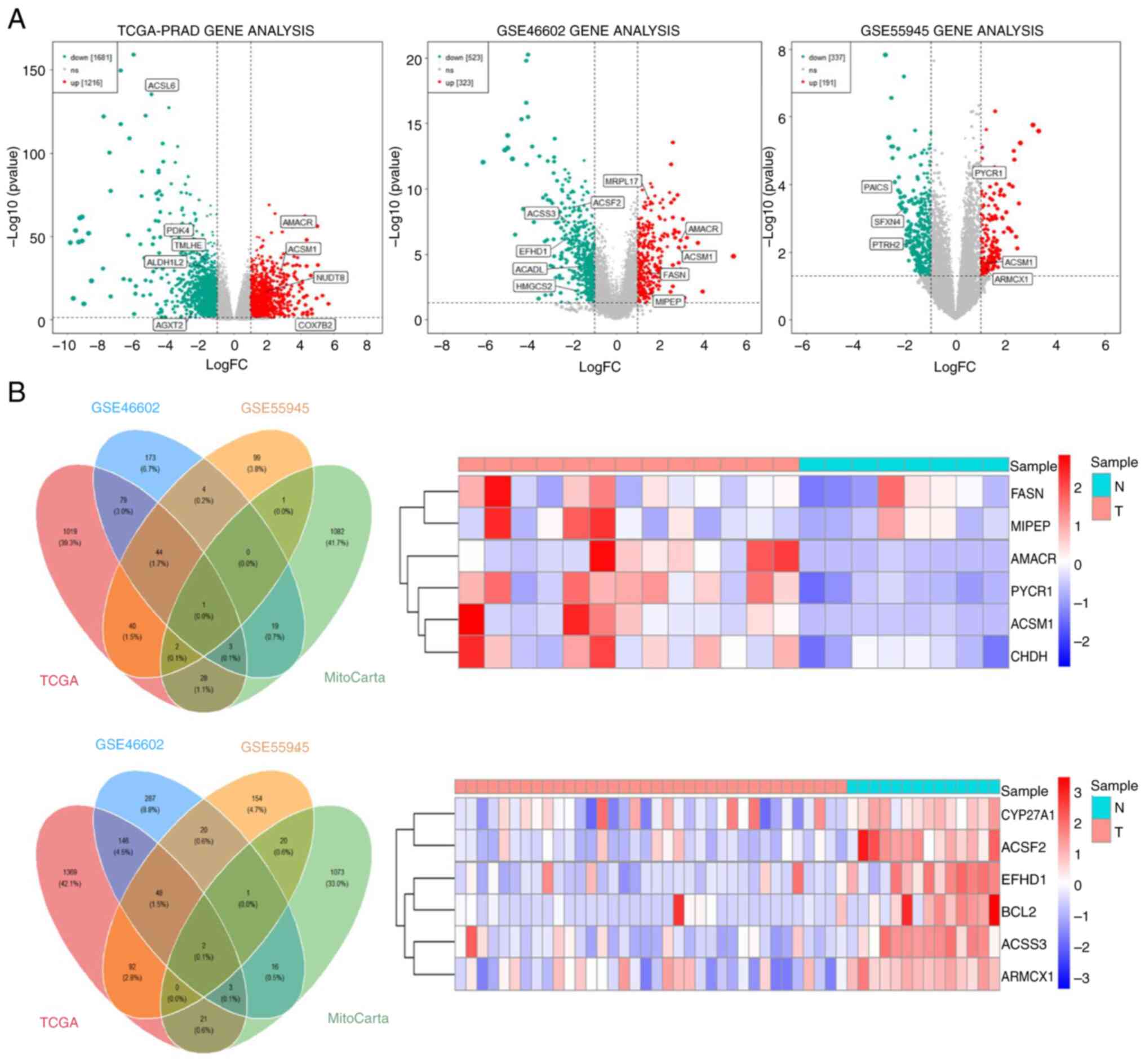
Figure 1

Differential expression of mRNA in
mitochondria between prostate cancer and normal prostate tissue.
(A) Differential analysis was conducted on three training sets
(TCGA-PRAD, GSE46602 and GSE55945). (B) The left sides are the Venn
diagram, and the right side is the expression heatmap. The top
images are for GSE55945 and the bottom images are for GSE46602;
TCGA, The Cancer Genome Atlas; PRAD, prostate adenocarcinoma; ns,
no significance; FASN, fatty acid synthase; MIPEP, mitochondrial
intermediate peptidase; AMACR, α-methylacyl-CoA racemase; PYCR1,
pyrroline-5-carboxylate reductase 1; ACSM1, acyl-CoA synthetase
medium chain family member 1; CHDH, choline dehydrogenase; N,
normal; T, tumor; FC, fold change.

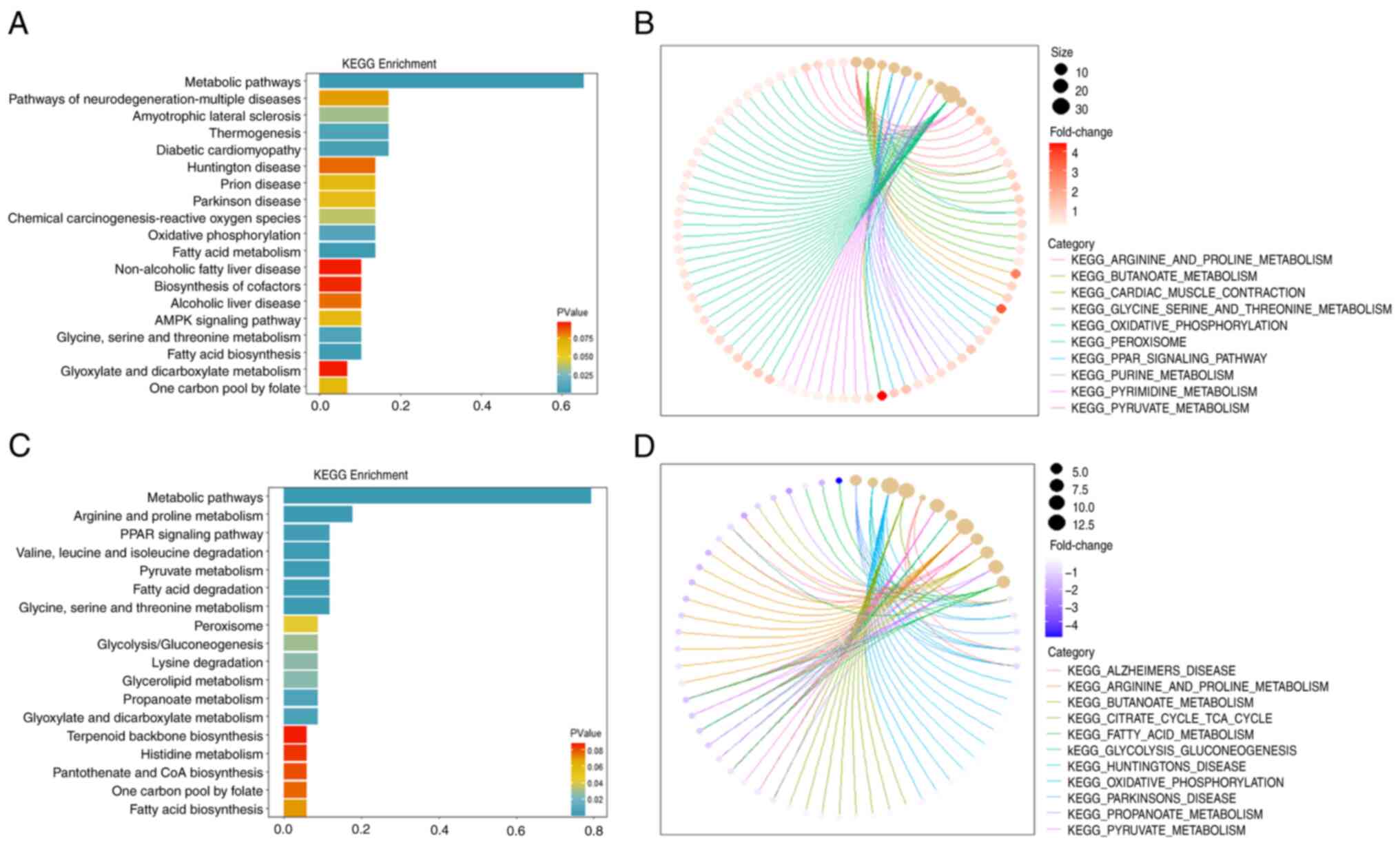
Figure 2

KEGG analysis and GSEA of
differential mitochondrial mRNA between prostate cancer and normal
prostate tissue. (A) KEGG enrichment analysis of upregulated
mitochondrial genes; (B) GSEA of upregulated mitochondrial genes;
(C) KEGG enrichment analysis of downregulated mitochondrial genes;
and (D) GSEA of downregulated mitochondrial genes. KEGG, Kyoto
Encyclopedia of Genes and Genomes; GSEA, Gene Set Enrichment
Analysis.

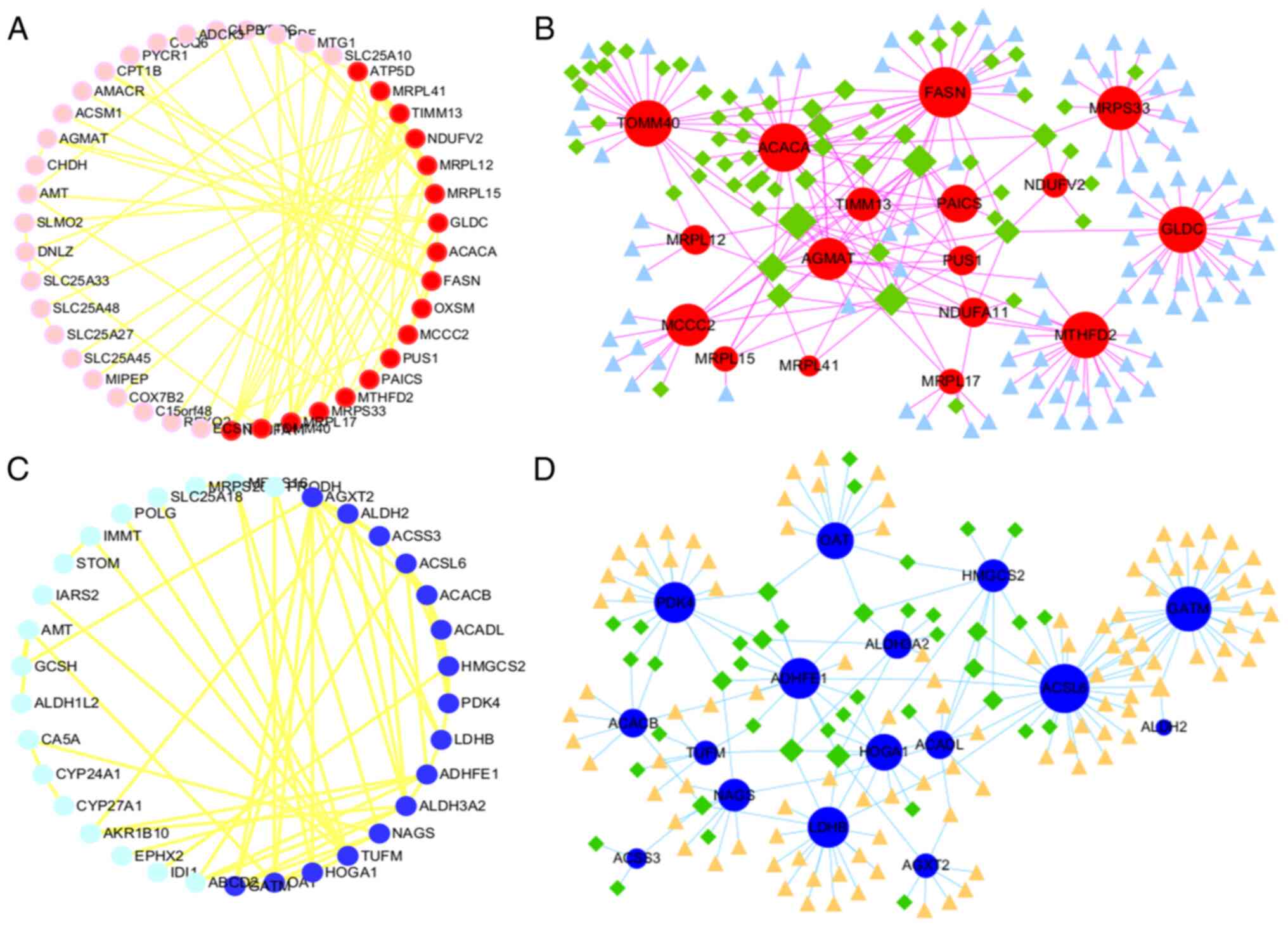
Figure 3

Interaction between differential mRNA
and miRNA and transcription factors between prostate cancer and
normal prostate tissue. (A) The 54 upregulated genes were first
used to construct a PPI network through the STRING website, which
was then imported into Cytoscape to screen out 18 core genes with a
degree value >4, namely the genes shown in red on the right; (B)
The transcription factor and miRNA interactions of these 18 genes
predicted by the NetworkAnalyst 3.0 website. Red represents the 18
core genes, and the larger the degree value, the larger the circle
size. Green represents the transcription factors and light blue
represents miRNA. (C) The 63 downregulated genes were first
constructed into a PPI network through the STRING website, which
was then imported into Cytoscape to screen out 16 core genes with a
degree value >4, namely the genes in dark blue on the right; (D)
The transcription factors and interacting miRNAs of these 16 genes
were predicted by NetworkAnalyst 3.0 and visualized by Cytoscape.
Blue represents the 16 core genes, with larger degree values shown
with larger circles. Green represents the transcription factors and
the pale orange represents miRNAs. miRNA, microRNA; PPI,
protein-protein interaction.

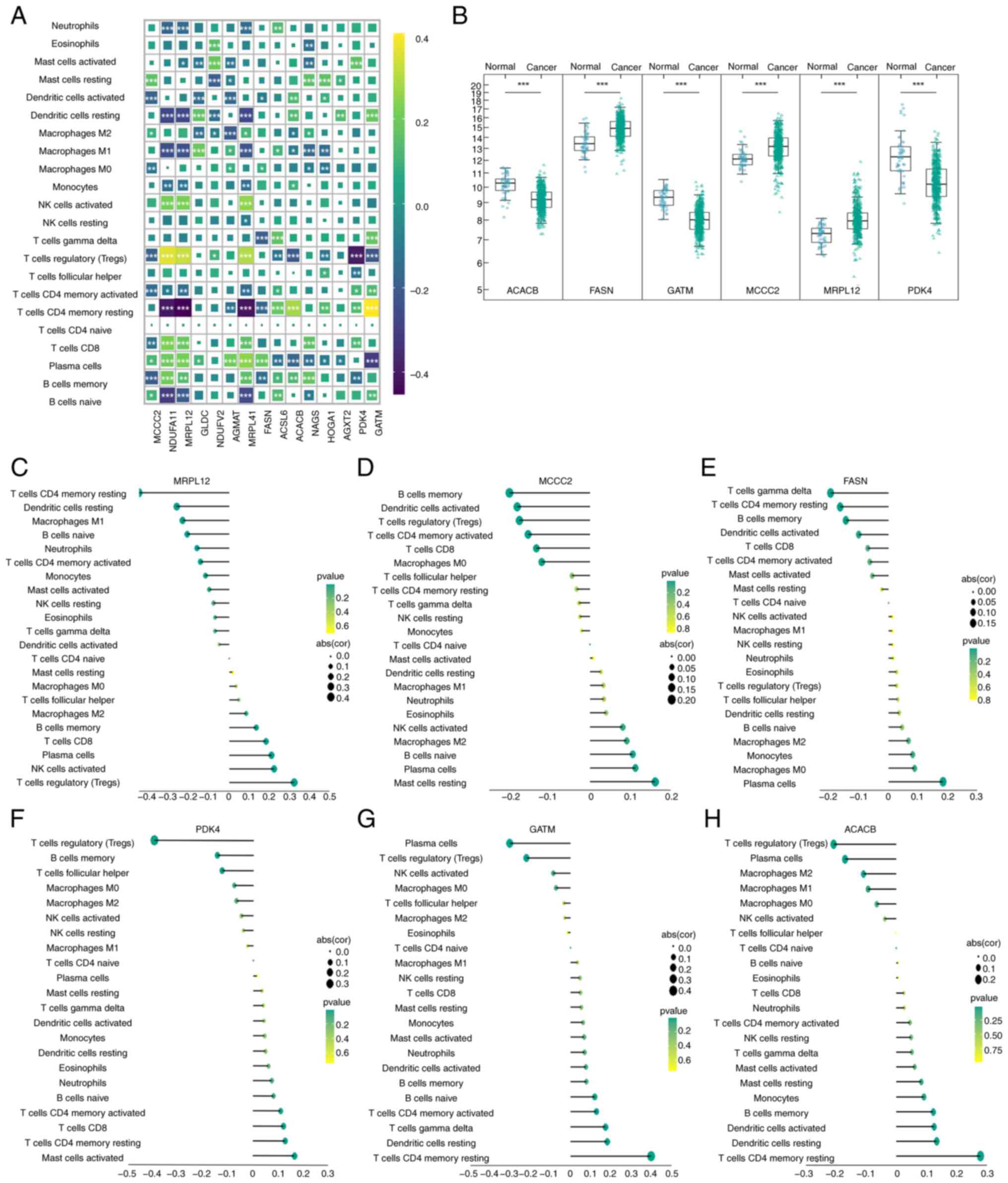
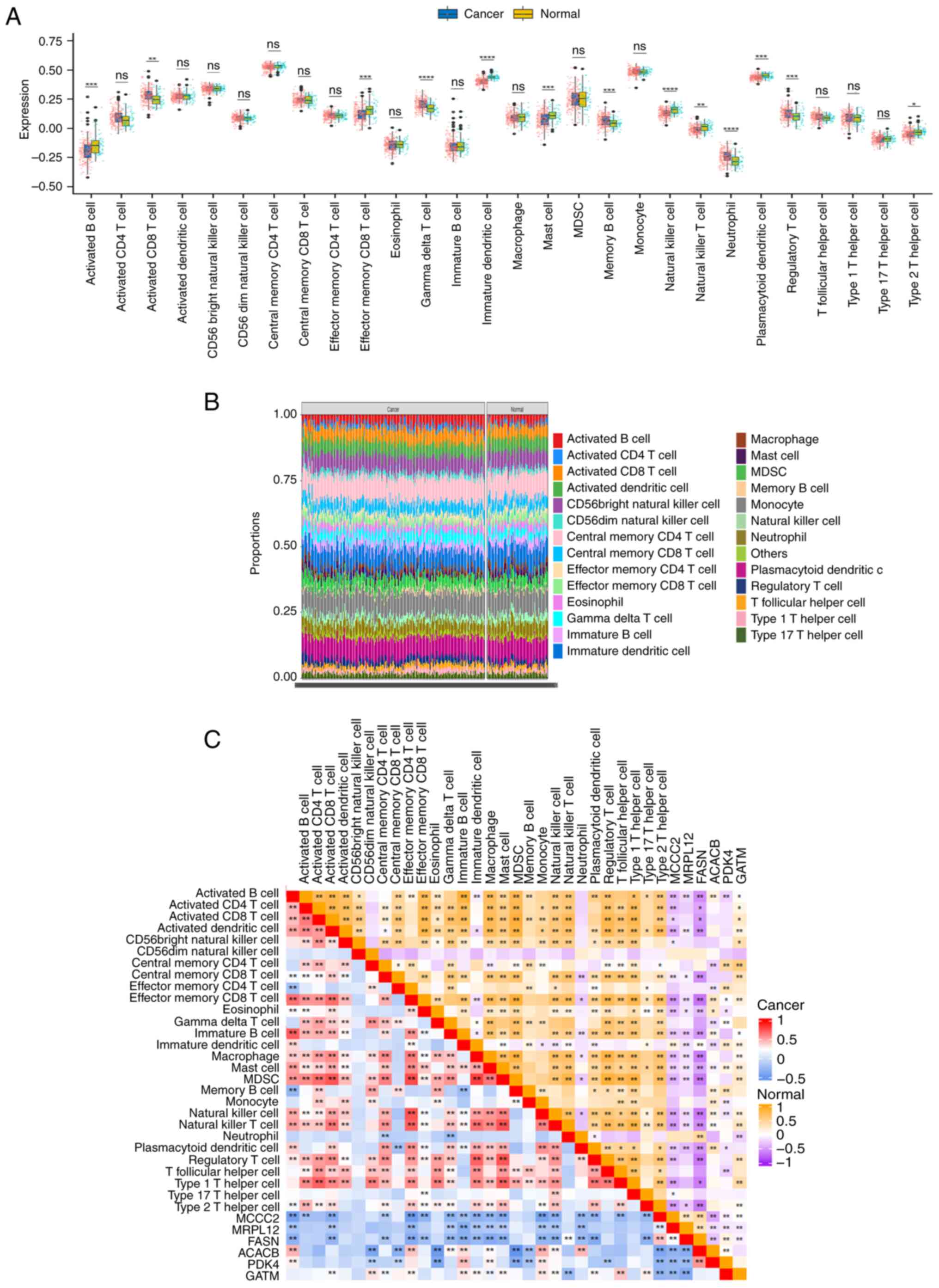
Figure 4

Relationship between core
differential mitochondrial mRNA and tumor immune infiltration in
PCa and normal prostate tissue. (A) TCGA-PRAD dataset was used to
calculate the immune score of the transcripts per million
expression matrix of PCa tissue (502 cases), which is shown as a
heatmap. The genes on the x-axis are the core genes selected from
TCGA-PRAD. The color of the heatmap represents the correlation
coefficient. The larger the box is, the more statistically
significant the correlation. (B) The box plot shows the 6 genes
most closely related to immunity, with P-values determined by
paired t-test. The R package ggplot2 was used to examine the
correlation between hub genes and immune cells, with the results
presented as lollipop plots. The relationship between (C) MRPL12,
(D) MCCC2, (E) FASN, (F) PDK4, (G) GTAM and (H) ACACB with immune
cell infiltration. The size of the points represents the absolute
value of the correlation coefficient and the larger the points, the
more correlated they are. The greener the point, the smaller the
P-value. *P<0.05, **P<0.01, ***P<0.001. PCa, prostate
cancer; TCGA, The Cancer Genome Atlas; PRAD, prostate
adenocarcinoma; ACACB, acetyl-CoA carboxylase β; PDK4, pyruvate
dehydrogenase kinase 4; GATM, glycine amidinotransferase; MCCC2,
methylcrotonyl-CoA carboxylase subunit 2; MRPL12, mitochondrial
ribosomal protein L12; FASN, fatty acid synthase.

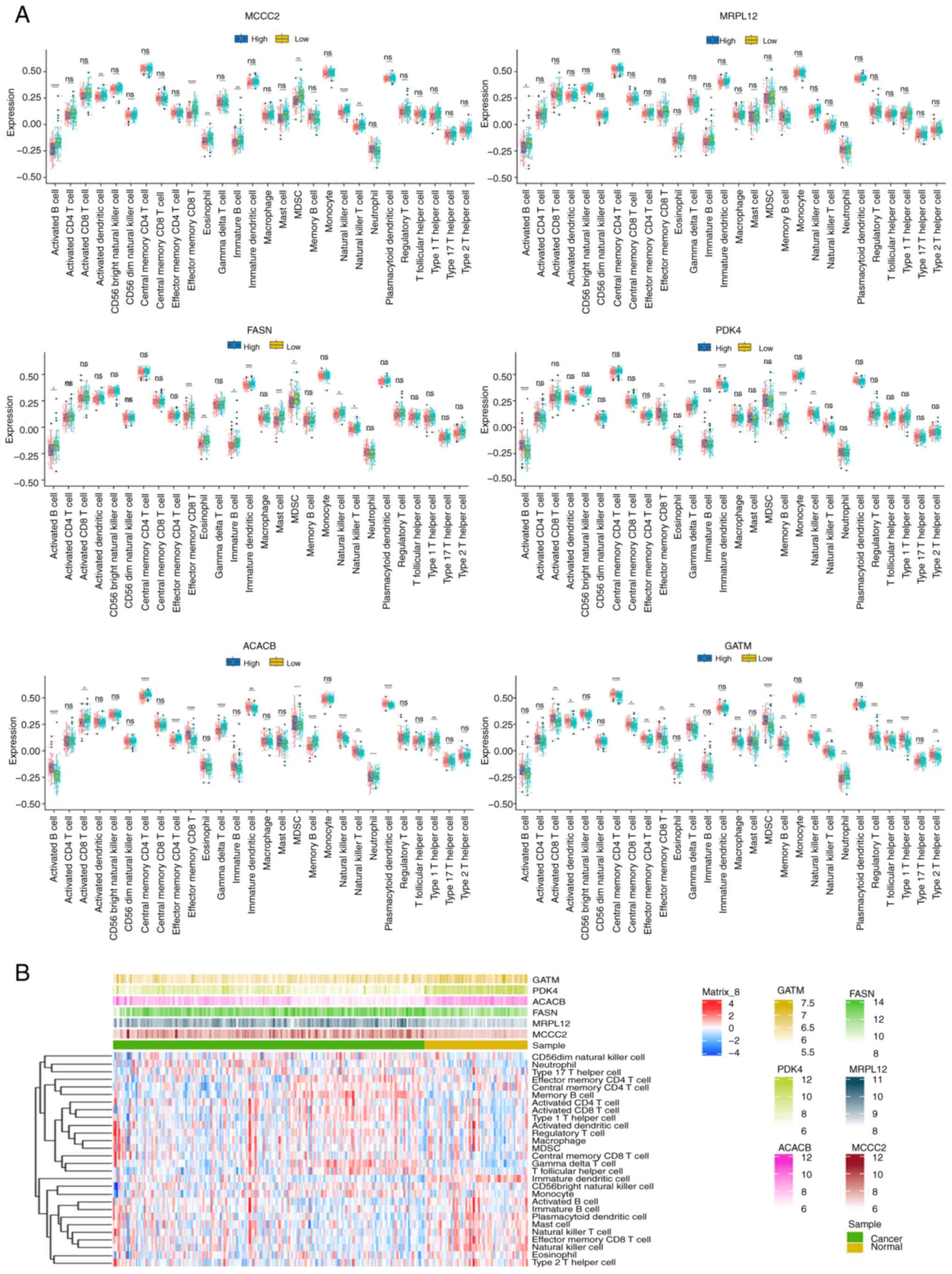
Figure 5

Validation of the relationship
between MCCC2, MRPL12, FASN, PDK4, ACACB and GATM genes and tumor
immunity in prostate cancer and normal prostate tissue. (A)
Validation of the relationship between the MCCC2, MRPL12, FASN,
PDK4, ACACB and GATM genes and tumor immunity in PCa and normal
prostate tissue. The data is sourced from the validation dataset
GSE70770. (B) The proportion of 26 immune cells in PCa and adjacent
tissues in the validation dataset GSE70770. (C) The correlation
between 6 core genes and immune cells in the validation dataset
GSE70770. The darker the color, the stronger the correlation. The
upper right corner shows the correlation between these genes and
immune cells, while the lower left corner shows the correlation
between these genes and immune cells in PCa. *P<0.05,
**P<0.01, ***P<0.001; ****P<0.0001. ACACB, acetyl-CoA
carboxylase β; PDK4, pyruvate dehydrogenase kinase 4; GATM, glycine
amidinotransferase; MCCC2, methylcrotonyl-CoA carboxylase subunit
2; MRPL12, mitochondrial ribosomal protein L12; FASN, fatty acid
synthase; PCa, prostate cancer.

Figure 6

Validation of the relationship
between the MCCC2, MRPL12, FASN, PDK4, ACACB and GATMM genes and
immune cells in prostate cancer and normal prostate tissue. (A) The
relationship between the core MCCC2, MRPL12, FASN, PDK4, ACACB and
GATMM genes and immune cells, using the validation dataset
GSE70770. (B) The differences between cancer and adjacent immune
cells, as well as the relationship between the expression levels of
the 6 core genes and immune cells, using the validation dataset
GSE70770. *P<0.05, **P<0.01, ***P<0.001; ****P<0.0001.
ns, no significance; ACACB, acetyl-CoA carboxylase β; PDK4,
pyruvate dehydrogenase kinase 4; GATM, glycine amidinotransferase;
MCCC2, methylcrotonyl-CoA carboxylase subunit 2; MRPL12,
mitochondrial ribosomal protein L12; FASN, fatty acid synthase.

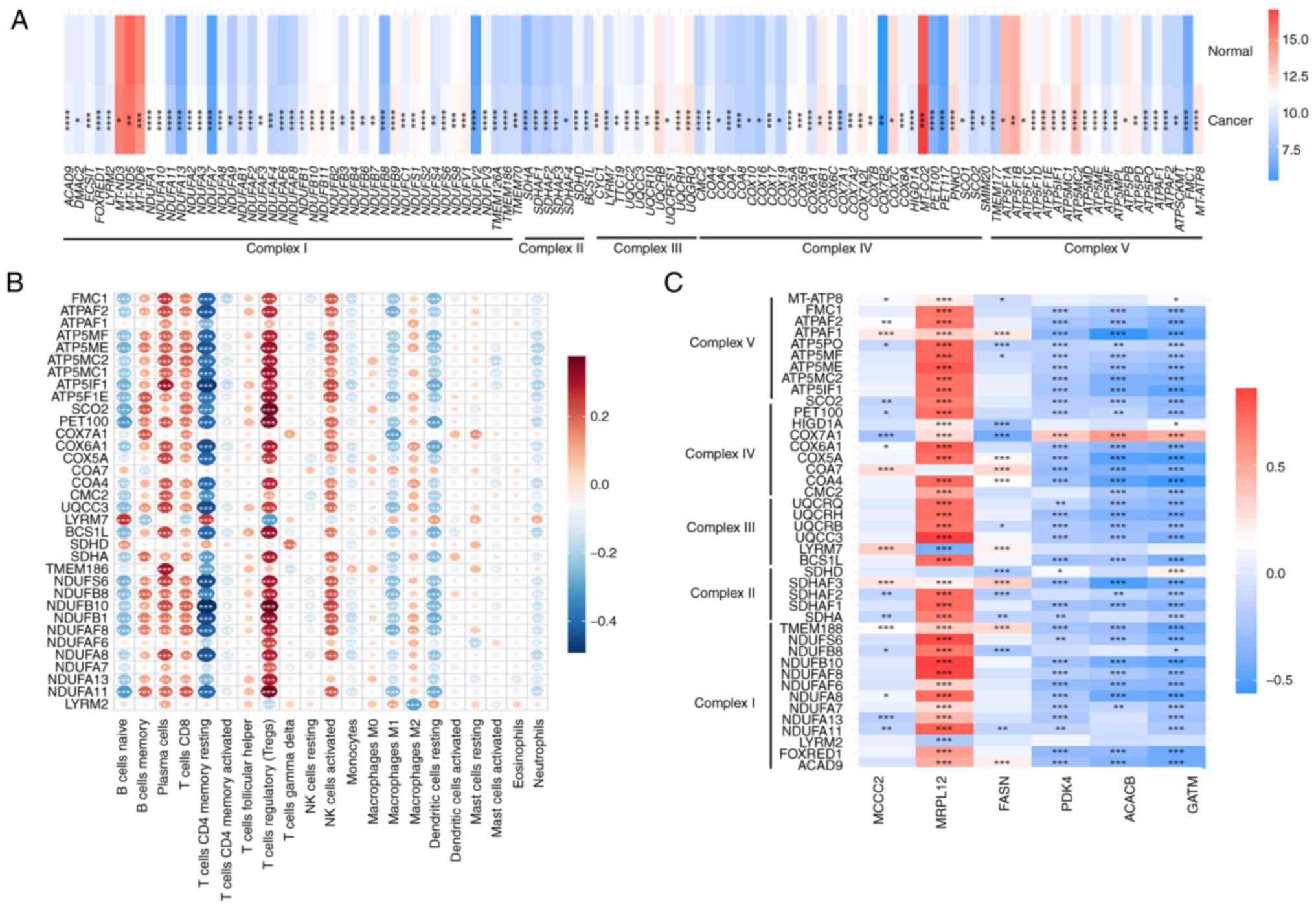
Figure 7

Relationship between mitochondrial
respiration and prostate cancer. (A) Relationship between
mitochondrial respiration and prostate cancer, as well as the
relationship with 6 core genes. The dataset used is TCGA-PRAD. The
genes of the five stages of mitochondrial respiration were provided
by the MitoCarta 3.0 database, and statistically significant genes
were screened out; (B) Using the TCGA-PRAD dataset, genes with
|statistical|>6 from (A) were selected and the correlation
between these genes and CIBERSORT immune infiltrating cells was
calculated. (C) Using the TCGA-PRAD dataset, the correlation
between the 6 core genes and mitochondrial respiratory chain genes
(|statistical|>4) was calculated. *P<0.05, **P<0.01,
***P<0.001; ****P<0.0001. TCGA, The Cancer Genome Atlas;
PRAD, prostate adenocarcinoma; ACACB, acetyl-CoA carboxylase β;
PDK4, pyruvate dehydrogenase kinase 4; GATM, glycine
amidinotransferase; MCCC2, methylcrotonyl-CoA carboxylase subunit
2; MRPL12, mitochondrial ribosomal protein L12; FASN, fatty acid
synthase;

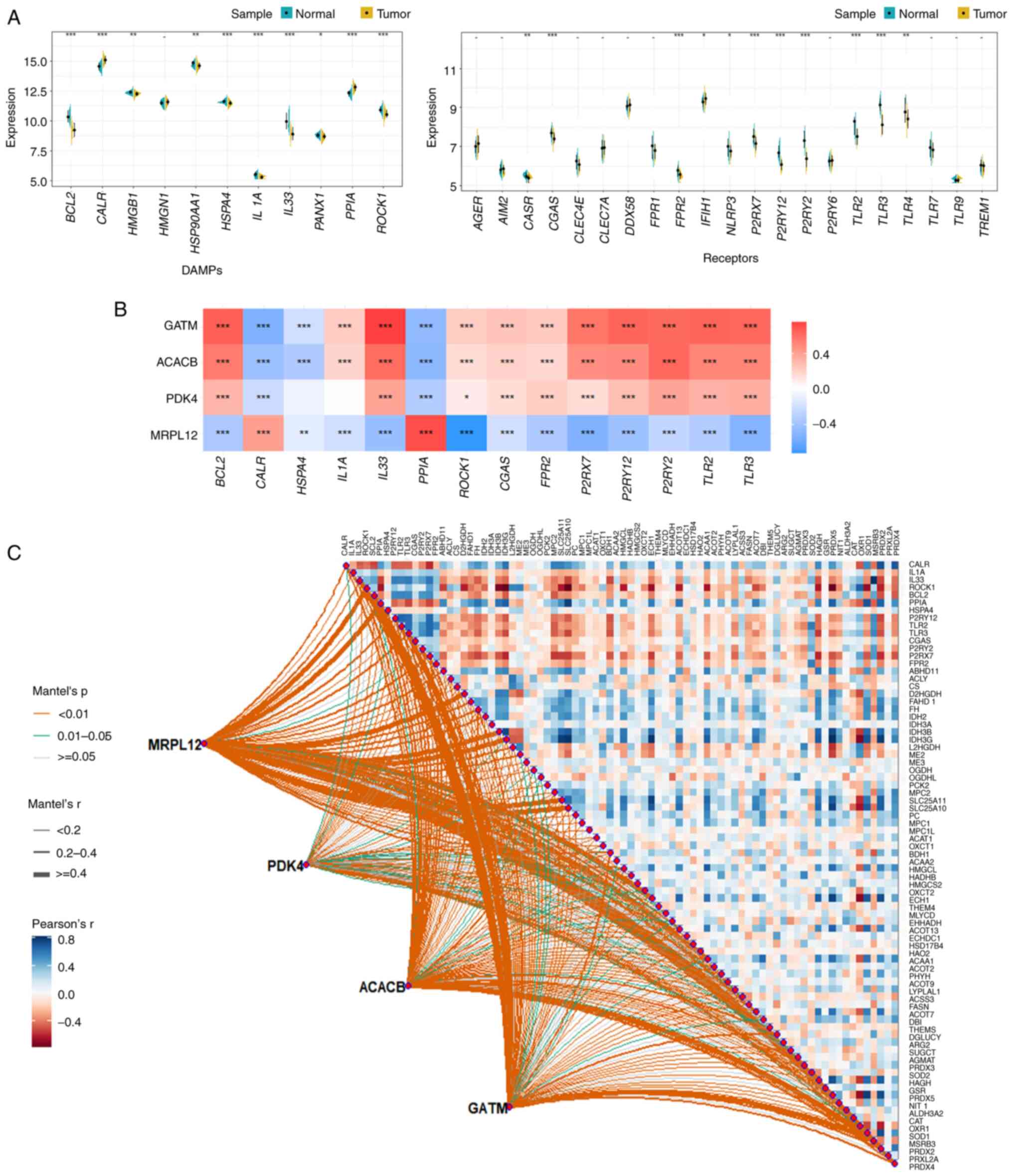
Figure 8

Potential correlation between 4 hub
genes (MRPL12, PDK4, ACACB and GATM) and immune receptors and
mitochondrial metabolism. (A) Using the TCGA-PRAD dataset, the
differences between DAMP-related genes (11) and immune receptor-related genes
(21) in PCa and adjacent tissues
were detected; the genes with significant differences
(**P<0.001) were selected for further study. (B) The correlation
between the 4 hub genes and the significant differences in
DAMP-related genes and immune receptors selected in (a). (C)
Further investigation of the potential correlation between the 4
hub genes and DAMPs. *P<0.05, **P<0.01, ***P<0.001. PRAD,
prostate adenocarcinoma; ACACB, acetyl-CoA carboxylase β; PDK4,
pyruvate dehydrogenase kinase 4; GATM, glycine amidinotransferase;
MCCC2, methylcrotonyl-CoA carboxylase subunit 2; MRPL12,
mitochondrial ribosomal protein L12; FASN, fatty acid synthase;
TCGA, The Cancer Genome Atlas.

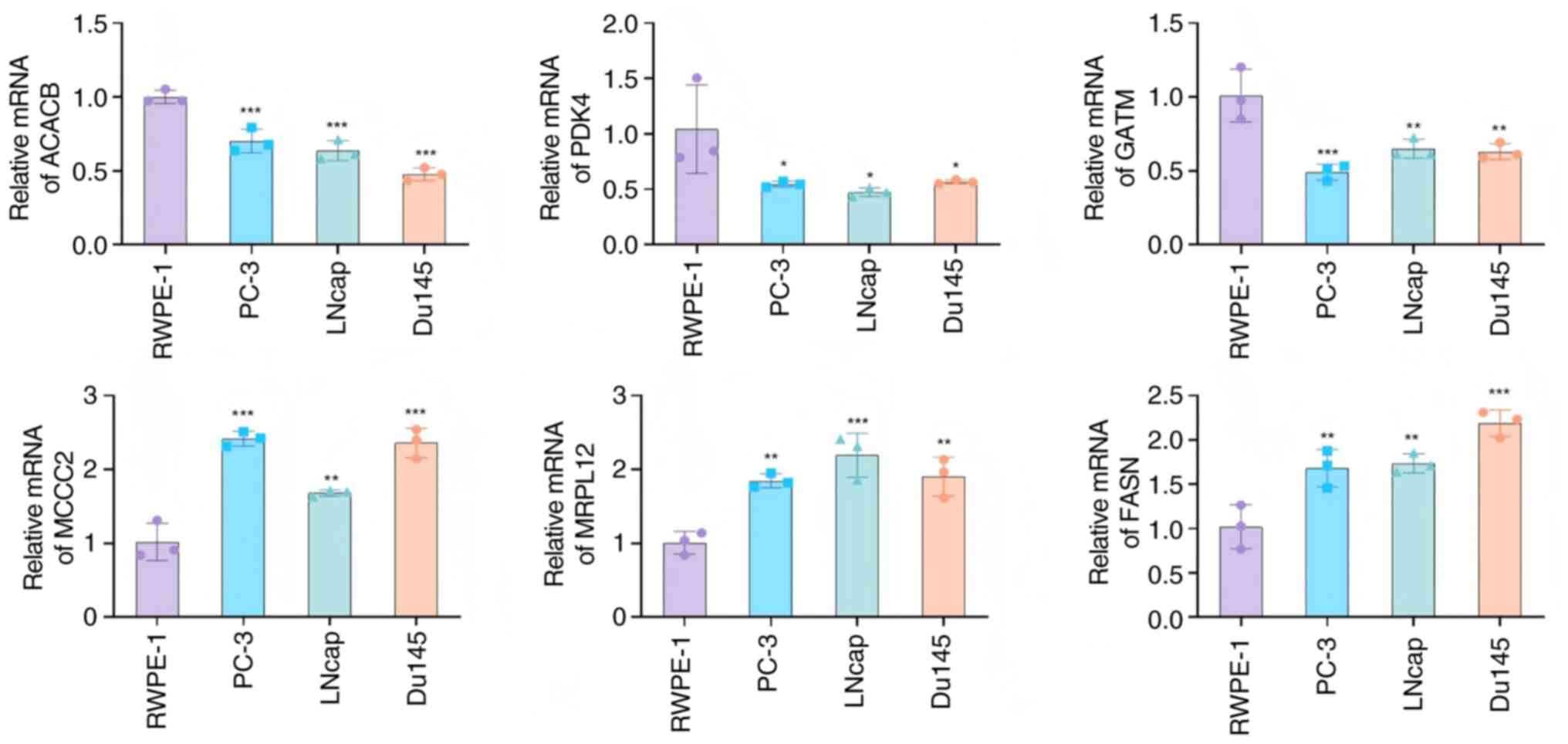
Figure 9

RT-qPCR validation of the core genes.
Relative RNA levels of ACACB, PDK4, GATM, MCCC2, MRPL12 and FASN
were determined by the RT-qPCR for the RWPE-1, PC-3, LNcap and
Du145 cell lines. *P<0.05, **P<0.01, ***P<0.001; n=3.
RT-qPCR, reverse transcription-quantitative PCR; ACACB, acetyl-CoA
carboxylase β; PDK4, pyruvate dehydrogenase kinase 4; GATM, glycine
amidinotransferase; MCCC2, methylcrotonyl-CoA carboxylase subunit
2; MRPL12, mitochondrial ribosomal protein L12; FASN, fatty acid
synthase.
View References

1 

Bray F, Laversanne M, Sung H, Ferlay J, Siegel RL, Soerjomataram I and Jemal A: Global cancer statistics 2022: GLOBOCAN estimates of incidence and mortality worldwide for 36 cancers in 185 countries. CA Cancer J Clin. 74:229–263. 2024.PubMed/NCBI

2 

Moris L, Cumberbatch MG, Van den Broeck T, Gandaglia G, Fossati N, Kelly B, Pal R, Briers E, Cornford P, De Santis M, et al: Benefits and risks of primary treatments for High-risk localized and locally advanced prostate cancer: An international multidisciplinary systematic review. Eur Urol. 77:614–627. 2020. View Article : Google Scholar : PubMed/NCBI

3 

Rebello RJ, Oing C, Knudsen KE, Loeb S, Johnson DC, Reiter RE, Gillessen S, Van der Kwast T and Bristow RG: Prostate cancer. Nat Rev Dis Primers. 7:92021. View Article : Google Scholar : PubMed/NCBI

4 

Schaeffer E, Srinivas S, Antonarakis ES, Armstrong AJ, Bekelman JE, Cheng H, D'Amico AV, Davis BJ, Desai N, Dorff T, et al: NCCN guidelines insights: Prostate cancer, version 1.2021. J Natl Compr Canc Netw. 19:134–143. 2021. View Article : Google Scholar : PubMed/NCBI

5 

Linder S, van der Poel HG, Bergman AM, Zwart W and Prekovic S: Enzalutamide therapy for advanced prostate cancer: Efficacy, resistance and beyond. Endocr Relat Cancer. 26:R31–R52. 2018. View Article : Google Scholar : PubMed/NCBI

6 

Parida S, Pal I, Parekh A, Thakur B, Bharti R, Das S and Mandal M: GW627368X inhibits proliferation and induces apoptosis in cervical cancer by interfering with EP4/EGFR interactive signaling. Cell Death Dis. 7:e21542016. View Article : Google Scholar : PubMed/NCBI

7 

Sathya S, Sudhagar S, Sarathkumar B and Lakshmi BS: EGFR inhibition by pentacyclic triterpenes exhibit cell cycle and growth arrest in breast cancer cells. Life Sci. 95:53–62. 2014. View Article : Google Scholar : PubMed/NCBI

8 

Kang H, Kim B, Park J, Youn H and Youn B: The Warburg effect on radioresistance: Survival beyond growth. Biochim Biophys Acta Rev Cancer. 1878:1889882023. View Article : Google Scholar : PubMed/NCBI

9 

Chen H, Zhou L, Wu X, Li R, Wen J, Sha J and Wen X: The PI3K/AKT pathway in the pathogenesis of prostate cancer. Front Biosci (Landmark Ed). 21:1084–1091. 2016. View Article : Google Scholar : PubMed/NCBI

10 

Kumar R, Srinivasan S, Pahari P, Rohr J and Damodaran C: Activating stress-activated protein kinase-mediated cell death and inhibiting epidermal growth factor receptor signaling: A promising therapeutic strategy for prostate cancer. Mol Cancer Ther. 9:2488–2496. 2010. View Article : Google Scholar : PubMed/NCBI

11 

Wu W, Yang Q, Fung KM, Humphreys MR, Brame LS, Cao A, Fang YT, Shih PT, Kropp BP and Lin HK: Linking γ-aminobutyric acid A receptor to epidermal growth factor receptor pathways activation in human prostate cancer. Mol Cell Endocrinol. 383:69–79. 2014. View Article : Google Scholar : PubMed/NCBI

12 

Hirokawa N, Noda Y, Tanaka Y and Niwa S: Kinesin superfamily motor proteins and intracellular transport. Nat Rev Mol Cell Biol. 10:682–696. 2009. View Article : Google Scholar : PubMed/NCBI

13 

Drechsler H and McAinsh AD: Kinesin-12 motors cooperate to suppress microtubule catastrophes and drive the formation of parallel microtubule bundles. Proc Natl Acad Sci USA. 113:E1635–E1644. 2016. View Article : Google Scholar : PubMed/NCBI

14 

Zhao H, Bo Q, Wu Z, Liu Q, Li Y, Zhang N, Guo H and Shi B: KIF15 promotes bladder cancer proliferation via the MEK-ERK signaling pathway. Cancer Manag Res. 11:1857–1868. 2019. View Article : Google Scholar : PubMed/NCBI

15 

Livak KJ and Schmittgen TD: Analysis of relative gene expression data using real-time quantitative PCR and the 2(−Delta Delta C(T)) method. Methods. 25:402–408. 2001. View Article : Google Scholar : PubMed/NCBI

16 

Mortensen MM, Høyer S, Lynnerup AS, Ørntoft TF, Sørensen KD, Borre M and Dyrskjøt L: Expression profiling of prostate cancer tissue delineates genes associated with recurrence after prostatectomy. Sci Rep. 5:160182015. View Article : Google Scholar : PubMed/NCBI

17 

Arredouani MS, Lu B, Bhasin M, Eljanne M, Yue W, Mosquera JM, Bubley GJ, Li V, Rubin MA, Libermann TA and Sanda MG: Identification of the transcription factor single-minded homologue 2 as a potential biomarker and immunotherapy target in prostate cancer. Clin Cancer Res. 15:5794–5802. 2009. View Article : Google Scholar : PubMed/NCBI

18 

Ross-Adams H, Lamb AD, Dunning MJ, Halim S, Lindberg J, Massie CM, Egevad LA, Russell R, Ramos-Montoya A, Vowler SL, et al: Integration of copy number and transcriptomics provides risk stratification in prostate cancer: A discovery and validation cohort study. EBioMedicine. 2:1133–1144. 2015. View Article : Google Scholar : PubMed/NCBI

19 

Hocaoglu H and Sieber M: Mitochondrial respiratory quiescence: A new model for examining the role of mitochondrial metabolism in development. Semin Cell Dev Biol. 138:94–103. 2023. View Article : Google Scholar : PubMed/NCBI

20 

Boso D, Piga I, Trento C, Minuzzo S, Angi E, Iommarini L, Lazzarini E, Caporali L, Fiorini C, D'Angelo L, et al: Pathogenic mitochondrial DNA variants are associated with response to anti-VEGF therapy in ovarian cancer PDX models. J Exp Clin Cancer Res. 43:3252024. View Article : Google Scholar : PubMed/NCBI

21 

Kopinski PK, Singh LN, Zhang S, Lott MT and Wallace DC: Mitochondrial DNA variation and cancer. Nat Rev Cancer. 21:431–445. 2021. View Article : Google Scholar : PubMed/NCBI

22 

Kim M, Gorelick AN, Vàzquez-García I, Williams MJ, Salehi S, Shi H, Weiner AC, Ceglia N, Funnell T, Park T, et al: Single-cell mtDNA dynamics in tumors is driven by coregulation of nuclear and mitochondrial genomes. Nat Genet. 56:889–899. 2024. View Article : Google Scholar : PubMed/NCBI

23 

Zichri SB, Kolusheva S, Shames AI, Schneiderman EA, Poggio JL, Stein DE, Doubijensky E, Levy D, Orynbayeva Z and Jelinek R: Mitochondria membrane transformations in colon and prostate cancer and their biological implications. Biochim Biophys Acta Biomembr. 1863:1834712021. View Article : Google Scholar : PubMed/NCBI

24 

Papachristodoulou A, Rodriguez-Calero A, Panja S, Margolskee E, Virk RK, Milner TA, Martina LP, Kim JY, Di Bernardo M, Williams AB, et al: NKX3.1 Localization to mitochondria suppresses prostate cancer initiation. Cancer Discov. 11:2316–2333. 2021. View Article : Google Scholar : PubMed/NCBI

25 

Mamouni K, Kallifatidis G and Lokeshwar BL: Targeting mitochondrial metabolism in prostate cancer with triterpenoids. Int J Mol Sci. 22:24662021. View Article : Google Scholar : PubMed/NCBI

26 

Chen CL, Lin CY and Kung HJ: Targeting mitochondrial OXPHOS and their regulatory signals in prostate cancers. Int J Mol Sci. 22:134352021. View Article : Google Scholar : PubMed/NCBI

27 

Han C, Wang Z, Xu Y, Chen S, Han Y, Li L, Wang M and Jin X: Roles of reactive oxygen species in biological behaviors of prostate cancer. Biomed Res Int. 2020:12696242020. View Article : Google Scholar : PubMed/NCBI

28 

Wang H, Li N, Liu Q, Guo J, Pan Q, Cheng B, Xu J, Dong B, Yang G, Yang B, et al: Antiandrogen treatment induces stromal cell reprogramming to promote castration resistance in prostate cancer. Cancer Cell. 41:1345–1362.e9. 2023. View Article : Google Scholar : PubMed/NCBI

29 

Guerra F, Guaragnella N, Arbini AA, Bucci C, Giannattasio S and Moro L: Mitochondrial dysfunction: A novel potential driver of Epithelial-to-mesenchymal transition in cancer. Front Oncol. 7:2952017. View Article : Google Scholar : PubMed/NCBI

30 

Civenni G, Bosotti R, Timpanaro A, Vàzquez R, Merulla J, Pandit S, Rossi S, Albino D, Allegrini S, Mitra A, et al: Epigenetic control of mitochondrial fission enables Self-renewal of stem-like tumor cells in human prostate cancer. Cell Metab. 30:303–318.e6. 2019. View Article : Google Scholar : PubMed/NCBI

31 

Jeong SY and Seol DW: The role of mitochondria in apoptosis. BMB Rep. 41:11–22. 2008. View Article : Google Scholar : PubMed/NCBI

32 

Castilla C, Congregado B, Chinchón D, Torrubia FJ, Japón MA and Sáez C: Bcl-xL is overexpressed in hormone-resistant prostate cancer and promotes survival of LNCaP cells via interaction with proapoptotic Bak. Endocrinology. 147:4960–4967. 2006. View Article : Google Scholar : PubMed/NCBI

33 

Krajewska M, Krajewski S, Epstein JI, Shabaik A, Sauvageot J, Song K, Kitada S and Reed JC: Immunohistochemical analysis of bcl-2, bax, bcl-X, and mcl-1 expression in prostate cancers. Am J Pathol. 148:1567–1576. 1996.PubMed/NCBI

34 

Massie CE, Lynch A, Ramos-Montoya A, Boren J, Stark R, Fazli L, Warren A, Scott H, Madhu B, Sharma N, et al: The androgen receptor fuels prostate cancer by regulating central metabolism and biosynthesis. EMBO J. 30:2719–2733. 2011. View Article : Google Scholar : PubMed/NCBI

35 

Audet-Walsh É, Dufour CR, Yee T, Zouanat FZ, Yan M, Kalloghlian G, Vernier M, Caron M, Bourque G, Scarlata E, et al: Nuclear mTOR acts as a transcriptional integrator of the androgen signaling pathway in prostate cancer. Genes Dev. 31:1228–1242. 2017. View Article : Google Scholar : PubMed/NCBI

36 

Zhong C, Long Z, Yang T, Wang S, Zhong W, Hu F, Teoh JY, Lu J and Mao X: M6A-modified circRBM33 promotes prostate cancer progression via PDHA1-mediated mitochondrial respiration regulation and presents a potential target for ARSI therapy. Int J Biol Sci. 19:1543–1563. 2023. View Article : Google Scholar : PubMed/NCBI

37 

Owari T, Tanaka N, Nakai Y, Miyake M, Anai S, Kishi S, Mori S, Fujiwara-Tani R, Hojo Y, Mori T, et al: 5-Aminolevulinic acid overcomes hypoxia-induced radiation resistance by enhancing mitochondrial reactive oxygen species production in prostate cancer cells. Br J Cancer. 127:350–363. 2022. View Article : Google Scholar : PubMed/NCBI

38 

Li X, Yao L, Wang T, Gu X, Wu Y and Jiang T: Identification of the mitochondrial protein POLRMT as a potential therapeutic target of prostate cancer. Cell Death Dis. 14:6652023. View Article : Google Scholar : PubMed/NCBI

39 

Ji X, Yang Z, Li C, Zhu S, Zhang Y, Xue F, Sun S, Fu T, Ding C, Liu Y, et al: Mitochondrial ribosomal protein L12 potentiates hepatocellular carcinoma by regulating mitochondrial biogenesis and metabolic reprogramming. Metabolism. 152:1557612023. View Article : Google Scholar : PubMed/NCBI

40 

Fan Y, Wang J, Wang Y, Li Y, Wang S, Weng Y, Yang Q, Chen C, Lin L, Qiu Y, et al: Development and clinical validation of a novel 5 gene signature based on fatty acid Metabolism-related genes in oral squamous cell carcinoma. Oxid Med Cell Longev. 2022:32853932022. View Article : Google Scholar : PubMed/NCBI

41 

Crowell PD, Giafaglione JM, Jones AE, Nunley NM, Hashimoto T, Delcourt AML, Petcherski A, Agrawal R, Bernard MJ, Diaz JA, et al: MYC is a regulator of androgen receptor inhibition-induced metabolic requirements in prostate cancer. Cell Rep. 42:1132212023. View Article : Google Scholar : PubMed/NCBI

42 

Li L, Chao Z, Peng H, Hu Z, Wang Z and Zeng X: Tumor ABCC4-mediated release of PGE2 induces CD8+ T cell dysfunction and impairs PD-1 blockade in prostate cancer. Int J Biol Sci. 20:4424–4437. 2024. View Article : Google Scholar : PubMed/NCBI

43 

Löf C, Sultana N, Goel N, Heron S, Wahlström G, House A, Holopainen M, Käkelä R and Schleutker J: ANO7 expression in the prostate modulates mitochondrial function and lipid metabolism. Cell Commun Signal. 23:712025. View Article : Google Scholar : PubMed/NCBI

Related Articles

  • Abstract
  • View
  • Download
  • Twitter
Copy and paste a formatted citation
Spandidos Publications style
Liu S, Huang L, Lin L, Shan H and Wan Y: Identification and validation of critical mitochondrial hub genes for prostate cancer. Oncol Lett 31: 66, 2026.
APA
Liu, S., Huang, L., Lin, L., Shan, H., & Wan, Y. (2026). Identification and validation of critical mitochondrial hub genes for prostate cancer. Oncology Letters, 31, 66. https://doi.org/10.3892/ol.2025.15419
MLA
Liu, S., Huang, L., Lin, L., Shan, H., Wan, Y."Identification and validation of critical mitochondrial hub genes for prostate cancer". Oncology Letters 31.2 (2026): 66.
Chicago
Liu, S., Huang, L., Lin, L., Shan, H., Wan, Y."Identification and validation of critical mitochondrial hub genes for prostate cancer". Oncology Letters 31, no. 2 (2026): 66. https://doi.org/10.3892/ol.2025.15419
Copy and paste a formatted citation
x
Spandidos Publications style
Liu S, Huang L, Lin L, Shan H and Wan Y: Identification and validation of critical mitochondrial hub genes for prostate cancer. Oncol Lett 31: 66, 2026.
APA
Liu, S., Huang, L., Lin, L., Shan, H., & Wan, Y. (2026). Identification and validation of critical mitochondrial hub genes for prostate cancer. Oncology Letters, 31, 66. https://doi.org/10.3892/ol.2025.15419
MLA
Liu, S., Huang, L., Lin, L., Shan, H., Wan, Y."Identification and validation of critical mitochondrial hub genes for prostate cancer". Oncology Letters 31.2 (2026): 66.
Chicago
Liu, S., Huang, L., Lin, L., Shan, H., Wan, Y."Identification and validation of critical mitochondrial hub genes for prostate cancer". Oncology Letters 31, no. 2 (2026): 66. https://doi.org/10.3892/ol.2025.15419
Follow us
  • Twitter
  • LinkedIn
  • Facebook
About
  • Spandidos Publications
  • Careers
  • Cookie Policy
  • Privacy Policy
How can we help?
  • Help
  • Live Chat
  • Contact
  • Email to our Support Team