Spandidos Publications Logo
  • About
    • About Spandidos
    • Aims and Scopes
    • Abstracting and Indexing
    • Editorial Policies
    • Reprints and Permissions
    • Job Opportunities
    • Terms and Conditions
    • Contact
  • Journals
    • All Journals
    • Oncology Letters
      • Oncology Letters
      • Information for Authors
      • Editorial Policies
      • Editorial Board
      • Aims and Scope
      • Abstracting and Indexing
      • Bibliographic Information
      • Archive
    • International Journal of Oncology
      • International Journal of Oncology
      • Information for Authors
      • Editorial Policies
      • Editorial Board
      • Aims and Scope
      • Abstracting and Indexing
      • Bibliographic Information
      • Archive
    • Molecular and Clinical Oncology
      • Molecular and Clinical Oncology
      • Information for Authors
      • Editorial Policies
      • Editorial Board
      • Aims and Scope
      • Abstracting and Indexing
      • Bibliographic Information
      • Archive
    • Experimental and Therapeutic Medicine
      • Experimental and Therapeutic Medicine
      • Information for Authors
      • Editorial Policies
      • Editorial Board
      • Aims and Scope
      • Abstracting and Indexing
      • Bibliographic Information
      • Archive
    • International Journal of Molecular Medicine
      • International Journal of Molecular Medicine
      • Information for Authors
      • Editorial Policies
      • Editorial Board
      • Aims and Scope
      • Abstracting and Indexing
      • Bibliographic Information
      • Archive
    • Biomedical Reports
      • Biomedical Reports
      • Information for Authors
      • Editorial Policies
      • Editorial Board
      • Aims and Scope
      • Abstracting and Indexing
      • Bibliographic Information
      • Archive
    • Oncology Reports
      • Oncology Reports
      • Information for Authors
      • Editorial Policies
      • Editorial Board
      • Aims and Scope
      • Abstracting and Indexing
      • Bibliographic Information
      • Archive
    • Molecular Medicine Reports
      • Molecular Medicine Reports
      • Information for Authors
      • Editorial Policies
      • Editorial Board
      • Aims and Scope
      • Abstracting and Indexing
      • Bibliographic Information
      • Archive
    • World Academy of Sciences Journal
      • World Academy of Sciences Journal
      • Information for Authors
      • Editorial Policies
      • Editorial Board
      • Aims and Scope
      • Abstracting and Indexing
      • Bibliographic Information
      • Archive
    • International Journal of Functional Nutrition
      • International Journal of Functional Nutrition
      • Information for Authors
      • Editorial Policies
      • Editorial Board
      • Aims and Scope
      • Abstracting and Indexing
      • Bibliographic Information
      • Archive
    • International Journal of Epigenetics
      • International Journal of Epigenetics
      • Information for Authors
      • Editorial Policies
      • Editorial Board
      • Aims and Scope
      • Abstracting and Indexing
      • Bibliographic Information
      • Archive
    • Medicine International
      • Medicine International
      • Information for Authors
      • Editorial Policies
      • Editorial Board
      • Aims and Scope
      • Abstracting and Indexing
      • Bibliographic Information
      • Archive
  • Articles
  • Information
    • Information for Authors
    • Information for Reviewers
    • Information for Librarians
    • Information for Advertisers
    • Conferences
  • Language Editing
Spandidos Publications Logo
  • About
    • About Spandidos
    • Aims and Scopes
    • Abstracting and Indexing
    • Editorial Policies
    • Reprints and Permissions
    • Job Opportunities
    • Terms and Conditions
    • Contact
  • Journals
    • All Journals
    • Biomedical Reports
      • Information for Authors
      • Editorial Policies
      • Editorial Board
      • Aims and Scope
      • Abstracting and Indexing
      • Bibliographic Information
      • Archive
    • Experimental and Therapeutic Medicine
      • Information for Authors
      • Editorial Policies
      • Editorial Board
      • Aims and Scope
      • Abstracting and Indexing
      • Bibliographic Information
      • Archive
    • International Journal of Epigenetics
      • Information for Authors
      • Editorial Policies
      • Editorial Board
      • Aims and Scope
      • Abstracting and Indexing
      • Bibliographic Information
      • Archive
    • International Journal of Functional Nutrition
      • Information for Authors
      • Editorial Policies
      • Editorial Board
      • Aims and Scope
      • Abstracting and Indexing
      • Bibliographic Information
      • Archive
    • International Journal of Molecular Medicine
      • Information for Authors
      • Editorial Policies
      • Editorial Board
      • Aims and Scope
      • Abstracting and Indexing
      • Bibliographic Information
      • Archive
    • International Journal of Oncology
      • Information for Authors
      • Editorial Policies
      • Editorial Board
      • Aims and Scope
      • Abstracting and Indexing
      • Bibliographic Information
      • Archive
    • Medicine International
      • Information for Authors
      • Editorial Policies
      • Editorial Board
      • Aims and Scope
      • Abstracting and Indexing
      • Bibliographic Information
      • Archive
    • Molecular and Clinical Oncology
      • Information for Authors
      • Editorial Policies
      • Editorial Board
      • Aims and Scope
      • Abstracting and Indexing
      • Bibliographic Information
      • Archive
    • Molecular Medicine Reports
      • Information for Authors
      • Editorial Policies
      • Editorial Board
      • Aims and Scope
      • Abstracting and Indexing
      • Bibliographic Information
      • Archive
    • Oncology Letters
      • Information for Authors
      • Editorial Policies
      • Editorial Board
      • Aims and Scope
      • Abstracting and Indexing
      • Bibliographic Information
      • Archive
    • Oncology Reports
      • Information for Authors
      • Editorial Policies
      • Editorial Board
      • Aims and Scope
      • Abstracting and Indexing
      • Bibliographic Information
      • Archive
    • World Academy of Sciences Journal
      • Information for Authors
      • Editorial Policies
      • Editorial Board
      • Aims and Scope
      • Abstracting and Indexing
      • Bibliographic Information
      • Archive
  • Articles
  • Information
    • For Authors
    • For Reviewers
    • For Librarians
    • For Advertisers
    • Conferences
  • Language Editing
Login Register Submit
  • This site uses cookies
  • You can change your cookie settings at any time by following the instructions in our Cookie Policy. To find out more, you may read our Privacy Policy.

    I agree
Search articles by DOI, keyword, author or affiliation
Search
Advanced Search
presentation
Oncology Letters
Join Editorial Board Propose a Special Issue
Print ISSN: 1792-1074 Online ISSN: 1792-1082
Journal Cover
February-2026 Volume 31 Issue 2

Full Size Image

Sign up for eToc alerts
Recommend to Library

Journals

International Journal of Molecular Medicine

International Journal of Molecular Medicine

International Journal of Molecular Medicine is an international journal devoted to molecular mechanisms of human disease.

International Journal of Oncology

International Journal of Oncology

International Journal of Oncology is an international journal devoted to oncology research and cancer treatment.

Molecular Medicine Reports

Molecular Medicine Reports

Covers molecular medicine topics such as pharmacology, pathology, genetics, neuroscience, infectious diseases, molecular cardiology, and molecular surgery.

Oncology Reports

Oncology Reports

Oncology Reports is an international journal devoted to fundamental and applied research in Oncology.

Experimental and Therapeutic Medicine

Experimental and Therapeutic Medicine

Experimental and Therapeutic Medicine is an international journal devoted to laboratory and clinical medicine.

Oncology Letters

Oncology Letters

Oncology Letters is an international journal devoted to Experimental and Clinical Oncology.

Biomedical Reports

Biomedical Reports

Explores a wide range of biological and medical fields, including pharmacology, genetics, microbiology, neuroscience, and molecular cardiology.

Molecular and Clinical Oncology

Molecular and Clinical Oncology

International journal addressing all aspects of oncology research, from tumorigenesis and oncogenes to chemotherapy and metastasis.

World Academy of Sciences Journal

World Academy of Sciences Journal

Multidisciplinary open-access journal spanning biochemistry, genetics, neuroscience, environmental health, and synthetic biology.

International Journal of Functional Nutrition

International Journal of Functional Nutrition

Open-access journal combining biochemistry, pharmacology, immunology, and genetics to advance health through functional nutrition.

International Journal of Epigenetics

International Journal of Epigenetics

Publishes open-access research on using epigenetics to advance understanding and treatment of human disease.

Medicine International

Medicine International

An International Open Access Journal Devoted to General Medicine.

Journal Cover
February-2026 Volume 31 Issue 2

Full Size Image

Sign up for eToc alerts
Recommend to Library

  • Article
  • Citations
    • Cite This Article
    • Download Citation
    • Create Citation Alert
    • Remove Citation Alert
    • Cited By
  • Similar Articles
    • Related Articles (in Spandidos Publications)
    • Similar Articles (Google Scholar)
    • Similar Articles (PubMed)
  • Download PDF
  • Download XML
  • View XML

  • Supplementary Files
    • Supplementary_Data1.pdf
    • Supplementary_Data2.pdf
Article Open Access

A prognostic model for human papillomavirus‑negative head and neck squamous cell carcinoma based on a novel ferroptosis‑related gene signature: Development, validation and elucidation of its relationship with the immune microenvironment

  • Authors:
    • Jiao Li
    • Nurhayu Ab Rahman
    • Suharni Mohamad
    • Guang Yang
  • View Affiliations / Copyright

    Affiliations: Department of Pathology, Heping Hospital Affiliated to Changzhi Medical College, Changzhi, Shanxi 046000, P.R. China, Oral Medicine and Oral Pathology Unit, School of Dental Sciences, Universiti Sains Malaysia Health Campus, 16150 Kota Bharu, Kelantan, Malaysia, Basic Science Unit, School of Dental Sciences, Universiti Sains Malaysia Health Campus, 16150 Kota Bharu, Kelantan, Malaysia, Department of General Surgery, Ruijin Hospital, Shanghai Jiao Tong University School of Medicine, Shanghai 200000, P.R. China
    Copyright: © Li et al. This is an open access article distributed under the terms of Creative Commons Attribution License.
  • Article Number: 72
    |
    Published online on: December 8, 2025
       https://doi.org/10.3892/ol.2025.15425
  • Expand metrics +
Metrics: Total Views: 0 (Spandidos Publications: | PMC Statistics: )
Metrics: Total PDF Downloads: 0 (Spandidos Publications: | PMC Statistics: )
Cited By (CrossRef): 0 citations Loading Articles...

This article is mentioned in:


Abstract

Head and neck squamous cell carcinoma (HNSCC) can be categorized as human papillomavirus (HPV)‑positive or ‑negative. The present study explored the potential prognostic value of ferroptosis‑related genes (FRGs) and their impact on the tumor immune microenvironment in HPV‑negative HNSCC compared with HPV‑positive HNSCC, based on data from The Cancer Genome Atlas online database. The bioinformatics analysis results were then verified through cell culture and histological analyses. The prognostic model was developed by evaluating the correlations between prognostic value and the expression of FRGs in HPV‑negative HNSCC. This was based on differential analysis of data from The Cancer Genome Atlas between the HPV‑negative and ‑positive patient subgroups. The relationships of the identified hub FRGs with immune cell infiltration were determined by CIBERSORT R scripts for the HPV‑negative subgroup. Tribbles pseudokinase 3 (TRIB3) expression in both HPV‑negative and ‑positive HNSCC cells was verified by reverse transcription‑quantitative polymerase chain reaction, western blotting and immunohistochemistry. The role of TRIB3 in mediating ferroptosis in both HPV‑positive and ‑negative cells was validated by transmission electron microscopy and intracellular Fe2+, reactive oxygen species (ROS), glutathione (GSH) and malondialdehyde (MDA) assessments. As a result, it was verified that the prognostic model for HPV‑negative patients had a good performance. TRIB3 expression was higher in HPV‑negative samples than in HPV‑positive samples. Additionally, following cell transfection, TRIB3 knockdown increased intracellular Fe2+, MDA and ROS levels, decreased GSH levels and diminished or eliminated mitochondrial ridges in HPV‑negative cells. By contrast, TRIB3 overexpression decreased intracellular Fe2+, MDA and ROS, while increasing GSH in HPV‑positive cells. In conclusion, the constructed model may indicate the prognosis of patients with HPV‑negative HNSCC. Moreover, TRIB3, via its involvement in ferroptosis, may serve as a potential therapeutic target for both HPV‑positive and HPV‑negative HNSCC. Thus, the present study has provided a starting point for further investigation into the therapeutic potential of targeting TRIB3.
View Figures

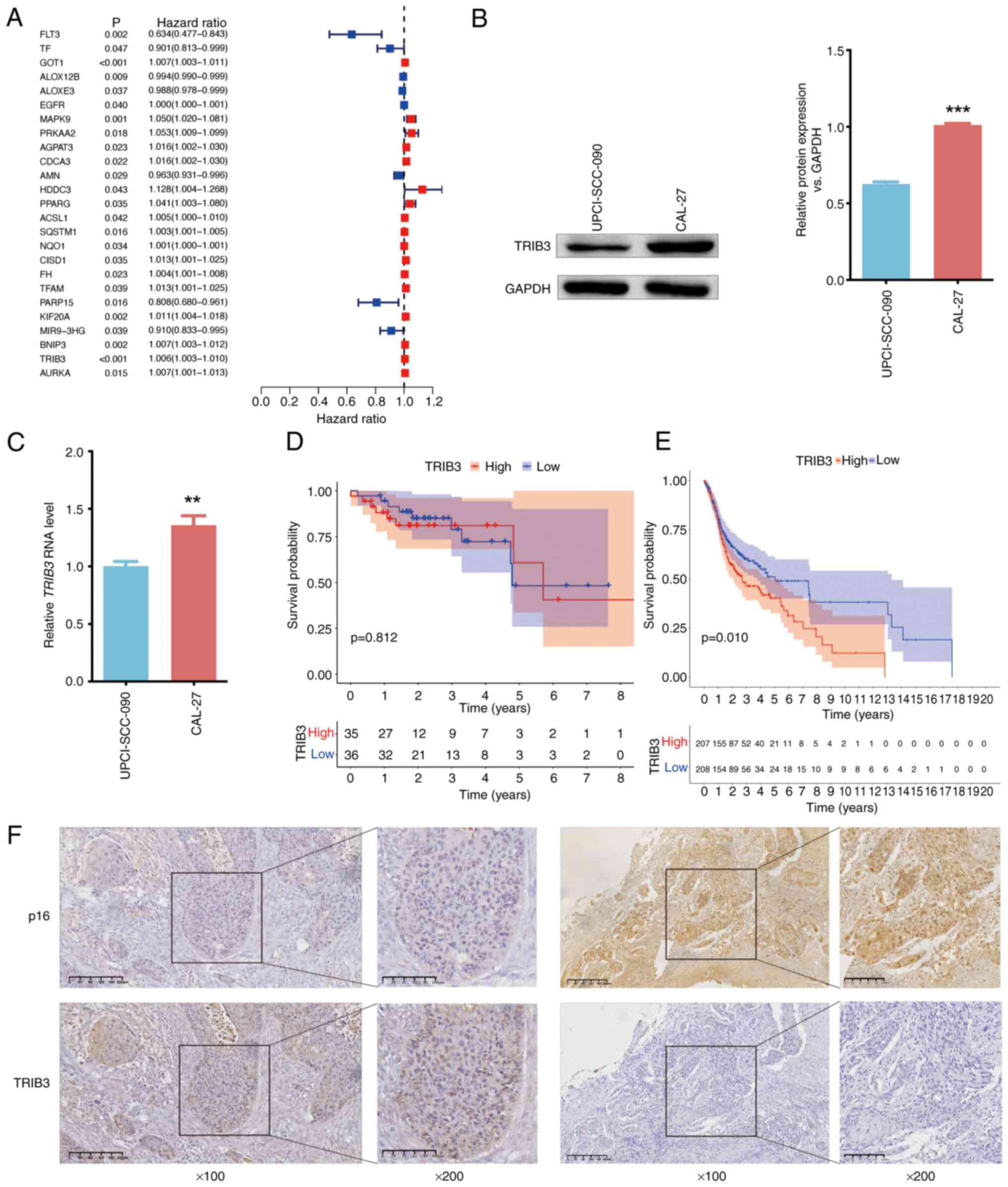
Figure 1

Analysis of prognosis-associated FRGs
in TCGA-HNSC, the Kaplan-Meier survival analysis in patients with
HPV-positive or negative HNSC (from the TCGA-HNSC dataset) and
analysis of TRIB3 expression via cell culture and histological
experiments. (A) The outcomes of the univariate Cox regression
analysis of the TCGA-HNSC data conducted on the 25 FRGs are
displayed in the forest plot. (B) TRIB3 protein expression in CAL27
(HPV-negative) and UPCI-SCC-090 (HPV-positive) cells was measured
by western blotting. (C) The relative TRIB3 mRNA expression
in CAL27 (HPV-negative) and UPCI-SCC-090 (HPV-positive) cells was
measured by reverse transcription-quantitative polymerase chain
reaction. Kaplan-Meier survival analysis in TCGA-HNSC (D)
HPV-positive and (E) HPV-negative patients. (F) TRIB3 protein
expression in HPV-negative and HPV-positive paraffin-embedded
samples was measured by immunohistochemistry. **P<0.01 and
***P<0.001. FRGs, ferroptosis related genes; HNSCC, head and
neck squamous cell carcinoma; TCGA, The Cancer Genome Atlas; HPV,
human papillomavirus; TRIB3, tribbles pseudokinase 3.

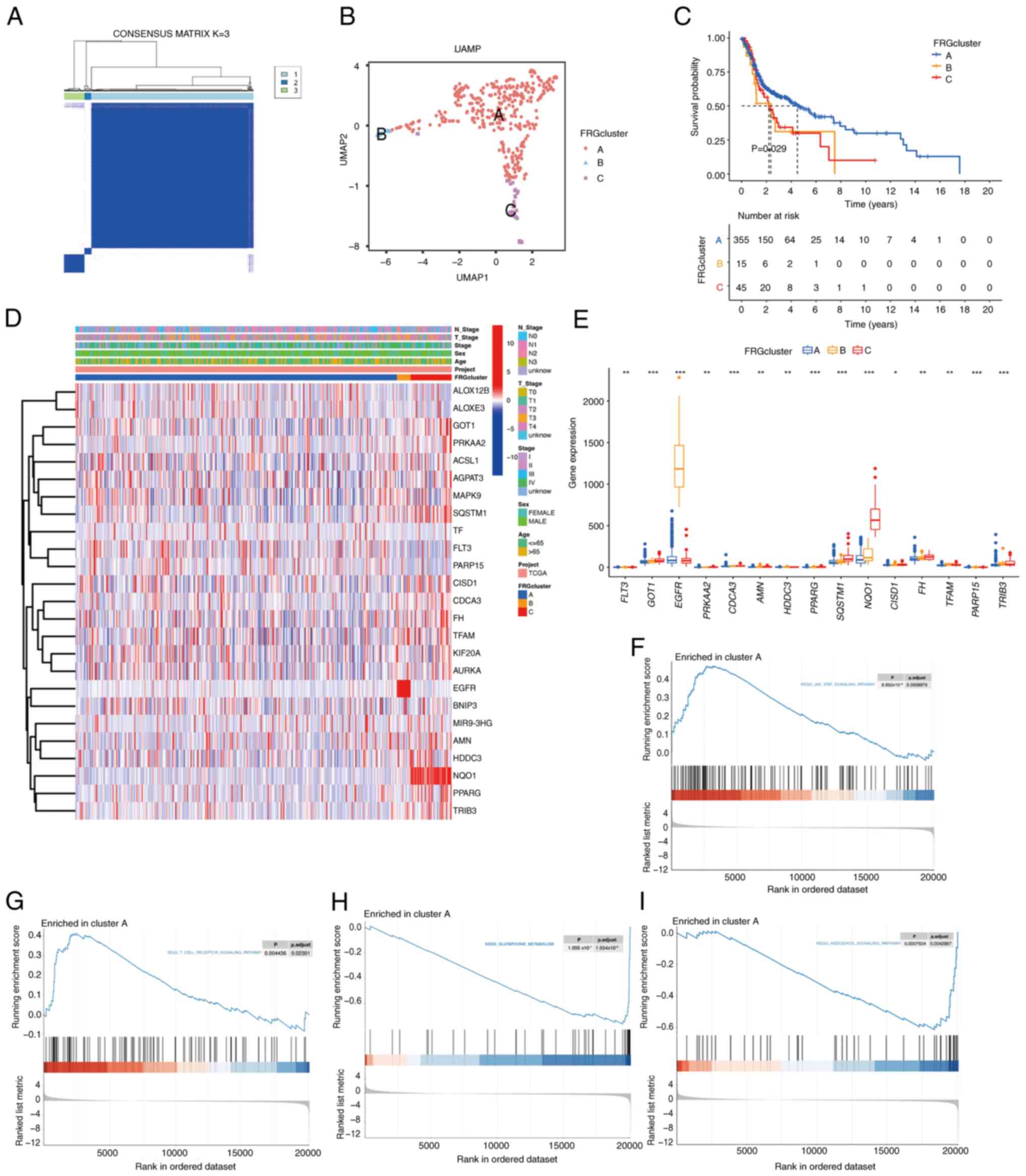
Figure 2

FRG-related subgroups of HPV-negative
HNSCC samples from TCGA. (A) Consensus clustering. The consensus
matrix of K=3 was obtained. (B) UMAP identified three clusters
according to FRG expression. (C) Overall survival in the three
clusters (P=0.029). (D) Heatmap of the clinicopathological
characteristics and FRG expression associated with the three
clusters. (E) The expression of FRGs in the three clusters.
Comparative KEGG pathway enrichment between clusters A and B, as
evaluated by GSEA. Cluster A displayed significant involvement in
(F) KEGG_JAK_STAT_SIGNALING_PATHWAY, (G)
KEGG_T_CELL_RECEPTOR_SIGNALING_PATHWAY, (H)
KEGG_GLUTATHIONE_METABOLISM and (I)
KEGG_HEDGEHOG_SIGNALING_PATHWAY. *P<0.05, **P<0.01,
***P<0.001. FRGs, ferroptosis related genes; HPV, human
papillomavirus; HNSCC, head and neck squamous cell carcinoma; TCGA,
The Cancer Genome Atlas; UMAP, Uniform Manifold Approximation and
Projection; KEGG, Kyoto Encyclopedia of Genes and Genomes; GSEA,
Gene Set Enrichment Analysis.

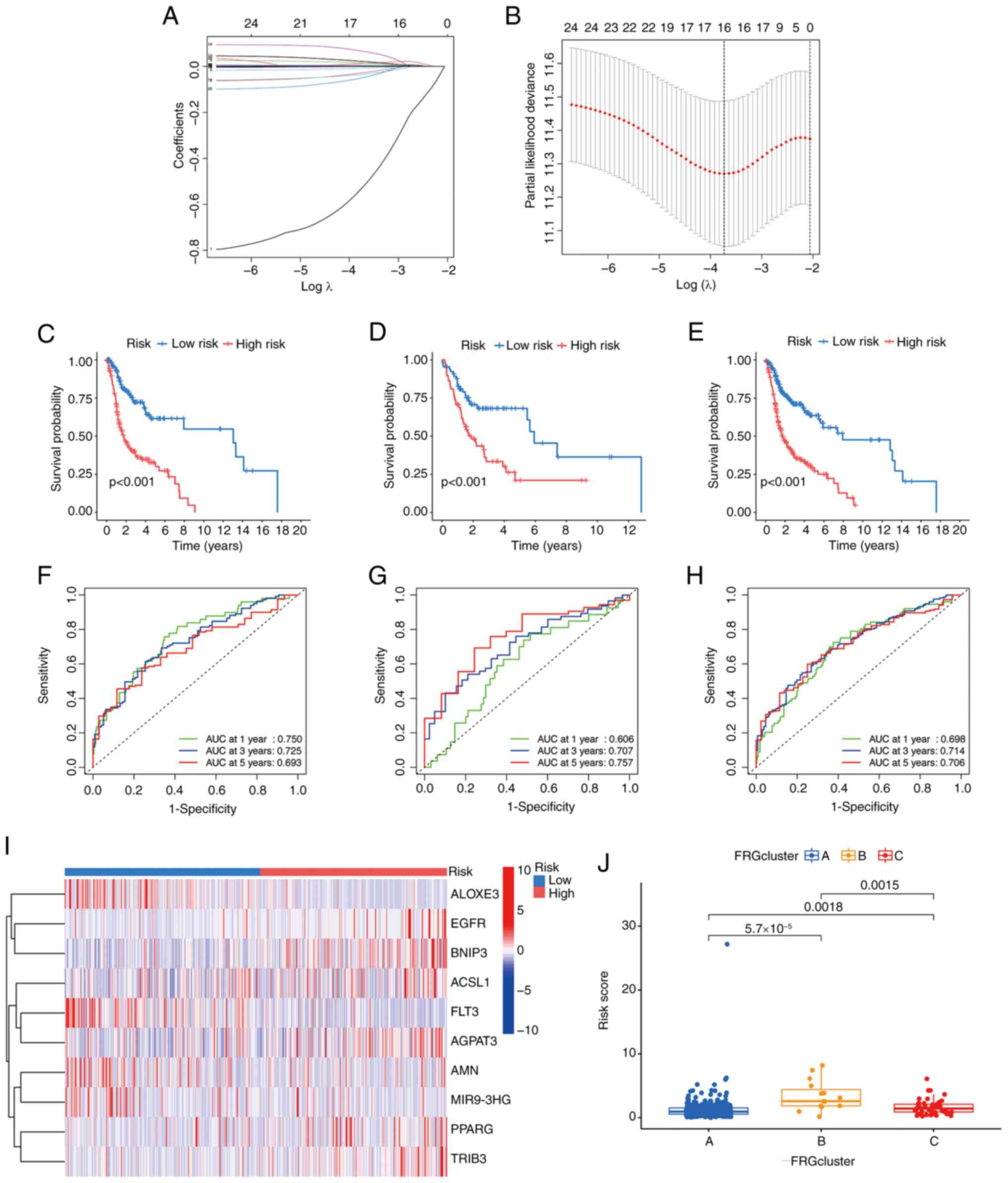
Figure 3

Determination of the prognostic FRGs
in HPV-negative HNSCC samples from TCGA. (A) 10 prognostic FRGs
were determined by the LASSO regression analysis and validated by
10-fold cross-validation. (B) The graph of the coefficient profile
illustrated 10 prognostic FRGs. Kaplan-Meier survival curves
showing the prognoses of the different risk groups in the (C)
training, (D) testing and (E) combined cohorts. Time-dependent ROC
curves were generated for OS at 1, 3 and 5 years using the (F)
training, (G) testing and (H) combined cohorts. (I) The heatmap of
the 10 hub FRGs for both risk groups. (J) Evaluation of the risk
scores among the three previously established clusters. FRGs,
ferroptosis related genes; TCGA, The Cancer Genome Atlas; LASSO,
Least Absolute Shrinkage and Selection Operator; ROC, receiver
operating characteristic; HPV, human papillomavirus; ALOXE3,
lipoxygenase-3; EGFR, epidermal growth factor receptor; BNIP3,
BCL2-interacting protein 3; ACSL1, acyl-CoA synthetase long chain
family member 1; FLT3, FMS-like tyrosine kinase 3; AGPAT3,
1-acylglycerol-3-phosphate O-acyltransferase 3; AMN, amnion
associated transmembrane protein; MIR9-3HG, MIR9-3 host gene;
PPARG, peroxisome proliferator-activated receptor γ; TRIB3,
tribbles pseudokinase 3.

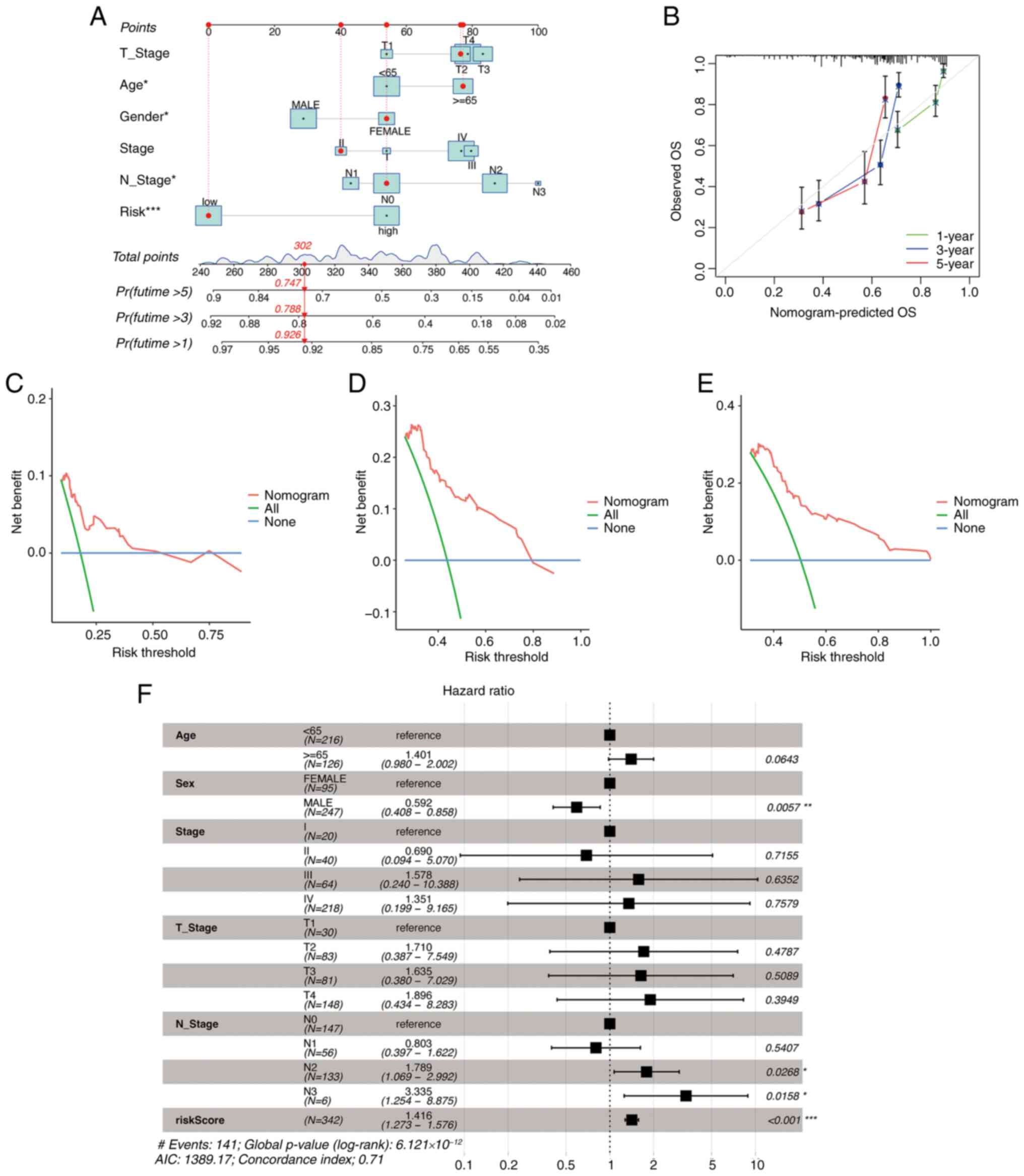
Figure 4

Nomogram for patients with
HPV-negative HNSCC samples from TCGA. (A) The nomogram was
constructed based on the clinicopathological variables and
ferroptosis-related gene risk scores. (B) Calibration curve for
nomogram validation. Decision curves of the nomogram at (C) 1-year,
(D) 3-year and (E) 5-year intervals. (F) Forest plot showing the
multivariable Cox regression analysis of clinical features and the
risk scores for patients with HPV-negative HNSCC. *P<0.05,
**P<0.01, ***P<0.001. HNSCC, head and neck squamous cell
carcinoma; HPV, human papillomavirus; OS, overall survival.

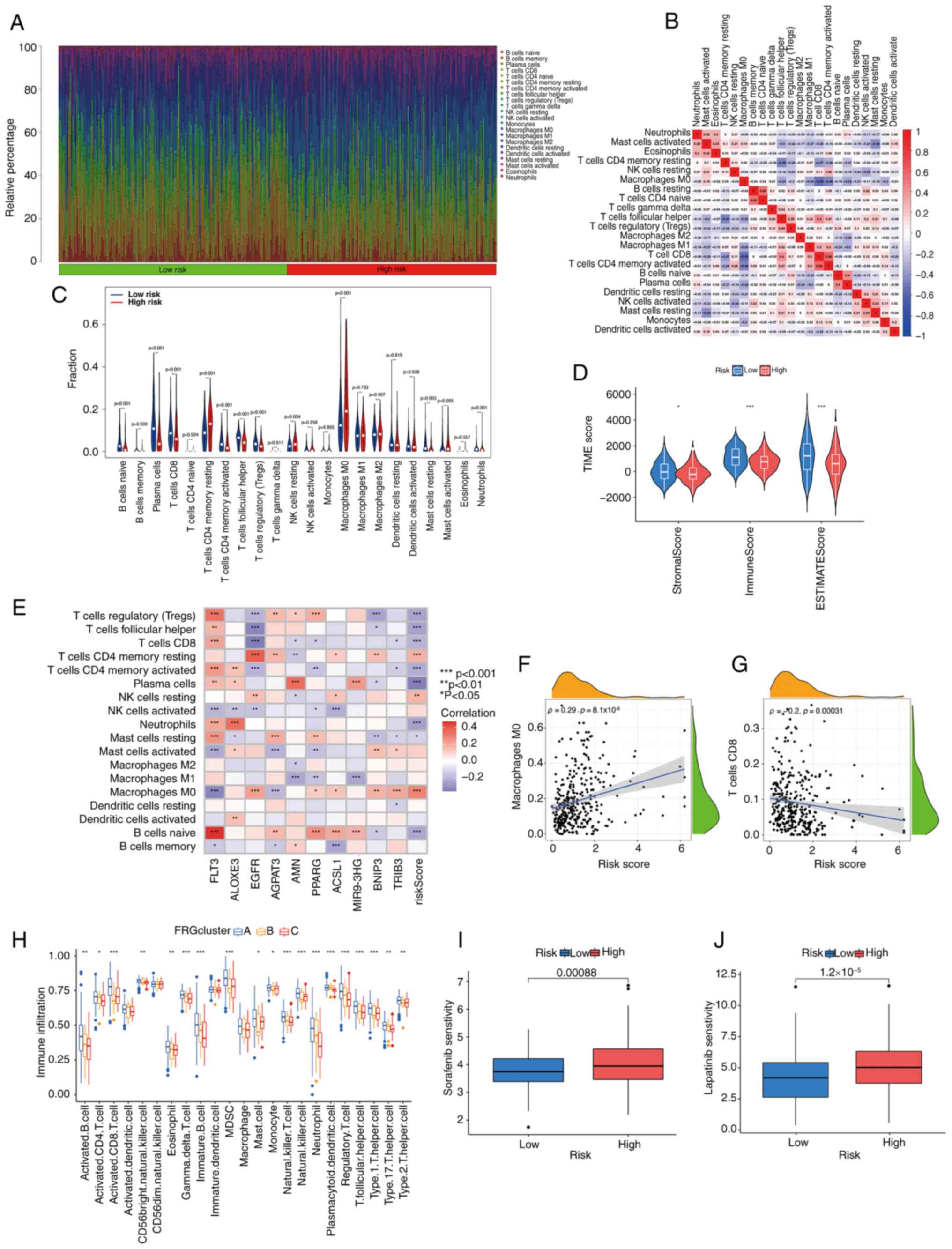
Figure 5

Exploring the immune microenvironment
of HPV-negative HNSCC based on the various risk scores and clusters
in HPV-negative HNSCC samples from TCGA. (A) Different proportions
of infiltrating immune cells with distinct risk scores. (B) The
associations among immune cells. (C) Comparison of immune cell
components between the risk groups. (D) The predicted score of the
gene expression patterns in both risk groups. (E) The connection
between immune cells and the 10 main ferroptosis-related genes.
Associations of (F) the number of M0 macrophages and (G) the number
of CD8+ T cells in HNSCC-negative tissues with risk
scores. (H) The variation in the extent of immune cell infiltration
across the three FRG clusters. The susceptibility of both risk
groups to (I) sorafenib and (J) lapatinib. *P<0.05, **P<0.01,
***P<0.001. HNSCC, head and neck squamous cell carcinoma; HPV,
human papillomavirus; TCGA, The Cancer Genome Atlas; TME, tumor
microenvironment; FRG, ferroptosis related gene; FLT3, FMS-like
tyrosine kinase 3; ALOXE3, lipoxygenase-3; EGFR, epidermal growth
factor receptor; AGPAT3, 1-acylglycerol-3-phosphate
O-acyltransferase 3; AMN, amnion associated transmembrane protein;
PPARG, peroxisome proliferator-activated receptor γ; ACSL1,
acyl-CoA synthetase long chain family member 1; MIR9-3HG, MIR9-3
host gene; BNIP3, BCL2-interacting protein 3; TRIB3, tribbles
pseudokinase 3.

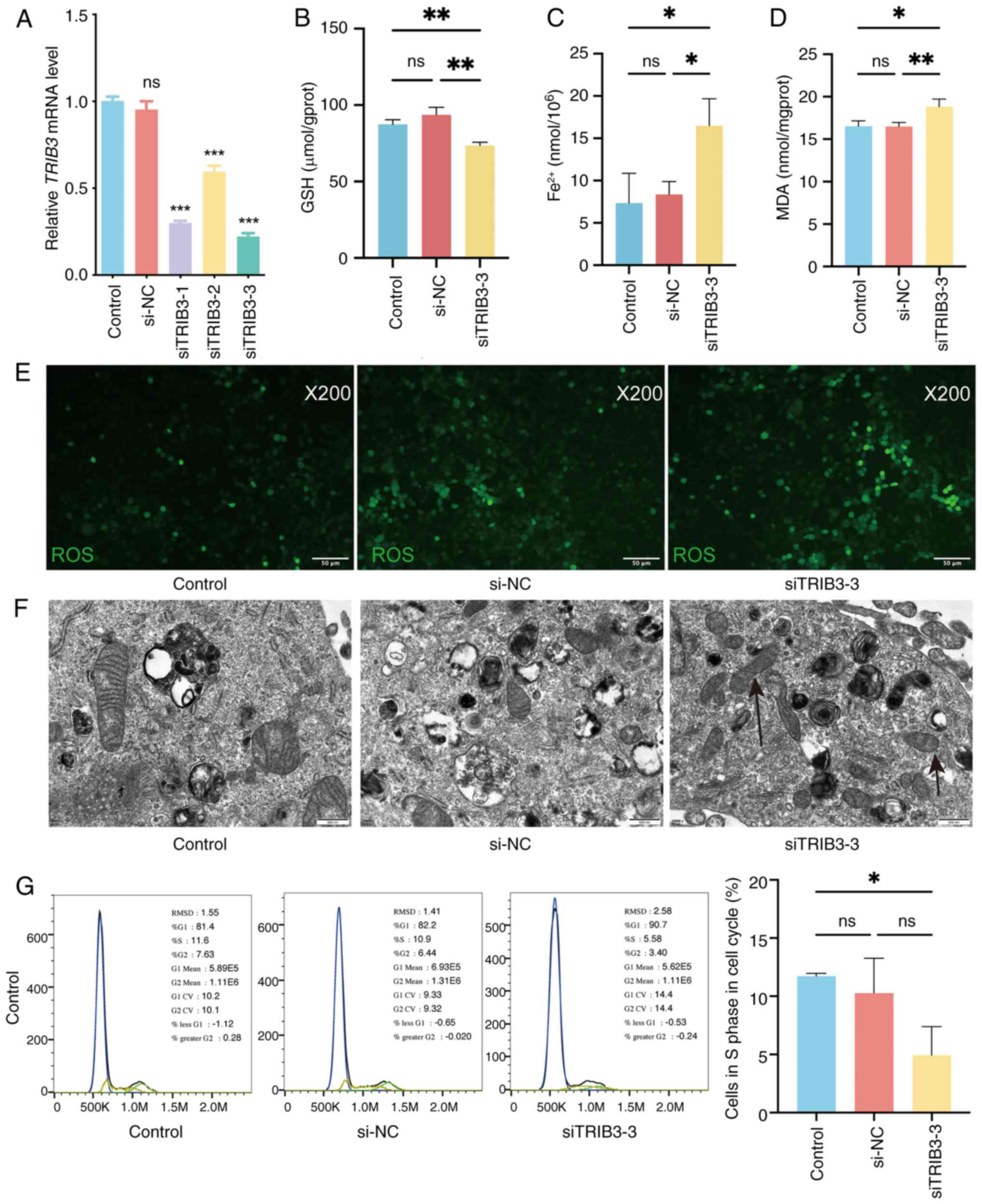
Figure 6

Knockdown of TRIB3 promotes
ferroptosis in HPV-negative HNSCC cells. (A) Relative TRIB3
mRNA expression in CAL27 cells in the different groups measured by
reverse transcription-quantitative polymerase chain reaction after
siRNA transfection. (B) The intracellular GSH concentration was
measured using the reduced GSH Colorimetric Assay Kit. (C) The
intracellular Fe2+ concentration was measured using the
Cell Ferrous Iron Colorimetric Assay Kit. (D) The intracellular MDA
concentration was measured using the Cell Malondialdehyde
Colorimetric Assay Kit. (E) ROS (green fluorescence) were measured
in the cells. (F) Observation of the cells under transmission
electron microscopy. (G) Cell cycle distribution analysis using
flow cytometry. *P<0.05, **P<0.01, ***P<0.001. ns,
non-significant; HNSCC, head and neck squamous cell carcinoma; GSH,
glutathione; MDA, malondialdehyde; ROS, reactive oxygen species;
HPV, human papillomavirus; TRIB3, tribbles pseudokinase 3; si,
small interfering (RNA); NC, negative control.

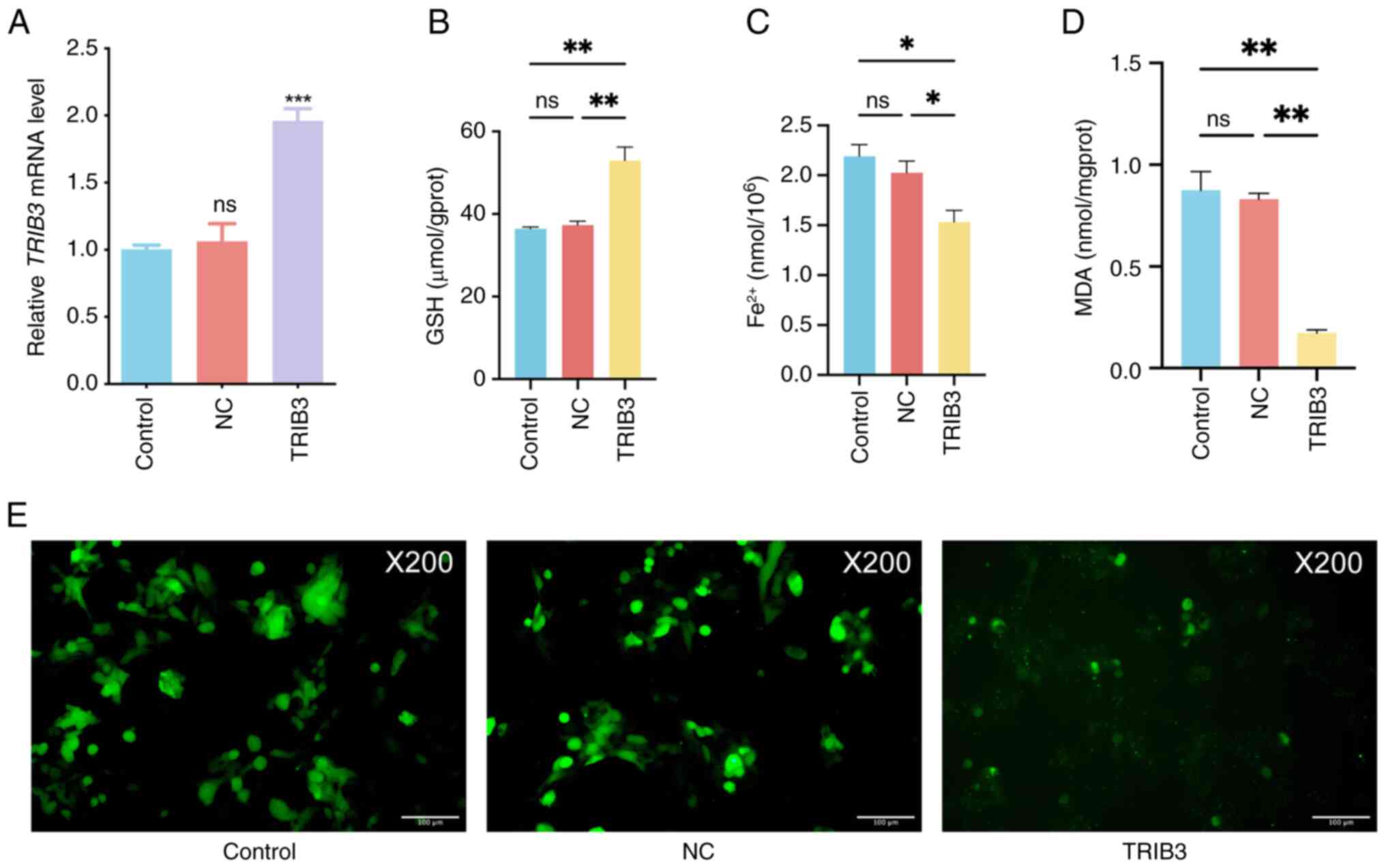
Figure 7

TRIB3 overexpression inhibits
ferroptosis in HPV-positive HNSCC cells. (A) Relative TRIB3
mRNA expression in the different groups measured by reverse
transcription-quantitative polymerase chain reaction. (B) The
intracellular GSH concentration was measured using the reduced GSH
Colorimetric Assay Kit. (C) The intracellular Fe2+
concentration was measured using the Cell Ferrous Iron Colorimetric
Assay Kit. (D) The intracellular MDA concentration was measured
using the Cell Malondialdehyde Colorimetric Assay Kit. (E) ROS
(green fluorescence) were measured in the cells. *P<0.05,
**P<0.01, ***P<0.001. ns, non-significant; HPV, human
papillomavirus; HNSCC, head and neck squamous cell carcinoma; GSH,
glutathione; MDA, malondialdehyde; ROS, reactive oxygen species;
TRIB3, tribbles pseudokinase 3; NC, negative control.
View References

1 

Reid PA, Wilson P, Li Y, Marcu LG and Bezak E: Current understanding of cancer stem cells: Review of their radiobiology and role in head and neck cancers. Head Neck. 39:1920–1932. 2017. View Article : Google Scholar : PubMed/NCBI

2 

Sung H, Ferlay J, Siegel RL, Laversanne M, Soerjomataram I, Jemal A and Bray F: Global cancer statistics 2020: GLOBOCAN estimates of incidence and mortality worldwide for 36 cancers in 185 countries. CA Cancer J Clin. 71:209–249. 2021.PubMed/NCBI

3 

Johnson DE, Burtness B, Leemans CR, Lui VWY, Bauman JE and Grandis JR: Head and neck squamous cell carcinoma. Nat Rev Dis Primers. 6:922020. View Article : Google Scholar : PubMed/NCBI

4 

Mody MD, Rocco JW, Yom SS, Haddad RI and Saba NF: Head and neck cancer. Lancet. 398:2289–2299. 2021. View Article : Google Scholar : PubMed/NCBI

5 

Chi AC, Day TA and Neville BW: Oral cavity and oropharyngeal squamous cell carcinoma-an update. CA Cancer J Clin. 65:401–421. 2015.PubMed/NCBI

6 

Wuerdemann N, Wittekindt C, Sharma SJ, Prigge ES, Reuschenbach M, Gattenlöhner S, Klussmann JP and Wagner S: Risk factors for overall survival outcome in surgically treated human Papillomavirus-Negative and positive patients with oropharyngeal cancer. Oncol Res Treat. 40:320–327. 2017. View Article : Google Scholar : PubMed/NCBI

7 

Yu W, Chen Y, Putluri N, Osman A, Coarfa C, Putluri V, Kamal AHM, Asmussen JK, Katsonis P, Myers JN, et al: Evolution of cisplatin resistance through coordinated metabolic reprogramming of the cellular reductive state. Br J Cancer. 128:2013–2024. 2023. View Article : Google Scholar : PubMed/NCBI

8 

Azharuddin M, Roberg K, Dhara AK, Jain MV, Darcy P, Hinkula J, Slater NKH and Patra HK: Dissecting multi drug resistance in head and neck cancer cells using multicellular tumor spheroids. Sci Rep. 9:200662019. View Article : Google Scholar : PubMed/NCBI

9 

Hu H, Li B, Wang J, Tan Y, Xu M, Xu W and Lu H: New advances into cisplatin resistance in head and neck squamous carcinoma: Mechanisms and therapeutic aspects. Biomed Pharmacother. 163:1147782023. View Article : Google Scholar : PubMed/NCBI

10 

Mackenzie IC: Stem cell properties and epithelial malignancies. Eur J Cancer. 42:1204–1212. 2006. View Article : Google Scholar : PubMed/NCBI

11 

Norouzi A, Liaghat M, Bakhtiyari M, Noorbakhsh Varnosfaderani SM, Zalpoor H, Nabi-Afjadi M and Molania T: The potential role of COVID-19 in progression, chemo-resistance, and tumor recurrence of oral squamous cell carcinoma (OSCC). Oral Oncol. 144:1064832023. View Article : Google Scholar : PubMed/NCBI

12 

Kang SH, Oh SY, Lee KY, Lee HJ, Kim MS, Kwon TG, Kim JW, Lee ST, Choi SY and Hong SH: Differential effect of cancer-associated fibroblast-derived extracellular vesicles on cisplatin resistance in oral squamous cell carcinoma via miR-876-3p. Theranostics. 14:460–479. 2024. View Article : Google Scholar : PubMed/NCBI

13 

Usman S, Waseem NH, Nguyen TKN, Mohsin S, Jamal A, The MT and Waseem A: Vimentin is at the heart of epithelial mesenchymal transition (EMT) mediated metastasis. Cancers (Basel). 13:49852021. View Article : Google Scholar : PubMed/NCBI

14 

Gong Y, Fan Z, Luo G, Yang C, Huang Q, Fan K, Cheng H, Jin K, Ni Q, Yu X and Liu C: The role of necroptosis in cancer biology and therapy. Mol Cancer. 18:1002019. View Article : Google Scholar : PubMed/NCBI

15 

Hsu SK, Li CY, Lin IL, Syue WJ, Chen YF, Cheng KC, Teng YN, Lin YH, Yen CH and Chiu CC: Inflammation-related pyroptosis, a novel programmed cell death pathway, and its crosstalk with immune therapy in cancer treatment. Theranostics. 11:8813–8835. 2021. View Article : Google Scholar : PubMed/NCBI

16 

Liu J, Kuang F, Kang R and Tang D: Alkaliptosis: A new weapon for cancer therapy. Cancer Gene Ther. 27:267–269. 2020. View Article : Google Scholar : PubMed/NCBI

17 

Tong X, Tang R, Xiao M, Xu J, Wang W, Zhang B, Liu J, Yu X and Shi S: Targeting cell death pathways for cancer therapy: Recent developments in necroptosis, pyroptosis, ferroptosis, and cuproptosis research. J Hematol Oncol. 15:1742022. View Article : Google Scholar : PubMed/NCBI

18 

Zhang C, Liu X, Jin S, Chen Y and Guo R: Ferroptosis in cancer therapy: A novel approach to reversing drug resistance. Mol Cancer. 21:472022. View Article : Google Scholar : PubMed/NCBI

19 

Dixon SJ, Lemberg KM, Lamprecht MR, Skouta R, Zaitsev EM, Gleason CE, Patel DN, Bauer AJ, Cantley AM, Yang WS, et al: Ferroptosis: An iron-dependent form of nonapoptotic cell death. Cell. 149:1060–1072. 2012. View Article : Google Scholar : PubMed/NCBI

20 

Xie Y, Hou W, Song X, Yu Y, Huang J, Sun X, Kang R and Tang D: Ferroptosis: Process and function. Cell Death Differ. 23:369–379. 2016. View Article : Google Scholar : PubMed/NCBI

21 

Conrad M and Pratt DA: Publisher correction: The chemical basis of ferroptosis. Nat Chem Biol. 16:223–224. 2020. View Article : Google Scholar : PubMed/NCBI

22 

Stockwell BR: Ferroptosis turns 10: Emerging mechanisms, physiological functions, and therapeutic applications. Cell. 185:2401–2421. 2022. View Article : Google Scholar : PubMed/NCBI

23 

Xue Y, Jiang X, Wang J, Zong Y, Yuan Z, Miao S and Mao X: Effect of regulatory cell death on the occurrence and development of head and neck squamous cell carcinoma. Biomark Res. 11:22023. View Article : Google Scholar : PubMed/NCBI

24 

Kim EH, Shin D, Lee J, Jung AR and Roh JL: CISD2 inhibition overcomes resistance to sulfasalazine-induced ferroptotic cell death in head and neck cancer. Cancer Lett. 432:180–190. 2018. View Article : Google Scholar : PubMed/NCBI

25 

Roh JL, Kim EH, Jang HJ, Park JY and Shin D: Induction of ferroptotic cell death for overcoming cisplatin resistance of head and neck cancer. Cancer Lett. 381:96–103. 2016. View Article : Google Scholar : PubMed/NCBI

26 

Ye J, Jiang X, Dong Z, Hu S and Xiao M: Low-Concentration PTX And RSL3 inhibits tumor cell growth synergistically by inducing ferroptosis in mutant p53 hypopharyngeal squamous carcinoma. Cancer Manag Res. 11:9783–9792. 2019. View Article : Google Scholar : PubMed/NCBI

27 

Dersh D, Hollý J and Yewdell JW: A few good peptides: MHC class I-based cancer immunosurveillance and immunoevasion. Nat Rev Immunol. 21:116–128. 2021. View Article : Google Scholar : PubMed/NCBI

28 

Mohme M, Riethdorf S and Pantel K: Circulating and disseminated tumour Cells-mechanisms of immune surveillance and escape. Nat Rev Clin Oncol. 14:155–167. 2017. View Article : Google Scholar : PubMed/NCBI

29 

Zou W: Immunosuppressive networks in the tumour environment and their therapeutic relevance. Nat Rev Cancer. 5:263–274. 2005. View Article : Google Scholar : PubMed/NCBI

30 

Wang W, Green M, Choi JE, Gijón M, Kennedy PD, Johnson JK, Liao P, Lang X, Kryczek I, Sell A, et al: CD8+ T cells regulate tumour ferroptosis during cancer immunotherapy. Nature. 569:270–274. 2019. View Article : Google Scholar : PubMed/NCBI

31 

Li C, Wang X, Qin R, Zhong Z and Sun C: Identification of a ferroptosis gene set that mediates the prognosis of squamous cell carcinoma of the head and neck. Front Genet. 12:6980402021. View Article : Google Scholar : PubMed/NCBI

32 

Lu W, Wu Y, Huang S and Zhang D: A Ferroptosis-related gene signature for predicting the prognosis and drug sensitivity of head and neck squamous cell carcinoma. Front Genet. 12:7554862021. View Article : Google Scholar : PubMed/NCBI

33 

Hoadley KA, Yau C, Hinoue T, Wolf DM, Lazar AJ, Drill E, Shen R, Taylor AM, Cherniack AD, Thorsson V, et al: Cell-of-Origin patterns dominate the molecular classification of 10,000 tumors from 33 types of cancer. Cell. 173:291–304.e6. 2018. View Article : Google Scholar : PubMed/NCBI

34 

Martens-de Kemp SR BB, Smeets S, Voorham Q, Rustenburg F, de Boer VD, Brink A, van Wieringen WN and Brakenhoff RH: GEO accession number [GSE83519]. NCBI(GEO) (ed.), . 2017.

35 

Vickers AJ, Cronin AM, Elkin EB and Gonen M: Extensions to decision curve analysis, a novel method for evaluating diagnostic tests, prediction models and molecular markers. BMC Med Inform Decis Mak. 8:532008. View Article : Google Scholar : PubMed/NCBI

36 

Newman AM, Liu CL, Green MR, Gentles AJ, Feng W, Xu Y, Hoang CD, Diehn M and Alizadeh AA: Robust enumeration of cell subsets from tissue expression profiles. Nat Methods. 12:453–457. 2015. View Article : Google Scholar : PubMed/NCBI

37 

Maeser D, Gruener RF and Huang RS: oncoPredict: An R package for predicting in vivo or cancer patient drug response and biomarkers from cell line screening data. Brief Bioinform. 22:bbab2602021. View Article : Google Scholar : PubMed/NCBI

38 

Livak KJ and Schmittgen TD: Analysis of relative gene expression data using real-time quantitative PCR and the 2(−Delta Delta C(T)) method. Methods. 25:402–408. 2001. View Article : Google Scholar : PubMed/NCBI

39 

Chen XJ, Guo CH, Yang Y, Wang ZC, Liang YY, Cai YQ, Cui XF, Fan LS and Wang W: HPV16 integration regulates ferroptosis resistance via the c-Myc/miR-142-5p/HOXA5/SLC7A11 axis during cervical carcinogenesis. Cell Biosci. 14:1292024. View Article : Google Scholar : PubMed/NCBI

40 

Yang J and Gu Z: Ferroptosis in head and neck squamous cell carcinoma: From pathogenesis to treatment. Front Pharmacol. 15:12834652024. View Article : Google Scholar : PubMed/NCBI

41 

Hamid S, Khan MS, Khan MA, Muhammad N, Singh M, Al-Shabeeb Akil AS, Bhat AA and Macha MA: Human papilloma virus infection drives unique metabolic and immune profiles in head and neck and cervical cancers: Implications for targeted therapies and prognostic markers. Discov Oncol. 16:6762025. View Article : Google Scholar : PubMed/NCBI

42 

Shen P, Zhang TY and Wang SY: TRIB3 promotes oral squamous cell carcinoma cell proliferation by activating the AKT signaling pathway. Exp Ther Med. 21:3132021. View Article : Google Scholar : PubMed/NCBI

43 

Wennemers M, Bussink J, Scheijen B, Nagtegaal ID, van Laarhoven HW, Raleigh JA, Varia MA, Heuvel JJ, Rouschop KM, Sweep FC and Span PN: Tribbles homolog 3 denotes a poor prognosis in breast cancer and is involved in hypoxia response. Breast Cancer Res. 13:R822011. View Article : Google Scholar : PubMed/NCBI

44 

Zhou H, Luo Y, Chen JH, Hu J, Luo YZ, Wang W, Zeng Y and Xiao L: Knockdown of TRB3 induces apoptosis in human lung adenocarcinoma cells through regulation of Notch 1 expression. Mol Med Rep. 8:47–52. 2013. View Article : Google Scholar : PubMed/NCBI

45 

Hong B, Zhou J, Ma K, Zhang J, Xie H, Zhang K, Li L, Cai L, Zhang N, Zhang Z and Gong K: TRIB3 promotes the proliferation and invasion of renal cell carcinoma cells via activating MAPK signaling pathway. Int J Biol Sci. 15:587–597. 2019. View Article : Google Scholar : PubMed/NCBI

46 

Miyoshi N, Ishii H, Mimori K, Takatsuno Y, Kim H, Hirose H, Sekimoto M, Doki Y and Mori M: Abnormal expression of TRIB3 in colorectal cancer: A novel marker for prognosis. Br J Cancer. 101:1664–1670. 2009. View Article : Google Scholar : PubMed/NCBI

47 

Tang Z, Chen H, Zhong D, Wei W, Liu L, Duan Q, Han B and Li G: TRIB3 facilitates glioblastoma progression via restraining autophagy. Aging (Albany NY). 12:25020–25034. 2020. View Article : Google Scholar : PubMed/NCBI

48 

Izrailit J, Jaiswal A, Zheng W, Moran MF and Reedijk M: Cellular stress induces TRB3/USP9×-dependent Notch activation in cancer. Oncogene. 36:1048–1057. 2017. View Article : Google Scholar : PubMed/NCBI

49 

Hua F, Mu R, Liu J, Xue J, Wang Z, Lin H, Yang H, Chen X and Hu Z: TRB3 interacts with SMAD3 promoting tumor cell migration and invasion. J Cell Sci. 124:3235–3246. 2011. View Article : Google Scholar : PubMed/NCBI

50 

Zhang XD, Liu ZY, Wang MS, Guo YX, Wang XK, Luo K, Huang S and Li RF: Mechanisms and regulations of ferroptosis. Front Immunol. 14:12694512023. View Article : Google Scholar : PubMed/NCBI

51 

Zhu X, Zhang F, Zhang W, He J, Zhao Y and Chen X: Prognostic role of epidermal growth factor receptor in head and neck cancer: A meta-analysis. J Surg Oncol. 108:387–397. 2013. View Article : Google Scholar : PubMed/NCBI

52 

Lv D, Zhong C, Dixit D, Yang K, Wu Q, Godugu B, Prager BC, Zhao G, Wang X and Xie Q: EGFR promotes ALKBH5 nuclear retention to attenuate N6-methyladenosine and protect against ferroptosis in glioblastoma. Mol Cell. 83:4334–4351.e7. 2023. View Article : Google Scholar : PubMed/NCBI

53 

Zhang Q, Li N, Deng L, Jiang X, Zhang Y, Lee LTO and Zhang H: ACSL1-induced ferroptosis and platinum resistance in ovarian cancer by increasing FSP1 N-myristylation and stability. Cell Death Discov. 9:832023. View Article : Google Scholar : PubMed/NCBI

54 

Qin Y, Pei Z, Feng Z, Lin P, Wang S, Li Y, Huo F, Wang Q, Wang Z, Chen ZN, et al: Oncogenic activation of YAP signaling sensitizes ferroptosis of hepatocellular carcinoma via ALOXE3-mediated lipid peroxidation accumulation. Front Cell Dev Biol. 9:7515932021. View Article : Google Scholar : PubMed/NCBI

55 

Han L, Bai L, Qu C, Dai E, Liu J, Kang R, Zhou D, Tang D and Zhao Y: PPARG-mediated ferroptosis in dendritic cells limits antitumor immunity. Biochem Biophys Res Commun. 576:33–39. 2021. View Article : Google Scholar : PubMed/NCBI

56 

Sabatier M, Birsen R, Lauture L, Mouche S, Angelino P, Dehairs J, Goupille L, Boussaid I, Heiblig M, Boet E, et al: C/EBPα confers dependence to fatty acid anabolic pathways and vulnerability to lipid oxidative Stress-induced ferroptosis in FLT3-Mutant leukemia. Cancer Discov. 13:1720–1747. 2023. View Article : Google Scholar : PubMed/NCBI

57 

Cui Z, Fu Y, Yang Z, Gao Z, Feng H, Zhou M, Zhang L and Chen C: Comprehensive analysis of a ferroptosis pattern and associated prognostic signature in acute myeloid leukemia. Front Pharmacol. 13:8663252022. View Article : Google Scholar : PubMed/NCBI

58 

Meng J, Du H, Lu J and Wang H: Construction and validation of a predictive nomogram for ferroptosis-related genes in osteosarcoma. J Cancer Res Clin Oncol. 149:14227–14239. 2023. View Article : Google Scholar : PubMed/NCBI

59 

Zhang J, Deng Y, Zhang H, Zhang Z, Jin X, Xuan Y, Zhang Z and Ma X: Single-cell RNA-Seq analysis reveals ferroptosis in the tumor microenvironment of clear cell renal cell carcinoma. Int J Mol Sci. 24:90922023. View Article : Google Scholar : PubMed/NCBI

60 

Jiang W, Song Y, Zhong Z, Gao J and Meng X: Ferroptosis-related long Non-Coding RNA signature contributes to the prediction of prognosis outcomes in head and neck squamous cell carcinomas. Front Genet. 12:7858392021. View Article : Google Scholar : PubMed/NCBI

61 

Friedmann Angeli JP, Krysko DV and Conrad M: Ferroptosis at the crossroads of Cancer-acquired drug resistance and immune evasion. Nat Rev Cancer. 19:405–414. 2019. View Article : Google Scholar : PubMed/NCBI

Related Articles

  • Abstract
  • View
  • Download
  • Twitter
Copy and paste a formatted citation
Spandidos Publications style
Li J, Ab Rahman N, Mohamad S and Yang G: A prognostic model for human papillomavirus‑negative head and neck squamous cell carcinoma based on a novel ferroptosis‑related gene signature: Development, validation and elucidation of its relationship with the immune microenvironment. Oncol Lett 31: 72, 2026.
APA
Li, J., Ab Rahman, N., Mohamad, S., & Yang, G. (2026). A prognostic model for human papillomavirus‑negative head and neck squamous cell carcinoma based on a novel ferroptosis‑related gene signature: Development, validation and elucidation of its relationship with the immune microenvironment. Oncology Letters, 31, 72. https://doi.org/10.3892/ol.2025.15425
MLA
Li, J., Ab Rahman, N., Mohamad, S., Yang, G."A prognostic model for human papillomavirus‑negative head and neck squamous cell carcinoma based on a novel ferroptosis‑related gene signature: Development, validation and elucidation of its relationship with the immune microenvironment". Oncology Letters 31.2 (2026): 72.
Chicago
Li, J., Ab Rahman, N., Mohamad, S., Yang, G."A prognostic model for human papillomavirus‑negative head and neck squamous cell carcinoma based on a novel ferroptosis‑related gene signature: Development, validation and elucidation of its relationship with the immune microenvironment". Oncology Letters 31, no. 2 (2026): 72. https://doi.org/10.3892/ol.2025.15425
Copy and paste a formatted citation
x
Spandidos Publications style
Li J, Ab Rahman N, Mohamad S and Yang G: A prognostic model for human papillomavirus‑negative head and neck squamous cell carcinoma based on a novel ferroptosis‑related gene signature: Development, validation and elucidation of its relationship with the immune microenvironment. Oncol Lett 31: 72, 2026.
APA
Li, J., Ab Rahman, N., Mohamad, S., & Yang, G. (2026). A prognostic model for human papillomavirus‑negative head and neck squamous cell carcinoma based on a novel ferroptosis‑related gene signature: Development, validation and elucidation of its relationship with the immune microenvironment. Oncology Letters, 31, 72. https://doi.org/10.3892/ol.2025.15425
MLA
Li, J., Ab Rahman, N., Mohamad, S., Yang, G."A prognostic model for human papillomavirus‑negative head and neck squamous cell carcinoma based on a novel ferroptosis‑related gene signature: Development, validation and elucidation of its relationship with the immune microenvironment". Oncology Letters 31.2 (2026): 72.
Chicago
Li, J., Ab Rahman, N., Mohamad, S., Yang, G."A prognostic model for human papillomavirus‑negative head and neck squamous cell carcinoma based on a novel ferroptosis‑related gene signature: Development, validation and elucidation of its relationship with the immune microenvironment". Oncology Letters 31, no. 2 (2026): 72. https://doi.org/10.3892/ol.2025.15425
Follow us
  • Twitter
  • LinkedIn
  • Facebook
About
  • Spandidos Publications
  • Careers
  • Cookie Policy
  • Privacy Policy
How can we help?
  • Help
  • Live Chat
  • Contact
  • Email to our Support Team