Spandidos Publications Logo
  • About
    • About Spandidos
    • Aims and Scopes
    • Abstracting and Indexing
    • Editorial Policies
    • Reprints and Permissions
    • Job Opportunities
    • Terms and Conditions
    • Contact
  • Journals
    • All Journals
    • Oncology Letters
      • Oncology Letters
      • Information for Authors
      • Editorial Policies
      • Editorial Board
      • Aims and Scope
      • Abstracting and Indexing
      • Bibliographic Information
      • Archive
    • International Journal of Oncology
      • International Journal of Oncology
      • Information for Authors
      • Editorial Policies
      • Editorial Board
      • Aims and Scope
      • Abstracting and Indexing
      • Bibliographic Information
      • Archive
    • Molecular and Clinical Oncology
      • Molecular and Clinical Oncology
      • Information for Authors
      • Editorial Policies
      • Editorial Board
      • Aims and Scope
      • Abstracting and Indexing
      • Bibliographic Information
      • Archive
    • Experimental and Therapeutic Medicine
      • Experimental and Therapeutic Medicine
      • Information for Authors
      • Editorial Policies
      • Editorial Board
      • Aims and Scope
      • Abstracting and Indexing
      • Bibliographic Information
      • Archive
    • International Journal of Molecular Medicine
      • International Journal of Molecular Medicine
      • Information for Authors
      • Editorial Policies
      • Editorial Board
      • Aims and Scope
      • Abstracting and Indexing
      • Bibliographic Information
      • Archive
    • Biomedical Reports
      • Biomedical Reports
      • Information for Authors
      • Editorial Policies
      • Editorial Board
      • Aims and Scope
      • Abstracting and Indexing
      • Bibliographic Information
      • Archive
    • Oncology Reports
      • Oncology Reports
      • Information for Authors
      • Editorial Policies
      • Editorial Board
      • Aims and Scope
      • Abstracting and Indexing
      • Bibliographic Information
      • Archive
    • Molecular Medicine Reports
      • Molecular Medicine Reports
      • Information for Authors
      • Editorial Policies
      • Editorial Board
      • Aims and Scope
      • Abstracting and Indexing
      • Bibliographic Information
      • Archive
    • World Academy of Sciences Journal
      • World Academy of Sciences Journal
      • Information for Authors
      • Editorial Policies
      • Editorial Board
      • Aims and Scope
      • Abstracting and Indexing
      • Bibliographic Information
      • Archive
    • International Journal of Functional Nutrition
      • International Journal of Functional Nutrition
      • Information for Authors
      • Editorial Policies
      • Editorial Board
      • Aims and Scope
      • Abstracting and Indexing
      • Bibliographic Information
      • Archive
    • International Journal of Epigenetics
      • International Journal of Epigenetics
      • Information for Authors
      • Editorial Policies
      • Editorial Board
      • Aims and Scope
      • Abstracting and Indexing
      • Bibliographic Information
      • Archive
    • Medicine International
      • Medicine International
      • Information for Authors
      • Editorial Policies
      • Editorial Board
      • Aims and Scope
      • Abstracting and Indexing
      • Bibliographic Information
      • Archive
  • Articles
  • Information
    • Information for Authors
    • Information for Reviewers
    • Information for Librarians
    • Information for Advertisers
    • Conferences
  • Language Editing
Spandidos Publications Logo
  • About
    • About Spandidos
    • Aims and Scopes
    • Abstracting and Indexing
    • Editorial Policies
    • Reprints and Permissions
    • Job Opportunities
    • Terms and Conditions
    • Contact
  • Journals
    • All Journals
    • Biomedical Reports
      • Information for Authors
      • Editorial Policies
      • Editorial Board
      • Aims and Scope
      • Abstracting and Indexing
      • Bibliographic Information
      • Archive
    • Experimental and Therapeutic Medicine
      • Information for Authors
      • Editorial Policies
      • Editorial Board
      • Aims and Scope
      • Abstracting and Indexing
      • Bibliographic Information
      • Archive
    • International Journal of Epigenetics
      • Information for Authors
      • Editorial Policies
      • Editorial Board
      • Aims and Scope
      • Abstracting and Indexing
      • Bibliographic Information
      • Archive
    • International Journal of Functional Nutrition
      • Information for Authors
      • Editorial Policies
      • Editorial Board
      • Aims and Scope
      • Abstracting and Indexing
      • Bibliographic Information
      • Archive
    • International Journal of Molecular Medicine
      • Information for Authors
      • Editorial Policies
      • Editorial Board
      • Aims and Scope
      • Abstracting and Indexing
      • Bibliographic Information
      • Archive
    • International Journal of Oncology
      • Information for Authors
      • Editorial Policies
      • Editorial Board
      • Aims and Scope
      • Abstracting and Indexing
      • Bibliographic Information
      • Archive
    • Medicine International
      • Information for Authors
      • Editorial Policies
      • Editorial Board
      • Aims and Scope
      • Abstracting and Indexing
      • Bibliographic Information
      • Archive
    • Molecular and Clinical Oncology
      • Information for Authors
      • Editorial Policies
      • Editorial Board
      • Aims and Scope
      • Abstracting and Indexing
      • Bibliographic Information
      • Archive
    • Molecular Medicine Reports
      • Information for Authors
      • Editorial Policies
      • Editorial Board
      • Aims and Scope
      • Abstracting and Indexing
      • Bibliographic Information
      • Archive
    • Oncology Letters
      • Information for Authors
      • Editorial Policies
      • Editorial Board
      • Aims and Scope
      • Abstracting and Indexing
      • Bibliographic Information
      • Archive
    • Oncology Reports
      • Information for Authors
      • Editorial Policies
      • Editorial Board
      • Aims and Scope
      • Abstracting and Indexing
      • Bibliographic Information
      • Archive
    • World Academy of Sciences Journal
      • Information for Authors
      • Editorial Policies
      • Editorial Board
      • Aims and Scope
      • Abstracting and Indexing
      • Bibliographic Information
      • Archive
  • Articles
  • Information
    • For Authors
    • For Reviewers
    • For Librarians
    • For Advertisers
    • Conferences
  • Language Editing
Login Register Submit
  • This site uses cookies
  • You can change your cookie settings at any time by following the instructions in our Cookie Policy. To find out more, you may read our Privacy Policy.

    I agree
Search articles by DOI, keyword, author or affiliation
Search
Advanced Search
presentation
Oncology Letters
Join Editorial Board Propose a Special Issue
Print ISSN: 1792-1074 Online ISSN: 1792-1082
Journal Cover
March-2026 Volume 31 Issue 3

Full Size Image

Sign up for eToc alerts
Recommend to Library

Journals

International Journal of Molecular Medicine

International Journal of Molecular Medicine

International Journal of Molecular Medicine is an international journal devoted to molecular mechanisms of human disease.

International Journal of Oncology

International Journal of Oncology

International Journal of Oncology is an international journal devoted to oncology research and cancer treatment.

Molecular Medicine Reports

Molecular Medicine Reports

Covers molecular medicine topics such as pharmacology, pathology, genetics, neuroscience, infectious diseases, molecular cardiology, and molecular surgery.

Oncology Reports

Oncology Reports

Oncology Reports is an international journal devoted to fundamental and applied research in Oncology.

Experimental and Therapeutic Medicine

Experimental and Therapeutic Medicine

Experimental and Therapeutic Medicine is an international journal devoted to laboratory and clinical medicine.

Oncology Letters

Oncology Letters

Oncology Letters is an international journal devoted to Experimental and Clinical Oncology.

Biomedical Reports

Biomedical Reports

Explores a wide range of biological and medical fields, including pharmacology, genetics, microbiology, neuroscience, and molecular cardiology.

Molecular and Clinical Oncology

Molecular and Clinical Oncology

International journal addressing all aspects of oncology research, from tumorigenesis and oncogenes to chemotherapy and metastasis.

World Academy of Sciences Journal

World Academy of Sciences Journal

Multidisciplinary open-access journal spanning biochemistry, genetics, neuroscience, environmental health, and synthetic biology.

International Journal of Functional Nutrition

International Journal of Functional Nutrition

Open-access journal combining biochemistry, pharmacology, immunology, and genetics to advance health through functional nutrition.

International Journal of Epigenetics

International Journal of Epigenetics

Publishes open-access research on using epigenetics to advance understanding and treatment of human disease.

Medicine International

Medicine International

An International Open Access Journal Devoted to General Medicine.

Journal Cover
March-2026 Volume 31 Issue 3

Full Size Image

Sign up for eToc alerts
Recommend to Library

  • Article
  • Citations
    • Cite This Article
    • Download Citation
    • Create Citation Alert
    • Remove Citation Alert
    • Cited By
  • Similar Articles
    • Related Articles (in Spandidos Publications)
    • Similar Articles (Google Scholar)
    • Similar Articles (PubMed)
  • Download PDF
  • Download XML
  • View XML
Article Open Access

Exosomal microRNA‑448 suppresses the malignant behaviors of liver cancer cells by targeting RAB7A and inhibiting glycolysis

  • Authors:
    • Yuankun Chen
    • Tiantian Zhu
    • Fang Chen
    • Mingyue Niu
    • Haifeng Wu
    • Qiuping Wu
    • Zheng Wang
    • Wenting Li
  • View Affiliations / Copyright

    Affiliations: Department of Tropical and Liver Diseases, The Second Affiliated Hospital of Hainan Medical University, Haikou, Hainan 570100, P.R. China, Department of Emergency Medicine, The First Affiliated Hospital of Anhui Medical University, Hefei, Anhui 230022, P.R. China, Department of Respiratory and Critical Medicine, People's Hospital of Zhengzhou University, Zhengzhou, Henan 450003, P.R. China, Department of Infectious Diseases, The First Affiliated Hospital of Anhui Medical University, Hefei, Anhui 230022, P.R. China
    Copyright: © Chen et al. This is an open access article distributed under the terms of Creative Commons Attribution License.
  • Article Number: 97
    |
    Published online on: January 7, 2026
       https://doi.org/10.3892/ol.2026.15450
  • Expand metrics +
Metrics: Total Views: 0 (Spandidos Publications: | PMC Statistics: )
Metrics: Total PDF Downloads: 0 (Spandidos Publications: | PMC Statistics: )
Cited By (CrossRef): 0 citations Loading Articles...

This article is mentioned in:


Abstract

Liver cancer is a highly aggressive cancer and the regulatory roles of microRNAs (miRs) in its progression are still being explored. miR‑448, which is implicated in several types of cancer, remains to be fully characterized in liver cancer, particularly regarding its presence in exosomes. The aim of the present study was to examine the effects of exosomal miR‑448 (EXO‑miR‑448) on liver cancer cell behavior. The expression levels of miR‑448 in human liver cancer cell lines and its localization in exosomes were analyzed using reverse transcription‑quantitative PCR, transmission electron microscopy and nanoparticle tracking analysis, with western blotting performed to detect exosomal markers. Functional assays were conducted to assess the effects of EXO‑miR‑448 on cell proliferation, migration and invasion. The results demonstrated that miR‑448 expression was significantly downregulated in human liver cancer cell lines (HepG2, Hep3B and SK‑HEP‑1) compared with that in normal liver cells. Furthermore, exosomal analysis confirmed that miR‑448 was enriched within exosomes rather than being secreted into the supernatant. EXO‑miR‑448 also inhibited liver cancer cell proliferation, migration and invasion, as demonstrated using Cell Counting Kit‑8 and Transwell assays. Bioinformatics and functional assays further identified Ras‑related protein Rab‑7a (RAB7A) as a direct downstream target of miR‑448, with its overexpression rescuing the inhibitory effects of EXO‑miR‑448 on cell behavior. Furthermore, EXO‑miR‑448 suppressed glycolysis in liver cancer cells by targeting RAB7A, as indicated by reduced lactate production, glucose uptake, ATP levels and extracellular acidification rate. In conclusion, EXO‑miR‑448 inhibits liver cancer cell proliferation, migration, invasion and glycolysis by targeting RAB7A. These findings underscore the importance of miR‑448 in liver cancer biology and support its further evaluation in future translational studies.
View Figures

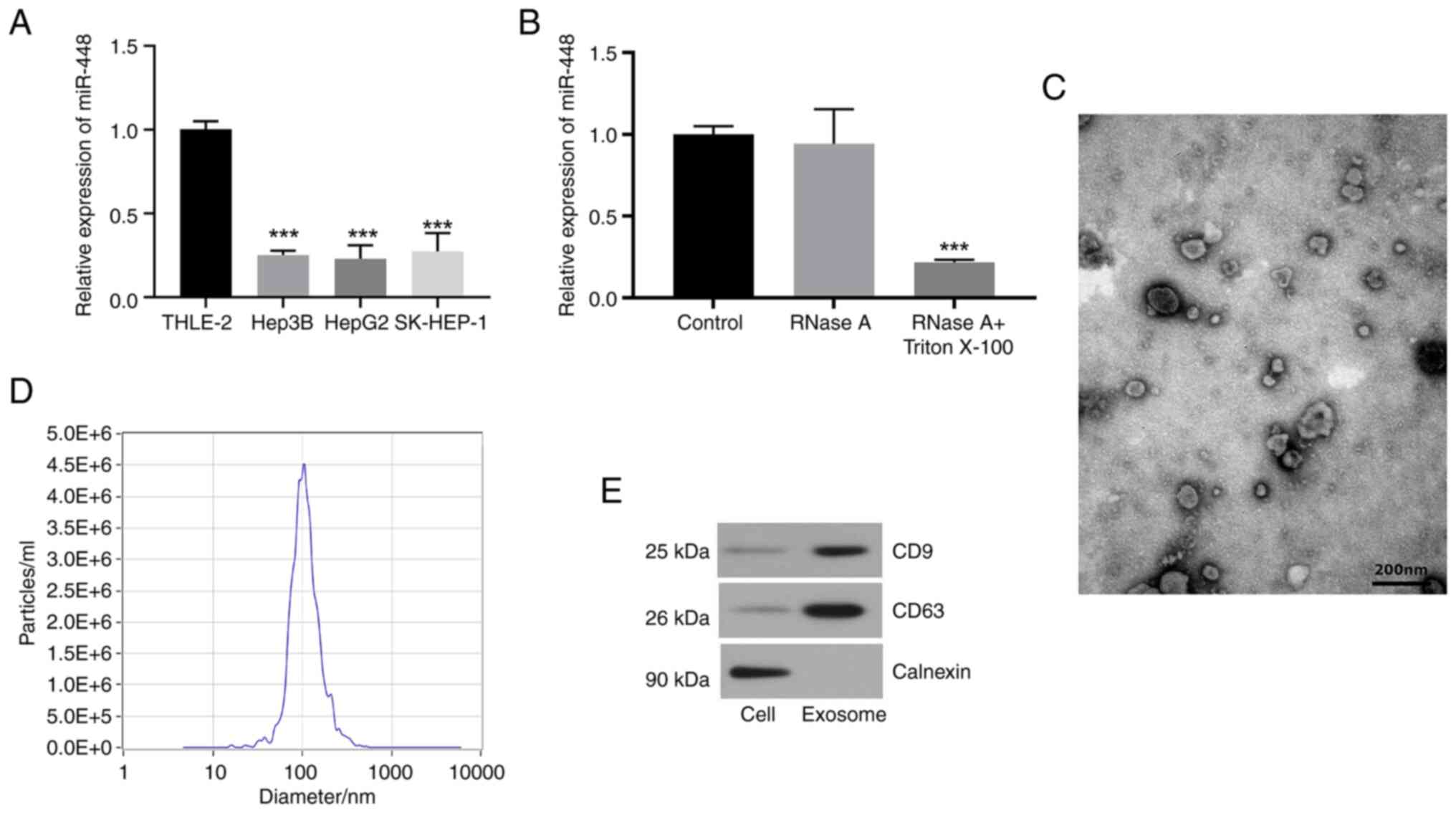
Figure 1

miR-448 expression in liver cancer
cell lines and exosome characterization. (A) Relative expression
levels of miR-448 in liver cancer cell lines (HepG2, Hep3B and
SK-HEP-1) and the normal liver cell line THLE-2, assessed using
reverse transcription-quantitative PCR. ***P<0.001 vs. THLE-2.
(B) Relative expression levels of miR-448 in exosomes treated with
RNase A or RNase A + Triton X-100. ***P<0.001 vs. control. (C)
Transmission electron microscopy image of exosomes isolated from
HepG2 cells (scale bar, 200 nm). (D) Size distribution of HepG2
derived exosomes determined by nanoparticle tracking analysis, with
a peak diameter of ~104 nm. (E) Western blotting of exosome markers
(CD9 and CD63) in HepG2 cell lysates and exosomes, with calnexin as
a negative control. miR, microRNA.

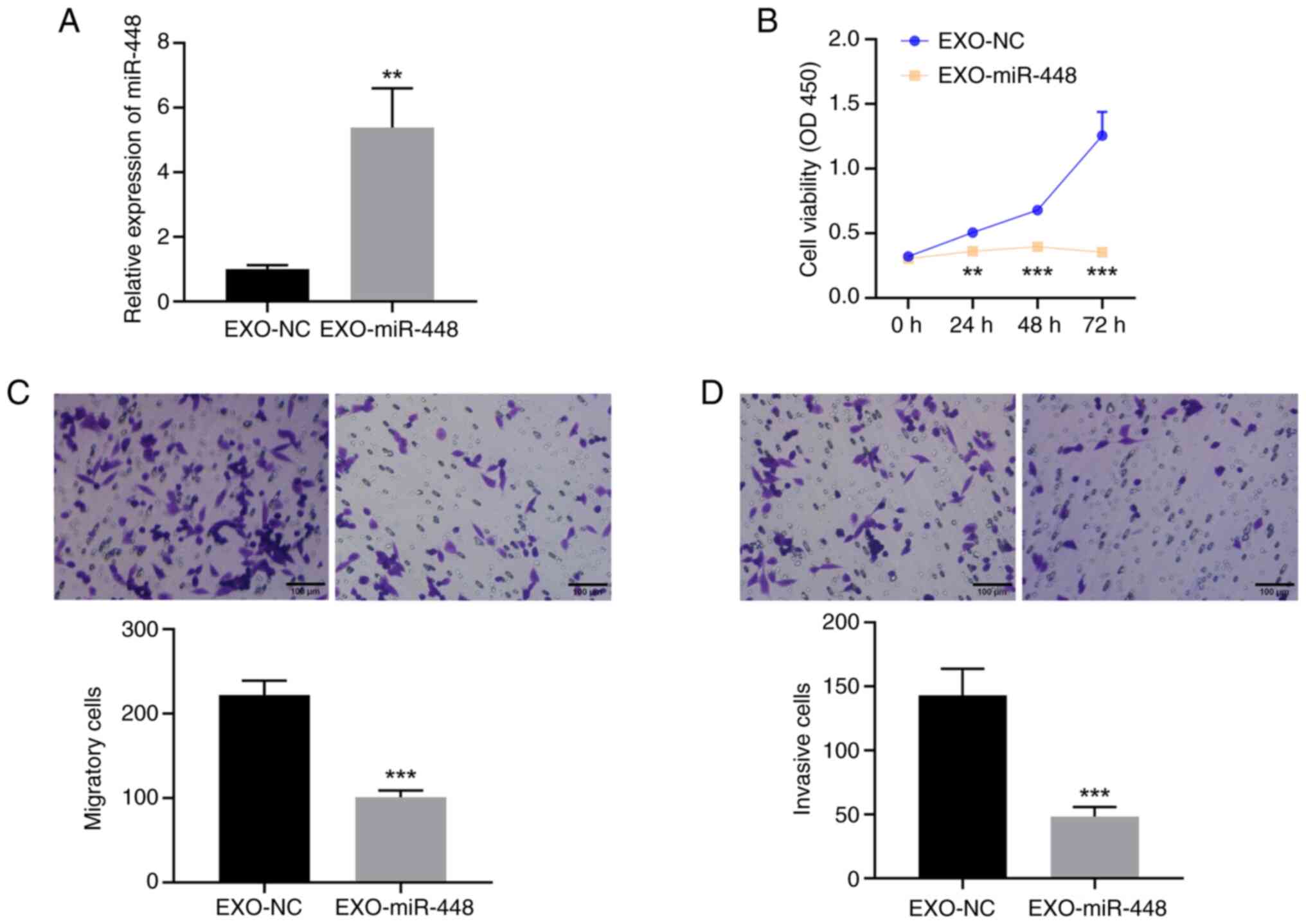
Figure 2

EXO-miR-448 inhibits liver cancer
cell proliferation, migration and invasion. (A) Relative expression
levels of miR-448 in exosomes derived from HepG2 cells transfected
with miR-448 mimics or mimics NC, assessed using reverse
transcription-quantitative PCR. **P<0.01 vs. EXO-NC. (B) Cell
viability assessed using the Cell Counting Kit-8 assay. **P<0.01
and ***P<0.001 vs. EXO-NC. (C) Migration evaluated using the
Transwell migration assays (scale bar, 100 µm). ***P<0.001 vs.
EXO-NC. (D) Invasion assessed using the Transwell invasion assays
(scale bar, 100 µm). ***P<0.001 vs. EXO-NC. miR, microRNA; NC,
negative control; EXO, exosomal.

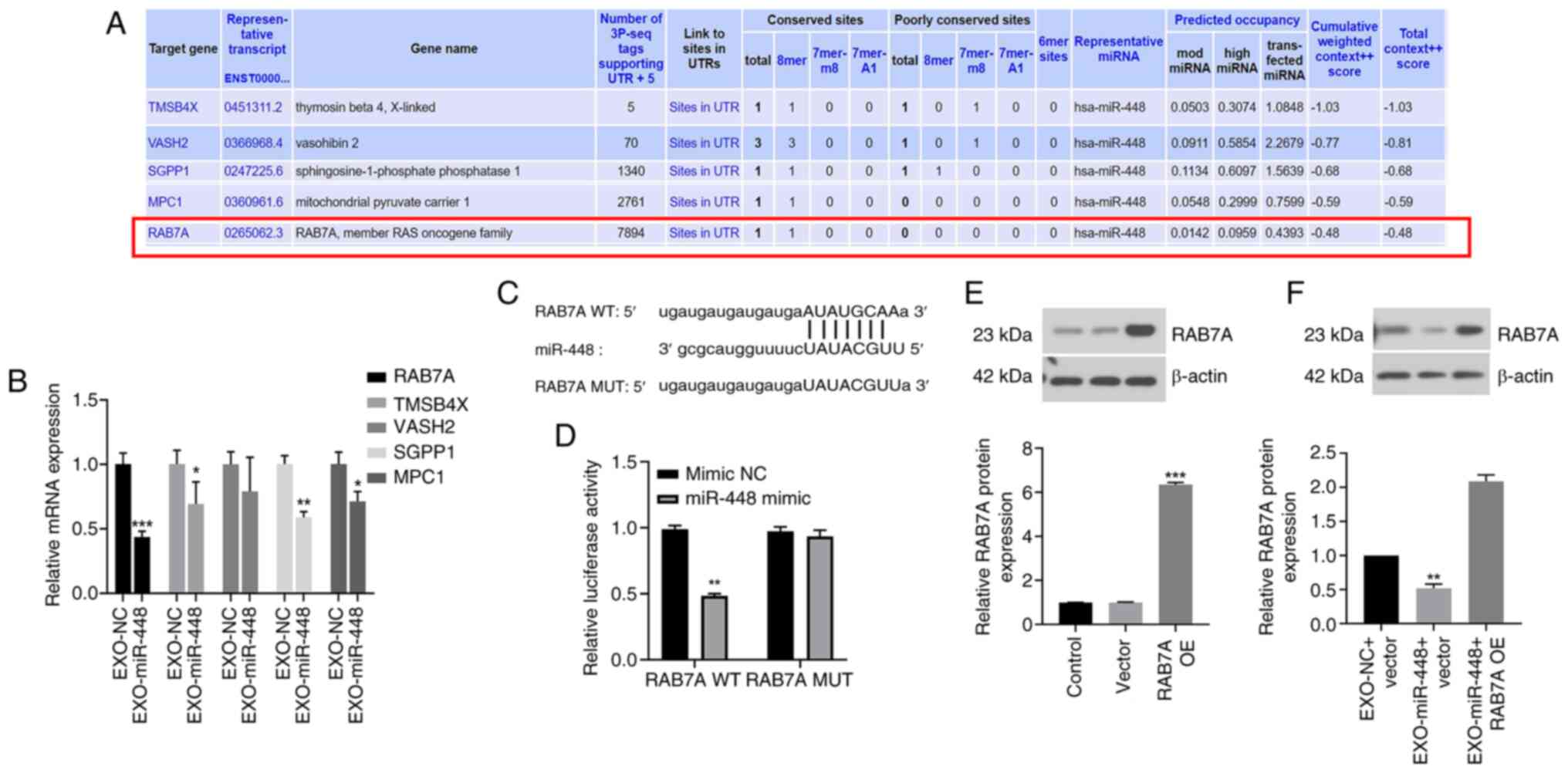
Figure 3

RAB7A as a direct downstream target
of miR-448 in liver cancer. (A) Bioinformatics analysis predicted
potential downstream targets of miR-448, including RAB7A, TMSB4X,
VASH2, SGPP1 and MPC1. (B) Relative mRNA expression levels of
candidate targets in HepG2 cells treated with EXO-miR-448 or
EXO-NC, assessed using reverse transcription-quantitative PCR.
*P<0.05, **P<0.01 and ***P<0.001 vs. EXO-NC. (C) Predicted
binding sites of miR-448 in the 3′-UTR of RAB7A (WT and MUT). (D)
Dual-luciferase reporter assay validating the interaction between
miR-448 and RAB7A. **P<0.01 vs. mimic NC. (E) Western blotting
showing markedly increased RAB7A protein levels in HepG2 cells
transfected with the RAB7A OE construct alone. ***P<0.001 vs.
vector. (F) Western blotting showing reduced RAB7A protein levels
in HepG2 cells after EXO-miR-448 treatment. **P<0.01 vs. EXO-NC
+ vector. EXO, exosomal; miR, microRNA; MPC1, mitochondrial
pyruvate carrier 1; MUT, mutant; NC, negative control; OE,
overexpression; RAB7A, Ras-related protein Rab-7a; SGPP1,
sphingosine-1-phosphate phosphatase 1; TMSB4X, thymosin β 4
X-linked; VASH2, vasohibin 2; WT, wild-types.

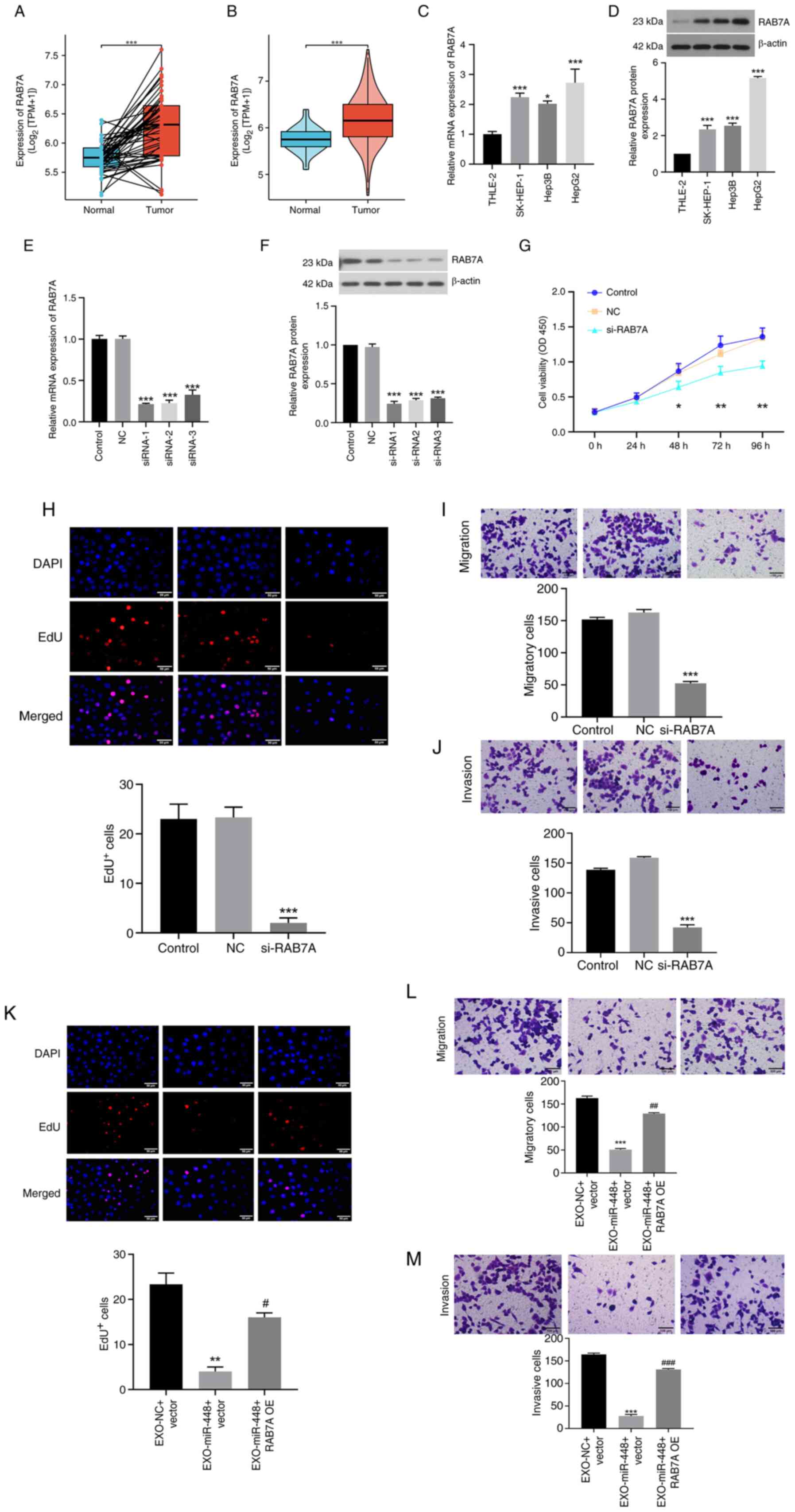
Figure 4

EXO-miR-448 inhibits liver cancer
cell proliferation, migration and invasion by targeting RAB7A. (A)
Paired comparison of RAB7A expression between HCC tumor tissues and
their matched adjacent normal tissues (n=50 pairs). ***P<0.001.
(B) Unpaired comparison of all HCC tumor samples (n=424) vs. normal
liver tissues (n=50). ***P<0.001. (C) RAB7A mRNA expression in
normal liver cells (THLE-2) and liver cancer cell lines (HepG2,
Hep3B and SK-HEP-1). *P<0.05 and ***P<0.001 vs. THLE-2. (D)
RAB7A protein expression in normal liver cells (THLE-2) and liver
cancer cell lines (HepG2, Hep3B and SK-HEP-1). ***P<0.001 vs.
THLE-2. (E) Validation of RAB7A knockdown efficiency in HepG2 cells
using reverse transcription-quantitative PCR. ***P<0.001 vs. NC.
(F) Validation of RAB7A knockdown efficiency in HepG2 cells using
western blotting. ***P<0.001 vs. NC. (G) Cell Counting Kit-8
assay showing reduced proliferation of HepG2 cells after RAB7A
knockdown. *P<0.05 and **P<0.01 vs. NC. (H) EdU assay showing
reduced proliferation of HepG2 cells after RAB7A knockdown (scale
bar, 50 µm). ***P<0.001 vs. NC. (I) Transwell migration assay
showing suppressed migratory ability of HepG2 cells following RAB7A
knockdown (scale bar, 100 µm). ***P<0.001 vs. NC. (J) Transwell
invasion assay showing suppressed invasive ability of HepG2 cells
following RAB7A knockdown (scale bar, 100 µm). ***P<0.001 vs.
NC. (K) Rescue experiment showing that RAB7A OE reverses the
inhibitory effect of EXO-miR-448 on HepG2 cell proliferation. scale
bar, 50 µm. **P<0.01 vs. EXO-NC + vector; #P<0.05
vs. EXO-miR-448 + vector. (L) Rescue experiment showing that RAB7A
OE reverses the inhibitory effect of EXO-miR-448 on HepG2 cell
migration. Scale bar, 100 µm. ***P<0.001 vs. EXO-NC + vector;
##P<0.01 vs. EXO-miR-448 + vector. (M) Rescue
experiment showing that RAB7A OE reverses the inhibitory effect of
EXO-miR-448 on HepG2 cell invasion. Scale bar, 100 µm.
***P<0.001 vs. EXO-NC + vector; ###P<0.001 vs.
EXO-miR-448 + vector. EXO, exosomal; HCC, hepatocellular carcinoma;
miR, microRNA; NC, negative control; OE, overexpression; RAB7A,
Ras-related protein Rab-7a; siRNA, small interfering RNA; TPM,
transcripts per million.

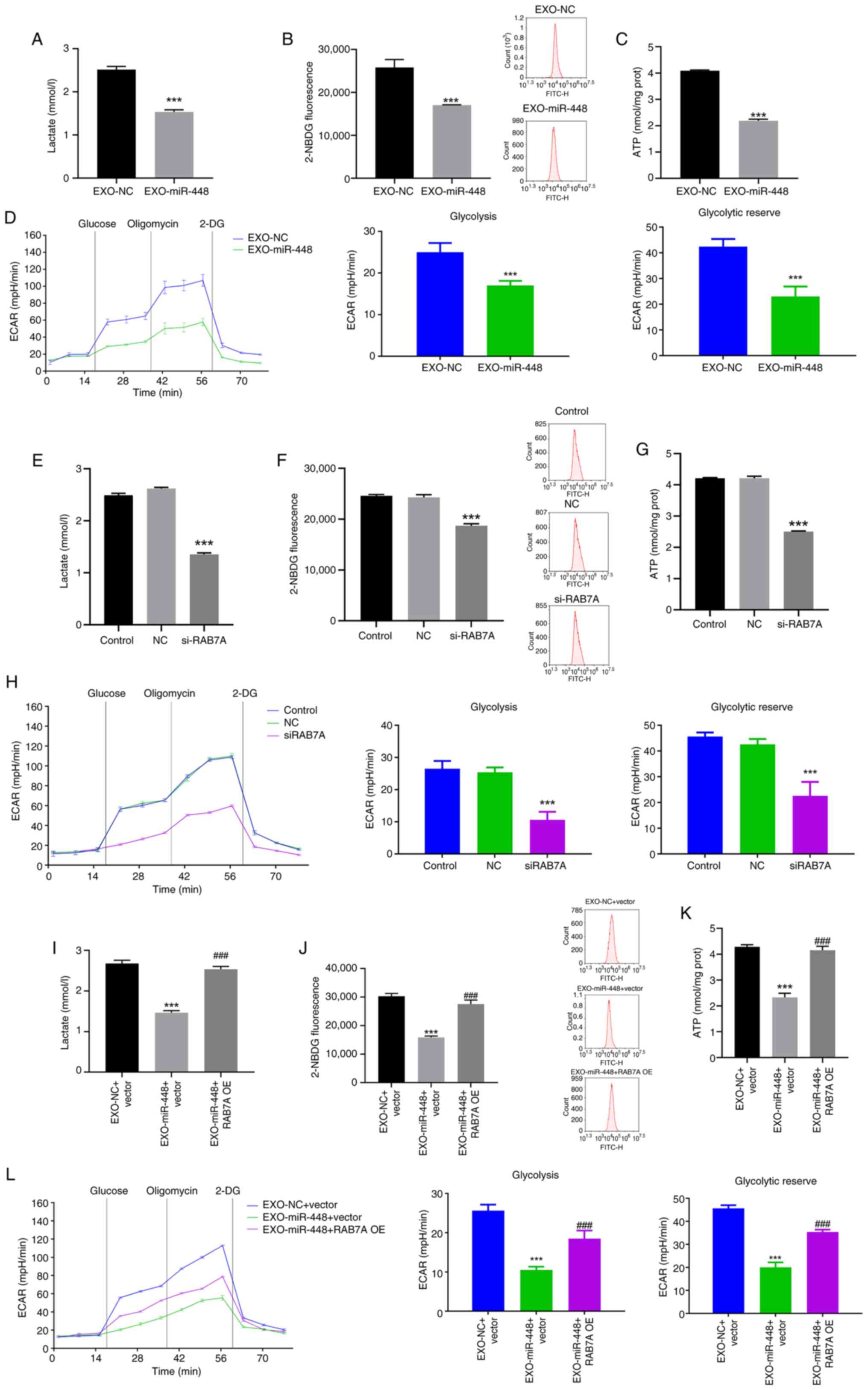
Figure 5

EXO-miR-448 suppresses liver cancer
progression by targeting RAB7A to inhibit glycolysis. (A) Lactate
production in HepG2 cells treated with EXO-miR-448 or EXO-NC,
determined by a colorimetric assay. ***P<0.001 vs. EXO-NC. (B)
Glucose uptake in HepG2 cells treated with EXO-miR-448 or EXO-NC,
assessed using the 2-NBDG assay. ***P<0.001 vs. EXO-NC. (C)
Intracellular ATP levels in HepG2 cells treated with EXO-miR-448 or
EXO-NC, determined using an ATP assay kit. ***P<0.001 vs.
EXO-NC. (D) ECAR in HepG2 cells treated with EXO-miR-448 or EXO-NC,
measured using a Seahorse XF Analyzer. ***P<0.001 vs. EXO-NC.
(E) Lactate production in HepG2 cells transfected with si-RAB7A or
control siRNA. ***P<0.001 vs. NC. (F) Glucose uptake in HepG2
cells transfected with si-RAB7A or control siRNA. ***P<0.001 vs.
NC. (G) Intracellular ATP levels in HepG2 cells transfected with
si-RAB7A or control siRNA. ***P<0.001 vs. NC. (H) ECAR in HepG2
cells transfected with si-RAB7A or control siRNA. ***P<0.001 vs.
NC. (I) Lactate production in HepG2 cells following EXO-miR-448
treatment with or without RAB7A OE. ***P<0.001 vs. EXO-NC +
vector; ###P<0.001 vs. EXO-miR-448 + vector. (J)
Glucose uptake in HepG2 cells following EXO-miR-448 treatment with
or without RAB7A OE. ***P<0.001 vs. EXO-NC + vector;
###P<0.001 vs. EXO-miR-448 + vector. (K) ATP levels
in HepG2 cells following EXO-miR-448 treatment with or without
RAB7A OE. ***P<0.001 vs. EXO-NC + vector;
###P<0.001 vs. EXO-miR-448 + vector. (L) ECAR
analysis showing glycolytic activity in HepG2 cells following
EXO-miR-448 treatment with or without RAB7A OE. ***P<0.001 vs.
EXO-NC + vector; ###P<0.001 vs. EXO-miR-448 + vector.
miR, microRNA; NC, negative control; ECAR, extracellular
acidification rate; si, small interfering RNA; RAB7A, Ras-related
protein Rab-7a; NBDG,
N-(7-Nitrobenz-2-oxa-1,3-diazol-4-yl)amino-2-deoxy-D-glucose; EXO,
exosomal; OE, overexpression; 2-DG, 2-deoxy-D-glucose.
View References

1 

Sung H, Ferlay J, Siegel RL, Laversanne M, Soerjomataram I, Jemal A and Bray F: Global cancer statistics 2020: GLOBOCAN estimates of incidence and mortality worldwide for 36 cancers in 185 countries. CA Cancer J Clin. 71:209–249. 2021.PubMed/NCBI

2 

Marengo A, Rosso C and Bugianesi E: Liver cancer: Connections with obesity, fatty liver, and cirrhosis. Annu Rev Med. 67:103–117. 2016. View Article : Google Scholar : PubMed/NCBI

3 

Hoshida Y, Fuchs BC, Bardeesy N, Baumert TF and Chung RT: Pathogenesis and prevention of hepatitis C virus-induced hepatocellular carcinoma. J Hepatol. 61 (Suppl 1):S79–S90. 2014. View Article : Google Scholar : PubMed/NCBI

4 

Alawyia B and Constantinou C: Hepatocellular carcinoma: A narrative review on current knowledge and future prospects. Curr Treat Options Oncol. 24:711–724. 2023. View Article : Google Scholar : PubMed/NCBI

5 

Khameneh SC, Razi S, Lashanizadegan R, Akbari S, Sayaf M, Haghani K and Bakhtiyari S: MicroRNA-mediated metabolic regulation of immune cells in cancer: An updated review. Front Immunol. 15:14249092024. View Article : Google Scholar : PubMed/NCBI

6 

He L and Hannon GJ: MicroRNAs: Small RNAs with a big role in gene regulation. Nat Rev Genet. 5:522–531. 2004. View Article : Google Scholar : PubMed/NCBI

7 

Bartel DP: MicroRNAs: Target recognition and regulatory functions. Cell. 136:215–233. 2009. View Article : Google Scholar : PubMed/NCBI

8 

Xu X, Li Y, Zhang R, Chen X, Shen J, Yuan M, Chen Y, Chen M, Liu S, Wu J and Sun Q: Jianpi Yangzheng decoction suppresses gastric cancer progression via modulating the miR-448/CLDN18.2 mediated YAP/TAZ signaling. J Ethnopharmacol. 311:1164502023. View Article : Google Scholar : PubMed/NCBI

9 

Zhu H, Zhou X, Ma C, Chang H, Li H, Liu F and Lu J: Low expression of miR-448 induces EMT and promotes invasion by regulating ROCK2 in hepatocellular carcinoma. Cell Physiol Biochem. 36:487–498. 2015. View Article : Google Scholar : PubMed/NCBI

10 

Lin Z, Zhu Y and Liu Y: The role of miR-448 in cancer progression and its potential therapeutic applications. J Cancer Res Clin Oncol. 143:679–687. 2017.

11 

Jiang X, Zhou Y, Sun AJ and Xue JL: NEAT1 contributes to breast cancer progression through modulating miR-448 and ZEB1. J Cell Physiol. 233:8558–8566. 2018. View Article : Google Scholar : PubMed/NCBI

12 

Zhou Y, Lin F, Wan T, Chen A, Wang H, Jiang B, Zhao W, Liao S, Wang S, Li G, et al: ZEB1 enhances Warburg effect to facilitate tumorigenesis and metastasis of HCC by transcriptionally activating PFKM. Theranostics. 11:5926–5938. 2021. View Article : Google Scholar : PubMed/NCBI

13 

Zhang J, Ouyang F, Gao A, Zeng T, Li M, Li H, Zhou W, Gao Q, Tang X, Zhang Q, et al: ESM1 enhances fatty acid synthesis and vascular mimicry in ovarian cancer by utilizing the PKM2-dependent Warburg effect within the hypoxic tumor microenvironment. Mol Cancer. 23:942024. View Article : Google Scholar : PubMed/NCBI

14 

Jing Z, Liu Q, He X, Jia Z, Xu Z, Yang B and Liu P: NCAPD3 enhances Warburg effect through c-myc and E2F1 and promotes the occurrence and progression of colorectal cancer. J Exp Clin Cancer Res. 41:1982022. View Article : Google Scholar : PubMed/NCBI

15 

Peng L, Zhao Y, Tan J, Hou J, Jin X, Liu DX, Huang B and Lu J: PRMT1 promotes Warburg effect by regulating the PKM2/PKM1 ratio in non-small cell lung cancer. Cell Death Dis. 15:5042024. View Article : Google Scholar : PubMed/NCBI

16 

Paul S, Ghosh S and Kumar S: Tumor glycolysis, an essential sweet tooth of tumor cells. Semin Cancer Biol. 86:1216–1230. 2022. View Article : Google Scholar : PubMed/NCBI

17 

Lan F, Qin Q, Yu H and Yue X: Effect of glycolysis inhibition by miR-448 on glioma radiosensitivity. J Neurosurg. 132:1456–1464. 2019. View Article : Google Scholar : PubMed/NCBI

18 

Luce A, Lombardi A, Ferri C, Zappavigna S, Tathode MS, Miles AK, Boocock DJ, Vadakekolathu J, Bocchetti M, Alfano R, et al: A proteomic approach reveals that miR-423-5p modulates glucidic and amino acid metabolism in prostate cancer cells. Int J Mol Sci. 24:6172022. View Article : Google Scholar : PubMed/NCBI

19 

Chu M, Zhao Y, Feng Y, Zhang H, Liu J, Cheng M, Li L, Shen W, Cao H, Li Q and Min L: MicroRNA-126 participates in lipid metabolism in mammary epithelial cells. Mol Cell Endocrinol. 454:77–86. 2017. View Article : Google Scholar : PubMed/NCBI

20 

Guerra F and Bucci C: Role of the RAB7 protein in tumor progression and cisplatin chemoresistance. Cancers (Basel). 11:10962019. View Article : Google Scholar : PubMed/NCBI

21 

Ju L, Luo Y, Cui X, Zhang H, Chen L and Yao M: CircGPC3 promotes hepatocellular carcinoma progression and metastasis by sponging miR-578 and regulating RAB7A/PSME3 expression. Sci Rep. 14:76322024. View Article : Google Scholar : PubMed/NCBI

22 

Shan Z, Chen X, Chen H and Zhou X: Investigating the impact of Ras-related protein RAB7A on colon adenocarcinoma behavior and its clinical significance. Biofactors. 51:e700062025. View Article : Google Scholar : PubMed/NCBI

23 

Liu Q, Bai Y, Shi X, Guo D, Wang Y, Wang Y, Guo WZ and Zhang S: High RAS-related protein Rab-7a (RAB7A) expression is a poor prognostic factor in pancreatic adenocarcinoma. Sci Rep. 12:174922022. View Article : Google Scholar : PubMed/NCBI

24 

Güleç Taşkıran AE, Hüsnügil HH, Soltani ZE, Oral G, Menemenli NS, Hampel C, Huebner K, Erlenbach-Wuensch K, Sheraj I, Schneider-Stock R, et al: Post-transcriptional regulation of Rab7a in lysosomal positioning and drug resistance in nutrient-limited cancer cells. Traffic. 25:e129562024. View Article : Google Scholar : PubMed/NCBI

25 

Zhang JY, Zhu X, Liu Y and Wu X: The prognostic biomarker RAB7A promotes growth and metastasis of liver cancer cells by regulating glycolysis and YAP1 activation. J Cell Biochem. 125:e306212024. View Article : Google Scholar : PubMed/NCBI

26 

Livak KJ and Schmittgen TD: Analysis of relative gene expression data using real-time quantitative PCR and the 2(−Delta Delta C(T)) method. Methods. 25:402–408. 2001. View Article : Google Scholar : PubMed/NCBI

27 

Ostrowski M, Carmo NB, Krumeich S, Fanget I, Raposo G, Savina A, Moita CF, Schauer K, Hume AN, Freitas RP, et al: Rab27a and Rab27b control different steps of the exosome secretion pathway. Nat Cell Biol. 12:19–30. 1–13. 2010. View Article : Google Scholar : PubMed/NCBI

28 

Mulligan RJ and Winckler B: Regulation of endosomal trafficking by Rab7 and its effectors in neurons: Clues from charcot-marie-tooth 2B disease. Biomolecules. 13:13992023. View Article : Google Scholar : PubMed/NCBI

29 

Hanahan D and Weinberg RA: Hallmarks of cancer: The next generation. Cell. 144:646–674. 2011. View Article : Google Scholar : PubMed/NCBI

30 

Feng J, Li J, Wu L, Yu Q, Ji J, Wu J, Dai W and Guo C: Emerging roles and the regulation of aerobic glycolysis in hepatocellular carcinoma. J Exp Clin Cancer Res. 39:1262020. View Article : Google Scholar : PubMed/NCBI

31 

Wen T, Jin C, Facciorusso A, Donadon M, Han HS, Mao Y, Dai C, Cheng S, Zhang B, Peng B, et al: Multidisciplinary management of recurrent and metastatic hepatocellular carcinoma after resection: An international expert consensus. Hepatobiliary Surg Nutr. 7:353–371. 2018. View Article : Google Scholar : PubMed/NCBI

32 

Abdelhamed W and El-Kassas M: Hepatocellular carcinoma recurrence: Predictors and management. Liver Res. 7:321–332. 2023. View Article : Google Scholar : PubMed/NCBI

33 

Bray F, Ferlay J, Soerjomataram I, Siegel RL, Torre LA and Jemal A: Global cancer statistics 2018: GLOBOCAN estimates of incidence and mortality worldwide for 36 cancers in 185 countries. CA Cancer J Clin. 68:394–424. 2018.PubMed/NCBI

34 

Shin H and Yu SJ: A concise review of updated global guidelines for the management of hepatocellular carcinoma: 2017–2024. J Liver Cancer. 25:19–30. 2025. View Article : Google Scholar : PubMed/NCBI

35 

Llovet JM, Kelley RK, Villanueva A, Singal AG, Pikarsky E, Roayaie S, Lencioni R, Koike K, Zucman-Rossi J and Finn RS: Hepatocellular carcinoma. Nat Rev Dis Primers. 7:62021. View Article : Google Scholar : PubMed/NCBI

36 

Yang F, Hilakivi-Clarke L, Shaha A, Wang Y, Wang X, Deng Y, Lai J and Kang N: Metabolic reprogramming and its clinical implication for liver cancer. Hepatology. 78:1602–1624. 2023.PubMed/NCBI

37 

Katayama Y, Maeda M, Miyaguchi K, Nemoto S, Yasen M, Tanaka S, Mizushima H, Fukuoka Y, Arii S and Tanaka H: Identification of pathogenesis-related microRNAs in hepatocellular carcinoma by expression profiling. Oncol Lett. 4:817–823. 2012. View Article : Google Scholar : PubMed/NCBI

38 

Pegtel DM and Gould SJ: Exosomes. Annu Rev Biochem. 88:487–514. 2019. View Article : Google Scholar : PubMed/NCBI

39 

Li B, Cao Y, Sun M and Feng H: Expression, regulation, and function of exosome-derived miRNAs in cancer progression and therapy. FASEB J. 35:e219162021. View Article : Google Scholar : PubMed/NCBI

40 

Wu X, Tang H, Liu G, Wang H, Shu J and Sun F: miR-448 suppressed gastric cancer proliferation and invasion by regulating ADAM10. Tumour Biol. 37:10545–10551. 2016. View Article : Google Scholar : PubMed/NCBI

41 

Bamodu OA, Huang WC, Lee WH, Wu A, Wang LS, Hsiao M, Yeh CT and Chao TY: Aberrant KDM5B expression promotes aggressive breast cancer through MALAT1 overexpression and downregulation of hsa-miR-448. BMC Cancer. 16:1602016. View Article : Google Scholar : PubMed/NCBI

42 

Qi H, Wang H and Pang D: miR-448 promotes progression of non-small-cell lung cancer via targeting SIRT1. Exp Ther Med. 18:1907–1913. 2019.PubMed/NCBI

43 

Liu Y, Ma J, Wang X, Liu P, Cai C, Han Y, Zeng S, Feng Z and Shen H: Lipophagy-related gene RAB7A is involved in immune regulation and malignant progression in hepatocellular carcinoma. Comput Biol Med. 158:1068622023. View Article : Google Scholar : PubMed/NCBI

44 

Xie J, Yan Y, Liu F, Kang H, Xu F, Xiao W, Wang H and Wang Y: Knockdown of Rab7a suppresses the proliferation, migration, and xenograft tumor growth of breast cancer cells. Biosci Rep. 39:BSR201804802019. View Article : Google Scholar : PubMed/NCBI

45 

Abrahamian C, Tang R, Deutsch R, Ouologuem L, Weiden EM, Kudrina V, Blenninger J, Rilling J, Feldmann C, Kuss S, et al: Rab7a is an enhancer of TPC2 activity regulating melanoma progression through modulation of the GSK3β/β-Catenin/MITF-axis. Nat Commun. 15:100082024. View Article : Google Scholar : PubMed/NCBI

46 

Song S, Xie S, Liu X, Li S, Wang L, Jiang X and Lu D: miR-3200 accelerates the growth of liver cancer cells by enhancing Rab7A. Noncoding RNA Res. 8:675–685. 2023. View Article : Google Scholar : PubMed/NCBI

47 

Wang Y, Chen X, Yao N, Gong J, Cao Y, Su X, Feng X and Tao M: MiR-448 suppresses cell proliferation and glycolysis of hepatocellular carcinoma through inhibiting IGF-1R expression. J Gastrointest Oncol. 13:355–367. 2022. View Article : Google Scholar : PubMed/NCBI

48 

Qi C, Zou L, Wang S, Mao X, Hu Y, Shi J, Zhang Z and Wu H: Vps34 inhibits hepatocellular carcinoma invasion by regulating endosome-lysosome trafficking via Rab7-RILP and Rab11. Cancer Res Treat. 54:182–198. 2022. View Article : Google Scholar : PubMed/NCBI

49 

Yang CC, Meng GX, Dong ZR and Li T: Role of Rab GTPases in hepatocellular carcinoma. J Hepatocell Carcinoma. 8:1389–1397. 2021. View Article : Google Scholar : PubMed/NCBI

50 

Zhang X, Chen C, Ling C, Luo S, Xiong Z, Liu X, Liao C, Xie P, Liu Y, Zhang L, et al: EGFR tyrosine kinase activity and Rab GTPases coordinate EGFR trafficking to regulate macrophage activation in sepsis. Cell Death Dis. 13:9342022. View Article : Google Scholar : PubMed/NCBI

51 

Aygun D and Yücel Yılmaz D: From gene to pathways: Understanding novel Vps51 variant and its cellular consequences. Int J Mol Sci. 26:57092025. View Article : Google Scholar : PubMed/NCBI

52 

Edinger AL, Cinalli RM and Thompson CB: Rab7 prevents growth factor-independent survival by inhibiting cell-autonomous nutrient transporter expression. Dev Cell. 5:571–582. 2003. View Article : Google Scholar : PubMed/NCBI

53 

Deffieu MS, Cesonyte I, Delalande F, Boncompain G, Dorobantu C, Song E, Lucansky V, Hirschler A, Cianferani S, Perez F, et al: Rab7-harboring vesicles are carriers of the transferrin receptor through the biosynthetic secretory pathway. Sci Adv. 7:eaba78032021. View Article : Google Scholar : PubMed/NCBI

54 

Jiang C, He X, Chen X, Huang J, Liu Y, Zhang J, Chen H, Sui X, Lv X, Zhao X, et al: Lactate accumulation drives hepatocellular carcinoma metastasis through facilitating tumor-derived exosome biogenesis by Rab7A lactylation. Cancer Lett. 627:2176362025. View Article : Google Scholar : PubMed/NCBI

55 

Fan B, Wang L, Hu T, Zheng L and Wang J: Exosomal miR-196a-5p secreted by bone marrow mesenchymal stem cells inhibits ferroptosis and promotes drug resistance of acute myeloid leukemia. Antioxid Redox Signal. 42:933–953. 2025. View Article : Google Scholar : PubMed/NCBI

Related Articles

  • Abstract
  • View
  • Download
  • Twitter
Copy and paste a formatted citation
Spandidos Publications style
Chen Y, Zhu T, Chen F, Niu M, Wu H, Wu Q, Wang Z and Li W: Exosomal microRNA‑448 suppresses the malignant behaviors of liver cancer cells by targeting RAB7A and inhibiting glycolysis. Oncol Lett 31: 97, 2026.
APA
Chen, Y., Zhu, T., Chen, F., Niu, M., Wu, H., Wu, Q. ... Li, W. (2026). Exosomal microRNA‑448 suppresses the malignant behaviors of liver cancer cells by targeting RAB7A and inhibiting glycolysis. Oncology Letters, 31, 97. https://doi.org/10.3892/ol.2026.15450
MLA
Chen, Y., Zhu, T., Chen, F., Niu, M., Wu, H., Wu, Q., Wang, Z., Li, W."Exosomal microRNA‑448 suppresses the malignant behaviors of liver cancer cells by targeting RAB7A and inhibiting glycolysis". Oncology Letters 31.3 (2026): 97.
Chicago
Chen, Y., Zhu, T., Chen, F., Niu, M., Wu, H., Wu, Q., Wang, Z., Li, W."Exosomal microRNA‑448 suppresses the malignant behaviors of liver cancer cells by targeting RAB7A and inhibiting glycolysis". Oncology Letters 31, no. 3 (2026): 97. https://doi.org/10.3892/ol.2026.15450
Copy and paste a formatted citation
x
Spandidos Publications style
Chen Y, Zhu T, Chen F, Niu M, Wu H, Wu Q, Wang Z and Li W: Exosomal microRNA‑448 suppresses the malignant behaviors of liver cancer cells by targeting RAB7A and inhibiting glycolysis. Oncol Lett 31: 97, 2026.
APA
Chen, Y., Zhu, T., Chen, F., Niu, M., Wu, H., Wu, Q. ... Li, W. (2026). Exosomal microRNA‑448 suppresses the malignant behaviors of liver cancer cells by targeting RAB7A and inhibiting glycolysis. Oncology Letters, 31, 97. https://doi.org/10.3892/ol.2026.15450
MLA
Chen, Y., Zhu, T., Chen, F., Niu, M., Wu, H., Wu, Q., Wang, Z., Li, W."Exosomal microRNA‑448 suppresses the malignant behaviors of liver cancer cells by targeting RAB7A and inhibiting glycolysis". Oncology Letters 31.3 (2026): 97.
Chicago
Chen, Y., Zhu, T., Chen, F., Niu, M., Wu, H., Wu, Q., Wang, Z., Li, W."Exosomal microRNA‑448 suppresses the malignant behaviors of liver cancer cells by targeting RAB7A and inhibiting glycolysis". Oncology Letters 31, no. 3 (2026): 97. https://doi.org/10.3892/ol.2026.15450
Follow us
  • Twitter
  • LinkedIn
  • Facebook
About
  • Spandidos Publications
  • Careers
  • Cookie Policy
  • Privacy Policy
How can we help?
  • Help
  • Live Chat
  • Contact
  • Email to our Support Team