Spandidos Publications Logo
  • About
    • About Spandidos
    • Aims and Scopes
    • Abstracting and Indexing
    • Editorial Policies
    • Reprints and Permissions
    • Job Opportunities
    • Terms and Conditions
    • Contact
  • Journals
    • All Journals
    • Oncology Letters
      • Oncology Letters
      • Information for Authors
      • Editorial Policies
      • Editorial Board
      • Aims and Scope
      • Abstracting and Indexing
      • Bibliographic Information
      • Archive
    • International Journal of Oncology
      • International Journal of Oncology
      • Information for Authors
      • Editorial Policies
      • Editorial Board
      • Aims and Scope
      • Abstracting and Indexing
      • Bibliographic Information
      • Archive
    • Molecular and Clinical Oncology
      • Molecular and Clinical Oncology
      • Information for Authors
      • Editorial Policies
      • Editorial Board
      • Aims and Scope
      • Abstracting and Indexing
      • Bibliographic Information
      • Archive
    • Experimental and Therapeutic Medicine
      • Experimental and Therapeutic Medicine
      • Information for Authors
      • Editorial Policies
      • Editorial Board
      • Aims and Scope
      • Abstracting and Indexing
      • Bibliographic Information
      • Archive
    • International Journal of Molecular Medicine
      • International Journal of Molecular Medicine
      • Information for Authors
      • Editorial Policies
      • Editorial Board
      • Aims and Scope
      • Abstracting and Indexing
      • Bibliographic Information
      • Archive
    • Biomedical Reports
      • Biomedical Reports
      • Information for Authors
      • Editorial Policies
      • Editorial Board
      • Aims and Scope
      • Abstracting and Indexing
      • Bibliographic Information
      • Archive
    • Oncology Reports
      • Oncology Reports
      • Information for Authors
      • Editorial Policies
      • Editorial Board
      • Aims and Scope
      • Abstracting and Indexing
      • Bibliographic Information
      • Archive
    • Molecular Medicine Reports
      • Molecular Medicine Reports
      • Information for Authors
      • Editorial Policies
      • Editorial Board
      • Aims and Scope
      • Abstracting and Indexing
      • Bibliographic Information
      • Archive
    • World Academy of Sciences Journal
      • World Academy of Sciences Journal
      • Information for Authors
      • Editorial Policies
      • Editorial Board
      • Aims and Scope
      • Abstracting and Indexing
      • Bibliographic Information
      • Archive
    • International Journal of Functional Nutrition
      • International Journal of Functional Nutrition
      • Information for Authors
      • Editorial Policies
      • Editorial Board
      • Aims and Scope
      • Abstracting and Indexing
      • Bibliographic Information
      • Archive
    • International Journal of Epigenetics
      • International Journal of Epigenetics
      • Information for Authors
      • Editorial Policies
      • Editorial Board
      • Aims and Scope
      • Abstracting and Indexing
      • Bibliographic Information
      • Archive
    • Medicine International
      • Medicine International
      • Information for Authors
      • Editorial Policies
      • Editorial Board
      • Aims and Scope
      • Abstracting and Indexing
      • Bibliographic Information
      • Archive
  • Articles
  • Information
    • Information for Authors
    • Information for Reviewers
    • Information for Librarians
    • Information for Advertisers
    • Conferences
  • Language Editing
Spandidos Publications Logo
  • About
    • About Spandidos
    • Aims and Scopes
    • Abstracting and Indexing
    • Editorial Policies
    • Reprints and Permissions
    • Job Opportunities
    • Terms and Conditions
    • Contact
  • Journals
    • All Journals
    • Biomedical Reports
      • Information for Authors
      • Editorial Policies
      • Editorial Board
      • Aims and Scope
      • Abstracting and Indexing
      • Bibliographic Information
      • Archive
    • Experimental and Therapeutic Medicine
      • Information for Authors
      • Editorial Policies
      • Editorial Board
      • Aims and Scope
      • Abstracting and Indexing
      • Bibliographic Information
      • Archive
    • International Journal of Epigenetics
      • Information for Authors
      • Editorial Policies
      • Editorial Board
      • Aims and Scope
      • Abstracting and Indexing
      • Bibliographic Information
      • Archive
    • International Journal of Functional Nutrition
      • Information for Authors
      • Editorial Policies
      • Editorial Board
      • Aims and Scope
      • Abstracting and Indexing
      • Bibliographic Information
      • Archive
    • International Journal of Molecular Medicine
      • Information for Authors
      • Editorial Policies
      • Editorial Board
      • Aims and Scope
      • Abstracting and Indexing
      • Bibliographic Information
      • Archive
    • International Journal of Oncology
      • Information for Authors
      • Editorial Policies
      • Editorial Board
      • Aims and Scope
      • Abstracting and Indexing
      • Bibliographic Information
      • Archive
    • Medicine International
      • Information for Authors
      • Editorial Policies
      • Editorial Board
      • Aims and Scope
      • Abstracting and Indexing
      • Bibliographic Information
      • Archive
    • Molecular and Clinical Oncology
      • Information for Authors
      • Editorial Policies
      • Editorial Board
      • Aims and Scope
      • Abstracting and Indexing
      • Bibliographic Information
      • Archive
    • Molecular Medicine Reports
      • Information for Authors
      • Editorial Policies
      • Editorial Board
      • Aims and Scope
      • Abstracting and Indexing
      • Bibliographic Information
      • Archive
    • Oncology Letters
      • Information for Authors
      • Editorial Policies
      • Editorial Board
      • Aims and Scope
      • Abstracting and Indexing
      • Bibliographic Information
      • Archive
    • Oncology Reports
      • Information for Authors
      • Editorial Policies
      • Editorial Board
      • Aims and Scope
      • Abstracting and Indexing
      • Bibliographic Information
      • Archive
    • World Academy of Sciences Journal
      • Information for Authors
      • Editorial Policies
      • Editorial Board
      • Aims and Scope
      • Abstracting and Indexing
      • Bibliographic Information
      • Archive
  • Articles
  • Information
    • For Authors
    • For Reviewers
    • For Librarians
    • For Advertisers
    • Conferences
  • Language Editing
Login Register Submit
  • This site uses cookies
  • You can change your cookie settings at any time by following the instructions in our Cookie Policy. To find out more, you may read our Privacy Policy.

    I agree
Search articles by DOI, keyword, author or affiliation
Search
Advanced Search
presentation
Oncology Letters
Join Editorial Board Propose a Special Issue
Print ISSN: 1792-1074 Online ISSN: 1792-1082
Journal Cover
March-2026 Volume 31 Issue 3

Full Size Image

Sign up for eToc alerts
Recommend to Library

Journals

International Journal of Molecular Medicine

International Journal of Molecular Medicine

International Journal of Molecular Medicine is an international journal devoted to molecular mechanisms of human disease.

International Journal of Oncology

International Journal of Oncology

International Journal of Oncology is an international journal devoted to oncology research and cancer treatment.

Molecular Medicine Reports

Molecular Medicine Reports

Covers molecular medicine topics such as pharmacology, pathology, genetics, neuroscience, infectious diseases, molecular cardiology, and molecular surgery.

Oncology Reports

Oncology Reports

Oncology Reports is an international journal devoted to fundamental and applied research in Oncology.

Experimental and Therapeutic Medicine

Experimental and Therapeutic Medicine

Experimental and Therapeutic Medicine is an international journal devoted to laboratory and clinical medicine.

Oncology Letters

Oncology Letters

Oncology Letters is an international journal devoted to Experimental and Clinical Oncology.

Biomedical Reports

Biomedical Reports

Explores a wide range of biological and medical fields, including pharmacology, genetics, microbiology, neuroscience, and molecular cardiology.

Molecular and Clinical Oncology

Molecular and Clinical Oncology

International journal addressing all aspects of oncology research, from tumorigenesis and oncogenes to chemotherapy and metastasis.

World Academy of Sciences Journal

World Academy of Sciences Journal

Multidisciplinary open-access journal spanning biochemistry, genetics, neuroscience, environmental health, and synthetic biology.

International Journal of Functional Nutrition

International Journal of Functional Nutrition

Open-access journal combining biochemistry, pharmacology, immunology, and genetics to advance health through functional nutrition.

International Journal of Epigenetics

International Journal of Epigenetics

Publishes open-access research on using epigenetics to advance understanding and treatment of human disease.

Medicine International

Medicine International

An International Open Access Journal Devoted to General Medicine.

Journal Cover
March-2026 Volume 31 Issue 3

Full Size Image

Sign up for eToc alerts
Recommend to Library

  • Article
  • Citations
    • Cite This Article
    • Download Citation
    • Create Citation Alert
    • Remove Citation Alert
    • Cited By
  • Similar Articles
    • Related Articles (in Spandidos Publications)
    • Similar Articles (Google Scholar)
    • Similar Articles (PubMed)
  • Download PDF
  • Download XML
  • View XML
Article Open Access

Immune microenvironment and treatment response of dMMR gastric cancer: Heterogeneity and implications for immunotherapy

  • Authors:
    • Liping Wang
    • Xinliang Zhong
    • Mengxing Diao
    • Wei Deng
  • View Affiliations / Copyright

    Affiliations: Department of Medical Oncology, Southern University of Science and Technology Hospital, Shenzhen, Guangdong 518055, P.R. China, Department of Pathology, Southern University of Science and Technology Hospital, Shenzhen, Guangdong 518055, P.R. China
    Copyright: © Wang et al. This is an open access article distributed under the terms of Creative Commons Attribution License.
  • Article Number: 119
    |
    Published online on: January 27, 2026
       https://doi.org/10.3892/ol.2026.15472
  • Expand metrics +
Metrics: Total Views: 0 (Spandidos Publications: | PMC Statistics: )
Metrics: Total PDF Downloads: 0 (Spandidos Publications: | PMC Statistics: )
Cited By (CrossRef): 0 citations Loading Articles...

This article is mentioned in:


Abstract

Deficient mismatch repair (dMMR) in gastric cancer is associated with a high tumor mutation burden (TMB) and increased neoantigen load, which may enhance sensitivity to immunotherapy. Nevertheless, heterogeneous responses among patients with dMMR suggest complex tumor immune microenvironment (TIME) regulation. The present study aimed to integrate a case of dMMR gastric cancer with multi‑cohort bioinformatic analyses to assess TIME determinants of immunotherapy outcomes, focusing on hematological immune cell subsets. Pre‑ and post‑immunotherapy TIME changes were evaluated in a patient with dMMR gastric cancer using immunohistochemistry analysis [CD8+, CD4+, forkhead box P3 (FoxP3)+ regulatory T cells (Tregs), M1/M2 macrophages and programmed death‑ligand 1 (PD‑L1)]. Moreover, bioinformatics analyses assessed microsatellite instability (MSI) status, immune checkpoints [cytotoxic T‑lymphocyte‑associated protein 4 (CTLA4), CD274 and programmed cell death protein 1 (PDCD1)], TMB and TIME cell infiltration across The Cancer Genome Atlas (TCGA)‑stomach adenocarcinoma (STAD; n=383), Kim (n=45), Peking University Cancer Hospital (n=31) and Esophagogastric Cancer‑Memorial Sloan Kettering‑2017 (EGC‑MSK‑2017; n=28) cohorts using CIBERSORT (LM22) and R‑based statistical approaches. The case report demonstrated that, prior to treatment, the tumor was deemed ‘immune cold’, characterized by low levels of CD8+ T cells, M1 macrophages and Tregs. Post‑treatment, total T cell infiltration increased, driven primarily by CD4+ T cells, while CD8+ T cell levels remained low. FoxP3+ T cell density (0.18 cells/mm²) indicated potential immune suppression; B cell infiltration (CD20+, 17.07 cells/mm²) did not markedly increase, with no tertiary lymphoid structures (TLS) detected. Moreover, bioinformatics cross‑cohort analyses revealed favorable immunological features in microsatellite instability (MSI)‑high (MSI‑H) gastric cancer compared with in MSI‑low (MSI‑L)/microsatellite stability (MSS) gastric cancer. In TCGA‑STAD dataset, MSI‑H tumors had significantly higher TMB, neoantigen load, infiltration of memory‑activated CD4+ T cells, activated natural killer (NK) cells, mast cells, M1 macrophages and immune checkpoint markers (CTLA4, CD274 and PDCD1; all P<0.05); CD8+ T cells differed significantly between MSI‑H and MSI‑L (P<0.05), but not between MSI‑H and MSS cancer. MSI‑H was associated with a higher TMB in the Kim and EGC‑MSK‑2017 cohorts, a higher immunotherapy response rate in the Kim cohort (P<0.05) and trends toward improved OS in TCGA‑STAD [hazard ratio (HR), 0.68] and EGC‑MSK‑2017 (HR, 0.42) cohorts. All survival differences were non‑significant (P>0.05). In conclusion, the results demonstrated that in dMMR/MSI‑H tumors (which typically exhibit high TMB and neoantigen load), a TIME characterized by low CD8+ T cells, high Tregs, absent TLS and low PD‑L1, could be indicative of immunotherapy resistance. Cross‑cohort analysis further revealed that despite favorable immunological features (higher TMB, neoantigen load, memory‑activated CD4+ T cells, activated NK cells, mast cells, M1 macrophages and immune checkpoint expression), MSI‑H gastric cancers have heterogeneous immunotherapy outcomes. Collectively, dMMR/MSI‑H status alone is insufficient for outcome prediction, highlighting the need for individualized TIME evaluation in patients with gastric cancer receiving immunotherapy.

View Figures

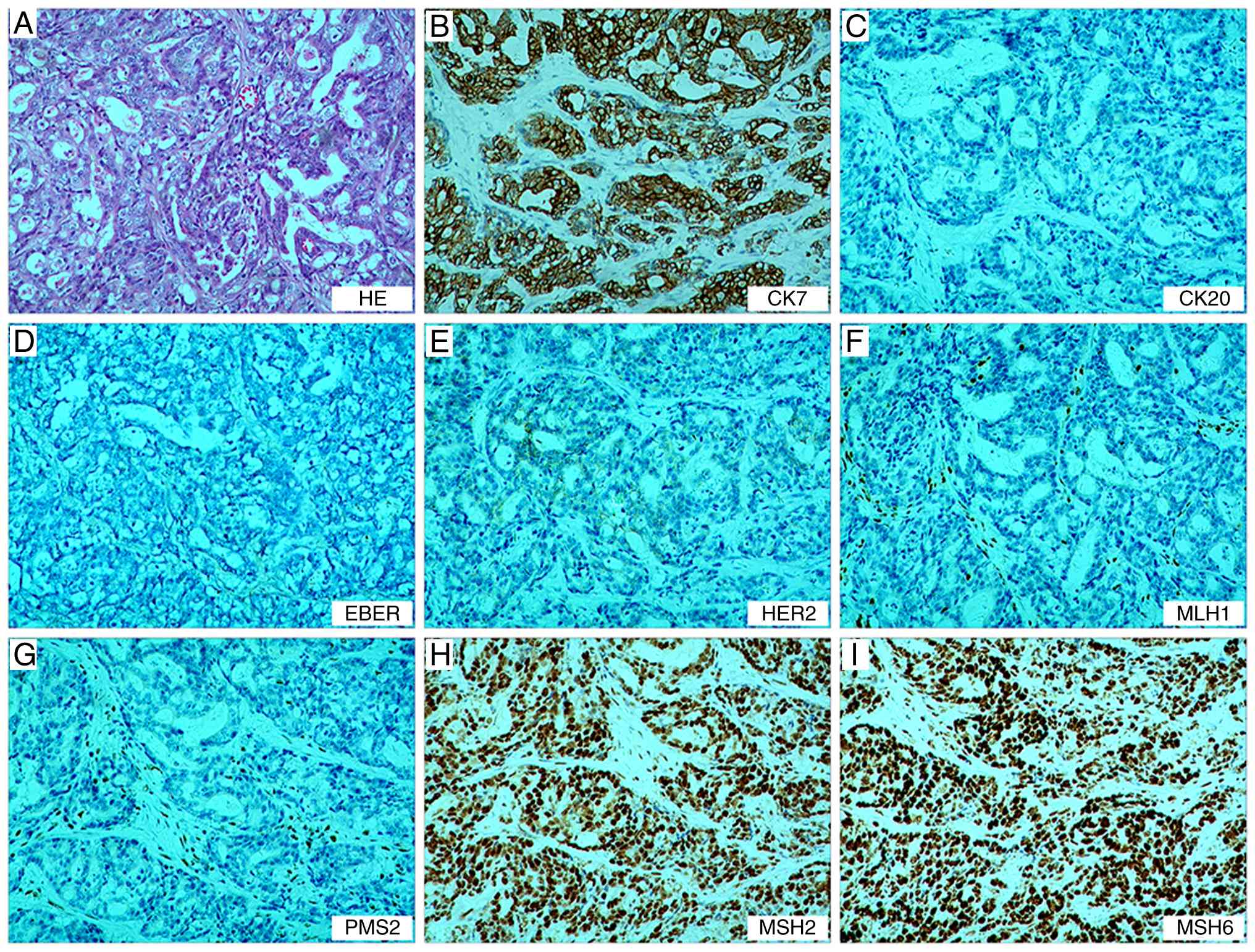
Figure 1

Postoperative pathological findings
of the gastric tumor. (A) Tumor cells show diffuse/sheet-like
growth with focal glandular differentiation, increased
nuclear-to-cytoplasmic ratio and hyperchromatic nuclei.
Immunohistochemistry demonstrates (B) CK7 (+), (C) CK20 (−), (D)
EBER (−), (E) C-erbB-2 (0), (F) MLH1 (−), (G) PMS2 (−), (H) MSH2
(+) and (I) MSH6 (+), confirming deficient mismatch repair status.
Magnification, ×100. MLH1, MutL homolog; PMS2, postmeiotic
segregation increased (S. Cerevisiae) 2; MSH, MutS
homolog.

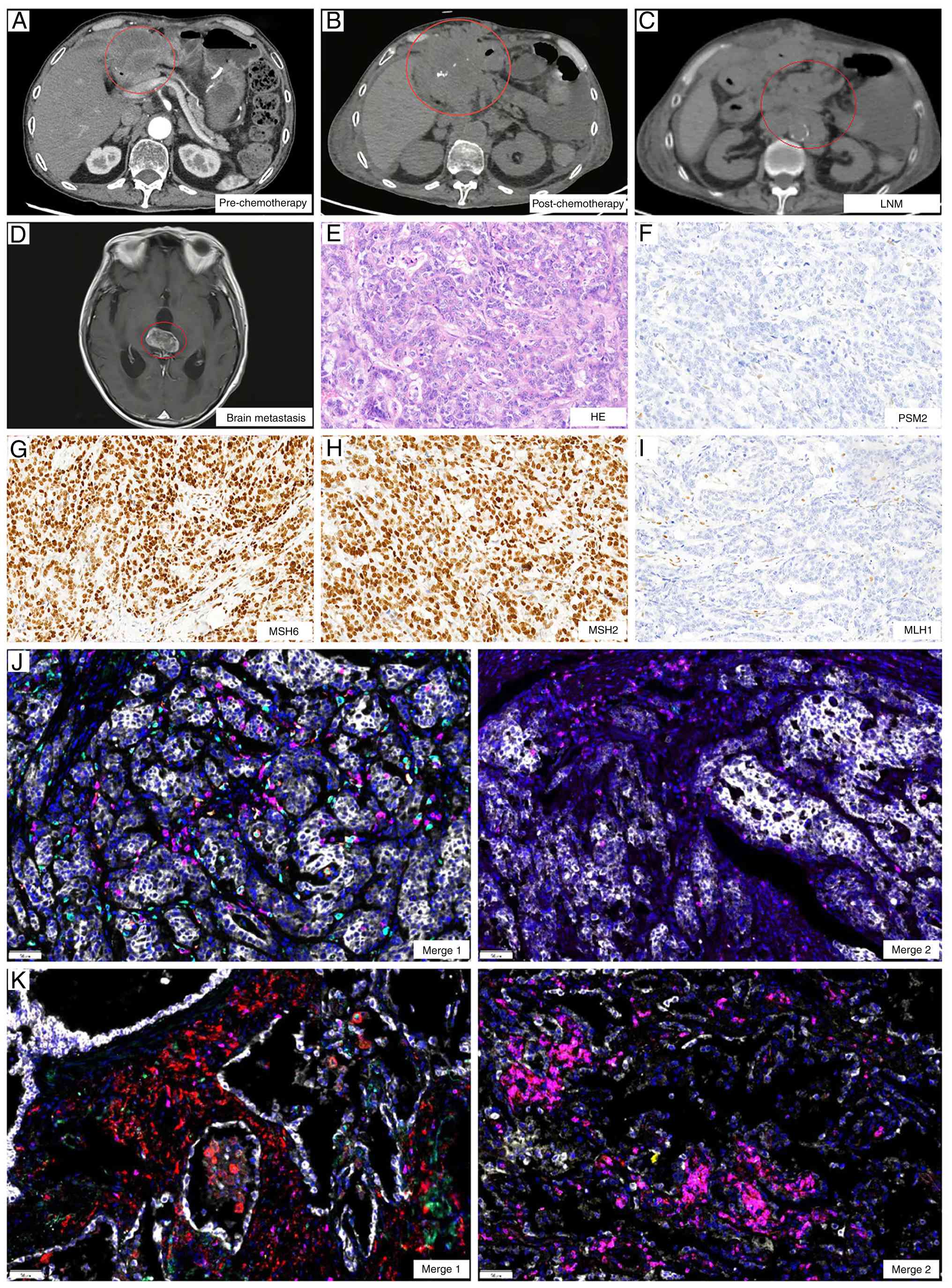
Figure 2

Imaging and immune microenvironment
changes before and after treatment. CT images (A) before and (B)
after treatment. (C) Lymph node metastases after treatment. (D)
Brain metastases. Pathological examination of peritoneal puncture
lesions, showing (E) HE staining and (F) PMS2, (G) MSH6, (H) MSH2
and (I) MLH1 protein detection, consistent with postoperative
specimens (magnification, ×100). Tumor immune microenvironment
fusion images of (J) pre-treatment and (K) post-treatment
(magnification, ×200). Merge 1 shows PD-1 in green, programmed
death-ligand 1 in yellow, CD8 in pink, CD68 in cyan and CD163 in
red. Merge 2 shows CD3 in pink, CD4 in red, CD20 in green, CD56 in
cyan and forkhead box P3 in yellow. PMS2, postmeiotic segregation
increased (S. Cerevisiae) 2; MSH, MutS homolog; MLH1, MutL
homolog.

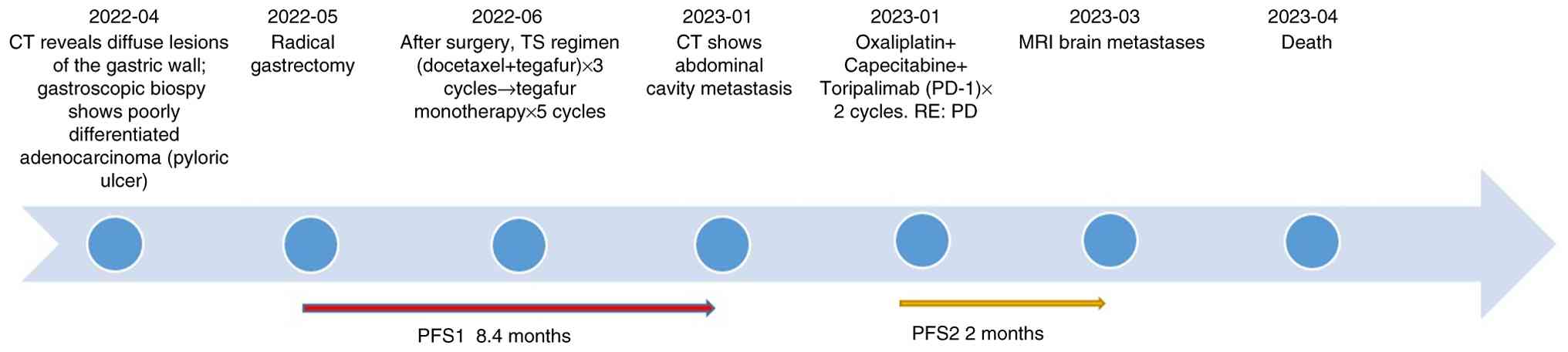
Figure 3

Clinical timeline of the disease
course of the patient. Overall survival was 11.6 months. PFS,
progression-free survival; PD, progressive disease; PD-1,
programmed death-1, RE, response Evaluation.

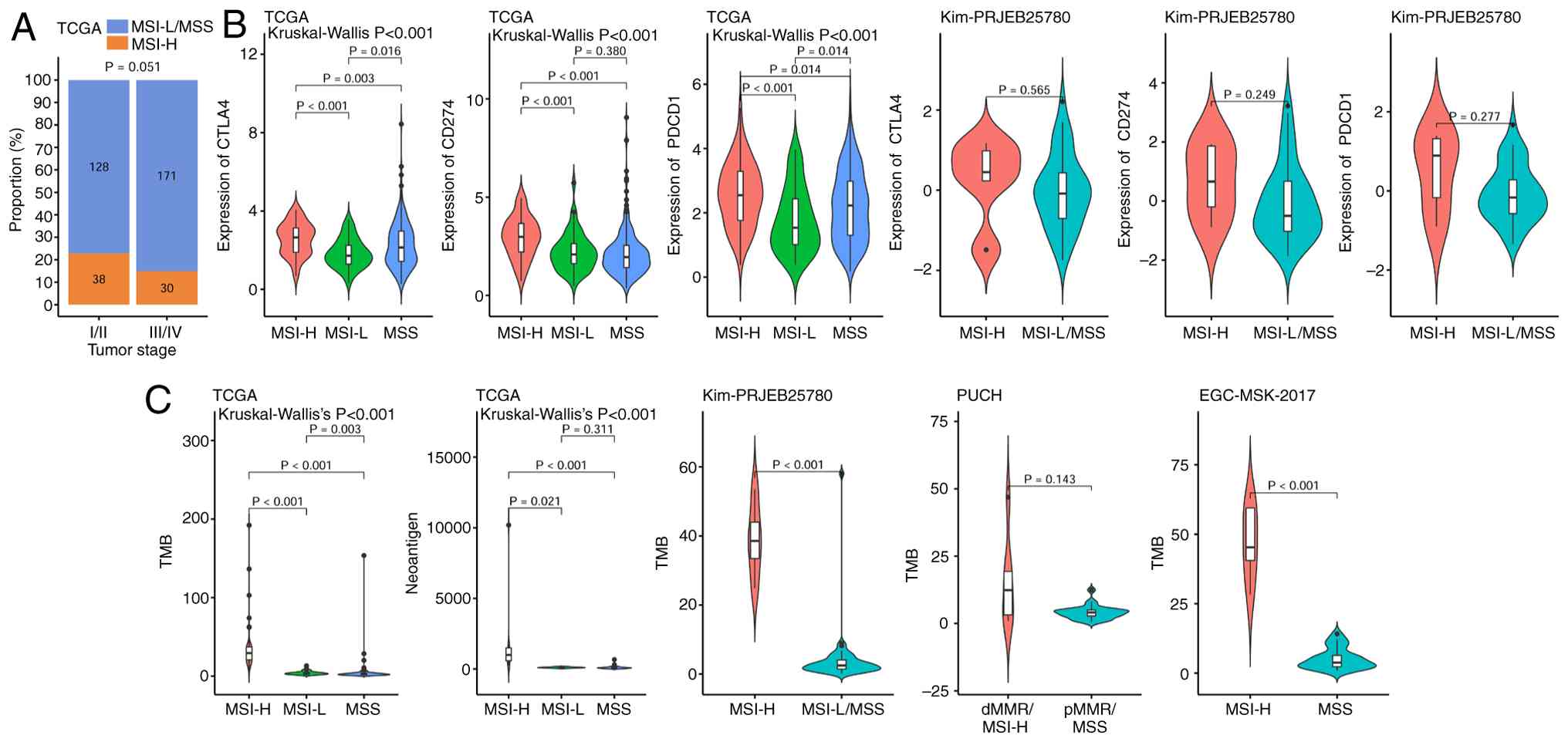
Figure 4

Association between MSI and gastric
cancer staging. (A) Association between MSI and clinical stage in
TCGA gastric cancer. (B) Association between MSI-H and immune
checkpoint expression (CTLA4, CD274 and PDCD1) in different
cohorts. (C) Association between MSI-H and TMB and neoantigen load
in different cohorts. MSI, microsatellite instability; TCGA, The
Cancer Genome Atlas; H, MSI-high; CTLA4, cytotoxic
T-lymphocyte-associated protein 4; PDCD1, programmed cell death
protein 1; TMB, tumor mutational burden; MSS, microsatellite
stability; MSI-L, MSI-low.

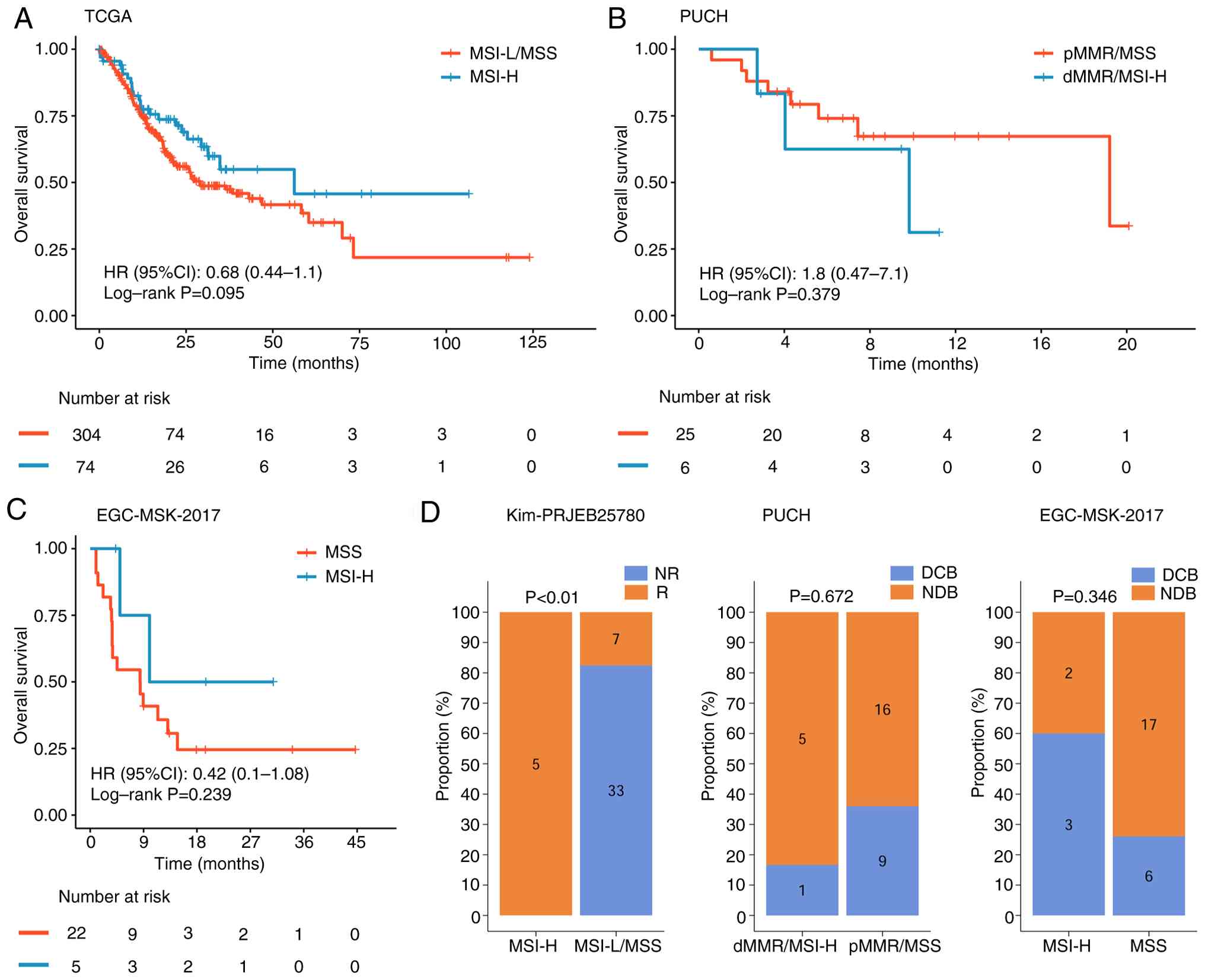
Figure 5

Prognostic differences between MSI-H
and MSS groups across different databases. Survival analysis
performed in the (A) TCGA, (B) PUCH and (C) EGC-MSK-2017 cohorts.
(D) Immunotherapy response rates of patients with MSI-H in the Kim,
PUCH and EGC-MSK-2017 cohorts. NR, not reported; R, response; MSI,
microsatellite instability; H, MSI-high; MSS, microsatellite
stability; TCGA, The Cancer Genome Atlas; HR, hazard ratio; CI,
confidence interval; dMMR, deficient mismatch repair; MSI-L,
MSI-low; pMMR proficient mismatch repair; DCB, Durable Clinical
Benefit; NDB, Non-Durable Benefit.

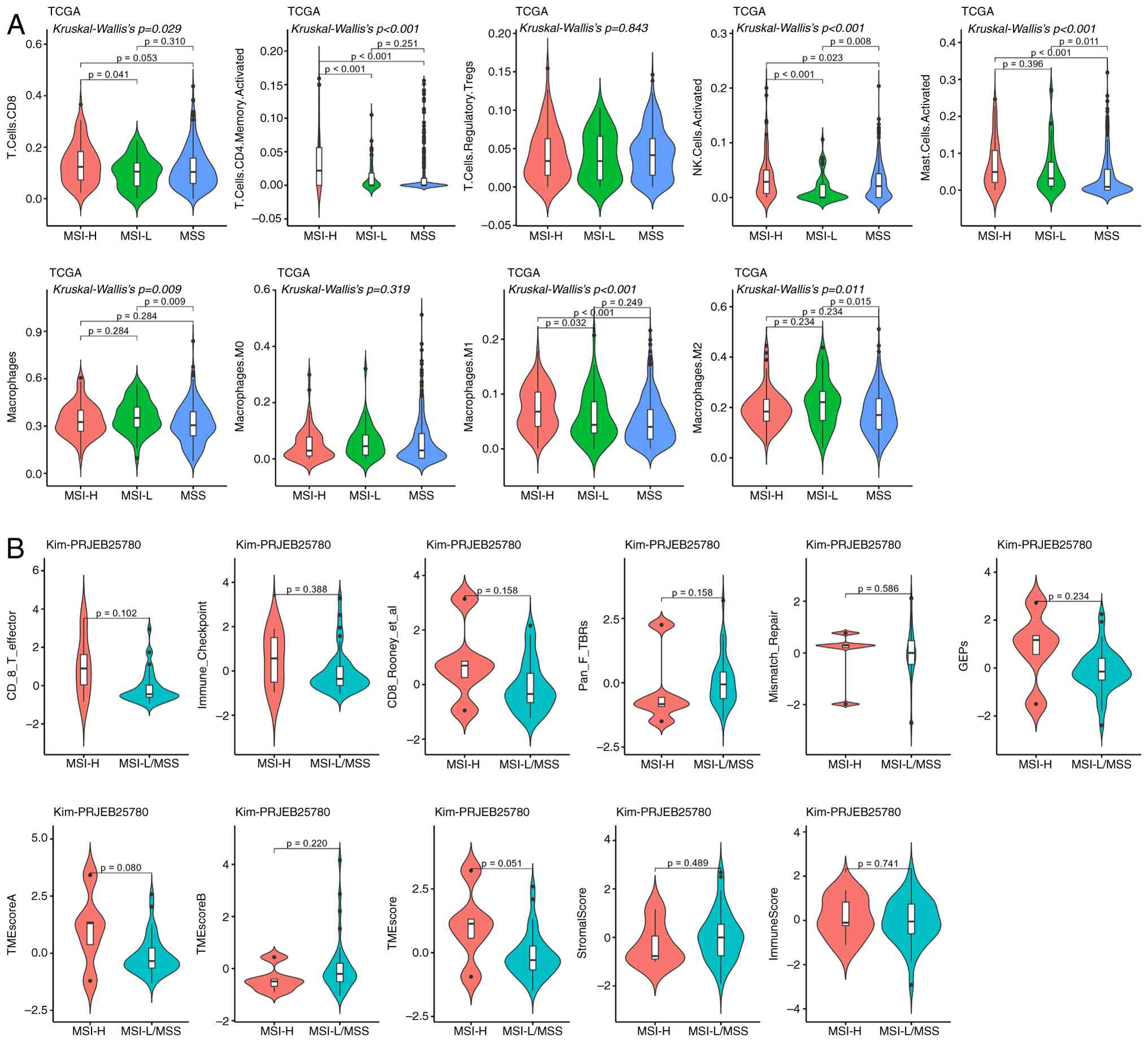
Figure 6

Differences in the immune
microenvironment between MSI-H and MSS. (A) TCGA analysis
demonstrated that patients with MSI-H exhibited significantly
higher infiltration of memory-activated CD4+ T cells,
activated NK cells, mast cells and M1 macrophages than those with
MSS; CD8+ T cells showed a similar significant
difference between the MSI-H and MSI-L groups (P<0.05). (B) Kim
cohort analysis demonstrated no significant differences in detected
immune-related indicators between MSI-H and MSS/MSI-L (P>0.05).
MSI, microsatellite instability; MSI-H, MSI-high; MSS,
microsatellite stability; TCGA, The Cancer Genome Atlas; NK,
natural killer; MSI-L, MSI-low; NK, natural killer; TME, tumor
microenvironment; M1, type 1 macrophages.
View References

1 

Sung H, Ferlay J, Siegel R, Laversanne M, Soerjomataram I, Jemal A and Bray F: Global cancer statistics 2020: GLOBOCAN Estimates of incidence and mortality worldwide for 36 cancers in 185 countries. CA Cancer J Clin. 71:209–249. 2021.PubMed/NCBI

2 

Zhang TC, Chen H, Yin X, He Q, Man J, Yang X and Lu M: Changing trends of disease burden of gastric cancer in China from 1990 to 2019 and its predictions: Findings from Global Burden of Disease Study. Chin J Cancer Res. 33:11–26. 2021. View Article : Google Scholar : PubMed/NCBI

3 

Wang J, Xiu J, Farrell A, Battaglin F, Arai H, Millstein J, Soni S, Zhang W, Shields A, Grothey A, et al: Genomic landscapes to characterize mismatch-repair deficiency (dMMR)/microsatellite instability-high (MSI-H) gastrointestinal (GI) cancers stratified by tumor mutation burden (TMB). J Clin Oncol. 41 (16 Suppl):S2618. 2023. View Article : Google Scholar

4 

Le DT, Durham JN, Smith KN, Wang H, Bartlett BR, Aulakh LK, Lu S, Kemberling H, Wilt C, Luber BS, et al: Mismatch repair deficiency predicts response of solid tumors to PD-1 blockade. Science. 357:409–413. 2017. View Article : Google Scholar : PubMed/NCBI

5 

Petrelli F, Antista M, Marra F, Cribiù F, Rampulla V, Pietrantonio F, Dottorini L, Ghidini M, Luciani A, Zaniboni A and Tomasello G: Adjuvant and neoadjuvant chemotherapy for MSI early gastric cancer: A systematic review and meta-analysis. Ther Adv Med Oncol. 16:1948–1957. 2024. View Article : Google Scholar : PubMed/NCBI

6 

Takei S, Kawazoe A and Shitara K: The new era of immunotherapy in gastric cancer. Cancers (Basel). 14:10542022. View Article : Google Scholar : PubMed/NCBI

7 

Zhang P and Gou H: Immunotherapy-based therapy versus chemotherapy for the neoadjuvant treatment of locally advanced dMMR/MSI-H gastric cancer. J Clin Oncol. 42 (16_suppl):e161212024. View Article : Google Scholar

8 

Mou P, Ge Q, Sheng R, Zhu T, Liu Y and Ding K: Research progress on the immune microenvironment and immunotherapy in gastric cancer. Front Immunol. 14:12911172023. View Article : Google Scholar : PubMed/NCBI

9 

Marcus L, Lemery S, Keegan P and Pazdur R: FDA approval summary: Pembrolizumab for the treatment of microsatellite Instability-High solid tumors. Clin Cancer Res. 25:3753–3758. 2019. View Article : Google Scholar : PubMed/NCBI

10 

Hu L, Li T, Deng S, Gao H, Jiang Y, Chen Q, Chen H, Xiao Z, Shuai X and Su Z: Tertiary lymphoid structure formation induced by LIGHT-engineered and photosensitive nanoparticles-decorated bacteria enhances immune response against colorectal cancer. Biomaterials. 314:1228462025. View Article : Google Scholar : PubMed/NCBI

11 

Fridman W, Sibéril S, Pupier G, Soussan S and Sautès-Fridman C: Activation of B cells in Tertiary Lymphoid Structures in cancer: Anti-tumor or anti-self? Semin Immunol. 65:1017032023. View Article : Google Scholar : PubMed/NCBI

12 

Wang FH, Zhang XT, Li YF, Tang L, Qu XJ, Ying JE, Zhang J, Sun LY, Lin RB, Qiu H, et al: Clinical guidelines for the diagnosis and treatment of gastric cancer. Cancer Commun. 41:747–795. 2021. View Article : Google Scholar : PubMed/NCBI

13 

Cancer Genome Atlas Research Network, . Comprehensive molecular characterization of gastric adenocarcinoma. Nature. 513:202–209. 2014. View Article : Google Scholar : PubMed/NCBI

14 

Kim ST, Cristescu R, Bass AJ, Kim KM, Odegaard JI, Kim K, Liu XQ, Sher X, Jun H, et al: Comprehensive molecular characterization of clinical responses to PD-1 inhibition in metastatic gastric cancer. Nat Med. 24:1449–1458. 2018. View Article : Google Scholar : PubMed/NCBI

15 

Jiao X, Wei X, Li S, Liu C, Chen H, Gong J, Li J, Zhang X, Wang X, et al: A genomic mutation signature predicts the clinical outcomes of immunotherapy and characterizes immunophenotypes in gastrointestinal cancer. NPJ Precis Oncol. 5:362021. View Article : Google Scholar : PubMed/NCBI

16 

Janjigian YY, Sanchez-Vega F, Jonsson P, Chatila WK, Hechtman JF, Ku GY, Riches JC, Tuvy Y, Kundra R, Bouvier N, et al: Genetic predictors of response to systemic therapy in esophagogastric cancer. Cancer Discov. 8:49–58. 2018. View Article : Google Scholar : PubMed/NCBI

17 

Lauren P: The two histological main types of gastric carcinoma: Diffuse and so-called intestinal-type carcinoma. An attempt at a Histo-clinical classification. Acta Pathol Microbiol Scand. 64:31–49. 1965. View Article : Google Scholar : PubMed/NCBI

18 

American Joint Committee on Cancer (AJCC), . AJCC Cancer Staging Manual. 8th edition. Edge SB, Byrd DR, Compton CC, et al: New York: Springer; 2017

19 

Eisenhauer EA, Therasse P, Bogaerts J, Schwartz LH, Sargent D, Ford R, Dancey J, Arbuck S, Gwyther S, Mooney M, et al: New response evaluation criteria in solid tumours: Revised RECIST guideline (version 1.1). Eur J Cancer. 45:228–247. 2009. View Article : Google Scholar : PubMed/NCBI

20 

André T, Tougeron D, Piessen G, de la Fouchardière C, Louvet C, Adenis A, Jary M, Tournigand C, Aparicio T, Desrame J, et al: Neoadjuvant nivolumab plus ipilimumab and adjuvant nivolumab in localized deficient mismatch Repair/Microsatellite Instability-high gastric or esophagogastric junction adenocarcinoma: The GERCOR NEONIPIGA Phase II study. J Clin Oncol. 41:255–265. 2023. View Article : Google Scholar : PubMed/NCBI

21 

Obeid J, Hu Y, Erdag G, Leick K and Slingluff C: The heterogeneity of tumor-infiltrating CD8+ T cells in metastatic melanoma distorts their quantification: How to manage heterogeneity? Melanoma Res. 27:211–217. 2017. View Article : Google Scholar : PubMed/NCBI

22 

Ma W, Pham B and Li T: Cancer neoantigens as potential targets for immunotherapy. Clin Exp Metastasis. 39:51–60. 2022. View Article : Google Scholar : PubMed/NCBI

23 

Hugo W, Zaretsky J, Sun L, Song C, Moreno B, Hu-Lieskovan S, Berent-Maoz B, Pang J, Chmielowski B, Cherry G, et al: Genomic and transcriptomic features of response to Anti-PD-1 therapy in metastatic melanoma. Cell. 165:35–44. 2016. View Article : Google Scholar : PubMed/NCBI

24 

Garon EB, Rizvi NA, Hui R, Leighl N, Balmanoukian AS, Eder JP, Patnaik A, Aggarwal C, Gubens M, Horn L, et al: Pembrolizumab for the treatment of non-small-cell lung cancer. N Engl J Med. 372:2018–2028. 2015. View Article : Google Scholar : PubMed/NCBI

25 

De Fátima Aquino Moreira-Nunes C, De Souza Almeida Titan Martins C, Feio D, Lima IK, Lamarão LM, de Souza CRT, Costa IB, da Silva Maués JH, Soares PC, de Assumpção PP and Burbano RMR: PD-L1 expression associated with Epstein-Barr virus status and Patients' survival in a large cohort of gastric cancer patients in northern brazil. Cancers (Basel). 13:31072021. View Article : Google Scholar : PubMed/NCBI

26 

Shitara K, Van Cutsem E, Bang YJ, Fuchs C, Wyrwicz L, Lee KW, Kudaba I, Garrido M, Chung HC, Lee J, et al: Efficacy and safety of pembrolizumab or pembrolizumab plus chemotherapy vs chemotherapy alone for patients With First-line, advanced gastric cancer: The KEYNOTE-062 phase 3 randomized clinical trial. JAMA Oncol. 6:1571–1580. 2020. View Article : Google Scholar : PubMed/NCBI

27 

O'Malley DM, Bariani GM, Cassier PA, Marabelle A, Hansen AR, Acosta AJ, Miller WH Jr, Safra T, Italiano A, Mileshkin L, et al: Pembrolizumab in microsatellite instability-high/mismatch repair deficient (MSI-H/dMMR) and non-MSI-H/non-dMMR advanced endometrial cancer: Phase 2 KEYNOTE-158 study results. Gynecol Oncol. 193:130–135. 2025. View Article : Google Scholar : PubMed/NCBI

28 

Overman MJ, McDermott R, Leach JL, Lonardi S, Lenz HJ, Morse MA, Desai J, Hill A, Axelson M, Moss RA, et al: Nivolumab in patients with metastatic DNA mismatch repair-deficient or microsatellite instability-high colorectal cancer (CheckMate 142): An open-label, multicentre, phase 2 study. Lancet Oncol. 18:1182–1191. 2017. View Article : Google Scholar : PubMed/NCBI

29 

Zeng D, Wu J, Luo H, Li Y, Xiao J, Peng J, Ye Z, Zhou R, Yu Y, Wang G, et al: Tumor microenvironment evaluation promotes precise checkpoint immunotherapy of advanced gastric cancer. J Immunother Cancer. 9:e0024672021. View Article : Google Scholar : PubMed/NCBI

30 

Li N and Li Y, Li J, Tang S, Gao H and Li Y: Correlation of the abundance of MDSCs, Tregs, PD-1, and PD-L1 with the efficacy of chemotherapy and prognosis in gastric cancer. Lab Med. 56:259–270. 2025. View Article : Google Scholar : PubMed/NCBI

31 

Kim Y, Bae YJ, Kim JH, Kim H, Shin SJ, Jung DH and Park H: Wnt/β-catenin pathway is a key signaling pathway to trastuzumab resistance in gastric cancer cells. BMC Cancer. 23:9222023. View Article : Google Scholar : PubMed/NCBI

32 

Bernal M, Ruiz-Cabello F, Concha A, Paschen A and Garrido F: Implication of the β2-microglobulin gene in the generation of tumor escape phenotypes. Cancer Immunol Immunother. 61:1359–1371. 2012. View Article : Google Scholar : PubMed/NCBI

33 

Moaaz M, Lotfy H, Elsherbini B, Motawea M and Fadali G: TGF-β enhances the Anti-inflammatory effect of Tumor-infiltrating CD33+11b+HLA-DR Myeloid-derived suppressor cells in gastric cancer: A possible relation to MicroRNA-494. Asian Pac J Cancer Prev. 21:3393–3403. 2020. View Article : Google Scholar : PubMed/NCBI

34 

Niu Q, Liu J, Luo X, Su B and Yuan X: Future of targeted therapy for gastrointestinal cancer: Claudin 18.2. Oncol Transl Med. 17:P102–P107. 2021. View Article : Google Scholar

35 

Zhang D, Huang G, Liu J and Wei W: Claudin18.2-targeted cancer theranostics. Am J Nucl Med Mol Imaging. 13:64–69. 2023.PubMed/NCBI

36 

Shitara K, Lordick F, Bang YJ, Enzinger P, Ilson D, Shah MA, Van Cutsem E, Xu RH, Aprile G, Xu J, et al: Zolbetuximab plus mFOLFOX6 in patients with CLDN18.2-positive, HER2-negative, untreated, locally advanced unresectable or metastatic gastric or gastro-oesophageal junction adenocarcinoma (SPOTLIGHT): A multicentre, randomised, double-blind, phase 3 trial. Lancet. 401:1655–1668. 2023. View Article : Google Scholar : PubMed/NCBI

37 

Shah MA, Shitara K, Ajani JA, Bang YJ, Enzinger P, Ilson D, Lordick F, Van Cutsem E, Gallego Plazas J, Huang J, et al: Zolbetuximab plus CAPOX in CLDN18.2-positive gastric or gastroesophageal junction adenocarcinoma: The randomized, phase 3 GLOW trial. Nat Med. 29:2133–2141. 2023. View Article : Google Scholar : PubMed/NCBI

Related Articles

  • Abstract
  • View
  • Download
  • Twitter
Copy and paste a formatted citation
Spandidos Publications style
Wang L, Zhong X, Diao M and Deng W: <p>Immune microenvironment and treatment response of dMMR gastric cancer: Heterogeneity and implications for immunotherapy</p>. Oncol Lett 31: 119, 2026.
APA
Wang, L., Zhong, X., Diao, M., & Deng, W. (2026). <p>Immune microenvironment and treatment response of dMMR gastric cancer: Heterogeneity and implications for immunotherapy</p>. Oncology Letters, 31, 119. https://doi.org/10.3892/ol.2026.15472
MLA
Wang, L., Zhong, X., Diao, M., Deng, W."<p>Immune microenvironment and treatment response of dMMR gastric cancer: Heterogeneity and implications for immunotherapy</p>". Oncology Letters 31.3 (2026): 119.
Chicago
Wang, L., Zhong, X., Diao, M., Deng, W."<p>Immune microenvironment and treatment response of dMMR gastric cancer: Heterogeneity and implications for immunotherapy</p>". Oncology Letters 31, no. 3 (2026): 119. https://doi.org/10.3892/ol.2026.15472
Copy and paste a formatted citation
x
Spandidos Publications style
Wang L, Zhong X, Diao M and Deng W: <p>Immune microenvironment and treatment response of dMMR gastric cancer: Heterogeneity and implications for immunotherapy</p>. Oncol Lett 31: 119, 2026.
APA
Wang, L., Zhong, X., Diao, M., & Deng, W. (2026). <p>Immune microenvironment and treatment response of dMMR gastric cancer: Heterogeneity and implications for immunotherapy</p>. Oncology Letters, 31, 119. https://doi.org/10.3892/ol.2026.15472
MLA
Wang, L., Zhong, X., Diao, M., Deng, W."<p>Immune microenvironment and treatment response of dMMR gastric cancer: Heterogeneity and implications for immunotherapy</p>". Oncology Letters 31.3 (2026): 119.
Chicago
Wang, L., Zhong, X., Diao, M., Deng, W."<p>Immune microenvironment and treatment response of dMMR gastric cancer: Heterogeneity and implications for immunotherapy</p>". Oncology Letters 31, no. 3 (2026): 119. https://doi.org/10.3892/ol.2026.15472
Follow us
  • Twitter
  • LinkedIn
  • Facebook
About
  • Spandidos Publications
  • Careers
  • Cookie Policy
  • Privacy Policy
How can we help?
  • Help
  • Live Chat
  • Contact
  • Email to our Support Team