Spandidos Publications Logo
  • About
    • About Spandidos
    • Aims and Scopes
    • Abstracting and Indexing
    • Editorial Policies
    • Reprints and Permissions
    • Job Opportunities
    • Terms and Conditions
    • Contact
  • Journals
    • All Journals
    • Oncology Letters
      • Oncology Letters
      • Information for Authors
      • Editorial Policies
      • Editorial Board
      • Aims and Scope
      • Abstracting and Indexing
      • Bibliographic Information
      • Archive
    • International Journal of Oncology
      • International Journal of Oncology
      • Information for Authors
      • Editorial Policies
      • Editorial Board
      • Aims and Scope
      • Abstracting and Indexing
      • Bibliographic Information
      • Archive
    • Molecular and Clinical Oncology
      • Molecular and Clinical Oncology
      • Information for Authors
      • Editorial Policies
      • Editorial Board
      • Aims and Scope
      • Abstracting and Indexing
      • Bibliographic Information
      • Archive
    • Experimental and Therapeutic Medicine
      • Experimental and Therapeutic Medicine
      • Information for Authors
      • Editorial Policies
      • Editorial Board
      • Aims and Scope
      • Abstracting and Indexing
      • Bibliographic Information
      • Archive
    • International Journal of Molecular Medicine
      • International Journal of Molecular Medicine
      • Information for Authors
      • Editorial Policies
      • Editorial Board
      • Aims and Scope
      • Abstracting and Indexing
      • Bibliographic Information
      • Archive
    • Biomedical Reports
      • Biomedical Reports
      • Information for Authors
      • Editorial Policies
      • Editorial Board
      • Aims and Scope
      • Abstracting and Indexing
      • Bibliographic Information
      • Archive
    • Oncology Reports
      • Oncology Reports
      • Information for Authors
      • Editorial Policies
      • Editorial Board
      • Aims and Scope
      • Abstracting and Indexing
      • Bibliographic Information
      • Archive
    • Molecular Medicine Reports
      • Molecular Medicine Reports
      • Information for Authors
      • Editorial Policies
      • Editorial Board
      • Aims and Scope
      • Abstracting and Indexing
      • Bibliographic Information
      • Archive
    • World Academy of Sciences Journal
      • World Academy of Sciences Journal
      • Information for Authors
      • Editorial Policies
      • Editorial Board
      • Aims and Scope
      • Abstracting and Indexing
      • Bibliographic Information
      • Archive
    • International Journal of Functional Nutrition
      • International Journal of Functional Nutrition
      • Information for Authors
      • Editorial Policies
      • Editorial Board
      • Aims and Scope
      • Abstracting and Indexing
      • Bibliographic Information
      • Archive
    • International Journal of Epigenetics
      • International Journal of Epigenetics
      • Information for Authors
      • Editorial Policies
      • Editorial Board
      • Aims and Scope
      • Abstracting and Indexing
      • Bibliographic Information
      • Archive
    • Medicine International
      • Medicine International
      • Information for Authors
      • Editorial Policies
      • Editorial Board
      • Aims and Scope
      • Abstracting and Indexing
      • Bibliographic Information
      • Archive
  • Articles
  • Information
    • Information for Authors
    • Information for Reviewers
    • Information for Librarians
    • Information for Advertisers
    • Conferences
  • Language Editing
Spandidos Publications Logo
  • About
    • About Spandidos
    • Aims and Scopes
    • Abstracting and Indexing
    • Editorial Policies
    • Reprints and Permissions
    • Job Opportunities
    • Terms and Conditions
    • Contact
  • Journals
    • All Journals
    • Biomedical Reports
      • Information for Authors
      • Editorial Policies
      • Editorial Board
      • Aims and Scope
      • Abstracting and Indexing
      • Bibliographic Information
      • Archive
    • Experimental and Therapeutic Medicine
      • Information for Authors
      • Editorial Policies
      • Editorial Board
      • Aims and Scope
      • Abstracting and Indexing
      • Bibliographic Information
      • Archive
    • International Journal of Epigenetics
      • Information for Authors
      • Editorial Policies
      • Editorial Board
      • Aims and Scope
      • Abstracting and Indexing
      • Bibliographic Information
      • Archive
    • International Journal of Functional Nutrition
      • Information for Authors
      • Editorial Policies
      • Editorial Board
      • Aims and Scope
      • Abstracting and Indexing
      • Bibliographic Information
      • Archive
    • International Journal of Molecular Medicine
      • Information for Authors
      • Editorial Policies
      • Editorial Board
      • Aims and Scope
      • Abstracting and Indexing
      • Bibliographic Information
      • Archive
    • International Journal of Oncology
      • Information for Authors
      • Editorial Policies
      • Editorial Board
      • Aims and Scope
      • Abstracting and Indexing
      • Bibliographic Information
      • Archive
    • Medicine International
      • Information for Authors
      • Editorial Policies
      • Editorial Board
      • Aims and Scope
      • Abstracting and Indexing
      • Bibliographic Information
      • Archive
    • Molecular and Clinical Oncology
      • Information for Authors
      • Editorial Policies
      • Editorial Board
      • Aims and Scope
      • Abstracting and Indexing
      • Bibliographic Information
      • Archive
    • Molecular Medicine Reports
      • Information for Authors
      • Editorial Policies
      • Editorial Board
      • Aims and Scope
      • Abstracting and Indexing
      • Bibliographic Information
      • Archive
    • Oncology Letters
      • Information for Authors
      • Editorial Policies
      • Editorial Board
      • Aims and Scope
      • Abstracting and Indexing
      • Bibliographic Information
      • Archive
    • Oncology Reports
      • Information for Authors
      • Editorial Policies
      • Editorial Board
      • Aims and Scope
      • Abstracting and Indexing
      • Bibliographic Information
      • Archive
    • World Academy of Sciences Journal
      • Information for Authors
      • Editorial Policies
      • Editorial Board
      • Aims and Scope
      • Abstracting and Indexing
      • Bibliographic Information
      • Archive
  • Articles
  • Information
    • For Authors
    • For Reviewers
    • For Librarians
    • For Advertisers
    • Conferences
  • Language Editing
Login Register Submit
  • This site uses cookies
  • You can change your cookie settings at any time by following the instructions in our Cookie Policy. To find out more, you may read our Privacy Policy.

    I agree
Search articles by DOI, keyword, author or affiliation
Search
Advanced Search
presentation
Oncology Letters
Join Editorial Board Propose a Special Issue
Print ISSN: 1792-1074 Online ISSN: 1792-1082
Journal Cover
April-2026 Volume 31 Issue 4

Full Size Image

Sign up for eToc alerts
Recommend to Library

Journals

International Journal of Molecular Medicine

International Journal of Molecular Medicine

International Journal of Molecular Medicine is an international journal devoted to molecular mechanisms of human disease.

International Journal of Oncology

International Journal of Oncology

International Journal of Oncology is an international journal devoted to oncology research and cancer treatment.

Molecular Medicine Reports

Molecular Medicine Reports

Covers molecular medicine topics such as pharmacology, pathology, genetics, neuroscience, infectious diseases, molecular cardiology, and molecular surgery.

Oncology Reports

Oncology Reports

Oncology Reports is an international journal devoted to fundamental and applied research in Oncology.

Experimental and Therapeutic Medicine

Experimental and Therapeutic Medicine

Experimental and Therapeutic Medicine is an international journal devoted to laboratory and clinical medicine.

Oncology Letters

Oncology Letters

Oncology Letters is an international journal devoted to Experimental and Clinical Oncology.

Biomedical Reports

Biomedical Reports

Explores a wide range of biological and medical fields, including pharmacology, genetics, microbiology, neuroscience, and molecular cardiology.

Molecular and Clinical Oncology

Molecular and Clinical Oncology

International journal addressing all aspects of oncology research, from tumorigenesis and oncogenes to chemotherapy and metastasis.

World Academy of Sciences Journal

World Academy of Sciences Journal

Multidisciplinary open-access journal spanning biochemistry, genetics, neuroscience, environmental health, and synthetic biology.

International Journal of Functional Nutrition

International Journal of Functional Nutrition

Open-access journal combining biochemistry, pharmacology, immunology, and genetics to advance health through functional nutrition.

International Journal of Epigenetics

International Journal of Epigenetics

Publishes open-access research on using epigenetics to advance understanding and treatment of human disease.

Medicine International

Medicine International

An International Open Access Journal Devoted to General Medicine.

Journal Cover
April-2026 Volume 31 Issue 4

Full Size Image

Sign up for eToc alerts
Recommend to Library

  • Article
  • Citations
    • Cite This Article
    • Download Citation
    • Create Citation Alert
    • Remove Citation Alert
    • Cited By
  • Similar Articles
    • Related Articles (in Spandidos Publications)
    • Similar Articles (Google Scholar)
    • Similar Articles (PubMed)
  • Download PDF
  • Download XML
  • View XML

  • Supplementary Files
    • Supplementary_Data.pdf
Article Open Access

Potential treatment benefits of a GLP‑1R antagonist in combination with immune checkpoint inhibitors in colorectal cancer

  • Authors:
    • Zengqin Zhan
    • Chuncha Zhan
    • Lianqiao Li
    • Dan Lan
    • Guya Meng
    • Fan Chen
  • View Affiliations / Copyright

    Affiliations: Department of Oncology, Guangzhou Development District Hospital, Guangzhou, Guangdong 510700, P.R. China, Department of General Practice, Tianyuan Community Health Service Center, Tianhe, Guangzhou, Guangdong 510000, P.R. China, Department of Oncology, People's Hospital of Sandu County, Guizhou 558100, P.R. China
    Copyright: © Zhan et al. This is an open access article distributed under the terms of Creative Commons Attribution License.
  • Article Number: 132
    |
    Published online on: February 10, 2026
       https://doi.org/10.3892/ol.2026.15485
  • Expand metrics +
Metrics: Total Views: 0 (Spandidos Publications: | PMC Statistics: )
Metrics: Total PDF Downloads: 0 (Spandidos Publications: | PMC Statistics: )
Cited By (CrossRef): 0 citations Loading Articles...

This article is mentioned in:


Abstract

The clinical efficacy of immune checkpoint inhibitors (ICIs) in colorectal cancer (CRC) remains limited. Modulation of the glucagon‑like peptide‑1 receptor (GLP‑1R) may enhance T‑cell‑mediated antitumor responses. The present study aimed to evaluate the antitumor effects of the GLP‑1R antagonist Exendin 9‑39 (Exe‑9) combined with anti‑programmed cell death protein‑1 (PD‑1) treatment in preclinical CRC models. Using in vitro co‑culture assays, ELISA and in vivo murine models, alongside immunohistochemical and molecular analyses of clinical samples, HT‑29 and MC38‑OVA colon cancer cell lines were co‑cultured in vitro with activated T cells in the presence of Exe‑9. In vivo, male BALB/c mice were injected with MC38 to establish a CRC model and nude mice were used to assess T‑cell dependency. To evaluate this synergistic effect, BALB/c mice with CRC were treated with Exe‑9, anti‑PD‑1 or a combination. Additionally, clinical CRC samples were analyzed to assess the association of GLP‑1R expression with the immunotherapy response. Exe‑9 significantly enhanced T‑cell‑mediated cytotoxicity in CRC cell lines and reduced tumor growth in immunocompetent CRC mice; however, this effect was not observed in nude mice. Furthermore, combination therapy with the GLP‑1R antagonist and anti‑PD‑1 yielded an improved antitumor effect compared with either treatment alone, and high GLP‑1R expression in clinical samples correlated with poor ICI response. These findings suggest that GLP‑1R antagonism potentiates T‑cell‑mediated antitumor immunity and may provide a promising adjunctive therapeutic strategy for patients with CRC when combined with ICIs in the future.
View Figures

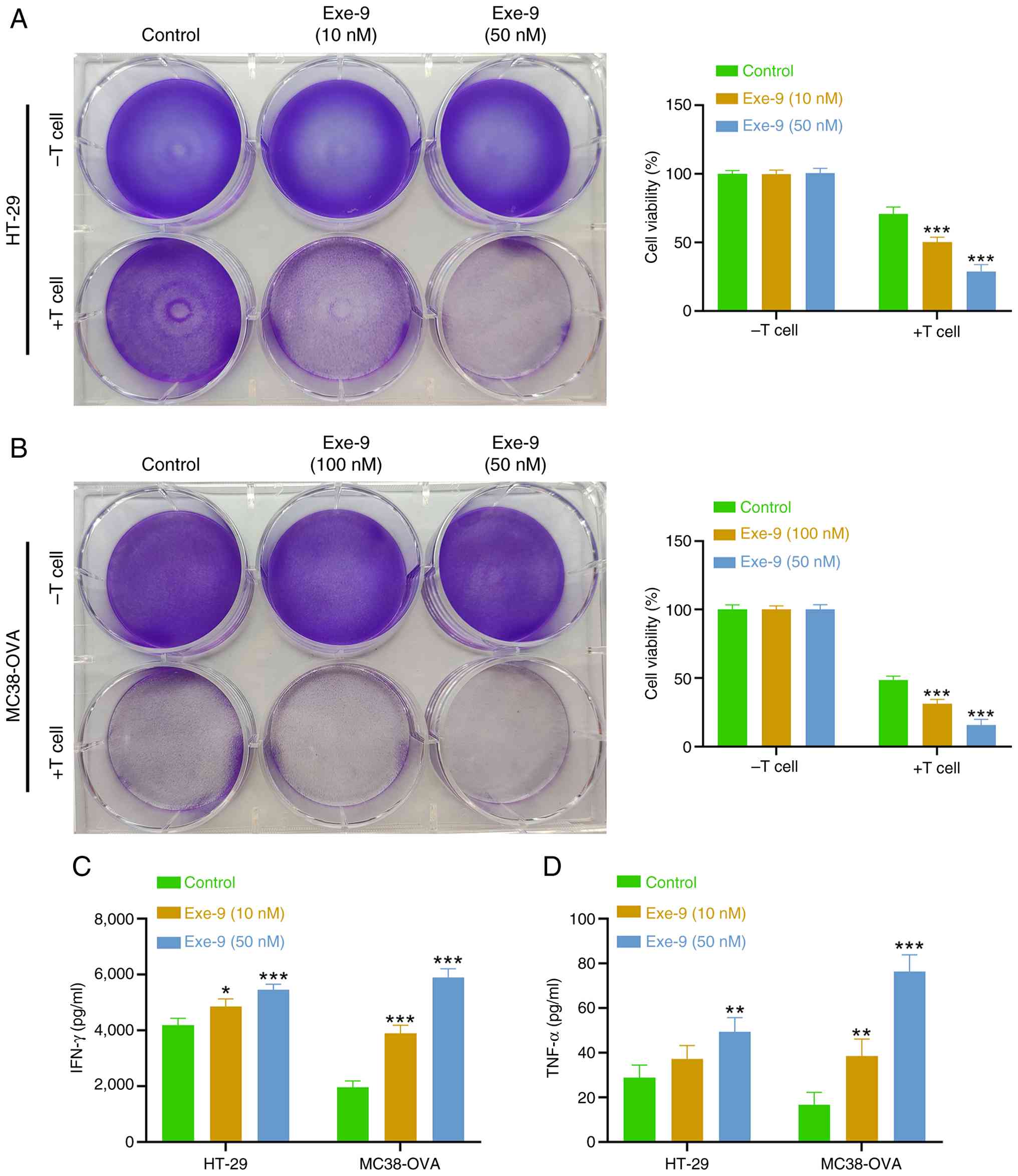
Figure 1

Glucagon-like peptide-1 receptor
antagonist enhances T-cell-mediated cytotoxicity against colon
cancer cells. Colon cancer cell lines HT-29 and MC38-OVA were
cultured either individually or co-cultured with activated T cells
for 48 h in the presence of Exe-9 at concentrations of 10 and 50
nM. (A) Viability of HT-29 colon cancer cells cultured alone or in
co-culture with activated T cells for 48 h, treated with Exe-9 (10
or 50 nM) or control. Viability was assessed by crystal violet
staining; quantitative spectrophotometric data are shown (right
panel); (B) viability of MC38-OVA colon cancer cells under the same
culture and treatment conditions as in, (A) quantified by crystal
violet staining (right panel, spectrophotometric data); (C) IFN-γ
levels in culture supernatants from the 48-h co-cultures described
in (A) and (B), measured by ELISA; (D) TNF-α levels in the same
supernatants as in (C), determined by ELISA.*P<0.05, **P<0.01
and ***P<0.001. Exe-9, Exendin 9–39; IFN-γ, interferon-γ; TNF-α,
tumor necrosis factor-α.

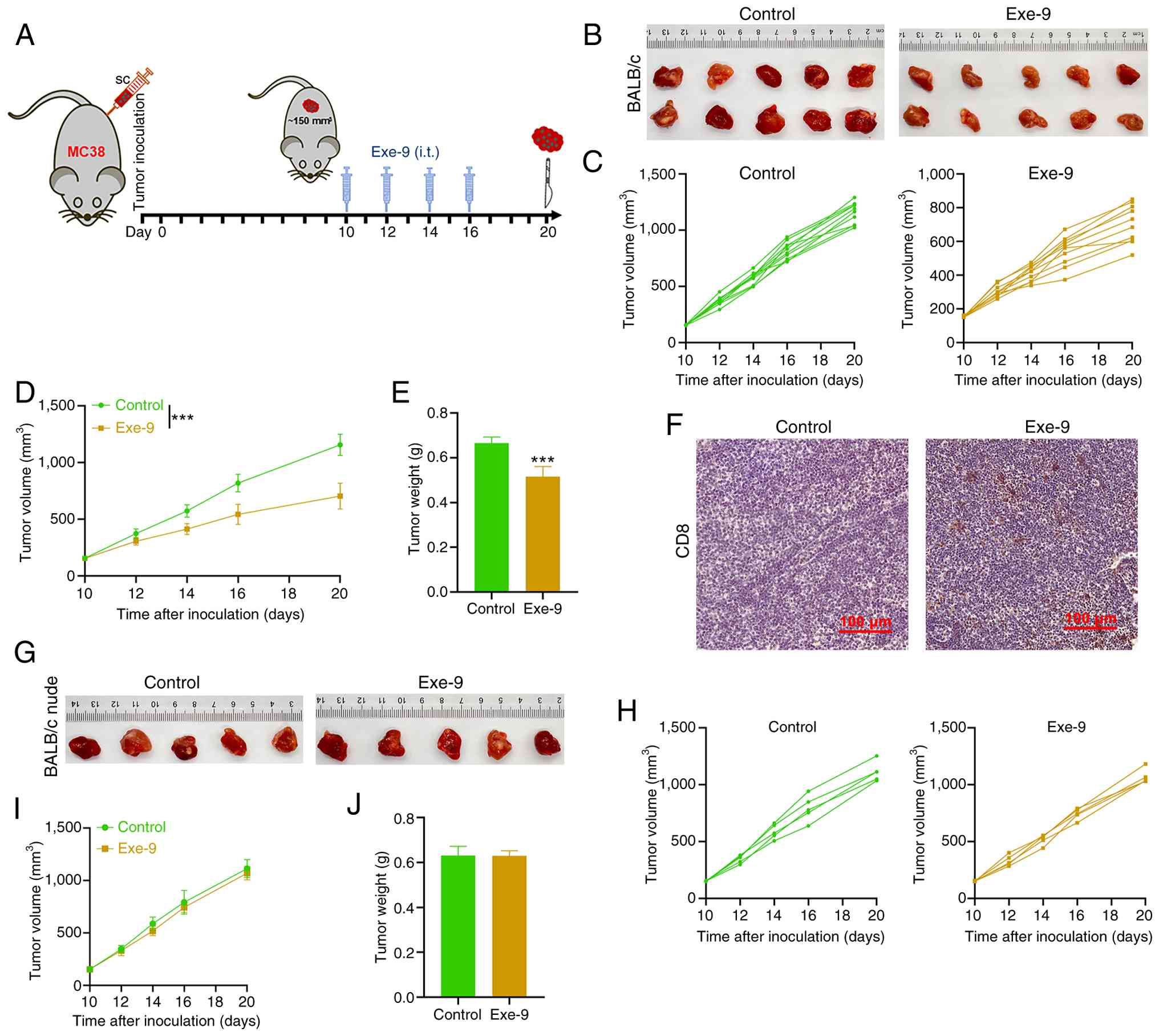
Figure 2

Glucagon-like peptide-1 receptor
antagonist enhances T-cell-mediated antitumor efficacy in mice. (A)
A schematic representation of the experimental timeline. Mice were
subcutaneously injected with MC38 tumor cells to generate a
colorectal cancer model, after which Exe9 was administered
intratumorally on days 10, 12, 14 and 16. (B) Representative images
of excised tumor tissues collected on day 20. (C) Tumor volumes
were measured at regular intervals during the treatment period. (D)
Endpoint tumor volumes and (E) tumor weights are depicted to
illustrate the difference between groups. (F) Immunohistochemical
analysis was conducted to assess the infiltration of
CD8+ T cells in tumor sections (scale bar, 100 µm). (G)
In a parallel study using nude mice, tumor volumes of (H)
individual mice and (I) their average value and (J) tumor weights,
were similarly measured to determine the dependence of the
antitumor effects on T-cell-mediated immunity. Data are presented
as mean ± SEM. ***P<0.001. SC, subcutaneous; Exe-9, Exendin
9–39; i.t., intratumoral injections.

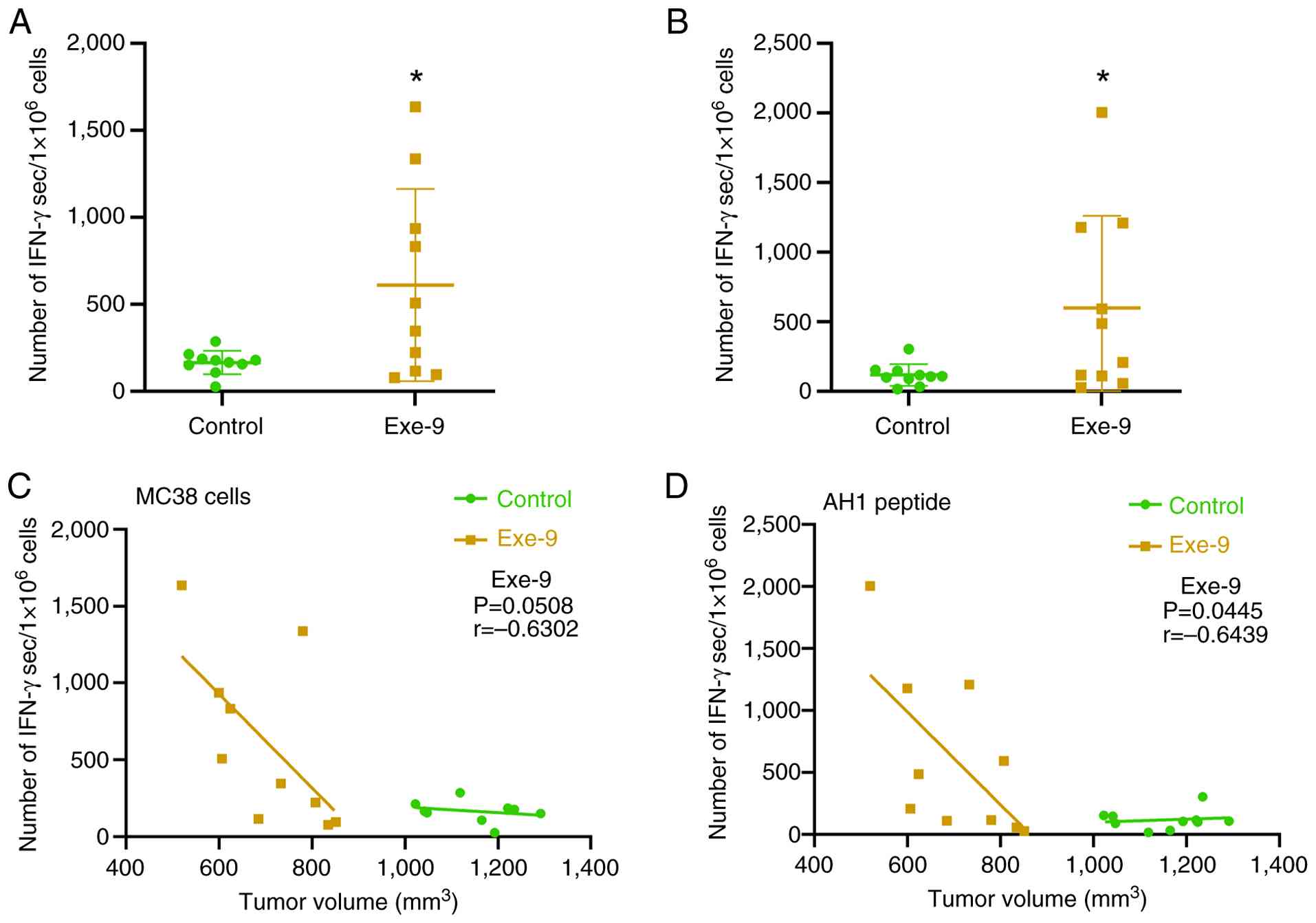
Figure 3

Glucagon-like peptide-1 receptor
antagonist induces tumor-specific CD8+ T-cell
replication. (A) Number of IFN-γ-secreting cells quantified by
ELISpot after restimulation of splenocytes from Exe-9-treated mice
with MC38 tumor cells for 20 h; (B) number of IFN-γ-secreting cells
quantified by ELISpot after restimulation of splenocytes from
Exe-9-treated mice with the MHC-I-restricted AH1 peptide for 20 h;
(C) Pearson correlation between the number of IFN-γ-secreting cells
(from MC38-restimulated group) and tumor volume; (D) Pearson
correlation between the number of IFN-γ-secreting cells (from AH1
peptide-restimulated group) and tumor volume. Data are presented as
mean ± SEM. *P<0.05. Exe-9, Exendin 9–39; sec, secreting; IFN-γ,
interferon-γ.

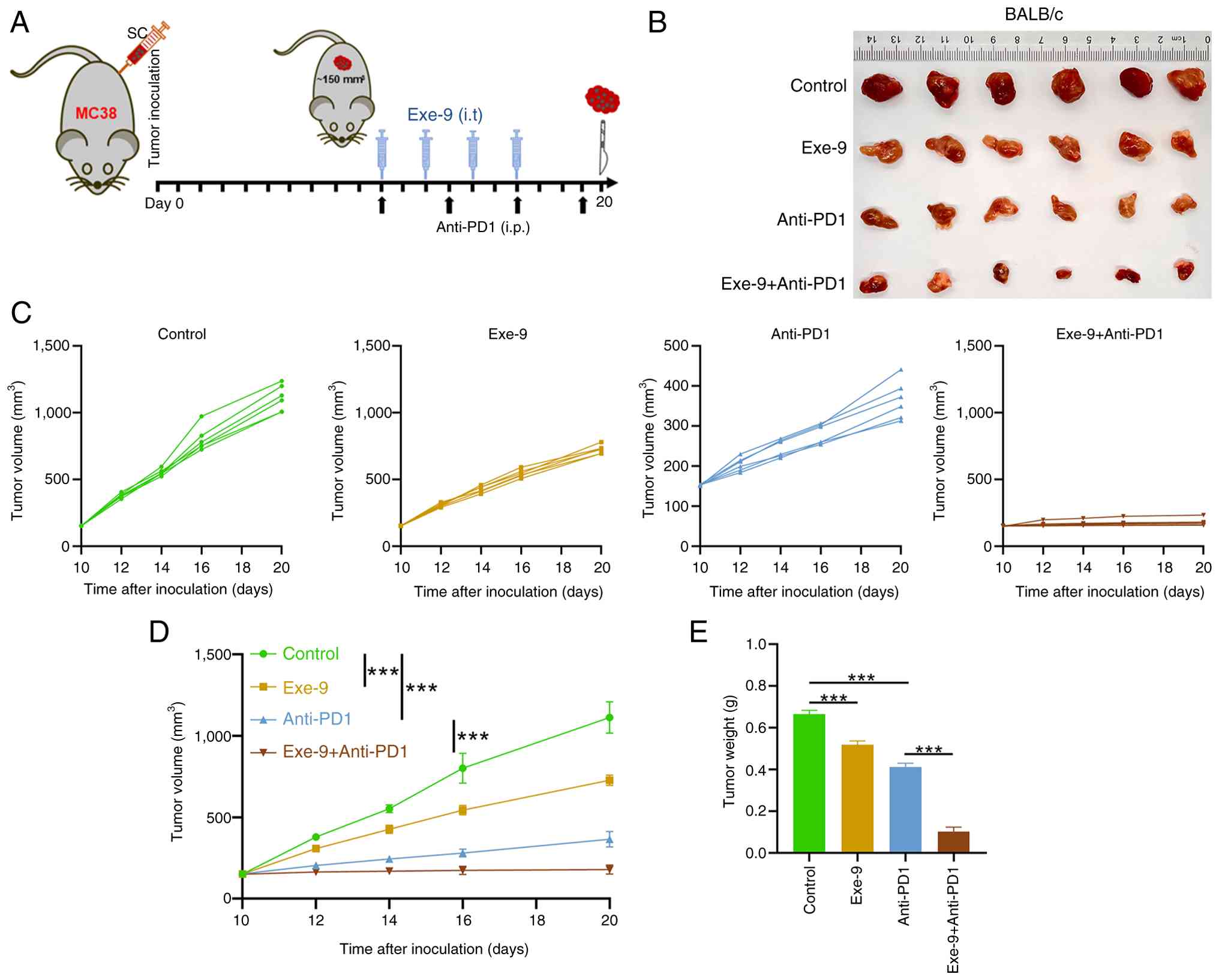
Figure 4

A combination of glucagon-like
peptide-1 receptor antagonist and immune checkpoint inhibitors
synergistically suppresses colorectal cancer growth in vivo.
Mice bearing MC38 tumors were administered intratumoral injections
of the glucagon-like peptide-1 receptor antagonist Exe-9 on days
10, 12, 14 and 16 or intraperitoneal injections of the anti-PD-1
antibody on days 10, 13, 16 and 19 or both treatments as the (A)
schematic representation of experimental design demonstrates. (B)
Representative excised tumor images collected on day 20
post-treatments. (C) Tumor growth curves during the treatment
period generated by regular measurements of tumor dimensions using
digital calipers. (D) Tumor volumes and (E) weights quantified at
the endpoint. Data are presented as mean ± SEM. ***P<0.001.
Exe-9, Exendin 9–39; PD-1, programmed cell death protein-1; SC,
subcutaneous; i.t., intratumoral injections; i.p.,
intraperitoneal.

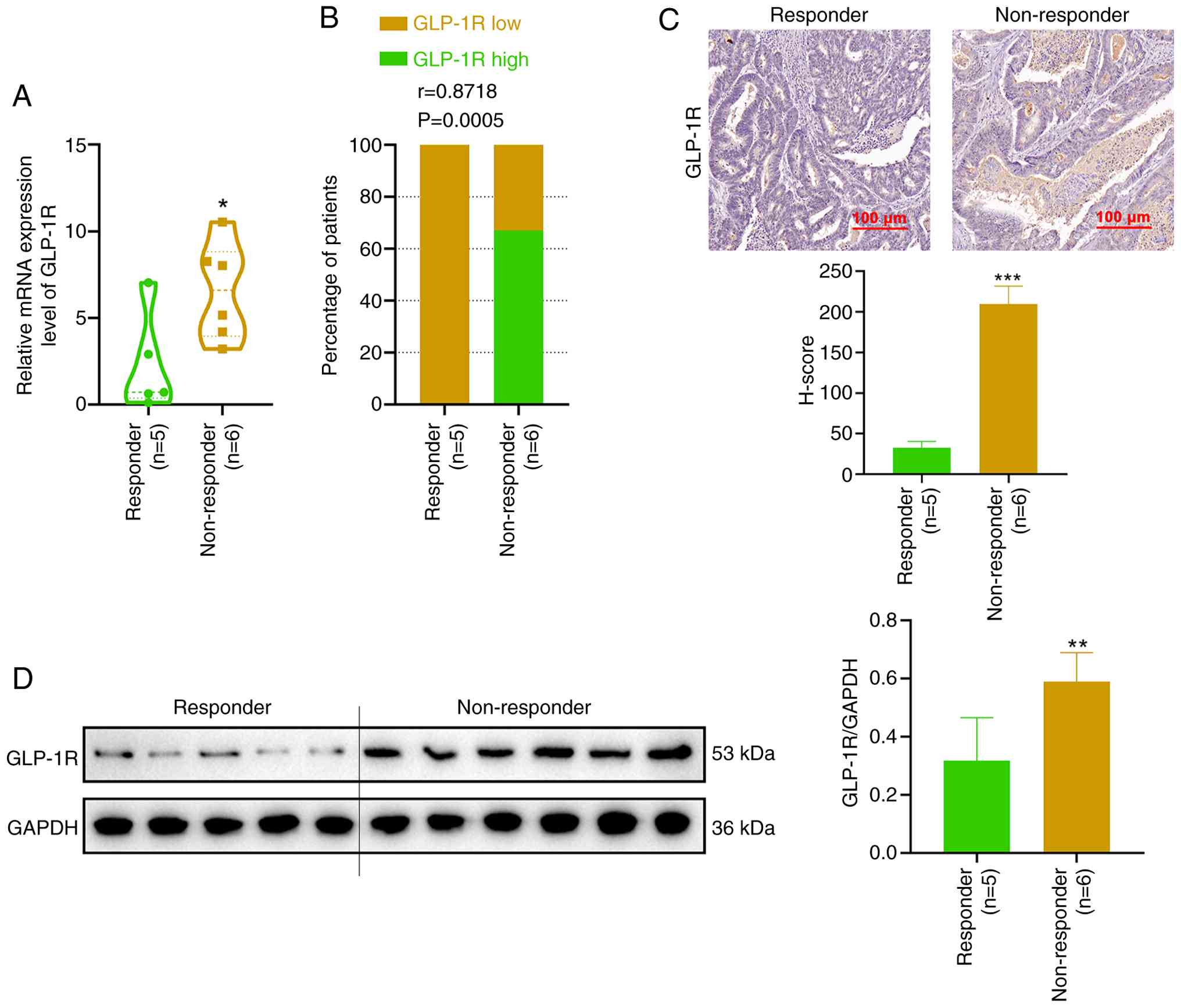
Figure 5

High GLP-1R expression correlates
with reduced efficacy of anti-programmed cell death protein 1
immunotherapy in patients with CRC. Tumor specimens were collected
from 11 patients with CRC treated with immune checkpoint inhibitors
and subsequently categorized into responder (n=5) and non-responder
(n=6) based on therapeutic outcomes. (A) Quantitative polymerase
chain reaction analysis was performed to measure the mRNA
expression levels of GLP-1R in tumor tissues. (B) Patients were
further stratified into high and low receptor expression groups
based on the median expression value. Pearson's correlation
analysis was conducted to evaluate the relationship between
receptor expression and treatment responsiveness. (C)
Representative immunohistochemical images (scale bar, 100 µm) and
(D) western blotting analysis illustrates the protein expression of
GLP-1R in responders and non-responders. Data are presented as mean
± SEM. *P<0.05, **P<0.01 and ***P<0.001. GLP-1R,
glucagon-like peptide-1 receptor; CRC, colorectal cancer.
View References

1 

Bin JF, Chen LF, Wang Y, Ge H and Chen W: Bibliometric and visual analysis of global crc circular RNA research 2015–2023. Front Immunol. 16:15804052025. View Article : Google Scholar : PubMed/NCBI

2 

Tsukanov VV, Vasyutin AV, Kasparov EV and Tonkikh JL: Is the use of artificial intelligence the main stage for detecting polyps during colonoscopy? World J Gastroenterol. 31:1065002025. View Article : Google Scholar : PubMed/NCBI

3 

Saha P, Ravanan P and Talwar P: A multi-omics exploration of PPARG activation in colon cancer: Kinases featuring a PPRE sequence within regulatory regions. Biol Direct. 20:682025. View Article : Google Scholar : PubMed/NCBI

4 

Kamara AA, He S, Joseph Fofanah A, Xu R and Chen Y: MDPNet: Multiscale dynamic Polyp-focus network for enhancing medical image polyp segmentation. IEEE Trans Med Imaging. 44:5208–5220. 2025. View Article : Google Scholar : PubMed/NCBI

5 

Araghi M, Soerjomataram I, Jenkins M, Brierley J, Morris E, Bray F and Arnold M: Global trends in colorectal cancer mortality: Projections to the year 2035. Int J Cancer. 144:2992–3000. 2019. View Article : Google Scholar : PubMed/NCBI

6 

Ghorbaninezhad F, Nour MA, Farzam OR, Saeedi H, Vanan AG, Bakhshivand M, Jafarlou M, Hatami-Sadr A and Baradaran B: The tumor microenvironment and dendritic cells: Developers of pioneering strategies in colorectal cancer immunotherapy? Biochim Biophys Acta Rev Cancer. 1880:1892812025. View Article : Google Scholar : PubMed/NCBI

7 

Steup C, Kennel KB, Neurath MF, Fichtner-Feigl S and Greten FR: Current and emerging concepts for systemic treatment of metastatic colorectal cancer. Gut. 74:2070–2095. 2025. View Article : Google Scholar : PubMed/NCBI

8 

Hossain MS, Karuniawati H, Jairoun AA, Urbi Z, Ooi DJ, John A, Lim YC, Kibria KK, Mohiuddin A and Ming LC: Colorectal cancer: A review of carcinogenesis, global epidemiology, current challenges, risk factors, preventive and treatment strategies. Cancers. 14:17322022. View Article : Google Scholar : PubMed/NCBI

9 

Nors J, Iversen LH, Erichsen R, Gotschalck KA and Andersen CL: Incidence of recurrence and time to recurrence in stage I to III colorectal cancer: A nationwide Danish cohort study. JAMA Oncol. 10:54–62. 2024. View Article : Google Scholar : PubMed/NCBI

10 

American Cancer Society, . Cancer Facts & Figures 2024. Atlanta, GA: American Cancer Society; 2024

11 

Sabbatino F, Liguori L, Pepe S and Ferrone S: Immune checkpoint inhibitors for the treatment of melanoma. Expert Opin Biol Ther. 22:563–576. 2022. View Article : Google Scholar : PubMed/NCBI

12 

Zhou F, Qiao M and Zhou C: The cutting-edge progress of immune-checkpoint blockade in lung cancer. Cell Mol Immunol. 18:279–293. 2021. View Article : Google Scholar : PubMed/NCBI

13 

Makaremi S, Asadzadeh Z, Hemmat N, Baghbanzadeh A, Sgambato A, Ghorbaninezhad F, Safarpour H, Argentiero A, Brunetti O, Bernardini R, et al: Immune checkpoint inhibitors in colorectal cancer: Challenges and future prospects. Biomedicines. 9:10752021. View Article : Google Scholar : PubMed/NCBI

14 

Emambux S, Tachon G, Junca A and Tougeron D: Results and challenges of immune checkpoint inhibitors in colorectal cancer. Expert Opin Biol Ther. 18:561–573. 2018. View Article : Google Scholar : PubMed/NCBI

15 

Ros J, Balconi F, Baraibar I, Saoudi Gonzalez N, Salva F, Tabernero J and Elez E: Advances in immune checkpoint inhibitor combination strategies for microsatellite stable colorectal cancer. Front Oncol. 13:11122762023. View Article : Google Scholar : PubMed/NCBI

16 

Trujillo JM, Nuffer W and Smith BA: GLP-1 receptor agonists: An updated review of head-to-head clinical studies. Ther Adv Endocrinol Metab. 12:20420188219973202021. View Article : Google Scholar : PubMed/NCBI

17 

Zheng Z, Zong Y, Ma Y, Tian Y, Pang Y, Zhang C and Gao J: Glucagon-like peptide-1 receptor: Mechanisms and advances in therapy. Signal Transduct Target Ther. 9:2342024. View Article : Google Scholar : PubMed/NCBI

18 

del Olmo-Garcia MI and Merino-Torres JF: GLP-1 receptor agonists and cardiovascular disease in patients with type 2 diabetes. J Diabetes Res. 2018:40204922018. View Article : Google Scholar : PubMed/NCBI

19 

Yabut JM and Drucker DJ: Glucagon-like peptide-1 receptor-based therapeutics for metabolic liver disease. Endocr Rev. 44:14–32. 2023. View Article : Google Scholar : PubMed/NCBI

20 

Halloum W, Dughem YA, Beier D and Pellesi L: Glucagon-like peptide-1 (GLP-1) receptor agonists for headache and pain disorders: A systematic review. J Headache Pain. 25:1122024. View Article : Google Scholar : PubMed/NCBI

21 

Gala K, Camilleri M, Goyal M, Ohri A, Marek G and Ravi K: Glucagon-like Peptide-1 receptor agonist use is associated with and may lead to esophageal motility abnormalities. Clin Gastroenterol Hepatol. Nov 8–2025.(Epub ahead of print). doi: 10.1016/j.cgh.2025.11.003. View Article : Google Scholar : PubMed/NCBI

22 

Saha B, Kamalumpundi V and Codipilly DC: GLP1 and GIP receptor agonists: Effects on the gastrointestinal tract and management strategies for primary care physicians. Mayo Clin Proc. Dec 1–2025.(Epub ahead of print). doi: 10.1016/j.mayocp.2025.09.017. View Article : Google Scholar

23 

Chen J, Mei A, Wei Y, Li C, Qian H, Min X, Yang H, Dong L, Rao X and Zhong J: GLP-1 receptor agonist as a modulator of innate immunity. Front Immunol. 13:9975782022. View Article : Google Scholar : PubMed/NCBI

24 

He Y, Xu B, Zhang M, Chen D, Wu S, Gao J, Liu Y, Zhang Z, Kuang J and Fang Q: Advances in GLP-1 receptor agonists for pain treatment and their future potential. J Headache Pain. 26:462025. View Article : Google Scholar : PubMed/NCBI

25 

Valencia-Rincón E, Rai R, Chandra V and Wellberg EA: GLP-1 receptor agonists and cancer: Current clinical evidence and translational opportunities for preclinical research. J Clin Invest. 135:e1947432025. View Article : Google Scholar : PubMed/NCBI

26 

Rode AK, Buus TB, Mraz V, Al-Jaberi FAH, Lopez DV, Ford SL, Hennen S, Eliasen IP, Klewe IV, Gharehdaghi L, et al: Induced human regulatory T cells express the glucagon-like peptide-1 receptor. Cells. 11:25872022. View Article : Google Scholar : PubMed/NCBI

27 

Paul MS and Ohashi PS: The roles of CD8+ T cell subsets in antitumor immunity. Trends Cell Biol. 30:695–704. 2020. View Article : Google Scholar : PubMed/NCBI

28 

Liu YT and Sun ZJ: Turning cold tumors into hot tumors by improving T-cell infiltration. Theranostics. 11:53652021. View Article : Google Scholar : PubMed/NCBI

29 

Vafaei S, Zekiy AO, Khanamir RA, Zaman BA, Ghayourvahdat A, Azimizonuzi H and Zamani M: Combination therapy with immune checkpoint inhibitors (ICIs); a new frontier. Cancer Cell Int. 22:22022. View Article : Google Scholar : PubMed/NCBI

30 

Chiang CH, Song J, Chi KY, Chang YC, Xanthavanij N, Chang Y, Hsia YP, Chiang CH, Ghamari A, Reynolds KL, et al: Glucagon-like Peptide-1 agonists reduce cardiovascular events in cancer patients on immune checkpoint inhibitors. Eur J Cancer. 216:1151702025. View Article : Google Scholar : PubMed/NCBI

31 

Quagliariello V, Canale ML, Bisceglia I, Iovine M, Giordano V, Giacobbe I, Scherillo M, Gabrielli D, Maurea C, Barbato M, et al: Glucagon-like peptide 1 receptor agonists in Cardio-oncology: Pathophysiology of cardiometabolic outcomes in cancer patients. Int J Mol Sci. 25:112992024. View Article : Google Scholar : PubMed/NCBI

32 

Vignarajah A, Kim S, Albliwi M, Ahn HM, Izda A, Naffa F, Vigneswaramoorthy N, Barot S and Shah G: Role of GLP-1 receptor agonists in managing cancer therapy-related cardiac dysfunction. J Am Heart Assoc. 14:e0409192025. View Article : Google Scholar : PubMed/NCBI

33 

Borner T, Pataro AM, Doebley SA, Furst CD, White AD, Gao SX, Chow A, Sanchez-Navarro MJ, Ghidewon MY, Halas JG, et al: Hypophagia and body weight loss by tirzepatide are accompanied by fewer GI adverse events compared to semaglutide in preclinical models. Sci Adv. 11:eadu15892025. View Article : Google Scholar : PubMed/NCBI

34 

Eisenhauer EA, Therasse P, Bogaerts J, Schwartz LH, Sargent D, Ford R, Dancey J, Arbuck S, Gwyther S, Mooney M, et al: New response evaluation criteria in solid tumours: Revised RECIST guideline (version 1.1). Eur J Cancer. 45:228–247. 2009. View Article : Google Scholar : PubMed/NCBI

35 

Wen Z, Luo D, Wang S, Rong R, Evers BM, Jia L, Fang Y, Daoud EV, Yang S, Gu Z, et al: Deep Learning-Based H-Score quantification of Immunohistochemistry-stained images. Mod Pathol. 37:1003982024. View Article : Google Scholar : PubMed/NCBI

36 

Livak KJ and Schmittgen TD: Analysis of relative gene expression data using Real-time quantitative PCR and the 2(−Delta Delta C(T)) method. Methods. 25:402–408. 2001. View Article : Google Scholar : PubMed/NCBI

37 

Islam MR, Akash S, Rahman MM, Nowrin FT, Akter T, Shohag S, Rauf A, Aljohani AS and Simal-Gandara J: Colon cancer and colorectal cancer: Prevention and treatment by potential natural products. Chem Biol Interact. 368:1101702022. View Article : Google Scholar : PubMed/NCBI

38 

Ben Nasr M, Usuelli V, Dellepiane S, Seelam AJ, Fiorentino TV, D'Addio F, Fiorina E, Xu C, Xie Y, Balasubramanian HB, et al: Glucagon-like peptide 1 receptor is a T cell-negative costimulatory molecule. Cell Metab. 36:1302–1319.e12. 2024. View Article : Google Scholar : PubMed/NCBI

39 

Wong CK, Yusta B, Koehler JA, Baggio LL, McLean BA, Matthews D, Seeley RJ and Drucker DJ: Divergent roles for the gut intraepithelial lymphocyte GLP-1R in control of metabolism, microbiota, and T cell-induced inflammation. Cell Metab. 34:1514–1531.e7. 2022. View Article : Google Scholar : PubMed/NCBI

40 

Shilyansky JS, Chan CJ, Xiao S, Gribovskaja-Rupp I, Quelle DE, Howe JR, Dillon JS and Ear PH: GLP-1R agonist promotes proliferation of neuroendocrine neoplasm cells expressing GLP-1 receptors. Surgery. 179:1089432025. View Article : Google Scholar : PubMed/NCBI

41 

Shabil M, Khatib MN, Ballal S, Bansal P, Tomar BS, Ashraf A, Kumar MR, Sinha A, Rawat P, Gaidhane AM, et al: Risk of hepatocellular carcinoma with Glucagon-like Peptide-1 receptor agonist treatment in patients: A systematic review and meta-analysis. BMC Endocr Disord. 24:2462024. View Article : Google Scholar : PubMed/NCBI

42 

Koehler JA, Kain T and Drucker DJ: Glucagon-like peptide-1 receptor activation inhibits growth and augments apoptosis in murine CT26 colon cancer cells. Endocrinology. 152:3362–3372. 2011. View Article : Google Scholar : PubMed/NCBI

43 

Tang Y, Wei J, Ge X, Yu C, Lu W, Qian Y, Yang H, Fu D, Fang Y, Zhou X, et al: Intratumoral injection of interferon gamma promotes the efficacy of anti-PD1 treatment in colorectal cancer. Cancer Lett. 588:2167982024. View Article : Google Scholar : PubMed/NCBI

44 

Zhong FM, Yao FY, Yang YL, Liu J, Li MY, Jiang JY, Zhang N, Xu YM, Li SQ, Cheng Y, et al: Molecular subtypes predict therapeutic responses and identifying and validating diagnostic signatures based on machine learning in chronic myeloid leukemia. Cancer Cell Int. 23:612023. View Article : Google Scholar : PubMed/NCBI

45 

Xie Y, Lv Z, Wang Y, Ma J, Wei X, Zheng G and Wu J: Study on the efficacy of IFN-γ- and sPD-1-overexpressing BMSCs in enhancing immune effects for the treatment of lung adenocarcinoma. Front Immunol. 16:15544672025. View Article : Google Scholar : PubMed/NCBI

46 

Hogg GD, Weinstein AG, Kingston NL, Liu X, Dres OM, Kang LI, Lander VE, Kao YL, Ahmad F, Knolhoff BL, et al: Combined Flt3L and CD40 agonism restores dendritic cell-driven T cell immunity in pancreatic cancer. Sci Immunol. 10:eadp39782025. View Article : Google Scholar : PubMed/NCBI

47 

Andrews LP, Butler SC, Cui J, Cillo AR, Cardello C, Liu C, Brunazzi EA, Baessler A, Xie B, Kunning SR, et al: LAG-3 and PD-1 synergize on CD8+ T cells to drive T cell exhaustion and hinder autocrine IFN-γ-dependent anti-tumor immunity. Cell. 187:4355–4372.e22. 2024. View Article : Google Scholar : PubMed/NCBI

48 

Zhou C, Cheng X and Tu S: Current status and future perspective of immune checkpoint inhibitors in colorectal cancer. Cancer Lett. 521:119–129. 2021. View Article : Google Scholar : PubMed/NCBI

49 

Sahin IH, Ciombor KK, Diaz LA, Yu J and Kim R: Immunotherapy for microsatellite stable colorectal cancers: Challenges and novel therapeutic avenues. Am Soc Clin Oncol Educ Book. 42:1–12. 2022.PubMed/NCBI

50 

Yan W, Qiu L, Yang M, Xu A, Ma M, Yuan Q, Ma X, Liang W, Li X and Lu Y: CXCL10 mediates CD8+ T cells to facilitate vessel normalization and improve the efficacy of cetuximab combined with PD-1 checkpoint inhibitors in colorectal cancer. Cancer Lett. 567:2162632023. View Article : Google Scholar : PubMed/NCBI

51 

Zhou W, Qu M, Yue Y, Zhong Z, Nan K, Sun X, Wu Q, Zhang J, Chen W and Miao C: Acetylcysteine synergizes PD-1 blockers against colorectal cancer progression by promoting TCF1+ PD1+ CD8+ T cell differentiation. Cell Commun Signal. 22:5032024. View Article : Google Scholar : PubMed/NCBI

52 

Zhu C, Lai Y, Liu C, Teng L, Zhu Y, Lin X, Fu X, Lai Q, Liu S, Zhou X and Fang Y: Comprehensively prognostic and immunological analyses of GLP-1 signaling-related genes in pan-cancer and validation in colorectal cancer. Front Pharmacol. 15:13872432024. View Article : Google Scholar : PubMed/NCBI

53 

Alharbi SH: Anti-inflammatory role of glucagon-like peptide 1 receptor agonists and its clinical implications. Ther Adv Endocrinol Metab. 15:204201882312223672024. View Article : Google Scholar : PubMed/NCBI

54 

Wong S, Le GH, Dri CE, Teopiz KM and McIntyre RS: Evaluating biased agonism of glucagon-like peptide-1 (GLP-1) receptors to improve cellular bioenergetics: A systematic review. Diabetes Obes Metab. 27:6105–6115. 2025. View Article : Google Scholar : PubMed/NCBI

55 

Wong CK, Yusta B, Tong JCL, Broichhagen J, Hodson DJ and Drucker DJ: Reassessment of antibody-based detection of the murine T cell GLP-1 receptor. Cell Metab. 37:1783–1788. 2025. View Article : Google Scholar : PubMed/NCBI

56 

Pang J, Feng JN, Ling W and Jin T: The anti-inflammatory feature of glucagon-like peptide-1 and its based diabetes drugs-Therapeutic potential exploration in lung injury. Acta Pharm Sin B. 12:4040–4055. 2022. View Article : Google Scholar : PubMed/NCBI

Related Articles

  • Abstract
  • View
  • Download
  • Twitter
Copy and paste a formatted citation
Spandidos Publications style
Zhan Z, Zhan C, Li L, Lan D, Meng G and Chen F: Potential treatment benefits of a GLP‑1R antagonist in combination with immune checkpoint inhibitors in colorectal cancer. Oncol Lett 31: 132, 2026.
APA
Zhan, Z., Zhan, C., Li, L., Lan, D., Meng, G., & Chen, F. (2026). Potential treatment benefits of a GLP‑1R antagonist in combination with immune checkpoint inhibitors in colorectal cancer. Oncology Letters, 31, 132. https://doi.org/10.3892/ol.2026.15485
MLA
Zhan, Z., Zhan, C., Li, L., Lan, D., Meng, G., Chen, F."Potential treatment benefits of a GLP‑1R antagonist in combination with immune checkpoint inhibitors in colorectal cancer". Oncology Letters 31.4 (2026): 132.
Chicago
Zhan, Z., Zhan, C., Li, L., Lan, D., Meng, G., Chen, F."Potential treatment benefits of a GLP‑1R antagonist in combination with immune checkpoint inhibitors in colorectal cancer". Oncology Letters 31, no. 4 (2026): 132. https://doi.org/10.3892/ol.2026.15485
Copy and paste a formatted citation
x
Spandidos Publications style
Zhan Z, Zhan C, Li L, Lan D, Meng G and Chen F: Potential treatment benefits of a GLP‑1R antagonist in combination with immune checkpoint inhibitors in colorectal cancer. Oncol Lett 31: 132, 2026.
APA
Zhan, Z., Zhan, C., Li, L., Lan, D., Meng, G., & Chen, F. (2026). Potential treatment benefits of a GLP‑1R antagonist in combination with immune checkpoint inhibitors in colorectal cancer. Oncology Letters, 31, 132. https://doi.org/10.3892/ol.2026.15485
MLA
Zhan, Z., Zhan, C., Li, L., Lan, D., Meng, G., Chen, F."Potential treatment benefits of a GLP‑1R antagonist in combination with immune checkpoint inhibitors in colorectal cancer". Oncology Letters 31.4 (2026): 132.
Chicago
Zhan, Z., Zhan, C., Li, L., Lan, D., Meng, G., Chen, F."Potential treatment benefits of a GLP‑1R antagonist in combination with immune checkpoint inhibitors in colorectal cancer". Oncology Letters 31, no. 4 (2026): 132. https://doi.org/10.3892/ol.2026.15485
Follow us
  • Twitter
  • LinkedIn
  • Facebook
About
  • Spandidos Publications
  • Careers
  • Cookie Policy
  • Privacy Policy
How can we help?
  • Help
  • Live Chat
  • Contact
  • Email to our Support Team