Spandidos Publications Logo
  • About
    • About Spandidos
    • Aims and Scopes
    • Abstracting and Indexing
    • Editorial Policies
    • Reprints and Permissions
    • Job Opportunities
    • Terms and Conditions
    • Contact
  • Journals
    • All Journals
    • Oncology Letters
      • Oncology Letters
      • Information for Authors
      • Editorial Policies
      • Editorial Board
      • Aims and Scope
      • Abstracting and Indexing
      • Bibliographic Information
      • Archive
    • International Journal of Oncology
      • International Journal of Oncology
      • Information for Authors
      • Editorial Policies
      • Editorial Board
      • Aims and Scope
      • Abstracting and Indexing
      • Bibliographic Information
      • Archive
    • Molecular and Clinical Oncology
      • Molecular and Clinical Oncology
      • Information for Authors
      • Editorial Policies
      • Editorial Board
      • Aims and Scope
      • Abstracting and Indexing
      • Bibliographic Information
      • Archive
    • Experimental and Therapeutic Medicine
      • Experimental and Therapeutic Medicine
      • Information for Authors
      • Editorial Policies
      • Editorial Board
      • Aims and Scope
      • Abstracting and Indexing
      • Bibliographic Information
      • Archive
    • International Journal of Molecular Medicine
      • International Journal of Molecular Medicine
      • Information for Authors
      • Editorial Policies
      • Editorial Board
      • Aims and Scope
      • Abstracting and Indexing
      • Bibliographic Information
      • Archive
    • Biomedical Reports
      • Biomedical Reports
      • Information for Authors
      • Editorial Policies
      • Editorial Board
      • Aims and Scope
      • Abstracting and Indexing
      • Bibliographic Information
      • Archive
    • Oncology Reports
      • Oncology Reports
      • Information for Authors
      • Editorial Policies
      • Editorial Board
      • Aims and Scope
      • Abstracting and Indexing
      • Bibliographic Information
      • Archive
    • Molecular Medicine Reports
      • Molecular Medicine Reports
      • Information for Authors
      • Editorial Policies
      • Editorial Board
      • Aims and Scope
      • Abstracting and Indexing
      • Bibliographic Information
      • Archive
    • World Academy of Sciences Journal
      • World Academy of Sciences Journal
      • Information for Authors
      • Editorial Policies
      • Editorial Board
      • Aims and Scope
      • Abstracting and Indexing
      • Bibliographic Information
      • Archive
    • International Journal of Functional Nutrition
      • International Journal of Functional Nutrition
      • Information for Authors
      • Editorial Policies
      • Editorial Board
      • Aims and Scope
      • Abstracting and Indexing
      • Bibliographic Information
      • Archive
    • International Journal of Epigenetics
      • International Journal of Epigenetics
      • Information for Authors
      • Editorial Policies
      • Editorial Board
      • Aims and Scope
      • Abstracting and Indexing
      • Bibliographic Information
      • Archive
    • Medicine International
      • Medicine International
      • Information for Authors
      • Editorial Policies
      • Editorial Board
      • Aims and Scope
      • Abstracting and Indexing
      • Bibliographic Information
      • Archive
  • Articles
  • Information
    • Information for Authors
    • Information for Reviewers
    • Information for Librarians
    • Information for Advertisers
    • Conferences
  • Language Editing
Spandidos Publications Logo
  • About
    • About Spandidos
    • Aims and Scopes
    • Abstracting and Indexing
    • Editorial Policies
    • Reprints and Permissions
    • Job Opportunities
    • Terms and Conditions
    • Contact
  • Journals
    • All Journals
    • Biomedical Reports
      • Information for Authors
      • Editorial Policies
      • Editorial Board
      • Aims and Scope
      • Abstracting and Indexing
      • Bibliographic Information
      • Archive
    • Experimental and Therapeutic Medicine
      • Information for Authors
      • Editorial Policies
      • Editorial Board
      • Aims and Scope
      • Abstracting and Indexing
      • Bibliographic Information
      • Archive
    • International Journal of Epigenetics
      • Information for Authors
      • Editorial Policies
      • Editorial Board
      • Aims and Scope
      • Abstracting and Indexing
      • Bibliographic Information
      • Archive
    • International Journal of Functional Nutrition
      • Information for Authors
      • Editorial Policies
      • Editorial Board
      • Aims and Scope
      • Abstracting and Indexing
      • Bibliographic Information
      • Archive
    • International Journal of Molecular Medicine
      • Information for Authors
      • Editorial Policies
      • Editorial Board
      • Aims and Scope
      • Abstracting and Indexing
      • Bibliographic Information
      • Archive
    • International Journal of Oncology
      • Information for Authors
      • Editorial Policies
      • Editorial Board
      • Aims and Scope
      • Abstracting and Indexing
      • Bibliographic Information
      • Archive
    • Medicine International
      • Information for Authors
      • Editorial Policies
      • Editorial Board
      • Aims and Scope
      • Abstracting and Indexing
      • Bibliographic Information
      • Archive
    • Molecular and Clinical Oncology
      • Information for Authors
      • Editorial Policies
      • Editorial Board
      • Aims and Scope
      • Abstracting and Indexing
      • Bibliographic Information
      • Archive
    • Molecular Medicine Reports
      • Information for Authors
      • Editorial Policies
      • Editorial Board
      • Aims and Scope
      • Abstracting and Indexing
      • Bibliographic Information
      • Archive
    • Oncology Letters
      • Information for Authors
      • Editorial Policies
      • Editorial Board
      • Aims and Scope
      • Abstracting and Indexing
      • Bibliographic Information
      • Archive
    • Oncology Reports
      • Information for Authors
      • Editorial Policies
      • Editorial Board
      • Aims and Scope
      • Abstracting and Indexing
      • Bibliographic Information
      • Archive
    • World Academy of Sciences Journal
      • Information for Authors
      • Editorial Policies
      • Editorial Board
      • Aims and Scope
      • Abstracting and Indexing
      • Bibliographic Information
      • Archive
  • Articles
  • Information
    • For Authors
    • For Reviewers
    • For Librarians
    • For Advertisers
    • Conferences
  • Language Editing
Login Register Submit
  • This site uses cookies
  • You can change your cookie settings at any time by following the instructions in our Cookie Policy. To find out more, you may read our Privacy Policy.

    I agree
Search articles by DOI, keyword, author or affiliation
Search
Advanced Search
presentation
Oncology Letters
Join Editorial Board Propose a Special Issue
Print ISSN: 1792-1074 Online ISSN: 1792-1082
Journal Cover
July-2026 Volume 32 Issue 1

Full Size Image

Sign up for eToc alerts
Recommend to Library

Journals

International Journal of Molecular Medicine

International Journal of Molecular Medicine

International Journal of Molecular Medicine is an international journal devoted to molecular mechanisms of human disease.

International Journal of Oncology

International Journal of Oncology

International Journal of Oncology is an international journal devoted to oncology research and cancer treatment.

Molecular Medicine Reports

Molecular Medicine Reports

Covers molecular medicine topics such as pharmacology, pathology, genetics, neuroscience, infectious diseases, molecular cardiology, and molecular surgery.

Oncology Reports

Oncology Reports

Oncology Reports is an international journal devoted to fundamental and applied research in Oncology.

Experimental and Therapeutic Medicine

Experimental and Therapeutic Medicine

Experimental and Therapeutic Medicine is an international journal devoted to laboratory and clinical medicine.

Oncology Letters

Oncology Letters

Oncology Letters is an international journal devoted to Experimental and Clinical Oncology.

Biomedical Reports

Biomedical Reports

Explores a wide range of biological and medical fields, including pharmacology, genetics, microbiology, neuroscience, and molecular cardiology.

Molecular and Clinical Oncology

Molecular and Clinical Oncology

International journal addressing all aspects of oncology research, from tumorigenesis and oncogenes to chemotherapy and metastasis.

World Academy of Sciences Journal

World Academy of Sciences Journal

Multidisciplinary open-access journal spanning biochemistry, genetics, neuroscience, environmental health, and synthetic biology.

International Journal of Functional Nutrition

International Journal of Functional Nutrition

Open-access journal combining biochemistry, pharmacology, immunology, and genetics to advance health through functional nutrition.

International Journal of Epigenetics

International Journal of Epigenetics

Publishes open-access research on using epigenetics to advance understanding and treatment of human disease.

Medicine International

Medicine International

An International Open Access Journal Devoted to General Medicine.

Journal Cover
July-2026 Volume 32 Issue 1

Full Size Image

Sign up for eToc alerts
Recommend to Library

  • Article
  • Citations
    • Cite This Article
    • Download Citation
    • Create Citation Alert
    • Remove Citation Alert
    • Cited By
  • Similar Articles
    • Related Articles (in Spandidos Publications)
    • Similar Articles (Google Scholar)
    • Similar Articles (PubMed)
  • Download PDF
  • Download XML
  • View XML

  • Supplementary Files
    • Supplementary_Data1.pdf
    • Supplementary_Data2.pdf
    • Supplementary_Data3.xlsx
    • Supplementary_Data4.pdf
Article Open Access

Decoding the role of polyamine metabolism in lung adenocarcinoma prognosis: A triangulated approach combining transcriptome, single‑cell and Mendelian randomization analyses

  • Authors:
    • Hua Yang
    • Lemeng Zhang
    • Jianhua Chen
    • Junjie Zhang
  • View Affiliations / Copyright

    Affiliations: Department of Thoracic Oncology, Hunan Cancer Hospital, Changsha, Hunan 410017, P.R. China, Department of Anesthesiology, Xiangya Hospital, Central South University, Changsha, Hunan 410008, P.R. China
    Copyright: © Yang et al. This is an open access article distributed under the terms of Creative Commons Attribution License.
  • Article Number: 310
    |
    Published online on: May 21, 2026
       https://doi.org/10.3892/ol.2026.15665
  • Expand metrics +
Metrics: Total Views: 0 (Spandidos Publications: | PMC Statistics: )
Metrics: Total PDF Downloads: 0 (Spandidos Publications: | PMC Statistics: )
Cited By (CrossRef): 0 citations Loading Articles...

This article is mentioned in:


Abstract

The progression of lung adenocarcinoma (LUAD) is influenced by polyamine metabolism, which modulates antitumor immunity, although the underlying mechanisms remain unclear. The present study investigates the role of polyamine metabolism‑related genes (PMRGs) in LUAD using transcriptomic data, single‑cell RNA sequencing (scRNA‑seq) and Mendelian randomization. Differentially expressed PMRGs were identified through differential expression analysis and weighted gene co‑expression network analysis. Prognostic genes were selected via Cox regression and least absolute shrinkage and selection operator regression to construct a risk model. Immune infiltration, machine learning and scRNA‑seq were employed to explore molecular mechanisms whilst reverse transcription‑quantitative PCR (RT‑qPCR) validated gene expression in LUAD tissues. A nomogram incorporating risk scores assisted in predicting LUAD prognosis (area under the curve >0.6). Distinct immune cell profiles, particularly involving B cells and CD4+ T cells, were observed between high‑ and low‑risk groups. Drug sensitivity analysis identified 15 drugs with differential responses. Epithelial cells emerged as a key cluster, with dynamic changes in calcium voltage‑gated channel auxiliary subunit α2δ2 (CACNA2D2) expression during pseudotime. RT‑qPCR confirmed the downregulation of prognostic genes in LUAD. A polyamine metabolism‑related prognostic signature (CACNA2D2, adenoreceptor β‑1, immunoglobulin superfamily member 10 and carbonic anhydrase 4) associated with the tumor microenvironment was established, offering potential for enhanced prognosis prediction in LUAD.
View Figures

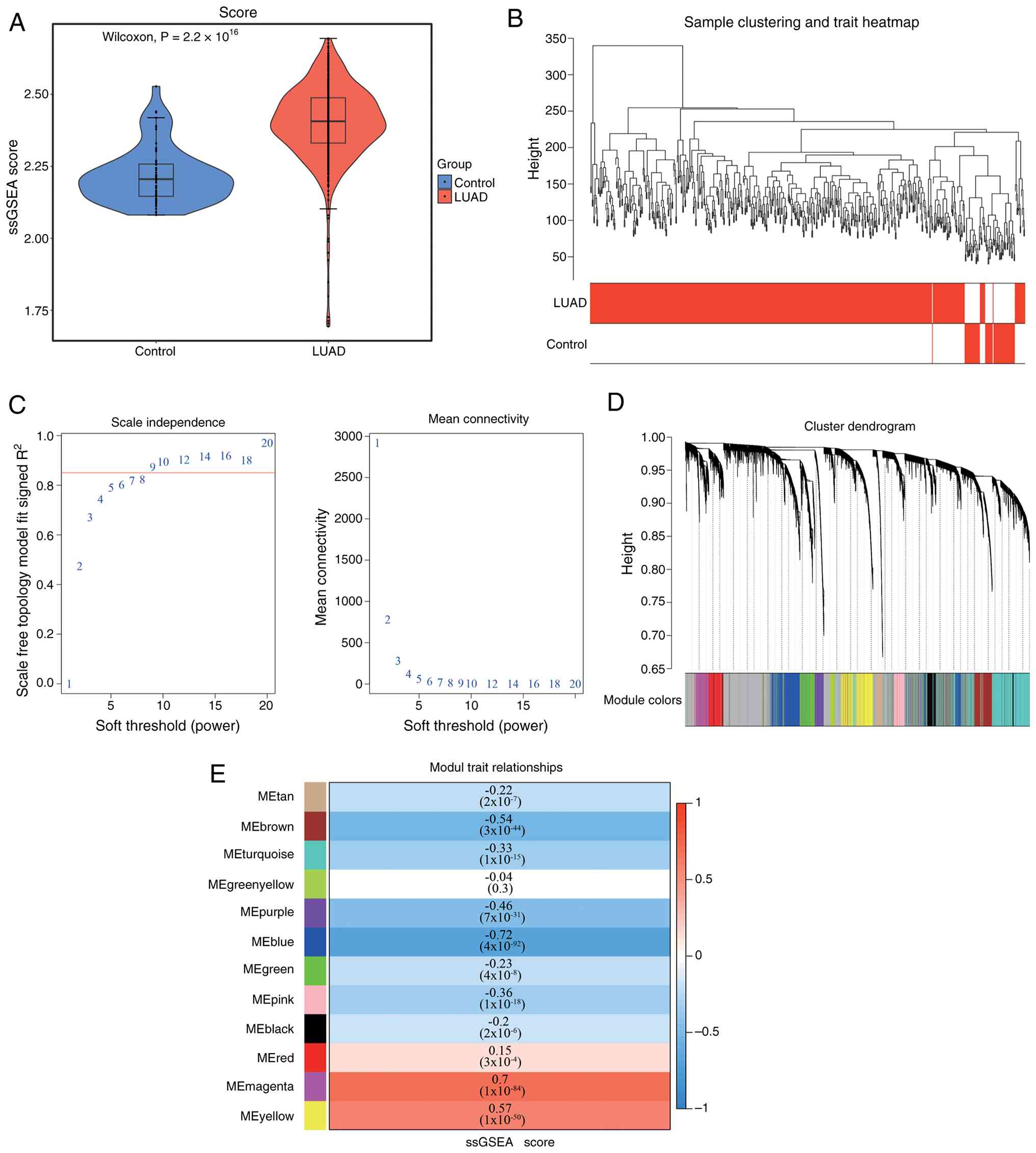
Figure 1

DE-PMRGs identification. (A) ssGSEA
rating violin chart: Blue represents the control group and red
represents the LUAD group. (B) Sample-level clustering and trait
heatmap: Blue represents the control group and red represents the
LUAD group. (C) Soft threshold selection: The horizontal axes of
all panels indicate the weight parameter power value. The vertical
axis of the left panel shows the scale-free fit index
(R2), while that of the right panel represents the mean
adjacency function values for all genes in the corresponding gene
module. (D) Identification of co-expression modules: The upper part
displays the hierarchical clustering dendrogram of genes, and the
lower part shows the gene modules. (E) Correlation heatmap between
modules and ssGSEA. The color block on the far left corresponds to
the modules, and the color bar on the far right indicates the
correlation range. In the middle heatmap, deeper colors represent
higher correlations, with red indicating positive correlation and
blue indicating negative correlation. DE-PMRG, differentially
expressed-polyamine metabolism-related genes; LUAD, lung
adenocarcinoma; ssGSEA, single sample gene set enrichment
analysis.

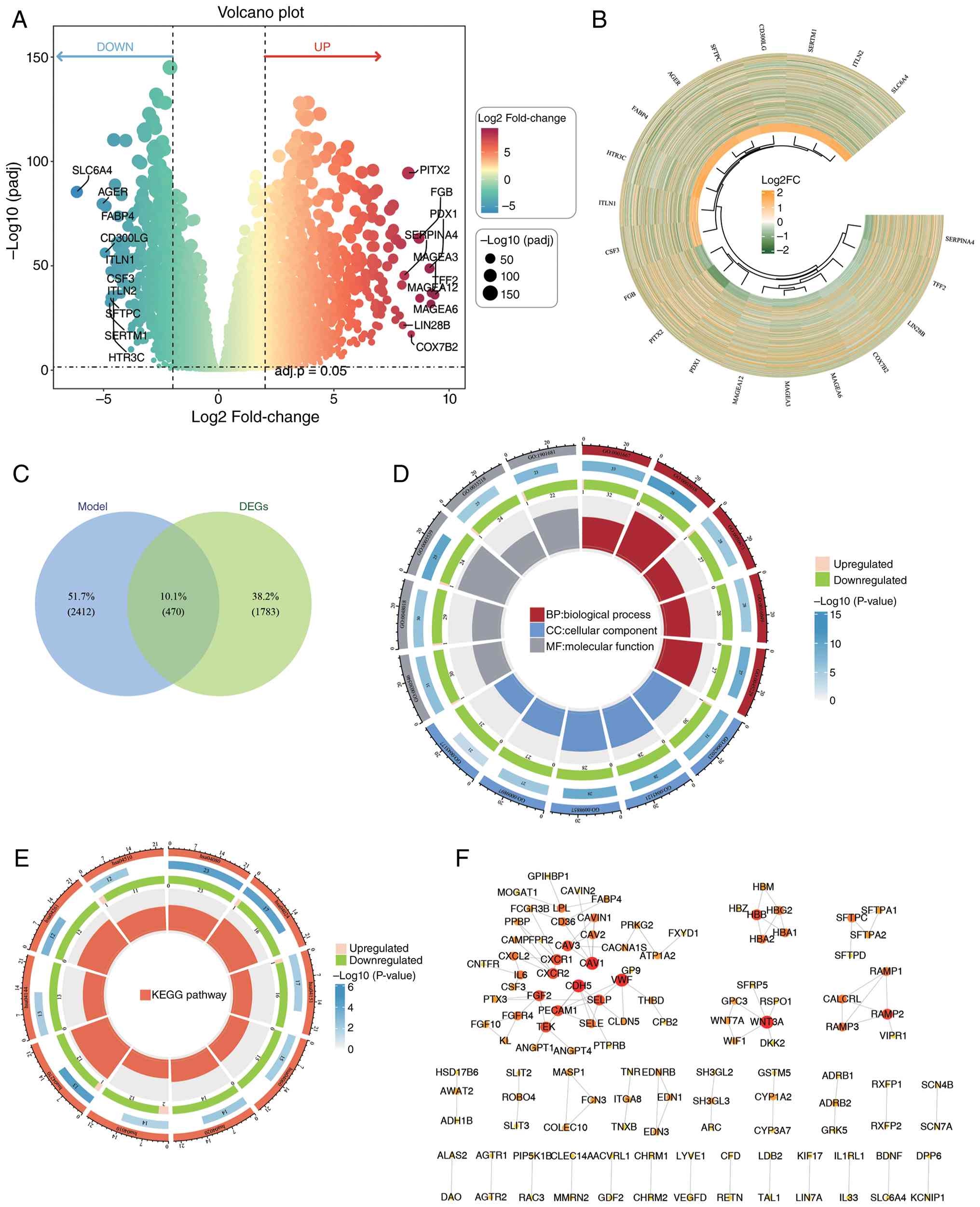
Figure 2

DEGs identification, functional
enrichment analysis and PPI network between LUAD and control
tissue. (A) Volcano plot highlighting the top 10 upregulated and
downregulated DEGs. The vertical axis represents
-log10(adj.P-value), and the horizontal axis denotes the fold
change (log2FC); each dot corresponds to one gene, with
circles representing individual samples. (B) Heatmap displaying
gene expression: Top 10 upregulated and top 10 downregulated genes
ranked by log2FC. (C) Identification of 470 DE-PMRGs. (D
and E) GO and KEGG enrichment analysis of DE-PMRGs: From the
outermost to the innermost circle: (1) The first layer shows GO functional IDs
across three categories: BP, CC and MF. (2) The second layer: Color intensity
indicates significance, with the length, width and numerical labels
representing the number of genes enriched in each function.
(3) The third layer: The number and
trend (indicated by color) of upregulated and downregulated genes
in each function. (4) The innermost
layer: the color of each block represents different functional
categories and the size corresponds to the RichFactor of each
pathway. (F) PPI network of DE-PMRGs. DEGs, differentially
expressed genes; PPI, protein-protein interactions; KEGG, Kyoto
Encyclopedia of Genes and Genomes; GO, Gene Ontology; DE-PMRGs,
differentially expressed polyamine metabolism-related genes; FC,
fold change; BP, biological process; CC, cellular component; MF,
molecular function; padj, adjusted P-value.

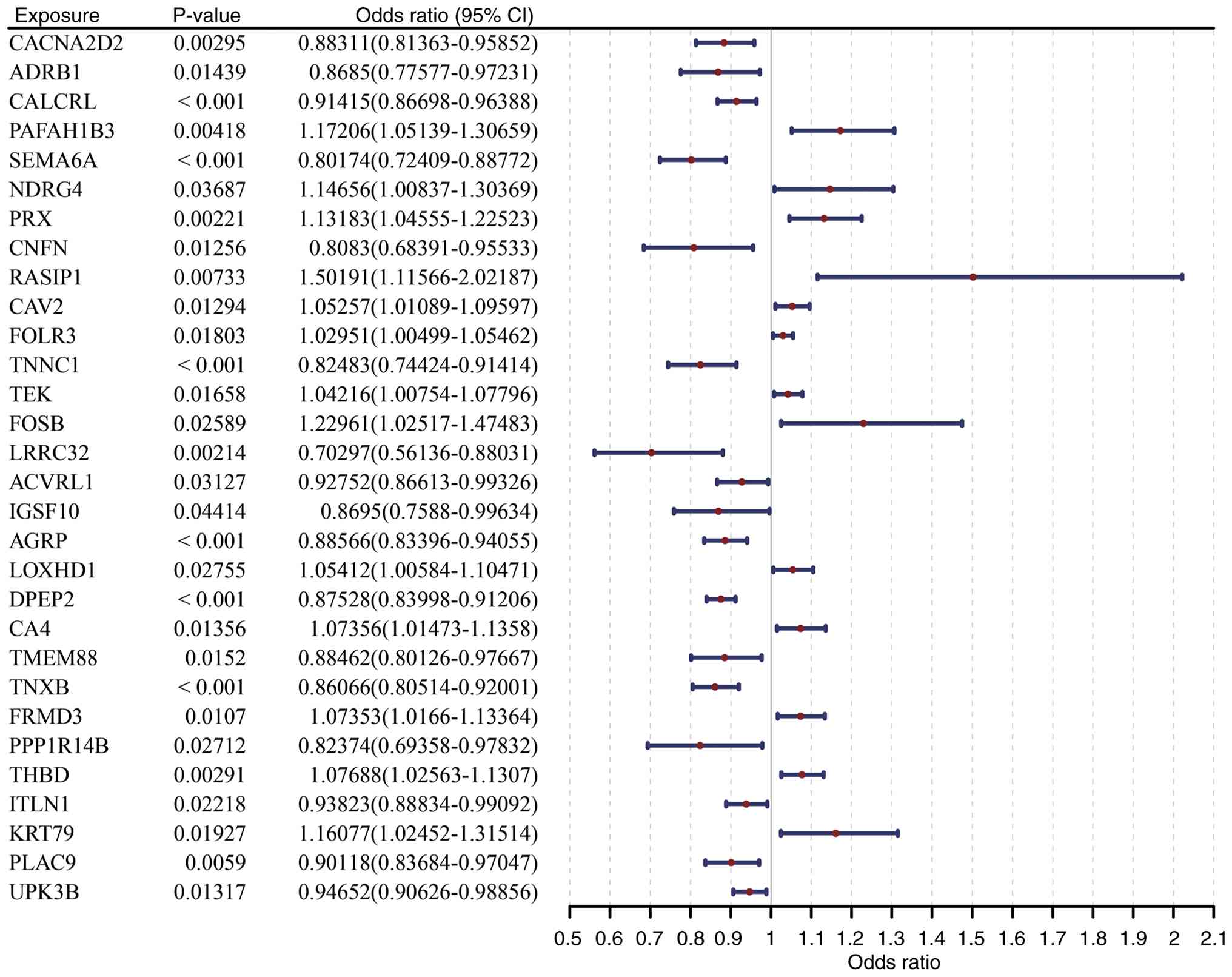
Figure 3

Mendelian screening forest map.
Identification of 30 candidate genes by Mendelian randomization
analysis, dominated by the results of the inverse variance weighted
algorithm.

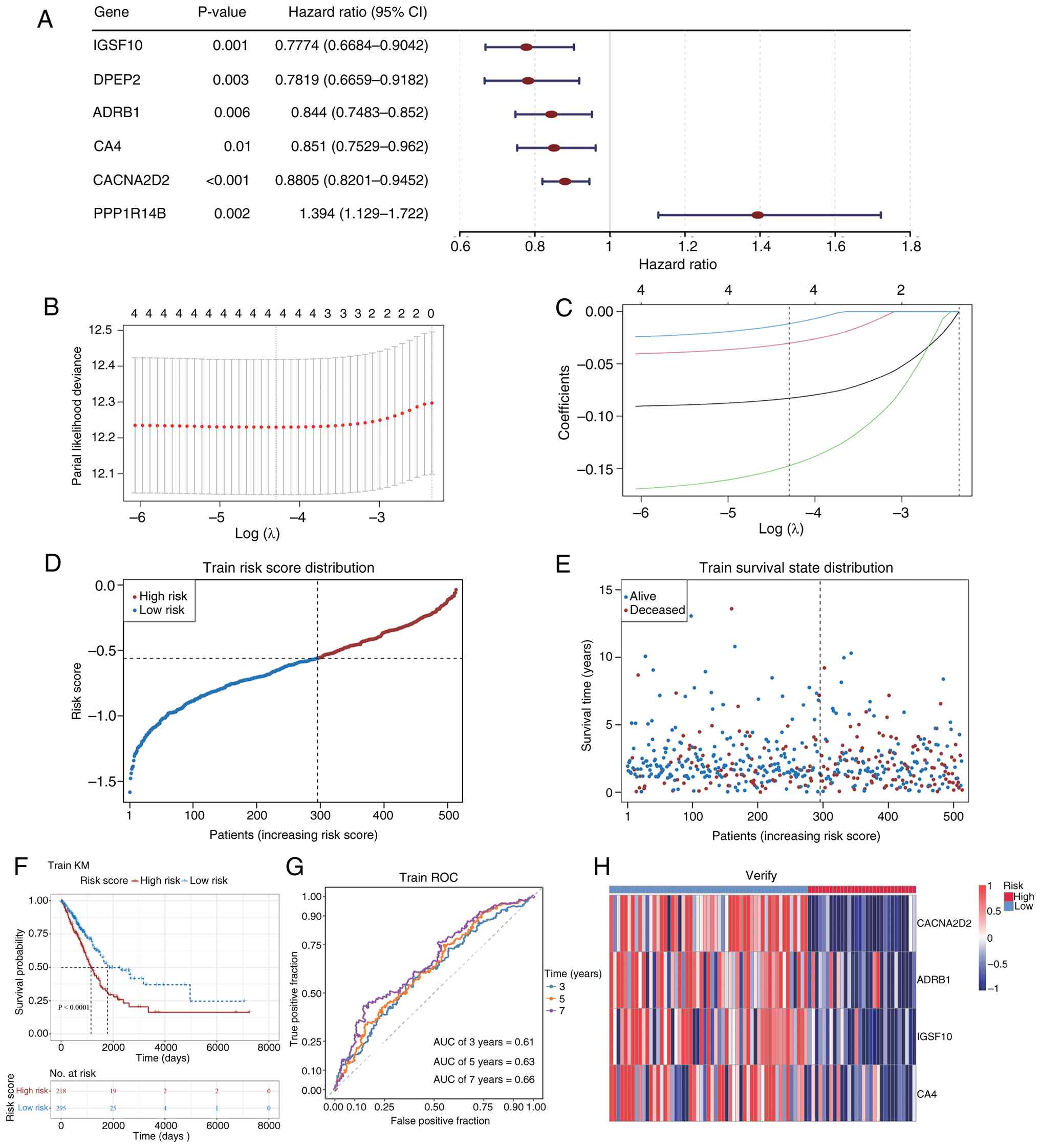
Figure 4

Development and validation of the
polyamine-related risk model. (A) Forest plot of univariate Cox
regression analysis for prognostic genes (n=513 patients with
LUAD). (B) Lasso regression coefficient profiles of the candidate
genes. (C) Cross-validation for optimal λ selection in the Lasso
model. (D and E) Distribution of risk scores and survival status in
the training set; red dots represent high-risk samples and blue
dots represent low-risk samples. (F) Kaplan-Meier survival curves
comparing high- and low-risk groups. (G) ROC curves predicting 3-,
5- and 7-year overall survival. (H) Heatmap showing the expression
of four prognostic genes in the training set. AUC, area under the
curve, LUAD, lung adenocarcinoma; ROC, receiver operating
characteristic.

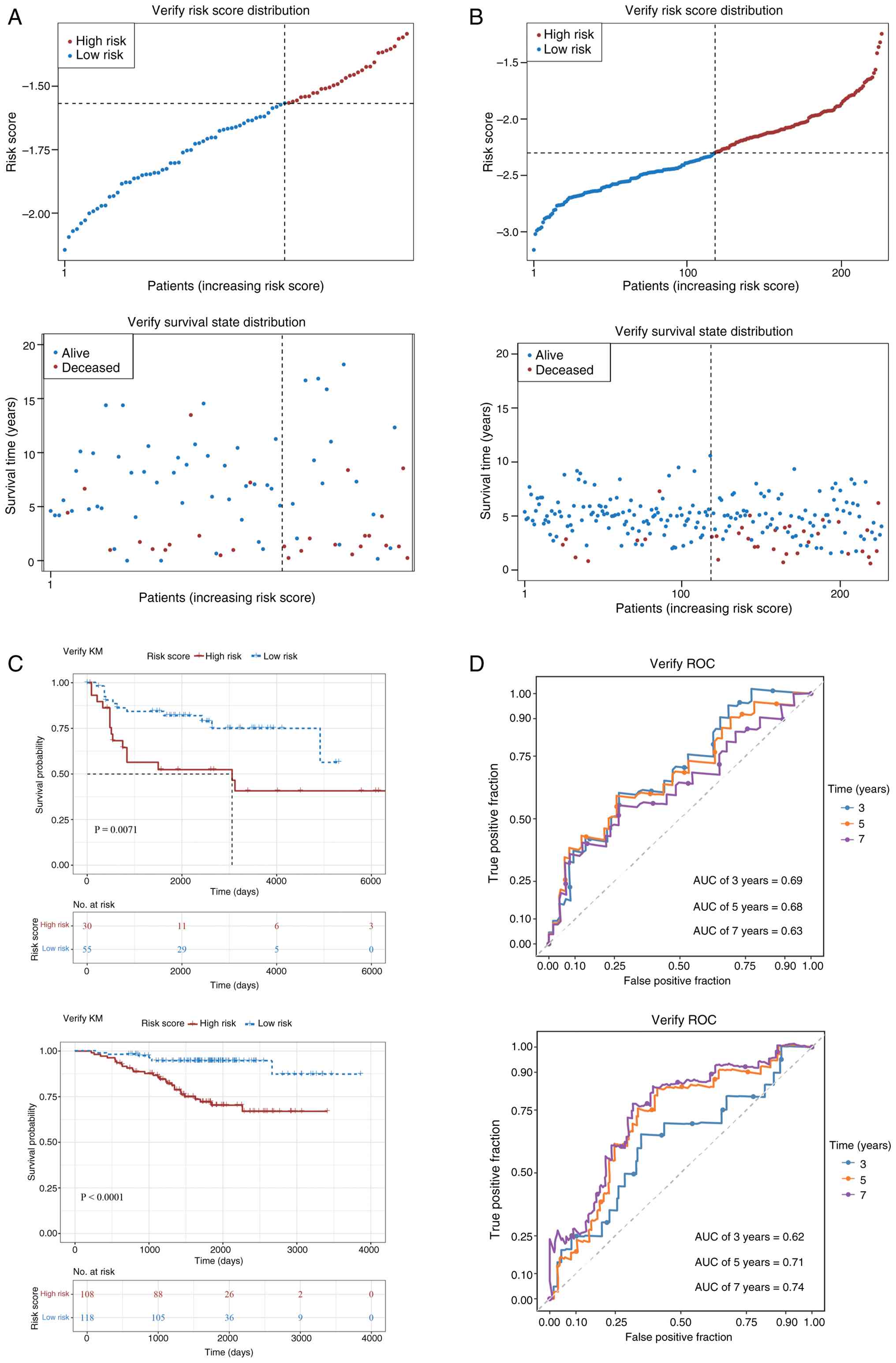
Figure 5

Validation of the prognostic risk
model in independent cohorts. Risk score distribution and survival
status mapping in the external validation datasets (A) GSE30219
(n=85) and (B) GSE31210 (n=226). (C) Kaplan-Meier survival curves
for the high- and low-risk groups in the combined validation set,
showing significant differences in overall survival. (D) ROC curve
analysis evaluating the accuracy of the prognostic model in
forecasting 3-, 5- and 7-year survival outcomes in the validation
cohorts. Red lines and blue lines in risk plots follow the same
definitions as in Fig. 4. Log-rank
test P-values are provided for survival comparisons. KM,
Kaplan-Meier; ROC, receiver operating characteristic; AUC, area
under the curve.

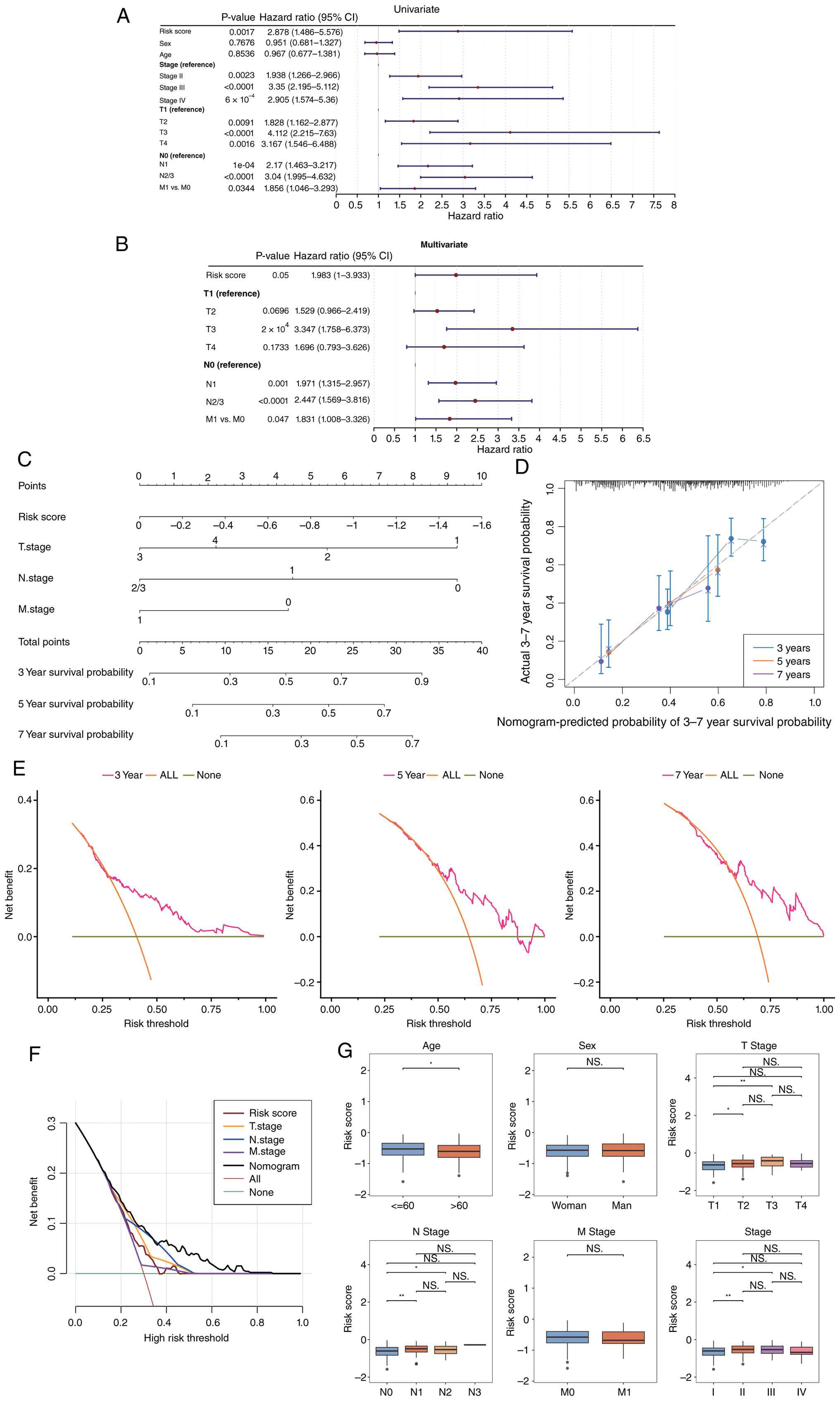
Figure 6

Independent prognostic factors and
LUAD nomogram construction. (A) Univariate and (B) multivariate Cox
regression analyses for screening independent prognostic factors in
LUAD. (C) Nomogram model: Variables in the model are key genes, and
‘Total Points’ represents the sum of individual scores
corresponding to the values of all variables. (D) Calibration curve
of the nomogram model with predicted probability on the x-axis,
actual probability on the y-axis. A calibration curve slope closer
to 1 reflects higher model prediction accuracy. (E and F) Decision
curve analysis curve with threshold probability on the x-axis, and
net benefit rate (after subtracting harms from benefits) is on the
y-axis. (G) Box plot showing risk score differences across clinical
characteristics. *P<0.05 and **P<0.01. ns, not significant;
OS, overall survival; T, tumour; N, lymph node; M, metastasis;
LUAD, lung adenocarcinoma,

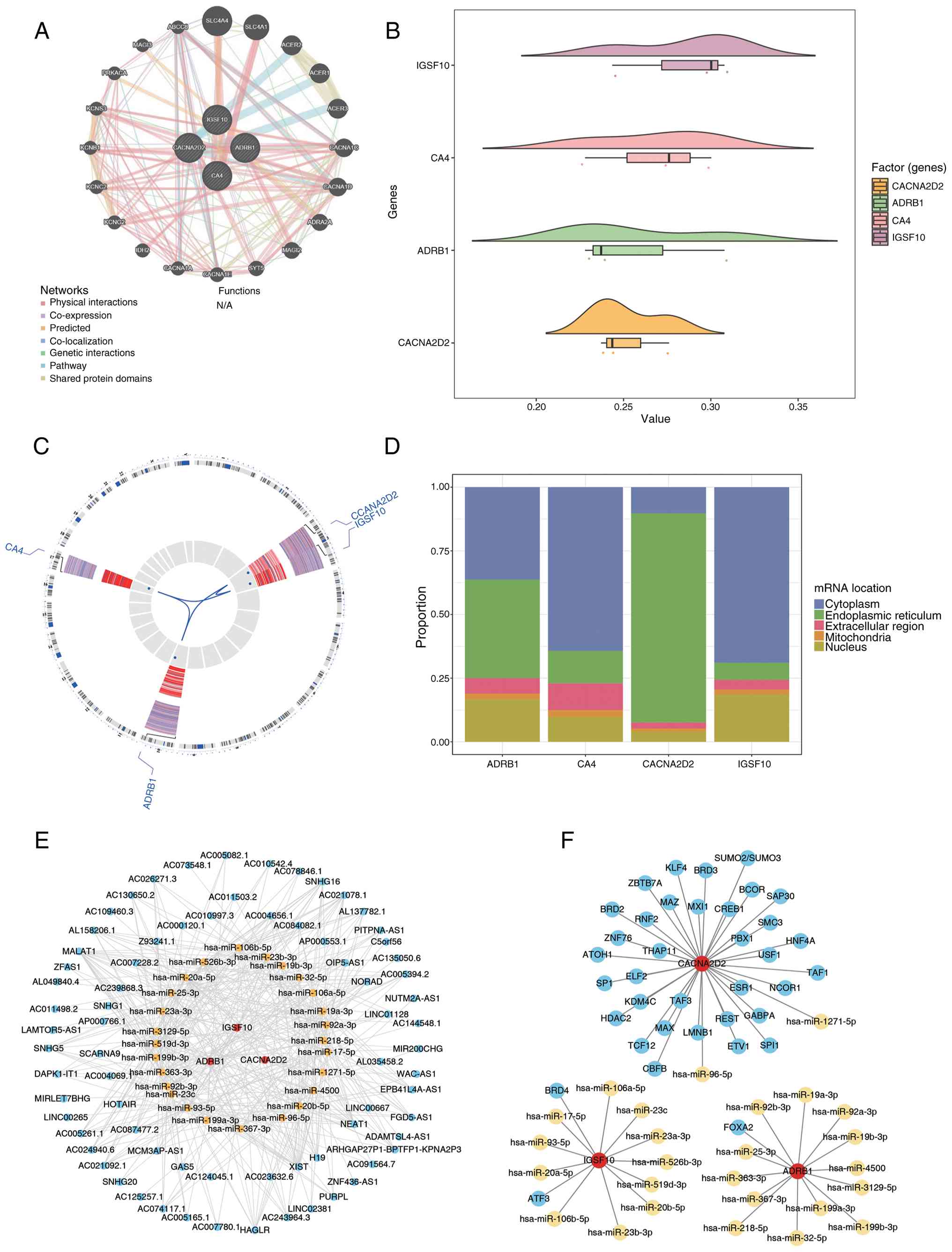
Figure 7

Prognostic gene-related genes and
functional similarity analysis. (A) GeneMANIA database analysis
network diagram. A total of 20 genes associated with prognostic
gene functions were predicted. The large central circle represents
prognostic genes, and the small outer circles represent genes
correlated with prognostic genes. (B) Functional similarity cloud
rain diagram. The horizontal axis denotes the similarity score, and
the vertical axis represents prognostic genes. (C) Chromosomal
localization of prognostic genes: The first ring shows gene names,
with red indicating upregulated genes and blue indicating
downregulated genes; the second ring represents the chromosomal
locations of genes; the third ring displays the expression profiles
of genes in samples; the fourth ring presents the log2FC
values of genes, where blue indicates log2FC <0 and
red indicates log2FC >0. (D) Subcellular localization
of prognostic genes: The horizontal axis represents prognostic
genes, the vertical axis denotes the percentage and different
colors correspond to distinct subcellular localizations. (E)
lncRNA-mRNA-miRNA regulatory network where red represents
prognostic genes, yellow represents miRNA and blue represents
lncRNA. (F) TF-mRNA-miRNA network diagram where red represents
prognostic genes, blue represents TF and yellow represents miRNA.
FC, fold change, lncRNA, long non-coding RNAs; TF, transcription
factor; miRNA/miR, microRNA.

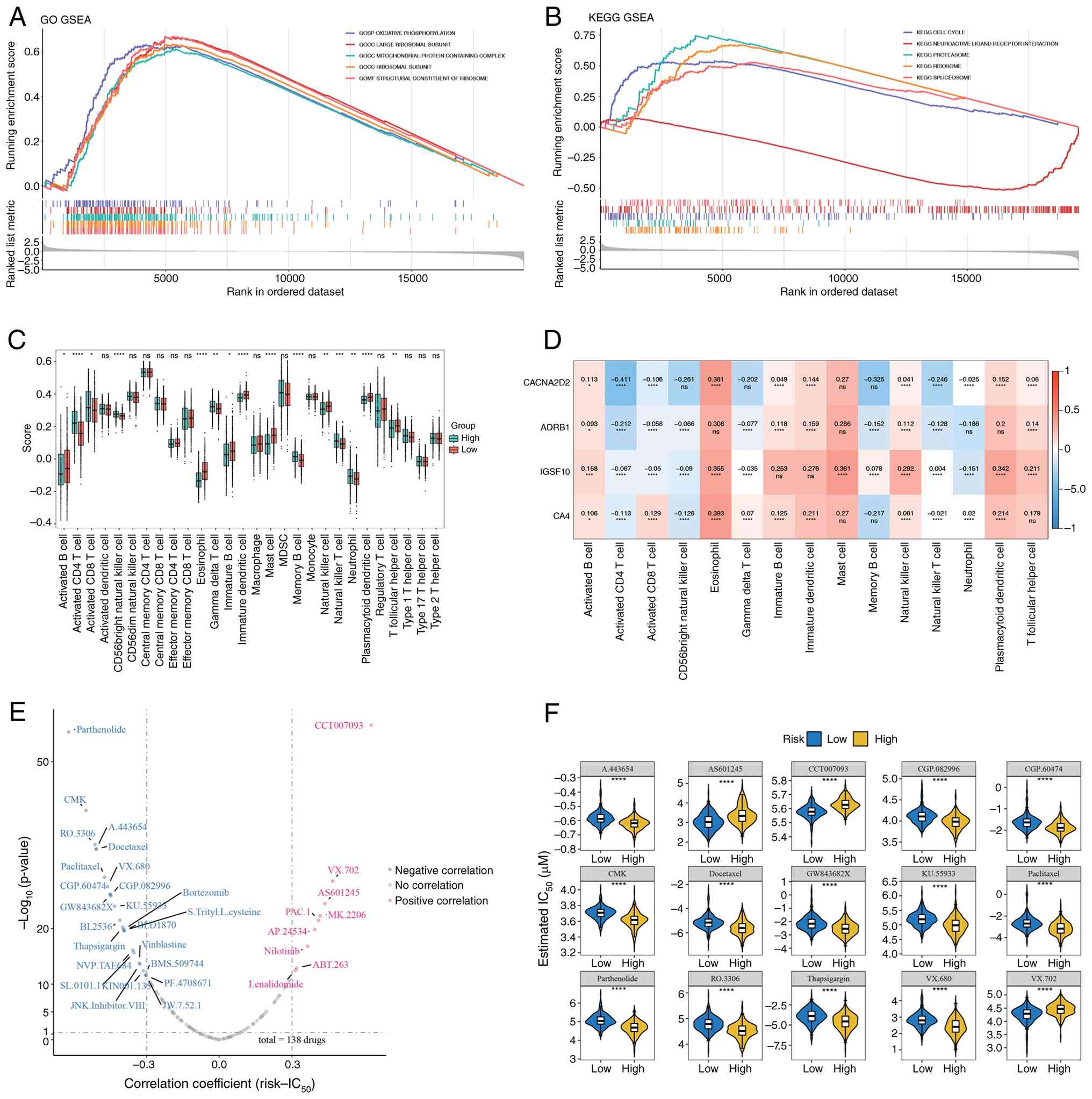
Figure 8

Enrichment analysis, immune cell
infiltration and drug sensitivity analysis. (A) GSEA for GO
categories, GOBP, GOCC and GOMF, in high-vs. low-risk groups. (B)
GSEA for KEGG pathways. (C) Box plot showing differences in 15
immune cell populations; red bars represent high-risk and blue bars
represent low-risk samples (n=513). (D) Correlation heatmap between
prognostic genes and immune cells. (E) Spearman correlation
analysis between risk scores and drug IC50 values. (F)
Differential sensitivity of 15 antineoplastic drugs between risk
groups. All data are presented as median values. *P<0.05,
**P<0.01, ***P<0.001 and ****P<0.0001 (Wilcoxon test). ns,
not significant' KEGG, Kyoto Encyclopedia of Genes and Genomes; GO,
Gene Ontology; GOBP, Gene Ontology Biological Process; GOCC, Gene
Ontology Cellular Component; GOMF, Gene Ontology Molecular
Function; GSEA, gene set enrichment analysis; MDSC, myleoid-derived
suppressor cells.

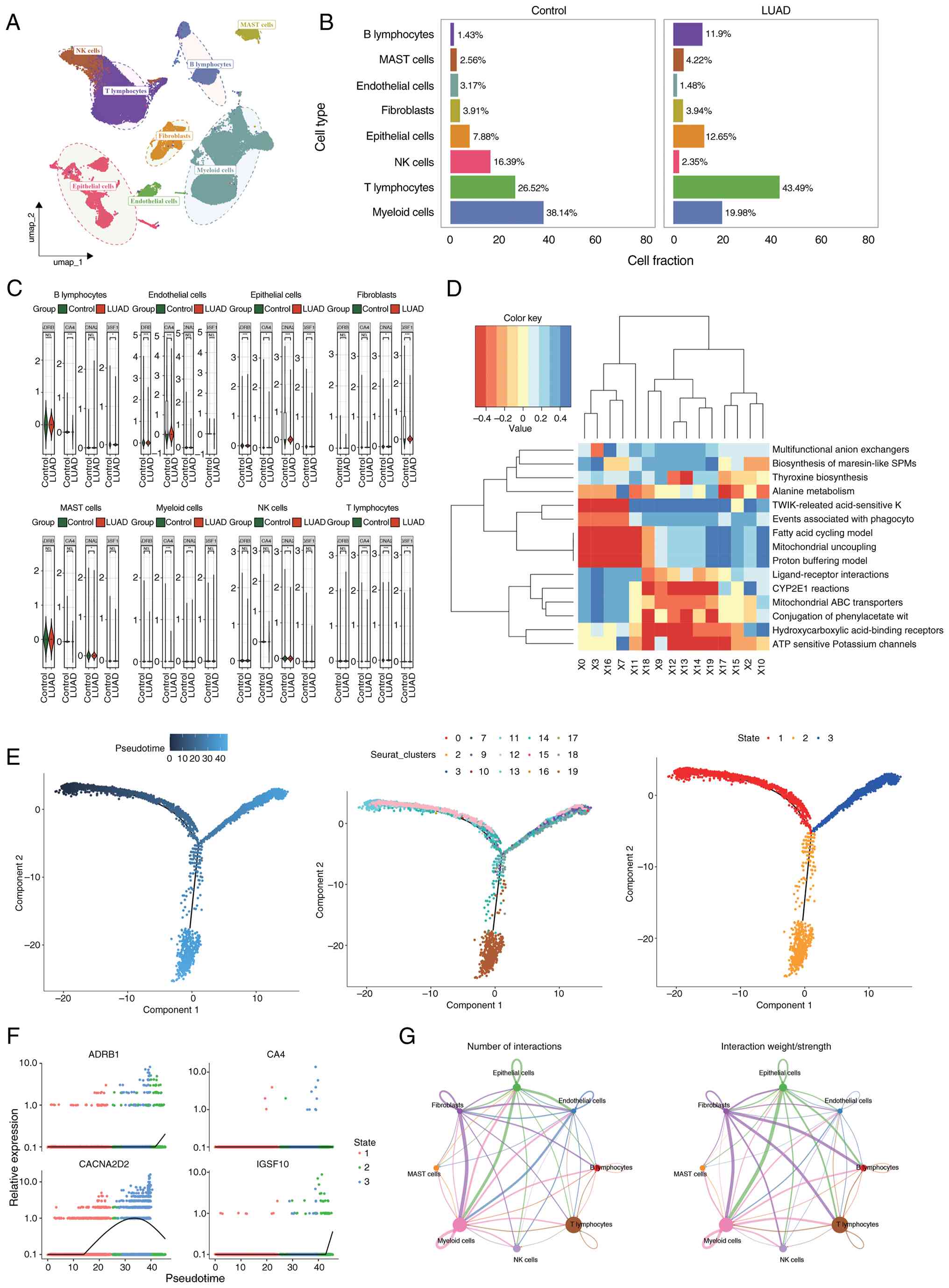
Figure 9

Significant enrichment of signaling
pathways and identification of key cell clusters. (A) Annotated
UMAP clustering diagram: Eight cell types were annotated according
to marker genes, including epithelial cells, fibroblasts,
endothelial cells, T lymphocytes, NK cells, B lymphocytes, myeloid
cells and mast cells. (B) Proportion chart of each cell type in
LUAD and control groups. (C) Violin plot of prognostic gene
expression between the LUAD and control groups. (D) Enrichment
analysis heatmap of cells. (E) Proposed temporal trajectory
diagram: trajectory diagram of different cell subpopulations and
their differentiation stages. (F) Expression of prognostic genes in
different temporal stages. (G) Quantitative diagram of cell
communication interactions and probability intensity values of cell
communication interactions. *P<0.05, **P<0.01 and
***P<0.001 were considered statistically significant. NK,
natural killer; LUAD, lung adenocarcinoma; UMAP, Uniform Manifold
Approximation and Projection.

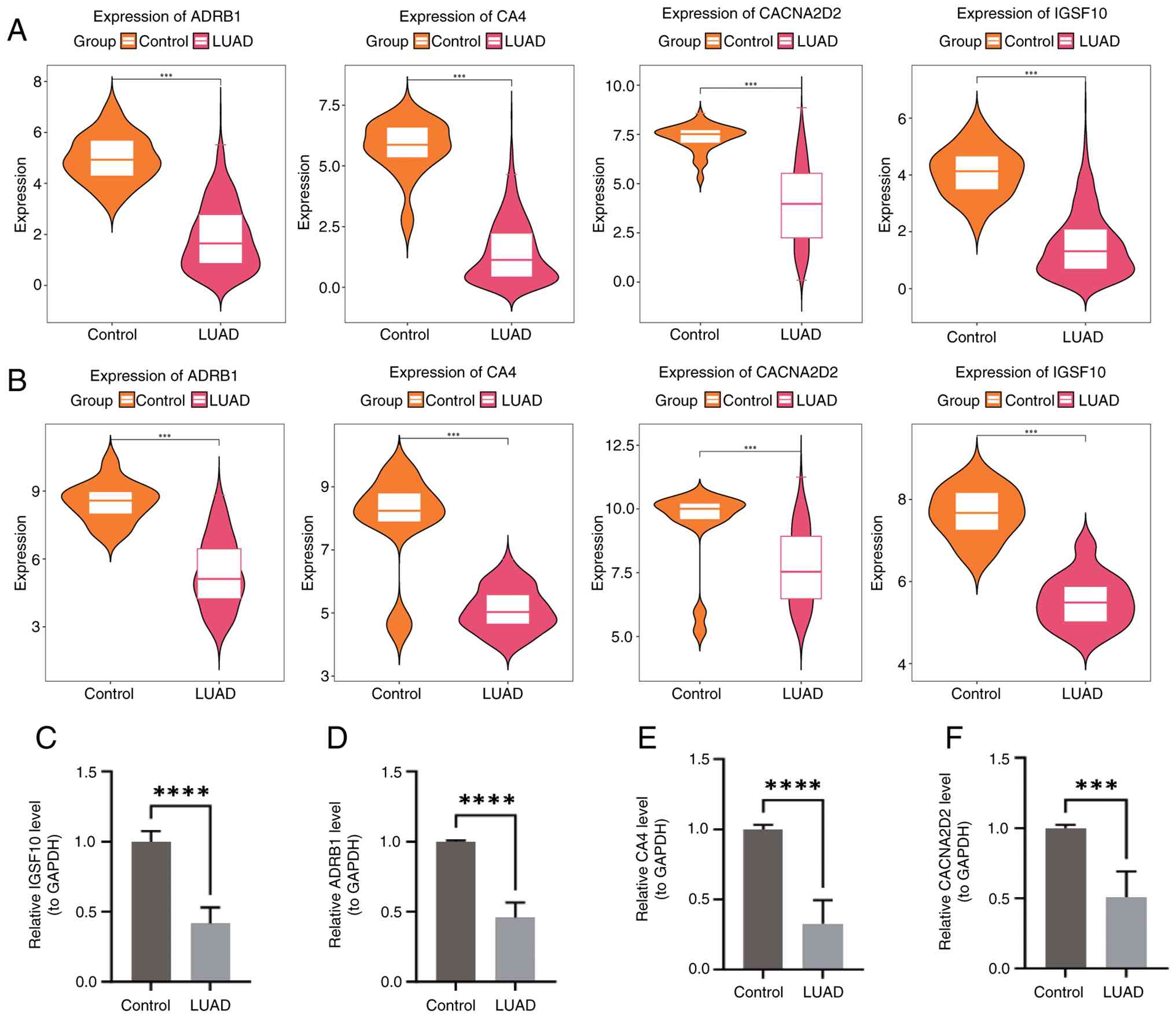
Figure 10

Validation of prognostic gene
expression in clinical samples. (A-B) Differential expression of
four prognostic genes in TCGA training and validation sets. (C-F)
RT-qPCR validation of CACNA2D2, ADRB1, IGSF10 and CA4 mRNA levels
in 5 pairs of LUAD and adjacent control tissues collected from
Hunan Cancer Hospital (Changsha, China). Data are expressed as mean
± SD of three technical replicates (n=5 patients per group). The
internal reference gene was GAPDH. Statistical analysis was
performed using Wilcoxon signed-rank test with ***P<0.001 and
****P<0.0001. TCGA, The Cancer Genome Atlas; LUAD, lung
adenocarcinoma; RT-qPCR, reverese transcription-quantitative
PCR.
View References

1 

Qi C, Ma J, Sun J, Wu X and Ding J: The role of molecular subtypes and immune infiltration characteristics based on disulfidptosis-associated genes in lung adenocarcinoma. Aging (Albany NY). 15:5075–5095. 2023.PubMed/NCBI

2 

Siegel RL, Giaquinto AN and Jemal A: Cancer statistics, 2024. CA Cancer J Clin. 74:12–49. 2024.PubMed/NCBI

3 

Howlader N, Forjaz G, Mooradian MJ, Meza R, Kong CY, Cronin KA, Mariotto AB, Lowy DR and Feuer EJ: The effect of advances in lung-cancer treatment on population mortality. N Engl J Med. 383:640–649. 2020. View Article : Google Scholar : PubMed/NCBI

4 

Obradovic J, Nisevic-Lazovic J, Sekerus V, Milasin J, Perin B and Jurisic V: Investigating the frequencies of EGFR mutations and EGFR single nucleotide polymorphisms genotypes and their predictive role in NSCLC patients in Republic of Serbia. Mol Biol Rep. 52:3502025. View Article : Google Scholar : PubMed/NCBI

5 

Jurisic V, Vukovic V, Obradovic J, Gulyaeva LF, Kushlinskii NE and Djordjevic N: EGFR polymorphism and survival of NSCLC patients treated with TKIs: A systematic review and meta-analysis. J Oncol. 2020:19732412020. View Article : Google Scholar : PubMed/NCBI

6 

Jurisic V, Obradovic J, Pavlovic S and Djordjevic N: Epidermal growth factor receptor gene in non-small-cell lung cancer: The importance of promoter polymorphism investigation. Anal Cell Pathol (Amst). 2018:61921872018.PubMed/NCBI

7 

Obradovic J, Todosijevic J and Jurisic V: Side effects of tyrosine kinase inhibitors therapy in patients with non-small cell lung cancer and associations with EGFR polymorphisms: A systematic review and meta-analysis. Oncol Lett. 25:622023. View Article : Google Scholar : PubMed/NCBI

8 

Skoulidis F and Heymach JV: Co-occurring genomic alterations in non-small-cell lung cancer biology and therapy. Nat Rev Cancer. 19:495–509. 2019. View Article : Google Scholar : PubMed/NCBI

9 

Jurisic V, Radenkovic S and Konjevic G: The actual role of LDH as tumor marker, biochemical and clinical aspects. Adv Exp Med Biol. 867:115–124. 2015. View Article : Google Scholar : PubMed/NCBI

10 

Faubert B, Solmonson A and DeBerardinis RJ: Metabolic reprogramming and cancer progression. Science. 368:eaaw54732020. View Article : Google Scholar : PubMed/NCBI

11 

Lim SA: Metabolic reprogramming of the tumor microenvironment to enhance immunotherapy. BMB Rep. 57:388–399. 2024. View Article : Google Scholar : PubMed/NCBI

12 

Kim DG, Du J, Miao C, Jung JH, Park SC and Kim DK: The possible roles for polyamines in the initiation process of SV40 DNA replication in vitro. Oncol Rep. 19:535–539. 2008.PubMed/NCBI

13 

Baroli G, Sanchez JR, Agostinelli E, Mariottini P and Cervelli M: Polyamines: The possible missing link between mental disorders and epilepsy (Review). Int J Mol Med. 45:3–9. 2020.PubMed/NCBI

14 

Zahedi K, Barone S and Soleimani M: Polyamines and their metabolism: From the maintenance of physiological homeostasis to the mediation of disease. Med Sci (Basel). 10:382022.PubMed/NCBI

15 

Rossi MN and Cervelli M: Polyamine metabolism and functions: Key roles in cellular health and disease. Biomolecules. 14:15702024. View Article : Google Scholar : PubMed/NCBI

16 

Casero RA Jr, Murray Stewart T and Pegg AE: Polyamine metabolism and cancer: Treatments, challenges and opportunities. Nat Rev Cancer. 18:681–695. 2018. View Article : Google Scholar : PubMed/NCBI

17 

Nowotarski SL, Woster PM and Casero RA Jr: Polyamines and cancer: Implications for chemotherapy and chemoprevention. Expert Rev Mol Med. 15:e32013. View Article : Google Scholar : PubMed/NCBI

18 

Du M, Meng X, Zhou B, Song W, Shi J, Liang M and Gao Y: A risk score based on polyamine metabolism and chemotherapy-related genes predicts prognosis and immune cells infiltration of lung adenocarcinoma. J Cell Mol Med. 28:e183872024. View Article : Google Scholar : PubMed/NCBI

19 

Li Z, Wu Y, Yang W, Wang W, Li J, Huang X, Yang Y, Zhang X and Ye X: Characterization of polyamine metabolism predicts prognosis, immune profile, and therapeutic efficacy in lung adenocarcinoma patients. Front Cell Dev Biol. 12:13317592024. View Article : Google Scholar : PubMed/NCBI

20 

Davey Smith G and Hemani G: Mendelian randomization: Genetic anchors for causal inference in epidemiological studies. Hum Mol Genet. 23:R89–R98. 2014. View Article : Google Scholar : PubMed/NCBI

21 

Burgess S, Small DS and Thompson SG: A review of instrumental variable estimators for Mendelian randomization. Stat Methods Med Res. 26:2333–2355. 2017. View Article : Google Scholar : PubMed/NCBI

22 

Carangelo G, Magi A and Semeraro R: From multitude to singularity: An up-to-date overview of scRNA-seq data generation and analysis. Front Genet. 13:9940692022. View Article : Google Scholar : PubMed/NCBI

23 

Bridges K and Miller-Jensen K: Mapping and validation of scRNA-Seq-derived cell-cell communication networks in the tumor microenvironment. Front Immunol. 13:8852672022. View Article : Google Scholar : PubMed/NCBI

24 

Zhang P, Liu J, Pei S, Wu D, Xie J, Liu J and Li J: Mast cell marker gene signature: Prognosis and immunotherapy response prediction in lung adenocarcinoma through integrated scRNA-seq and bulk RNA-seq. Front Immunol. 14:11895202023. View Article : Google Scholar : PubMed/NCBI

25 

Maynard A, McCoach CE, Rotow JK, Harris L, Haderk F, Kerr DL, Yu EA, Schenk EL, Tan W, Zee A, et al: Therapy-induced evolution of human lung cancer revealed by single-cell RNA sequencing. Cell. 182:1232–1251.e22. 2020. View Article : Google Scholar : PubMed/NCBI

26 

Shen Y, Li D, Liang Q, Yang M, Pan Y and Li H: Cross-talk between cuproptosis and ferroptosis regulators defines the tumor microenvironment for the prediction of prognosis and therapies in lung adenocarcinoma. Front Immunol. 13:10290922022. View Article : Google Scholar : PubMed/NCBI

27 

Kim N, Kim HK, Lee K, Hong Y, Cho JH, Choi JW, Lee JI, Suh YL, Ku BM, Eum HH, et al: Single-cell RNA sequencing demonstrates the molecular and cellular reprogramming of metastatic lung adenocarcinoma. Nat Commun. 11:22852020. View Article : Google Scholar : PubMed/NCBI

28 

Love MI, Huber W and Anders S: Moderated estimation of fold change and dispersion for RNA-seq data with DESeq2. Genome Biol. 15:5502014. View Article : Google Scholar : PubMed/NCBI

29 

Gustavsson EK, Zhang D, Reynolds RH, Garcia-Ruiz S and Ryten M: Ggtranscript: An R package for the visualization and interpretation of transcript isoforms using ggplot2. Bioinformatics. 38:3844–3846. 2022. View Article : Google Scholar : PubMed/NCBI

30 

Gu Z and Hubschmann D: Make Interactive complex Heatmaps in R. Bioinformatics. 38:1460–1462. 2022. View Article : Google Scholar : PubMed/NCBI

31 

Subramanian A, Tamayo P, Mootha VK, Mukherjee S, Ebert BL, Gillette MA, Paulovich A, Pomeroy SL, Golub TR, Lander ES and Mesirov JP: Gene set enrichment analysis: A knowledge-based approach for interpreting genome-wide expression profiles. Proc Natl Acad Sci USA. 102:15545–15550. 2005. View Article : Google Scholar : PubMed/NCBI

32 

Langfelder P and Horvath S: WGCNA: An R package for weighted correlation network analysis. BMC Bioinformatics. 9:5592008. View Article : Google Scholar : PubMed/NCBI

33 

Chen H and Boutros PC: VennDiagram: A package for the generation of highly-customizable Venn and Euler diagrams in R. BMC Bioinformatics. 12:352011. View Article : Google Scholar : PubMed/NCBI

34 

Wu T, Hu E, Xu S, Chen M, Guo P, Dai Z, Feng T, Zhou L, Tang W, Zhan L, et al: clusterProfiler 4.0: A universal enrichment tool for interpreting omics data. Innovation (Camb). 2:1001412021.PubMed/NCBI

35 

Shannon P, Markiel A, Ozier O, Baliga NS, Wang JT, Ramage D, Amin N, Schwikowski B and Ideker T: Cytoscape: A software environment for integrated models of biomolecular interaction networks. Genome Res. 13:2498–2504. 2003. View Article : Google Scholar : PubMed/NCBI

36 

Hemani G, Zheng J, Elsworth B, Wade KH, Haberland V, Baird D, Laurin C, Burgess S, Bowden J, Langdon R, et al: The MR-Base platform supports systematic causal inference across the human phenome. Elife. 7:e344082018. View Article : Google Scholar : PubMed/NCBI

37 

Burgess S and Thompson SG: Interpreting findings from Mendelian randomization using the MR-Egger method. Eur J Epidemiol. 32:377–389. 2017. View Article : Google Scholar : PubMed/NCBI

38 

Bowden J, Davey Smith G, Haycock PC and Burgess S: Consistent estimation in mendelian randomization with some invalid instruments using a weighted median estimator. Genet Epidemiol. 40:304–314. 2016. View Article : Google Scholar : PubMed/NCBI

39 

Burgess S, Scott RA, Timpson NJ, Davey Smith G, Thompson SG and Consortium EI: Using published data in Mendelian randomization: A blueprint for efficient identification of causal risk factors. Eur J Epidemiol. 30:543–552. 2015. View Article : Google Scholar : PubMed/NCBI

40 

Chen X, Kong J, Diao X, Cai J, Zheng J, Xie W, Qin H, Huang J and Lin T: Depression and prostate cancer risk: A Mendelian randomization study. Cancer Med. 9:9160–9167. 2020. View Article : Google Scholar : PubMed/NCBI

41 

Hu J, Song J, Chen Z, Yang J, Shi Q, Jin F, Pang Q, Chang X, Tian Y, Luo Y and Chen L: Reverse causal relationship between periodontitis and shortened telomere length: Bidirectional two-sample Mendelian random analysis. Front Immunol. 13:10576022022. View Article : Google Scholar : PubMed/NCBI

42 

Lu L, Wan B, Li L and Sun M: Hypothyroidism has a protective causal association with hepatocellular carcinoma: A two-sample Mendelian randomization study. Front Endocrinol (Lausanne). 13:9874012022. View Article : Google Scholar : PubMed/NCBI

43 

Verbanck M, Chen CY, Neale B and Do R: Detection of widespread horizontal pleiotropy in causal relationships inferred from Mendelian randomization between complex traits and diseases. Nat Genet. 50:693–398. 2018. View Article : Google Scholar : PubMed/NCBI

44 

Dong Q, Chen D, Zhang Y, Xu Y, Yan L and Jiang J: Constipation and cardiovascular disease: A two-sample Mendelian randomization analysis. Front Cardiovasc Med. 10:10809822023. View Article : Google Scholar : PubMed/NCBI

45 

Xu J, Yang T, Wu F, Chen T, Wang A and Hou S: A nomogram for predicting prognosis of patients with cervical cerclage. Heliyon. 9:e211472023. View Article : Google Scholar : PubMed/NCBI

46 

Vickers AJ and Elkin EB: Decision curve analysis: A novel method for evaluating prediction models. Med Decis Making. 26:565–574. 2006. View Article : Google Scholar : PubMed/NCBI

47 

Zhang H, Meltzer P and Davis S: RCircos: An R package for Circos 2D track plots. BMC Bioinformatics. 14:2442013. View Article : Google Scholar : PubMed/NCBI

48 

Yu G, Li F, Qin Y, Bo X, Wu Y and Wang S: GOSemSim: An R package for measuring semantic similarity among GO terms and gene products. Bioinformatics. 26:976–978. 2010. View Article : Google Scholar : PubMed/NCBI

49 

Ru Y, Kechris KJ, Tabakoff B, Hoffman P, Radcliffe RA, Bowler R, Mahaffey S, Rossi S, Calin GA, Bemis L and Theodorescu D: The multiMiR R package and database: Integration of microRNA-target interactions along with their disease and drug associations. Nucleic Acids Res. 42:e1332014. View Article : Google Scholar : PubMed/NCBI

50 

Maeser D, Gruener RF and Huang RS: oncoPredict: An R package for predicting in vivo or cancer patient drug response and biomarkers from cell line screening data. Brief Bioinform. 22:bbab2602021. View Article : Google Scholar : PubMed/NCBI

51 

Hao Y, Hao S, Andersen-Nissen E, Mauck WM III, Zheng S, Butler A, Lee MJ, Wilk AJ, Darby C, Zager M, et al: Integrated analysis of multimodal single-cell data. Cell. 184:3573–3587.e29. 2021. View Article : Google Scholar : PubMed/NCBI

52 

Hao Y, Stuart T, Kowalski MH, Choudhary S, Hoffman P, Hartman A, Srivastava A, Molla G, Madad S, Fernandez-Granda C and Satija R: Dictionary learning for integrative, multimodal and scalable single-cell analysis. Nat Biotechnol. 42:293–304. 2024. View Article : Google Scholar : PubMed/NCBI

53 

Becht E, McInnes L, Healy J, Dutertre CA, Kwok IWH, Ng LG, Ginhoux F and Newell EW: Dimensionality reduction for visualizing single-cell data using UMAP. Nat Biotechnol. Dec 3–2018.doi: 10.1038/nbt.4314 (Epub ahead of print). PubMed/NCBI

54 

Griss J, Viteri G, Sidiropoulos K, Nguyen V, Fabregat A and Hermjakob H: ReactomeGSA-Efficient Multi-Omics comparative pathway analysis. Mol Cell Proteomics. 19:2115–2125. 2020. View Article : Google Scholar : PubMed/NCBI

55 

Jin S, Guerrero-Juarez CF, Zhang L, Chang I, Ramos R, Kuan CH, Myung P, Plikus MV and Nie Q: Inference and analysis of cell-cell communication using CellChat. Nat Commun. 12:10882021. View Article : Google Scholar : PubMed/NCBI

56 

Qiu X, Mao Q, Tang Y, Wang L, Chawla R, Pliner HA and Trapnell C: Reversed graph embedding resolves complex single-cell trajectories. Nat Methods. 14:979–982. 2017. View Article : Google Scholar : PubMed/NCBI

57 

Livak KJ and Schmittgen TD: Analysis of relative gene expression data using real-time quantitative PCR and the 2(−Delta Delta C(T)) method. Methods. 25:402–408. 2001. View Article : Google Scholar : PubMed/NCBI

58 

Mitra S, Mazumder Indra D, Basu PS, Mondal RK, Roy A, Roychoudhury S and Panda CK: Alterations of RASSF1A in premalignant cervical lesions: Clinical and prognostic significance. Mol Carcinog. 51:723–733. 2012. View Article : Google Scholar : PubMed/NCBI

59 

Ling B, Ye G, Qin C, Liao X, Yang R, Su L and Qi G: IGSF10 inhibits the metastasis of lung adenocarcinoma via the Spi-B/Integrin-beta1 signaling pathway. J Biochem Mol Toxicol. 38:e236932024. View Article : Google Scholar : PubMed/NCBI

60 

Li Q, Xu S, Ren Y, Zhang C, Li K and Liu Y: Single-cell RNA sequencing reveals adrb1 as a sympathetic nerve-regulated immune checkpoint driving T cell exhaustion and impacting immunotherapy in esophageal squamous cell carcinoma. Front Immunol. 16:15207662025. View Article : Google Scholar : PubMed/NCBI

61 

Dever TE and Ivanov IP: Roles of polyamines in translation. J Biol Chem. 293:18719–18729. 2018. View Article : Google Scholar : PubMed/NCBI

62 

Al-Habsi M, Chamoto K, Matsumoto K, Nomura N, Zhang B, Sugiura Y, Sonomura K, Maharani A, Nakajima Y, Wu Y, et al: Spermidine activates mitochondrial trifunctional protein and improves antitumor immunity in mice. Science. 378:eabj35102022. View Article : Google Scholar : PubMed/NCBI

63 

Davis BP and Rothenberg ME: Eosinophils and cancer. Cancer Immunol Res. 2:1–8. 2014. View Article : Google Scholar : PubMed/NCBI

64 

Zhang J, Tsoi H, Li X, Wang H, Gao J, Wang K, Go MY, Ng SC, Chan FK, Sung JJ and Yu J: Carbonic anhydrase IV inhibits colon cancer development by inhibiting the Wnt signalling pathway through targeting the WTAP-WT1-TBL1 axis. Gut. 65:1482–1493. 2016. View Article : Google Scholar : PubMed/NCBI

65 

Xu Z, Liu Y, He S, Sun R, Zhu C, Li S, Hai S, Luo Y, Zhao Y and Dai L: Integrative proteomics and N-Glycoproteomics analyses of rheumatoid arthritis synovium reveal immune-associated Glycopeptides. Mol Cell Proteomics. 22:1005402023. View Article : Google Scholar : PubMed/NCBI

66 

Jin Y, Wang Y and Yang R: Chemokine ligand 2: Beyond chemotaxis-a multifaceted role in tumor progression. Front Immunol. 16:16854742025. View Article : Google Scholar : PubMed/NCBI

67 

Ohnuki H, Jiang K, Wang D, Salvucci O, Kwak H, Sanchez-Martin D, Maric D and Tosato G: Tumor-infiltrating myeloid cells activate Dll4/Notch/TGF-β signaling to drive malignant progression. Cancer Res. 74:2038–2049. 2014. View Article : Google Scholar : PubMed/NCBI

68 

Huang Y, Fan Y, Zhao Z, Zhang X, Tucker K, Staley A, Suo H, Sun W, Shen X, Deng B, et al: Inhibition of CDK1 by RO-3306 exhibits anti-tumorigenic effects in ovarian cancer cells and a transgenic mouse model of ovarian cancer. Int J Mol Sci. 24:123752023. View Article : Google Scholar : PubMed/NCBI

69 

Martinez-Terroba E, Plasek-Hegde LM, Chiotakakos I, Li V, de Miguel FJ, Robles-Oteiza C, Tyagi A, Politi K, Zamudio JR and Dimitrova N: Overexpression of Malat1 drives metastasis through inflammatory reprogramming of the tumor microenvironment. Sci Immunol. 9:eadh54622024. View Article : Google Scholar : PubMed/NCBI

70 

Ling B, Liao X, Tang Q, Ye G, Bin X, Wang J, Pang Y and Qi G: MicroRNA-106b-5p inhibits growth and progression of lung adenocarcinoma cells by downregulating IGSF10. Aging (Albany NY). 13:18740–18756. 2021. View Article : Google Scholar : PubMed/NCBI

Related Articles

  • Abstract
  • View
  • Download
  • Twitter
Copy and paste a formatted citation
Spandidos Publications style
Yang H, Zhang L, Chen J and Zhang J: Decoding the role of polyamine metabolism in lung adenocarcinoma prognosis: A triangulated approach combining transcriptome, single‑cell and Mendelian randomization analyses. Oncol Lett 32: 310, 2026.
APA
Yang, H., Zhang, L., Chen, J., & Zhang, J. (2026). Decoding the role of polyamine metabolism in lung adenocarcinoma prognosis: A triangulated approach combining transcriptome, single‑cell and Mendelian randomization analyses. Oncology Letters, 32, 310. https://doi.org/10.3892/ol.2026.15665
MLA
Yang, H., Zhang, L., Chen, J., Zhang, J."Decoding the role of polyamine metabolism in lung adenocarcinoma prognosis: A triangulated approach combining transcriptome, single‑cell and Mendelian randomization analyses". Oncology Letters 32.1 (2026): 310.
Chicago
Yang, H., Zhang, L., Chen, J., Zhang, J."Decoding the role of polyamine metabolism in lung adenocarcinoma prognosis: A triangulated approach combining transcriptome, single‑cell and Mendelian randomization analyses". Oncology Letters 32, no. 1 (2026): 310. https://doi.org/10.3892/ol.2026.15665
Copy and paste a formatted citation
x
Spandidos Publications style
Yang H, Zhang L, Chen J and Zhang J: Decoding the role of polyamine metabolism in lung adenocarcinoma prognosis: A triangulated approach combining transcriptome, single‑cell and Mendelian randomization analyses. Oncol Lett 32: 310, 2026.
APA
Yang, H., Zhang, L., Chen, J., & Zhang, J. (2026). Decoding the role of polyamine metabolism in lung adenocarcinoma prognosis: A triangulated approach combining transcriptome, single‑cell and Mendelian randomization analyses. Oncology Letters, 32, 310. https://doi.org/10.3892/ol.2026.15665
MLA
Yang, H., Zhang, L., Chen, J., Zhang, J."Decoding the role of polyamine metabolism in lung adenocarcinoma prognosis: A triangulated approach combining transcriptome, single‑cell and Mendelian randomization analyses". Oncology Letters 32.1 (2026): 310.
Chicago
Yang, H., Zhang, L., Chen, J., Zhang, J."Decoding the role of polyamine metabolism in lung adenocarcinoma prognosis: A triangulated approach combining transcriptome, single‑cell and Mendelian randomization analyses". Oncology Letters 32, no. 1 (2026): 310. https://doi.org/10.3892/ol.2026.15665
Follow us
  • Twitter
  • LinkedIn
  • Facebook
About
  • Spandidos Publications
  • Careers
  • Cookie Policy
  • Privacy Policy
How can we help?
  • Help
  • Live Chat
  • Contact
  • Email to our Support Team