Spandidos Publications Logo
  • About
    • About Spandidos
    • Aims and Scopes
    • Abstracting and Indexing
    • Editorial Policies
    • Reprints and Permissions
    • Job Opportunities
    • Terms and Conditions
    • Contact
  • Journals
    • All Journals
    • Oncology Letters
      • Oncology Letters
      • Information for Authors
      • Editorial Policies
      • Editorial Board
      • Aims and Scope
      • Abstracting and Indexing
      • Bibliographic Information
      • Archive
    • International Journal of Oncology
      • International Journal of Oncology
      • Information for Authors
      • Editorial Policies
      • Editorial Board
      • Aims and Scope
      • Abstracting and Indexing
      • Bibliographic Information
      • Archive
    • Molecular and Clinical Oncology
      • Molecular and Clinical Oncology
      • Information for Authors
      • Editorial Policies
      • Editorial Board
      • Aims and Scope
      • Abstracting and Indexing
      • Bibliographic Information
      • Archive
    • Experimental and Therapeutic Medicine
      • Experimental and Therapeutic Medicine
      • Information for Authors
      • Editorial Policies
      • Editorial Board
      • Aims and Scope
      • Abstracting and Indexing
      • Bibliographic Information
      • Archive
    • International Journal of Molecular Medicine
      • International Journal of Molecular Medicine
      • Information for Authors
      • Editorial Policies
      • Editorial Board
      • Aims and Scope
      • Abstracting and Indexing
      • Bibliographic Information
      • Archive
    • Biomedical Reports
      • Biomedical Reports
      • Information for Authors
      • Editorial Policies
      • Editorial Board
      • Aims and Scope
      • Abstracting and Indexing
      • Bibliographic Information
      • Archive
    • Oncology Reports
      • Oncology Reports
      • Information for Authors
      • Editorial Policies
      • Editorial Board
      • Aims and Scope
      • Abstracting and Indexing
      • Bibliographic Information
      • Archive
    • Molecular Medicine Reports
      • Molecular Medicine Reports
      • Information for Authors
      • Editorial Policies
      • Editorial Board
      • Aims and Scope
      • Abstracting and Indexing
      • Bibliographic Information
      • Archive
    • World Academy of Sciences Journal
      • World Academy of Sciences Journal
      • Information for Authors
      • Editorial Policies
      • Editorial Board
      • Aims and Scope
      • Abstracting and Indexing
      • Bibliographic Information
      • Archive
    • International Journal of Functional Nutrition
      • International Journal of Functional Nutrition
      • Information for Authors
      • Editorial Policies
      • Editorial Board
      • Aims and Scope
      • Abstracting and Indexing
      • Bibliographic Information
      • Archive
    • International Journal of Epigenetics
      • International Journal of Epigenetics
      • Information for Authors
      • Editorial Policies
      • Editorial Board
      • Aims and Scope
      • Abstracting and Indexing
      • Bibliographic Information
      • Archive
    • Medicine International
      • Medicine International
      • Information for Authors
      • Editorial Policies
      • Editorial Board
      • Aims and Scope
      • Abstracting and Indexing
      • Bibliographic Information
      • Archive
  • Articles
  • Information
    • Information for Authors
    • Information for Reviewers
    • Information for Librarians
    • Information for Advertisers
    • Conferences
  • Language Editing
Spandidos Publications Logo
  • About
    • About Spandidos
    • Aims and Scopes
    • Abstracting and Indexing
    • Editorial Policies
    • Reprints and Permissions
    • Job Opportunities
    • Terms and Conditions
    • Contact
  • Journals
    • All Journals
    • Biomedical Reports
      • Information for Authors
      • Editorial Policies
      • Editorial Board
      • Aims and Scope
      • Abstracting and Indexing
      • Bibliographic Information
      • Archive
    • Experimental and Therapeutic Medicine
      • Information for Authors
      • Editorial Policies
      • Editorial Board
      • Aims and Scope
      • Abstracting and Indexing
      • Bibliographic Information
      • Archive
    • International Journal of Epigenetics
      • Information for Authors
      • Editorial Policies
      • Editorial Board
      • Aims and Scope
      • Abstracting and Indexing
      • Bibliographic Information
      • Archive
    • International Journal of Functional Nutrition
      • Information for Authors
      • Editorial Policies
      • Editorial Board
      • Aims and Scope
      • Abstracting and Indexing
      • Bibliographic Information
      • Archive
    • International Journal of Molecular Medicine
      • Information for Authors
      • Editorial Policies
      • Editorial Board
      • Aims and Scope
      • Abstracting and Indexing
      • Bibliographic Information
      • Archive
    • International Journal of Oncology
      • Information for Authors
      • Editorial Policies
      • Editorial Board
      • Aims and Scope
      • Abstracting and Indexing
      • Bibliographic Information
      • Archive
    • Medicine International
      • Information for Authors
      • Editorial Policies
      • Editorial Board
      • Aims and Scope
      • Abstracting and Indexing
      • Bibliographic Information
      • Archive
    • Molecular and Clinical Oncology
      • Information for Authors
      • Editorial Policies
      • Editorial Board
      • Aims and Scope
      • Abstracting and Indexing
      • Bibliographic Information
      • Archive
    • Molecular Medicine Reports
      • Information for Authors
      • Editorial Policies
      • Editorial Board
      • Aims and Scope
      • Abstracting and Indexing
      • Bibliographic Information
      • Archive
    • Oncology Letters
      • Information for Authors
      • Editorial Policies
      • Editorial Board
      • Aims and Scope
      • Abstracting and Indexing
      • Bibliographic Information
      • Archive
    • Oncology Reports
      • Information for Authors
      • Editorial Policies
      • Editorial Board
      • Aims and Scope
      • Abstracting and Indexing
      • Bibliographic Information
      • Archive
    • World Academy of Sciences Journal
      • Information for Authors
      • Editorial Policies
      • Editorial Board
      • Aims and Scope
      • Abstracting and Indexing
      • Bibliographic Information
      • Archive
  • Articles
  • Information
    • For Authors
    • For Reviewers
    • For Librarians
    • For Advertisers
    • Conferences
  • Language Editing
Login Register Submit
  • This site uses cookies
  • You can change your cookie settings at any time by following the instructions in our Cookie Policy. To find out more, you may read our Privacy Policy.

    I agree
Search articles by DOI, keyword, author or affiliation
Search
Advanced Search
presentation
Oncology Letters
Join Editorial Board Propose a Special Issue
Print ISSN: 1792-1074 Online ISSN: 1792-1082
Journal Cover
July-2026 Volume 32 Issue 1

Full Size Image

Sign up for eToc alerts
Recommend to Library

Journals

International Journal of Molecular Medicine

International Journal of Molecular Medicine

International Journal of Molecular Medicine is an international journal devoted to molecular mechanisms of human disease.

International Journal of Oncology

International Journal of Oncology

International Journal of Oncology is an international journal devoted to oncology research and cancer treatment.

Molecular Medicine Reports

Molecular Medicine Reports

Covers molecular medicine topics such as pharmacology, pathology, genetics, neuroscience, infectious diseases, molecular cardiology, and molecular surgery.

Oncology Reports

Oncology Reports

Oncology Reports is an international journal devoted to fundamental and applied research in Oncology.

Experimental and Therapeutic Medicine

Experimental and Therapeutic Medicine

Experimental and Therapeutic Medicine is an international journal devoted to laboratory and clinical medicine.

Oncology Letters

Oncology Letters

Oncology Letters is an international journal devoted to Experimental and Clinical Oncology.

Biomedical Reports

Biomedical Reports

Explores a wide range of biological and medical fields, including pharmacology, genetics, microbiology, neuroscience, and molecular cardiology.

Molecular and Clinical Oncology

Molecular and Clinical Oncology

International journal addressing all aspects of oncology research, from tumorigenesis and oncogenes to chemotherapy and metastasis.

World Academy of Sciences Journal

World Academy of Sciences Journal

Multidisciplinary open-access journal spanning biochemistry, genetics, neuroscience, environmental health, and synthetic biology.

International Journal of Functional Nutrition

International Journal of Functional Nutrition

Open-access journal combining biochemistry, pharmacology, immunology, and genetics to advance health through functional nutrition.

International Journal of Epigenetics

International Journal of Epigenetics

Publishes open-access research on using epigenetics to advance understanding and treatment of human disease.

Medicine International

Medicine International

An International Open Access Journal Devoted to General Medicine.

Journal Cover
July-2026 Volume 32 Issue 1

Full Size Image

Sign up for eToc alerts
Recommend to Library

  • Article
  • Citations
    • Cite This Article
    • Download Citation
    • Create Citation Alert
    • Remove Citation Alert
    • Cited By
  • Similar Articles
    • Related Articles (in Spandidos Publications)
    • Similar Articles (Google Scholar)
    • Similar Articles (PubMed)
  • Download PDF
  • Download XML
  • View XML
Article Open Access

D‑salicin induces oxidative stress‑mediated ERK1/2 suppression and apoptosis in endometrial cancer cells

  • Authors:
    • Neziha Senem Ari
    • Ayşe Çakir Gündoğdu
  • View Affiliations / Copyright

    Affiliations: Department of Histology and Embryology, Faculty of Medicine, Kütahya Health Sciences University, Kütahya 43100, Türkiye
    Copyright: © Ari et al. This is an open access article distributed under the terms of Creative Commons Attribution License.
  • Article Number: 311
    |
    Published online on: May 22, 2026
       https://doi.org/10.3892/ol.2026.15666
  • Expand metrics +
Metrics: Total Views: 0 (Spandidos Publications: | PMC Statistics: )
Metrics: Total PDF Downloads: 0 (Spandidos Publications: | PMC Statistics: )
Cited By (CrossRef): 0 citations Loading Articles...

This article is mentioned in:


Abstract

Endometrial cancer is a common gynecologic malignancy for which therapeutic options remain limited in advanced or treatment‑resistant disease. Natural compounds that selectively perturb cancer‑associated redox signaling and survival pathways may offer novel anticancer strategies. The present study investigated the anticancer effects of D‑salicin in the endometrial adenocarcinoma‑derived Ishikawa cell line, with a focus on oxidative stress and extracellular signal‑regulated kinase (ERK)1/2 signaling, and assessed cancer selectivity using normal human dermal fibroblasts (HDF). D‑salicin selectively reduced Ishikawa cell viability in a concentration‑dependent manner while largely sparing HDF. This cytotoxic effect was accompanied by marked intracellular reactive oxygen species (ROS) accumulation, increased lipid peroxidation (MDA) and depletion of total glutathione (GSH), indicating induction of oxidative stress. Elevated oxidative burden was associated with caspase‑3 activation and concentration‑dependent suppression of ERK1/2 phosphorylation, both of which were attenuated by N‑acetylcysteine (NAC) co‑treatment. To determine redox dependence, NAC was incorporated as an antioxidant co‑treatment. D‑salicin induced a significant, concentration‑dependent reduction in Ishikawa cell viability (P<0.0001), whereas HDF viability remained largely preserved across the tested range (P>0.05). In Ishikawa cells, D‑salicin markedly increased intracellular ROS in a dose‑dependent manner (P≤0.01) and this effect was markedly attenuated by NAC co‑treatment (P≤0.01), indicating an NAC‑sensitive oxidative component. Consistent with redox disruption, D‑salicin increased MDA levels and depleted total GSH in Ishikawa cells (P≤0.01). Elevated oxidative stress was accompanied by increased caspase‑3 levels (P≤0.01), supporting engagement of apoptotic signaling. Moreover, D‑salicin markedly suppressed ERK1/2 phosphorylation in Ishikawa cells (P<0.0001), while ERK signaling was not markedly altered in HDF cells (P>0.05). Notably, NAC co‑treatment partly restored p‑ERK1/2 levels under the IC50 condition (P<0.01 vs. D‑salicin alone), supporting a redox‑linked contribution to ERK pathway modulation. Collectively, these findings indicated that D‑salicin exerts selective anticancer effects in endometrial cancer cells by inducing oxidative stress and disrupting ERK1/2‑mediated survival signaling, with NAC‑sensitive modulation consistent with involvement of a redox‑responsive ROS‑ERK axis.
View Figures

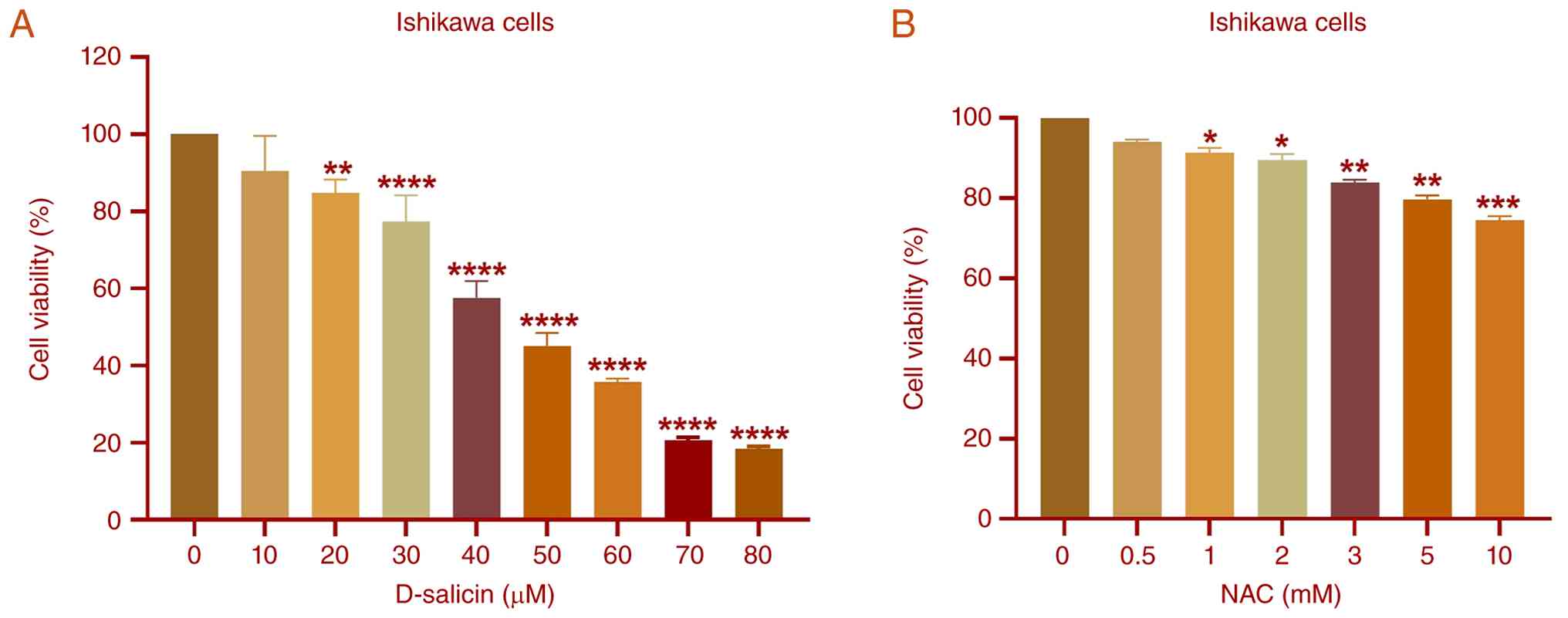
Figure 1

Effects of D-salicin and NAC on cell
viability in Ishikawa cells. (A) Viability of Ishikawa cells
following 72 h treatment with increasing concentrations of
D-salicin (0–80 µM), as determined by the MTT assay. D-salicin
induced a concentration-dependent decrease in cell viability. (B)
Cell viability of Ishikawa cells following 72 h exposure to NAC
(0.5–10 mM), as determined by the MTT assay. Data are expressed as
percentage of control and presented as mean ± SD. Statistical
analysis was performed using one-way ANOVA followed by Tukey's
multiple comparisons test. *P<0.05, **P<0.01,
***P<0.001, ****P<0.0001. NAC,
N-acetylcysteine.

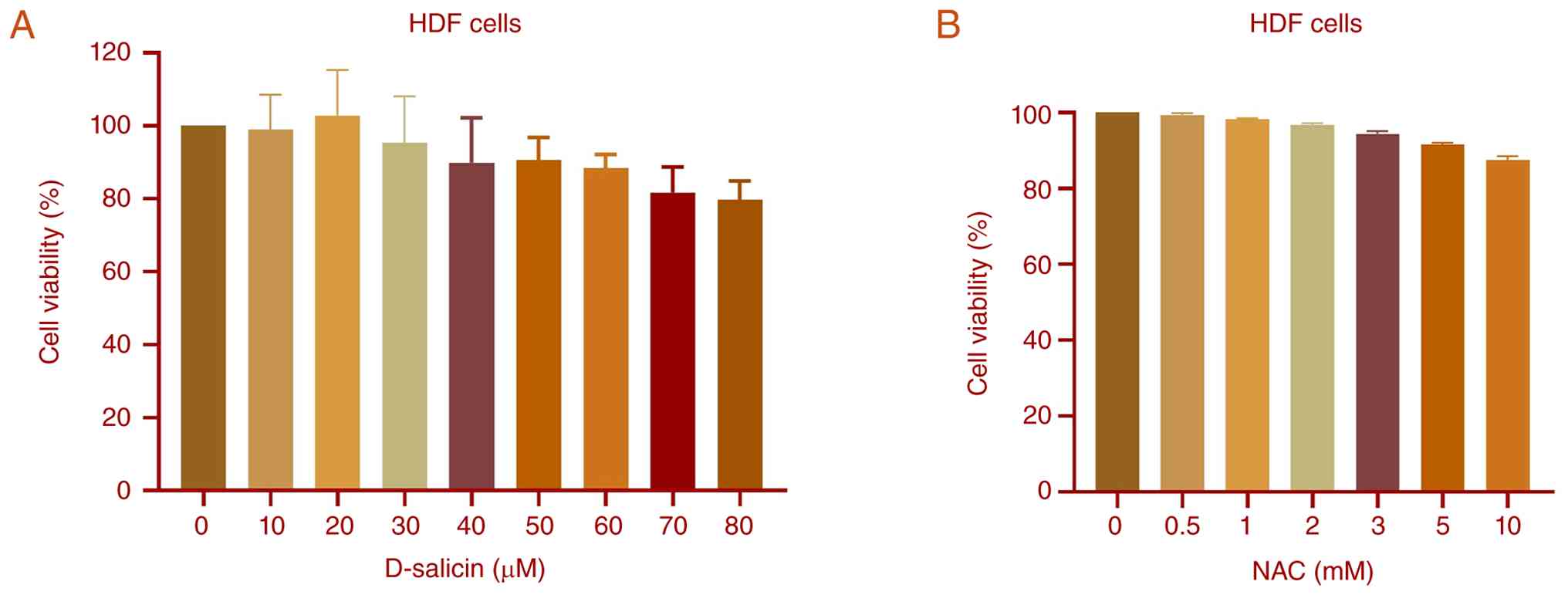
Figure 2

Effects of D-salicin and NAC on cell
viability in HDF cells. (A) Cell viability of HDF cells following
72 h treatment with increasing concentrations of D-salicin (0–80
µM), as determined by the MTT assay. No significant reduction in
viability was observed across the tested concentration range. (B)
Cell viability of HDF cells following 72 h exposure to NAC (0.5–10
mM), as determined by the MTT assay. No significant reduction in
viability was observed across the tested concentration range. NAC,
N-acetylcysteine; HDF, human dermal fibroblasts.

Figure 3

Effects of D-salicin and NAC
co-treatment on intracellular ROS levels in Ishikawa and HDF cells.
(A) Ishikawa cells and (B) HDF cells were treated with D-salicin at
IC25 (26.7 µM), IC50 (48.8 µM), and
IC75 (69.9 µM) for 72 h in the absence (−NAC) or
presence (+NAC) of N-acetylcysteine (NAC, 0.5 mM). Control
represents untreated cells, and NAC represents cells treated with
NAC alone (0.5 mM). For D-salicin-treated groups, ‘-NAC’ and ‘+NAC’
indicate the absence or presence of NAC at each corresponding
D-salicin concentration. Intracellular ROS levels were measured
using the DCFDA assay and expressed as RFU, normalized to the
untreated control. In Ishikawa cells, D-salicin induced a
dose-dependent increase in ROS levels, which was markedly
attenuated by NAC co-treatment. In HDF cells, D-salicin induced
only modest changes in ROS levels, and NAC co-treatment did not
markedly alter this response. Data are presented as mean ± SD (n≥3
independent experiments). Statistical analysis was performed using
one-way ANOVA followed by Tukey's multiple comparisons test. Hash
symbols (#) indicate comparisons between matched
D-salicin groups in the absence and presence of NAC at the
corresponding concentration [e.g., 26.7 (−NAC) vs. 26.7 (+NAC)].
*P<0.05, **P<0.01, ****P<0.0001 vs.
untreated control; #P<0.05,
####P<0.0001. NAC, N-acetylcysteine; ROS,
reactive oxygen species; HDF, human dermal fibroblasts; RFU,
relative fluorescence units.

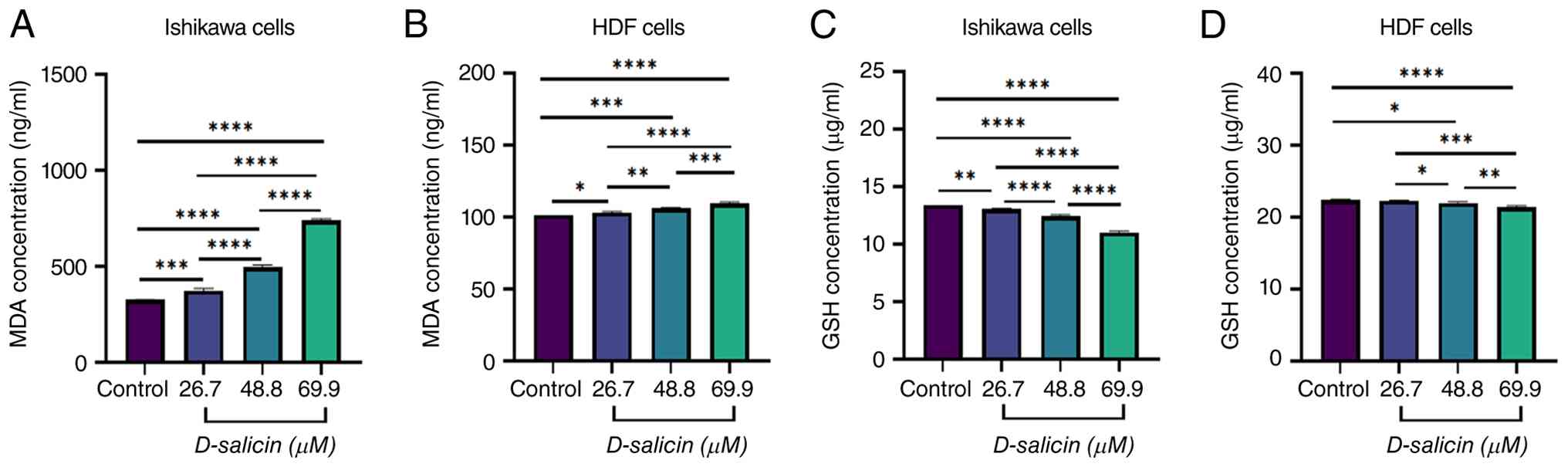
Figure 4

Effects of D-salicin on lipid
peroxidation (MDA) and GSH levels in Ishikawa and HDF cells. (A)
MDA concentrations in Ishikawa cells following 72 h exposure to
D-salicin at IC25 (26.7 µM), IC50 (48.8 µM),
and IC75 (69.9 µM). (B) MDA concentrations (ng/ml) in
HDF cells under identical treatment conditions. (C) GSH
concentrations (µg/ml) in Ishikawa cells following 72 h D-salicin
exposure at IC25, IC50, and IC75.
(D) GSH concentrations (µg/ml) in HDF cells under identical
conditions. MDA and GSH were quantified in cell lysates by ELISA,
and concentrations were calculated from standard curves. Data are
presented as mean ± SD from three independent experiments (n=3).
Each condition was assayed in technical triplicate, and experiments
were independently repeated at least three times (n≥3 biological
replicates). Statistical analysis was performed using one-way ANOVA
followed by Tukey's multiple comparisons test. *P<0.05,
**P<0.01, ***P<0.001, ****P<0.0001.
MDA, malondialdehyde; GSH, glutathione; HDF, human dermal
fibroblasts.

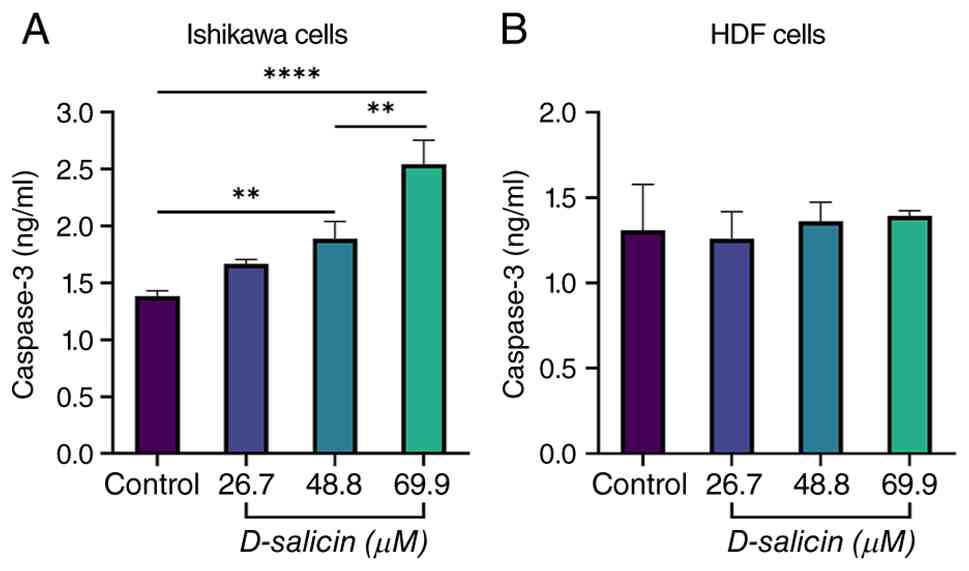
Figure 5

Effect of D-salicin on caspase-3
protein levels in Ishikawa and HDF cells. (A) Caspase-3 protein
levels in Ishikawa cells following 72 h treatment with D-salicin at
IC25 (26.7 µM), IC50 (48.8 µM), and
IC75 (69.9 µM). D-salicin induced a
concentration-dependent increase in caspase-3 levels. (B) Caspase-3
protein levels in HDF cells treated with D-salicin under identical
conditions. No significant changes were observed across treatment
groups. Data are presented as mean ± SD. Statistical analysis was
performed using one-way ANOVA followed by Tukey's multiple
comparisons test. **P<0.01, ****P<0.0001. HDF,
human dermal fibroblast.

Figure 6

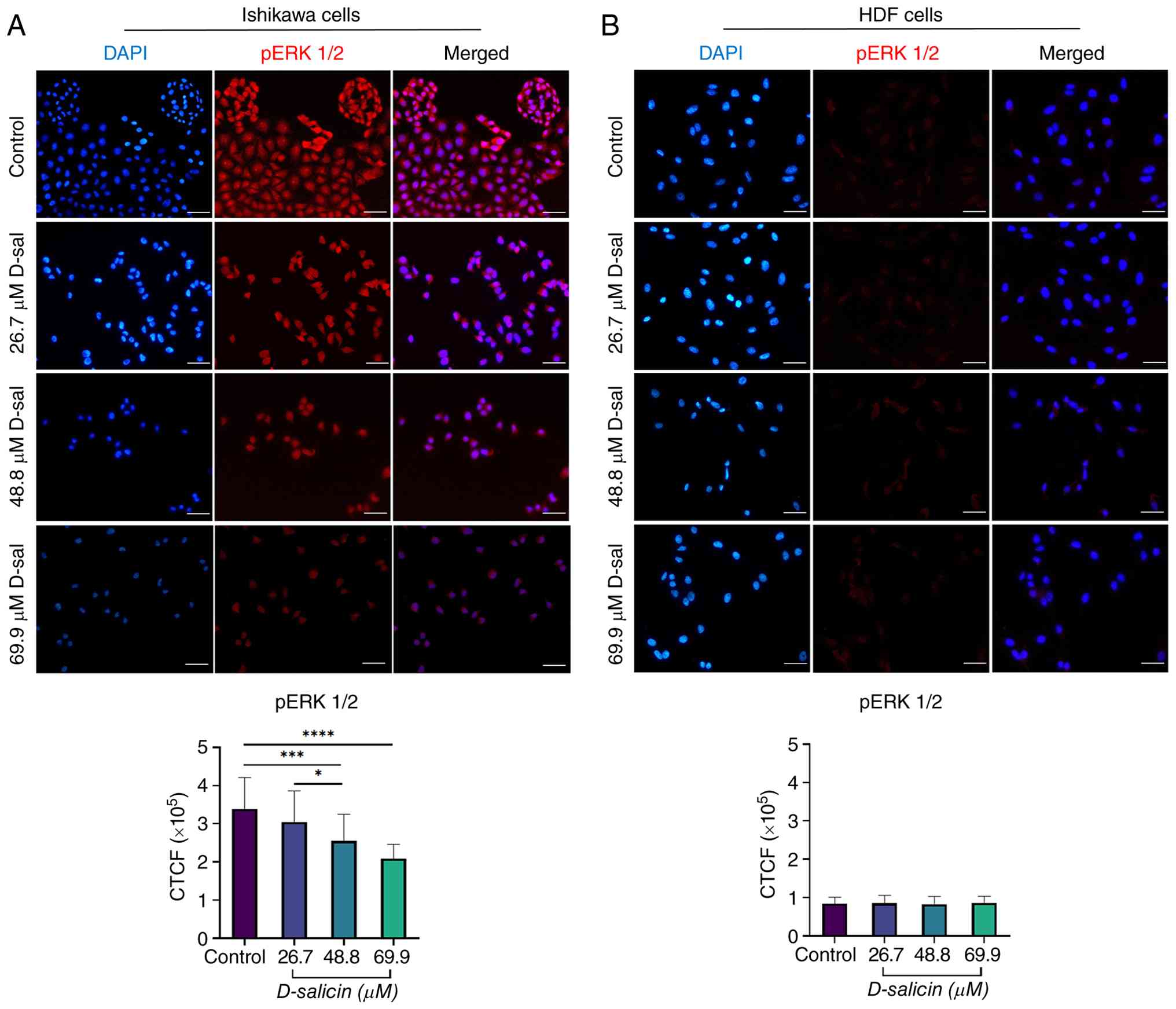
Effect of D-salicin on ERK1/2
phosphorylation in Ishikawa and HDF cells. (A) Representative
immunofluorescence images of p-ERK1/2 expression in Ishikawa cells
treated with D-salicin (26.7, 48.8, and 69.9 µM). p-ERK1/2
immunoreactivity (red) decreased in a concentration-dependent
manner compared with control cells. Nuclei were counterstained with
DAPI (blue). (B) Representative immunofluorescence images of HDF
cells following D-salicin treatment under identical conditions. No
apparent changes in p-ERK1/2 fluorescence intensity were observed
across treatment groups. These representative immunofluorescence
images are shown alongside the corresponding quantitative analysis
to illustrate the observed changes in p-ERK1/2 expression. Bar
graphs show quantitative analysis of p-ERK1/2 fluorescence
intensity. Data are presented as mean ± SD. Statistical
significance was determined by one-way ANOVA followed by Tukey's
multiple comparisons test (*P<0.05, ***P<0.001,
****P<0.0001). Scale bar, 100 µm. CTCF values were
calculated as absolute fluorescence intensity measurements, and
statistical comparisons were performed directly between groups. p-,
phosphorylated; CTCF, corrected total cell fluorescence.

Figure 7

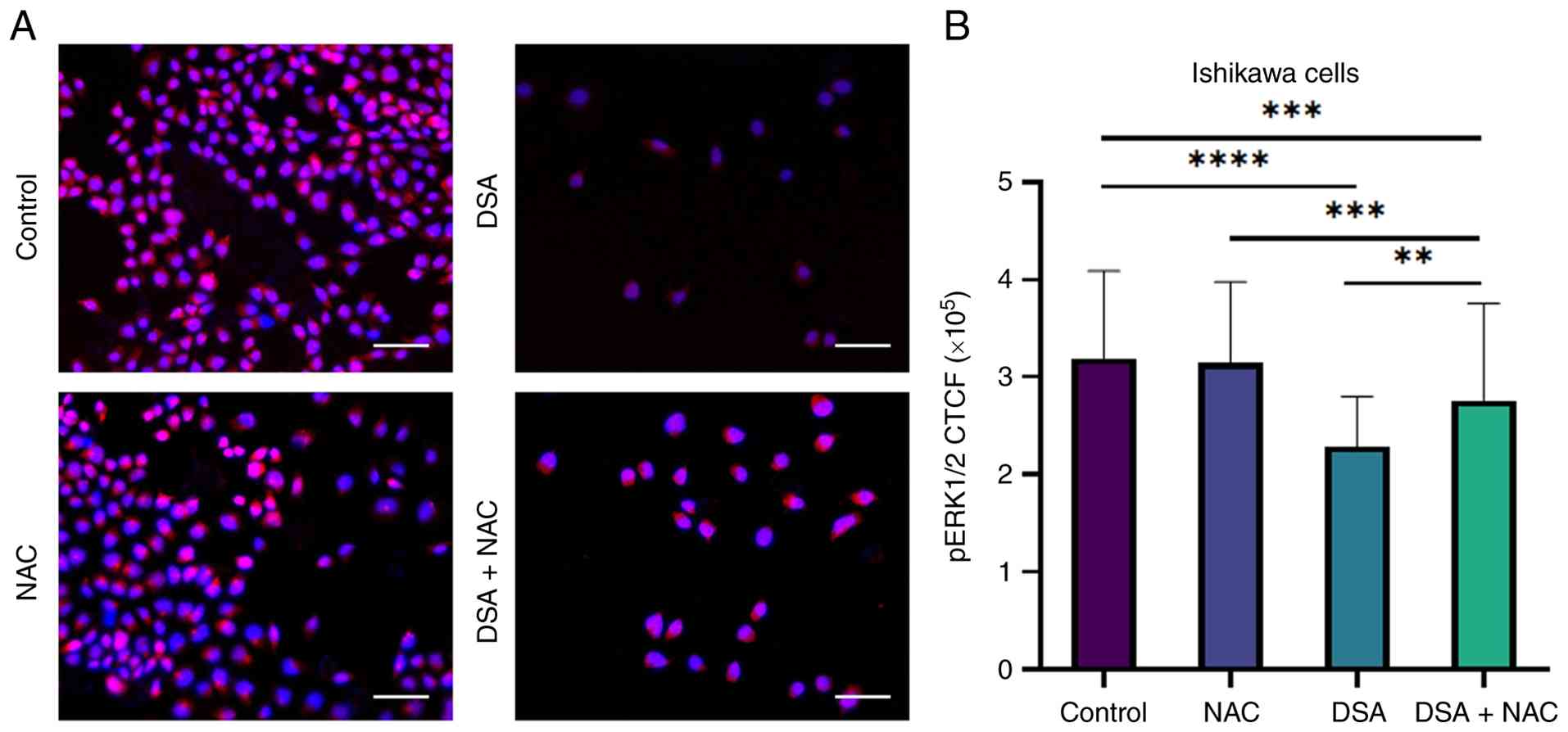
Effect of NAC co-treatment on
D-salicin-induced suppression of ERK1/2 phosphorylation in Ishikawa
cells. (A) Representative immunofluorescence images showing
phospho-ERK1/2 (p-ERK1/2) expression in Ishikawa cells following 72
h treatment with control, NAC (0.5 mM), D-salicin
(IC50=48.8 µM), and D-salicin + NAC. p-ERK1/2
immunoreactivity is shown in red, and nuclei are counterstained
with DAPI (blue). D-salicin reduced p-ERK1/2 fluorescence intensity
compared with control, whereas NAC co-treatment partially restored
p-ERK1/2 signal. (B) Quantitative analysis of p-ERK1/2 fluorescence
intensity expressed as CTCF. Data are presented as mean ± SD from
three independent experiments. Statistical significance was
determined using one-way ANOVA followed by Tukey's multiple
comparisons test **P<0.01, ***P<0.001,
****P<0.0001). Scale bars, 100 µm. NAC, N-acetylcysteine;
p-, phosphorylated; CTCF, corrected total cell fluorescence; DSA,
D-salicin.
View References

1 

Sung H, Ferlay J, Siegel RL, Laversanne M, Soerjomataram I, Jemal A and Bray F: Global cancer statistics 2020: GLOBOCAN estimates of incidence and mortality worldwide for 36 cancers in 185 countries. CA Cancer J Clin. 71:209–249. 2021.PubMed/NCBI

2 

Bray F, Laversanne M, Sung H, Ferlay J, Siegel RL, Soerjomataram I and Jemal A: Global cancer statistics 2022: GLOBOCAN estimates of incidence and mortality worldwide for 36 cancers in 185 countries. CA Cancer J Clin. 74:229–263. 2024.PubMed/NCBI

3 

Concin N, Matias-Guiu X, Vergote I, Cibula D, Mirza MR, Marnitz S, Ledermann J, Bosse T, Chargari C, Fagotti A, et al: ESGO/ESTRO/ESP guidelines for the management of patients with endometrial carcinoma. Radiother Oncol. 154:327–353. 2021. View Article : Google Scholar : PubMed/NCBI

4 

Panieri E and Santoro MM: ROS homeostasis and metabolism: A dangerous liaison in cancer cells. Cell Death Dis. 7:e22532016. View Article : Google Scholar : PubMed/NCBI

5 

An X, Yu W, Liu J, Tang D, Yang L and Chen X: Oxidative cell death in cancer: Mechanisms and therapeutic opportunities. Cell Death Dis. 15:5562024. View Article : Google Scholar : PubMed/NCBI

6 

Martin-Vega A and Cobb MH: Navigating the ERK1/2 MAPK cascade. Biomolecules. 13:15552023. View Article : Google Scholar : PubMed/NCBI

7 

Crosbie EJ, Kitson SJ, McAlpine JN, Mukhopadhyay A, Powell ME and Singh N: Endometrial cancer. Lancet. 399:1412–1428. 2022. View Article : Google Scholar : PubMed/NCBI

8 

Shi A, Liu L, Li S and Qi B: Natural products targeting the MAPK-signaling pathway in cancer: Overview. J Cancer Res Clin Oncol. 150:62024. View Article : Google Scholar : PubMed/NCBI

9 

Parvin N, Aslam M, Joo SW and Mandal TK: Nano-phytomedicine: Harnessing plant-derived phytochemicals in nanocarriers for targeted human health applications. Molecules. 30:31772025. View Article : Google Scholar : PubMed/NCBI

10 

Kong X, Zhang R, Shen Y, Bai Y, Dong K, Li D and Wang Y: Preparation and inhibitory effect of salicin dimethyl ether in laryngeal cancer cells through the apoptosis activation. Acta Biochim Pol. 69:753–759. 2022.PubMed/NCBI

11 

Kong CS, Kim KH, Choi JS, Kim JE, Park C and Jeong JW: Salicin, an extract from white willow bark, inhibits angiogenesis by blocking the ROS-ERK pathways. Phytother Res. 28:1246–1251. 2014. View Article : Google Scholar : PubMed/NCBI

12 

Samuni Y, Goldstein S, Dean OM and Berk M: The chemistry and biological activities of N-acetylcysteine. Biochim Biophys Acta. 1830:4117–4129. 2013. View Article : Google Scholar : PubMed/NCBI

13 

Ezerina D, Takano Y, Hanaoka K, Urano Y and Dick TP: N-Acetyl cysteine functions as a Fast-acting antioxidant by triggering intracellular H2S and sulfane sulfur production. Cell Chem Biol. 25:447–459.e4. 2018. View Article : Google Scholar : PubMed/NCBI

14 

Tenorio MCDS, Graciliano NG, Moura FA, Oliveira ACM and Goulart MOF: N-acetylcysteine (NAC): Impacts on human health. Antioxidants (Basel). 10:9672021. View Article : Google Scholar : PubMed/NCBI

15 

Schieber M and Chandel NS: ROS function in redox signaling and oxidative stress. Curr Biol. 24:R453–R462. 2014. View Article : Google Scholar : PubMed/NCBI

16 

Son Y, Cheong YK, Kim NH, Chung HT, Kang DG and Pae HO: Mitogen-activated protein kinases and reactive oxygen species: How can ROS activate MAPK pathways? J Signal Transduct. 2011:7926392011. View Article : Google Scholar : PubMed/NCBI

17 

Blagosklonny MV: Selective protection of normal cells from chemotherapy, while killing drug-resistant cancer cells. Oncotarget. 14:193–206. 2023. View Article : Google Scholar : PubMed/NCBI

18 

Jiang H, Zuo J, Li B, Chen R, Luo K, Xiang X, Lu S, Huang C, Liu L, Tang J and Gao F: Drug-induced oxidative stress in cancer treatments: Angel or devil? Redox Biol. 63:1027542023. View Article : Google Scholar : PubMed/NCBI

19 

Gordhandas S, Zammarrelli WA, Rios-Doria EV, Green AK and Makker V: Current evidence-based systemic therapy for advanced and recurrent endometrial cancer. J Natl Compr Canc Netw. 21:217–226. 2023. View Article : Google Scholar : PubMed/NCBI

20 

Mahdi H, Chelariu-Raicu A and Slomovitz BM: Immunotherapy in endometrial cancer. Int J Gynecol Cancer. 33:351–357. 2023. View Article : Google Scholar : PubMed/NCBI

21 

Hayes JD, Dinkova-Kostova AT and Tew KD: Oxidative stress in cancer. Cancer Cell. 38:167–197. 2020. View Article : Google Scholar : PubMed/NCBI

22 

Brandl N, Seitz R, Sendtner N, Muller M and Gulow K: Living on the edge: ROS homeostasis in cancer cells and its potential as a therapeutic target. Antioxidants (Basel). 14:10022025. View Article : Google Scholar : PubMed/NCBI

23 

Aboul-Soud MAM, Ashour AE, Challis JK, Ahmed AF, Kumar A, Nassrallah A, Alahmari TA, Saquib Q, Siddiqui MA, Al-Sheikh Y, et al: Biochemical and molecular investigation of in vitro antioxidant and anticancer activity spectrum of crude extracts of willow leaves Salix safsaf. Plants (Basel). 9:12952020.PubMed/NCBI

24 

Nakamura H and Takada K: Reactive oxygen species in cancer: Current findings and future directions. Cancer Sci. 112:3945–3952. 2021. View Article : Google Scholar : PubMed/NCBI

25 

Dho SH, Cho M, Woo W, Jeong S and Kim LK: Caspases as master regulators of programmed cell death: Apoptosis, pyroptosis and beyond. Exp Mol Med. 57:1121–1132. 2025. View Article : Google Scholar : PubMed/NCBI

26 

Galluzzi L, Vitale I, Aaronson SA, Abrams JM, Adam D, Agostinis P, Alnemri ES, Altucci L, Amelio I, Andrews DW, et al: Molecular mechanisms of cell death: Recommendations of the nomenclature committee on cell death 2018. Cell Death Differ. 25:486–541. 2018. View Article : Google Scholar : PubMed/NCBI

27 

Ausina P, Branco JR, Demaria TM, Esteves AM, Leandro JGB, Ochioni AC, Mendonca APM, Palhano FL, Oliveira MF, Abou-Kheir W, et al: Acetylsalicylic acid and salicylic acid present anticancer properties against melanoma by promoting nitric oxide-dependent endoplasmic reticulum stress and apoptosis. Sci Rep. 10:196172020. View Article : Google Scholar : PubMed/NCBI

28 

Perillo B, Di Donato M, Pezone A, Di Zazzo E, Giovannelli P, Galasso G, Castoria G and Migliaccio A: ROS in cancer therapy: The bright side of the moon. Exp Mol Med. 52:192–203. 2020. View Article : Google Scholar : PubMed/NCBI

29 

Liu J, Liu Q, Han J, Feng J, Guo T, Li Z, Min F, Jin R and Peng X: N-acetylcysteine inhibits patulin-induced apoptosis by affecting ROS-mediated oxidative damage pathway. Toxins (Basel). 13:5952021. View Article : Google Scholar : PubMed/NCBI

30 

Bahar ME, Kim HJ and Kim DR: Targeting the RAS/RAF/MAPK pathway for cancer therapy: From mechanism to clinical studies. Signal Transduct Target Ther. 8:4552023. View Article : Google Scholar : PubMed/NCBI

31 

Aldini G, Altomare A, Baron G, Vistoli G, Carini M, Borsani L and Sergio F: N-acetylcysteine as an antioxidant and disulphide breaking agent: The reasons why. Free Radic Res. 52:751–762. 2018. View Article : Google Scholar : PubMed/NCBI

Related Articles

  • Abstract
  • View
  • Download
  • Twitter
Copy and paste a formatted citation
Spandidos Publications style
Ari N and Çakir Gündoğdu A: D‑salicin induces oxidative stress‑mediated ERK1/2 suppression and apoptosis in endometrial cancer cells. Oncol Lett 32: 311, 2026.
APA
Ari, N., & Çakir Gündoğdu, A. (2026). D‑salicin induces oxidative stress‑mediated ERK1/2 suppression and apoptosis in endometrial cancer cells. Oncology Letters, 32, 311. https://doi.org/10.3892/ol.2026.15666
MLA
Ari, N., Çakir Gündoğdu, A."D‑salicin induces oxidative stress‑mediated ERK1/2 suppression and apoptosis in endometrial cancer cells". Oncology Letters 32.1 (2026): 311.
Chicago
Ari, N., Çakir Gündoğdu, A."D‑salicin induces oxidative stress‑mediated ERK1/2 suppression and apoptosis in endometrial cancer cells". Oncology Letters 32, no. 1 (2026): 311. https://doi.org/10.3892/ol.2026.15666
Copy and paste a formatted citation
x
Spandidos Publications style
Ari N and Çakir Gündoğdu A: D‑salicin induces oxidative stress‑mediated ERK1/2 suppression and apoptosis in endometrial cancer cells. Oncol Lett 32: 311, 2026.
APA
Ari, N., & Çakir Gündoğdu, A. (2026). D‑salicin induces oxidative stress‑mediated ERK1/2 suppression and apoptosis in endometrial cancer cells. Oncology Letters, 32, 311. https://doi.org/10.3892/ol.2026.15666
MLA
Ari, N., Çakir Gündoğdu, A."D‑salicin induces oxidative stress‑mediated ERK1/2 suppression and apoptosis in endometrial cancer cells". Oncology Letters 32.1 (2026): 311.
Chicago
Ari, N., Çakir Gündoğdu, A."D‑salicin induces oxidative stress‑mediated ERK1/2 suppression and apoptosis in endometrial cancer cells". Oncology Letters 32, no. 1 (2026): 311. https://doi.org/10.3892/ol.2026.15666
Follow us
  • Twitter
  • LinkedIn
  • Facebook
About
  • Spandidos Publications
  • Careers
  • Cookie Policy
  • Privacy Policy
How can we help?
  • Help
  • Live Chat
  • Contact
  • Email to our Support Team