Spandidos Publications Logo
  • About
    • About Spandidos
    • Aims and Scopes
    • Abstracting and Indexing
    • Editorial Policies
    • Reprints and Permissions
    • Job Opportunities
    • Terms and Conditions
    • Contact
  • Journals
    • All Journals
    • Oncology Letters
      • Oncology Letters
      • Information for Authors
      • Editorial Policies
      • Editorial Board
      • Aims and Scope
      • Abstracting and Indexing
      • Bibliographic Information
      • Archive
    • International Journal of Oncology
      • International Journal of Oncology
      • Information for Authors
      • Editorial Policies
      • Editorial Board
      • Aims and Scope
      • Abstracting and Indexing
      • Bibliographic Information
      • Archive
    • Molecular and Clinical Oncology
      • Molecular and Clinical Oncology
      • Information for Authors
      • Editorial Policies
      • Editorial Board
      • Aims and Scope
      • Abstracting and Indexing
      • Bibliographic Information
      • Archive
    • Experimental and Therapeutic Medicine
      • Experimental and Therapeutic Medicine
      • Information for Authors
      • Editorial Policies
      • Editorial Board
      • Aims and Scope
      • Abstracting and Indexing
      • Bibliographic Information
      • Archive
    • International Journal of Molecular Medicine
      • International Journal of Molecular Medicine
      • Information for Authors
      • Editorial Policies
      • Editorial Board
      • Aims and Scope
      • Abstracting and Indexing
      • Bibliographic Information
      • Archive
    • Biomedical Reports
      • Biomedical Reports
      • Information for Authors
      • Editorial Policies
      • Editorial Board
      • Aims and Scope
      • Abstracting and Indexing
      • Bibliographic Information
      • Archive
    • Oncology Reports
      • Oncology Reports
      • Information for Authors
      • Editorial Policies
      • Editorial Board
      • Aims and Scope
      • Abstracting and Indexing
      • Bibliographic Information
      • Archive
    • Molecular Medicine Reports
      • Molecular Medicine Reports
      • Information for Authors
      • Editorial Policies
      • Editorial Board
      • Aims and Scope
      • Abstracting and Indexing
      • Bibliographic Information
      • Archive
    • World Academy of Sciences Journal
      • World Academy of Sciences Journal
      • Information for Authors
      • Editorial Policies
      • Editorial Board
      • Aims and Scope
      • Abstracting and Indexing
      • Bibliographic Information
      • Archive
    • International Journal of Functional Nutrition
      • International Journal of Functional Nutrition
      • Information for Authors
      • Editorial Policies
      • Editorial Board
      • Aims and Scope
      • Abstracting and Indexing
      • Bibliographic Information
      • Archive
    • International Journal of Epigenetics
      • International Journal of Epigenetics
      • Information for Authors
      • Editorial Policies
      • Editorial Board
      • Aims and Scope
      • Abstracting and Indexing
      • Bibliographic Information
      • Archive
    • Medicine International
      • Medicine International
      • Information for Authors
      • Editorial Policies
      • Editorial Board
      • Aims and Scope
      • Abstracting and Indexing
      • Bibliographic Information
      • Archive
  • Articles
  • Information
    • Information for Authors
    • Information for Reviewers
    • Information for Librarians
    • Information for Advertisers
    • Conferences
  • Language Editing
Spandidos Publications Logo
  • About
    • About Spandidos
    • Aims and Scopes
    • Abstracting and Indexing
    • Editorial Policies
    • Reprints and Permissions
    • Job Opportunities
    • Terms and Conditions
    • Contact
  • Journals
    • All Journals
    • Biomedical Reports
      • Information for Authors
      • Editorial Policies
      • Editorial Board
      • Aims and Scope
      • Abstracting and Indexing
      • Bibliographic Information
      • Archive
    • Experimental and Therapeutic Medicine
      • Information for Authors
      • Editorial Policies
      • Editorial Board
      • Aims and Scope
      • Abstracting and Indexing
      • Bibliographic Information
      • Archive
    • International Journal of Epigenetics
      • Information for Authors
      • Editorial Policies
      • Editorial Board
      • Aims and Scope
      • Abstracting and Indexing
      • Bibliographic Information
      • Archive
    • International Journal of Functional Nutrition
      • Information for Authors
      • Editorial Policies
      • Editorial Board
      • Aims and Scope
      • Abstracting and Indexing
      • Bibliographic Information
      • Archive
    • International Journal of Molecular Medicine
      • Information for Authors
      • Editorial Policies
      • Editorial Board
      • Aims and Scope
      • Abstracting and Indexing
      • Bibliographic Information
      • Archive
    • International Journal of Oncology
      • Information for Authors
      • Editorial Policies
      • Editorial Board
      • Aims and Scope
      • Abstracting and Indexing
      • Bibliographic Information
      • Archive
    • Medicine International
      • Information for Authors
      • Editorial Policies
      • Editorial Board
      • Aims and Scope
      • Abstracting and Indexing
      • Bibliographic Information
      • Archive
    • Molecular and Clinical Oncology
      • Information for Authors
      • Editorial Policies
      • Editorial Board
      • Aims and Scope
      • Abstracting and Indexing
      • Bibliographic Information
      • Archive
    • Molecular Medicine Reports
      • Information for Authors
      • Editorial Policies
      • Editorial Board
      • Aims and Scope
      • Abstracting and Indexing
      • Bibliographic Information
      • Archive
    • Oncology Letters
      • Information for Authors
      • Editorial Policies
      • Editorial Board
      • Aims and Scope
      • Abstracting and Indexing
      • Bibliographic Information
      • Archive
    • Oncology Reports
      • Information for Authors
      • Editorial Policies
      • Editorial Board
      • Aims and Scope
      • Abstracting and Indexing
      • Bibliographic Information
      • Archive
    • World Academy of Sciences Journal
      • Information for Authors
      • Editorial Policies
      • Editorial Board
      • Aims and Scope
      • Abstracting and Indexing
      • Bibliographic Information
      • Archive
  • Articles
  • Information
    • For Authors
    • For Reviewers
    • For Librarians
    • For Advertisers
    • Conferences
  • Language Editing
Login Register Submit
  • This site uses cookies
  • You can change your cookie settings at any time by following the instructions in our Cookie Policy. To find out more, you may read our Privacy Policy.

    I agree
Search articles by DOI, keyword, author or affiliation
Search
Advanced Search
presentation
Oncology Letters
Join Editorial Board Propose a Special Issue
Print ISSN: 1792-1074 Online ISSN: 1792-1082
Journal Cover
October-2026 Volume 32 Issue 4

Full Size Image

Sign up for eToc alerts
Recommend to Library

Journals

International Journal of Molecular Medicine

International Journal of Molecular Medicine

International Journal of Molecular Medicine is an international journal devoted to molecular mechanisms of human disease.

International Journal of Oncology

International Journal of Oncology

International Journal of Oncology is an international journal devoted to oncology research and cancer treatment.

Molecular Medicine Reports

Molecular Medicine Reports

Covers molecular medicine topics such as pharmacology, pathology, genetics, neuroscience, infectious diseases, molecular cardiology, and molecular surgery.

Oncology Reports

Oncology Reports

Oncology Reports is an international journal devoted to fundamental and applied research in Oncology.

Experimental and Therapeutic Medicine

Experimental and Therapeutic Medicine

Experimental and Therapeutic Medicine is an international journal devoted to laboratory and clinical medicine.

Oncology Letters

Oncology Letters

Oncology Letters is an international journal devoted to Experimental and Clinical Oncology.

Biomedical Reports

Biomedical Reports

Explores a wide range of biological and medical fields, including pharmacology, genetics, microbiology, neuroscience, and molecular cardiology.

Molecular and Clinical Oncology

Molecular and Clinical Oncology

International journal addressing all aspects of oncology research, from tumorigenesis and oncogenes to chemotherapy and metastasis.

World Academy of Sciences Journal

World Academy of Sciences Journal

Multidisciplinary open-access journal spanning biochemistry, genetics, neuroscience, environmental health, and synthetic biology.

International Journal of Functional Nutrition

International Journal of Functional Nutrition

Open-access journal combining biochemistry, pharmacology, immunology, and genetics to advance health through functional nutrition.

International Journal of Epigenetics

International Journal of Epigenetics

Publishes open-access research on using epigenetics to advance understanding and treatment of human disease.

Medicine International

Medicine International

An International Open Access Journal Devoted to General Medicine.

Journal Cover
October-2026 Volume 32 Issue 4

Full Size Image

Sign up for eToc alerts
Recommend to Library

  • Article
  • Citations
    • Cite This Article
    • Download Citation
    • Create Citation Alert
    • Remove Citation Alert
    • Cited By
  • Similar Articles
    • Related Articles (in Spandidos Publications)
    • Similar Articles (Google Scholar)
    • Similar Articles (PubMed)
  • Download PDF
  • Download XML
  • View XML

  • Supplementary Files
    • Supplementary_Data1.pdf
    • Supplementary_Data2.pdf
Article Open Access

FAM122B acts as an independent poor prognostic factor and promotes the malignant biological behaviors of low‑grade glioma

  • Authors:
    • Hao Wang
    • Tengfei Guo
    • Yanbo Gao
    • Yi Zhou
    • Rongjun Qian
  • View Affiliations / Copyright

    Affiliations: The First Affiliated Hospital of Henan University of Chinese Medicine, Zhengzhou, Henan 450003, P.R. China, Department of Neurosurgery, Henan Provincial People's Hospital, Zhengzhou, Henan 450003, P.R. China
    Copyright: © Wang et al. This is an open access article distributed under the terms of Creative Commons Attribution License.
  • Article Number: 427
    |
    Published online on: July 28, 2026
       https://doi.org/10.3892/ol.2026.15782
  • Expand metrics +
Metrics: Total Views: 0 (Spandidos Publications: | PMC Statistics: )
Metrics: Total PDF Downloads: 0 (Spandidos Publications: | PMC Statistics: )
Cited By (CrossRef): 0 citations Loading Articles...

This article is mentioned in:


Abstract

The aim of the present study was to investigate the role and mechanism of Family with sequence similarity 122, member B (FAM122B) in low‑grade glioma (LGG) by combining bioinformatics analysis of public databases and in vitro cell experiments. Data from databases including Gene Expression Omnibus, The Cancer Genome Atlas and Chinese Glioma Genome Atlas were integrated to analyze the expression characteristics, clinical correlations and molecular mechanisms of FAM122B. Meanwhile, SHG44 cells were used as the research object and short interfering RNA was applied to knockdown FAM122B expression to verify its effects on cell functions. The results showed that FAM122B was markedly highly expressed in LGG tissues and cell lines compared with normal brain tissues and normal glial cells, which was closely associated with the malignant clinical features of LGG. Patients with high FAM122B expression had a poorer prognosis, and FAM122B was identified as an independent adverse prognostic marker for LGG. In vitro experiments confirmed that knockdown of FAM122B could markedly inhibit the proliferation and migration of SHG44 and SW1088 cells. In conclusion, FAM122B plays a key oncogenic role in LGG and it was hypothesized to serve as a potential biomarker for prognostic evaluation and a novel target for the targeted therapy of LGG, providing a theoretical basis for its precise diagnosis and treatment.
View Figures

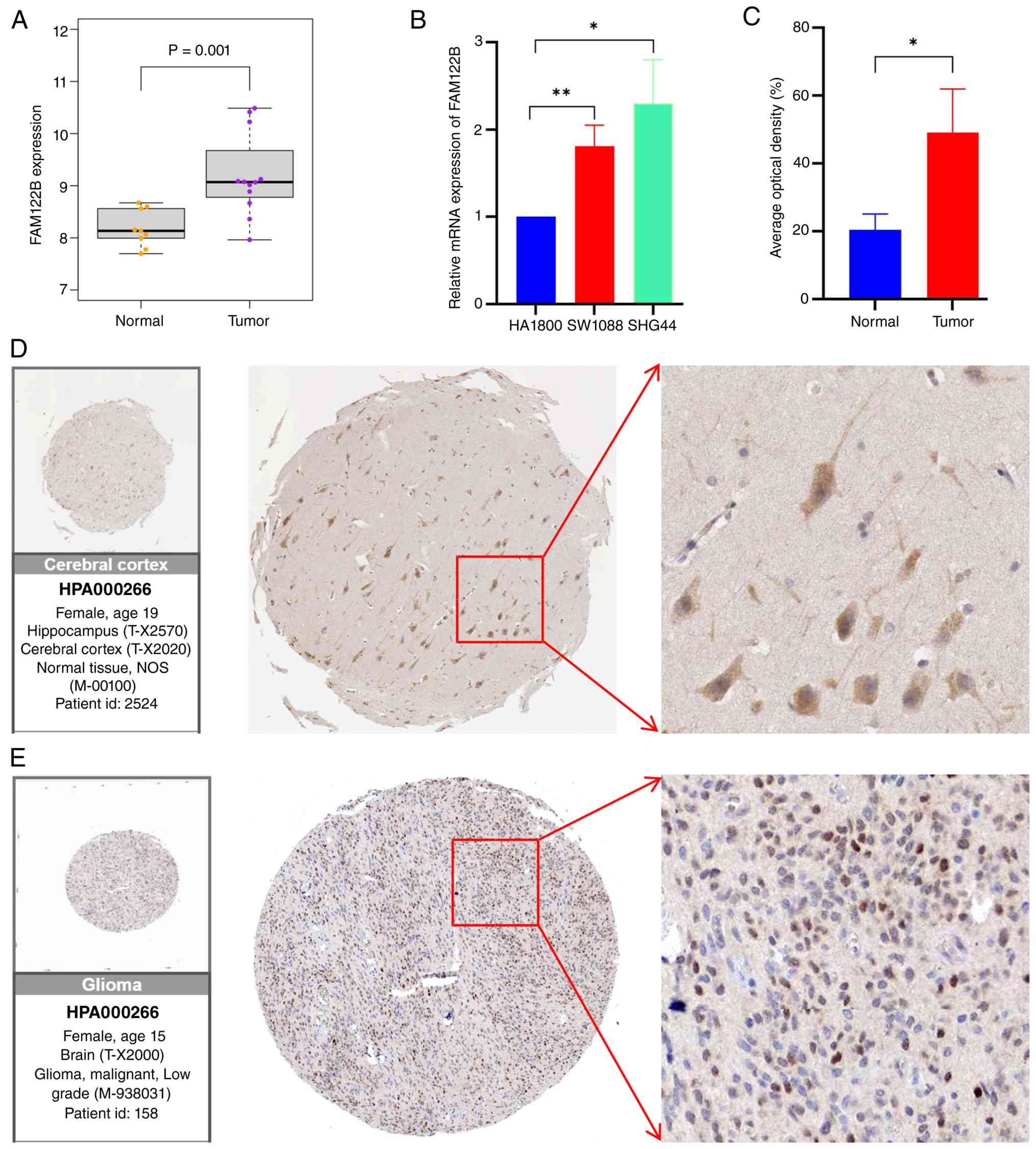
Figure 1

FAM122B is highly expressed in
LGG tissues and cell lines. (A) mRNA expression levels of
FAM122B in normal brain tissues (n=9) and LGG tumor tissues
(n=12) from the GSE35493 dataset. (B) RT-qPCR results showing the
relative mRNA expression of FAM122B in the human normal
astrocyte cell line HA1800 and LGG cell lines SW1088 and SHG44. (C)
Quantification of the IHC staining results in panels (D) and (E),
showing the average optical density of FAM122B protein
expression in normal cerebral cortex tissues (n=3) and LGG tumor
tissues (n=5). Representative IHC staining image of FAM122B
in (D) normal cerebral cortex tissues and (E) in LGG tumor tissues
from the HPA database. All original magnification, ×4.3.
*P<0.05, **P<0.01. FAM122B, Family with sequence
similarity 122, member B; LGG, low-grade glioma; RT-qPCR, reverse
transcription-quantitative PCR; IHC, immunohistochemistry; HPA,
Human Protein Atlas.

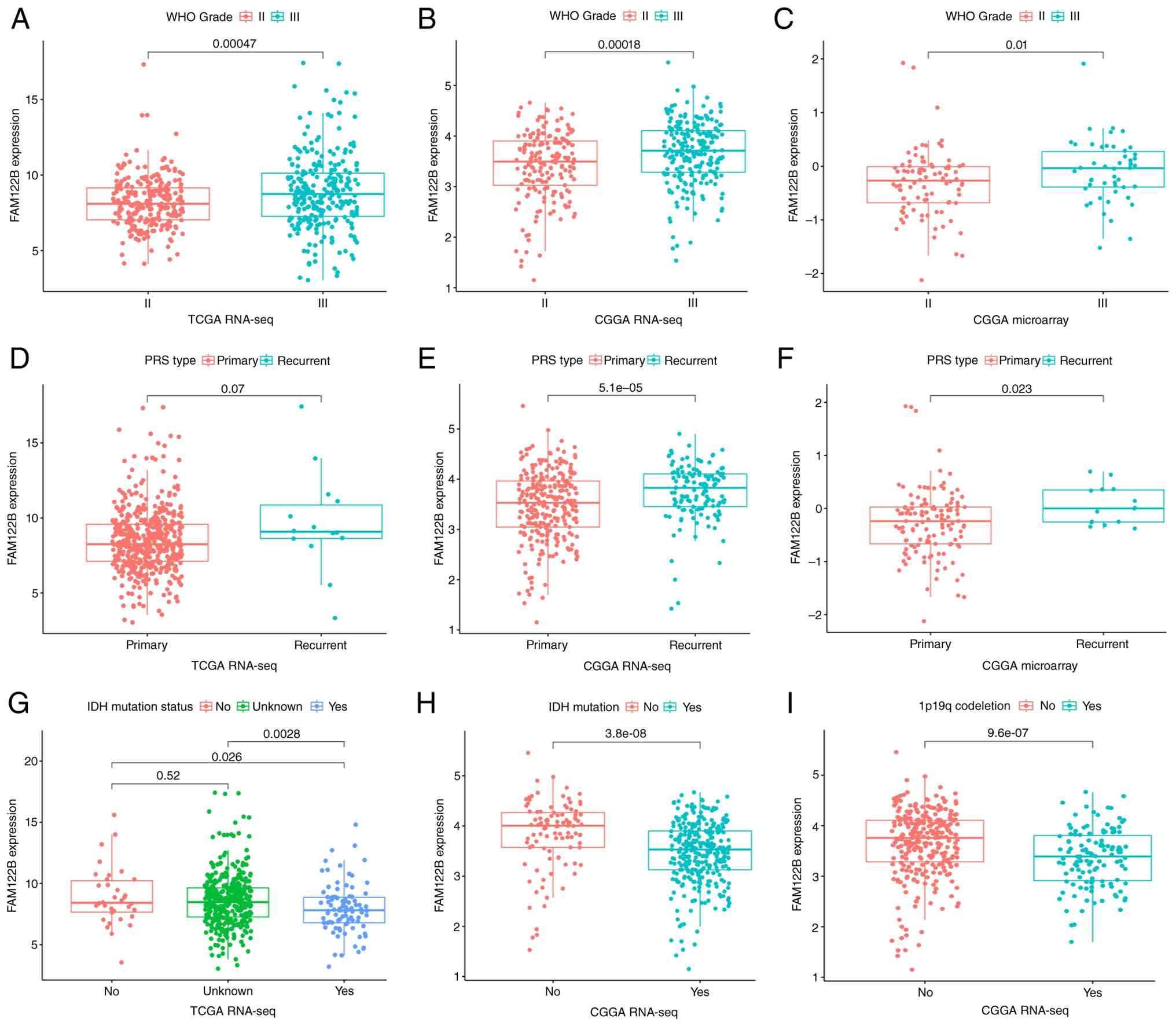
Figure 2

Correlation analysis between
FAM122B expression level and clinicopathological
characteristics of patients with LGG. (A) Comparison of
FAM122B mRNA expression levels in LGG tissues with different
WHO grades (grade II vs. grade III) based on TCGA RNA-seq dataset.
(B) Comparison of FAM122B mRNA expression levels in LGG
tissues with different WHO grades (grade II vs. grade III) based on
CGGA RNA-seq dataset. (C) Comparison of FAM122B mRNA
expression levels in LGG tissues with different WHO grades (grade
II vs. grade III) based on CGGA microarray dataset. (D) Comparison
of FAM122B mRNA expression levels between primary and
recurrent LGG tissues in the TCGA RNA-seq dataset. (E) Comparison
of FAM122B mRNA expression levels between primary and
recurrent LGG tissues in the CGGA RNA-seq dataset. (F) Comparison
of FAM122B mRNA expression levels between primary and
recurrent LGG tissues in the CGGA microarray dataset. (G)
Comparison of FAM122B mRNA expression levels in LGG tissues
with different IDH mutation statuses based on TCGA RNA-seq dataset.
(H) Comparison of FAM122B mRNA expression levels in LGG
tissues with different IDH mutation statuses based on CGGA RNA-seq
dataset. (I) Comparison of FAM122B mRNA expression levels in
LGG tissues with different 1p19q co-deletion statuses based on the
CGGA RNA-seq dataset. FAM122B, Family with sequence
similarity 122, member B; LGG, low-grade glioma; WHO, World Health
Organization; TCGA, The Cancer Genome Atlas; CGGA, Chinese Glioma
Genome Atlas.

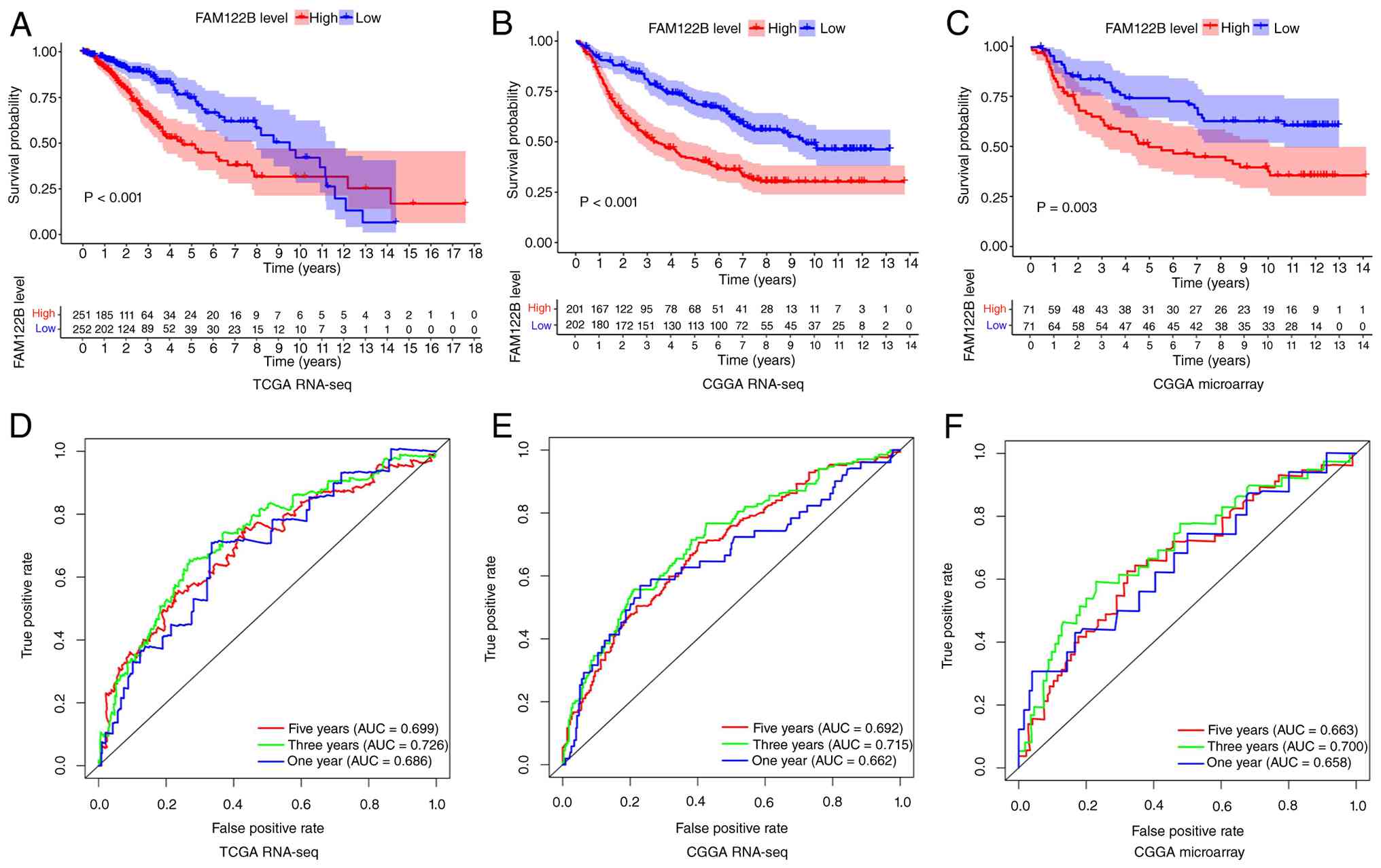
Figure 3

Prognostic value of FAM122B
expression level in patients with LGG. (A) Kaplan-Meier survival
curves of patients with LGG stratified by FAM122B expression
levels based on TCGA RNA-seq dataset. (B) Kaplan-Meier survival
curves of patients with LGG stratified by FAM122B expression
levels based on CGGA RNA-seq dataset. (C) Kaplan-Meier survival
curves of patients with LGG stratified by FAM122B expression
levels based on CGGA microarray dataset. (D) ROC curves and AUC
values of FAM122B for predicting 1-, 3- and 5-year survival
outcomes of patients with LGG based on the TCGA RNA-seq dataset.
(E) ROC curves and AUC values of FAM122B for predicting 1-,
3- and 5-year survival outcomes of patients with LGG based on the
CGGA RNA-seq dataset. (F) ROC curves and AUC values of
FAM122B for predicting 1-, 3- and 5-year survival outcomes
of patients with LGG based on the CGGA microarray dataset.
FAM122B, Family with sequence similarity 122, member B; LGG,
low-grade glioma; TCGA, The Cancer Genome Atlas; CGGA, Chinese
Glioma Genome Atlas; ROC, plot receiver operating characteristic;
AUC, area under the curve.

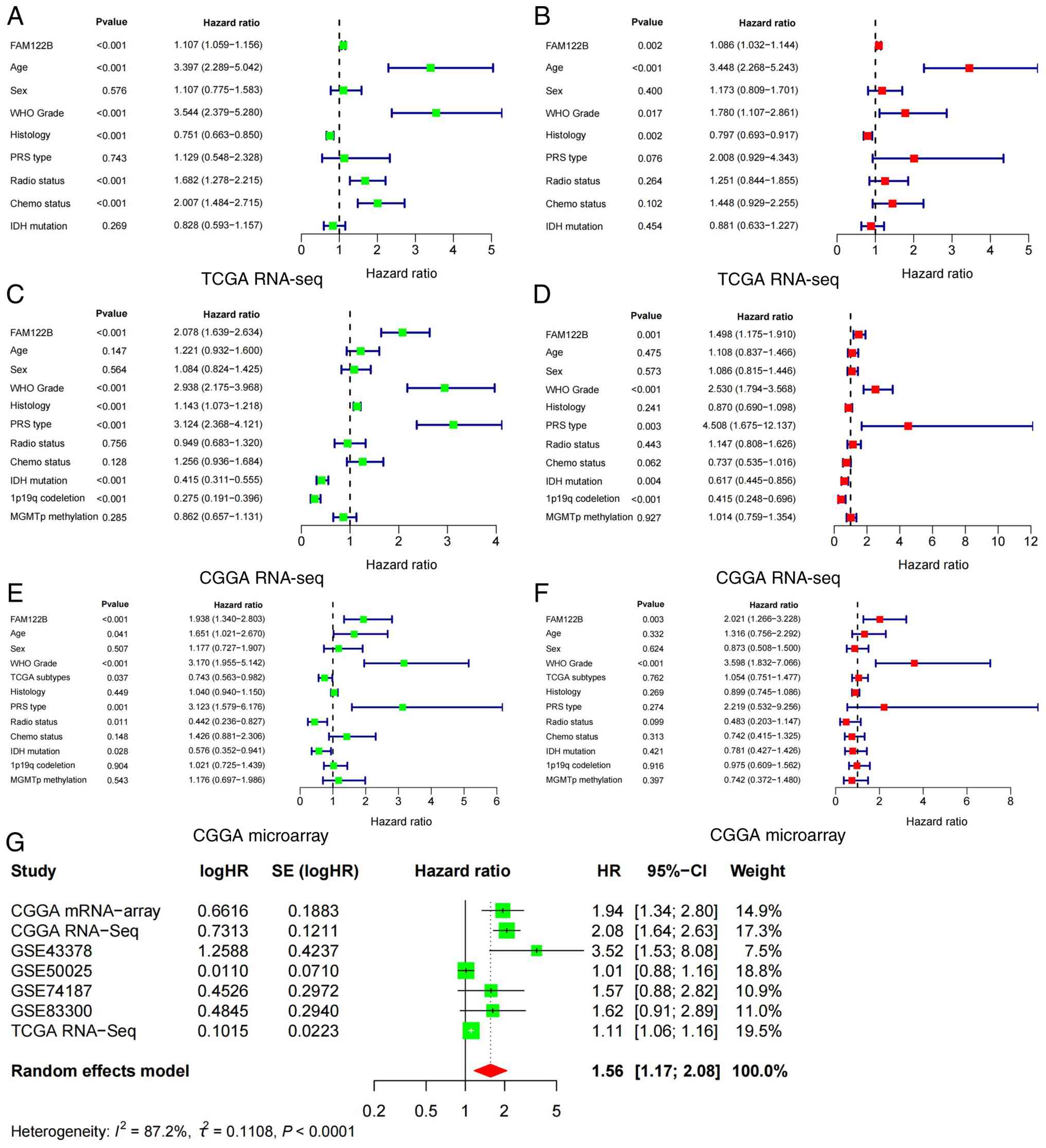
Figure 4

Validation of FAM122B as an
independent poor prognostic factor in patients with LGG. (A) Forest
plots of univariate Cox proportional hazards regression analysis
based on TCGA RNA-seq dataset. (B) Forest plots of multivariate Cox
proportional hazards regression analysis based on the TCGA RNA-seq
dataset. (C) Forest plots of univariate Cox proportional hazards
regression analysis based on CGGA RNA-seq dataset. (D) Forest plots
of multivariate Cox proportional hazards regression analysis based
on the CGGA RNA-seq dataset. (E) Forest plots of univariate Cox
proportional hazards regression analysis based on CGGA microarray
dataset. (F) Forest plots of multivariate Cox proportional hazards
regression analysis based on the CGGA microarray dataset. (G)
Forest plot of meta-analysis across multiple datasets,
comprehensively evaluating the prognostic HR and 95% CI of
FAM122B in patients with LGG. FAM122B, Family with
sequence similarity 122, member B; LGG, low-grade glioma; TCGA, The
Cancer Genome Atlas; CGGA, Chinese Glioma Genome Atlas; HR, hazard
ratio; CI, confidence interval.

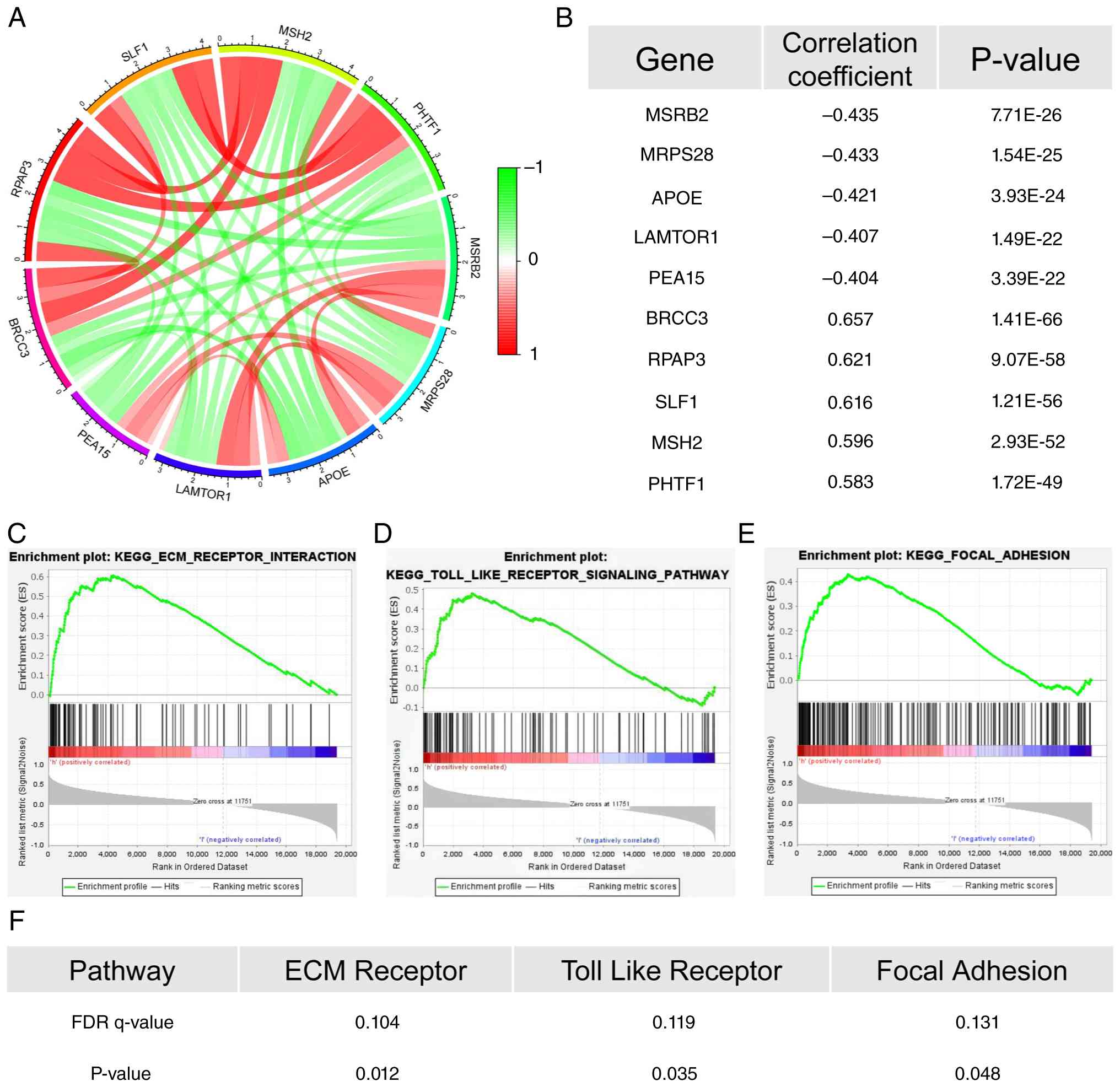
Figure 5

Co-expression gene analysis and GSEA
of FAM122B. (A) Chord diagram of FAM122B co-expressed
genes, where red indicates positive correlation and green indicates
negative correlation; color intensity reflects the magnitude of the
correlation coefficient. (B) The top five positively and top five
negatively correlated genes with FAM122B, along with their
correlation coefficients and P-values. (C) GSEA enrichment plots
showing the enrichment of extracellular matrix receptor interaction
pathway in FAM122B high-expression samples. (D) GSEA
enrichment plots showing the enrichment of Toll-like receptor
signaling pathway in FAM122B high-expression samples. (E)
GSEA enrichment plots showing the enrichment of focal adhesion
pathway in FAM122B high-expression samples. (F) Statistical
results of FDR q-values and P-values for each enriched pathway.
GSEA, gene set enrichment analysis; FAM122B, Family with
sequence similarity 122, member B; FDR, false discovery rate.

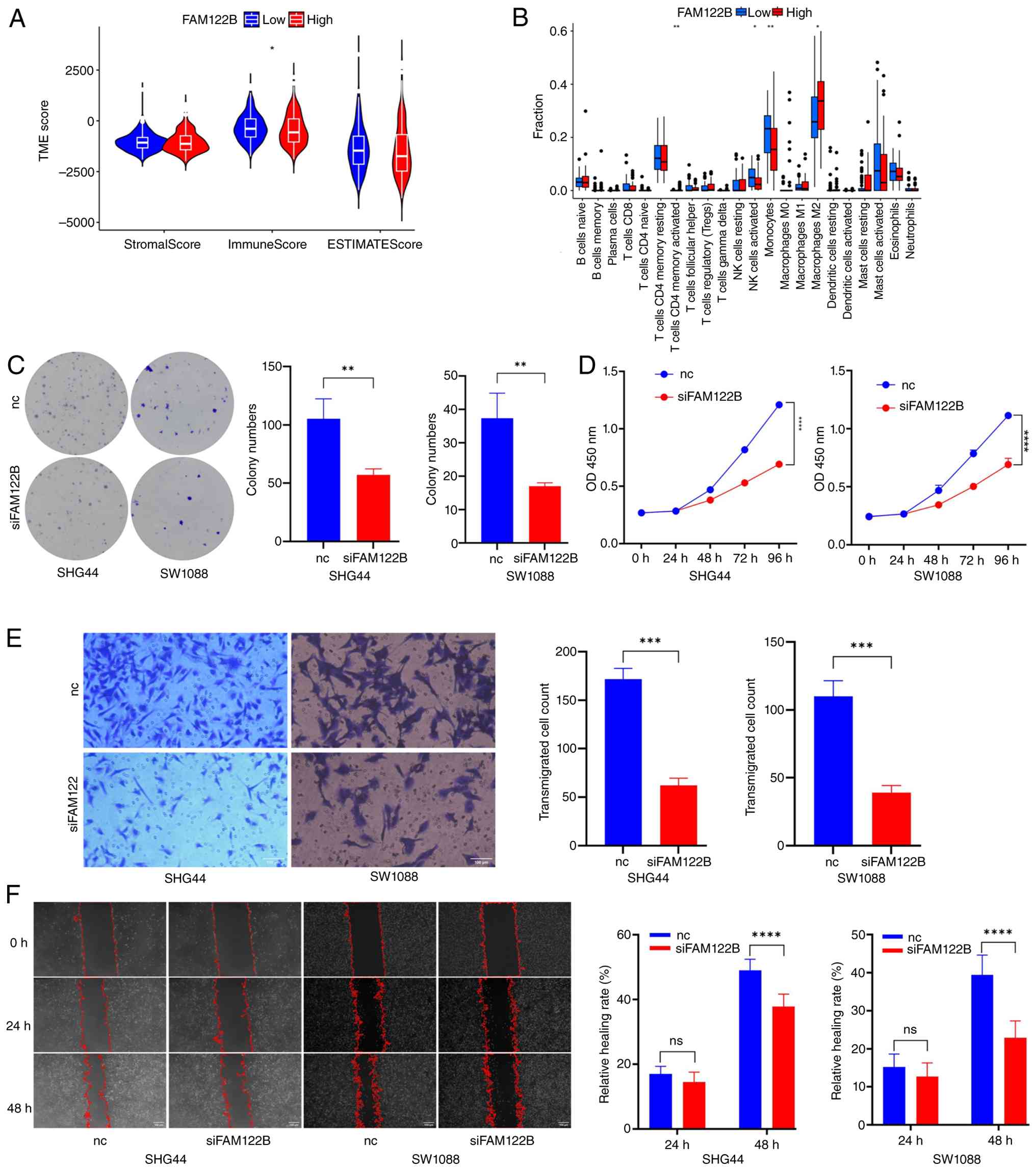
Figure 6

FAM122B affects LGG immune
microenvironment and malignant cell behaviors. (A) TME scores of
patients with LGG in FAM122B high- and low-expression
groups, calculated by the ESTIMATE algorithm. (B) Correlation
analysis between FAM122B expression level and infiltration
levels. (C) Colony formation assay to detect the proliferation
capacity of SHG44 and SW1088 cells after FAM122B knockdown.
(D) CCK-8 assay to detect the proliferation viability of SHG44 and
SW1088 cells after FAM122B knockdown. (E) Transwell assay to
detect the invasion capacity of SHG44 and SW1088 cells after
FAM122B knockdown. Scale bar, 100 µm. (F) Wound healing
assay to detect the migration capacity of SHG44 and SW1088 cells
after FAM122B knockdown. Scale bar, 100 µm. *P<0.05,
**P<0.01, ***P<0.001, ****P<0.0001. FAM122B, Family
with sequence similarity 122, member B; LGG, low-grade glioma; TME,
tumor microenvironment; ns, no significance; si, short interfering;
LGG, low-grade glioma.
View References

1 

Patel SH, Poisson LM, Brat DJ, Zhou Y, Cooper L, Snuderl M, Thomas C, Franceschi AM, Griffith B, Flanders AE, et al: T2-FLAIR mismatch, an imaging biomarker for IDH and 1p/19q status in lower-grade gliomas: A TCGA/TCIA project. Clin Cancer Res. 23:6078–6085. 2017. View Article : Google Scholar : PubMed/NCBI

2 

Louis DN, Perry A, Wesseling P, Brat DJ, Cree IA, Figarella-Branger D, Hawkins C, Ng HK, Pfister SM, Reifenberger G, et al: The 2021 WHO classification of tumors of the central nervous system: A summary. Neuro Oncol. 23:1231–1251. 2021. View Article : Google Scholar : PubMed/NCBI

3 

Jooma R, Waqas M and Khan I: Diffuse Low-grade glioma-changing concepts in diagnosis and management: A review. Asian J Neurosurg. 14:356–363. 2019. View Article : Google Scholar : PubMed/NCBI

4 

Nahed BV, Redjal N, Brat DJ, Chi AS, Oh K, Batchelor TT, Ryken TC, Kalkanis SN and Olson JJ: Management of patients with recurrence of diffuse low grade glioma: A systematic review and evidence-based clinical practice guideline. J Neurooncol. 125:609–630. 2015. View Article : Google Scholar : PubMed/NCBI

5 

Fournier C, Mercey-Ressejac M, Derangère V, Al Kadi A, Rageot D, Charrat C, Leroy A, Vollaire J, Josserand V, Escudé M, et al: Nanostructured lipid carriers based mRNA vaccine leads to a T cell-inflamed tumour microenvironment favourable for improving PD-1/PD-L1 blocking therapy and long-term immunity in a cold tumour model. EBioMedicine. 112:1055432025. View Article : Google Scholar : PubMed/NCBI

6 

Sun X, Jia Q, Li K, Tian C, Yi L, Yan L, Zheng J, Jia X and Gu M: Comparative genomic landscape of lower-grade glioma and glioblastoma. PLoS One. 19:e03095362024. View Article : Google Scholar : PubMed/NCBI

7 

Yang YS, Liu MH, Yan ZW, Chen GQ and Huang Y: FAM122A is required for mesendodermal and cardiac differentiation of embryonic stem cells. Stem Cells. 41:354–367. 2023. View Article : Google Scholar : PubMed/NCBI

8 

Fan F, Zhao J, Liu Y, Zhao H, Weng L, Li Q, Chen G and Xu Y: Identifying the SUMO1 modification of FAM122A leading to the degradation of PP2A-Cα by ubiquitin-proteasome system. Biochem Biophys Res Commun. 500:676–681. 2018. View Article : Google Scholar : PubMed/NCBI

9 

Wasserman JS, Faezov B, Patel KR, Kurimchak AM, Palacio SM, Glass DJ, Fowle H, McEwan BC, Xu Q, Zhao Z, et al: FAM122A ensures cell cycle interphase progression and checkpoint control by inhibiting B55α/PP2A through helical motifs. Nat Commun. 15:57762024. View Article : Google Scholar : PubMed/NCBI

10 

Liu MH, Chen J, Yang YS, Wang YQ, Chen GQ, Zhang Y and Huang Y: FAM122A promotes acute myeloid leukemia cell growth through inhibiting PP2A activity and sustaining MYC expression. Haematologica. 106:903–907. 2021.PubMed/NCBI

11 

Zhou Y, Shi WY, He W, Yan ZW, Liu MH, Chen J, Yang YS, Wang YQ, Chen GQ and Huang Y: FAM122A supports the growth of hepatocellular carcinoma cells and its deletion enhances Doxorubicin-induced cytotoxicity. Exp Cell Res. 387:1117142020. View Article : Google Scholar : PubMed/NCBI

12 

Livak KJ and Schmittgen TD: Analysis of relative gene expression data using real-time quantitative PCR and the 2(−Delta Delta C(T)) method. Methods. 25:402–408. 2001. View Article : Google Scholar : PubMed/NCBI

13 

Kawaguchi A, Yajima N, Tsuchiya N, Homma J, Sano M, Natsumeda M, Takahashi H, Fujii Y, Kakuma T and Yamanaka R: Gene expression signature-based prognostic risk score in patients with glioblastoma. Cancer Sci. 104:1205–1210. 2013. View Article : Google Scholar : PubMed/NCBI

14 

Buczkowicz P, Hoeman C, Rakopoulos P, Pajovic S, Letourneau L, Dzamba M, Morrison A, Lewis P, Bouffet E, Bartels U, et al: Genomic analysis of diffuse intrinsic pontine gliomas identifies three molecular subgroups and recurrent activating ACVR1 mutations. Nat Genet. 46:451–456. 2014. View Article : Google Scholar : PubMed/NCBI

15 

Yu X, Feng L, Liu D, Zhang L, Wu B, Jiang W, Han Z and Cheng S: Quantitative proteomics reveals the novel co-expression signatures in early brain development for prognosis of glioblastoma multiforme. Oncotarget. 7:14161–14171. 2016. View Article : Google Scholar : PubMed/NCBI

16 

Feng L, Qian H, Yu X, Liu K, Xiao T, Zhang C, Kuang M, Cheng S, Li X, Wan J and Zhang K: Heterogeneity of tumor-infiltrating lymphocytes ascribed to local immune status rather than neoantigens by multi-omics analysis of glioblastoma multiforme. Sci Rep. 7:69682017. View Article : Google Scholar : PubMed/NCBI

17 

Park CK, Park I, Lee S, Sun CH, Koh Y, Park SH, Kim JE, Yun H and Lee SH: Genomic dynamics associated with malignant transformation in IDH1 mutated gliomas. Oncotarget. 6:43653–43666. 2015. View Article : Google Scholar : PubMed/NCBI

18 

Björkblom B, Wibom C, Eriksson M, Bergenheim AT, Sjöberg RL, Jonsson P, Brännström T, Antti H, Sandström M and Melin B: Distinct metabolic hallmarks of WHO classified adult glioma subtypes. Neuro Oncol. 24:1454–1468. 2022. View Article : Google Scholar : PubMed/NCBI

19 

Chen W, Lei C, Liu P, Liu Y, Guo X, Kong Z and Wang Y, Dai C and Wang Y, Ma W and Wang Y: Progress and prospects of recurrent glioma: A recent scientometric analysis of the web of science in 2019. World Neurosurg. 134:e387–e399. 2020. View Article : Google Scholar : PubMed/NCBI

20 

Decuyper M, Bonte S, Deblaere K and Van Holen R: Automated MRI based pipeline for segmentation and prediction of grade, IDH mutation and 1p19q co-deletion in glioma. Comput Med Imaging Graph. 88:1018312021. View Article : Google Scholar : PubMed/NCBI

21 

Huang S, Ernberg I and Kauffman S: Cancer attractors: A systems view of tumors from a gene network dynamics and developmental perspective. Semin Cell Dev Biol. 20:869–876. 2009. View Article : Google Scholar : PubMed/NCBI

22 

Tao H, Liao Y, Yan Y, He Z, Zhou J, Wang X, Peng J, Li S and Liu T: BRCC3 promotes tumorigenesis of bladder cancer by activating the NF-κB signaling pathway through targeting TRAF2. Front Cell Dev Biol. 9:7203492021. View Article : Google Scholar : PubMed/NCBI

23 

Han X, Wang Z, Zhang L, Shen Y, Tan Q, Sun Y, Wang J, Qian X, Yang H and Shi Y: SLF1 polymorphism predicts response to oxaliplatin-based adjuvant chemotherapy in patients with colon cancer. Am J Cancer Res. 11:1522–1539. 2021.PubMed/NCBI

24 

Zhang H, Xiao X, Wei W, Huang C, Wang M, Wang L, He Y, Sun J, Jiang Y, Jiang G and Zhang X: CircLIFR synergizes with MSH2 to attenuate chemoresistance via MutSα/ATM-p73 axis in bladder cancer. Mol Cancer. 20:702021. View Article : Google Scholar : PubMed/NCBI

25 

Wu B, Huang X, Shi X, Jiang M, Liu H and Zhao L: LAMTOR1 decreased exosomal PD-L1 to enhance immunotherapy efficacy in non-small cell lung cancer. Mol Cancer. 23:1842024. View Article : Google Scholar : PubMed/NCBI

26 

Mohammed HN, Pickard MR and Mourtada-Maarabouni M: The protein phosphatase 4-PEA15 axis regulates the survival of breast cancer cells. Cell Signal. 28:1389–1400. 2016. View Article : Google Scholar : PubMed/NCBI

27 

Neophytou CM, Panagi M, Stylianopoulos T and Papageorgis P: The role of tumor microenvironment in cancer metastasis: Molecular mechanisms and therapeutic opportunities. Cancers. 13:20532021. View Article : Google Scholar : PubMed/NCBI

28 

Zhang P, Cao X, Guan M, Li D, Xiang H, Peng Q, Zhou Y, Weng C, Fang X, Liu X, et al: CPNE8 promotes gastric cancer metastasis by modulating focal adhesion pathway and tumor microenvironment. Int J Biol Sci. 18:4932–4949. 2022. View Article : Google Scholar : PubMed/NCBI

29 

Benencia F, Alaniz LD and McCall KD: Editorial: Toll-like receptor expression in transformed cells: Role in tumor development and cancer therapies. Front Immunol. 15:14784312024. View Article : Google Scholar : PubMed/NCBI

30 

Mortezaee K: Immune escape: A critical hallmark in solid tumors. Life Sci. 258:1181102020. View Article : Google Scholar : PubMed/NCBI

31 

Pardoll DM: The blockade of immune checkpoints in cancer immunotherapy. Nat Rev Cancer. 12:252–264. 2012. View Article : Google Scholar : PubMed/NCBI

32 

Ostrom QT, Price M, Neff C, Cioffi G, Waite KA, Kruchko C and Barnholtz-Sloan JS: CBTRUS statistical report: Primary brain and other central nervous system tumors diagnosed in the United States in 2015–2019. Neuro Oncol. 24 (Suppl 5):v1–v95. 2022. View Article : Google Scholar : PubMed/NCBI

33 

Nakasu S and Nakasu Y: Malignant progression of diffuse Low-grade Gliomas: A systematic review and Meta-analysis on incidence and related factors. Neurol Med Chir (Tokyo). 62:177–185. 2022. View Article : Google Scholar : PubMed/NCBI

34 

Wang YQ, Yang YS, Chen J, Liu MH, Chen GQ and Huang Y: FAM122A maintains DNA stability possibly through the regulation of topoisomerase IIα expression. Exp Cell Res. 396:1122422020. View Article : Google Scholar : PubMed/NCBI

35 

Familiari P, Lapolla P, Picotti V, Palmieri M, Pesce A, Carosi G, Relucenti M, Nottola S, Gianno F, Minasi S, et al: Role of 1p/19q codeletion in diffuse Low-grade glioma tumour prognosis. Anticancer Res. 43:2659–2670. 2023. View Article : Google Scholar : PubMed/NCBI

36 

Talari K and Goyal M: Retrospective studies-utility and caveats. J R Coll Physicians Edinb. 50:398–402. 2020. View Article : Google Scholar : PubMed/NCBI

37 

Charmpi K, Guo T, Zhong Q, Wagner U, Sun R, Toussaint NC, Fritz CE, Yuan C, Chen H, Rupp NJ, et al: Convergent network effects along the axis of gene expression during prostate cancer progression. Genome Biol. 21:3022020. View Article : Google Scholar : PubMed/NCBI

38 

Huang Q, Zheng S, Gu H, Yang Z, Lu Y, Yu X and Guo G: The deubiquitinase BRCC3 increases the stability of ZEB1 and promotes the proliferation and metastasis of triple-negative breast cancer cells. Acta Biochim Biophys Sin (Shanghai). 56:564–575. 2024.PubMed/NCBI

39 

Zhang F and Zhou Q: Knockdown of BRCC3 exerts an anti-tumor effect on cervical cancer in vitro. Mol Med Rep. 18:4886–4894. 2018.PubMed/NCBI

40 

Hu X, Wu J and Xu J: UCA1 executes an oncogenic role in pancreatic cancer by regulating miR-582-5p/BRCC3. Front Oncol. 13:11332002023. View Article : Google Scholar : PubMed/NCBI

41 

Feng X, He S, Chen Y and Zhang L: Deubiquitinase BRCC3 promotes the migration, invasion and EMT progression of colon adenocarcinoma by stabilizing MET expression. Genes Genomics. 46:637–646. 2024. View Article : Google Scholar : PubMed/NCBI

42 

Ko JC, Chiu HC, Wo TY, Huang YJ, Tseng SC, Huang YC, Chen HJ, Syu JJ, Chen CY, Jian YT, et al: Inhibition of p38 MAPK-dependent MutS homologue-2 (MSH2) expression by metformin enhances gefitinib-induced cytotoxicity in human squamous lung cancer cells. Lung Cancer. 82:397–406. 2013. View Article : Google Scholar : PubMed/NCBI

43 

Sun Y, Guan Z, Sheng Q, Duan W, Zhao H, Zhou J, Deng Q and Pei X: N-myristoyltransferase-1 deficiency blocks myristoylation of LAMTOR1 and inhibits bladder cancer progression. Cancer Lett. 529:126–138. 2022. View Article : Google Scholar : PubMed/NCBI

44 

Zhao L, Gao N, Peng X, Chen L, Meng T, Jiang C, Jin J, Zhang J, Duan Q, Tian H, et al: TRAF4-mediated LAMTOR1 ubiquitination promotes mTORC1 activation and inhibits the inflammation-induced colorectal cancer progression. Adv Sci (Weinh). 11:e23011642024. View Article : Google Scholar : PubMed/NCBI

45 

Kidd LC, Rogers EN, Yeyeodu ST, Jones DZ and Kimbro KS: Contribution of toll-like receptor signaling pathways to breast tumorigenesis and treatment. Br Cancer (Dove Med Press). 5:43–51. 2013.PubMed/NCBI

46 

Liu Z, Zhang X, Ben T, Li M, Jin Y, Wang T and Song Y: Focal adhesion in the tumour metastasis: From molecular mechanisms to therapeutic targets. Biomark Res. 13:382025. View Article : Google Scholar : PubMed/NCBI

47 

Lu P, Weaver VM and Werb Z: The extracellular matrix: A dynamic niche in cancer progression. J Cell Biol. 196:395–406. 2012. View Article : Google Scholar : PubMed/NCBI

48 

Cui X, Morales RT, Qian W, Wang H, Gagner JP, Dolgalev I, Placantonakis D, Zagzag D, Cimmino L, Snuderl M, et al: Hacking macrophage-associated immunosuppression for regulating glioblastoma angiogenesis. Biomaterials. 161:164–178. 2018. View Article : Google Scholar : PubMed/NCBI

49 

Xiong J, Xiao R, Zhao J, Zhao Q, Luo M, Li F, Zhang W and Wu M: Matrix stiffness affects tumor-associated macrophage functional polarization and its potential in tumor therapy. J Transl Med. 22:852024. View Article : Google Scholar : PubMed/NCBI

50 

Ellert-Miklaszewska A, Poleszak K, Pasierbinska M and Kaminska B: Integrin signaling in glioma pathogenesis: From biology to therapy. Int J Mol Sci. 21:8882020. View Article : Google Scholar : PubMed/NCBI

51 

Norollahi SE, Babaei K, Rashidy-Pour A, Yousefi B, Baharlou R, Far BF, Jalali A and Samadani AA: Role of the TLR signaling pathway in the pathogenesis of glioblastoma multiforme with an emphasis on immunotherapy. Biochem Biophys Rep. 43:1021492025.PubMed/NCBI

52 

Wiemer AJ, Wernimont SA, Cung TD, Bennin DA, Beggs HE and Huttenlocher A: The focal adhesion kinase inhibitor PF-562,271 impairs primary CD4+ T cell activation. Biochem Pharmacol. 86:770–781. 2013. View Article : Google Scholar : PubMed/NCBI

53 

Guo M, Liu MYR and Brooks DG: Regulation and impact of tumor-specific CD4(+) T cells in cancer and immunotherapy. Trends Immunol. 45:303–313. 2024. View Article : Google Scholar : PubMed/NCBI

54 

Accogli T, Bruchard M and Végran F: Modulation of CD4 T cell response according to tumor cytokine microenvironment. Cancers. 13:3732021. View Article : Google Scholar : PubMed/NCBI

Related Articles

  • Abstract
  • View
  • Download
  • Twitter
Copy and paste a formatted citation
Spandidos Publications style
Wang H, Guo T, Gao Y, Zhou Y and Qian R: <em>FAM122B</em> acts as an independent poor prognostic factor and promotes the malignant biological behaviors of low‑grade glioma. Oncol Lett 32: 427, 2026.
APA
Wang, H., Guo, T., Gao, Y., Zhou, Y., & Qian, R. (2026). <em>FAM122B</em> acts as an independent poor prognostic factor and promotes the malignant biological behaviors of low‑grade glioma. Oncology Letters, 32, 427. https://doi.org/10.3892/ol.2026.15782
MLA
Wang, H., Guo, T., Gao, Y., Zhou, Y., Qian, R."<em>FAM122B</em> acts as an independent poor prognostic factor and promotes the malignant biological behaviors of low‑grade glioma". Oncology Letters 32.4 (2026): 427.
Chicago
Wang, H., Guo, T., Gao, Y., Zhou, Y., Qian, R."<em>FAM122B</em> acts as an independent poor prognostic factor and promotes the malignant biological behaviors of low‑grade glioma". Oncology Letters 32, no. 4 (2026): 427. https://doi.org/10.3892/ol.2026.15782
Copy and paste a formatted citation
x
Spandidos Publications style
Wang H, Guo T, Gao Y, Zhou Y and Qian R: <em>FAM122B</em> acts as an independent poor prognostic factor and promotes the malignant biological behaviors of low‑grade glioma. Oncol Lett 32: 427, 2026.
APA
Wang, H., Guo, T., Gao, Y., Zhou, Y., & Qian, R. (2026). <em>FAM122B</em> acts as an independent poor prognostic factor and promotes the malignant biological behaviors of low‑grade glioma. Oncology Letters, 32, 427. https://doi.org/10.3892/ol.2026.15782
MLA
Wang, H., Guo, T., Gao, Y., Zhou, Y., Qian, R."<em>FAM122B</em> acts as an independent poor prognostic factor and promotes the malignant biological behaviors of low‑grade glioma". Oncology Letters 32.4 (2026): 427.
Chicago
Wang, H., Guo, T., Gao, Y., Zhou, Y., Qian, R."<em>FAM122B</em> acts as an independent poor prognostic factor and promotes the malignant biological behaviors of low‑grade glioma". Oncology Letters 32, no. 4 (2026): 427. https://doi.org/10.3892/ol.2026.15782
Follow us
  • Twitter
  • LinkedIn
  • Facebook
About
  • Spandidos Publications
  • Careers
  • Cookie Policy
  • Privacy Policy
How can we help?
  • Help
  • Live Chat
  • Contact
  • Email to our Support Team