Introduction
Primary central nervous system lymphoma (PCNSL) is a
rare subtype of diffuse large B-cell lymphoma characterized by its
confinement to the brain, spinal cord, meninges and/or eyes at the
time of diagnosis (1,2). Despite various treatment modalities,
the 5-year survival rate for PCNSL remains only 30–40% (3). The underlying pathophysiological
mechanisms of PCNSL are still elusive, but recent studies suggest
that immunoglobulins binding to self-proteins within the CNS, along
with genetic alterations in pathways such as B-cell receptors,
toll-like receptors and NF-κB signaling, play critical roles
(4,5).
Over the past decades, the introduction of high-dose
methotrexate (HD-Mtx) has significantly improved the prognosis for
patients with PCNSL. Nevertheless, a substantial proportion of
patients either do not respond to HD-Mtx-based chemotherapy
(15–25%) or relapse after initial response (25–50%). Furthermore,
the late-stage neurotoxicity of HD-Mtx remains a concern (1,6). A
prior cohort study reported that patients with early disease
relapsed after first-line therapy exhibited dismal outcomes, with a
median OS of merely 3.7 months, comparable to patients with
refractory PCNSL [median overall survival (OS)=2.1 months]
(7). There is an ongoing need for
more evidence-based treatment options for patients with PCNSL.
Rituximab, a monoclonal antibody targeting the CD20
antigen, has shown significant improvements in the treatment of
systemic diffuse large B-cell lymphoma, including enhanced
progression-free survival (PFS) and OS (8,9). The
PFS benefit of rituximab in PCNSL has been observed with median PFS
times extended by 4–12 months in certain studies compared to
standard chemotherapy alone, while OS improvements have ranged from
6 to >24 months depending on the specific regimen and patient
population (10,11). However, its efficacy in the
treatment of PCNSL remains controversial, primarily due to its high
molecular weight and the limited penetration of the blood-brain
barrier (12). The European Society
for Neuro-Oncology's guidelines for PCNSL treatment recognize the
conflicting evidence regarding the use of intravenous rituximab in
combination with chemotherapy for PCNSL. The ongoing divergence in
expert opinions underscores the necessity for further clinical
investigations and robust evidence-based research. Such studies are
essential to determine the potential role of rituximab as an
adjunct to conventional therapeutic regimens for PCNSL (13).
Most prior meta-analyses have mainly focused on the
efficacy of rituximab in PCNSL treatment (14), while comprehensive quantitative
synthesis of treatment safety data remains scarce. The present
meta-analysis innovatively incorporates safety profiles as key
secondary outcomes. In addition, updated long-term follow-up data
(years 2022–2024) from the landmark IELSG32 trial were integrated,
providing contemporary evidence to inform the clinical application
of rituximab in PCNSL management.
Materials and methods
Registration
This study's protocol was duly registered with the
International Prospective Register of Systematic Reviews
(registration no. CRD42023458837) (14) and was executed in strict compliance
with the Preferred Reporting Items for Systematic Reviews and
Meta-Analyses (PRISMA) guidelines (15).
Search strategy
To identify relevant studies, a systematic search
was conducted in the PubMed, EMBASE, Web of Science and Cochrane
Library (16) databases. All
prospective randomized controlled trials (RCTs) and retrospective
comparative cohort studies evaluating frontline rituximab therapy
for PCNSL were included, with publication dates spanning from
database inception to May 5, 2025. Eligible studies were required
to report clinical response or survival endpoints.
The search employed a combination of keywords,
subject terms and free-text terms to ensure a comprehensive
retrieval of pertinent literature. The simplified search string
utilized the following terms: ‘Rituximab’ OR ‘rituximab’ OR ‘CD20
monoclonal antibody (rituximab)’ AND ‘primary central nervous
system lymphoma’ OR ‘PCNSL’ OR ‘PCNSLs’. The specific search
formula is provided in detail in Table
SI.
Criteria for inclusion and
exclusion
The inclusion criteria were as follows: i) Studies
should be high-quality retrospective analyses or RCTs; ii) studies
should compare a rituximab-containing treatment protocol vs. the
same treatment protocol without rituximab; iii) studies should
provide complete data sets for analysis; and iv) a minimum sample
size of 10 cases was required.
The following exclusion criteria were applied: i)
Editorials, single-arm trials, reviews, case reports and animal
studies were excluded; ii) studies on recurrent or secondary CNSL
(SCNSL) were not considered; and iii) studies with incomplete data
were excluded.
Data extraction
A total of two authors (LCYS and WSL) extracted data
by using one of three methods: Direct extraction from the original
text, contacting original authors for permission to obtain raw data
and utilizing Engauge Digitizer Version 4.1 (17) to extract data from Kaplan-Meier
(K-M) survival curves if necessary. For studies that directly
reported hazard ratios (HRs) with 95% CIs, HRs were extracted from
the published values. For studies that did not report HRs
explicitly, the validated survival curve reconstruction method
established by Tierney et al (18) in 2007 was applied to estimate HRs
and their corresponding standard errors. This method accounts for
the number of patients at risk and the number of events at each
time interval via the following workflow: i) Engauge Digitizer
Version 4.1 was used to digitize the published K-M curve and
extract numerical coordinates of survival probability at multiple
discrete follow-up time-points; ii) combined with the numbers at
risk and event counts reported at each time interval in the
original study, the algorithm reconstructed the number of events
and censored observations within each follow-up interval; iii) the
observed minus expected number of events and its variance were
calculated for each treatment arm based on log-rank theory, from
which the hazard ratio and its 95% CI were finally derived; iv) the
uncertainty associated with indirectly estimated HRs was quantified
using the standard error derived from the K-M curve reconstruction.
Raw individual patient-level survival data were obtained by
contacting the corresponding authors of Dina et al (19) from 2019; these data were used
directly for HR calculation without curve digitization.
Literature quality assessment
The quality of RCTs was assessed using the Cochrane
risk of bias (RoB) tool (20).
Retrospective studies were evaluated with the Newcastle-Ottawa
scale (NOS), which assigns a total score of 0–9, with studies
scoring ≥5 considered high quality (21). Quality assessments were conducted
independently by two researchers (LCYS and WSL), with a third
researcher (DXW) involved in cases of disagreement. Only studies
meeting predefined quality thresholds were incorporated into the
meta-analysis.
Outcomes and statistical analysis
Quantitative meta-analyses were conducted using
Review Manager 5.3 (The Cochrane Collaboration) and Stata16
software (StataCorp LP) (22) for
statistical analysis. The Eastern Cooperative Oncology Group
performance status (ECOG-PS) was used to assess the baseline status
of patients before participating in the clinical trials, with lower
ECOG-PS scores indicating better patient status (23).
The primary outcome measures focused on efficacy
indicators, namely OS, PFS and complete remission (CR). Given that
certain studies only reported ~3-year OS and PFS following
rituximab treatment, this study conducted a binary variable
analysis of patients achieving 3-year OS and 3-year PFS to
investigate whether the addition of rituximab benefits patients in
reaching these milestones. The clinical efficacy of PCNSL
treatment, with or without rituximab, was evaluated using the OR
along with the 95% CI. The secondary outcome measure was the
incidence of adverse drug reactions (ADRs) and serious adverse
events (SAEs; Grade ≥III), which were primarily quantified using
the OR.
OS was defined as the time from randomization (or
treatment initiation in single-arm trials) to death from any cause
(24). PFS was defined as the time
from randomization (or treatment initiation in single-arm trials)
to tumour progression or death from any cause, whichever occurred
first (25). According to the
International PCNSL Collaborative Group (IPCG) criteria for
evaluating PCNSL efficacy, CR is defined as no detectable lesions
on enhanced imaging, normal ophthalmologic examination results and
negative cerebrospinal fluid cytology (26,27).
All pooled analyses were conducted using a
random-effects model, regardless of the magnitude of the
I2 statistic. Heterogeneity across included studies was
quantified using the I2 statistic test. The
heterogeneity threshold was predefined as follows: Low
heterogeneity (I2≤50%, P≥0.10) and substantial
heterogeneity (I2>50%). Subsequently, sensitivity
analysis and subgroup analysis were conducted to further explore
and explain the observed heterogeneity. Furthermore, funnel plots
(Fig. S1) were employed to assess
the potential for publication bias within the included studies. A
two-sided P-value <0.05 was considered statistically
significant. All pooled results were graphically displayed as
forest plots.
Results
Systematic review and
characteristics
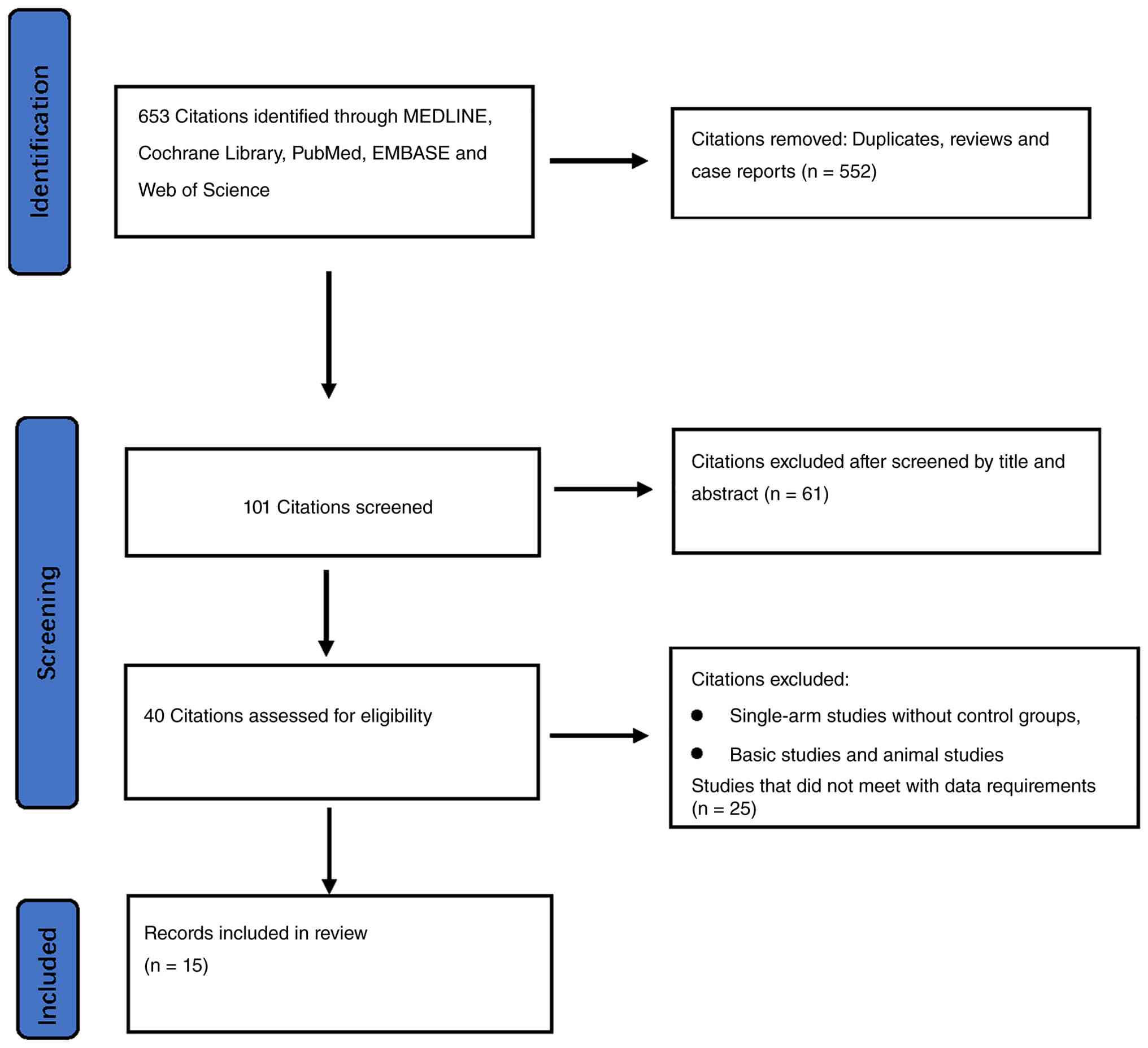
The initial literature search retrieved a total of
653 unique citations. After the removal of duplicates and the
exclusion of reviews and case reports, a total of 101 papers
remained under consideration. Following a thorough review of the
titles and abstracts, 61 studies were excluded, narrowing down the
selection to 40 full-text references. Upon further assessment of
these full-text references, studies were excluded based on several
criteria: The absence of a control group in single-arm studies, the
exclusion of basic and animal studies and the non-fulfilment of
data requirements for experimental interventions. This meticulous
evaluation process culminated in the inclusion of 15 studies in the
systematic review. The PRISMA flow diagram, illustrating the study
selection process, is presented in Fig.
1.
The study included 15 articles, comprising 3 RCTs
and 12 retrospective trials. Details of the study characteristics
were presented in Table I. The
three RCTs, including HOVON105/ALLGNHL24 (28) (ACTRN12610000908033), IELSG32
(11) (NCT01011920) and Luo et
al (29) from 2016, were
complemented by cohort studies. Studies such as Luo et al
(29) from 2016, Chen et al
(30) from 2019, Dina et al
(19) from 2019, Mou et al
(31) from 2017, Sun et al
(32) from 2017, Patekar et
al (33) from 2019 and Pang
et al (34) from 2021, have
investigated the impact of rituximab on individuals of Asian
descent. Conversely, ALLGNHL24 (28), IELSG32 (11), Birnbaum et al (35) from 2012, Gregory et al
(36) from 2013, Houillier et
al (37) from 2017, Kansara
et al (38) from 2015,
Holdhoff et al (39) from
2014 and Mocikova et al (40) from 2016 mainly focused on studying
the effects of rituximab on Caucasians.
 | Table I.Baseline characteristics of studies
included in the meta-analysis. |
Table I.
Baseline characteristics of studies
included in the meta-analysis.
| Study | Study design | Recruitment
period | Location | Median age (range),
years | Male sex, % | ECOG PS≤1 (Rtx:
No-Rtx) | Sample size (Rtx:
No-Rtx) | Dosage and cycles
of Rtx | Rtx group | No-Rtx group | Outcome | (Refs.) |
|---|
| ALLGNHL24 | RCT | 2010-2016 | Netherlands,
Australia and New Zealand | 61 (56–67) | 54.8 | 71: 73 | 199 (99:100) | 375
mg/m2 2 cycles | HD-Mtx + Teniposide
+ Carmustine+ Prednisone+ Rtx | HD-Mtx+ Teniposide
+ Carmustine + Prednisone | OS, PFS, CR,
ADRs | (28) |
| Birnbaum, 2012 | Cohort study | 2007-2010 | Germany | 66 (36–79) | 61.1 | 5: 6 | 36 (17:19) | 375
mg/m2 6 cycles | HD-Mtx + Ifosfamide
+ Rtx | HD-Mtx +
Ifosfamide | OS, PFS, CR,
ADRs | (35) |
| Chen, 2019 | Cohort study | 2005-2015 | China | 54 (29–77) | 51.6 | 11: 11 | 62 (32:30) | 375
mg/m2 6–8 cycles | HD-Mtx + Tmz +
Rtx | HD-Mtx + Tmz | OS, PFS, CR | (30) |
| Dina, 2019 | Cohort study | 2012-2015 | China | 56 (36–75) | 63 | 21: 17 | 73 (38:35) | 375
mg/m2 6 cycles | HD-Mtx + Rtx | HD-Mtx | OS, PFS, CR,
ADRs | (19) |
| Gregory, 2013 | Cohort study | 1996-2011 | Australia | 65 (21–81) | 49.6 | 14: 34 | 117 (18:99) | NA | X + Rtx | X, HD-Mtx and
Ara-C, other combination chemotherapy with/without HD-Mtx | OS, CR | (36) |
| Holdhoff, 2014 | Cohort study | 1995-2012 | Australia | 66 (32–85) | 51.9 | 18: 35 | 81 (27:54) | 375
mg/m2 | HD-Mtx + Rtx | HD-Mtx | OS, PFS, CR, | (39) |
| IELSG32 | RCT | 2010-2014 | Denmark, Germany,
Italy, Switzerland and the UK | 57 (50–64) | 62.5 | 46: 48 | 144 (69:75) | 375
mg/m2 4 cycles | Mtx + cytarabine +
Rtx | Mtx +
cytarabine | OS, PFS, CR,
ADRs | (11) |
| Kansara, 2015 | Cohort study | 2000-2013 | Canada | 61 (18–80) | 61.0 | 15: 16 | 86 (29:57) | 375
mg/m2 ≤8 cycles | HD-Mtx+ Rtx | HD-Mtx | OS, PFS, CR | (38) |
| Luo, 2016 | RCT | 2008-2011 | China | 64 (51–79) | 41.3 | NA | 58 (29:29) | 375
mg/m2 2–6 cycles | Mtx+ Rtx | Mtx | OS, CR, ADRs | (29) |
| Houillier,
2017 | Cohort study | 2010-2013 | French | 68 (60–87) | 36.7 | NA | 90 (39:51) | 375
mg/m2 | R-Mpv-AAA | Mpv-AAA | CR, ADRs | (37) |
| Mocikova, 2016 | Cohort study | 2002-2012 | Czech | 63 (31–79) | 51.8 | 29: 44 | 164 (49:115) | 375 or 500
mg/m2 5–7 cycles | Mtx + cytarabine +
Rtx | Mtx +
cytarabine | OS, PFS | (40) |
| Mou, 2017 | Cohort study | 2013-2015 | China | 47 (36–56) | 56.0 | NA | 100 (50:50) | 375
mg/m2 2–5 cycles | HD-Mtx+ Rtx | HD-Mtx | PFS, CR | (31) |
| Pang, 2021 | Cohort study | 2010-2017 | China | 58 (21–77) | 57.1 | 13: 9 | 42 (25:17) | 375 mg/m2 6–8
cycles | HD-Mtx +
Temozolo-mide+ Rtx | HD-Mtx + Temozolo
mide | OS, PFS, CR | (34) |
| Patekar, 2019 | Cohort study | 2001-2017 | India | 50 (13–70) | 65.5 | 11:20 | 76 (27:49) | 375 mg/m2 2–5
cycles | Mtx + Carmustine +
Teniposide + Prednisone+ Rtx | Mtx + Carmustine +
Teniposide + Prednisone | OS, PFS, CR | (33) |
| Sun, 2017 | Cohort study | 2010-2016 | China | 57 (11–83) | 60% | 6:4 | 60 (36:24) | 375
mg/m2 ≤6 cycles | HD-Mtx +
Dexametha-sone + Rtx | HD-Mtx +
Dexametha-sone | OS, PFS, CR,
ADRs | (32) |
The mean age of the study population exceeded 50
years, with a predominance of elderly patients (Table I). Except for Luo et al
(29) from 2016 and Gregory et
al (36) from 2013, most
studies exhibited a higher proportion of male participants
(>50%). The proportion of patients with ECOG-PS ≤1 in the
rituximab group was like that in the control group, indicating
comparable baseline characteristics. The treatment regimens in this
study encompassed methotrexate-based protocols for both control and
experimental cohorts, potentially augmented with additional
therapeutic modalities such as whole brain radiotherapy and
autologous stem cell transplantation. Furthermore, based on
specific experimental designs and groupings, patients were assessed
for the addition of rituximab to these treatments. Most literature
reported OS, PFS and CR rates, while ADRs were documented across
all studies. Due to the different outcome indicators reported in
various trials, some lacked data for certain metrics, such as
PFS-HR and OS-HR results from 5 trials, 3-year OS from 10 trials,
3-year PFS from 9 trials and CR results from 12 trials.
RoB and publication assessment
RoB assessment
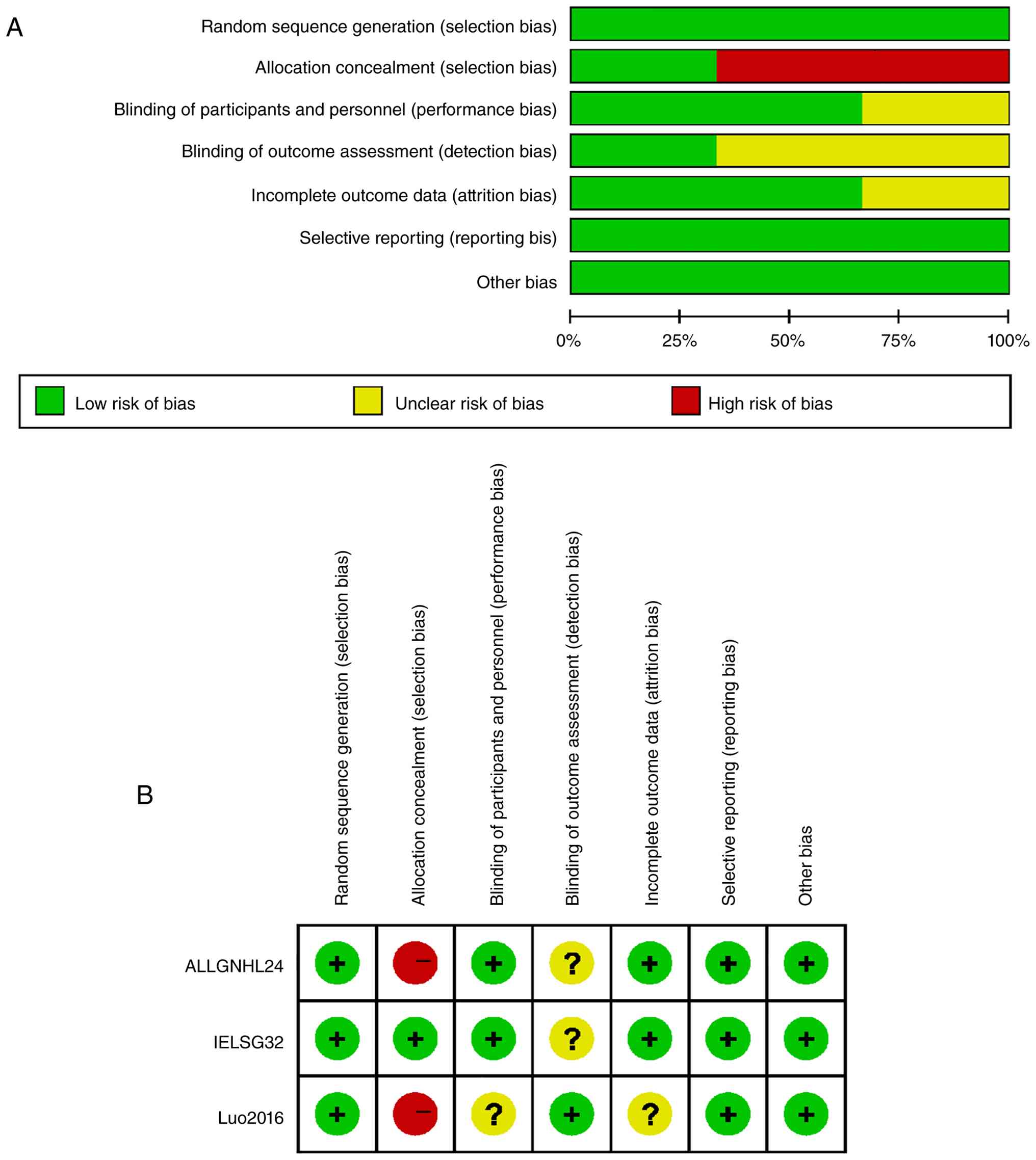
The Cochrane RoB tool was utilized to assess the
quality of the three RCTs included in the present review. Fig. 2A (RoB graph) categorizes seven
domains (e.g., random sequence generation, allocation concealment)
according to risk level (low: Green; unclear: Yellow; high: Red).
Most domains had a low risk, but allocation concealment included
high-risk cases and the blinding domains had unclear-risk
instances. Fig. 2B (RoB summary)
profiles three studies: IELSG32 (11) was at low risk across all domains;
ALLGNHL24 (28) had a high risk (in
allocation concealment) and an unclear risk (in outcome assessment
blinding); Luo et al (29)
from 2016 had a high risk (in allocation concealment) along with an
unclear risk (in participant blinding, incomplete outcome data).
Both the ALLGNHL24 (28) and Luo
et al (29) from 2016 trials
did not report allocation concealment measures. The ALLGNHL24
(28) study provided an incomplete
description of random sequence generation, while Luo et al
(29) from 2016 stated the use of
computer-generated randomization but disclosed no methodological
details. For retrospective studies, the NOS was employed and the
results are summarized in Table
SII. These assessments confirmed that all 15 studies satisfied
the inclusion criteria for this meta-analysis. The NOS scores
ranged from 5 to 8, with all studies meeting the pre-specified
quality threshold of ≥5. A total of eight studies scored ≥7,
indicating high methodological quality [Holdhoff et al
(39) from 2014: 8; Kansara et
al (38) from 2015: 8; Pang
et al (34) from 2021: 8;
Birnbaum et al (35) from
2012: 7; Chen et al (30)
from 2019: 7; Dina et al (19) from 2019: 7; Patekar et al
(33) from 2019: 7; Sun et
al (32) from 2017: 7]. Four
studies scored 5–6 [Gregory et al (36) from 2013: 6; Houillier et al
(37) from 2017: 6; Mocikova et
al (40) from 2016: 6; Mou
et al (31) from 2017:
5].
Publication bias
Funnel plots were used to assess publication bias
for effectiveness and safety indicators separately (Fig. S1), and their funnel plots were
generally symmetrical, with no evidence of publication bias. Funnel
plots for 3-year OS and 3-year PFS were generally symmetrical with
no obvious asymmetry. Egger's linear regression test for 3-year OS
yielded P=0.32, and Begg's rank correlation test gave P=0.47. For
3-year PFS, Egger's test yielded P=0.41 and Begg's test P=0.59.
These results suggest no significant evidence of publication bias
for the primary outcomes. Nevertheless, given the relatively small
number of studies included in certain analyses, the possibility of
unpublished negative trials cannot be entirely excluded. First,
omission of studies with null or unfavorable effects may
overestimate the pooled survival benefit of rituximab; inclusion of
missing negative trials could potentially attenuate the effect size
and eliminate the statistical significance of primary outcomes.
Second, conventional publication bias tests have limited power with
small study sets. Accordingly, these conclusions should be
interpreted with caution, and further large, well-designed
multicenter RCTs are required to confirm the survival benefit of
rituximab in PCNSL. The detailed Egger's and Begg's test results
are presented in Table SIII.
Efficacy analysis
Comparisons of OS
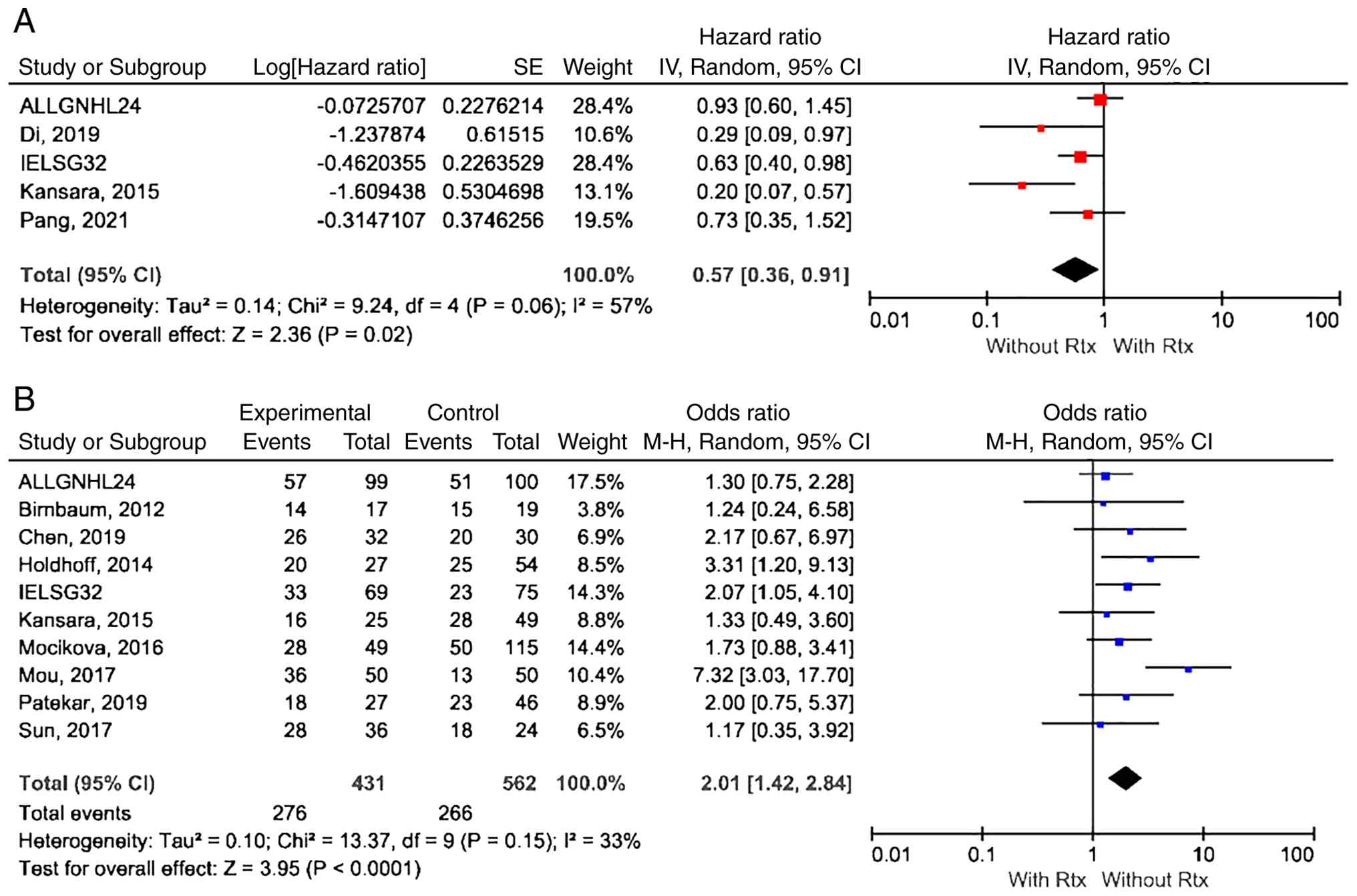
This study focused on the 3-year OS rate and the HR
of OS, as illustrated in Fig. 3.
The studies ALLGNHL24 (28), Dina
et al (19) from 2019,
IELSG32 (11), Kansara et al
(38) from 2015 and Pang et
al (34) from 2021 were pooled
for the OS analysis. The combined HR was 0.57 (95%CI: 0.36–0.91,
P=0.02), as shown in Fig. 3A. This
suggests a favourable effect of rituximab on OS when used in
conjunction with standard chemotherapy. As depicted in Fig. 3B, the incorporation of rituximab
into the treatment regimen significantly enhanced patients' OS
outcomes [odds ratio (OR)=2.01, 95%CI: 1.42–2.84, P<0.0001],
indicating a highly statistically significant improvement.
Comparisons of PFS
For this study, the 3-year PFS data were primarily
extracted from 9 studies: ALLGNHL24 (28), Birnbaum et al (35) from 2012, Chen et al (30) from 2019, Holdhoff et al
(39) from 2014, IELSG32 (11), Kansara et al (38) from 2015, Mocikova et al
(40) from 2016, Mou et al
(31) from 2017 and Patekar et
al (33) from 2019.
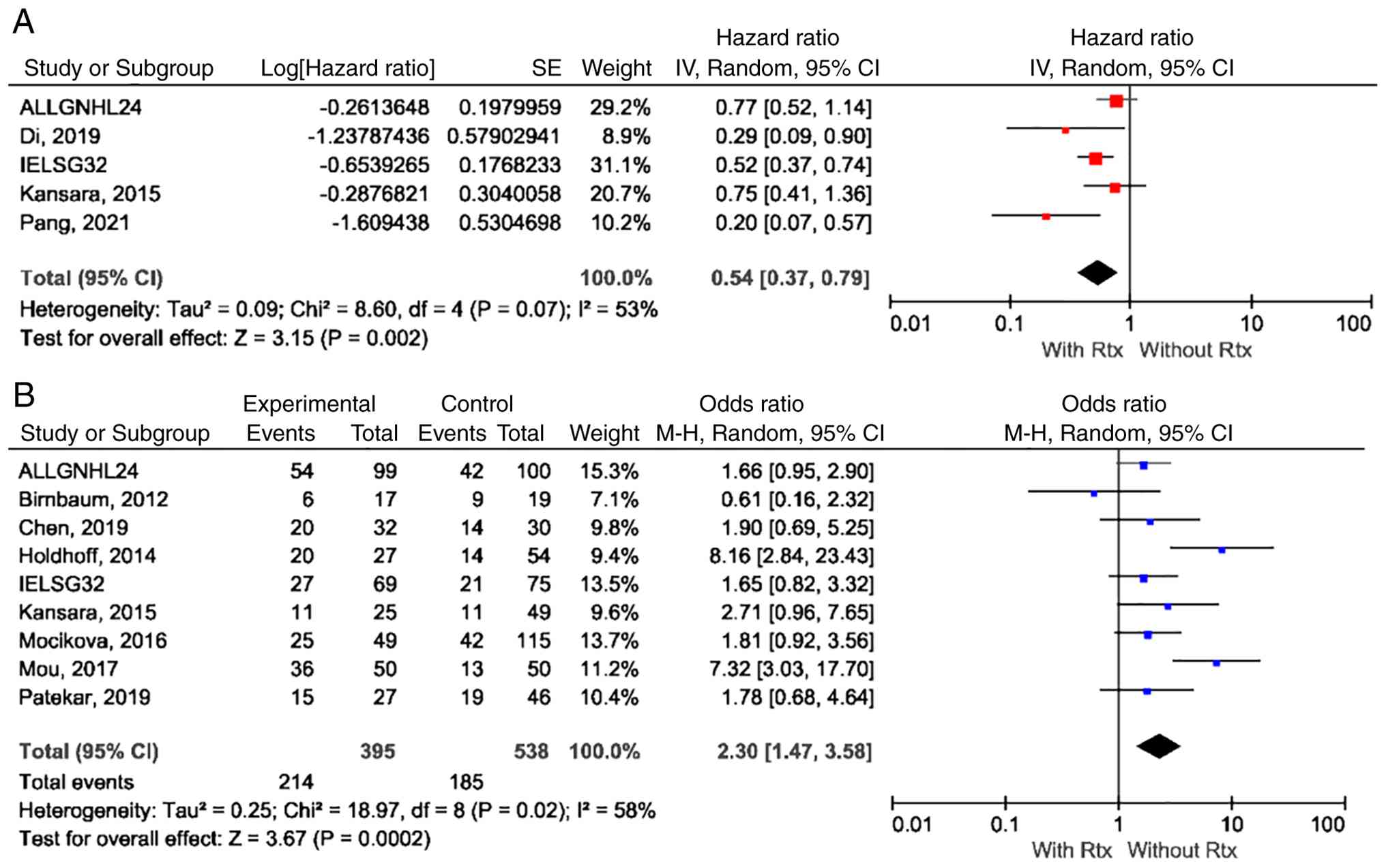
Additionally, the HR of PFS was derived from an analysis of 5
studies: ALLGNHL24 (28), Dina
et al (19) from 2019,
IELSG32 (11), Kansara et al
(38) from 2015 and Pang et
al (34) from 2021. As shown in
Fig. 4A, the combined HR after
applying the random-effects model was 0.54 (95%CI: 0.37–0.79,
P=0.002), suggesting a heterogeneous yet robust and high-certainty
benefit of incorporating rituximab into the treatment regimen for
patients with PCNSL. Furthermore, the results, as depicted in
Fig. 4B, indicated that the
addition of rituximab significantly improved the 3-year PFS in
patients with PCNSL (OR=2.30, 95% CI: 1.47–3.58, P=0.0002).
Comparisons of CR
In the present study, an analysis of CR rates was
performed. The results from 12 studies were pooled and are
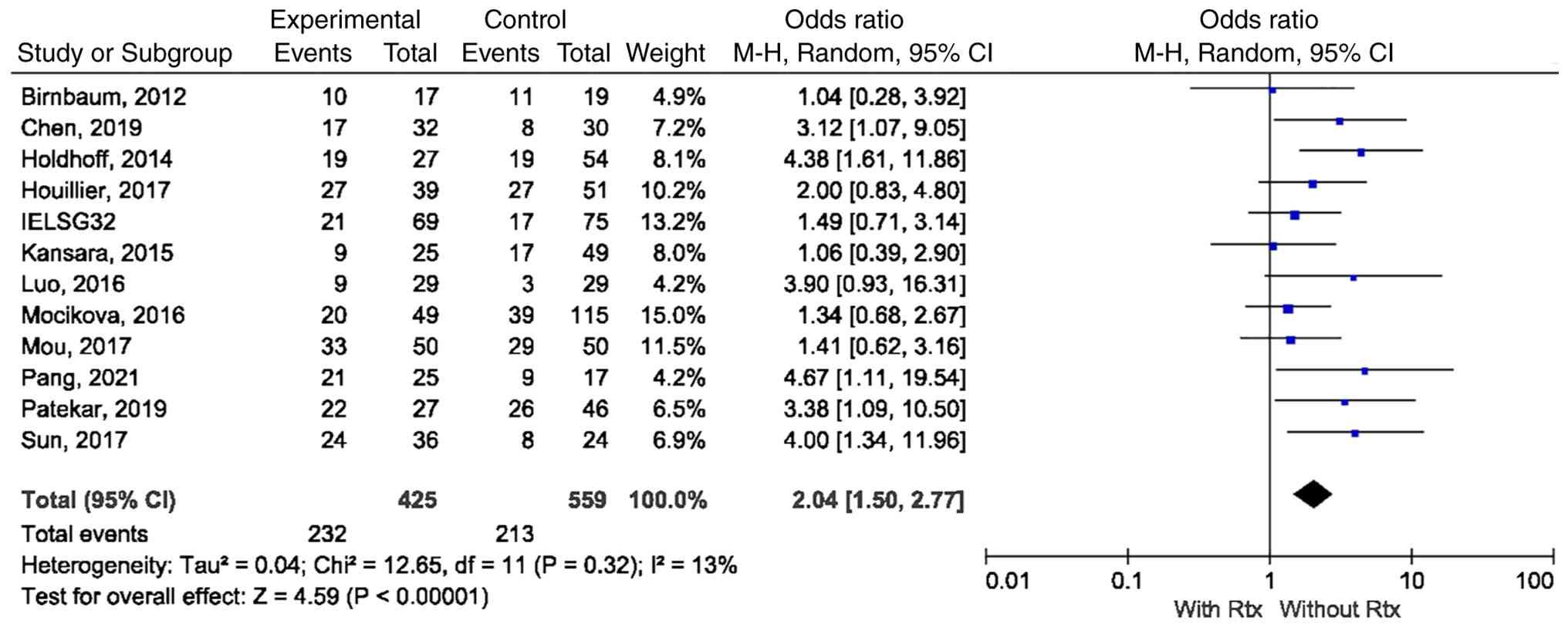
illustrated in Fig. 5. The
inclusion of rituximab in the treatment protocol was associated
with a significantly higher CR rate among patients with PCNSL
(OR=2.04, 95% CI: 1.50–2.77, P<0.00001, I2=13%),
indicating a substantial and statistically significant benefit.
Safety analysis
The safety of rituximab in treating patients with
PCNSL was comprehensively assessed for the following grade ≥3
adverse events: Neutropenia, leukopenia, thrombocytopenia,
infection, hepatic toxicity, renal toxicity, neurotoxicity and
anemia. The results are summarized in Tables II and SIV. Study-level availability of grade ≥3
SAE data is summarized in Table
SIV. Of the 8 included studies, 3 studies [ALLGNHL24 (28), IELSG32 (11), Kansara et al (38) from 2015] reported complete data
across all 8 SAE categories. Pooled analyses for all grade ≥3 SAE
endpoints showed no statistically significant differences between
the rituximab and control groups. Figs. S2 and S3 present the grade ≥3 SAEs from the
combined studies.
| Table II.Pooled analysis of G≥3 serious
adverse events in patients with primary central nervous system
lymphoma treated with rituximab-containing vs.
non-rituximab-containing regimens. |
Table II.
Pooled analysis of G≥3 serious
adverse events in patients with primary central nervous system
lymphoma treated with rituximab-containing vs.
non-rituximab-containing regimens.
| Adverse Event | OR | 95% CI | P-value | I2,
% | Model |
|---|
| Neutropenia
≥G3 | 1.06 | 0.65–1.73 | 0.83 | 0 | Random effects |
| Leukopenia ≥G3 | 1.74 | 0.92–3.27 | 0.09 | 0 | Random effects |
| Thrombocytopenia
≥G3 | 1.26 | 0.8–1.99 | 0.32 | 0 | Random effects |
| Infection ≥G3 | 0.96 | 0.61–1.50 | 0.84 | 0 | Random effects |
| Hepatic toxicity
≥G3 | 0.81 | 0.46–1.41 | 0.45 | 45 | Random effects |
| Renal toxicity
≥G3 | 1.43 | 0.63–3.27 | 0.39 | 0 | Random effects |
| Anemia ≥G3 | 0.88 | 0.34–2.25 | 0.79 | 63 | Random effects |
For neutropenia ≥ grade 3, the OR was 1.06 (95% CI:
0.65–1.73, P=0.83; I2=0%), indicating no significant
difference. For leukopenia ≥ grade 3, the OR was 1.74 (95% CI:
0.92–3.27, P=0.09; I2=0%), showing a trend toward
increased risk in the rituximab group but not reaching statistical
significance. Thrombocytopenia ≥ grade 3 showed an OR of 1.26 (95%
CI: 0.80–1.99, P=0.32; I2=0%) and Anemia ≥ grade 3 and
OR of 0.88 (95% CI: 0.34–2.25, P=0.79; I2=63%). Forest
blots for specific hematological SAEs are provided in Fig. S2.
Infection ≥ grade 3 had an OR of 0.96 (95% CI:
0.60–1.51, P=0.84; I2=0%). Hepatic toxicity ≥ grade 3
had an OR=0.81 (95% CI: 0.46–1.41, P=0.45; I2=45%) and
renal toxicity ≥ grade 3 an OR of 1.43 (95% CI: 0.63–3.27, P=0.39;
I2=0%). None of the grade ≥3 SAEs reached statistical
significance, indicating that rituximab did not substantially
increase the risk of SAEs compared to chemotherapy alone. Forest
blots for non-hematological SAEs are provided in Fig. S3.
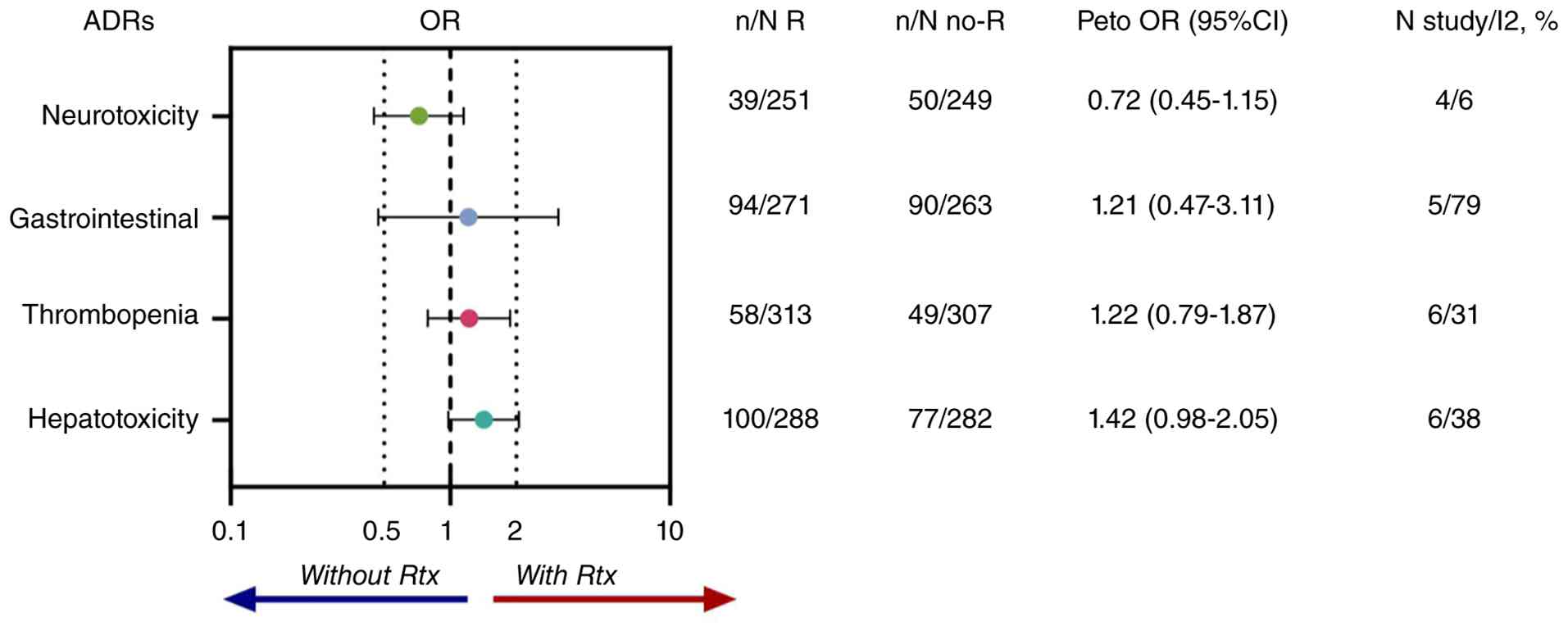
For any-grade adverse events (Fig. 6), the comparative analysis revealed
no significant differences in the incidence of gastrointestinal
toxicity (OR=1.21, 95% CI: 0.47–3.11), thrombocytopenia (OR=1.22,
95% CI: 0.79–1.87) and neurotoxicity (OR=0.72, 95% CI: 0.45–1.15)
between rituximab users and controls. An elevated risk of hepatic
toxicity was observed but it did not reach statistical significance
(OR=1.42, 95% CI: 0.98–2.05, P=0.06).
Subgroup analysis
The study populations exploring the role of
rituximab in PCNSL have focused on Asians and Caucasians, so in
this paper, the 3-year OS and 3-year PFS in which heterogeneity
exists were stratified by ethnicity, and the specific results were
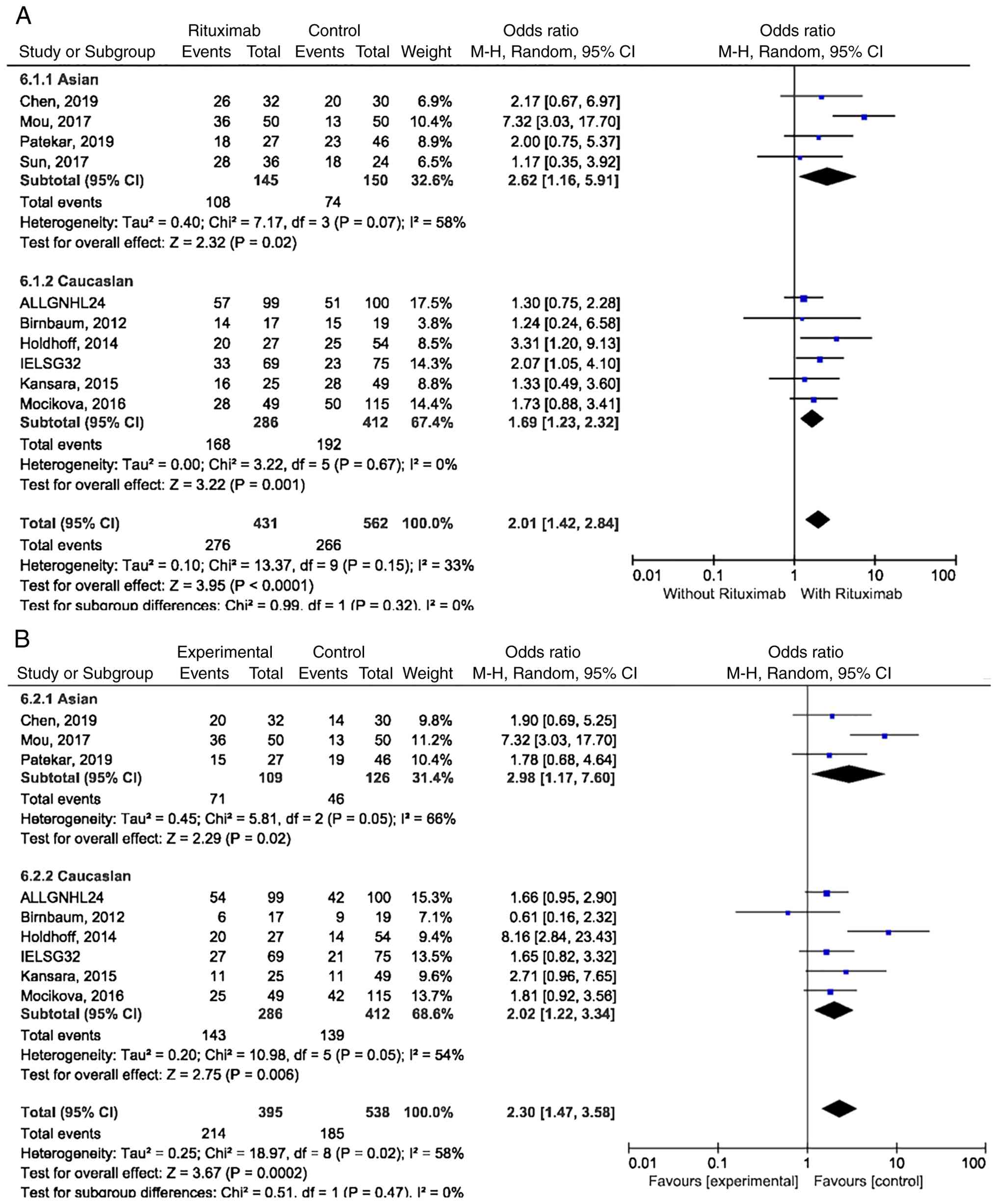
shown in Fig. 7 and Table SV. In this study, the Asian
subgroup comprises populations from East Asia (Han Chinese) and
South Asia (Indian subcontinent).
In the 3-year OS assessment, a combined analysis of
four studies showed an OR of 2.62 (95% CI: 1.16–5.91, P=0.02) for
Asians and a combined analysis of six studies showed an OR of 1.69
(95% CI: 1.23–2.32, P=0.001) for Caucasians; for the 3-year PFS, a
combined analysis of three studies showed an OR of 2.98 (95% CI:
1.17–7.60, P=0.02) for Asians, while a six-study meta-analysis
yielded an OR of 2.02 (95% CI: 1.22–3.34, P=0.006) for Caucasians,
suggesting that rituximab may have more pronounced efficacy in
Asians compared to Caucasians.
This study evaluated the efficacy of rituximab in
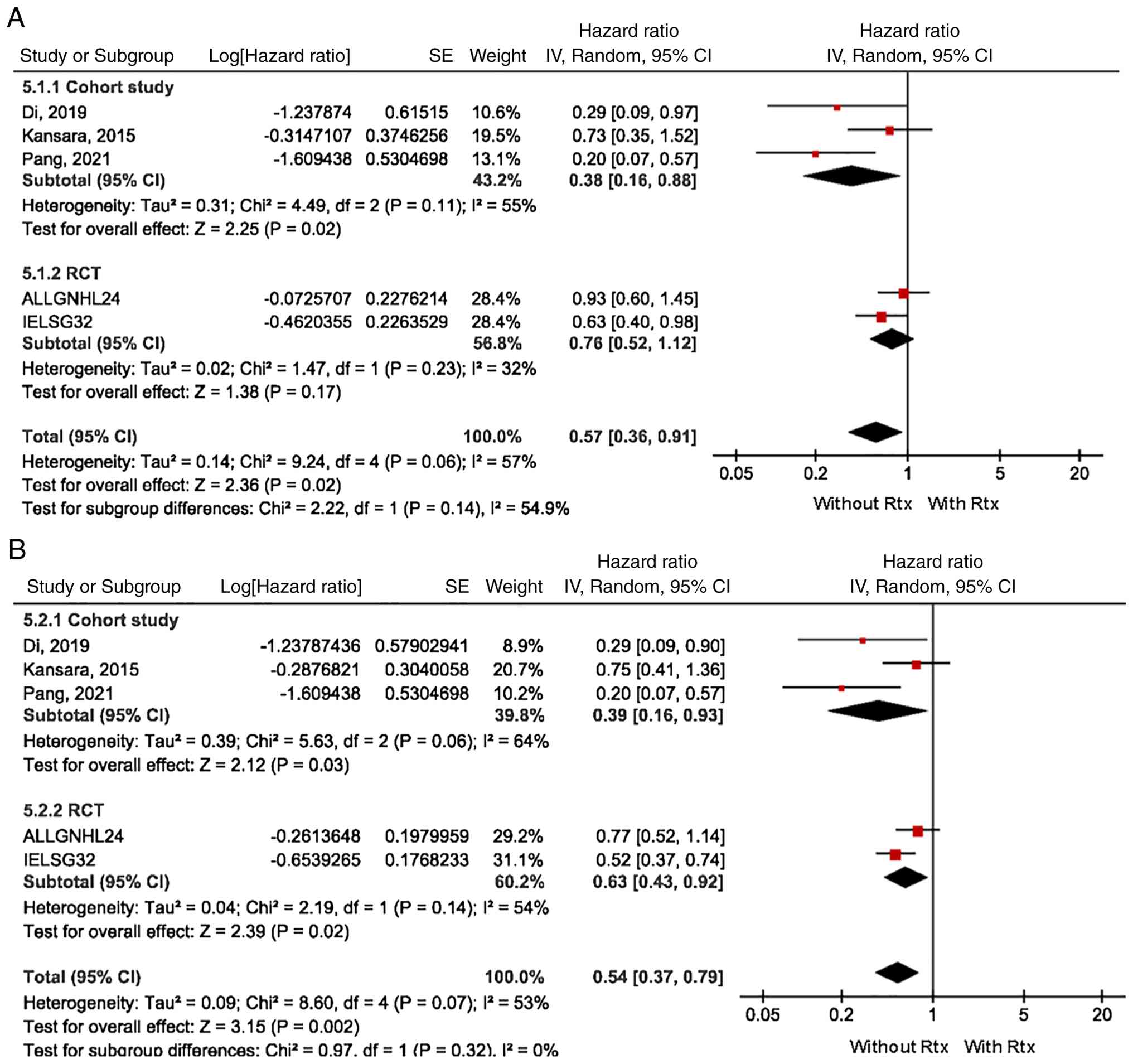
patients with PCNSL based on study type. As illustrated in Fig. 8A and B, for OS, the HR for cohort
studies was 0.38 (95% CI: 0.16–0.88, P=0.02), while the HR for RCTs
was 0.76 (95% CI: 0.52–1.12, P=0.17). The I2 statistic
between groups was found to be 54.9%, indicating no significant
difference between them (P=0.14). Regarding PFS, the HR for cohort
studies was 0.39 (95% CI: 0.16–0.93, P=0.03), whereas the HR for
RCTs was 0.63 (95% CI: 0.43–0.92, P=0.02), with an I2
value of 0% between groups (P=0.32). These findings suggest that
rituximab may demonstrate superior efficacy in retrospective cohort
studies compared to RCTs; however, this difference is not
statistically significant across groups.
Sensitivity analysis
Sensitivity analyses were performed by sequentially
excluding individual studies from each pooled analysis. For 3-year
OS, the pooled OR ranged from 2.01 to 2.51 upon sequential
exclusion and no single study substantially altered the overall
effect direction or statistical significance. For PFS-HR, exclusion
of the Pang et al (34) from
2021 study (which reported the most extreme HR of 0.20) resulted in
a pooled HR of 0.67 (95% CI: 0.50–0.89, P=0.005), still indicating
significant benefit. Sensitivity analyses excluding studies with
NOS scores <7 yielded consistent results: 3-year OS OR=2.36 (95%
CI: 1.42–3.93, P=0.0008) and 3-year PFS OR=2.14 (95% CI: 1.54–2.97,
P<0.0001). Excluding HRs estimated from K-M curves [Dina et
al (19) from 2019 and Kansara
et al (38) from 2015], the
OS-HR was 0.56 (95% CI: 0.39–0.82, P=0.003). Detailed sensitivity
analysis results are presented in Table SVI.
Heterogeneity summary
Table SVII provides
a comprehensive summary of heterogeneity statistics and the effect
model used for each pooled analysis. All meta-analyses in this
study used the random-effects model, regardless of the
I2-value found. Substantial heterogeneity
(I2>50%) was observed for OS-HR (I2=57%),
3-year PFS (I2=58%), PFS-HR (I2=53%) and
anemia (I2=63%), necessitating the use of random-effects
models. Low heterogeneity (I2≤50%) was observed for
3-year OS (I2=33%), hepatic toxicity
(I2=45%), CR (I2=13%), neutropenia
(I2=0%), leukopenia (I2=0%), thrombocytopenia
(I2=0%), infection (I2=0%) and renal toxicity
(I2=0%).
For efficacy outcomes (3-year OS, OS-HR, 3-year PFS
and PFS-HR), the observed between-study heterogeneity was primarily
attributed to differences in study design (RCTs vs. retrospective
cohorts) and variations in the ethnic composition of included
populations. For the safety endpoint of grade ≥3 anemia, the
substantial heterogeneity was likely driven by inconsistent adverse
event grading and reporting standards across the included
studies.
Discussion
PCNSL represents a rare, highly aggressive subtype
of B-cell lymphoma with a generally unfavorable prognosis,
predominantly affecting elderly patients, with increasing age
correlating with higher incidence rates (41). Optimization of HD-Mtx-based
frontline regimens has long constituted the core focus of clinical
PCNSL research. Data from the Centralized Brain Tumor Registry of
the United States indicated that the 3-year survival rate for
patients with PCNSL stands at 39.6% (95% CI: 39.2–39.9) (42).
This study analyzed outcome indicators in >1,000
patients with newly diagnosed PCNSL, both those treated with
rituximab and those without it in their initial chemotherapy
regimen. The findings indicate that the incorporation of rituximab
significantly enhances OS and PFS, as well as increases the CR
rate, while no significant SAEs were reported. In addition, the
subgroup meta-analysis of the relationship between ethnicity and
the prognosis of patients with PCNSL treated with rituximab and
found that rituximab was more effective in Asians than in
Caucasians. Rituximab showed a numerically greater effect in
patients with PCNSL from retrospective cohort studies than in RCTs,
although this difference was not statistically significant. In the
future, more high-quality RCTs are needed to explore the efficacy
and safety of rituximab in PCNSL.
Given the ethnic heterogeneity in rituximab efficacy
for PCNSL, this study further clarifies its mechanistic basis via
pharmacogenomics comparison. Rituximab exerts antitumor activity
predominantly through antibody-dependent cellular cytotoxicity,
which relies on Fcγ receptors encoded by Fcγ receptor IIIa (FCGR3A)
and FCGR2A, alongside CD20 encoded by membrane spanning 4-domains
A1 (MS4A1) (43). Asians frequently
harbor high-response FCGR3A V158F and FCGR2A R131H alleles coupled
with high-expression MS4A1 genotypes, boosting CD20 surface density
and cytotoxic efficacy (44,45).
By contrast, Caucasians possess a higher prevalence of low-affinity
variants that diminish drug bioactivity (46). These pharmacogenomic differences
underpin the improved OS and PFS seen in Asian PCNSL patients
receiving rituximab combined with HD-Mtx.
Beyond therapeutic heterogeneity, ethnicity also
exhibits significant epidemiological correlations with PCNSL
incidence and early mortality risk. A population-based
epidemiological analysis by Pulido et al (47) reported a significantly higher
incidence of PCNSL in the white population compared to Asians
(0.94:0.64, per 100,000 per year). Furthermore, an analysis of risk
factors for PCNSL in a different study by a different group
suggested that ethnicity may be a contributing factor to early
mortality among patients (48).
Consistent with real-world study conclusions, subgroup analysis
showed that males comprised a higher proportion of patients with
PCNSL, indicating that gender bias might influence this study's
conclusions (49). Hence, it is
essential to consider the impact of gender on the efficacy and
safety of rituximab.
Multiple prior meta-analyses have been performed in
the past to explore the efficacy of rituximab in patients with
newly diagnosed PCNSL (14,50). A total of two quantitative syntheses
indicated that rituximab might positively affect the prognosis of
patients with PCNSL and recommended its inclusion in existing
treatment regimens (50,51). Another meta-analysis, including only
RCTs, showed that rituximab could improve PFS in patients with
PCNSL, although it had limited impact on OS (14). However, these studies predominantly
concentrated on measures of efficacy, yielding inconsistent
conclusions, and often neglecting a comprehensive analysis of the
safety profile associated with rituximab use. This study
demonstrated that the incorporation of rituximab can enhance
therapeutic efficacy while maintaining patient safety in
individuals with first-episode PCNSL. However, for recurrent PCNSL,
the effectiveness of rituximab remains uncertain and requires
further validation (52).
The potential synergy of rituximab in conjunction
with chimeric antigen receptor T-cell therapy presents a promising
avenue for future research (53).
However, safety remains a paramount concern. Rituximab has been
shown to elevate the risk of liver damage, although this finding
was not statistically significant (P>0.05), aligning with the
study by Bessone and Björnsson (54). This suggests a need for heightened
vigilance regarding hepatic function in patients undergoing
rituximab treatment. Clinicians should closely monitor hepatic
function parameters, particularly the levels of transaminases, to
detect any significant deviations early. In cases where liver
injury is evident, the consideration of hepatoprotective therapies
may become necessary (55).
Similarly, leukopenia and neutropenia could potentially hinder the
use of rituximab in patients with PCNSL, necessitating more
individualized dosing regimens to mitigate these risks (56).
Of note, the present study had certain strengths.
The study has updated the timeliness of the included literature by
extending the publication date of the included studies to May 2025.
Additionally, it has incorporated indicators of ADRs and conducted
a systematic review on the safety of rituximab in patients with
PCNSL. Methodological rigor was enhanced using validated tools for
RoB assessment (Cochrane RoB and NOS), formal heterogeneity
quantification (I2 test), sensitivity analyses and
publication bias testing (Egger's and Begg's tests).
However, several inherent limitations must be
acknowledged. Firstly, the rarity of PCNSL and the prohibitive cost
of rituximab present significant barriers to conducting large-scale
RCTs. Consequently, the limited sample size across studies may
impact on the precision of the current findings. Secondly, the
presence of heterogeneity in certain outcome measures introduces
uncertainty, even after conducting sensitivity analyses to assess
the robustness of the results. Additionally, the scope of this
paper is confined to the treatment of PCNSL with rituximab and does
not encompass data pertaining to SCNSL. Therefore, there is a clear
necessity for future research to broaden the scope of included
studies to encompass a wider range of CNSL treatments. Given fewer
than 10 studies for OS and PFS, unpublished negative trials may
overestimate rituximab's survival benefit and reduce bias detection
power. Subtle small-study effects may remain undetected. Missing
negative trials may involve underrepresented subgroups, which could
overstate the generalizability of the present findings. Large
multicenter RCTs are required for validation. Lastly, the ethnic
composition of the treated population is largely limited to Asians
and Caucasians, highlighting the need for RCTs involving patients
with PCNSL in Africa to explore the relationship between ethnicity
and rituximab efficacy.
In conclusion, the aggregate findings of the
present meta-analysis, encompassing a cohort of 1,388 patients
diagnosed with PCNSL, underscore the beneficial role of rituximab
when integrated into first-line therapeutic regimens. Rituximab
significantly improved 3-year OS (OR=2.01), 3-year PFS (OR=2.3) and
CR rate (OR=2.04), with no significant increase in grade ≥3 adverse
events. Rituximab benefited both ethnic subgroups, with greater
efficacy in Asians (3-year OS OR, 2.62 vs. 1.69; 3-year PFS OR,
2.98 vs. 2.02). Consistent with the pharmacogenomic basis of its
cytotoxicity in Asians, this supports a particular advantage in
Asian patients despite a smaller subgroup and wider CIs. Despite
moderate-to-substantial heterogeneity in survival outcomes,
sensitivity analyses confirmed the robustness of these findings.
Further large-scale, multi-ethnic RCTs are warranted to confirm the
long-term efficacy and safety of rituximab in PCNSL, particularly
in Asian and other underrepresented populations.
Supplementary Material
Supporting Data
Supporting Data
Acknowledgements
Not applicable.
Funding
Funding: No funding was received.
Availability of data and materials
The data generated in this study may be requested
from the corresponding author.
Authors' contributions
LS and WL conceived and designed the study. LS, WC
and WL performed the systematic literature search and study
selection. LS, WC, CL, DW and ZR extracted data from the included
studies. WL, CL, DW and ZR assessed the risk of bias in the
included studies and contributed to the interpretation of the
pooled results. WC conducted formal statistical analysis. LS
drafted the manuscript. WL, LS, QX, DW and WC critically revised
the manuscript for important intellectual content. QX conceived and
designed the study with LS and WL and provided critical input on
the analytical strategy. LS, WL and DW confirm the authenticity of
all the raw data. All authors have read and approved the final
version of the manuscript.
Ethics approval and consent to
participate
Not applicable.
Patient consent for publication
Not applicable.
Competing interests
The authors declare that they have no competing
interests.
References
|
1
|
Ferreri AJM, Calimeri T, Cwynarski K,
Dietrich J, Grommes C, Hoang-Xuan K, Hu LS, Illerhaus G, Nayak L,
Ponzoni M and Batchelor TT: Primary central nervous system
lymphoma. Nat Rev Dis Primers. 9:292023. View Article : Google Scholar : PubMed/NCBI
|
|
2
|
Soussain C, Choquet S, Blonski M, Leclercq
D, Houillier C, Rezai K, Bijou F, Houot R, Boyle E, Gressin R, et
al: Ibrutinib monotherapy for relapse or refractory primary CNS
lymphoma and primary vitreoretinal lymphoma: Final analysis of the
phase II ‘proof-of-concept’ iLOC study by the Lymphoma study
association (LYSA) and the French oculo-cerebral lymphoma (LOC)
network. Eur J Cancer. 117:121–130. 2019. View Article : Google Scholar : PubMed/NCBI
|
|
3
|
Schaff LR and Grommes C: Primary central
nervous system lymphoma. Blood. 140:971–979. 2022. View Article : Google Scholar : PubMed/NCBI
|
|
4
|
Abrey LE, Batchelor TT, Ferreri AJ,
Gospodarowicz M, Pulczynski EJ, Zucca E, Smith JR, Korfel A,
Soussain C, DeAngelis LM, et al: Report of an international
workshop to standardize baseline evaluation and response criteria
for primary CNS lymphoma. J Clin Oncol. 23:5034–5043. 2005.
View Article : Google Scholar : PubMed/NCBI
|
|
5
|
de Koning ME, Hof JJ, Jansen C, Doorduijn
JK, Bromberg JEC and van der Meulen M: Primary central nervous
system lymphoma. J Neurol. 27:2906–2913. 2024. View Article : Google Scholar
|
|
6
|
Grommes C and DeAngelis LM: Primary CNS
lymphoma. J Clin Oncol. 35:2410–2418. 2017. View Article : Google Scholar : PubMed/NCBI
|
|
7
|
Langner-Lemercier S, Houillier C, Soussain
C, Ghesquières H, Chinot O, Taillandier L, Soubeyran P, Lamy T,
Morschhauser F, Benouaich-Amiel A, et al: Primary CNS lymphoma at
first relapse/progression: Characteristics, management, and outcome
of 256 patients from the French LOC network. Neuro Oncol.
18:1297–1303. 2016. View Article : Google Scholar : PubMed/NCBI
|
|
8
|
Rancea M, Will A, Borchmann P, Monsef I,
Engert A and Skoetz N: Fifteenth biannual report of the Cochrane
Haematological Malignancies Group-focus on non-Hodgkin's lymphoma.
J Natl Cancer Inst. 105:1159–1170. 2013. View Article : Google Scholar : PubMed/NCBI
|
|
9
|
Rubenstein JL, Combs D, Rosenberg J, Levy
A, McDermott M, Damon L, Ignoffo R, Aldape K, Shen A, Lee D, et al:
Rituximab therapy for CNS lymphomas: Targeting the leptomeningeal
compartment. Blood. 101:466–468. 2003. View Article : Google Scholar : PubMed/NCBI
|
|
10
|
van der Meulen M, Dirven L, Habets EJJ,
Bakunina K, Smits M, Achterberg HC, Seute T, Cull G, Schouten H,
Zijlstra JM, et al: Neurocognitive functioning and radiologic
changes in primary CNS lymphoma patients: Results from the HOVON
105/ALLG NHL 24 randomized controlled trial. Neuro Oncol.
23:1315–1326. 2021. View Article : Google Scholar : PubMed/NCBI
|
|
11
|
Ferreri AJM, Cwynarski K, Pulczynski E,
Fox CP, Schorb E, Celico C, Falautano M, Nonis A, La Rosée P,
Binder M, et al: Long-term efficacy, safety and neurotolerability
of MATRix regimen followed by autologous transplant in primary CNS
lymphoma: 7-year results of the IELSG32 randomized trial. Leukemia.
36:1870–1878. 2022. View Article : Google Scholar : PubMed/NCBI
|
|
12
|
Therkelsen KE, Schaff LR, Nandakumar S,
Omuro AMP, DeAngelis LM and Grommes C: Long-term outcomes in
primary CNS lymphoma after R-MVP and High-dose chemotherapy with
autologous hematopoietic stem cell transplant. Neurology.
101:e710–e716. 2023. View Article : Google Scholar : PubMed/NCBI
|
|
13
|
Hoang-Xuan K, Deckert M, Ferreri AJM,
Furtner J, Gallego Perez-Larraya J, Henriksson R, Hottinger AF,
Kasenda B, Lefranc F, Lossos A, et al: European Association of
Neuro Oncology (EANO) guidelines for treatment of primary central
nervous system lymphoma (PCNSL). Neuro Oncol. 25:37–53. 2023.
View Article : Google Scholar : PubMed/NCBI
|
|
14
|
Schmitt AM, Herbrand AK, Fox CP, Bakunina
K, Bromberg JEC, Cwynarski K, Doorduijn JK, Ferreri AJM, Illerhaus
G, Issa S, et al: Rituximab in primary central nervous system
lymphoma-A systematic review and meta-analysis. Hematol Oncol.
37:548–557. 2019. View Article : Google Scholar : PubMed/NCBI
|
|
15
|
Zorzela L, Loke YK, Ioannidis JP, Golder
S, Santaguida P, Altman DG, Moher D and Vohra S; PRISMAHarms Group,
: PRISMA harms checklist: Improving harms reporting in systematic
reviews. BMJ. 352:i1572016. View Article : Google Scholar : PubMed/NCBI
|
|
16
|
Frandsen TF, Moos C, Marino C and Eriksen
MB: Supplementary databases increased literature search coverage
beyond PubMed and Embase. J Clin Epidemiol. 181:1117042025.
View Article : Google Scholar : PubMed/NCBI
|
|
17
|
Zhao S, Lu Z, Zhao F, Tang S, Zhang L and
Feng C: Assessing the impact of probiotics on immunotherapy
effectiveness and antibiotic-mediated resistance in cancer: A
systematic review and meta-analysis. Front Immunol. 16:15389692025.
View Article : Google Scholar : PubMed/NCBI
|
|
18
|
Tierney JF, Stewart LA, Ghersi D, Burdett
S and Sydes MR: Practical methods for incorporating summary
time-to-event data into meta-analysis. Trials. 8:162007. View Article : Google Scholar : PubMed/NCBI
|
|
19
|
Dina S, Xu XP, Chen BB, Chen T, Li P, Ding
TL, Ma L, Yuan Y, Lin ZG and Wang G: The therapeutic effect of
high-dose methotrexate (HD-MTX) with rituximab in newly diagnosed
primary central nervous system lymphoma (PCNSL). Fudan Univ J Med
Sci. 46:14–22. 2019.
|
|
20
|
Higgins JP, Altman DG, Gøtzsche PC, Jüni
P, Moher D, Oxman AD, Savovic J, Schulz KF, Weeks L, Sterne JA, et
al: The Cochrane Collaboration's tool for assessing risk of bias in
randomised trials. BMJ. 343:d59282011. View Article : Google Scholar : PubMed/NCBI
|
|
21
|
Stang A: Critical evaluation of the
Newcastle-Ottawa scale for the assessment of the quality of
nonrandomized studies in meta-analyses. Eur J Epidemiol.
25:603–605. 2010. View Article : Google Scholar : PubMed/NCBI
|
|
22
|
Debray TP, Damen JA, Snell KI, Ensor J,
Hooft L, Reitsma JB, Riley RD and Moons KG: A guide to systematic
review and meta-analysis of prediction model performance. BMJ.
356:i64602017. View Article : Google Scholar : PubMed/NCBI
|
|
23
|
Curry LD, Munker R, Li N, Yan D, Pryor P,
Nozad S, Keller P, Monohan GP, Iragavarapu C and Krem MM:
Performance status, comorbidities, and cycles of methotrexate exert
the greatest influence on outcomes of primary and secondary CNS
lymphomas: The Lexington experience. Ann Hematol. 102:141–154.
2023. View Article : Google Scholar : PubMed/NCBI
|
|
24
|
Bergner N, Monsef I, Illerhaus G, Engert A
and Skoetz N: Role of chemotherapy additional to high-dose
methotrexate for primary central nervous system lymphoma (PCNSL).
Cochrane Database Syst Rev. 11:CD0093552012.PubMed/NCBI
|
|
25
|
Wang CC, Carnevale J and Rubenstein JL:
Progress in central nervous system lymphomas. Br J Haematol.
166:311–325. 2014. View Article : Google Scholar : PubMed/NCBI
|
|
26
|
Barajas RF, Politi LS, Anzalone N, Schöder
H, Fox CP, Boxerman JL, Kaufmann TJ, Quarles CC, Ellingson BM, Auer
D, et al: Consensus recommendations for MRI and PET imaging of
primary central nervous system lymphoma: Guideline statement from
the International Primary CNS Lymphoma Collaborative Group (IPCG).
Neuro Oncol. 23:1056–1071. 2021. View Article : Google Scholar : PubMed/NCBI
|
|
27
|
Abla O, Weitzman S, Blay JY, O'Neill BP,
Abrey LE, Neuwelt E, Doolittle ND, Baehring J, Pradhan K, Martin
SE, et al: Primary CNS lymphoma in children and adolescents: a
descriptive analysis from the International Primary CNS Lymphoma
Collaborative Group (IPCG). Clin Cancer Res. 17:346–352. 2011.
View Article : Google Scholar : PubMed/NCBI
|
|
28
|
Bromberg JEC, Issa S, Bakunina K, Minnema
MC, Seute T, Durian M, Cull G, Schouten HC, Stevens WBC, Zijlstra
JM, et al: Rituximab in patients with primary CNS lymphoma (HOVON
105/ALLG NHL 24): A randomised, open-label, phase 3 intergroup
study. Lancet Oncol. 20:216–228. 2019. View Article : Google Scholar : PubMed/NCBI
|
|
29
|
Luo W, Ji LH, Geng H, Ma XJ, Xiong H, Yin
QC, Yin YJ, Yu L and Ma J: Clinical therapeutic efficacy of
rituximab combined with methotrexate on primary central nervous
system lymphoma. Zhongguo Shi Yan Xue Ye Xue Za Zhi. 24:444–447.
2016.(In Chinese). PubMed/NCBI
|
|
30
|
Chen C, Sun P, Cui J, Yan S, Chen H, Xia
Y, Bi X, Liu P, Wang Y, Yang H, et al: High-dose Methotrexate plus
temozolomide with or without rituximab in patients with untreated
primary central nervous system lymphoma: A retrospective study from
China. Cancer Med. 8:1359–1367. 2019. View Article : Google Scholar : PubMed/NCBI
|
|
31
|
Mou K, Gu WW, Gu CH and Qi JD: Curative
efficacy of high dose MTX combined with rituxan for treatment
primary CNS lymphoma. Zhongguo Shi Yan Xue Ye Xue Za Zhi.
25:1406–1409. 2017.(In Chinese). PubMed/NCBI
|
|
32
|
Sun X, Liu J, Wang Y, Bai X, Chen Y, Qian
J, Zhu H, Liu F, Qiu X, Sun S, et al:
Methotrexate-cytarabine-dexamethasone combination chemotherapy with
or without rituximab in patients with primary central nervous
system lymphoma. Oncotarget. 8:49156–49164. 2017. View Article : Google Scholar : PubMed/NCBI
|
|
33
|
Patekar M, Adhikari N, Biswas A, Raina V,
Kumar L, Mohanti BK, Gogia A, Sharma A, Batra A, Bakhshi S, et al:
Primary CNS Lymphoma in India: A 17-year experience from the all
India institute of medical sciences. J Global Oncol. 5:1–9. 2019.
View Article : Google Scholar
|
|
34
|
Pang DW, Chen FL, Guo HG, et al: Clinical
Efficacy of High Dose Methotrexate, Temozolomide and Rituximab in
the Treatment of Patients with Primary Central Nervous System
Lymphoma. Zhongguo Shi Yan Xue Ye Xue Za Zhi. 29:1175–1180.
2021.(In Chinese). PubMed/NCBI
|
|
35
|
Birnbaum T, Stadler EA, von Baumgarten L
and Straube A: Rituximab significantly improves complete response
rate in patients with primary CNS lymphoma. J Neuro Oncol.
109:285–291. 2012. View Article : Google Scholar : PubMed/NCBI
|
|
36
|
Gregory G, Arumugaswamy A, Leung T, Chan
KL, Abikhair M, Tam C, Bajel A, Cher L, Grigg A, Ritchie D and Opat
S: Rituximab is associated with improved survival for aggressive B
cell CNS lymphoma. Neuro Oncol. 15:1068–1073. 2013. View Article : Google Scholar : PubMed/NCBI
|
|
37
|
Houillier C, Ghesquières H, Chabrot C,
Soussain C, Ahle G, Choquet S, Nicolas-Virelizier E, Bay JO,
Vargaftig J, Gaultier C, et al: Rituximab, methotrexate,
procarbazine, vincristine and intensified cytarabine consolidation
for primary central nervous system lymphoma (PCNSL) in the elderly:
A LOC network study. J Neuro Oncol. 133:315–320. 2017. View Article : Google Scholar : PubMed/NCBI
|
|
38
|
Kansara R, Shenkier TN, Connors JM, Sehn
LH, Savage KJ, Gerrie AS and Villa D: Rituximab with high-dose
methotrexate in primary central nervous system lymphoma. Am J
Hematol. 90:1149–1154. 2015. View Article : Google Scholar : PubMed/NCBI
|
|
39
|
Holdhoff M, Ambady P, Abdelaziz A, Sarai
G, Bonekamp D, Blakeley J, Grossman SA and Ye X: High-dose
methotrexate with or without rituximab in newly diagnosed primary
CNS lymphoma. Neurology. 83:235–239. 2014. View Article : Google Scholar : PubMed/NCBI
|
|
40
|
Mocikova H, Pytlik R, Sykorova A, Janikova
A, Prochazka V, Vokurka S, Berkova A, Belada D, Campr V, Buresova
L, et al: Role of rituximab in treatment of patients with primary
central nervous system lymphoma: A retrospective analysis of the
Czech lymphoma study group registry. Leuk Lymphoma. 57:2777–2783.
2016. View Article : Google Scholar : PubMed/NCBI
|
|
41
|
Hernández-Verdin I, Kirasic E, Wienand K,
Mokhtari K, Eimer S, Loiseau H, Rousseau A, Paillassa J, Ahle G,
Lerintiu F, et al: Molecular and clinical diversity in primary
central nervous system lymphoma. Ann Oncol. 34:186–199. 2023.
View Article : Google Scholar : PubMed/NCBI
|
|
42
|
Ostrom QT, Gittleman H, Xu J, Kromer C,
Wolinsky Y, Kruchko C and Barnholtz-Sloan JS: CBTRUS statistical
report: Primary brain and other central nervous system tumors
diagnosed in the united states in 2009–2013. Neuro Oncol. 18 (Suppl
5):v1–v75. 2016. View Article : Google Scholar : PubMed/NCBI
|
|
43
|
Mata-Molanes JJ, Rebollo-Liceaga J,
Martínez-Navarro EM, Manzano RG, Brugarolas A, Juan M and Sureda M:
Relevance of Fc gamma receptor polymorphisms in cancer therapy with
monoclonal antibodies. Front Oncol. 12:9262892022. View Article : Google Scholar : PubMed/NCBI
|
|
44
|
Lee YH and Song GG: Association between
functional FCGR3A F158V and FCGR2A R131H polymorphisms and
responsiveness to rituximab in patients with autoimmune diseases: A
meta-analysis. Pharmacogenomics J. 23:210–216. 2023. View Article : Google Scholar : PubMed/NCBI
|
|
45
|
Murphy KE, Niederer HA, King KS, Harris
EC, Glass SM and Cox CJ: Accurate interrogation of FCGR3A rs396991
in European and Asian populations using a widely available TaqMan
genotyping method. Pharmacogenet Genomics. 25:569–572. 2015.
View Article : Google Scholar : PubMed/NCBI
|
|
46
|
Chen S, Chen H and Xu S: Population
genomics insights into pharmacogenomic differentiation between east
asians and europeans. Clin Pharmacol Ther. 120:510–519. 2026.
View Article : Google Scholar : PubMed/NCBI
|
|
47
|
Pulido JS, Vierkant RA, Olson JE, Abrey L,
Schiff D and O'Neill BP: Racial differences in primary central
nervous system lymphoma incidence and survival rates. Neuro Oncol.
11:318–322. 2009. View Article : Google Scholar : PubMed/NCBI
|
|
48
|
Zhou X, Niu X, Li J, Zhang S, Yang W, Yang
Y, Mao Q and Liu Y: Risk Factors for early mortality in patients
with primary central nervous system lymphoma: A large-cohort
retrospective study. World Neurosurg. 138:e905–e912. 2020.
View Article : Google Scholar : PubMed/NCBI
|
|
49
|
Fox CP, Phillips EH, Smith J, Linton K,
Gallop-Evans E, Hemmaway C, Auer DP, Fuller C, Davies AJ, McKay P,
et al: Guidelines for the diagnosis and management of primary
central nervous system diffuse large B-cell lymphoma. Br J
Haematol. 184:348–363. 2019. View Article : Google Scholar : PubMed/NCBI
|
|
50
|
Song Y, Wen Y, Xue W, Zhang Y and Zhang M:
Effect of rituximab on primary central nervous system lymphoma: A
meta-analysis. Int J Hematol. 106:612–621. 2017. View Article : Google Scholar : PubMed/NCBI
|
|
51
|
Zhang Y, Liu Z, Gao C, Bian H, Ma Y, Jing
F and Zhao X: Role of rituximab in treatment of patients with
primary central nervous system lymphoma (PCNSL): A systematic
review and meta-analysis. Clin Lymphoma Myeloma Leuk. 23:733–741.
2023. View Article : Google Scholar : PubMed/NCBI
|
|
52
|
Miyakita Y, Ohno M, Takahashi M, Muragaki
Y, Katai H and Narita Y: Immunochemotherapy using rituximab (RTX)
and high-dose methotrexate (HD-MTX): An evaluation of the addition
of RTX to HD-MTX in recurrent primary central nervous system
lymphoma (PCNSL). Jpn J Clin Oncol. 47:919–924. 2017. View Article : Google Scholar : PubMed/NCBI
|
|
53
|
Cook MR, Dorris CS, Makambi KH, Luo Y,
Munshi PN, Donato M, Rowley S, Saad A, Goy A, Dunleavy K and Ali A:
Toxicity and efficacy of CAR T-cell therapy in primary and
secondary CNS lymphoma: A meta-analysis of 128 patients. Blood Adv.
7:32–39. 2023. View Article : Google Scholar : PubMed/NCBI
|
|
54
|
Bessone F and Björnsson ES: Drug-induced
liver injury due to biologics and immune check point inhibitors.
Med Clin North Am. 107:623–640. 2023. View Article : Google Scholar : PubMed/NCBI
|
|
55
|
Reddy KR, Beavers KL, Hammond SP, Lim JK
and Falck Ytter YT; American Gastroenterological Association
Institute, : American Gastroenterological Association Institute
guideline on the prevention and treatment of hepatitis B virus
reactivation during immunosuppressive drug therapy.
Gastroenterology. 148:215–219. 2015. View Article : Google Scholar : PubMed/NCBI
|
|
56
|
Athni TS and Barmettler S:
Hypogammaglobulinemia, late-onset neutropenia, and infections
following rituximab. Ann Allergy Asthma Immunol. 130:699–712. 2023.
View Article : Google Scholar : PubMed/NCBI
|