Spandidos Publications Logo
  • About
    • About Spandidos
    • Aims and Scopes
    • Abstracting and Indexing
    • Editorial Policies
    • Reprints and Permissions
    • Job Opportunities
    • Terms and Conditions
    • Contact
  • Journals
    • All Journals
    • Oncology Letters
      • Oncology Letters
      • Information for Authors
      • Editorial Policies
      • Editorial Board
      • Aims and Scope
      • Abstracting and Indexing
      • Bibliographic Information
      • Archive
    • International Journal of Oncology
      • International Journal of Oncology
      • Information for Authors
      • Editorial Policies
      • Editorial Board
      • Aims and Scope
      • Abstracting and Indexing
      • Bibliographic Information
      • Archive
    • Molecular and Clinical Oncology
      • Molecular and Clinical Oncology
      • Information for Authors
      • Editorial Policies
      • Editorial Board
      • Aims and Scope
      • Abstracting and Indexing
      • Bibliographic Information
      • Archive
    • Experimental and Therapeutic Medicine
      • Experimental and Therapeutic Medicine
      • Information for Authors
      • Editorial Policies
      • Editorial Board
      • Aims and Scope
      • Abstracting and Indexing
      • Bibliographic Information
      • Archive
    • International Journal of Molecular Medicine
      • International Journal of Molecular Medicine
      • Information for Authors
      • Editorial Policies
      • Editorial Board
      • Aims and Scope
      • Abstracting and Indexing
      • Bibliographic Information
      • Archive
    • Biomedical Reports
      • Biomedical Reports
      • Information for Authors
      • Editorial Policies
      • Editorial Board
      • Aims and Scope
      • Abstracting and Indexing
      • Bibliographic Information
      • Archive
    • Oncology Reports
      • Oncology Reports
      • Information for Authors
      • Editorial Policies
      • Editorial Board
      • Aims and Scope
      • Abstracting and Indexing
      • Bibliographic Information
      • Archive
    • Molecular Medicine Reports
      • Molecular Medicine Reports
      • Information for Authors
      • Editorial Policies
      • Editorial Board
      • Aims and Scope
      • Abstracting and Indexing
      • Bibliographic Information
      • Archive
    • World Academy of Sciences Journal
      • World Academy of Sciences Journal
      • Information for Authors
      • Editorial Policies
      • Editorial Board
      • Aims and Scope
      • Abstracting and Indexing
      • Bibliographic Information
      • Archive
    • International Journal of Functional Nutrition
      • International Journal of Functional Nutrition
      • Information for Authors
      • Editorial Policies
      • Editorial Board
      • Aims and Scope
      • Abstracting and Indexing
      • Bibliographic Information
      • Archive
    • International Journal of Epigenetics
      • International Journal of Epigenetics
      • Information for Authors
      • Editorial Policies
      • Editorial Board
      • Aims and Scope
      • Abstracting and Indexing
      • Bibliographic Information
      • Archive
    • Medicine International
      • Medicine International
      • Information for Authors
      • Editorial Policies
      • Editorial Board
      • Aims and Scope
      • Abstracting and Indexing
      • Bibliographic Information
      • Archive
  • Articles
  • Information
    • Information for Authors
    • Information for Reviewers
    • Information for Librarians
    • Information for Advertisers
    • Conferences
  • Language Editing
Spandidos Publications Logo
  • About
    • About Spandidos
    • Aims and Scopes
    • Abstracting and Indexing
    • Editorial Policies
    • Reprints and Permissions
    • Job Opportunities
    • Terms and Conditions
    • Contact
  • Journals
    • All Journals
    • Biomedical Reports
      • Information for Authors
      • Editorial Policies
      • Editorial Board
      • Aims and Scope
      • Abstracting and Indexing
      • Bibliographic Information
      • Archive
    • Experimental and Therapeutic Medicine
      • Information for Authors
      • Editorial Policies
      • Editorial Board
      • Aims and Scope
      • Abstracting and Indexing
      • Bibliographic Information
      • Archive
    • International Journal of Epigenetics
      • Information for Authors
      • Editorial Policies
      • Editorial Board
      • Aims and Scope
      • Abstracting and Indexing
      • Bibliographic Information
      • Archive
    • International Journal of Functional Nutrition
      • Information for Authors
      • Editorial Policies
      • Editorial Board
      • Aims and Scope
      • Abstracting and Indexing
      • Bibliographic Information
      • Archive
    • International Journal of Molecular Medicine
      • Information for Authors
      • Editorial Policies
      • Editorial Board
      • Aims and Scope
      • Abstracting and Indexing
      • Bibliographic Information
      • Archive
    • International Journal of Oncology
      • Information for Authors
      • Editorial Policies
      • Editorial Board
      • Aims and Scope
      • Abstracting and Indexing
      • Bibliographic Information
      • Archive
    • Medicine International
      • Information for Authors
      • Editorial Policies
      • Editorial Board
      • Aims and Scope
      • Abstracting and Indexing
      • Bibliographic Information
      • Archive
    • Molecular and Clinical Oncology
      • Information for Authors
      • Editorial Policies
      • Editorial Board
      • Aims and Scope
      • Abstracting and Indexing
      • Bibliographic Information
      • Archive
    • Molecular Medicine Reports
      • Information for Authors
      • Editorial Policies
      • Editorial Board
      • Aims and Scope
      • Abstracting and Indexing
      • Bibliographic Information
      • Archive
    • Oncology Letters
      • Information for Authors
      • Editorial Policies
      • Editorial Board
      • Aims and Scope
      • Abstracting and Indexing
      • Bibliographic Information
      • Archive
    • Oncology Reports
      • Information for Authors
      • Editorial Policies
      • Editorial Board
      • Aims and Scope
      • Abstracting and Indexing
      • Bibliographic Information
      • Archive
    • World Academy of Sciences Journal
      • Information for Authors
      • Editorial Policies
      • Editorial Board
      • Aims and Scope
      • Abstracting and Indexing
      • Bibliographic Information
      • Archive
  • Articles
  • Information
    • For Authors
    • For Reviewers
    • For Librarians
    • For Advertisers
    • Conferences
  • Language Editing
Login Register Submit
  • This site uses cookies
  • You can change your cookie settings at any time by following the instructions in our Cookie Policy. To find out more, you may read our Privacy Policy.

    I agree
Search articles by DOI, keyword, author or affiliation
Search
Advanced Search
presentation
Oncology Reports
Join Editorial Board Propose a Special Issue
Print ISSN: 1021-335X Online ISSN: 1791-2431
Journal Cover
March 2013 Volume 29 Issue 3

Full Size Image

Sign up for eToc alerts
Recommend to Library

Journals

International Journal of Molecular Medicine

International Journal of Molecular Medicine

International Journal of Molecular Medicine is an international journal devoted to molecular mechanisms of human disease.

International Journal of Oncology

International Journal of Oncology

International Journal of Oncology is an international journal devoted to oncology research and cancer treatment.

Molecular Medicine Reports

Molecular Medicine Reports

Covers molecular medicine topics such as pharmacology, pathology, genetics, neuroscience, infectious diseases, molecular cardiology, and molecular surgery.

Oncology Reports

Oncology Reports

Oncology Reports is an international journal devoted to fundamental and applied research in Oncology.

Experimental and Therapeutic Medicine

Experimental and Therapeutic Medicine

Experimental and Therapeutic Medicine is an international journal devoted to laboratory and clinical medicine.

Oncology Letters

Oncology Letters

Oncology Letters is an international journal devoted to Experimental and Clinical Oncology.

Biomedical Reports

Biomedical Reports

Explores a wide range of biological and medical fields, including pharmacology, genetics, microbiology, neuroscience, and molecular cardiology.

Molecular and Clinical Oncology

Molecular and Clinical Oncology

International journal addressing all aspects of oncology research, from tumorigenesis and oncogenes to chemotherapy and metastasis.

World Academy of Sciences Journal

World Academy of Sciences Journal

Multidisciplinary open-access journal spanning biochemistry, genetics, neuroscience, environmental health, and synthetic biology.

International Journal of Functional Nutrition

International Journal of Functional Nutrition

Open-access journal combining biochemistry, pharmacology, immunology, and genetics to advance health through functional nutrition.

International Journal of Epigenetics

International Journal of Epigenetics

Publishes open-access research on using epigenetics to advance understanding and treatment of human disease.

Medicine International

Medicine International

An International Open Access Journal Devoted to General Medicine.

Journal Cover
March 2013 Volume 29 Issue 3

Full Size Image

Sign up for eToc alerts
Recommend to Library

  • Article
  • Citations
    • Cite This Article
    • Download Citation
    • Create Citation Alert
    • Remove Citation Alert
    • Cited By
  • Similar Articles
    • Related Articles (in Spandidos Publications)
    • Similar Articles (Google Scholar)
    • Similar Articles (PubMed)
  • Download PDF
  • Download XML
  • View XML
Article

Sphingoid bases from sea cucumber induce apoptosis in human hepatoma HepG2 cells through p-AKT and DR5

  • Authors:
    • Zakir Hossain
    • Tatsuya Sugawara
    • Takashi Hirata
  • View Affiliations / Copyright

    Affiliations: Department of Human Nutritional Sciences, University of Manitoba, Winnipeg, Manitoba R3T 2N2, Canada, Division of Applied Biosciences, Graduate School of Agriculture, Kyoto University, Kyoto 606-8502, Japan
  • Pages: 1201-1207
    |
    Published online on: January 4, 2013
       https://doi.org/10.3892/or.2013.2223
  • Expand metrics +
Metrics: Total Views: 0 (Spandidos Publications: | PMC Statistics: )
Metrics: Total PDF Downloads: 0 (Spandidos Publications: | PMC Statistics: )
Cited By (CrossRef): 0 citations Loading Articles...

This article is mentioned in:


Abstract

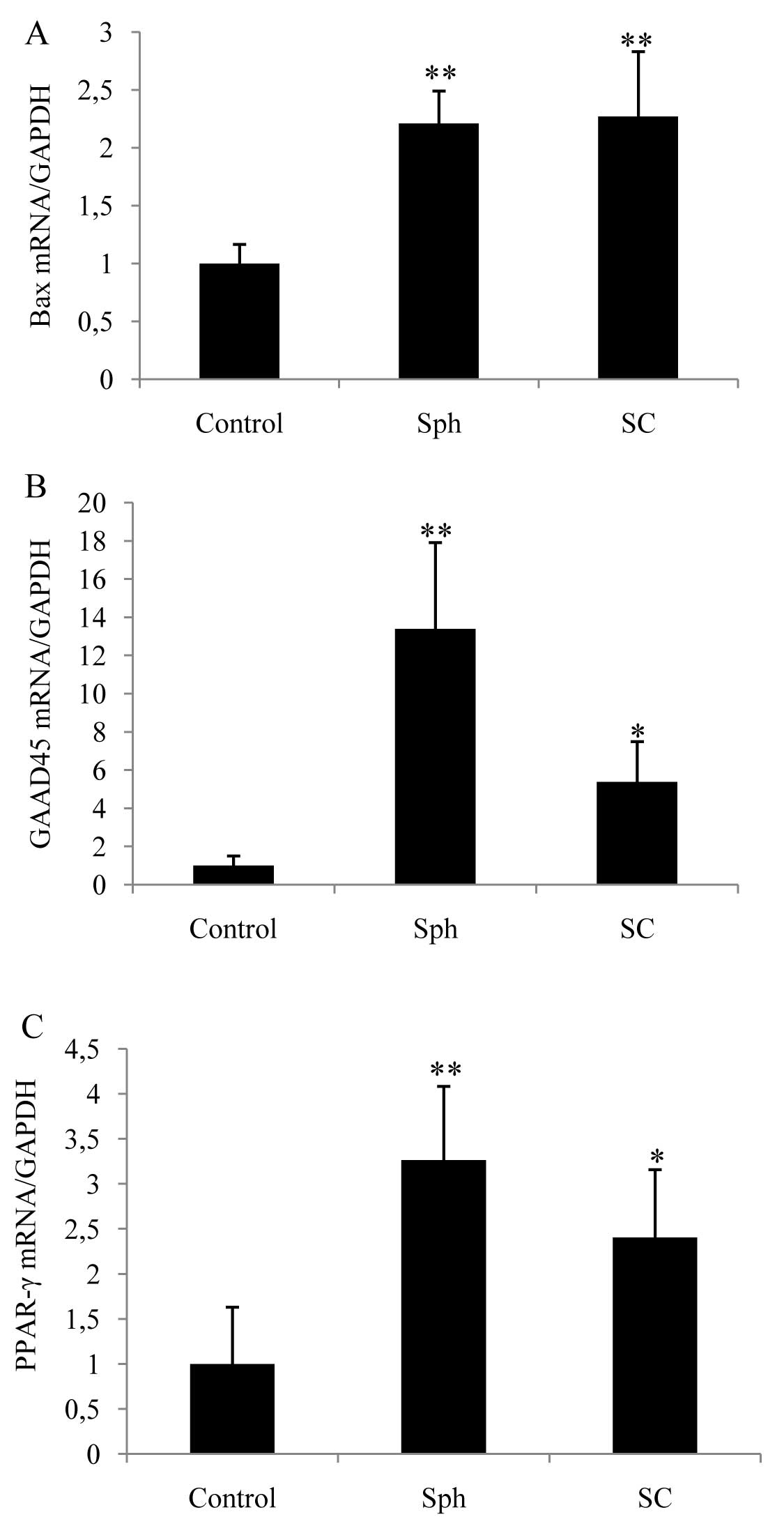
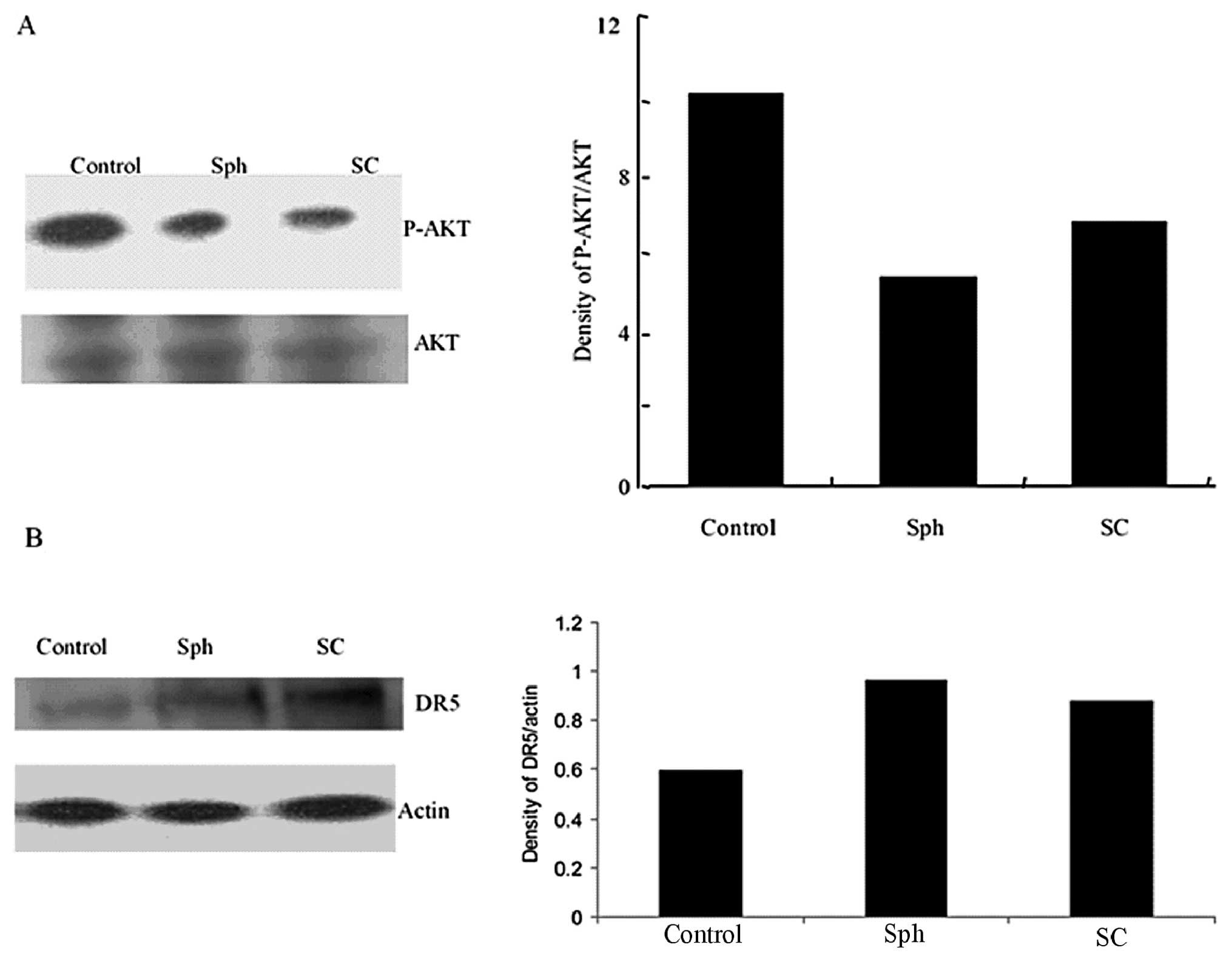
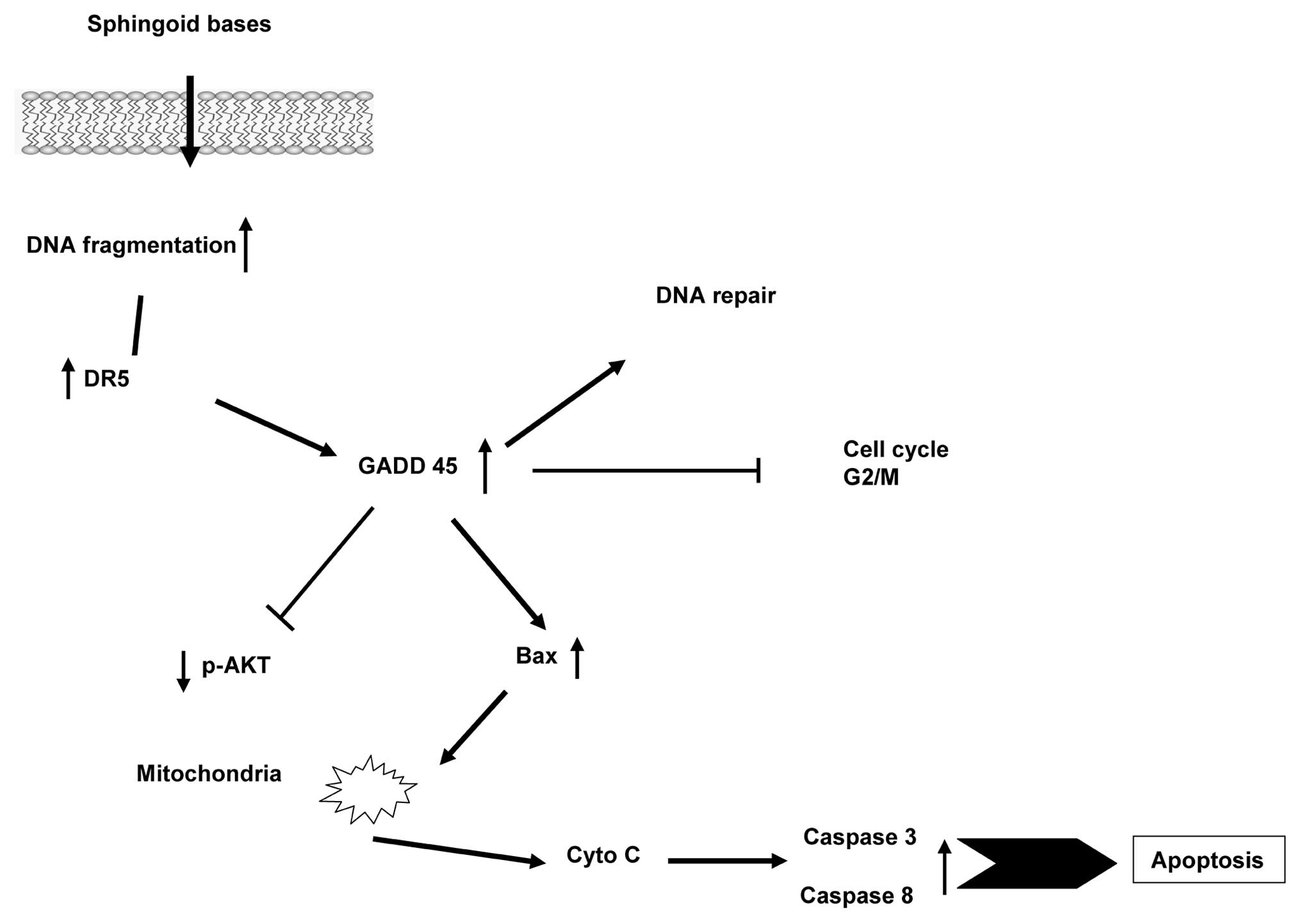
Biofunctional marine compounds have recently received substantial attention for their nutraceutical characteristics. In this study, we investigated the apoptosis-inducing effects of sphingoid bases prepared from sea cucumber using human hepatoma HepG2 cells. Apoptotic effects were determined by cell viability assay, DNA fragmentation assay, caspase-3 and caspase-8 activities. The expression levels of apoptosis-inducing death receptor-5 (DR5) and p-AKT were assayed by western blot analysis, and mRNA expression of bax, GADD45 and PPARγ was assayed by quantitative RT-PCR analysis. Sphingoid bases from sea cucumber markedly reduced the cell viability of HepG2 cells. DNA fragmentation indicative of apoptosis was observed in a dose-dependent manner. The expression levels of the apoptosis inducer protein Bax were increased by the sphingoid bases from sea cucumber. GADD45, which plays an important role in apoptosis-inducing pathways, was markedly upregulated by sphingoid bases from sea cucumber. Upregulation of PPARγ mRNA was also observed during apoptosis induced by the sphingoid bases. The expression levels of DR5 and p-AKT proteins were increased and decreased, respectively, as a result of the effects of sphingoid bases from sea cucumber. The results indicate that sphingoid bases from sea cucumber induce apoptosis in HepG2 cells through upregulation of DR5, Bax, GADD45 and PPARγ and downregulation of p-AKT. Our results show for the first time the functional properties of marine sphingoid bases as inducers of apoptosis in HepG2 cells.
View Figures

Figure 1

Figure 2

Figure 3

Figure 4

Figure 5

Figure 6

Figure 7

View References

1 

Parkin DM: The global health burden of infection-associated cancers in the year 2002. Int J Cancer. 118:3030–3044. 2006.PubMed/NCBI

2 

But DY, Lai CL and Yuen MF: Natural history of hepatitis-related hepatocellular carcinoma. World J Gastroenterol. 14:1652–1656. 2008. View Article : Google Scholar : PubMed/NCBI

3 

Liu S, Xie J, Yin J, Zhang H, Zhang Q, Pu R, Li C, Ni W, Wang H and Cao G: A matched case-control study of hepatitis B virus mutations in the preS and core promoter regions associated independently with hepatocellular carcinoma. J Med Virol. 83:45–53. 2011. View Article : Google Scholar : PubMed/NCBI

4 

Huwiler A, Kolter T, Pfeilschifter J and Sandhoff K: Physiology and pathophysiology of sphingolipid metabolism and signaling. Biochim Biophys Acta. 1485:63–99. 2000. View Article : Google Scholar : PubMed/NCBI

5 

Chang HC, Tsai LH, Chuang LY and Hung WC: Role of AKT kinase in sphingosine-induced apoptosis in human hepatoma cells. J Cell Physiol. 188:188–193. 2001. View Article : Google Scholar : PubMed/NCBI

6 

Ruvolo PP: Intracellular signal transduction pathways activated by ceramide and its metabolites. Pharmacol Res. 47:383–392. 2003. View Article : Google Scholar : PubMed/NCBI

7 

Maceyka M, Payne SG, Milstien S and Spiegel S: Sphingosine kinase, sphingosine-1-phosphate, and apoptosis. Biochim Biophys Acta. 1585:193–201. 2002. View Article : Google Scholar : PubMed/NCBI

8 

Orgetmen B and Hannun YA: Biologically active sphingolipids in cancer pathogenesis and treatment. Nat Rev Cancer. 4:604–616. 2004. View Article : Google Scholar : PubMed/NCBI

9 

Yamada K: Chemo-pharmaceutical studies on the glycosphingolipid constituents from echinoderm, sea cucumbers, as medicinal materials. Yakugaku Zasshi. 122:1133–1143. 2002.(In Japanese).

10 

Yamada K, Hamada A, Kisa F, Miyamoto T and Higuchi R: Constituents of holothuroidea, 13. Structure of neuritogenic active ganglioside molecular species from the sea cucumber Stichopus chloronotus. Chem Pharm Bull. 51:46–52. 2003. View Article : Google Scholar : PubMed/NCBI

11 

Sugawara T, Zaima N, Yamamoto A, Sakai S, Noguchi R and Hirata T: Isolation of sphingoid bases of sea cucumber cerebrosides and their cytotoxicity against human colon cancer cells. Biosci Biotechnol Biochem. 70:2906–2912. 2006. View Article : Google Scholar : PubMed/NCBI

12 

Sugawara T and Miyazawa T: Separation and determination of glycolipids from edible plant sources by high-performance liquid chromatography and evaporative light-scattering detection. Lipids. 34:1231–1237. 1999.PubMed/NCBI

13 

Sugawara T, Aida K, Duan J and Hirata T: Analysis of glucosylceramides from various sources by liquid chromatography-ion trap mass spectrometry. J Oleo Sci. 59:387–394. 2010.PubMed/NCBI

14 

Hossain Z, Sugawara T, Aida K and Hirata T: Effect of dietary glucosylceramides from sea cucumber on plasma and liver lipids in cholesterol-fed mice. Fish Sci. 77:1081–1085. 2011. View Article : Google Scholar

15 

Sugawara T, Kinoshita M, Ohnishi M and Miyazawa T: Apoptosis induction by wheat-flour sphingoid bases in DLD-1 human colon cancer cells. Biosci Biotech Biochem. 66:2228–2231. 2002. View Article : Google Scholar : PubMed/NCBI

16 

Aida K, Kinoshita M, Sugawara T, Ono J, Miyazawa T and Ohnishi M: Apoptosis inducement by plant and fungus sphingoid bases in human colon cancer cells. J Oleo Sci. 53:503–510. 2004. View Article : Google Scholar

17 

Kanno T and Nishizaki T: Sphingosine induces apoptosis in hippocampal neurons and astrocytes by activating caspase−3/−9 via a mitochondrial pathway linked to SDK/14-3-3 protein/Bax/cytochrome c. J Cell Physiol. 226:2329–2337. 2011.PubMed/NCBI

18 

Clay CE, Atsumi GI, High KP and Chilton FH: Early de novo gene expression is required for 15-deoxy-Delta 12,14-prostaglandin J2-induced apoptosis in breast cancer cells. J Biol Chem. 276:47131–47135. 2001. View Article : Google Scholar

19 

Debrock G, Vanhentenrijk V, Sciot R, Debiec-Rychter M, Oyen R and Van Oosterom A: A phase II trial with rosiglitazone in liposarcoma patients. Br J Cancer. 89:1409–1412. 2003. View Article : Google Scholar : PubMed/NCBI

20 

Grommes C, Landreth GE and Heneka MT: Antineoplastic effects of peroxisome proliferator-activated receptor gamma agonists. Lancet Oncol. 5:419–429. 2004. View Article : Google Scholar : PubMed/NCBI

21 

Date M, Fukuchi K, Morita S, Takahashi H and Ohura K: 15-Deoxy-delta12,14-prostaglandin J2, a ligand for peroxisome proliferator-activated receptor-gamma, induces apoptosis in human hepatoma cells. Liver Int. 23:460–466. 2003. View Article : Google Scholar

22 

Han S, Sidell N, Fisher PB and Roman J: Up-regulation of p21 gene expression by peroxisome proliferator-activated receptor gamma in human lung carcinoma cells. Clin Cancer Res. 10:1911–1919. 2004. View Article : Google Scholar : PubMed/NCBI

23 

Yang FG, Zhang ZW, Xin DQ, Shi CJ, Wu JP, Guo YL and Guan YF: Peroxisome proliferator-activated receptor gamma ligands induce cell cycle arrest and apoptosis in human renal carcinoma cell lines. Acta Pharmacol Sin. 26:753–761. 2005. View Article : Google Scholar : PubMed/NCBI

24 

Shigeto T, Yokoyama Y, Xin B and Mizunuma H: Peroxisome proliferator-activated receptor alpha and gamma ligands inhibit the growth of human ovarian cancer. Oncol Rep. 18:833–840. 2007.PubMed/NCBI

25 

Lin MS, Chen WC, Bai X and Wang YD: Activation of peroxisome proliferator-activated receptor gamma inhibits cell growth via apoptosis and arrest of the cell cycle in human colorectal cancer. J Dig Dis. 8:82–88. 2007. View Article : Google Scholar : PubMed/NCBI

26 

Sporn MB, Suh N and Mangelsdorf DJ: Prospects for prevention and treatment of cancer with selective PPARγ modulators (SPARMs). Trends Mol Med. 7:395–400. 2001.PubMed/NCBI

27 

Gupta RA and Dubois RN: Controversy: PPARγ as a target for treatment of colorectal cancer. Am J Physiol. 283:G266–G269. 2002.

28 

Girnun GD, Smith WM, Drori S, Sarraf P, Mueller E, Eng C, Nambiar P, Rosenberg DW, Bronson RT, Edelmann W, Kucherlapati R, Gonzalez FJ and Spiegelman BM: APC- dependent suppression of colon carcinogenesis by PPARγ. Proc Natl Acad Sci USA. 99:13771–13776. 2002.PubMed/NCBI

29 

Yasui Y, Hosokawa M, Sahara T, Suzuki R, Ohgiya S, Kohno H, Tanaka T and Miyashita K: Bitter gourd seed fatty acid rich in 9c,11t,13t-conjugated linolenic acid induces apoptosis and up-regulates the GADD45, p53 and PPARgamma in human colon cancer Caco-2 cells. Prostaglandins Leukot Essent Fatty Acids. 73:113–119. 2005. View Article : Google Scholar : PubMed/NCBI

30 

Han C, Demetris AJ, Michalopoulos GK, Zhan Q, Shelhamer JH and Wu T: PPARγ ligands inhibit cholangiocarcinoma cell growth through p53-dependent GADD45 and p21 WAF1/Cip1 pathway. Hepatology. 38:167–177. 2003.

31 

Nagamine M, Okumura T, Tanno S, Sawamukai M, Motomura W, Takahashi N and Kohgo Y: PPARγ ligand-induced apoptosis through a p53-dependent mechanism in human gastric cancer cells. Cancer Sci. 94:338–343. 2003.

32 

Okumura T, Nakamura M, Takata Y, Watanabe S, Kitami Y and Hiwada K: Troglitazone induces apoptosis via the p53 and Gadd45 pathway in vascular muscle cells. Eur J Pharmacol. 407:227–235. 2000. View Article : Google Scholar : PubMed/NCBI

33 

Yin F, Bruemmer D, Blaschke F, Hsueh WA, Law RE and Van Herle AJ: Signaling pathways involved in induction of GADD45 gene expression and apoptosis by troglitazone in human MCF-7 breast carcinoma cells. Oncogene. 23:4614–4623. 2004. View Article : Google Scholar : PubMed/NCBI

34 

Aida K, Kinoshita M, Tanji M, Sugawara T, Tamura M, Ono J, Ueno N and Ohnishi M: Prevention of aberrant crypt foci formation by dietary maize and yeast cerebrosides in 1,2-dimethylhydrazine-treated mice. J Oleo Sci. 54:45–49. 2005. View Article : Google Scholar

35 

Lowry OH, Rosebrough NJ, Farr AL and Randall RJ: Protein measurement with the Folin phenol reagent. J Biol Chem. 193:265–275. 1951.PubMed/NCBI

36 

Merrill AH Jr, Schmelz EM, Dillehay DL, Spiegel S, Shayman JA, Schroeder JJ, Riley RT, Voss KA and Wang E: Sphingolipids: the enigmatic lipid class: biochemistry, physiology, and pathophysiology. Toxicol Appl Pharmacol. 142:208–225. 1997. View Article : Google Scholar : PubMed/NCBI

37 

Schmelz EM, Sullards MS, Dillehay DL and Merrill AH Jr: Colonic cell proliferation and aberrant crypt foci formation are inhibited by dairy glycosphingolipids in 1,2-dimethylhydrazine-treated CF1 mice. J Nutr. 130:522–527. 2000.PubMed/NCBI

38 

Sprick MR and Walczak H: The interplay between the Bcl-2 family and death receptor-mediated apoptosis. Biochim Biophys Acta. 1644:125–132. 2004. View Article : Google Scholar : PubMed/NCBI

39 

Willis SN and Adams JM: Life in the balance: how BH3-only proteins induce apoptosis. Curr Opin Cell Biol. 17:617–625. 2005. View Article : Google Scholar : PubMed/NCBI

40 

Dejean LM, Martinez-Caballero S, Guo L, Hughes C, Teijido O, Ducret T, Ichas F, Korsmeyer SJ, Antonsson B, Jonas EA and Kinnally KW: Oligomeric Bax is a component of the putative cytochrome c release channel MAC, mitochondrial apoptosis-induced channel. Mol Biol Cell. 16:2424–2432. 2005. View Article : Google Scholar : PubMed/NCBI

41 

Scaffidi C, Schmitz I, Zha J, Korsmeyer SJ, Krammer PH and Peter ME: Differential modulation of apoptosis sensitivity in CD95 type I and type II cells. J Biol Chem. 274:22532–22538. 1999. View Article : Google Scholar : PubMed/NCBI

42 

Gross A, Jockel J, Wei MC and Korsmeyer SJ: Enforced dimerization of BAX results in its translocation, mitochondrial dysfunction and apoptosis. EMBO J. 17:3878–3885. 1998. View Article : Google Scholar : PubMed/NCBI

43 

Laurora S, Pizzimenti S, Briatore F, Fraioli A, Maggio M, Reffo P, Ferretti C, Dianzani MU and Barrera G: Peroxisome proliferator-activated receptor ligands affect growth-related gene expression in human leukemic cells. J Pharmacol Exp Ther. 305:932–942. 2003. View Article : Google Scholar : PubMed/NCBI

44 

Liu H, Zang C, Fenner MH, Liu D, Possinger K, Koeffler HP and Elstner E: Growth inhibition and apoptosis in human Philadelphia chromosome-positive lymphoblastic leukemia cell lines by treatment with the dual PPARα/γ ligand TZD18. Blood. 107:3683–3692. 2006.PubMed/NCBI

45 

Shimada T, Kojima K, Yoshiura K, Hiraishi H and Terano A: Characteristics of the peroxisome proliferator activated receptor γ (PPARγ) ligand induced apoptosis in colon cancer cells. Gut. 50:658–664. 2002.

46 

Toyoda M, Takagi H, Horiguchi N, Kakizaki S, Sato K, Takayama H and Mori M: A ligand for peroxisome proliferator activated receptor gamma inhibits cell growth and induces apoptosis in human liver cancer cells. Gut. 50:563–567. 2002. View Article : Google Scholar : PubMed/NCBI

47 

Wang W, Huper G, Guo Y, Murphy SK, Olson JA Jr and Marks JR: Analysis of methylation-sensitive transcriptome identifies GADD45α as a frequently methylated gene in breast cancer. Oncogene. 24:2705–2714. 2005.PubMed/NCBI

48 

Mita H, Tsutsui J, Takekawa M, Witten EA and Saito H: Regulation of MTK1/MEKK4 kinase activity by its N-terminal autoinhibitory domain and GADD45 binding. Mol Cell Biol. 22:4544–4555. 2002. View Article : Google Scholar : PubMed/NCBI

49 

Tront JS, Hoffman B and Liebermann DA: Gadd45α suppresses Ras driven mammary tumorigenesis by activation of c-Jun NH2-terminal kinase and p38 stress signaling resulting in apoptosis and senescence. Cancer Res. 66:8448–8454. 2006.

50 

Zerbini LF and Libermann TA: ADD45 deregulation in cancer: frequently methylated tumor suppressors and potential therapeutic targets. Clin Cancer Res. 11:6409–6413. 2005. View Article : Google Scholar : PubMed/NCBI

51 

Tong T, Ji J, Jin S, Li X, Fan W, Song Y, Wang M, Liu Z, Wu M and Zhan Q: Gadd45α expression induces Bim dissociation from the cytoskeleton and translocation to mitochondria. Mol Cell Biol. 25:4488–4500. 2005.

52 

Hildesheim J, Bulavin DV, Anver MR, Alvord WG, Hollander MC, Vardanian L and Fornace AJ Jr: Gadd45α protects against UV irradiation-induced skin tumors, and promotes apoptosis and stress signaling via MAPK and p53. Cancer Res. 62:7305–7315. 2002.

53 

Zhou H, Li XM, Meinkoth J and Pittman RN: Akt regulates cell survival and apoptosis at a postmitochondrial level. J Cell Biol. 151:483–494. 2000. View Article : Google Scholar : PubMed/NCBI

54 

Testa JR and Bellacosa A: Akt plays a central role in tumorigenesis. Proc Natl Acad Sci USA. 98:10983–10985. 2001. View Article : Google Scholar : PubMed/NCBI

55 

Xin M and Deng X: Nicotine inactivation of proapoptotic function of Bax through phosphorylation. J Biol Chem. 280:10781–10789. 2005. View Article : Google Scholar : PubMed/NCBI

Related Articles

  • Abstract
  • View
  • Download
  • Twitter
Copy and paste a formatted citation
Spandidos Publications style
Hossain Z, Sugawara T and Hirata T: Sphingoid bases from sea cucumber induce apoptosis in human hepatoma HepG2 cells through p-AKT and DR5. Oncol Rep 29: 1201-1207, 2013.
APA
Hossain, Z., Sugawara, T., & Hirata, T. (2013). Sphingoid bases from sea cucumber induce apoptosis in human hepatoma HepG2 cells through p-AKT and DR5. Oncology Reports, 29, 1201-1207. https://doi.org/10.3892/or.2013.2223
MLA
Hossain, Z., Sugawara, T., Hirata, T."Sphingoid bases from sea cucumber induce apoptosis in human hepatoma HepG2 cells through p-AKT and DR5". Oncology Reports 29.3 (2013): 1201-1207.
Chicago
Hossain, Z., Sugawara, T., Hirata, T."Sphingoid bases from sea cucumber induce apoptosis in human hepatoma HepG2 cells through p-AKT and DR5". Oncology Reports 29, no. 3 (2013): 1201-1207. https://doi.org/10.3892/or.2013.2223
Copy and paste a formatted citation
x
Spandidos Publications style
Hossain Z, Sugawara T and Hirata T: Sphingoid bases from sea cucumber induce apoptosis in human hepatoma HepG2 cells through p-AKT and DR5. Oncol Rep 29: 1201-1207, 2013.
APA
Hossain, Z., Sugawara, T., & Hirata, T. (2013). Sphingoid bases from sea cucumber induce apoptosis in human hepatoma HepG2 cells through p-AKT and DR5. Oncology Reports, 29, 1201-1207. https://doi.org/10.3892/or.2013.2223
MLA
Hossain, Z., Sugawara, T., Hirata, T."Sphingoid bases from sea cucumber induce apoptosis in human hepatoma HepG2 cells through p-AKT and DR5". Oncology Reports 29.3 (2013): 1201-1207.
Chicago
Hossain, Z., Sugawara, T., Hirata, T."Sphingoid bases from sea cucumber induce apoptosis in human hepatoma HepG2 cells through p-AKT and DR5". Oncology Reports 29, no. 3 (2013): 1201-1207. https://doi.org/10.3892/or.2013.2223
Follow us
  • Twitter
  • LinkedIn
  • Facebook
About
  • Spandidos Publications
  • Careers
  • Cookie Policy
  • Privacy Policy
How can we help?
  • Help
  • Live Chat
  • Contact
  • Email to our Support Team