Spandidos Publications Logo
  • About
    • About Spandidos
    • Aims and Scopes
    • Abstracting and Indexing
    • Editorial Policies
    • Reprints and Permissions
    • Job Opportunities
    • Terms and Conditions
    • Contact
  • Journals
    • All Journals
    • Oncology Letters
      • Oncology Letters
      • Information for Authors
      • Editorial Policies
      • Editorial Board
      • Aims and Scope
      • Abstracting and Indexing
      • Bibliographic Information
      • Archive
    • International Journal of Oncology
      • International Journal of Oncology
      • Information for Authors
      • Editorial Policies
      • Editorial Board
      • Aims and Scope
      • Abstracting and Indexing
      • Bibliographic Information
      • Archive
    • Molecular and Clinical Oncology
      • Molecular and Clinical Oncology
      • Information for Authors
      • Editorial Policies
      • Editorial Board
      • Aims and Scope
      • Abstracting and Indexing
      • Bibliographic Information
      • Archive
    • Experimental and Therapeutic Medicine
      • Experimental and Therapeutic Medicine
      • Information for Authors
      • Editorial Policies
      • Editorial Board
      • Aims and Scope
      • Abstracting and Indexing
      • Bibliographic Information
      • Archive
    • International Journal of Molecular Medicine
      • International Journal of Molecular Medicine
      • Information for Authors
      • Editorial Policies
      • Editorial Board
      • Aims and Scope
      • Abstracting and Indexing
      • Bibliographic Information
      • Archive
    • Biomedical Reports
      • Biomedical Reports
      • Information for Authors
      • Editorial Policies
      • Editorial Board
      • Aims and Scope
      • Abstracting and Indexing
      • Bibliographic Information
      • Archive
    • Oncology Reports
      • Oncology Reports
      • Information for Authors
      • Editorial Policies
      • Editorial Board
      • Aims and Scope
      • Abstracting and Indexing
      • Bibliographic Information
      • Archive
    • Molecular Medicine Reports
      • Molecular Medicine Reports
      • Information for Authors
      • Editorial Policies
      • Editorial Board
      • Aims and Scope
      • Abstracting and Indexing
      • Bibliographic Information
      • Archive
    • World Academy of Sciences Journal
      • World Academy of Sciences Journal
      • Information for Authors
      • Editorial Policies
      • Editorial Board
      • Aims and Scope
      • Abstracting and Indexing
      • Bibliographic Information
      • Archive
    • International Journal of Functional Nutrition
      • International Journal of Functional Nutrition
      • Information for Authors
      • Editorial Policies
      • Editorial Board
      • Aims and Scope
      • Abstracting and Indexing
      • Bibliographic Information
      • Archive
    • International Journal of Epigenetics
      • International Journal of Epigenetics
      • Information for Authors
      • Editorial Policies
      • Editorial Board
      • Aims and Scope
      • Abstracting and Indexing
      • Bibliographic Information
      • Archive
    • Medicine International
      • Medicine International
      • Information for Authors
      • Editorial Policies
      • Editorial Board
      • Aims and Scope
      • Abstracting and Indexing
      • Bibliographic Information
      • Archive
  • Articles
  • Information
    • Information for Authors
    • Information for Reviewers
    • Information for Librarians
    • Information for Advertisers
    • Conferences
  • Language Editing
Spandidos Publications Logo
  • About
    • About Spandidos
    • Aims and Scopes
    • Abstracting and Indexing
    • Editorial Policies
    • Reprints and Permissions
    • Job Opportunities
    • Terms and Conditions
    • Contact
  • Journals
    • All Journals
    • Biomedical Reports
      • Information for Authors
      • Editorial Policies
      • Editorial Board
      • Aims and Scope
      • Abstracting and Indexing
      • Bibliographic Information
      • Archive
    • Experimental and Therapeutic Medicine
      • Information for Authors
      • Editorial Policies
      • Editorial Board
      • Aims and Scope
      • Abstracting and Indexing
      • Bibliographic Information
      • Archive
    • International Journal of Epigenetics
      • Information for Authors
      • Editorial Policies
      • Editorial Board
      • Aims and Scope
      • Abstracting and Indexing
      • Bibliographic Information
      • Archive
    • International Journal of Functional Nutrition
      • Information for Authors
      • Editorial Policies
      • Editorial Board
      • Aims and Scope
      • Abstracting and Indexing
      • Bibliographic Information
      • Archive
    • International Journal of Molecular Medicine
      • Information for Authors
      • Editorial Policies
      • Editorial Board
      • Aims and Scope
      • Abstracting and Indexing
      • Bibliographic Information
      • Archive
    • International Journal of Oncology
      • Information for Authors
      • Editorial Policies
      • Editorial Board
      • Aims and Scope
      • Abstracting and Indexing
      • Bibliographic Information
      • Archive
    • Medicine International
      • Information for Authors
      • Editorial Policies
      • Editorial Board
      • Aims and Scope
      • Abstracting and Indexing
      • Bibliographic Information
      • Archive
    • Molecular and Clinical Oncology
      • Information for Authors
      • Editorial Policies
      • Editorial Board
      • Aims and Scope
      • Abstracting and Indexing
      • Bibliographic Information
      • Archive
    • Molecular Medicine Reports
      • Information for Authors
      • Editorial Policies
      • Editorial Board
      • Aims and Scope
      • Abstracting and Indexing
      • Bibliographic Information
      • Archive
    • Oncology Letters
      • Information for Authors
      • Editorial Policies
      • Editorial Board
      • Aims and Scope
      • Abstracting and Indexing
      • Bibliographic Information
      • Archive
    • Oncology Reports
      • Information for Authors
      • Editorial Policies
      • Editorial Board
      • Aims and Scope
      • Abstracting and Indexing
      • Bibliographic Information
      • Archive
    • World Academy of Sciences Journal
      • Information for Authors
      • Editorial Policies
      • Editorial Board
      • Aims and Scope
      • Abstracting and Indexing
      • Bibliographic Information
      • Archive
  • Articles
  • Information
    • For Authors
    • For Reviewers
    • For Librarians
    • For Advertisers
    • Conferences
  • Language Editing
Login Register Submit
  • This site uses cookies
  • You can change your cookie settings at any time by following the instructions in our Cookie Policy. To find out more, you may read our Privacy Policy.

    I agree
Search articles by DOI, keyword, author or affiliation
Search
Advanced Search
presentation
Oncology Reports
Join Editorial Board Propose a Special Issue
Print ISSN: 1021-335X Online ISSN: 1791-2431
Journal Cover
July 2013 Volume 30 Issue 1

Full Size Image

Sign up for eToc alerts
Recommend to Library

Journals

International Journal of Molecular Medicine

International Journal of Molecular Medicine

International Journal of Molecular Medicine is an international journal devoted to molecular mechanisms of human disease.

International Journal of Oncology

International Journal of Oncology

International Journal of Oncology is an international journal devoted to oncology research and cancer treatment.

Molecular Medicine Reports

Molecular Medicine Reports

Covers molecular medicine topics such as pharmacology, pathology, genetics, neuroscience, infectious diseases, molecular cardiology, and molecular surgery.

Oncology Reports

Oncology Reports

Oncology Reports is an international journal devoted to fundamental and applied research in Oncology.

Experimental and Therapeutic Medicine

Experimental and Therapeutic Medicine

Experimental and Therapeutic Medicine is an international journal devoted to laboratory and clinical medicine.

Oncology Letters

Oncology Letters

Oncology Letters is an international journal devoted to Experimental and Clinical Oncology.

Biomedical Reports

Biomedical Reports

Explores a wide range of biological and medical fields, including pharmacology, genetics, microbiology, neuroscience, and molecular cardiology.

Molecular and Clinical Oncology

Molecular and Clinical Oncology

International journal addressing all aspects of oncology research, from tumorigenesis and oncogenes to chemotherapy and metastasis.

World Academy of Sciences Journal

World Academy of Sciences Journal

Multidisciplinary open-access journal spanning biochemistry, genetics, neuroscience, environmental health, and synthetic biology.

International Journal of Functional Nutrition

International Journal of Functional Nutrition

Open-access journal combining biochemistry, pharmacology, immunology, and genetics to advance health through functional nutrition.

International Journal of Epigenetics

International Journal of Epigenetics

Publishes open-access research on using epigenetics to advance understanding and treatment of human disease.

Medicine International

Medicine International

An International Open Access Journal Devoted to General Medicine.

Journal Cover
July 2013 Volume 30 Issue 1

Full Size Image

Sign up for eToc alerts
Recommend to Library

  • Article
  • Citations
    • Cite This Article
    • Download Citation
    • Create Citation Alert
    • Remove Citation Alert
    • Cited By
  • Similar Articles
    • Related Articles (in Spandidos Publications)
    • Similar Articles (Google Scholar)
    • Similar Articles (PubMed)
  • Download PDF
  • Download XML
  • View XML
Article

Enhanced autophagic flux by endoplasmic reticulum stress in human hepatocellular carcinoma cells contributes to the maintenance of cell viability

  • Authors:
    • Tai Ma
    • Yuan-Yuan Li
    • Jie Zhu
    • Lu-Lu Fan
    • Wei-Dong Du
    • Chang-Hao Wu
    • Guo-Ping Sun
    • Jia-Bin Li
  • View Affiliations / Copyright

    Affiliations: Department of Oncology, The First Affiliated Hospital of Anhui Medical University, Hefei, Anhui 230022, P.R. China, State Key Laboratory Incubation Base of Dermatology, Ministry of National Science and Technology, Anhui Medical University, Hefei, Anhui 230032, P.R. China, Department of Biochemistry and Physiology, University of Surrey, Guildford GU2 7XH, UK, Department of Infectious Disease, The First Affiliated Hospital of Anhui Medical University, Hefei, Anhui 230022, P.R. China
  • Pages: 433-440
    |
    Published online on: May 15, 2013
       https://doi.org/10.3892/or.2013.2474
  • Expand metrics +
Metrics: Total Views: 0 (Spandidos Publications: | PMC Statistics: )
Metrics: Total PDF Downloads: 0 (Spandidos Publications: | PMC Statistics: )
Cited By (CrossRef): 0 citations Loading Articles...

This article is mentioned in:


Abstract

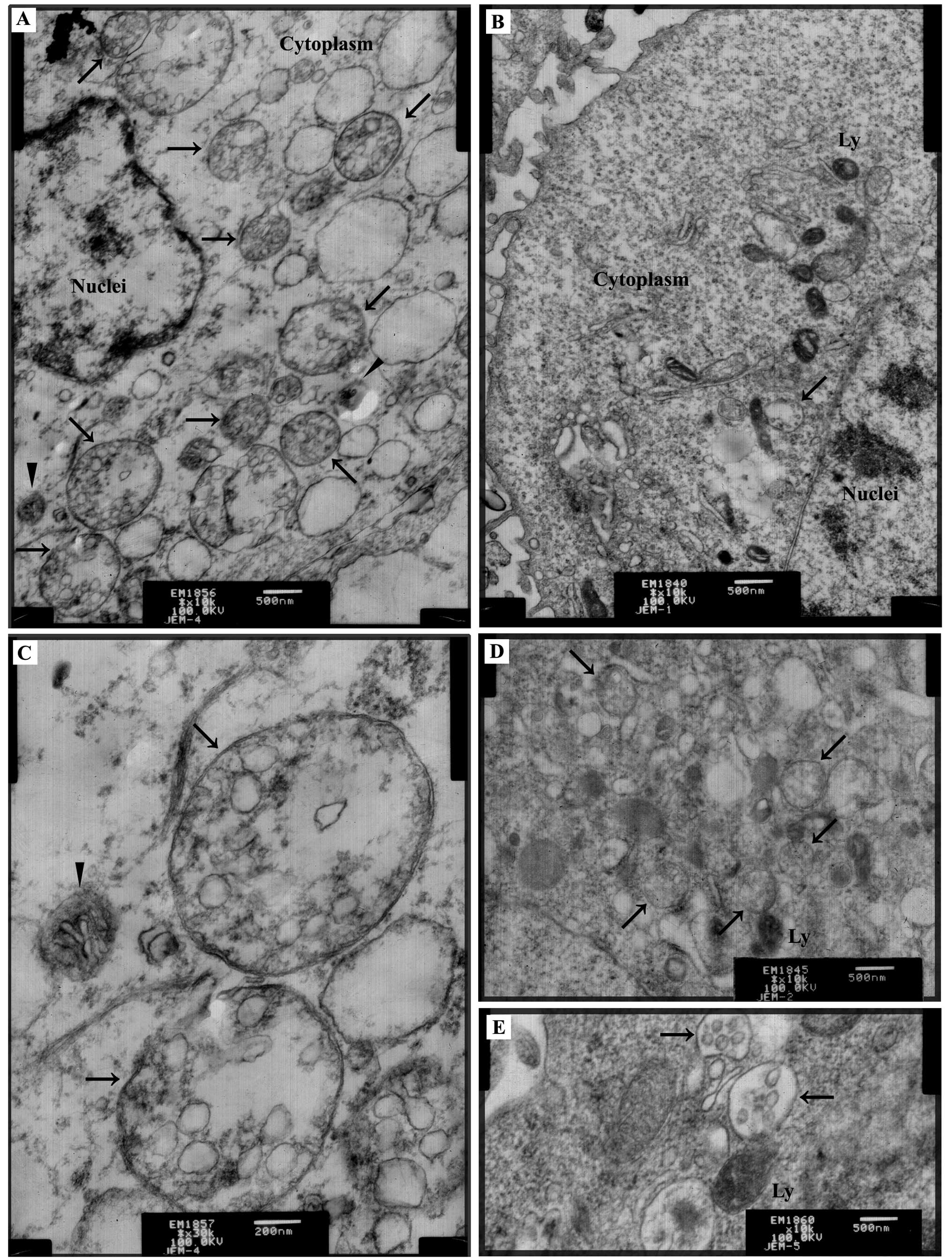
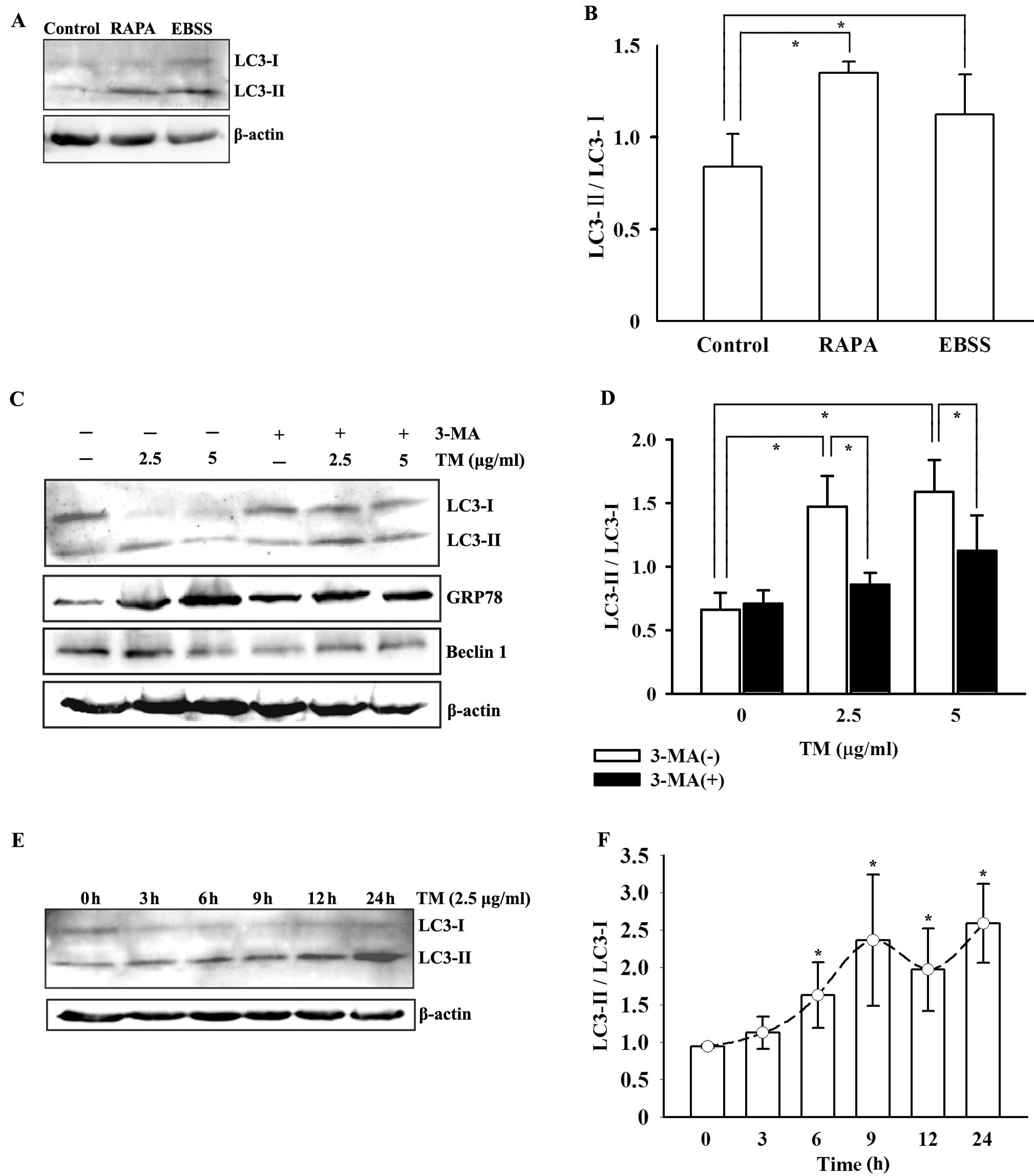
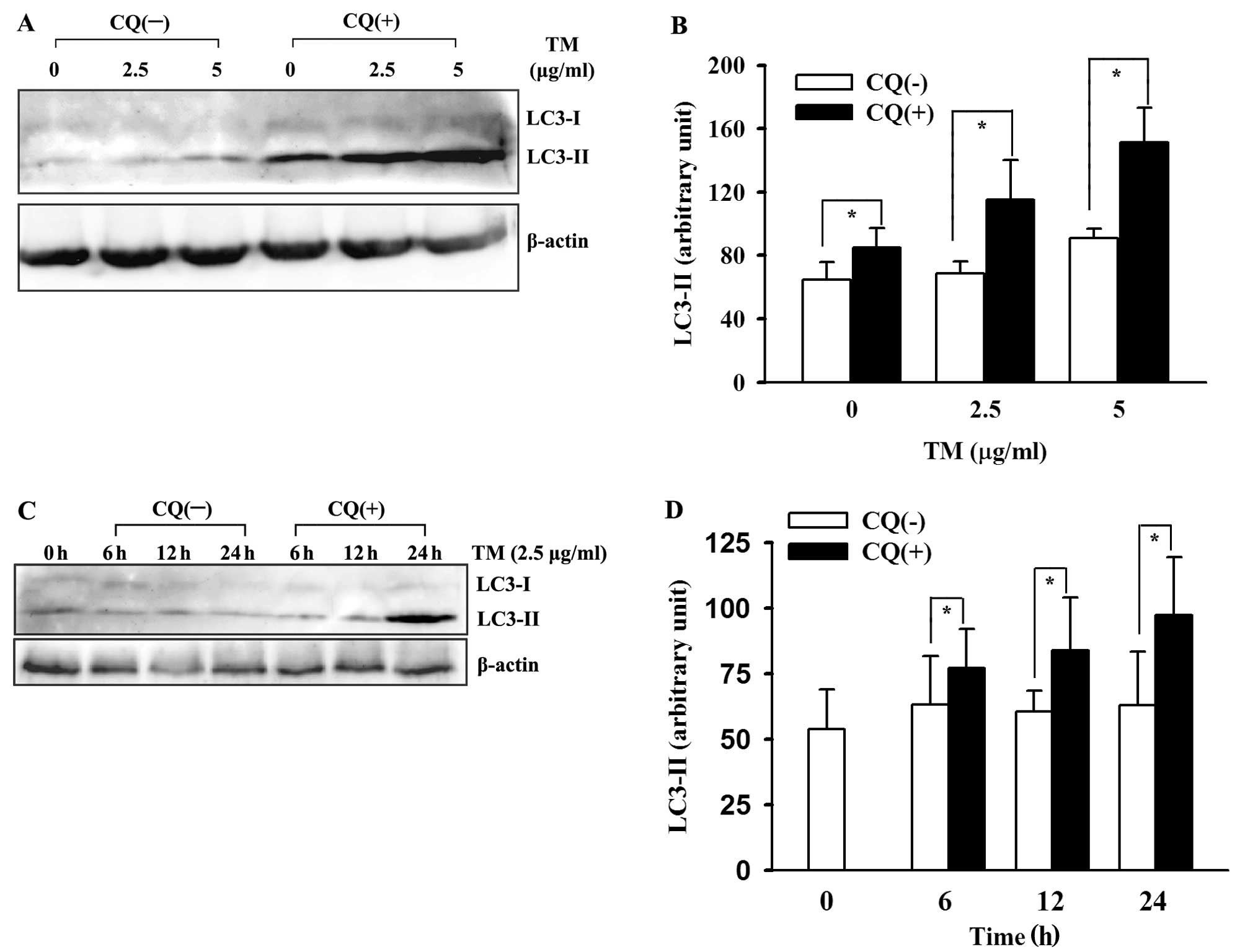
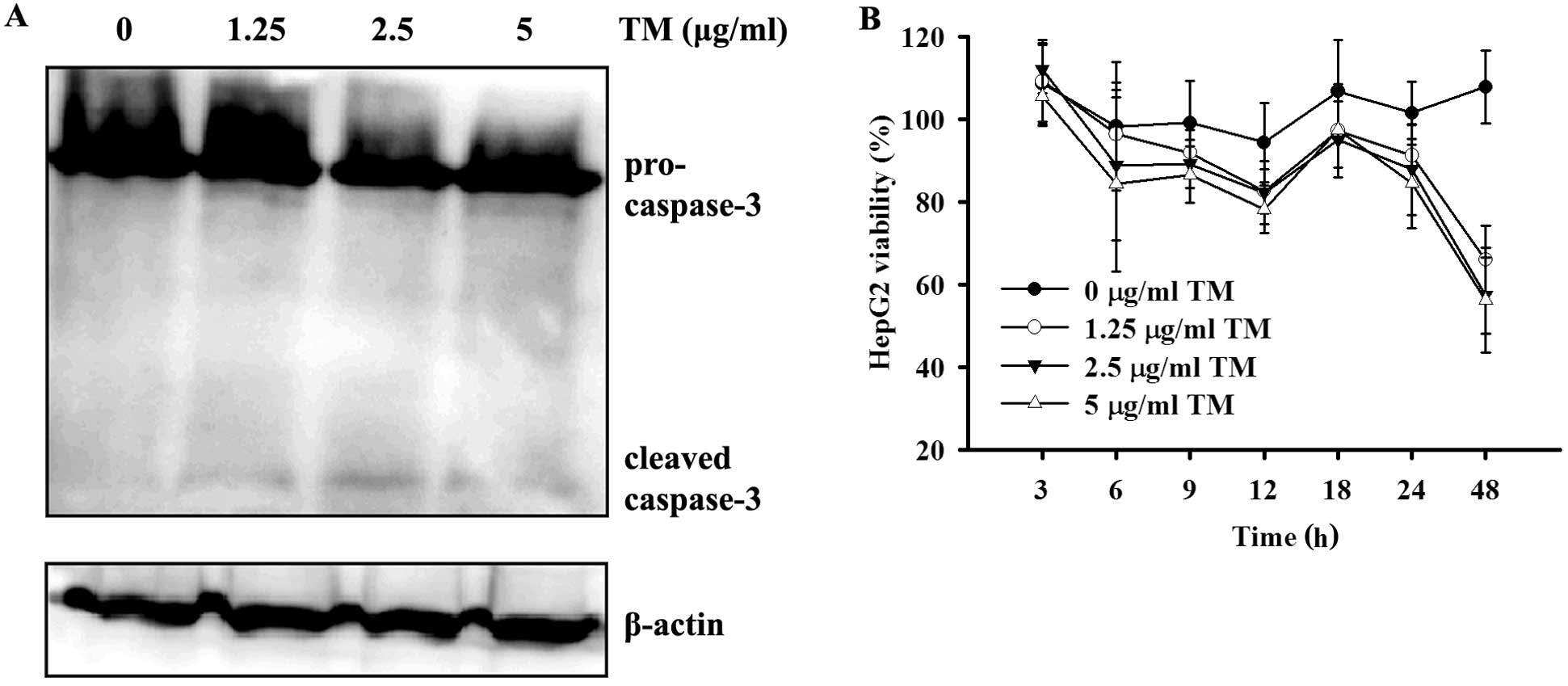
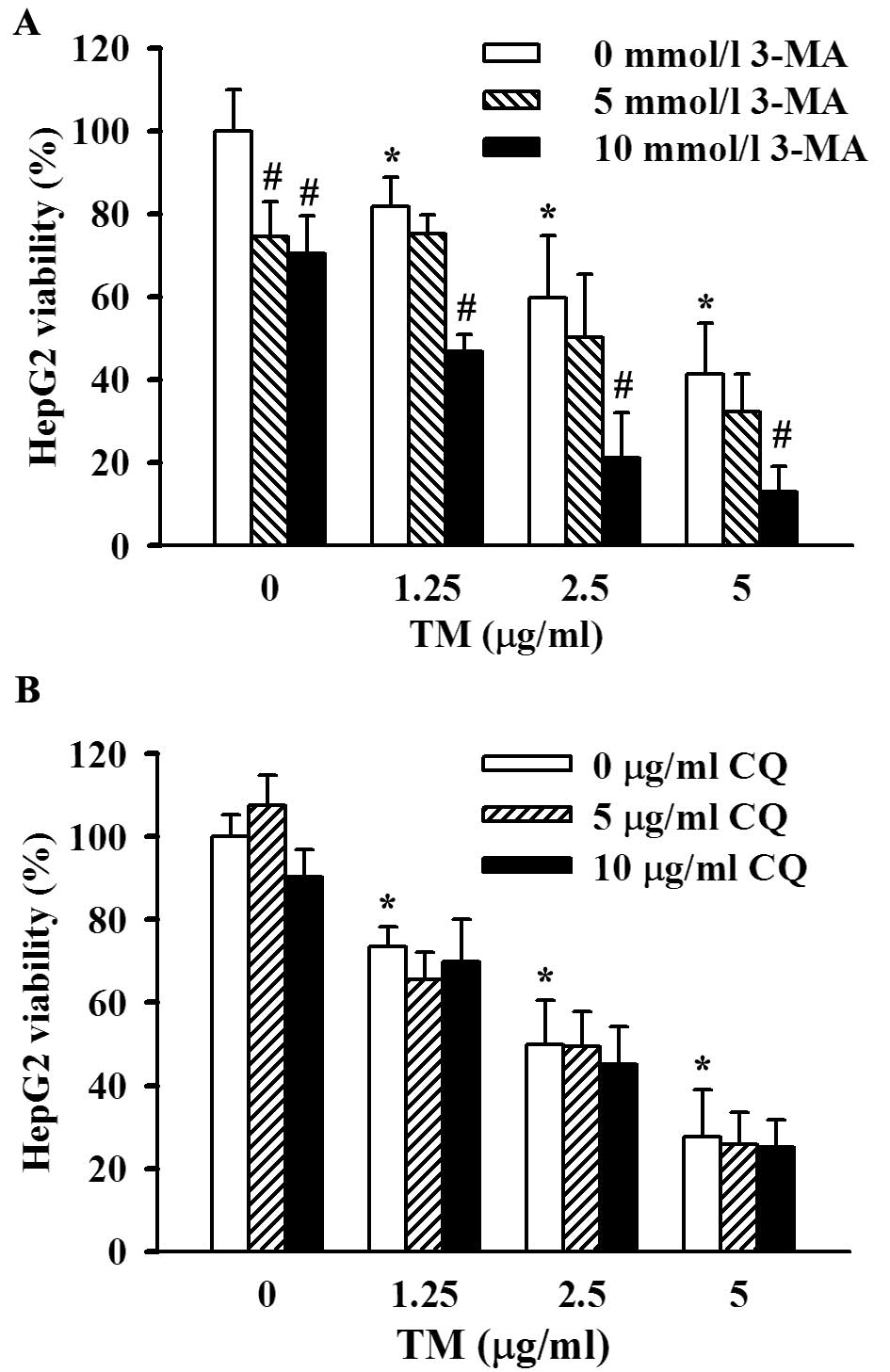
Endoplasmic reticulum (ER) stress and autophagy are important adaptive responses in eukaryotes. The aim of this study was to investigate the autophagic responses in hepatocellular carcinoma (HCC) cells under ER stress and the effect of autophagy on cell survival and death. The human HCC cell line HepG2 was stimulated with tunicamycin to induce ER stress. Cell viability was detected using the Cell Counting Kit‑8. The accumulation of autophagic compartments was observed using transmission electron microscopy. The expression of ER and autophagy-related proteins was assessed by western blotting. Autophagic flux was assessed by microtubule-associated protein 1‑light chain 3 (MAP1‑LC3) turnover assay in the presence of chloroquine to inhibit lysosomes. HepG2 cells subjected to the ER stress presented a significant accumulation of autophagosomes and increased conversion of LC3-I to LC3-II as well as enhanced autophagic flux as detected by the LC3 turnover assay. Inhibition of autophagy with 3-methyladenine facilitated ER stress-related cell death. We conclude that ER stress enhances the autophagic flux in HepG2 cells, which may contribute to the maintenance of cell viability.
View Figures

Figure 1

Figure 2

Figure 3

Figure 4

Figure 5

View References

1 

Levine B: Cell biology: autophagy and cancer. Nature. 446:745–747. 2007. View Article : Google Scholar : PubMed/NCBI

2 

Forner A, Llovet JM and Bruix J: Hepatocellular carcinoma. Lancet. 379:1245–1255. 2012. View Article : Google Scholar

3 

Kisen GO, Tessitore L, Costelli P, et al: Reduced autophagic activity in primary rat hepatocellular carcinoma and ascites hepatoma cells. Carcinogenesis. 14:2501–2505. 1993. View Article : Google Scholar : PubMed/NCBI

4 

Qu X, Yu J, Bhagat G, et al: Promotion of tumorigenesis by heterozygous disruption of the beclin 1 autophagy gene. J Clin Invest. 112:1809–1820. 2003. View Article : Google Scholar : PubMed/NCBI

5 

Ding ZB, Shi YH, Zhou J, et al: Association of autophagy defect with a malignant phenotype and poor prognosis of hepatocellular carcinoma. Cancer Res. 68:9167–9175. 2008. View Article : Google Scholar : PubMed/NCBI

6 

Song J, Qu Z, Guo X, et al: Hypoxia-induced autophagy contributes to the chemoresistance of hepatocellular carcinoma cells. Autophagy. 5:1131–1144. 2009. View Article : Google Scholar : PubMed/NCBI

7 

Du H, Yang W, Chen L, et al: Role of autophagy in resistance to oxaliplatin in hepatocellular carcinoma cells. Oncol Rep. 27:143–150. 2012.PubMed/NCBI

8 

Ding ZB, Hui B, Shi YH, et al: Autophagy activation in hepatocellular carcinoma contributes to the tolerance of oxaliplatin via reactive oxygen species modulation. Clin Cancer Res. 17:6229–6238. 2011. View Article : Google Scholar : PubMed/NCBI

9 

Xie BS, Zhao HC, Yao SK, et al: Autophagy inhibition enhances etoposide-induced cell death in human hepatoma G2 cells. Int J Mol Med. 27:599–606. 2011.PubMed/NCBI

10 

Guo XL, Li D, Hu F, et al: Targeting autophagy potentiates chemotherapy-induced apoptosis and proliferation inhibition in hepatocarcinoma cells. Cancer Lett. 320:171–179. 2012. View Article : Google Scholar : PubMed/NCBI

11 

Shi YH, Ding ZB, Zhou J, et al: Targeting autophagy enhances sorafenib lethality for hepatocellular carcinoma via ER stress-related apoptosis. Autophagy. 7:1159–1172. 2011. View Article : Google Scholar : PubMed/NCBI

12 

Shimizu S, Takehara T, Hikita H, et al: Inhibition of autophagy potentiates the antitumor effect of the multikinase inhibitor sorafenib in hepatocellular carcinoma. Int J Cancer. 131:548–557. 2012. View Article : Google Scholar : PubMed/NCBI

13 

Liu YL, Yang PM, Shun CT, Wu MS, Weng JR and Chen CC: Autophagy potentiates the anti-cancer effects of the histone deacetylase inhibitors in hepatocellular carcinoma. Autophagy. 6:1057–1065. 2010. View Article : Google Scholar : PubMed/NCBI

14 

Hui B, Shi YH, Ding ZB, et al: Proteasome inhibitor interacts synergistically with autophagy inhibitor to suppress proliferation and induce apoptosis in hepatocellular carcinoma. Cancer. 118:5560–5571. 2012. View Article : Google Scholar : PubMed/NCBI

15 

Tkacz JS and Lampen O: Tunicamycin inhibition of polyisoprenyl N-acetylglucosaminyl pyrophosphate formation in calf-liver microsomes. Biochem Biophys Res Commun. 65:248–257. 1975. View Article : Google Scholar : PubMed/NCBI

16 

Koumenis C: ER stress, hypoxia tolerance and tumor progression. Curr Mol Med. 6:55–69. 2006. View Article : Google Scholar : PubMed/NCBI

17 

Shuda M, Kondoh N, Imazeki N, et al: Activation of the ATF6, XBP1 and grp78 genes in human hepatocellular carcinoma: a possible involvement of the ER stress pathway in hepatocarcinogenesis. J Hepatol. 38:605–614. 2003. View Article : Google Scholar : PubMed/NCBI

18 

Al-Rawashdeh FY, Scriven P, Cameron IC, Vergani PV and Wyld L: Unfolded protein response activation contributes to chemoresistance in hepatocellular carcinoma. Eur J Gastroenterol Hepatol. 22:1099–1105. 2010. View Article : Google Scholar : PubMed/NCBI

19 

Xu Z, Jensen G and Yen TS: Activation of hepatitis B virus S promoter by the viral large surface protein via induction of stress in the endoplasmic reticulum. J Virol. 71:7387–7392. 1997.PubMed/NCBI

20 

Li B, Gao B, Ye L, et al: Hepatitis B virus X protein (HBx) activates ATF6 and IRE1-XBP1 pathways of unfolded protein response. Virus Res. 124:44–49. 2007. View Article : Google Scholar : PubMed/NCBI

21 

Sir D, Chen WL, Choi J, Wakita T, Yen TS and Ou JH: Induction of incomplete autophagic response by hepatitis C virus via the unfolded protein response. Hepatology. 48:1054–1061. 2008. View Article : Google Scholar : PubMed/NCBI

22 

Wang HC, Huang W, Lai MD and Su IJ: Hepatitis B virus pre-S mutants, endoplasmic reticulum stress and hepatocarcinogenesis. Cancer Sci. 97:683–688. 2006. View Article : Google Scholar : PubMed/NCBI

23 

Cho HK, Cheong KJ, Kim HY and Cheong J: Endoplasmic reticulum stress induced by hepatitis B virus X protein enhances cyclo-oxygenase 2 expression via activating transcription factor 4. Biochem J. 435:431–439. 2011. View Article : Google Scholar

24 

Joyce MA, Walters KA, Lamb SE, et al: HCV induces oxidative and ER stress, and sensitizes infected cells to apoptosis in SCID/Alb-uPA mice. PLoS Pathog. 5:e10002912009. View Article : Google Scholar : PubMed/NCBI

25 

Sir D, Tian Y, Chen WL, Ann DK, Yen TS and Ou JH: The early autophagic pathway is activated by hepatitis B virus and required for viral DNA replication. Proc Natl Acad Sci USA. 107:4383–4388. 2010. View Article : Google Scholar : PubMed/NCBI

26 

Mizui T, Yamashina S, Tanida I, et al: Inhibition of hepatitis C virus replication by chloroquine targeting virus-associated autophagy. J Gastroenterol. 45:195–203. 2010. View Article : Google Scholar : PubMed/NCBI

27 

Ylä-Anttila P, Vihinen H, Jokitalo E and Eskelinen EL: Monitoring autophagy by electron microscopy in Mammalian cells. Methods Enzymol. 452:143–164. 2009.PubMed/NCBI

28 

Mizushima N, Yoshimori T and Levine B: Methods in mammalian autophagy research. Cell. 140:313–326. 2010. View Article : Google Scholar : PubMed/NCBI

29 

He H, Dang Y, Dai F, et al: Post-translational modifications of three members of the human MAP1LC3 family and detection of a novel type of modification for MAP1LC3B. J Biol Chem. 278:29278–29287. 2003. View Article : Google Scholar : PubMed/NCBI

30 

Kabeya Y, Mizushima N, Ueno T, et al: LC3, a mammalian homologue of yeast Apg8p, is localized in autophagosome membranes after processing. EMBO J. 19:5720–5728. 2000. View Article : Google Scholar : PubMed/NCBI

31 

Klionsky DJ, Abeliovich H, Agostinis P, et al: Guidelines for the use and interpretation of assays for monitoring autophagy in higher eukaryotes. Autophagy. 4:151–175. 2008. View Article : Google Scholar

32 

Karim MR, Kanazawa T, Daigaku Y, Fujimura S, Miotto G and Kadowaki M: Cytosolic LC3 ratio as a sensitive index of macroautophagy in isolated rat hepatocytes and H4-II-E cells. Autophagy. 3:553–560. 2007. View Article : Google Scholar : PubMed/NCBI

33 

Yorimitsu T, Nair U, Yang Z and Klionsky DJ: Endoplasmic reticulum stress triggers autophagy. J Biol Chem. 281:30299–30304. 2006. View Article : Google Scholar : PubMed/NCBI

34 

Ding WX, Ni HM, Gao W, et al: Differential effects of endoplasmic reticulum stress-induced autophagy on cell survival. J Biol Chem. 282:4702–4710. 2007. View Article : Google Scholar : PubMed/NCBI

35 

Qin L, Wang Z, Tao L and Wang Y: ER stress negatively regulates AKT/TSC/mTOR pathway to enhance autophagy. Autophagy. 6:239–247. 2010. View Article : Google Scholar : PubMed/NCBI

36 

Kawakami T, Inagi R, Takano H, et al: Endoplasmic reticulum stress induces autophagy in renal proximal tubular cells. Nephrol Dial Transplant. 24:2665–2672. 2009. View Article : Google Scholar : PubMed/NCBI

37 

Sakaki K, Wu J and Kaufman RJ: Protein kinase Ctheta is required for autophagy in response to stress in the endoplasmic reticulum. J Biol Chem. 283:15370–15380. 2008. View Article : Google Scholar : PubMed/NCBI

38 

Ogata M, Hino S, Saito A, et al: Autophagy is activated for cell survival after endoplasmic reticulum stress. Mol Cell Biol. 26:9220–9231. 2006. View Article : Google Scholar : PubMed/NCBI

39 

Qiu W, Zhang J, Dekker MJ, et al: Hepatic autophagy mediates endoplasmic reticulum stress-induced degradation of misfolded apolipoprotein B. Hepatology. 53:1515–1525. 2011. View Article : Google Scholar : PubMed/NCBI

40 

Lian J, Karnak D and Xu L: The Bcl-2-Beclin 1 interaction in (−)-gossypol-induced autophagy versus apoptosis in prostate cancer cells. Autophagy. 6:1201–1203. 2010.

41 

Lum JJ, Bauer DE, Kong M, et al: Growth factor regulation of autophagy and cell survival in the absence of apoptosis. Cell. 120:237–248. 2005. View Article : Google Scholar : PubMed/NCBI

42 

Galluzzi L, Vitale I, Abrams JM, et al: Molecular definitions of cell death subroutines: recommendations of the Nomenclature Committee on Cell Death 2012. Cell Death Differ. 19:107–120. 2012. View Article : Google Scholar : PubMed/NCBI

43 

Levine B and Yuan J: Autophagy in cell death: an innocent convict? J Clin Invest. 115:2679–2688. 2005. View Article : Google Scholar : PubMed/NCBI

44 

Kroemer G and Levine B: Autophagic cell death: the story of a misnomer. Nat Rev Mol Cell Biol. 9:1004–1010. 2008. View Article : Google Scholar : PubMed/NCBI

45 

Wirawan E, Vanden Berghe T, Lippens S, Agostinis P and Vandenabeele P: Autophagy: for better or for worse. Cell Res. 22:43–61. 2012. View Article : Google Scholar

46 

Denton D, Nicolson S and Kumar S: Cell death by autophagy: facts and apparent artefacts. Cell Death Differ. 19:87–95. 2012. View Article : Google Scholar : PubMed/NCBI

47 

Cheng Y and Yang JM: Survival and death of endoplasmic-reticulum-stressed cells: role of autophagy. World J Biol Chem. 2:226–231. 2011. View Article : Google Scholar : PubMed/NCBI

48 

Daniel F, Legrand A, Pessayre D, Vadrot N, Descatoire V and Bernuau D: Partial Beclin 1 silencing aggravates doxorubicin- and Fas-induced apoptosis in HepG2 cells. World J Gastroenterol. 12:2895–2900. 2006.PubMed/NCBI

49 

Longo L, Platini F, Scardino A, Alabiso O, Vasapollo G and Tessitore L: Autophagy inhibition enhances anthocyanin-induced apoptosis in hepatocellular carcinoma. Mol Cancer Ther. 7:2476–2485. 2008. View Article : Google Scholar : PubMed/NCBI

50 

Rovetta F, Stacchiotti A, Consiglio A, et al: ER signaling regulation drives the switch between autophagy and apoptosis in NRK-52E cells exposed to cisplatin. Exp Cell Res. 318:238–250. 2012. View Article : Google Scholar : PubMed/NCBI

51 

Szegezdi E, Macdonald DC, Ni Chonghaile T, Gupta S and Samali A: Bcl-2 family on guard at the ER. Am J Physiol Cell Physiol. 296:C941–C953. 2009. View Article : Google Scholar : PubMed/NCBI

Related Articles

  • Abstract
  • View
  • Download
  • Twitter
Copy and paste a formatted citation
Spandidos Publications style
Ma T, Li Y, Zhu J, Fan L, Du W, Wu C, Sun G and Li J: Enhanced autophagic flux by endoplasmic reticulum stress in human hepatocellular carcinoma cells contributes to the maintenance of cell viability. Oncol Rep 30: 433-440, 2013.
APA
Ma, T., Li, Y., Zhu, J., Fan, L., Du, W., Wu, C. ... Li, J. (2013). Enhanced autophagic flux by endoplasmic reticulum stress in human hepatocellular carcinoma cells contributes to the maintenance of cell viability. Oncology Reports, 30, 433-440. https://doi.org/10.3892/or.2013.2474
MLA
Ma, T., Li, Y., Zhu, J., Fan, L., Du, W., Wu, C., Sun, G., Li, J."Enhanced autophagic flux by endoplasmic reticulum stress in human hepatocellular carcinoma cells contributes to the maintenance of cell viability". Oncology Reports 30.1 (2013): 433-440.
Chicago
Ma, T., Li, Y., Zhu, J., Fan, L., Du, W., Wu, C., Sun, G., Li, J."Enhanced autophagic flux by endoplasmic reticulum stress in human hepatocellular carcinoma cells contributes to the maintenance of cell viability". Oncology Reports 30, no. 1 (2013): 433-440. https://doi.org/10.3892/or.2013.2474
Copy and paste a formatted citation
x
Spandidos Publications style
Ma T, Li Y, Zhu J, Fan L, Du W, Wu C, Sun G and Li J: Enhanced autophagic flux by endoplasmic reticulum stress in human hepatocellular carcinoma cells contributes to the maintenance of cell viability. Oncol Rep 30: 433-440, 2013.
APA
Ma, T., Li, Y., Zhu, J., Fan, L., Du, W., Wu, C. ... Li, J. (2013). Enhanced autophagic flux by endoplasmic reticulum stress in human hepatocellular carcinoma cells contributes to the maintenance of cell viability. Oncology Reports, 30, 433-440. https://doi.org/10.3892/or.2013.2474
MLA
Ma, T., Li, Y., Zhu, J., Fan, L., Du, W., Wu, C., Sun, G., Li, J."Enhanced autophagic flux by endoplasmic reticulum stress in human hepatocellular carcinoma cells contributes to the maintenance of cell viability". Oncology Reports 30.1 (2013): 433-440.
Chicago
Ma, T., Li, Y., Zhu, J., Fan, L., Du, W., Wu, C., Sun, G., Li, J."Enhanced autophagic flux by endoplasmic reticulum stress in human hepatocellular carcinoma cells contributes to the maintenance of cell viability". Oncology Reports 30, no. 1 (2013): 433-440. https://doi.org/10.3892/or.2013.2474
Follow us
  • Twitter
  • LinkedIn
  • Facebook
About
  • Spandidos Publications
  • Careers
  • Cookie Policy
  • Privacy Policy
How can we help?
  • Help
  • Live Chat
  • Contact
  • Email to our Support Team