Spandidos Publications Logo
  • About
    • About Spandidos
    • Aims and Scopes
    • Abstracting and Indexing
    • Editorial Policies
    • Reprints and Permissions
    • Job Opportunities
    • Terms and Conditions
    • Contact
  • Journals
    • All Journals
    • Oncology Letters
      • Oncology Letters
      • Information for Authors
      • Editorial Policies
      • Editorial Board
      • Aims and Scope
      • Abstracting and Indexing
      • Bibliographic Information
      • Archive
    • International Journal of Oncology
      • International Journal of Oncology
      • Information for Authors
      • Editorial Policies
      • Editorial Board
      • Aims and Scope
      • Abstracting and Indexing
      • Bibliographic Information
      • Archive
    • Molecular and Clinical Oncology
      • Molecular and Clinical Oncology
      • Information for Authors
      • Editorial Policies
      • Editorial Board
      • Aims and Scope
      • Abstracting and Indexing
      • Bibliographic Information
      • Archive
    • Experimental and Therapeutic Medicine
      • Experimental and Therapeutic Medicine
      • Information for Authors
      • Editorial Policies
      • Editorial Board
      • Aims and Scope
      • Abstracting and Indexing
      • Bibliographic Information
      • Archive
    • International Journal of Molecular Medicine
      • International Journal of Molecular Medicine
      • Information for Authors
      • Editorial Policies
      • Editorial Board
      • Aims and Scope
      • Abstracting and Indexing
      • Bibliographic Information
      • Archive
    • Biomedical Reports
      • Biomedical Reports
      • Information for Authors
      • Editorial Policies
      • Editorial Board
      • Aims and Scope
      • Abstracting and Indexing
      • Bibliographic Information
      • Archive
    • Oncology Reports
      • Oncology Reports
      • Information for Authors
      • Editorial Policies
      • Editorial Board
      • Aims and Scope
      • Abstracting and Indexing
      • Bibliographic Information
      • Archive
    • Molecular Medicine Reports
      • Molecular Medicine Reports
      • Information for Authors
      • Editorial Policies
      • Editorial Board
      • Aims and Scope
      • Abstracting and Indexing
      • Bibliographic Information
      • Archive
    • World Academy of Sciences Journal
      • World Academy of Sciences Journal
      • Information for Authors
      • Editorial Policies
      • Editorial Board
      • Aims and Scope
      • Abstracting and Indexing
      • Bibliographic Information
      • Archive
    • International Journal of Functional Nutrition
      • International Journal of Functional Nutrition
      • Information for Authors
      • Editorial Policies
      • Editorial Board
      • Aims and Scope
      • Abstracting and Indexing
      • Bibliographic Information
      • Archive
    • International Journal of Epigenetics
      • International Journal of Epigenetics
      • Information for Authors
      • Editorial Policies
      • Editorial Board
      • Aims and Scope
      • Abstracting and Indexing
      • Bibliographic Information
      • Archive
    • Medicine International
      • Medicine International
      • Information for Authors
      • Editorial Policies
      • Editorial Board
      • Aims and Scope
      • Abstracting and Indexing
      • Bibliographic Information
      • Archive
  • Articles
  • Information
    • Information for Authors
    • Information for Reviewers
    • Information for Librarians
    • Information for Advertisers
    • Conferences
  • Language Editing
Spandidos Publications Logo
  • About
    • About Spandidos
    • Aims and Scopes
    • Abstracting and Indexing
    • Editorial Policies
    • Reprints and Permissions
    • Job Opportunities
    • Terms and Conditions
    • Contact
  • Journals
    • All Journals
    • Biomedical Reports
      • Information for Authors
      • Editorial Policies
      • Editorial Board
      • Aims and Scope
      • Abstracting and Indexing
      • Bibliographic Information
      • Archive
    • Experimental and Therapeutic Medicine
      • Information for Authors
      • Editorial Policies
      • Editorial Board
      • Aims and Scope
      • Abstracting and Indexing
      • Bibliographic Information
      • Archive
    • International Journal of Epigenetics
      • Information for Authors
      • Editorial Policies
      • Editorial Board
      • Aims and Scope
      • Abstracting and Indexing
      • Bibliographic Information
      • Archive
    • International Journal of Functional Nutrition
      • Information for Authors
      • Editorial Policies
      • Editorial Board
      • Aims and Scope
      • Abstracting and Indexing
      • Bibliographic Information
      • Archive
    • International Journal of Molecular Medicine
      • Information for Authors
      • Editorial Policies
      • Editorial Board
      • Aims and Scope
      • Abstracting and Indexing
      • Bibliographic Information
      • Archive
    • International Journal of Oncology
      • Information for Authors
      • Editorial Policies
      • Editorial Board
      • Aims and Scope
      • Abstracting and Indexing
      • Bibliographic Information
      • Archive
    • Medicine International
      • Information for Authors
      • Editorial Policies
      • Editorial Board
      • Aims and Scope
      • Abstracting and Indexing
      • Bibliographic Information
      • Archive
    • Molecular and Clinical Oncology
      • Information for Authors
      • Editorial Policies
      • Editorial Board
      • Aims and Scope
      • Abstracting and Indexing
      • Bibliographic Information
      • Archive
    • Molecular Medicine Reports
      • Information for Authors
      • Editorial Policies
      • Editorial Board
      • Aims and Scope
      • Abstracting and Indexing
      • Bibliographic Information
      • Archive
    • Oncology Letters
      • Information for Authors
      • Editorial Policies
      • Editorial Board
      • Aims and Scope
      • Abstracting and Indexing
      • Bibliographic Information
      • Archive
    • Oncology Reports
      • Information for Authors
      • Editorial Policies
      • Editorial Board
      • Aims and Scope
      • Abstracting and Indexing
      • Bibliographic Information
      • Archive
    • World Academy of Sciences Journal
      • Information for Authors
      • Editorial Policies
      • Editorial Board
      • Aims and Scope
      • Abstracting and Indexing
      • Bibliographic Information
      • Archive
  • Articles
  • Information
    • For Authors
    • For Reviewers
    • For Librarians
    • For Advertisers
    • Conferences
  • Language Editing
Login Register Submit
  • This site uses cookies
  • You can change your cookie settings at any time by following the instructions in our Cookie Policy. To find out more, you may read our Privacy Policy.

    I agree
Search articles by DOI, keyword, author or affiliation
Search
Advanced Search
presentation
Oncology Reports
Join Editorial Board Propose a Special Issue
Print ISSN: 1021-335X Online ISSN: 1791-2431
Journal Cover
August 2013 Volume 30 Issue 2

Full Size Image

Sign up for eToc alerts
Recommend to Library

Journals

International Journal of Molecular Medicine

International Journal of Molecular Medicine

International Journal of Molecular Medicine is an international journal devoted to molecular mechanisms of human disease.

International Journal of Oncology

International Journal of Oncology

International Journal of Oncology is an international journal devoted to oncology research and cancer treatment.

Molecular Medicine Reports

Molecular Medicine Reports

Covers molecular medicine topics such as pharmacology, pathology, genetics, neuroscience, infectious diseases, molecular cardiology, and molecular surgery.

Oncology Reports

Oncology Reports

Oncology Reports is an international journal devoted to fundamental and applied research in Oncology.

Experimental and Therapeutic Medicine

Experimental and Therapeutic Medicine

Experimental and Therapeutic Medicine is an international journal devoted to laboratory and clinical medicine.

Oncology Letters

Oncology Letters

Oncology Letters is an international journal devoted to Experimental and Clinical Oncology.

Biomedical Reports

Biomedical Reports

Explores a wide range of biological and medical fields, including pharmacology, genetics, microbiology, neuroscience, and molecular cardiology.

Molecular and Clinical Oncology

Molecular and Clinical Oncology

International journal addressing all aspects of oncology research, from tumorigenesis and oncogenes to chemotherapy and metastasis.

World Academy of Sciences Journal

World Academy of Sciences Journal

Multidisciplinary open-access journal spanning biochemistry, genetics, neuroscience, environmental health, and synthetic biology.

International Journal of Functional Nutrition

International Journal of Functional Nutrition

Open-access journal combining biochemistry, pharmacology, immunology, and genetics to advance health through functional nutrition.

International Journal of Epigenetics

International Journal of Epigenetics

Publishes open-access research on using epigenetics to advance understanding and treatment of human disease.

Medicine International

Medicine International

An International Open Access Journal Devoted to General Medicine.

Journal Cover
August 2013 Volume 30 Issue 2

Full Size Image

Sign up for eToc alerts
Recommend to Library

  • Article
  • Citations
    • Cite This Article
    • Download Citation
    • Create Citation Alert
    • Remove Citation Alert
    • Cited By
  • Similar Articles
    • Related Articles (in Spandidos Publications)
    • Similar Articles (Google Scholar)
    • Similar Articles (PubMed)
  • Download PDF
  • Download XML
  • View XML
Article

Active extracts of black tea (Camellia Sinensis) induce apoptosis of PC-3 prostate cancer cells via mitochondrial dysfunction

  • Authors:
    • Shili Sun
    • Shunshun Pan
    • Aiqing Miao
    • Caijin Ling
    • Shi Pang
    • Jinchi Tang
    • Dong Chen
    • Chaoyi Zhao
  • View Affiliations / Copyright

    Affiliations: Drink Plant Research Institute/Tea Research Center, Guangdong Academy of Agricultural Sciences, Guangzhou, Guangdong 510640, P.R. China
  • Pages: 763-772
    |
    Published online on: May 28, 2013
       https://doi.org/10.3892/or.2013.2504
  • Expand metrics +
Metrics: Total Views: 0 (Spandidos Publications: | PMC Statistics: )
Metrics: Total PDF Downloads: 0 (Spandidos Publications: | PMC Statistics: )
Cited By (CrossRef): 0 citations Loading Articles...

This article is mentioned in:


Abstract

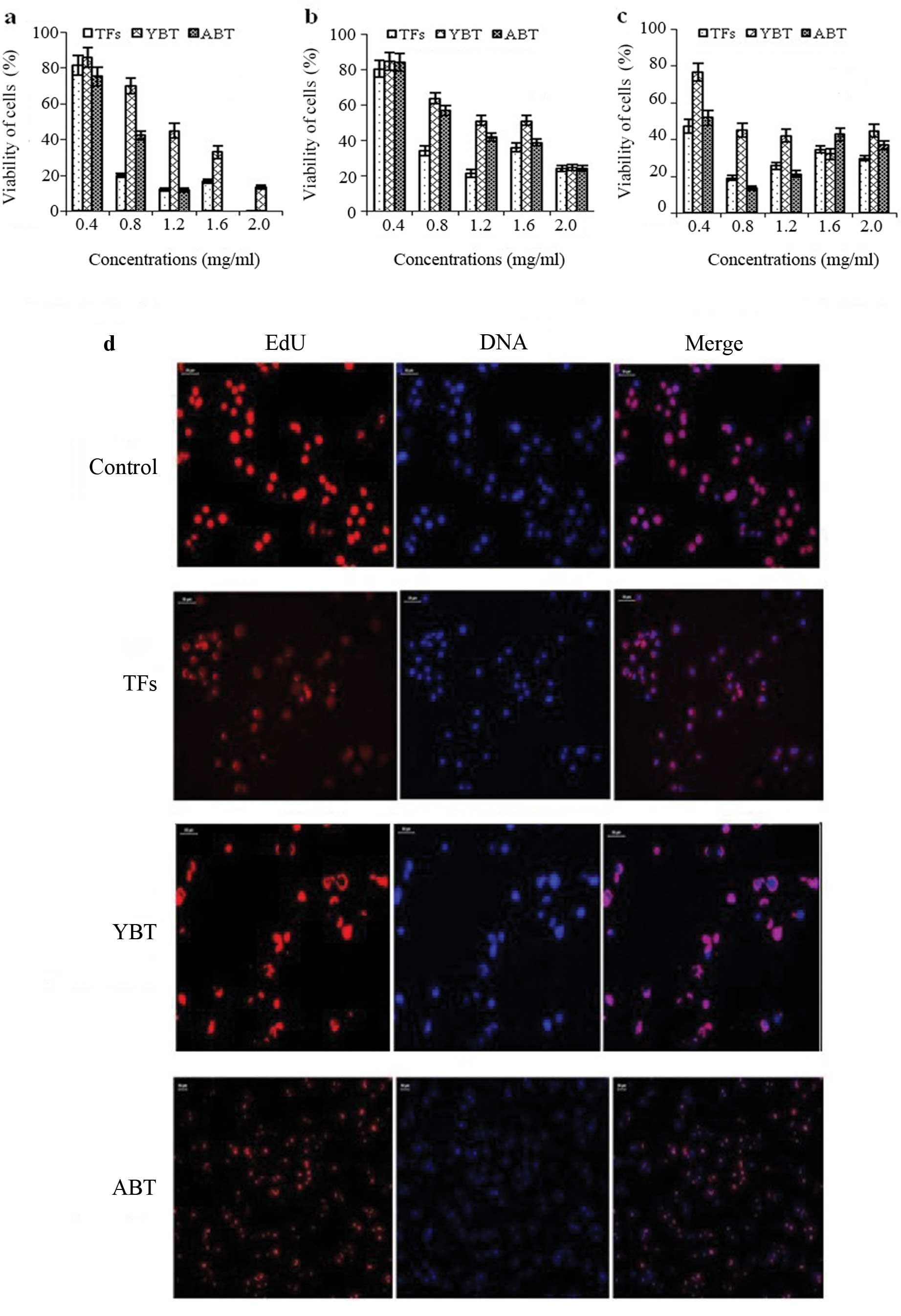
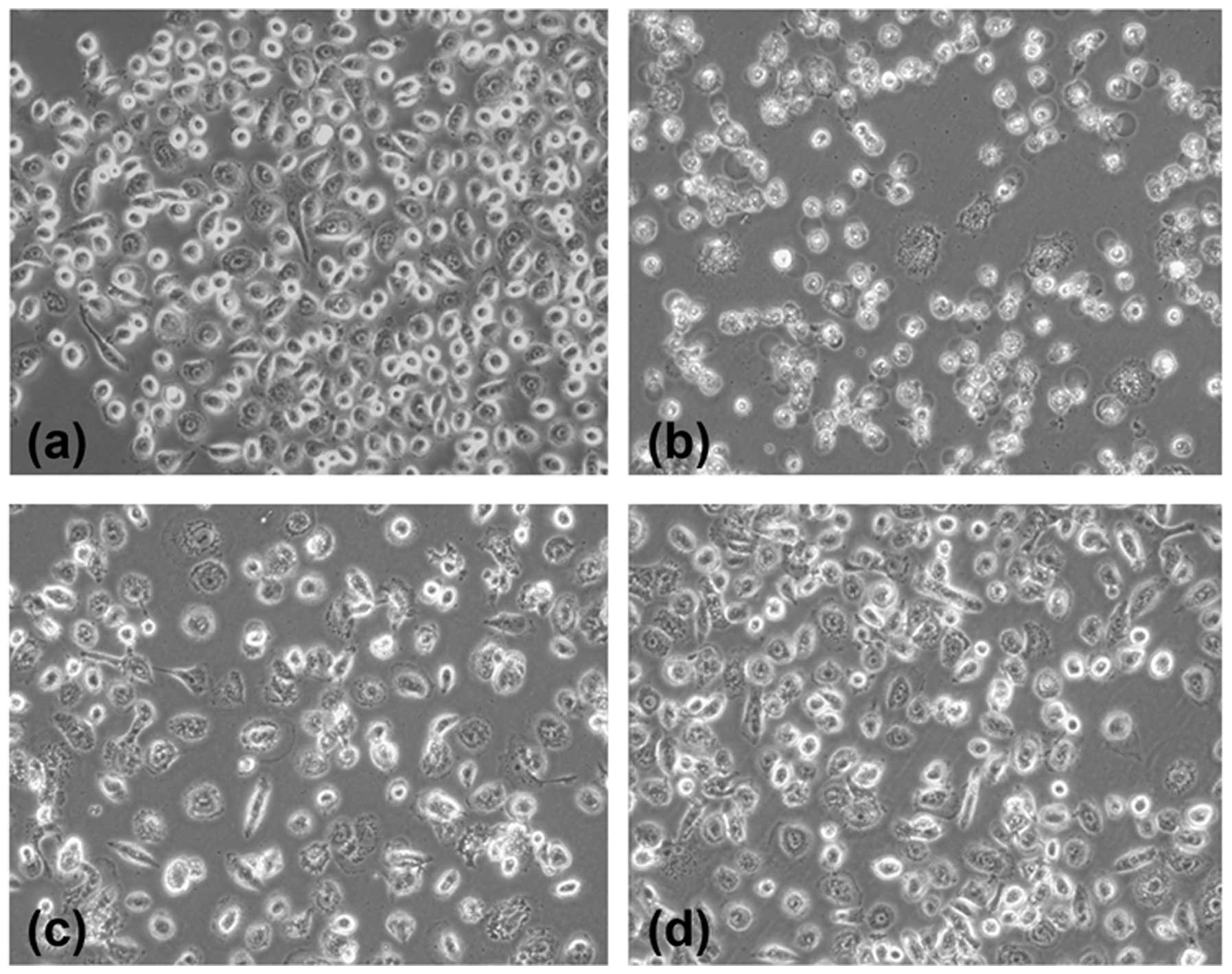
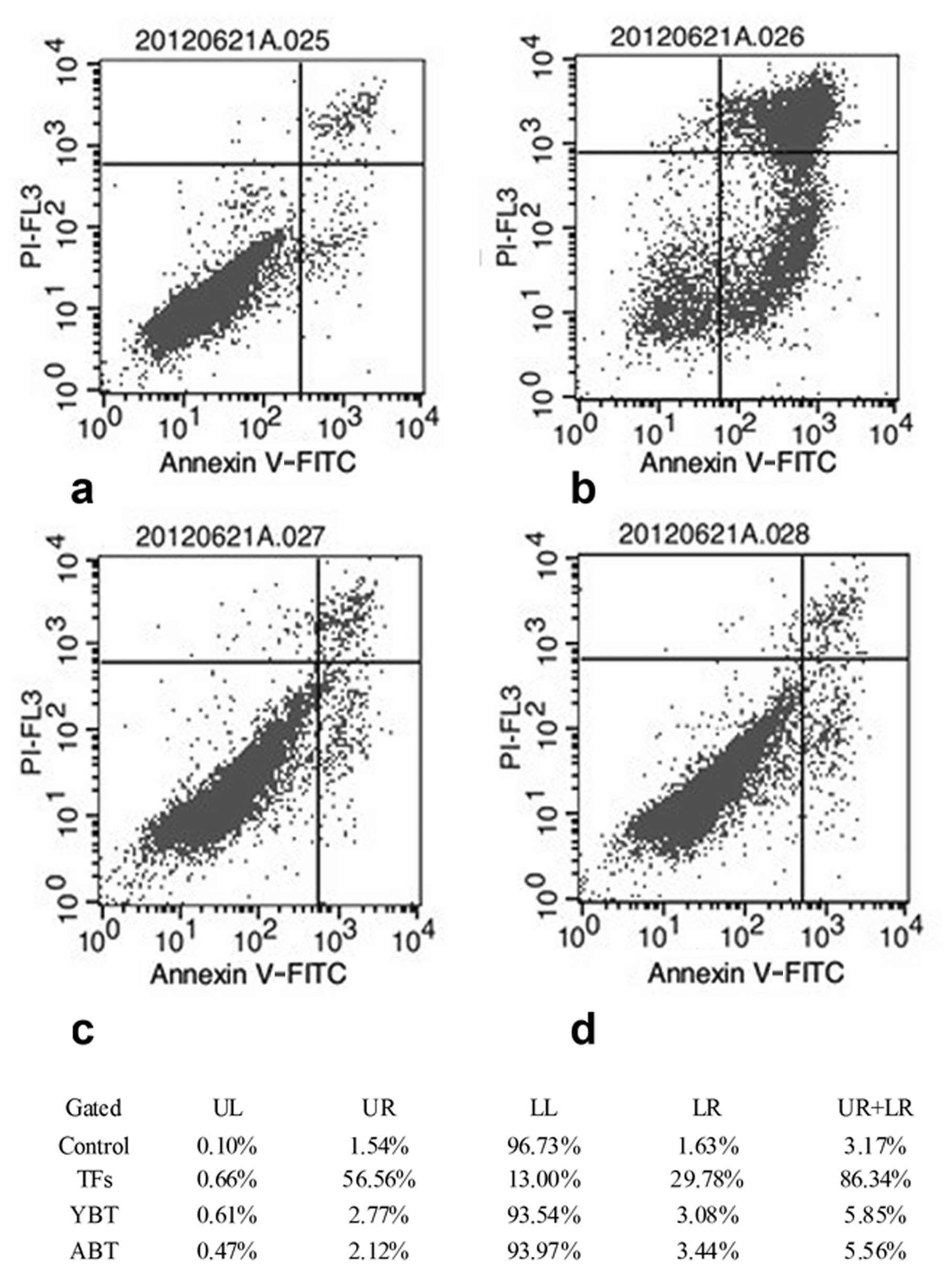
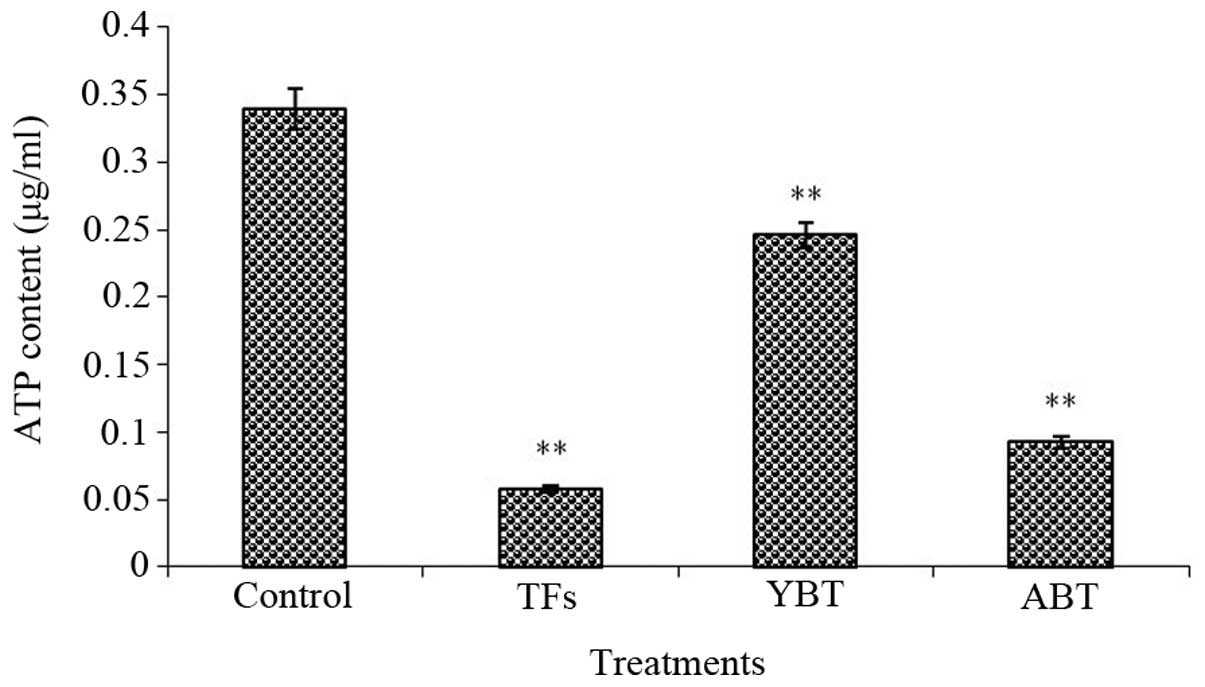
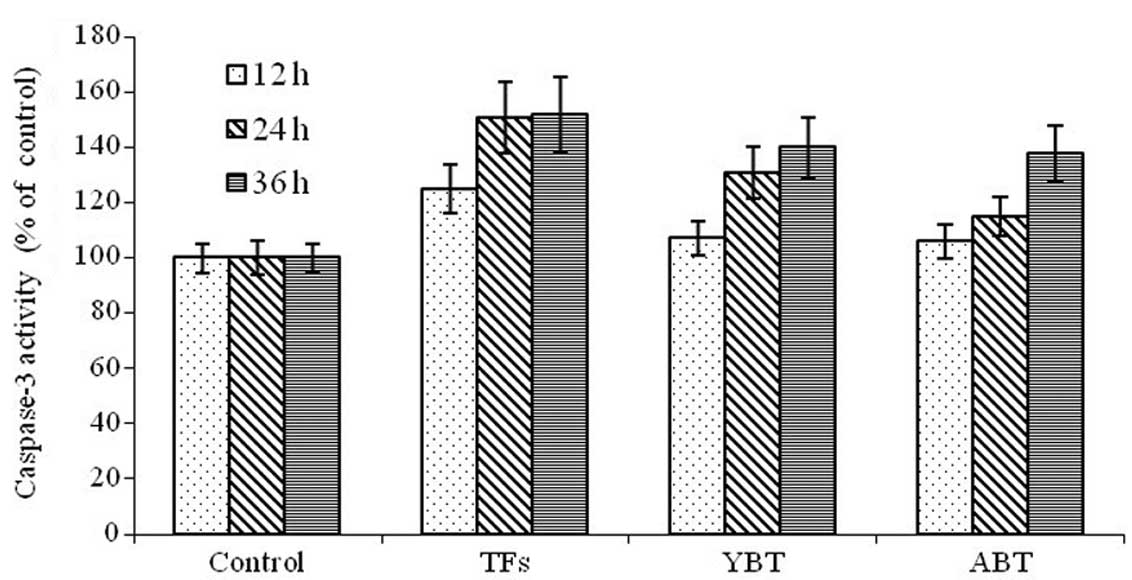
Cancer of the prostate gland is the most common invasive malignancy and the second leading cause of cancer-related death in human males. Many studies have shown that black tea reduces the risk of several types of cancer. We studied the effects of active extracts of black tea and the black tea polyphenols theaflavins (TFs), on the cellular proliferation and mitochondria of the human prostate cancer cell line PC-3. Our studies revealed that Yinghong black tea extracts (YBT), Assam black tea extracts (ABT) and TFs inhibited cell proliferation in a dose-dependent manner. We also showed that TFs, YBT and ABT affected the morphology of PC-3 cells and induced apoptosis or even necrosis in PC-3 cells. In addition, it was observed that the samples significantly caused loss of the mitochondrial membrane potential, release of cytochrome c from the intermembrane space into the cytosol, decrease of the ATP content and activation of caspase-3 compared with the control. Taken together, these findings suggest that black tea could act as an effective anti-proliferative agent in PC-3 cells, and TFs, YBT and ABT induced apoptosis of PC-3 cells through mitochondrial dysfunction.
View Figures

Figure 1

Figure 2

Figure 3

Figure 4

Figure 5

Figure 6

Figure 7

Figure 8

View References

1 

Ankolekar C, Terry T, Johnson K, et al: Anti-hyperglycemia properties of tea (Camellia sinensis) bioactives using in vitro assay models and influence of extraction time. J Med Food. 14:1190–1197. 2011.PubMed/NCBI

2 

Elbling L, Herbacek I, Weiss RM, et al: Hydrogen peroxide mediates EGCG-induced antioxidant protection in human keratinocytes. Free Radic Biol Med. 49:1444–1452. 2010. View Article : Google Scholar : PubMed/NCBI

3 

Rains TM, Agarwal S and Maki KC: Antiobesity effects of green tea catechins: a mechanistic review. J Nutr Biochem. 22:1–7. 2011. View Article : Google Scholar : PubMed/NCBI

4 

Tran PL, Kim SA, Choi HS, Yoon JH and Ahn SG: Epigallocatechin-3-gallate suppresses the expression of HSP70 and HSP90 and exhibits anti-tumor activity in vitro and in vivo. BMC Cancer. 10:2762010. View Article : Google Scholar : PubMed/NCBI

5 

Yang Z, Jie G, Dong F, et al: Radical-scavenging abilities and antioxidant properties of theaflavins and their gallate esters in H2O2-mediated oxidative damage system in the HPF-1 cells. Toxicol In Vitro. 22:1250–1256. 2008. View Article : Google Scholar : PubMed/NCBI

6 

Bushman JL: Green tea and cancer in humans: a review of the literature. Nutr Cancer. 31:151–159. 1998. View Article : Google Scholar : PubMed/NCBI

7 

Roy P, George J, Srivastava S, Tyagi S and Shukla Y: Inhibitory effects of tea polyphenols by targeting cyclooxygenase-2 through regulation of nuclear factor kappa B, Akt and p53 in rat mammary tumors. Invest New Drugs. 29:225–231. 2011. View Article : Google Scholar : PubMed/NCBI

8 

Uchiyama S, Taniguchi Y, Saka A, Yoshida A and Yajima H: Prevention of diet-induced obesity by dietary black tea polyphenols extract in vitro and in vivo. Nutrition. 27:287–292. 2011. View Article : Google Scholar : PubMed/NCBI

9 

Wan XC: Tea Biochemistry. China Agriculture Press; Beijing: 2003, (In Chinese).

10 

Halder J and Bhaduri AN: Protective role of black tea against oxidative damage of human red blood cells. Biochem Biophys Res Commun. 244:903–907. 1998. View Article : Google Scholar : PubMed/NCBI

11 

Leung LK, Su Y, Chen R, et al: Theaflavins in black tea and catechins in green tea are equally effective antioxidants. J Nutr. 131:2248–2251. 2001.PubMed/NCBI

12 

Ye XQ, Li Q, Wang GH, et al: Mitochondrial and energy metabolism-related properties as novel indicators of lung cancer stem cells. Int J Cancer. 129:820–831. 2011. View Article : Google Scholar : PubMed/NCBI

13 

Gomez-Zaera M, Abril J, Gonzalez L, et al: Identification of somatic and germline mitochondrial DNA sequence variants in prostate cancer patients. Mutat Res. 595:42–51. 2006. View Article : Google Scholar : PubMed/NCBI

14 

Salido M, Gonzalez JL and Vilches J: Loss of mitochondrial membrane potential is inhibited by bombesin in etoposide-induced apoptosis in PC-3 prostate carcinoma cells. Mol Cancer Ther. 6:1292–1299. 2007. View Article : Google Scholar : PubMed/NCBI

15 

Qi X, Cai Y, Gong L, et al: Role of mitochondrial permeability transition in human renal tubular epithelial cell death induced by aristolochic acid. Toxicol Appl Pharmacol. 222:105–110. 2007. View Article : Google Scholar : PubMed/NCBI

16 

Saad F and Schulman CC: Role of bisphosphonates in prostate cancer. Eur Urol. 45:26–34. 2004. View Article : Google Scholar : PubMed/NCBI

17 

Taplin ME and Balk SP: Androgen receptor: a key molecule in the progression of prostate cancer to hormone independence. J Cell Biochem. 91:483–490. 2004. View Article : Google Scholar : PubMed/NCBI

18 

Sun SL, He GQ, Yu HN, et al: Free Zn2+ enhances inhibitory effects of EGCG on the growth of PC-3 cells. Mol Nutr Food Res. 52:465–471. 2008.

19 

Yang J, Yu H, Sun S, et al: Mechanism of free Zn2+ enhancing inhibitory effects of EGCG on the growth of PC-3 cells: interactions with mitochondria. Biol Trace Elem Res. 131:298–310. 2009.

20 

Dey R and Moraes CT: Lack of oxidative phosphorylation and low mitochondrial membrane potential decrease susceptibility to apoptosis and do not modulate the protective effect of Bcl-x(L) in osteosarcoma cells. J Biol Chem. 275:7087–7094. 2000. View Article : Google Scholar

21 

Narita M, Shimizu S, Ito T, Chittenden T and Lutz RJ: Bax interacts with the permeability transition pore to induce permeability transition and cytochrome c release in isolated mitochondria. Proc Natl Acad Sci USA. 95:14681–14686. 1998. View Article : Google Scholar : PubMed/NCBI

22 

Lemire J, Mailloux R and Appanna VD: Zinc toxicity alters mitochondrial metabolism and leads to decreased ATP production in hepatocytes. J Appl Toxicol. 28:175–182. 2008. View Article : Google Scholar : PubMed/NCBI

23 

Rebbeck TR: Genetics, disparities, and prostate cancer. LDI Issue Brief. 10:1–4. 2005.PubMed/NCBI

24 

Carter HB, Pearson JD, Metter EJ, et al: Longitudinal evaluation of prostate-specific antigen levels in men with and without prostate disease. JAMA. 267:2215–2220. 1992. View Article : Google Scholar : PubMed/NCBI

25 

Barza M and Cuchural G: The penetration of antibiotics into the prostate in chronic bacterial prostatitis. Eur J Clin Microbiol. 3:503–505. 1984. View Article : Google Scholar : PubMed/NCBI

26 

Chen X, Yu H, Shen S and Yin J: Role of Zn2+ in epigallocatechin gallate affecting the growth of PC-3 cells. J Trace Elem Med Biol. 21:125–131. 2007.

27 

Zhang LC, Yu HN, Sun SL, et al: Investigations of the cytotoxicity of epigallocatechin-3-gallate against PC-3 cells in the presence of Cd2+ in vitro. Toxicol In Vitro. 22:953–960. 2008. View Article : Google Scholar : PubMed/NCBI

28 

Kuroda Y and Hara Y: Antimutagenic and anticarcinogenic activity of tea polyphenols. Mutat Res. 436:69–97. 1999. View Article : Google Scholar : PubMed/NCBI

29 

Araújo JR, Gonçalves P and Martel F: Chemopreventive effect of dietary polyphenols in colorectal cancer cell lines. Nutr Res. 31:77–87. 2011.PubMed/NCBI

30 

Lepley DM, Li B, Birt DF and Pelling JC: The chemopreventive flavonoid apigenin induces G2/M arrest in keratinocytes. Carcinogenesis. 17:2367–2375. 1996. View Article : Google Scholar : PubMed/NCBI

31 

Hall PA, Coates PJ, Ansari B and Hopwood D: Regulation of cell number in the mammalian gastrointestinal tract: the importance of apoptosis. J Cell Sci. 107:3569–3577. 1994.PubMed/NCBI

32 

Wiseman S, Mulder T and Rietveld A: Tea flavonoids: bioavailability in vivo and effects on cell signaling pathways in vitro. Antioxid Redox Signal. 3:1009–1021. 2001. View Article : Google Scholar : PubMed/NCBI

33 

Weisburger JH, Rivenson A, Garr K and Aliaga C: Tea, or tea and milk, inhibit mammary gland and colon carcinogenesis in rats. Cancer Lett. 114:323–327. 1997. View Article : Google Scholar : PubMed/NCBI

34 

Liang YC, Chen YC, Lin YL, et al: Suppression of extracellular signals and cell proliferation by the black tea polyphenol, theaflavin-3,3′-digallate. Carcinogenesis. 20:733–736. 1999.PubMed/NCBI

35 

Stoner GD and Mukhtar H: Polyphenols as cancer chemopreventive agents. J Cell Biochem. 22:169–180. 1995. View Article : Google Scholar : PubMed/NCBI

36 

Yang GY, Liu Z, Seril DN, et al: Black tea constituents, theaflavins, inhibit 4-(methylnitrosamino)-1-(3-pyridyl)-1-butanone (NNK)-induced lung tumorigenesis in A/J mice. Carcinogenesis. 18:2361–2365. 1997. View Article : Google Scholar : PubMed/NCBI

37 

Weisburger JH, Rivenson A, Reinhardt J, et al: Effect of black tea on azoxymethane-induced colon cancer. Carcinogenesis. 19:229–232. 1998. View Article : Google Scholar : PubMed/NCBI

38 

Javed S, Mehrotra NK and Shukla Y: Chemopreventive effects of black tea polyphenols in mouse skin model of carcinogenesis. Biomed Environ Sci. 11:307–313. 1998.PubMed/NCBI

39 

Lu YP, Lou YR, Xie JG, et al: Inhibitory effect of black tea on the growth of established skin tumors in mice: effects on tumor size, apoptosis, mitosis and bromodeoxyuridine incorporation into DNA. Carcinogenesis. 18:2163–2169. 1997. View Article : Google Scholar : PubMed/NCBI

40 

Yang GY, Liao J, Li C, et al: Effect of black and green tea polyphenols on c-jun phosphorylation and H2O2 production in transformed and non-transformed human bronchial cell lines: possible mechanisms of cell growth inhibition and apoptosis induction. Carcinogenesis. 21:2035–2039. 2000.PubMed/NCBI

41 

Lu J, Ho CT, Ghai G and Chen KY: Differential effects of theaflavin monogallates on cell growth, apoptosis, and Cox-2 gene expression in cancerous versus normal cells. Cancer Res. 60:6465–6471. 2000.

42 

Kundu T, Dey S, Roy M, Siddiqi M and Bhattacharya RK: Induction of apoptosis in human leukemia cells by black tea and its polyphenol theaflavin. Cancer Lett. 230:111–121. 2005. View Article : Google Scholar : PubMed/NCBI

43 

Prasad S, Kaur J, Roy P, Kalra N and Shukla Y: Theaflavins induce G2/M arrest by modulating expression of p21waf1/cip1, cdc25C and cyclin B in human prostate carcinoma PC-3 cells. Life Sci. 81:1323–1331. 2007. View Article : Google Scholar : PubMed/NCBI

44 

Rietveld A and Wiseman S: Antioxidant effects of tea: evidence from human clinical trials. J Nutr. 133:S3285–S3292. 2003.PubMed/NCBI

45 

Henning SM, Aronson W, Niu Y, et al: Tea polyphenols and theaflavins are present in prostate tissue of humans and mice after green and black tea consumption. J Nutr. 136:1839–1843. 2003.PubMed/NCBI

46 

Wu YY, Li W, Xu Y, Jin EH and Tu YY: Evaluation of the antioxidant effects of four main theaflavin derivatives through chemiluminescence and DNA damage analyses. J Zhejiang Univ Sci B. 12:744–751. 2011. View Article : Google Scholar : PubMed/NCBI

47 

Babich H, Gottesman RT, Liebling EJ and Schuck AG: Theaflavin-3-gallate and theaflavin-3′-gallate, polyphenols in black tea with prooxidant properties. Basic Clin Pharmacol Toxicol. 103:66–74. 2008.

48 

Jhoo JW, Lo CY, Li S, et al: Stability of black tea polyphenol, theaflavin, and identification of theanaphthoquinone as its major radical reaction product. J Agric Food Chem. 53:6146–6150. 2005. View Article : Google Scholar : PubMed/NCBI

49 

Babich H, Pinsky SM, Muskin ET and Zuckerbraun HL: In vitro cytotoxicity of a theaflavin mixture from black tea to malignant, immortalized, and normal cells from the human oral cavity. Toxicol In Vitro. 20:677–688. 2005. View Article : Google Scholar : PubMed/NCBI

50 

Sakagami T, Satoh K, Ishihara M, et al: Effect of cobalt ion on radical intensity and cytotoxic activity of antioxidants. Anticancer Res. 20:3143–3150. 2000.PubMed/NCBI

51 

Weisburg JH, Weissman DB, Sedaghat T and Babich H: In vitro cytotoxicity of epigallocatechin gallate and tea extracts to cancerous and normal cells from the human oral cavity. Basic Clin Pharmacol Toxicol. 95:191–200. 2004. View Article : Google Scholar : PubMed/NCBI

52 

Zamzami N, Marchetti P, Castedo M, et al: Sequential reduction of mitochondrial transmembrane potential and generation of reactive oxygen species in early programmed cell death. J Exp Med. 182:367–377. 1995. View Article : Google Scholar

53 

Zamzami N, Marchetti P, Castedo M, et al: Reduction in mitochondrial potential constitutes an early irreversible step of programmed lymphocyte death in vivo. J Exp Med. 181:1661–1672. 1995. View Article : Google Scholar : PubMed/NCBI

54 

Carew JS and Huang P: Mitochondrial defects in cancer. Mol Cancer. 1:92002. View Article : Google Scholar

55 

Wang X: The expanding role of mitochondria in apoptosis. Genes Dev. 15:2922–2933. 2001.PubMed/NCBI

56 

Budihardjo I, Oliver H, Lutter M, Luo X and Wang X: Biochemical pathways of caspase activation during apoptosis. Annu Rev Cell Dev Biol. 15:269–290. 1999. View Article : Google Scholar : PubMed/NCBI

57 

Thornberry NA and Lazebnik Y: Caspases: enemies within. Science. 281:1312–1316. 1998. View Article : Google Scholar : PubMed/NCBI

58 

Armstrong JS: The role of the mitochondrial permeability transition in cell death. Mitochondrion. 6:225–234. 2006. View Article : Google Scholar : PubMed/NCBI

59 

Tsujimoto Y, Nakagawa T and Shimizu S: Mitochondrial membrane permeability transition and cell death. Biochim Biophys Acta. 1757:1297–1300. 2006. View Article : Google Scholar : PubMed/NCBI

60 

Jung JY, Mo HC, Yang KH, et al: Inhibition by epigallocatechin gallate of CoCl2-induced apoptosis in rat PC12 cells. Life Sci. 80:1355–1363. 2007. View Article : Google Scholar : PubMed/NCBI

61 

Behera MA, Dai QS, Garde R, et al: Progesterone stimulates mitochondrial activity with subsequent inhibition of apoptosis in MCF-10A benign breast epithelial cells. AM J Physiol Endocrinol Metab. 297:E1089–E1096. 2009. View Article : Google Scholar

62 

Kalra N, Seth K, Prasad S, et al: Theaflavins induced apoptosis of LNCaP cells is mediated through induction of p53, down-regulation of NF-kappa B and mitogen-activated protein kinases pathways. Life Sci. 80:2137–2146. 2007. View Article : Google Scholar : PubMed/NCBI

63 

Lee HH, Ho CT and Lin JK: Theaflavin-3,3′-digallate and penta-O-galloyl-beta-D-glucose inhibit rat liver microsomal 5alpha-reductase activity and the expression of androgen receptor in LNCaP prostate cancer cells. Carcinogenesis. 25:1109–1118. 2004.

64 

Tachibana H, Koga K, Fujimura Y and Yamada K: A receptor for green tea polyphenol EGCG. Nat Struct Mol Biol. 11:380–381. 2004. View Article : Google Scholar : PubMed/NCBI

65 

Umeda D, Tachibana H and Yamada K: Epigallocatechin-3-O-gallate disrupts stress fibers and the contractile ring by reducing myosin regulatory light chain phosphorylation mediated through the target molecule 67 kDa laminin receptor. Biochem Biophys Res Commun. 333:628–635. 2005. View Article : Google Scholar

66 

Fujimura Y, Umeda D, Kiyohara Y and Sunada Y: The involvement of the 67 kDa laminin receptor-mediated modulation of cytoskeleton in the degranulation inhibition induced by epigallocatechin-3-O-gallate. Biochem Biophys Res Commun. 348:524–531. 2006. View Article : Google Scholar : PubMed/NCBI

Related Articles

  • Abstract
  • View
  • Download
  • Twitter
Copy and paste a formatted citation
Spandidos Publications style
Sun S, Pan S, Miao A, Ling C, Pang S, Tang J, Chen D and Zhao C: Active extracts of black tea (Camellia Sinensis) induce apoptosis of PC-3 prostate cancer cells via mitochondrial dysfunction. Oncol Rep 30: 763-772, 2013.
APA
Sun, S., Pan, S., Miao, A., Ling, C., Pang, S., Tang, J. ... Zhao, C. (2013). Active extracts of black tea (Camellia Sinensis) induce apoptosis of PC-3 prostate cancer cells via mitochondrial dysfunction. Oncology Reports, 30, 763-772. https://doi.org/10.3892/or.2013.2504
MLA
Sun, S., Pan, S., Miao, A., Ling, C., Pang, S., Tang, J., Chen, D., Zhao, C."Active extracts of black tea (Camellia Sinensis) induce apoptosis of PC-3 prostate cancer cells via mitochondrial dysfunction". Oncology Reports 30.2 (2013): 763-772.
Chicago
Sun, S., Pan, S., Miao, A., Ling, C., Pang, S., Tang, J., Chen, D., Zhao, C."Active extracts of black tea (Camellia Sinensis) induce apoptosis of PC-3 prostate cancer cells via mitochondrial dysfunction". Oncology Reports 30, no. 2 (2013): 763-772. https://doi.org/10.3892/or.2013.2504
Copy and paste a formatted citation
x
Spandidos Publications style
Sun S, Pan S, Miao A, Ling C, Pang S, Tang J, Chen D and Zhao C: Active extracts of black tea (Camellia Sinensis) induce apoptosis of PC-3 prostate cancer cells via mitochondrial dysfunction. Oncol Rep 30: 763-772, 2013.
APA
Sun, S., Pan, S., Miao, A., Ling, C., Pang, S., Tang, J. ... Zhao, C. (2013). Active extracts of black tea (Camellia Sinensis) induce apoptosis of PC-3 prostate cancer cells via mitochondrial dysfunction. Oncology Reports, 30, 763-772. https://doi.org/10.3892/or.2013.2504
MLA
Sun, S., Pan, S., Miao, A., Ling, C., Pang, S., Tang, J., Chen, D., Zhao, C."Active extracts of black tea (Camellia Sinensis) induce apoptosis of PC-3 prostate cancer cells via mitochondrial dysfunction". Oncology Reports 30.2 (2013): 763-772.
Chicago
Sun, S., Pan, S., Miao, A., Ling, C., Pang, S., Tang, J., Chen, D., Zhao, C."Active extracts of black tea (Camellia Sinensis) induce apoptosis of PC-3 prostate cancer cells via mitochondrial dysfunction". Oncology Reports 30, no. 2 (2013): 763-772. https://doi.org/10.3892/or.2013.2504
Follow us
  • Twitter
  • LinkedIn
  • Facebook
About
  • Spandidos Publications
  • Careers
  • Cookie Policy
  • Privacy Policy
How can we help?
  • Help
  • Live Chat
  • Contact
  • Email to our Support Team