Spandidos Publications Logo
  • About
    • About Spandidos
    • Aims and Scopes
    • Abstracting and Indexing
    • Editorial Policies
    • Reprints and Permissions
    • Job Opportunities
    • Terms and Conditions
    • Contact
  • Journals
    • All Journals
    • Oncology Letters
      • Oncology Letters
      • Information for Authors
      • Editorial Policies
      • Editorial Board
      • Aims and Scope
      • Abstracting and Indexing
      • Bibliographic Information
      • Archive
    • International Journal of Oncology
      • International Journal of Oncology
      • Information for Authors
      • Editorial Policies
      • Editorial Board
      • Aims and Scope
      • Abstracting and Indexing
      • Bibliographic Information
      • Archive
    • Molecular and Clinical Oncology
      • Molecular and Clinical Oncology
      • Information for Authors
      • Editorial Policies
      • Editorial Board
      • Aims and Scope
      • Abstracting and Indexing
      • Bibliographic Information
      • Archive
    • Experimental and Therapeutic Medicine
      • Experimental and Therapeutic Medicine
      • Information for Authors
      • Editorial Policies
      • Editorial Board
      • Aims and Scope
      • Abstracting and Indexing
      • Bibliographic Information
      • Archive
    • International Journal of Molecular Medicine
      • International Journal of Molecular Medicine
      • Information for Authors
      • Editorial Policies
      • Editorial Board
      • Aims and Scope
      • Abstracting and Indexing
      • Bibliographic Information
      • Archive
    • Biomedical Reports
      • Biomedical Reports
      • Information for Authors
      • Editorial Policies
      • Editorial Board
      • Aims and Scope
      • Abstracting and Indexing
      • Bibliographic Information
      • Archive
    • Oncology Reports
      • Oncology Reports
      • Information for Authors
      • Editorial Policies
      • Editorial Board
      • Aims and Scope
      • Abstracting and Indexing
      • Bibliographic Information
      • Archive
    • Molecular Medicine Reports
      • Molecular Medicine Reports
      • Information for Authors
      • Editorial Policies
      • Editorial Board
      • Aims and Scope
      • Abstracting and Indexing
      • Bibliographic Information
      • Archive
    • World Academy of Sciences Journal
      • World Academy of Sciences Journal
      • Information for Authors
      • Editorial Policies
      • Editorial Board
      • Aims and Scope
      • Abstracting and Indexing
      • Bibliographic Information
      • Archive
    • International Journal of Functional Nutrition
      • International Journal of Functional Nutrition
      • Information for Authors
      • Editorial Policies
      • Editorial Board
      • Aims and Scope
      • Abstracting and Indexing
      • Bibliographic Information
      • Archive
    • International Journal of Epigenetics
      • International Journal of Epigenetics
      • Information for Authors
      • Editorial Policies
      • Editorial Board
      • Aims and Scope
      • Abstracting and Indexing
      • Bibliographic Information
      • Archive
    • Medicine International
      • Medicine International
      • Information for Authors
      • Editorial Policies
      • Editorial Board
      • Aims and Scope
      • Abstracting and Indexing
      • Bibliographic Information
      • Archive
  • Articles
  • Information
    • Information for Authors
    • Information for Reviewers
    • Information for Librarians
    • Information for Advertisers
    • Conferences
  • Language Editing
Spandidos Publications Logo
  • About
    • About Spandidos
    • Aims and Scopes
    • Abstracting and Indexing
    • Editorial Policies
    • Reprints and Permissions
    • Job Opportunities
    • Terms and Conditions
    • Contact
  • Journals
    • All Journals
    • Biomedical Reports
      • Information for Authors
      • Editorial Policies
      • Editorial Board
      • Aims and Scope
      • Abstracting and Indexing
      • Bibliographic Information
      • Archive
    • Experimental and Therapeutic Medicine
      • Information for Authors
      • Editorial Policies
      • Editorial Board
      • Aims and Scope
      • Abstracting and Indexing
      • Bibliographic Information
      • Archive
    • International Journal of Epigenetics
      • Information for Authors
      • Editorial Policies
      • Editorial Board
      • Aims and Scope
      • Abstracting and Indexing
      • Bibliographic Information
      • Archive
    • International Journal of Functional Nutrition
      • Information for Authors
      • Editorial Policies
      • Editorial Board
      • Aims and Scope
      • Abstracting and Indexing
      • Bibliographic Information
      • Archive
    • International Journal of Molecular Medicine
      • Information for Authors
      • Editorial Policies
      • Editorial Board
      • Aims and Scope
      • Abstracting and Indexing
      • Bibliographic Information
      • Archive
    • International Journal of Oncology
      • Information for Authors
      • Editorial Policies
      • Editorial Board
      • Aims and Scope
      • Abstracting and Indexing
      • Bibliographic Information
      • Archive
    • Medicine International
      • Information for Authors
      • Editorial Policies
      • Editorial Board
      • Aims and Scope
      • Abstracting and Indexing
      • Bibliographic Information
      • Archive
    • Molecular and Clinical Oncology
      • Information for Authors
      • Editorial Policies
      • Editorial Board
      • Aims and Scope
      • Abstracting and Indexing
      • Bibliographic Information
      • Archive
    • Molecular Medicine Reports
      • Information for Authors
      • Editorial Policies
      • Editorial Board
      • Aims and Scope
      • Abstracting and Indexing
      • Bibliographic Information
      • Archive
    • Oncology Letters
      • Information for Authors
      • Editorial Policies
      • Editorial Board
      • Aims and Scope
      • Abstracting and Indexing
      • Bibliographic Information
      • Archive
    • Oncology Reports
      • Information for Authors
      • Editorial Policies
      • Editorial Board
      • Aims and Scope
      • Abstracting and Indexing
      • Bibliographic Information
      • Archive
    • World Academy of Sciences Journal
      • Information for Authors
      • Editorial Policies
      • Editorial Board
      • Aims and Scope
      • Abstracting and Indexing
      • Bibliographic Information
      • Archive
  • Articles
  • Information
    • For Authors
    • For Reviewers
    • For Librarians
    • For Advertisers
    • Conferences
  • Language Editing
Login Register Submit
  • This site uses cookies
  • You can change your cookie settings at any time by following the instructions in our Cookie Policy. To find out more, you may read our Privacy Policy.

    I agree
Search articles by DOI, keyword, author or affiliation
Search
Advanced Search
presentation
Oncology Reports
Join Editorial Board Propose a Special Issue
Print ISSN: 1021-335X Online ISSN: 1791-2431
Journal Cover
July-2014 Volume 32 Issue 1

Full Size Image

Sign up for eToc alerts
Recommend to Library

Journals

International Journal of Molecular Medicine

International Journal of Molecular Medicine

International Journal of Molecular Medicine is an international journal devoted to molecular mechanisms of human disease.

International Journal of Oncology

International Journal of Oncology

International Journal of Oncology is an international journal devoted to oncology research and cancer treatment.

Molecular Medicine Reports

Molecular Medicine Reports

Covers molecular medicine topics such as pharmacology, pathology, genetics, neuroscience, infectious diseases, molecular cardiology, and molecular surgery.

Oncology Reports

Oncology Reports

Oncology Reports is an international journal devoted to fundamental and applied research in Oncology.

Experimental and Therapeutic Medicine

Experimental and Therapeutic Medicine

Experimental and Therapeutic Medicine is an international journal devoted to laboratory and clinical medicine.

Oncology Letters

Oncology Letters

Oncology Letters is an international journal devoted to Experimental and Clinical Oncology.

Biomedical Reports

Biomedical Reports

Explores a wide range of biological and medical fields, including pharmacology, genetics, microbiology, neuroscience, and molecular cardiology.

Molecular and Clinical Oncology

Molecular and Clinical Oncology

International journal addressing all aspects of oncology research, from tumorigenesis and oncogenes to chemotherapy and metastasis.

World Academy of Sciences Journal

World Academy of Sciences Journal

Multidisciplinary open-access journal spanning biochemistry, genetics, neuroscience, environmental health, and synthetic biology.

International Journal of Functional Nutrition

International Journal of Functional Nutrition

Open-access journal combining biochemistry, pharmacology, immunology, and genetics to advance health through functional nutrition.

International Journal of Epigenetics

International Journal of Epigenetics

Publishes open-access research on using epigenetics to advance understanding and treatment of human disease.

Medicine International

Medicine International

An International Open Access Journal Devoted to General Medicine.

Journal Cover
July-2014 Volume 32 Issue 1

Full Size Image

Sign up for eToc alerts
Recommend to Library

  • Article
  • Citations
    • Cite This Article
    • Download Citation
    • Create Citation Alert
    • Remove Citation Alert
    • Cited By
  • Similar Articles
    • Related Articles (in Spandidos Publications)
    • Similar Articles (Google Scholar)
    • Similar Articles (PubMed)
  • Download PDF
  • Download XML
  • View XML
Article

Downregulation of galectin-3 causes a decrease in uPAR levels and inhibits the proliferation, migration and invasion of hepatocellular carcinoma cells

  • Authors:
    • Datong Zheng
    • Zhenzhen Hu
    • Fan He
    • Caijie Gao
    • Lijian Xu
    • Han Zou
    • Zhiwei Wu
    • Xiuqin Jiang
    • Jianjun Wang
  • View Affiliations / Copyright

    Affiliations: Department of Biological Science and Technology and State Key Laboratory of Pharmaceutical Biotechnology, School of Life Sciences, Nanjing University, Nanjing, Jiangsu 210093, P.R. China, Research Center, The Second Hospital of Nanjing Medical University, Nanjing, Jiangsu 210011, P.R. China, Immunology and Reproductive Biology Laboratory and Jiangsu Key Laboratory of Molecular Medicine, Medical School, Nanjing University, Nanjing, Jiangsu 210093, P.R. China
  • Pages: 411-418
    |
    Published online on: May 8, 2014
       https://doi.org/10.3892/or.2014.3170
  • Expand metrics +
Metrics: Total Views: 0 (Spandidos Publications: | PMC Statistics: )
Metrics: Total PDF Downloads: 0 (Spandidos Publications: | PMC Statistics: )
Cited By (CrossRef): 0 citations Loading Articles...

This article is mentioned in:


Abstract

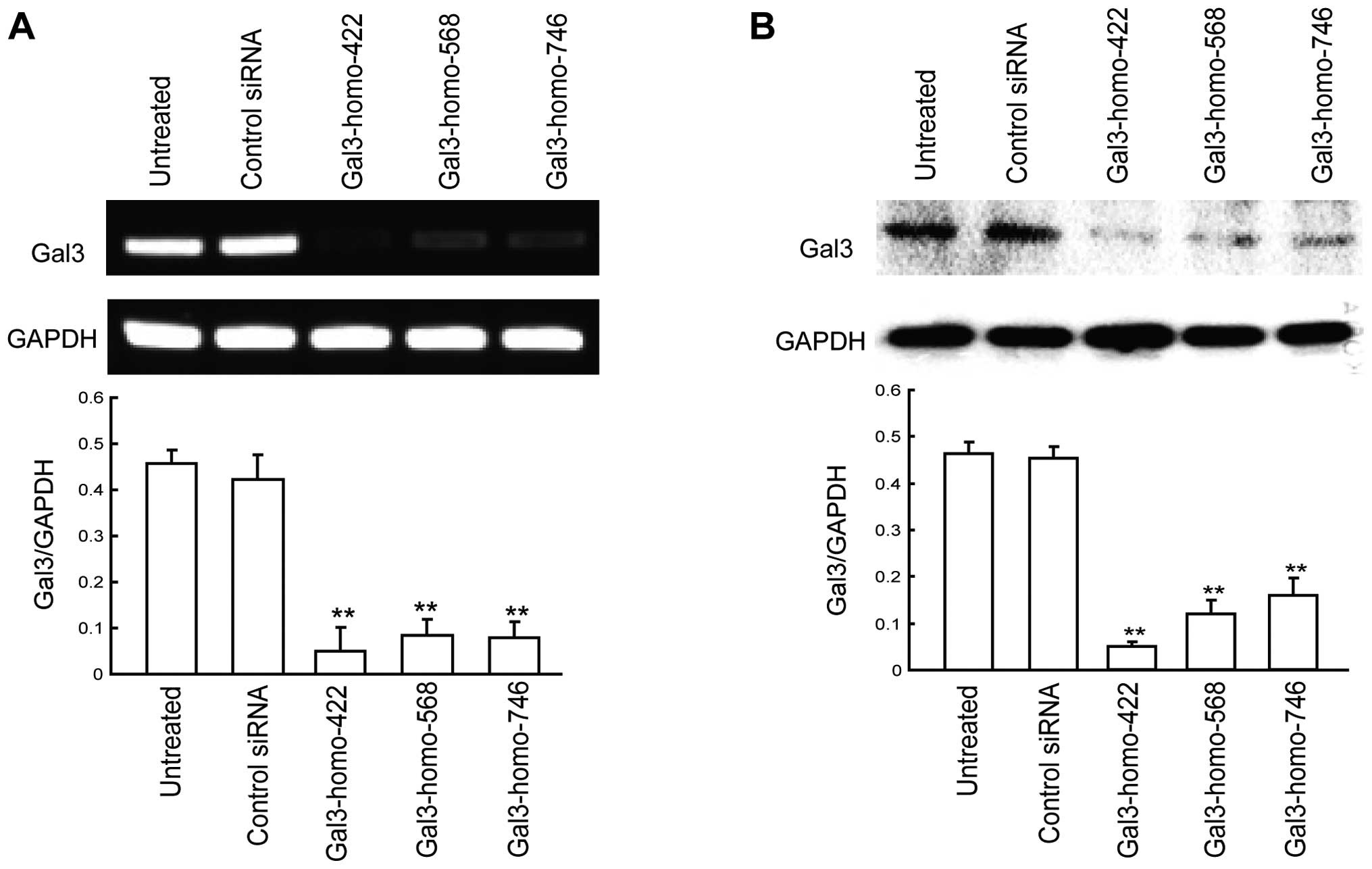
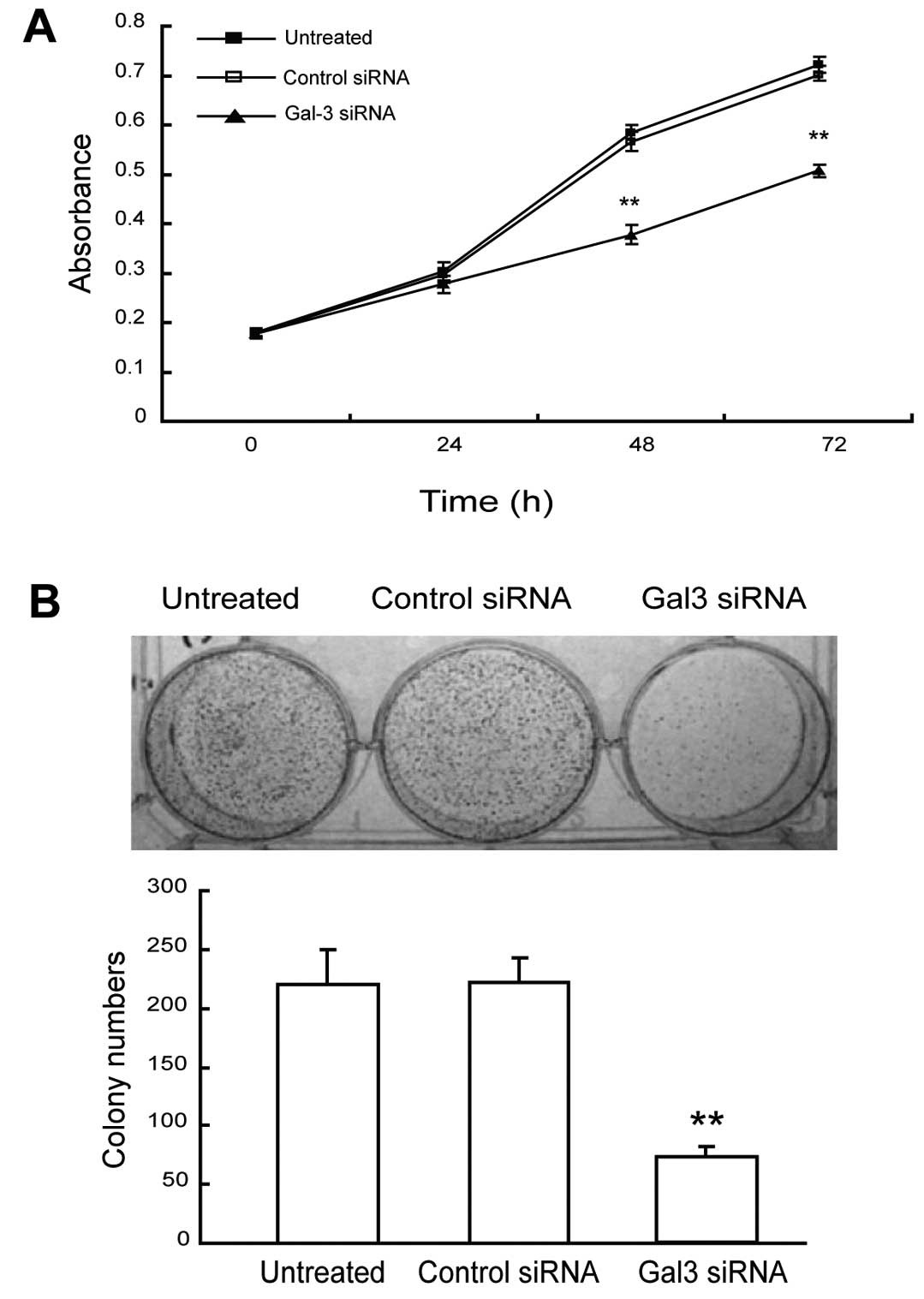
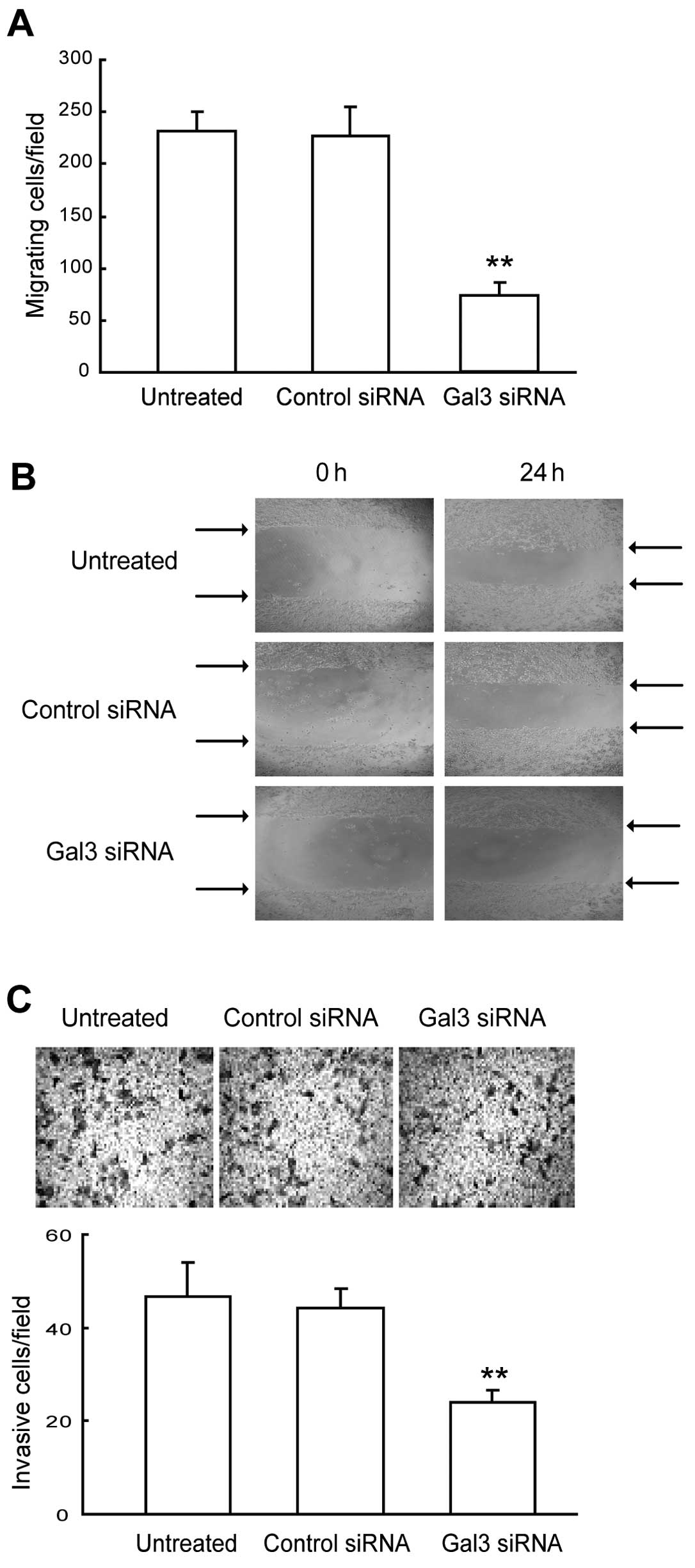
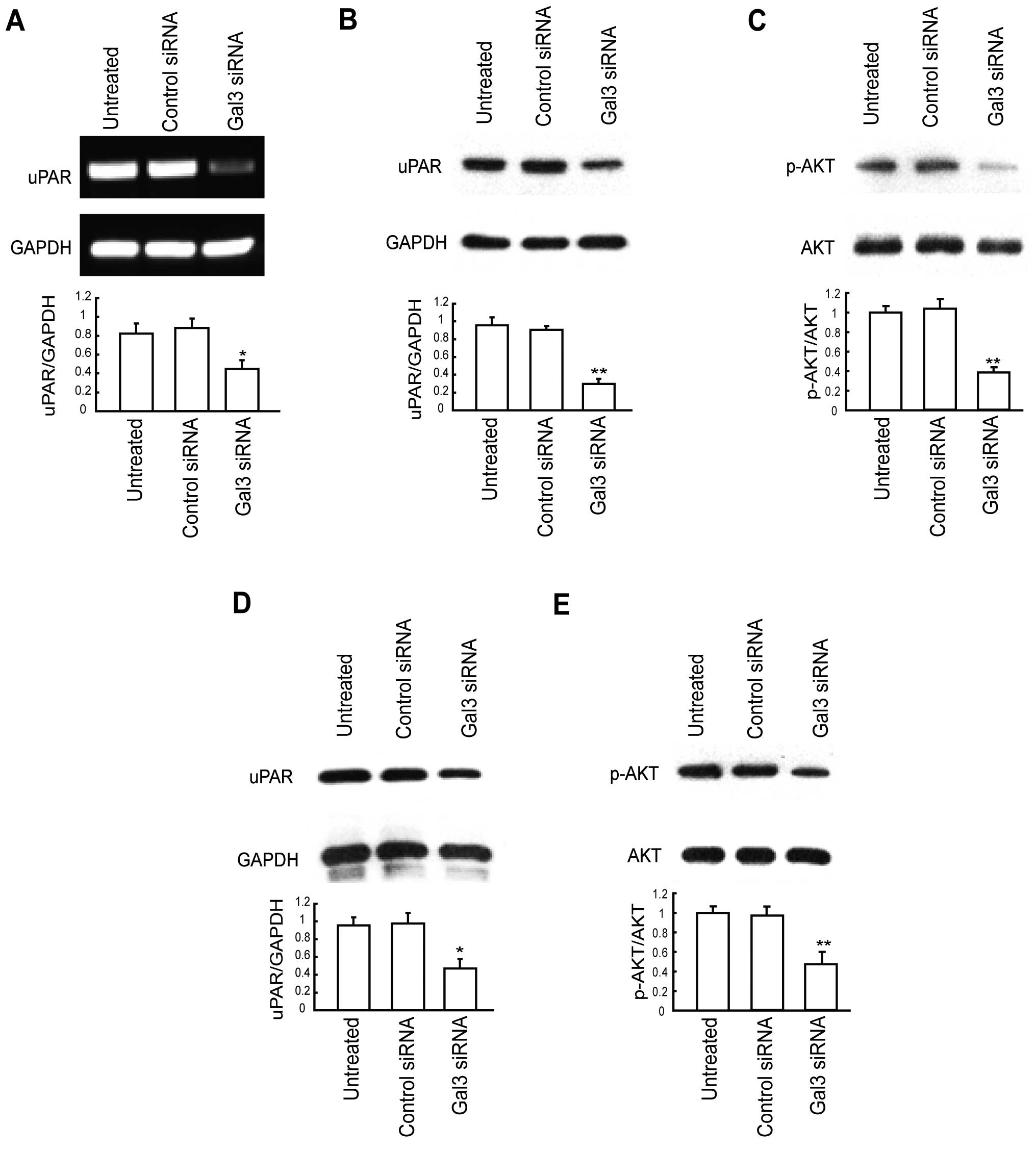
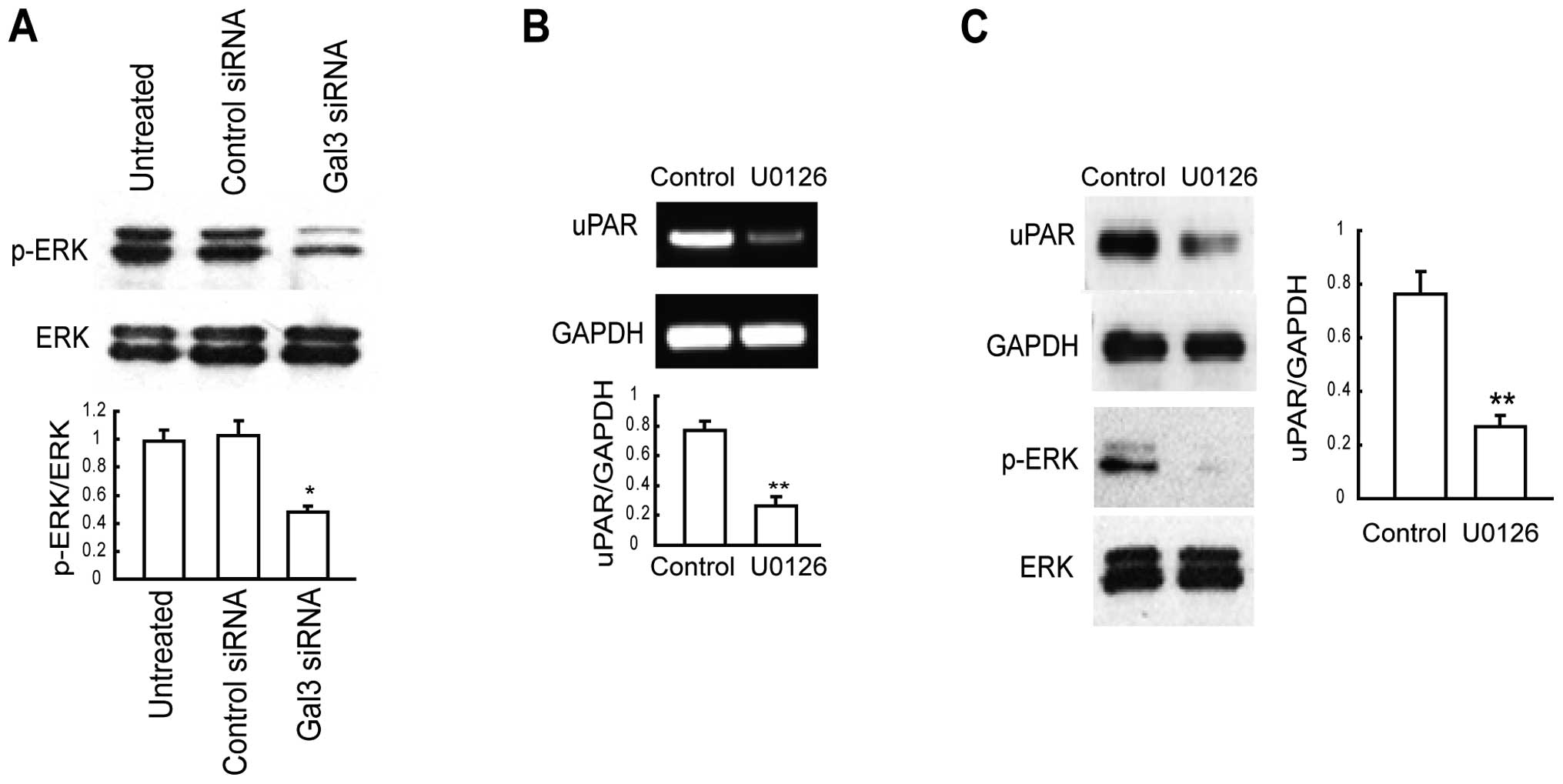
Hepatocellular carcinoma (HCC) is the third most common cause of cancer-related mortality worldwide. Galectin-3 (Gal-3), a multifunctional β-galactoside-binding protein, is highly expressed and associated with the prognosis of HCC. However, the functions of Gal-3 in HCC cells are not fully understood. To address the function of Gal-3 in HCC cells, we used small interfering RNA (siRNA) to knock down Gal-3 expression in HepG2, an HCC cell line. We found that in vitro the silencing of Gal-3 decreased the proliferative activity, colony formation ability, migratory and invasive potential of HepG2 cells. The silencing of Gal-3 significantly decreased the mRNA and protein levels of urokinase-type plasminogen activator receptor (uPAR) as well as uPAR's downstream signaling transduction pathway, including phosphorylation of AKT. Furthermore, the downregulation of Gal-3 by siRNA resulted in significantly decreased activity of the MEK/ERK signaling pathway, and the treatment of HepG2 cells with MEK/ERK inhibitor U0126 significantly reduced the mRNA and protein levels of uPAR. Taken together, our results suggest that Gal-3 modulates uPAR expression via the MEK/ERK pathway, and that Gal-3 may be a potential therapeutic target for the treatment of HCC.
View Figures

Figure 1

Figure 2

Figure 3

Figure 4

Figure 5

View References

1 

El-Serag HB, Mason AC and Key C: Trends in survival of patients with hepatocellular carcinoma between 1977 and 1996 in the United States. Hepatology. 33:62–65. 2001. View Article : Google Scholar : PubMed/NCBI

2 

Altekruse SF, McGlynn KA and Reichman ME: Hepatocellular carcinoma incidence, mortality, and survival trends in the United States from 1975 to 2005. J Clin Oncol. 27:1485–1491. 2009. View Article : Google Scholar : PubMed/NCBI

3 

Jemal A, Bray F, Center MM, et al: Global cancer statistics. CA Cancer J Clin. 61:69–90. 2011. View Article : Google Scholar

4 

Carr BI: Hepatocellular carcinoma: current management and future trends. Gastroenterology. 127:S218–S224. 2004. View Article : Google Scholar : PubMed/NCBI

5 

Takenaka Y, Fukumori T and Raz A: Galectin-3 and metastasis. Glycoconj J. 19:543–549. 2004. View Article : Google Scholar

6 

Radosavljevic G, Volarevic V, Jovanovic I, et al: The roles of Galectin-3 in autoimmunity and tumor progression. Immunol Res. 52:100–110. 2012. View Article : Google Scholar : PubMed/NCBI

7 

Saussez S, Camby I, Toubeau G and Kiss R: Galectins as modulators of tumor progression in head and neck squamous cell carcinomas. Head Neck. 29:874–884. 2007. View Article : Google Scholar : PubMed/NCBI

8 

McCubrey JA, Steelman LS, Abrams SL, et al: Roles of the RAF/MEK/ERK and PI3K/PTEN/AKT pathways in malignant transformation and drug resistance. Adv Enzyme Regul. 46:249–279. 2006. View Article : Google Scholar : PubMed/NCBI

9 

Wesley UV, Vemuganti R, Ayvaci ER and Dempsey RJ: Galectin-3 enhances angiogenic and migratory potential of microglial cells via modulation of integrin linked kinase signaling. Brain Res. 1496:1–9. 2013. View Article : Google Scholar : PubMed/NCBI

10 

Friedrichs J, Manninen A, Muller DJ and Helenius J: Galectin-3 regulates integrin alpha2beta1-mediated adhesion to collagen-I and -IV. J Biol Chem. 283:32264–32272. 2008. View Article : Google Scholar : PubMed/NCBI

11 

Piccolo E, Tinari N, Semeraro D, et al: LGALS3BP, lectin galactoside-binding soluble 3 binding protein, induces vascular endothelial growth factor in human breast cancer cells and promotes angiogenesis. J Mol Med. 91:83–94. 2013. View Article : Google Scholar

12 

Nangia-Makker P, Wang Y, Raz T, et al: Cleavage of galectin-3 by matrix metalloproteases induces angiogenesis in breast cancer. Int J Cancer. 127:2530–2541. 2010. View Article : Google Scholar : PubMed/NCBI

13 

Rossi ED, Straccia P, Palumbo M, et al: Diagnostic and prognostic role of HBME-1, galectin-3, and beta-catenin in poorly differentiated and anaplastic thyroid carcinomas. Appl Immunohistochem Mol Morphol. 21:237–241. 2013.PubMed/NCBI

14 

Yamaki S, Fujii T, Yajima R, et al: Clinicopathological significance of decreased galectin-3 expression and the long-term prognosis in patients with breast cancer. Surg Today. 43:901–905. 2013. View Article : Google Scholar : PubMed/NCBI

15 

Cui W, Sang W, Zheng S, et al: Usefulness of cytokeratin-19, galectin-3, and Hector Battifora mesothelial-1 in the diagnosis of benign and malignant thyroid nodules. Clin Lab. 58:673–680. 2012.PubMed/NCBI

16 

Blanquart C, Gueugnon F, Nguyen JM, et al: CCL2, galectin-3, and SMRP combination improves the diagnosis of mesothelioma in pleural effusions. J Thorac Oncol. 7:883–889. 2012. View Article : Google Scholar : PubMed/NCBI

17 

Paunovic I, Isic T, Havelka M, et al: Combined immunohistochemistry for thyroid peroxidase, galectin-3, CK19 and HBME-1 in differential diagnosis of thyroid tumors. APMIS. 120:368–379. 2012. View Article : Google Scholar : PubMed/NCBI

18 

Chiu CG, Strugnell SS, Griffith OL, et al: Diagnostic utility of galectin-3 in thyroid cancer. Am J Pathol. 176:2067–2081. 2010. View Article : Google Scholar : PubMed/NCBI

19 

Matsuda Y, Yamagiwa Y, Fukushima K, Ueno Y and Shimosegawa T: Expression of galectin-3 involved in prognosis of patients with hepatocellular carcinoma. Hepatol Res. 38:1098–1111. 2008. View Article : Google Scholar : PubMed/NCBI

20 

Baldini E, Sorrenti S, D’Armiento E, et al: The urokinase plasminogen activating system in thyroid cancer: clinical implications. G Chir. 33:305–310. 2012.PubMed/NCBI

21 

Laerum OD, Ovrebo K, Skarstein A, et al: Prognosis in adenocarcinomas of lower oesophagus, gastro-oesophageal junction and cardia evaluated by uPAR-immunohistochemistry. Int J Cancer. 131:558–569. 2012. View Article : Google Scholar : PubMed/NCBI

22 

Jacobsen B and Ploug M: The urokinase receptor and its structural homologue C4.4A in human cancer: expression, prognosis and pharmacological inhibition. Curr Med Chem. 15:2559–2573. 2008. View Article : Google Scholar : PubMed/NCBI

23 

Smith HW and Marshall CJ: Regulation of cell signalling by uPAR. Nat Rev Mol Cell Biol. 11:23–36. 2010. View Article : Google Scholar : PubMed/NCBI

24 

Dass K, Ahmad A, Azmi AS, Sarkar SH and Sarkar FH: Evolving role of uPA/uPAR system in human cancers. Cancer Treat Rev. 34:122–136. 2008. View Article : Google Scholar : PubMed/NCBI

25 

Mani T, Wang F, Knabe WE, et al: Small-molecule inhibition of the uPAR. uPA interaction: Synthesis, biochemical, cellular, in vivo pharmacokinetics and efficacy studies in breast cancer metastasis. Bioorg Med Chem. 21:2145–2155. 2013. View Article : Google Scholar : PubMed/NCBI

26 

Lebeau AM, Duriseti S, Murphy ST, et al: Targeting uPAR with antagonistic recombinant human antibodies in aggressive breast cancer. Cancer Res. 73:2070–2081. 2013. View Article : Google Scholar : PubMed/NCBI

27 

Soydinc HO, Duranyildiz D, Guney N, Derin D and Yasasever V: Utility of serum and urine uPAR levels for diagnosis of breast cancer. Asian Pac J Cancer Prev. 13:2887–2889. 2012. View Article : Google Scholar : PubMed/NCBI

28 

Park JS, Park JH, Khoi PN, Joo YE and Jung YD: MSP-induced RON activation upregulates uPAR expression and cell invasiveness via MAPK, AP-1 and NF-kappaB signals in gastric cancer cells. Carcinogenesis. 32:175–181. 2011. View Article : Google Scholar : PubMed/NCBI

29 

Baek MK, Park JS, Park JH, et al: Lithocholic acid upregulates uPAR and cell invasiveness via MAPK and AP-1 signaling in colon cancer cells. Cancer Lett. 290:123–128. 2010. View Article : Google Scholar : PubMed/NCBI

30 

Yoon SY, Lee YJ, Seo JH, et al: uPAR expression under hypoxic conditions depends on iNOS modulated ERK phosphorylation in the MDA-MB-231 breast carcinoma cell line. Cell Res. 16:75–81. 2006. View Article : Google Scholar : PubMed/NCBI

31 

Bessard A, Fremin C, Ezan F, Coutant A and Baffet G: MEK/ERK-dependent uPAR expression is required for motility via phosphorylation of P70S6K in human hepatocarcinoma cells. J Cell Physiol. 212:526–536. 2007. View Article : Google Scholar : PubMed/NCBI

32 

Wu KL, Huang EY, Jhu EW, et al: Overexpression of galectin-3 enhances migration of colon cancer cells related to activation of the K-Ras-Raf-Erk1/2 pathway. J Gastroenterol. 48:350–359. 2013. View Article : Google Scholar : PubMed/NCBI

33 

Song S, Ji B, Ramachandran V, et al: Overexpressed galectin-3 in pancreatic cancer induces cell proliferation and invasion by binding Ras and activating Ras signaling. PLoS One. 7:e426992012. View Article : Google Scholar : PubMed/NCBI

34 

Weng CJ, Tsai CM, Chen YC, et al: Evaluation of the association of urokinase plasminogen activator system gene polymorphisms with susceptibility and pathological development of hepatocellular carcinoma. Ann Surg Oncol. 17:3394–3401. 2010. View Article : Google Scholar : PubMed/NCBI

35 

Nangia-Makker P, Nakahara S, Hogan V and Raz A: Galectin-3 in apoptosis, a novel therapeutic target. J Bioenerg Biomembr. 39:79–84. 2007. View Article : Google Scholar

36 

Fukumori T, Kanayama HO and Raz A: The role of galectin-3 in cancer drug resistance. Drug Resist Updat. 10:101–108. 2007. View Article : Google Scholar : PubMed/NCBI

37 

Song YK, Billiar TR and Lee YJ: Role of galectin-3 in breast cancer metastasis: involvement of nitric oxide. Am J Pathol. 160:1069–1075. 2002. View Article : Google Scholar : PubMed/NCBI

38 

Bresalier RS, Yan PS, Byrd JC, Lotan R and Raz A: Expression of the endogenous galactose-binding protein galectin-3 correlates with the malignant potential of tumors in the central nervous system. Cancer. 80:776–787. 1997. View Article : Google Scholar

39 

Cvejic DS, Savin SB, Petrovic IM, et al: Galectin-3 expression in papillary thyroid carcinoma: relation to histomorphologic growth pattern, lymph node metastasis, extrathyroid invasion, and tumor size. Head Neck. 27:1049–1055. 2005. View Article : Google Scholar

40 

John CM, Leffler H, Kahl-Knutsson B, Svensson I and Jarvis GA: Truncated galectin-3 inhibits tumor growth and metastasis in orthotopic nude mouse model of human breast cancer. Clin Cancer Res. 9:2374–2383. 2003.PubMed/NCBI

41 

Kobayashi T, Shimura T, Yajima T, et al: Transient gene silencing of galectin-3 suppresses pancreatic cancer cell migration and invasion through degradation of beta-catenin. Int J Cancer. 129:2775–2786. 2011. View Article : Google Scholar : PubMed/NCBI

42 

Alge-Priglinger CS, Andre S, Schoeffl H, et al: Negative regulation of RPE cell attachment by carbohydrate-dependent cell surface binding of galectin-3 and inhibition of the ERK-MAPK pathway. Biochimie. 93:477–488. 2011. View Article : Google Scholar : PubMed/NCBI

43 

Shalom-Feuerstein R, Cooks T, Raz A and Kloog Y: Galectin-3 regulates a molecular switch from N-Ras to K-Ras usage in human breast carcinoma cells. Cancer Res. 65:7292–7300. 2005. View Article : Google Scholar : PubMed/NCBI

44 

Boscher C and Nabi IR: Galectin-3- and phospho-caveolin-1-dependent outside-in integrin signaling mediates the EGF motogenic response in mammary cancer cells. Mol Biol Cell. 24:2134–2145. 2013. View Article : Google Scholar : PubMed/NCBI

45 

Santiago-Gomez A, Barrasa JI, Olmo N, et al: 4F2hc-silencing impairs tumorigenicity of HeLa cells via modulation of galectin-3 and beta-catenin signaling, and MMP-2 expression. Biochim Biophys Acta. 1833:2045–2056. 2013. View Article : Google Scholar : PubMed/NCBI

46 

Sant’ana JM, Chammas R, Liu FT, et al: Activation of the Wnt/beta-catenin signaling pathway during oral carcinogenesis process is not influenced by the absence of galectin-3 in mice. Anticancer Res. 31:2805–2811. 2011.PubMed/NCBI

47 

Dakeng S, Duangmano S, Jiratchariyakul W, et al: Inhibition of Wnt signaling by cucurbitacin B in breast cancer cells: reduction of Wnt-associated proteins and reduced translocation of galectin-3-mediated beta-catenin to the nucleus. J Cell Biochem. 113:49–60. 2012. View Article : Google Scholar : PubMed/NCBI

48 

Kwaan HC and McMahon B: The role of plasminogen-plasmin system in cancer. Cancer Treat Res. 148:43–66. 2009. View Article : Google Scholar

49 

Zheng Q, Tang ZY, Xue Q, et al: Invasion and metastasis of hepatocellular carcinoma in relation to urokinase-type plasminogen activator, its receptor and inhibitor. J Cancer Res Clin Oncol. 126:641–646. 2000. View Article : Google Scholar : PubMed/NCBI

50 

Falasca M: PI3K/Akt signalling pathway specific inhibitors: a novel strategy to sensitize cancer cells to anti-cancer drugs. Curr Pharm Des. 16:1410–1416. 2010. View Article : Google Scholar : PubMed/NCBI

Related Articles

  • Abstract
  • View
  • Download
  • Twitter
Copy and paste a formatted citation
Spandidos Publications style
Zheng D, Hu Z, He F, Gao C, Xu L, Zou H, Wu Z, Jiang X and Wang J: Downregulation of galectin-3 causes a decrease in uPAR levels and inhibits the proliferation, migration and invasion of hepatocellular carcinoma cells. Oncol Rep 32: 411-418, 2014.
APA
Zheng, D., Hu, Z., He, F., Gao, C., Xu, L., Zou, H. ... Wang, J. (2014). Downregulation of galectin-3 causes a decrease in uPAR levels and inhibits the proliferation, migration and invasion of hepatocellular carcinoma cells. Oncology Reports, 32, 411-418. https://doi.org/10.3892/or.2014.3170
MLA
Zheng, D., Hu, Z., He, F., Gao, C., Xu, L., Zou, H., Wu, Z., Jiang, X., Wang, J."Downregulation of galectin-3 causes a decrease in uPAR levels and inhibits the proliferation, migration and invasion of hepatocellular carcinoma cells". Oncology Reports 32.1 (2014): 411-418.
Chicago
Zheng, D., Hu, Z., He, F., Gao, C., Xu, L., Zou, H., Wu, Z., Jiang, X., Wang, J."Downregulation of galectin-3 causes a decrease in uPAR levels and inhibits the proliferation, migration and invasion of hepatocellular carcinoma cells". Oncology Reports 32, no. 1 (2014): 411-418. https://doi.org/10.3892/or.2014.3170
Copy and paste a formatted citation
x
Spandidos Publications style
Zheng D, Hu Z, He F, Gao C, Xu L, Zou H, Wu Z, Jiang X and Wang J: Downregulation of galectin-3 causes a decrease in uPAR levels and inhibits the proliferation, migration and invasion of hepatocellular carcinoma cells. Oncol Rep 32: 411-418, 2014.
APA
Zheng, D., Hu, Z., He, F., Gao, C., Xu, L., Zou, H. ... Wang, J. (2014). Downregulation of galectin-3 causes a decrease in uPAR levels and inhibits the proliferation, migration and invasion of hepatocellular carcinoma cells. Oncology Reports, 32, 411-418. https://doi.org/10.3892/or.2014.3170
MLA
Zheng, D., Hu, Z., He, F., Gao, C., Xu, L., Zou, H., Wu, Z., Jiang, X., Wang, J."Downregulation of galectin-3 causes a decrease in uPAR levels and inhibits the proliferation, migration and invasion of hepatocellular carcinoma cells". Oncology Reports 32.1 (2014): 411-418.
Chicago
Zheng, D., Hu, Z., He, F., Gao, C., Xu, L., Zou, H., Wu, Z., Jiang, X., Wang, J."Downregulation of galectin-3 causes a decrease in uPAR levels and inhibits the proliferation, migration and invasion of hepatocellular carcinoma cells". Oncology Reports 32, no. 1 (2014): 411-418. https://doi.org/10.3892/or.2014.3170
Follow us
  • Twitter
  • LinkedIn
  • Facebook
About
  • Spandidos Publications
  • Careers
  • Cookie Policy
  • Privacy Policy
How can we help?
  • Help
  • Live Chat
  • Contact
  • Email to our Support Team