Spandidos Publications Logo
  • About
    • About Spandidos
    • Aims and Scopes
    • Abstracting and Indexing
    • Editorial Policies
    • Reprints and Permissions
    • Job Opportunities
    • Terms and Conditions
    • Contact
  • Journals
    • All Journals
    • Oncology Letters
      • Oncology Letters
      • Information for Authors
      • Editorial Policies
      • Editorial Board
      • Aims and Scope
      • Abstracting and Indexing
      • Bibliographic Information
      • Archive
    • International Journal of Oncology
      • International Journal of Oncology
      • Information for Authors
      • Editorial Policies
      • Editorial Board
      • Aims and Scope
      • Abstracting and Indexing
      • Bibliographic Information
      • Archive
    • Molecular and Clinical Oncology
      • Molecular and Clinical Oncology
      • Information for Authors
      • Editorial Policies
      • Editorial Board
      • Aims and Scope
      • Abstracting and Indexing
      • Bibliographic Information
      • Archive
    • Experimental and Therapeutic Medicine
      • Experimental and Therapeutic Medicine
      • Information for Authors
      • Editorial Policies
      • Editorial Board
      • Aims and Scope
      • Abstracting and Indexing
      • Bibliographic Information
      • Archive
    • International Journal of Molecular Medicine
      • International Journal of Molecular Medicine
      • Information for Authors
      • Editorial Policies
      • Editorial Board
      • Aims and Scope
      • Abstracting and Indexing
      • Bibliographic Information
      • Archive
    • Biomedical Reports
      • Biomedical Reports
      • Information for Authors
      • Editorial Policies
      • Editorial Board
      • Aims and Scope
      • Abstracting and Indexing
      • Bibliographic Information
      • Archive
    • Oncology Reports
      • Oncology Reports
      • Information for Authors
      • Editorial Policies
      • Editorial Board
      • Aims and Scope
      • Abstracting and Indexing
      • Bibliographic Information
      • Archive
    • Molecular Medicine Reports
      • Molecular Medicine Reports
      • Information for Authors
      • Editorial Policies
      • Editorial Board
      • Aims and Scope
      • Abstracting and Indexing
      • Bibliographic Information
      • Archive
    • World Academy of Sciences Journal
      • World Academy of Sciences Journal
      • Information for Authors
      • Editorial Policies
      • Editorial Board
      • Aims and Scope
      • Abstracting and Indexing
      • Bibliographic Information
      • Archive
    • International Journal of Functional Nutrition
      • International Journal of Functional Nutrition
      • Information for Authors
      • Editorial Policies
      • Editorial Board
      • Aims and Scope
      • Abstracting and Indexing
      • Bibliographic Information
      • Archive
    • International Journal of Epigenetics
      • International Journal of Epigenetics
      • Information for Authors
      • Editorial Policies
      • Editorial Board
      • Aims and Scope
      • Abstracting and Indexing
      • Bibliographic Information
      • Archive
    • Medicine International
      • Medicine International
      • Information for Authors
      • Editorial Policies
      • Editorial Board
      • Aims and Scope
      • Abstracting and Indexing
      • Bibliographic Information
      • Archive
  • Articles
  • Information
    • Information for Authors
    • Information for Reviewers
    • Information for Librarians
    • Information for Advertisers
    • Conferences
  • Language Editing
Spandidos Publications Logo
  • About
    • About Spandidos
    • Aims and Scopes
    • Abstracting and Indexing
    • Editorial Policies
    • Reprints and Permissions
    • Job Opportunities
    • Terms and Conditions
    • Contact
  • Journals
    • All Journals
    • Biomedical Reports
      • Information for Authors
      • Editorial Policies
      • Editorial Board
      • Aims and Scope
      • Abstracting and Indexing
      • Bibliographic Information
      • Archive
    • Experimental and Therapeutic Medicine
      • Information for Authors
      • Editorial Policies
      • Editorial Board
      • Aims and Scope
      • Abstracting and Indexing
      • Bibliographic Information
      • Archive
    • International Journal of Epigenetics
      • Information for Authors
      • Editorial Policies
      • Editorial Board
      • Aims and Scope
      • Abstracting and Indexing
      • Bibliographic Information
      • Archive
    • International Journal of Functional Nutrition
      • Information for Authors
      • Editorial Policies
      • Editorial Board
      • Aims and Scope
      • Abstracting and Indexing
      • Bibliographic Information
      • Archive
    • International Journal of Molecular Medicine
      • Information for Authors
      • Editorial Policies
      • Editorial Board
      • Aims and Scope
      • Abstracting and Indexing
      • Bibliographic Information
      • Archive
    • International Journal of Oncology
      • Information for Authors
      • Editorial Policies
      • Editorial Board
      • Aims and Scope
      • Abstracting and Indexing
      • Bibliographic Information
      • Archive
    • Medicine International
      • Information for Authors
      • Editorial Policies
      • Editorial Board
      • Aims and Scope
      • Abstracting and Indexing
      • Bibliographic Information
      • Archive
    • Molecular and Clinical Oncology
      • Information for Authors
      • Editorial Policies
      • Editorial Board
      • Aims and Scope
      • Abstracting and Indexing
      • Bibliographic Information
      • Archive
    • Molecular Medicine Reports
      • Information for Authors
      • Editorial Policies
      • Editorial Board
      • Aims and Scope
      • Abstracting and Indexing
      • Bibliographic Information
      • Archive
    • Oncology Letters
      • Information for Authors
      • Editorial Policies
      • Editorial Board
      • Aims and Scope
      • Abstracting and Indexing
      • Bibliographic Information
      • Archive
    • Oncology Reports
      • Information for Authors
      • Editorial Policies
      • Editorial Board
      • Aims and Scope
      • Abstracting and Indexing
      • Bibliographic Information
      • Archive
    • World Academy of Sciences Journal
      • Information for Authors
      • Editorial Policies
      • Editorial Board
      • Aims and Scope
      • Abstracting and Indexing
      • Bibliographic Information
      • Archive
  • Articles
  • Information
    • For Authors
    • For Reviewers
    • For Librarians
    • For Advertisers
    • Conferences
  • Language Editing
Login Register Submit
  • This site uses cookies
  • You can change your cookie settings at any time by following the instructions in our Cookie Policy. To find out more, you may read our Privacy Policy.

    I agree
Search articles by DOI, keyword, author or affiliation
Search
Advanced Search
presentation
Oncology Reports
Join Editorial Board Propose a Special Issue
Print ISSN: 1021-335X Online ISSN: 1791-2431
Journal Cover
September-2014 Volume 32 Issue 3

Full Size Image

Sign up for eToc alerts
Recommend to Library

Journals

International Journal of Molecular Medicine

International Journal of Molecular Medicine

International Journal of Molecular Medicine is an international journal devoted to molecular mechanisms of human disease.

International Journal of Oncology

International Journal of Oncology

International Journal of Oncology is an international journal devoted to oncology research and cancer treatment.

Molecular Medicine Reports

Molecular Medicine Reports

Covers molecular medicine topics such as pharmacology, pathology, genetics, neuroscience, infectious diseases, molecular cardiology, and molecular surgery.

Oncology Reports

Oncology Reports

Oncology Reports is an international journal devoted to fundamental and applied research in Oncology.

Experimental and Therapeutic Medicine

Experimental and Therapeutic Medicine

Experimental and Therapeutic Medicine is an international journal devoted to laboratory and clinical medicine.

Oncology Letters

Oncology Letters

Oncology Letters is an international journal devoted to Experimental and Clinical Oncology.

Biomedical Reports

Biomedical Reports

Explores a wide range of biological and medical fields, including pharmacology, genetics, microbiology, neuroscience, and molecular cardiology.

Molecular and Clinical Oncology

Molecular and Clinical Oncology

International journal addressing all aspects of oncology research, from tumorigenesis and oncogenes to chemotherapy and metastasis.

World Academy of Sciences Journal

World Academy of Sciences Journal

Multidisciplinary open-access journal spanning biochemistry, genetics, neuroscience, environmental health, and synthetic biology.

International Journal of Functional Nutrition

International Journal of Functional Nutrition

Open-access journal combining biochemistry, pharmacology, immunology, and genetics to advance health through functional nutrition.

International Journal of Epigenetics

International Journal of Epigenetics

Publishes open-access research on using epigenetics to advance understanding and treatment of human disease.

Medicine International

Medicine International

An International Open Access Journal Devoted to General Medicine.

Journal Cover
September-2014 Volume 32 Issue 3

Full Size Image

Sign up for eToc alerts
Recommend to Library

  • Article
  • Citations
    • Cite This Article
    • Download Citation
    • Create Citation Alert
    • Remove Citation Alert
    • Cited By
  • Similar Articles
    • Related Articles (in Spandidos Publications)
    • Similar Articles (Google Scholar)
    • Similar Articles (PubMed)
  • Download PDF
  • Download XML
  • View XML
Article

Anti-apoptotic and apoptotic pathway analysis of arsenic trioxide‑induced apoptosis in human gastric cancer SGC-7901 cells

  • Authors:
    • Yao Yu
    • Yu Yang
    • Jing Wang
  • View Affiliations / Copyright

    Affiliations: Department of Oncology, The Second Affiliated Hospital of Harbin Medical University, Harbin, Heilongjiang 150086, P.R. China
  • Pages: 973-978
    |
    Published online on: June 20, 2014
       https://doi.org/10.3892/or.2014.3276
  • Expand metrics +
Metrics: Total Views: 0 (Spandidos Publications: | PMC Statistics: )
Metrics: Total PDF Downloads: 0 (Spandidos Publications: | PMC Statistics: )
Cited By (CrossRef): 0 citations Loading Articles...

This article is mentioned in:


Abstract

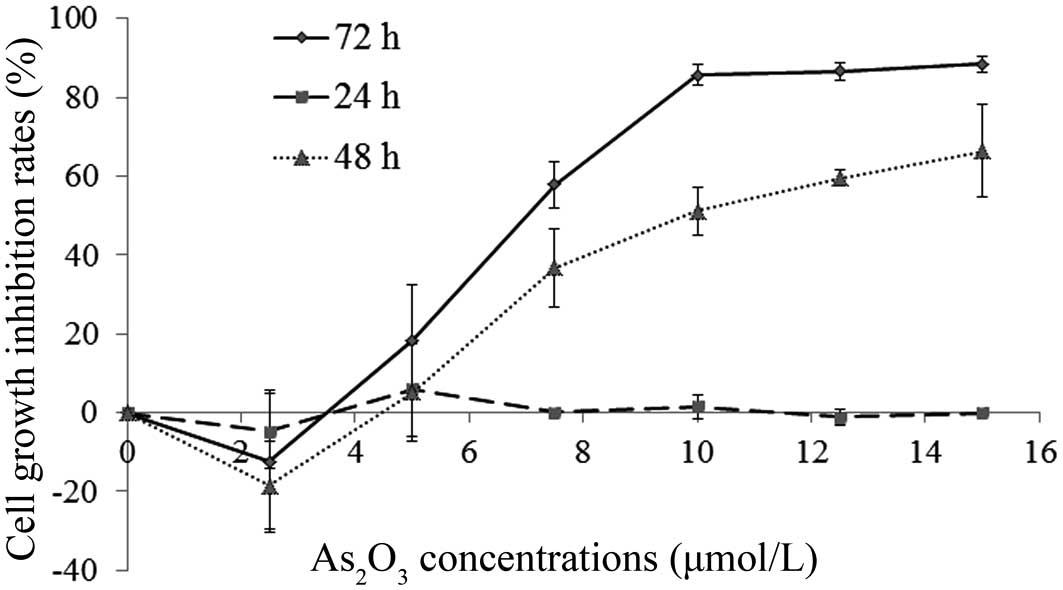
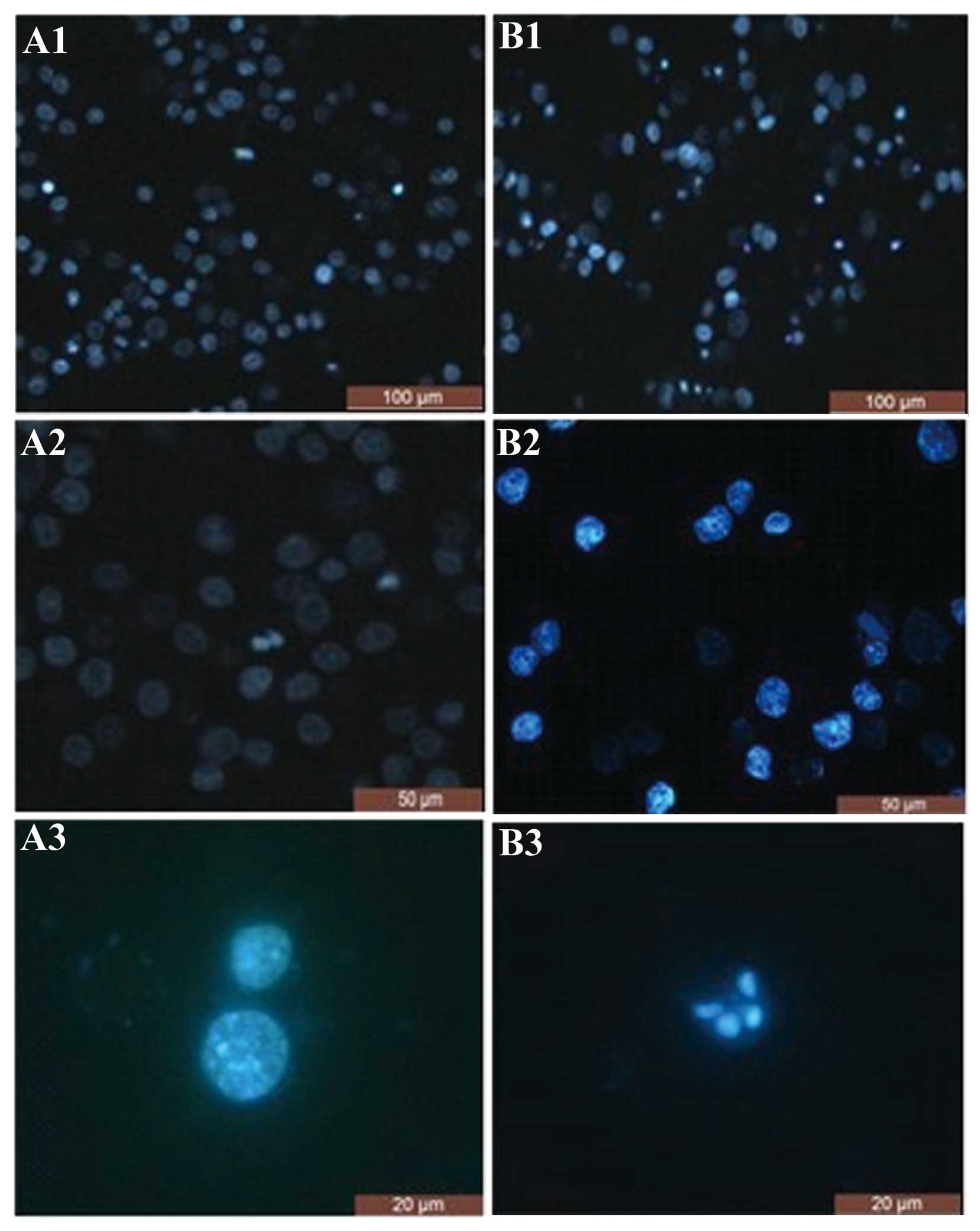
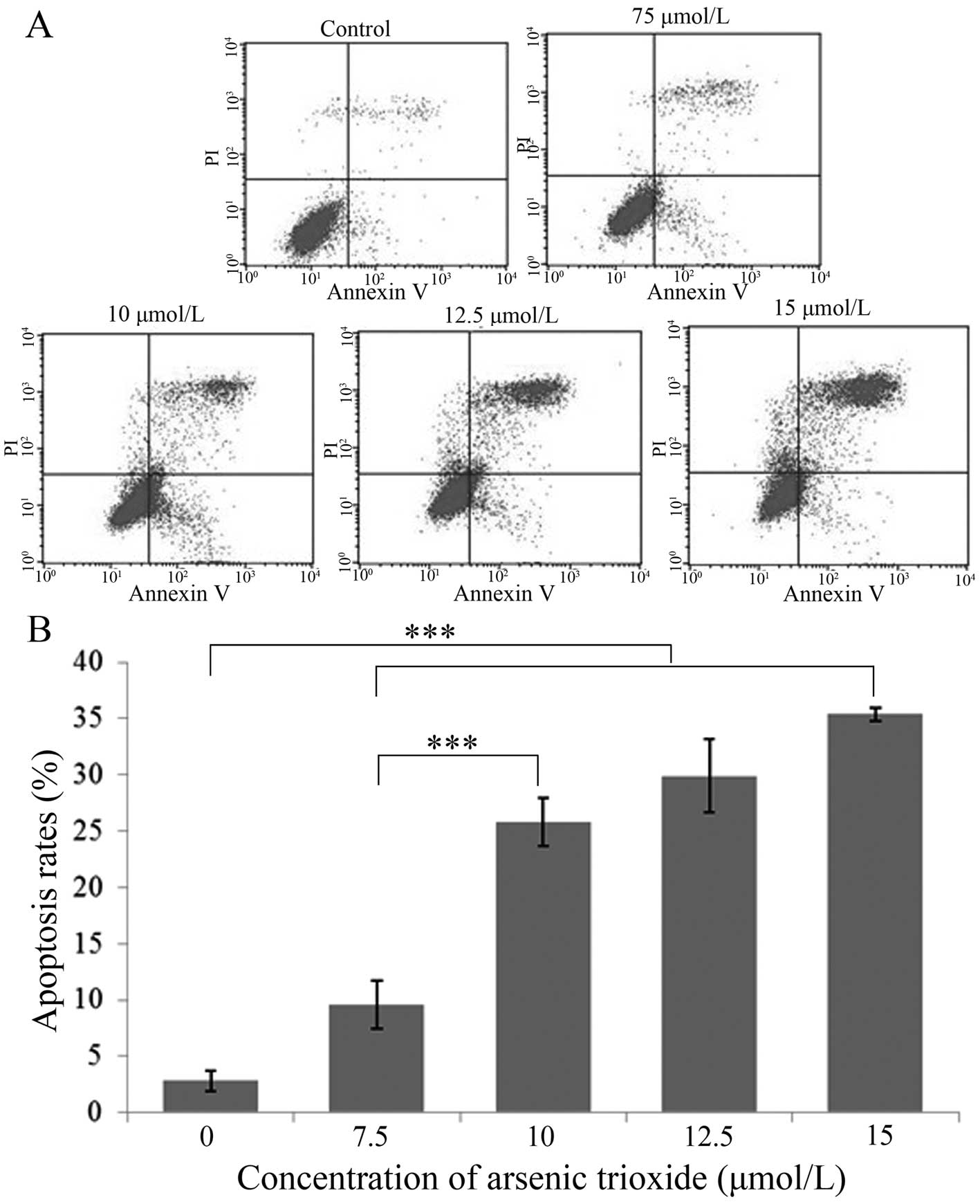
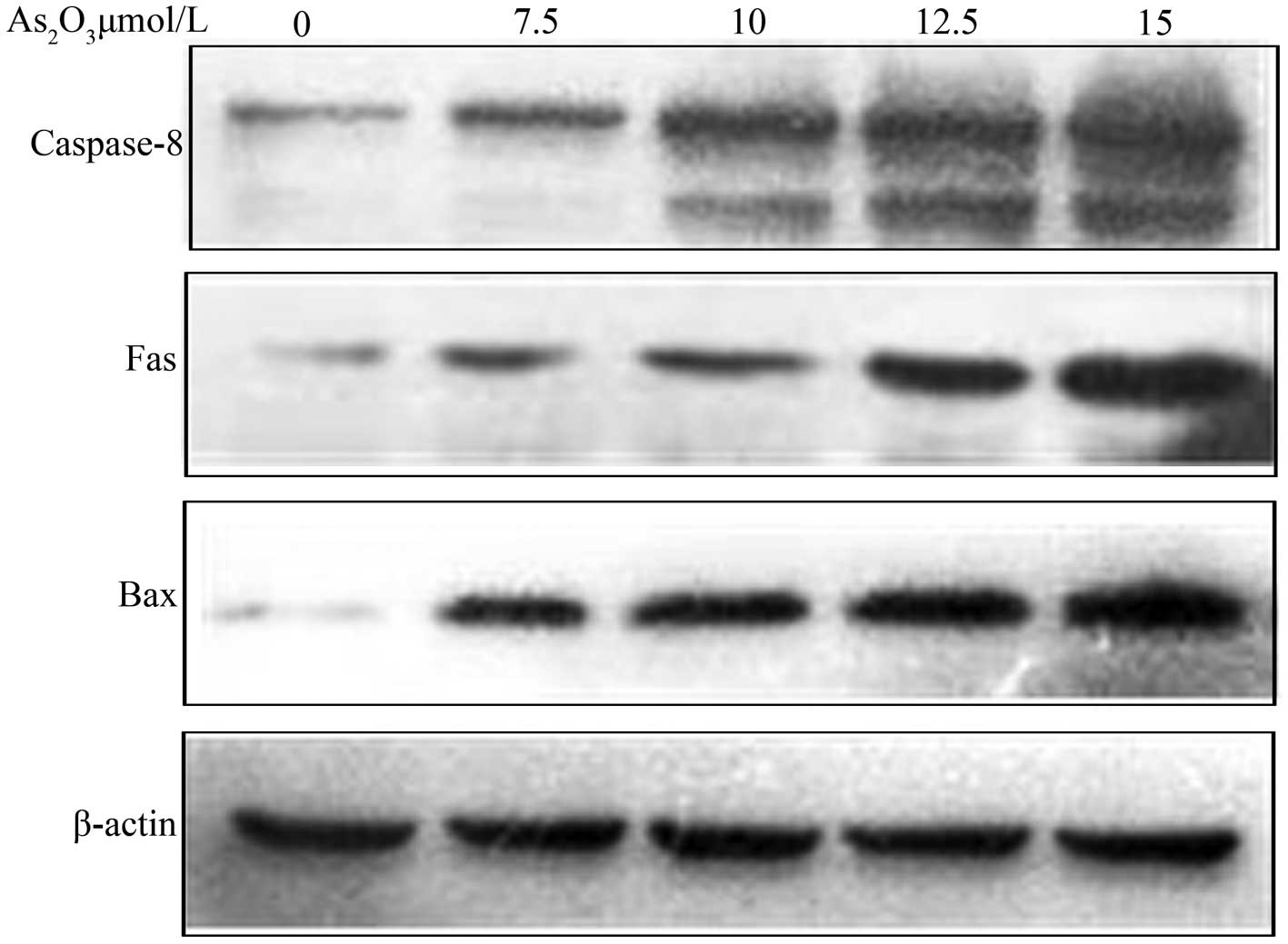
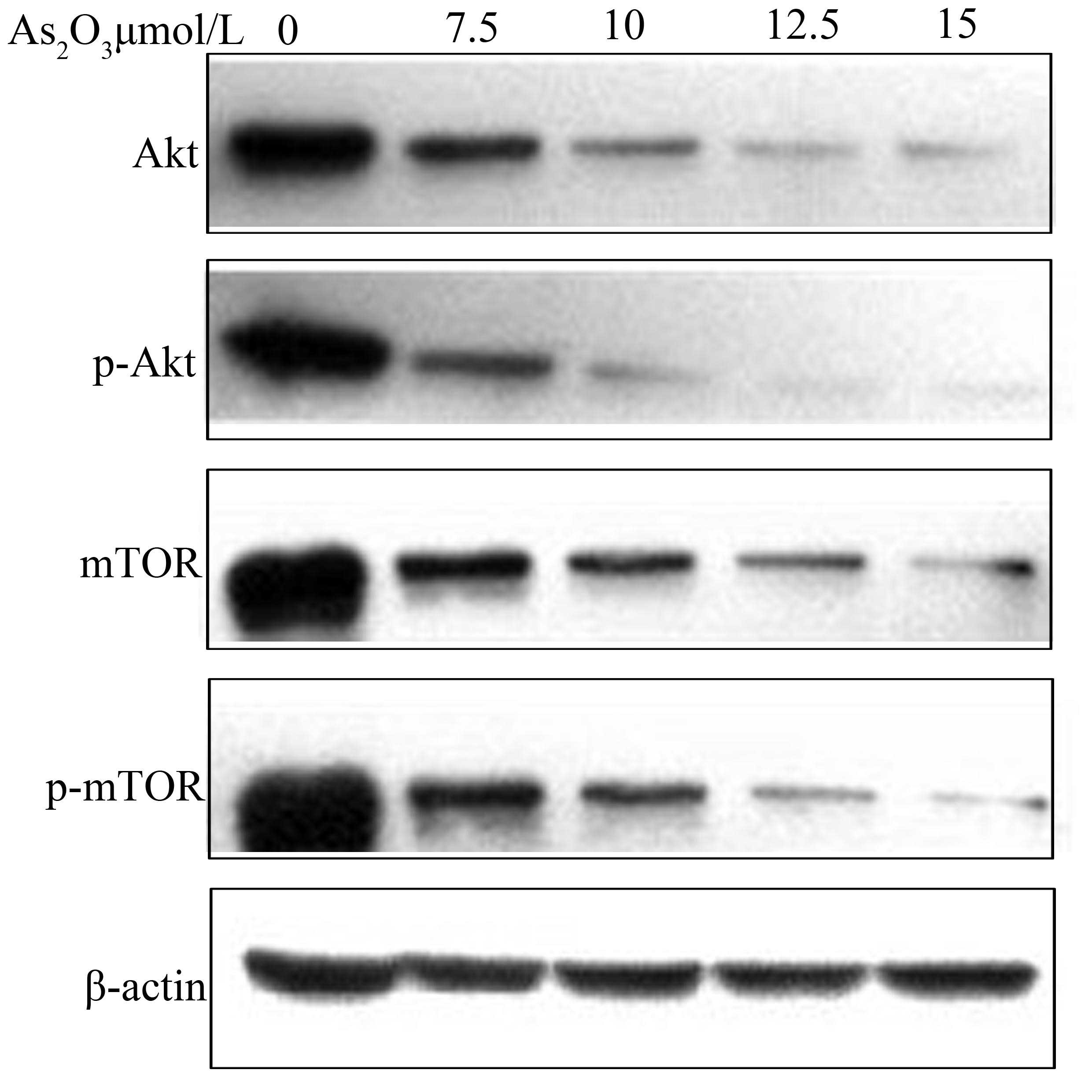
The present study aimed to investigate the effect of arsenic trioxide (As2O3) on human gastric cancer SGC-7901 cells. SGC-7901 cells were treated with different concentrations of As2O3 in the cell growth media for 24, 48 and 72 h, and the growth rates were determined by WST-1 cell proliferation assays. Analyses of nuclear morphological changes were performed with DAPI fluorescence staining. Cell apoptosis rates as assessed by flow cytometry were determined after cells were grown in media for 48 h containing different As2O3 concentrations. The protein expression patterns of the apoptosis factors, Bax, Fas and caspase-8, and anti-apoptosis factors, Akt, p-Akt, mTOR and p-mTOR, were evaluated by western blot analysis following treatment of the cells with different As2O3 concentrations in the cell growth media for 48 h. As a result, As2O3 inhibited the growth of human gastric cancer SGC-7901 cells in concentrations >5 µmol/l for longer than 24 h. Flow cytometric analysis revealed that the apoptosis of SGC-7901 cells occurred in an As2O3 concentration-dependent manner after 48 h (P<0.001). Expression levels of Bax, Fas and caspase-8 were increased, whereas expression levels of Akt, p-Akt, mTOR and p-mTOR were decreased in the SGC-7901 cells after a 48-h incubation with different As2O3 concentrations. In conclusion, As2O3 induced human gastric cancer SGC-7901 cell apoptosis in a time- and concentration dependent manner by inhibiting the activity of anti-apoptosis-related factors.
View Figures

Figure 1

Figure 2

Figure 3

Figure 4

Figure 5

View References

1 

Jemal A, Bray F, Center MM, Ferlay J, Ward E and Forman D: Global cancer statistics. CA Cancer J Clin. 61:69–90. 2011. View Article : Google Scholar

2 

Lim L, Michael M, Mann GB and Leong T: Adjuvant therapy in gastric cancer. J Clin Oncol. 23:6220–6232. 2005. View Article : Google Scholar : PubMed/NCBI

3 

Wang Y, Zhang Y, Yang L, et al: Arsenic trioxide induces the apoptosis of human breast cancer MCF-7 cells through activation of caspase-3 and inhibition of HERG channels. Exp Ther Med. 2:481–486. 2011.PubMed/NCBI

4 

Zhou J: Arsenic trioxide: an ancient drug revived. Chin Med J. 125:3556–3560. 2012.PubMed/NCBI

5 

Shen ZY, Shen J, Cai WJ, Hong C and Zheng MH: The alteration of mitochondria is an early event of arsenic trioxide induced apoptosis in esophageal carcinoma cells. Int J Mol Med. 5:155–158. 2000.PubMed/NCBI

6 

Shen ZY, Zhang Y, Chen JY, et al: Intratumoral injection of arsenic to enhance antitumor efficacy in human esophageal carcinoma cell xenografts. Oncol Rep. 11:155–159. 2004.PubMed/NCBI

7 

Chow SK, Chan JY and Fung KP: Inhibition of cell proliferation and the action mechanisms of arsenic trioxide (As2O3) on human breast cancer cells. J Cell Biochem. 93:173–187. 2004. View Article : Google Scholar : PubMed/NCBI

8 

Ye J, Li A, Liu Q, Wang X and Zhou J: Inhibition of mitogen-activated protein kinase enhances apoptosis induced by arsenic trioxide in human breast cancer MCF-7 cells. Clin Exp Pharmacol Physiol. 32:1042–1048. 2005. View Article : Google Scholar : PubMed/NCBI

9 

Jutooru I, Chadalapaka G, Sreevalsan S, et al: Arsenic trioxide downregulates specificity protein (Sp) transcription factors and inhibits bladder cancer cell and tumor growth. Exp Cell Res. 316:2174–2188. 2010. View Article : Google Scholar

10 

Chien CW, Yao JH, Chang SY, Lee PC and Lee TC: Enhanced suppression of tumor growth by concomitant treatment of human lung cancer cells with suberoylanilide hydroxamic acid and arsenic trioxide. Toxicol Appl Pharmacol. 257:59–66. 2011. View Article : Google Scholar : PubMed/NCBI

11 

Li H, Gong J, Jiang X and Shao H: Arsenic trioxide treatment of rabbit liver VX-2 carcinoma via hepatic arterial cannulation-induced apoptosis and decreased levels of survivin in the tumor tissue. Croat Med J. 54:12–16. 2013. View Article : Google Scholar : PubMed/NCBI

12 

Matulis SM, Morales AA, Yehiayan L, Lee KP, Cai Y and Boise LH: Alterations in glutathione levels and apoptotic regulators are associated with acquisition of arsenic trioxide resistance in multiple myeloma. PloS One. 7:e526622012. View Article : Google Scholar : PubMed/NCBI

13 

Ora I, Bondesson L, Jonsson C, et al: Arsenic trioxide inhibits neuroblastoma growth in vivo and promotes apoptotic cell death in vitro. Biochem Biophys Res Commun. 277:179–185. 2000. View Article : Google Scholar : PubMed/NCBI

14 

Nakagawa Y, Akao Y, Morikawa H, et al: Arsenic trioxide-induced apoptosis through oxidative stress in cells of colon cancer cell lines. Life Sci. 70:2253–2269. 2002. View Article : Google Scholar : PubMed/NCBI

15 

Bornstein J, Sagi S, Haj A, Harroch J and Fares F: Arsenic trioxide inhibits the growth of human ovarian carcinoma cell line. Gynecol Oncol. 99:726–729. 2005. View Article : Google Scholar : PubMed/NCBI

16 

Liu Y, Zhang W, Zhang X, Qi Y, Huang D and Zhang Y: Arsenic trioxide inhibits invasion/migration in SGC-7901 cells by activating the reactive oxygen species-dependent cyclooxygenase-2/matrix metalloproteinase-2 pathway. Exp Biol Med. 236:592–597. 2011. View Article : Google Scholar

17 

Bowling BD, Doudican N, Manga P and Orlow SJ: Inhibition of mitochondrial protein translation sensitizes melanoma cells to arsenic trioxide cytotoxicity via a reactive oxygen species dependent mechanism. Cancer Chemother Pharmacol. 63:37–43. 2008. View Article : Google Scholar

18 

Florea AM and Büsselberg D: Anti-cancer drugs interfere with intracellular calcium signaling. Neurotoxicology. 30:803–810. 2009. View Article : Google Scholar : PubMed/NCBI

19 

Gao F, Yi J, Shi GY, Li H, Shi XG and Tang XM: The sensitivity of digestive tract tumor cells to As2O3 is associated with the inherent cellular level of reactive oxygen species. World J Gastroenterol. 8:36–39. 2002.PubMed/NCBI

20 

Izdebska M, Grzanka A, Szczepanski MA and Litwiniec A: Selected mechanisms of the therapeutic effect of arsenic trioxide in cancer treatment. Postepy Hig Med Dosw. 62:463–467. 2008.(In Polish).

21 

Calvino E, Estan MC, Simon GP, et al: Increased apoptotic efficacy of lonidamine plus arsenic trioxide combination in human leukemia cells. Reactive oxygen species generation and defensive protein kinase (MEK/ERK, Akt/mTOR) modulation. Biochem Pharmacol. 82:1619–1629. 2011. View Article : Google Scholar

22 

Carracedo A and Pandolfi PP: The PTEN-PI3K pathway: of feedbacks and cross-talks. Oncogene. 27:5527–5541. 2008. View Article : Google Scholar : PubMed/NCBI

23 

Markman B, Dienstmann R and Tabernero J: Targeting the PI3K/Akt/mTOR pathway - beyond rapalogs. Oncotarget. 1:530–543. 2010.PubMed/NCBI

24 

Hay N: The Akt-mTOR tango and its relevance to cancer. Cancer Cell. 8:179–183. 2005. View Article : Google Scholar : PubMed/NCBI

25 

He C and Klionsky DJ: Regulation mechanisms and signaling pathways of autophagy. Annu Rev Genet. 43:67–93. 2009. View Article : Google Scholar : PubMed/NCBI

26 

Meijer AJ and Codogno P: Regulation and role of autophagy in mammalian cells. Int J Biochem Cell Biol. 36:2445–2462. 2004. View Article : Google Scholar : PubMed/NCBI

27 

Redondo-Munoz J, Escobar-Diaz E, Hernandez Del Cerro M, et al: Induction of B-chronic lymphocytic leukemia cell apoptosis by arsenic trioxide involves suppression of the phosphoinositide 3-kinase/Akt survival pathway via c-jun-NH2 terminal kinase activation and PTEN upregulation. Clin Cancer Res. 16:4382–4391. 2010. View Article : Google Scholar

28 

Ghobrial IM, Witzig TE and Adjei AA: Targeting apoptosis pathways in cancer therapy. CA Cancer J Clin. 55:178–194. 2005. View Article : Google Scholar : PubMed/NCBI

29 

Komarov AP, Rokhlin OW, Yu CA and Gudkov AV: Functional genetic screening reveals the role of mitochondrial cytochrome b as a mediator of FAS-induced apoptosis. Proc Natl Acad Sci USA. 105:14453–14458. 2008. View Article : Google Scholar : PubMed/NCBI

30 

Oltvai ZN, Milliman CL and Korsmeyer SJ: Bcl-2 heterodimerizes in vivo with a conserved homolog, Bax, that accelerates programmed cell death. Cell. 74:609–619. 1993. View Article : Google Scholar : PubMed/NCBI

31 

Suen DF, Norris KL and Youle RJ: Mitochondrial dynamics and apoptosis. Genes Dev. 22:1577–1590. 2008. View Article : Google Scholar : PubMed/NCBI

32 

Han B, Zhou G, Zhang Q, et al: Effect of arsenic trioxide (ATO) on human lung carcinoma PG cell line: ATO induced apoptosis of PG cells and decreased expression of Bcl-2, Pgp. J Exp Ther Oncol. 4:335–342. 2004.PubMed/NCBI

33 

Guertin DA and Sabatini DM: Defining the role of mTOR in cancer. Cancer Cell. 12:9–22. 2007. View Article : Google Scholar

34 

Sarbassov DD, Guertin DA, Ali SM and Sabatini DM: Phosphorylation and regulation of Akt/PKB by the rictor-mTOR complex. Science. 307:1098–1101. 2005. View Article : Google Scholar : PubMed/NCBI

35 

Brunet A, Bonni A, Zigmond MJ, et al: Akt promotes cell survival by phosphorylating and inhibiting a Forkhead transcription factor. Cell. 96:857–868. 1999. View Article : Google Scholar : PubMed/NCBI

36 

Diehl JA, Cheng M, Roussel MF and Sherr CJ: Glycogen synthase kinase-3beta regulates cyclin D1 proteolysis and subcellular localization. Genes Dev. 12:3499–3511. 1998. View Article : Google Scholar : PubMed/NCBI

37 

Engelman JA, Luo J and Cantley LC: The evolution of phosphatidylinositol 3-kinases as regulators of growth and metabolism. Nat Rev Genet. 7:606–619. 2006. View Article : Google Scholar : PubMed/NCBI

38 

Chen YC, Lin-Shiau SY and Lin JK: Involvement of reactive oxygen species and caspase 3 activation in arsenite-induced apoptosis. J Cell Physiol. 177:324–333. 1998. View Article : Google Scholar : PubMed/NCBI

39 

Woo SH, Park IC, Park MJ, et al: Arsenic trioxide induces apoptosis through a reactive oxygen species-dependent pathway and loss of mitochondrial membrane potential in HeLa cells. Int J Oncol. 21:57–63. 2002.

40 

Pelicano H, Feng L, Zhou Y, et al: Inhibition of mitochondrial respiration: a novel strategy to enhance drug-induced apoptosis in human leukemia cells by a reactive oxygen species-mediated mechanism. J Biol Chem. 278:37832–37839. 2003. View Article : Google Scholar

41 

Diepart C, Karroum O, Magat J, et al: Arsenic trioxide treatment decreases the oxygen consumption rate of tumor cells and radiosensitizes solid tumors. Cancer Res. 72:482–490. 2012. View Article : Google Scholar : PubMed/NCBI

42 

Ling LU, Tan KB, Lin H and Chiu GN: The role of reactive oxygen species and autophagy in safingol-induced cell death. Cell Death Dis. 2:e1292011. View Article : Google Scholar : PubMed/NCBI

43 

Zhang G, Liu J, Zhang Y, et al: Cbl-b-dependent degradation of FLIP(L) is involved in ATO-induced autophagy in leukemic K562 and gastric cancer cells. FEBS Lett. 586:3104–3110. 2012. View Article : Google Scholar : PubMed/NCBI

44 

Cheng Y, Qiu F, Ye YC, et al: Autophagy inhibits reactive oxygen species-mediated apoptosis via activating p38-nuclear factor-kappa B survival pathways in oridonin-treated murine fibrosarcoma L929 cells. FEBS J. 276:1291–1306. 2009. View Article : Google Scholar

45 

Dai J, Weinberg RS, Waxman S and Jing Y: Malignant cells can be sensitized to undergo growth inhibition and apoptosis by arsenic trioxide through modulation of the glutathione redox system. Blood. 93:268–277. 1999.PubMed/NCBI

Related Articles

  • Abstract
  • View
  • Download
  • Twitter
Copy and paste a formatted citation
Spandidos Publications style
Yu Y, Yang Y and Wang J: Anti-apoptotic and apoptotic pathway analysis of arsenic trioxide‑induced apoptosis in human gastric cancer SGC-7901 cells. Oncol Rep 32: 973-978, 2014.
APA
Yu, Y., Yang, Y., & Wang, J. (2014). Anti-apoptotic and apoptotic pathway analysis of arsenic trioxide‑induced apoptosis in human gastric cancer SGC-7901 cells. Oncology Reports, 32, 973-978. https://doi.org/10.3892/or.2014.3276
MLA
Yu, Y., Yang, Y., Wang, J."Anti-apoptotic and apoptotic pathway analysis of arsenic trioxide‑induced apoptosis in human gastric cancer SGC-7901 cells". Oncology Reports 32.3 (2014): 973-978.
Chicago
Yu, Y., Yang, Y., Wang, J."Anti-apoptotic and apoptotic pathway analysis of arsenic trioxide‑induced apoptosis in human gastric cancer SGC-7901 cells". Oncology Reports 32, no. 3 (2014): 973-978. https://doi.org/10.3892/or.2014.3276
Copy and paste a formatted citation
x
Spandidos Publications style
Yu Y, Yang Y and Wang J: Anti-apoptotic and apoptotic pathway analysis of arsenic trioxide‑induced apoptosis in human gastric cancer SGC-7901 cells. Oncol Rep 32: 973-978, 2014.
APA
Yu, Y., Yang, Y., & Wang, J. (2014). Anti-apoptotic and apoptotic pathway analysis of arsenic trioxide‑induced apoptosis in human gastric cancer SGC-7901 cells. Oncology Reports, 32, 973-978. https://doi.org/10.3892/or.2014.3276
MLA
Yu, Y., Yang, Y., Wang, J."Anti-apoptotic and apoptotic pathway analysis of arsenic trioxide‑induced apoptosis in human gastric cancer SGC-7901 cells". Oncology Reports 32.3 (2014): 973-978.
Chicago
Yu, Y., Yang, Y., Wang, J."Anti-apoptotic and apoptotic pathway analysis of arsenic trioxide‑induced apoptosis in human gastric cancer SGC-7901 cells". Oncology Reports 32, no. 3 (2014): 973-978. https://doi.org/10.3892/or.2014.3276
Follow us
  • Twitter
  • LinkedIn
  • Facebook
About
  • Spandidos Publications
  • Careers
  • Cookie Policy
  • Privacy Policy
How can we help?
  • Help
  • Live Chat
  • Contact
  • Email to our Support Team