Spandidos Publications Logo
  • About
    • About Spandidos
    • Aims and Scopes
    • Abstracting and Indexing
    • Editorial Policies
    • Reprints and Permissions
    • Job Opportunities
    • Terms and Conditions
    • Contact
  • Journals
    • All Journals
    • Oncology Letters
      • Oncology Letters
      • Information for Authors
      • Editorial Policies
      • Editorial Board
      • Aims and Scope
      • Abstracting and Indexing
      • Bibliographic Information
    • International Journal of Oncology
      • International Journal of Oncology
      • Information for Authors
      • Editorial Policies
      • Editorial Board
      • Aims and Scope
      • Abstracting and Indexing
      • Bibliographic Information
    • Molecular and Clinical Oncology
      • Molecular and Clinical Oncology
      • Information for Authors
      • Editorial Policies
      • Editorial Board
      • Aims and Scope
      • Abstracting and Indexing
      • Bibliographic Information
    • Experimental and Therapeutic Medicine
      • Experimental and Therapeutic Medicine
      • Information for Authors
      • Editorial Policies
      • Editorial Board
      • Aims and Scope
      • Abstracting and Indexing
      • Bibliographic Information
    • International Journal of Molecular Medicine
      • International Journal of Molecular Medicine
      • Information for Authors
      • Editorial Policies
      • Editorial Board
      • Aims and Scope
      • Abstracting and Indexing
      • Bibliographic Information
    • Biomedical Reports
      • Biomedical Reports
      • Information for Authors
      • Editorial Policies
      • Editorial Board
      • Aims and Scope
      • Abstracting and Indexing
      • Bibliographic Information
    • Oncology Reports
      • Oncology Reports
      • Information for Authors
      • Editorial Policies
      • Editorial Board
      • Aims and Scope
      • Abstracting and Indexing
      • Bibliographic Information
    • Molecular Medicine Reports
      • Molecular Medicine Reports
      • Information for Authors
      • Editorial Policies
      • Editorial Board
      • Aims and Scope
      • Abstracting and Indexing
      • Bibliographic Information
    • World Academy of Sciences Journal
      • World Academy of Sciences Journal
      • Information for Authors
      • Editorial Policies
      • Editorial Board
      • Aims and Scope
      • Abstracting and Indexing
      • Bibliographic Information
    • International Journal of Functional Nutrition
      • International Journal of Functional Nutrition
      • Information for Authors
      • Editorial Policies
      • Editorial Board
      • Aims and Scope
      • Abstracting and Indexing
      • Bibliographic Information
    • International Journal of Epigenetics
      • International Journal of Epigenetics
      • Information for Authors
      • Editorial Policies
      • Editorial Board
      • Aims and Scope
      • Abstracting and Indexing
      • Bibliographic Information
    • Medicine International
      • Medicine International
      • Information for Authors
      • Editorial Policies
      • Editorial Board
      • Aims and Scope
      • Abstracting and Indexing
      • Bibliographic Information
  • Articles
  • Information
    • Information for Authors
    • Information for Reviewers
    • Information for Librarians
    • Information for Advertisers
    • Conferences
  • Language Editing
Spandidos Publications Logo
  • About
    • About Spandidos
    • Aims and Scopes
    • Abstracting and Indexing
    • Editorial Policies
    • Reprints and Permissions
    • Job Opportunities
    • Terms and Conditions
    • Contact
  • Journals
    • All Journals
    • Biomedical Reports
      • Information for Authors
      • Editorial Policies
      • Editorial Board
      • Aims and Scope
      • Abstracting and Indexing
      • Bibliographic Information
    • Experimental and Therapeutic Medicine
      • Information for Authors
      • Editorial Policies
      • Editorial Board
      • Aims and Scope
      • Abstracting and Indexing
      • Bibliographic Information
    • International Journal of Epigenetics
      • Information for Authors
      • Editorial Policies
      • Editorial Board
      • Aims and Scope
      • Abstracting and Indexing
      • Bibliographic Information
    • International Journal of Functional Nutrition
      • Information for Authors
      • Editorial Policies
      • Editorial Board
      • Aims and Scope
      • Abstracting and Indexing
      • Bibliographic Information
    • International Journal of Molecular Medicine
      • Information for Authors
      • Editorial Policies
      • Editorial Board
      • Aims and Scope
      • Abstracting and Indexing
      • Bibliographic Information
    • International Journal of Oncology
      • Information for Authors
      • Editorial Policies
      • Editorial Board
      • Aims and Scope
      • Abstracting and Indexing
      • Bibliographic Information
    • Medicine International
      • Information for Authors
      • Editorial Policies
      • Editorial Board
      • Aims and Scope
      • Abstracting and Indexing
      • Bibliographic Information
    • Molecular and Clinical Oncology
      • Information for Authors
      • Editorial Policies
      • Editorial Board
      • Aims and Scope
      • Abstracting and Indexing
      • Bibliographic Information
    • Molecular Medicine Reports
      • Information for Authors
      • Editorial Policies
      • Editorial Board
      • Aims and Scope
      • Abstracting and Indexing
      • Bibliographic Information
    • Oncology Letters
      • Information for Authors
      • Editorial Policies
      • Editorial Board
      • Aims and Scope
      • Abstracting and Indexing
      • Bibliographic Information
    • Oncology Reports
      • Information for Authors
      • Editorial Policies
      • Editorial Board
      • Aims and Scope
      • Abstracting and Indexing
      • Bibliographic Information
    • World Academy of Sciences Journal
      • Information for Authors
      • Editorial Policies
      • Editorial Board
      • Aims and Scope
      • Abstracting and Indexing
      • Bibliographic Information
  • Articles
  • Information
    • For Authors
    • For Reviewers
    • For Librarians
    • For Advertisers
    • Conferences
  • Language Editing
Login Register Submit
  • This site uses cookies
  • You can change your cookie settings at any time by following the instructions in our Cookie Policy. To find out more, you may read our Privacy Policy.

    I agree
Search articles by DOI, keyword, author or affiliation
Search
Advanced Search
presentation
Oncology Reports
Join Editorial Board Propose a Special Issue
Print ISSN: 1021-335X Online ISSN: 1791-2431
Journal Cover
October 2014 Volume 32 Issue 4

Full Size Image

Sign up for eToc alerts
Recommend to Library

Journals

International Journal of Molecular Medicine

International Journal of Molecular Medicine

International Journal of Molecular Medicine is an international journal devoted to molecular mechanisms of human disease.

International Journal of Oncology

International Journal of Oncology

International Journal of Oncology is an international journal devoted to oncology research and cancer treatment.

Molecular Medicine Reports

Molecular Medicine Reports

Covers molecular medicine topics such as pharmacology, pathology, genetics, neuroscience, infectious diseases, molecular cardiology, and molecular surgery.

Oncology Reports

Oncology Reports

Oncology Reports is an international journal devoted to fundamental and applied research in Oncology.

Experimental and Therapeutic Medicine

Experimental and Therapeutic Medicine

Experimental and Therapeutic Medicine is an international journal devoted to laboratory and clinical medicine.

Oncology Letters

Oncology Letters

Oncology Letters is an international journal devoted to Experimental and Clinical Oncology.

Biomedical Reports

Biomedical Reports

Explores a wide range of biological and medical fields, including pharmacology, genetics, microbiology, neuroscience, and molecular cardiology.

Molecular and Clinical Oncology

Molecular and Clinical Oncology

International journal addressing all aspects of oncology research, from tumorigenesis and oncogenes to chemotherapy and metastasis.

World Academy of Sciences Journal

World Academy of Sciences Journal

Multidisciplinary open-access journal spanning biochemistry, genetics, neuroscience, environmental health, and synthetic biology.

International Journal of Functional Nutrition

International Journal of Functional Nutrition

Open-access journal combining biochemistry, pharmacology, immunology, and genetics to advance health through functional nutrition.

International Journal of Epigenetics

International Journal of Epigenetics

Publishes open-access research on using epigenetics to advance understanding and treatment of human disease.

Medicine International

Medicine International

An International Open Access Journal Devoted to General Medicine.

Journal Cover
October 2014 Volume 32 Issue 4

Full Size Image

Sign up for eToc alerts
Recommend to Library

  • Article
  • Citations
    • Cite This Article
    • Download Citation
    • Create Citation Alert
    • Remove Citation Alert
    • Cited By
  • Similar Articles
    • Related Articles (in Spandidos Publications)
    • Similar Articles (Google Scholar)
    • Similar Articles (PubMed)
  • Download PDF
  • Download XML
  • View XML
Article

Diallyl disulfide induces G2/M arrest and promotes apoptosis through the p53/p21 and MEK-ERK pathways in human esophageal squamous cell carcinoma

  • Authors:
    • Xiaoran Yin
    • Rong Zhang
    • Cheng Feng
    • Jun Zhang
    • Dong Liu
    • Kun Xu
    • Xijing Wang
    • Shuqun Zhang
    • Zongfang Li
    • Xinlian Liu
    • Hongbing Ma
  • View Affiliations

    Affiliations: Department of Oncology, The Second Affiliated Hospital of Xi'an Jiaotong University, Xi'an, Shaanxi 710004, P.R. China, Department of Gastroenterology, Shaanxi Provincial People's Hospital, Xi'an, Shaanxi 710068, P.R. China, Department of Digestion, The Second Affiliated Hospital of Xi'an Jiaotong University, Xi'an, Shaanxi 710004, P.R. China, Department of General Surgery, The Second Affiliated Hospital of Xi'an Jiaotong University, Xi'an, Shaanxi 710004, P.R. China
  • Published online on: July 25, 2014     https://doi.org/10.3892/or.2014.3361
  • Pages: 1748-1756
Metrics: Total Views: 0 (Spandidos Publications: | PMC Statistics: )
Metrics: Total PDF Downloads: 0 (Spandidos Publications: | PMC Statistics: )
Cited By (CrossRef): 0 citations Loading Articles...

This article is mentioned in:


Abstract

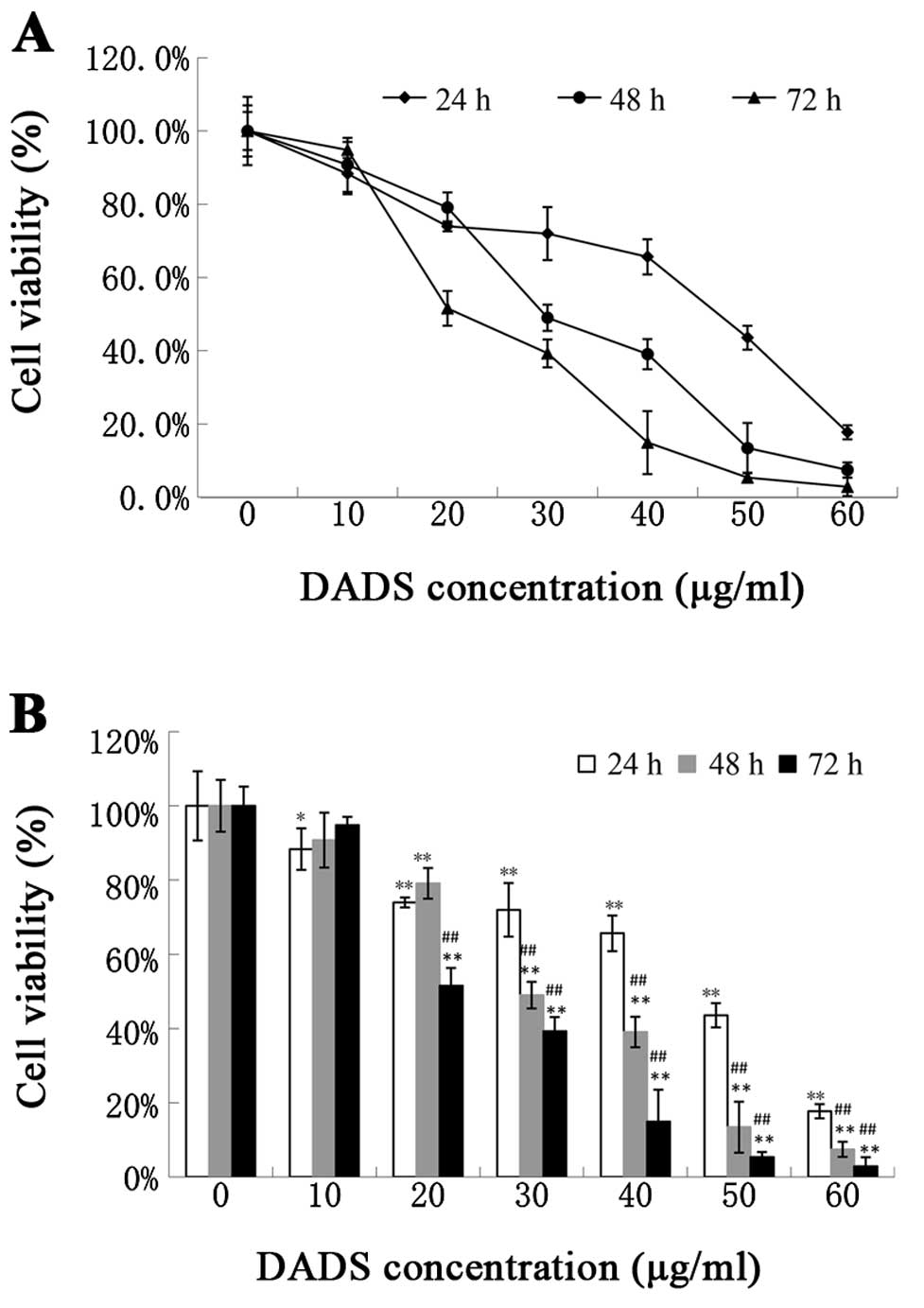
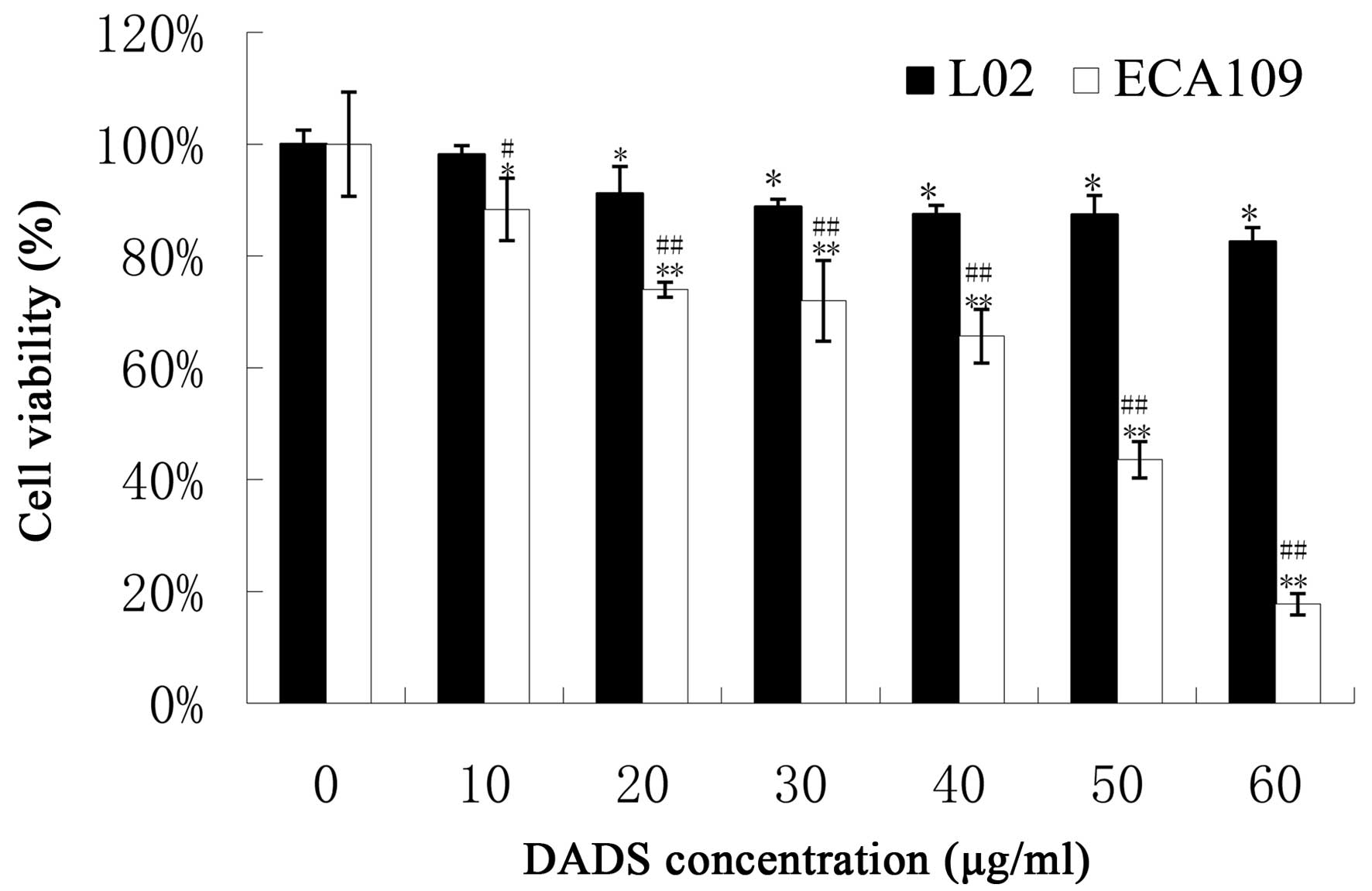
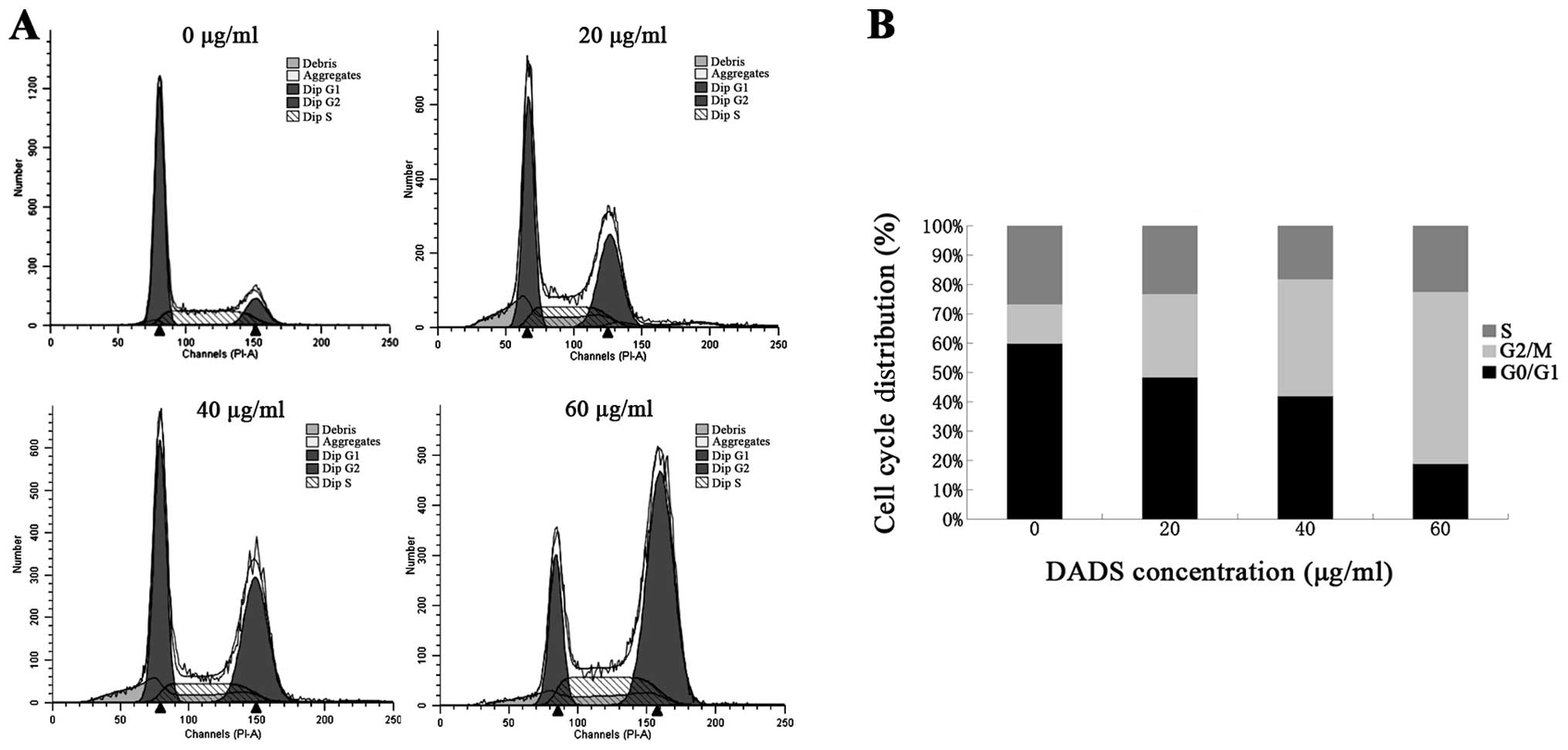
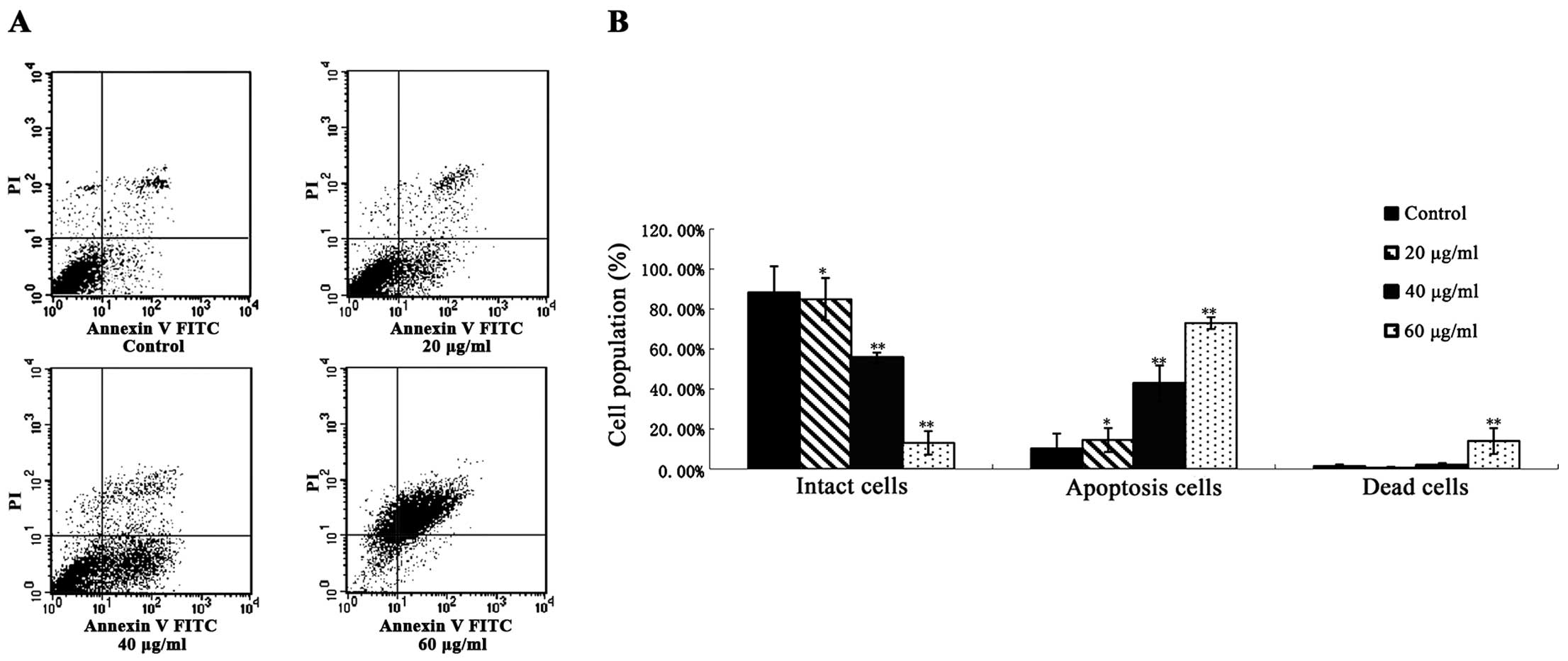
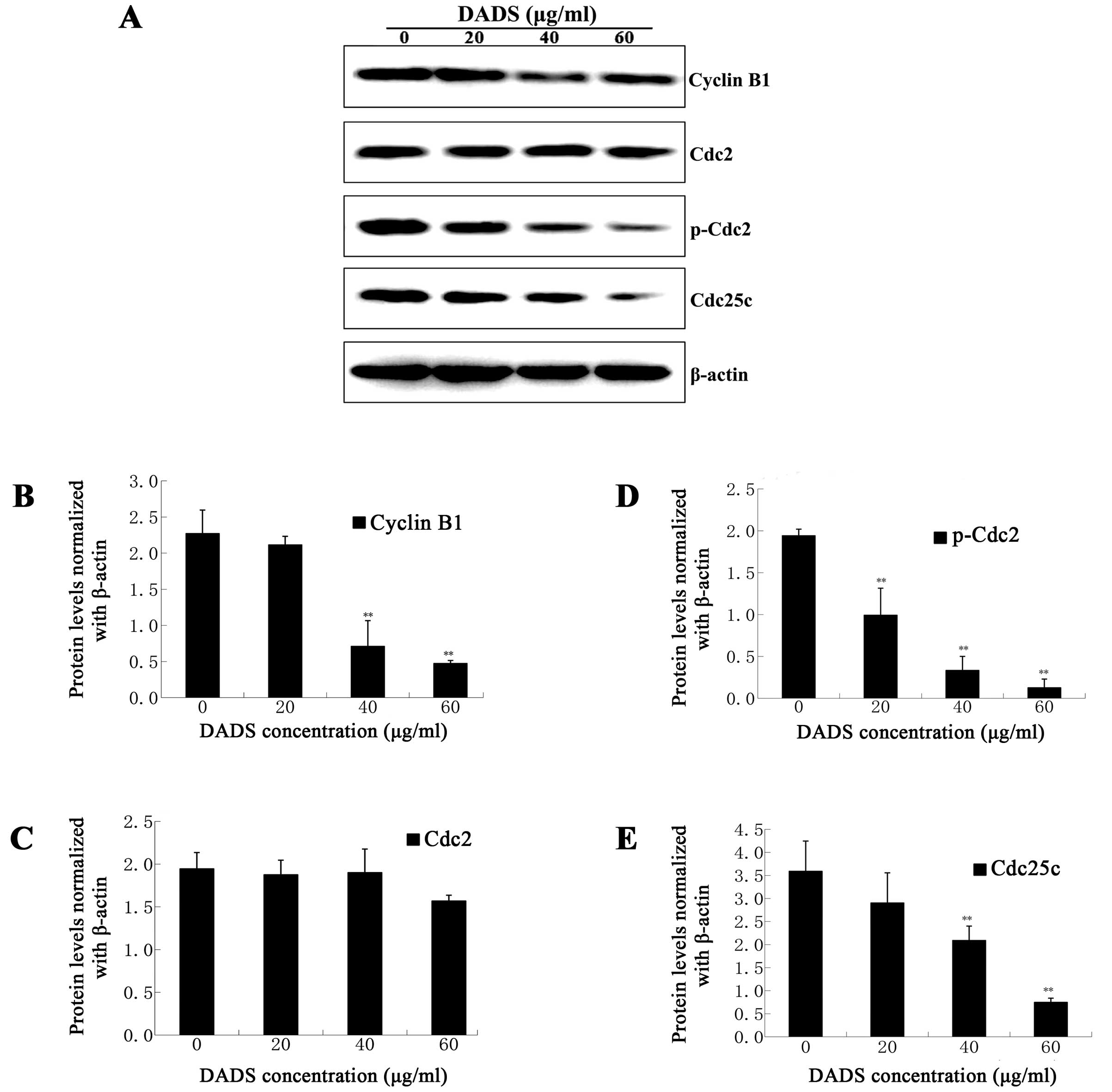
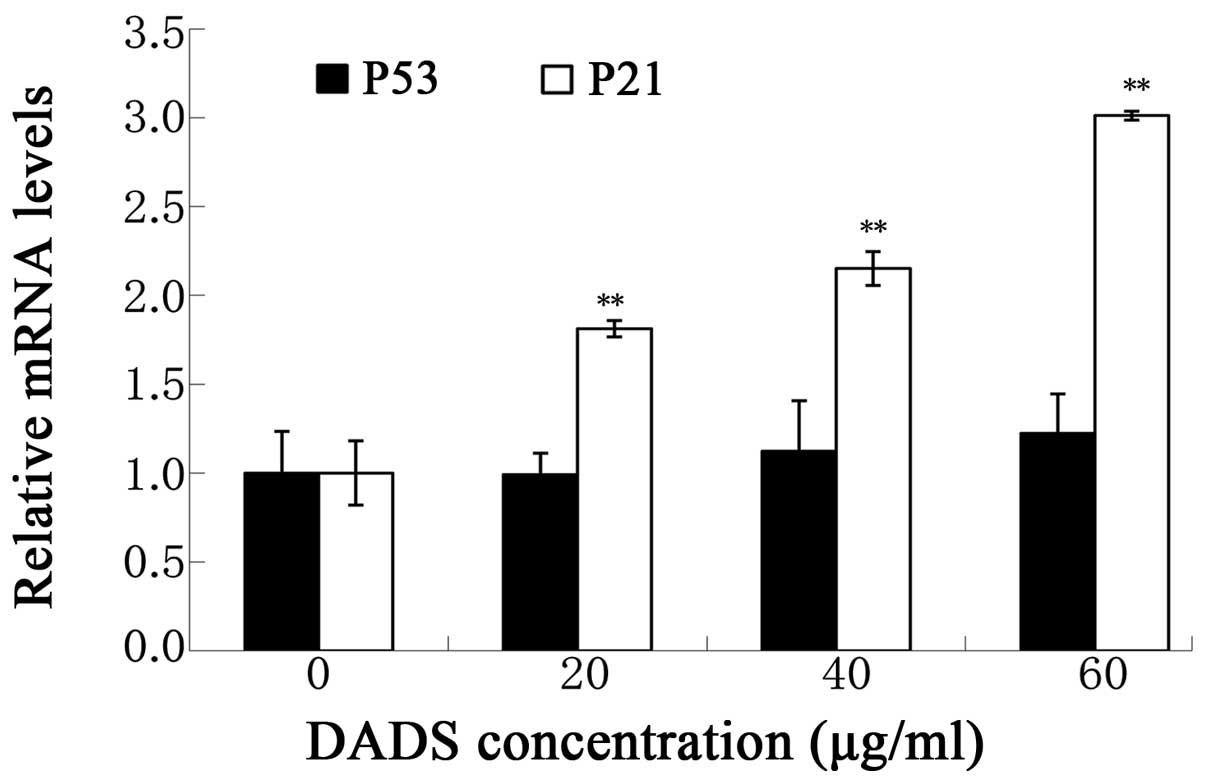
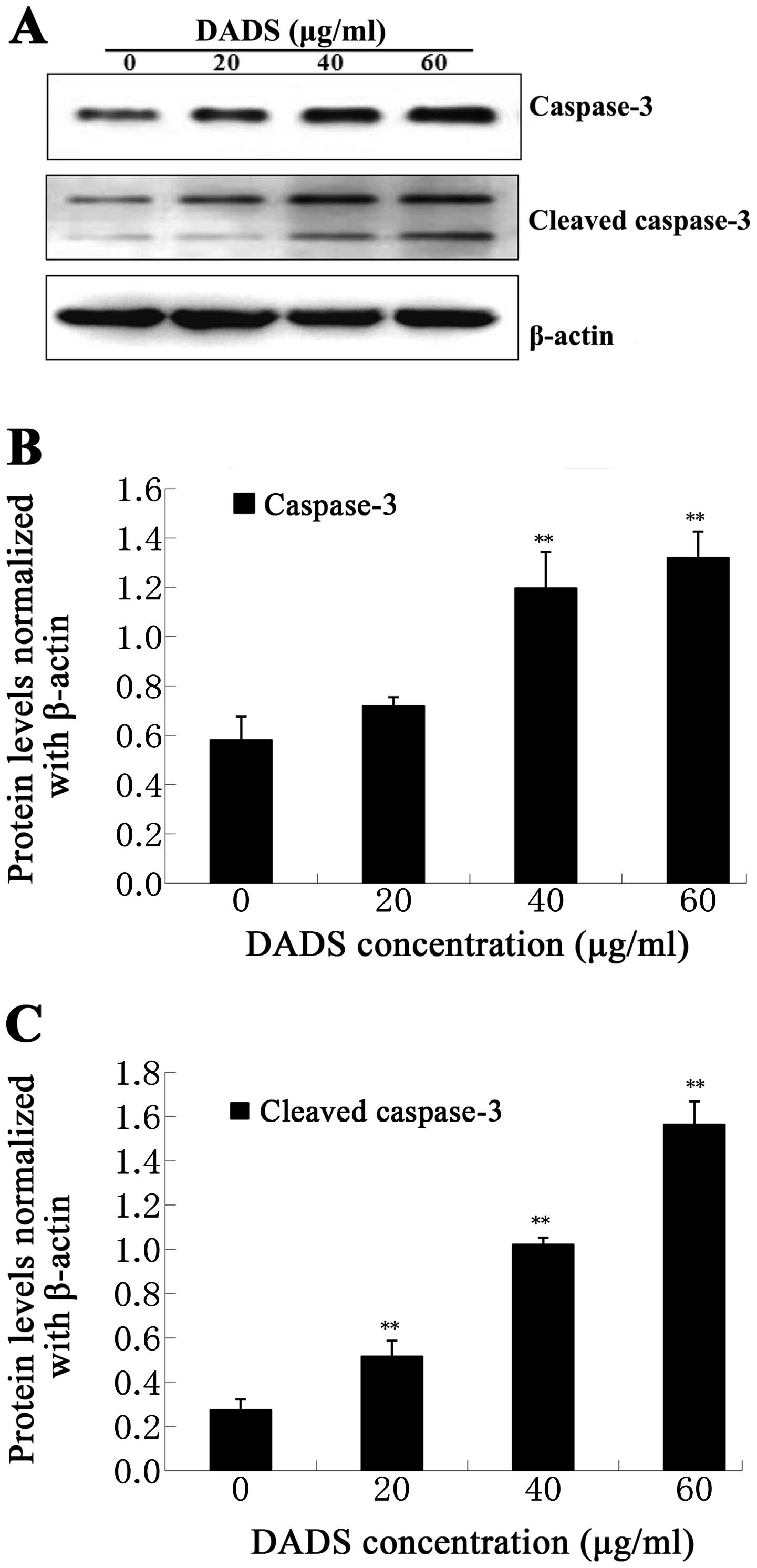
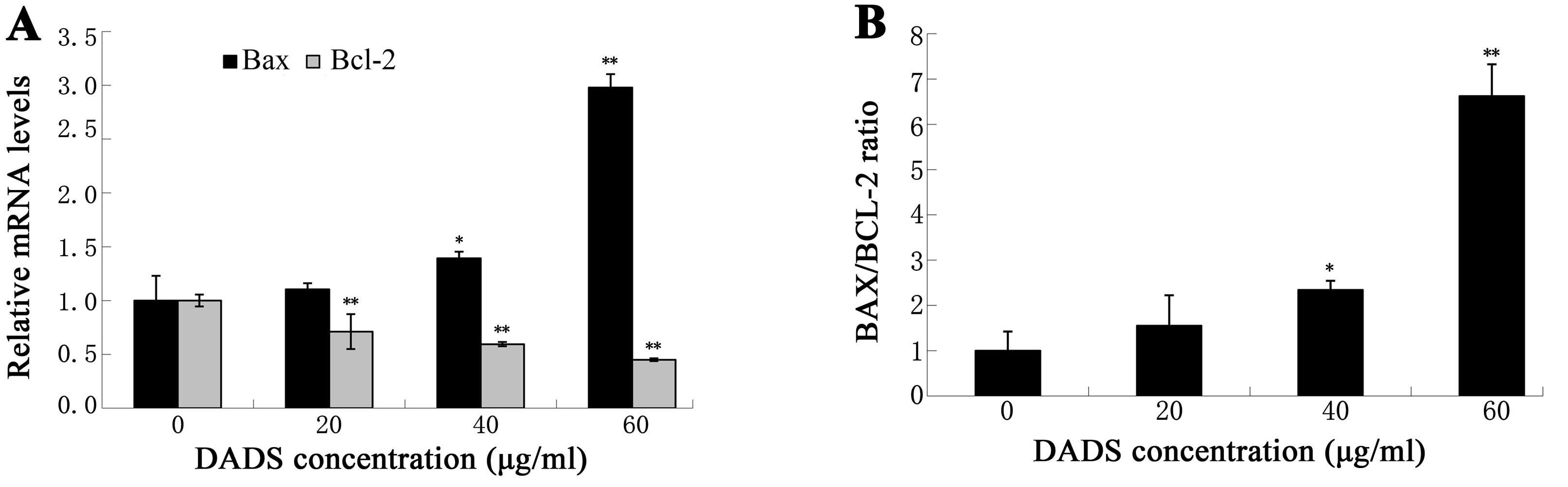
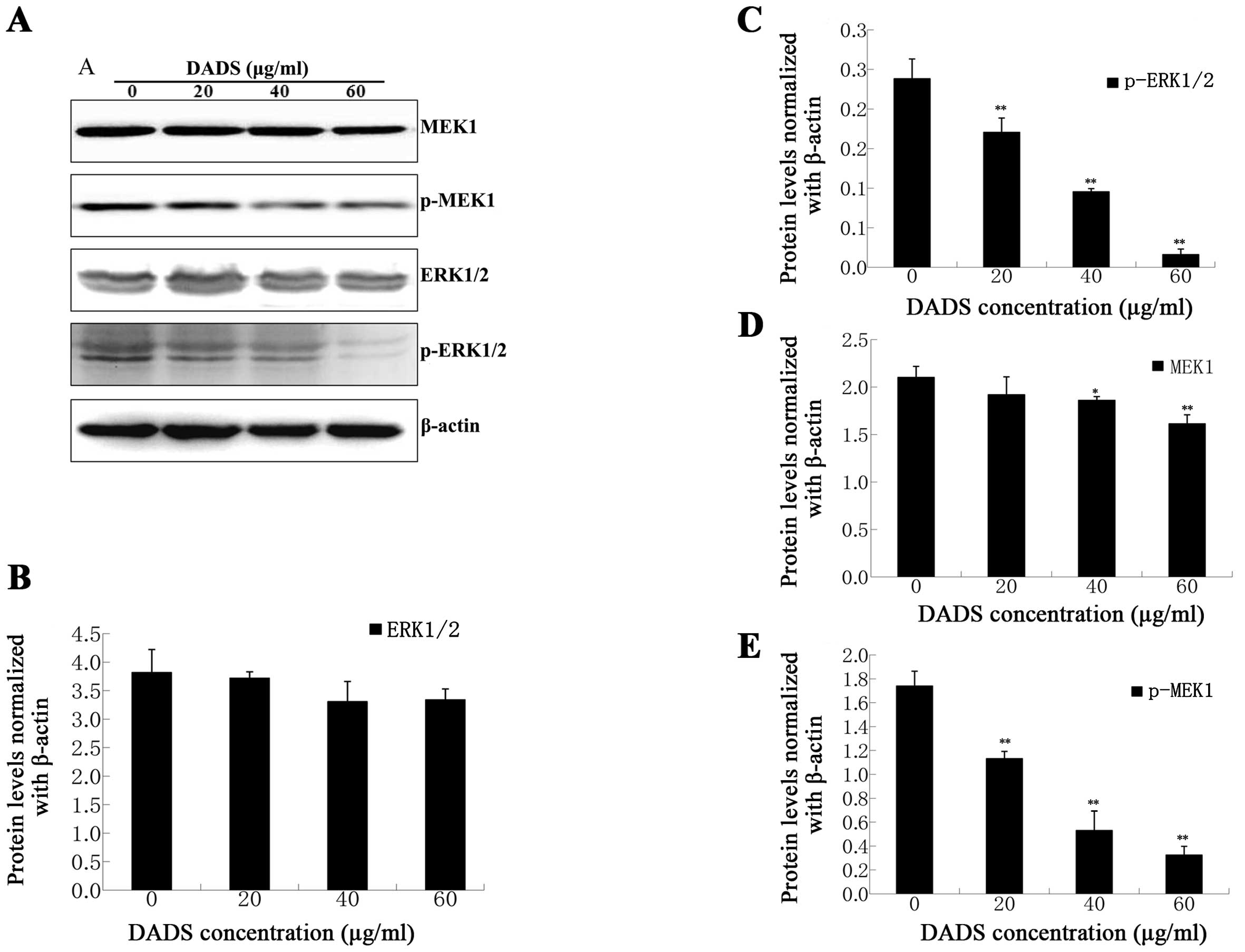
Esophageal squamous cell carcinoma (ESCC) is an aggressive tumor with high incidence and mortality worldwide. Diallyl disulfide (DADS) is a natural organosulfur compound, isolated from garlic. In this study, MTT assay showed that DADS significantly reduced cell viability in a dose- and time-dependent manner in ESCC cells, with lower toxicity in normal liver cells. Cell cycle analysis revealed that DADS made G2/M phase arrest. Molecular analysis suggested that this cell cycle arrest was likely made by the decrease of cyclin B1, cdc2, p-cdc2, cdc25c in concomitance with activation of the p53/p21 pathway. Apoptosis was detected by Annexin V/PI staining. The molecule markers showed that DADS induced apoptosis through activating caspases, altering the Bax/Bcl-2 balance and suppressing the MEK-ERK pathway. Our data indicated that DADS has the potential to be an effective and safe anticancer agent for ESCC therapy in the near future.
View Figures

Figure 1

Figure 2

Figure 3

Figure 4

Figure 5

Figure 6

Figure 7

Figure 8

Figure 9

Figure 10

View References

1 

Cui X, Zhao Z, Liu D, et al: Inactivation of miR-34a by aberrant CpG methylation in Kazakh patients with esophageal carcinoma. J Exp Clin Cancer Res. 33:20–33. 2014. View Article : Google Scholar : PubMed/NCBI

2 

Orditura M, Galizia G, Fabozzi A, et al: Preoperative treatment of locally advanced esophageal carcinoma. Int J Oncol. 43:1745–1753. 2013.PubMed/NCBI

3 

Matés JM, Segura JA, Alonso FJ and Márquez J: Anticancer antioxidant regulatory functions of phytochemicals. Current Medicinal Chemistry. 18:2315–2338. 2011.PubMed/NCBI

4 

Zhou Y, Su J, Shi L, Liao Q and Su Q: DADS downregulates the Rac1-ROCK1/PAK1-LIMK1-ADF/cofilin signaling pathway, inhibiting cell migration and invasion. Oncol Rep. 29:605–612. 2013.PubMed/NCBI

5 

Alam M, Zubair S, Farazuddin M, et al: Development, characterization and efficacy of niosomal diallyl disulfide in treatment of disseminated murine candidiasis. Nanomedicine. 9:247–256. 2013. View Article : Google Scholar : PubMed/NCBI

6 

Maldonado PD, Chánez-Cárdenas ME and Pedraza-Chaverrí J: Aged garlic extract, garlic powder extract, S-allylcysteine, diallyl sulfide and diallyl disulfide do not interfere with the antibiotic activity of gentamicin. Phytother Res. 19:252–254. 2005. View Article : Google Scholar

7 

Lissiman E, Bhasale AL and Cohen M: Garlic for the common cold. Cochrane Database Syst Rev. 3:CD0062062012.

8 

Lee IC, Kim SH, Baek HS, et al: The involvement of Nrf2 in the protective effects of diallyl disulfide on carbon tetrachloride-induced hepatic oxidative damage and inflammatory response in rats. Food Chem Toxicol. 63:174–185. 2014. View Article : Google Scholar

9 

Truong D, Hindmarsh W and O’Brien PJ: The molecular mechanisms of diallyl disulfide and diallyl sulfide induced hepatocyte cytotoxicity. Chem Biol Interact. 180:79–88. 2009. View Article : Google Scholar : PubMed/NCBI

10 

Arunkumar R, Sharmila G, Elumalai P, et al: Effect of diallyl disulfide on insulin-like growth factor signaling molecules involved in cell survival and proliferation of human prostate cancer cells in vitro and in silico approach through docking analysis. Phytomedicine. 19:912–923. 2012. View Article : Google Scholar

11 

Song JD, Lee SK, Kim KM, et al: Molecular mechanism of diallyl disulfide in cell cycle arrest and apoptosis in HCT-116 colon cancer cells. J Biochem Mol Toxicol. 23:71–79. 2009. View Article : Google Scholar : PubMed/NCBI

12 

Nkrumah-Elie YM, Reuben JS, Hudson AM, et al: The attenuation of early benzo (a) pyrene-induced carcinogenic insults by diallyl disulfide (DADS) in MCF-10A cells. Nutr Cancer. 64:1112–1121. 2012. View Article : Google Scholar

13 

Ling H, Wen L, Ji XX, et al: Growth inhibitory effect and Chk1-dependent signaling involved in G2/M arrest on human gastric cancer cells induced by diallyl disulfide. Braz J Med Biol Res. 43:271–278. 2010. View Article : Google Scholar

14 

Jun Z, Suzuki M, Xiao J, Wen J, Talbot SG, Li GC and Xu M: Comparative effects of natural and synthetic diallyl disulfide on apoptosis of human breast-cancer MCF-7 cells. Biotechnol Appl Biochem. 52:113–119. 2009. View Article : Google Scholar : PubMed/NCBI

15 

Zhang XH, Zou ZQ, Xu CW, Shen YZ and Li D: Myricetin induces G2/M phase arrest in HepG2 cells by inhibiting the activity of the cyclin B/cdc2 complex. Mol Med Rep. 4:273–277. 2011.PubMed/NCBI

16 

Sankari SL, Masthan KM, Babu NA, Bhattacharjee T and Elumalai M: Apoptosis in cancer - an update. Asian Pac J Cancer Prev. 13:4873–4878. 2012. View Article : Google Scholar : PubMed/NCBI

17 

Czepukojc B, Baltes AK, Cerella C, et al: Synthetic polysulfane derivatives induce cell cycle arrest and apoptotic cell death in human hematopoietic cancer cells. Food Chem Toxicol. 64:249–257. 2014. View Article : Google Scholar

18 

Tang H, Kong Y, Guo J, et al: Diallyl disulfide suppresses proliferation and induces apoptosis in human gastric cancer through Wnt-1 signaling pathway by upregulation of miR-200b and miR-22. Cancer Lett. 340:72–81. 2013. View Article : Google Scholar

19 

Haneji T, Hirashima K, Teramachi J and Morimoto H: Okadaic acid activates the PKR pathway and induces apoptosis through PKR stimulation in MG63 osteoblast-like cells. Int J Oncol. 42:1904–1910. 2013.PubMed/NCBI

20 

Hui C, Jun W, Ya LN and Ming X: Effect of Allium sativum (garlic) diallyl disulfide (DADS) on human non-small cell lung carcinoma H1299 cells. Trop Biomed. 25:37–45. 2008.

21 

Tan H, Ling H, He J, Yi L, Zhou J, Lin M and Su Q: Inhibition of ERK and activation of p38 are involved in diallyl disulfide induced apoptosis of leukemia HL-60 cells. Arch Pharm Res. 31:786–793. 2008. View Article : Google Scholar : PubMed/NCBI

22 

Altonsy MO, Habib TN and Andrews SC: Diallyl disulfide-induced apoptosis in a breast-cancer cell line (MCF-7) may be caused by inhibition of histone deacetylation. Nutr Cancer. 64:1251–1260. 2012. View Article : Google Scholar

23 

Duong HQ, Hwang JS, Kim HJ, Seong YS and Bae I: BML-275, an AMPK inhibitor, induces DNA damage, G2/M arrest and apoptosis in human pancreatic cancer cells. Int J Oncol. 41:2227–2236. 2012.PubMed/NCBI

24 

Paul P, Rajendran SK, Peuhu E, Alshatwi AA, Akbarsha MA, Hietanen S and Eriksson JE: Novel action modality of the diterpenoid anisomelic acid causes depletion of E6 and E7 viral oncoproteins in HPV-transformed cervical carcinoma cells. Biochem Pharmacol. 89:171–184. 2014. View Article : Google Scholar

25 

Zhang Z, Wang CZ, Du GJ, et al: Genistein induces G2/M cell cycle arrest and apoptosis via ATM/p53-dependent pathway in human colon cancer cells. Int J Oncol. 43:289–296. 2013.PubMed/NCBI

26 

Li B, Zhao J, Wang CZ, Searle J, He TC, Yuan CS and Du W: Ginsenoside Rh2 induces apoptosis and paraptosis-like cell death in colorectal cancer cells through activation of p53. Cancer Lett. 301:185–192. 2011. View Article : Google Scholar : PubMed/NCBI

27 

Ding L, Huang Y, Du Q, et al: TGEV nucleocapsid protein induces cell cycle arrest and apoptosis through activation of p53 signaling. Biochem Biophys Res Commun. 445:497–503. 2014. View Article : Google Scholar : PubMed/NCBI

28 

Takahashi H, Chen MC, Pham H, et al: Baicalein, a component of Scutellaria baicalensis, induces apoptosis by Mcl-1 downregulation in human pancreatic cancer cells. Biochim Biophys Acta. 1813:1465–1474. 2011.

29 

Lv C, Sun W, Sun H, Wei S, Chen R, Wang B and Huang C: Asperolide A, a marine-derived tetranorditerpenoid, induces G2/M arrest in human NCI-H460 lung carcinoma cells, is mediated by p53-p21 stabilization and modulated by Ras/Raf/MEK/ERK signaling pathway. Mar Drugs. 11:316–331. 2013. View Article : Google Scholar

Related Articles

  • Abstract
  • View
  • Download
  • Twitter
Copy and paste a formatted citation
Spandidos Publications style
Yin X, Zhang R, Feng C, Zhang J, Liu D, Xu K, Wang X, Zhang S, Li Z, Liu X, Liu X, et al: Diallyl disulfide induces G2/M arrest and promotes apoptosis through the p53/p21 and MEK-ERK pathways in human esophageal squamous cell carcinoma. Oncol Rep 32: 1748-1756, 2014.
APA
Yin, X., Zhang, R., Feng, C., Zhang, J., Liu, D., Xu, K. ... Ma, H. (2014). Diallyl disulfide induces G2/M arrest and promotes apoptosis through the p53/p21 and MEK-ERK pathways in human esophageal squamous cell carcinoma. Oncology Reports, 32, 1748-1756. https://doi.org/10.3892/or.2014.3361
MLA
Yin, X., Zhang, R., Feng, C., Zhang, J., Liu, D., Xu, K., Wang, X., Zhang, S., Li, Z., Liu, X., Ma, H."Diallyl disulfide induces G2/M arrest and promotes apoptosis through the p53/p21 and MEK-ERK pathways in human esophageal squamous cell carcinoma". Oncology Reports 32.4 (2014): 1748-1756.
Chicago
Yin, X., Zhang, R., Feng, C., Zhang, J., Liu, D., Xu, K., Wang, X., Zhang, S., Li, Z., Liu, X., Ma, H."Diallyl disulfide induces G2/M arrest and promotes apoptosis through the p53/p21 and MEK-ERK pathways in human esophageal squamous cell carcinoma". Oncology Reports 32, no. 4 (2014): 1748-1756. https://doi.org/10.3892/or.2014.3361
Copy and paste a formatted citation
x
Spandidos Publications style
Yin X, Zhang R, Feng C, Zhang J, Liu D, Xu K, Wang X, Zhang S, Li Z, Liu X, Liu X, et al: Diallyl disulfide induces G2/M arrest and promotes apoptosis through the p53/p21 and MEK-ERK pathways in human esophageal squamous cell carcinoma. Oncol Rep 32: 1748-1756, 2014.
APA
Yin, X., Zhang, R., Feng, C., Zhang, J., Liu, D., Xu, K. ... Ma, H. (2014). Diallyl disulfide induces G2/M arrest and promotes apoptosis through the p53/p21 and MEK-ERK pathways in human esophageal squamous cell carcinoma. Oncology Reports, 32, 1748-1756. https://doi.org/10.3892/or.2014.3361
MLA
Yin, X., Zhang, R., Feng, C., Zhang, J., Liu, D., Xu, K., Wang, X., Zhang, S., Li, Z., Liu, X., Ma, H."Diallyl disulfide induces G2/M arrest and promotes apoptosis through the p53/p21 and MEK-ERK pathways in human esophageal squamous cell carcinoma". Oncology Reports 32.4 (2014): 1748-1756.
Chicago
Yin, X., Zhang, R., Feng, C., Zhang, J., Liu, D., Xu, K., Wang, X., Zhang, S., Li, Z., Liu, X., Ma, H."Diallyl disulfide induces G2/M arrest and promotes apoptosis through the p53/p21 and MEK-ERK pathways in human esophageal squamous cell carcinoma". Oncology Reports 32, no. 4 (2014): 1748-1756. https://doi.org/10.3892/or.2014.3361
Follow us
  • Twitter
  • LinkedIn
  • Facebook
About
  • Spandidos Publications
  • Careers
  • Cookie Policy
  • Privacy Policy
How can we help?
  • Help
  • Live Chat
  • Contact
  • Email to our Support Team