Spandidos Publications Logo
  • About
    • About Spandidos
    • Aims and Scopes
    • Abstracting and Indexing
    • Editorial Policies
    • Reprints and Permissions
    • Job Opportunities
    • Terms and Conditions
    • Contact
  • Journals
    • All Journals
    • Oncology Letters
      • Oncology Letters
      • Information for Authors
      • Editorial Policies
      • Editorial Board
      • Aims and Scope
      • Abstracting and Indexing
      • Bibliographic Information
      • Archive
    • International Journal of Oncology
      • International Journal of Oncology
      • Information for Authors
      • Editorial Policies
      • Editorial Board
      • Aims and Scope
      • Abstracting and Indexing
      • Bibliographic Information
      • Archive
    • Molecular and Clinical Oncology
      • Molecular and Clinical Oncology
      • Information for Authors
      • Editorial Policies
      • Editorial Board
      • Aims and Scope
      • Abstracting and Indexing
      • Bibliographic Information
      • Archive
    • Experimental and Therapeutic Medicine
      • Experimental and Therapeutic Medicine
      • Information for Authors
      • Editorial Policies
      • Editorial Board
      • Aims and Scope
      • Abstracting and Indexing
      • Bibliographic Information
      • Archive
    • International Journal of Molecular Medicine
      • International Journal of Molecular Medicine
      • Information for Authors
      • Editorial Policies
      • Editorial Board
      • Aims and Scope
      • Abstracting and Indexing
      • Bibliographic Information
      • Archive
    • Biomedical Reports
      • Biomedical Reports
      • Information for Authors
      • Editorial Policies
      • Editorial Board
      • Aims and Scope
      • Abstracting and Indexing
      • Bibliographic Information
      • Archive
    • Oncology Reports
      • Oncology Reports
      • Information for Authors
      • Editorial Policies
      • Editorial Board
      • Aims and Scope
      • Abstracting and Indexing
      • Bibliographic Information
      • Archive
    • Molecular Medicine Reports
      • Molecular Medicine Reports
      • Information for Authors
      • Editorial Policies
      • Editorial Board
      • Aims and Scope
      • Abstracting and Indexing
      • Bibliographic Information
      • Archive
    • World Academy of Sciences Journal
      • World Academy of Sciences Journal
      • Information for Authors
      • Editorial Policies
      • Editorial Board
      • Aims and Scope
      • Abstracting and Indexing
      • Bibliographic Information
      • Archive
    • International Journal of Functional Nutrition
      • International Journal of Functional Nutrition
      • Information for Authors
      • Editorial Policies
      • Editorial Board
      • Aims and Scope
      • Abstracting and Indexing
      • Bibliographic Information
      • Archive
    • International Journal of Epigenetics
      • International Journal of Epigenetics
      • Information for Authors
      • Editorial Policies
      • Editorial Board
      • Aims and Scope
      • Abstracting and Indexing
      • Bibliographic Information
      • Archive
    • Medicine International
      • Medicine International
      • Information for Authors
      • Editorial Policies
      • Editorial Board
      • Aims and Scope
      • Abstracting and Indexing
      • Bibliographic Information
      • Archive
  • Articles
  • Information
    • Information for Authors
    • Information for Reviewers
    • Information for Librarians
    • Information for Advertisers
    • Conferences
  • Language Editing
Spandidos Publications Logo
  • About
    • About Spandidos
    • Aims and Scopes
    • Abstracting and Indexing
    • Editorial Policies
    • Reprints and Permissions
    • Job Opportunities
    • Terms and Conditions
    • Contact
  • Journals
    • All Journals
    • Biomedical Reports
      • Information for Authors
      • Editorial Policies
      • Editorial Board
      • Aims and Scope
      • Abstracting and Indexing
      • Bibliographic Information
      • Archive
    • Experimental and Therapeutic Medicine
      • Information for Authors
      • Editorial Policies
      • Editorial Board
      • Aims and Scope
      • Abstracting and Indexing
      • Bibliographic Information
      • Archive
    • International Journal of Epigenetics
      • Information for Authors
      • Editorial Policies
      • Editorial Board
      • Aims and Scope
      • Abstracting and Indexing
      • Bibliographic Information
      • Archive
    • International Journal of Functional Nutrition
      • Information for Authors
      • Editorial Policies
      • Editorial Board
      • Aims and Scope
      • Abstracting and Indexing
      • Bibliographic Information
      • Archive
    • International Journal of Molecular Medicine
      • Information for Authors
      • Editorial Policies
      • Editorial Board
      • Aims and Scope
      • Abstracting and Indexing
      • Bibliographic Information
      • Archive
    • International Journal of Oncology
      • Information for Authors
      • Editorial Policies
      • Editorial Board
      • Aims and Scope
      • Abstracting and Indexing
      • Bibliographic Information
      • Archive
    • Medicine International
      • Information for Authors
      • Editorial Policies
      • Editorial Board
      • Aims and Scope
      • Abstracting and Indexing
      • Bibliographic Information
      • Archive
    • Molecular and Clinical Oncology
      • Information for Authors
      • Editorial Policies
      • Editorial Board
      • Aims and Scope
      • Abstracting and Indexing
      • Bibliographic Information
      • Archive
    • Molecular Medicine Reports
      • Information for Authors
      • Editorial Policies
      • Editorial Board
      • Aims and Scope
      • Abstracting and Indexing
      • Bibliographic Information
      • Archive
    • Oncology Letters
      • Information for Authors
      • Editorial Policies
      • Editorial Board
      • Aims and Scope
      • Abstracting and Indexing
      • Bibliographic Information
      • Archive
    • Oncology Reports
      • Information for Authors
      • Editorial Policies
      • Editorial Board
      • Aims and Scope
      • Abstracting and Indexing
      • Bibliographic Information
      • Archive
    • World Academy of Sciences Journal
      • Information for Authors
      • Editorial Policies
      • Editorial Board
      • Aims and Scope
      • Abstracting and Indexing
      • Bibliographic Information
      • Archive
  • Articles
  • Information
    • For Authors
    • For Reviewers
    • For Librarians
    • For Advertisers
    • Conferences
  • Language Editing
Login Register Submit
  • This site uses cookies
  • You can change your cookie settings at any time by following the instructions in our Cookie Policy. To find out more, you may read our Privacy Policy.

    I agree
Search articles by DOI, keyword, author or affiliation
Search
Advanced Search
presentation
Oncology Reports
Join Editorial Board Propose a Special Issue
Print ISSN: 1021-335X Online ISSN: 1791-2431
Journal Cover
November-2014 Volume 32 Issue 5

Full Size Image

Sign up for eToc alerts
Recommend to Library

Journals

International Journal of Molecular Medicine

International Journal of Molecular Medicine

International Journal of Molecular Medicine is an international journal devoted to molecular mechanisms of human disease.

International Journal of Oncology

International Journal of Oncology

International Journal of Oncology is an international journal devoted to oncology research and cancer treatment.

Molecular Medicine Reports

Molecular Medicine Reports

Covers molecular medicine topics such as pharmacology, pathology, genetics, neuroscience, infectious diseases, molecular cardiology, and molecular surgery.

Oncology Reports

Oncology Reports

Oncology Reports is an international journal devoted to fundamental and applied research in Oncology.

Experimental and Therapeutic Medicine

Experimental and Therapeutic Medicine

Experimental and Therapeutic Medicine is an international journal devoted to laboratory and clinical medicine.

Oncology Letters

Oncology Letters

Oncology Letters is an international journal devoted to Experimental and Clinical Oncology.

Biomedical Reports

Biomedical Reports

Explores a wide range of biological and medical fields, including pharmacology, genetics, microbiology, neuroscience, and molecular cardiology.

Molecular and Clinical Oncology

Molecular and Clinical Oncology

International journal addressing all aspects of oncology research, from tumorigenesis and oncogenes to chemotherapy and metastasis.

World Academy of Sciences Journal

World Academy of Sciences Journal

Multidisciplinary open-access journal spanning biochemistry, genetics, neuroscience, environmental health, and synthetic biology.

International Journal of Functional Nutrition

International Journal of Functional Nutrition

Open-access journal combining biochemistry, pharmacology, immunology, and genetics to advance health through functional nutrition.

International Journal of Epigenetics

International Journal of Epigenetics

Publishes open-access research on using epigenetics to advance understanding and treatment of human disease.

Medicine International

Medicine International

An International Open Access Journal Devoted to General Medicine.

Journal Cover
November-2014 Volume 32 Issue 5

Full Size Image

Sign up for eToc alerts
Recommend to Library

  • Article
  • Citations
    • Cite This Article
    • Download Citation
    • Create Citation Alert
    • Remove Citation Alert
    • Cited By
  • Similar Articles
    • Related Articles (in Spandidos Publications)
    • Similar Articles (Google Scholar)
    • Similar Articles (PubMed)
  • Download PDF
  • Download XML
  • View XML
Article

Diallyl disulfide selectively causes checkpoint kinase-1 mediated G2/M arrest in human MGC803 gastric cancer cell line

  • Authors:
    • Hui Ling
    • Li-Feng Lu
    • Jie He
    • Guo-Hua  Xiao
    • Hao Jiang
    • Qi Su
  • View Affiliations / Copyright

    Affiliations: Key Laboratory of Tumor Cellular and Molecular Pathology (University of South China), College of Hunan Province, Cancer Research Institute, Hengyang, Hunan 421001, P.R. China, Center for Gastric Cancer Research of Hunan Province, University of South China, Hengyang, Hunan 421001, P.R. China
  • Pages: 2274-2282
    |
    Published online on: August 19, 2014
       https://doi.org/10.3892/or.2014.3417
  • Expand metrics +
Metrics: Total Views: 0 (Spandidos Publications: | PMC Statistics: )
Metrics: Total PDF Downloads: 0 (Spandidos Publications: | PMC Statistics: )
Cited By (CrossRef): 0 citations Loading Articles...

This article is mentioned in:


Abstract

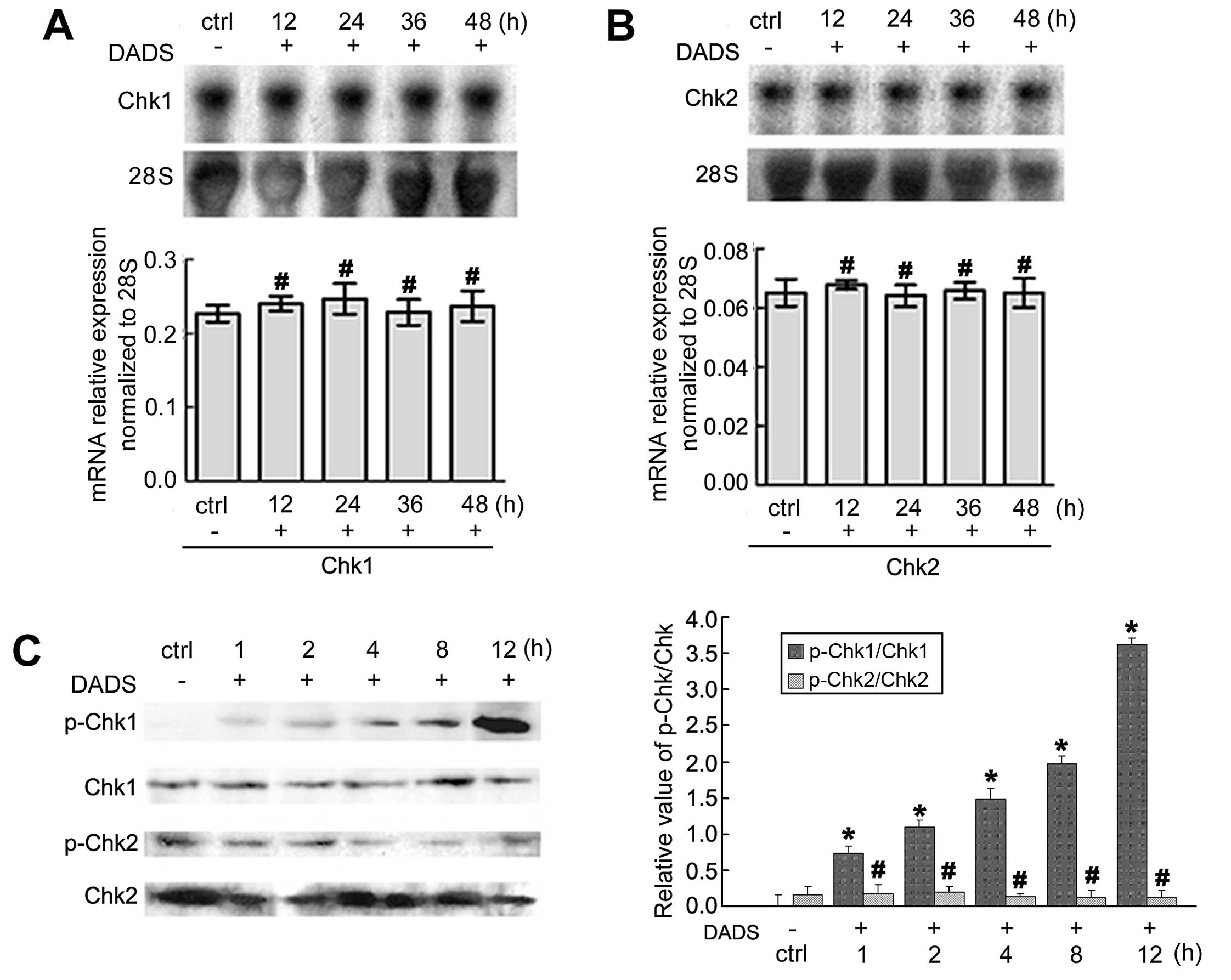
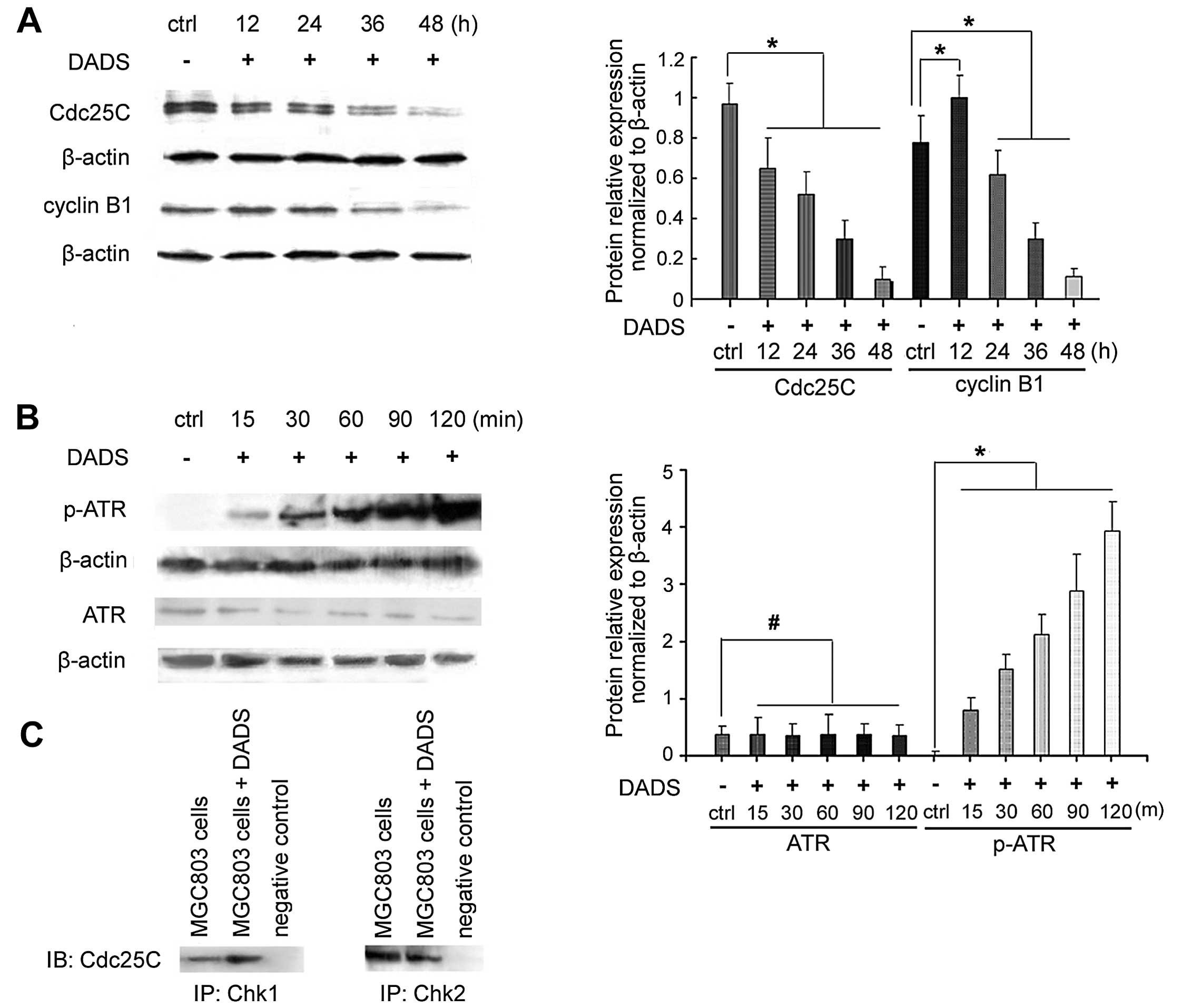
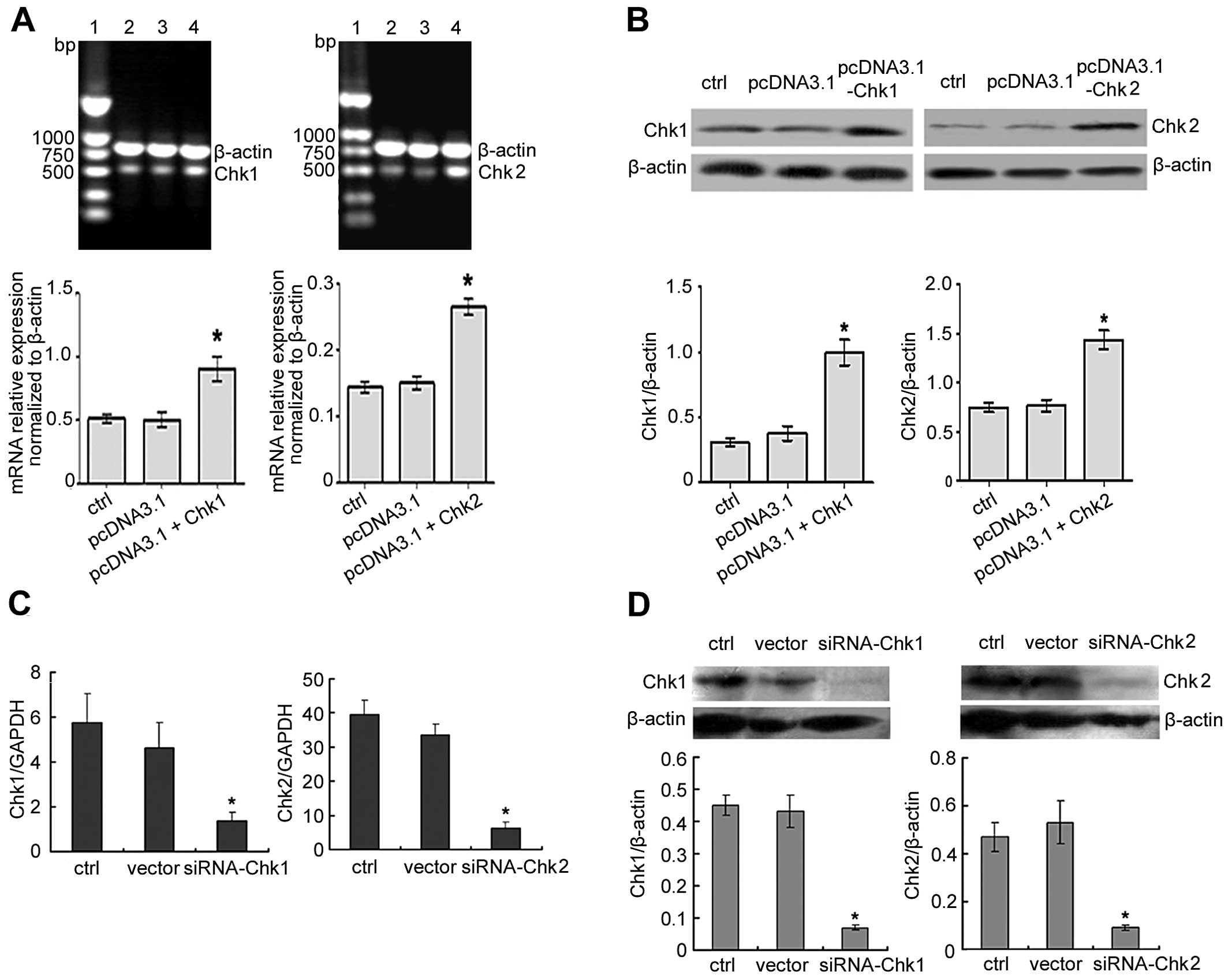
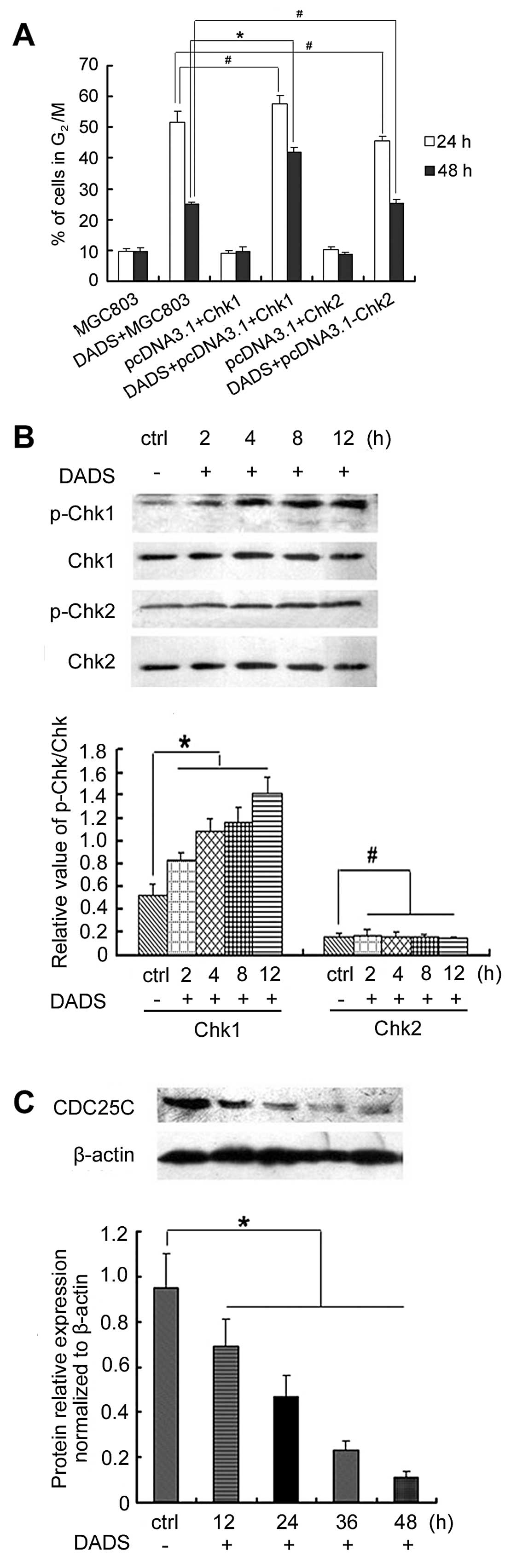
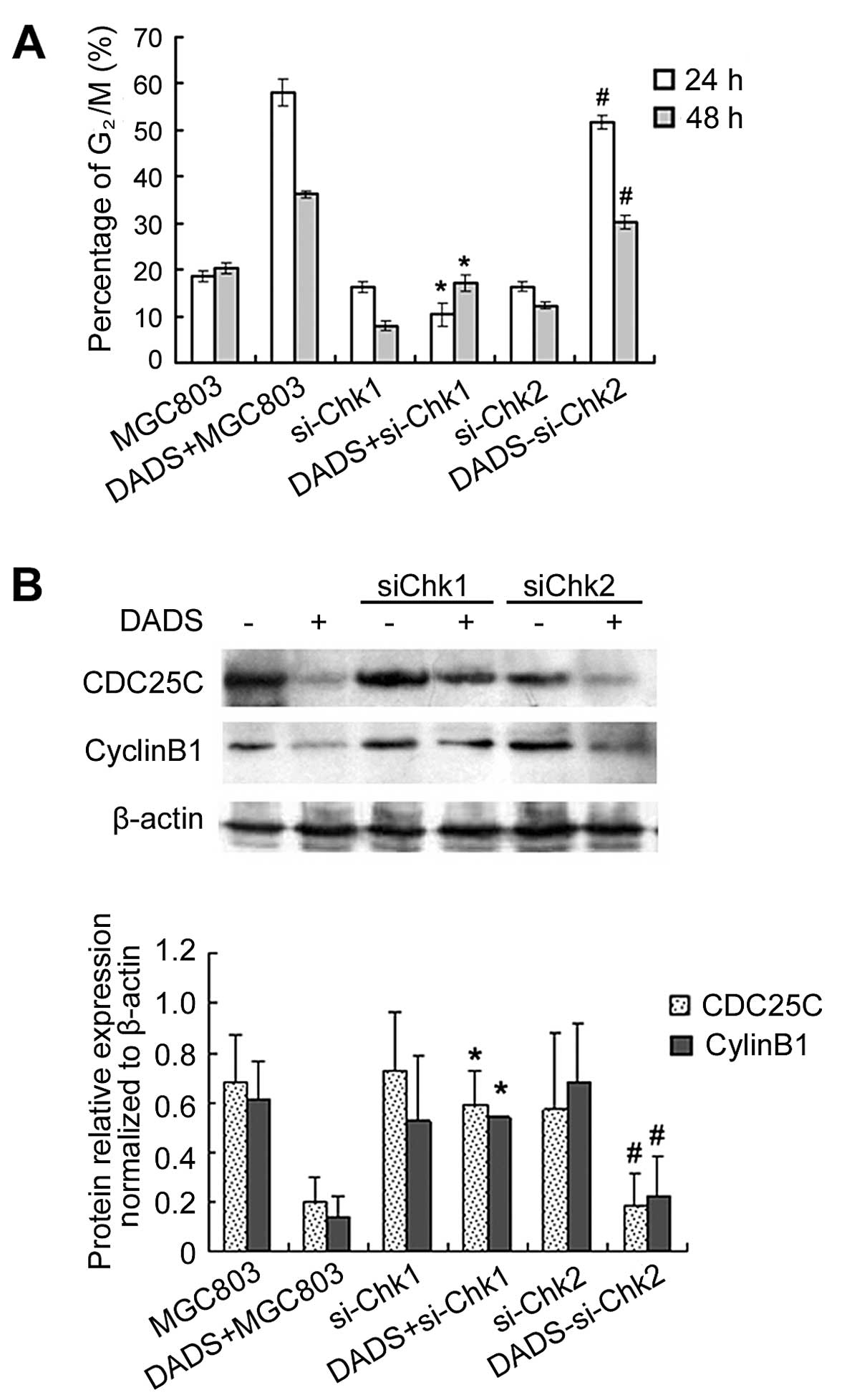
Previous studies have shown that diallyl disulfide (DADS), a naturally occurring anticancer agent in garlic, arrested human gastric cancer cells (MGC803) in the G2/M phase of the cell cycle. Due to the importance of cell cycle redistribution in DADS-mediated anticarcinogenic effects, we investigated the role of checkpoint kinases (Chk1 and Chk2) during DADS-induced cell cycle arrest. In the present study, the northern blot analysis showed that mRNA expression of for Chkl and Chk2 was unchanged. Notably, DADS induced the accumulation of phosphorylated Chk1, but not of Chk2, activated phospho-ATR (ATM-RAD3-related gene), and dowregulated CDC25C and cyclin B1 expression. Furthermore, CDC25C was immunoprecipitated by anti-Chk1 but not anti-Chk2. Results of the overexpression and knockdown studies, showed that Chk1 but not Chk2 regulated the DADS-induced G2/M arrest of MGC803 cells. The overexpression of Chk1 resulted in significantly increased DADS-induced G2/M arrest, increased DADS-induced Chk1 phosphorylation and inhibited CDC25C expression. Knockdown of Chk1 reduced DADS‑induced G2/M arrest and blocked the DADS-induced inhibition of CDC25C and cyclin B1 expression. These results suggested that Chk1 is important in DADS‑induced cell cycle G2/M arrest in the human MGC803 gastric cancer cell line. Furthermore, the DADS-induced G2/M checkpoint response is mediated by Chk1 signaling through ATR/Chk1/CDC25C/cyclin B1.
View Figures

Figure 1

Figure 2

Figure 3

Figure 4

Figure 5

View References

1 

Steigman SA, Kunisaki SM, Wilkins-Haug L, Takoudes TC and Fauza DO: Optical properties of human amniotic fluid: implications for videofetoscopic surgery. Fetal Diagn Ther. 27:87–90. 2010. View Article : Google Scholar : PubMed/NCBI

2 

Kunisaki C, Makino H, Kimura J, et al: Impact of lymphovascular invasion in patients with stage I gastric cancer. Surgery. 147:204–211. 2010. View Article : Google Scholar : PubMed/NCBI

3 

Arunkumar R, Sharmila G, Elumalai P, et al: Effect of diallyl disulfide on insulin-like growth factor signaling molecules involved in cell survival and proliferation of human prostate cancer cells in vitro and in silico approach through docking analysis. Phytomedicine. 19:912–923. 2012. View Article : Google Scholar

4 

Lai KC, Kuo CL, Ho HC, et al: Diallyl sulfide, diallyl disulfide and diallyl trisulfide affect drug resistant gene expression in colo 205 human colon cancer cells in vitro and in vivo. Phytomedicine. 19:625–630. 2012. View Article : Google Scholar : PubMed/NCBI

5 

Yi L, Ji XX, Tan H, et al: Involvement of Mcl1 in diallyl disulfide-induced G2/M cell cycle arrest in HL-60 cells. Oncol Rep. 27:1911–1917. 2012.PubMed/NCBI

6 

Ling H, Zhang LY, Su Q, et al: Erk is involved in the differentiation induced by diallyl disulfide in the human gastric cancer cell line MGC803. Cell Mol Biol Lett. 11:408–423. 2006. View Article : Google Scholar : PubMed/NCBI

7 

Yi L and Su Q: Molecular mechanisms for the anti-cancer effects of diallyl disulfide. Food Chem Toxicol. 57:362–370. 2013. View Article : Google Scholar : PubMed/NCBI

8 

Song JD, Lee SK, Kim KM, et al: Molecular mechanism of diallyl disulfide in cell cycle arrest and apoptosis in HCT-116 colon cancer cells. J Biochem Mol Toxicol. 23:71–79. 2009. View Article : Google Scholar : PubMed/NCBI

9 

Liao QJ, Su J, He J, Song Y, Tang HL and Su Q: Effect of diallyl disulfide on cell cycle arrest of human colon cancer SW480 cells. Ai Zheng. 28:138–141. 2009.PubMed/NCBI

10 

Dasgupta P and Bandyopadhyay SS: Role of di-allyl disulfide, a garlic component in NF-κB mediated transient G2-M phase arrest and apoptosis in human leukemic cell-lines. Nutr Cancer. 65:611–622. 2013.PubMed/NCBI

11 

Arunkumar A, Vijayababu MR, Srinivasan N, Aruldhas MM and Arunakaran J: Garlic compound, diallyl disulfide induces cell cycle arrest in prostate cancer cell line PC-3. Mol Cell Biochem. 288:107–113. 2006. View Article : Google Scholar : PubMed/NCBI

12 

Knowles LM and Milner JA: Diallyl disulfide inhibits p34cdc2 kinase activity through changes in complex formation and phosphorylation. Carcinogenesis. 21:1129–1134. 2000.PubMed/NCBI

13 

Ashra H and Rao KV: Elevated phosphorylation of Chk1 and decreased phosphorylation of Chk2 are associated with abrogation of G2/M checkpoint control during transformation of Syrian hamster embryo (SHE) cells by Malachite green. Cancer Lett. 237:188–198. 2006. View Article : Google Scholar

14 

Xiang SL, Xiao XL, Ling H, et al: Antitumor effect of diallyl disulfide on human gastric cancer MGC803 cells xenograft in nude mice. Ai Zheng. 24:940–944. 2005.(In Chinese).

15 

Yuan JP, Wang GH, Ling H, et al: Diallyl disulfide-induced G2/M arrest of human gastric cancer MGC803 cells involves activation of p38 MAP kinase pathways. World J Gastroenterol. 10:2731–2734. 2004.

16 

Ling H, Wen L, Ji XX, et al: Growth inhibitory effect and Chk1-dependent signaling involved in G2/M arrest on human gastric cancer cells induced by diallyl disulfide. Braz J Med Biol Res. 43:271–278. 2010. View Article : Google Scholar : PubMed/NCBI

17 

Shioya K, Michaux C, Kuenne C, Hain T, et al: Genome-wide identification of small RNAs in the opportunistic pathogen Enterococcus faecalis V583. PLoS One. 6:e239482011. View Article : Google Scholar : PubMed/NCBI

18 

Dickson MA and Schwartz GK: Development of cell-cycle inhibitors for cancer therapy. Curr Oncol. 16:36–43. 2009.PubMed/NCBI

19 

Call JA, Eckhardt SG and Camidge DR: Targeted manipulation of apoptosis in cancer treatment. Lancet Oncol. 9:1002–1011. 2008. View Article : Google Scholar : PubMed/NCBI

20 

Bucher N and Britten CD: G2 checkpoint abrogation and checkpoint kinase-1 targeting in the treatment of cancer. Br J Cancer. 98:523–528. 2008. View Article : Google Scholar : PubMed/NCBI

21 

Gong QF, Liu EH, Xin R, Huang X and Gao N: 2ME and 2OHE2 exhibit growth inhibitory effects and cell cycle arrest at G2/M in RL95-2 human endometrial cancer cells through activation of p53 and Chk1. Mol Cell Biochem. 352:221–230. 2011. View Article : Google Scholar : PubMed/NCBI

22 

Wu J, Lai G, Wan F, et al: Knockdown of checkpoint kinase 1 is associated with the increased radiosensitivity of glioblastoma stem-like cells. Tohoku J Exp Med. 226:267–274. 2012. View Article : Google Scholar : PubMed/NCBI

23 

Hu W, Zong Q, John-Baptiste A and Jessen B: Transient knock down of checkpoint kinase 1 in hematopoietic progenitors is linked to bone marrow toxicity. Toxicol Lett. 204:141–147. 2011. View Article : Google Scholar : PubMed/NCBI

24 

Zeng X and Kinsella TJ: BNIP3 is essential for mediating 6-thioguanine- and 5-fluorouracil-induced autophagy following DNA mismatch repair processing. Cell Res. 20:665–675. 2010. View Article : Google Scholar : PubMed/NCBI

25 

Hsu SC, Yu CC, Yang JS, et al: A novel synthetic 2-(3-methoxyphenyl)- 6,7-methylenedioxoquinolin-4-one arrests the G2/M phase arrest via Cdc25c and induces apoptosis through caspase- and mitochondria-dependent pathways in TSGH8301 human bladder cancer cells. Int J Oncol. 40:731–738. 2012.

26 

Pabla N, Bhatt K and Dong Z: Checkpoint kinase 1 (Chk1)-short is a splice variant and endogenous inhibitor of Chk1 that regulates cell cycle and DNA damage checkpoints. Proc Natl Acad Sci USA. 109:197–202. 2012. View Article : Google Scholar : PubMed/NCBI

27 

Niida H, Murata K, Shimada M, et al: Cooperative functions of Chk1 and Chk2 reduce tumour susceptibility in vivo. EMBO J. 29:3558–3570. 2010. View Article : Google Scholar : PubMed/NCBI

28 

Soule BP, Simone NL, DeGraff WG, Choudhuri R, Cook JA and Mitchell JB: Loratadine dysregulates cell cycle progression and enhances the effect of radiation in human tumor cell lines. Radiat Oncol. 5:82010. View Article : Google Scholar : PubMed/NCBI

29 

Moon DO, Kim MO, Nam TJ, Kim SK, Choi YH and Kim GY: Pectenotoxin-2 induces G2/M phase cell cycle arrest in human breast cancer cells via ATM and Chk1/2-mediated phosphorylation of cdc25C. Oncol Rep. 24:271–276. 2010.PubMed/NCBI

30 

Yan Y, Cao PT, Greer PM, et al: Protein phosphatase 2A has an essential role in the activation of γ-irradiation-induced G2/M checkpoint response. Oncogene. 29:4317–4329. 2010.

31 

Rong JJ, Hu R, Song XM, et al: Gambogic acid triggers DNA damage signaling that induces p53/p21Waf1/CIP1 activation through the ATR-Chk1 pathway. Cancer Lett. 296:55–64. 2010. View Article : Google Scholar : PubMed/NCBI

32 

Bonnet J, Mayonove P and Morris MC: Differential phosphorylation of Cdc25C phosphatase in mitosis. Biochem Biophys Res Commun. 370:483–488. 2008. View Article : Google Scholar : PubMed/NCBI

33 

Reinhardt HC and Yaffe MB: Kinases that control the cell cycle in response to DNA damage: Chk1, Chk2, and MK2. Curr Opin Cell Biol. 21:245–255. 2009. View Article : Google Scholar : PubMed/NCBI

34 

Zegerman P and Diffley JF: DNA replication as a target of the DNA damage checkpoint. DNA Repair. 8:1077–1088. 2009. View Article : Google Scholar : PubMed/NCBI

35 

Shi L, Chen J, Wang YY, et al: Gossypin induces G2/M arrest in human malignant glioma U251 cells by the activation of Chk1/Cdc25C pathway. Cell Mol Neurobiol. 32:289–296. 2012. View Article : Google Scholar : PubMed/NCBI

36 

Aressy B and Ducommun B: Cell cycle control by the CDC25 phosphatases. Anticancer Agents Med Chem. 8:818–824. 2008. View Article : Google Scholar : PubMed/NCBI

37 

Chaudhary P, Sharma R, Sahu M, Vishwanatha JK, Awasthi S and Awasthi YC: 4-Hydroxynonenal induces G2/M phase cell cycle arrest by activation of the ataxia telangiectasia mutated and Rad3-related protein (ATR)/checkpoint kinase 1 (Chk1) signaling pathway. J Biol Chem. 288:20532–20546. 2013.PubMed/NCBI

38 

Duan J, Yu Y, Li Y, et al: Toxic effect of silica nanoparticles on endothelial cells through DNA damage response via Chk1-dependent G2/M checkpoint. PLoS One. 8:e620872013. View Article : Google Scholar : PubMed/NCBI

39 

Matsuoka S, Ballif BA, Smogorzewska A, et al: ATM and ATR substrate analysis reveals extensive protein networks responsive to DNA damage. Science. 316:1160–1166. 2007. View Article : Google Scholar : PubMed/NCBI

40 

Nishida H, Tatewaki N, Nakajima Y, et al: Inhibition of ATR protein kinase activity by schisandrin B in DNA damage response. Nucleic Acids Res. 37:5678–5689. 2009. View Article : Google Scholar : PubMed/NCBI

41 

Furusawa Y, Iizumi T, Fujiwara Y, et al: Inhibition of checkpoint kinase 1 abrogates G2/M checkpoint activation and promotes apoptosis under heat stress. Apoptosis. 17:102–112. 2012. View Article : Google Scholar : PubMed/NCBI

Related Articles

  • Abstract
  • View
  • Download
  • Twitter
Copy and paste a formatted citation
Spandidos Publications style
Ling H, Lu L, He J, Xiao G, Jiang H and Su Q: Diallyl disulfide selectively causes checkpoint kinase-1 mediated G2/M arrest in human MGC803 gastric cancer cell line. Oncol Rep 32: 2274-2282, 2014.
APA
Ling, H., Lu, L., He, J., Xiao, G., Jiang, H., & Su, Q. (2014). Diallyl disulfide selectively causes checkpoint kinase-1 mediated G2/M arrest in human MGC803 gastric cancer cell line. Oncology Reports, 32, 2274-2282. https://doi.org/10.3892/or.2014.3417
MLA
Ling, H., Lu, L., He, J., Xiao, G., Jiang, H., Su, Q."Diallyl disulfide selectively causes checkpoint kinase-1 mediated G2/M arrest in human MGC803 gastric cancer cell line". Oncology Reports 32.5 (2014): 2274-2282.
Chicago
Ling, H., Lu, L., He, J., Xiao, G., Jiang, H., Su, Q."Diallyl disulfide selectively causes checkpoint kinase-1 mediated G2/M arrest in human MGC803 gastric cancer cell line". Oncology Reports 32, no. 5 (2014): 2274-2282. https://doi.org/10.3892/or.2014.3417
Copy and paste a formatted citation
x
Spandidos Publications style
Ling H, Lu L, He J, Xiao G, Jiang H and Su Q: Diallyl disulfide selectively causes checkpoint kinase-1 mediated G2/M arrest in human MGC803 gastric cancer cell line. Oncol Rep 32: 2274-2282, 2014.
APA
Ling, H., Lu, L., He, J., Xiao, G., Jiang, H., & Su, Q. (2014). Diallyl disulfide selectively causes checkpoint kinase-1 mediated G2/M arrest in human MGC803 gastric cancer cell line. Oncology Reports, 32, 2274-2282. https://doi.org/10.3892/or.2014.3417
MLA
Ling, H., Lu, L., He, J., Xiao, G., Jiang, H., Su, Q."Diallyl disulfide selectively causes checkpoint kinase-1 mediated G2/M arrest in human MGC803 gastric cancer cell line". Oncology Reports 32.5 (2014): 2274-2282.
Chicago
Ling, H., Lu, L., He, J., Xiao, G., Jiang, H., Su, Q."Diallyl disulfide selectively causes checkpoint kinase-1 mediated G2/M arrest in human MGC803 gastric cancer cell line". Oncology Reports 32, no. 5 (2014): 2274-2282. https://doi.org/10.3892/or.2014.3417
Follow us
  • Twitter
  • LinkedIn
  • Facebook
About
  • Spandidos Publications
  • Careers
  • Cookie Policy
  • Privacy Policy
How can we help?
  • Help
  • Live Chat
  • Contact
  • Email to our Support Team