Spandidos Publications Logo
  • About
    • About Spandidos
    • Aims and Scopes
    • Abstracting and Indexing
    • Editorial Policies
    • Reprints and Permissions
    • Job Opportunities
    • Terms and Conditions
    • Contact
  • Journals
    • All Journals
    • Oncology Letters
      • Oncology Letters
      • Information for Authors
      • Editorial Policies
      • Editorial Board
      • Aims and Scope
      • Abstracting and Indexing
      • Bibliographic Information
      • Archive
    • International Journal of Oncology
      • International Journal of Oncology
      • Information for Authors
      • Editorial Policies
      • Editorial Board
      • Aims and Scope
      • Abstracting and Indexing
      • Bibliographic Information
      • Archive
    • Molecular and Clinical Oncology
      • Molecular and Clinical Oncology
      • Information for Authors
      • Editorial Policies
      • Editorial Board
      • Aims and Scope
      • Abstracting and Indexing
      • Bibliographic Information
      • Archive
    • Experimental and Therapeutic Medicine
      • Experimental and Therapeutic Medicine
      • Information for Authors
      • Editorial Policies
      • Editorial Board
      • Aims and Scope
      • Abstracting and Indexing
      • Bibliographic Information
      • Archive
    • International Journal of Molecular Medicine
      • International Journal of Molecular Medicine
      • Information for Authors
      • Editorial Policies
      • Editorial Board
      • Aims and Scope
      • Abstracting and Indexing
      • Bibliographic Information
      • Archive
    • Biomedical Reports
      • Biomedical Reports
      • Information for Authors
      • Editorial Policies
      • Editorial Board
      • Aims and Scope
      • Abstracting and Indexing
      • Bibliographic Information
      • Archive
    • Oncology Reports
      • Oncology Reports
      • Information for Authors
      • Editorial Policies
      • Editorial Board
      • Aims and Scope
      • Abstracting and Indexing
      • Bibliographic Information
      • Archive
    • Molecular Medicine Reports
      • Molecular Medicine Reports
      • Information for Authors
      • Editorial Policies
      • Editorial Board
      • Aims and Scope
      • Abstracting and Indexing
      • Bibliographic Information
      • Archive
    • World Academy of Sciences Journal
      • World Academy of Sciences Journal
      • Information for Authors
      • Editorial Policies
      • Editorial Board
      • Aims and Scope
      • Abstracting and Indexing
      • Bibliographic Information
      • Archive
    • International Journal of Functional Nutrition
      • International Journal of Functional Nutrition
      • Information for Authors
      • Editorial Policies
      • Editorial Board
      • Aims and Scope
      • Abstracting and Indexing
      • Bibliographic Information
      • Archive
    • International Journal of Epigenetics
      • International Journal of Epigenetics
      • Information for Authors
      • Editorial Policies
      • Editorial Board
      • Aims and Scope
      • Abstracting and Indexing
      • Bibliographic Information
      • Archive
    • Medicine International
      • Medicine International
      • Information for Authors
      • Editorial Policies
      • Editorial Board
      • Aims and Scope
      • Abstracting and Indexing
      • Bibliographic Information
      • Archive
  • Articles
  • Information
    • Information for Authors
    • Information for Reviewers
    • Information for Librarians
    • Information for Advertisers
    • Conferences
  • Language Editing
Spandidos Publications Logo
  • About
    • About Spandidos
    • Aims and Scopes
    • Abstracting and Indexing
    • Editorial Policies
    • Reprints and Permissions
    • Job Opportunities
    • Terms and Conditions
    • Contact
  • Journals
    • All Journals
    • Biomedical Reports
      • Information for Authors
      • Editorial Policies
      • Editorial Board
      • Aims and Scope
      • Abstracting and Indexing
      • Bibliographic Information
      • Archive
    • Experimental and Therapeutic Medicine
      • Information for Authors
      • Editorial Policies
      • Editorial Board
      • Aims and Scope
      • Abstracting and Indexing
      • Bibliographic Information
      • Archive
    • International Journal of Epigenetics
      • Information for Authors
      • Editorial Policies
      • Editorial Board
      • Aims and Scope
      • Abstracting and Indexing
      • Bibliographic Information
      • Archive
    • International Journal of Functional Nutrition
      • Information for Authors
      • Editorial Policies
      • Editorial Board
      • Aims and Scope
      • Abstracting and Indexing
      • Bibliographic Information
      • Archive
    • International Journal of Molecular Medicine
      • Information for Authors
      • Editorial Policies
      • Editorial Board
      • Aims and Scope
      • Abstracting and Indexing
      • Bibliographic Information
      • Archive
    • International Journal of Oncology
      • Information for Authors
      • Editorial Policies
      • Editorial Board
      • Aims and Scope
      • Abstracting and Indexing
      • Bibliographic Information
      • Archive
    • Medicine International
      • Information for Authors
      • Editorial Policies
      • Editorial Board
      • Aims and Scope
      • Abstracting and Indexing
      • Bibliographic Information
      • Archive
    • Molecular and Clinical Oncology
      • Information for Authors
      • Editorial Policies
      • Editorial Board
      • Aims and Scope
      • Abstracting and Indexing
      • Bibliographic Information
      • Archive
    • Molecular Medicine Reports
      • Information for Authors
      • Editorial Policies
      • Editorial Board
      • Aims and Scope
      • Abstracting and Indexing
      • Bibliographic Information
      • Archive
    • Oncology Letters
      • Information for Authors
      • Editorial Policies
      • Editorial Board
      • Aims and Scope
      • Abstracting and Indexing
      • Bibliographic Information
      • Archive
    • Oncology Reports
      • Information for Authors
      • Editorial Policies
      • Editorial Board
      • Aims and Scope
      • Abstracting and Indexing
      • Bibliographic Information
      • Archive
    • World Academy of Sciences Journal
      • Information for Authors
      • Editorial Policies
      • Editorial Board
      • Aims and Scope
      • Abstracting and Indexing
      • Bibliographic Information
      • Archive
  • Articles
  • Information
    • For Authors
    • For Reviewers
    • For Librarians
    • For Advertisers
    • Conferences
  • Language Editing
Login Register Submit
  • This site uses cookies
  • You can change your cookie settings at any time by following the instructions in our Cookie Policy. To find out more, you may read our Privacy Policy.

    I agree
Search articles by DOI, keyword, author or affiliation
Search
Advanced Search
presentation
Oncology Reports
Join Editorial Board Propose a Special Issue
Print ISSN: 1021-335X Online ISSN: 1791-2431
Journal Cover
November-2014 Volume 32 Issue 5

Full Size Image

Sign up for eToc alerts
Recommend to Library

Journals

International Journal of Molecular Medicine

International Journal of Molecular Medicine

International Journal of Molecular Medicine is an international journal devoted to molecular mechanisms of human disease.

International Journal of Oncology

International Journal of Oncology

International Journal of Oncology is an international journal devoted to oncology research and cancer treatment.

Molecular Medicine Reports

Molecular Medicine Reports

Covers molecular medicine topics such as pharmacology, pathology, genetics, neuroscience, infectious diseases, molecular cardiology, and molecular surgery.

Oncology Reports

Oncology Reports

Oncology Reports is an international journal devoted to fundamental and applied research in Oncology.

Experimental and Therapeutic Medicine

Experimental and Therapeutic Medicine

Experimental and Therapeutic Medicine is an international journal devoted to laboratory and clinical medicine.

Oncology Letters

Oncology Letters

Oncology Letters is an international journal devoted to Experimental and Clinical Oncology.

Biomedical Reports

Biomedical Reports

Explores a wide range of biological and medical fields, including pharmacology, genetics, microbiology, neuroscience, and molecular cardiology.

Molecular and Clinical Oncology

Molecular and Clinical Oncology

International journal addressing all aspects of oncology research, from tumorigenesis and oncogenes to chemotherapy and metastasis.

World Academy of Sciences Journal

World Academy of Sciences Journal

Multidisciplinary open-access journal spanning biochemistry, genetics, neuroscience, environmental health, and synthetic biology.

International Journal of Functional Nutrition

International Journal of Functional Nutrition

Open-access journal combining biochemistry, pharmacology, immunology, and genetics to advance health through functional nutrition.

International Journal of Epigenetics

International Journal of Epigenetics

Publishes open-access research on using epigenetics to advance understanding and treatment of human disease.

Medicine International

Medicine International

An International Open Access Journal Devoted to General Medicine.

Journal Cover
November-2014 Volume 32 Issue 5

Full Size Image

Sign up for eToc alerts
Recommend to Library

  • Article
  • Citations
    • Cite This Article
    • Download Citation
    • Create Citation Alert
    • Remove Citation Alert
    • Cited By
  • Similar Articles
    • Related Articles (in Spandidos Publications)
    • Similar Articles (Google Scholar)
    • Similar Articles (PubMed)
  • Download PDF
  • Download XML
  • View XML
Article

miR-21 increases the programmed cell death 4 gene-regulated cell proliferation in head and neck squamous carcinoma cell lines

  • Authors:
    • Zhifeng Sun
    • Suping Li
    • Andreas M. Kaufmann
    • Andreas E. Albers
  • View Affiliations / Copyright

    Affiliations: Department of Otolaryngology, Head and Neck Surgery, Charité-Universitätsmedizin Berlin, Berlin, Germany, Clinic for Gynecology, The Affiliated Hospital of Hubei Nationalities University, Enshi, Hubei, P.R. China, Clinic for Gynecology, Charité-Universitätsmedizin Berlin, Berlin, Germany
  • Pages: 2283-2289
    |
    Published online on: September 1, 2014
       https://doi.org/10.3892/or.2014.3456
  • Expand metrics +
Metrics: Total Views: 0 (Spandidos Publications: | PMC Statistics: )
Metrics: Total PDF Downloads: 0 (Spandidos Publications: | PMC Statistics: )
Cited By (CrossRef): 0 citations Loading Articles...

This article is mentioned in:


Abstract

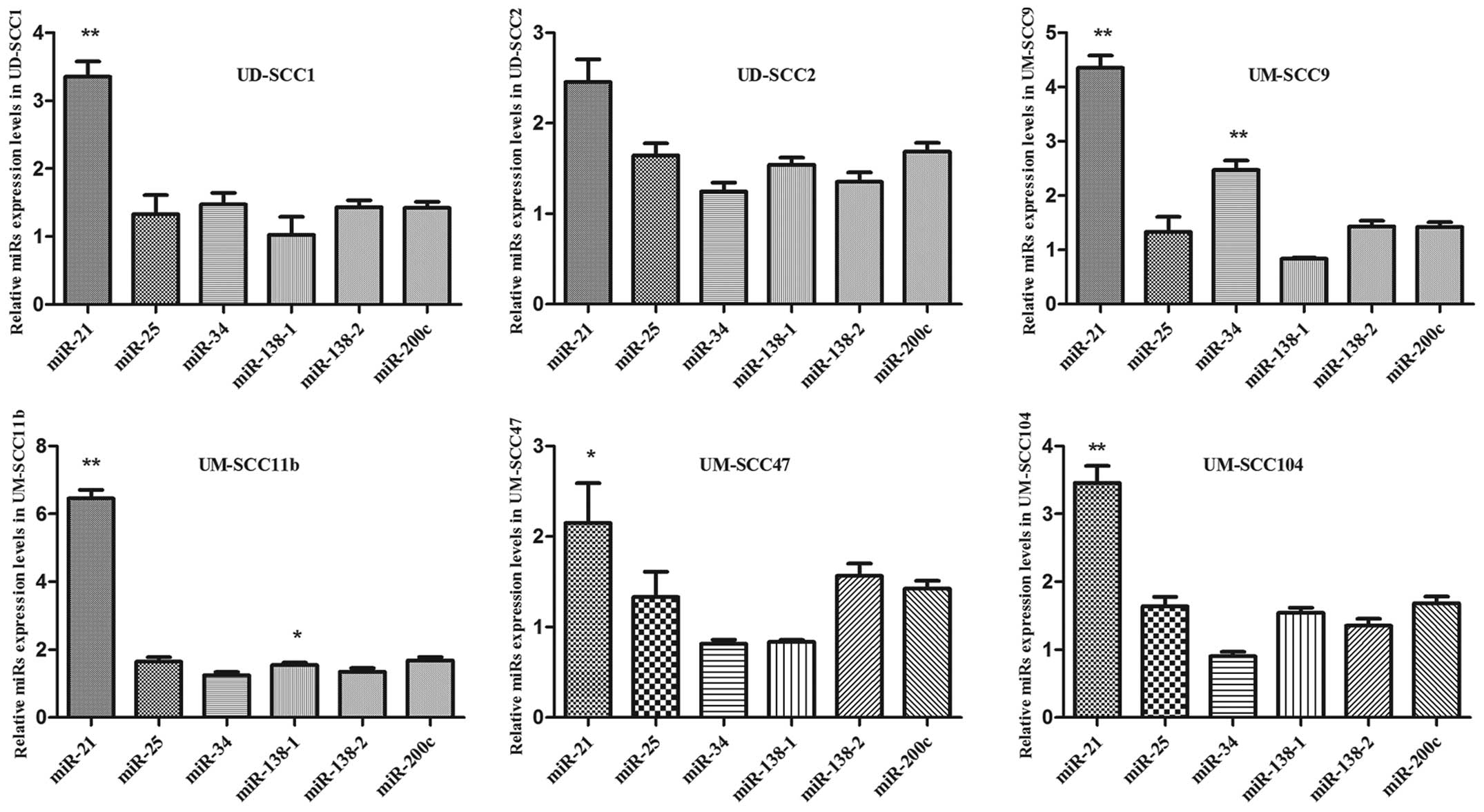
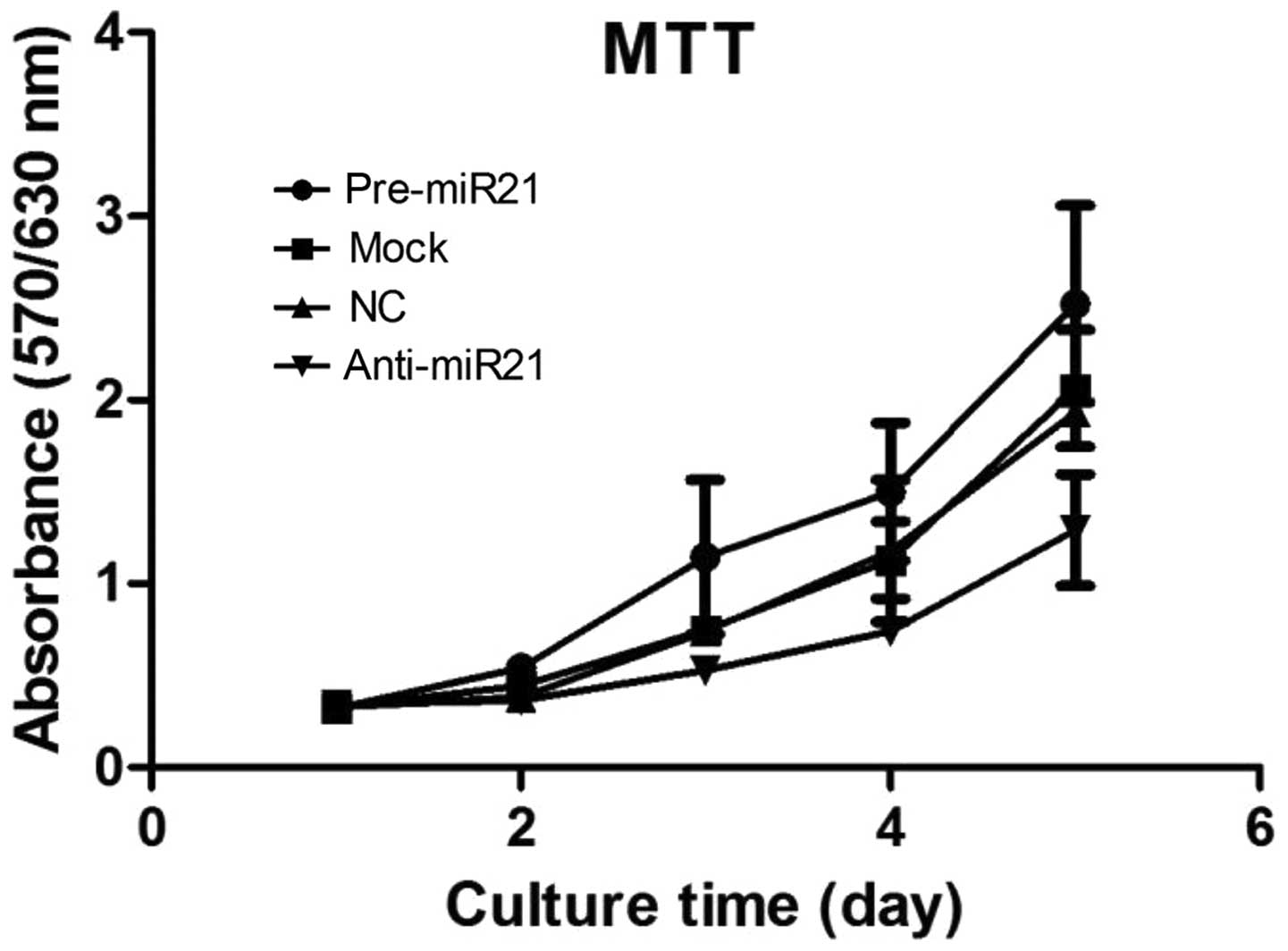
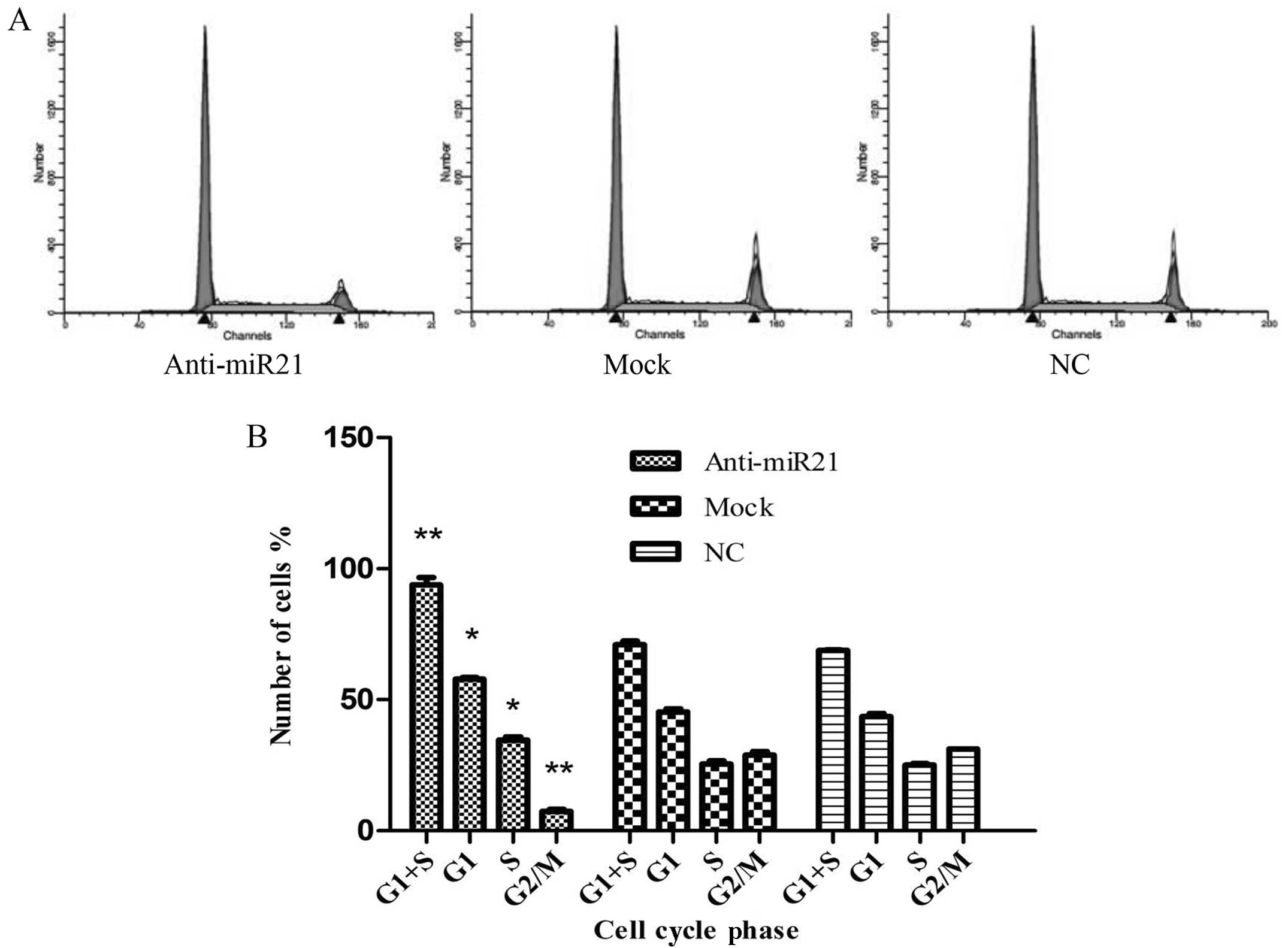
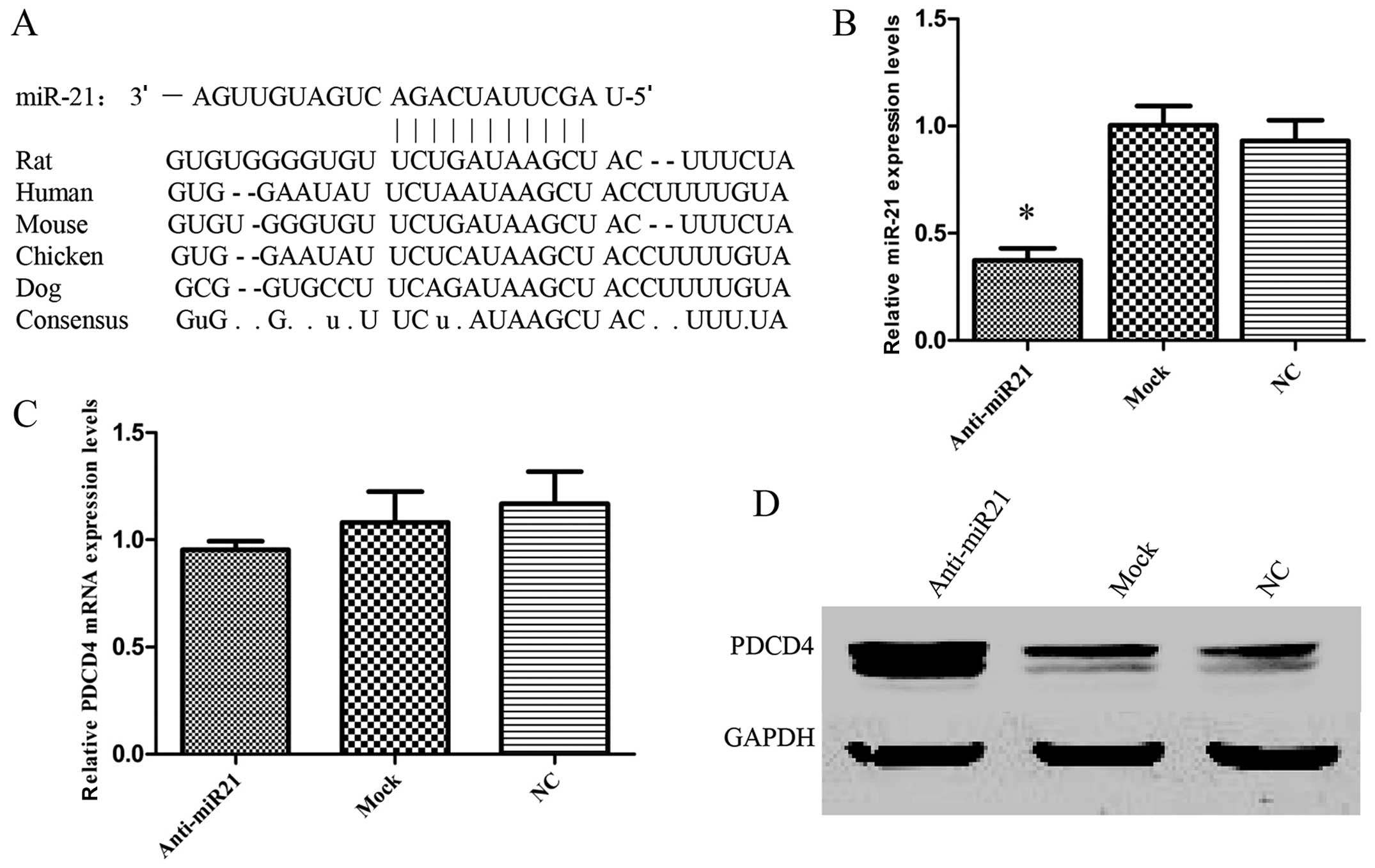
MicroRNAs (miRs) are small non-coding RNAs that regulate the translation of many genes in normal and cancer cells where they are frequently dysregulated promoting tumor progression. Several studies have illustrated the potential of manipulating miR expression in cancer research and therapy. The aim of the present study was to investigate expression patterns of a panel of miRs in head and neck squamous cell carcinoma (HNSCC) shown to be relevant in other carcinomas and to elucidate their role if dysregulated. We performed analysis of miR‑21, -200c, -138-1, -138-2, -25 and -34 expression by qRT-PCR in 6 HNSCC cell lines and computerized search for genetic targets of dysregulated miRNA-21 (miR‑21). Lipofection of mock and anti-miR-21 and determination of expression efficiencies and final programmed cell death 4 (PDCD4) expression were carried out by luciferase assay and western blotting. MTT assay was used to measure cell proliferation and flow cytometry was performed for cell cycle analysis. Expression of miR-21 was most prominently upregulated in the HNSCC cell lines, particularly in UM-SCC11B (6.45±0.25-fold, P<0.05) and UM-SCC9 (4.35±0.22-fold, P<0.05) as compared to primary epidermal keratinocytes used as control. The expression levels of the other miRs showed no difference except for miR-34 and -138-1 each in one cell line. Subsequent transfection of precursor miR-21 stimulated proliferation while anti-miR-21 inhibited proliferation of both cell lines. PDCD4 was identified with software designed for this purpose as potential target gene of miR-21. Subsequently, its role in HNSCC lines was experimentally confirmed by regulation of PDCD4 transfecting miR-21 mimics and anti-miR-21. Finally, we showed that PDCD4 is negatively regulated by miR-21 at the post-transcriptional level via binding to the 3'-untranslated region of PDCD4 mRNA. A role of upregulated miR-21 and reduced PDCD4 stimulating the proliferation was demonstrated in HNSCC lines and, in turn, transfection of anti-miR-21 upregulating PDCD4 reduced the cellular division rate. We explored miR-21 and PDCD4 expression as markers of progression and prognosis and for a potential translational value in the development of agents slowing growth of HNSCC and other carcinomas useful in palliative therapy or as a component of multi-modality treatments.
View Figures

Figure 1

Figure 2

Figure 3

Figure 4

View References

1 

Jemal A, Bray F, Center MM, Ferlay J, Ward E and Forman D: Global cancer statistics. CA Cancer J Clin. 61:69–90. 2011. View Article : Google Scholar

2 

Cheng ZX, Sun B, Wang SJ, et al: Nuclear factor-κB-dependent epithelial to mesenchymal transition induced by HIF-1α activation in pancreatic cancer cells under hypoxic conditions. PLoS One. 6:e237522011.

3 

Semenza GL: HIF-1 and tumor progression: pathophysiology and therapeutics. Trends Mol Med. 8(Suppl 4): S62–S67. 2002. View Article : Google Scholar : PubMed/NCBI

4 

Imai T, Horiuchi A, Wang C, et al: Hypoxia attenuates the expression of E-cadherin via up-regulation of SNAIL in ovarian carcinoma cells. Am J Pathol. 163:1437–1447. 2003. View Article : Google Scholar : PubMed/NCBI

5 

Lu J, Getz G, Miska EA, et al: MicroRNA expression profiles classify human cancers. Nature. 435:834–838. 2005. View Article : Google Scholar : PubMed/NCBI

6 

Volinia S, Calin GA, Liu CG, et al: A microRNA expression signature of human solid tumors defines cancer gene targets. Proc Natl Acad Sci USA. 103:2257–2261. 2006. View Article : Google Scholar : PubMed/NCBI

7 

Rosenfeld N, Aharonov R, Meiri E, et al: MicroRNAs accurately identify cancer tissue origin. Nat Biotechnol. 26:462–469. 2008. View Article : Google Scholar : PubMed/NCBI

8 

Chu Y, Zhu H, Lv L, Zhou Y and Huo J: MiRNAs in oesophageal squamous cancer. Neth J Med. 71:69–75. 2013.PubMed/NCBI

9 

Janiszewska J, Szaumkessel M and Szyfter K: microRNAs are important players in head and neck carcinoma: a review. Crit Rev Oncol Hematol. 88:716–728. 2013. View Article : Google Scholar : PubMed/NCBI

10 

Wu Q, Wang C, Lu Z, Guo L and Ge Q: Analysis of serum genome-wide microRNAs for breast cancer detection. Clin Chim Acta. 413:1058–1065. 2012. View Article : Google Scholar : PubMed/NCBI

11 

Liang H, Gong F, Zhang S, Zhang CY, Zen K and Chen X: The origin, function, and diagnostic potential of extracellular microRNAs in human body fluids. Wiley Interdiscip Rev RNA. 5:285–300. 2014. View Article : Google Scholar : PubMed/NCBI

12 

Endo K, Weng H, Kito N, Fukushima Y and Iwai N: miR-216a and miR-216b as markers for acute phased pancreatic injury. Biomed Res. 34:179–188. 2013. View Article : Google Scholar : PubMed/NCBI

13 

Olivieri F, Rippo MR, Procopio AD and Fazioli F: Circulating inflamma-miRs in aging and age-related diseases. Front Genet. 4:1212013.

14 

de Yébenes VG, Bartolomé-Izquierdo N and Ramiro AR: Regulation of B-cell development and function by microRNAs. Immunol Rev. 253:25–39. 2013.PubMed/NCBI

15 

Stefani G: Roles of microRNAs and their targets in cancer. Expert Opin Biol Ther. 7:1833–1840. 2007. View Article : Google Scholar : PubMed/NCBI

16 

Yang J, Hao Y and Xi JJ: Therapeutic application of microRNAs against human cancers. J Lab Autom. 18:30–33. 2013. View Article : Google Scholar : PubMed/NCBI

17 

Farazi TA, Spitzer JI, Morozov P and Tuschl T: miRNAs in human cancer. J Pathol. 223:102–115. 2011. View Article : Google Scholar

18 

Lo WL, Yu CC, Chiou GY, et al: MicroRNA-200c attenuates tumour growth and metastasis of presumptive head and neck squamous cell carcinoma stem cells. J Pathol. 223:482–495. 2011. View Article : Google Scholar : PubMed/NCBI

19 

Liu X, Jiang L, Wang A, Yu J, Shi F and Zhou X: MicroRNA-138 suppresses invasion and promotes apoptosis in head and neck squamous cell carcinoma cell lines. Cancer Lett. 286:217–222. 2009. View Article : Google Scholar : PubMed/NCBI

20 

Chen HC, Chen GH, Chen YH, et al: MicroRNA deregulation and pathway alterations in nasopharyngeal carcinoma. Br J Cancer. 100:1002–1011. 2009. View Article : Google Scholar : PubMed/NCBI

21 

Xu X, Chen Z, Zhao X, et al: MicroRNA-25 promotes cell migration and invasion in esophageal squamous cell carcinoma. Biochem Biophys Res Commun. 421:640–645. 2012. View Article : Google Scholar : PubMed/NCBI

22 

Gao W, Xu J, Liu L, Shen H, Zeng H and Shu Y: A systematic-analysis of predicted miR-21 targets identifies a signature for lung cancer. Biomed Pharmacother. 66:21–28. 2012. View Article : Google Scholar : PubMed/NCBI

23 

Schee K, Boye K, Abrahamsen TW, Fodstad Ø and Flatmark K: Clinical relevance of microRNA miR-21, miR-31, miR-92a, miR-101, miR-106a and miR-145 in colorectal cancer. BMC Cancer. 12:5052012. View Article : Google Scholar : PubMed/NCBI

24 

Young MR, Santhanam AN, Yoshikawa N and Colburn NH: Have tumor suppressor PDCD4 and its counteragent oncogenic miR-21 gone rogue? Mol Interv. 10:76–79. 2010. View Article : Google Scholar : PubMed/NCBI

25 

Allgayer H: Pdcd4, a colon cancer prognostic that is regulated by a microRNA. Crit Rev Oncol Hematol. 73:185–191. 2010. View Article : Google Scholar : PubMed/NCBI

26 

Fassan M, Pizzi M, Battaglia G, et al: Programmed cell death 4 (PDCD4) expression during multistep Barrett’s carcinogenesis. J Clin Pathol. 63:692–696. 2010.PubMed/NCBI

27 

Fassan M, Pizzi M, Giacomelli L, et al: PDCD4 nuclear loss inversely correlates with miR-21 levels in colon carcinogenesis. Virchows Arch. 458:413–419. 2011. View Article : Google Scholar : PubMed/NCBI

28 

Chen C, Ridzon DA, Broomer AJ, et al: Real-time quantification of microRNAs by stem-loop RT-PCR. Nucleic Acids Res. 33:e1792005. View Article : Google Scholar : PubMed/NCBI

29 

Wolf JS, Chen Z, Dong G, et al: IL (interleukin)-1α promotes nuclear factor-κB and AP-1-induced IL-8 expression, cell survival, and proliferation in head and neck squamous cell carcinomas. Clin Cancer Res. 7:1812–1820. 2001.

30 

Itani S, Kunisada T, Morimoto Y, et al: MicroRNA-21 correlates with tumorigenesis in malignant peripheral nerve sheath tumor (MPNST) via programmed cell death protein 4 (PDCD4). J Cancer Res Clin Oncol. 138:1501–1509. 2012. View Article : Google Scholar : PubMed/NCBI

31 

Horiuchi A, Iinuma H, Akahane T, Shimada R and Watanabe T: Prognostic significance of PDCD4 expression and association with microRNA-21 in each Dukes’ stage of colorectal cancer patients. Oncol Rep. 27:1384–1392. 2012.PubMed/NCBI

32 

Wang J and Zhang Y: Expression of programmed cell death 4 protein is closely correlated with laryngeal squamous cell carcinomas. Lin Chung Er Bi Yan Hou Tou Jing Wai Ke Za Zhi. 25:539–541. 2011.(In Chinese).

33 

Bartel DP: MicroRNAs: genomics, biogenesis, mechanism, and function. Cell. 116:281–297. 2004. View Article : Google Scholar : PubMed/NCBI

34 

Iorio MV, Ferracin M, Liu CG, et al: MicroRNA gene expression deregulation in human breast cancer. Cancer Res. 65:7065–7070. 2005. View Article : Google Scholar : PubMed/NCBI

35 

Chan JA, Krichevsky AM and Kosik KS: MicroRNA-21 is an antiapoptotic factor in human glioblastoma cells. Cancer Res. 65:6029–6033. 2005. View Article : Google Scholar : PubMed/NCBI

36 

Shi GH, Ye DW, Yao XD, et al: Involvement of microRNA-21 in mediating chemo-resistance to docetaxel in androgen-independent prostate cancer PC3 cells. Acta Pharmacol Sin. 31:867–873. 2010. View Article : Google Scholar : PubMed/NCBI

37 

Xu YZ, Xi QH, Ge WL and Zhang XQ: Identification of serum microRNA-21 as a biomarker for early detection and prognosis in human epithelial ovarian cancer. Asian Pac J Cancer Prev. 14:1057–1060. 2013. View Article : Google Scholar : PubMed/NCBI

38 

Giovannetti E, Funel N, Peters GJ, et al: MicroRNA-21 in pancreatic cancer: correlation with clinical outcome and pharmacologic aspects underlying its role in the modulation of gemcitabine activity. Cancer Res. 70:4528–4538. 2010. View Article : Google Scholar : PubMed/NCBI

39 

Feng YH, Wu CL, Tsao CJ, et al: Deregulated expression of sprouty2 and microRNA-21 in human colon cancer: correlation with the clinical stage of the disease. Cancer Biol Ther. 11:111–121. 2011. View Article : Google Scholar : PubMed/NCBI

40 

Zhang BG, Li JF, Yu BQ, Zhu ZG, Liu BY and Yan M: microRNA-21 promotes tumor proliferation and invasion in gastric cancer by targeting PTEN. Oncol Rep. 27:1019–1026. 2012.PubMed/NCBI

41 

Selaru FM, Olaru AV, Kan T, et al: MicroRNA-21 is overexpressed in human cholangiocarcinoma and regulates programmed cell death 4 and tissue inhibitor of metalloproteinase 3. Hepatology. 49:1595–1601. 2009. View Article : Google Scholar : PubMed/NCBI

42 

Meng F, Henson R, Wehbe-Janek H, Ghoshal K, Jacob ST and Patel T: MicroRNA-21 regulates expression of the PTEN tumor suppressor gene in human hepatocellular cancer. Gastroenterology. 133:647–658. 2007. View Article : Google Scholar : PubMed/NCBI

43 

Tran N, McLean T, Zhang X, et al: MicroRNA expression profiles in head and neck cancer cell lines. Biochem Biophys Res Commun. 358:12–17. 2007. View Article : Google Scholar

44 

Huang S, Li XQ, Chen X, Che SM, Chen W and Zhang XZ: Inhibition of microRNA-21 increases radiosensitivity of esophageal cancer cells through phosphatase and tensin homolog deleted on chromosome 10 activation. Dis Esophagus. 26:823–831. 2013. View Article : Google Scholar

45 

Schetter AJ, Leung SY, Sohn JJ, et al: MicroRNA expression profiles associated with prognosis and therapeutic outcome in colon adenocarcinoma. JAMA. 299:425–436. 2008. View Article : Google Scholar : PubMed/NCBI

46 

Dillhoff M, Liu J, Frankel W, Croce C and Bloomston M: MicroRNA-21 is overexpressed in pancreatic cancer and a potential predictor of survival. J Gastrointest Surg. 12:2171–2176. 2008. View Article : Google Scholar : PubMed/NCBI

47 

Asangani IA, Rasheed SA, Nikolova DA, et al: MicroRNA-21 (miR-21) post-transcriptionally downregulates tumor suppressor Pdcd4 and stimulates invasion, intravasation and metastasis in colorectal cancer. Oncogene. 27:2128–2136. 2008. View Article : Google Scholar : PubMed/NCBI

48 

Feber A, Xi L, Luketich JD, et al: MicroRNA expression profiles of esophageal cancer. J Thorac Cardiovasc Surg. 135:255–260. 2008. View Article : Google Scholar

49 

Fulci V, Chiaretti S, Goldoni M, et al: Quantitative technologies establish a novel microRNA profile of chronic lymphocytic leukemia. Blood. 109:4944–4951. 2007. View Article : Google Scholar : PubMed/NCBI

50 

Iorio MV, Visone R, Di Leva G, et al: MicroRNA signatures in human ovarian cancer. Cancer Res. 67:8699–8707. 2007. View Article : Google Scholar : PubMed/NCBI

51 

Markou A, Tsaroucha EG, Kaklamanis L, Fotinou M, Georgoulias V and Lianidou ES: Prognostic value of mature microRNA-21 and microRNA-205 overexpression in non-small cell lung cancer by quantitative real-time RT-PCR. Clin Chem. 54:1696–1704. 2008. View Article : Google Scholar

52 

Yang HS, Jansen AP, Nair R, et al: A novel transformation suppressor, Pdcd4, inhibits AP-1 transactivation but not NF-κB or ODC transactivation. Oncogene. 20:669–676. 2001.PubMed/NCBI

53 

Jansen AP, Camalier CE, Stark C and Colburn NH: Characterization of programmed cell death 4 in multiple human cancers reveals a novel enhancer of drug sensitivity. Mol Cancer Ther. 3:103–110. 2004.PubMed/NCBI

54 

Jansen AP, Camalier CE and Colburn NH: Epidermal expression of the translation inhibitor programmed cell death 4 suppresses tumorigenesis. Cancer Res. 65:6034–6041. 2005. View Article : Google Scholar : PubMed/NCBI

55 

Göke A, Göke R, Knolle A, et al: DUG is a novel homologue of translation initiation factor 4G that binds eIF4A. Biochem Biophys Res Commun. 297:78–82. 2002.PubMed/NCBI

56 

Yang HS, Jansen AP, Komar AA, et al: The transformation suppressor Pdcd4 is a novel eukaryotic translation initiation factor 4A binding protein that inhibits translation. Mol Cell Biol. 23:26–37. 2003. View Article : Google Scholar : PubMed/NCBI

57 

Göke R, Barth P, Schmidt A, Samans B and Lankat-Buttgereit B: Programmed cell death protein 4 suppresses CDK1/cdc2 via induction of p21Waf1/Cip1. Am J Physiol Cell Physiol. 287:C1541–C1546. 2004.PubMed/NCBI

58 

Frankel LB, Christoffersen NR, Jacobsen A, Lindow M, Krogh A and Lund AH: Programmed cell death 4 (PDCD4) is an important functional target of the microRNA miR-21 in breast cancer cells. J Biol Chem. 283:1026–1033. 2008. View Article : Google Scholar : PubMed/NCBI

59 

Xu L, Dai WQ, Xu XF, Wang F, He L and Guo CY: Effects of multiple-target anti-microRNA antisense oligodeoxyribonucleotides on proliferation and migration of gastric cancer cells. Asian Pac J Cancer Prev. 13:3203–3207. 2012. View Article : Google Scholar : PubMed/NCBI

60 

Lennox KA and Behlke MA: A direct comparison of anti-microRNA oligonucleotide potency. Pharm Res. 27:1788–1799. 2010. View Article : Google Scholar : PubMed/NCBI

Related Articles

  • Abstract
  • View
  • Download
  • Twitter
Copy and paste a formatted citation
Spandidos Publications style
Sun Z, Li S, Kaufmann AM and Albers AE: miR-21 increases the programmed cell death 4 gene-regulated cell proliferation in head and neck squamous carcinoma cell lines. Oncol Rep 32: 2283-2289, 2014.
APA
Sun, Z., Li, S., Kaufmann, A.M., & Albers, A.E. (2014). miR-21 increases the programmed cell death 4 gene-regulated cell proliferation in head and neck squamous carcinoma cell lines. Oncology Reports, 32, 2283-2289. https://doi.org/10.3892/or.2014.3456
MLA
Sun, Z., Li, S., Kaufmann, A. M., Albers, A. E."miR-21 increases the programmed cell death 4 gene-regulated cell proliferation in head and neck squamous carcinoma cell lines". Oncology Reports 32.5 (2014): 2283-2289.
Chicago
Sun, Z., Li, S., Kaufmann, A. M., Albers, A. E."miR-21 increases the programmed cell death 4 gene-regulated cell proliferation in head and neck squamous carcinoma cell lines". Oncology Reports 32, no. 5 (2014): 2283-2289. https://doi.org/10.3892/or.2014.3456
Copy and paste a formatted citation
x
Spandidos Publications style
Sun Z, Li S, Kaufmann AM and Albers AE: miR-21 increases the programmed cell death 4 gene-regulated cell proliferation in head and neck squamous carcinoma cell lines. Oncol Rep 32: 2283-2289, 2014.
APA
Sun, Z., Li, S., Kaufmann, A.M., & Albers, A.E. (2014). miR-21 increases the programmed cell death 4 gene-regulated cell proliferation in head and neck squamous carcinoma cell lines. Oncology Reports, 32, 2283-2289. https://doi.org/10.3892/or.2014.3456
MLA
Sun, Z., Li, S., Kaufmann, A. M., Albers, A. E."miR-21 increases the programmed cell death 4 gene-regulated cell proliferation in head and neck squamous carcinoma cell lines". Oncology Reports 32.5 (2014): 2283-2289.
Chicago
Sun, Z., Li, S., Kaufmann, A. M., Albers, A. E."miR-21 increases the programmed cell death 4 gene-regulated cell proliferation in head and neck squamous carcinoma cell lines". Oncology Reports 32, no. 5 (2014): 2283-2289. https://doi.org/10.3892/or.2014.3456
Follow us
  • Twitter
  • LinkedIn
  • Facebook
About
  • Spandidos Publications
  • Careers
  • Cookie Policy
  • Privacy Policy
How can we help?
  • Help
  • Live Chat
  • Contact
  • Email to our Support Team