Spandidos Publications Logo
  • About
    • About Spandidos
    • Aims and Scopes
    • Abstracting and Indexing
    • Editorial Policies
    • Reprints and Permissions
    • Job Opportunities
    • Terms and Conditions
    • Contact
  • Journals
    • All Journals
    • Oncology Letters
      • Oncology Letters
      • Information for Authors
      • Editorial Policies
      • Editorial Board
      • Aims and Scope
      • Abstracting and Indexing
      • Bibliographic Information
      • Archive
    • International Journal of Oncology
      • International Journal of Oncology
      • Information for Authors
      • Editorial Policies
      • Editorial Board
      • Aims and Scope
      • Abstracting and Indexing
      • Bibliographic Information
      • Archive
    • Molecular and Clinical Oncology
      • Molecular and Clinical Oncology
      • Information for Authors
      • Editorial Policies
      • Editorial Board
      • Aims and Scope
      • Abstracting and Indexing
      • Bibliographic Information
      • Archive
    • Experimental and Therapeutic Medicine
      • Experimental and Therapeutic Medicine
      • Information for Authors
      • Editorial Policies
      • Editorial Board
      • Aims and Scope
      • Abstracting and Indexing
      • Bibliographic Information
      • Archive
    • International Journal of Molecular Medicine
      • International Journal of Molecular Medicine
      • Information for Authors
      • Editorial Policies
      • Editorial Board
      • Aims and Scope
      • Abstracting and Indexing
      • Bibliographic Information
      • Archive
    • Biomedical Reports
      • Biomedical Reports
      • Information for Authors
      • Editorial Policies
      • Editorial Board
      • Aims and Scope
      • Abstracting and Indexing
      • Bibliographic Information
      • Archive
    • Oncology Reports
      • Oncology Reports
      • Information for Authors
      • Editorial Policies
      • Editorial Board
      • Aims and Scope
      • Abstracting and Indexing
      • Bibliographic Information
      • Archive
    • Molecular Medicine Reports
      • Molecular Medicine Reports
      • Information for Authors
      • Editorial Policies
      • Editorial Board
      • Aims and Scope
      • Abstracting and Indexing
      • Bibliographic Information
      • Archive
    • World Academy of Sciences Journal
      • World Academy of Sciences Journal
      • Information for Authors
      • Editorial Policies
      • Editorial Board
      • Aims and Scope
      • Abstracting and Indexing
      • Bibliographic Information
      • Archive
    • International Journal of Functional Nutrition
      • International Journal of Functional Nutrition
      • Information for Authors
      • Editorial Policies
      • Editorial Board
      • Aims and Scope
      • Abstracting and Indexing
      • Bibliographic Information
      • Archive
    • International Journal of Epigenetics
      • International Journal of Epigenetics
      • Information for Authors
      • Editorial Policies
      • Editorial Board
      • Aims and Scope
      • Abstracting and Indexing
      • Bibliographic Information
      • Archive
    • Medicine International
      • Medicine International
      • Information for Authors
      • Editorial Policies
      • Editorial Board
      • Aims and Scope
      • Abstracting and Indexing
      • Bibliographic Information
      • Archive
  • Articles
  • Information
    • Information for Authors
    • Information for Reviewers
    • Information for Librarians
    • Information for Advertisers
    • Conferences
  • Language Editing
Spandidos Publications Logo
  • About
    • About Spandidos
    • Aims and Scopes
    • Abstracting and Indexing
    • Editorial Policies
    • Reprints and Permissions
    • Job Opportunities
    • Terms and Conditions
    • Contact
  • Journals
    • All Journals
    • Biomedical Reports
      • Information for Authors
      • Editorial Policies
      • Editorial Board
      • Aims and Scope
      • Abstracting and Indexing
      • Bibliographic Information
      • Archive
    • Experimental and Therapeutic Medicine
      • Information for Authors
      • Editorial Policies
      • Editorial Board
      • Aims and Scope
      • Abstracting and Indexing
      • Bibliographic Information
      • Archive
    • International Journal of Epigenetics
      • Information for Authors
      • Editorial Policies
      • Editorial Board
      • Aims and Scope
      • Abstracting and Indexing
      • Bibliographic Information
      • Archive
    • International Journal of Functional Nutrition
      • Information for Authors
      • Editorial Policies
      • Editorial Board
      • Aims and Scope
      • Abstracting and Indexing
      • Bibliographic Information
      • Archive
    • International Journal of Molecular Medicine
      • Information for Authors
      • Editorial Policies
      • Editorial Board
      • Aims and Scope
      • Abstracting and Indexing
      • Bibliographic Information
      • Archive
    • International Journal of Oncology
      • Information for Authors
      • Editorial Policies
      • Editorial Board
      • Aims and Scope
      • Abstracting and Indexing
      • Bibliographic Information
      • Archive
    • Medicine International
      • Information for Authors
      • Editorial Policies
      • Editorial Board
      • Aims and Scope
      • Abstracting and Indexing
      • Bibliographic Information
      • Archive
    • Molecular and Clinical Oncology
      • Information for Authors
      • Editorial Policies
      • Editorial Board
      • Aims and Scope
      • Abstracting and Indexing
      • Bibliographic Information
      • Archive
    • Molecular Medicine Reports
      • Information for Authors
      • Editorial Policies
      • Editorial Board
      • Aims and Scope
      • Abstracting and Indexing
      • Bibliographic Information
      • Archive
    • Oncology Letters
      • Information for Authors
      • Editorial Policies
      • Editorial Board
      • Aims and Scope
      • Abstracting and Indexing
      • Bibliographic Information
      • Archive
    • Oncology Reports
      • Information for Authors
      • Editorial Policies
      • Editorial Board
      • Aims and Scope
      • Abstracting and Indexing
      • Bibliographic Information
      • Archive
    • World Academy of Sciences Journal
      • Information for Authors
      • Editorial Policies
      • Editorial Board
      • Aims and Scope
      • Abstracting and Indexing
      • Bibliographic Information
      • Archive
  • Articles
  • Information
    • For Authors
    • For Reviewers
    • For Librarians
    • For Advertisers
    • Conferences
  • Language Editing
Login Register Submit
  • This site uses cookies
  • You can change your cookie settings at any time by following the instructions in our Cookie Policy. To find out more, you may read our Privacy Policy.

    I agree
Search articles by DOI, keyword, author or affiliation
Search
Advanced Search
presentation
Oncology Reports
Join Editorial Board Propose a Special Issue
Print ISSN: 1021-335X Online ISSN: 1791-2431
Journal Cover
December-2014 Volume 32 Issue 6

Full Size Image

Sign up for eToc alerts
Recommend to Library

Journals

International Journal of Molecular Medicine

International Journal of Molecular Medicine

International Journal of Molecular Medicine is an international journal devoted to molecular mechanisms of human disease.

International Journal of Oncology

International Journal of Oncology

International Journal of Oncology is an international journal devoted to oncology research and cancer treatment.

Molecular Medicine Reports

Molecular Medicine Reports

Covers molecular medicine topics such as pharmacology, pathology, genetics, neuroscience, infectious diseases, molecular cardiology, and molecular surgery.

Oncology Reports

Oncology Reports

Oncology Reports is an international journal devoted to fundamental and applied research in Oncology.

Experimental and Therapeutic Medicine

Experimental and Therapeutic Medicine

Experimental and Therapeutic Medicine is an international journal devoted to laboratory and clinical medicine.

Oncology Letters

Oncology Letters

Oncology Letters is an international journal devoted to Experimental and Clinical Oncology.

Biomedical Reports

Biomedical Reports

Explores a wide range of biological and medical fields, including pharmacology, genetics, microbiology, neuroscience, and molecular cardiology.

Molecular and Clinical Oncology

Molecular and Clinical Oncology

International journal addressing all aspects of oncology research, from tumorigenesis and oncogenes to chemotherapy and metastasis.

World Academy of Sciences Journal

World Academy of Sciences Journal

Multidisciplinary open-access journal spanning biochemistry, genetics, neuroscience, environmental health, and synthetic biology.

International Journal of Functional Nutrition

International Journal of Functional Nutrition

Open-access journal combining biochemistry, pharmacology, immunology, and genetics to advance health through functional nutrition.

International Journal of Epigenetics

International Journal of Epigenetics

Publishes open-access research on using epigenetics to advance understanding and treatment of human disease.

Medicine International

Medicine International

An International Open Access Journal Devoted to General Medicine.

Journal Cover
December-2014 Volume 32 Issue 6

Full Size Image

Sign up for eToc alerts
Recommend to Library

  • Article
  • Citations
    • Cite This Article
    • Download Citation
    • Create Citation Alert
    • Remove Citation Alert
    • Cited By
  • Similar Articles
    • Related Articles (in Spandidos Publications)
    • Similar Articles (Google Scholar)
    • Similar Articles (PubMed)
  • Download PDF
  • Download XML
  • View XML
Article

Membrane-bound complement regulatory proteins are prognostic factors of operable breast cancer treated with adjuvant trastuzumab: A retrospective study

  • Authors:
    • Mei Liu
    • Ya-Jun Yang
    • Hong Zheng
    • Xiao-Rong Zhong
    • Yu Wang
    • Zhu Wang
    • Yao-Geng Wang
    • Yan-Ping Wang
  • View Affiliations / Copyright

    Affiliations: Laboratory of Tumor Molecular Diagnosis, West China Hospital, Sichuan University, Chengdu, Sichuan 610041, P.R. China
  • Pages: 2619-2627
    |
    Published online on: September 18, 2014
       https://doi.org/10.3892/or.2014.3496
  • Expand metrics +
Metrics: Total Views: 0 (Spandidos Publications: | PMC Statistics: )
Metrics: Total PDF Downloads: 0 (Spandidos Publications: | PMC Statistics: )
Cited By (CrossRef): 0 citations Loading Articles...

This article is mentioned in:


Abstract

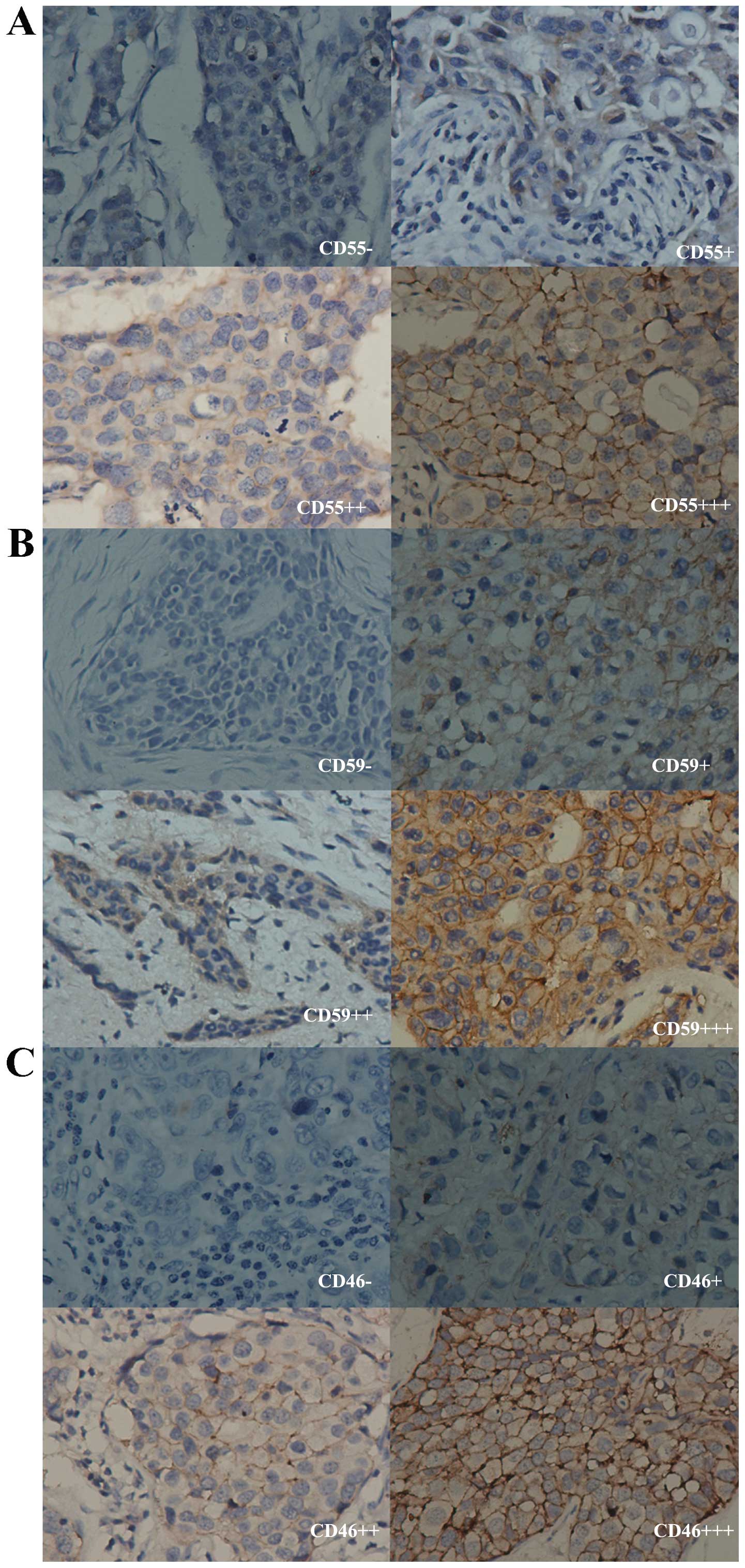
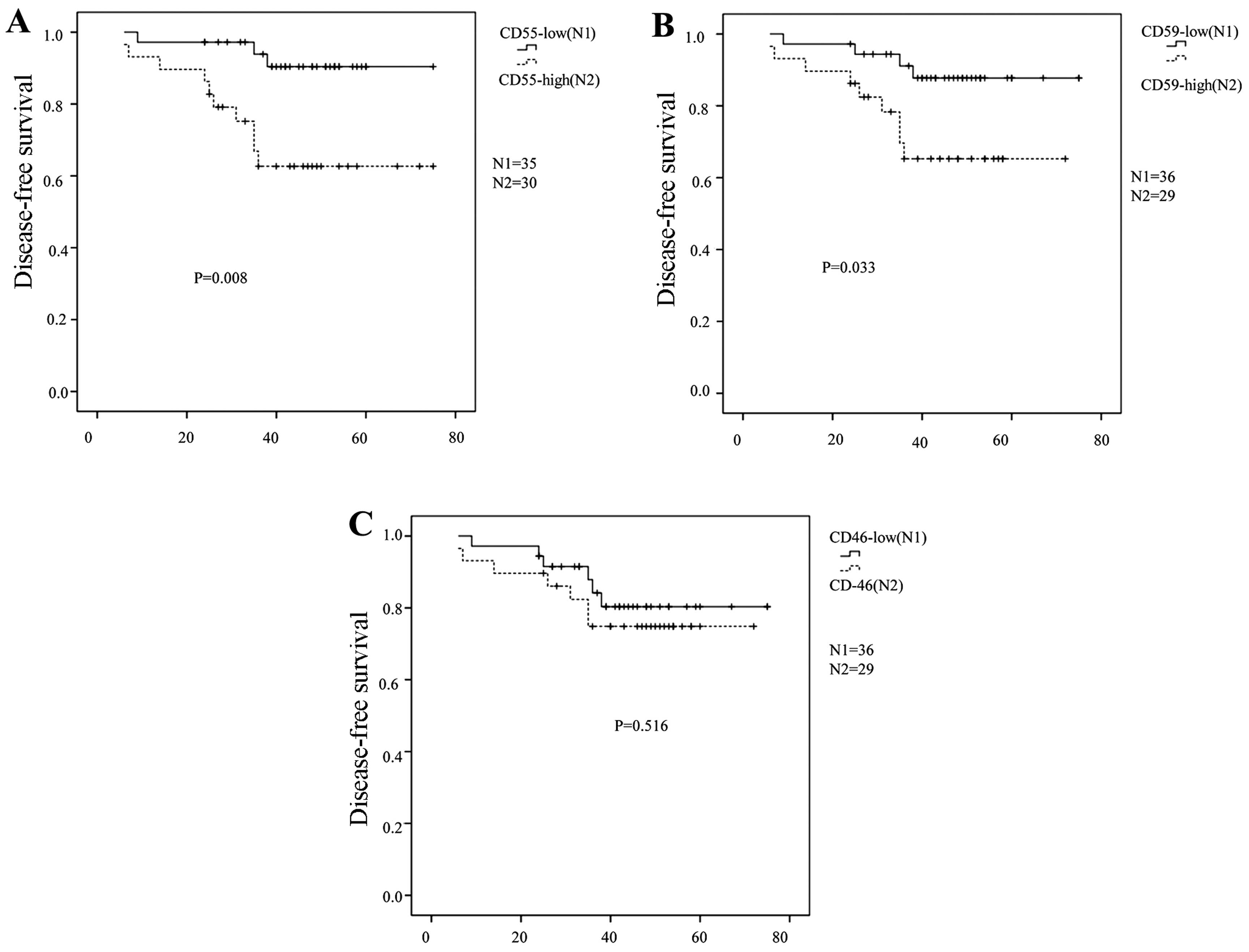
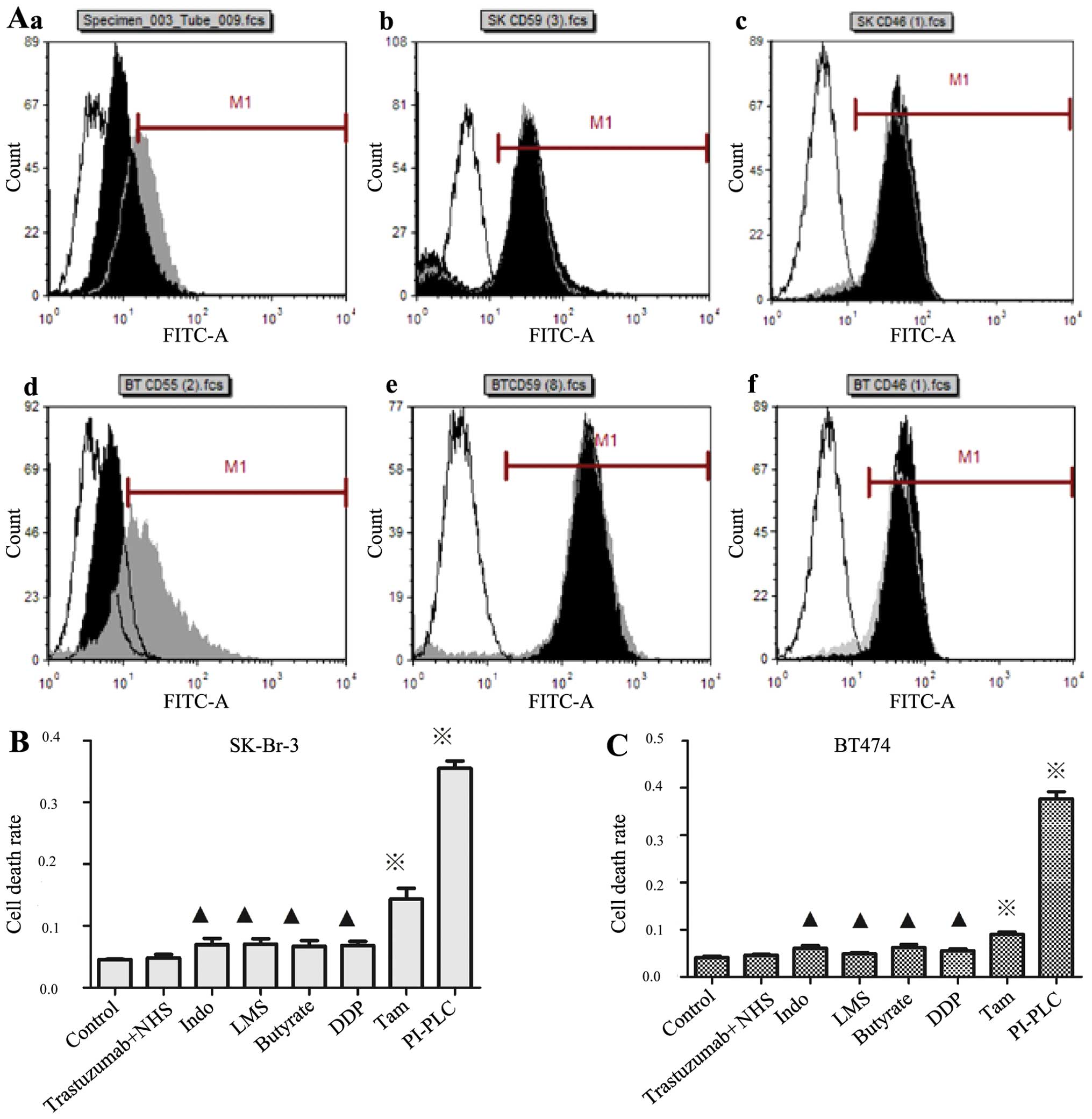
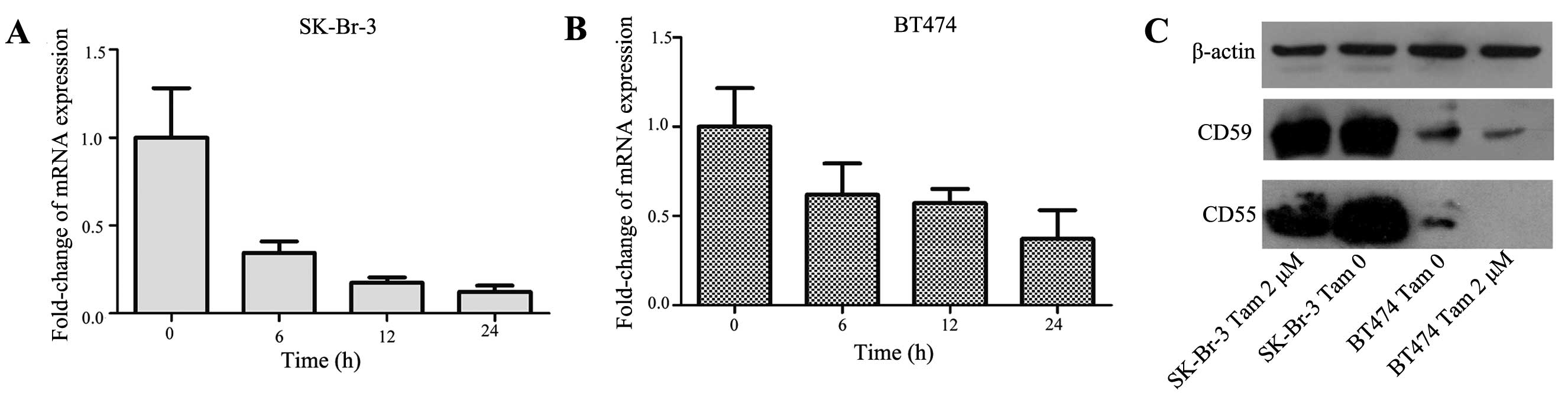
Complement-dependent cytotoxicity (CDC) is an important antitumor mechanism of monoclonal antibodies (mAbs). However, trastuzumab, an anti-HER2 mAb, exerts only minor CDC. Overexpression of membrane-bound complement regulatory proteins (mCRPs), which suppress CDC, have been implicated in various malignant tumors. Here, we explored the predictive role of the expression levels of three mCRPs (CD55, CD59 and CD46) in the prognosis of breast cancer cases that underwent adjuvant trastuzumab treatment. We also studied the effect of mCRP downregulation on trastuzumab-induced CDC in vitro. Sixty-five HER2-positive breast cancer patients who received adjuvant therapy containing trastuzumab, were retrospectively analyzed. Levels of CD55, CD59 and CD46 expression were detected by immunohistochemistry. Chi-square test, Kaplan‑Meier survival analysis and a Cox proportional hazards model were used to analyze the association between CD55, CD59 and CD46 expression and prognosis. HER2-positive SK-Br3 and BT-474 breast cancer cells were pretreated with various drugs to reduce mCRP expression. Afterwards, trastuzumab‑mediated cytolytic effects were measured. Among the 65 patients, 46.2% had high expression of CD55, 44.6% had high expression of CD59 and 44.6% had high expression of CD46. The median follow-up duration was 47 months (range from 24 to 75 months). Patients with CD55 or CD59 overexpression had a higher relapse rate than those with low expression of CD55 (33.3 vs. 8.6%; P=0.013) or CD59 (31.0 vs. 11.1%; P=0.046). Similarly, mean disease-free survival of patients with CD55 or CD59 overexpression was significantly shorter than those with a low expression of CD55 (56 vs. 70 months; log-rank test, P=0.008) or CD59 (56 vs. 69 months; log-rank test, P=0.033). Multivariate analysis confirmed that CD55, but not CD59, was an independent risk factor of recurrence (HR=4.757; 95% CI, 0.985-22.974; P=0.05). In vitro, we found that tamoxifen inhibited both the protein and mRNA expression levels of CD55, but not CD59 or CD46 in SK-Br3 and BT-474 cells. After pretreatment of tamoxifen, trastuzumab-induced cytolysis was enhanced through CD55 downregulation. In conclusion, CD55 overexpression is an independent risk factor for recurrence in breast cancer patients receiving postoperative adjuvant therapy containing trastuzumab. Combined use of tamoxifen and trastuzumab for HER2-positive breast cancer treatment may enhance the antitumor effects of trastuzumab by elevated CDC, which warrants further study.
View Figures

Figure 1

Figure 2

Figure 3

Figure 4

View References

1 

Natsume A, Niwa R and Satoh M: Improving effector functions of antibodies for cancer treatment: Enhancing ADCC and CDC. Drug Des Devel Ther. 3:7–16. 2009.PubMed/NCBI

2 

Yamashita M, Katakura Y and Shirahata S: Recent advances in the generation of human monoclonal antibody. Cytotechnology. 55:55–60. 2007. View Article : Google Scholar

3 

Piccart-Gebhart MJ, Procter M, Leyland-Jones B, et al: Trastuzumab after adjuvant chemotherapy in HER2-positive breast cancer. N Engl J Med. 353:1659–1672. 2005. View Article : Google Scholar : PubMed/NCBI

4 

Romond EH, Perez EA, Bryant J, et al: Trastuzumab plus adjuvant chemotherapy for operable HER2-positive breast cancer. N Engl J Med. 353:1673–1684. 2005. View Article : Google Scholar : PubMed/NCBI

5 

Slamon D, Eiermann W, Robert N, et al: Phase III randomized trial comparing doxorubicin and cyclophosphamide followed by docetaxel (AC→T) with doxorubicin and cyclophosphamide followed by docetaxel and trastuzumab (AC→TH) with docetaxel, carboplatin and trastuzumab (TCH) in HER2 positive early breast cancer patients: study. Breast Cancer Res Treat. 94:S52005.

6 

Nahta R and Esteva FJ: HER2 therapy: molecular mechanisms of trastuzumab resistance. Breast Cancer Res. 8:2152006. View Article : Google Scholar : PubMed/NCBI

7 

Valabrega G, Montemurro F and Aglietta M: Trastuzumab: mechanism of action, resistance and future perspectives in HER2-overexpressing breast cancer. Ann Oncol. 18:977–984. 2007. View Article : Google Scholar : PubMed/NCBI

8 

Dalle S, Thieblemont C, Thomas L and Dumontet C: Monoclonal antibodies in clinical oncology. Anticancer Agents Med Chem. 8:523–532. 2008. View Article : Google Scholar

9 

Drebin JA, Link VC and Greene MI: Monoclonal antibodies specific for the neu oncogene product directly mediate antitumor effects in vivo. Oncogene. 2:387–394. 1988.PubMed/NCBI

10 

Mamidi S, Cinci M, Hasmann M, Fehring V and Kirschfink M: Lipoplex mediated silencing of membrane regulators (CD46, CD55 and CD59) enhances complement-dependent antitumor activity of trastuzumab and pertuzumab. Mol Oncol. 7:580–594. 2013. View Article : Google Scholar

11 

Prang N, Preithner S, Brischwein K, et al: Cellular and complement-dependent cytotoxicity of Ep-CAM-specific monoclonal antibody MT201 against breast cancer cell lines. Br J Cancer. 92:342–349. 2005.

12 

Yu J, Caragine T, Chen S, Morgan BP, Frey AB and Tomlinson S: Protection of human breast cancer cells from complement-mediated lysis by expression of heterologous CD59. Clin Exp Immunol. 115:13–18. 1999. View Article : Google Scholar : PubMed/NCBI

13 

Mineo JF, Bordron A, Quintin-Roue I, et al: Recombinant humanised anti-HER2/neu antibody (Herceptin) induces cellular death of glioblastomas. Br J Cancer. 91:1195–1199. 2004.PubMed/NCBI

14 

Fishelson Z, Donin N, Zell S, Schultz S and Kirschfink M: Obstacles to cancer immunotherapy: expression of membrane complement regulatory proteins (mCRPs) in tumors. Mol Immunol. 40:109–123. 2003. View Article : Google Scholar

15 

Gancz D and Fishelson Z: Cancer resistance to complement-dependent cytotoxicity (CDC): Problem-oriented research and development. Mol Immunol. 46:2794–2800. 2009. View Article : Google Scholar : PubMed/NCBI

16 

Macor P and Tedesco F: Complement as effector system in cancer immunotherapy. Immunol Lett. 111:6–13. 2007. View Article : Google Scholar : PubMed/NCBI

17 

Hosch SB, Scheunemann P, Lüth M, et al: Expression of 17-1A antigen and complement resistance factors CD55 and CD59 on liver metastasis in colorectal cancer. J Gastrointest Surg. 5:673–679. 2001. View Article : Google Scholar : PubMed/NCBI

18 

Koretz K, Brüderlein S, Henne C and Möller P: Decay-accelerating factor (DAF, CD55) in normal colorectal mucosa, adenomas and carcinomas. Br J Cancer. 66:810–814. 1992. View Article : Google Scholar : PubMed/NCBI

19 

Liu YC, Chen L, Peng SY and Hoang-Vu C: Role of CD97 (stalk) and CD55 as molecular markers for prognosis and therapy of gastric carcinoma patients. J Zhejiang Univ Sci. 6:913–918. 2005. View Article : Google Scholar : PubMed/NCBI

20 

Loberg RD, Day LL, Dunn R, Kalikin LM and Pienta KJ: Inhibition of decay-accelerating factor (CD55) attenuates prostate cancer growth and survival in vivo. Neoplasia. 8:69–78. 2006. View Article : Google Scholar : PubMed/NCBI

21 

Zhao WP, Zhu B, Duan YZ and Chen ZT: Neutralization of complement regulatory proteins CD55 and CD59 augments therapeutic effect of herceptin against lung carcinoma cells. Oncol Rep. 21:1405–1411. 2009.PubMed/NCBI

22 

Terui Y, Sakurai T, Mishima Y, et al: Blockade of bulky lymphoma-associated CD55 expression by RNA interference overcomes resistance to complement-dependent cytotoxicity with rituximab. Cancer Sci. 97:72–79. 2006. View Article : Google Scholar : PubMed/NCBI

23 

Golay J, Lazzari M, Facchinetti V, et al: CD20 levels determine the in vitro susceptibility to rituximab and complement of B-cell chronic lymphocytic leukemia: further regulation by CD55 and CD59. Blood. 98:3383–3389. 2001. View Article : Google Scholar : PubMed/NCBI

24 

Andoh A, Shimada M, Araki Y, Fujiyama Y and Bamba T: Sodium butyrate enhances complement-mediated cell injury via down-regulation of decay-accelerating factor expression in colonic cancer cells. Cancer Immunol Immunother. 50:663–672. 2002. View Article : Google Scholar

25 

Holla VR, Wang D, Brown JR, Mann JR, Katkuri S and DuBois RN: Prostaglandin E2 regulates the complement inhibitor CD55/decay-accelerating factor in colorectal cancer. J Biol Chem. 280:476–483. 2005. View Article : Google Scholar

26 

Xin YC, Gui SH and Ge SQ: Tamoxifen modulates the expression of complement inhibitory proteins on chorio-carcinoma cell line JAR. Shanghai J Immunol. 1:20–23. 2003.

27 

Bjørge L and Matre R: Down-regulation of CD59 (protectin) expression on human colorectal adenocarcinoma cell lines by levamisole. Scand J Immunol. 42:512–516. 1995.PubMed/NCBI

28 

Eisenhauer EA, Therasse P, Bogaerts J, et al: New response evaluation criteria in solid tumours: revised RECIST guideline (version 1.1). Eur J Cancer. 45:228–247. 2009. View Article : Google Scholar

29 

Ikeda J, Morii E, Liu Y, et al: Prognostic significance of CD55 expression in breast cancer. Clin Cancer Res. 14:4780–4786. 2008. View Article : Google Scholar : PubMed/NCBI

30 

Molina MA, Codony-Servat J, Albanell J, Rojo F, Arribas J and Baselga J: Trastuzumab (Herceptin), a humanized anti-Her2 receptor monoclonal antibody, inhibits basal and activated Her2 ectodomain cleavage in breast cancer cells. Cancer Res. 61:4744–4749. 2001.PubMed/NCBI

31 

Subik K, Lee JF, Baxter L, et al: The expression patterns of ER, PR, HER2, CK5/6, EGFR, Ki-67 and AR by immunohistochemical analysis in breast cancer cell lines. Breast Cancer. 4:35–41. 2010.PubMed/NCBI

32 

Spear GT, Lurain NS, Parker CJ, Ghassemi M, Payne GH and Saifuddin M: Host cell-derived complement control proteins CD55 and CD59 are incorporated into the virions of two unrelated enveloped viruses. Human T cell leukemia/lymphoma virus type I (HTLV-I) and human cytomegalovirus (HCMV). J Immunol. 155:4376–4381. 1995.

33 

Kolev MV, Tediose T, Sivasankar B, et al: Upregulating CD59: a new strategy for protection of neurons from complement-mediated degeneration. Pharmacogenomics J. 10:12–19. 2010. View Article : Google Scholar : PubMed/NCBI

34 

Durrant LG, Chapman MA, Buckley DJ, Spendlove I, Robins RA and Armitage NC: Enhanced expression of the complement regulatory protein CD55 predicts a poor prognosis in colorectal cancer patients. Cancer Immunol Immunother. 52:638–642. 2003. View Article : Google Scholar : PubMed/NCBI

35 

Loberg RD, Wojno KJ, Day LL and Pienta KJ: Analysis of membrane-bound complement regulatory proteins in prostate cancer. Urology. 66:1321–1326. 2005. View Article : Google Scholar : PubMed/NCBI

36 

Madjd Z, Durrant LG, Pinder SE, et al: Do poor-prognosis breast tumours express membrane cofactor proteins (CD46)? Cancer Immunol Immunother. 54:149–156. 2005. View Article : Google Scholar : PubMed/NCBI

37 

Macor P, Tripodo C, Zorzet S, et al: In vivo targeting of human neutralizing antibodies against CD55 and CD59 to lymphoma cells increases the antitumor activity of rituximab. Cancer Res. 67:10556–10563. 2007. View Article : Google Scholar

38 

Bannerji R, Kitada S, Flinn IW, et al: Apoptotic regulatory and complement-protecting protein expression in chronic lymphocytic leukemia: relationship to in vivo rituximab resistance. J Clin Oncol. 21:1466–1471. 2003. View Article : Google Scholar

39 

Bellone S, Roque D, Cocco E, et al: Downregulation of membrane complement inhibitors CD55 and CD59 by siRNA sensitises uterine serous carcinoma overexpressing Her2/neu to complement and antibody-dependent cell cytotoxicity in vitro: implications for trastuzumab-based immunotherapy. Br J Cancer. 106:1543–1550. 2012. View Article : Google Scholar

40 

Gelderman KA, Kuppen PJ, Okada N, Fleuren GJ and Gorter A: Tumor-specific inhibition of membrane-bound complement regulatory protein Crry with bispecific monoclonal antibodies prevents tumor outgrowth in a rat colorectal cancer lung metastases model. Cancer Res. 64:4366–4372. 2004. View Article : Google Scholar

41 

Argiris A, Wang CX, Whalen SG and DiGiovanna MP: Synergistic interactions between tamoxifen and trastuzumab (Herceptin). Clin Cancer Res. 10:1409–1420. 2004. View Article : Google Scholar : PubMed/NCBI

42 

Wang CX, Koay DC, Edwards A, et al: In vitro and in vivo effects of combination of trastuzumab (Herceptin) and tamoxifen in breast cancer. Breast Cancer Res Treat. 92:251–263. 2005. View Article : Google Scholar : PubMed/NCBI

43 

Schild-Hay LJ, Leil TA, Divi RL, Olivero OA, Weston A and Poirier MC: Tamoxifen induces expression of immune response-related genes in cultured normal human mammary epithelial cells. Cancer Res. 69:1150–1155. 2009. View Article : Google Scholar

Related Articles

  • Abstract
  • View
  • Download
  • Twitter
Copy and paste a formatted citation
Spandidos Publications style
Liu M, Yang Y, Zheng H, Zhong X, Wang Y, Wang Z, Wang Y and Wang Y: Membrane-bound complement regulatory proteins are prognostic factors of operable breast cancer treated with adjuvant trastuzumab: A retrospective study. Oncol Rep 32: 2619-2627, 2014.
APA
Liu, M., Yang, Y., Zheng, H., Zhong, X., Wang, Y., Wang, Z. ... Wang, Y. (2014). Membrane-bound complement regulatory proteins are prognostic factors of operable breast cancer treated with adjuvant trastuzumab: A retrospective study. Oncology Reports, 32, 2619-2627. https://doi.org/10.3892/or.2014.3496
MLA
Liu, M., Yang, Y., Zheng, H., Zhong, X., Wang, Y., Wang, Z., Wang, Y., Wang, Y."Membrane-bound complement regulatory proteins are prognostic factors of operable breast cancer treated with adjuvant trastuzumab: A retrospective study". Oncology Reports 32.6 (2014): 2619-2627.
Chicago
Liu, M., Yang, Y., Zheng, H., Zhong, X., Wang, Y., Wang, Z., Wang, Y., Wang, Y."Membrane-bound complement regulatory proteins are prognostic factors of operable breast cancer treated with adjuvant trastuzumab: A retrospective study". Oncology Reports 32, no. 6 (2014): 2619-2627. https://doi.org/10.3892/or.2014.3496
Copy and paste a formatted citation
x
Spandidos Publications style
Liu M, Yang Y, Zheng H, Zhong X, Wang Y, Wang Z, Wang Y and Wang Y: Membrane-bound complement regulatory proteins are prognostic factors of operable breast cancer treated with adjuvant trastuzumab: A retrospective study. Oncol Rep 32: 2619-2627, 2014.
APA
Liu, M., Yang, Y., Zheng, H., Zhong, X., Wang, Y., Wang, Z. ... Wang, Y. (2014). Membrane-bound complement regulatory proteins are prognostic factors of operable breast cancer treated with adjuvant trastuzumab: A retrospective study. Oncology Reports, 32, 2619-2627. https://doi.org/10.3892/or.2014.3496
MLA
Liu, M., Yang, Y., Zheng, H., Zhong, X., Wang, Y., Wang, Z., Wang, Y., Wang, Y."Membrane-bound complement regulatory proteins are prognostic factors of operable breast cancer treated with adjuvant trastuzumab: A retrospective study". Oncology Reports 32.6 (2014): 2619-2627.
Chicago
Liu, M., Yang, Y., Zheng, H., Zhong, X., Wang, Y., Wang, Z., Wang, Y., Wang, Y."Membrane-bound complement regulatory proteins are prognostic factors of operable breast cancer treated with adjuvant trastuzumab: A retrospective study". Oncology Reports 32, no. 6 (2014): 2619-2627. https://doi.org/10.3892/or.2014.3496
Follow us
  • Twitter
  • LinkedIn
  • Facebook
About
  • Spandidos Publications
  • Careers
  • Cookie Policy
  • Privacy Policy
How can we help?
  • Help
  • Live Chat
  • Contact
  • Email to our Support Team