Introduction
Although currently well-established treatments,
including chemotherapy, radiotherapy and surgery, are initially
effective, some tumors have inherent or acquired resistance to
current treatments. Alternative strategies such as cancer
immunotherapy have attracted special attention (1–3).
Immunotherapy could specifically target tumor cells through de
novo expression of tumor-associated antigens (TAAs).
TAA-expressing tumor cells are efficiently phagocytosed by immature
dendritic cells (DCs) (4), which
mature to generate co-stimulatory molecules and/or cytokines under
inflammatory conditions. The mature DCs present antigens along with
costimulatory signals to T cells, resulting in activation of T
cells. CD8-positive (CD8+) T cells specifically
recognize and respond to TAA-expressing tumor cells in combination
with CD4+ T cells or their derived cytokines, resulting
in generation of cytotoxic T cells (CTLs) that specifically kill
tumor cells systemically (2).
CD8-mediated immunotherapy has had considerable success in selected
patients (2), and development of
novel therapeutic approaches and optimization of current treatments
hold great promise in the field of antitumor immunotherapy capable
of controlling tumor growth, while minimizing damage to host
tissues.
To evaluate CD8-mediated control of tumor growth, we
employed the ovalbumin (OVA)-expressing thymoma cell line E.G7-OVA
as a model for immunotherapy where OVA is a model TAA (5). Cytokines such as IL-2, IL-12, IFN-γ
and IL-7 have been used for modulating antitumor immune responses
with limited success (6,7). IL-7, originally known as a functional
molecule sharing a receptor component (γc chain), plays a crucial
role in the maintenance of memory T cells as well as the survival
of naïve T cells (8). Moreover, a
recent study demonstrated that IL-7 enhances immune responses
against tumors (9,10).
Nanoparticles (NPs) have been recently used as
carriers to manipulate immune responses as well as a specific
system to deliver drugs to a target of interest (3,11–13).
The physical characteristics of NPs, including size,
hydrophobicity, stability, antigen loading and antigen-release
kinetics, modulate immune responses. Moreover, immune responses are
further modified by the antigen dose and method of conjugation of
antigens on the surface of or inside NPs (11). Our preparation of biodegradable NPs
consisting of poly(ethylene glycol) (PEG)-poly (glutamic acid)
block copolymers carrying chemotherapeutic agents was effective for
targeting tumors in vivo (14). We recently demonstrated that a
single subcutaneous injection of OVA conjugated on the surface of
NPs (OVA-NPs) induced OVA-specific IgG responses with poor IgE
synthesis (15). The present study
examined whether OVA-NPs loaded with IL-7 (OVA-NPs-IL-7) elicited
antitumor immune responses in vivo. Vaccination with a
single injection of OVA-NPs-IL-7 prophylactically prevented the
growth of E.G7-OVA tumors but not parental thymic lymphoma cells
in vivo, probably through induction of CD8+
CTLs.
Materials and methods
Mice
Female C57BL/6 mice were purchased from the Jackson
Laboratory. The mice were maintained at the animal facility of
Tokyo Medical University and used for experiments at the age of 8
weeks. The Ethics Committee of Animal Experiments of the Tokyo
Medical University approved the experiments.
Cell lines
EL4 thymoma cells (TIB-39) and E.G7-OVA cells (a
derivative of EL4 cells expressing OVA, CRL-2113) were obtained
from the American Type Culture Collection (Manassas, VA, USA).
Cells were maintained in RPMI-1640 supplemented with 10% (v/v)
fetal bovine serum, 50 μM 2-mercaptoethanol, and 100 μg/ml
kanamycin at 37°C in a humidified atmosphere of 5%
CO2.
Preparation of OVA-NPs loaded with
IL-7
Two types of PEG-pGlu with a carbonyl carbon of an
amino acid partially replaced by a benzyl or octyl group through an
ester linkage were synthesized at NanoCarrier Co., Ltd. (Kashiwa,
Japan). One had a maleimide group at the PEG terminus and benzyl
groups in pGlu, and the other had a methoxy group at the PEG
terminus and octyl groups in pGlu. OVA-bound polymeric micelles
were prepared as previously described (16). The micelles were separated from
unbound OVA by ultrafiltration. IL-7 was encapsulated into the
micelles at different weight percentages of protein to polymer of
5, 2 and 0.7% at pH 6.0. The final solvent contained 10% (w/v)
sucrose and 20 mM sodium phosphate buffer (pH 6.0). The micelles
were stored at −80°C prior to use.
Prophylactic protocol for tumor
growth
Mice were subcutaneously immunized with OVA-NPs-IL-7
in the back. Seven days later, the mice were challenged with
E.G7-OVA or parental EL-4 tumor cells (1×10⁶ cells in
100 μl PBS/mouse), followed by assays for tumor growth.
Tetramer assay for splenocytes
Detection of OVA-specific CTLs was performed using
an H-2Kb/OVA Tetramer-SIINFEKL kit (MBL, Nagoya, Japan).
Briefly, splenocytes from immunized mice were stained with
anti-mouse CD8-FITC (KT15) (MBL), followed by an assay using a
FACSCanto II flow cytometer (BD Biosciences) according to the
manufacturer’s instructions.
Flow cytometric analysis
Single spleen cell suspensions from C57BL/6 mice
primed with OVA-NPs-IL-7 and control mice were stained with
anti-CD4-FITC, anti-CD62L-APC (BioLegend, San Diego, CA, USA),
anti-CD8-FITC (MBL), and anti-CD44-PE/Cy7 (eBioscience, San Diego,
CA, USA). Relative fluorescence intensities were measured using the
FACSCanto II and analyzed with FACSDiva software (BD
Biosciences).
Statistical analysis
Statistical analysis was performed with the
Student’s t-test. A p-value of <0.05 was considered to indicate
a statistically significant result. Regression analysis was carried
out using MS Excel software to determine the relationship between
the two methods.
Results
Preparation of OVA-NPs loaded with
IL-7
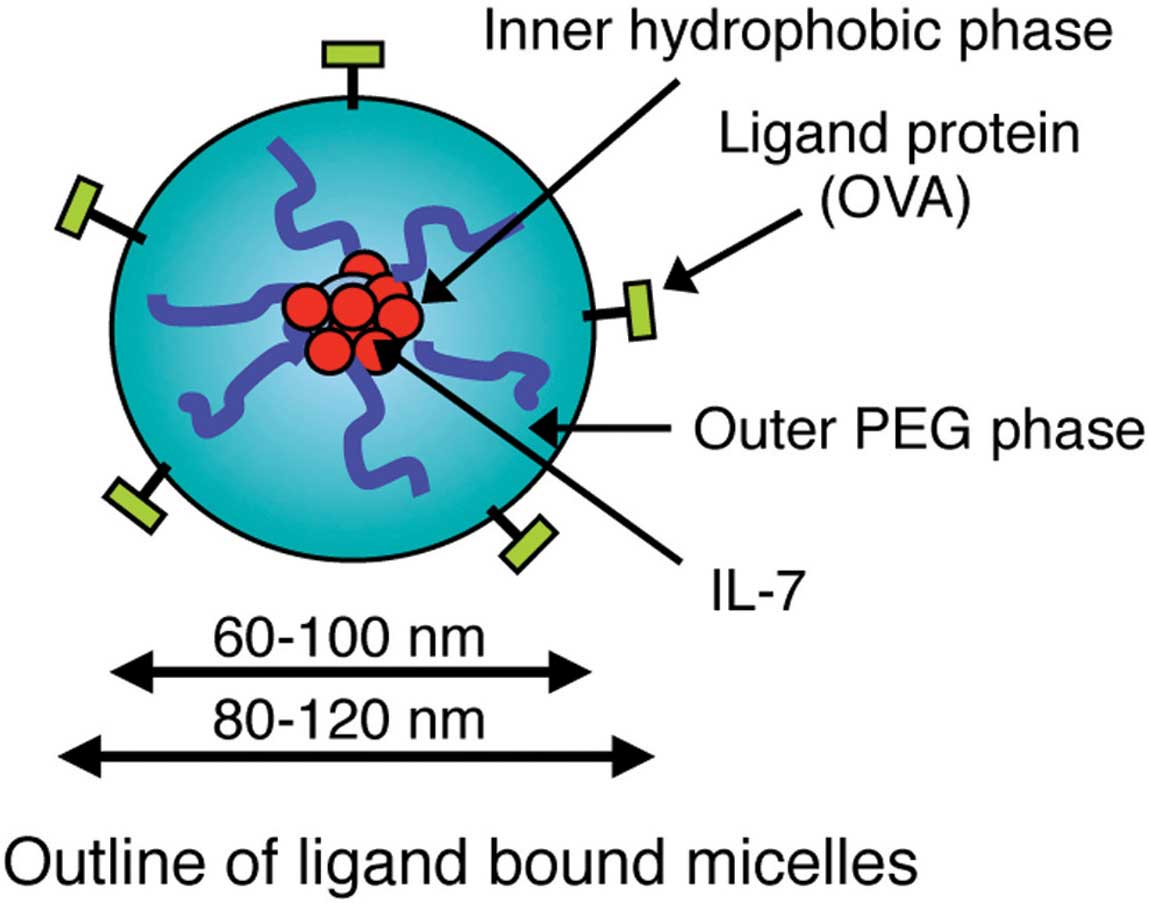
OVA was conjugated on the surface of NPs, and then
IL-7 was loaded into the NPs (Fig.
1). The average diameter of the OVA-NPs-IL-7 was 100 nm.
Pretreatment with OVA-NPs-IL-7 reduces
the growth of E.G7-OVA tumor cells in vivo
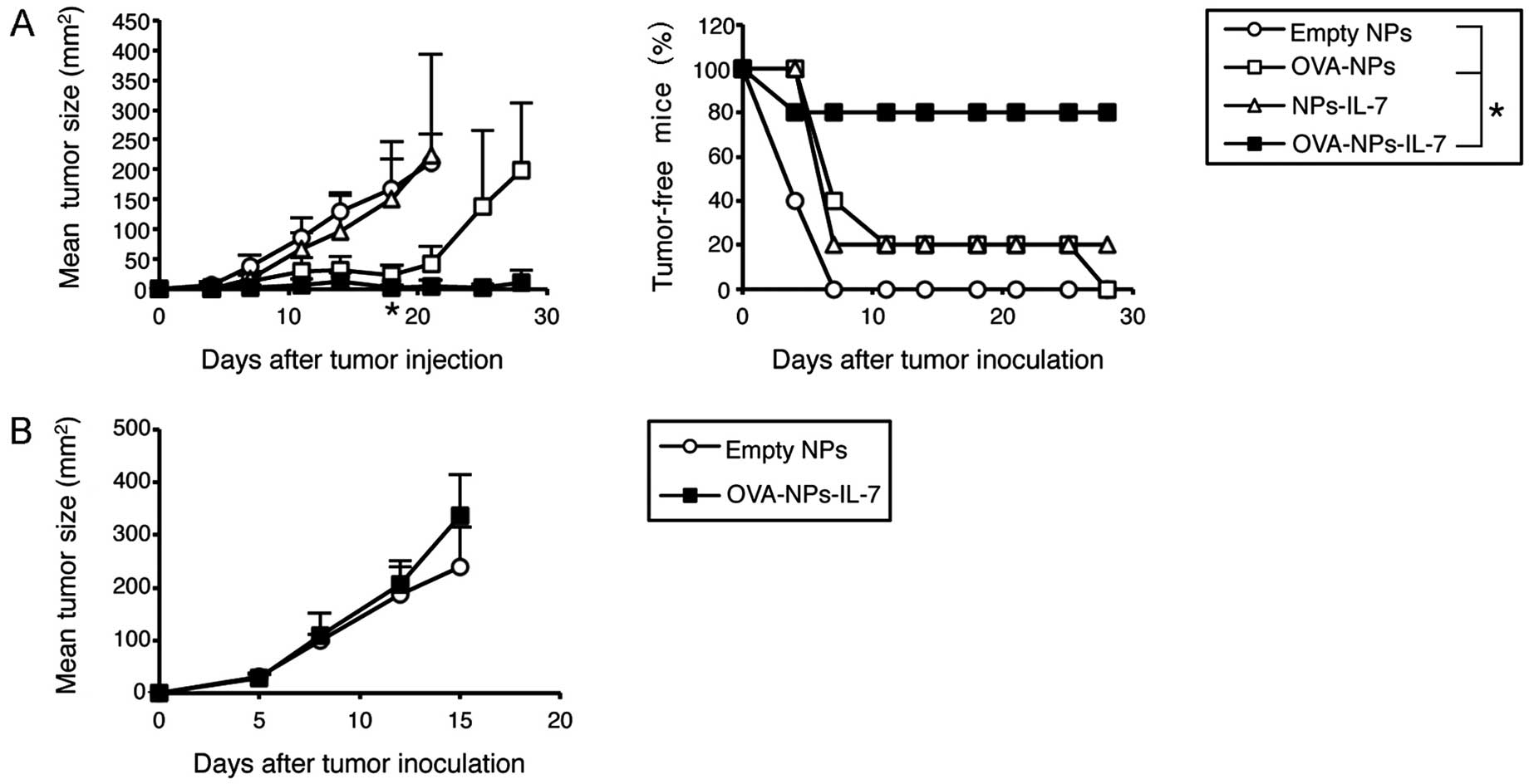
Whether OVA on NPs in combination with IL-7 exert
antitumor effects was examined in the present study. Pretreatment
of C57BL/6 mice with OVA-NPs 7 days before E.G7-OVA tumor
inoculation delayed tumor growth compared with the NPs alone
(Fig. 2A). Vaccination of mice with
OVA-NPs-IL-7 completely prevented the growth of E.G7-OVA tumor
cells in 4 of the 5 mice for at least 28 days, although NPs-IL-7
had only a meager effect on tumor growth. However, the growth of
parental EL4 tumor cells was almost comparable in the
OVA-NPs-IL-7-treated and control NPs alone groups (Fig. 2B), suggesting that vaccination with
OVA-NPs-IL-7 induced OVA-specific antitumor immunity in the
mice.
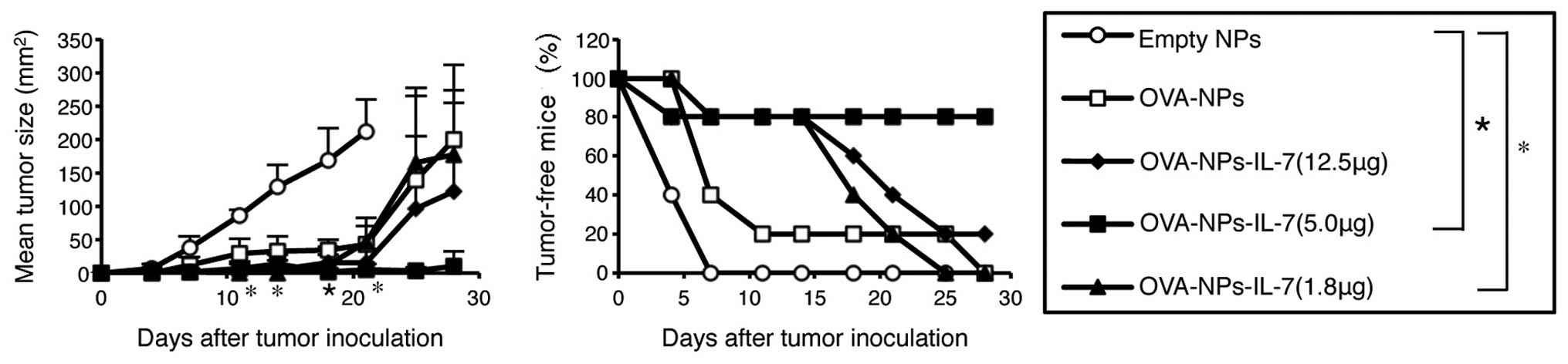
OVA-NPs encapsulating various concentrations of IL-7
were examined for adjuvant action against tumor growth. OVA-NPs
containing 5 μg IL-7 completely blocked the growth of E.G7-OVA
tumor cells in 4 of the 5 mice, whereas partial protection from
tumor growth was obtained by 1.8 or 12.5 μg IL-7 incorporated into
the OVA-NPs (Fig. 3). Thus, 5 μg
IL-7 incorporated into the OVA-NPs was employed for the subsequent
study.
Generation of CTLs after vaccination with
OVA-NPs-IL-7
Vaccination of tumor antigen with a suitable
adjuvant induces tumor-specific CTLs, inhibiting tumor growth in
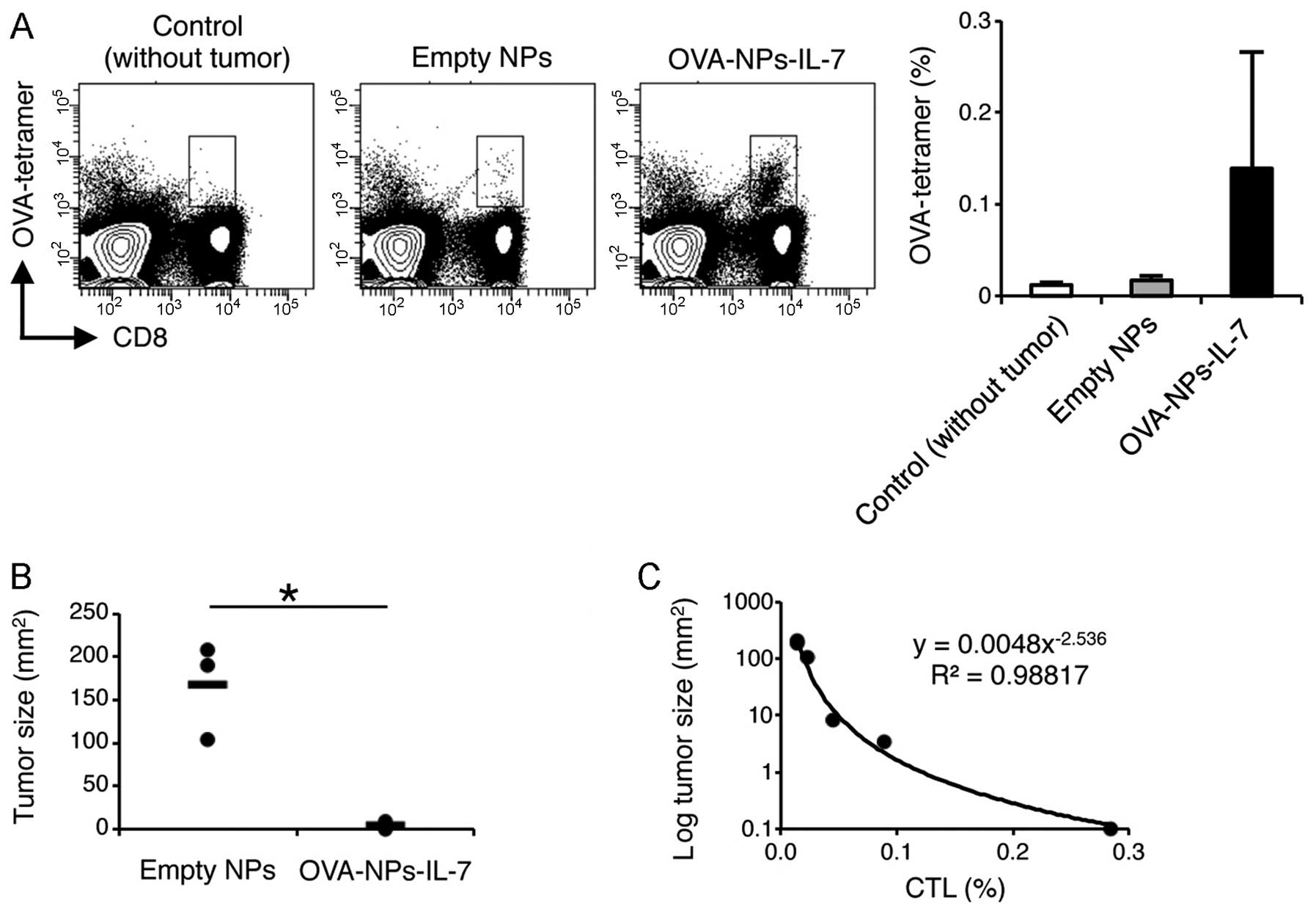
vivo (11). Vaccination with
OVA-NPs-IL-7 tended to enhance a portion of splenic CTLs specific
for OVA compared with the control NPs alone (Fig. 4A). To examine the relationship
between CTLs and tumor size, tumor size was measured (Fig. 4B). A regression plot of CTLs and
tumor size is shown in Fig. 4C. The
coefficient of determination, R2=0.988, suggested a good
correlation between CTLs and tumor size. Thus, OVA-NPs-IL-7-induced
CTLs may have contributed to prevention of tumor growth in
vivo.
Generation of memory-like T cells
Whether memory-like cells were generated by the
immunization with OVA-NPs-IL-7 together with E.G7-OVA was examined.
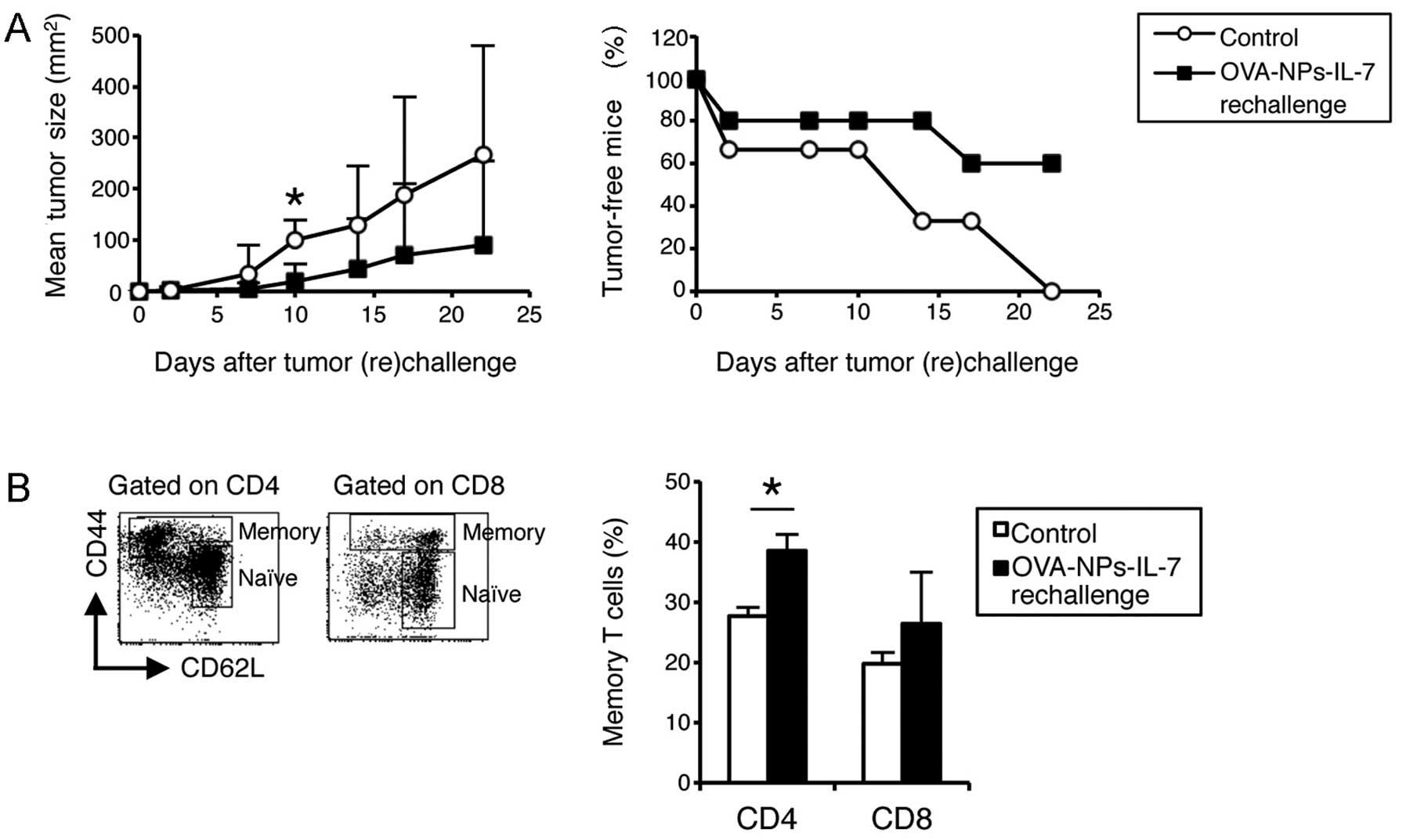
The tumor-free mice receiving OVA-NPs-IL-7 together with E.G7-OVA
tumor cells showed partial resistance to rechallenge with E.G7-OVA
cells (Fig. 5A), suggesting that
this immunization generated a memory-like cell. Then, we analyzed
CD4+ and CD8+ T cells from mice that had been
immunized with OVA-NPs-IL-7 in combination with E.G7-OVA. The
CD4+ T cells from the rechallenged mice expressed a
memory phenotype (CD44hiCD62L+) relative to
the controls (39.5 vs. 29.9) (Fig.
5B). The percentage of memory CD8+ T cells from the
primed mice tended to be higher than that from the control mice,
although statistically not significant. Thus, priming with
OVA-NPs-IL-7 along with E.G7-OVA generated memory-like T cells
in vivo, which may contribute to prevention of the growth of
subsequently inoculated E.G7-OVA cells.
Discussion
Growth of tumors is controlled by the immune system
(17). To induce a strong antitumor
immune response to suppress tumor growth in vivo, a vaccine
comprising a model tumor-associated antigen OVA on NPs loaded with
IL-7 was prepared. A single immunization with OVA-NPs-IL-7
suppressed the growth of OVA-expressing E.G7-OVA tumor cells.
Memory-like CD4+ cells were generated after immunization
with OVA-NPs-IL-7 in vivo, which may have contributed to the
resistance to the rechallenge with E.G7-OVA cells. Thus, tumor
antigen on NPs in the presence of cytokine IL-7 would function as a
powerful prophylactic vaccine to prevent the growth of subsequent
inoculations of tumor cells in vivo.
Synthetic particles mimicking the structure of
microbes function as powerful immune adjuvant (3,18). The
adjuvant activity can be modified by physical characteristics of
NPs including size, antigen loading and antigen-release kinetics.
Our preparation of OVA-NPs-IL-7 (~100 nm) prevented the growth of
EG.7-OVA but not parental EL4 tumors (Fig. 2B). OVA-NPs may be endocytosed by DCs
or macrophages to cross-prime CD8+ T cells in regional
lymph nodes (19), since small
particles in a range of 20–200 nm freely migrate to draining lymph
nodes from the injection site (20). A slow release of IL-7 from OVA-NPs
(13) would facilitate to activate
and maintain CD4+-memory T cells.
Cytokines produced by a variety of cells enhance or
inhibit immune responses against pathogens and tumors. A clinical
cancer trial demonstrated that IL-7 has efficacy as a therapeutic
agent (21). IL-7 promotes the
survival of effector T cells as well as memory T cells (22–24).
Consistent with these findings, a single injection of OVA-NPs-IL-7
tended to enhance the proportion of CTLs specific for OVA relative
to the control. The proportion of CD8+ CTLs appeared to
correlate with poor tumor growth (Fig.
4B) (17,25). Moreover, OVA-NPs-IL-7 in combination
with E.G7-OVA cells enhanced the proportion of a CD4+
memory phenotype (Fig. 5B), which
may have contributed to the resistance to the rechallenge with
E.G7-OVA cells (Fig. 5A). However,
the proportion of memory B cell phenotype was comparable between
OVA-NPs-IL-7 and the control group (Toyota et al,
unpublished data). Thus, IL-7 appeared to shift the balance toward
an antitumor effect by repressing regulatory networks (24), which are predominant in the
tumor-bearing host (26,27).
Collectively, we demonstrated that a single
subcutaneous injection of OVA-NPs-IL-7 suppressed the growth in
vivo of subsequently inoculated E.G7-OVA tumor cells expressing
OVA, yet not parental EL4 cells. In addition to antitumor
responses, OVA-NPs strongly generated humoral immunity including
IgG1 and IgG2a antibody production in mice (15). Thus, antigens conjugated on NPs
would be a novel adjuvant enhancing cellular as well as humoral
immune responses since they are stable, biodegradable and non-toxic
to humans.
Abbreviations:
|
TAA
|
tumor-associated antigen
|
|
DCs
|
dendritic cells
|
|
CTLs
|
cyototoxic T cells
|
|
NPs
|
nanoparticles
|
|
OVA
|
ovalbumin
|
References
|
1
|
Sanlorenzo M, Vujic I, Posch C, et al:
Melanoma immunotherapy. Cancer Biol Ther. 15:665–674. 2014.
View Article : Google Scholar : PubMed/NCBI
|
|
2
|
Disis ML, Bernhard H and Jaffee EM: Use of
tumour-responsive T cells as cancer treatment. Lancet. 373:673–683.
2009. View Article : Google Scholar : PubMed/NCBI
|
|
3
|
Yoo JW, Irvine DJ, Discher DE, et al:
Bio-inspired, bioengineered and biomimetic drug delivery carriers.
Nat Rev Drug Discov. 10:521–535. 2011. View
Article : Google Scholar : PubMed/NCBI
|
|
4
|
Radford KJ, Tullett KM and Lahoud MH:
Dendritic cells and cancer immunotherapy. Curr Opin Immunol.
27:26–32. 2014. View Article : Google Scholar : PubMed/NCBI
|
|
5
|
Moore MW, Carbone FR and Bevan MJ:
Introduction of soluble protein into the class I pathway of antigen
processing and presentation. Cell. 54:777–785. 1988. View Article : Google Scholar : PubMed/NCBI
|
|
6
|
Oppenheim JJ: Cytokines: Past, present,
and future. Int J Hematol. 74:3–8. 2001. View Article : Google Scholar : PubMed/NCBI
|
|
7
|
Christian DA and Hunter CA:
Particle-mediated delivery of cytokines for immunotherapy.
Immunotherapy. 4:425–441. 2012. View Article : Google Scholar : PubMed/NCBI
|
|
8
|
Katzman SD, Hoyer KK, Dooms H, et al:
Opposing functions of IL-2 and IL-7 in the regulation of immune
responses. Cytokine. 56:116–121. 2011. View Article : Google Scholar : PubMed/NCBI
|
|
9
|
Liu S, Lizée G, Lou Y, et al: IL-21
synergizes with IL-7 to augment expansion and anti-tumor function
of cytotoxic T cells. Int Immunol. 19:1213–1221. 2007. View Article : Google Scholar : PubMed/NCBI
|
|
10
|
Gou HF, Huang J, Shi HS, et al:
Chemo-immunotherapy with oxaliplatin and interleukin-7 inhibits
colon cancer metastasis in mice. PLoS One. 9:e857892014. View Article : Google Scholar : PubMed/NCBI
|
|
11
|
Oyewumi MO, Kumar A and Cui Z:
Nano-microparticles as immune adjuvants: Correlating particle sizes
and the resultant immune responses. Expert Rev Vaccines.
9:1095–1107. 2010. View Article : Google Scholar : PubMed/NCBI
|
|
12
|
Krishnamachari Y, Geary SM, Lemke CD, et
al: Nanoparticle delivery systems in cancer vaccines. Pharm Res.
28:215–236. 2011. View Article : Google Scholar
|
|
13
|
Osada K, Christie RJ and Kataoka K:
Polymeric micelles from poly(ethylene glycol)-poly(amino acid)
block copolymer for drug and gene delivery. J R Soc Interface.
6(Suppl 3): S325–S339. 2009. View Article : Google Scholar : PubMed/NCBI
|
|
14
|
Matsumura Y and Kataoka K: Preclinical and
clinical studies of anticancer agent-incorporating polymer
micelles. Cancer Sci. 100:572–579. 2009. View Article : Google Scholar : PubMed/NCBI
|
|
15
|
Yanase N, Toyota H, Hata K, et al:
OVA-bound nanoparticles induce OVA-specific IgG1, IgG2a, and IgG2b
responses with low IgE synthesis. Vaccine. 32:5918–5924. 2014.
View Article : Google Scholar : PubMed/NCBI
|
|
16
|
Harada M, Ohuchi M, Hayashi T and Kato Y:
Prolonged circulation and in vivo efficacy of recombinant human
granulocyte colony-stimulating factor encapsulated in polymeric
micelles. J Control Release. 156:101–108. 2011. View Article : Google Scholar : PubMed/NCBI
|
|
17
|
DeNardo DG, Andreu P and Coussens LM:
Interactions between lymphocytes and myeloid cells regulate pro-
versus anti-tumor immunity. Cancer Metastasis Rev. 29:309–316.
2010. View Article : Google Scholar : PubMed/NCBI
|
|
18
|
Mahapatro A and Singh DK: Biodegradable
nanoparticles are excellent vehicle for site directed in-vivo
delivery of drugs and vaccines. J Nanobiotechnology. 9:552011.
View Article : Google Scholar : PubMed/NCBI
|
|
19
|
Andersen BM and Ohlfest JR: Increasing the
efficacy of tumor cell vaccines by enhancing cross priming. Cancer
Lett. 325:155–164. 2012. View Article : Google Scholar : PubMed/NCBI
|
|
20
|
Manolova V, Flace A, Bauer M, et al:
Nanoparticles target distinct dendritic cell populations according
to their size. Eur J Immunol. 38:1404–1413. 2008. View Article : Google Scholar : PubMed/NCBI
|
|
21
|
Möller P, Sun Y, Dorbic T, et al:
Vaccination with IL-7 gene-modified autologous melanoma cells can
enhance the anti-melanoma lytic activity in peripheral blood of
patients with a good clinical performance status: a clinical phase
I study. Br J Cancer. 77:1907–1916. 1998. View Article : Google Scholar : PubMed/NCBI
|
|
22
|
Li J, Huston G and Swain SL: IL-7 promotes
the transition of CD4 effectors to persistent memory cells. J Exp
Med. 198:1807–1815. 2003. View Article : Google Scholar : PubMed/NCBI
|
|
23
|
Schluns KS, Kieper WC, Jameson SC and
Lefrançois L: Interleukin-7 mediates the homeostasis of naïve and
memory CD8 T cells in vivo. Nat Immunol. 1:426–432. 2000.
View Article : Google Scholar
|
|
24
|
Rochman Y, Spolski R and Leonard WJ: New
insights into the regulation of T cells by γc family
cytokines. Nat Rev Immunol. 9:480–490. 2009. View Article : Google Scholar : PubMed/NCBI
|
|
25
|
Hussein MR: Tumour-infiltrating
lymphocytes and melanoma tumorigenesis: an insight. Br J Dermatol.
153:18–21. 2005. View Article : Google Scholar : PubMed/NCBI
|
|
26
|
Egeblad M, Nakasone ES and Werb Z: Tumors
as organs: Complex tissues that interface with the entire organism.
Dev Cell. 18:884–901. 2010. View Article : Google Scholar : PubMed/NCBI
|
|
27
|
de Visser KE, Eichten A and Coussens LM:
Paradoxical roles of the immune system during cancer development.
Nat Rev Cancer. 6:24–37. 2006. View
Article : Google Scholar : PubMed/NCBI
|