Spandidos Publications Logo
  • About
    • About Spandidos
    • Aims and Scopes
    • Abstracting and Indexing
    • Editorial Policies
    • Reprints and Permissions
    • Job Opportunities
    • Terms and Conditions
    • Contact
  • Journals
    • All Journals
    • Oncology Letters
      • Oncology Letters
      • Information for Authors
      • Editorial Policies
      • Editorial Board
      • Aims and Scope
      • Abstracting and Indexing
      • Bibliographic Information
      • Archive
    • International Journal of Oncology
      • International Journal of Oncology
      • Information for Authors
      • Editorial Policies
      • Editorial Board
      • Aims and Scope
      • Abstracting and Indexing
      • Bibliographic Information
      • Archive
    • Molecular and Clinical Oncology
      • Molecular and Clinical Oncology
      • Information for Authors
      • Editorial Policies
      • Editorial Board
      • Aims and Scope
      • Abstracting and Indexing
      • Bibliographic Information
      • Archive
    • Experimental and Therapeutic Medicine
      • Experimental and Therapeutic Medicine
      • Information for Authors
      • Editorial Policies
      • Editorial Board
      • Aims and Scope
      • Abstracting and Indexing
      • Bibliographic Information
      • Archive
    • International Journal of Molecular Medicine
      • International Journal of Molecular Medicine
      • Information for Authors
      • Editorial Policies
      • Editorial Board
      • Aims and Scope
      • Abstracting and Indexing
      • Bibliographic Information
      • Archive
    • Biomedical Reports
      • Biomedical Reports
      • Information for Authors
      • Editorial Policies
      • Editorial Board
      • Aims and Scope
      • Abstracting and Indexing
      • Bibliographic Information
      • Archive
    • Oncology Reports
      • Oncology Reports
      • Information for Authors
      • Editorial Policies
      • Editorial Board
      • Aims and Scope
      • Abstracting and Indexing
      • Bibliographic Information
      • Archive
    • Molecular Medicine Reports
      • Molecular Medicine Reports
      • Information for Authors
      • Editorial Policies
      • Editorial Board
      • Aims and Scope
      • Abstracting and Indexing
      • Bibliographic Information
      • Archive
    • World Academy of Sciences Journal
      • World Academy of Sciences Journal
      • Information for Authors
      • Editorial Policies
      • Editorial Board
      • Aims and Scope
      • Abstracting and Indexing
      • Bibliographic Information
      • Archive
    • International Journal of Functional Nutrition
      • International Journal of Functional Nutrition
      • Information for Authors
      • Editorial Policies
      • Editorial Board
      • Aims and Scope
      • Abstracting and Indexing
      • Bibliographic Information
      • Archive
    • International Journal of Epigenetics
      • International Journal of Epigenetics
      • Information for Authors
      • Editorial Policies
      • Editorial Board
      • Aims and Scope
      • Abstracting and Indexing
      • Bibliographic Information
      • Archive
    • Medicine International
      • Medicine International
      • Information for Authors
      • Editorial Policies
      • Editorial Board
      • Aims and Scope
      • Abstracting and Indexing
      • Bibliographic Information
      • Archive
  • Articles
  • Information
    • Information for Authors
    • Information for Reviewers
    • Information for Librarians
    • Information for Advertisers
    • Conferences
  • Language Editing
Spandidos Publications Logo
  • About
    • About Spandidos
    • Aims and Scopes
    • Abstracting and Indexing
    • Editorial Policies
    • Reprints and Permissions
    • Job Opportunities
    • Terms and Conditions
    • Contact
  • Journals
    • All Journals
    • Biomedical Reports
      • Information for Authors
      • Editorial Policies
      • Editorial Board
      • Aims and Scope
      • Abstracting and Indexing
      • Bibliographic Information
      • Archive
    • Experimental and Therapeutic Medicine
      • Information for Authors
      • Editorial Policies
      • Editorial Board
      • Aims and Scope
      • Abstracting and Indexing
      • Bibliographic Information
      • Archive
    • International Journal of Epigenetics
      • Information for Authors
      • Editorial Policies
      • Editorial Board
      • Aims and Scope
      • Abstracting and Indexing
      • Bibliographic Information
      • Archive
    • International Journal of Functional Nutrition
      • Information for Authors
      • Editorial Policies
      • Editorial Board
      • Aims and Scope
      • Abstracting and Indexing
      • Bibliographic Information
      • Archive
    • International Journal of Molecular Medicine
      • Information for Authors
      • Editorial Policies
      • Editorial Board
      • Aims and Scope
      • Abstracting and Indexing
      • Bibliographic Information
      • Archive
    • International Journal of Oncology
      • Information for Authors
      • Editorial Policies
      • Editorial Board
      • Aims and Scope
      • Abstracting and Indexing
      • Bibliographic Information
      • Archive
    • Medicine International
      • Information for Authors
      • Editorial Policies
      • Editorial Board
      • Aims and Scope
      • Abstracting and Indexing
      • Bibliographic Information
      • Archive
    • Molecular and Clinical Oncology
      • Information for Authors
      • Editorial Policies
      • Editorial Board
      • Aims and Scope
      • Abstracting and Indexing
      • Bibliographic Information
      • Archive
    • Molecular Medicine Reports
      • Information for Authors
      • Editorial Policies
      • Editorial Board
      • Aims and Scope
      • Abstracting and Indexing
      • Bibliographic Information
      • Archive
    • Oncology Letters
      • Information for Authors
      • Editorial Policies
      • Editorial Board
      • Aims and Scope
      • Abstracting and Indexing
      • Bibliographic Information
      • Archive
    • Oncology Reports
      • Information for Authors
      • Editorial Policies
      • Editorial Board
      • Aims and Scope
      • Abstracting and Indexing
      • Bibliographic Information
      • Archive
    • World Academy of Sciences Journal
      • Information for Authors
      • Editorial Policies
      • Editorial Board
      • Aims and Scope
      • Abstracting and Indexing
      • Bibliographic Information
      • Archive
  • Articles
  • Information
    • For Authors
    • For Reviewers
    • For Librarians
    • For Advertisers
    • Conferences
  • Language Editing
Login Register Submit
  • This site uses cookies
  • You can change your cookie settings at any time by following the instructions in our Cookie Policy. To find out more, you may read our Privacy Policy.

    I agree
Search articles by DOI, keyword, author or affiliation
Search
Advanced Search
presentation
Oncology Reports
Join Editorial Board Propose a Special Issue
Print ISSN: 1021-335X Online ISSN: 1791-2431
Journal Cover
April-2015 Volume 33 Issue 4

Full Size Image

Sign up for eToc alerts
Recommend to Library

Journals

International Journal of Molecular Medicine

International Journal of Molecular Medicine

International Journal of Molecular Medicine is an international journal devoted to molecular mechanisms of human disease.

International Journal of Oncology

International Journal of Oncology

International Journal of Oncology is an international journal devoted to oncology research and cancer treatment.

Molecular Medicine Reports

Molecular Medicine Reports

Covers molecular medicine topics such as pharmacology, pathology, genetics, neuroscience, infectious diseases, molecular cardiology, and molecular surgery.

Oncology Reports

Oncology Reports

Oncology Reports is an international journal devoted to fundamental and applied research in Oncology.

Experimental and Therapeutic Medicine

Experimental and Therapeutic Medicine

Experimental and Therapeutic Medicine is an international journal devoted to laboratory and clinical medicine.

Oncology Letters

Oncology Letters

Oncology Letters is an international journal devoted to Experimental and Clinical Oncology.

Biomedical Reports

Biomedical Reports

Explores a wide range of biological and medical fields, including pharmacology, genetics, microbiology, neuroscience, and molecular cardiology.

Molecular and Clinical Oncology

Molecular and Clinical Oncology

International journal addressing all aspects of oncology research, from tumorigenesis and oncogenes to chemotherapy and metastasis.

World Academy of Sciences Journal

World Academy of Sciences Journal

Multidisciplinary open-access journal spanning biochemistry, genetics, neuroscience, environmental health, and synthetic biology.

International Journal of Functional Nutrition

International Journal of Functional Nutrition

Open-access journal combining biochemistry, pharmacology, immunology, and genetics to advance health through functional nutrition.

International Journal of Epigenetics

International Journal of Epigenetics

Publishes open-access research on using epigenetics to advance understanding and treatment of human disease.

Medicine International

Medicine International

An International Open Access Journal Devoted to General Medicine.

Journal Cover
April-2015 Volume 33 Issue 4

Full Size Image

Sign up for eToc alerts
Recommend to Library

  • Article
  • Citations
    • Cite This Article
    • Download Citation
    • Create Citation Alert
    • Remove Citation Alert
    • Cited By
  • Similar Articles
    • Related Articles (in Spandidos Publications)
    • Similar Articles (Google Scholar)
    • Similar Articles (PubMed)
  • Download PDF
  • Download XML
  • View XML
Article Open Access

Akt‑mediated phosphorylation of Oct4 is associated with the proliferation of stem‑like cancer cells

  • Authors:
    • Qing‑Wei Zhao
    • Yan‑Wen Zhou
    • Wen‑Xin Li
    • Bo Kang
    • Xiao‑Qian Zhang
    • Ying Yang
    • Jie Cheng
    • Sheng‑Yong Yin
    • Ying Tong
    • Jian‑Qin He
    • Hang‑Ping Yao
    • Min Zheng
    • Ying‑Jie Wang
  • View Affiliations / Copyright

    Affiliations: State Key Laboratory for Diagnosis and Treatment of Infectious Diseases, The First Affiliated Hospital, School of Medicine, Zhejiang University, Hangzhou, Zhejiang, P.R. China, Department of Hepatobiliary and Pancreatic Surgery, The First Affiliated Hospital, School of Medicine, Zhejiang University, Hangzhou, Zhejiang, P.R. China, Department of Neurosurgery, The First Affiliated Hospital, School of Medicine, Zhejiang University, Hangzhou, Zhejiang, P.R. China
    Copyright: © Zhao et al. This is an open access article distributed under the terms of Creative Commons Attribution License [CC BY_NC 3.0].
  • Pages: 1621-1629
    |
    Published online on: January 27, 2015
       https://doi.org/10.3892/or.2015.3752
  • Expand metrics +
Metrics: Total Views: 0 (Spandidos Publications: | PMC Statistics: )
Metrics: Total PDF Downloads: 0 (Spandidos Publications: | PMC Statistics: )
Cited By (CrossRef): 0 citations Loading Articles...

This article is mentioned in:


Abstract

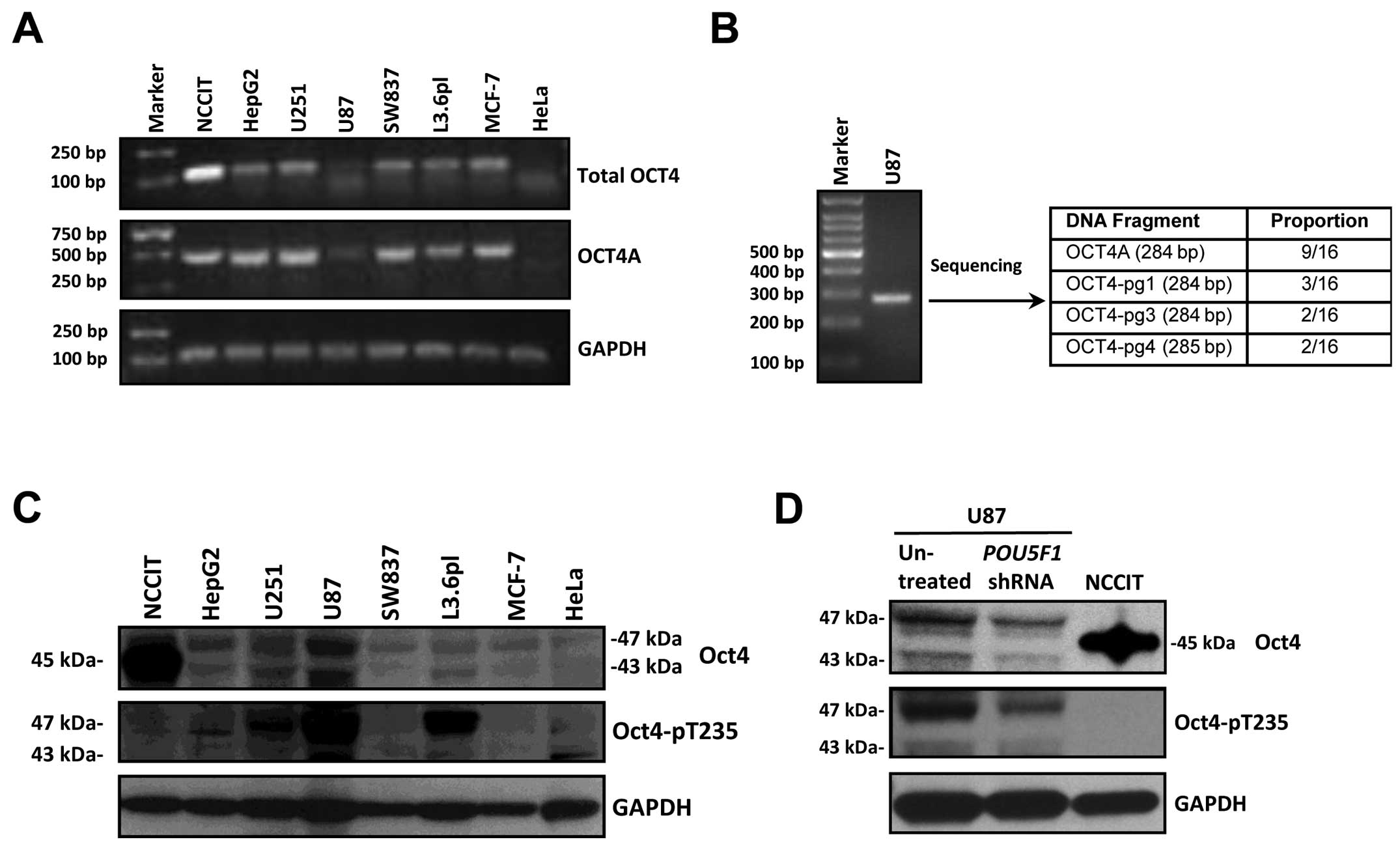
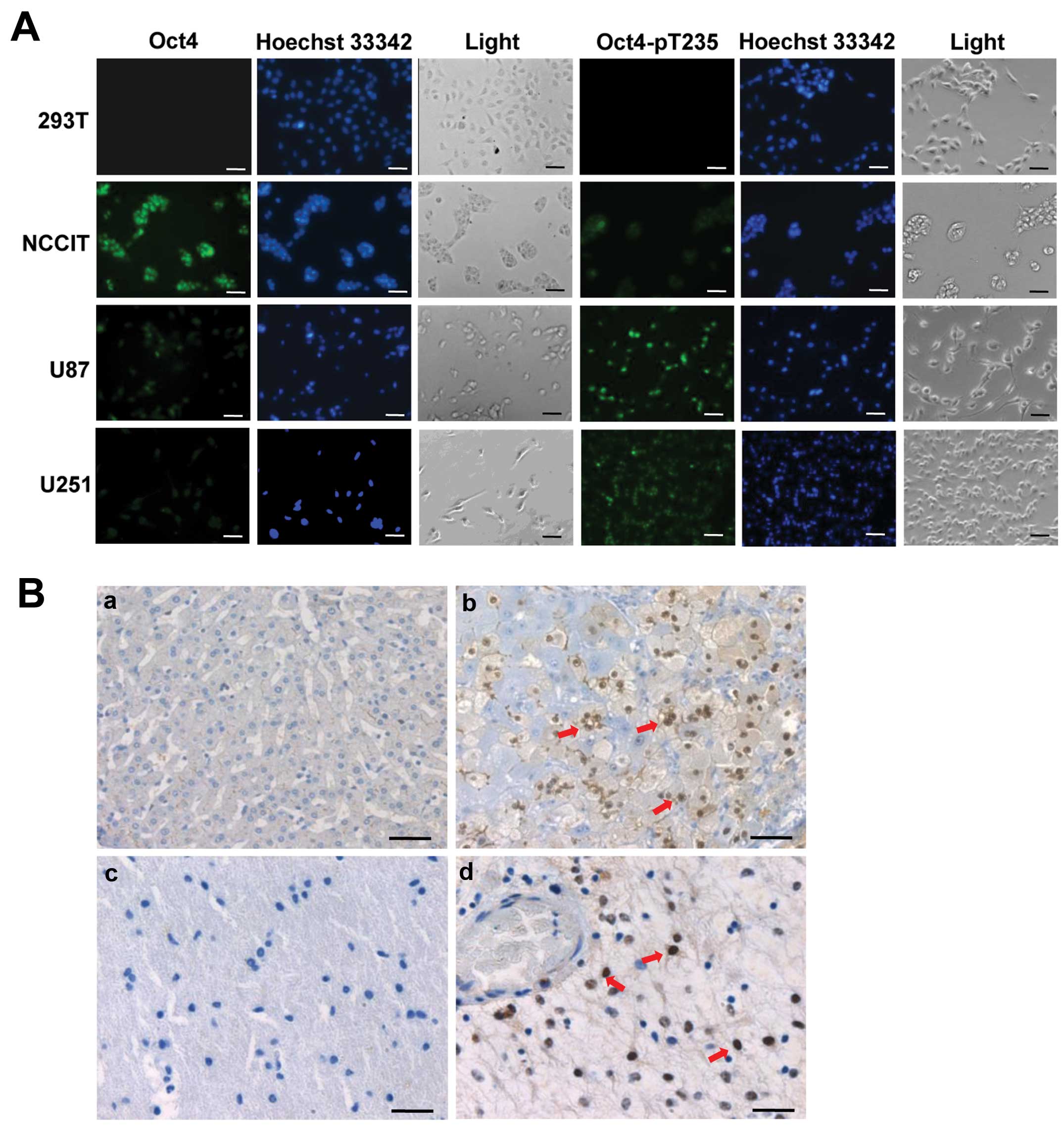
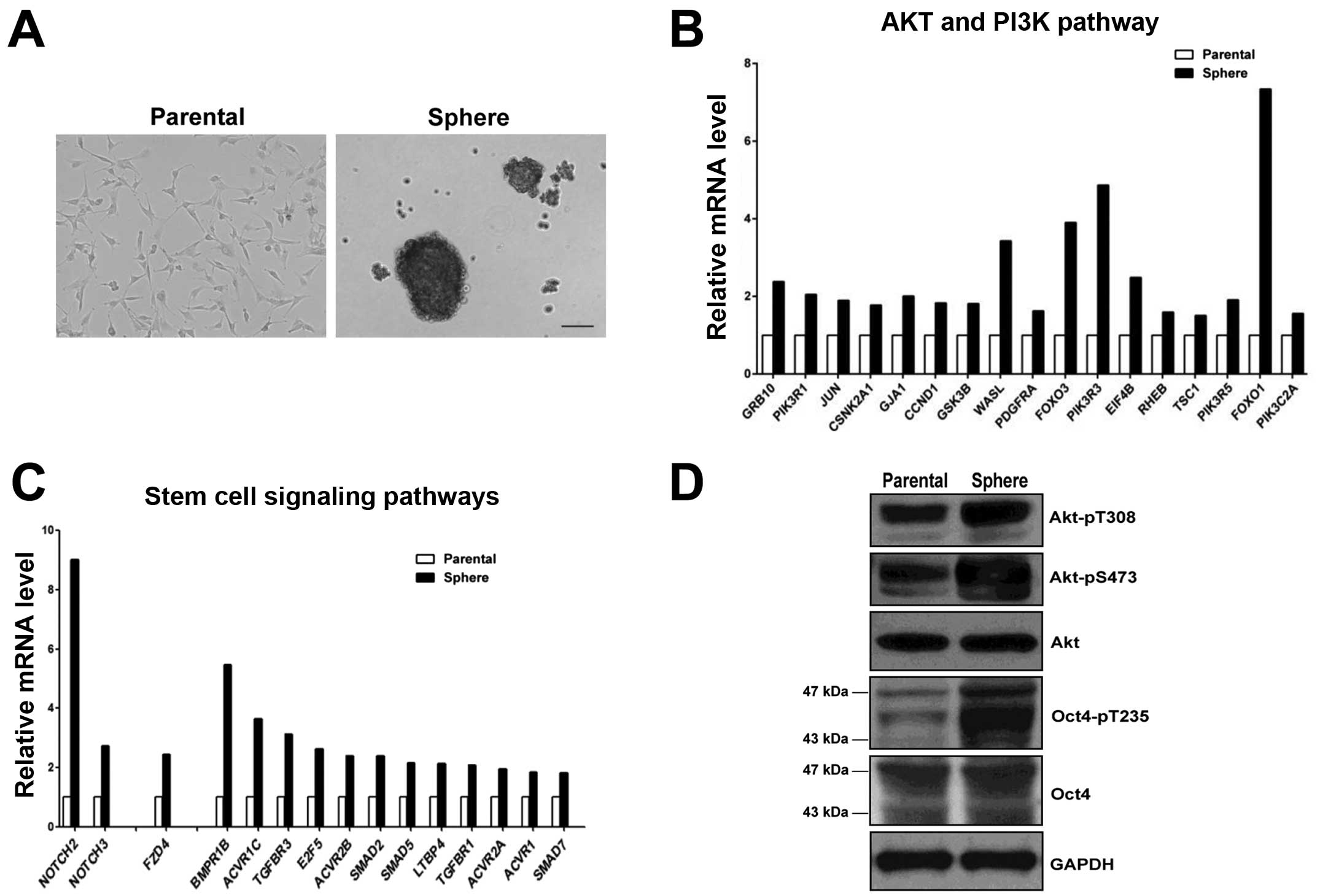
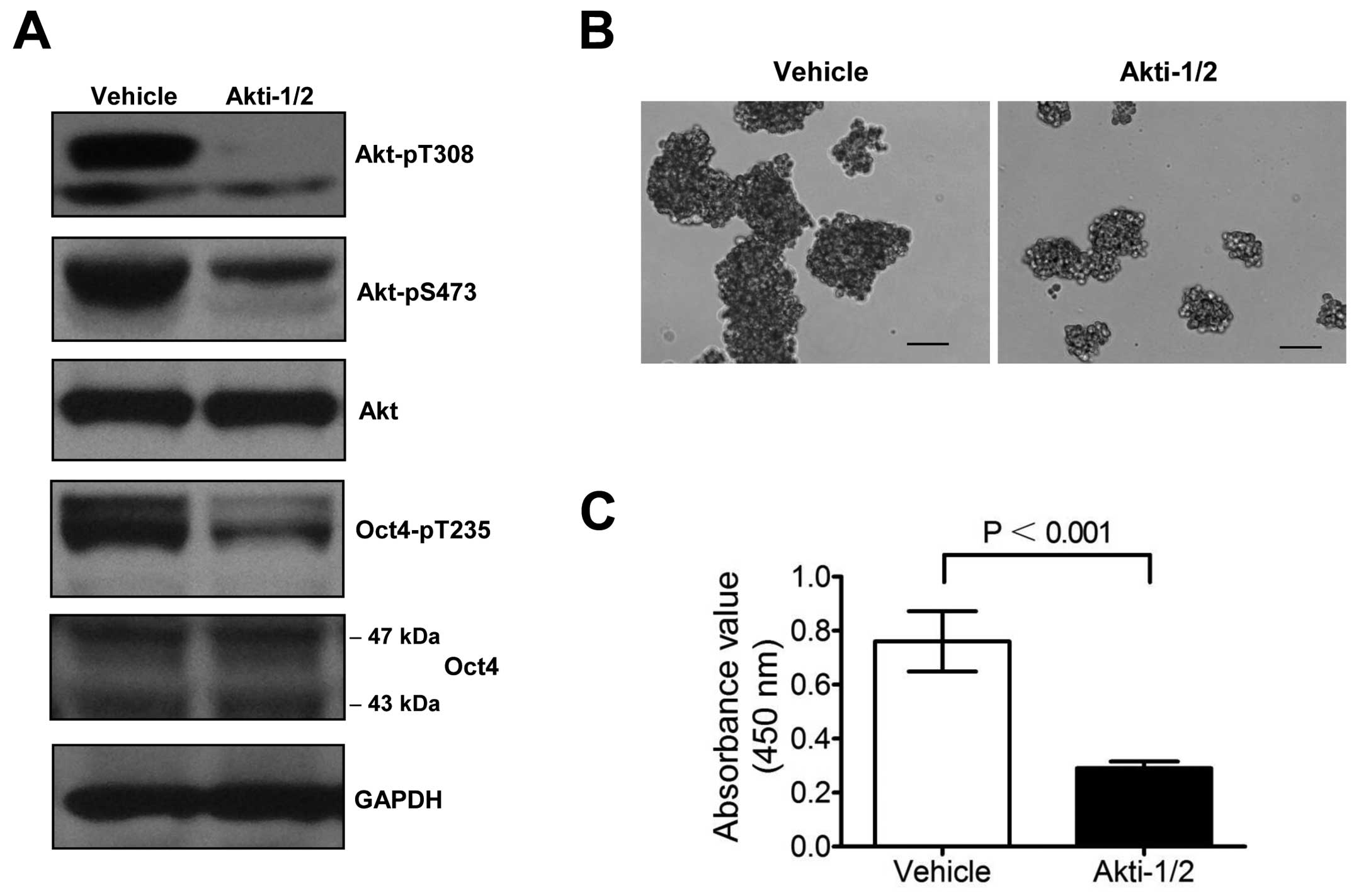
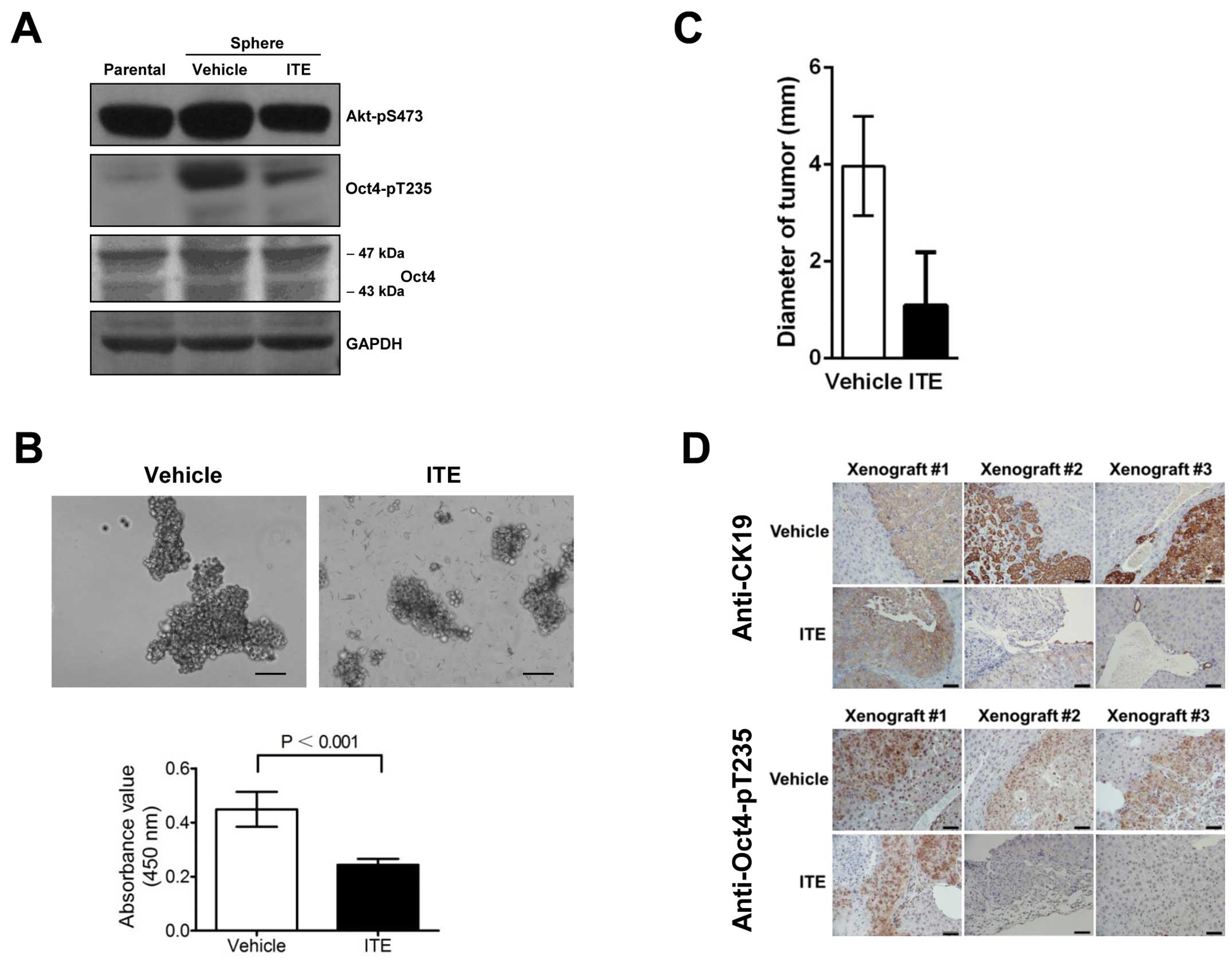
Oct4 protein encoded by POU5F1 plays a pivotal role in maintaining the self‑renewal of pluripotent stem cells; however, its presence in cancer cells remains controversial. In the present study, we provided evidence that the transcripts of authentic OCT4 gene (OCT4A) and its multiple pseudogenes were detected in a variety of cancer cell lines. A few major bands were also detected by western blotting using an anti‑Oct4A monoclonal antibody. Moreover, an anti‑Oct4‑pT235 antibody was used to identify a band in the majority of the tested cancer cell lines that coincided with one of the anti‑Oct4A bands which was decreasable by a specific shRNA. The Oct4‑pT235 signals were also detected in human glioblastoma and liver cancer specimens by immunofluorescence microscopy and immunohistochemistry. U87 glioblastoma cells were cultured in a neural stem cell medium to induce the formation of neurospheres rich in stem‑like cancer cells. The levels of Oct4‑pT235 in the sphere cells were markedly increased compared to their monolayer parental cells, a result that was accompanied by upregulation of the PI3K‑Akt pathway. Akti‑1/2, a specific inhibitor of Akt, effectively reduced the level of Oct4‑pT235 and attenuated the proliferation of U87 sphere cells. ITE, an agonist of the aryl hydrocarbon receptor, also significantly attenuated the Akt‑mediated phosphorylation of Oct4 in glioblastoma and liver cancer cells, and reduced their tumorigenic potential in a xenograft tumor model. Taken together, we concluded that the Akt‑mediated phosphorylation of Oct4A or its homolog protein was associated with the proliferation of stem‑like cancer cells that may serve as a novel biomarker and drug target for certain types of cancer.
View Figures

Figure 1

Figure 2

Figure 3

Figure 4

Figure 5

View References

1 

Wang X and Dai J: Concise review: isoforms of OCT4 contribute to the confusing diversity in stem cell biology. Stem Cells. 28:885–893. 2010.PubMed/NCBI

2 

Jerabek S, Merino F, Scholer HR and Cojocaru V: OCT4: dynamic DNA binding pioneers stem cell pluripotency. Biochim Biophys Acta. 1839.138–154. 2014.

3 

Jung M, Peterson H, Chavez L, et al: A data integration approach to mapping OCT4 gene regulatory networks operative in embryonic stem cells and embryonal carcinoma cells. PLoS One. 5:e107092010. View Article : Google Scholar : PubMed/NCBI

4 

Young RA: Control of the embryonic stem cell state. Cell. 144:940–954. 2011. View Article : Google Scholar : PubMed/NCBI

5 

Park IH, Zhao R, West JA, et al: Reprogramming of human somatic cells to pluripotency with defined factors. Nature. 451:141–146. 2008. View Article : Google Scholar

6 

Takahashi K, Tanabe K, Ohnuki M, et al: Induction of pluripotent stem cells from adult human fibroblasts by defined factors. Cell. 131:861–872. 2007. View Article : Google Scholar : PubMed/NCBI

7 

Yu J, Vodyanik MA, Smuga-Otto K, et al: Induced pluripotent stem cell lines derived from human somatic cells. Science. 318:1917–1920. 2007. View Article : Google Scholar : PubMed/NCBI

8 

Cauffman G, Liebaers I, Van Steirteghem A and Van de Velde H: POU5F1 isoforms show different expression patterns in human embryonic stem cells and preimplantation embryos. Stem Cells. 24:2685–2691. 2006. View Article : Google Scholar : PubMed/NCBI

9 

Pain D, Chirn GW, Strassel C and Kemp DM: Multiple retropseudogenes from pluripotent cell-specific gene expression indicates a potential signature for novel gene identification. J Biol Chem. 280:6265–6268. 2005. View Article : Google Scholar : PubMed/NCBI

10 

Suo G, Han J, Wang X, Zhang J, Zhao Y and Dai J: Oct4 pseudogenes are transcribed in cancers. Biochem Biophys Res Commun. 337:1047–1051. 2005. View Article : Google Scholar : PubMed/NCBI

11 

Wang L, Guo ZY, Zhang R, et al: Pseudogene OCT4-pg4 functions as a natural micro RNA sponge to regulate OCT4 expression by competing for miR-145 in hepatocellular carcinoma. Carcinogenesis. 34:1773–1781. 2013. View Article : Google Scholar : PubMed/NCBI

12 

Hayashi H, Arao T, Togashi Y, et al: The OCT4 pseudogene POU5F1B is amplified and promotes an aggressive phenotype in gastric cancer. Oncogene. Dec 23–2013.(Epub ahead of print). PubMed/NCBI

13 

Panagopoulos I, Moller E, Collin A and Mertens F: The POU5F1P1 pseudogene encodes a putative protein similar to POU5F1 isoform 1. Oncol Rep. 20:1029–1033. 2008.PubMed/NCBI

14 

Breyer JP, Dorset DC, Clark TA, et al: An expressed retrogene of the master embryonic stem cell gene POU5F1 is associated with prostate cancer susceptibility. Am J Hum Genet. 94:395–404. 2014. View Article : Google Scholar : PubMed/NCBI

15 

Liu J, Ma L, Xu J, et al: Spheroid body-forming cells in the human gastric cancer cell line MKN-45 possess cancer stem cell properties. Int J Oncol. 42:453–459. 2013.

16 

Liedtke S, Stephan M and Kogler G: Oct4 expression revisited: potential pitfalls for data misinterpretation in stem cell research. Biol Chem. 389:845–850. 2008. View Article : Google Scholar : PubMed/NCBI

17 

Cantz T, Key G, Bleidissel M, et al: Absence of OCT4 expression in somatic tumor cell lines. Stem Cells. 26:692–697. 2008. View Article : Google Scholar

18 

Lengner CJ, Welstead GG and Jaenisch R: The pluripotency regulator Oct4: a role in somatic stem cells? Cell Cycle. 7:725–728. 2008. View Article : Google Scholar : PubMed/NCBI

19 

Mueller T, Luetzkendorf J, Nerger K, Schmoll HJ and Mueller LP: Analysis of OCT4 expression in an extended panel of human tumor cell lines from multiple entities and in human mesenchymal stem cells. Cell Mol Life Sci. 66:495–503. 2009. View Article : Google Scholar

20 

Jez M, Ambady S, Kashpur O, et al: Expression and differentiation between OCT4A and its pseudogenes in human ESCs and differentiated adult somatic cells. PLoS One. 9:e895462014. View Article : Google Scholar : PubMed/NCBI

21 

Wei F, Scholer HR and Atchison ML: Sumoylation of Oct4 enhances its stability, DNA binding, and transactivation. J Biol Chem. 282:21551–21560. 2007. View Article : Google Scholar : PubMed/NCBI

22 

Xu H, Wang W, Li C, et al: WWP2 promotes degradation of transcription factor OCT4 in human embryonic stem cells. Cell Res. 19:561–573. 2009. View Article : Google Scholar : PubMed/NCBI

23 

Saxe JP, Tomilin A, Scholer HR, Plath K and Huang J: Post-translational regulation of Oct4 transcriptional activity. PLoS One. 4:e44672009. View Article : Google Scholar : PubMed/NCBI

24 

Brumbaugh J, Hou Z, Russell JD, et al: Phosphorylation regulates human OCT4. Proc Natl Acad Sci USA. 109:7162–7168. 2012. View Article : Google Scholar : PubMed/NCBI

25 

Lin Y, Yang Y, Li W, et al: Reciprocal regulation of Akt and Oct4 promotes the self-renewal and survival of embryonal carcinoma cells. Mol Cell. 48:627–640. 2012. View Article : Google Scholar : PubMed/NCBI

26 

Campbell PA and Rudnicki MA: Oct4 interaction with Hmgb2 regulates Akt signaling and pluripotency. Stem Cells. 31:1107–1120. 2013. View Article : Google Scholar : PubMed/NCBI

27 

Chen B, Xue Z, Yang G, et al: Akt-signal integration is involved in the differentiation of embryonal carcinoma cells. PLoS One. 8:e648772013. View Article : Google Scholar : PubMed/NCBI

28 

Padhye SS, Guin S, Yao HP, Zhou YQ, Zhang R and Wang MH: Sustained expression of the RON receptor tyrosine kinase by pancreatic cancer stem cells as a potential targeting moiety for antibody-directed chemotherapeutics. Mol Pharm. 8:2310–2319. 2011. View Article : Google Scholar : PubMed/NCBI

29 

Wang K, Li Y, Jiang YZ, et al: An endogenous aryl hydrocarbon receptor ligand inhibits proliferation and migration of human ovarian cancer cells. Cancer Lett. 340:63–71. 2013. View Article : Google Scholar : PubMed/NCBI

30 

Atlasi Y, Mowla SJ, Ziaee SA, Gokhale PJ and Andrews PW: OCT4 spliced variants are differentially expressed in human pluripotent and nonpluripotent cells. Stem Cells. 26:3068–3074. 2008. View Article : Google Scholar : PubMed/NCBI

31 

Zhao GJ, Xu LX, Chu ES, et al: Establishment of an orthotopic transplantation tumor model of hepatocellular carcinoma in mice. World J Gastroenterol. 18:7087–7092. 2012. View Article : Google Scholar

32 

Ledur PF, Villodre ES, Paulus R, Cruz LA, Flores DG and Lenz G: Extracellular ATP reduces tumor sphere growth and cancer stem cell population in glioblastoma cells. Purinergic Signal. 8:39–48. 2012. View Article : Google Scholar :

33 

Singh SK, Clarke ID, Terasaki M, et al: Identification of a cancer stem cell in human brain tumors. Cancer Res. 63:5821–5828. 2003.PubMed/NCBI

34 

Wu R, Zhang L, Hoagland MS and Swanson HI: Lack of the aryl hydrocarbon receptor leads to impaired activation of AKT/protein kinase B and enhanced sensitivity to apoptosis induced via the intrinsic pathway. J Pharmacol Exp Ther. 320:448–457. 2007. View Article : Google Scholar

35 

Wang C, Xu CX, Bu Y, Bottum KM and Tischkau SA: Beta-naphthoflavone (DB06732) mediates estrogen receptor-positive breast cancer cell cycle arrest through AhR-dependent regulation of PI3K/AKT and MAPK/ERK signaling. Carcinogenesis. 35:703–713. 2014. View Article : Google Scholar :

36 

Molina JR, Hayashi Y, Stephens C and Georgescu MM: Invasive glioblastoma cells acquire stemness and increased Akt activation. Neoplasia. 12:453–463. 2010.PubMed/NCBI

37 

Haas-Kogan D, Shalev N, Wong M, Mills G, Yount G and Stokoe D: Protein kinase B (PKB/Akt) activity is elevated in glioblastoma cells due to mutation of the tumor suppressor PTEN/MMAC. Curr Biol. 8:1195–1198. 1998. View Article : Google Scholar : PubMed/NCBI

38 

Li J and Zhou BP: Activation of β-catenin and Akt pathways by Twist are critical for the maintenance of EMT associated cancer stem cell-like characters. BMC Cancer. 11:492011. View Article : Google Scholar

39 

Dubrovska A, Kim S, Salamone RJ, et al: The role of PTEN/Akt/PI3K signaling in the maintenance and viability of prostate cancer stem-like cell populations. Proc Natl Acad Sci USA. 106:268–273. 2009. View Article : Google Scholar : PubMed/NCBI

40 

Wang XQ, Ongkeko WM, Chen L, et al: Octamer 4 (Oct4) mediates chemotherapeutic drug resistance in liver cancer cells through a potential Oct4-AKT-ATP-binding cassette G2 pathway. Hepatology. 52:528–539. 2010. View Article : Google Scholar : PubMed/NCBI

41 

Korkaya H, Paulson A, Charafe-Jauffret E, et al: Regulation of mammary stem/progenitor cells by PTEN/Akt/beta-catenin signaling. PLoS Biol. 7:e10001212009. View Article : Google Scholar : PubMed/NCBI

42 

Bleau AM, Hambardzumyan D, Ozawa T, et al: PTEN/PI3K/Akt pathway regulates the side population phenotype and ABCG2 activity in glioma tumor stem-like cells. Cell Stem Cell. 4:226–235. 2009. View Article : Google Scholar : PubMed/NCBI

Related Articles

  • Abstract
  • View
  • Download
  • Twitter
Copy and paste a formatted citation
Spandidos Publications style
Zhao QW, Zhou YW, Li WX, Kang B, Zhang XQ, Yang Y, Cheng J, Yin SY, Tong Y, He JQ, He JQ, et al: Akt‑mediated phosphorylation of Oct4 is associated with the proliferation of stem‑like cancer cells. Oncol Rep 33: 1621-1629, 2015.
APA
Zhao, Q., Zhou, Y., Li, W., Kang, B., Zhang, X., Yang, Y. ... Wang, Y. (2015). Akt‑mediated phosphorylation of Oct4 is associated with the proliferation of stem‑like cancer cells. Oncology Reports, 33, 1621-1629. https://doi.org/10.3892/or.2015.3752
MLA
Zhao, Q., Zhou, Y., Li, W., Kang, B., Zhang, X., Yang, Y., Cheng, J., Yin, S., Tong, Y., He, J., Yao, H., Zheng, M., Wang, Y."Akt‑mediated phosphorylation of Oct4 is associated with the proliferation of stem‑like cancer cells". Oncology Reports 33.4 (2015): 1621-1629.
Chicago
Zhao, Q., Zhou, Y., Li, W., Kang, B., Zhang, X., Yang, Y., Cheng, J., Yin, S., Tong, Y., He, J., Yao, H., Zheng, M., Wang, Y."Akt‑mediated phosphorylation of Oct4 is associated with the proliferation of stem‑like cancer cells". Oncology Reports 33, no. 4 (2015): 1621-1629. https://doi.org/10.3892/or.2015.3752
Copy and paste a formatted citation
x
Spandidos Publications style
Zhao QW, Zhou YW, Li WX, Kang B, Zhang XQ, Yang Y, Cheng J, Yin SY, Tong Y, He JQ, He JQ, et al: Akt‑mediated phosphorylation of Oct4 is associated with the proliferation of stem‑like cancer cells. Oncol Rep 33: 1621-1629, 2015.
APA
Zhao, Q., Zhou, Y., Li, W., Kang, B., Zhang, X., Yang, Y. ... Wang, Y. (2015). Akt‑mediated phosphorylation of Oct4 is associated with the proliferation of stem‑like cancer cells. Oncology Reports, 33, 1621-1629. https://doi.org/10.3892/or.2015.3752
MLA
Zhao, Q., Zhou, Y., Li, W., Kang, B., Zhang, X., Yang, Y., Cheng, J., Yin, S., Tong, Y., He, J., Yao, H., Zheng, M., Wang, Y."Akt‑mediated phosphorylation of Oct4 is associated with the proliferation of stem‑like cancer cells". Oncology Reports 33.4 (2015): 1621-1629.
Chicago
Zhao, Q., Zhou, Y., Li, W., Kang, B., Zhang, X., Yang, Y., Cheng, J., Yin, S., Tong, Y., He, J., Yao, H., Zheng, M., Wang, Y."Akt‑mediated phosphorylation of Oct4 is associated with the proliferation of stem‑like cancer cells". Oncology Reports 33, no. 4 (2015): 1621-1629. https://doi.org/10.3892/or.2015.3752
Follow us
  • Twitter
  • LinkedIn
  • Facebook
About
  • Spandidos Publications
  • Careers
  • Cookie Policy
  • Privacy Policy
How can we help?
  • Help
  • Live Chat
  • Contact
  • Email to our Support Team