Spandidos Publications Logo
  • About
    • About Spandidos
    • Aims and Scopes
    • Abstracting and Indexing
    • Editorial Policies
    • Reprints and Permissions
    • Job Opportunities
    • Terms and Conditions
    • Contact
  • Journals
    • All Journals
    • Oncology Letters
      • Oncology Letters
      • Information for Authors
      • Editorial Policies
      • Editorial Board
      • Aims and Scope
      • Abstracting and Indexing
      • Bibliographic Information
      • Archive
    • International Journal of Oncology
      • International Journal of Oncology
      • Information for Authors
      • Editorial Policies
      • Editorial Board
      • Aims and Scope
      • Abstracting and Indexing
      • Bibliographic Information
      • Archive
    • Molecular and Clinical Oncology
      • Molecular and Clinical Oncology
      • Information for Authors
      • Editorial Policies
      • Editorial Board
      • Aims and Scope
      • Abstracting and Indexing
      • Bibliographic Information
      • Archive
    • Experimental and Therapeutic Medicine
      • Experimental and Therapeutic Medicine
      • Information for Authors
      • Editorial Policies
      • Editorial Board
      • Aims and Scope
      • Abstracting and Indexing
      • Bibliographic Information
      • Archive
    • International Journal of Molecular Medicine
      • International Journal of Molecular Medicine
      • Information for Authors
      • Editorial Policies
      • Editorial Board
      • Aims and Scope
      • Abstracting and Indexing
      • Bibliographic Information
      • Archive
    • Biomedical Reports
      • Biomedical Reports
      • Information for Authors
      • Editorial Policies
      • Editorial Board
      • Aims and Scope
      • Abstracting and Indexing
      • Bibliographic Information
      • Archive
    • Oncology Reports
      • Oncology Reports
      • Information for Authors
      • Editorial Policies
      • Editorial Board
      • Aims and Scope
      • Abstracting and Indexing
      • Bibliographic Information
      • Archive
    • Molecular Medicine Reports
      • Molecular Medicine Reports
      • Information for Authors
      • Editorial Policies
      • Editorial Board
      • Aims and Scope
      • Abstracting and Indexing
      • Bibliographic Information
      • Archive
    • World Academy of Sciences Journal
      • World Academy of Sciences Journal
      • Information for Authors
      • Editorial Policies
      • Editorial Board
      • Aims and Scope
      • Abstracting and Indexing
      • Bibliographic Information
      • Archive
    • International Journal of Functional Nutrition
      • International Journal of Functional Nutrition
      • Information for Authors
      • Editorial Policies
      • Editorial Board
      • Aims and Scope
      • Abstracting and Indexing
      • Bibliographic Information
      • Archive
    • International Journal of Epigenetics
      • International Journal of Epigenetics
      • Information for Authors
      • Editorial Policies
      • Editorial Board
      • Aims and Scope
      • Abstracting and Indexing
      • Bibliographic Information
      • Archive
    • Medicine International
      • Medicine International
      • Information for Authors
      • Editorial Policies
      • Editorial Board
      • Aims and Scope
      • Abstracting and Indexing
      • Bibliographic Information
      • Archive
  • Articles
  • Information
    • Information for Authors
    • Information for Reviewers
    • Information for Librarians
    • Information for Advertisers
    • Conferences
  • Language Editing
Spandidos Publications Logo
  • About
    • About Spandidos
    • Aims and Scopes
    • Abstracting and Indexing
    • Editorial Policies
    • Reprints and Permissions
    • Job Opportunities
    • Terms and Conditions
    • Contact
  • Journals
    • All Journals
    • Biomedical Reports
      • Information for Authors
      • Editorial Policies
      • Editorial Board
      • Aims and Scope
      • Abstracting and Indexing
      • Bibliographic Information
      • Archive
    • Experimental and Therapeutic Medicine
      • Information for Authors
      • Editorial Policies
      • Editorial Board
      • Aims and Scope
      • Abstracting and Indexing
      • Bibliographic Information
      • Archive
    • International Journal of Epigenetics
      • Information for Authors
      • Editorial Policies
      • Editorial Board
      • Aims and Scope
      • Abstracting and Indexing
      • Bibliographic Information
      • Archive
    • International Journal of Functional Nutrition
      • Information for Authors
      • Editorial Policies
      • Editorial Board
      • Aims and Scope
      • Abstracting and Indexing
      • Bibliographic Information
      • Archive
    • International Journal of Molecular Medicine
      • Information for Authors
      • Editorial Policies
      • Editorial Board
      • Aims and Scope
      • Abstracting and Indexing
      • Bibliographic Information
      • Archive
    • International Journal of Oncology
      • Information for Authors
      • Editorial Policies
      • Editorial Board
      • Aims and Scope
      • Abstracting and Indexing
      • Bibliographic Information
      • Archive
    • Medicine International
      • Information for Authors
      • Editorial Policies
      • Editorial Board
      • Aims and Scope
      • Abstracting and Indexing
      • Bibliographic Information
      • Archive
    • Molecular and Clinical Oncology
      • Information for Authors
      • Editorial Policies
      • Editorial Board
      • Aims and Scope
      • Abstracting and Indexing
      • Bibliographic Information
      • Archive
    • Molecular Medicine Reports
      • Information for Authors
      • Editorial Policies
      • Editorial Board
      • Aims and Scope
      • Abstracting and Indexing
      • Bibliographic Information
      • Archive
    • Oncology Letters
      • Information for Authors
      • Editorial Policies
      • Editorial Board
      • Aims and Scope
      • Abstracting and Indexing
      • Bibliographic Information
      • Archive
    • Oncology Reports
      • Information for Authors
      • Editorial Policies
      • Editorial Board
      • Aims and Scope
      • Abstracting and Indexing
      • Bibliographic Information
      • Archive
    • World Academy of Sciences Journal
      • Information for Authors
      • Editorial Policies
      • Editorial Board
      • Aims and Scope
      • Abstracting and Indexing
      • Bibliographic Information
      • Archive
  • Articles
  • Information
    • For Authors
    • For Reviewers
    • For Librarians
    • For Advertisers
    • Conferences
  • Language Editing
Login Register Submit
  • This site uses cookies
  • You can change your cookie settings at any time by following the instructions in our Cookie Policy. To find out more, you may read our Privacy Policy.

    I agree
Search articles by DOI, keyword, author or affiliation
Search
Advanced Search
presentation
Oncology Reports
Join Editorial Board Propose a Special Issue
Print ISSN: 1021-335X Online ISSN: 1791-2431
Journal Cover
May-2015 Volume 33 Issue 5

Full Size Image

Sign up for eToc alerts
Recommend to Library

Journals

International Journal of Molecular Medicine

International Journal of Molecular Medicine

International Journal of Molecular Medicine is an international journal devoted to molecular mechanisms of human disease.

International Journal of Oncology

International Journal of Oncology

International Journal of Oncology is an international journal devoted to oncology research and cancer treatment.

Molecular Medicine Reports

Molecular Medicine Reports

Covers molecular medicine topics such as pharmacology, pathology, genetics, neuroscience, infectious diseases, molecular cardiology, and molecular surgery.

Oncology Reports

Oncology Reports

Oncology Reports is an international journal devoted to fundamental and applied research in Oncology.

Experimental and Therapeutic Medicine

Experimental and Therapeutic Medicine

Experimental and Therapeutic Medicine is an international journal devoted to laboratory and clinical medicine.

Oncology Letters

Oncology Letters

Oncology Letters is an international journal devoted to Experimental and Clinical Oncology.

Biomedical Reports

Biomedical Reports

Explores a wide range of biological and medical fields, including pharmacology, genetics, microbiology, neuroscience, and molecular cardiology.

Molecular and Clinical Oncology

Molecular and Clinical Oncology

International journal addressing all aspects of oncology research, from tumorigenesis and oncogenes to chemotherapy and metastasis.

World Academy of Sciences Journal

World Academy of Sciences Journal

Multidisciplinary open-access journal spanning biochemistry, genetics, neuroscience, environmental health, and synthetic biology.

International Journal of Functional Nutrition

International Journal of Functional Nutrition

Open-access journal combining biochemistry, pharmacology, immunology, and genetics to advance health through functional nutrition.

International Journal of Epigenetics

International Journal of Epigenetics

Publishes open-access research on using epigenetics to advance understanding and treatment of human disease.

Medicine International

Medicine International

An International Open Access Journal Devoted to General Medicine.

Journal Cover
May-2015 Volume 33 Issue 5

Full Size Image

Sign up for eToc alerts
Recommend to Library

  • Article
  • Citations
    • Cite This Article
    • Download Citation
    • Create Citation Alert
    • Remove Citation Alert
    • Cited By
  • Similar Articles
    • Related Articles (in Spandidos Publications)
    • Similar Articles (Google Scholar)
    • Similar Articles (PubMed)
  • Download PDF
  • Download XML
  • View XML
Article

Cytotoxic T lymphocyte-associated antigen 4 inhibition increases the antitumor activity of adoptive T-cell therapy when carried out with naïve rather than differentiated T cells

  • Authors:
    • Takeshi Ishikawa
    • Satoko Adachi
    • Tetsuya Okayama
    • Satoshi Kokura
    • Katsura Mizushima
    • Toshifumi Doi
    • Tatsuzo Matsuyama
    • Naoyuki Sakamoto
    • Kazuhiro Katada
    • Kazuhiro Kamada
    • Kazuhiko Uchiyama
    • Osamu Handa
    • Tomohisa Takagi
    • Yuji Naito
    • Yoshito Itoh
    • Toshikazu Yoshikawa
  • View Affiliations / Copyright

    Affiliations: Department of Molecular Gastroenterology and Hepatology, Graduate School of Medical Science, Kyoto Prefectural University of Medicine, Kyoto, Japan, Department of Cancer ImmunoCell Regulation, Graduate School of Medical Science, Kyoto Prefectural University of Medicine, Kyoto, Japan
  • Pages: 2545-2552
    |
    Published online on: February 24, 2015
       https://doi.org/10.3892/or.2015.3815
  • Expand metrics +
Metrics: Total Views: 0 (Spandidos Publications: | PMC Statistics: )
Metrics: Total PDF Downloads: 0 (Spandidos Publications: | PMC Statistics: )
Cited By (CrossRef): 0 citations Loading Articles...

This article is mentioned in:


Abstract

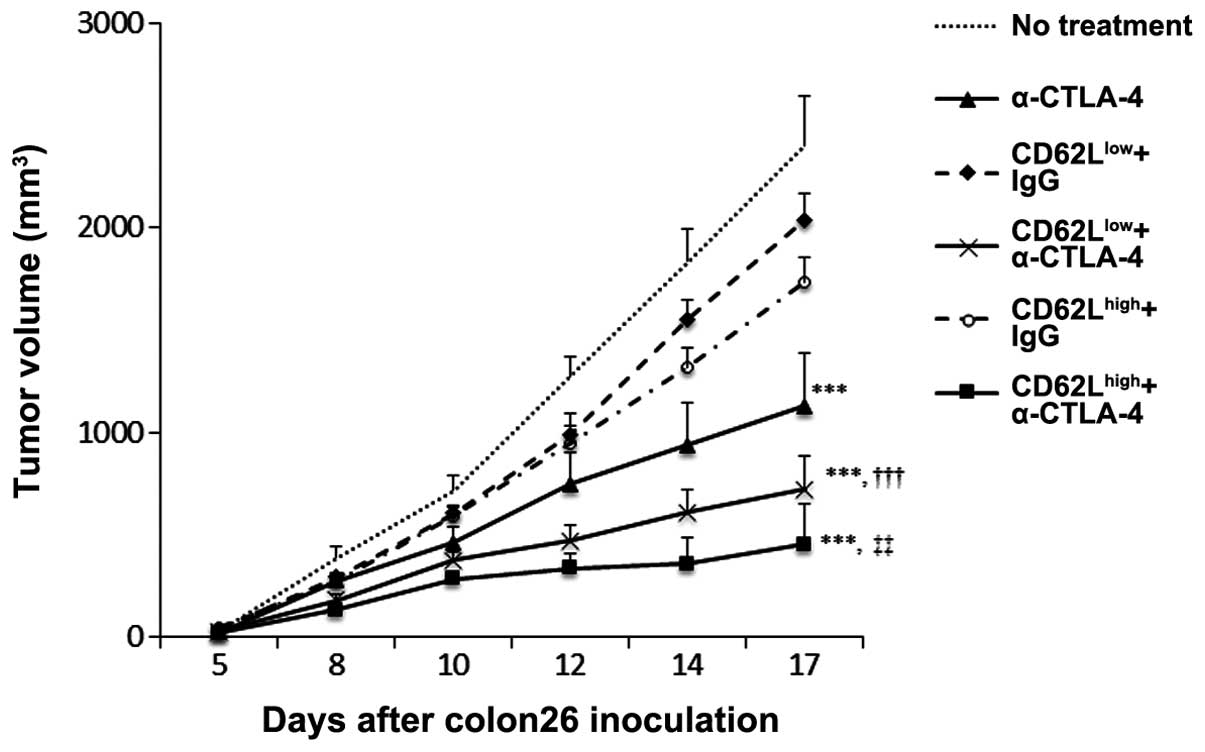
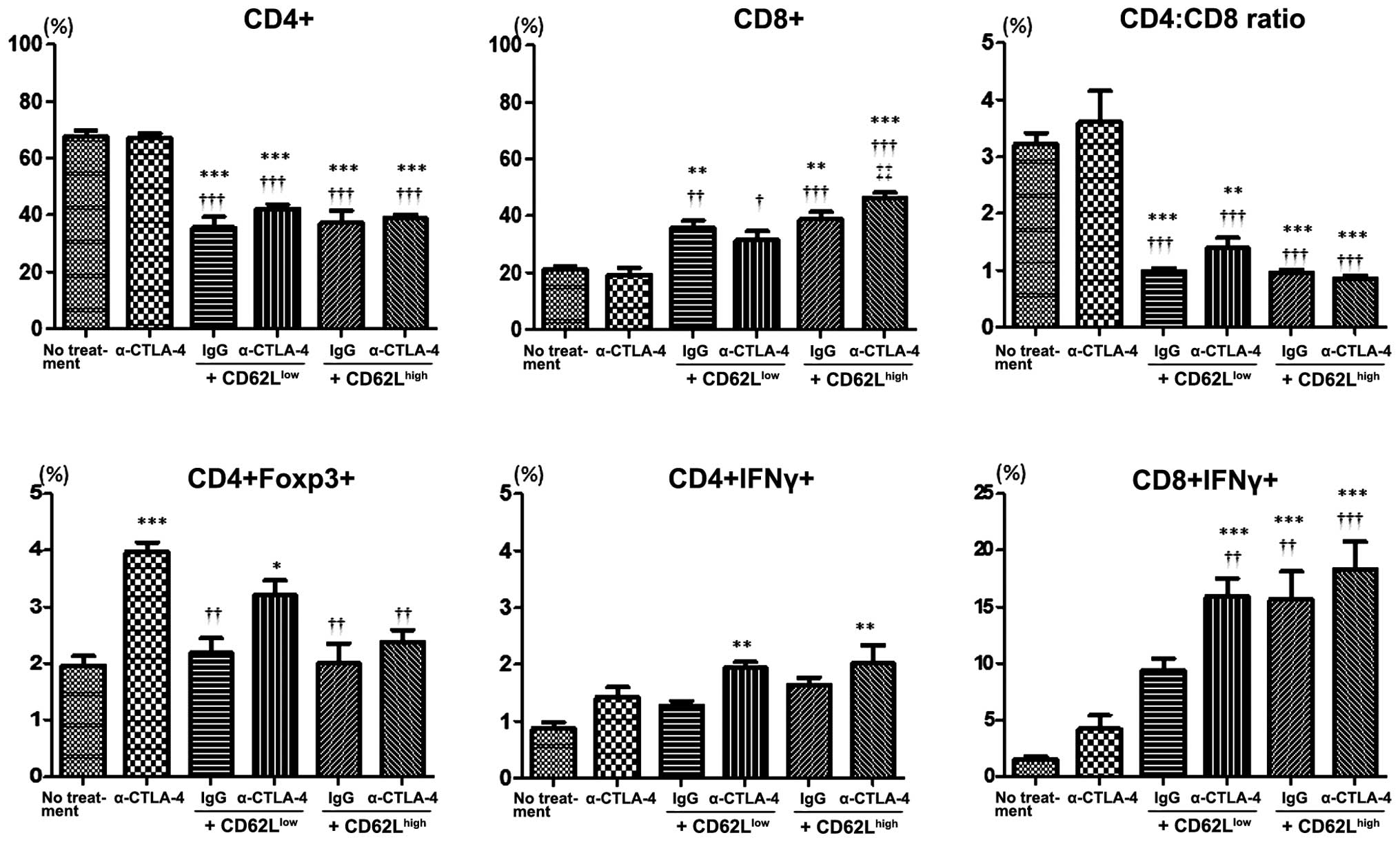
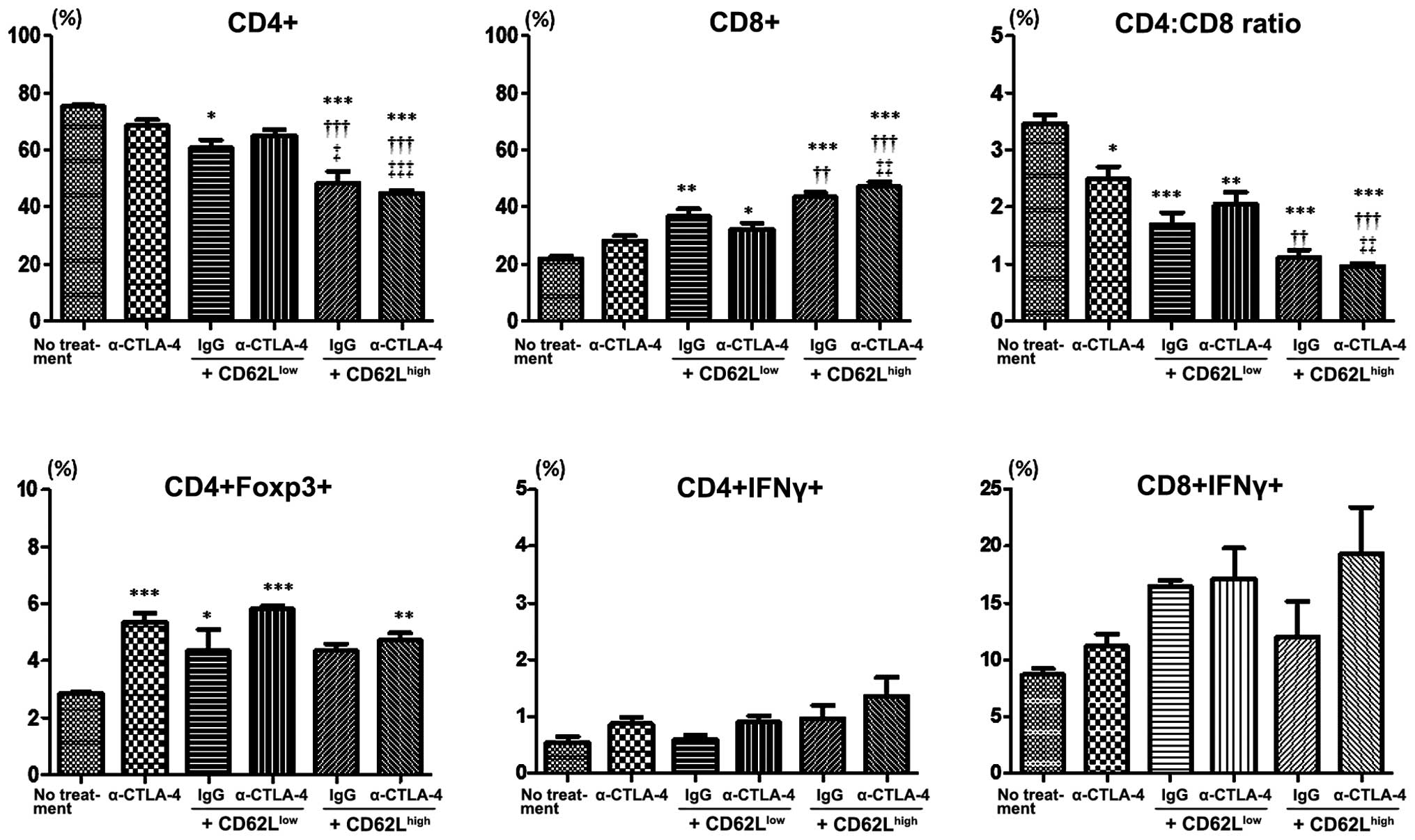
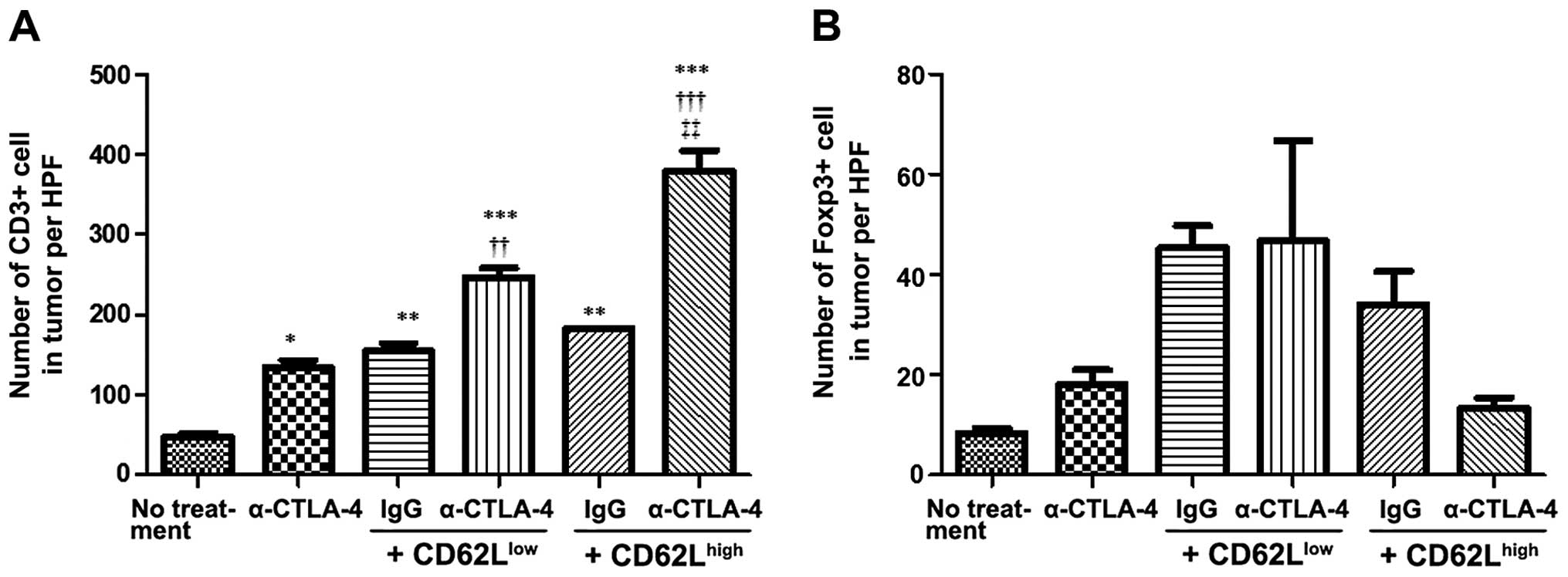
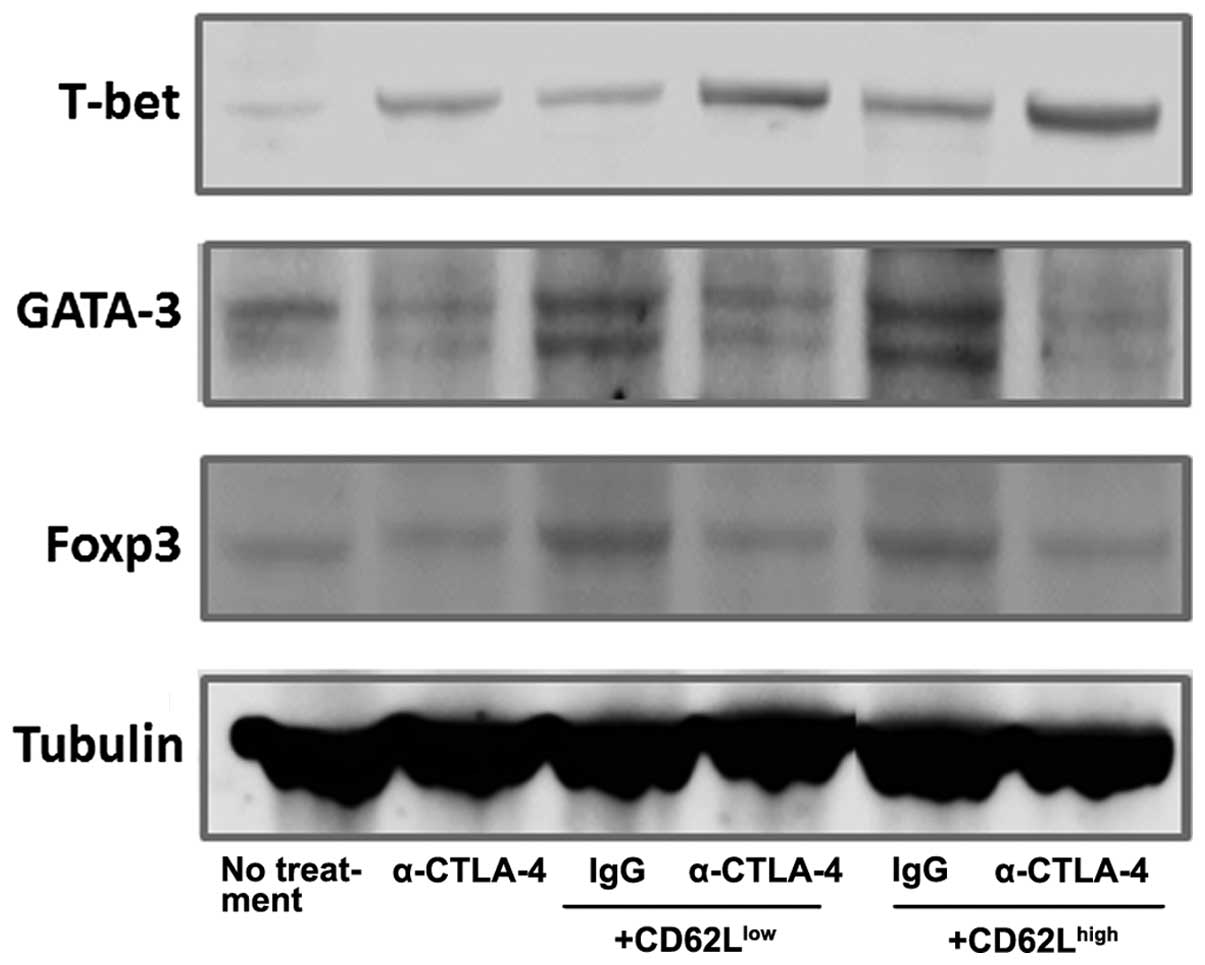
Although treatment with an antibody against cytotoxic T-lymphocyte-associated antigen 4 (CTLA-4) combined with multiple therapeutic interventions has been explored, the effect of combination therapy with CTLA-4 inhibition and adoptive T-cell therapy has not been determined. In the present study, our aim was to determine whether CTLA-4 inhibition, combined with adoptive transfer of T cells at different stages of differentiation, exhibits synergistic antitumor effects in a murine colon cancer model. Mice bearing subcutaneous tumors were administered adoptive T-cell transfer of CD62Lhigh or CD62Llow cells combined with an anti-CTLA-4 antibody (α-CTLA-4) or control immunoglobulin G. Subcutaneous tumors were harvested, and the antitumor effects and helper T-cell polarization were analyzed. CTLA-4 inhibition combined with CD62Lhigh cell administration showed the strongest antitumor effect. Combination therapy increased the number of CD3+ cells within the tumor. Moreover, CTLA-4 inhibition induced polarization of T cells infiltrating the tumor toward the T helper 1 lineage, and suppressed the frequency of regulatory T cells within the tumor, particularly in combination with CD62Lhigh T-cell transfer. This is the first report demonstrating that the efficacy of α-CTLA-4 and adoptive T-cell transfer combination therapy depends on the state of differentiation of the transferred T cells. Our data support the notion that a combination of α-CTLA-4 and adoptive T-cell transfer containing an abundance of naïve phenotype cells could potentially exert antitumor effects in a clinical setting.
View Figures

Figure 1

Figure 2

Figure 3

Figure 4

Figure 5

View References

1 

Krummel MF and Allison JP: CTLA-4 engagement inhibits IL-2 accumulation and cell cycle progression upon activation of resting T cells. J Exp Med. 183:2533–2540. 1996. View Article : Google Scholar : PubMed/NCBI

2 

Alegre ML, Frauwirth KA and Thompson CB: T-cell regulation by CD28 and CTLA-4. Nat Rev Immunol. 1:220–228. 2001. View Article : Google Scholar

3 

Chambers CA, Sullivan TJ and Allison JP: Lymphoproliferation in CTLA-4-deficient mice is mediated by costimulation-dependent activation of CD4+ T cells. Immunity. 7:885–895. 1997. View Article : Google Scholar

4 

Greenwald RJ, Oosterwegel MA, van der Woude D, Kubal A, Mandelbrot DA, Boussiotis VA and Sharpe AH: CTLA-4 regulates cell cycle progression during a primary immune response. Eur J Immunol. 32:366–373. 2002. View Article : Google Scholar : PubMed/NCBI

5 

Waterhouse P, Penninger JM, Timms E, Wakeham A, Shahinian A, Lee KP, Thompson CB, Griesser H and Mak TW: Lymphoproliferative disorders with early lethality in mice deficient in Ctla-4. Science. 270:985–988. 1995. View Article : Google Scholar : PubMed/NCBI

6 

Ribas A, Kefford R, Marshall MA, et al: Phase III randomized clinical trial comparing tremelimumab with standard-of-care chemotherapy in patients with advanced melanoma. J Clin Oncol. 31:616–622. 2013. View Article : Google Scholar : PubMed/NCBI

7 

Hodi FS, O’Day SJ, McDermott DF, et al: Improved survival with ipilimumab in patients with metastatic melanoma. N Engl J Med. 363:711–723. 2010. View Article : Google Scholar : PubMed/NCBI

8 

Robert C, Thomas L, Bondarenko I, et al: Ipilimumab plus dacarbazine for previously untreated metastatic melanoma. N Engl J Med. 364:2517–2526. 2011. View Article : Google Scholar : PubMed/NCBI

9 

Grosso JF and Jure-Kunkel MN: CTLA-4 blockade in tumor models: An overview of preclinical and translational research. Cancer Immun. 13:52013.PubMed/NCBI

10 

Mokyr MB, Kalinichenko T, Gorelik L and Bluestone JA: Realization of the therapeutic potential of CTLA-4 blockade in low-dose chemotherapy-treated tumor-bearing mice. Cancer Res. 58:5301–5304. 1998.PubMed/NCBI

11 

Pilones KA, Kawashima N, Yang AM, Babb JS, Formenti SC and Demaria S: Invariant natural killer T cells regulate breast cancer response to radiation and CTLA-4 blockade. Clin Cancer Res. 15:597–606. 2009. View Article : Google Scholar : PubMed/NCBI

12 

Demaria S, Kawashima N, Yang AM, Devitt ML, Babb JS, Allison JP and Formenti SC: Immune-mediated inhibition of metastases after treatment with local radiation and CTLA-4 blockade in a mouse model of breast cancer. Clin Cancer Res. 11:728–734. 2005.PubMed/NCBI

13 

Waitz R, Solomon SB, Petre EN, Trumble AE, Fassò M, Norton L and Allison JP: Potent induction of tumor immunity by combining tumor cryoablation with anti-CTLA-4 therapy. Cancer Res. 72:430–439. 2012. View Article : Google Scholar

14 

Kwon ED, Foster BA, Hurwitz AA, Madias C, Allison JP, Greenberg NM and Burg MB: Elimination of residual metastatic prostate cancer after surgery and adjunctive cytotoxic T lymphocyte-associated antigen 4 (CTLA-4) blockade immunotherapy. Proc Natl Acad Sci USA. 96:15074–15079. 1999. View Article : Google Scholar : PubMed/NCBI

15 

Hurwitz AA, Yu TF, Leach DR and Allison JP: CTLA-4 blockade synergizes with tumor-derived granulocyte-macrophage colony-stimulating factor for treatment of an experimental mammary carcinoma. Proc Natl Acad Sci USA. 95:10067–10071. 1998. View Article : Google Scholar : PubMed/NCBI

16 

Pedersen AE, Buus S and Claesson MH: Treatment of transplanted CT26 tumour with dendritic cell vaccine in combination with blockade of vascular endothelial growth factor receptor 2 and CTLA-4. Cancer Lett. 235:229–238. 2006. View Article : Google Scholar

17 

Met O, Wang M, Pedersen AE, Nissen MH, Buus S and Claesson MH: The effect of a therapeutic dendritic cell-based cancer vaccination depends on the blockage of CTLA-4 signaling. Cancer Lett. 231:247–256. 2006. View Article : Google Scholar : PubMed/NCBI

18 

Davila E, Kennedy R and Celis E: Generation of antitumor immunity by cytotoxic T lymphocyte epitope peptide vaccination, CpG-oligodeoxynucleotide adjuvant, and CTLA-4 blockade. Cancer Res. 63:3281–3288. 2003.PubMed/NCBI

19 

Daftarian P, Song GY, Ali S, Faynsod M, Longmate J, Diamond DJ and Ellenhorn JD: Two distinct pathways of immuno-modulation improve potency of p53 immunization in rejecting established tumors. Cancer Res. 64:5407–5414. 2004. View Article : Google Scholar : PubMed/NCBI

20 

Kocak E, Lute K, Chang X, et al: Combination therapy with anti-CTL antigen-4 and anti-4-1BB antibodies enhances cancer immunity and reduces autoimmunity. Cancer Res. 66:7276–7284. 2006. View Article : Google Scholar : PubMed/NCBI

21 

Curran MA, Montalvo W, Yagita H and Allison JP: PD-1 and CTLA-4 combination blockade expands infiltrating T cells and reduces regulatory T and myeloid cells within B16 melanoma tumors. Proc Natl Acad Sci USA. 107:4275–4280. 2010. View Article : Google Scholar : PubMed/NCBI

22 

Gattinoni L, Klebanoff CA, Palmer DC, Wrzesinski C, Kerstann K, Yu Z, Finkelstein SE, Theoret MR, Rosenberg SA and Restifo NP: Acquisition of full effector function in vitro paradoxically impairs the in vivo antitumor efficacy of adoptively transferred CD8+ T cells. J Clin Invest. 115:1616–1626. 2005. View Article : Google Scholar : PubMed/NCBI

23 

Huang J, Khong HT, Dudley ME, El-Gamil M, Li YF, Rosenberg SA and Robbins PF: Survival, persistence, and progressive differentiation of adoptively transferred tumor-reactive T cells associated with tumor regression. J Immunother. 28:258–267. 2005. View Article : Google Scholar : PubMed/NCBI

24 

Watanabe A, Hara M, Chosa E, Nakamura K, Sekiya R, Shimizu T and Onitsuka T: Combination of adoptive cell transfer and antibody injection can eradicate established tumors in mice - an in vivo study using anti-OX40mAb, anti-CD25mAb and anti-CTLA4mAb-. Immunopharmacol Immunotoxicol. 32:238–245. 2010. View Article : Google Scholar

25 

Simpson TR, Li F, Montalvo-Ortiz W, et al: Fc-dependent depletion of tumor-infiltrating regulatory T cells co-defines the efficacy of anti-CTLA-4 therapy against melanoma. J Exp Med. 210:1695–1710. 2013. View Article : Google Scholar : PubMed/NCBI

26 

Selby MJ, Engelhardt JJ, Quigley M, Henning KA, Chen T, Srinivasan M and Korman AJ: Anti-CTLA-4 antibodies of IgG2a isotype enhance antitumor activity through reduction of intratumoral regulatory T cells. Cancer Immunol Res. 1:32–42. 2013. View Article : Google Scholar

27 

Takahashi T, Tagami T, Yamazaki S, Uede T, Shimizu J, Sakaguchi N, Mak TW and Sakaguchi S: Immunologic self-tolerance maintained by CD25+CD4+ regulatory T cells constitutively expressing cytotoxic T lymphocyte-associated antigen 4. J Exp Med. 192:303–310. 2000. View Article : Google Scholar : PubMed/NCBI

28 

Curran MA and Allison JP: Tumor vaccines expressing flt3 ligand synergize with ctla-4 blockade to reject preimplanted tumors. Cancer Res. 69:7747–7755. 2009. View Article : Google Scholar : PubMed/NCBI

29 

Liakou CI, Kamat A, Tang DN, Chen H, Sun J, Troncoso P, Logothetis C and Sharma P: CTLA-4 blockade increases IFNγ-producing CD4+ICOShi cells to shift the ratio of effector to regulatory T cells in cancer patients. Proc Natl Acad Sci USA. 105:14987–14992. 2008. View Article : Google Scholar

30 

Hodi FS, Butler M, Oble DA, et al: Immunologic and clinical effects of antibody blockade of cytotoxic T lymphocyte-associated antigen 4 in previously vaccinated cancer patients. Proc Natl Acad Sci USA. 105:3005–3010. 2008. View Article : Google Scholar : PubMed/NCBI

31 

Bluestone JA and Abbas AK: Natural versus adaptive regulatory T cells. Nat Rev Immunol. 3:253–257. 2003. View Article : Google Scholar : PubMed/NCBI

32 

Akbar AN, Taams LS, Salmon M and Vukmanovic-Stejic M: The peripheral generation of CD4+ CD25+ regulatory T cells. Immunology. 109:319–325. 2003. View Article : Google Scholar : PubMed/NCBI

33 

Chen W, Jin W, Hardegen N, Lei KJ, Li L, Marinos N, McGrady G and Wahl SM: Conversion of peripheral CD4+CD25− naive T cells to CD4+CD25+ regulatory T cells by TGF-β induction of transcription factor Foxp3. J Exp Med. 198:1875–1886. 2003. View Article : Google Scholar : PubMed/NCBI

34 

Ikemoto T, Yamaguchi T, Morine Y, Imura S, Soejima Y, Fujii M, Maekawa Y, Yasutomo K and Shimada M: Clinical roles of increased populations of Foxp3+CD4+ T cells in peripheral blood from advanced pancreatic cancer patients. Pancreas. 33:386–390. 2006. View Article : Google Scholar : PubMed/NCBI

35 

van Elsas A, Hurwitz AA and Allison JP: Combination immunotherapy of B16 melanoma using anti-cytotoxic T lymphocyte-associated antigen 4 (CTLA-4) and granulocyte/macrophage colony-stimulating factor (GM-CSF)-producing vaccines induces rejection of subcutaneous and metastatic tumors accompanied by autoimmune depigmentation. J Exp Med. 190:355–366. 1999. View Article : Google Scholar : PubMed/NCBI

36 

Perrin PJ, Maldonado JH, Davis TA, June CH and Racke MK: CTLA-4 blockade enhances clinical disease and cytokine production during experimental allergic encephalomyelitis. J Immunol. 157:1333–1336. 1996.PubMed/NCBI

37 

Karandikar NJ, Vanderlugt CL, Walunas TL, Miller SD and Bluestone JA: CTLA-4: A negative regulator of autoimmune disease. J Exp Med. 184:783–788. 1996. View Article : Google Scholar : PubMed/NCBI

38 

Ouchi N, Kihara S, Arita Y, et al: Novel modulator for endothelial adhesion molecules: Adipocyte-derived plasma protein adiponectin. Circulation. 100:2473–2476. 1999. View Article : Google Scholar : PubMed/NCBI

39 

Ishikawa T, Kokura S, Enoki T, et al: Phase I clinical trial of fibronectin CH296-stimulated T cell therapy in patients with advanced cancer. PLoS One. 9:e837862014. View Article : Google Scholar : PubMed/NCBI

Related Articles

  • Abstract
  • View
  • Download
  • Twitter
Copy and paste a formatted citation
Spandidos Publications style
Ishikawa T, Adachi S, Okayama T, Kokura S, Mizushima K, Doi T, Matsuyama T, Sakamoto N, Katada K, Kamada K, Kamada K, et al: Cytotoxic T lymphocyte-associated antigen 4 inhibition increases the antitumor activity of adoptive T-cell therapy when carried out with naïve rather than differentiated T cells. Oncol Rep 33: 2545-2552, 2015.
APA
Ishikawa, T., Adachi, S., Okayama, T., Kokura, S., Mizushima, K., Doi, T. ... Yoshikawa, T. (2015). Cytotoxic T lymphocyte-associated antigen 4 inhibition increases the antitumor activity of adoptive T-cell therapy when carried out with naïve rather than differentiated T cells. Oncology Reports, 33, 2545-2552. https://doi.org/10.3892/or.2015.3815
MLA
Ishikawa, T., Adachi, S., Okayama, T., Kokura, S., Mizushima, K., Doi, T., Matsuyama, T., Sakamoto, N., Katada, K., Kamada, K., Uchiyama, K., Handa, O., Takagi, T., Naito, Y., Itoh, Y., Yoshikawa, T."Cytotoxic T lymphocyte-associated antigen 4 inhibition increases the antitumor activity of adoptive T-cell therapy when carried out with naïve rather than differentiated T cells". Oncology Reports 33.5 (2015): 2545-2552.
Chicago
Ishikawa, T., Adachi, S., Okayama, T., Kokura, S., Mizushima, K., Doi, T., Matsuyama, T., Sakamoto, N., Katada, K., Kamada, K., Uchiyama, K., Handa, O., Takagi, T., Naito, Y., Itoh, Y., Yoshikawa, T."Cytotoxic T lymphocyte-associated antigen 4 inhibition increases the antitumor activity of adoptive T-cell therapy when carried out with naïve rather than differentiated T cells". Oncology Reports 33, no. 5 (2015): 2545-2552. https://doi.org/10.3892/or.2015.3815
Copy and paste a formatted citation
x
Spandidos Publications style
Ishikawa T, Adachi S, Okayama T, Kokura S, Mizushima K, Doi T, Matsuyama T, Sakamoto N, Katada K, Kamada K, Kamada K, et al: Cytotoxic T lymphocyte-associated antigen 4 inhibition increases the antitumor activity of adoptive T-cell therapy when carried out with naïve rather than differentiated T cells. Oncol Rep 33: 2545-2552, 2015.
APA
Ishikawa, T., Adachi, S., Okayama, T., Kokura, S., Mizushima, K., Doi, T. ... Yoshikawa, T. (2015). Cytotoxic T lymphocyte-associated antigen 4 inhibition increases the antitumor activity of adoptive T-cell therapy when carried out with naïve rather than differentiated T cells. Oncology Reports, 33, 2545-2552. https://doi.org/10.3892/or.2015.3815
MLA
Ishikawa, T., Adachi, S., Okayama, T., Kokura, S., Mizushima, K., Doi, T., Matsuyama, T., Sakamoto, N., Katada, K., Kamada, K., Uchiyama, K., Handa, O., Takagi, T., Naito, Y., Itoh, Y., Yoshikawa, T."Cytotoxic T lymphocyte-associated antigen 4 inhibition increases the antitumor activity of adoptive T-cell therapy when carried out with naïve rather than differentiated T cells". Oncology Reports 33.5 (2015): 2545-2552.
Chicago
Ishikawa, T., Adachi, S., Okayama, T., Kokura, S., Mizushima, K., Doi, T., Matsuyama, T., Sakamoto, N., Katada, K., Kamada, K., Uchiyama, K., Handa, O., Takagi, T., Naito, Y., Itoh, Y., Yoshikawa, T."Cytotoxic T lymphocyte-associated antigen 4 inhibition increases the antitumor activity of adoptive T-cell therapy when carried out with naïve rather than differentiated T cells". Oncology Reports 33, no. 5 (2015): 2545-2552. https://doi.org/10.3892/or.2015.3815
Follow us
  • Twitter
  • LinkedIn
  • Facebook
About
  • Spandidos Publications
  • Careers
  • Cookie Policy
  • Privacy Policy
How can we help?
  • Help
  • Live Chat
  • Contact
  • Email to our Support Team