Spandidos Publications Logo
  • About
    • About Spandidos
    • Aims and Scopes
    • Abstracting and Indexing
    • Editorial Policies
    • Reprints and Permissions
    • Job Opportunities
    • Terms and Conditions
    • Contact
  • Journals
    • All Journals
    • Oncology Letters
      • Oncology Letters
      • Information for Authors
      • Editorial Policies
      • Editorial Board
      • Aims and Scope
      • Abstracting and Indexing
      • Bibliographic Information
      • Archive
    • International Journal of Oncology
      • International Journal of Oncology
      • Information for Authors
      • Editorial Policies
      • Editorial Board
      • Aims and Scope
      • Abstracting and Indexing
      • Bibliographic Information
      • Archive
    • Molecular and Clinical Oncology
      • Molecular and Clinical Oncology
      • Information for Authors
      • Editorial Policies
      • Editorial Board
      • Aims and Scope
      • Abstracting and Indexing
      • Bibliographic Information
      • Archive
    • Experimental and Therapeutic Medicine
      • Experimental and Therapeutic Medicine
      • Information for Authors
      • Editorial Policies
      • Editorial Board
      • Aims and Scope
      • Abstracting and Indexing
      • Bibliographic Information
      • Archive
    • International Journal of Molecular Medicine
      • International Journal of Molecular Medicine
      • Information for Authors
      • Editorial Policies
      • Editorial Board
      • Aims and Scope
      • Abstracting and Indexing
      • Bibliographic Information
      • Archive
    • Biomedical Reports
      • Biomedical Reports
      • Information for Authors
      • Editorial Policies
      • Editorial Board
      • Aims and Scope
      • Abstracting and Indexing
      • Bibliographic Information
      • Archive
    • Oncology Reports
      • Oncology Reports
      • Information for Authors
      • Editorial Policies
      • Editorial Board
      • Aims and Scope
      • Abstracting and Indexing
      • Bibliographic Information
      • Archive
    • Molecular Medicine Reports
      • Molecular Medicine Reports
      • Information for Authors
      • Editorial Policies
      • Editorial Board
      • Aims and Scope
      • Abstracting and Indexing
      • Bibliographic Information
      • Archive
    • World Academy of Sciences Journal
      • World Academy of Sciences Journal
      • Information for Authors
      • Editorial Policies
      • Editorial Board
      • Aims and Scope
      • Abstracting and Indexing
      • Bibliographic Information
      • Archive
    • International Journal of Functional Nutrition
      • International Journal of Functional Nutrition
      • Information for Authors
      • Editorial Policies
      • Editorial Board
      • Aims and Scope
      • Abstracting and Indexing
      • Bibliographic Information
      • Archive
    • International Journal of Epigenetics
      • International Journal of Epigenetics
      • Information for Authors
      • Editorial Policies
      • Editorial Board
      • Aims and Scope
      • Abstracting and Indexing
      • Bibliographic Information
      • Archive
    • Medicine International
      • Medicine International
      • Information for Authors
      • Editorial Policies
      • Editorial Board
      • Aims and Scope
      • Abstracting and Indexing
      • Bibliographic Information
      • Archive
  • Articles
  • Information
    • Information for Authors
    • Information for Reviewers
    • Information for Librarians
    • Information for Advertisers
    • Conferences
  • Language Editing
Spandidos Publications Logo
  • About
    • About Spandidos
    • Aims and Scopes
    • Abstracting and Indexing
    • Editorial Policies
    • Reprints and Permissions
    • Job Opportunities
    • Terms and Conditions
    • Contact
  • Journals
    • All Journals
    • Biomedical Reports
      • Information for Authors
      • Editorial Policies
      • Editorial Board
      • Aims and Scope
      • Abstracting and Indexing
      • Bibliographic Information
      • Archive
    • Experimental and Therapeutic Medicine
      • Information for Authors
      • Editorial Policies
      • Editorial Board
      • Aims and Scope
      • Abstracting and Indexing
      • Bibliographic Information
      • Archive
    • International Journal of Epigenetics
      • Information for Authors
      • Editorial Policies
      • Editorial Board
      • Aims and Scope
      • Abstracting and Indexing
      • Bibliographic Information
      • Archive
    • International Journal of Functional Nutrition
      • Information for Authors
      • Editorial Policies
      • Editorial Board
      • Aims and Scope
      • Abstracting and Indexing
      • Bibliographic Information
      • Archive
    • International Journal of Molecular Medicine
      • Information for Authors
      • Editorial Policies
      • Editorial Board
      • Aims and Scope
      • Abstracting and Indexing
      • Bibliographic Information
      • Archive
    • International Journal of Oncology
      • Information for Authors
      • Editorial Policies
      • Editorial Board
      • Aims and Scope
      • Abstracting and Indexing
      • Bibliographic Information
      • Archive
    • Medicine International
      • Information for Authors
      • Editorial Policies
      • Editorial Board
      • Aims and Scope
      • Abstracting and Indexing
      • Bibliographic Information
      • Archive
    • Molecular and Clinical Oncology
      • Information for Authors
      • Editorial Policies
      • Editorial Board
      • Aims and Scope
      • Abstracting and Indexing
      • Bibliographic Information
      • Archive
    • Molecular Medicine Reports
      • Information for Authors
      • Editorial Policies
      • Editorial Board
      • Aims and Scope
      • Abstracting and Indexing
      • Bibliographic Information
      • Archive
    • Oncology Letters
      • Information for Authors
      • Editorial Policies
      • Editorial Board
      • Aims and Scope
      • Abstracting and Indexing
      • Bibliographic Information
      • Archive
    • Oncology Reports
      • Information for Authors
      • Editorial Policies
      • Editorial Board
      • Aims and Scope
      • Abstracting and Indexing
      • Bibliographic Information
      • Archive
    • World Academy of Sciences Journal
      • Information for Authors
      • Editorial Policies
      • Editorial Board
      • Aims and Scope
      • Abstracting and Indexing
      • Bibliographic Information
      • Archive
  • Articles
  • Information
    • For Authors
    • For Reviewers
    • For Librarians
    • For Advertisers
    • Conferences
  • Language Editing
Login Register Submit
  • This site uses cookies
  • You can change your cookie settings at any time by following the instructions in our Cookie Policy. To find out more, you may read our Privacy Policy.

    I agree
Search articles by DOI, keyword, author or affiliation
Search
Advanced Search
presentation
Oncology Reports
Join Editorial Board Propose a Special Issue
Print ISSN: 1021-335X Online ISSN: 1791-2431
Journal Cover
August-2015 Volume 34 Issue 2

Full Size Image

Sign up for eToc alerts
Recommend to Library

Journals

International Journal of Molecular Medicine

International Journal of Molecular Medicine

International Journal of Molecular Medicine is an international journal devoted to molecular mechanisms of human disease.

International Journal of Oncology

International Journal of Oncology

International Journal of Oncology is an international journal devoted to oncology research and cancer treatment.

Molecular Medicine Reports

Molecular Medicine Reports

Covers molecular medicine topics such as pharmacology, pathology, genetics, neuroscience, infectious diseases, molecular cardiology, and molecular surgery.

Oncology Reports

Oncology Reports

Oncology Reports is an international journal devoted to fundamental and applied research in Oncology.

Experimental and Therapeutic Medicine

Experimental and Therapeutic Medicine

Experimental and Therapeutic Medicine is an international journal devoted to laboratory and clinical medicine.

Oncology Letters

Oncology Letters

Oncology Letters is an international journal devoted to Experimental and Clinical Oncology.

Biomedical Reports

Biomedical Reports

Explores a wide range of biological and medical fields, including pharmacology, genetics, microbiology, neuroscience, and molecular cardiology.

Molecular and Clinical Oncology

Molecular and Clinical Oncology

International journal addressing all aspects of oncology research, from tumorigenesis and oncogenes to chemotherapy and metastasis.

World Academy of Sciences Journal

World Academy of Sciences Journal

Multidisciplinary open-access journal spanning biochemistry, genetics, neuroscience, environmental health, and synthetic biology.

International Journal of Functional Nutrition

International Journal of Functional Nutrition

Open-access journal combining biochemistry, pharmacology, immunology, and genetics to advance health through functional nutrition.

International Journal of Epigenetics

International Journal of Epigenetics

Publishes open-access research on using epigenetics to advance understanding and treatment of human disease.

Medicine International

Medicine International

An International Open Access Journal Devoted to General Medicine.

Journal Cover
August-2015 Volume 34 Issue 2

Full Size Image

Sign up for eToc alerts
Recommend to Library

  • Article
  • Citations
    • Cite This Article
    • Download Citation
    • Create Citation Alert
    • Remove Citation Alert
    • Cited By
  • Similar Articles
    • Related Articles (in Spandidos Publications)
    • Similar Articles (Google Scholar)
    • Similar Articles (PubMed)
  • Download PDF
  • Download XML
  • View XML
Article

Prostaglandin E2 promotes human cholangiocarcinoma cell proliferation, migration and invasion through the upregulation of β-catenin expression via EP3-4 receptor

  • Authors:
    • Mingzhan Du
    • Feng Shi
    • Hai Zhang
    • Shukai Xia
    • Min Zhang
    • Juan Ma
    • Xiaoming Bai
    • Li Zhang
    • Yipin Wang
    • Shanyu Cheng
    • Qinyi Yang
    • Jing Leng
  • View Affiliations / Copyright

    Affiliations: Cancer Center, Department of Pathology, Nanjing Medical University, Nanjing, Jiangsu 210029, P.R. China
  • Pages: 715-726
    |
    Published online on: June 9, 2015
       https://doi.org/10.3892/or.2015.4043
  • Expand metrics +
Metrics: Total Views: 0 (Spandidos Publications: | PMC Statistics: )
Metrics: Total PDF Downloads: 0 (Spandidos Publications: | PMC Statistics: )
Cited By (CrossRef): 0 citations Loading Articles...

This article is mentioned in:


Abstract

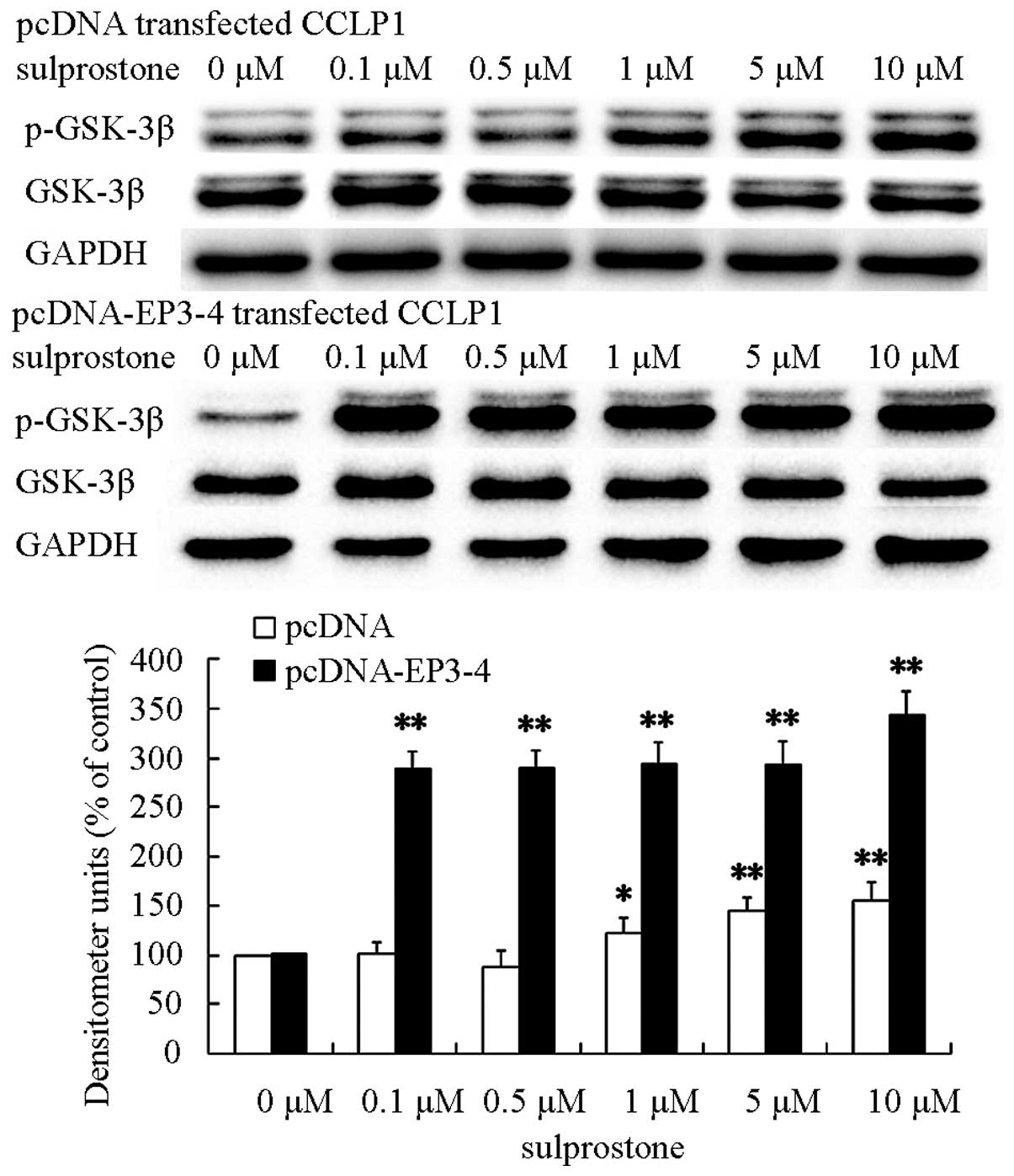
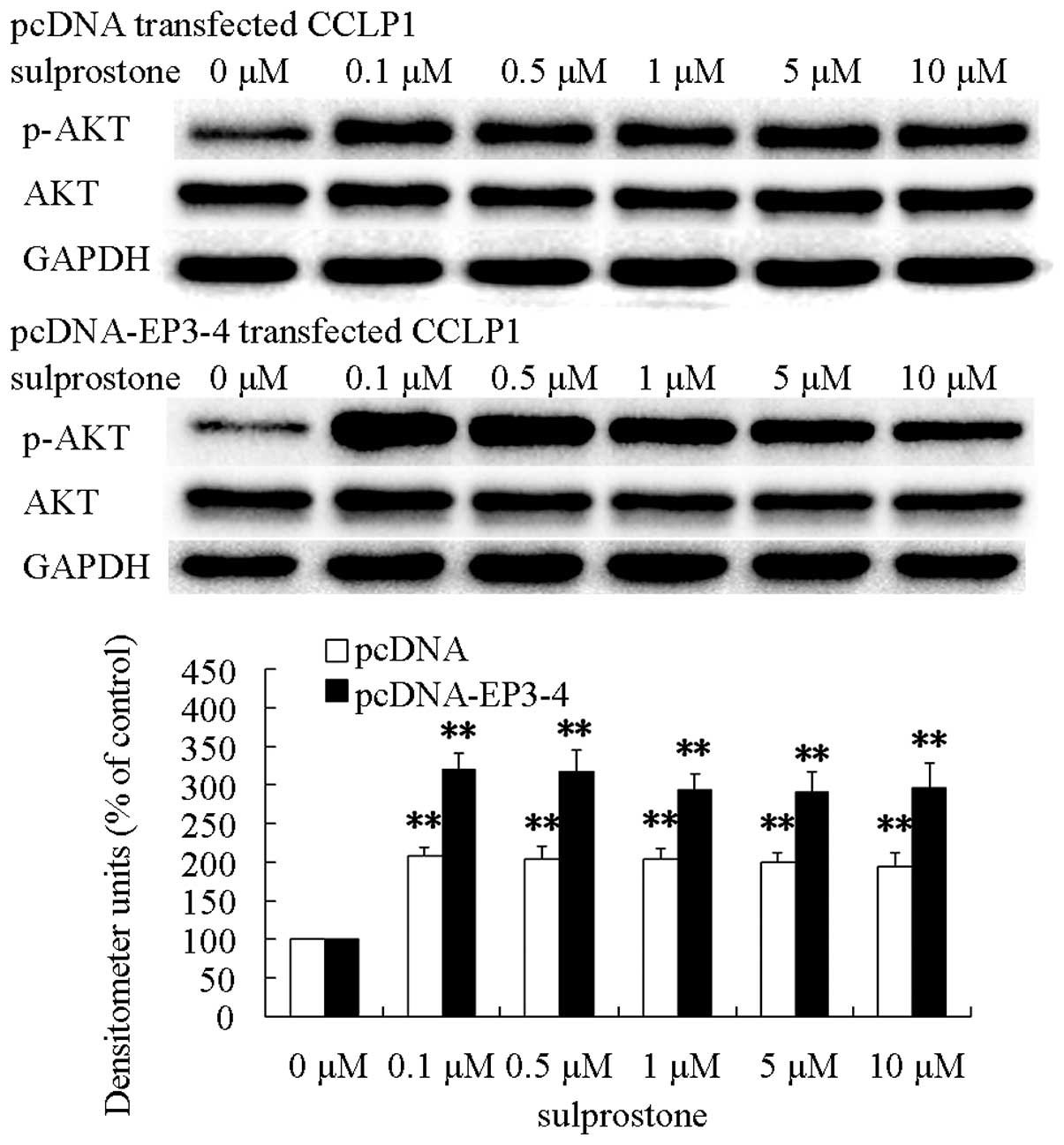
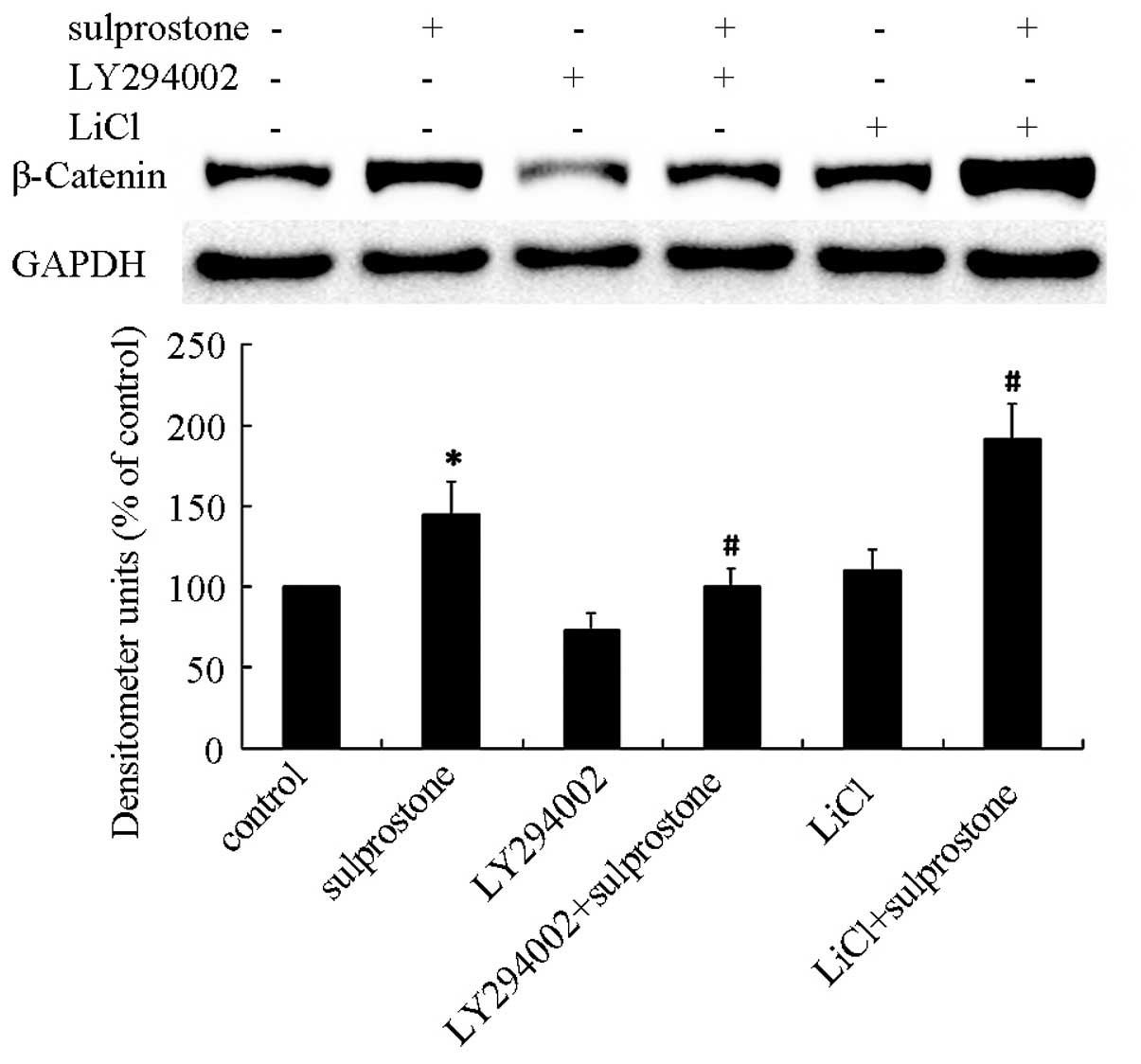
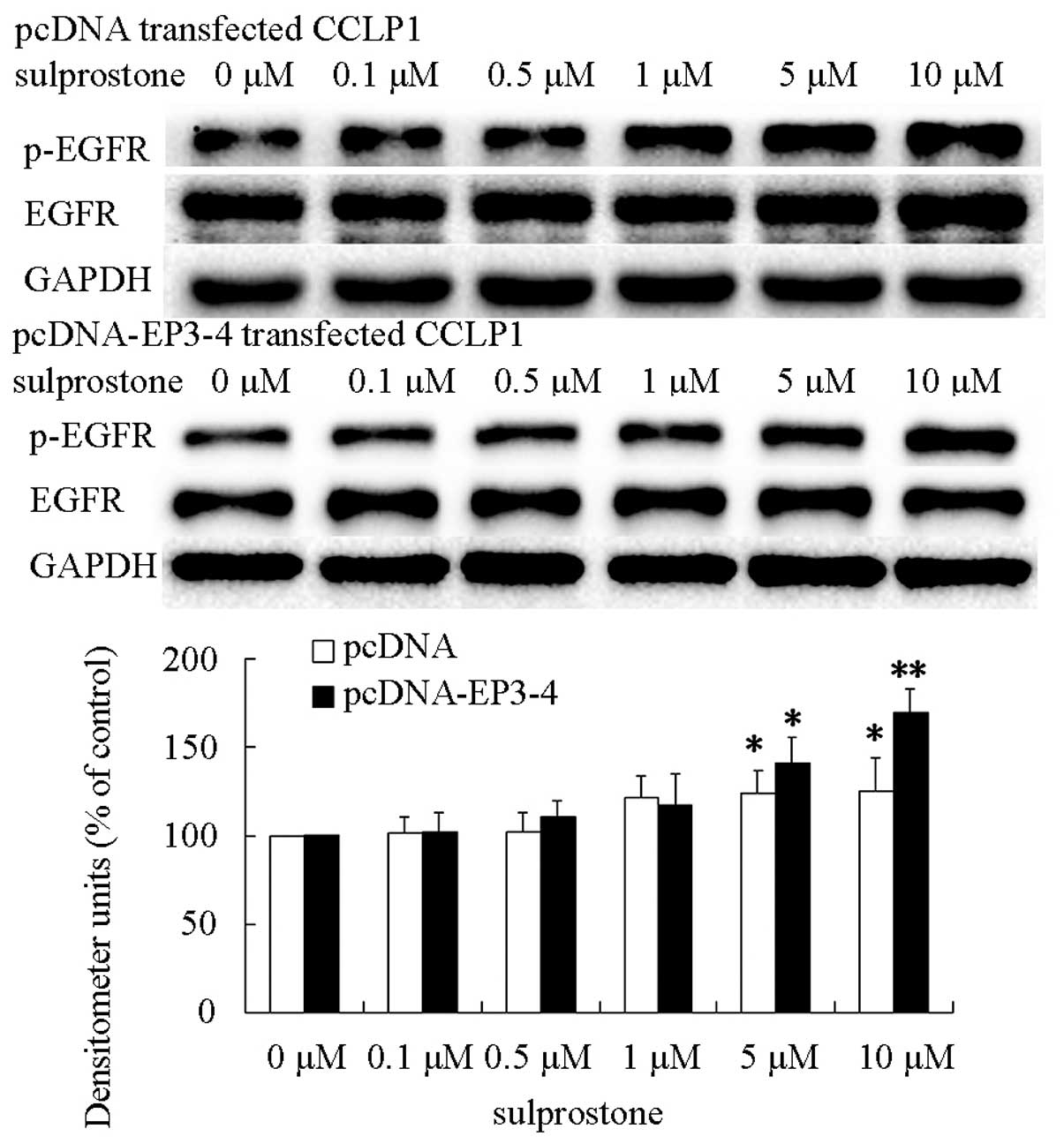
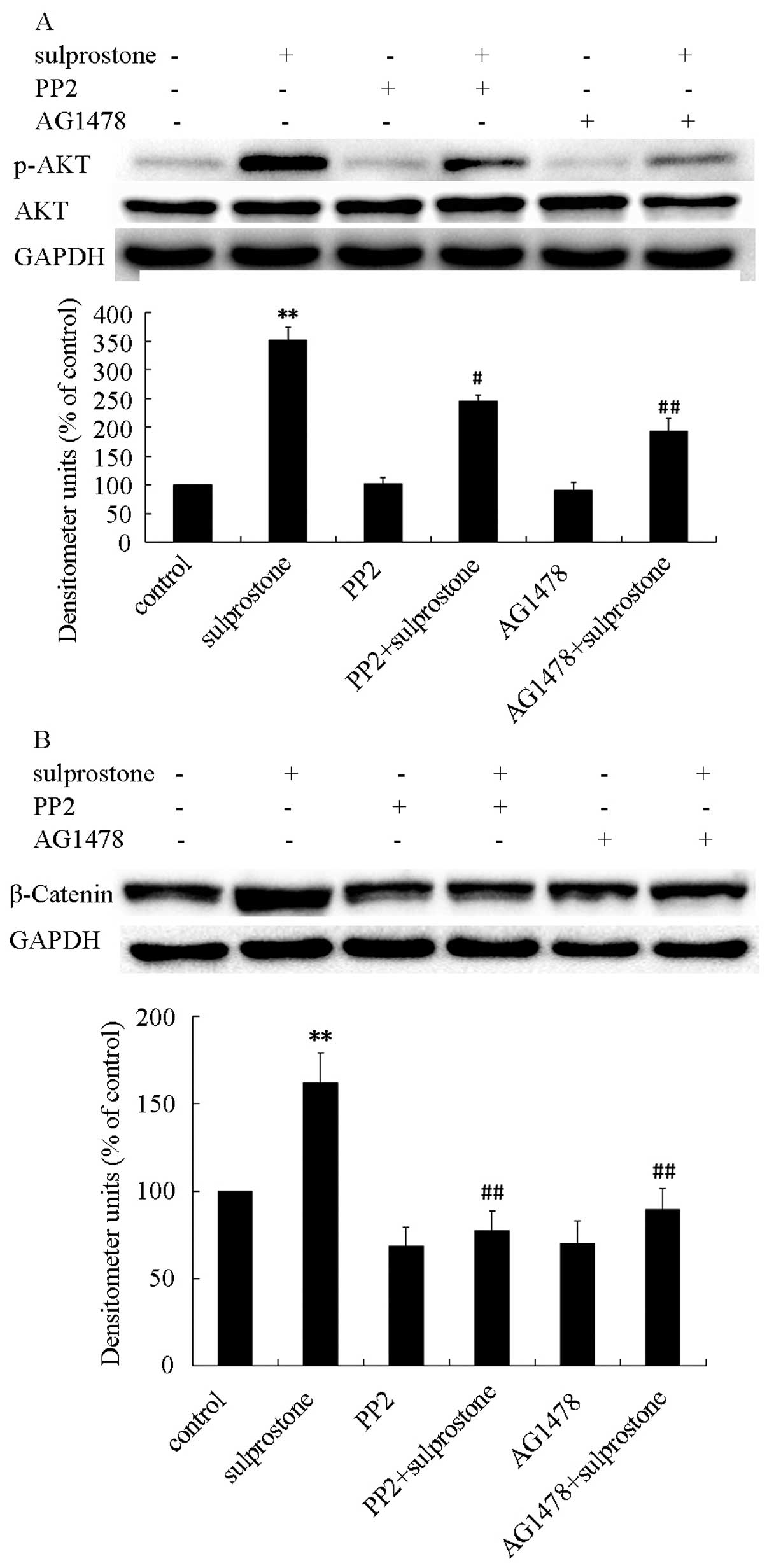
Prostaglandin E2 (PGE2) is involved in cholangiocarcinoma cell proliferation, migration and invasion through E prostanoid receptors, including EP1, EP2 and EP4. However, the functions and the mechanisms of those splice variants of EP3 receptors in promoting liver cancer cell growth and invasion remain to be elucidated. In our previous studies, four isoforms of EP3 receptors, EP3-4, EP3-5, EP3-6 and EP3-7 receptors, were detected in CCLP1 and HuCCT1 cells. However, the functions of these receptors in these cells have yet to be determined. It was reported that β-catenin is closely correlated with malignancy, including cholangiocarcinoma. The present study was designed to examine the effects of 4-7 isoforms of EP3 in promoting cholangiocarcinoma progression and the mechanisms by which PGE2 increases β-catenin protein via EP3 receptors. The results showed that PGE2 promotes cholangiocarcinoma progression via the upregulation of β-catenin protein, and the EP3-4 receptor pathway is mainly responsible for this regulation. These findings reveal that PGE2 upregulated the cholangiocarcinoma cell β-catenin protein through the EP3-4R/Src/EGFR/PI3K/AKT/GSK-3β pathway. The present study identified the functions of EP3 and the mechanisms by which PGE2 regulates β-catenin expression and promoted cholangiocarcinoma cell growth and invasion.
View Figures

Figure 1

Figure 2

Figure 3

Figure 4

Figure 5

Figure 6

Figure 7

Figure 8

Figure 9

Figure 10

Figure 11

Figure 12

Figure 13

View References

1 

Zou S, Li J, Zhou H, Frech C, Jiang X, Chu JS, Zhao X, Li Y, Li Q, Wang H, et al: Mutational landscape of intrahepatic cholangiocarcinoma. Nat Commun. 5:56962014. View Article : Google Scholar : PubMed/NCBI

2 

Ali SM, Clark CJ, Mounajjed T, Wu TT, Harmsen WS, Reid-Lombardo KM, Truty MJ, Kendrick ML, Farnell MB, Nagorney DM, et al: Model to predict survival after surgical resection of intrahepatic cholangiocarcinoma: the Mayo Clinic experience. HPB (Oxford). 7:244–250. 2014.

3 

Montrose DC, Nakanishi M, Murphy RC, Zarini S, McAleer JP, Vella AT and Rosenberg DW: The role of PGE in intestinal inflammation and tumorigenesis. Prostaglandins Other Lipid Mediat. 116–117C:26–36. 2014.

4 

Bai XM, Zhang W, Liu NB, Jiang H, Lou KX, Peng T, Ma J, Zhang L, Zhang H and Leng J: Focal adhesion kinase: Important to prostaglandin E2-mediated adhesion, migration and invasion in hepatocellular carcinoma cells. Oncol Rep. 21:129–136. 2009.

5 

Bai XM, Jiang H, Ding JX, Peng T, Ma J, Wang YH, Zhang L, Zhang H and Leng J: Prostaglandin E2 upregulates survivin expression via the EP1 receptor in hepatocellular carcinoma cells. Life Sci. 86:214–223. 2010. View Article : Google Scholar

6 

Zhang M, Zhang H, Cheng S, Zhang D, Xu Y, Bai X, Xia S, Zhang L, Ma J, Du M, et al: Prostaglandin E2 accelerates invasion by upregulating Snail in hepatocellular carcinoma cells. Tumour Biol. 35:7135–7145. 2014. View Article : Google Scholar : PubMed/NCBI

7 

Cheng SY, Zhang H, Zhang M, Xia SK, Bai XM, Zhang L, Ma J, Rong R, Wang YP, Du MZ, et al: Prostaglandin E2 receptor EP2 mediates Snail expression in hepatocellular carcinoma cells. Oncol Rep. 31:2099–2106. 2014.PubMed/NCBI

8 

Zhang H, Cheng S, Zhang M, Ma X, Zhang L, Wang Y, Rong R, Ma J, Xia S, Du M, et al: Prostaglandin E2 promotes hepatocellular carcinoma cell invasion through upregulation of YB-1 protein expression. Int J Oncol. 44:769–780. 2014.PubMed/NCBI

9 

Xia S, Ma J, Bai X, Zhang H, Cheng S, Zhang M, Zhang L, Du M, Wang Y, Li H, et al: Prostaglandin E2 promotes the cell growth and invasive ability of hepatocellular carcinoma cells by upregulating c-Myc expression via EP4 receptor and the PKA signaling pathway. Oncol Rep. 32:1521–1530. 2014.PubMed/NCBI

10 

Bai X, Wang J, Guo Y, Pan J, Yang Q, Zhang M, Li H, Zhang L, Ma J, Shi F, et al: Prostaglandin E2 stimulates β1-integrin expression in hepatocellular carcinoma through the EP1 receptor/PKC/NF-κB pathway. Sci Rep. 4:65382014. View Article : Google Scholar

11 

Sun B, Rong R, Jiang H, Zhang H, Wang Y, Bai X, Zhang M, Ma J, Xia S, Shu W, et al: Prostaglandin E2 receptor EP1 phosphorylate CREB and mediates MMP2 expression in human cholangiocarcinoma cells. Mol Cell Biochem. 378:195–203. 2013. View Article : Google Scholar : PubMed/NCBI

12 

Ma J, Chen M, Xia SK, Shu W, Guo Y, Wang YH, Xu Y, Bai XM, Zhang L, Zhang H, et al: Prostaglandin E2 promotes liver cancer cell growth by the upregulation of FUSE-binding protein 1 expression. Int J Oncol. 42:1093–1104. 2013.PubMed/NCBI

13 

Cao J, Yang X, Li WT, Zhao CL and Lv SJ: Silencing of COX-2 by RNAi modulates epithelial-mesenchymal transition in breast cancer cells partially dependent on the PGE2 cascade. Asian Pac J Cancer Prev. 15:9967–9972. 2014. View Article : Google Scholar : PubMed/NCBI

14 

Dufour M, Faes S, Dormond-Meuwly A, Demartines N and Dormond O: PGE2-induced colon cancer growth is mediated by mTORC1. Biochem Biophys Res Commun. 451:587–591. 2014. View Article : Google Scholar : PubMed/NCBI

15 

Qiu X, Cheng JC, Chang HM and Leung PC: COX2 and PGE2 mediate EGF-induced E-cadherin-independent human ovarian cancer cell invasion. Endocr Relat Cancer. 21:533–543. 2014. View Article : Google Scholar : PubMed/NCBI

16 

Wu T: Cyclooxygenase-2 and prostaglandin signaling in cholangiocarcinoma. Biochim Biophys Acta. 1755:135–150. 2005.PubMed/NCBI

17 

Kim SO, Dozier BL, Kerry JA and Duffy DM: EP3 receptor isoforms are differentially expressed in subpopulations of primate granulosa cells and couple to unique G-proteins. Reproduction. 146:625–635. 2013. View Article : Google Scholar : PubMed/NCBI

18 

Lemieux E, Cagnol S, Beaudry K, Carrier J and Rivard N: Oncogenic KRAS signalling promotes the Wnt/β-catenin pathway through LRP6 in colorectal cancer. Oncogene. Dec 15–2014, http://dx.doi.org/10.1038/onc.2014.416. View Article : Google Scholar

19 

Rath G, Jawanjal P, Salhan S, Nalliah M and Dhawan I: Clinical significance of inactivated glycogen synthase kinase 3beta in HPV-associated cervical cancer: Relationship with Wnt/beta-catenin pathway activation. Am J Reprod Immunol. 73:460–478. 2015. View Article : Google Scholar

20 

Vatansever HS, Gumus B, Aydogdu O, Sivrikoz ON, Türköz-Uluer E, Kivanç M, Ateşçi YZ and Bugdayci H: The role of stem/progenitor cells and Wnt/β-catenin signaling pathway in the patients with prostate cancer. Minerva Urol Nefrol. 66:249–255. 2014.PubMed/NCBI

21 

Thompson MD and Monga SP: WNT/beta-catenin signaling in liver health and disease. Hepatology. 45:1298–1305. 2007. View Article : Google Scholar : PubMed/NCBI

22 

Li P, Cao Y, Li Y, Zhou L, Liu X and Geng M: Expression of Wnt-5a and β-catenin in primary hepatocellular carcinoma. Int J Clin Exp Pathol. 7:3190–3195. 2014.

23 

Ao R, Zhang DR, Du YQ and Wang Y: Expression and significance of Pin1, β-catenin and cyclin D1 in hepatocellular carcinoma. Mol Med Rep. 10:1893–1898. 2014.PubMed/NCBI

24 

Gedaly R, Galuppo R, Daily MF, Shah M, Maynard E, Chen C, Zhang X, Esser KA, Cohen DA, Evers BM, et al: Targeting the Wnt/β-catenin signaling pathway in liver cancer stem cells and hepatocellular carcinoma cell lines with FH535. PLoS One. 9:e992722014. View Article : Google Scholar

25 

Tokumoto N, Ikeda S, Ishizaki Y, Kurihara T, Ozaki S, Iseki M, Shimizu Y, Itamoto T, Arihiro K, Okajima M, et al: Immunohistochemical and mutational analyses of Wnt signaling components and target genes in intrahepatic cholangiocarcinomas. Int J Oncol. 27:973–980. 2005.PubMed/NCBI

26 

Lim K, Han C, Xu L, Isse K, Demetris AJ and Wu T: Cyclooxygenase-2-derived prostaglandin E2 activates beta-catenin in human cholangiocarcinoma cells: Evidence for inhibition of these signaling pathways by omega 3 polyunsaturated fatty acids. Cancer Res. 68:553–560. 2008. View Article : Google Scholar : PubMed/NCBI

27 

Lee KB, Ye S, Park MH, Park BH, Lee JS and Kim SM: p63-Mediated activation of the β-catenin/c-Myc signaling pathway stimulates esophageal squamous carcinoma cell invasion and metastasis. Cancer Lett. 353:124–132. 2014. View Article : Google Scholar : PubMed/NCBI

28 

Wang H, Zhang G, Zhang H, Zhang F, Zhou B, Ning F, Wang HS, Cai SH and Du J: Acquisition of epithelial-mesenchymal transition phenotype and cancer stem cell-like properties in cisplatin-resistant lung cancer cells through AKT/β-catenin/Snail signaling pathway. Eur J Pharmacol. 723:156–166. 2014. View Article : Google Scholar

29 

Ripple MJ, Parker Struckhoff A, Trillo-Tinoco J, Li L, Margolin DA, McGoey R and Del Valle L: Activation of c-Myc and Cyclin D1 by JCV T-Antigen and β-catenin in colon cancer. PLoS One. 9:e1062572014. View Article : Google Scholar

30 

Manoukian AS and Woodgett JR: Role of glycogen synthase kinase-3 in cancer: Regulation by Wnts and other signaling pathways. Adv Cancer Res. 84:203–229. 2002. View Article : Google Scholar : PubMed/NCBI

31 

Castellone MD, Teramoto H, Williams BO, Druey KM and Gutkind JS: Prostaglandin E2 promotes colon cancer cell growth through a Gs-axin-beta-catenin signaling axis. Science. 310:1504–1510. 2005. View Article : Google Scholar : PubMed/NCBI

32 

Zheng WH, Kar S and Quirion R: Insulin-like growth factor-1-induced phosphorylation of the forkhead family transcription factor FKHRL1 is mediated by Akt kinase in PC12 cells. J Biol Chem. 275:39152–39158. 2000. View Article : Google Scholar : PubMed/NCBI

33 

Han C, Michalopoulos GK and Wu T: Prostaglandin E2 receptor EP1 transactivates EGFR/MET receptor tyrosine kinases and enhances invasiveness in human hepatocellular carcinoma cells. J Cell Physiol. 207:261–270. 2006. View Article : Google Scholar

34 

Zhang L, Jiang L, Sun Q, Peng T, Lou K, Liu N and Leng J: Prostaglandin E2 enhances mitogen-activated protein kinase/Erk pathway in human cholangiocarcinoma cells: Involvement of EP1 receptor, calcium and EGF receptors signaling. Mol Cell Biochem. 305:19–26. 2007. View Article : Google Scholar : PubMed/NCBI

35 

Bos CL, Richel DJ, Ritsema T, Peppelenbosch MP and Versteeg HH: Prostanoids and prostanoid receptors in signal transduction. Int J Biochem Cell Biol. 36:1187–1205. 2004. View Article : Google Scholar : PubMed/NCBI

36 

Orie NN and Clapp LH: Role of prostanoid IP and EP receptors in mediating vasorelaxant responses to PGI2 analogues in rat tail artery: Evidence for Gi/o modulation via EP3 receptors. Eur J Pharmacol. 654:258–265. 2011. View Article : Google Scholar

37 

De Langhe SP and Reynolds SD: Wnt signaling in lung organogenesis. Organogenesis. 4:100–108. 2008. View Article : Google Scholar

38 

Wodarz A and Nusse R: Mechanisms of Wnt signaling in development. Annu Rev Cell Dev Biol. 14:59–88. 1998. View Article : Google Scholar

39 

Cui L, Jia X, Zhou Q, Zhai X, Zhou Y and Zhu H: Curcumin affects β-catenin pathway in hepatic stellate cell in vitro and in vivo. J Pharm Pharmacol. 66:1615–1622. 2014. View Article : Google Scholar : PubMed/NCBI

40 

Ge WS, Wang YJ, Wu JX, Fan JG, Chen YW and Zhu L: β-catenin is overexpressed in hepatic fibrosis and blockage of Wnt/β-catenin signaling inhibits hepatic stellate cell activation. Mol Med Rep. 9:2145–2151. 2014.PubMed/NCBI

41 

Pulkkinen K, Murugan S and Vainio S: Wnt signaling in kidney development and disease. Organogenesis. 4:55–59. 2008. View Article : Google Scholar

42 

Nelson PJ, von Toerne C and Gröne HJ: Wnt-signaling pathways in progressive renal fibrosis. Expert Opin Ther Targets. 15:1073–1083. 2011. View Article : Google Scholar : PubMed/NCBI

43 

Wuebken A and Schmidt-Ott KM: WNT/β-catenin signaling in polycystic kidney disease. Kidney Int. 80:135–138. 2011. View Article : Google Scholar : PubMed/NCBI

44 

Terada Y, Tanaka H, Okado T, Shimamura H, Inoshita S, Kuwahara M and Sasaki S: Expression and function of the developmental gene Wnt-4 during experimental acute renal failure in rats. J Am Soc Nephrol. 14:1223–1233. 2003. View Article : Google Scholar : PubMed/NCBI

45 

Hsu RJ, Ho JY, Cha TL, Yu DS, Wu CL, Huang WP, Chu P, Chen YH, Chen JT and Yu CP: WNT10A plays an oncogenic role in renal cell carcinoma by activating WNT/β-catenin pathway. PLoS One. 7:e476492012. View Article : Google Scholar

46 

Ueno K, Hirata H, Majid S, Tabatabai ZL, Hinoda Y and Dahiya R: IGFBP-4 activates the Wnt/beta-catenin signaling pathway and induces M-CAM expression in human renal cell carcinoma. Int J Cancer. 129:2360–2369. 2011. View Article : Google Scholar : PubMed/NCBI

47 

Lu D, Han C and Wu T: Microsomal prostaglandin E synthase-1 promotes hepatocarcinogenesis through activation of a novel EGR1/β-catenin signaling axis. Oncogene. 31:842–857. 2012. View Article : Google Scholar

48 

Llovet JM and Bruix J: Molecular targeted therapies in hepatocellular carcinoma. Hepatology. 48:1312–1327. 2008. View Article : Google Scholar : PubMed/NCBI

49 

Liu C, Li Y, Semenov M, Han C, Baeg GH, Tan Y, Zhang Z, Lin X and He X: Control of beta-catenin phosphorylation/degradation by a dual-kinase mechanism. Cell. 108:837–847. 2002. View Article : Google Scholar : PubMed/NCBI

50 

Hoppler S and Kavanagh CL: Wnt signalling: Variety at the core. J Cell Sci. 120:385–393. 2007. View Article : Google Scholar : PubMed/NCBI

51 

Han C and Wu T: Cyclooxygenase-2-derived prostaglandin E2 promotes human cholangiocarcinoma cell growth and invasion through EP1 receptor-mediated activation of the epidermal growth factor receptor and Akt. J Biol Chem. 280:24053–24063. 2005. View Article : Google Scholar : PubMed/NCBI

52 

Glaysher S, Bolton LM, Johnson P, Atkey N, Dyson M, Torrance C and Cree IA: Targeting EGFR and PI3K pathways in ovarian cancer. Br J Cancer. 109:1786–1794. 2013. View Article : Google Scholar : PubMed/NCBI

53 

Aasrum M, Odegård J, Sandnes D and Christoffersen T: The involvement of the docking protein Gab1 in mitogenic signalling induced by EGF and HGF in rat hepatocytes. Biochim Biophys Acta. 1833:3286–3294. 2013. View Article : Google Scholar : PubMed/NCBI

54 

Mouradian M, Kikawa KD, Johnson ED, Beck KL and Pardini RS: Key roles for GRB2-associated-binding protein 1, phosphatidylinositol-3-kinase, cyclooxygenase 2, prostaglandin E2 and transforming growth factor alpha in linoleic acid-induced upregulation of lung and breast cancer cell growth. Prostaglandins Leukot Essent Fatty Acids. 90:105–115. 2014. View Article : Google Scholar : PubMed/NCBI

55 

Cardoso AP, Pinto ML, Pinto AT, Oliveira MI, Pinto MT, Gonçalves R, Relvas JB, Figueiredo C, Seruca R, Mantovani A, et al: Macrophages stimulate gastric and colorectal cancer invasion through EGFR Y(1086), c-Src, Erk1/2 and Akt phosphorylation and smallGTPase activity. Oncogene. 33:2123–2133. 2014. View Article : Google Scholar

Related Articles

  • Abstract
  • View
  • Download
  • Twitter
Copy and paste a formatted citation
Spandidos Publications style
Du M, Shi F, Zhang H, Xia S, Zhang M, Ma J, Bai X, Zhang L, Wang Y, Cheng S, Cheng S, et al: Prostaglandin E2 promotes human cholangiocarcinoma cell proliferation, migration and invasion through the upregulation of β-catenin expression via EP3-4 receptor. Oncol Rep 34: 715-726, 2015.
APA
Du, M., Shi, F., Zhang, H., Xia, S., Zhang, M., Ma, J. ... Leng, J. (2015). Prostaglandin E2 promotes human cholangiocarcinoma cell proliferation, migration and invasion through the upregulation of β-catenin expression via EP3-4 receptor. Oncology Reports, 34, 715-726. https://doi.org/10.3892/or.2015.4043
MLA
Du, M., Shi, F., Zhang, H., Xia, S., Zhang, M., Ma, J., Bai, X., Zhang, L., Wang, Y., Cheng, S., Yang, Q., Leng, J."Prostaglandin E2 promotes human cholangiocarcinoma cell proliferation, migration and invasion through the upregulation of β-catenin expression via EP3-4 receptor". Oncology Reports 34.2 (2015): 715-726.
Chicago
Du, M., Shi, F., Zhang, H., Xia, S., Zhang, M., Ma, J., Bai, X., Zhang, L., Wang, Y., Cheng, S., Yang, Q., Leng, J."Prostaglandin E2 promotes human cholangiocarcinoma cell proliferation, migration and invasion through the upregulation of β-catenin expression via EP3-4 receptor". Oncology Reports 34, no. 2 (2015): 715-726. https://doi.org/10.3892/or.2015.4043
Copy and paste a formatted citation
x
Spandidos Publications style
Du M, Shi F, Zhang H, Xia S, Zhang M, Ma J, Bai X, Zhang L, Wang Y, Cheng S, Cheng S, et al: Prostaglandin E2 promotes human cholangiocarcinoma cell proliferation, migration and invasion through the upregulation of β-catenin expression via EP3-4 receptor. Oncol Rep 34: 715-726, 2015.
APA
Du, M., Shi, F., Zhang, H., Xia, S., Zhang, M., Ma, J. ... Leng, J. (2015). Prostaglandin E2 promotes human cholangiocarcinoma cell proliferation, migration and invasion through the upregulation of β-catenin expression via EP3-4 receptor. Oncology Reports, 34, 715-726. https://doi.org/10.3892/or.2015.4043
MLA
Du, M., Shi, F., Zhang, H., Xia, S., Zhang, M., Ma, J., Bai, X., Zhang, L., Wang, Y., Cheng, S., Yang, Q., Leng, J."Prostaglandin E2 promotes human cholangiocarcinoma cell proliferation, migration and invasion through the upregulation of β-catenin expression via EP3-4 receptor". Oncology Reports 34.2 (2015): 715-726.
Chicago
Du, M., Shi, F., Zhang, H., Xia, S., Zhang, M., Ma, J., Bai, X., Zhang, L., Wang, Y., Cheng, S., Yang, Q., Leng, J."Prostaglandin E2 promotes human cholangiocarcinoma cell proliferation, migration and invasion through the upregulation of β-catenin expression via EP3-4 receptor". Oncology Reports 34, no. 2 (2015): 715-726. https://doi.org/10.3892/or.2015.4043
Follow us
  • Twitter
  • LinkedIn
  • Facebook
About
  • Spandidos Publications
  • Careers
  • Cookie Policy
  • Privacy Policy
How can we help?
  • Help
  • Live Chat
  • Contact
  • Email to our Support Team