Spandidos Publications Logo
  • About
    • About Spandidos
    • Aims and Scopes
    • Abstracting and Indexing
    • Editorial Policies
    • Reprints and Permissions
    • Job Opportunities
    • Terms and Conditions
    • Contact
  • Journals
    • All Journals
    • Oncology Letters
      • Oncology Letters
      • Information for Authors
      • Editorial Policies
      • Editorial Board
      • Aims and Scope
      • Abstracting and Indexing
      • Bibliographic Information
      • Archive
    • International Journal of Oncology
      • International Journal of Oncology
      • Information for Authors
      • Editorial Policies
      • Editorial Board
      • Aims and Scope
      • Abstracting and Indexing
      • Bibliographic Information
      • Archive
    • Molecular and Clinical Oncology
      • Molecular and Clinical Oncology
      • Information for Authors
      • Editorial Policies
      • Editorial Board
      • Aims and Scope
      • Abstracting and Indexing
      • Bibliographic Information
      • Archive
    • Experimental and Therapeutic Medicine
      • Experimental and Therapeutic Medicine
      • Information for Authors
      • Editorial Policies
      • Editorial Board
      • Aims and Scope
      • Abstracting and Indexing
      • Bibliographic Information
      • Archive
    • International Journal of Molecular Medicine
      • International Journal of Molecular Medicine
      • Information for Authors
      • Editorial Policies
      • Editorial Board
      • Aims and Scope
      • Abstracting and Indexing
      • Bibliographic Information
      • Archive
    • Biomedical Reports
      • Biomedical Reports
      • Information for Authors
      • Editorial Policies
      • Editorial Board
      • Aims and Scope
      • Abstracting and Indexing
      • Bibliographic Information
      • Archive
    • Oncology Reports
      • Oncology Reports
      • Information for Authors
      • Editorial Policies
      • Editorial Board
      • Aims and Scope
      • Abstracting and Indexing
      • Bibliographic Information
      • Archive
    • Molecular Medicine Reports
      • Molecular Medicine Reports
      • Information for Authors
      • Editorial Policies
      • Editorial Board
      • Aims and Scope
      • Abstracting and Indexing
      • Bibliographic Information
      • Archive
    • World Academy of Sciences Journal
      • World Academy of Sciences Journal
      • Information for Authors
      • Editorial Policies
      • Editorial Board
      • Aims and Scope
      • Abstracting and Indexing
      • Bibliographic Information
      • Archive
    • International Journal of Functional Nutrition
      • International Journal of Functional Nutrition
      • Information for Authors
      • Editorial Policies
      • Editorial Board
      • Aims and Scope
      • Abstracting and Indexing
      • Bibliographic Information
      • Archive
    • International Journal of Epigenetics
      • International Journal of Epigenetics
      • Information for Authors
      • Editorial Policies
      • Editorial Board
      • Aims and Scope
      • Abstracting and Indexing
      • Bibliographic Information
      • Archive
    • Medicine International
      • Medicine International
      • Information for Authors
      • Editorial Policies
      • Editorial Board
      • Aims and Scope
      • Abstracting and Indexing
      • Bibliographic Information
      • Archive
  • Articles
  • Information
    • Information for Authors
    • Information for Reviewers
    • Information for Librarians
    • Information for Advertisers
    • Conferences
  • Language Editing
Spandidos Publications Logo
  • About
    • About Spandidos
    • Aims and Scopes
    • Abstracting and Indexing
    • Editorial Policies
    • Reprints and Permissions
    • Job Opportunities
    • Terms and Conditions
    • Contact
  • Journals
    • All Journals
    • Biomedical Reports
      • Information for Authors
      • Editorial Policies
      • Editorial Board
      • Aims and Scope
      • Abstracting and Indexing
      • Bibliographic Information
      • Archive
    • Experimental and Therapeutic Medicine
      • Information for Authors
      • Editorial Policies
      • Editorial Board
      • Aims and Scope
      • Abstracting and Indexing
      • Bibliographic Information
      • Archive
    • International Journal of Epigenetics
      • Information for Authors
      • Editorial Policies
      • Editorial Board
      • Aims and Scope
      • Abstracting and Indexing
      • Bibliographic Information
      • Archive
    • International Journal of Functional Nutrition
      • Information for Authors
      • Editorial Policies
      • Editorial Board
      • Aims and Scope
      • Abstracting and Indexing
      • Bibliographic Information
      • Archive
    • International Journal of Molecular Medicine
      • Information for Authors
      • Editorial Policies
      • Editorial Board
      • Aims and Scope
      • Abstracting and Indexing
      • Bibliographic Information
      • Archive
    • International Journal of Oncology
      • Information for Authors
      • Editorial Policies
      • Editorial Board
      • Aims and Scope
      • Abstracting and Indexing
      • Bibliographic Information
      • Archive
    • Medicine International
      • Information for Authors
      • Editorial Policies
      • Editorial Board
      • Aims and Scope
      • Abstracting and Indexing
      • Bibliographic Information
      • Archive
    • Molecular and Clinical Oncology
      • Information for Authors
      • Editorial Policies
      • Editorial Board
      • Aims and Scope
      • Abstracting and Indexing
      • Bibliographic Information
      • Archive
    • Molecular Medicine Reports
      • Information for Authors
      • Editorial Policies
      • Editorial Board
      • Aims and Scope
      • Abstracting and Indexing
      • Bibliographic Information
      • Archive
    • Oncology Letters
      • Information for Authors
      • Editorial Policies
      • Editorial Board
      • Aims and Scope
      • Abstracting and Indexing
      • Bibliographic Information
      • Archive
    • Oncology Reports
      • Information for Authors
      • Editorial Policies
      • Editorial Board
      • Aims and Scope
      • Abstracting and Indexing
      • Bibliographic Information
      • Archive
    • World Academy of Sciences Journal
      • Information for Authors
      • Editorial Policies
      • Editorial Board
      • Aims and Scope
      • Abstracting and Indexing
      • Bibliographic Information
      • Archive
  • Articles
  • Information
    • For Authors
    • For Reviewers
    • For Librarians
    • For Advertisers
    • Conferences
  • Language Editing
Login Register Submit
  • This site uses cookies
  • You can change your cookie settings at any time by following the instructions in our Cookie Policy. To find out more, you may read our Privacy Policy.

    I agree
Search articles by DOI, keyword, author or affiliation
Search
Advanced Search
presentation
Oncology Reports
Join Editorial Board Propose a Special Issue
Print ISSN: 1021-335X Online ISSN: 1791-2431
Journal Cover
November-2015 Volume 34 Issue 5

Full Size Image

Sign up for eToc alerts
Recommend to Library

Journals

International Journal of Molecular Medicine

International Journal of Molecular Medicine

International Journal of Molecular Medicine is an international journal devoted to molecular mechanisms of human disease.

International Journal of Oncology

International Journal of Oncology

International Journal of Oncology is an international journal devoted to oncology research and cancer treatment.

Molecular Medicine Reports

Molecular Medicine Reports

Covers molecular medicine topics such as pharmacology, pathology, genetics, neuroscience, infectious diseases, molecular cardiology, and molecular surgery.

Oncology Reports

Oncology Reports

Oncology Reports is an international journal devoted to fundamental and applied research in Oncology.

Experimental and Therapeutic Medicine

Experimental and Therapeutic Medicine

Experimental and Therapeutic Medicine is an international journal devoted to laboratory and clinical medicine.

Oncology Letters

Oncology Letters

Oncology Letters is an international journal devoted to Experimental and Clinical Oncology.

Biomedical Reports

Biomedical Reports

Explores a wide range of biological and medical fields, including pharmacology, genetics, microbiology, neuroscience, and molecular cardiology.

Molecular and Clinical Oncology

Molecular and Clinical Oncology

International journal addressing all aspects of oncology research, from tumorigenesis and oncogenes to chemotherapy and metastasis.

World Academy of Sciences Journal

World Academy of Sciences Journal

Multidisciplinary open-access journal spanning biochemistry, genetics, neuroscience, environmental health, and synthetic biology.

International Journal of Functional Nutrition

International Journal of Functional Nutrition

Open-access journal combining biochemistry, pharmacology, immunology, and genetics to advance health through functional nutrition.

International Journal of Epigenetics

International Journal of Epigenetics

Publishes open-access research on using epigenetics to advance understanding and treatment of human disease.

Medicine International

Medicine International

An International Open Access Journal Devoted to General Medicine.

Journal Cover
November-2015 Volume 34 Issue 5

Full Size Image

Sign up for eToc alerts
Recommend to Library

  • Article
  • Citations
    • Cite This Article
    • Download Citation
    • Create Citation Alert
    • Remove Citation Alert
    • Cited By
  • Similar Articles
    • Related Articles (in Spandidos Publications)
    • Similar Articles (Google Scholar)
    • Similar Articles (PubMed)
  • Download PDF
  • Download XML
  • View XML
Article

Exogenous hydrogen sulfide promotes C6 glioma cell growth through activation of the p38 MAPK/ERK1/2-COX-2 pathways

  • Authors:
    • Yulan Zhen
    • Wei Zhang
    • Chujie Liu
    • Jing He
    • Yun Lu
    • Ruixian Guo
    • Jianqiang Feng
    • Ying Zhang
    • Jingfu Chen
  • View Affiliations / Copyright

    Affiliations: Oncology Center, The Affiliated Hospital, Guangdong Medical College, Zhanjiang, Guangdong 524001, P.R. China, Department of Cardiovasology and Cardiac Care Unit (CCU), Huangpu Division of The First Affiliated Hospital, Sun Yat-sen University, Guangzhou, Guangdong 510080, P.R. China, Department of Neurology, Dalang Hospital, Dongguan, Guangdong 523700, P.R. China, The First People's Hospital of Yueyang, Yueyang, Hunan 414000, P.R. China, Department of Infectious Disease I, The Third Affiliated Hospital, Sun Yat-sen University, Guangzhou, Guangdong 510000, P.R. China, Department of Physiology, Zhongshan School of Medicine, Sun Yat-sen University, Guangzhou, Guangdong 510000, P.R. China
  • Pages: 2413-2422
    |
    Published online on: September 8, 2015
       https://doi.org/10.3892/or.2015.4248
  • Expand metrics +
Metrics: Total Views: 0 (Spandidos Publications: | PMC Statistics: )
Metrics: Total PDF Downloads: 0 (Spandidos Publications: | PMC Statistics: )
Cited By (CrossRef): 0 citations Loading Articles...

This article is mentioned in:


Abstract

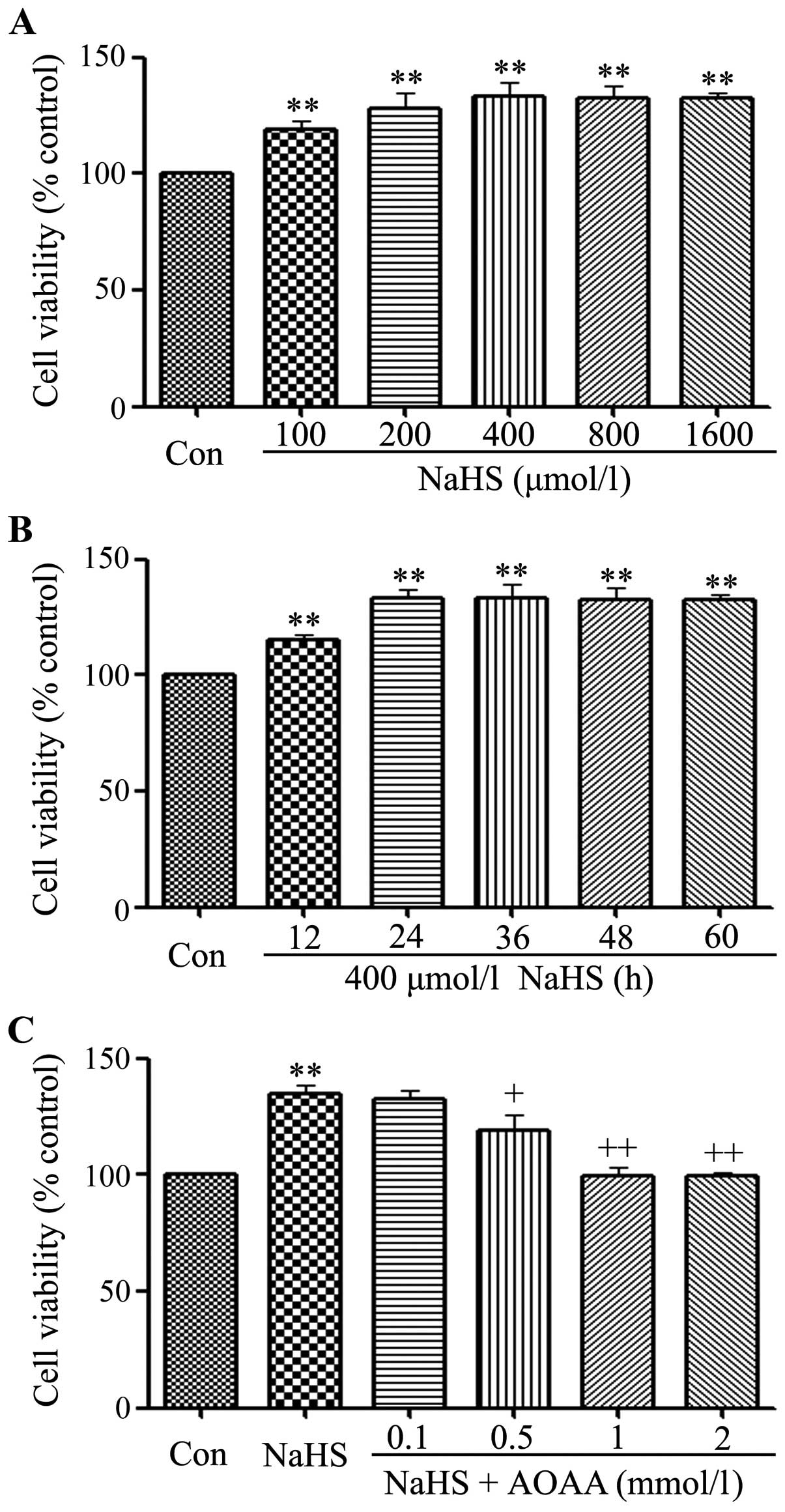
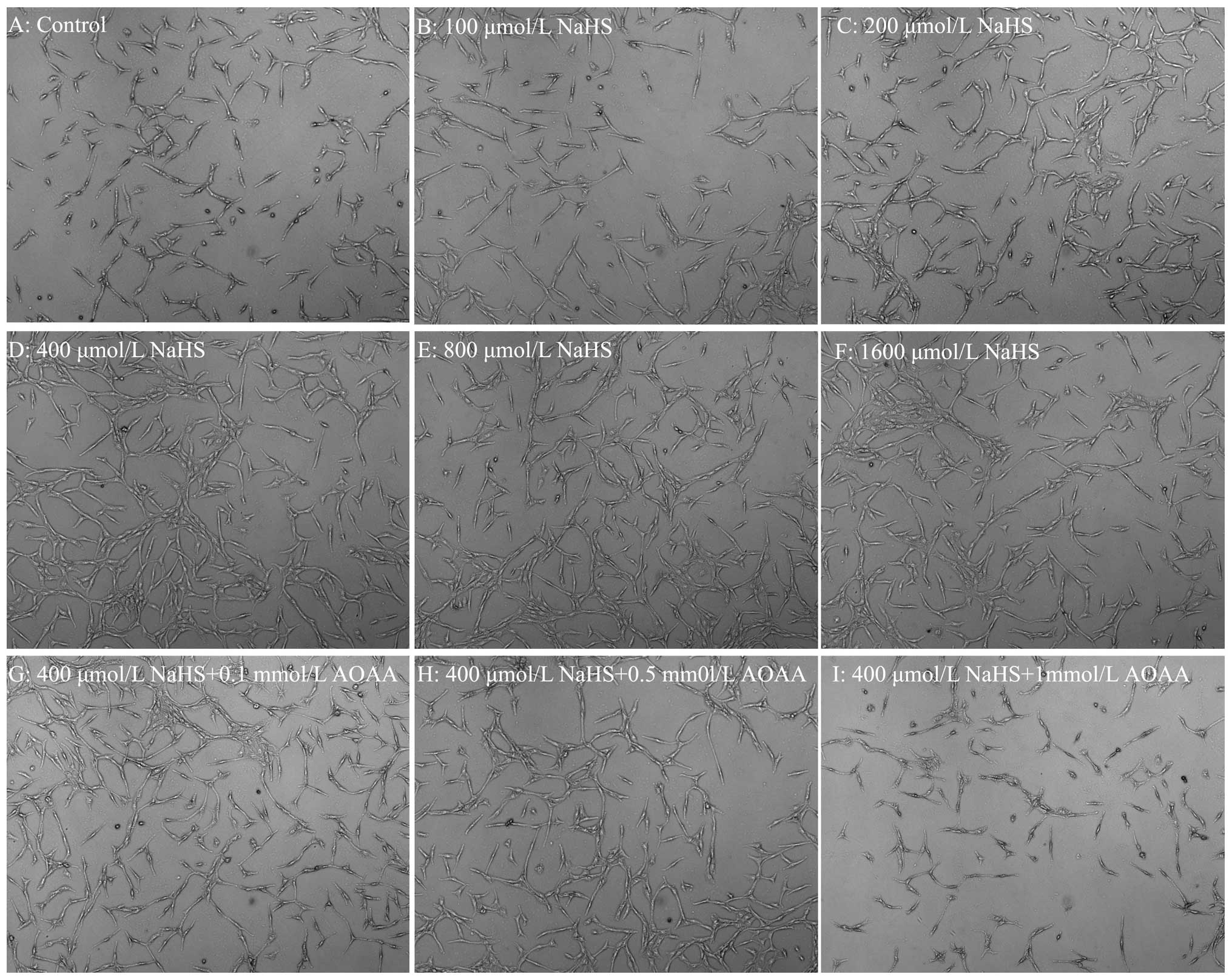
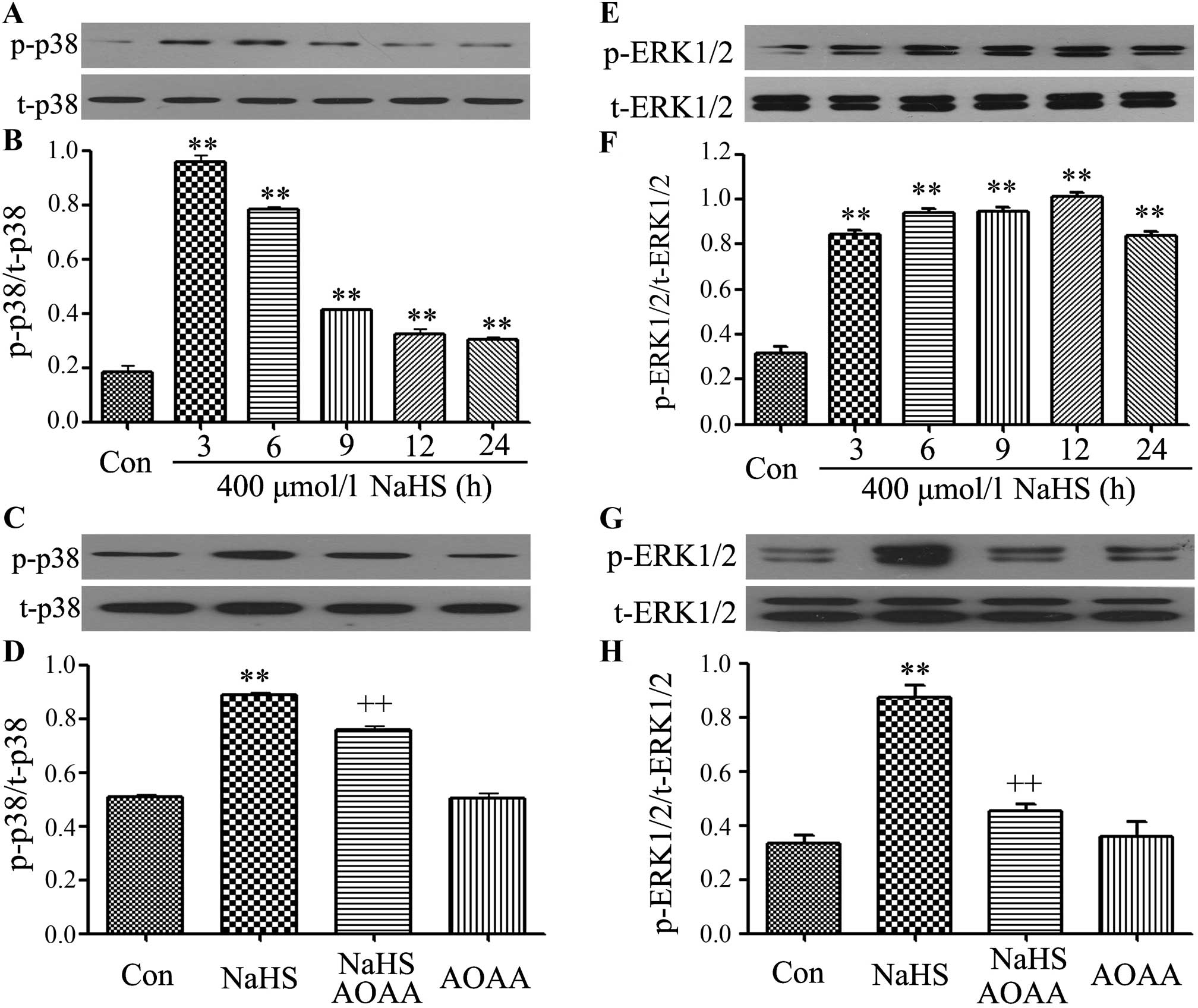
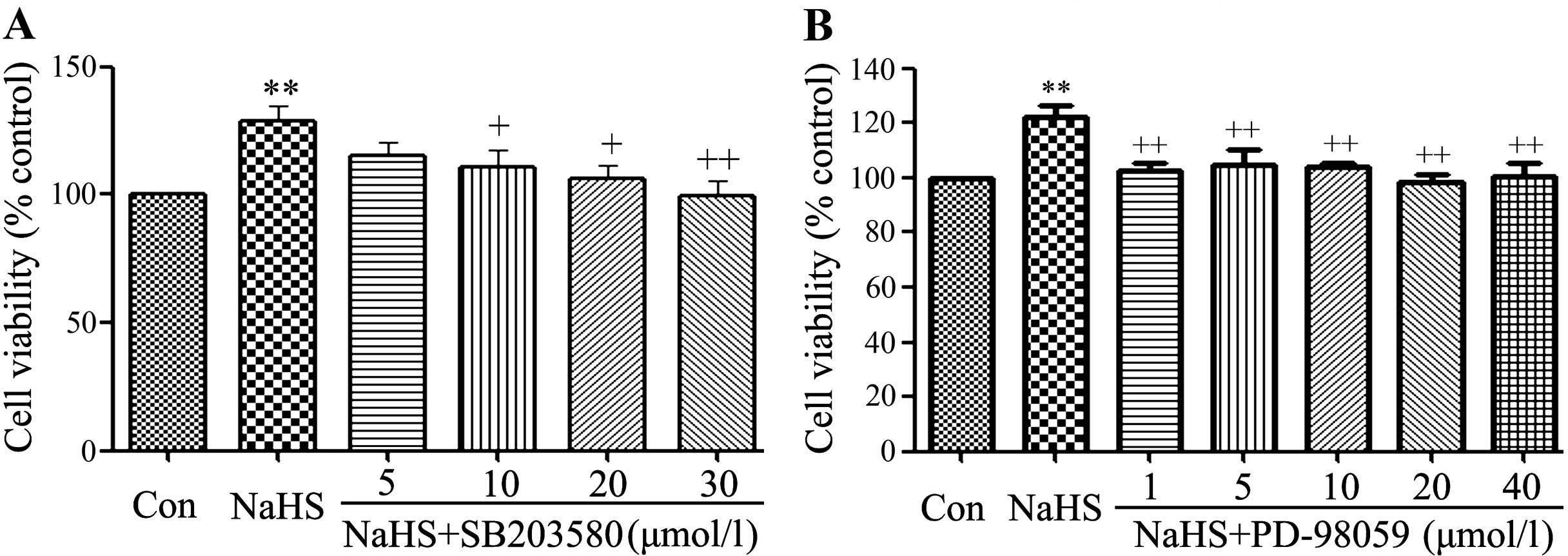
Hydrogen sulfide (H2S) participates in multifarious physiological and pathophysiologic progresses of cancer both in vitro and in vivo. We have previously demonstrated that exogenous H2S promoted liver cancer cells proliferation/anti‑apoptosis/angiogenesis/migration effects via amplifying the activation of NF-κB pathway. However, the effects of H2S on cancer cell proliferation and apoptosis are controversial and remain unclear in C6 glioma cells. The present study investigated the effects of exogenous H2S on cancer cells growth via activating p38 MAPK/ERK1/2-COX-2 pathways in C6 glioma cells. C6 glioma cells were treated with 400 µmol/l NaHS (a donor of H2S) for 24 h. The expression levels of phosphorylated (p)-p38 MAPK, total (t)-p38 MAPK, p-ERK1/2, t-ERK1/2, cyclooxygenase-2 (COX-2) and caspase-3 were measured by western blotting assay. Cell viability was detected by Cell Counting Kit-8 (CCK-8). Apoptotic cells were observed by Hoechst 33258 staining assay. Cell proliferation was directly detected under fully automatic inverted microscope. Exposure of C6 glioma cells to NaHS resulted in cell proliferation, as evidenced by an increase in cell viability. In addition, NaHS treatment reduced apoptosis, as indicated by the decreased apoptotic percentage and the cleaved caspase-3 expression. Importantly, exposure of the cells to NaHS increased the expression levels of p-p38 MAPK, p-ERK1/2 and COX-2. Notably, co-treatment of C6 glioma cells with 400 µmol/l NaHS and AOAA (an inhibitor of CBS) largely suppressed the above NaHS-induced effects. Combined treatment with NaHS and SB203580 (an inhibitor of p38 MAPK) or PD-98059 (an inhibitor of ERK1/2) resulted in the synergistic reduction of COX-2 expression and increase of caspase-3 expression, a decreased number of apoptotic cells, along with decreased cell viability. Combined treatment with NS-398 (an inhibitor of COX-2) and NaHS also resulted in the synergistic increase of caspase-3, a decreased in the number of apoptotic cells and the decrease in cell viability. The findings of the present study provide novel evidence that p38 MAPK/ERK1/2-COX-2 pathways are involved in NaHS-induced cancer cell proliferation and anti-apoptosis in C6 glioma cells.
View Figures

Figure 1

Figure 2

Figure 3

Figure 4

Figure 5

Figure 6

Figure 7

Figure 8

View References

1 

Louis DN, Ohgaki H, Wiestler OD, Cavenee WK, Burger PC, Jouvet A, Scheithauer BW and Kleihues P: The 2007 WHO classification of tumours of the central nervous system. Acta Neuropathol. 114:97–109. 2007. View Article : Google Scholar : PubMed/NCBI

2 

Wei J, Gabrusiewicz K and Heimberger A: The controversial role of microglia in malignant gliomas. Clin Dev Immunol. 2013:2852462013. View Article : Google Scholar : PubMed/NCBI

3 

Goodenberger ML and Jenkins RB: Genetics of adult glioma. Cancer Genet. 205:613–621. 2012. View Article : Google Scholar : PubMed/NCBI

4 

Jansen M, Yip S and Louis DN: Molecular pathology in adult gliomas: Diagnostic, prognostic, and predictive markers. Lancet Neurol. 9:717–726. 2010. View Article : Google Scholar : PubMed/NCBI

5 

Schaeffer HJ and Weber MJ: Mitogen-activated protein kinases: Specific messages from ubiquitous messengers. Mol Cell Biol. 19:2435–2444. 1999.PubMed/NCBI

6 

Pearson G, Robinson F, Beers Gibson T, Xu BE, Karandikar M, Berman K and Cobb MH: Mitogen-activated protein (MAP) kinase pathways: Regulation and physiological functions. Endocr Rev. 22:153–183. 2001.PubMed/NCBI

7 

Turjanski AG, Vaqué JP and Gutkind JS: MAP kinases and the control of nuclear events. Oncogene. 26:3240–3253. 2007. View Article : Google Scholar : PubMed/NCBI

8 

Chang L and Karin M: Mammalian MAP kinase signalling cascades. Nature. 410:37–40. 2001. View Article : Google Scholar : PubMed/NCBI

9 

Roux PP and Blenis J: ERK and p38 MAPK-activated protein kinases: A family of protein kinases with diverse biological functions. Microbiol Mol Biol Rev. 68:320–344. 2004. View Article : Google Scholar : PubMed/NCBI

10 

Ding D, Wei S, Song Y, Li L, Du G, Zhan H and Cao Y: Osthole exhibits anti-cancer property in rat glioma cells through inhibiting PI3K/Akt and MAPK signaling pathways. Cell Physiol Biochem. 32:1751–1760. 2013. View Article : Google Scholar : PubMed/NCBI

11 

Zhang B, Wu T, Wang Z, Zhang Y, Wang J, Yang B, Zhao Y, Rao Z and Gao J: p38MAPK activation mediates tumor necrosis factor-α-induced apoptosis in glioma cells. Mol Med Rep. 11:3101–3107. 2015.

12 

Li F, Chen T, Hu S, Lin J, Hu R and Feng H: Superoxide mediates direct current electric field-induced directional migration of glioma cells through the activation of AKT and ERK. PLoS One. 8:e611952013. View Article : Google Scholar : PubMed/NCBI

13 

Subbaramaiah K, Chung WJ and Dannenberg AJ: Ceramide regulates the transcription of cyclooxygenase-2. Evidence for involvement of extracellular signal-regulated kinase/c-Jun N-terminal kinase and p38 mitogen-activated protein kinase pathways. J Biol Chem. 273:32943–32949. 1998. View Article : Google Scholar : PubMed/NCBI

14 

Limami Y, Pinon A, Leger DY, Pinault E, Delage C, Beneytout JL, Simon A and Liagre B: The P2Y2/Src/p38/COX-2 pathway is involved in the resistance to ursolic acid-induced apoptosis in colorectal and prostate cancer cells. Biochimie. 94:1754–1763. 2012. View Article : Google Scholar : PubMed/NCBI

15 

Kim JY, Chung SW, Kim SY and Byun Y: Enhanced anti-angiogenic effect of low molecular weight heparinbile acid conjugates by co-administration of a selective COX-2 inhibitor. Pharm Res. 32:2318–2327. 2015. View Article : Google Scholar : PubMed/NCBI

16 

Tegeder I, Niederberger E, Israr E, Gühring H, Brune K, Euchenhofer C, Grösch S and Geisslinger G: Inhibition of NF-kappaB and AP-1 activation by R- and S-flurbiprofen. FASEB J. 15:2–4. 2001.

17 

Seo KW, Coh YR, Rebhun RB, Ahn JO, Han SM, Lee HW and Youn HY: Antitumor effects of celecoxib in COX-2 expressing and non-expressing canine melanoma cell lines. Res Vet Sci. 96:482–486. 2014. View Article : Google Scholar : PubMed/NCBI

18 

Wu X, Cai M, Ji F and Lou LM: The impact of COX-2 on invasion of osteosarcoma cell and its mechanism of regulation. Cancer Cell Int. 14:272014. View Article : Google Scholar : PubMed/NCBI

19 

Wu T, Han C, Lunz JG III, Michalopoulos G, Shelhamer JH and Demetris AJ: Involvement of 85-kd cytosolic phospholipase A and cyclooxygenase-2 in the proliferation of human cholangio-2 carcinoma cells. Hepatology. 36:363–373. 2002. View Article : Google Scholar : PubMed/NCBI

20 

Chiu WT, Shen SC, Chow JM, Lin CW, Shia LT and Chen YC: Contribution of reactive oxygen species to migration/invasion of human glioblastoma cells U87 via ERK-dependent COX-2/PGE2 activation. Neurobiol Dis. 37:118–129. 2010. View Article : Google Scholar

21 

Wang R: Two's company, three's a crowd: Can H2S be the third endogenous gaseous transmitter? FASEB J. 16:1792–1798. 2002. View Article : Google Scholar : PubMed/NCBI

22 

Guidotti TL: Hydrogen sulfide: Advances in understanding human toxicity. Int J Toxicol. 29:569–581. 2010. View Article : Google Scholar : PubMed/NCBI

23 

Kilburn KH, Thrasher JD and Gray MR: Low-level hydrogen sulfide and central nervous system dysfunction. Toxicol Ind Health. 26:387–405. 2010. View Article : Google Scholar : PubMed/NCBI

24 

Szabo C, Coletta C, Chao C, Módis K, Szczesny B, Papapetropoulos A and Hellmich MR: Tumor-derived hydrogen sulfide, produced by cystathionine-β-synthase, stimulates bioenergetics, cell proliferation, and angiogenesis in colon cancer. Proc Natl Acad Sci USA. 110:12474–12479. 2013. View Article : Google Scholar

25 

Pupo E, Pla AF, Avanzato D, Moccia F, Cruz JE, Tanzi F, Merlino A, Mancardi D and Munaron L: Hydrogen sulfide promotes calcium signals and migration in tumor-derived endothelial cells. Free Radic Biol Med. 51:1765–1773. 2011. View Article : Google Scholar : PubMed/NCBI

26 

Du SX, Xiao J, Guan F, Sun LM, Wu WS, Tang H, Du JB, Tang CS and Jin HF: Predictive role of cerebrospinal fluid hydrogen sulfide in central nervous system leukemia. Chin Med J. 124:3450–3454. 2011.

27 

Levine J, Ellis CJ, Furne JK, Springfield J and Levitt MD: Fecal hydrogen sulfide production in ulcerative colitis. Am J Gastroenterol. 93:83–87. 1998. View Article : Google Scholar : PubMed/NCBI

28 

Rose P, Moore PK, Ming SH, Nam OC, Armstrong JS and Whiteman M: Hydrogen sulfide protects colon cancer cells from chemopreventative agent beta-phenylethyl isothiocyanate induced apoptosis. World J Gastroenterol. 11:3990–3997. 2005.PubMed/NCBI

29 

Cai WJ, Wang MJ, Ju LH, Wang C and Zhu YC: Hydrogen sulfide induces human colon cancer cell proliferation: Role of Akt, ERK and p21. Cell Biol Int. 34:565–572. 2010. View Article : Google Scholar : PubMed/NCBI

30 

Cao Q, Zhang L, Yang G, Xu C and Wang R: Butyrate-stimulated H2S production in colon cancer cells. Antioxid Redox Signal. 12:1101–1109. 2010. View Article : Google Scholar

31 

Zhen Y, Pan W, Hu F, Wu H, Feng J, Zhang Y and Chen J: Exogenous hydrogen sulfide exerts proliferation/anti-apoptosis/angiogenesis/migration effects via amplifying the activation of NF-κB pathway in PLC/PRF/5 hepatoma cells. Int J Oncol. 46:2194–2204. 2015.PubMed/NCBI

32 

Tan BH, Wong PT and Bian JS: Hydrogen sulfide: A novel signaling molecule in the central nervous system. Neurochem Int. 56:3–10. 2010. View Article : Google Scholar

33 

Rong W, Kimura H and Grundy D: The neurophysiology of hydrogen sulfide. Inflamm Allergy Drug Targets. 10:109–117. 2011. View Article : Google Scholar : PubMed/NCBI

34 

Zhang X and Bian JS: Hydrogen sulfide: A neuromodulator and neuroprotectant in the central nervous system. ACS Chem Neurosci. 5:876–883. 2014. View Article : Google Scholar : PubMed/NCBI

35 

Chan SJ, Chai C, Lim TW, Yamamoto M, Lo EH, Lai MK and Wong PT: Cystathionine β-synthase inhibition is a potential therapeutic approach to treatment of ischemic injury. ASN Neuro. 7:17590914155787112015. View Article : Google Scholar

36 

Chen WL, Niu YY, Jiang WZ, Tang HL, Zhang C, Xia QM and Tang XQ: Neuroprotective effects of hydrogen sulfide and the underlying signaling pathways. Rev Neurosci. 26:129–142. 2015. View Article : Google Scholar

37 

Donatti AF, Soriano RN, Sabino JP and Branco LG: Involvement of endogenous hydrogen sulfide (H2S) in the rostral ventrolateral medulla (RVLM) in hypoxia-induced hypothermia. Brain Res Bull. 108:94–99. 2014. View Article : Google Scholar : PubMed/NCBI

38 

Jiang JM, Zhou CF, Gao SL, Tian Y, Wang CY, Wang L, Gu HF and Tang XQ: BDNF-TrkB pathway mediates neuroprotection of hydrogen sulfide against formaldehyde-induced toxicity to PC12 cells. PLoS One. 10:e01194782015. View Article : Google Scholar : PubMed/NCBI

39 

Xu K, Wang L and Shu HK: COX-2 overexpression increases malignant potential of human glioma cells through Id1. Oncotarget. 5:1241–1252. 2014. View Article : Google Scholar : PubMed/NCBI

40 

Ma K, Liu Y, Zhu Q, Liu CH, Duan JL, Tan BK and Zhu YZ: H2S donor, S-propargylcysteine, increases CSE in SGC-7901 and cancer-induced mice: Evidence for a novel anti-cancer effect of endogenous H2S? PLoS One. 6:e205252011. View Article : Google Scholar

41 

Murata T, Sato T, Kamoda T, Moriyama H, Kumazawa Y and Hanada N: Differential susceptibility to hydrogen sulfide-induced apoptosis between PHLDA1-overexpressing oral cancer cell lines and oral keratinocytes: Role of PHLDA1 as an apoptosis suppressor. Exp Cell Res. 320:247–257. 2014. View Article : Google Scholar

42 

Chattopadhyay M, Kodela R, Olson KR and Kashfi K: NOSH-aspirin (NBS-1120), a novel nitric oxide- and hydrogen sulfide-releasing hybrid is a potent inhibitor of colon cancer cell growth in vitro and in a xenograft mouse model. Biochem Biophys Res Commun. 419:523–528. 2012. View Article : Google Scholar : PubMed/NCBI

43 

Lee ZW, Zhou J, Chen CS, Zhao Y, Tan CH, Li L, Moore PK and Deng LW: The slow-releasing hydrogen sulfide donor, GYY4137, exhibits novel anti-cancer effects in vitro and in vivo. PLoS One. 6:e210772011. View Article : Google Scholar : PubMed/NCBI

Related Articles

  • Abstract
  • View
  • Download
  • Twitter
Copy and paste a formatted citation
Spandidos Publications style
Zhen Y, Zhang W, Liu C, He J, Lu Y, Guo R, Feng J, Zhang Y and Chen J: Exogenous hydrogen sulfide promotes C6 glioma cell growth through activation of the p38 MAPK/ERK1/2-COX-2 pathways. Oncol Rep 34: 2413-2422, 2015.
APA
Zhen, Y., Zhang, W., Liu, C., He, J., Lu, Y., Guo, R. ... Chen, J. (2015). Exogenous hydrogen sulfide promotes C6 glioma cell growth through activation of the p38 MAPK/ERK1/2-COX-2 pathways. Oncology Reports, 34, 2413-2422. https://doi.org/10.3892/or.2015.4248
MLA
Zhen, Y., Zhang, W., Liu, C., He, J., Lu, Y., Guo, R., Feng, J., Zhang, Y., Chen, J."Exogenous hydrogen sulfide promotes C6 glioma cell growth through activation of the p38 MAPK/ERK1/2-COX-2 pathways". Oncology Reports 34.5 (2015): 2413-2422.
Chicago
Zhen, Y., Zhang, W., Liu, C., He, J., Lu, Y., Guo, R., Feng, J., Zhang, Y., Chen, J."Exogenous hydrogen sulfide promotes C6 glioma cell growth through activation of the p38 MAPK/ERK1/2-COX-2 pathways". Oncology Reports 34, no. 5 (2015): 2413-2422. https://doi.org/10.3892/or.2015.4248
Copy and paste a formatted citation
x
Spandidos Publications style
Zhen Y, Zhang W, Liu C, He J, Lu Y, Guo R, Feng J, Zhang Y and Chen J: Exogenous hydrogen sulfide promotes C6 glioma cell growth through activation of the p38 MAPK/ERK1/2-COX-2 pathways. Oncol Rep 34: 2413-2422, 2015.
APA
Zhen, Y., Zhang, W., Liu, C., He, J., Lu, Y., Guo, R. ... Chen, J. (2015). Exogenous hydrogen sulfide promotes C6 glioma cell growth through activation of the p38 MAPK/ERK1/2-COX-2 pathways. Oncology Reports, 34, 2413-2422. https://doi.org/10.3892/or.2015.4248
MLA
Zhen, Y., Zhang, W., Liu, C., He, J., Lu, Y., Guo, R., Feng, J., Zhang, Y., Chen, J."Exogenous hydrogen sulfide promotes C6 glioma cell growth through activation of the p38 MAPK/ERK1/2-COX-2 pathways". Oncology Reports 34.5 (2015): 2413-2422.
Chicago
Zhen, Y., Zhang, W., Liu, C., He, J., Lu, Y., Guo, R., Feng, J., Zhang, Y., Chen, J."Exogenous hydrogen sulfide promotes C6 glioma cell growth through activation of the p38 MAPK/ERK1/2-COX-2 pathways". Oncology Reports 34, no. 5 (2015): 2413-2422. https://doi.org/10.3892/or.2015.4248
Follow us
  • Twitter
  • LinkedIn
  • Facebook
About
  • Spandidos Publications
  • Careers
  • Cookie Policy
  • Privacy Policy
How can we help?
  • Help
  • Live Chat
  • Contact
  • Email to our Support Team