Introduction
In recent years, the number of the patients with
type 2 diabetes has increased in Japan since Japanese people have
experienced a rapid and drastic change in life style, including
dietary changes and an increased rate of obesity, which is the
primary risk factor for type 2 diabetes (1,2).
Paralleling these changes, rates of cancers of the colon, pancreas,
breast and prostate, which are known to be more common in Western
countries, have increased in Japan (2–4). Among
these cancers, epidemiological studies have shown that obesity
increases the risk of colon cancer by 1.5–2.0-fold with
obesity-associated colon cancer accounting for 14–35% of total
incidence (5). Patients with type 2
diabetes mellitus are also known to have an increased risk of
colorectal neoplasia compared with those without diabetes (6).
The gut incretin hormone glucagon-like peptide-1
(GLP-1) is released from enteroendocrine cells in response to
ingested nutrients and acts as a key determinant of blood glucose
homeostasis by virtue of its ability to slow gastric emptying, to
enhance pancreatic insulin secretion, and to suppress pancreatic
glucagon secretion (7–9). Since GLP-1 is rapidly degraded and
deactivated by dipeptidyl peptidase-4 (DPP-4), DPP-4 inhibitors,
such as sitagliptin (STG), vildagliptin and saxagliptin, have
recently emerged as therapeutic options for the treatment of type 2
diabetes (10,11).
Another processing product of proglucagon, GLP-2, is
also a DPP-4 substrate. GLP-2 is a pleiotropic hormone that affects
multiple facets of intestinal physiology, including epithelial
growth, barrier function, digestion, absorption, motility and blood
flow (12,13). GLP-2 exerts potent anti-apoptotic
effects in the gastrointestinal tract, so GLP-2 is a promising
target for the development of novel treatments for intestinal
diseases. Since DPP-4 rapidly degrades and deactivates GLP-2, DPP-4
inhibitors are also considered novel approaches to the treatment of
intestinal inflammation (14,15).
Indeed, we recently reported a protective effect of DPP-4
inhibitors on indomethacin-induced intestinal injury in rats
(16,17). However, in regard to colon
carcinogenesis, exogenous and endogenous GLP-2 has been reported to
enhance colon carcinogenesis in azoxymethane-treated mice (18). Moreover, since the substrates for
DPP-4 include growth factors and chemokines, such as insulin-like
growth factor-1 (IGF-1) and stromal cell-derived factor-1 (SDF-1),
which are associated with tumor progression, DPP-4 inhibitors may
increase the risk of colorectal tumors (19). However, the influence of DPP-4
inhibitors on colorectal neoplasia in patients with type 2 diabetes
is unknown. Therefore, in the present study, we evaluated the
effect of a DPP-4 inhibitor, STG, on diabetes-related mouse colon
carcinogenesis and proteomic changes.
Materials and methods
Animals
Six-week-old male wild-type (WT) and
leptin-deficient (ob/ob) C57BL/6J mice (oriental Bio Service, Inc.,
kyoto, Japan) were used in the present study. The animals were
maintained in an animal colony with controlled temperature (23°C)
and light (12/12-h light and dark cycle) at the Osaka Medical
College (OMC), Osaka, Japan and were permitted free access to
standard mouse chow pellets (MM-3; Funabashi, Chiba, Japan) and tap
water. Ethical permission for the experiments presented in the
present study was given by the Animal Ethics Committee of the Osaka
Medical College and all procedures were conducted according to the
guidelines of the Institute for Laboratory Animal Research at Osaka
Medical College.
Protocol for induction of colorectal
tumors and experimental procedures
Colorectal tumors and experimental colitis were
induced as previously described (20). In brief, the mice received
1,2-dimethylhydrazine (DMH) (Wako Pure Chemical Industries, Osaka,
Japan) subcutaneously three times per week at a dose of 20 mg/kg
body weight. Starting 1 week after DMH injection, chronic colitis
was induced by the administration of 2 cycles of dextran sulfate
sodium (DSS) (molecular weight, 4,000–5,000; Meitou Sangyou, Osaka,
Japan; each cycle consisted of 3% DSS for 7 days and then distilled
water for 14 days). The mice were sacrificed 28 days after
completion of the 2 cycles. The following groups were used in the
experiment: WT, ob/ob and ob/ob+STG groups. We previously evaluated
the effect of STG (0.3–3 mg/kg, i.g.) on mucosal DPP activity and
reported that oral administration of STG dose-dependently
suppressed mucosal DPP activity (16). Therefore, in the present study, the
DPP-4 inhibitor sitagliptin phosphate monohydrate (Carbosynth
Limited, Berkshire, UK) (3 mg/kg), was given to mice by oral gavage
every day during the experimental period.
The entire colorectum from the colocecal junction to
the anal verge was excised and rinsed in phosphate-buffered saline
(PBS). The specimen was longitudinally opened and was fixed on a
cork board in 10% formalin. Then, the specimen was stained with
0.2% methylene blue, and the number of colonic tumors and aberrant
crypt foci (ACF) was counted under a stereomicroscope.
Mucosal DPP-4 activity
Mucosal scraped tissues were collected in lysis
buffer (TRIS-buffered saline containing protease inhibitors)
(Complete Mini; Roche Diagnostics, Indianapolis, IN, USA) with or
without the DPP-4 inhibitor, k-579 (Tocris Bioscience, Ellisville,
MO, USA). Blood samples were also collected into chilled Eppendorf
tubes containing 1 µl each of 0.5 M EDTA and 100 µM
K-579. The samples were immediately centrifuged at 3,000 × g for 5
min and their supernatants and plasma were stored at −80°C until
measurement. Mucosal DPP-4 activity was determined by the cleavage
rate of 7-amino-4-methylcoumarin (AMC; SensoLyte AMC DPPIV Assay
kit; AnaSpec, Inc., Fremont, CA, USA) from the synthetic substrate
according to the manufacturer's instructions. In brief, each sample
of scraped colon was homogenized. Lysates containing 10
µg/50 µl of protein were mixed with 50 µl of
the DPP-4 substrate AMC. After 30 min of incubation at room
temperature, AMC release was determined using a fluorescence plate
reader (excitation at 354 nm and emission at 442 nm) (Fluoroskan
Ascent; Thermo Fisher Scientific K.K., Kanagawa, Japan). DPP
activity in mucosa was measured as the relative fluorescence units
(RFUS), and then calibrated using the concentration of Gly-Pro AMC
(µM) as a reference.
Measurement of plasma and mucosal
GLPs
Plasma and mucosal active GLP-1 (7-36) and total
GLP-2 were measured using a GLP-1 (active 7–36) ELISA kit and GLP-2
(mouse) ELISA kit (ALPCO Diagnostics, Salem, NH, USA) according to
the manufacturer's instructions.
Analysis of adipokine-related
proteins
Mouse adipokine array kits (Proteome Profiler Array
and Human Cytokine; R&D Systems, Minneapolis, MN, USA) were
used to simultaneously detect the relative expression levels of 38
different obesity-related proteins. The array was performed
according to the manufacturer's instructions. Blots were developed
using enhanced chemiluminescence and a Fuji Film Imaging System
(Application Note LAS-3000; Fuji Film, Tokyo, Japan).
Real-time quantitative polymerase chain
reaction
To measure mRNA expression of the pro-inflammatory
cytokines interleukin (IL)-6, tumor necrosis factor (TNF)-α and
IGF-1, a small amount of colonic mucosa was scraped with a glass
slide, frozen in liquid nitrogen and stored at −80°C until RNA
isolation. Total RNA was extracted using the total RNeasy mini kit
(Qiagen, Tokyo, Japan). For cDNA synthesis, RNA was
reverse-transcribed with a PrimeScript RT reagent kit with the SYBR
Premix Ex Taq kit (both from Takara Bio Inc., Shiga, Japan) on a
Thermal Cycler Dice real-time system TP870 (Takara Bio Inc.). The
sequences of the sense and anti-sense primers for mouse IL-6,
TNF-α, IGF-1 and β-actin are shown in Table I. Cycling conditions were one cycle
of 95°C for 30 sec for denaturing followed by 40 cycles of 95°C for
5 sec, and 60°C for 30 sec, and one cycle of 95°C for 15 sec, and
60°C for 30 sec. The expression of target genes was normalized to
the expression of β-actin.
 | Table IPrimers used to detect mRNA expression
levels. |
Table I
Primers used to detect mRNA expression
levels.
| Genes | Sequence of
primers |
|---|
| TNF-α | S
5′-TATGGCCCAGACCCTCACA-3′ |
| A
5′-GGAGTAGACAAGGTACAACCCATC-3′ |
| IGF-1 | S
5′-ACTGCTAAACACTTGGCAGGAG-3′ |
| A
5′-TTGCAAGGTTTAAGGATACAGAGAC-3′ |
| IL-6 | S
5′-CCACTTCACAAGTCGGAGGCTTA-3′ |
| A
5′-CCAGTTTGGTAGCATCCATCATTTC-3′ |
| β-actin | S
5′-CATCCGTAAAGACCTCTATGCCAAC-3′ |
| A
5′-ATGGAGCCACCGATCCACA-3′ |
Statistical analysis
The data are expressed as means ± SD. Data were
derived from six animals in each group. Comparisons were performed
using one-way ANOVA or Kruskal-Wallis followed by the Fisher's PLSD
test. Statistical significance was defined as P<0.05.
Results
Effects of chronic administration of STG
on body weight, mortality and number of colorectal tumors
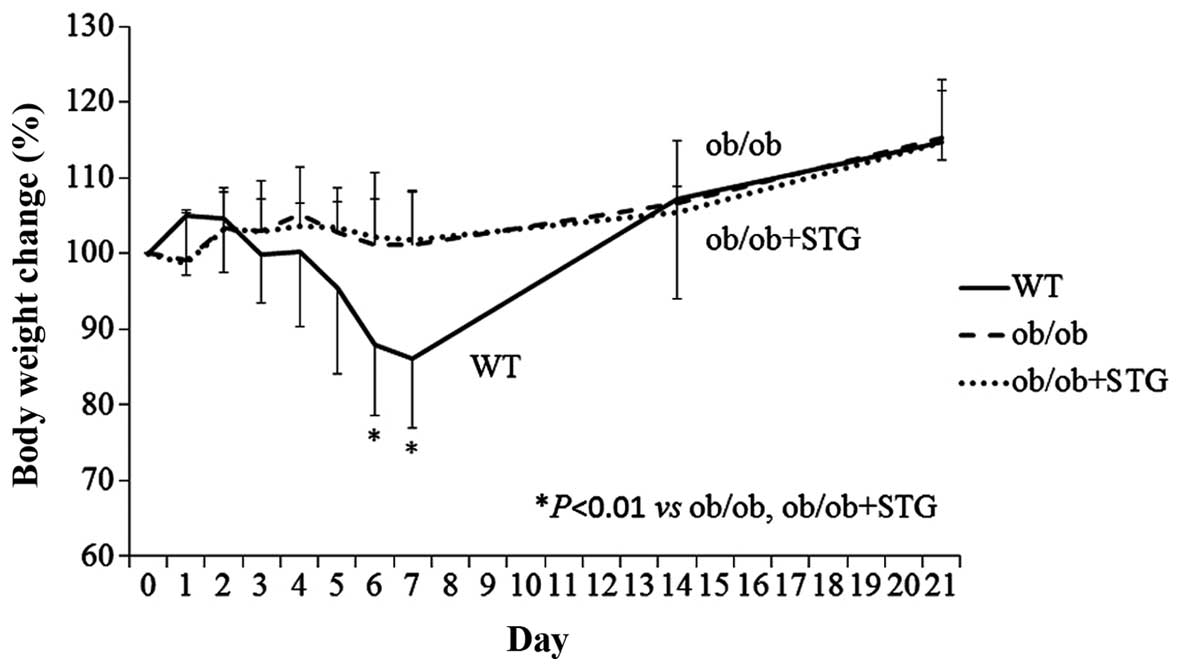
In most of the C57BL/6J mice that received 3% DSS,
body weight loss was observed 3 days after DSS administration
(Fig. 1). Clinical symptoms of
colitis, including loose stools and loss of body weight, progressed
during DSS treatment. These symptoms gradually disappeared during
the period of drinking distilled water without DSS for the
following 14 days. Percent body weight change was significantly
smaller in ob/ob mice than in the WT mice at 6 and 7 days after DSS
treatment. Body weight was significantly increased in ob/ob and
ob/ob+STG mice. Administration of STG did not significantly change
body weight in ob/ob mice during DSS treatment (21.5±0.4, 51.2±2.7
and 52.5±1.1 g in the WT, ob/ob and ob/ob+STG groups,
respectively). Plasma glucose measured before sacrifice was also
not affected by the administration of STG in ob/ob mice
(225.5±21.1, 251.9±5.3 and 264.7±8.4 mg/dl in the WT, ob/ob and
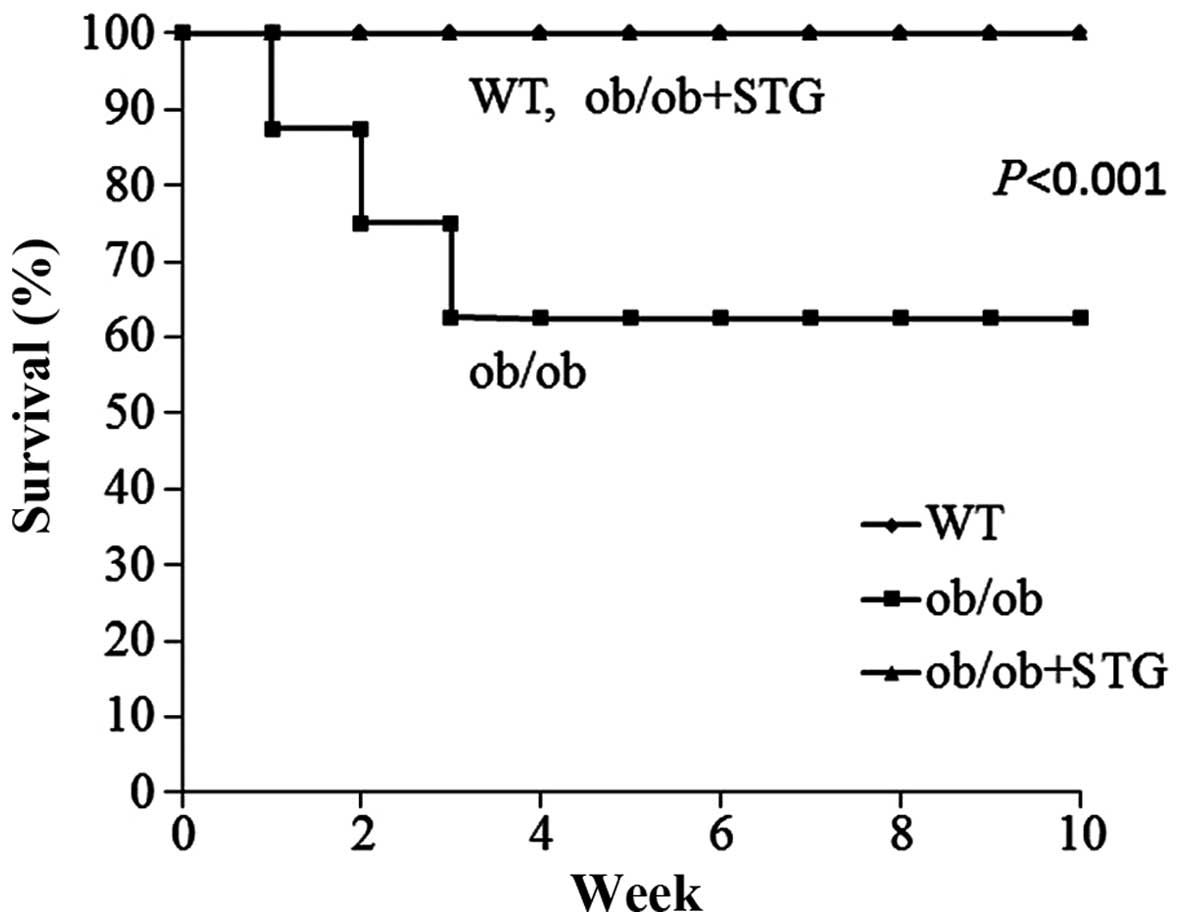
ob/ob+STG groups, respectively). However, administration of STG did
significantly improve survival of ob/ob mice over the entire
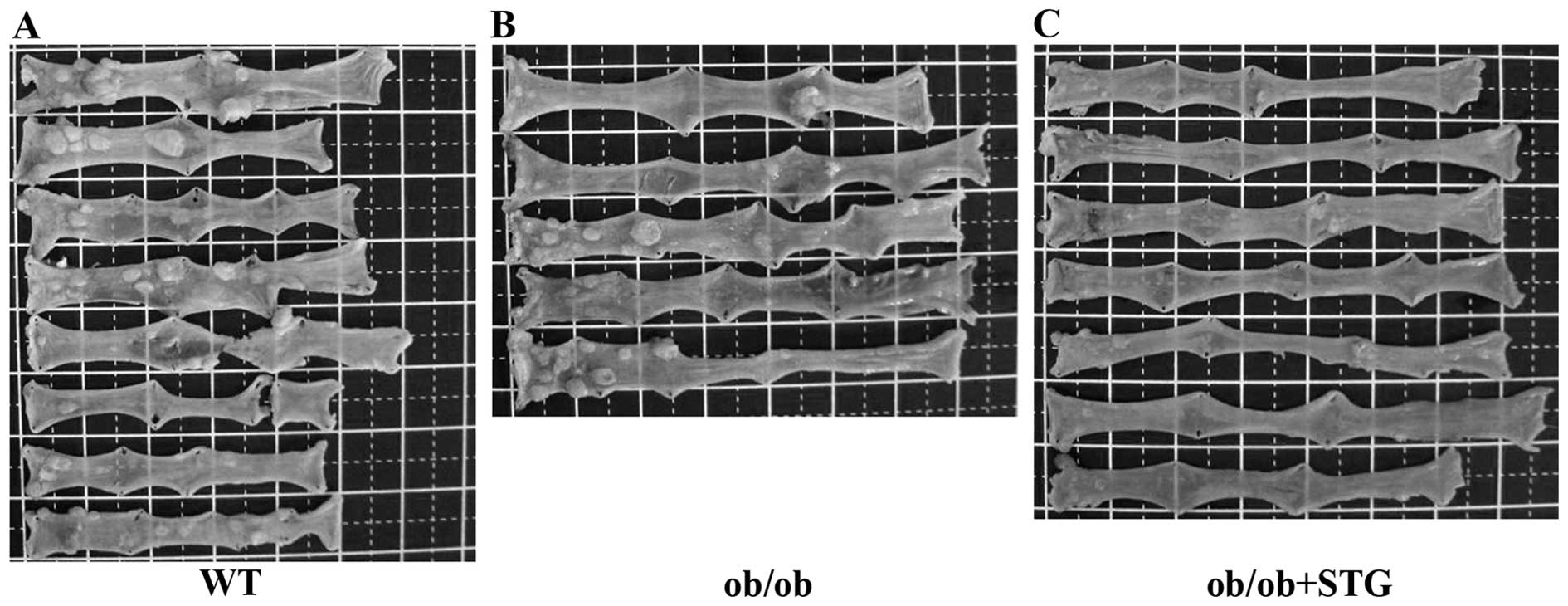
experimental period (fig. 2). All
C57BL/6J mice that received DMH pretreatment and repeated
administration of DSS developed multiple colorectal tumors
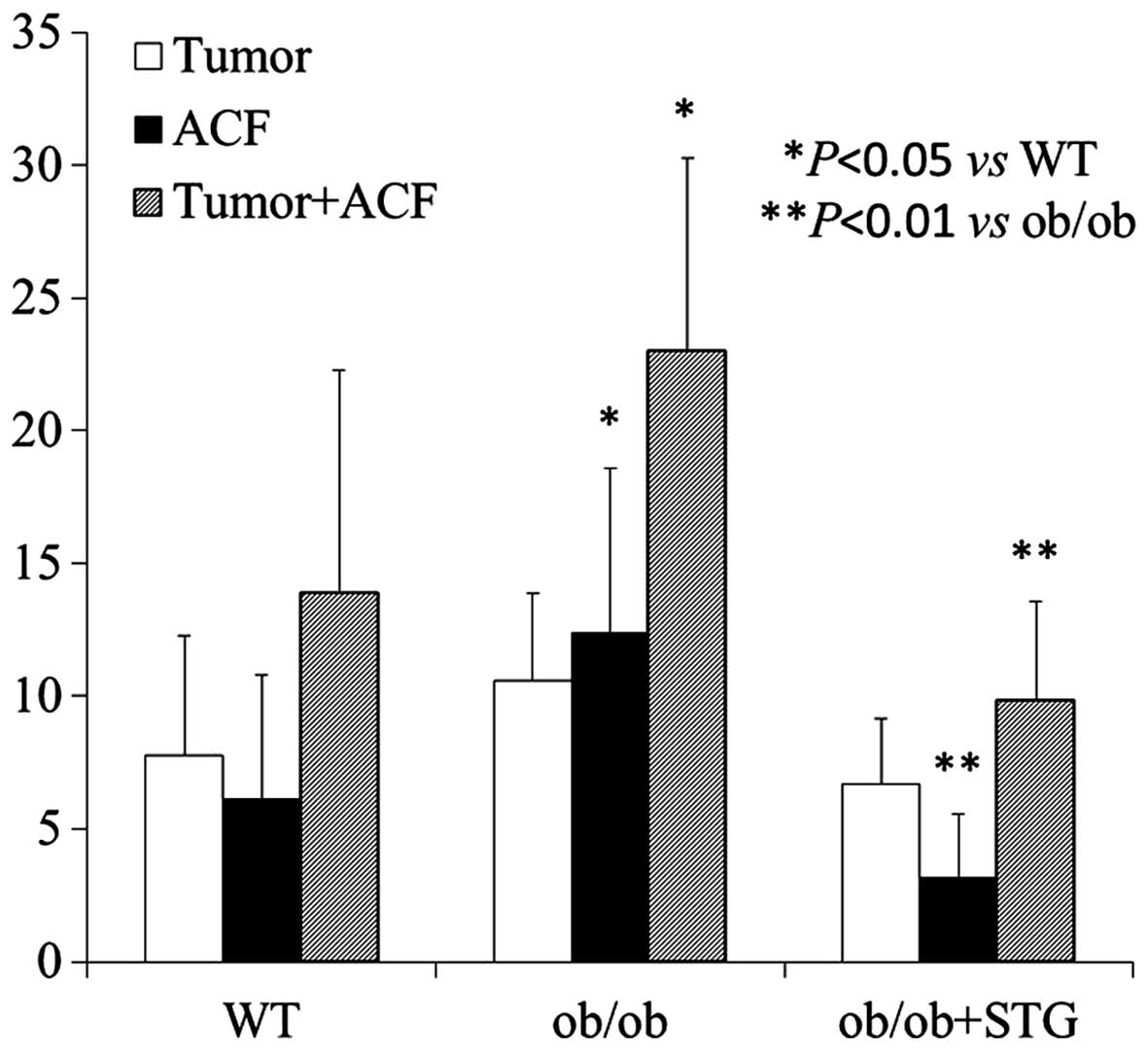
(fig. 3). The mean number of
tumors/ACF was 7.8±4.5/6.1±4.7, 10.6±3.3/12.4±6.2 and
6.7±2.4/3.1±2.4 in the WT, ob/ob and ob/ob+STG groups, respectively
(fig. 4). Administration of STG
significantly lowered the number of ACF and tumors+ACF in ob/ob
mice.
Mucosal DPP activity and the
concentration of plasma and mucosal GLPs
Since it has been reported that endogenous GLP-2
enhances colon carcinogenesis (18), we evaluated the effect of STG on
mucosal DPP activity and measured the concentrations of plasma and
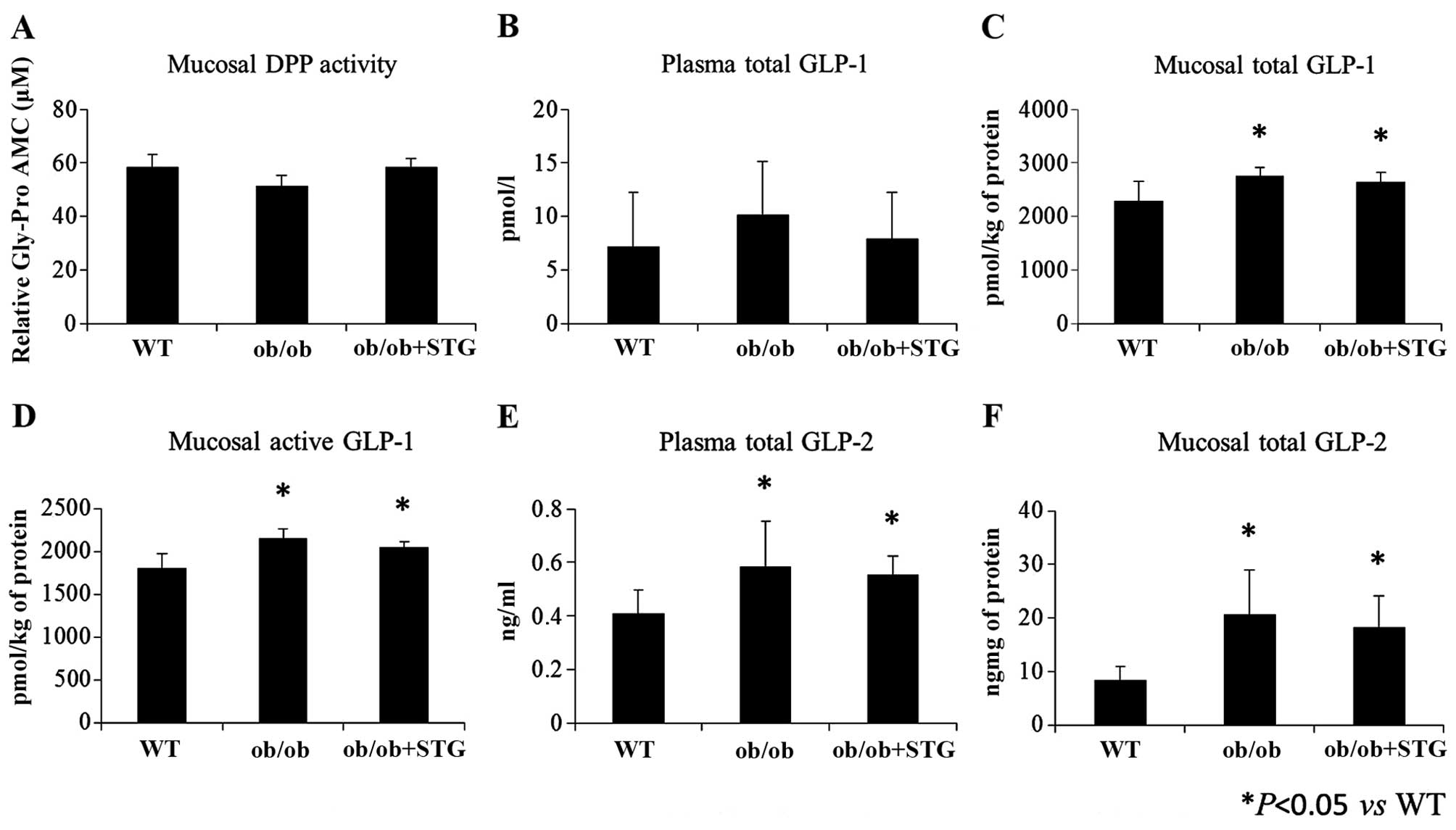
mucosal GLPs. As we previously reported, the administration of STG
did not significantly suppress mucosal DPP activity in the colon
(Fig. 5) (16). Accordingly, the mucosal
concentration of active GLP-1 was not significantly elevated by STG
administration, while the concentrations of mucosal total GLP-1 and
GLP-2 were significantly increased in ob/ob mice compared to those
in WT mice. Plasma concentration of total GLP-2 was also elevated
in ob/ob mice. However, the administration of STG did not affect
the plasma concentration of total GLP-1 or GLP-2 (Fig. 5).
Analysis of adipokine-related
proteins
During the experimental period, the administration
of STG did not significantly affect body weight in ob/ob mice.
Plasma and mucosal GLPs were significantly elevated in ob/ob mice
compared to WT mice. However, the effects of STG on the plasma and
mucosal GLP concentrations in ob/ob mice were minimal. Therefore, a
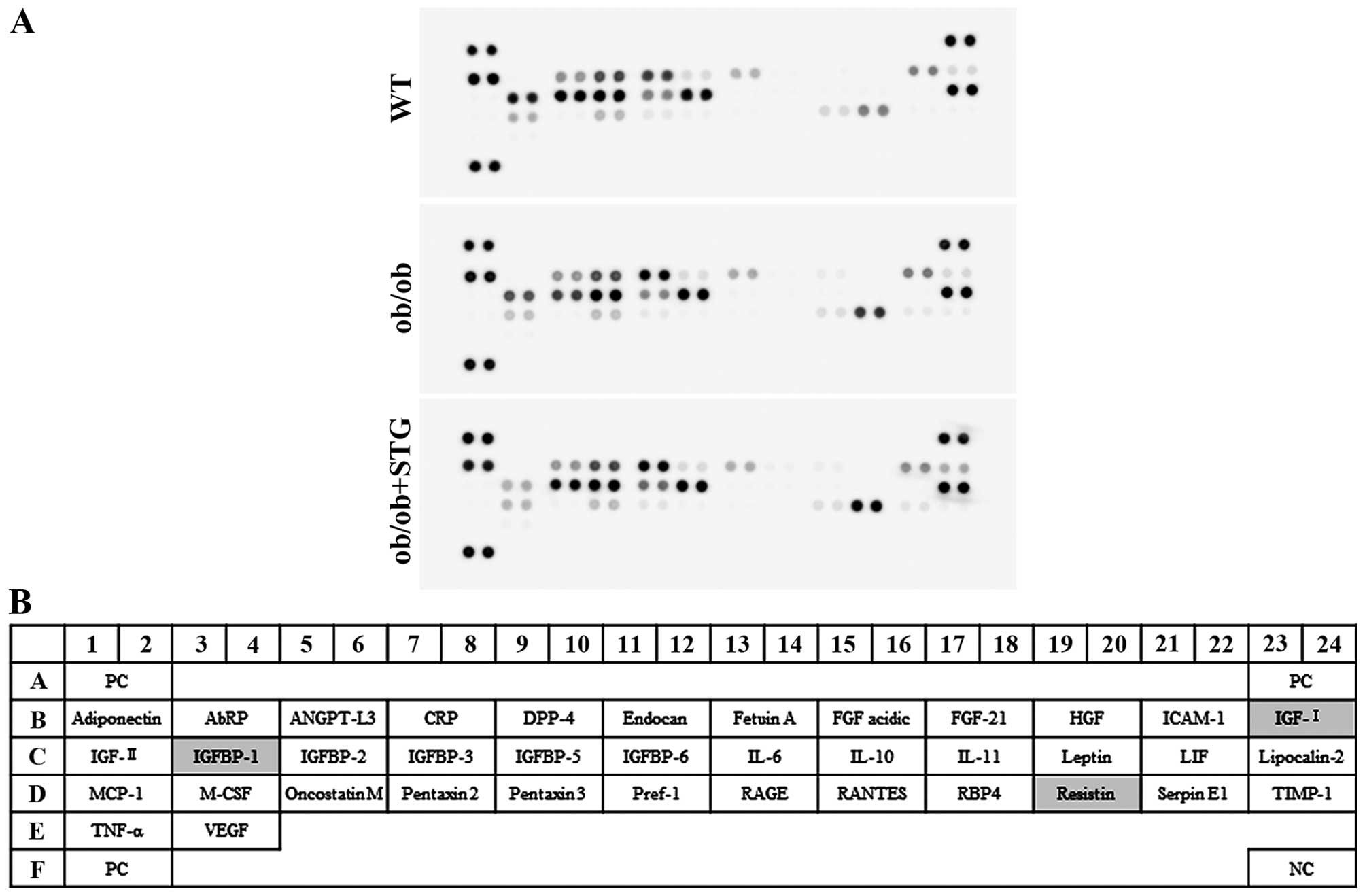
protein array was performed to examine changes in the expression of
various adipokines and adipokine-related proteins (Fig. 6). The protein array showed an
elevated plasma level of resistin in the ob/ob group and a
decreased plasma level of IGF-binding proteins (IGFBPs) in the
ob/ob+STG group. The administration of STG did not significantly
decrease the plasma concentration of resistin, suggesting that
chronic administration of STG does not significantly alter
metabolic status in ob/ob mice.
Mucosal TNF-α, IL-6 and IGF-1 mRNA
expression in the colon
It is well known that TNF-α, IL-6 and IGF-1
influence all stages of tumor development, including initiation,
promotion and development. To analyze the effects of topical STG on
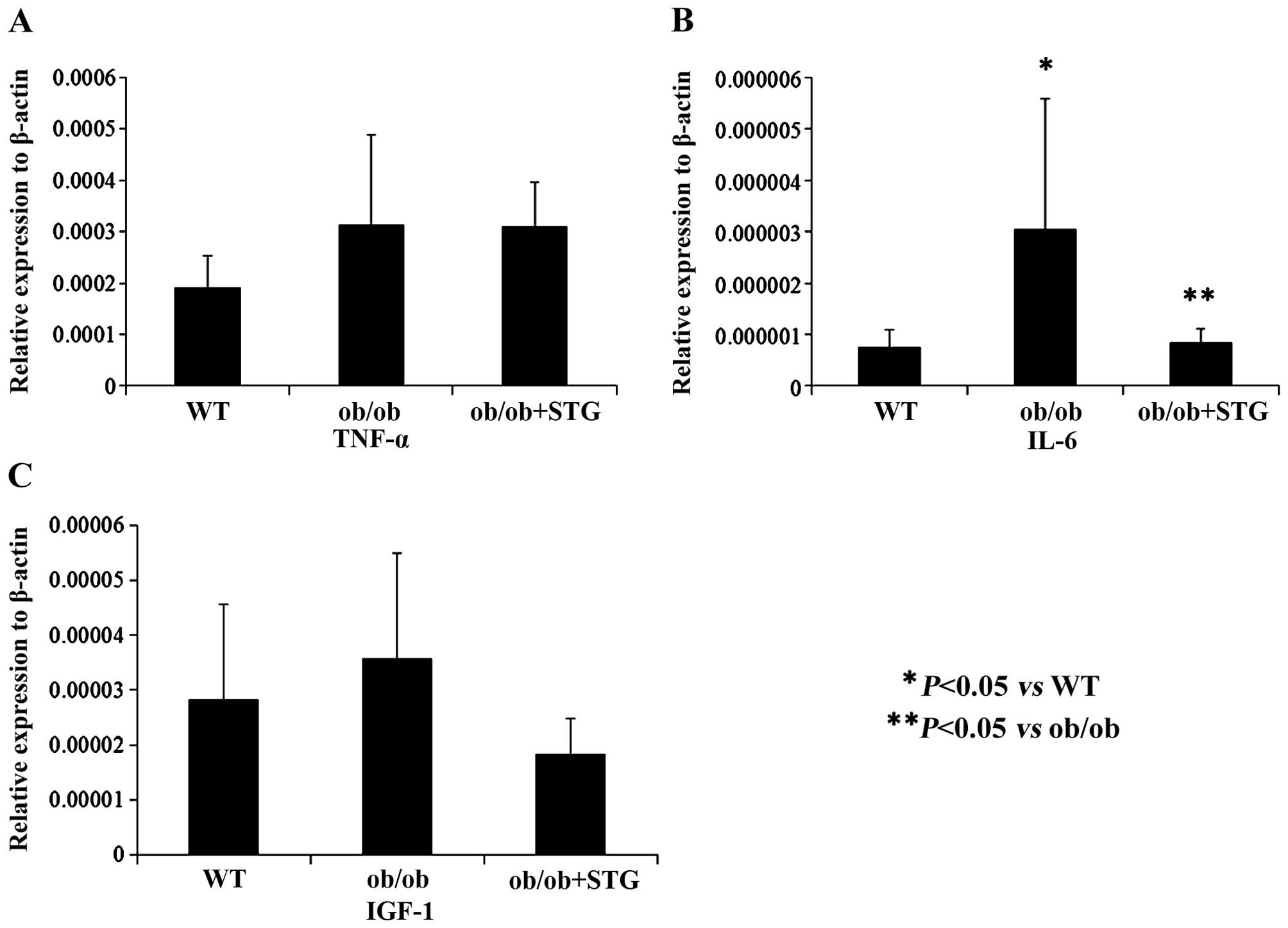
mucosal TNF-α, IL-6 and IGF-1 in ob/ob mouse colon, we examined
mucosal TNF-α, IL-6, and IGF-1 mRNA expression in the colon
(Fig. 7). Real-time PCR analysis
revealed that colonic mucosal IL-6 mRNA expression was
significantly upregulated in ob/ob mice compared to WT mice and
that the administration of STG significantly suppressed this
upregulation, while mucosal expression of TNF-α and IGF-1 was not
affected.
Discussion
In the present study, we demonstrated that long-term
administration of a DPP-4 inhibitor, sitagliptin (STG), showed
protective effects against colorectal neoplasia in type 2 diabetic
mice. It is well known that patients with type 2 diabetes have an
increased risk of colorectal neoplasia compared with those without
diabetes, and in recent years, DPP-4 inhibitors, which stabilize
incretin hormones, have been widely used to treat patients with
diabetes. DPP-4 inhibitors may stabilize other hormones and
cytokines that are associated with colon tumorigenesis. Despite
this observation, to date there have been very few studies
investigating the relationship between DPP-4 inhibitors and colon
carcinogenesis (21).
Generally, patients with type 2 diabetes have an
increased risk of cardiovascular disease and many take NSAIDs, such
as low-dose aspirin, to reduce the risk of cardiovascular and
cerebrovascular thrombosis (22,23).
However, NSAIDs can induce gastroenteropathy by increasing the
permeability of the intestinal mucosa (24,25).
Since the intestinotrophic hormone GLP-2 is rapidly degraded and
deactivated by DPP-4, we previously evaluated the effect of DPP-4
inhibitor on non-steroidal anti-inflammatory drug (NSAID)-induced
enteritis in mice and reported that STG has a preventive effect
against enteric ulcers and promotes ulcer healing via activation of
the GLP-2 pathway (16,17). However, since chronic treatment with
GLP-2 enhances colon carcinogenesis in azoxymethan-treated mice and
since antagonism of the GLP-2 receptor decreases dysplasia,
exogenous and endogenous GLP-2 has been suspected to promote colon
carcinogenesis in mice (18,26).
Moreover, DPP-4 cleaves and deactivates other hormones and
cytokines which are associated with tumor progression, such as
SDF-1 and IGF-1 (19). Femia et
al investigated whether long-term administration of STG affects
colon carcinogenesis in rats and showed that chronic STG
administration in DMH-induced rats reduced the number of
precancerous lesions, mucin-depleted foci, and blood reactive
oxygen species, suggesting a protective effect against
carcinogenesis. However, the effect of STG on the number of
colorectal tumors and levels of substrates related to colon
carcinogenesis has not been previously evaluated. Therefore, we
sought to clarify the long-term effects of a DPP-4 inhibitor on
colon carcinogenesis. We found no significant difference in plasma
and mucosal GLP expression or plasma concentrations of Sdf-1 (data
not shown) between ob/ob mice and ob/ob mice treated with long-term
STG administration. As we previously reported, the oral
administration of STG dose-dependently suppresses mucosal DPP
activity and increases mucosal active GLP concentration in the
small intestine but not in the colon since DPP4 mRNA is mainly
expressed in the small intestine and DPP activity is highly
correlated to DPP4 mRNA expression (16). DPP-4 shares sequence homology with
the enzymes DPP-8, DPP-9 and fibroblast activation protein. Since
DPP-8 and DPP-9 are mainly expressed in the colon and STG
selectively inhibits DPP-4 activity, we consider that the effect of
DPP-4 inhibitor may be minimal in the colonic mucosa (27). Regarding systemic effect, STG also
showed minimal effect on metabolic status since obese mutant mice
ate excessively during the entire period of the experiment.
Generally, DPP4 inhibitor may regulate appetite and body weight.
Actually, we previously conducted the experiment to evaluate the
effect of STG on high-fat dieted mice. In that study, the
administration of STG significantly affected adipokines (28). In the present study, since we used
obese mutant mice (ob/ob mice), they always ate excessively during
the whole period of the experiment although they received STG.
However, the administration of STG showed the suppressive effect of
colon tumorigenesis. These results suggest that DPP4 inhibitor may
suppress colon tumorigenesis in a GLP-independent manner.
In obese patients, several factors, including
increased levels of blood insulin, IGF-1, leptin, TNF-α, IL-6 and
decreased adiponectin, are altered and are considered to promote
cancer development (5). Therefore,
we next conducted proteomic analysis using an adipokine array and
found that plasma levels of adiponectin, IGF-1, TNF-α and IL-6 were
not affected by administration of STG. These findings suggest that
long-term administration of STG may have minimal effects on the
metabolic status of ob/ob mice. Rather, as previously reported,
administration of STG decreased the plasma concentration of IGF-BP,
suggesting IGF-1 signaling is upregulated by this DPP-4 inhibitor
(29). Taken together, these
results suggest that long-term administration of STG suppresses
colon carcinogenesis in ob/ob mice without altering metabolic
status, including insulin resistance. Notably, real-time PCR
analysis revealed that mucosal expression of IL-6 mRNA was
significantly upregulated in ob/ob mice compared to WT mice and was
suppressed by long-term administration of STG. Insulin has been
known to increase IL-6, which is a key regulator of colorectal
cancer gene expression through activation of cGMP. In the present
study, although plasma and colonic mucosal DPP activity was not
affected by long-term administration of STG, topical (colonic
mucosal) expression of IL-6 was significantly suppressed. Since
some studies demonstrated that DPP-4 enhanced binding of
transcription factors to the IL-6 promoters and increased IL-6
protein expression and that DPP-4 inhibition suppressed IL-6
production, we believe that the oral administration of STG
suppresses colonic mucosal IL-6 independent of mucosal DPP activity
and mucosal GLP concentration (27,30,31).
In conclusion, long-term oral administration of the
DPP-4 inhibitor STG, suppressed mucosal IL-6 expression and colon
carcinogenesis in a mouse model of type 2 diabetes, although
metabolic abnormalities were not improved. These effects may be
independent of mucosal DPP activity and mucosal GLP levels.
Although further studies are needed to clarify the mechanisms by
which this DPP-4 inhibitor suppresses colon carcinogenesis, DPP-4
inhibitors may be very useful for patients with type 2 diabetes,
who have an increased risk of colorectal carcinogenesis.
References
|
1
|
Tsugane S and Inoue M: Insulin resistance
and cancer: Epidemiological evidence. Cancer Sci. 101:1073–1079.
2010. View Article : Google Scholar : PubMed/NCBI
|
|
2
|
Neville SE, Boye KS, Montgomery WS,
Iwamoto K, Okamura M and Hayes RP: Diabetes in Japan: A review of
disease burden and approaches to treatment. Diabetes Metab Res Rev.
25:705–716. 2009. View Article : Google Scholar : PubMed/NCBI
|
|
3
|
Siegel R, Naishadham D and Jemal A: Cancer
statistics, 2013. CA Cancer J Clin. 63:11–30. 2013. View Article : Google Scholar : PubMed/NCBI
|
|
4
|
Katanoda K, Matsuda T, Matsuda A, Shibata
A, Nishino Y, Fujita M, Soda M, Ioka A, Sobue T and Nishimoto H: An
updated report of the trends in cancer incidence and mortality in
Japan. Jpn J Clin Oncol. 43:492–507. 2013. View Article : Google Scholar : PubMed/NCBI
|
|
5
|
Huang XF and Chen JZ: Obesity, the
PI3K/Akt signal pathway and colon cancer. Obes Rev. 10:610–616.
2009. View Article : Google Scholar : PubMed/NCBI
|
|
6
|
Berster JM and Göke B: Type 2 diabetes
mellitus as risk factor for colorectal cancer. Arch Physiol
Biochem. 114:84–98. 2008. View Article : Google Scholar : PubMed/NCBI
|
|
7
|
Reimer MK, Holst JJ and Ahrén B: Long-term
inhibition of dipeptidyl peptidase IV improves glucose tolerance
and preserves islet function in mice. Eur J Endocrinol.
146:717–727. 2002. View Article : Google Scholar : PubMed/NCBI
|
|
8
|
Nadkarni P, Chepurny OG and Holz GG:
Regulation of glucose homeostasis by GLP-1. Prog Mol Biol Transl
Sci. 121:23–65. 2014. View Article : Google Scholar : PubMed/NCBI
|
|
9
|
Frezza EE, Wachtel MS and
Chiriva-Internati M: The multiple faces of glucagon-like peptide-1
- obesity, appetite, and stress: What is next? A review. Dig Dis
Sci. 52:643–649. 2007. View Article : Google Scholar : PubMed/NCBI
|
|
10
|
Takasaki K, Takada H, Nakajima T, Ueno K,
Ushiki J and Higo K: Involvement of the active metabolites in the
inhibitory activity of K579 on rat plasma dipeptidyl peptidase IV.
Eur J Pharmacol. 505:237–241. 2004. View Article : Google Scholar : PubMed/NCBI
|
|
11
|
Takasaki K, Nakajima T, Ueno K, Nomoto Y
and Higo K: Effects of combination treatment with dipeptidyl
peptidase IV inhibitor and sulfonylurea on glucose levels in rats.
J Pharmacol Sci. 95:291–293. 2004. View Article : Google Scholar : PubMed/NCBI
|
|
12
|
Dubé PE and Brubaker PL: Frontiers in
glucagon-like peptide-2: Multiple actions, multiple mediators. Am J
Physiol Endocrinol Metab. 293:E460–E465. 2007. View Article : Google Scholar : PubMed/NCBI
|
|
13
|
Drozdowski L and Thomson AB: Intestinal
hormones and growth factors: Effects on the small intestine. World
J Gastroenterol. 15:385–406. 2009. View Article : Google Scholar : PubMed/NCBI
|
|
14
|
Hartmann B, Thulesen J, Kissow H, Thulesen
S, Orskov C, Ropke C, Poulsen SS and Holst JJ: Dipeptidyl peptidase
IV inhibition enhances the intestinotrophic effect of glucagon-like
peptide-2 in rats and mice. Endocrinology. 141:4013–4020.
2000.PubMed/NCBI
|
|
15
|
Boushey RP, Yusta B and Drucker DJ:
Glucagon-like peptide 2 decreases mortality and reduces the
severity of indomethacininduced murine enteritis. Am J Physiol.
277:E937–E947. 1999.PubMed/NCBI
|
|
16
|
Fujiwara K, Inoue T, Yorifuji N, Iguchi M,
Sakanaka T, Narabayashi K, Kakimoto K, Nouda S, Okada T, Ishida K,
et al: Combined treatment with dipeptidyl peptidase 4 (DPP4)
inhibitor sitagliptin and elemental diets reduced
indomethacin-induced intestinal injury in rats via the increase of
mucosal glucagonlike peptide-2 concentration. J Clin Biochem Nutr.
56:155–162. 2015. View Article : Google Scholar : PubMed/NCBI
|
|
17
|
Inoue T, Higashiyama M, Kaji I, Rudenkyy
S, Higuchi K, Guth PH, Engel E, Kaunitz JD and Akiba Y: Dipeptidyl
peptidase IV inhibition prevents the formation and promotes the
healing of indomethacin-induced intestinal ulcers in rats. Dig Dis
Sci. 59:1286–1295. 2014. View Article : Google Scholar : PubMed/NCBI
|
|
18
|
Iakoubov R, Lauffer LM, Trivedi S, Kim YI
and Brubaker PL: Carcinogenic effects of exogenous and endogenous
glucagon-like peptide-2 in azoxymethane-treated mice.
Endocrinology. 150:4033–4043. 2009. View Article : Google Scholar : PubMed/NCBI
|
|
19
|
Yu DM, Yao TW, Chowdhury S, Nadvi NA,
Osborne B, Church WB, McCaughan GW and Gorrell MD: The dipeptidyl
peptidase IV family in cancer and cell biology. FE BS J.
277:1126–1144. 2010. View Article : Google Scholar
|
|
20
|
Inoue T, Murano M, Yoda Y, Kuramoto T,
Kakimoto K, Ishida K, Kawakami K, Abe Y, Morita E, Murano N, et al:
R-etodolac induces E-cadherin and suppresses colitis-related mouse
colon tumorigenesis. Oncol Rep. 24:1487–1492. 2010.PubMed/NCBI
|
|
21
|
Femia AP, Raimondi L, Maglieri G, Lodovici
M, Mannucci E and Caderni G: Long-term treatment with Sitagliptin,
a dipeptidyl peptidase-4 inhibitor, reduces colon carcinogenesis
and reactive oxygen species in 1,2-dimethylhydrazine-induced rats.
Int J Cancer. 133:2498–2503. 2013. View Article : Google Scholar : PubMed/NCBI
|
|
22
|
Fisher M and Knappertz V: The dose of
aspirin for the prevention of cardiovascular and cerebrovascular
events. Curr Med Res Opin. 22:1239–1248. 2006. View Article : Google Scholar : PubMed/NCBI
|
|
23
|
Berger JS, Brown DL and Becker RC:
Low-dose aspirin in patients with stable cardiovascular disease: A
meta-analysis. Am J Med. 121:43–49. 2008. View Article : Google Scholar : PubMed/NCBI
|
|
24
|
Higuchi K, Umegaki E, Watanabe T, Yoda Y,
Morita E, Murano M, Tokioka S and Arakawa T: Present status and
strategy of NSAIDs-induced small bowel injury. J Gastroenterol.
44:879–888. 2009. View Article : Google Scholar : PubMed/NCBI
|
|
25
|
Ito Y, Sasaki M, Funaki Y, Ogasawara N,
Mizuno M, Iida A, Izawa S, Masui R, Kondo Y, Tamura Y, et al:
Nonsteroidal antiinflammatory drug-induced visible and invisible
small intestinal injury. J Clin Biochem Nutr. 53:55–59. 2013.
View Article : Google Scholar : PubMed/NCBI
|
|
26
|
Kannen V, Garcia SB, Stopper H and
Waaga-Gasser AM: Glucagon-like peptide 2 in colon carcinogenesis:
Possible target for anti-cancer therapy? Pharmacol Ther. 139:87–94.
2013. View Article : Google Scholar : PubMed/NCBI
|
|
27
|
Sakanaka T, Inoue T, Yorifuji N, Iguchi M,
Fujiwara K, Narabayashi K, Kakimoto K, Nouda S, Okada T, Kuramoto
T, et al: The effects of a TGR5 agonist and a dipeptidyl peptidase
IV inhibitor on dextran sulfate sodium-induced colitis in mice. J
Gastroenterol Hepatol. 30(Suppl 1): S60–S65. 2015. View Article : Google Scholar
|
|
28
|
Fujiwara K, Inoue T, Yorifuji N, Iguchi M,
Okada T, Kakimoto K, Nouda S, Kawakami K, Abe Y, Takeuchi T, et al:
Su2022 Sitagliptin, a dipeptidyl peptidase-4 inhibitor, suppresses
CXCL5 and Sdf-1 and does not accelerate intestinal neoplasia
formation in APCMIN/+ mice fed a high fat diet. Gastroenterology.
148(Suppl 1): S-5772015. View Article : Google Scholar
|
|
29
|
Lin CT, Tang HY, Han YS, Liu HP, Huang SF,
Chien CH, Shyy J, Chiu JJ and Chen X: Downregulation of
Signaling-active IGF-1 by Dipeptidyl Peptidase IV (DPP-IV). Int J
Biomed Sci. 6:301–309. 2010.PubMed/NCBI
|
|
30
|
Ikeda T, Kumagai E, Iwata S and Yamakawa
A: Soluble CD26/Dipeptidyl Peptidase IV Enhances the Transcription
of IL-6 and TNF-α in THP-1 Cells and Monocytes. PLoS One.
8:e665202013. View Article : Google Scholar
|
|
31
|
Reinhold D, Bank U, Bühling F, Neubert K,
Mattern T, Ulmer AJ, Flad HD and Ansorge S: Dipeptidyl peptidase IV
(CD26) on human lymphocytes. Synthetic inhibitors of and antibodies
against dipeptidyl peptidase IV suppress the proliferation of
pokeweed mitogen-stimulated peripheral blood mononuclear cells, and
IL-2 and IL-6 production. Immunobiology. 188:403–414. 1993.
View Article : Google Scholar : PubMed/NCBI
|