Spandidos Publications Logo
  • About
    • About Spandidos
    • Aims and Scopes
    • Abstracting and Indexing
    • Editorial Policies
    • Reprints and Permissions
    • Job Opportunities
    • Terms and Conditions
    • Contact
  • Journals
    • All Journals
    • Oncology Letters
      • Oncology Letters
      • Information for Authors
      • Editorial Policies
      • Editorial Board
      • Aims and Scope
      • Abstracting and Indexing
      • Bibliographic Information
      • Archive
    • International Journal of Oncology
      • International Journal of Oncology
      • Information for Authors
      • Editorial Policies
      • Editorial Board
      • Aims and Scope
      • Abstracting and Indexing
      • Bibliographic Information
      • Archive
    • Molecular and Clinical Oncology
      • Molecular and Clinical Oncology
      • Information for Authors
      • Editorial Policies
      • Editorial Board
      • Aims and Scope
      • Abstracting and Indexing
      • Bibliographic Information
      • Archive
    • Experimental and Therapeutic Medicine
      • Experimental and Therapeutic Medicine
      • Information for Authors
      • Editorial Policies
      • Editorial Board
      • Aims and Scope
      • Abstracting and Indexing
      • Bibliographic Information
      • Archive
    • International Journal of Molecular Medicine
      • International Journal of Molecular Medicine
      • Information for Authors
      • Editorial Policies
      • Editorial Board
      • Aims and Scope
      • Abstracting and Indexing
      • Bibliographic Information
      • Archive
    • Biomedical Reports
      • Biomedical Reports
      • Information for Authors
      • Editorial Policies
      • Editorial Board
      • Aims and Scope
      • Abstracting and Indexing
      • Bibliographic Information
      • Archive
    • Oncology Reports
      • Oncology Reports
      • Information for Authors
      • Editorial Policies
      • Editorial Board
      • Aims and Scope
      • Abstracting and Indexing
      • Bibliographic Information
      • Archive
    • Molecular Medicine Reports
      • Molecular Medicine Reports
      • Information for Authors
      • Editorial Policies
      • Editorial Board
      • Aims and Scope
      • Abstracting and Indexing
      • Bibliographic Information
      • Archive
    • World Academy of Sciences Journal
      • World Academy of Sciences Journal
      • Information for Authors
      • Editorial Policies
      • Editorial Board
      • Aims and Scope
      • Abstracting and Indexing
      • Bibliographic Information
      • Archive
    • International Journal of Functional Nutrition
      • International Journal of Functional Nutrition
      • Information for Authors
      • Editorial Policies
      • Editorial Board
      • Aims and Scope
      • Abstracting and Indexing
      • Bibliographic Information
      • Archive
    • International Journal of Epigenetics
      • International Journal of Epigenetics
      • Information for Authors
      • Editorial Policies
      • Editorial Board
      • Aims and Scope
      • Abstracting and Indexing
      • Bibliographic Information
      • Archive
    • Medicine International
      • Medicine International
      • Information for Authors
      • Editorial Policies
      • Editorial Board
      • Aims and Scope
      • Abstracting and Indexing
      • Bibliographic Information
      • Archive
  • Articles
  • Information
    • Information for Authors
    • Information for Reviewers
    • Information for Librarians
    • Information for Advertisers
    • Conferences
  • Language Editing
Spandidos Publications Logo
  • About
    • About Spandidos
    • Aims and Scopes
    • Abstracting and Indexing
    • Editorial Policies
    • Reprints and Permissions
    • Job Opportunities
    • Terms and Conditions
    • Contact
  • Journals
    • All Journals
    • Biomedical Reports
      • Information for Authors
      • Editorial Policies
      • Editorial Board
      • Aims and Scope
      • Abstracting and Indexing
      • Bibliographic Information
      • Archive
    • Experimental and Therapeutic Medicine
      • Information for Authors
      • Editorial Policies
      • Editorial Board
      • Aims and Scope
      • Abstracting and Indexing
      • Bibliographic Information
      • Archive
    • International Journal of Epigenetics
      • Information for Authors
      • Editorial Policies
      • Editorial Board
      • Aims and Scope
      • Abstracting and Indexing
      • Bibliographic Information
      • Archive
    • International Journal of Functional Nutrition
      • Information for Authors
      • Editorial Policies
      • Editorial Board
      • Aims and Scope
      • Abstracting and Indexing
      • Bibliographic Information
      • Archive
    • International Journal of Molecular Medicine
      • Information for Authors
      • Editorial Policies
      • Editorial Board
      • Aims and Scope
      • Abstracting and Indexing
      • Bibliographic Information
      • Archive
    • International Journal of Oncology
      • Information for Authors
      • Editorial Policies
      • Editorial Board
      • Aims and Scope
      • Abstracting and Indexing
      • Bibliographic Information
      • Archive
    • Medicine International
      • Information for Authors
      • Editorial Policies
      • Editorial Board
      • Aims and Scope
      • Abstracting and Indexing
      • Bibliographic Information
      • Archive
    • Molecular and Clinical Oncology
      • Information for Authors
      • Editorial Policies
      • Editorial Board
      • Aims and Scope
      • Abstracting and Indexing
      • Bibliographic Information
      • Archive
    • Molecular Medicine Reports
      • Information for Authors
      • Editorial Policies
      • Editorial Board
      • Aims and Scope
      • Abstracting and Indexing
      • Bibliographic Information
      • Archive
    • Oncology Letters
      • Information for Authors
      • Editorial Policies
      • Editorial Board
      • Aims and Scope
      • Abstracting and Indexing
      • Bibliographic Information
      • Archive
    • Oncology Reports
      • Information for Authors
      • Editorial Policies
      • Editorial Board
      • Aims and Scope
      • Abstracting and Indexing
      • Bibliographic Information
      • Archive
    • World Academy of Sciences Journal
      • Information for Authors
      • Editorial Policies
      • Editorial Board
      • Aims and Scope
      • Abstracting and Indexing
      • Bibliographic Information
      • Archive
  • Articles
  • Information
    • For Authors
    • For Reviewers
    • For Librarians
    • For Advertisers
    • Conferences
  • Language Editing
Login Register Submit
  • This site uses cookies
  • You can change your cookie settings at any time by following the instructions in our Cookie Policy. To find out more, you may read our Privacy Policy.

    I agree
Search articles by DOI, keyword, author or affiliation
Search
Advanced Search
presentation
Oncology Reports
Join Editorial Board Propose a Special Issue
Print ISSN: 1021-335X Online ISSN: 1791-2431
Journal Cover
February-2016 Volume 35 Issue 2

Full Size Image

Sign up for eToc alerts
Recommend to Library

Journals

International Journal of Molecular Medicine

International Journal of Molecular Medicine

International Journal of Molecular Medicine is an international journal devoted to molecular mechanisms of human disease.

International Journal of Oncology

International Journal of Oncology

International Journal of Oncology is an international journal devoted to oncology research and cancer treatment.

Molecular Medicine Reports

Molecular Medicine Reports

Covers molecular medicine topics such as pharmacology, pathology, genetics, neuroscience, infectious diseases, molecular cardiology, and molecular surgery.

Oncology Reports

Oncology Reports

Oncology Reports is an international journal devoted to fundamental and applied research in Oncology.

Experimental and Therapeutic Medicine

Experimental and Therapeutic Medicine

Experimental and Therapeutic Medicine is an international journal devoted to laboratory and clinical medicine.

Oncology Letters

Oncology Letters

Oncology Letters is an international journal devoted to Experimental and Clinical Oncology.

Biomedical Reports

Biomedical Reports

Explores a wide range of biological and medical fields, including pharmacology, genetics, microbiology, neuroscience, and molecular cardiology.

Molecular and Clinical Oncology

Molecular and Clinical Oncology

International journal addressing all aspects of oncology research, from tumorigenesis and oncogenes to chemotherapy and metastasis.

World Academy of Sciences Journal

World Academy of Sciences Journal

Multidisciplinary open-access journal spanning biochemistry, genetics, neuroscience, environmental health, and synthetic biology.

International Journal of Functional Nutrition

International Journal of Functional Nutrition

Open-access journal combining biochemistry, pharmacology, immunology, and genetics to advance health through functional nutrition.

International Journal of Epigenetics

International Journal of Epigenetics

Publishes open-access research on using epigenetics to advance understanding and treatment of human disease.

Medicine International

Medicine International

An International Open Access Journal Devoted to General Medicine.

Journal Cover
February-2016 Volume 35 Issue 2

Full Size Image

Sign up for eToc alerts
Recommend to Library

  • Article
  • Citations
    • Cite This Article
    • Download Citation
    • Create Citation Alert
    • Remove Citation Alert
    • Cited By
  • Similar Articles
    • Related Articles (in Spandidos Publications)
    • Similar Articles (Google Scholar)
    • Similar Articles (PubMed)
  • Download PDF
  • Download XML
  • View XML
Article

Hispolon from Phellinus linteus induces apoptosis and sensitizes human cancer cells to the tumor necrosis factor-related apoptosis-inducing ligand through upregulation of death receptors

  • Authors:
    • Ji‑Hun Kim
    • Yu Chul Kim
    • Byoungduck Park
  • View Affiliations / Copyright

    Affiliations: Department of Biotechnology, Research Institute (RIBHS) and College of Biomedical and Health Science, Konkuk University, Chungju, Chungbuk 27478, Republic of Korea, Discovery Research Center, C&C Research Laboratories, Suwon‑si, Gyeonggi‑do 440‑746, Republic of Korea, College of Pharmacy, Keimyung University, Dalseo‑Gu, Daegu 704‑701, Republic of Korea
  • Pages: 1020-1026
    |
    Published online on: November 20, 2015
       https://doi.org/10.3892/or.2015.4440
  • Expand metrics +
Metrics: Total Views: 0 (Spandidos Publications: | PMC Statistics: )
Metrics: Total PDF Downloads: 0 (Spandidos Publications: | PMC Statistics: )
Cited By (CrossRef): 0 citations Loading Articles...

This article is mentioned in:


Abstract

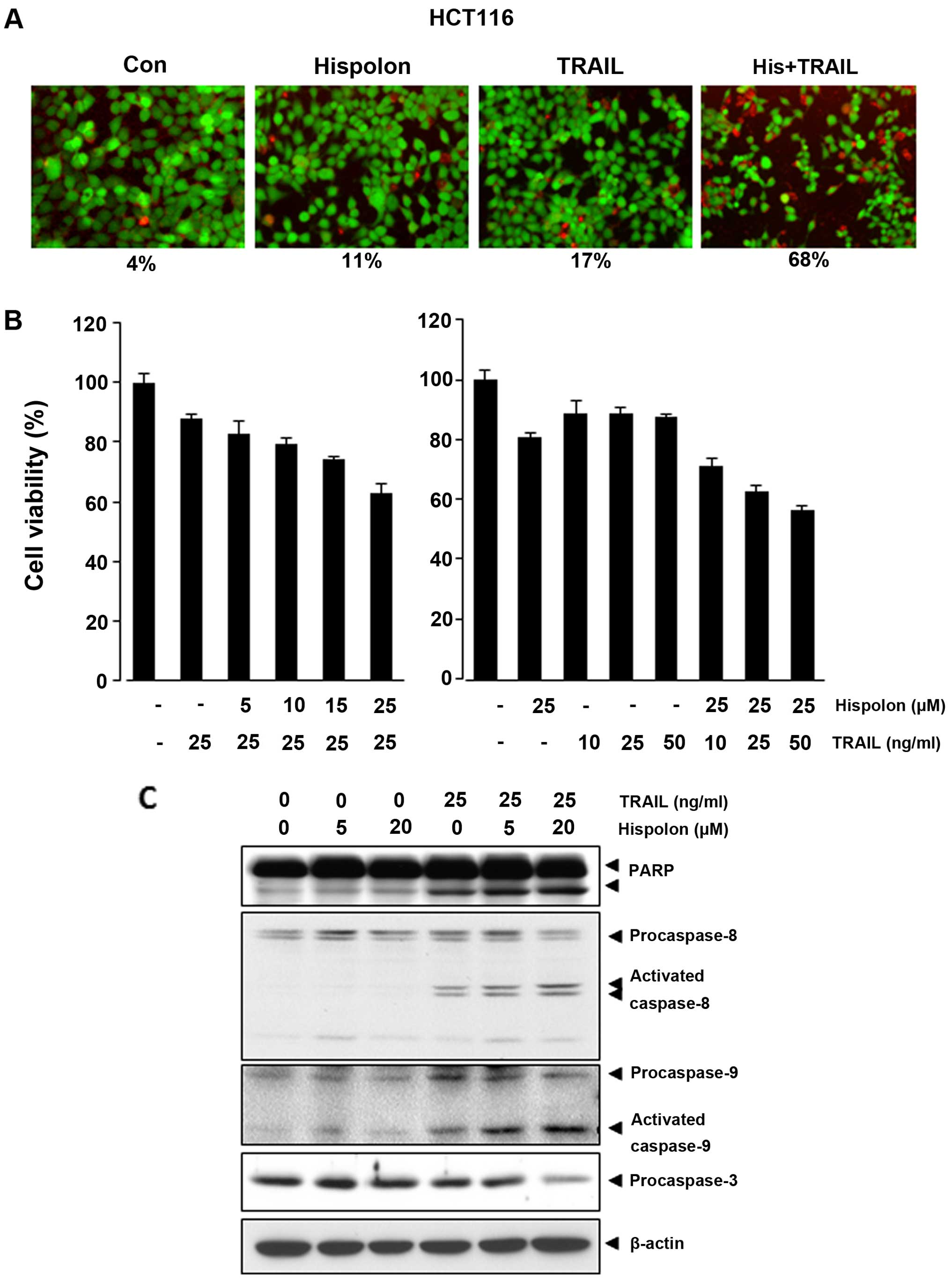
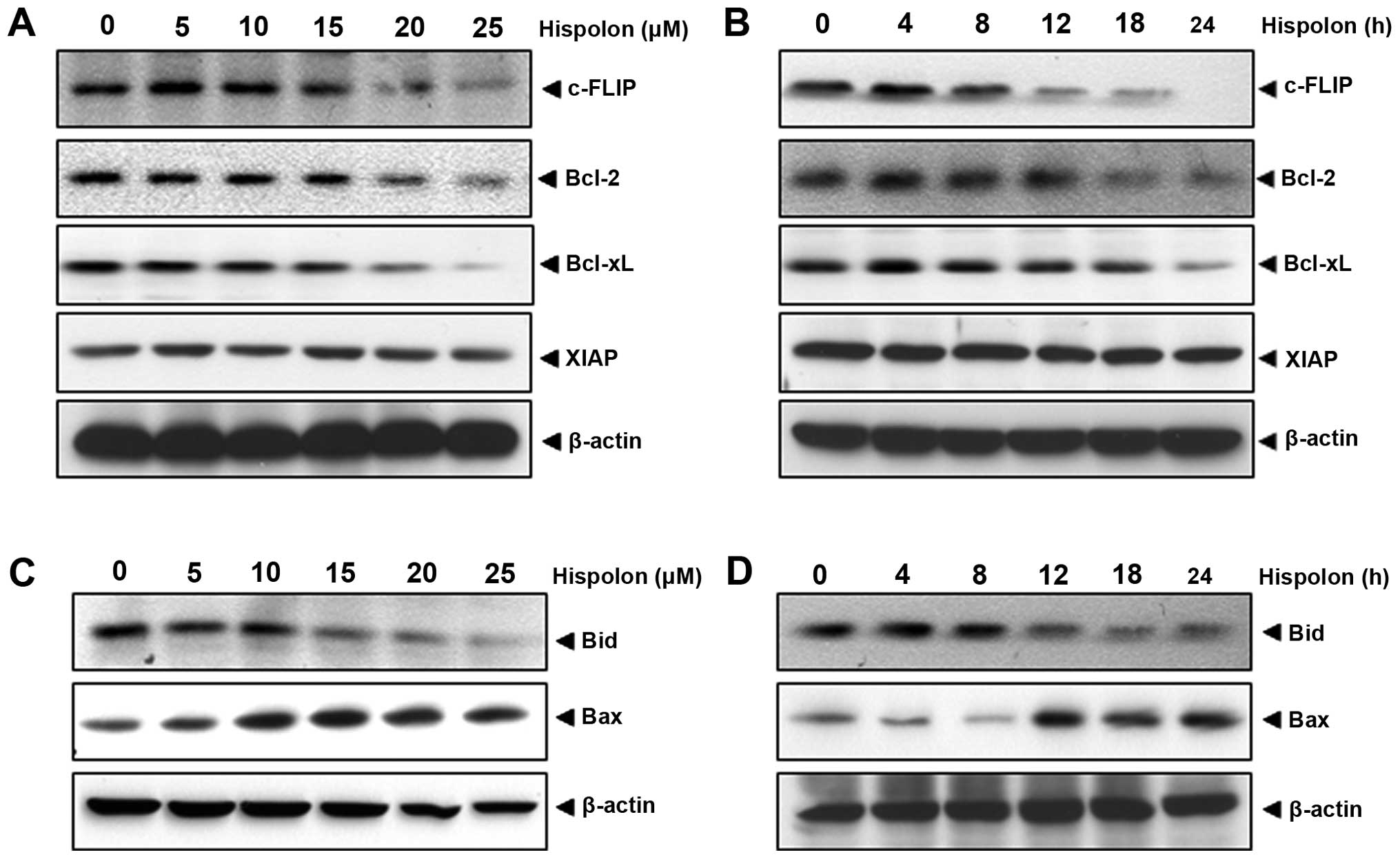
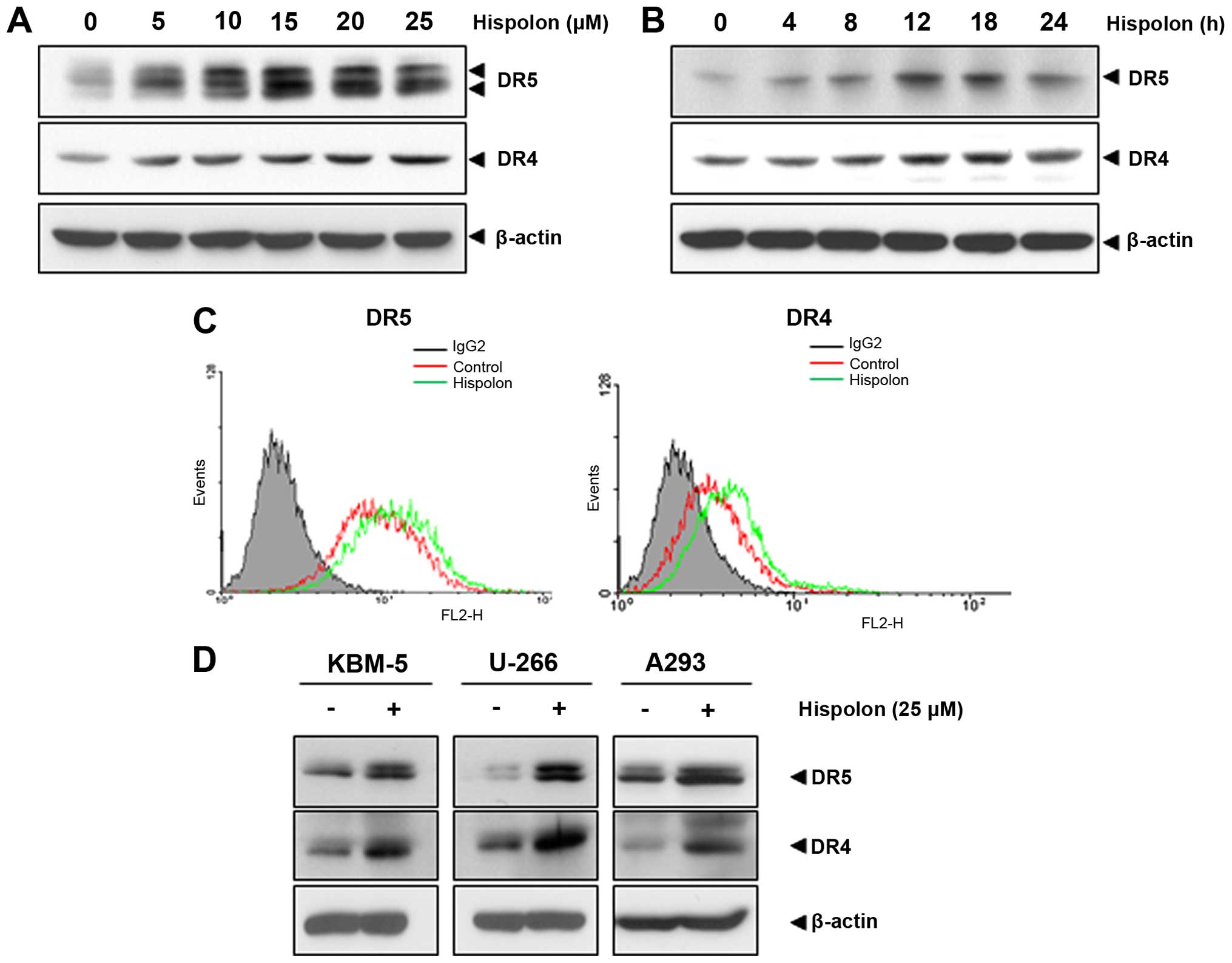
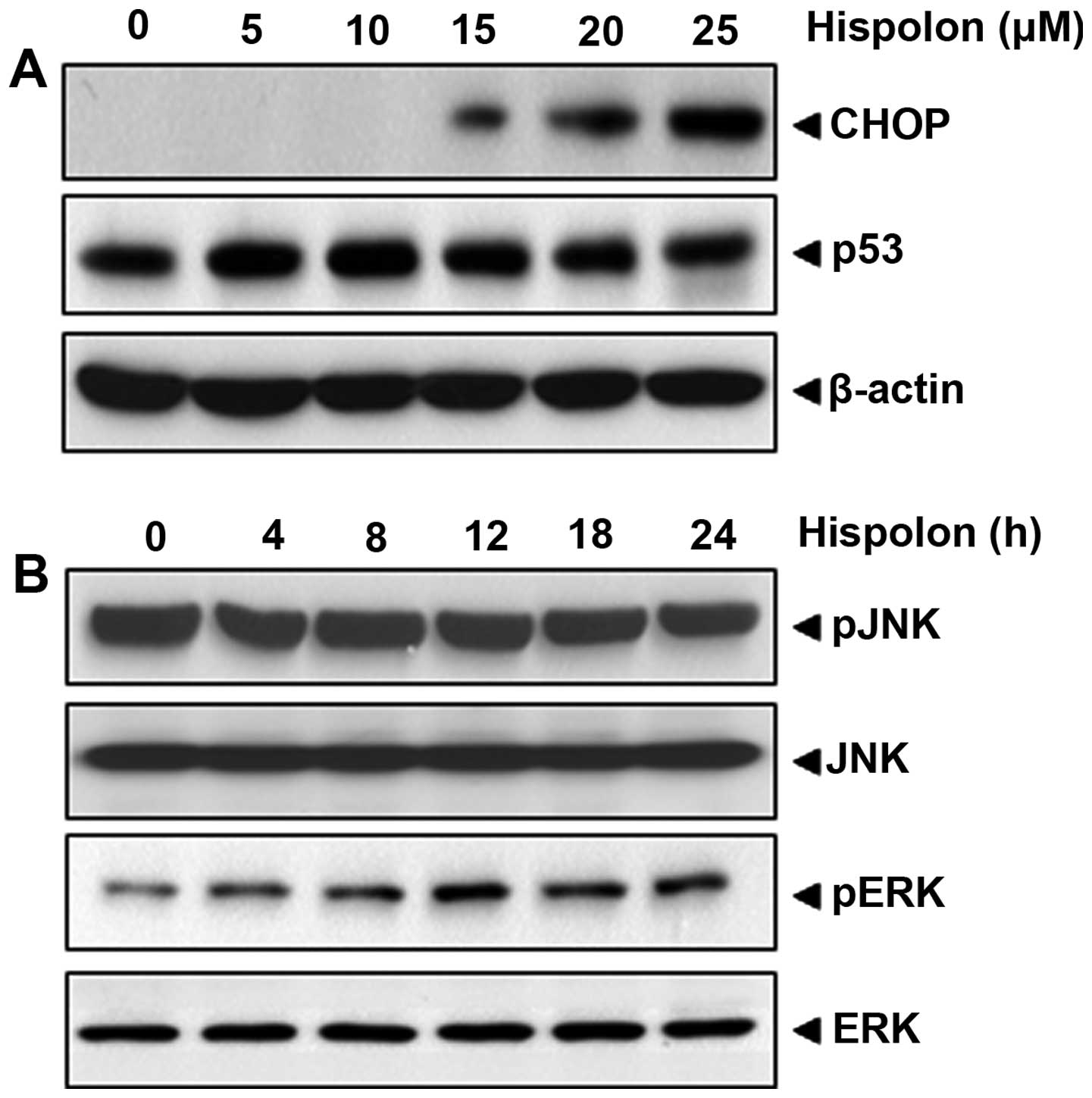
The tumor necrosis factor-related apoptosis-inducing ligand (TRAIL) is a potent anticancer agent possessing the ability to induce apoptosis in various cancer cells but not in non‑malignant cells. However, certain type of cancer cells are resistant to TRAIL‑induced apoptosis and some acquire resistance after the first treatment. So development of an agent that can reduce or avoid resistance in TRAIL‑induced apoptosis has garnered significant attention. The present study evaluated the anticancer potential of hispolon in TRAIL‑induced apoptosis and indicated hispolon can sensitize cancer cells to TRAIL. As the mechanism of action was examined, hispolon was found to activate caspase‑3, caspase‑8 and caspase‑9, while downregulating the expression of cell survival proteins such as cFLIP, Bcl‑2 and Bcl‑xL and upregulating the expression of Bax and truncated Bid. We also found hispolon induced death receptors in a non‑cell type‑specific manner. Upregulation of death receptors by hispolon was found to be p53-independent but linked to the induction of CAAT enhancer binding protein homologous protein (CHOP). Overall, hispolon was demonstrated to potentiate the apoptotic effects of TRAIL through downregulation of anti‑apoptotic proteins and upregulation of death receptors linked with CHOP and pERK elevation.
View Figures

Figure 1

Figure 2

Figure 3

Figure 4

View References

1 

Jemal A, Bray F, Center MM, Ferlay J, Ward E and Forman D: Global cancer statistics. CA Cancer J Clin. 61:69–90. 2011. View Article : Google Scholar : PubMed/NCBI

2 

Hanahan D and Weinberg RA: Hallmarks of cancer: The next generation. Cell. 144:646–674. 2011. View Article : Google Scholar : PubMed/NCBI

3 

Pitti RM, Marsters SA, Ruppert S, Donahue CJ, Moore A and Ashkenazi A: Induction of apoptosis by Apo-2 ligand, a new member of the tumor necrosis factor cytokine family. J Biol Chem. 271:12687–12690. 1996. View Article : Google Scholar : PubMed/NCBI

4 

Wiley SR, Schooley K, Smolak PJ, Din WS, Huang CP, Nicholl JK, Sutherland GR, Smith TD, Rauch C, Smith CA, et al: Identification and characterization of a new member of the TNF family that induces apoptosis. Immunity. 3:673–682. 1995. View Article : Google Scholar : PubMed/NCBI

5 

Tanaka M, Suda T, Yatomi T, Nakamura N and Nagata S: Lethal effect of recombinant human Fas ligand in mice pretreated with Propionibacterium acnes. J Immunol. 158:2303–2309. 1997.PubMed/NCBI

6 

Walczak H, Degli-Esposti MA, Johnson RS, Smolak PJ, Waugh JY, Boiani N, Timour MS, Gerhart MJ, Schooley KA, Smith CA, et al: TRAIL-R2: A novel apoptosis-mediating receptor for TRAIL. EMBO J. 16:5386–5397. 1997. View Article : Google Scholar : PubMed/NCBI

7 

French LE and Tschopp J: The TRAIL to selective tumor death. Nat med. 5:146–147. 1999. View Article : Google Scholar : PubMed/NCBI

8 

Gura T: How TRAIL kills cancer cells, but not normal cells. Science. 277:7681997. View Article : Google Scholar : PubMed/NCBI

9 

Walczak H, Miller RE, Ariail K, Gliniak B, Griffith TS, Kubin M, Chin W, Jones J, Woodward A, Le T, et al: Tumoricidal activity of tumor necrosis factor-related apoptosis-inducing ligand in vivo. Nat Med. 5:157–163. 1999. View Article : Google Scholar : PubMed/NCBI

10 

Bhardwaj A and Aggarwal BB: Receptor-mediated choreography of life and death. J Clin Immunol. 23:317–332. 2003. View Article : Google Scholar : PubMed/NCBI

11 

Doi T, Murakami H, Ohtsu A, Fuse N, Yoshino T, Yamamoto N, Boku N, Onozawa Y, Hsu CP, Gorski KS, et al: Phase 1 study of conatumumab, a pro-apoptotic death receptor 5 agonist antibody, in Japanese patients with advanced solid tumors. Cancer Chemother Pharmacol. 68:733–741. 2011. View Article : Google Scholar

12 

Maksimovic-Ivanic D, Stosic-Grujicic S, Nicoletti F and Mijatovic S: Resistance to TRAIL and how to surmount it. Immunol Res. 52:157–168. 2012. View Article : Google Scholar : PubMed/NCBI

13 

Fulda S, Küfer MU, Meyer E, Van Valen F, Dockhorn-Dworniczak B and Debatin KM: Sensitization for death receptor- or drug-induced apoptosis by re-expression of caspase-8 through demethylation or gene transfer. Oncogene. 20:5865–5877. 2001. View Article : Google Scholar : PubMed/NCBI

14 

Eggert A, Grotzer MA, Zuzak TJ, Wiewrodt BR, Ho R, Ikegaki N and Brodeur GM: Resistance to tumor necrosis factor-related apoptosis-inducing ligand (TRAIL)-induced apoptosis in neuroblastoma cells correlates with a loss of caspase-8 expression. Cancer Res. 61:1314–1319. 2001.PubMed/NCBI

15 

Bodmer JL, Holler N, Reynard S, Vinciguerra P, Schneider P, Juo P, Blenis J and Tschopp J: TRAIL receptor-2 signals apoptosis through FADD and caspase-8. Nat Cell Biol. 2:241–243. 2000. View Article : Google Scholar : PubMed/NCBI

16 

Tepper CG and Seldin MF: Modulation of caspase-8 and FLICE-inhibitory protein expression as a potential mechanism of Epstein-Barr virus tumorigenesis in Burkitt's lymphoma. Blood. 94:1727–1737. 1999.PubMed/NCBI

17 

Okano H, Shiraki K, Inoue H, Kawakita T, Yamanaka T, Deguchi M, Sugimoto K, Sakai T, Ohmori S, Fujikawa K, et al: Cellular FLICE/caspase-8-inhibitory protein as a principal regulator of cell death and survival in human hepatocellular carcinoma. Lab Invest. 83:1033–1043. 2003. View Article : Google Scholar : PubMed/NCBI

18 

Schimmer AD, Welsh K, Pinilla C, Wang Z, Krajewska M, Bonneau MJ, Pedersen IM, Kitada S, Scott FL, Bailly-Maitre B, et al: Small-molecule antagonists of apoptosis suppressor XIAP exhibit broad antitumor activity. Cancer Cell. 5:25–35. 2004. View Article : Google Scholar : PubMed/NCBI

19 

Ricci MS, Kim SH, Ogi K, Plastaras JP, Ling J, Wang W, Jin Z, Liu YY, Dicker DT, Chiao PJ, et al: Reduction of TRAIL-induced Mcl-1 and cIAP2 by c-Myc or sorafenib sensitizes resistant human cancer cells to TRAIL-induced death. Cancer Cell. 12:66–80. 2007. View Article : Google Scholar : PubMed/NCBI

20 

Ravi R and Bedi A: Requirement of BAX for TRAIL/Apo2L-induced apoptosis of colorectal cancers: Synergism with sulindac-mediated inhibition of Bcl-xL. Cancer Res. 62:1583–1587. 2002.PubMed/NCBI

21 

Hinz S, Trauzold A, Boenicke L, Sandberg C, Beckmann S, Bayer E, Walczak H, Kalthoff H and Ungefroren H: Bcl-xL protects pancreatic adenocarcinoma cells against CD95- and TRAIL-receptor-mediated apoptosis. Oncogene. 19:5477–5486. 2000. View Article : Google Scholar : PubMed/NCBI

22 

Kandasamy K, Srinivasula SM, Alnemri ES, Thompson CB, Korsmeyer SJ, Bryant JL and Srivastava RK: Involvement of proapoptotic molecules Bax and Bak in tumor necrosis factor-related apoptosis-inducing ligand (TRAIL)-induced mitochondrial disruption and apoptosis: Differential regulation of cytochrome c and Smac/DIABLO release. Cancer Res. 63:1712–1721. 2003.PubMed/NCBI

23 

Huang GJ, Deng JS, Chiu CS, Liao JC, Hsieh WT, Sheu MJ and Wu CH: Hispolon protects against acute liver damage in the rat by inhibiting lipid peroxidation, proinflammatory cytokine, and oxidative stress and downregulating the expressions of iNOS, COX-2, and MMP-9. Evid Based Complement Alternat med. 2012:4807142012. View Article : Google Scholar

24 

Chien YC, Huang GJ, Cheng HC, Wu CH and Sheu MJ: Hispolon attenuates balloon-injured neointimal formation and modulates vascular smooth muscle cell migration via AKT and ERK phosphorylation. J Nat Prod. 75:1524–1533. 2012. View Article : Google Scholar : PubMed/NCBI

25 

Ali NA, Lüdtke J, Pilgrim H and Lindequist U: Inhibition of chemiluminescence response of human mononuclear cells and suppression of mitogen-induced proliferation of spleen lymphocytes of mice by hispolon and hispidin. Pharmazie. 51:667–670. 1996.PubMed/NCBI

26 

Lu TL, Huang GJ, Lu TJ, Wu JB, Wu CH, Yang TC, Iizuka A and Chen YF: Hispolon from Phellinus linteus has antiproliferative effects via MDM2-recruited ERK1/2 activity in breast and bladder cancer cells. Food Chem Toxicol. 47:2013–2021. 2009. View Article : Google Scholar : PubMed/NCBI

27 

Huang GJ, Deng JS, Huang SS and Hu ML: Hispolon induces apoptosis and cell cycle arrest of human hepatocellular carcinoma Hep3B cells by modulating ERK phosphorylation. J Agric Food Chem. 59:7104–7113. 2011. View Article : Google Scholar : PubMed/NCBI

28 

Chen W, Zhao Z, Li L, Wu B, Chen SF, Zhou H, Wang Y and Li YQ: Hispolon induces apoptosis in human gastric cancer cells through a ROS-mediated mitochondrial pathway. Free Radic Biol Med. 45:60–72. 2008. View Article : Google Scholar : PubMed/NCBI

29 

Huang GJ, Yang CM, Chang YS, Amagaya S, Wang HC, Hou WC, Huang SS and Hu ML: Hispolon suppresses SK-Hep1 human hepatoma cell metastasis by inhibiting matrix metallo-proteinase-2/9 and urokinase-plasminogen activator through the PI3K/Akt and ERK signaling pathways. J Agric Food Chem. 58:9468–9475. 2010. View Article : Google Scholar : PubMed/NCBI

30 

Chen W, He FY and Li YQ: The apoptosis effect of hispolon from Phellinus linteus (Berkeley & Curtis) Teng on human epidermoid KB cells. J Ethnopharmacol. 105:280–285. 2006. View Article : Google Scholar : PubMed/NCBI

31 

Sung B, Park B, Yadav VR and Aggarwal BB: Celastrol, a triterpene, enhances TRAIL-induced apoptosis through the downregulation of cell survival proteins and upregulation of death receptors. J Biol Chem. 285:11498–11507. 2010. View Article : Google Scholar : PubMed/NCBI

32 

Yoshida T, Shiraishi T, Nakata S, Horinaka M, Wakada M, Mizutani Y, Miki T and Sakai T: Proteasome inhibitor MG132 induces death receptor 5 through CCAAT/enhancer-binding protein homologous protein. Cancer Res. 65:5662–5667. 2005. View Article : Google Scholar : PubMed/NCBI

33 

Yamaguchi H and Wang HG: CHOP is involved in endoplasmic reticulum stress-induced apoptosis by enhancing DR5 expression in human carcinoma cells. J Biol Chem. 279:45495–45502. 2004. View Article : Google Scholar : PubMed/NCBI

34 

Ichijo H: From receptors to stress-activated MAP kinases. Oncogene. 18:6087–6093. 1999. View Article : Google Scholar : PubMed/NCBI

35 

Sarker M, Ruiz-Ruiz C and López-Rivas A: Activation of protein kinase C inhibits TRAIL-induced caspases activation, mitochondrial events and apoptosis in a human leukemic T cell line. Cell Death Differ. 8:172–181. 2001. View Article : Google Scholar : PubMed/NCBI

36 

Ozoren N, Kim K, Burns TF, Dicker DT, Moscioni AD and El-Deiry WS: The caspase-9 inhibitor Z-LEHD-FMK protects human liver cells while permitting death of cancer cells exposed to tumor necrosis factor-related apoptosis-inducing ligand. Cancer Res. 60:6259–6265. 2000.PubMed/NCBI

37 

Krammer PH: CD95's deadly mission in the immune system. Nature. 407:789–795. 2000. View Article : Google Scholar : PubMed/NCBI

38 

Cummins JM, Kohli M, Rago C, Kinzler KW, Vogelstein B and Bunz F: X-linked inhibitor of apoptosis protein (XIAP) is a nonredundant modulator of tumor necrosis factor-related apoptosis-inducing ligand (TRAIL)-mediated apoptosis in human cancer cells. Cancer Res. 64:3006–3008. 2004. View Article : Google Scholar : PubMed/NCBI

39 

Lee TJ, Lee JT, Park JW and Kwon TK: Acquired TRAIL resistance in human breast cancer cells are caused by the sustained cFLIP(L) and XIAP protein levels and ERK activation. Biochem Biophys Res Commun. 351:1024–1030. 2006. View Article : Google Scholar : PubMed/NCBI

40 

Chawla-Sarkar M, Bae SI, Reu FJ, Jacobs BS, Lindner DJ and Borden EC: Downregulation of Bcl-2, FLIP or IAPs (XIAP and survivin) by siRNAs sensitizes resistant melanoma cells to Apo2L/TRAIL-induced apoptosis. Cell Death Differ. 11:915–923. 2004. View Article : Google Scholar : PubMed/NCBI

41 

Ravindran J, Subbaraju GV, Ramani MV, Sung B and Aggarwal BB: Bisdemethylcurcumin and structurally related hispolon analogues of curcumin exhibit enhanced prooxidant, anti-proliferative and anti-inflammatory activities in vitro. Biochem Pharmacol. 79:1658–1666. 2010. View Article : Google Scholar : PubMed/NCBI

42 

Sung YH, Park KH, Lee YB, Park HM, Shin DJ, Park JS, Oh MS, Ma HI, Yu KH, Kang SY, et al: Midbrain atrophy in subcortical ischemic vascular dementia. J Neurol. 256:1997–2002. 2009. View Article : Google Scholar : PubMed/NCBI

43 

Gupta SC, Francis SK, Nair MS, Mo YY and Aggarwal BB: Azadirone, a limonoid tetranortriterpene, induces death receptors and sensitizes human cancer cells to tumor necrosis factor-related apoptosis-inducing ligand (TRAIL) through a p53 protein-independent mechanism: Evidence for the role of the ROS-ERK-CHOP-death receptor pathway. J Biol Chem. 288:32343–32356. 2013. View Article : Google Scholar : PubMed/NCBI

44 

Ravi R, Bedi GC, Engstrom LW, Zeng Q, Mookerjee B, Gélinas C, Fuchs EJ and Bedi A: Regulation of death receptor expression and TRAIL/Apo2L-induced apoptosis by NF-kappaB. Nat Cell Biol. 3:409–416. 2001. View Article : Google Scholar : PubMed/NCBI

45 

Shenoy K, Wu Y and Pervaiz S: LY303511 enhances TRAIL sensitivity of SHEP-1 neuroblastoma cells via hydrogen peroxide-mediated mitogen-activated protein kinase activation and upregulation of death receptors. Cancer Res. 69:1941–1950. 2009. View Article : Google Scholar : PubMed/NCBI

46 

Wu GS, Burns TF, McDonald ER III, Jiang W, Meng R, Krantz ID, Kao G, Gan DD, Zhou JY, Muschel R, et al: KILLER/DR5 is a DNA damage-inducible p53-regulated death receptor gene. Nat genet. 17:141–143. 1997. View Article : Google Scholar : PubMed/NCBI

47 

Lu M, Xia L, Hua H and Jing Y: Acetyl-keto-beta-boswellic acid induces apoptosis through a death receptor 5-mediated pathway in prostate cancer cells. Cancer Res. 68:1180–1186. 2008. View Article : Google Scholar : PubMed/NCBI

48 

Yodkeeree S, Sung B, Limtrakul P and Aggarwal BB: Zerumbone enhances TRAIL-induced apoptosis through the induction of death receptors in human colon cancer cells: Evidence for an essential role of reactive oxygen species. Cancer Res. 69:6581–6589. 2009. View Article : Google Scholar : PubMed/NCBI

Related Articles

  • Abstract
  • View
  • Download
  • Twitter
Copy and paste a formatted citation
Spandidos Publications style
Kim JH, Kim YC and Park B: Hispolon from Phellinus linteus induces apoptosis and sensitizes human cancer cells to the tumor necrosis factor-related apoptosis-inducing ligand through upregulation of death receptors. Oncol Rep 35: 1020-1026, 2016.
APA
Kim, J., Kim, Y.C., & Park, B. (2016). Hispolon from Phellinus linteus induces apoptosis and sensitizes human cancer cells to the tumor necrosis factor-related apoptosis-inducing ligand through upregulation of death receptors. Oncology Reports, 35, 1020-1026. https://doi.org/10.3892/or.2015.4440
MLA
Kim, J., Kim, Y. C., Park, B."Hispolon from Phellinus linteus induces apoptosis and sensitizes human cancer cells to the tumor necrosis factor-related apoptosis-inducing ligand through upregulation of death receptors". Oncology Reports 35.2 (2016): 1020-1026.
Chicago
Kim, J., Kim, Y. C., Park, B."Hispolon from Phellinus linteus induces apoptosis and sensitizes human cancer cells to the tumor necrosis factor-related apoptosis-inducing ligand through upregulation of death receptors". Oncology Reports 35, no. 2 (2016): 1020-1026. https://doi.org/10.3892/or.2015.4440
Copy and paste a formatted citation
x
Spandidos Publications style
Kim JH, Kim YC and Park B: Hispolon from Phellinus linteus induces apoptosis and sensitizes human cancer cells to the tumor necrosis factor-related apoptosis-inducing ligand through upregulation of death receptors. Oncol Rep 35: 1020-1026, 2016.
APA
Kim, J., Kim, Y.C., & Park, B. (2016). Hispolon from Phellinus linteus induces apoptosis and sensitizes human cancer cells to the tumor necrosis factor-related apoptosis-inducing ligand through upregulation of death receptors. Oncology Reports, 35, 1020-1026. https://doi.org/10.3892/or.2015.4440
MLA
Kim, J., Kim, Y. C., Park, B."Hispolon from Phellinus linteus induces apoptosis and sensitizes human cancer cells to the tumor necrosis factor-related apoptosis-inducing ligand through upregulation of death receptors". Oncology Reports 35.2 (2016): 1020-1026.
Chicago
Kim, J., Kim, Y. C., Park, B."Hispolon from Phellinus linteus induces apoptosis and sensitizes human cancer cells to the tumor necrosis factor-related apoptosis-inducing ligand through upregulation of death receptors". Oncology Reports 35, no. 2 (2016): 1020-1026. https://doi.org/10.3892/or.2015.4440
Follow us
  • Twitter
  • LinkedIn
  • Facebook
About
  • Spandidos Publications
  • Careers
  • Cookie Policy
  • Privacy Policy
How can we help?
  • Help
  • Live Chat
  • Contact
  • Email to our Support Team