Spandidos Publications Logo
  • About
    • About Spandidos
    • Aims and Scopes
    • Abstracting and Indexing
    • Editorial Policies
    • Reprints and Permissions
    • Job Opportunities
    • Terms and Conditions
    • Contact
  • Journals
    • All Journals
    • Oncology Letters
      • Oncology Letters
      • Information for Authors
      • Editorial Policies
      • Editorial Board
      • Aims and Scope
      • Abstracting and Indexing
      • Bibliographic Information
      • Archive
    • International Journal of Oncology
      • International Journal of Oncology
      • Information for Authors
      • Editorial Policies
      • Editorial Board
      • Aims and Scope
      • Abstracting and Indexing
      • Bibliographic Information
      • Archive
    • Molecular and Clinical Oncology
      • Molecular and Clinical Oncology
      • Information for Authors
      • Editorial Policies
      • Editorial Board
      • Aims and Scope
      • Abstracting and Indexing
      • Bibliographic Information
      • Archive
    • Experimental and Therapeutic Medicine
      • Experimental and Therapeutic Medicine
      • Information for Authors
      • Editorial Policies
      • Editorial Board
      • Aims and Scope
      • Abstracting and Indexing
      • Bibliographic Information
      • Archive
    • International Journal of Molecular Medicine
      • International Journal of Molecular Medicine
      • Information for Authors
      • Editorial Policies
      • Editorial Board
      • Aims and Scope
      • Abstracting and Indexing
      • Bibliographic Information
      • Archive
    • Biomedical Reports
      • Biomedical Reports
      • Information for Authors
      • Editorial Policies
      • Editorial Board
      • Aims and Scope
      • Abstracting and Indexing
      • Bibliographic Information
      • Archive
    • Oncology Reports
      • Oncology Reports
      • Information for Authors
      • Editorial Policies
      • Editorial Board
      • Aims and Scope
      • Abstracting and Indexing
      • Bibliographic Information
      • Archive
    • Molecular Medicine Reports
      • Molecular Medicine Reports
      • Information for Authors
      • Editorial Policies
      • Editorial Board
      • Aims and Scope
      • Abstracting and Indexing
      • Bibliographic Information
      • Archive
    • World Academy of Sciences Journal
      • World Academy of Sciences Journal
      • Information for Authors
      • Editorial Policies
      • Editorial Board
      • Aims and Scope
      • Abstracting and Indexing
      • Bibliographic Information
      • Archive
    • International Journal of Functional Nutrition
      • International Journal of Functional Nutrition
      • Information for Authors
      • Editorial Policies
      • Editorial Board
      • Aims and Scope
      • Abstracting and Indexing
      • Bibliographic Information
      • Archive
    • International Journal of Epigenetics
      • International Journal of Epigenetics
      • Information for Authors
      • Editorial Policies
      • Editorial Board
      • Aims and Scope
      • Abstracting and Indexing
      • Bibliographic Information
      • Archive
    • Medicine International
      • Medicine International
      • Information for Authors
      • Editorial Policies
      • Editorial Board
      • Aims and Scope
      • Abstracting and Indexing
      • Bibliographic Information
      • Archive
  • Articles
  • Information
    • Information for Authors
    • Information for Reviewers
    • Information for Librarians
    • Information for Advertisers
    • Conferences
  • Language Editing
Spandidos Publications Logo
  • About
    • About Spandidos
    • Aims and Scopes
    • Abstracting and Indexing
    • Editorial Policies
    • Reprints and Permissions
    • Job Opportunities
    • Terms and Conditions
    • Contact
  • Journals
    • All Journals
    • Biomedical Reports
      • Information for Authors
      • Editorial Policies
      • Editorial Board
      • Aims and Scope
      • Abstracting and Indexing
      • Bibliographic Information
      • Archive
    • Experimental and Therapeutic Medicine
      • Information for Authors
      • Editorial Policies
      • Editorial Board
      • Aims and Scope
      • Abstracting and Indexing
      • Bibliographic Information
      • Archive
    • International Journal of Epigenetics
      • Information for Authors
      • Editorial Policies
      • Editorial Board
      • Aims and Scope
      • Abstracting and Indexing
      • Bibliographic Information
      • Archive
    • International Journal of Functional Nutrition
      • Information for Authors
      • Editorial Policies
      • Editorial Board
      • Aims and Scope
      • Abstracting and Indexing
      • Bibliographic Information
      • Archive
    • International Journal of Molecular Medicine
      • Information for Authors
      • Editorial Policies
      • Editorial Board
      • Aims and Scope
      • Abstracting and Indexing
      • Bibliographic Information
      • Archive
    • International Journal of Oncology
      • Information for Authors
      • Editorial Policies
      • Editorial Board
      • Aims and Scope
      • Abstracting and Indexing
      • Bibliographic Information
      • Archive
    • Medicine International
      • Information for Authors
      • Editorial Policies
      • Editorial Board
      • Aims and Scope
      • Abstracting and Indexing
      • Bibliographic Information
      • Archive
    • Molecular and Clinical Oncology
      • Information for Authors
      • Editorial Policies
      • Editorial Board
      • Aims and Scope
      • Abstracting and Indexing
      • Bibliographic Information
      • Archive
    • Molecular Medicine Reports
      • Information for Authors
      • Editorial Policies
      • Editorial Board
      • Aims and Scope
      • Abstracting and Indexing
      • Bibliographic Information
      • Archive
    • Oncology Letters
      • Information for Authors
      • Editorial Policies
      • Editorial Board
      • Aims and Scope
      • Abstracting and Indexing
      • Bibliographic Information
      • Archive
    • Oncology Reports
      • Information for Authors
      • Editorial Policies
      • Editorial Board
      • Aims and Scope
      • Abstracting and Indexing
      • Bibliographic Information
      • Archive
    • World Academy of Sciences Journal
      • Information for Authors
      • Editorial Policies
      • Editorial Board
      • Aims and Scope
      • Abstracting and Indexing
      • Bibliographic Information
      • Archive
  • Articles
  • Information
    • For Authors
    • For Reviewers
    • For Librarians
    • For Advertisers
    • Conferences
  • Language Editing
Login Register Submit
  • This site uses cookies
  • You can change your cookie settings at any time by following the instructions in our Cookie Policy. To find out more, you may read our Privacy Policy.

    I agree
Search articles by DOI, keyword, author or affiliation
Search
Advanced Search
presentation
Oncology Reports
Join Editorial Board Propose a Special Issue
Print ISSN: 1021-335X Online ISSN: 1791-2431
Journal Cover
July-2016 Volume 36 Issue 1

Full Size Image

Sign up for eToc alerts
Recommend to Library

Journals

International Journal of Molecular Medicine

International Journal of Molecular Medicine

International Journal of Molecular Medicine is an international journal devoted to molecular mechanisms of human disease.

International Journal of Oncology

International Journal of Oncology

International Journal of Oncology is an international journal devoted to oncology research and cancer treatment.

Molecular Medicine Reports

Molecular Medicine Reports

Covers molecular medicine topics such as pharmacology, pathology, genetics, neuroscience, infectious diseases, molecular cardiology, and molecular surgery.

Oncology Reports

Oncology Reports

Oncology Reports is an international journal devoted to fundamental and applied research in Oncology.

Experimental and Therapeutic Medicine

Experimental and Therapeutic Medicine

Experimental and Therapeutic Medicine is an international journal devoted to laboratory and clinical medicine.

Oncology Letters

Oncology Letters

Oncology Letters is an international journal devoted to Experimental and Clinical Oncology.

Biomedical Reports

Biomedical Reports

Explores a wide range of biological and medical fields, including pharmacology, genetics, microbiology, neuroscience, and molecular cardiology.

Molecular and Clinical Oncology

Molecular and Clinical Oncology

International journal addressing all aspects of oncology research, from tumorigenesis and oncogenes to chemotherapy and metastasis.

World Academy of Sciences Journal

World Academy of Sciences Journal

Multidisciplinary open-access journal spanning biochemistry, genetics, neuroscience, environmental health, and synthetic biology.

International Journal of Functional Nutrition

International Journal of Functional Nutrition

Open-access journal combining biochemistry, pharmacology, immunology, and genetics to advance health through functional nutrition.

International Journal of Epigenetics

International Journal of Epigenetics

Publishes open-access research on using epigenetics to advance understanding and treatment of human disease.

Medicine International

Medicine International

An International Open Access Journal Devoted to General Medicine.

Journal Cover
July-2016 Volume 36 Issue 1

Full Size Image

Sign up for eToc alerts
Recommend to Library

  • Article
  • Citations
    • Cite This Article
    • Download Citation
    • Create Citation Alert
    • Remove Citation Alert
    • Cited By
  • Similar Articles
    • Related Articles (in Spandidos Publications)
    • Similar Articles (Google Scholar)
    • Similar Articles (PubMed)
  • Download PDF
  • Download XML
  • View XML
Article

Ursolic acid inhibits proliferation and reverses drug resistance of ovarian cancer stem cells by downregulating ABCG2 through suppressing the expression of hypoxia-inducible factor-1α in vitro

  • Authors:
    • Wen-Jing Wang
    • Hua Sui
    • Cong Qi
    • Qi Li
    • Jie Zhang
    • Shao-Fei Wu
    • Ming-Zhu Mei
    • Ying-Yu Lu
    • Yi-Ting Wan
    • Hannah Chang
    • Piao-Ting Guo
  • View Affiliations / Copyright

    Affiliations: Department of Gynecology, Shuguang Hospital, Shanghai University of Traditional Chinese Medicine, Shanghai 201203, P.R. China, Department of Medical Oncology, Shuguang Hospital, Shanghai University of Traditional Chinese Medicine, Shanghai 201203, P.R. China, Department of Science and Technology, Longhua Hospital Affiliated to Shanghai University of Traditional Chinese Medicine, Shanghai 200032, P.R. China, Department of Hepatopathy, Shandong Provincial Qianfoshan Hospital, Shandong University, Jinan, Shandong 250014, P.R. China, Department of Medical Oncology, Shanghai General Hospital, Shanghai 201203, P.R. China
  • Pages: 428-440
    |
    Published online on: May 18, 2016
       https://doi.org/10.3892/or.2016.4813
  • Expand metrics +
Metrics: Total Views: 0 (Spandidos Publications: | PMC Statistics: )
Metrics: Total PDF Downloads: 0 (Spandidos Publications: | PMC Statistics: )
Cited By (CrossRef): 0 citations Loading Articles...

This article is mentioned in:


Abstract

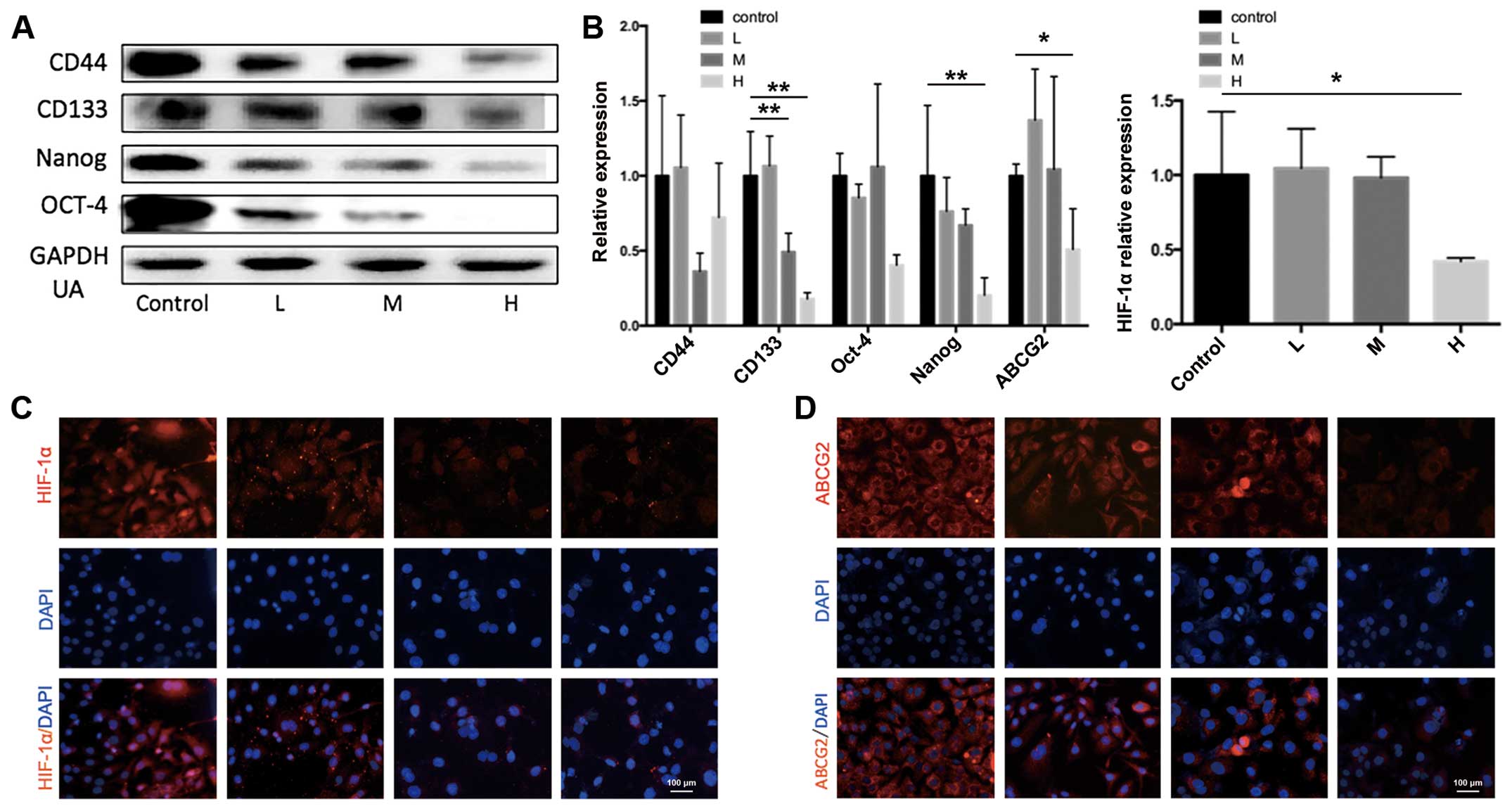
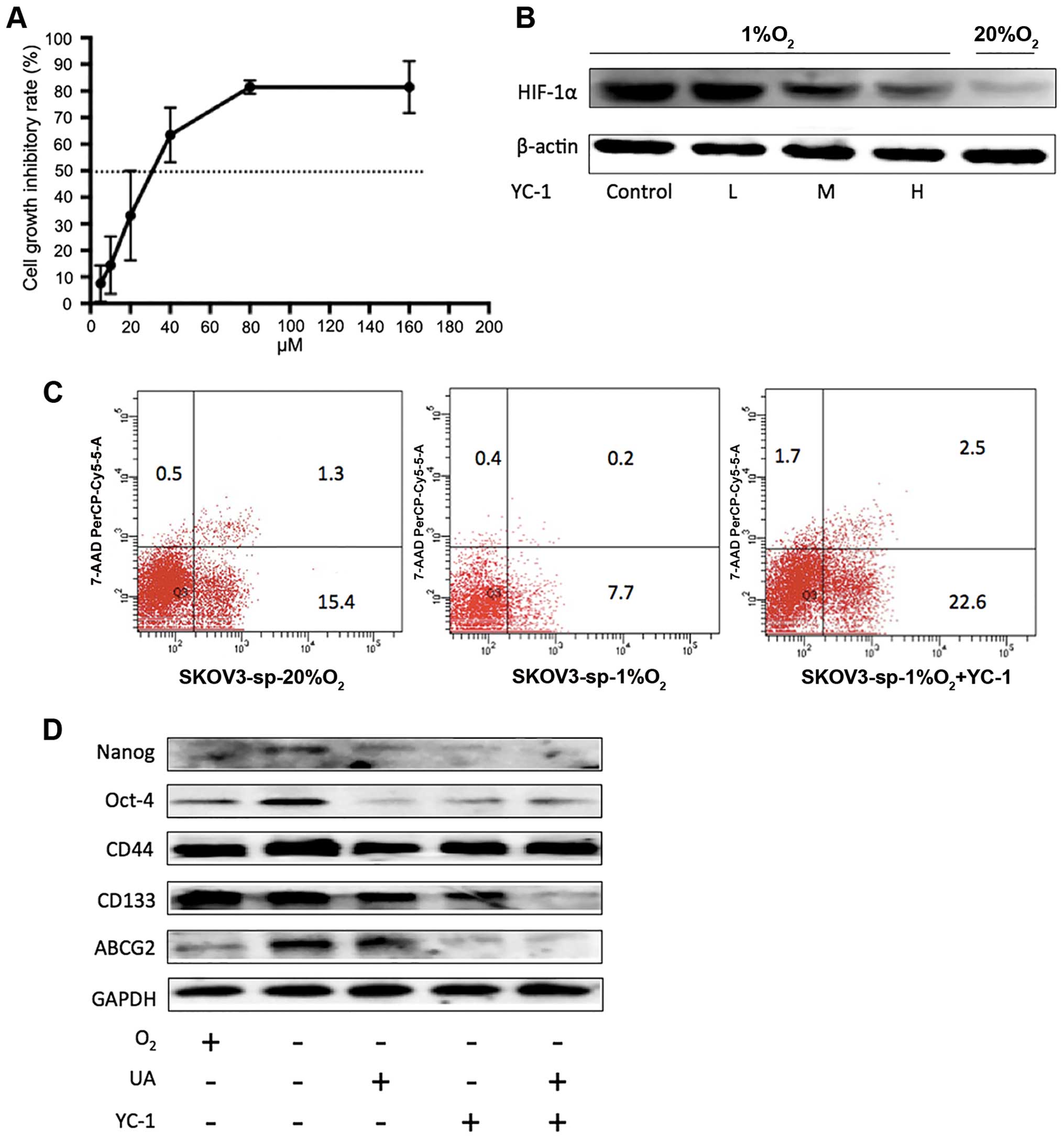
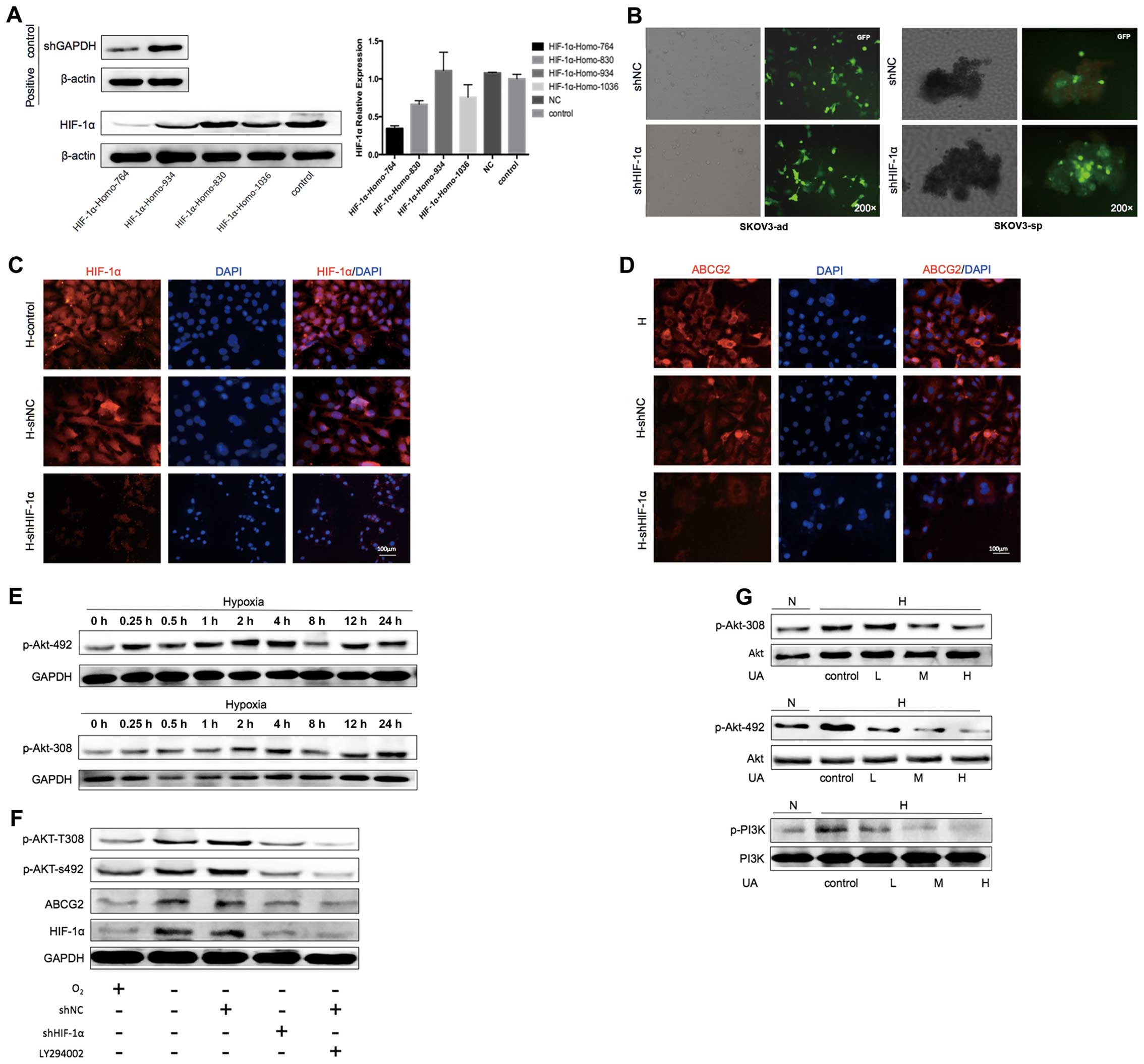
Hypoxia in tumors is closely related to drug resistance. It has not been verified whether hypoxia-inducible factor-1α (HIF-1α) or ABCG2 is related to hypoxia-induced resistance. Ursolic acid (UA), when used in combination with cisplatin can significantly increase the sensitivity of ovarian cancer stem cells (CSCs) to cisplatin, but the exact mechanism is unknown. The cell growth inhibitory rate of cisplatin under different conditions was evaluated using Cell Counting Kit-8 (CCK-8) in adherence and sphere cells (SKOV3, A2780, and HEY). The expression of HIF-1α and ABCG2 was tested using quantitative PCR, western blotting, and immuno­fluorescence under different culture conditions and treated with UA. Knockdown of HIF-1α by shRNA and LY294002 was used to inhibit the activity of PI3K/Akt pathway. Ovarian CSCs express stemness-related genes and drug resistance significantly higher than normal adherent cells. Under hypoxic conditions, the ovarian CSCs grew faster and were more drug resistant than under normoxia. UA could inhibit proliferation and reverse the drug resistance of ovarian CSC by suppressing ABCG2 and HIF-1α under different culture conditions. HIF-1α inhibitor YC-1 combined with UA suppressed the stemness genes and ABCG2 under hypoxic condition. The PI3K/Akt signaling pathway activation plays an important functional role in UA-induced downregulation of HIF-1α and reduction of ABCG2. UA inhibits the proliferation and reversal of drug resistance in ovarian CSCs by suppressing the expression of downregulation of HIF-1α and ABCG2.
View Figures

Figure 1

Figure 2

Figure 3

Figure 4

Figure 5

Figure 6

Figure 7

Figure 8

Figure 9

Figure 10

Figure 11

View References

1 

Jemal A, Siegel R, Xu J and Ward E: Cancer statistics, 2010. CA Cancer J Clin. 60:277–300. 2010. View Article : Google Scholar : PubMed/NCBI

2 

Siegel R, Naishadham D and Jemal A: Cancer statistics, 2012. CA Cancer J Clin. 62:10–29. 2012. View Article : Google Scholar : PubMed/NCBI

3 

Kitamura H, Okudela K, Yazawa T, Sato H and Shimoyamada H: Cancer stem cell: Implications in cancer biology and therapy with special reference to lung cancer. Lung Cancer. 66:275–281. 2009. View Article : Google Scholar : PubMed/NCBI

4 

Szotek PP, Pieretti-Vanmarcke R, Masiakos PT, Dinulescu DM, Connolly D, Foster R, Dombkowski D, Preffer F, Maclaughlin DT and Donahoe PK: Ovarian cancer side population defines cells with stem cell-like characteristics and Mullerian Inhibiting Substance responsiveness. Proc Natl Acad Sci USA. 103:11154–11159. 2006. View Article : Google Scholar : PubMed/NCBI

5 

Zhou S, Schuetz JD, Bunting KD, Colapietro AM, Sampath J, Morris JJ, Lagutina I, Grosveld GC, Osawa M, Nakauchi H, et al: The ABC transporter Bcrp1/ABCG2 is expressed in a wide variety of stem cells and is a molecular determinant of the side-population phenotype. Nat Med. 7:1028–1034. 2001. View Article : Google Scholar : PubMed/NCBI

6 

Zhang G, Wang Z, Luo W, Jiao H, Wu J and Jiang C: Expression of potential cancer stem cell marker ABCG2 is associated with malignant behaviors of hepatocellular carcinoma. Gastroenterol Res Pract. 2013:7825812013. View Article : Google Scholar : PubMed/NCBI

7 

Natarajan K, Xie Y, Baer MR and Ross DD: Role of breast cancer resistance protein (BCRP/ABCG2) in cancer drug resistance. Biochem Pharmacol. 83:1084–1103. 2012. View Article : Google Scholar : PubMed/NCBI

8 

Noguchi K, Katayama K and Sugimoto Y: Human ABC transporter ABCG2/BCRP expression in chemoresistance: Basic and clinical perspectives for molecular cancer therapeutics. Pharm Genomics Pers Med. 7:53–64. 2014.

9 

Wu CP, Sim HM, Huang YH, Liu YC, Hsiao SH, Cheng HW, Li YQ, Ambudkar SV and Hsu SC: Overexpression of ATP-binding cassette transporter ABCG2 as a potential mechanism of acquired resistance to vemurafenib in BRAF(V600E) mutant cancer cells. Biochem Pharmacol. 85:325–334. 2013. View Article : Google Scholar :

10 

Nakanishi T and Ross DD: Breast cancer resistance protein (BCRP/ABCG2): Its role in multidrug resistance and regulation of its gene expression. Chin J Cancer. 31:73–99. 2012. View Article : Google Scholar

11 

Semenza GL: Defining the role of hypoxia-inducible factor 1 in cancer biology and therapeutics. Oncogene. 29:625–634. 2010. View Article : Google Scholar :

12 

Oda K, Nishimura T, Higuchi K, Ishido N, Ochi K, Iizasa H, Sai Y, Tomi M and Nakashima E: Estrogen receptor α induction by mitoxantrone increases Abcg2 expression in placental trophoblast cells. J Pharm Sci. 102:3364–3372. 2013. View Article : Google Scholar : PubMed/NCBI

13 

Chen S, Zhang M, Xing L, Wang Y, Xiao Y and Wu Y: HIF-1α contributes to proliferation and invasiveness of neuroblastoma cells via SHH signaling. PLoS One. 10:e01211152015. View Article : Google Scholar

14 

Wan J, Chai H, Yu Z, Ge W, Kang N, Xia W and Che Y: HIF-1α effects on angiogenic potential in human small cell lung carcinoma. J Exp Clin Cancer Res. 30:772011. View Article : Google Scholar

15 

Thomas R and Kim MH: HIF-1 alpha: A key survival factor for serum-deprived prostate cancer cells. Prostate. 68:1405–1415. 2008. View Article : Google Scholar : PubMed/NCBI

16 

Liu J: Pharmacology of oleanolic acid and ursolic acid. J Ethnopharmacol. 49:57–68. 1995. View Article : Google Scholar : PubMed/NCBI

17 

Tang X, Yan L, Xu L and Gao J: Comparative study on the hepatoprotective and anti-oxidation effects of oleanolic acid, ursolic acid and asiatic acid. Lishizhen Med Materia Med Res. 21:pp. 2824–2827. 2012, http://en.cnki.com.cn/Article_en/CJFDTOTAL-SZGY201011046.htm.

18 

Ikeda Y, Murakami A and Ohigashi H: Ursolic acid: An anti- and pro-inflammatory triterpenoid. Mol Nutr Food Res. 52:26–42. 2008. View Article : Google Scholar : PubMed/NCBI

19 

Martin-Aragón S, de las Heras B, Sanchez-Reus MI and Benedi J: Pharmacological modification of endogenous antioxidant enzymes by ursolic acid on tetrachloride-induced liver damage in rats and primary cultures of rat hepatocytes. Exp Toxicol Pathol. 53:199–206. 2001. View Article : Google Scholar : PubMed/NCBI

20 

Zhang J, Wang W, Qian L, Zhang Q, Lai D and Qi C: Ursolic acid inhibits the proliferation of human ovarian cancer stem-like cells through epithelial-mesenchymal transition. Oncol Rep. 34:2375–2384. 2015.PubMed/NCBI

21 

Lim JJ, Yang K, Taylor-Harding B, Wiedemeyer WR and Buckanovich RJ: VEGFR3 inhibition chemosensitizes ovarian cancer stemlike cells through down-regulation of BRCA1 and BRCA2. Neoplasia. 16:343–353. 2014. View Article : Google Scholar : PubMed/NCBI

22 

Huang R, Wang J, Zhong Y, Liu Y, Stokke T, Trope CG, Nesland JM and Suo Z: Mitochondrial DNA deficiency in ovarian cancer cells and cancer stem cell-like properties. Anticancer Res. 35:3743–3753. 2015.PubMed/NCBI

23 

Ruiz I, Martín-Arruti M, Lopez-Lopez E and Garcia-Orad A: Lack of association between deficient mismatch repair expression and outcome in endometrial carcinomas of the endometrioid type. Gynecol Oncol. 134:20–23. 2014. View Article : Google Scholar : PubMed/NCBI

24 

Hiraga T, Ito S and Nakamura H: Side population in MDA-MB-231 human breast cancer cells exhibits cancer stem cell-like properties without higher bone-metastatic potential. Oncol Rep. 25:289–296. 2011.

25 

Kim RJ and Nam JS: OCT4 expression enhances features of cancer stem cells in a mouse model of breast cancer. Lab Anim Res. 27:147–152. 2011. View Article : Google Scholar : PubMed/NCBI

26 

Gazda LS, Martis PC, Laramore MA, Bautista MA, Dudley A, Vinerean HV and Smith BH: Treatment of agarose-agarose RENCA macrobeads with docetaxel selects for OCT4(+) cells with tumor-initiating capability. Cancer Biol Ther. 14:1147–1157. 2013. View Article : Google Scholar : PubMed/NCBI

27 

Silva IA, Bai S, McLean K, Yang K, Griffith K, Thomas D, Ginestier C, Johnston C, Kueck A, Reynolds RK, et al: Aldehyde dehydrogenase in combination with CD133 defines angiogenic ovarian cancer stem cells that portend poor patient survival. Cancer Res. 71:3991–4001. 2011. View Article : Google Scholar : PubMed/NCBI

28 

Nam EJ, Lee M, Yim GW, Kim JH, Kim S, Kim SW and Kim YT: MicroRNA profiling of a CD133(+) spheroid-forming subpopulation of the OVCAR3 human ovarian cancer cell line. BMC Med Genomics. 5:182012. View Article : Google Scholar : PubMed/NCBI

29 

Casagrande F, Cocco E, Bellone S, Richter CE, Bellone M, Todeschini P, Siegel E, Varughese J, Arin-Silasi D, Azodi M, et al: Eradication of chemotherapy-resistant CD44+ human ovarian cancer stem cells in mice by intraperitoneal administration of Clostridium perfringens enterotoxin. Cancer. 117:5519–5528. 2011. View Article : Google Scholar : PubMed/NCBI

30 

Chiou SH, Wang ML, Chou YT, Chen CJ, Hong CF, Hsieh WJ, Chang HT, Chen YS, Lin TW, Hsu HS, et al: Coexpression of Oct4 and Nanog enhances malignancy in lung adenocarcinoma by inducing cancer stem cell-like properties and epithelialmesenchymal transdifferentiation. Cancer Res. 70:10433–10444. 2010. View Article : Google Scholar : PubMed/NCBI

31 

Wenger RH: Cellular adaptation to hypoxia: O2-sensing protein hydroxylases, hypoxia-inducible transcription factors, and O2-regulated gene expression. FASEB J. 16:1151–1162. 2002. View Article : Google Scholar : PubMed/NCBI

32 

Mathieu J, Zhang Z, Zhou W, Wang AJ, Heddleston JM, Pinna CM, Hubaud A, Stadler B, Choi M, Bar M, et al: HIF induces human embryonic stem cell markers in cancer cells. Cancer Res. 71:4640–4652. 2011. View Article : Google Scholar : PubMed/NCBI

33 

Jubb AM, Buffa FM and Harris AL: Assessment of tumour hypoxia for prediction of response to therapy and cancer prognosis. J Cell Mol Med. 14:18–29. 2010. View Article : Google Scholar

34 

Milosevic M, Warde P, Ménard C, Chung P, Toi A, Ishkanian A, McLean M, Pintilie M, Sykes J, Gospodarowicz M, et al: Tumor hypoxia predicts biochemical failure following radiotherapy for clinically localized prostate cancer. Clin Cancer Res. 18:2108–2114. 2012. View Article : Google Scholar : PubMed/NCBI

35 

Yang Y, Fan Y, Qi Y, Liu D, Wu K, Wen F and Zhao S: Side population cells separated from A549 lung cancer cell line possess cancer stem cell-like properties and inhibition of autophagy potentiates the cytotoxic effect of cisplatin. Oncol Rep. 34:929–935. 2015.PubMed/NCBI

36 

Xie ZY, Lv K, Xiong Y and Guo WH: ABCG2-meditated multidrug resistance and tumor-initiating capacity of side population cells from colon cancer. Oncol Res Treat. 37:666–668. 2014. View Article : Google Scholar : PubMed/NCBI

37 

Warrier S, Pavanram P, Raina D and Arvind M: Study of chemo-resistant CD133+ cancer stem cells from human glioblastoma cell line U138MG using multiple assays. Cell Biol Int. 36:1137–1143. 2012. View Article : Google Scholar

38 

Oh PS, Patel VB, Sanders MA, Kanwar SS, Yu Y, Nautiyal J, Patel BB and Majumdar AP: Schlafen-3 decreases cancer stem cell marker expression and autocrine/juxtacrine signaling in FOLFOX-resistant colon cancer cells. Am J Physiol Gastrointest Liver Physiol. 301:G347–G355. 2011. View Article : Google Scholar : PubMed/NCBI

39 

Chun YS, Yeo EJ, Choi E, Teng CM, Bae JM, Kim MS and Park JW: Inhibitory effect of YC-1 on the hypoxic induction of erythropoietin and vascular endothelial growth factor in Hep3B cells. Biochem Pharmacol. 61:947–954. 2001. View Article : Google Scholar : PubMed/NCBI

40 

Cheng Y, Li W, Liu Y, Cheng HC, Ma J and Qiu L: YC-1 exerts inhibitory effects on MDA-MB-468 breast cancer cells by targeting EGFR in vitro and in vivo under normoxic condition. Chin J Cancer. 31:248–256. 2012. View Article : Google Scholar : PubMed/NCBI

41 

Kong J, Kong F, Gao J, Zhang Q, Dong S, Gu F, Ke S, Pan B, Shen Q, Sun H, et al: YC-1 enhances the anti-tumor activity of sorafenib through inhibition of signal transducer and activator of transcription 3 (STAT3) in hepatocellular carcinoma. Mol Cancer. 13:72014. View Article : Google Scholar : PubMed/NCBI

42 

Zhong H, Chiles K, Feldser D, Laughner E, Hanrahan C, Georgescu MM, Simons JW and Semenza GL: Modulation of hypoxia-inducible factor 1alpha expression by the epidermal growth factor/phosphatidylinositol 3-kinase/PTEN/AKT/FRAP pathway in human prostate cancer cells: Implications for tumor angiogenesis and therapeutics. Cancer Res. 60:1541–1545. 2000.PubMed/NCBI

43 

Mazure NM, Chen EY, Laderoute KR and Giaccia AJ: Induction of vascular endothelial growth factor by hypoxia is modulated by a phosphatidylinositol 3-kinase/Akt signaling pathway in Ha-ras-transformed cells through a hypoxia inducible factor-1 transcriptional element. Blood. 90:3322–3331. 1997.PubMed/NCBI

44 

Bleau AM, Hambardzumyan D, Ozawa T, Fomchenko EI, Huse JT, Brennan CW and Holland EC: PTEN/PI3K/Akt pathway regulates the side population phenotype and ABCG2 activity in glioma tumor stem-like cells. Cell Stem Cell. 4:226–235. 2009. View Article : Google Scholar : PubMed/NCBI

45 

Kilic-Eren M, Boylu T and Tabor V: Targeting PI3K/Akt represses Hypoxia inducible factor-1α activation and sensitizes Rhabdomyosarcoma and Ewing's sarcoma cells for apoptosis. Cancer Cell Int. 13:362013. View Article : Google Scholar

46 

Lengyel E: Ovarian cancer development and metastasis. Am J Pathol. 177:1053–1064. 2010. View Article : Google Scholar : PubMed/NCBI

47 

Dontu G, Abdallah WM, Foley JM, Jackson KW, Clarke MF, Kawamura MJ and Wicha MS: In vitro propagation and transcriptional profiling of human mammary stem/progenitor cells. Genes Dev. 17:1253–1270. 2003. View Article : Google Scholar : PubMed/NCBI

48 

Uchida N, Buck DW, He D, Reitsma MJ, Masek M, Phan TV, Tsukamoto AS, Gage FH and Weissman IL: Direct isolation of human central nervous system stem cells. Proc Natl Acad Sci USA. 97:14720–14725. 2000. View Article : Google Scholar : PubMed/NCBI

49 

Lee J, Kotliarova S, Kotliarov Y, Li A, Su Q, Donin NM, Pastorino S, Purow BW, Christopher N, Zhang W, et al: Tumor stem cells derived from glioblastomas cultured in bFGF and EGF more closely mirror the phenotype and genotype of primary tumors than do serum-cultured cell lines. Cancer Cell. 9:391–403. 2006. View Article : Google Scholar : PubMed/NCBI

50 

Kim CF, Jackson EL, Woolfenden AE, Lawrence S, Babar I, Vogel S, Crowley D, Bronson RT and Jacks T: Identification of bronchioalveolar stem cells in normal lung and lung cancer. Cell. 121:823–835. 2005. View Article : Google Scholar : PubMed/NCBI

51 

Reynolds BA and Weiss S: Clonal and population analyses demonstrate that an EGF-responsive mammalian embryonic CNS precursor is a stem cell. Dev Biol. 175:1–13. 1996. View Article : Google Scholar : PubMed/NCBI

52 

Wang L, Mezencev R, Bowen NJ, Matyunina LV and McDonald JF: Isolation and characterization of stem-like cells from a human ovarian cancer cell line. Mol Cell Biochem. 363:257–268. 2012. View Article : Google Scholar

53 

Soriţău O, Tomuleasa CI, Páll E, Virág P, Fischer-Fodor E, Foris V, Barbos O, Tatomir C, Kacsó G and Irimie A: Enhanced chemoresistance and tumor sphere formation as a laboratory model for peritoneal micrometastasis in epithelial ovarian cancer. Rom J Morphol Embryol. 51:259–264. 2010.

54 

Frelet A and Klein M: Insight in eukaryotic ABC transporter function by mutation analysis. FEBS Lett. 580:1064–1084. 2006. View Article : Google Scholar : PubMed/NCBI

55 

Adamski J, Price A, Dive C and Makin G: Hypoxia-induced cytotoxic drug resistance in osteosarcoma is independent of HIF-1Alpha. PLoS One. 8:e653042013. View Article : Google Scholar : PubMed/NCBI

56 

Xiang L, Liu ZH, Huan Q, Su P, Du GJ, Wang Y, Gao P and Zhou GY: Hypoxia-inducible factor-2a is associated with ABCG2 expression, histology-grade and Ki67 expression in breast invasive ductal carcinoma. Diagn Pathol. 7:322012. View Article : Google Scholar : PubMed/NCBI

57 

Chen J, Ding Z, Peng Y, Pan F, Li J, Zou L, Zhang Y and Liang H: HIF-1α inhibition reverses multidrug resistance in colon cancer cells via downregulation of MDR1/P-glycoprotein. PLoS One. 9:e988822014. View Article : Google Scholar

58 

Méndez O, Zavadil J, Esencay M, Lukyanov Y, Santovasi D, Wang SC, Newcomb EW and Zagzag D: Knock down of HIF-1alpha in glioma cells reduces migration in vitro and invasion in vivo and impairs their ability to form tumor spheres. Mol Cancer. 9:1332010. View Article : Google Scholar : PubMed/NCBI

59 

Yang L, Lin C, Wang L, Guo H and Wang X: Hypoxia and hypoxia-inducible factors in glioblastoma multiforme progression and therapeutic implications. Exp Cell Res. 318:2417–2426. 2012. View Article : Google Scholar : PubMed/NCBI

60 

Manohar SM, Padgaonkar AA, Jalota-Badhwar A, Sonawane V, Rathos MJ, Kumar S and Joshi KS: A novel inhibitor of hypoxia-inducible factor-1α P3155 also modulates PI3K pathway and inhibits growth of prostate cancer cells. BMC Cancer. 11:3382011. View Article : Google Scholar

61 

Befani CD, Vlachostergios PJ, Hatzidaki E, Patrikidou A, Bonanou S, Simos G, Papandreou CN and Liakos P: Bortezomib represses HIF-1α protein expression and nuclear accumulation by inhibiting both PI3K/Akt/TOR and MAPK pathways in prostate cancer cells. J Mol Med Berl. 90:45–54. 2012. View Article : Google Scholar

62 

Chen Y, Wang BC and Xiao Y: PI3K: A potential therapeutic target for cancer. J Cell Physiol. 227:2818–2821. 2012. View Article : Google Scholar

63 

Fulda S: The PI3K/Akt/mTOR pathway as therapeutic target in neuroblastoma. Curr Cancer Drug Targets. 9:729–737. 2009. View Article : Google Scholar : PubMed/NCBI

Related Articles

  • Abstract
  • View
  • Download
  • Twitter
Copy and paste a formatted citation
Spandidos Publications style
Wang W, Sui H, Qi C, Li Q, Zhang J, Wu S, Mei M, Lu Y, Wan Y, Chang H, Chang H, et al: Ursolic acid inhibits proliferation and reverses drug resistance of ovarian cancer stem cells by downregulating ABCG2 through suppressing the expression of hypoxia-inducible factor-1α in vitro. Oncol Rep 36: 428-440, 2016.
APA
Wang, W., Sui, H., Qi, C., Li, Q., Zhang, J., Wu, S. ... Guo, P. (2016). Ursolic acid inhibits proliferation and reverses drug resistance of ovarian cancer stem cells by downregulating ABCG2 through suppressing the expression of hypoxia-inducible factor-1α in vitro. Oncology Reports, 36, 428-440. https://doi.org/10.3892/or.2016.4813
MLA
Wang, W., Sui, H., Qi, C., Li, Q., Zhang, J., Wu, S., Mei, M., Lu, Y., Wan, Y., Chang, H., Guo, P."Ursolic acid inhibits proliferation and reverses drug resistance of ovarian cancer stem cells by downregulating ABCG2 through suppressing the expression of hypoxia-inducible factor-1α in vitro". Oncology Reports 36.1 (2016): 428-440.
Chicago
Wang, W., Sui, H., Qi, C., Li, Q., Zhang, J., Wu, S., Mei, M., Lu, Y., Wan, Y., Chang, H., Guo, P."Ursolic acid inhibits proliferation and reverses drug resistance of ovarian cancer stem cells by downregulating ABCG2 through suppressing the expression of hypoxia-inducible factor-1α in vitro". Oncology Reports 36, no. 1 (2016): 428-440. https://doi.org/10.3892/or.2016.4813
Copy and paste a formatted citation
x
Spandidos Publications style
Wang W, Sui H, Qi C, Li Q, Zhang J, Wu S, Mei M, Lu Y, Wan Y, Chang H, Chang H, et al: Ursolic acid inhibits proliferation and reverses drug resistance of ovarian cancer stem cells by downregulating ABCG2 through suppressing the expression of hypoxia-inducible factor-1α in vitro. Oncol Rep 36: 428-440, 2016.
APA
Wang, W., Sui, H., Qi, C., Li, Q., Zhang, J., Wu, S. ... Guo, P. (2016). Ursolic acid inhibits proliferation and reverses drug resistance of ovarian cancer stem cells by downregulating ABCG2 through suppressing the expression of hypoxia-inducible factor-1α in vitro. Oncology Reports, 36, 428-440. https://doi.org/10.3892/or.2016.4813
MLA
Wang, W., Sui, H., Qi, C., Li, Q., Zhang, J., Wu, S., Mei, M., Lu, Y., Wan, Y., Chang, H., Guo, P."Ursolic acid inhibits proliferation and reverses drug resistance of ovarian cancer stem cells by downregulating ABCG2 through suppressing the expression of hypoxia-inducible factor-1α in vitro". Oncology Reports 36.1 (2016): 428-440.
Chicago
Wang, W., Sui, H., Qi, C., Li, Q., Zhang, J., Wu, S., Mei, M., Lu, Y., Wan, Y., Chang, H., Guo, P."Ursolic acid inhibits proliferation and reverses drug resistance of ovarian cancer stem cells by downregulating ABCG2 through suppressing the expression of hypoxia-inducible factor-1α in vitro". Oncology Reports 36, no. 1 (2016): 428-440. https://doi.org/10.3892/or.2016.4813
Follow us
  • Twitter
  • LinkedIn
  • Facebook
About
  • Spandidos Publications
  • Careers
  • Cookie Policy
  • Privacy Policy
How can we help?
  • Help
  • Live Chat
  • Contact
  • Email to our Support Team