Spandidos Publications Logo
  • About
    • About Spandidos
    • Aims and Scopes
    • Abstracting and Indexing
    • Editorial Policies
    • Reprints and Permissions
    • Job Opportunities
    • Terms and Conditions
    • Contact
  • Journals
    • All Journals
    • Oncology Letters
      • Oncology Letters
      • Information for Authors
      • Editorial Policies
      • Editorial Board
      • Aims and Scope
      • Abstracting and Indexing
      • Bibliographic Information
      • Archive
    • International Journal of Oncology
      • International Journal of Oncology
      • Information for Authors
      • Editorial Policies
      • Editorial Board
      • Aims and Scope
      • Abstracting and Indexing
      • Bibliographic Information
      • Archive
    • Molecular and Clinical Oncology
      • Molecular and Clinical Oncology
      • Information for Authors
      • Editorial Policies
      • Editorial Board
      • Aims and Scope
      • Abstracting and Indexing
      • Bibliographic Information
      • Archive
    • Experimental and Therapeutic Medicine
      • Experimental and Therapeutic Medicine
      • Information for Authors
      • Editorial Policies
      • Editorial Board
      • Aims and Scope
      • Abstracting and Indexing
      • Bibliographic Information
      • Archive
    • International Journal of Molecular Medicine
      • International Journal of Molecular Medicine
      • Information for Authors
      • Editorial Policies
      • Editorial Board
      • Aims and Scope
      • Abstracting and Indexing
      • Bibliographic Information
      • Archive
    • Biomedical Reports
      • Biomedical Reports
      • Information for Authors
      • Editorial Policies
      • Editorial Board
      • Aims and Scope
      • Abstracting and Indexing
      • Bibliographic Information
      • Archive
    • Oncology Reports
      • Oncology Reports
      • Information for Authors
      • Editorial Policies
      • Editorial Board
      • Aims and Scope
      • Abstracting and Indexing
      • Bibliographic Information
      • Archive
    • Molecular Medicine Reports
      • Molecular Medicine Reports
      • Information for Authors
      • Editorial Policies
      • Editorial Board
      • Aims and Scope
      • Abstracting and Indexing
      • Bibliographic Information
      • Archive
    • World Academy of Sciences Journal
      • World Academy of Sciences Journal
      • Information for Authors
      • Editorial Policies
      • Editorial Board
      • Aims and Scope
      • Abstracting and Indexing
      • Bibliographic Information
      • Archive
    • International Journal of Functional Nutrition
      • International Journal of Functional Nutrition
      • Information for Authors
      • Editorial Policies
      • Editorial Board
      • Aims and Scope
      • Abstracting and Indexing
      • Bibliographic Information
      • Archive
    • International Journal of Epigenetics
      • International Journal of Epigenetics
      • Information for Authors
      • Editorial Policies
      • Editorial Board
      • Aims and Scope
      • Abstracting and Indexing
      • Bibliographic Information
      • Archive
    • Medicine International
      • Medicine International
      • Information for Authors
      • Editorial Policies
      • Editorial Board
      • Aims and Scope
      • Abstracting and Indexing
      • Bibliographic Information
      • Archive
  • Articles
  • Information
    • Information for Authors
    • Information for Reviewers
    • Information for Librarians
    • Information for Advertisers
    • Conferences
  • Language Editing
Spandidos Publications Logo
  • About
    • About Spandidos
    • Aims and Scopes
    • Abstracting and Indexing
    • Editorial Policies
    • Reprints and Permissions
    • Job Opportunities
    • Terms and Conditions
    • Contact
  • Journals
    • All Journals
    • Biomedical Reports
      • Information for Authors
      • Editorial Policies
      • Editorial Board
      • Aims and Scope
      • Abstracting and Indexing
      • Bibliographic Information
      • Archive
    • Experimental and Therapeutic Medicine
      • Information for Authors
      • Editorial Policies
      • Editorial Board
      • Aims and Scope
      • Abstracting and Indexing
      • Bibliographic Information
      • Archive
    • International Journal of Epigenetics
      • Information for Authors
      • Editorial Policies
      • Editorial Board
      • Aims and Scope
      • Abstracting and Indexing
      • Bibliographic Information
      • Archive
    • International Journal of Functional Nutrition
      • Information for Authors
      • Editorial Policies
      • Editorial Board
      • Aims and Scope
      • Abstracting and Indexing
      • Bibliographic Information
      • Archive
    • International Journal of Molecular Medicine
      • Information for Authors
      • Editorial Policies
      • Editorial Board
      • Aims and Scope
      • Abstracting and Indexing
      • Bibliographic Information
      • Archive
    • International Journal of Oncology
      • Information for Authors
      • Editorial Policies
      • Editorial Board
      • Aims and Scope
      • Abstracting and Indexing
      • Bibliographic Information
      • Archive
    • Medicine International
      • Information for Authors
      • Editorial Policies
      • Editorial Board
      • Aims and Scope
      • Abstracting and Indexing
      • Bibliographic Information
      • Archive
    • Molecular and Clinical Oncology
      • Information for Authors
      • Editorial Policies
      • Editorial Board
      • Aims and Scope
      • Abstracting and Indexing
      • Bibliographic Information
      • Archive
    • Molecular Medicine Reports
      • Information for Authors
      • Editorial Policies
      • Editorial Board
      • Aims and Scope
      • Abstracting and Indexing
      • Bibliographic Information
      • Archive
    • Oncology Letters
      • Information for Authors
      • Editorial Policies
      • Editorial Board
      • Aims and Scope
      • Abstracting and Indexing
      • Bibliographic Information
      • Archive
    • Oncology Reports
      • Information for Authors
      • Editorial Policies
      • Editorial Board
      • Aims and Scope
      • Abstracting and Indexing
      • Bibliographic Information
      • Archive
    • World Academy of Sciences Journal
      • Information for Authors
      • Editorial Policies
      • Editorial Board
      • Aims and Scope
      • Abstracting and Indexing
      • Bibliographic Information
      • Archive
  • Articles
  • Information
    • For Authors
    • For Reviewers
    • For Librarians
    • For Advertisers
    • Conferences
  • Language Editing
Login Register Submit
  • This site uses cookies
  • You can change your cookie settings at any time by following the instructions in our Cookie Policy. To find out more, you may read our Privacy Policy.

    I agree
Search articles by DOI, keyword, author or affiliation
Search
Advanced Search
presentation
Oncology Reports
Join Editorial Board Propose a Special Issue
Print ISSN: 1021-335X Online ISSN: 1791-2431
Journal Cover
October-2016 Volume 36 Issue 4

Full Size Image

Sign up for eToc alerts
Recommend to Library

Journals

International Journal of Molecular Medicine

International Journal of Molecular Medicine

International Journal of Molecular Medicine is an international journal devoted to molecular mechanisms of human disease.

International Journal of Oncology

International Journal of Oncology

International Journal of Oncology is an international journal devoted to oncology research and cancer treatment.

Molecular Medicine Reports

Molecular Medicine Reports

Covers molecular medicine topics such as pharmacology, pathology, genetics, neuroscience, infectious diseases, molecular cardiology, and molecular surgery.

Oncology Reports

Oncology Reports

Oncology Reports is an international journal devoted to fundamental and applied research in Oncology.

Experimental and Therapeutic Medicine

Experimental and Therapeutic Medicine

Experimental and Therapeutic Medicine is an international journal devoted to laboratory and clinical medicine.

Oncology Letters

Oncology Letters

Oncology Letters is an international journal devoted to Experimental and Clinical Oncology.

Biomedical Reports

Biomedical Reports

Explores a wide range of biological and medical fields, including pharmacology, genetics, microbiology, neuroscience, and molecular cardiology.

Molecular and Clinical Oncology

Molecular and Clinical Oncology

International journal addressing all aspects of oncology research, from tumorigenesis and oncogenes to chemotherapy and metastasis.

World Academy of Sciences Journal

World Academy of Sciences Journal

Multidisciplinary open-access journal spanning biochemistry, genetics, neuroscience, environmental health, and synthetic biology.

International Journal of Functional Nutrition

International Journal of Functional Nutrition

Open-access journal combining biochemistry, pharmacology, immunology, and genetics to advance health through functional nutrition.

International Journal of Epigenetics

International Journal of Epigenetics

Publishes open-access research on using epigenetics to advance understanding and treatment of human disease.

Medicine International

Medicine International

An International Open Access Journal Devoted to General Medicine.

Journal Cover
October-2016 Volume 36 Issue 4

Full Size Image

Sign up for eToc alerts
Recommend to Library

  • Article
  • Citations
    • Cite This Article
    • Download Citation
    • Create Citation Alert
    • Remove Citation Alert
    • Cited By
  • Similar Articles
    • Related Articles (in Spandidos Publications)
    • Similar Articles (Google Scholar)
    • Similar Articles (PubMed)
  • Download PDF
  • Download XML
  • View XML
Article

RUNX3 plays an important role in As2O3‑induced apoptosis and allows cells to overcome MSC‑mediated drug resistance

  • Authors:
    • Guo‑Zheng Pan
    • Feng‑Xian Zhai
    • Yin Lu
    • Zhi‑Gang Fang
    • Rui‑Fang Fan
    • Xiang‑Fu Liu
    • Dong‑Jun Lin
  • View Affiliations / Copyright

    Affiliations: Renal Transplantation Center, Anhui Provincial Hospital, Hefei, Anhui 230001, P.R. China, School of Basic Medical Sciences, Anhui Medical University, Hefei, Anhui 230032, P.R. China, Department of Hematology, The Third Affiliated Hospital of Sun Yat‑sen University, Guangzhou, Guangdong 510630, P.R. China
  • Pages: 1927-1938
    |
    Published online on: August 5, 2016
       https://doi.org/10.3892/or.2016.5005
  • Expand metrics +
Metrics: Total Views: 0 (Spandidos Publications: | PMC Statistics: )
Metrics: Total PDF Downloads: 0 (Spandidos Publications: | PMC Statistics: )
Cited By (CrossRef): 0 citations Loading Articles...

This article is mentioned in:


Abstract

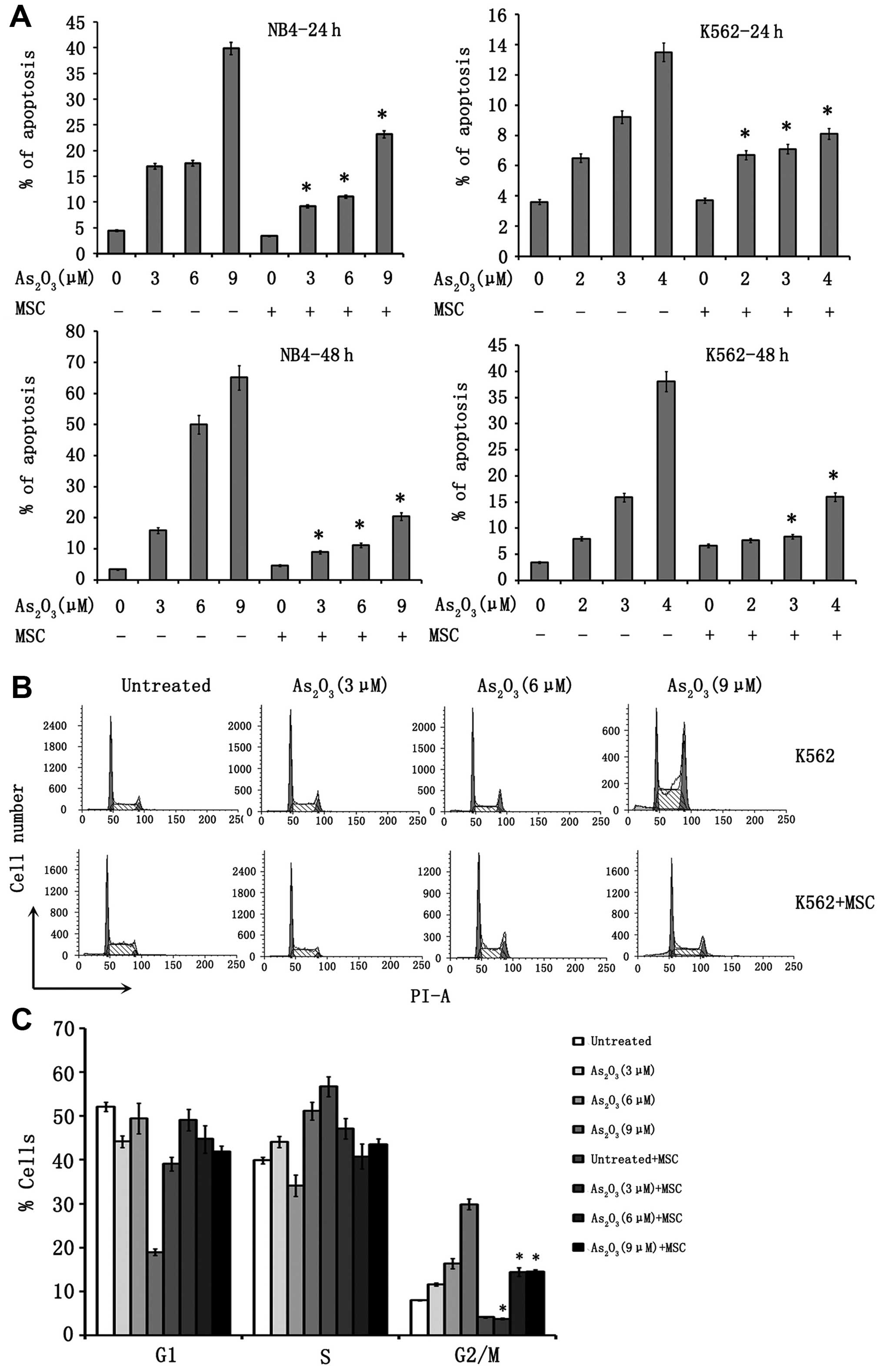
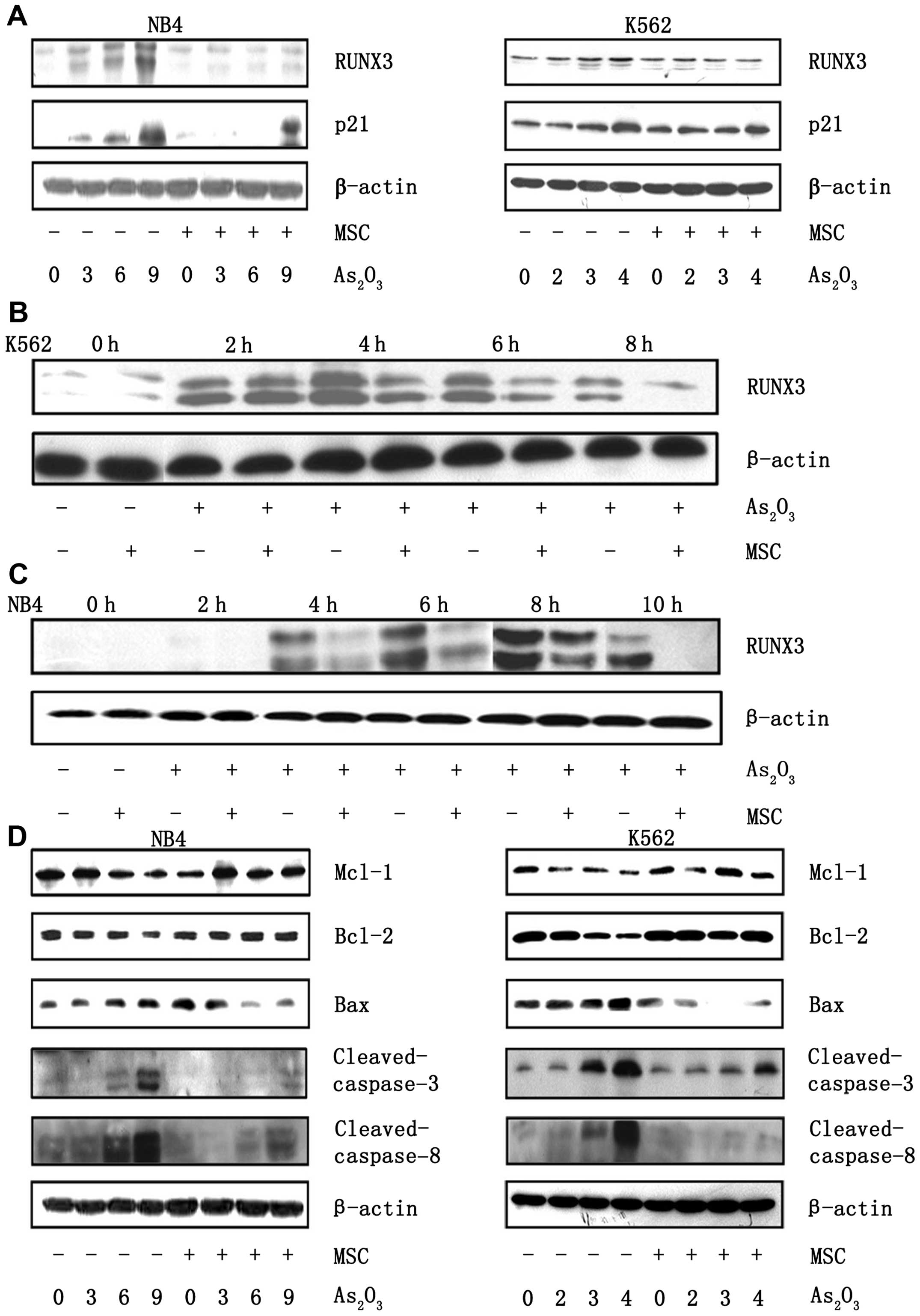
The interaction between bone marrow stromal cells and leukemia cells is critical for the persistence and progression of leukemia, and this interaction may account for residual disease. However, the link between leukemia cells and their environment is still poorly understood. In our study, runt‑related transcription factor 3 (RUNX3) was identified as a novel target gene affected by As2O3 and involved in mesenchymal stem cell (MSC)‑mediated protection of leukemia cells from As2O3‑induced apoptosis. We observed induction of RUNX3 expression and the translocation of RUNX3 into the nucleus after As2O3 treatment in leukemia cells. In K562 chronic myeloid leukemia cells, downregulation of endogenous RUNX3 compromised As2O3‑induced growth inhibition, cell cycle arrest, and apoptosis. In the presence of MSC, As2O3‑induced expression of RUNX3 was reduced significantly and this reduction was modulated by CXCL12/CXCR4 signaling. Furthermore, overexpression of RUNX3 restored, at least in part, the sensitivity of leukemic cells to As2O3. We conclude that RUNX3 plays an important role in As2O3‑induced cellular responses and allows cells to overcome MSC‑mediated drug resistance. Therefore, RUNX3 is a promising target for therapeutic approaches to overcome MSC‑mediated drug resistance.
View Figures

Figure 1

Figure 2

Figure 3

Figure 4

Figure 5

Figure 6

View References

1 

Ding W, Knox TR, Tschumper RC, Wu W, Schwager SM, Boysen JC, Jelinek DF and Kay NE: Platelet-derived growth factor (PDGF)-PDGF receptor interaction activates bone marrow-derived mesenchymal stromal cells derived from chronic lymphocytic leukemia: implications for an angiogenic switch. Blood. 116:2984–2993. 2010. View Article : Google Scholar : PubMed/NCBI

2 

Li W, Zhou Y, Yang J, Zhang X, Zhang H, Zhang T, Zhao S, Zheng P, Huo J and Wu H: Gastric cancer-derived mesenchymal stem cells prompt gastric cancer progression through secretion of interleukin-8. J Exp Clin Cancer Res. 34:522015. View Article : Google Scholar : PubMed/NCBI

3 

Arai F, Hirao A, Ohmura M, Sato H, Matsuoka S, Takubo K, Ito K, Koh GY and Suda T: Tie2/angiopoietin-1 signaling regulates hematopoietic stem cell quiescence in the bone marrow niche. Cell. 118:149–161. 2004. View Article : Google Scholar : PubMed/NCBI

4 

Huang F, Wang M, Yang T, Cai J, Zhang Q, Sun Z, Wu X, Zhang X, Zhu W, Qian H, et al: Gastric cancer-derived MSC-secreted PDGF-DD promotes gastric cancer progression. J Cancer Res Clin Oncol. 140:1835–1848. 2014. View Article : Google Scholar : PubMed/NCBI

5 

Vianello F, Villanova F, Tisato V, Lymperi S, Ho KK, Gomes AR, Marin D, Bonnet D, Apperley J, Lam EW, et al: Bone marrow mesenchymal stromal cells non-selectively protect chronic myeloid leukemia cells from imatinib-induced apoptosis via the CXCR4/CXCL12 axis. Haematologica. 95:1081–1089. 2010. View Article : Google Scholar : PubMed/NCBI

6 

Sison EA and Brown P: The bone marrow microenvironment and leukemia: Biology and therapeutic targeting. Expert Rev Hematol. 4:271–283. 2011. View Article : Google Scholar : PubMed/NCBI

7 

O'Hayre M, Salanga CL, Kipps TJ, Messmer D, Dorrestein PC and Handel TM: Elucidating the CXCL12/CXCR4 signaling network in chronic lymphocytic leukemia through phosphopro-teomics analysis. PLoS One. 5:e117162010. View Article : Google Scholar

8 

Li X, Guo H, Duan H, Yang Y, Meng J, Liu J, Wang C and Xu H: Improving chemotherapeutic efficiency in acute myeloid leukemia treatments by chemically synthesized peptide interfering with CXCR4/CXCL12 axis. Sci Rep. 5:162282015. View Article : Google Scholar : PubMed/NCBI

9 

Han TT, Fan L, Li JY and Xu W: Role of chemokines and their receptors in chronic lymphocytic leukemia: Function in microenvironment and targeted therapy. Cancer Biol Ther. 15:3–9. 2014. View Article : Google Scholar :

10 

Möhle R, Failenschmid C, Bautz F and Kanz L: Overexpression of the chemokine receptor CXCR4 in B cell chronic lymphocytic leukemia is associated with increased functional response to stromal cell-derived factor-1 (SDF-1). Leukemia. 13:1954–1959. 1999. View Article : Google Scholar : PubMed/NCBI

11 

de Lourdes Perim A, Amarante MK, Guembarovski RL, de Oliveira CE and Watanabe MA: CXCL12/CXCR4 axis in the pathogenesis of acute lymphoblastic leukemia (ALL): A possible therapeutic target. Cell Mol Life Sci. 72:1715–1723. 2015. View Article : Google Scholar : PubMed/NCBI

12 

Alsayed Y, Ngo H, Runnels J, Leleu X, Singha UK, Pitsillides CM, Spencer JA, Kimlinger T, Ghobrial JM, Jia X, et al: Mechanisms of regulation of CXCR4/SDF-1 (CXCL12)-dependent migration and homing in multiple myeloma. Blood. 109:2708–2717. 2007.

13 

Nervi B, Ramirez P, Rettig MP, Uy GL, Holt MS, Ritchey JK, Prior JL, Piwnica-Worms D, Bridger G, Ley TJ, et al: Chemo-sensitization of acute myeloid leukemia (AML) following mobilization by the CXCR4 antagonist AMD3100. Blood. 113:6206–6214. 2009. View Article : Google Scholar :

14 

Sison EA, Magoon D, Li L, Annesley CE, Rau RE, Small D and Brown P: Plerixafor as a chemosensitizing agent in pediatric acute lymphoblastic leukemia: efficacy and potential mechanisms of resistance to CXCR4 inhibition. Oncotarget. 5:8947–8958. 2014. View Article : Google Scholar : PubMed/NCBI

15 

Shen ZH, Zeng DF, Ma YY, Zhang X, Zhang C and Kong PY: Are there any new insights for G-CSF and/or AMD3100 in chemotherapy of haematological malignants? Med Oncol. 32:2622015. View Article : Google Scholar : PubMed/NCBI

16 

Kashyap MK, Kumar D, Jones H, Amaya-Chanaga CI, Choi MY, Melo-Cardenas J, Ale-Ali A, Kuhne MR, Sabbatini P, Cohen LJ, et al: Ulocuplumab (BMS-936564/MDX1338): A fully human anti-CXCR4 antibody induces cell death in chronic lymphocytic leukemia mediated through a reactive oxygen species- dependent pathway. Oncotarget. 7:2809–2822. 2016.

17 

Niedermeier M, Hennessy BT, Knight ZA, Henneberg M, Hu J, Kurtova AV, Wierda WG, Keating MJ, Shokat KM and Burger JA: Isoform-selective phosphoinositide 3′-kinase inhibitors inhibit CXCR4 signaling and overcome stromal cell-mediated drug resistance in chronic lymphocytic leukemia: A novel therapeutic approach. Blood. 113:5549–5557. 2009. View Article : Google Scholar : PubMed/NCBI

18 

Liu CC, Wang H, Wang WD, Zhu MY, Geng QR and Lu Y: Consolidation therapy of arsenic trioxide alternated with chemotherapy achieves remarkable efficacy in newly diagnosed acute promyelocytic leukemia. Onco Targets Ther. 8:3297–3303. 2015.PubMed/NCBI

19 

Soignet SL, Frankel SR, Douer D, Tallman MS, Kantarjian H, Calleja E, Stone RM, Kalaycio M, Scheinberg DA, Steinherz P, et al: United States multicenter study of arsenic trioxide in relapsed acute promyelocytic leukemia. J Clin Oncol. 19:3852–3860. 2001.PubMed/NCBI

20 

Shen Y, Shen ZX, Yan H, Chen J, Zeng XY, Li JM, Li XS, Wu W, Xiong SM, Zhao WL, et al: Studies on the clinical efficacy and pharmacokinetics of low-dose arsenic trioxide in the treatment of relapsed acute promyelocytic leukemia: A comparison with conventional dosage. Leukemia. 15:735–741. 2001. View Article : Google Scholar : PubMed/NCBI

21 

Chendamarai E, Ganesan S, Alex AA, Kamath V, Nair SC, Nellickal AJ, Janet NB, Srivastava V, Lakshmi KM, Viswabandya A, et al: Comparison of newly diagnosed and relapsed patients with acute promyelocytic leukemia treated with arsenic trioxide: Insight into mechanisms of resistance. PLoS One. 10:e01219122015. View Article : Google Scholar : PubMed/NCBI

22 

Lengfelder E, Lo-Coco F, Ades L, Montesinos P, Grimwade D, Kishore B, Ramadan SM, Pagoni M, Breccia M, Huerta AJ, et al European LeukemiaNet: Arsenic trioxide-based therapy of relapsed acute promyelocytic leukemia: Registry results from the European Leukemia Net. Leukemia. 29:1084–1091. 2015. View Article : Google Scholar : PubMed/NCBI

23 

Salmon JM, Bots M, Vidacs E, Stanley KL, Atadja P, Zuber J and Johnstone RW: Combining the differentiating effect of panobinostat with the apoptotic effect of arsenic trioxide leads to significant survival benefit in a model of t(8;21) acute myeloid leukemia. Clin Epigenetics. 7:22015. View Article : Google Scholar : PubMed/NCBI

24 

Oancea C, Rüster B, Brill B, Roos J, Heinssmann M, Bug G, Mian AA, Guillen NA, Kornblau SM, Henschler R, et al: STAT activation status differentiates leukemogenic from non-leukemogenic stem cells in AML and is suppressed by arsenic in t(6;9)-positive AML. Genes Cancer. 5:378–392. 2014.

25 

Evens AM, Tallman MS and Gartenhaus RB: The potential of arsenic trioxide in the treatment of malignant disease: Past, present, and future. Leuk Res. 28:891–900. 2004. View Article : Google Scholar : PubMed/NCBI

26 

Chen GQ, Shi XG, Tang W, Xiong SM, Zhu J, Cai X, Han ZG, Ni JH, Shi GY, Jia PM, et al: Use of arsenic trioxide (As2O3) in the treatment of acute promyelocytic leukemia (APL): I. As2O3 exerts dose-dependent dual effects on APL cells. Blood. 89:3345–3353. 1997.PubMed/NCBI

27 

Lallemand-Breitenbach V, Zhu J, Chen Z and de Thé H: Curing APL through PML/RARA degradation by As2O3. Trends Mol Med. 18:36–42. 2012. View Article : Google Scholar

28 

Cai X, Shen YL, Zhu Q, Jia PM, Yu Y, Zhou L, Huang Y, Zhang JW, Xiong SM, Chen SJ, et al: Arsenic trioxide-induced apoptosis and differentiation are associated respectively with mitochondrial transmembrane potential collapse and retinoic acid signaling pathways in acute promyelocytic leukemia. Leukemia. 14:262–270. 2000. View Article : Google Scholar : PubMed/NCBI

29 

Guan L, Han B, Li Z, Hua F, Huang F, Wei W, Yang Y and Xu C: Sodium selenite induces apoptosis by ROS-mediated endoplasmic reticulum stress and mitochondrial dysfunction in human acute promyelocytic leukemia NB4 cells. Apoptosis. 14:218–225. 2009. View Article : Google Scholar : PubMed/NCBI

30 

Menheniott TR, Judd LM and Giraud AS: RUNX3 methylation and anti-tumor immunity. Oncoscience. 2:789–790. 2015.PubMed/NCBI

31 

Ito K, Liu Q, Salto-Tellez M, Yano T, Tada K, Ida H, Huang C, Shah N, Inoue M, Rajnakova A, et al: RUNX3, a novel tumor suppressor, is frequently inactivated in gastric cancer by protein mislocalization. Cancer Res. 65:7743–7750. 2005.PubMed/NCBI

32 

Yano T, Ito K, Fukamachi H, Chi XZ, Wee HJ, Inoue K, Ida H, Bouillet P, Strasser A, Bae SC, et al: The RUNX3 tumor suppressor upregulates Bim in gastric epithelial cells undergoing transforming growth factor beta-induced apoptosis. Mol Cell Biol. 26:4474–4488. 2006. View Article : Google Scholar : PubMed/NCBI

33 

Chi XZ, Yang JO, Lee KY, Ito K, Sakakura C, Li QL, Kim HR, Cha EJ, Lee YH, Kaneda A, et al: RUNX3 suppresses gastric epithelial cell growth by inducing p21(WAF1/Cip1) expression in cooperation with transforming growth factor {beta}-activated SMAD. Mol Cell Biol. 25:8097–8107. 2005. View Article : Google Scholar : PubMed/NCBI

34 

Ito K, Lim AC, Salto-Tellez M, Motoda L, Osato M, Chuang LS, Lee CW, Voon DC, Koo JK, Wang H, et al: RUNX3 attenuates β-catenin/T cell factors in intestinal tumorigenesis. Cancer Cell. 14:226–237. 2008. View Article : Google Scholar : PubMed/NCBI

35 

Pande S, Ali SA, Dowdy C, Zaidi SK, Ito K, Ito Y, Montecino MA, Lian JB, Stein JL, van Wijnen AJ, et al: Subnuclear targeting of the Runx3 tumor suppressor and its epigenetic association with mitotic chromosomes. J Cell Physiol. 218:473–479. 2009. View Article : Google Scholar

36 

Okorokov AL, Rubbi CP, Metcalfe S and Milner J: The interaction of p53 with the nuclear matrix is mediated by F-actin and modulated by DNA damage. Oncogene. 21:356–367. 2002. View Article : Google Scholar : PubMed/NCBI

37 

Bae SC, Takahashi E, Zhang YW, Ogawa E, Shigesada K, Namba Y, Satake M and Ito Y: Cloning, mapping and expression of PEBP2 alpha C, a third gene encoding the mammalian Runt domain. Gene. 159:245–248. 1995. View Article : Google Scholar : PubMed/NCBI

38 

Beekman AM and Howell LA: Small-molecule and peptide inhibitors of the pro-survival protein Mcl-1. Chem Med Chem. 11:802–813. 2016. View Article : Google Scholar

39 

Belmar J and Fesik SW: Small molecule Mcl-1 inhibitors for the treatment of cancer. Pharmacol Ther. 145:76–84. 2015. View Article : Google Scholar :

40 

Cuconati A, Mukherjee C, Perez D and White E: DNA damage response and MCL-1 destruction initiate apoptosis in adenovirus-infected cells. Genes Dev. 17:2922–2932. 2003. View Article : Google Scholar : PubMed/NCBI

41 

Bose P and Grant S: Mcl-1 as a Therapeutic Target in Acute Myelogenous Leukemia (AML). Leuk Res Rep. 2:12–14. 2013.PubMed/NCBI

42 

Lee WS, Park YL, Kim N, Oh HH, Son DJ, Kim MY, Oak CY, Chung CY, Park HC, Kim JS, et al: Myeloid cell leukemia-1 is associated with tumor progression by inhibiting apoptosis and enhancing angiogenesis in colorectal cancer. Am J Cancer Res. 5:101–113. 2014.

43 

Lee JS, Tang SS, ortiz V, Vo TT and Fruman DA: MCL-1-independent mechanisms of synergy between dual PI3K/mTOR and BCL-2 inhibition in diffuse large B cell lymphoma. Oncotarget. 6:35202–35217. 2015.PubMed/NCBI

Related Articles

  • Abstract
  • View
  • Download
  • Twitter
Copy and paste a formatted citation
Spandidos Publications style
Pan GZ, Zhai FX, Lu Y, Fang ZG, Fan RF, Liu XF and Lin DJ: RUNX3 plays an important role in As2O3‑induced apoptosis and allows cells to overcome MSC‑mediated drug resistance. Oncol Rep 36: 1927-1938, 2016.
APA
Pan, G., Zhai, F., Lu, Y., Fang, Z., Fan, R., Liu, X., & Lin, D. (2016). RUNX3 plays an important role in As2O3‑induced apoptosis and allows cells to overcome MSC‑mediated drug resistance. Oncology Reports, 36, 1927-1938. https://doi.org/10.3892/or.2016.5005
MLA
Pan, G., Zhai, F., Lu, Y., Fang, Z., Fan, R., Liu, X., Lin, D."RUNX3 plays an important role in As2O3‑induced apoptosis and allows cells to overcome MSC‑mediated drug resistance". Oncology Reports 36.4 (2016): 1927-1938.
Chicago
Pan, G., Zhai, F., Lu, Y., Fang, Z., Fan, R., Liu, X., Lin, D."RUNX3 plays an important role in As2O3‑induced apoptosis and allows cells to overcome MSC‑mediated drug resistance". Oncology Reports 36, no. 4 (2016): 1927-1938. https://doi.org/10.3892/or.2016.5005
Copy and paste a formatted citation
x
Spandidos Publications style
Pan GZ, Zhai FX, Lu Y, Fang ZG, Fan RF, Liu XF and Lin DJ: RUNX3 plays an important role in As2O3‑induced apoptosis and allows cells to overcome MSC‑mediated drug resistance. Oncol Rep 36: 1927-1938, 2016.
APA
Pan, G., Zhai, F., Lu, Y., Fang, Z., Fan, R., Liu, X., & Lin, D. (2016). RUNX3 plays an important role in As2O3‑induced apoptosis and allows cells to overcome MSC‑mediated drug resistance. Oncology Reports, 36, 1927-1938. https://doi.org/10.3892/or.2016.5005
MLA
Pan, G., Zhai, F., Lu, Y., Fang, Z., Fan, R., Liu, X., Lin, D."RUNX3 plays an important role in As2O3‑induced apoptosis and allows cells to overcome MSC‑mediated drug resistance". Oncology Reports 36.4 (2016): 1927-1938.
Chicago
Pan, G., Zhai, F., Lu, Y., Fang, Z., Fan, R., Liu, X., Lin, D."RUNX3 plays an important role in As2O3‑induced apoptosis and allows cells to overcome MSC‑mediated drug resistance". Oncology Reports 36, no. 4 (2016): 1927-1938. https://doi.org/10.3892/or.2016.5005
Follow us
  • Twitter
  • LinkedIn
  • Facebook
About
  • Spandidos Publications
  • Careers
  • Cookie Policy
  • Privacy Policy
How can we help?
  • Help
  • Live Chat
  • Contact
  • Email to our Support Team