Spandidos Publications Logo
  • About
    • About Spandidos
    • Aims and Scopes
    • Abstracting and Indexing
    • Editorial Policies
    • Reprints and Permissions
    • Job Opportunities
    • Terms and Conditions
    • Contact
  • Journals
    • All Journals
    • Oncology Letters
      • Oncology Letters
      • Information for Authors
      • Editorial Policies
      • Editorial Board
      • Aims and Scope
      • Abstracting and Indexing
      • Bibliographic Information
      • Archive
    • International Journal of Oncology
      • International Journal of Oncology
      • Information for Authors
      • Editorial Policies
      • Editorial Board
      • Aims and Scope
      • Abstracting and Indexing
      • Bibliographic Information
      • Archive
    • Molecular and Clinical Oncology
      • Molecular and Clinical Oncology
      • Information for Authors
      • Editorial Policies
      • Editorial Board
      • Aims and Scope
      • Abstracting and Indexing
      • Bibliographic Information
      • Archive
    • Experimental and Therapeutic Medicine
      • Experimental and Therapeutic Medicine
      • Information for Authors
      • Editorial Policies
      • Editorial Board
      • Aims and Scope
      • Abstracting and Indexing
      • Bibliographic Information
      • Archive
    • International Journal of Molecular Medicine
      • International Journal of Molecular Medicine
      • Information for Authors
      • Editorial Policies
      • Editorial Board
      • Aims and Scope
      • Abstracting and Indexing
      • Bibliographic Information
      • Archive
    • Biomedical Reports
      • Biomedical Reports
      • Information for Authors
      • Editorial Policies
      • Editorial Board
      • Aims and Scope
      • Abstracting and Indexing
      • Bibliographic Information
      • Archive
    • Oncology Reports
      • Oncology Reports
      • Information for Authors
      • Editorial Policies
      • Editorial Board
      • Aims and Scope
      • Abstracting and Indexing
      • Bibliographic Information
      • Archive
    • Molecular Medicine Reports
      • Molecular Medicine Reports
      • Information for Authors
      • Editorial Policies
      • Editorial Board
      • Aims and Scope
      • Abstracting and Indexing
      • Bibliographic Information
      • Archive
    • World Academy of Sciences Journal
      • World Academy of Sciences Journal
      • Information for Authors
      • Editorial Policies
      • Editorial Board
      • Aims and Scope
      • Abstracting and Indexing
      • Bibliographic Information
      • Archive
    • International Journal of Functional Nutrition
      • International Journal of Functional Nutrition
      • Information for Authors
      • Editorial Policies
      • Editorial Board
      • Aims and Scope
      • Abstracting and Indexing
      • Bibliographic Information
      • Archive
    • International Journal of Epigenetics
      • International Journal of Epigenetics
      • Information for Authors
      • Editorial Policies
      • Editorial Board
      • Aims and Scope
      • Abstracting and Indexing
      • Bibliographic Information
      • Archive
    • Medicine International
      • Medicine International
      • Information for Authors
      • Editorial Policies
      • Editorial Board
      • Aims and Scope
      • Abstracting and Indexing
      • Bibliographic Information
      • Archive
  • Articles
  • Information
    • Information for Authors
    • Information for Reviewers
    • Information for Librarians
    • Information for Advertisers
    • Conferences
  • Language Editing
Spandidos Publications Logo
  • About
    • About Spandidos
    • Aims and Scopes
    • Abstracting and Indexing
    • Editorial Policies
    • Reprints and Permissions
    • Job Opportunities
    • Terms and Conditions
    • Contact
  • Journals
    • All Journals
    • Biomedical Reports
      • Information for Authors
      • Editorial Policies
      • Editorial Board
      • Aims and Scope
      • Abstracting and Indexing
      • Bibliographic Information
      • Archive
    • Experimental and Therapeutic Medicine
      • Information for Authors
      • Editorial Policies
      • Editorial Board
      • Aims and Scope
      • Abstracting and Indexing
      • Bibliographic Information
      • Archive
    • International Journal of Epigenetics
      • Information for Authors
      • Editorial Policies
      • Editorial Board
      • Aims and Scope
      • Abstracting and Indexing
      • Bibliographic Information
      • Archive
    • International Journal of Functional Nutrition
      • Information for Authors
      • Editorial Policies
      • Editorial Board
      • Aims and Scope
      • Abstracting and Indexing
      • Bibliographic Information
      • Archive
    • International Journal of Molecular Medicine
      • Information for Authors
      • Editorial Policies
      • Editorial Board
      • Aims and Scope
      • Abstracting and Indexing
      • Bibliographic Information
      • Archive
    • International Journal of Oncology
      • Information for Authors
      • Editorial Policies
      • Editorial Board
      • Aims and Scope
      • Abstracting and Indexing
      • Bibliographic Information
      • Archive
    • Medicine International
      • Information for Authors
      • Editorial Policies
      • Editorial Board
      • Aims and Scope
      • Abstracting and Indexing
      • Bibliographic Information
      • Archive
    • Molecular and Clinical Oncology
      • Information for Authors
      • Editorial Policies
      • Editorial Board
      • Aims and Scope
      • Abstracting and Indexing
      • Bibliographic Information
      • Archive
    • Molecular Medicine Reports
      • Information for Authors
      • Editorial Policies
      • Editorial Board
      • Aims and Scope
      • Abstracting and Indexing
      • Bibliographic Information
      • Archive
    • Oncology Letters
      • Information for Authors
      • Editorial Policies
      • Editorial Board
      • Aims and Scope
      • Abstracting and Indexing
      • Bibliographic Information
      • Archive
    • Oncology Reports
      • Information for Authors
      • Editorial Policies
      • Editorial Board
      • Aims and Scope
      • Abstracting and Indexing
      • Bibliographic Information
      • Archive
    • World Academy of Sciences Journal
      • Information for Authors
      • Editorial Policies
      • Editorial Board
      • Aims and Scope
      • Abstracting and Indexing
      • Bibliographic Information
      • Archive
  • Articles
  • Information
    • For Authors
    • For Reviewers
    • For Librarians
    • For Advertisers
    • Conferences
  • Language Editing
Login Register Submit
  • This site uses cookies
  • You can change your cookie settings at any time by following the instructions in our Cookie Policy. To find out more, you may read our Privacy Policy.

    I agree
Search articles by DOI, keyword, author or affiliation
Search
Advanced Search
presentation
Oncology Reports
Join Editorial Board Propose a Special Issue
Print ISSN: 1021-335X Online ISSN: 1791-2431
Journal Cover
October-2016 Volume 36 Issue 4

Full Size Image

Sign up for eToc alerts
Recommend to Library

Journals

International Journal of Molecular Medicine

International Journal of Molecular Medicine

International Journal of Molecular Medicine is an international journal devoted to molecular mechanisms of human disease.

International Journal of Oncology

International Journal of Oncology

International Journal of Oncology is an international journal devoted to oncology research and cancer treatment.

Molecular Medicine Reports

Molecular Medicine Reports

Covers molecular medicine topics such as pharmacology, pathology, genetics, neuroscience, infectious diseases, molecular cardiology, and molecular surgery.

Oncology Reports

Oncology Reports

Oncology Reports is an international journal devoted to fundamental and applied research in Oncology.

Experimental and Therapeutic Medicine

Experimental and Therapeutic Medicine

Experimental and Therapeutic Medicine is an international journal devoted to laboratory and clinical medicine.

Oncology Letters

Oncology Letters

Oncology Letters is an international journal devoted to Experimental and Clinical Oncology.

Biomedical Reports

Biomedical Reports

Explores a wide range of biological and medical fields, including pharmacology, genetics, microbiology, neuroscience, and molecular cardiology.

Molecular and Clinical Oncology

Molecular and Clinical Oncology

International journal addressing all aspects of oncology research, from tumorigenesis and oncogenes to chemotherapy and metastasis.

World Academy of Sciences Journal

World Academy of Sciences Journal

Multidisciplinary open-access journal spanning biochemistry, genetics, neuroscience, environmental health, and synthetic biology.

International Journal of Functional Nutrition

International Journal of Functional Nutrition

Open-access journal combining biochemistry, pharmacology, immunology, and genetics to advance health through functional nutrition.

International Journal of Epigenetics

International Journal of Epigenetics

Publishes open-access research on using epigenetics to advance understanding and treatment of human disease.

Medicine International

Medicine International

An International Open Access Journal Devoted to General Medicine.

Journal Cover
October-2016 Volume 36 Issue 4

Full Size Image

Sign up for eToc alerts
Recommend to Library

  • Article
  • Citations
    • Cite This Article
    • Download Citation
    • Create Citation Alert
    • Remove Citation Alert
    • Cited By
  • Similar Articles
    • Related Articles (in Spandidos Publications)
    • Similar Articles (Google Scholar)
    • Similar Articles (PubMed)
  • Download PDF
  • Download XML
  • View XML
Article Open Access

Membrane bile acid receptor TGR5 predicts good prognosis in ampullary adenocarcinoma patients with hyperbilirubinemia

  • Authors:
    • Ming-Jenn Chen
    • Yi-Ling Chen
    • Tzu-Wen Wang
    • Hui-Ping Hsu
    • Ming-Derg Lai
  • View Affiliations / Copyright

    Affiliations: Department of Surgery, Chi Mei Medical Center, Tainan 710, Taiwan, R.O.C., Department of Senior Citizen Service Management, College of Leisure and Recreation Management, Chia-Nan University of Pharmacy and Science, Tainan 717, Taiwan, R.O.C., Department of Surgery, National Cheng Kung University Hospital, College of Medicine, National Cheng Kung University, Tainan 704, Taiwan, R.O.C., Department of Biochemistry and Molecular Biology, College of Medicine, National Cheng Kung University, Tainan 701, Taiwan, R.O.C.
    Copyright: © Chen et al. This is an open access article distributed under the terms of Creative Commons Attribution License.
  • Pages: 1997-2008
    |
    Published online on: August 10, 2016
       https://doi.org/10.3892/or.2016.5011
  • Expand metrics +
Metrics: Total Views: 0 (Spandidos Publications: | PMC Statistics: )
Metrics: Total PDF Downloads: 0 (Spandidos Publications: | PMC Statistics: )
Cited By (CrossRef): 0 citations Loading Articles...

This article is mentioned in:


Abstract

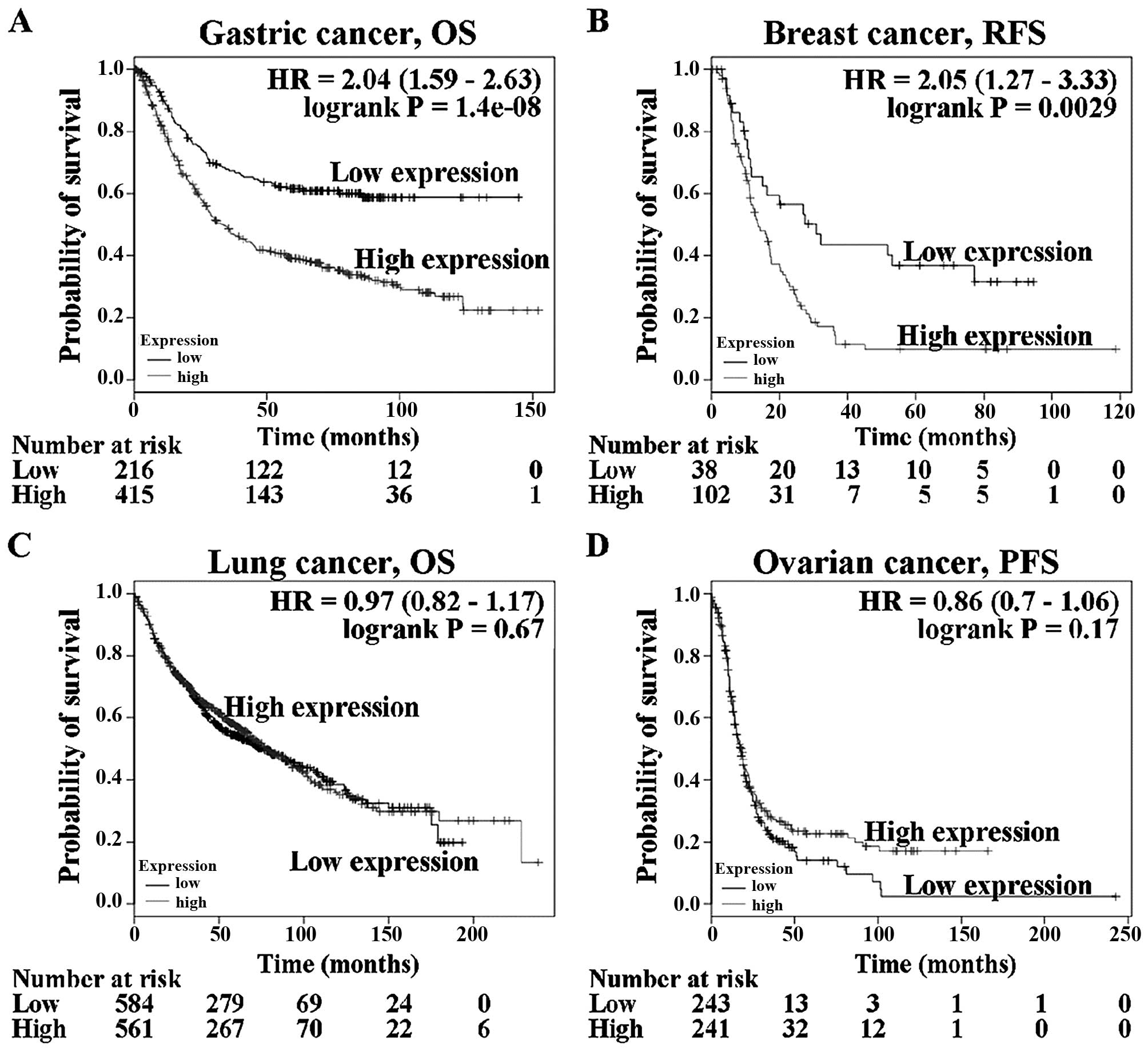
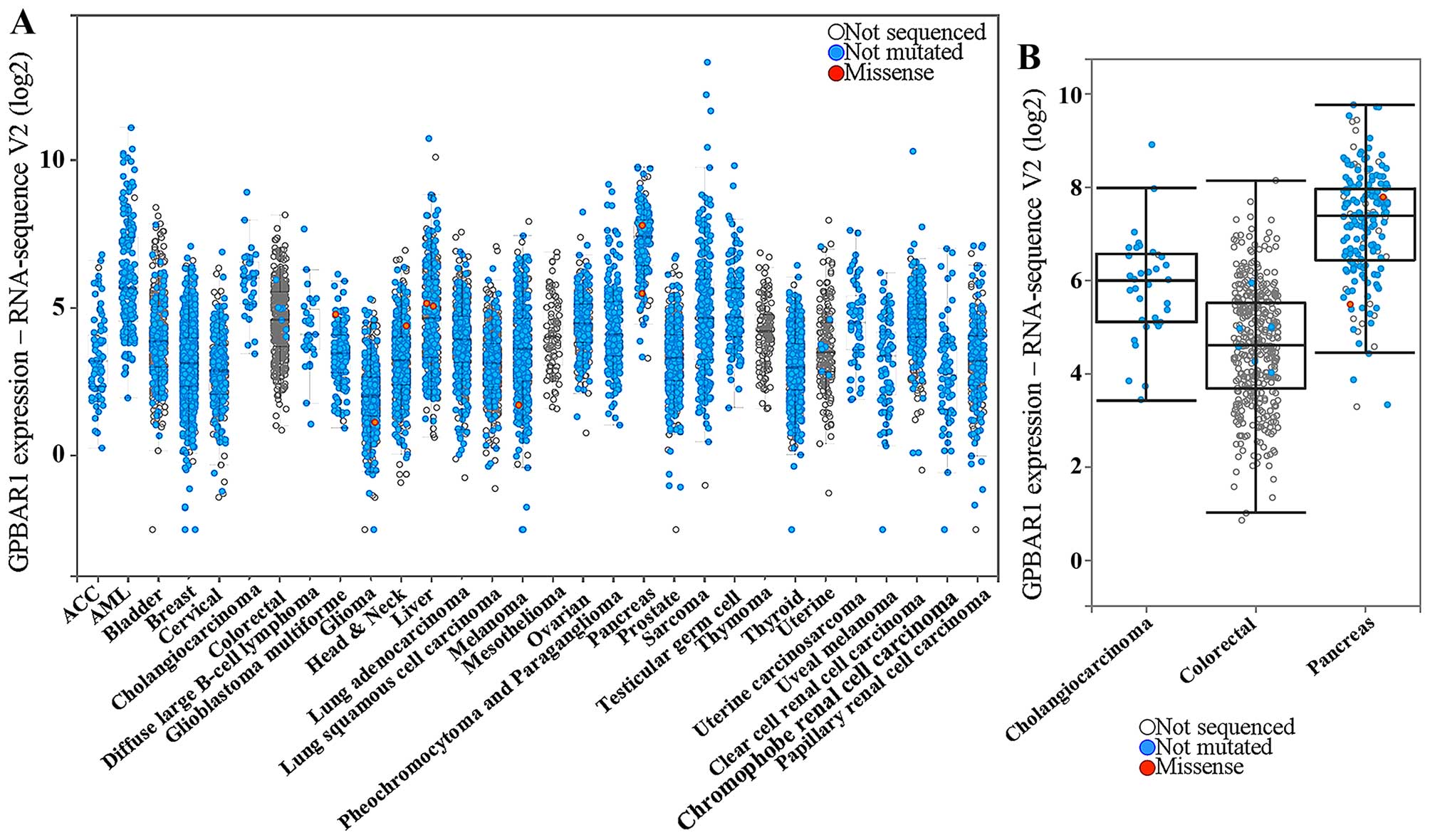
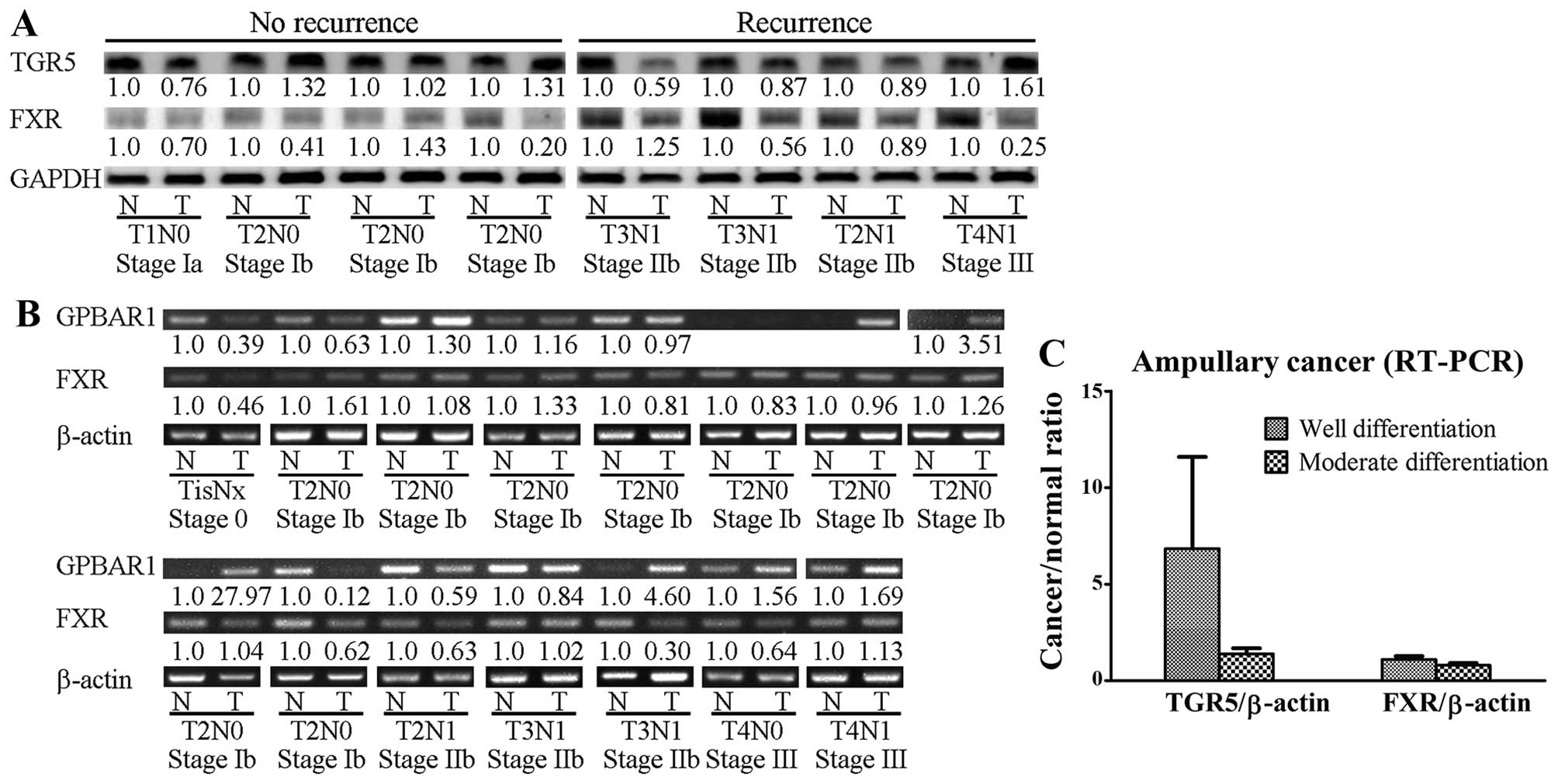
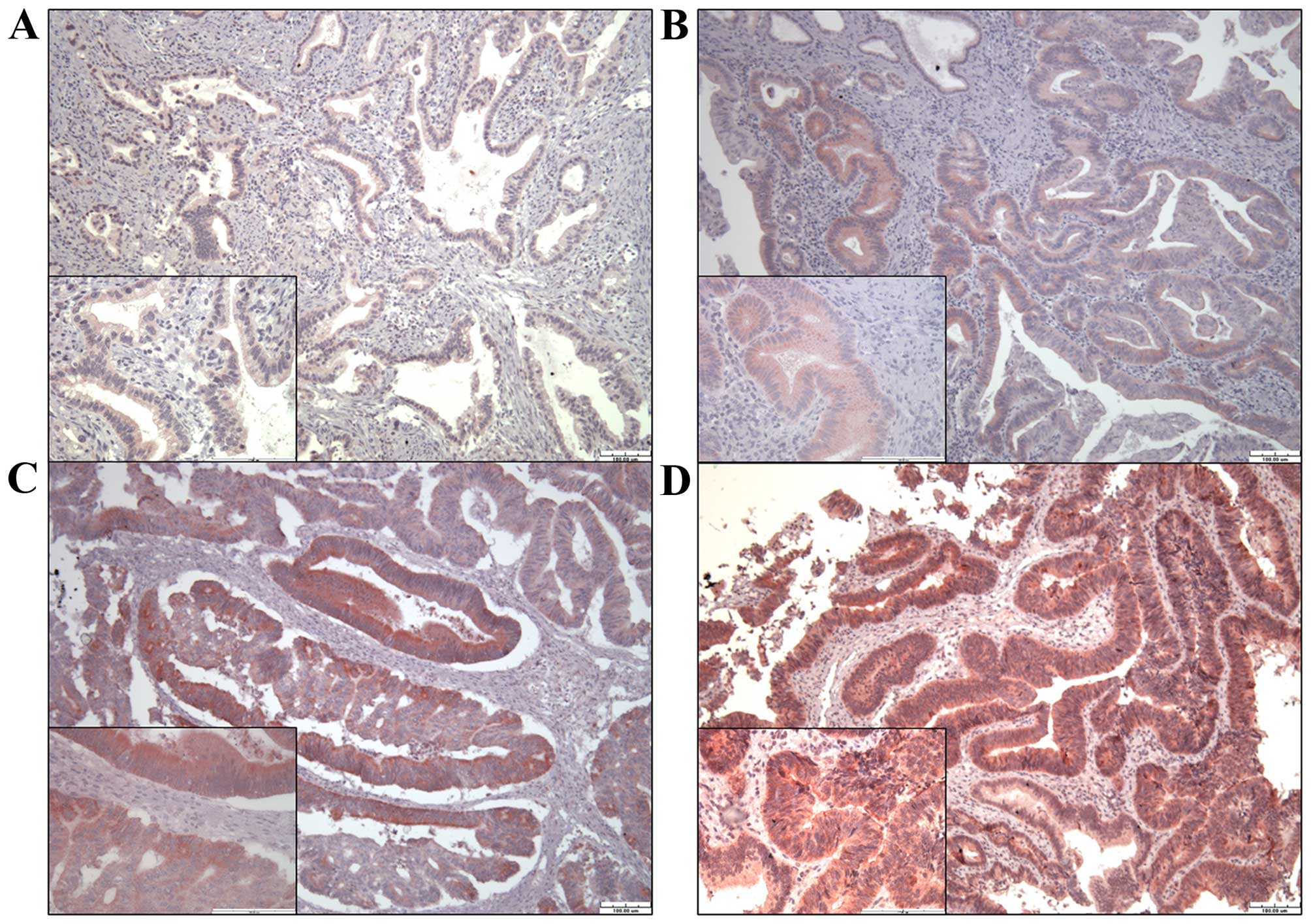
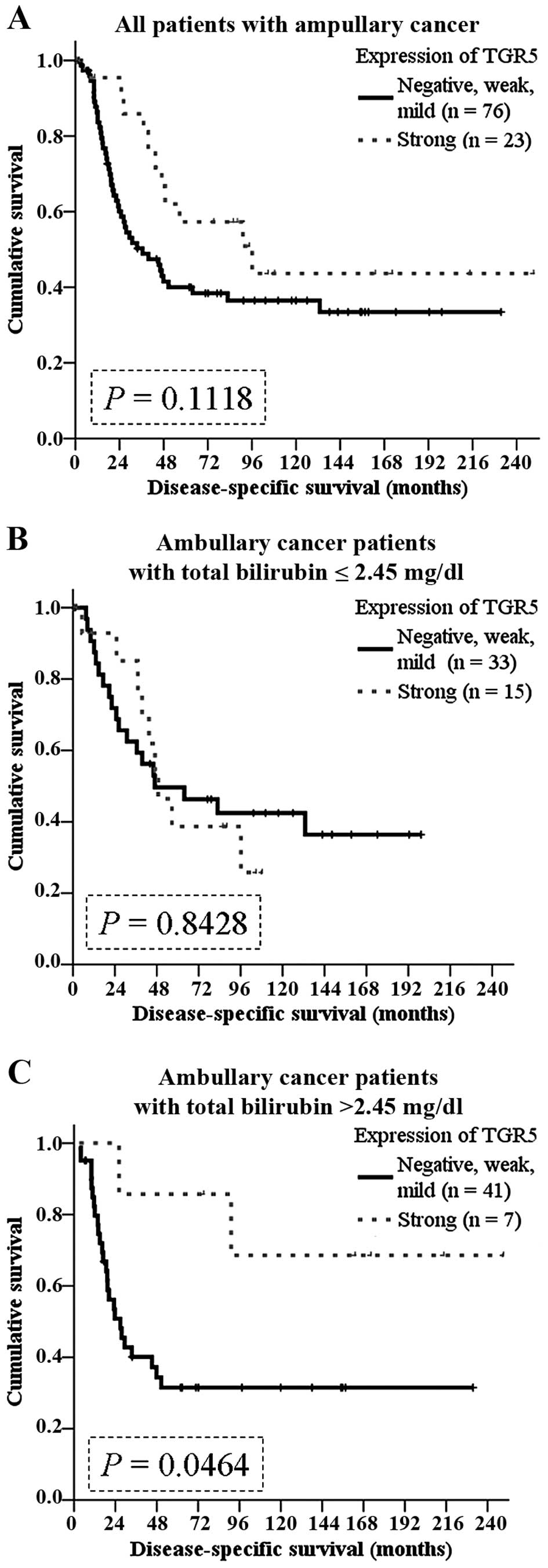
Bile acids are potential carcinogens in gastrointestinal cancer, and interact with nuclear and membrane receptors to initiate downstream signaling. The effect of TGR5 [also known as G protein-coupled bile acid receptor 1 (GPBAR1)] on cancer progression is dependent on the tissue where it is activated. In this report, the function of TGR5 expression in cancer was studied using a bioinformatic approach. TGR5 expression in ampullary adenocarcinoma and normal duodenum was compared by western blotting, reverse transcription polymerase chain reaction, and immunohistochemistry (IHC). High GPBAR1 gene expression was found to be an indicator of worse prognosis in gastric and breast cancer patients, and an indication of better prognosis in ovarian cancer patients. The level of GPBAR1 gene expression was higher in bile‑acid exposed cancer than in other types of cancer, and was increased in well-differentiated ampullary adenocarcinoma. Negative, weak or mild expression of TGR5 was correlated with younger age, higher plasma level of total/direct bilirubin, higher plasma concentration of CA-125, advanced tumor stage and advanced AJCC TNM stage. The disease-specific survival rate was highest in ampullary adenocarcinoma patients with high TGR5 expression and high total bilirubin level. In summary, TGR5 functions as a tumor-suppressor in patients with ampullary adenocarcinoma and preoperative hyperbilirubinemia. Further study of the suppressive mechanism may provide a new therapeutic option for patients with ampullary adenocarcinoma.
View Figures

Figure 1

Figure 2

Figure 3

Figure 4

Figure 5

View References

1 

Albores-Saavedra J, Schwartz AM, Batich K and Henson DE: Cancers of the ampulla of vater: Demographics, morphology, and survival based on 5,625 cases from the SEER program. J Surg Oncol. 100:598–605. 2009. View Article : Google Scholar : PubMed/NCBI

2 

Tsuei J, Chau T, Mills D and Wan YJ: Bile acid dysregulation, gut dysbiosis, and gastrointestinal cancer. Exp Biol Med. 239:1489–1504. 2014. View Article : Google Scholar

3 

Ye W, Chow WH, Lagergren J, Yin L and Nyrén O: Risk of adenocarcinomas of the esophagus and gastric cardia in patients with gastroesophageal reflux diseases and after antireflux surgery. Gastroenterology. 121:1286–1293. 2001. View Article : Google Scholar : PubMed/NCBI

4 

Nishioka K, Doki Y, Miyata H, Tamura S, Yasuda T, Kimura Y, Kishi K, Yoshida K, Fujiwara Y, Yano M, et al: Bile acid promotes the proliferation of squamous cell carcinoma of the esophagus, independent of its inducing COX-2 expression. J Surg Res. 132:130–135. 2006. View Article : Google Scholar

5 

Bernstein C, Payne CM and Bernstein H: Bile acids: Promoters or carcinogens in colon cancer? J Carcinogene Mutagene. 2:101e View Article : Google Scholar : 2011.

6 

Payne CM, Bernstein C, Dvorak K and Bernstein H: Hydrophobic bile acids, genomic instability, Darwinian selection, and colon carcinogenesis. Clin Exp Gastroenterol. 1:19–47. 2008. View Article : Google Scholar : PubMed/NCBI

7 

Komichi D, Tazuma S, Nishioka T, Hyogo H and Chayama K: Glycochenodeoxycholate plays a carcinogenic role in immortalized mouse cholangiocytes via oxidative DNA damage. Free Radic Biol Med. 39:1418–1427. 2005. View Article : Google Scholar : PubMed/NCBI

8 

Yoon JH, Higuchi H, Werneburg NW, Kaufmann SH and Gores GJ: Bile acids induce cyclooxygenase-2 expression via the epidermal growth factor receptor in a human cholangiocarcinoma cell line. Gastroenterology. 122:985–993. 2002. View Article : Google Scholar : PubMed/NCBI

9 

Thomas C, Pellicciari R, Pruzanski M, Auwerx J and Schoonjans K: Targeting bile-acid signalling for metabolic diseases. Nat Rev Drug Discov. 7:678–693. 2008. View Article : Google Scholar : PubMed/NCBI

10 

Lax S, Schauer G, Prein K, Kapitan M, Silbert D, Berghold A, Berger A and Trauner M: Expression of the nuclear bile acid receptor/farnesoid X receptor is reduced in human colon carcinoma compared to nonneoplastic mucosa independent from site and may be associated with adverse prognosis. Int J Cancer. 130:2232–2239. 2012. View Article : Google Scholar

11 

van de Winkel A, van Zoest KP, van Dekken H, Moons LM, Kuipers EJ and van der Laan LJ: Differential expression of the nuclear receptors farnesoid X receptor (FXR) and pregnane X receptor (PXR) for grading dysplasia in patients with Barrett's oesophagus. Histopathology. 58:246–253. 2011. View Article : Google Scholar : PubMed/NCBI

12 

Kim I, Morimura K, Shah Y, Yang Q, Ward JM and Gonzalez FJ: Spontaneous hepatocarcinogenesis in farnesoid X receptor-null mice. Carcinogenesis. 28:940–946. 2007. View Article : Google Scholar :

13 

Li T, Holmstrom SR, Kir S, Umetani M, Schmidt DR, Kliewer SA and Mangelsdorf DJ: The G protein-coupled bile acid receptor, TGR5, stimulates gallbladder filling. Mol Endocrinol. 25:1066–1071. 2011. View Article : Google Scholar : PubMed/NCBI

14 

Thomas C, Gioiello A, Noriega L, Strehle A, Oury J, Rizzo G, Macchiarulo A, Yamamoto H, Mataki C, Pruzanski M, et al: TGR5-mediated bile acid sensing controls glucose homeostasis. Cell Metab. 10:167–177. 2009. View Article : Google Scholar : PubMed/NCBI

15 

Duboc H, Taché Y and Hofmann AF: The bile acid TGR5 membrane receptor: From basic research to clinical application. Dig Liver Dis. 46:302–312. 2014. View Article : Google Scholar : PubMed/NCBI

16 

Cao W, Tian W, Hong J, Li D, Tavares R, Noble L, Moss SF and Resnick MB: Expression of bile acid receptor TGR5 in gastric adenocarcinoma. Am J Physiol Gastrointest Liver Physiol. 304:G322–G327. 2013. View Article : Google Scholar :

17 

Hong J, Behar J, Wands J, Resnick M, Wang LJ, DeLellis RA, Lambeth D, Souza RF, Spechler SJ and Cao W: Role of a novel bile acid receptor TGR5 in the development of oesophageal adenocarcinoma. Gut. 59:170–180. 2010. View Article : Google Scholar

18 

Casaburi I, Avena P, Lanzino M, Sisci D, Giordano F, Maris P, Catalano S, Morelli C and Andò S: Chenodeoxycholic acid through a TGR5-dependent CREB signaling activation enhances cyclin D1 expression and promotes human endometrial cancer cell proliferation. Cell Cycle. 11:2699–2710. 2012. View Article : Google Scholar : PubMed/NCBI

19 

Yang JI, Yoon JH, Myung SJ, Gwak GY, Kim W, Chung GE, Lee SH, Lee SM, Kim CY and Lee HS: Bile acid-induced TGR5-dependent c-Jun-N terminal kinase activation leads to enhanced caspase 8 activation in hepatocytes. Biochem Biophys Res Commun. 361:156–161. 2007. View Article : Google Scholar : PubMed/NCBI

20 

Chen WD, Yu D, Forman BM, Huang W and Wang YD: Deficiency of G-protein-coupled bile acid receptor Gpbar1 (TGR5) enhances chemically induced liver carcinogenesis. Hepatology. 57:656–666. 2013. View Article : Google Scholar :

21 

Györffy B, Lánczky A, Eklund AC, Denkert C, Budczies J, Li Q and Szallasi Z: An online survival analysis tool to rapidly assess the effect of 22,277 genes on breast cancer prognosis using microarray data of 1,809 patients. Breast Cancer Res Treat. 123:725–731. 2010. View Article : Google Scholar

22 

Győrffy B, Surowiak P, Budczies J and Lanczky A: Online survival analysis software to assess the prognostic value of biomarkers using transcriptomic data in non-small-cell lung cancer. PLoS One. 8:e82241.1–e82241.8. 2013. View Article : Google Scholar

23 

Győrffy B, Lánczky A and Szállási Z: Implementing an online tool for genome-wide validation of survival-associated biomarkers in ovarian-cancer using microarray data from 1287 patients. Endocr Relat Cancer. 19:197–208. 2012. View Article : Google Scholar

24 

Gao J, Aksoy BA, Dogrusoz U, Dresdner G, Gross B, Sumer SO, Sun Y, Jacobsen A, Sinha R, Larsson E, et al: Integrative analysis of complex cancer genomics and clinical profiles using the cBio-Portal. Sci Signal. 6:pl12013. View Article : Google Scholar

25 

Cerami E, Gao J, Dogrusoz U, Gross BE, Sumer SO, Aksoy BA, Jacobsen A, Byrne CJ, Heuer ML, Larsson E, et al: The cBio cancer genomics portal: An open platform for exploring multidimensional cancer genomics data. Cancer Discov. 2:401–404. 2012. View Article : Google Scholar : PubMed/NCBI

26 

Remmele W and Schicketanz KH: Immunohistochemical determination of estrogen and progesterone receptor content in human breast cancer. Computer-assisted image analysis (QIC score) vs. subjective grading (IRS). Pathol Res Pract. 189:862–866. 1993. View Article : Google Scholar : PubMed/NCBI

27 

Schiergens TS, Reu S, Neumann J, Renz BW, Niess H, Boeck S, Heinemann V, Bruns CJ, Jauch KW and Kleespies A: Histomorphologic and molecular phenotypes predict gemcitabine response and overall survival in adenocarcinoma of the ampulla of Vater. Surgery. 158:151–161. 2015. View Article : Google Scholar : PubMed/NCBI

28 

Hsu HP, Shan YS, Jin YT, Lai MD and Lin PW: Loss of E-cadherin and beta-catenin is correlated with poor prognosis of ampullary neoplasms. J Surg Oncol. 101:356–362. 2010.PubMed/NCBI

29 

Shan YS, Chen YL, Lai MD and Hsu HP: Nestin predicts a favorable prognosis in early ampullary adenocarcinoma and functions as a promoter of metastasis in advanced cancer. Oncol Rep. 33:40–48. 2015.

30 

Piscuoglio S, Lehmann FS, Zlobec I, Tornillo L, Dietmaier W, Hartmann A, Wünsch PH, Sessa F, Rümmele P, Baumhoer D, et al: Effect of EpCAM, CD44, CD133 and CD166 expression on patient survival in tumours of the ampulla of Vater. J Clin Pathol. 65:140–145. 2012. View Article : Google Scholar

31 

Rostain F, Hamza S, Drouillard A, Faivre J, Bouvier AM and Lepage C: Trends in incidence and management of cancer of the ampulla of Vater. World J Gastroenterol. 20:10144–10150. 2014. View Article : Google Scholar : PubMed/NCBI

32 

Hsu HP, Yang TM, Hsieh YH, Shan YS and Lin PW: Predictors for patterns of failure after pancreaticoduodenectomy in ampullary cancer. Ann Surg Oncol. 14:50–60. 2007. View Article : Google Scholar

33 

Goldstein SR, Yang GY, Curtis SK, Reuhl KR, Liu BC, Mirvish SS, Newmark HL and Yang CS: Development of esophageal metaplasia and adenocarcinoma in a rat surgical model without the use of a carcinogen. Carcinogenesis. 18:2265–2270. 1997. View Article : Google Scholar : PubMed/NCBI

34 

Pols TW, Noriega LG, Nomura M, Auwerx J and Schoonjans K: The bile acid membrane receptor TGR5: A valuable metabolic target. Dig Dis. 29:37–44. 2011. View Article : Google Scholar : PubMed/NCBI

35 

Stepanov V, Stankov K and Mikov M: The bile acid membrane receptor TGR5: A novel pharmacological target in metabolic, inflammatory and neoplastic disorders. J Recept Signal Transduct Res. 33:213–223. 2013. View Article : Google Scholar : PubMed/NCBI

36 

Guo C, Su J, Li Z, Xiao R, Wen J, Li Y, Zhang M, Zhang X, Yu D, Huang W, et al: The G-protein-coupled bile acid receptor Gpbar1 (TGR5) suppresses gastric cancer cell proliferation and migration through antagonizing STAT3 signaling pathway. Oncotarget. 6:34402–34413. 2015.PubMed/NCBI

37 

Yasuda H, Hirata S, Inoue K, Mashima H, Ohnishi H and Yoshiba M: Involvement of membrane-type bile acid receptor M-BAR/TGR5 in bile acid-induced activation of epidermal growth factor receptor and mitogen-activated protein kinases in gastric carcinoma cells. Biochem Biophys Res Commun. 354:154–159. 2007. View Article : Google Scholar : PubMed/NCBI

38 

Jensen DD, Godfrey CB, Niklas C, Canals M, Kocan M, Poole DP, Murphy JE, Alemi F, Cottrell GS, Korbmacher C, et al: The bile acid receptor TGR5 does not interact with β-arrestins or traffic to endosomes but transmits sustained signals from plasma membrane rafts. J Biol Chem. 288:22942–22960. 2013. View Article : Google Scholar : PubMed/NCBI

Related Articles

  • Abstract
  • View
  • Download
  • Twitter
Copy and paste a formatted citation
Spandidos Publications style
Chen M, Chen Y, Wang T, Hsu H and Lai M: Membrane bile acid receptor TGR5 predicts good prognosis in ampullary adenocarcinoma patients with hyperbilirubinemia. Oncol Rep 36: 1997-2008, 2016.
APA
Chen, M., Chen, Y., Wang, T., Hsu, H., & Lai, M. (2016). Membrane bile acid receptor TGR5 predicts good prognosis in ampullary adenocarcinoma patients with hyperbilirubinemia. Oncology Reports, 36, 1997-2008. https://doi.org/10.3892/or.2016.5011
MLA
Chen, M., Chen, Y., Wang, T., Hsu, H., Lai, M."Membrane bile acid receptor TGR5 predicts good prognosis in ampullary adenocarcinoma patients with hyperbilirubinemia". Oncology Reports 36.4 (2016): 1997-2008.
Chicago
Chen, M., Chen, Y., Wang, T., Hsu, H., Lai, M."Membrane bile acid receptor TGR5 predicts good prognosis in ampullary adenocarcinoma patients with hyperbilirubinemia". Oncology Reports 36, no. 4 (2016): 1997-2008. https://doi.org/10.3892/or.2016.5011
Copy and paste a formatted citation
x
Spandidos Publications style
Chen M, Chen Y, Wang T, Hsu H and Lai M: Membrane bile acid receptor TGR5 predicts good prognosis in ampullary adenocarcinoma patients with hyperbilirubinemia. Oncol Rep 36: 1997-2008, 2016.
APA
Chen, M., Chen, Y., Wang, T., Hsu, H., & Lai, M. (2016). Membrane bile acid receptor TGR5 predicts good prognosis in ampullary adenocarcinoma patients with hyperbilirubinemia. Oncology Reports, 36, 1997-2008. https://doi.org/10.3892/or.2016.5011
MLA
Chen, M., Chen, Y., Wang, T., Hsu, H., Lai, M."Membrane bile acid receptor TGR5 predicts good prognosis in ampullary adenocarcinoma patients with hyperbilirubinemia". Oncology Reports 36.4 (2016): 1997-2008.
Chicago
Chen, M., Chen, Y., Wang, T., Hsu, H., Lai, M."Membrane bile acid receptor TGR5 predicts good prognosis in ampullary adenocarcinoma patients with hyperbilirubinemia". Oncology Reports 36, no. 4 (2016): 1997-2008. https://doi.org/10.3892/or.2016.5011
Follow us
  • Twitter
  • LinkedIn
  • Facebook
About
  • Spandidos Publications
  • Careers
  • Cookie Policy
  • Privacy Policy
How can we help?
  • Help
  • Live Chat
  • Contact
  • Email to our Support Team