Spandidos Publications Logo
  • About
    • About Spandidos
    • Aims and Scopes
    • Abstracting and Indexing
    • Editorial Policies
    • Reprints and Permissions
    • Job Opportunities
    • Terms and Conditions
    • Contact
  • Journals
    • All Journals
    • Oncology Letters
      • Oncology Letters
      • Information for Authors
      • Editorial Policies
      • Editorial Board
      • Aims and Scope
      • Abstracting and Indexing
      • Bibliographic Information
      • Archive
    • International Journal of Oncology
      • International Journal of Oncology
      • Information for Authors
      • Editorial Policies
      • Editorial Board
      • Aims and Scope
      • Abstracting and Indexing
      • Bibliographic Information
      • Archive
    • Molecular and Clinical Oncology
      • Molecular and Clinical Oncology
      • Information for Authors
      • Editorial Policies
      • Editorial Board
      • Aims and Scope
      • Abstracting and Indexing
      • Bibliographic Information
      • Archive
    • Experimental and Therapeutic Medicine
      • Experimental and Therapeutic Medicine
      • Information for Authors
      • Editorial Policies
      • Editorial Board
      • Aims and Scope
      • Abstracting and Indexing
      • Bibliographic Information
      • Archive
    • International Journal of Molecular Medicine
      • International Journal of Molecular Medicine
      • Information for Authors
      • Editorial Policies
      • Editorial Board
      • Aims and Scope
      • Abstracting and Indexing
      • Bibliographic Information
      • Archive
    • Biomedical Reports
      • Biomedical Reports
      • Information for Authors
      • Editorial Policies
      • Editorial Board
      • Aims and Scope
      • Abstracting and Indexing
      • Bibliographic Information
      • Archive
    • Oncology Reports
      • Oncology Reports
      • Information for Authors
      • Editorial Policies
      • Editorial Board
      • Aims and Scope
      • Abstracting and Indexing
      • Bibliographic Information
      • Archive
    • Molecular Medicine Reports
      • Molecular Medicine Reports
      • Information for Authors
      • Editorial Policies
      • Editorial Board
      • Aims and Scope
      • Abstracting and Indexing
      • Bibliographic Information
      • Archive
    • World Academy of Sciences Journal
      • World Academy of Sciences Journal
      • Information for Authors
      • Editorial Policies
      • Editorial Board
      • Aims and Scope
      • Abstracting and Indexing
      • Bibliographic Information
      • Archive
    • International Journal of Functional Nutrition
      • International Journal of Functional Nutrition
      • Information for Authors
      • Editorial Policies
      • Editorial Board
      • Aims and Scope
      • Abstracting and Indexing
      • Bibliographic Information
      • Archive
    • International Journal of Epigenetics
      • International Journal of Epigenetics
      • Information for Authors
      • Editorial Policies
      • Editorial Board
      • Aims and Scope
      • Abstracting and Indexing
      • Bibliographic Information
      • Archive
    • Medicine International
      • Medicine International
      • Information for Authors
      • Editorial Policies
      • Editorial Board
      • Aims and Scope
      • Abstracting and Indexing
      • Bibliographic Information
      • Archive
  • Articles
  • Information
    • Information for Authors
    • Information for Reviewers
    • Information for Librarians
    • Information for Advertisers
    • Conferences
  • Language Editing
Spandidos Publications Logo
  • About
    • About Spandidos
    • Aims and Scopes
    • Abstracting and Indexing
    • Editorial Policies
    • Reprints and Permissions
    • Job Opportunities
    • Terms and Conditions
    • Contact
  • Journals
    • All Journals
    • Biomedical Reports
      • Information for Authors
      • Editorial Policies
      • Editorial Board
      • Aims and Scope
      • Abstracting and Indexing
      • Bibliographic Information
      • Archive
    • Experimental and Therapeutic Medicine
      • Information for Authors
      • Editorial Policies
      • Editorial Board
      • Aims and Scope
      • Abstracting and Indexing
      • Bibliographic Information
      • Archive
    • International Journal of Epigenetics
      • Information for Authors
      • Editorial Policies
      • Editorial Board
      • Aims and Scope
      • Abstracting and Indexing
      • Bibliographic Information
      • Archive
    • International Journal of Functional Nutrition
      • Information for Authors
      • Editorial Policies
      • Editorial Board
      • Aims and Scope
      • Abstracting and Indexing
      • Bibliographic Information
      • Archive
    • International Journal of Molecular Medicine
      • Information for Authors
      • Editorial Policies
      • Editorial Board
      • Aims and Scope
      • Abstracting and Indexing
      • Bibliographic Information
      • Archive
    • International Journal of Oncology
      • Information for Authors
      • Editorial Policies
      • Editorial Board
      • Aims and Scope
      • Abstracting and Indexing
      • Bibliographic Information
      • Archive
    • Medicine International
      • Information for Authors
      • Editorial Policies
      • Editorial Board
      • Aims and Scope
      • Abstracting and Indexing
      • Bibliographic Information
      • Archive
    • Molecular and Clinical Oncology
      • Information for Authors
      • Editorial Policies
      • Editorial Board
      • Aims and Scope
      • Abstracting and Indexing
      • Bibliographic Information
      • Archive
    • Molecular Medicine Reports
      • Information for Authors
      • Editorial Policies
      • Editorial Board
      • Aims and Scope
      • Abstracting and Indexing
      • Bibliographic Information
      • Archive
    • Oncology Letters
      • Information for Authors
      • Editorial Policies
      • Editorial Board
      • Aims and Scope
      • Abstracting and Indexing
      • Bibliographic Information
      • Archive
    • Oncology Reports
      • Information for Authors
      • Editorial Policies
      • Editorial Board
      • Aims and Scope
      • Abstracting and Indexing
      • Bibliographic Information
      • Archive
    • World Academy of Sciences Journal
      • Information for Authors
      • Editorial Policies
      • Editorial Board
      • Aims and Scope
      • Abstracting and Indexing
      • Bibliographic Information
      • Archive
  • Articles
  • Information
    • For Authors
    • For Reviewers
    • For Librarians
    • For Advertisers
    • Conferences
  • Language Editing
Login Register Submit
  • This site uses cookies
  • You can change your cookie settings at any time by following the instructions in our Cookie Policy. To find out more, you may read our Privacy Policy.

    I agree
Search articles by DOI, keyword, author or affiliation
Search
Advanced Search
presentation
Oncology Reports
Join Editorial Board Propose a Special Issue
Print ISSN: 1021-335X Online ISSN: 1791-2431
Journal Cover
December-2016 Volume 36 Issue 6

Full Size Image

Sign up for eToc alerts
Recommend to Library

Journals

International Journal of Molecular Medicine

International Journal of Molecular Medicine

International Journal of Molecular Medicine is an international journal devoted to molecular mechanisms of human disease.

International Journal of Oncology

International Journal of Oncology

International Journal of Oncology is an international journal devoted to oncology research and cancer treatment.

Molecular Medicine Reports

Molecular Medicine Reports

Covers molecular medicine topics such as pharmacology, pathology, genetics, neuroscience, infectious diseases, molecular cardiology, and molecular surgery.

Oncology Reports

Oncology Reports

Oncology Reports is an international journal devoted to fundamental and applied research in Oncology.

Experimental and Therapeutic Medicine

Experimental and Therapeutic Medicine

Experimental and Therapeutic Medicine is an international journal devoted to laboratory and clinical medicine.

Oncology Letters

Oncology Letters

Oncology Letters is an international journal devoted to Experimental and Clinical Oncology.

Biomedical Reports

Biomedical Reports

Explores a wide range of biological and medical fields, including pharmacology, genetics, microbiology, neuroscience, and molecular cardiology.

Molecular and Clinical Oncology

Molecular and Clinical Oncology

International journal addressing all aspects of oncology research, from tumorigenesis and oncogenes to chemotherapy and metastasis.

World Academy of Sciences Journal

World Academy of Sciences Journal

Multidisciplinary open-access journal spanning biochemistry, genetics, neuroscience, environmental health, and synthetic biology.

International Journal of Functional Nutrition

International Journal of Functional Nutrition

Open-access journal combining biochemistry, pharmacology, immunology, and genetics to advance health through functional nutrition.

International Journal of Epigenetics

International Journal of Epigenetics

Publishes open-access research on using epigenetics to advance understanding and treatment of human disease.

Medicine International

Medicine International

An International Open Access Journal Devoted to General Medicine.

Journal Cover
December-2016 Volume 36 Issue 6

Full Size Image

Sign up for eToc alerts
Recommend to Library

  • Article
  • Citations
    • Cite This Article
    • Download Citation
    • Create Citation Alert
    • Remove Citation Alert
    • Cited By
  • Similar Articles
    • Related Articles (in Spandidos Publications)
    • Similar Articles (Google Scholar)
    • Similar Articles (PubMed)
  • Download PDF
  • Download XML
  • View XML
Article

Comparative molecular analysis of early and late cancer cachexia-induced muscle wasting in mouse models

  • Authors:
    • Rulin Sun
    • Santao Zhang
    • Xing Lu
    • Wenjun Hu
    • Ning Lou
    • Yan Zhao
    • Jia Zhou
    • Xiaoping Zhang
    • Hongmei Yang
  • View Affiliations / Copyright

    Affiliations: Department of Pathogenic Biology, School of Basic Medicine, Tonji Medical College, Huazhong University of Science and Technology, Wuhan, Hubei 430030, P.R. China, Department of Urology, Union Hospital, Tongji Medical College, Huazhong University of Science and Technology, Wuhan, Hubei 430022, P.R. China
  • Pages: 3291-3302
    |
    Published online on: October 12, 2016
       https://doi.org/10.3892/or.2016.5165
  • Expand metrics +
Metrics: Total Views: 0 (Spandidos Publications: | PMC Statistics: )
Metrics: Total PDF Downloads: 0 (Spandidos Publications: | PMC Statistics: )
Cited By (CrossRef): 0 citations Loading Articles...

This article is mentioned in:


Abstract

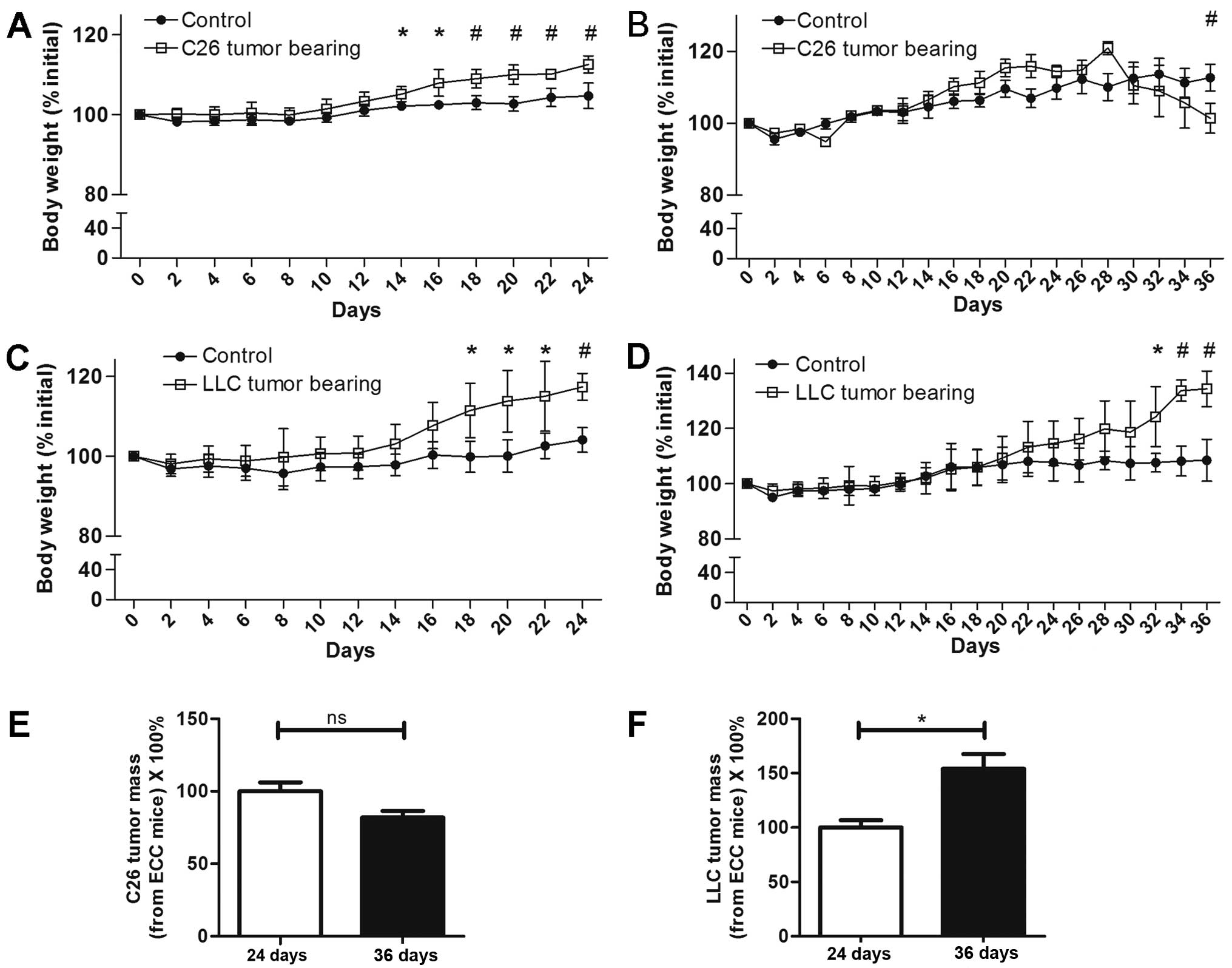
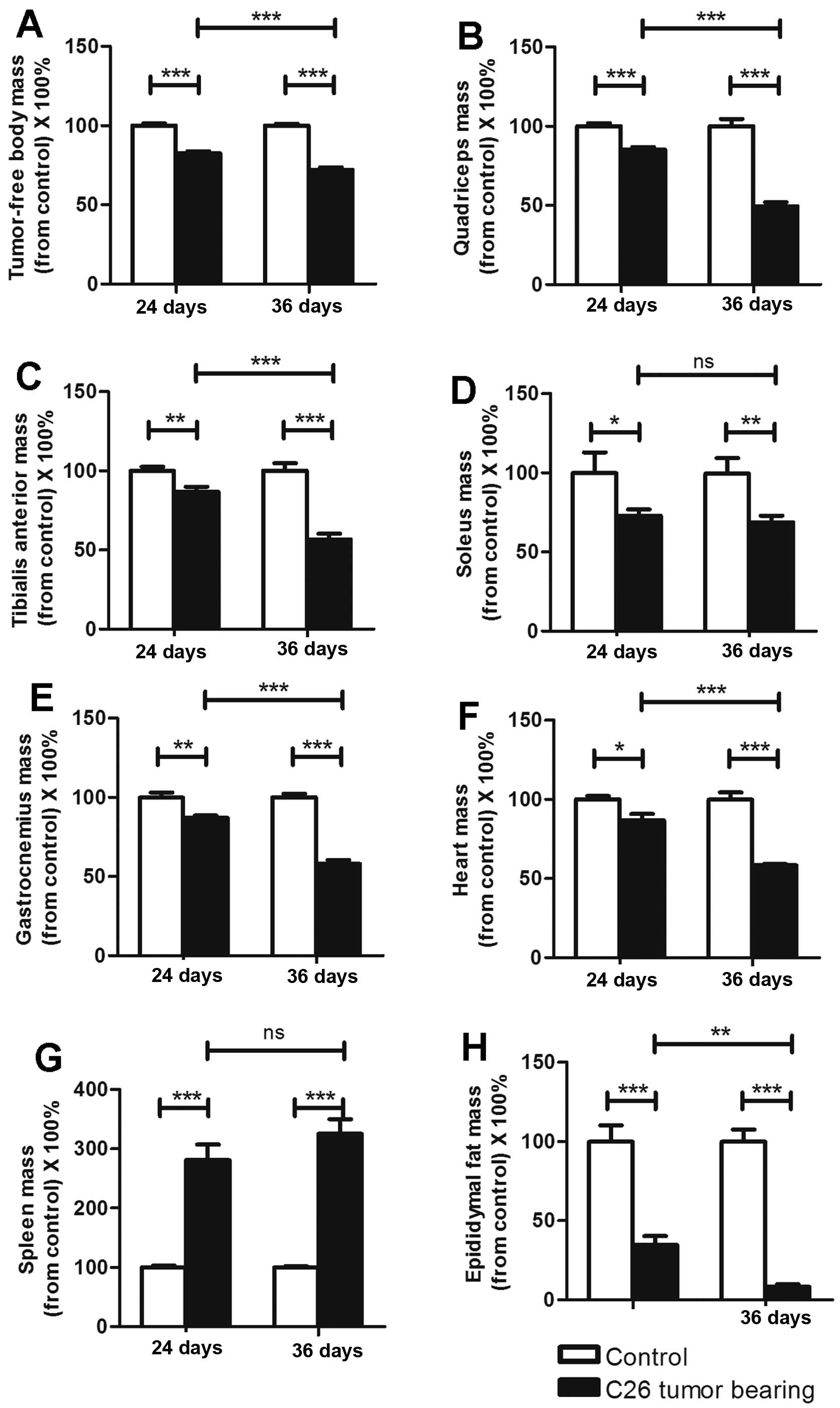
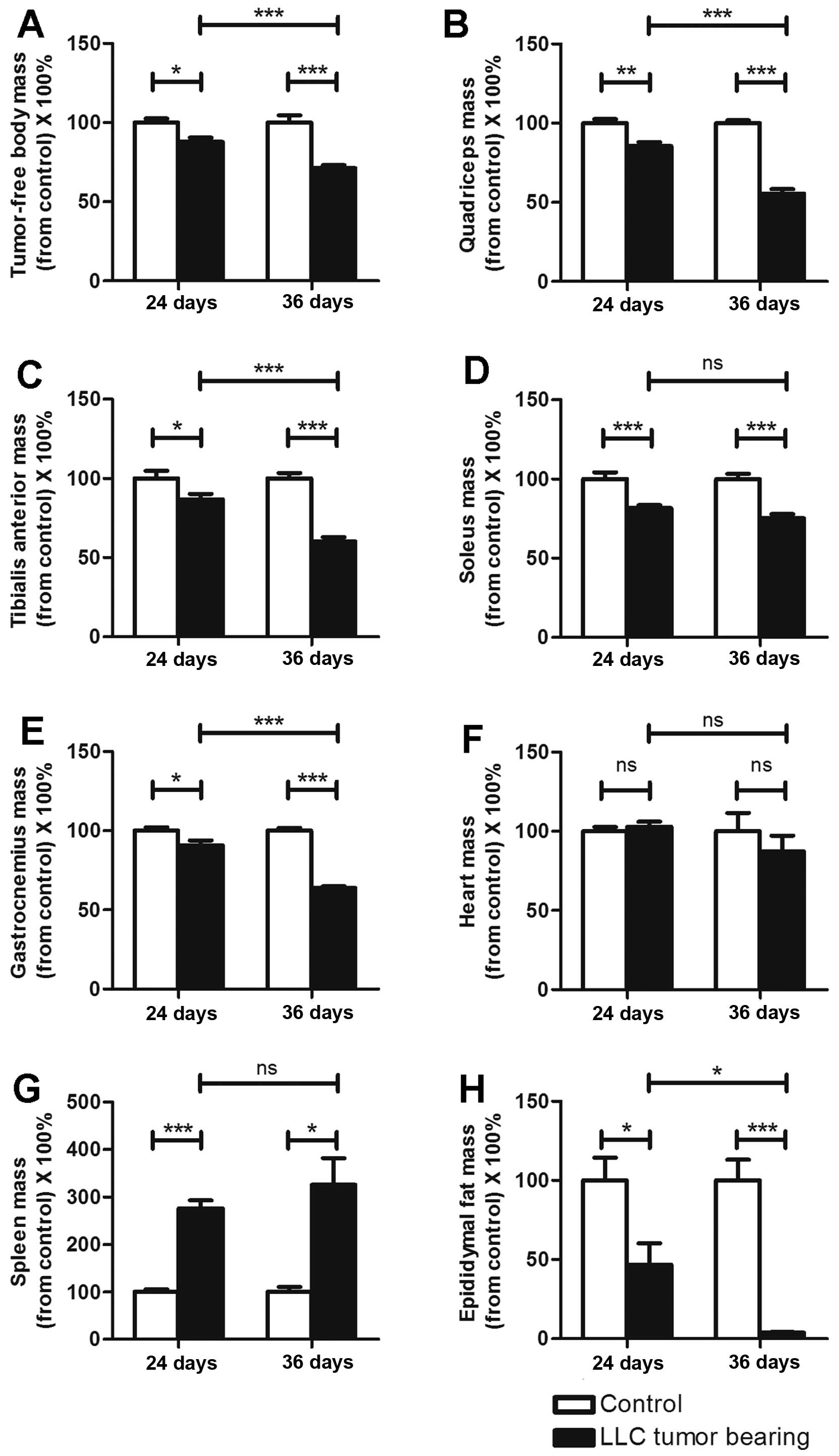
Cancer-induced muscle wasting, which commonly occurs in cancer cachexia, is characterized by impaired quality of life and poor patient survival. To identify an appropriate treatment, research on the mechanism underlying muscle wasting is essential. Thus far, studies on muscle wasting using cancer cachectic models have generally focused on early cancer cachexia (ECC), before severe body weight loss occurs. In the present study, we established models of ECC and late cancer cachexia (LCC) and compared different stages of cancer cachexia using two cancer cachectic mouse models induced by colon-26 (C26) adenocarcinoma or Lewis lung carcinoma (LLC). In each model, tumor-bearing (TB) and control (CN) mice were injected with cancer cells and PBS, respectively. The TB and CN mice, which were euthanized on the 24th day or the 36th day after injection, were defined as the ECC and ECC-CN mice or the LCC and LCC-CN mice. In addition, the tissues were harvested and analyzed. We found that both the ECC and LCC mice developed cancer cachexia. The amounts of muscle loss differed between the ECC and LCC mice. Moreover, the expression of some molecules was altered in the muscles from the LCC mice but not in those from the ECC mice compared with their CN mice. In conclusion, the molecules with altered expression in the muscles from the ECC and LCC mice were not exactly the same. These findings may provide some clues for therapy which could prevent the muscle wasting in cancer cachexia from progression to the late stage.
View Figures

Figure 1

Figure 2

Figure 3

Figure 4

Figure 5

Figure 6

Figure 7

Figure 8

Figure 9

View References

1 

Argilés JM, Busquets S, Stemmler B and López-Soriano FJ: Cancer cachexia: Understanding the molecular basis. Nat Rev Cancer. 14:754–762. 2014. View Article : Google Scholar : PubMed/NCBI

2 

Li B, Wan L, Li Y, Yu Q, Chen P, Gan R, Yang Q, Han Y and Guo C: Baicalin, a component of Scutellaria baicalensis, alleviates anorexia and inhibits skeletal muscle atrophy in experimental cancer cachexia. Tumour Biol. 35:12415–12425. 2014. View Article : Google Scholar : PubMed/NCBI

3 

Talbert EE, Metzger GA, He WA and Guttridge DC: Modeling human cancer cachexia in colon 26 tumor-bearing adult mice. J Cachexia Sarcopenia Muscle. 5:321–328. 2014. View Article : Google Scholar : PubMed/NCBI

4 

Cai D, Frantz JD, Tawa NE Jr, Melendez PA, Oh BC, Lidov HG, Hasselgren PO, Frontera WR, Lee J, Glass DJ, et al: IKKbeta/NF-kappaB activation causes severe muscle wasting in mice. Cell. 119:285–298. 2004. View Article : Google Scholar : PubMed/NCBI

5 

Acharyya S, Ladner KJ, Nelsen LL, Damrauer J, Reiser PJ, Swoap S and Guttridge DC: Cancer cachexia is regulated by selective targeting of skeletal muscle gene products. J Clin Invest. 114:370–378. 2004. View Article : Google Scholar : PubMed/NCBI

6 

Bonetto A, Aydogdu T, Jin X, Zhang Z, Zhan R, Puzis L, Koniaris LG and Zimmers TA: JAK/STAT3 pathway inhibition blocks skeletal muscle wasting downstream of IL-6 and in experimental cancer cachexia. Am J Physiol Endocrinol Metab. 303:E410–E421. 2012. View Article : Google Scholar : PubMed/NCBI

7 

Ham DJ, Murphy KT, Chee A, Lynch GS and Koopman R: Glycine administration attenuates skeletal muscle wasting in a mouse model of cancer cachexia. Clin Nutr. 33:448–458. 2014. View Article : Google Scholar : PubMed/NCBI

8 

Bonetto A, Aydogdu T, Kunzevitzky N, Guttridge DC, Khuri S, Koniaris LG and Zimmers TA: STAT3 activation in skeletal muscle links muscle wasting and the acute phase response in cancer cachexia. PLoS One. 6:e225382011. View Article : Google Scholar : PubMed/NCBI

9 

Murphy KT, Chee A, Trieu J, Naim T and Lynch GS: Importance of functional and metabolic impairments in the characterization of the C-26 murine model of cancer cachexia. Dis Model Mech. 5:533–545. 2012. View Article : Google Scholar : PubMed/NCBI

10 

Zhang G, Jin B and Li YP: C/EBPβ mediates tumour-induced ubiquitin ligase atrogin1/MAFbx upregulation and muscle wasting. EMBO J. 30:4323–4335. 2011. View Article : Google Scholar : PubMed/NCBI

11 

Busquets S, Toledo M, Orpí M, Massa D, Porta M, Capdevila E, Padilla N, Frailis V, López-Soriano FJ, Han HQ, et al: Myostatin blockage using actRIIB antagonism in mice bearing the Lewis lung carcinoma results in the improvement of muscle wasting and physical performance. J Cachexia Sarcopenia Muscle. 3:37–43. 2012. View Article : Google Scholar : PubMed/NCBI

12 

Ruas JL, White JP, Rao RR, Kleiner S, Brannan KT, Harrison BC, Greene NP, Wu J, Estall JL, Irving BA, et al: A PGC-1α isoform induced by resistance training regulates skeletal muscle hypertrophy. Cell. 151:1319–1331. 2012. View Article : Google Scholar : PubMed/NCBI

13 

Reed SA, Sandesara PB, Senf SM and Judge AR: Inhibition of FoxO transcriptional activity prevents muscle fiber atrophy during cachexia and induces hypertrophy. FASEB J. 26:987–1000. 2012. View Article : Google Scholar : PubMed/NCBI

14 

Puppa MJ, Gao S, Narsale AA and Carson JA: Skeletal muscle glycoprotein 130s role in Lewis lung carcinoma-induced cachexia. FASEB J. 28:998–1009. 2014. View Article : Google Scholar : PubMed/NCBI

15 

He SS, Wu QJ, Gong CY, Luo ST, Zhang S, Li M, Lu L, Wei YQ and Yang L: Enhanced efficacy of combination therapy with adeno-associated virus-delivered pigment epithelium-derived factor and cisplatin in a mouse model of Lewis lung carcinoma. Mol Med Rep. 9:2069–2076. 2014.PubMed/NCBI

16 

Wang H, Lai YJ, Chan YL, Li TL and Wu CJ: Epigallocatechin-3-gallate effectively attenuates skeletal muscle atrophy caused by cancer cachexia. Cancer Lett. 305:40–49. 2011. View Article : Google Scholar : PubMed/NCBI

17 

Fearon KC, Glass DJ and Guttridge DC: Cancer cachexia: Mediators, signaling, and metabolic pathways. Cell Metab. 16:153–166. 2012. View Article : Google Scholar : PubMed/NCBI

18 

Johns N, Stephens NA and Fearon KC: Muscle wasting in cancer. Int J Biochem Cell Biol. 45:2215–2229. 2013. View Article : Google Scholar : PubMed/NCBI

19 

McPherron AC, Lawler AM and Lee SJ: Regulation of skeletal muscle mass in mice by a new TGF-beta superfamily member. Nature. 387:83–90. 1997. View Article : Google Scholar : PubMed/NCBI

20 

Padrão AI, Oliveira P, Vitorino R, Colaço B, Pires MJ, Márquez M, Castellanos E, Neuparth MJ, Teixeira C, Costa C, et al: Bladder cancer-induced skeletal muscle wasting: Disclosing the role of mitochondria plasticity. Int J Biochem Cell Biol. 45:1399–1409. 2013. View Article : Google Scholar : PubMed/NCBI

21 

Padrão AI, Moreira-Gonçalves D, Oliveira PA, Teixeira C, Faustino-Rocha AI, Helguero L, Vitorino R, Santos LL, Amado F, Duarte JA, et al: Endurance training prevents TWEAK but not myostatin-mediated cardiac remodelling in cancer cachexia. Arch Biochem Biophys. 567:13–21. 2015. View Article : Google Scholar : PubMed/NCBI

22 

Gallot YS, Durieux AC, Castells J, Desgeorges MM, Vernus B, Plantureux L, Rémond D, Jahnke VE, Lefai E, Dardevet D, et al: Myostatin gene inactivation prevents skeletal muscle wasting in cancer. Cancer Res. 74:7344–7356. 2014. View Article : Google Scholar : PubMed/NCBI

23 

Han HQ, Zhou X, Mitch WE and Goldberg AL: Myostatin/activin pathway antagonism: Molecular basis and therapeutic potential. Int J Biochem Cell Biol. 45:2333–2347. 2013. View Article : Google Scholar : PubMed/NCBI

24 

Zhou X, Wang JL, Lu J, Song Y, Kwak KS, Jiao Q, Rosenfeld R, Chen Q, Boone T, Simonet WS, et al: Reversal of cancer cachexia and muscle wasting by ActRIIB antagonism leads to prolonged survival. Cell. 142:531–543. 2010. View Article : Google Scholar : PubMed/NCBI

25 

Lokireddy S, Wijesoma IW, Bonala S, Wei M, Sze SK, McFarlane C, Kambadur R and Sharma M: Myostatin is a novel tumoral factor that induces cancer cachexia. Biochem J. 446:23–36. 2012. View Article : Google Scholar : PubMed/NCBI

26 

Ramaswamy S, Nakamura N, Sansal I, Bergeron L and Sellers WR: A novel mechanism of gene regulation and tumor suppression by the transcription factor FKHR. Cancer Cell. 2:81–91. 2002. View Article : Google Scholar : PubMed/NCBI

27 

Sandri M, Sandri C, Gilbert A, Skurk C, Calabria E, Picard A, Walsh K, Schiaffino S, Lecker SH and Goldberg AL: Foxo transcription factors induce the atrophy-related ubiquitin ligase atrogin-1 and cause skeletal muscle atrophy. Cell. 117:399–412. 2004. View Article : Google Scholar : PubMed/NCBI

28 

Bodine SC, Latres E, Baumhueter S, Lai VK, Nunez L, Clarke BA, Poueymirou WT, Panaro FJ, Na E, Dharmarajan K, et al: Identification of ubiquitin ligases required for skeletal muscle atrophy. Science. 294:1704–1708. 2001. View Article : Google Scholar : PubMed/NCBI

29 

Gomes MD, Lecker SH, Jagoe RT, Navon A and Goldberg AL: Atrogin-1, a muscle-specific F-box protein highly expressed during muscle atrophy. Proc Natl Acad Sci USA. 98:14440–14445. 2001. View Article : Google Scholar : PubMed/NCBI

30 

Cohen S, Nathan JA and Goldberg AL: Muscle wasting in disease: Molecular mechanisms and promising therapies. Nat Rev Drug Discov. 14:58–74. 2015. View Article : Google Scholar : PubMed/NCBI

31 

Wang DT, Yang YJ, Huang RH, Zhang ZH and Lin X: Myostatin activates the ubiquitin-proteasome and autophagy-lysosome systems contributing to muscle wasting in chronic kidney disease. Oxid Med Cell Longev. 2015:6849652015. View Article : Google Scholar : PubMed/NCBI

32 

Attaix D, Ventadour S, Codran A, Béchet D, Taillandier D and Combaret L: The ubiquitin-proteasome system and skeletal muscle wasting. Essays Biochem. 41:173–186. 2005. View Article : Google Scholar : PubMed/NCBI

33 

Taillandier D, Combaret L, Pouch MN, Samuels SE, Béchet D and Attaix D: The role of ubiquitin-proteasome-dependent proteolysis in the remodelling of skeletal muscle. Proc Nutr Soc. 63:357–361. 2004. View Article : Google Scholar : PubMed/NCBI

34 

Lokireddy S, Wijesoma IW, Sze SK, McFarlane C, Kambadur R and Sharma M: Identification of atrogin-1-targeted proteins during the myostatin-induced skeletal muscle wasting. Am J Physiol Cell Physiol. 303:C512–C529. 2012. View Article : Google Scholar : PubMed/NCBI

35 

Sandri M, Lin J, Handschin C, Yang W, Arany ZP, Lecker SH, Goldberg AL and Spiegelman BM: PGC-1alpha protects skeletal muscle from atrophy by suppressing FoxO3 action and atrophy-specific gene transcription. Proc Natl Acad Sci USA. 103:16260–16265. 2006. View Article : Google Scholar : PubMed/NCBI

36 

Esterbauer H, Oberkofler H, Krempler F and Patsch W: Human peroxisome proliferator activated receptor gamma coactivator 1 (PPARGC1) gene: cDNA sequence, genomic organization, chromosomal localization, and tissue expression. Genomics. 62:98–102. 1999. View Article : Google Scholar : PubMed/NCBI

37 

Puigserver P: Tissue-specific regulation of metabolic pathways through the transcriptional coactivator PGC1-alpha. Int J Obes. 29:(Suppl 1). S5–S9. 2005. View Article : Google Scholar

38 

Brault JJ, Jespersen JG and Goldberg AL: Peroxisome proliferator-activated receptor gamma coactivator 1alpha or 1beta overexpression inhibits muscle protein degradation, induction of ubiquitin ligases, and disuse atrophy. J Biol Chem. 285:19460–19471. 2010. View Article : Google Scholar : PubMed/NCBI

39 

Cannavino J, Brocca L, Sandri M, Bottinelli R and Pellegrino MA: PGC1-α over-expression prevents metabolic alterations and soleus muscle atrophy in hindlimb unloaded mice. J Physiol. 592:4575–4589. 2014. View Article : Google Scholar : PubMed/NCBI

40 

Wenz T, Rossi SG, Rotundo RL, Spiegelman BM and Moraes CT: Increased muscle PGC-1alpha expression protects from sarcopenia and metabolic disease during aging. Proc Natl Acad Sci USA. 106:20405–20410. 2009. View Article : Google Scholar : PubMed/NCBI

41 

Ramji DP and Foka P: CCAAT/enhancer-binding proteins: Structure, function and regulation. Biochem J. 365:561–575. 2002. View Article : Google Scholar : PubMed/NCBI

42 

Allen DL, Bandstra ER, Harrison BC, Thorng S, Stodieck LS, Kostenuik PJ, Morony S, Lacey DL, Hammond TG, Leinwand LL, et al: Effects of spaceflight on murine skeletal muscle gene expression. J Appl Physiol (1985). 106:582–595. 2009. View Article : Google Scholar : PubMed/NCBI

43 

Penner G, Gang G, Sun X, Wray C and Hasselgren PO: C/EBP DNA-binding activity is upregulated by a glucocorticoid-dependent mechanism in septic muscle. Am J Physiol Regul Integr Comp Physiol. 282:R439–R444. 2002. View Article : Google Scholar : PubMed/NCBI

44 

Zhang G and Li YP: p38β MAPK upregulates atrogin1/MAFbx by specific phosphorylation of C/EBPβ. Skelet Muscle. 2:202012. View Article : Google Scholar : PubMed/NCBI

45 

McKinsey TA, Zhang CL and Olson EN: Control of muscle development by dueling HATs and HDACs. Curr Opin Genet Dev. 11:497–504. 2001. View Article : Google Scholar : PubMed/NCBI

46 

Alamdari N, Aversa Z, Castillero E and Hasselgren PO: Acetylation and deacetylation - novel factors in muscle wasting. Metabolism. 62:1–11. 2013. View Article : Google Scholar : PubMed/NCBI

47 

Yang H, Wei W, Menconi M and Hasselgren PO: Dexamethasone-induced protein degradation in cultured myotubes is p300/HAT dependent. Am J Physiol Regul Integr Comp Physiol. 292:R337–R334. 2007. View Article : Google Scholar : PubMed/NCBI

48 

Demos-Davies KM, Ferguson BS, Cavasin MA, Mahaffey JH, Williams SM, Spiltoir JI, Schuetze KB, Horn TR, Chen B, Ferrara C, et al: HDAC6 contributes to pathological responses of heart and skeletal muscle to chronic angiotensin-II signaling. Am J Physiol Heart Circ Physiol. 307:H252–H258. 2014. View Article : Google Scholar : PubMed/NCBI

49 

Beharry AW, Sandesara PB, Roberts BM, Ferreira LF, Senf SM and Judge AR: HDAC1 activates FoxO and is both sufficient and required for skeletal muscle atrophy. J Cell Sci. 127:1441–1453. 2014. View Article : Google Scholar : PubMed/NCBI

50 

Greco S, De Simone M, Colussi C, Zaccagnini G, Fasanaro P, Pescatori M, Cardani R, Perbellini R, Isaia E, Sale P, et al: Common micro-RNA signature in skeletal muscle damage and regeneration induced by Duchenne muscular dystrophy and acute ischemia. FASEB J. 23:3335–3346. 2009. View Article : Google Scholar : PubMed/NCBI

51 

Guess MG, Barthel KK, Harrison BC and Leinwand LA: miR-30 family microRNAs regulate myogenic differentiation and provide negative feedback on the microRNA pathway. PLoS One. 10:e01182292015. View Article : Google Scholar : PubMed/NCBI

52 

Cavallo F, Calogero RA and Forni G: Are oncoantigens suitable targets for anti-tumour therapy? Nat Rev Cancer. 7:707–713. 2007. View Article : Google Scholar : PubMed/NCBI

53 

Das SK, Eder S, Schauer S, Diwoky C, Temmel H, Guertl B, Gorkiewicz G, Tamilarasan KP, Kumari P, Trauner M, et al: Adipose triglyceride lipase contributes to cancer-associated cachexia. Science. 333:233–238. 2011. View Article : Google Scholar : PubMed/NCBI

54 

Kliewer KL, Ke JY, Tian M, Cole RM, Andridge RR and Belury MA: Adipose tissue lipolysis and energy metabolism in early cancer cachexia in mice. Cancer Biol Ther. 2014.PubMed/NCBI

55 

Minetti GC, Colussi C, Adami R, Serra C, Mozzetta C, Parente V, Fortuni S, Straino S, Sampaolesi M, Di Padova M, et al: Functional and morphological recovery of dystrophic muscles in mice treated with deacetylase inhibitors. Nat Med. 12:1147–1150. 2006. View Article : Google Scholar : PubMed/NCBI

56 

Moresi V, Williams AH, Meadows E, Flynn JM, Potthoff MJ, McAnally J, Shelton JM, Backs J, Klein WH, Richardson JA, et al: Myogenin and class II HDACs control neurogenic muscle atrophy by inducing E3 ubiquitin ligases. Cell. 143:35–45. 2010. View Article : Google Scholar : PubMed/NCBI

Related Articles

  • Abstract
  • View
  • Download
  • Twitter
Copy and paste a formatted citation
Spandidos Publications style
Sun R, Zhang S, Lu X, Hu W, Lou N, Zhao Y, Zhou J, Zhang X and Yang H: Comparative molecular analysis of early and late cancer cachexia-induced muscle wasting in mouse models. Oncol Rep 36: 3291-3302, 2016.
APA
Sun, R., Zhang, S., Lu, X., Hu, W., Lou, N., Zhao, Y. ... Yang, H. (2016). Comparative molecular analysis of early and late cancer cachexia-induced muscle wasting in mouse models. Oncology Reports, 36, 3291-3302. https://doi.org/10.3892/or.2016.5165
MLA
Sun, R., Zhang, S., Lu, X., Hu, W., Lou, N., Zhao, Y., Zhou, J., Zhang, X., Yang, H."Comparative molecular analysis of early and late cancer cachexia-induced muscle wasting in mouse models". Oncology Reports 36.6 (2016): 3291-3302.
Chicago
Sun, R., Zhang, S., Lu, X., Hu, W., Lou, N., Zhao, Y., Zhou, J., Zhang, X., Yang, H."Comparative molecular analysis of early and late cancer cachexia-induced muscle wasting in mouse models". Oncology Reports 36, no. 6 (2016): 3291-3302. https://doi.org/10.3892/or.2016.5165
Copy and paste a formatted citation
x
Spandidos Publications style
Sun R, Zhang S, Lu X, Hu W, Lou N, Zhao Y, Zhou J, Zhang X and Yang H: Comparative molecular analysis of early and late cancer cachexia-induced muscle wasting in mouse models. Oncol Rep 36: 3291-3302, 2016.
APA
Sun, R., Zhang, S., Lu, X., Hu, W., Lou, N., Zhao, Y. ... Yang, H. (2016). Comparative molecular analysis of early and late cancer cachexia-induced muscle wasting in mouse models. Oncology Reports, 36, 3291-3302. https://doi.org/10.3892/or.2016.5165
MLA
Sun, R., Zhang, S., Lu, X., Hu, W., Lou, N., Zhao, Y., Zhou, J., Zhang, X., Yang, H."Comparative molecular analysis of early and late cancer cachexia-induced muscle wasting in mouse models". Oncology Reports 36.6 (2016): 3291-3302.
Chicago
Sun, R., Zhang, S., Lu, X., Hu, W., Lou, N., Zhao, Y., Zhou, J., Zhang, X., Yang, H."Comparative molecular analysis of early and late cancer cachexia-induced muscle wasting in mouse models". Oncology Reports 36, no. 6 (2016): 3291-3302. https://doi.org/10.3892/or.2016.5165
Follow us
  • Twitter
  • LinkedIn
  • Facebook
About
  • Spandidos Publications
  • Careers
  • Cookie Policy
  • Privacy Policy
How can we help?
  • Help
  • Live Chat
  • Contact
  • Email to our Support Team