Spandidos Publications Logo
  • About
    • About Spandidos
    • Aims and Scopes
    • Abstracting and Indexing
    • Editorial Policies
    • Reprints and Permissions
    • Job Opportunities
    • Terms and Conditions
    • Contact
  • Journals
    • All Journals
    • Oncology Letters
      • Oncology Letters
      • Information for Authors
      • Editorial Policies
      • Editorial Board
      • Aims and Scope
      • Abstracting and Indexing
      • Bibliographic Information
      • Archive
    • International Journal of Oncology
      • International Journal of Oncology
      • Information for Authors
      • Editorial Policies
      • Editorial Board
      • Aims and Scope
      • Abstracting and Indexing
      • Bibliographic Information
      • Archive
    • Molecular and Clinical Oncology
      • Molecular and Clinical Oncology
      • Information for Authors
      • Editorial Policies
      • Editorial Board
      • Aims and Scope
      • Abstracting and Indexing
      • Bibliographic Information
      • Archive
    • Experimental and Therapeutic Medicine
      • Experimental and Therapeutic Medicine
      • Information for Authors
      • Editorial Policies
      • Editorial Board
      • Aims and Scope
      • Abstracting and Indexing
      • Bibliographic Information
      • Archive
    • International Journal of Molecular Medicine
      • International Journal of Molecular Medicine
      • Information for Authors
      • Editorial Policies
      • Editorial Board
      • Aims and Scope
      • Abstracting and Indexing
      • Bibliographic Information
      • Archive
    • Biomedical Reports
      • Biomedical Reports
      • Information for Authors
      • Editorial Policies
      • Editorial Board
      • Aims and Scope
      • Abstracting and Indexing
      • Bibliographic Information
      • Archive
    • Oncology Reports
      • Oncology Reports
      • Information for Authors
      • Editorial Policies
      • Editorial Board
      • Aims and Scope
      • Abstracting and Indexing
      • Bibliographic Information
      • Archive
    • Molecular Medicine Reports
      • Molecular Medicine Reports
      • Information for Authors
      • Editorial Policies
      • Editorial Board
      • Aims and Scope
      • Abstracting and Indexing
      • Bibliographic Information
      • Archive
    • World Academy of Sciences Journal
      • World Academy of Sciences Journal
      • Information for Authors
      • Editorial Policies
      • Editorial Board
      • Aims and Scope
      • Abstracting and Indexing
      • Bibliographic Information
      • Archive
    • International Journal of Functional Nutrition
      • International Journal of Functional Nutrition
      • Information for Authors
      • Editorial Policies
      • Editorial Board
      • Aims and Scope
      • Abstracting and Indexing
      • Bibliographic Information
      • Archive
    • International Journal of Epigenetics
      • International Journal of Epigenetics
      • Information for Authors
      • Editorial Policies
      • Editorial Board
      • Aims and Scope
      • Abstracting and Indexing
      • Bibliographic Information
      • Archive
    • Medicine International
      • Medicine International
      • Information for Authors
      • Editorial Policies
      • Editorial Board
      • Aims and Scope
      • Abstracting and Indexing
      • Bibliographic Information
      • Archive
  • Articles
  • Information
    • Information for Authors
    • Information for Reviewers
    • Information for Librarians
    • Information for Advertisers
    • Conferences
  • Language Editing
Spandidos Publications Logo
  • About
    • About Spandidos
    • Aims and Scopes
    • Abstracting and Indexing
    • Editorial Policies
    • Reprints and Permissions
    • Job Opportunities
    • Terms and Conditions
    • Contact
  • Journals
    • All Journals
    • Biomedical Reports
      • Information for Authors
      • Editorial Policies
      • Editorial Board
      • Aims and Scope
      • Abstracting and Indexing
      • Bibliographic Information
      • Archive
    • Experimental and Therapeutic Medicine
      • Information for Authors
      • Editorial Policies
      • Editorial Board
      • Aims and Scope
      • Abstracting and Indexing
      • Bibliographic Information
      • Archive
    • International Journal of Epigenetics
      • Information for Authors
      • Editorial Policies
      • Editorial Board
      • Aims and Scope
      • Abstracting and Indexing
      • Bibliographic Information
      • Archive
    • International Journal of Functional Nutrition
      • Information for Authors
      • Editorial Policies
      • Editorial Board
      • Aims and Scope
      • Abstracting and Indexing
      • Bibliographic Information
      • Archive
    • International Journal of Molecular Medicine
      • Information for Authors
      • Editorial Policies
      • Editorial Board
      • Aims and Scope
      • Abstracting and Indexing
      • Bibliographic Information
      • Archive
    • International Journal of Oncology
      • Information for Authors
      • Editorial Policies
      • Editorial Board
      • Aims and Scope
      • Abstracting and Indexing
      • Bibliographic Information
      • Archive
    • Medicine International
      • Information for Authors
      • Editorial Policies
      • Editorial Board
      • Aims and Scope
      • Abstracting and Indexing
      • Bibliographic Information
      • Archive
    • Molecular and Clinical Oncology
      • Information for Authors
      • Editorial Policies
      • Editorial Board
      • Aims and Scope
      • Abstracting and Indexing
      • Bibliographic Information
      • Archive
    • Molecular Medicine Reports
      • Information for Authors
      • Editorial Policies
      • Editorial Board
      • Aims and Scope
      • Abstracting and Indexing
      • Bibliographic Information
      • Archive
    • Oncology Letters
      • Information for Authors
      • Editorial Policies
      • Editorial Board
      • Aims and Scope
      • Abstracting and Indexing
      • Bibliographic Information
      • Archive
    • Oncology Reports
      • Information for Authors
      • Editorial Policies
      • Editorial Board
      • Aims and Scope
      • Abstracting and Indexing
      • Bibliographic Information
      • Archive
    • World Academy of Sciences Journal
      • Information for Authors
      • Editorial Policies
      • Editorial Board
      • Aims and Scope
      • Abstracting and Indexing
      • Bibliographic Information
      • Archive
  • Articles
  • Information
    • For Authors
    • For Reviewers
    • For Librarians
    • For Advertisers
    • Conferences
  • Language Editing
Login Register Submit
  • This site uses cookies
  • You can change your cookie settings at any time by following the instructions in our Cookie Policy. To find out more, you may read our Privacy Policy.

    I agree
Search articles by DOI, keyword, author or affiliation
Search
Advanced Search
presentation
Oncology Reports
Join Editorial Board Propose a Special Issue
Print ISSN: 1021-335X Online ISSN: 1791-2431
Journal Cover
December-2016 Volume 36 Issue 6

Full Size Image

Sign up for eToc alerts
Recommend to Library

Journals

International Journal of Molecular Medicine

International Journal of Molecular Medicine

International Journal of Molecular Medicine is an international journal devoted to molecular mechanisms of human disease.

International Journal of Oncology

International Journal of Oncology

International Journal of Oncology is an international journal devoted to oncology research and cancer treatment.

Molecular Medicine Reports

Molecular Medicine Reports

Covers molecular medicine topics such as pharmacology, pathology, genetics, neuroscience, infectious diseases, molecular cardiology, and molecular surgery.

Oncology Reports

Oncology Reports

Oncology Reports is an international journal devoted to fundamental and applied research in Oncology.

Experimental and Therapeutic Medicine

Experimental and Therapeutic Medicine

Experimental and Therapeutic Medicine is an international journal devoted to laboratory and clinical medicine.

Oncology Letters

Oncology Letters

Oncology Letters is an international journal devoted to Experimental and Clinical Oncology.

Biomedical Reports

Biomedical Reports

Explores a wide range of biological and medical fields, including pharmacology, genetics, microbiology, neuroscience, and molecular cardiology.

Molecular and Clinical Oncology

Molecular and Clinical Oncology

International journal addressing all aspects of oncology research, from tumorigenesis and oncogenes to chemotherapy and metastasis.

World Academy of Sciences Journal

World Academy of Sciences Journal

Multidisciplinary open-access journal spanning biochemistry, genetics, neuroscience, environmental health, and synthetic biology.

International Journal of Functional Nutrition

International Journal of Functional Nutrition

Open-access journal combining biochemistry, pharmacology, immunology, and genetics to advance health through functional nutrition.

International Journal of Epigenetics

International Journal of Epigenetics

Publishes open-access research on using epigenetics to advance understanding and treatment of human disease.

Medicine International

Medicine International

An International Open Access Journal Devoted to General Medicine.

Journal Cover
December-2016 Volume 36 Issue 6

Full Size Image

Sign up for eToc alerts
Recommend to Library

  • Article
  • Citations
    • Cite This Article
    • Download Citation
    • Create Citation Alert
    • Remove Citation Alert
    • Cited By
  • Similar Articles
    • Related Articles (in Spandidos Publications)
    • Similar Articles (Google Scholar)
    • Similar Articles (PubMed)
  • Download PDF
  • Download XML
  • View XML
Article

Resveratrol analogue (E)-8-acetoxy-2-[2-(3,4-diacetoxyphenyl)ethenyl]-quinazoline induces apoptosis via Fas-mediated pathway in HL-60 human leukemia cells

  • Authors:
    • Eun Young Park
    • Joo-Il Kim
    • Dong-Gyu Leem
    • Ji-Sun Shin
    • Kyung-Tack Kim
    • Sang Yoon Choi
    • Myung-Hee Lee
    • Jung-Hye Choi
    • Yong Sup Lee
    • Kyung-Tae Lee
  • View Affiliations / Copyright

    Affiliations: Department of Pharmaceutical Biochemistry, College of Pharmacy, Kyung Hee University, Seoul 130-701, Republic of Korea, Traditional Food Research Center, Korea Food Research Institute, Seongnam 13539, Republic of Korea, Department of Life and Nanopharmaceutical Science, College of Pharmacy, Kyung Hee University, Seoul 130-701, Republic of Korea
  • Pages: 3577-3587
    |
    Published online on: October 13, 2016
       https://doi.org/10.3892/or.2016.5168
  • Expand metrics +
Metrics: Total Views: 0 (Spandidos Publications: | PMC Statistics: )
Metrics: Total PDF Downloads: 0 (Spandidos Publications: | PMC Statistics: )
Cited By (CrossRef): 0 citations Loading Articles...

This article is mentioned in:


Abstract

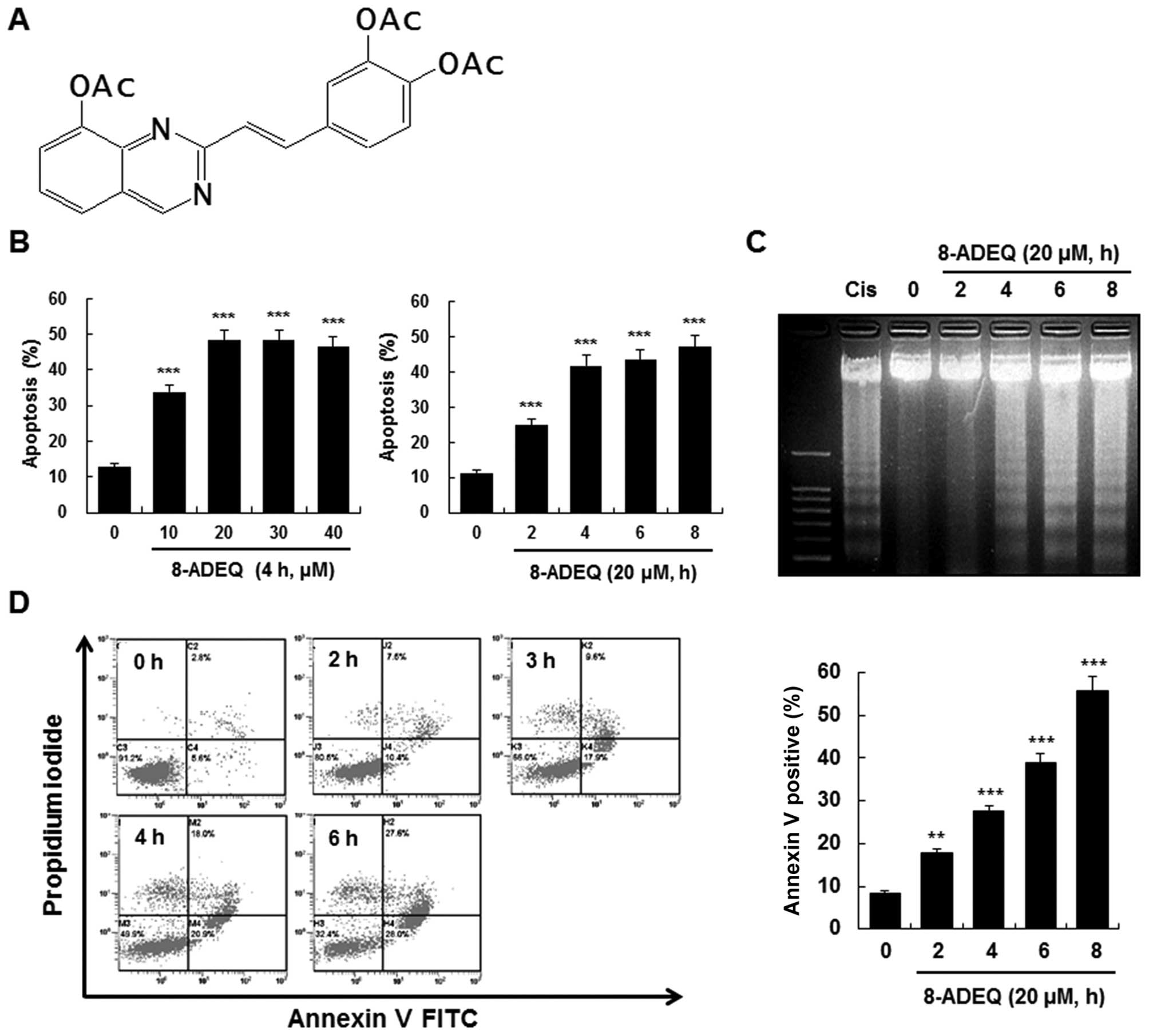
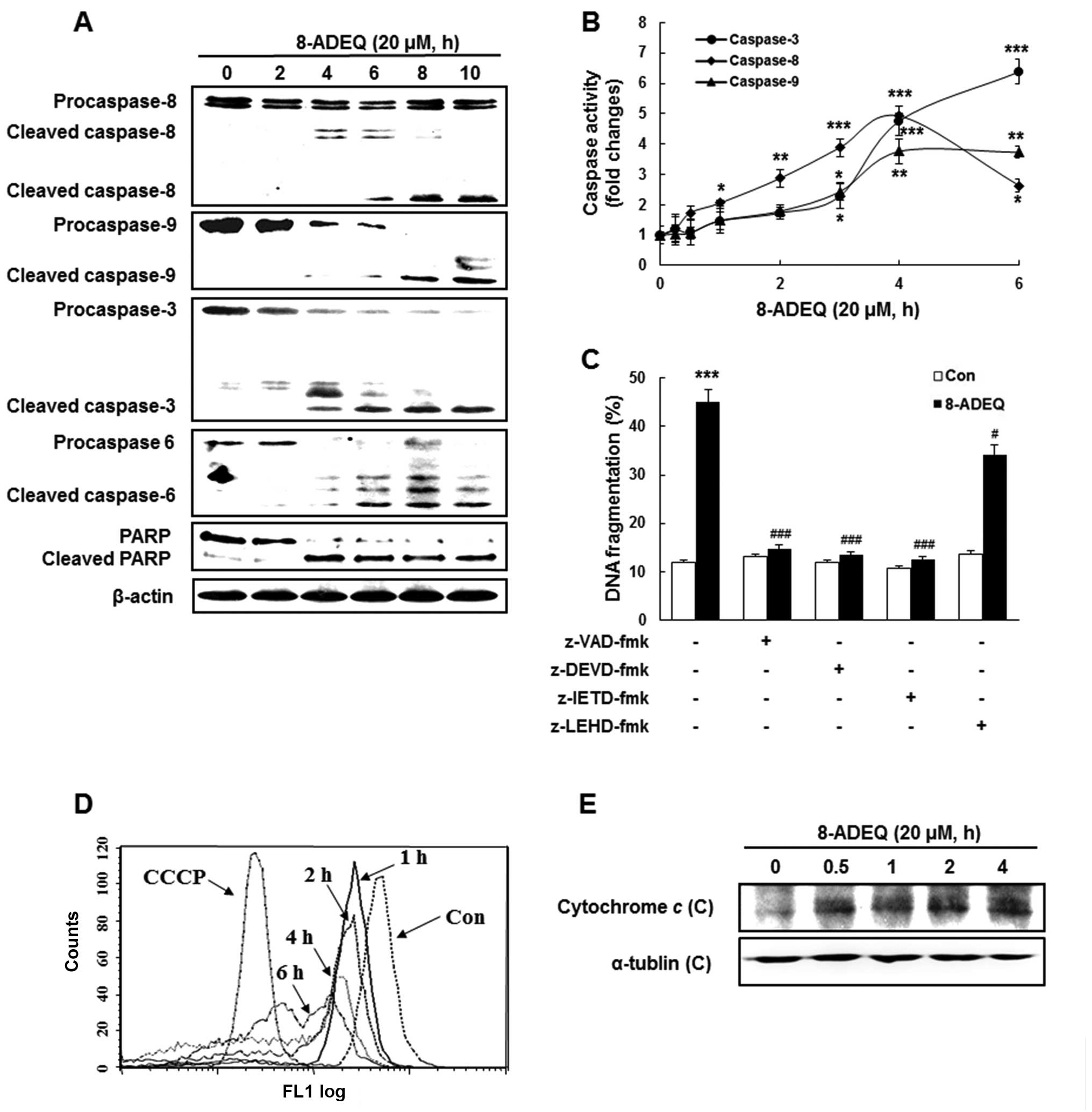
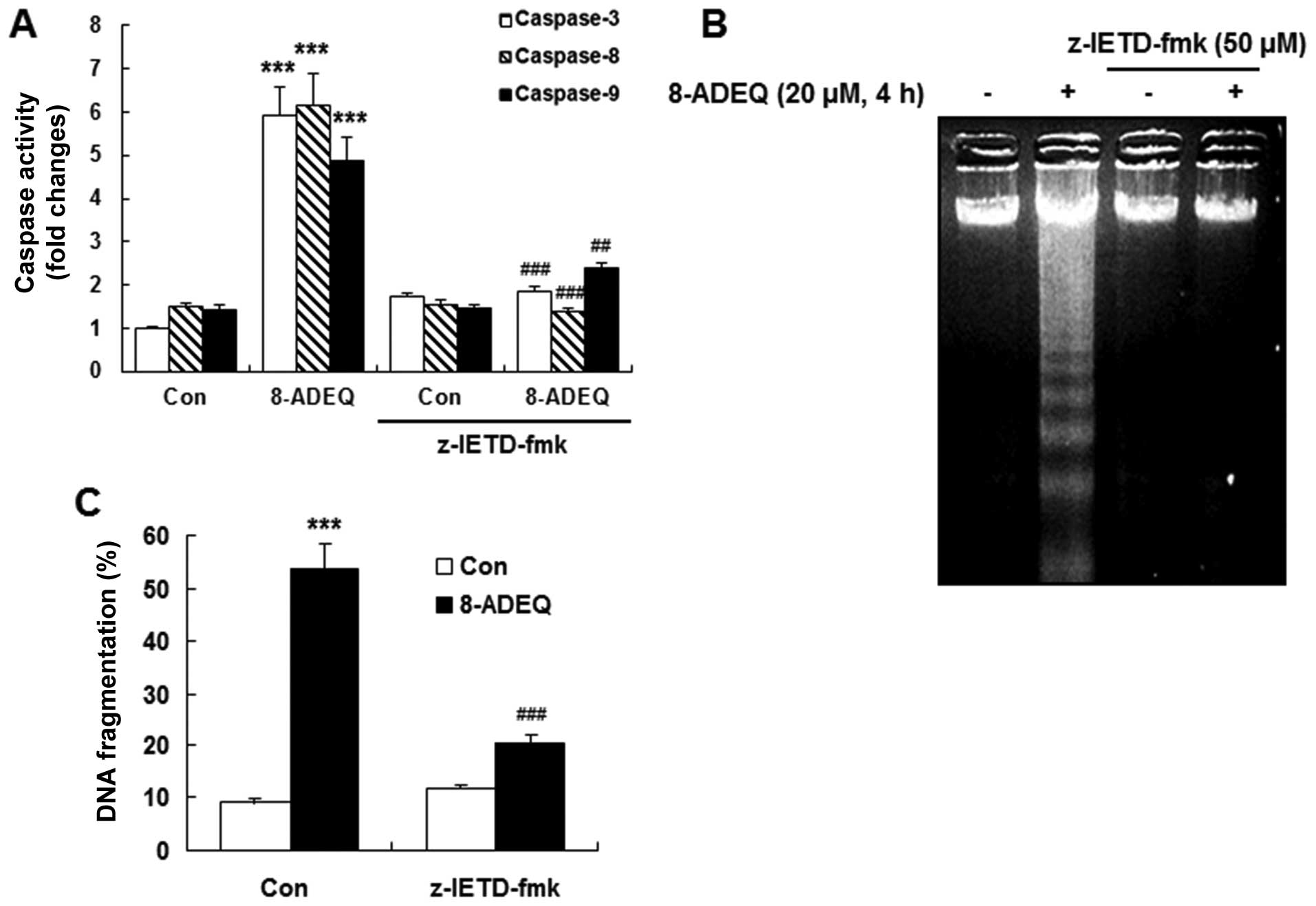
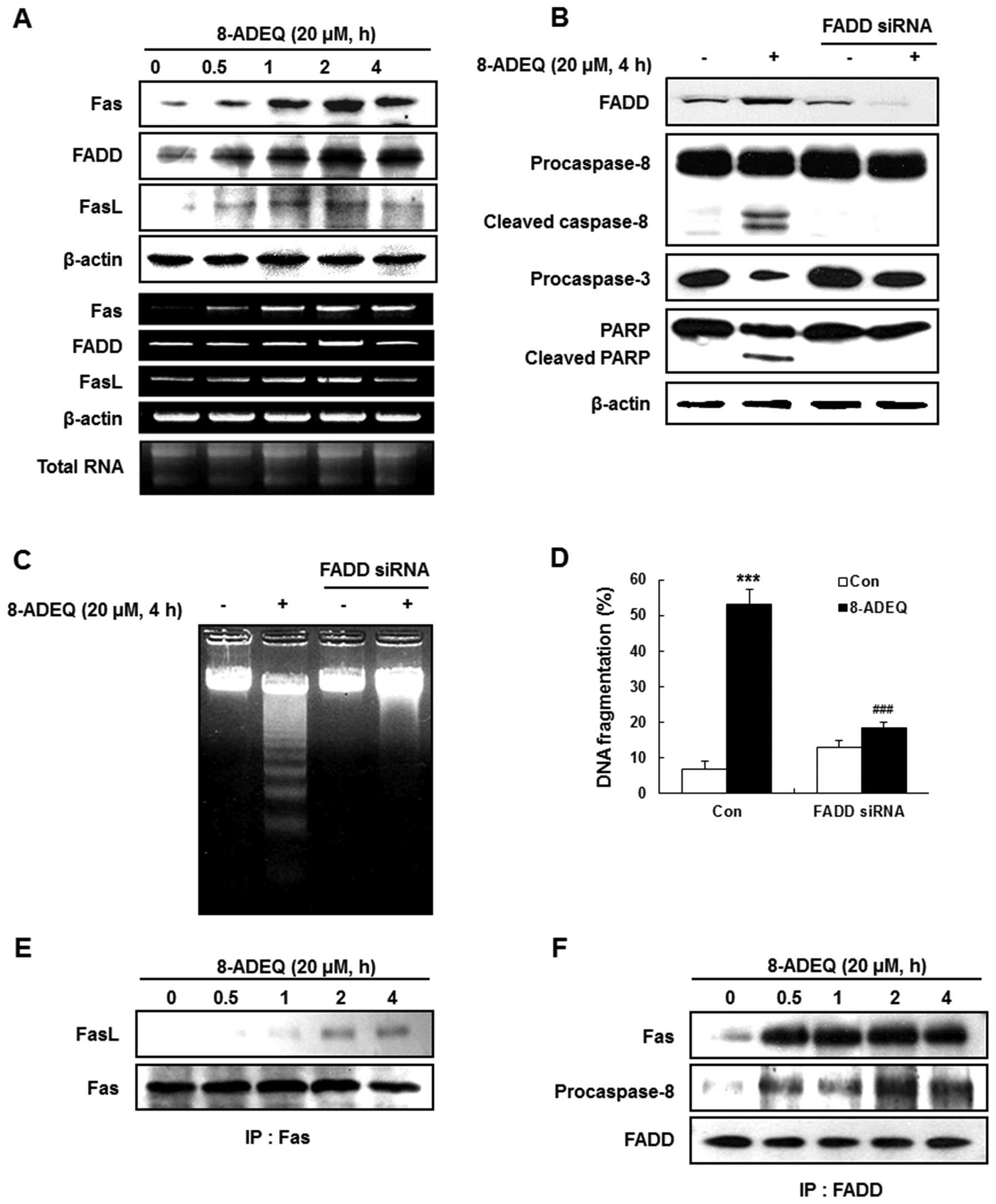
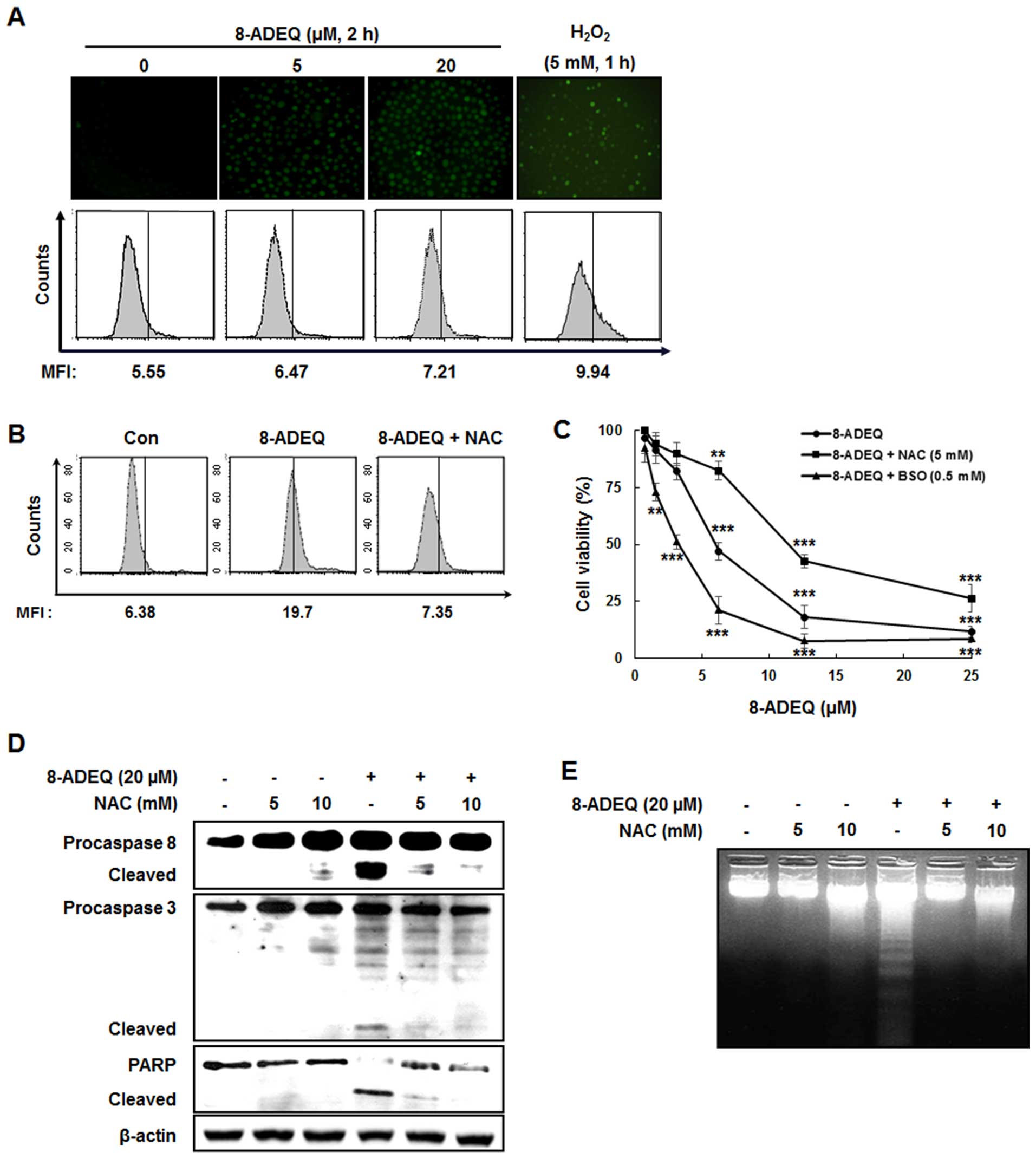
Previously, we reported that (E)-8-acetoxy-2-[2-(3,4-diacetoxyphenyl)ethenyl]-quinazoline (8-ADEQ), a synthetic analogue of resveratrol had anti-inflammatory and G2/M cell cycle arrest activities, but the underlying molecular mechanism of cytotoxic effects of this compound was not determined. In this study, 8-ADEQ displayed potent cytotoxicity and triggered apoptosis in HL-60 cells as evidenced by DNA fragmentation, DNA ladder formation, and the externalization of Annexin V-targeted phosphatidylserine residues in HL-60 cells. In addition, 8-ADEQ triggered activation of caspases-8, -9, -6 and -3 and cleavage of their substrates such as poly(ADP-ribose) polymerase (PARP). Moreover, 8-ADEQ induced loss of mitochondrial membrane potential (MMP) and release of cytochrome c to the cytosol. Caspase-3 inhibitor (z-DEVD-fmk), caspase-8 inhibitor (z-IETD-fmk), caspase-9 inhibitor (z-LEHD), and broad caspase inhibitor (z-VAD‑fmk) significantly suppressed the 8-ADEQ-induced DNA fragmentation. Interestingly, pretreatment with z-IETD-fmk, a caspase-8 inhibitor, completely abolished 8-ADEQ-induced caspase-3 and -9 activation, and subsequent DNA fragmentation. 8-ADEQ also increased the expression of Fas, Fas-associated death domain (FADD) and FasL, and formation of death-inducing signaling complex (DISC). Further analysis revealed that 8-ADEQ-induced apoptosis was mediated by upregulation of reactive oxidative species (ROS) generation. Taken together, our data indicated that 8-ADEQ-stimulated apoptosis in HL-60 leukemia cells is due to a Fas-mediated caspase-8-dependent pathway via ROS generation, but also, to a lesser extent cytochrome c release and caspase-9 activation.
View Figures

Figure 1

Figure 2

Figure 3

Figure 4

Figure 5

View References

1 

Debatin KM: Apoptosis pathways in cancer and cancer therapy. Cancer Immunol Immunother. 53:153–159. 2004. View Article : Google Scholar : PubMed/NCBI

2 

Previati M, Lanzoni I, Corbacella E, Magosso S, Guaran V, Martini A and Capitani S: Cisplatin-induced apoptosis in human promyelocytic leukemia cells. Int J Mol Med. 18:511–516. 2006.PubMed/NCBI

3 

Fulda S, Strauss G, Meyer E and Debatin KM: Functional CD95 ligand and CD95 death-inducing signaling complex in activation-induced cell death and doxorubicin-induced apoptosis in leukemic T cells. Blood. 95:301–308. 2000.PubMed/NCBI

4 

Odoux C and Albers A: Additive effects of TRAIL and paclitaxel on cancer cells: Implications for advances in cancer therapy. Vitam Horm. 67:385–407. 2004. View Article : Google Scholar : PubMed/NCBI

5 

Karpinich NO, Tafani M, Rothman RJ, Russo MA and Farber JL: The course of etoposide-induced apoptosis from damage to DNA and p53 activation to mitochondrial release of cytochrome c. J Biol Chem. 277:16547–16552. 2002. View Article : Google Scholar : PubMed/NCBI

6 

Clarke PG: Apoptosis: From morphological types of cell death to interacting pathways. Trends Pharmacol Sci. 23:308–309; author reply 310. 2002. View Article : Google Scholar : PubMed/NCBI

7 

Wajant H: The Fas signaling pathway: More than a paradigm. Science. 296:1635–1636. 2002. View Article : Google Scholar : PubMed/NCBI

8 

Debatin KM and Krammer PH: Death receptors in chemotherapy and cancer. Oncogene. 23:2950–2966. 2004. View Article : Google Scholar : PubMed/NCBI

9 

Kaufmann SH and Earnshaw WC: Induction of apoptosis by cancer chemotherapy. Exp Cell Res. 256:42–49. 2000. View Article : Google Scholar : PubMed/NCBI

10 

Giles GI: The redox regulation of thiol dependent signaling pathways in cancer. Curr Pharm Des. 12:4427–4443. 2006. View Article : Google Scholar : PubMed/NCBI

11 

Roos WP and Kaina B: DNA damage-induced cell death by apoptosis. Trends Mol Med. 12:440–450. 2006. View Article : Google Scholar : PubMed/NCBI

12 

Devadas S, Hinshaw JA, Zaritskaya L and Williams MS: Fas-stimulated generation of reactive oxygen species or exogenous oxidative stress sensitize cells to Fas-mediated apoptosis. Free Radic Biol Med. 35:648–661. 2003. View Article : Google Scholar : PubMed/NCBI

13 

Micheau O, Solary E, Hammann A and Dimanche-Boitrel MT: Fas ligand-independent, FADD-mediated activation of the Fas death pathway by anticancer drugs. J Biol Chem. 274:7987–7992. 1999. View Article : Google Scholar : PubMed/NCBI

14 

Santiago B, Galindo M, Palao G and Pablos JL: Intracellular regulation of Fas-induced apoptosis in human fibroblasts by extracellular factors and cycloheximide. J Immunol. 172:560–566. 2004. View Article : Google Scholar : PubMed/NCBI

15 

Shen HM and Pervaiz S: TNF receptor superfamily-induced cell death: Redox-dependent execution. FASEB J. 20:1589–1598. 2006. View Article : Google Scholar : PubMed/NCBI

16 

Reinehr R, Becker S, Eberle A, Grether-Beck S and Häussinger D: Involvement of NADPH oxidase isoforms and Src family kinases in CD95-dependent hepatocyte apoptosis. J Biol Chem. 280:27179–27194. 2005. View Article : Google Scholar : PubMed/NCBI

17 

Bishayee K, Mondal J, Sikdar S and Khuda-Bukhsh AR: Condurango (Gonolobus condurango) extract activates fas receptor and depolarizes mitochondrial membrane potential to induce ROS-dependent apoptosis in cancer cells in vitro: CE-treatment on HeLa: a ROS-dependent mechanism. J Pharmacopuncture. 18:32–41. 2015. View Article : Google Scholar : PubMed/NCBI

18 

Frémont L: Biological effects of resveratrol. Life Sci. 66:663–673. 2000. View Article : Google Scholar : PubMed/NCBI

19 

Bhat KP and Pezzuto JM: Cancer chemopreventive activity of resveratrol. Ann NY Acad Sci. 957:210–229. 2002. View Article : Google Scholar : PubMed/NCBI

20 

Savouret JF and Quesne M: Resveratrol and cancer: A review. Biomed Pharmacother. 56:84–87. 2002. View Article : Google Scholar : PubMed/NCBI

21 

Bavaresco L, Fregoni C, Cantù E and Trevisan M: Stilbene compounds: From the grapevine to wine. Drugs Exp Clin Res. 25:57–63. 1999.PubMed/NCBI

22 

Park JH, Min HY, Kim SS, Lee JY, Lee SK and Lee YS: Styrylquinazolines: A new class of inhibitors on prostaglandin E2 production in lipopolysaccharide-activated macrophage cells. Arch Pharm (Weinheim). 337:20–24. 2004. View Article : Google Scholar : PubMed/NCBI

23 

Kim JY, Choi HE, Lee HH, Shin JS, Shin DH, Choi JH, Lee YS and Lee KT: Resveratrol analogue (E)-8-acetoxy-2-[2-(3,4-diacetoxyphenyl)ethenyl]-quinazoline induces G2/M cell cycle arrest through the activation of ATM/ATR in human cervical carcinoma HeLa cells. Oncol Rep. 33:2639–2647. 2015.PubMed/NCBI

24 

Hung LM, Chen JK, Lee RS, Liang HC and Su MJ: Beneficial effects of astringinin, a resveratrol analogue, on the ischemia and reperfusion damage in rat heart. Free Radic Biol Med. 30:877–883. 2001. View Article : Google Scholar : PubMed/NCBI

25 

Aldawsari FS, Aguiar RP, Wiirzler LA, Aguayo-Ortiz R, Aljuhani N, Cuman RK, Medina-Franco JL, Siraki AG and Velázquez-Martínez CA: Anti-inflammatory and antioxidant properties of a novel resveratrol-salicylate hybrid analog. Bioorg Med Chem Lett. 26:1411–1415. 2016. View Article : Google Scholar : PubMed/NCBI

26 

Larrosa M, Tomás-Barberán FA and Espín JC: The grape and wine polyphenol piceatannol is a potent inducer of apoptosis in human SK-Mel-28 melanoma cells. Eur J Nutr. 43:275–284. 2004. View Article : Google Scholar : PubMed/NCBI

27 

Wang Y, Wang B, Cheng J, Yang L, Liu ZL, Balan K, Pantazis P, Wyche JH and Han Z: FADD-dependent apoptosis induction in Jurkat leukemia T-cells by the resveratrol analogue, 3,4,5-trihydroxy-trans-stilbene. Biochem Pharmacol. 69:249–254. 2005. View Article : Google Scholar : PubMed/NCBI

28 

Richard N, Porath D, Radspieler A and Schwager J: Effects of resveratrol, piceatannol, tri-acetoxystilbene, and genistein on the inflammatory response of human peripheral blood leukocytes. Mol Nutr Food Res. 49:431–442. 2005. View Article : Google Scholar : PubMed/NCBI

29 

Choi YJ, Yang KM, Kim SD, Yoo YH, Lee SW, Seo SY, Suh H, Yee ST, Jeong MH and Jo WS: Resveratrol analogue HS-1793 induces the modulation of tumor-derived T cells. Exp Ther Med. 3:592–598. 2012.PubMed/NCBI

30 

Ortín I, González JF, Cuesta EL, Manguan-García C, Perona R and Avendaño C: Cytotoxicity mechanisms of pyrazino[1,2-b]isoquinoline-4-ones and SAR studies. Bioorg Med Chem. 17:8040–8047. 2009. View Article : Google Scholar : PubMed/NCBI

31 

Kuo HP, Chuang TC, Tsai SC, Tseng HH, Hsu SC, Chen YC, Kuo CL, Kuo YH, Liu JY and Kao MC: Berberine, an isoquinoline alkaloid, inhibits the metastatic potential of breast cancer cells via Akt pathway modulation. J Agric Food Chem. 60:9649–9658. 2012. View Article : Google Scholar : PubMed/NCBI

32 

Khodarev NN, Sokolova IA and Vaughan AT: Mechanisms of induction of apoptotic DNA fragmentation. Int J Radiat Biol. 73:455–467. 1998. View Article : Google Scholar : PubMed/NCBI

33 

Pozarowski P, Grabarek J and Darzynkiewicz Z: Flow cytometry of apoptosis. Curr Protoc Cell Biol. Chapter 18: Unit 18.8. 2004. View Article : Google Scholar : PubMed/NCBI

34 

Fan TJ, Han LH, Cong RS and Liang J: Caspase family proteases and apoptosis. Acta Biochim Biophys Sin (Shanghai). 37:719–727. 2005. View Article : Google Scholar : PubMed/NCBI

35 

Kaufmann SH, Desnoyers S, Ottaviano Y, Davidson NE and Poirier GG: Specific proteolytic cleavage of poly(ADP-ribose) polymerase: An early marker of chemotherapy-induced apoptosis. Cancer Res. 53:3976–3985. 1993.PubMed/NCBI

36 

Ouyang L, Shi Z, Zhao S, Wang FT, Zhou TT, Liu B and Bao JK: Programmed cell death pathways in cancer: A review of apoptosis, autophagy and programmed necrosis. Cell Prolif. 45:487–498. 2012. View Article : Google Scholar : PubMed/NCBI

37 

Imtiyaz HZ, Rosenberg S, Zhang Y, Rahman ZS, Hou YJ, Manser T and Zhang J: The Fas-associated death domain protein is required in apoptosis and TLR-induced proliferative responses in B cells. J Immunol. 176:6852–6861. 2006. View Article : Google Scholar : PubMed/NCBI

38 

Muzio M: Signalling by proteolysis: Death receptors induce apoptosis. Int J Clin Lab Res. 28:141–147. 1998. View Article : Google Scholar : PubMed/NCBI

39 

Nordberg J and Arnér ES: Reactive oxygen species, antioxidants, and the mammalian thioredoxin system. Free Radic Biol Med. 31:1287–1312. 2001. View Article : Google Scholar : PubMed/NCBI

40 

Circu ML and Aw TY: Reactive oxygen species, cellular redox systems, and apoptosis. Free Radic Biol Med. 48:749–762. 2010. View Article : Google Scholar : PubMed/NCBI

41 

Bhat KPL, Kosmeder JW II and Pezzuto JM: Biological effects of resveratrol. Antioxid Redox Signal. 3:1041–1064. 2001. View Article : Google Scholar : PubMed/NCBI

42 

Lee JY, Park JH, Lee SJ, Park H and Lee YS: Styrylquinazoline derivatives as HIV-1 integrase inhibitors. Arch Pharm (Weinheim). 335:277–282. 2002. View Article : Google Scholar : PubMed/NCBI

43 

Hickman JA: Apoptosis induced by anticancer drugs. Cancer Metastasis Rev. 11:121–139. 1992. View Article : Google Scholar : PubMed/NCBI

44 

Jin Z and El-Deiry WS: Distinct sgnaling pathways in TRAIL- versus tumor necrosis factor-induced apoptosis. Mol Cell Biol. 26:8136–8148. 2006. View Article : Google Scholar : PubMed/NCBI

45 

Tait SW and Green DR: Mitochondria and cell death: Outer membrane permeabilization and beyond. Nat Rev Mol Cell Biol. 11:621–632. 2010. View Article : Google Scholar : PubMed/NCBI

46 

Zhang X, Zhang S, Zhu S, Chen S, Han J, Gao K, Zeng JZ and Yan X: Identification of mitochondria-targeting anticancer compounds by an in vitro strategy. Anal Chem. 86:5232–5237. 2014. View Article : Google Scholar : PubMed/NCBI

47 

Desagher S, Osen-Sand A, Nichols A, Eskes R, Montessuit S, Lauper S, Maundrell K, Antonsson B and Martinou JC: Bid-induced conformational change of Bax is responsible for mitochondrial cytochrome c release during apoptosis. J Cell Biol. 144:891–901. 1999. View Article : Google Scholar : PubMed/NCBI

48 

Trachootham D, Lu W, Ogasawara MA, Nilsa RD and Huang P: Redox regulation of cell survival. Antioxid Redox Signal. 10:1343–1374. 2008. View Article : Google Scholar : PubMed/NCBI

Related Articles

  • Abstract
  • View
  • Download
  • Twitter
Copy and paste a formatted citation
Spandidos Publications style
Park EY, Kim J, Leem D, Shin J, Kim K, Choi SY, Lee M, Choi J, Lee YS, Lee K, Lee K, et al: Resveratrol analogue (E)-8-acetoxy-2-[2-(3,4-diacetoxyphenyl)ethenyl]-quinazoline induces apoptosis via Fas-mediated pathway in HL-60 human leukemia cells. Oncol Rep 36: 3577-3587, 2016.
APA
Park, E.Y., Kim, J., Leem, D., Shin, J., Kim, K., Choi, S.Y. ... Lee, K. (2016). Resveratrol analogue (E)-8-acetoxy-2-[2-(3,4-diacetoxyphenyl)ethenyl]-quinazoline induces apoptosis via Fas-mediated pathway in HL-60 human leukemia cells. Oncology Reports, 36, 3577-3587. https://doi.org/10.3892/or.2016.5168
MLA
Park, E. Y., Kim, J., Leem, D., Shin, J., Kim, K., Choi, S. Y., Lee, M., Choi, J., Lee, Y. S., Lee, K."Resveratrol analogue (E)-8-acetoxy-2-[2-(3,4-diacetoxyphenyl)ethenyl]-quinazoline induces apoptosis via Fas-mediated pathway in HL-60 human leukemia cells". Oncology Reports 36.6 (2016): 3577-3587.
Chicago
Park, E. Y., Kim, J., Leem, D., Shin, J., Kim, K., Choi, S. Y., Lee, M., Choi, J., Lee, Y. S., Lee, K."Resveratrol analogue (E)-8-acetoxy-2-[2-(3,4-diacetoxyphenyl)ethenyl]-quinazoline induces apoptosis via Fas-mediated pathway in HL-60 human leukemia cells". Oncology Reports 36, no. 6 (2016): 3577-3587. https://doi.org/10.3892/or.2016.5168
Copy and paste a formatted citation
x
Spandidos Publications style
Park EY, Kim J, Leem D, Shin J, Kim K, Choi SY, Lee M, Choi J, Lee YS, Lee K, Lee K, et al: Resveratrol analogue (E)-8-acetoxy-2-[2-(3,4-diacetoxyphenyl)ethenyl]-quinazoline induces apoptosis via Fas-mediated pathway in HL-60 human leukemia cells. Oncol Rep 36: 3577-3587, 2016.
APA
Park, E.Y., Kim, J., Leem, D., Shin, J., Kim, K., Choi, S.Y. ... Lee, K. (2016). Resveratrol analogue (E)-8-acetoxy-2-[2-(3,4-diacetoxyphenyl)ethenyl]-quinazoline induces apoptosis via Fas-mediated pathway in HL-60 human leukemia cells. Oncology Reports, 36, 3577-3587. https://doi.org/10.3892/or.2016.5168
MLA
Park, E. Y., Kim, J., Leem, D., Shin, J., Kim, K., Choi, S. Y., Lee, M., Choi, J., Lee, Y. S., Lee, K."Resveratrol analogue (E)-8-acetoxy-2-[2-(3,4-diacetoxyphenyl)ethenyl]-quinazoline induces apoptosis via Fas-mediated pathway in HL-60 human leukemia cells". Oncology Reports 36.6 (2016): 3577-3587.
Chicago
Park, E. Y., Kim, J., Leem, D., Shin, J., Kim, K., Choi, S. Y., Lee, M., Choi, J., Lee, Y. S., Lee, K."Resveratrol analogue (E)-8-acetoxy-2-[2-(3,4-diacetoxyphenyl)ethenyl]-quinazoline induces apoptosis via Fas-mediated pathway in HL-60 human leukemia cells". Oncology Reports 36, no. 6 (2016): 3577-3587. https://doi.org/10.3892/or.2016.5168
Follow us
  • Twitter
  • LinkedIn
  • Facebook
About
  • Spandidos Publications
  • Careers
  • Cookie Policy
  • Privacy Policy
How can we help?
  • Help
  • Live Chat
  • Contact
  • Email to our Support Team