Spandidos Publications Logo
  • About
    • About Spandidos
    • Aims and Scopes
    • Abstracting and Indexing
    • Editorial Policies
    • Reprints and Permissions
    • Job Opportunities
    • Terms and Conditions
    • Contact
  • Journals
    • All Journals
    • Oncology Letters
      • Oncology Letters
      • Information for Authors
      • Editorial Policies
      • Editorial Board
      • Aims and Scope
      • Abstracting and Indexing
      • Bibliographic Information
      • Archive
    • International Journal of Oncology
      • International Journal of Oncology
      • Information for Authors
      • Editorial Policies
      • Editorial Board
      • Aims and Scope
      • Abstracting and Indexing
      • Bibliographic Information
      • Archive
    • Molecular and Clinical Oncology
      • Molecular and Clinical Oncology
      • Information for Authors
      • Editorial Policies
      • Editorial Board
      • Aims and Scope
      • Abstracting and Indexing
      • Bibliographic Information
      • Archive
    • Experimental and Therapeutic Medicine
      • Experimental and Therapeutic Medicine
      • Information for Authors
      • Editorial Policies
      • Editorial Board
      • Aims and Scope
      • Abstracting and Indexing
      • Bibliographic Information
      • Archive
    • International Journal of Molecular Medicine
      • International Journal of Molecular Medicine
      • Information for Authors
      • Editorial Policies
      • Editorial Board
      • Aims and Scope
      • Abstracting and Indexing
      • Bibliographic Information
      • Archive
    • Biomedical Reports
      • Biomedical Reports
      • Information for Authors
      • Editorial Policies
      • Editorial Board
      • Aims and Scope
      • Abstracting and Indexing
      • Bibliographic Information
      • Archive
    • Oncology Reports
      • Oncology Reports
      • Information for Authors
      • Editorial Policies
      • Editorial Board
      • Aims and Scope
      • Abstracting and Indexing
      • Bibliographic Information
      • Archive
    • Molecular Medicine Reports
      • Molecular Medicine Reports
      • Information for Authors
      • Editorial Policies
      • Editorial Board
      • Aims and Scope
      • Abstracting and Indexing
      • Bibliographic Information
      • Archive
    • World Academy of Sciences Journal
      • World Academy of Sciences Journal
      • Information for Authors
      • Editorial Policies
      • Editorial Board
      • Aims and Scope
      • Abstracting and Indexing
      • Bibliographic Information
      • Archive
    • International Journal of Functional Nutrition
      • International Journal of Functional Nutrition
      • Information for Authors
      • Editorial Policies
      • Editorial Board
      • Aims and Scope
      • Abstracting and Indexing
      • Bibliographic Information
      • Archive
    • International Journal of Epigenetics
      • International Journal of Epigenetics
      • Information for Authors
      • Editorial Policies
      • Editorial Board
      • Aims and Scope
      • Abstracting and Indexing
      • Bibliographic Information
      • Archive
    • Medicine International
      • Medicine International
      • Information for Authors
      • Editorial Policies
      • Editorial Board
      • Aims and Scope
      • Abstracting and Indexing
      • Bibliographic Information
      • Archive
  • Articles
  • Information
    • Information for Authors
    • Information for Reviewers
    • Information for Librarians
    • Information for Advertisers
    • Conferences
  • Language Editing
Spandidos Publications Logo
  • About
    • About Spandidos
    • Aims and Scopes
    • Abstracting and Indexing
    • Editorial Policies
    • Reprints and Permissions
    • Job Opportunities
    • Terms and Conditions
    • Contact
  • Journals
    • All Journals
    • Biomedical Reports
      • Information for Authors
      • Editorial Policies
      • Editorial Board
      • Aims and Scope
      • Abstracting and Indexing
      • Bibliographic Information
      • Archive
    • Experimental and Therapeutic Medicine
      • Information for Authors
      • Editorial Policies
      • Editorial Board
      • Aims and Scope
      • Abstracting and Indexing
      • Bibliographic Information
      • Archive
    • International Journal of Epigenetics
      • Information for Authors
      • Editorial Policies
      • Editorial Board
      • Aims and Scope
      • Abstracting and Indexing
      • Bibliographic Information
      • Archive
    • International Journal of Functional Nutrition
      • Information for Authors
      • Editorial Policies
      • Editorial Board
      • Aims and Scope
      • Abstracting and Indexing
      • Bibliographic Information
      • Archive
    • International Journal of Molecular Medicine
      • Information for Authors
      • Editorial Policies
      • Editorial Board
      • Aims and Scope
      • Abstracting and Indexing
      • Bibliographic Information
      • Archive
    • International Journal of Oncology
      • Information for Authors
      • Editorial Policies
      • Editorial Board
      • Aims and Scope
      • Abstracting and Indexing
      • Bibliographic Information
      • Archive
    • Medicine International
      • Information for Authors
      • Editorial Policies
      • Editorial Board
      • Aims and Scope
      • Abstracting and Indexing
      • Bibliographic Information
      • Archive
    • Molecular and Clinical Oncology
      • Information for Authors
      • Editorial Policies
      • Editorial Board
      • Aims and Scope
      • Abstracting and Indexing
      • Bibliographic Information
      • Archive
    • Molecular Medicine Reports
      • Information for Authors
      • Editorial Policies
      • Editorial Board
      • Aims and Scope
      • Abstracting and Indexing
      • Bibliographic Information
      • Archive
    • Oncology Letters
      • Information for Authors
      • Editorial Policies
      • Editorial Board
      • Aims and Scope
      • Abstracting and Indexing
      • Bibliographic Information
      • Archive
    • Oncology Reports
      • Information for Authors
      • Editorial Policies
      • Editorial Board
      • Aims and Scope
      • Abstracting and Indexing
      • Bibliographic Information
      • Archive
    • World Academy of Sciences Journal
      • Information for Authors
      • Editorial Policies
      • Editorial Board
      • Aims and Scope
      • Abstracting and Indexing
      • Bibliographic Information
      • Archive
  • Articles
  • Information
    • For Authors
    • For Reviewers
    • For Librarians
    • For Advertisers
    • Conferences
  • Language Editing
Login Register Submit
  • This site uses cookies
  • You can change your cookie settings at any time by following the instructions in our Cookie Policy. To find out more, you may read our Privacy Policy.

    I agree
Search articles by DOI, keyword, author or affiliation
Search
Advanced Search
presentation
Oncology Reports
Join Editorial Board Propose a Special Issue
Print ISSN: 1021-335X Online ISSN: 1791-2431
Journal Cover
September-2017 Volume 38 Issue 3

Full Size Image

Sign up for eToc alerts
Recommend to Library

Journals

International Journal of Molecular Medicine

International Journal of Molecular Medicine

International Journal of Molecular Medicine is an international journal devoted to molecular mechanisms of human disease.

International Journal of Oncology

International Journal of Oncology

International Journal of Oncology is an international journal devoted to oncology research and cancer treatment.

Molecular Medicine Reports

Molecular Medicine Reports

Covers molecular medicine topics such as pharmacology, pathology, genetics, neuroscience, infectious diseases, molecular cardiology, and molecular surgery.

Oncology Reports

Oncology Reports

Oncology Reports is an international journal devoted to fundamental and applied research in Oncology.

Experimental and Therapeutic Medicine

Experimental and Therapeutic Medicine

Experimental and Therapeutic Medicine is an international journal devoted to laboratory and clinical medicine.

Oncology Letters

Oncology Letters

Oncology Letters is an international journal devoted to Experimental and Clinical Oncology.

Biomedical Reports

Biomedical Reports

Explores a wide range of biological and medical fields, including pharmacology, genetics, microbiology, neuroscience, and molecular cardiology.

Molecular and Clinical Oncology

Molecular and Clinical Oncology

International journal addressing all aspects of oncology research, from tumorigenesis and oncogenes to chemotherapy and metastasis.

World Academy of Sciences Journal

World Academy of Sciences Journal

Multidisciplinary open-access journal spanning biochemistry, genetics, neuroscience, environmental health, and synthetic biology.

International Journal of Functional Nutrition

International Journal of Functional Nutrition

Open-access journal combining biochemistry, pharmacology, immunology, and genetics to advance health through functional nutrition.

International Journal of Epigenetics

International Journal of Epigenetics

Publishes open-access research on using epigenetics to advance understanding and treatment of human disease.

Medicine International

Medicine International

An International Open Access Journal Devoted to General Medicine.

Journal Cover
September-2017 Volume 38 Issue 3

Full Size Image

Sign up for eToc alerts
Recommend to Library

  • Article
  • Citations
    • Cite This Article
    • Download Citation
    • Create Citation Alert
    • Remove Citation Alert
    • Cited By
  • Similar Articles
    • Related Articles (in Spandidos Publications)
    • Similar Articles (Google Scholar)
    • Similar Articles (PubMed)
  • Download PDF
  • Download XML
  • View XML
Article

Inhibition of NAMPT decreases cell growth and enhances susceptibility to oxidative stress

  • Authors:
    • Renhua Xu
    • Zhenwei Yuan
    • Lijuan Yang
    • Lele Li
    • Dan Li
    • Changjun Lv
  • View Affiliations / Copyright

    Affiliations: School of Nursing, Binzhou Medical University, Yantai, Shandong 264003, P.R. China, Library, Binzhou Medical University, Yantai, Shandong 264003, P.R. China, Cancer Research Institute, Affiliated Hospital of Binzhou Medical University, Binzhou, Shandong 256603, P.R. China, Department of Respiratory Medicine, Affiliated Hospital of Binzhou Medical University, Binzhou, Shandong 256603, P.R. China
  • Pages: 1767-1773
    |
    Published online on: July 6, 2017
       https://doi.org/10.3892/or.2017.5793
  • Expand metrics +
Metrics: Total Views: 0 (Spandidos Publications: | PMC Statistics: )
Metrics: Total PDF Downloads: 0 (Spandidos Publications: | PMC Statistics: )
Cited By (CrossRef): 0 citations Loading Articles...

This article is mentioned in:


Abstract

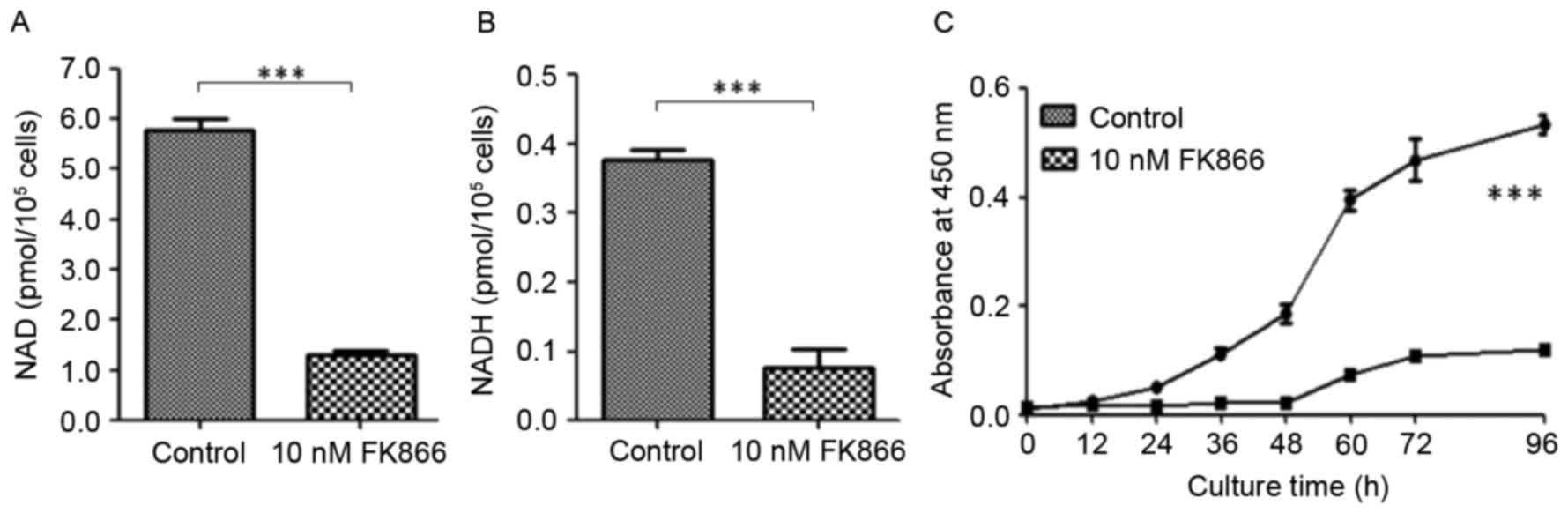
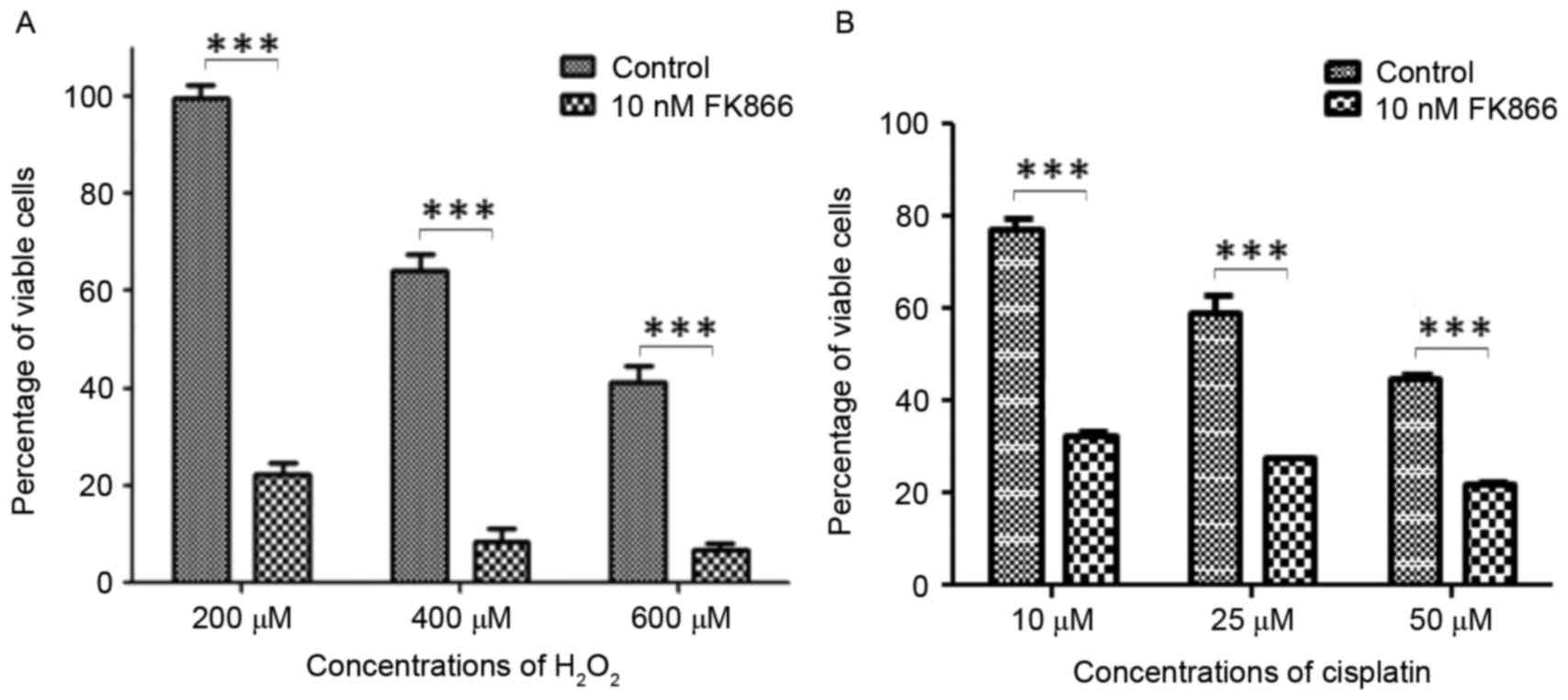
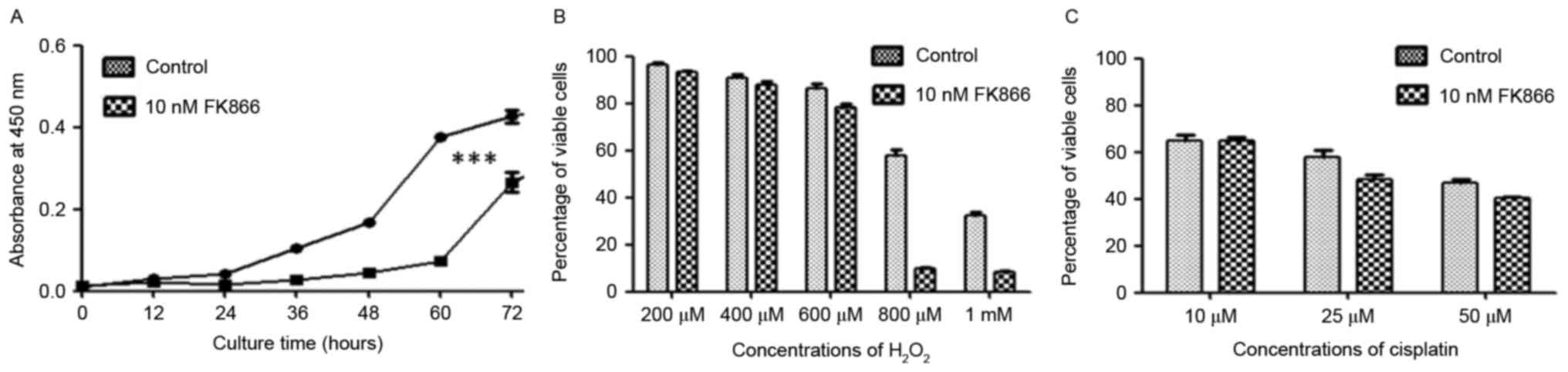
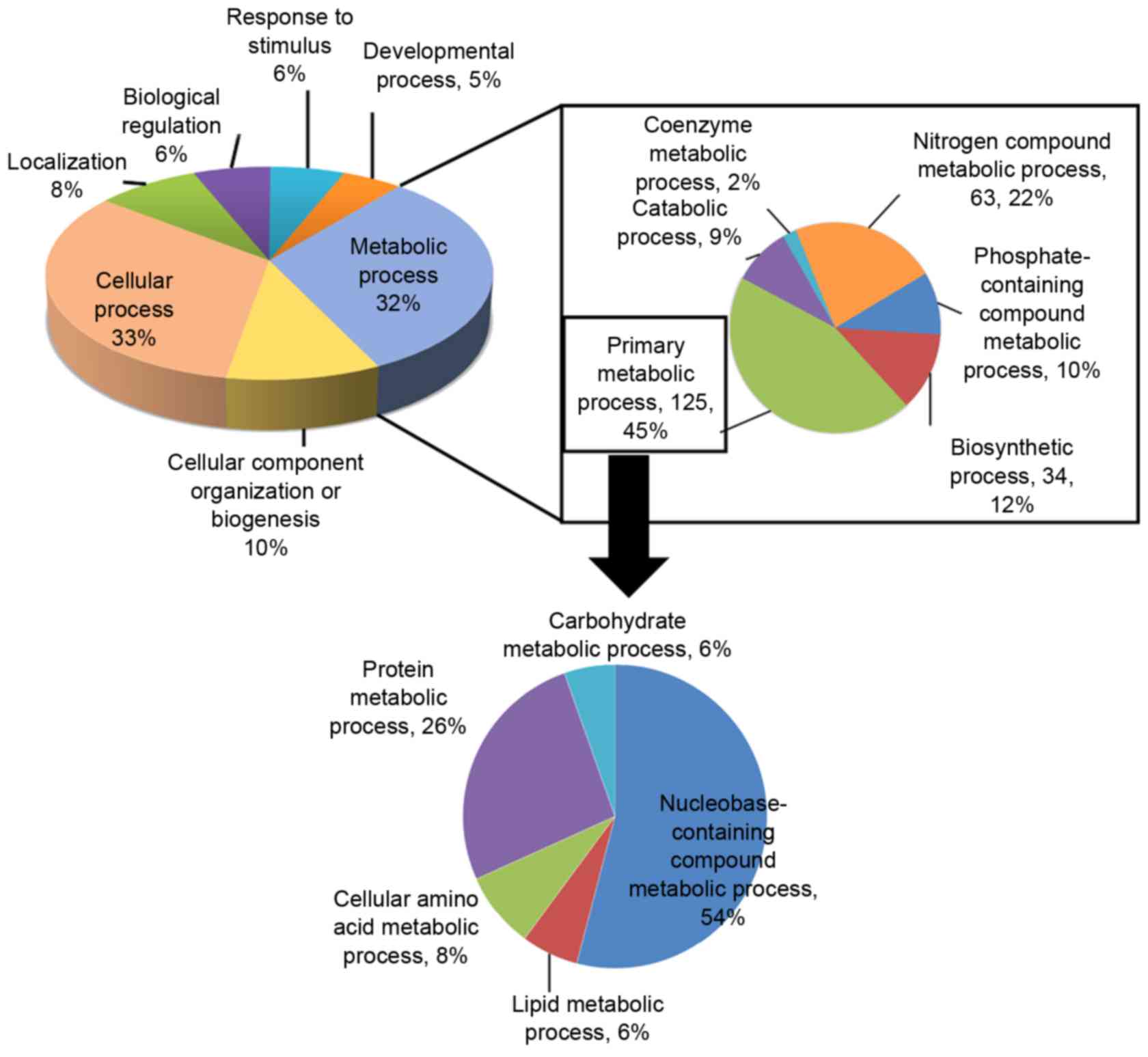
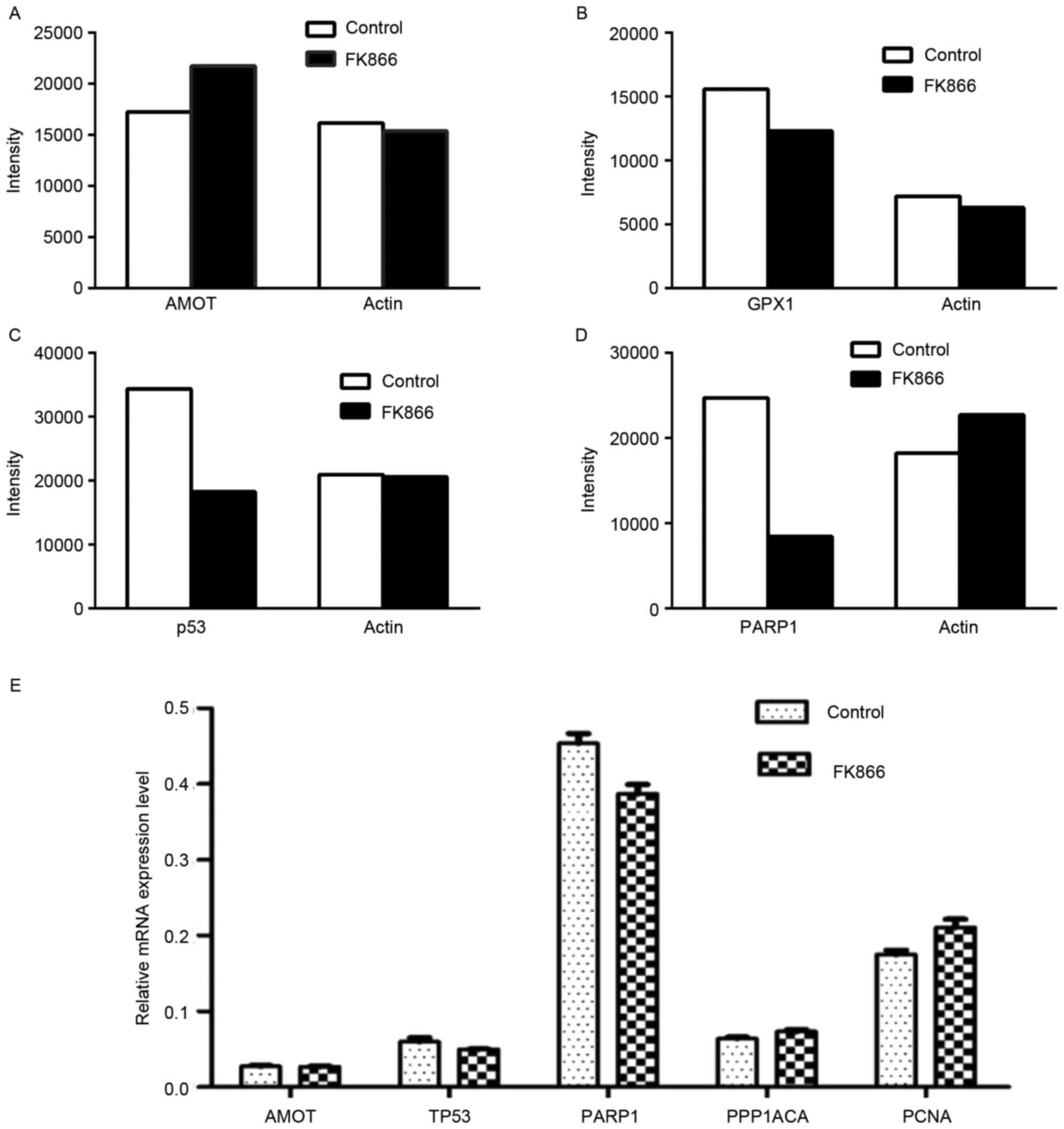
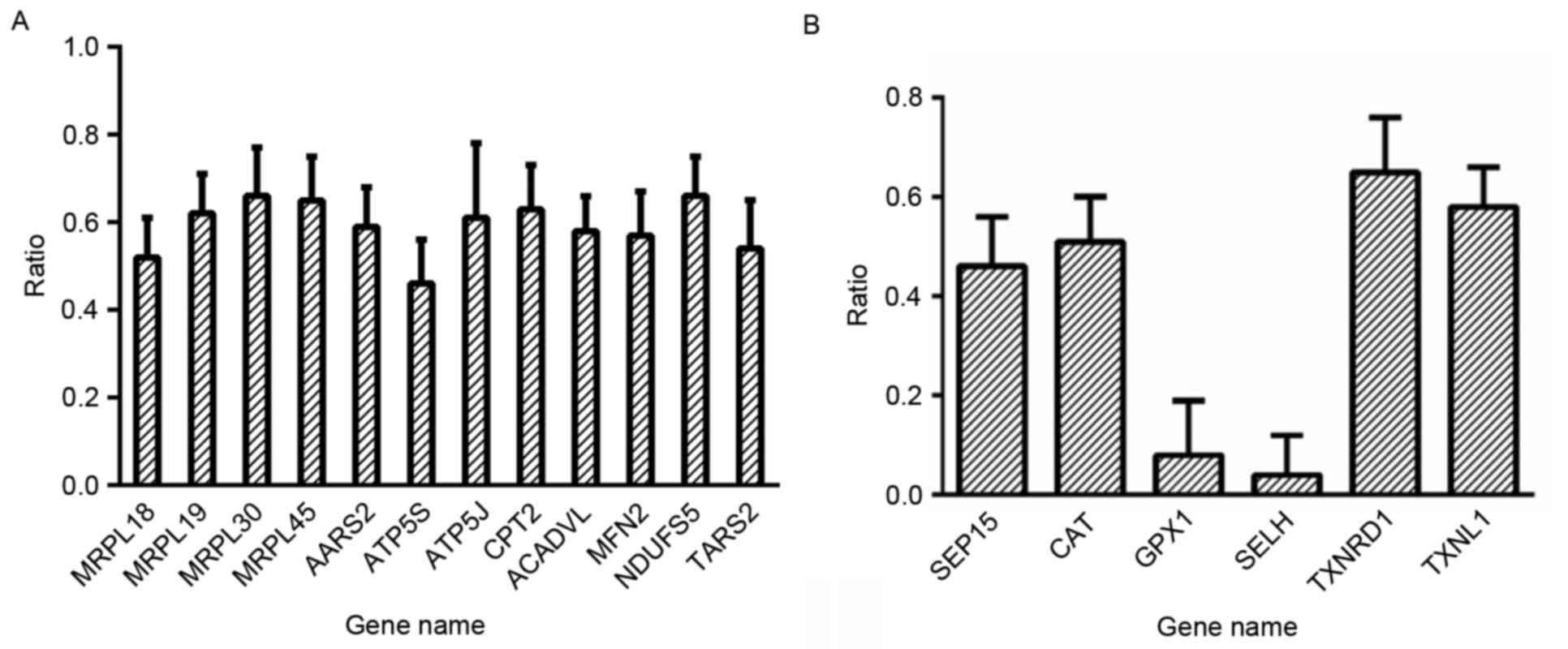
Nicotinamide adenine dinucleotide (NAD) is an essential molecule for living organisms and plays a vital role in aging and age-associated diseases. In eukaryotic cells, cellular NAD is mainly generated by the scavenge pathway in which nicotinamide phosphoribosyltransferase (NAMPT) catalyzes the formation of nicotinamide mononucleotide. Inhibition of NAMPT is a therapeutic strategy for cancer treatment. To explore the effects of NAMPT inhibition on cellular processes, cells were treated with 10 nM FK866, an NAMPT inhibitor, resulting in a decrease in the cellular NAD level, a lower growth rate, and enhanced susceptivity to oxidative stress as compared to the untreated cells. Quantitative proteomics revealed that 325 proteins were downregulated in the FK866-treated cells, and were involved in diverse cellular processes including nucleobase-containing compound metabolic process, protein metabolic process, antioxidant and DNA repair processes. Downregulation of 4 selected proteins was confirmed by western blotting and quantitative PCR. Downregulation of antioxidant proteins GRX1 and catalase, and DNA-repair proteins PCNA and PARP1 contributed to the enhanced susceptibility of FK866-treated cells to oxidative stress. FK866 treatment also caused mitochondrial dysfunction through downregulation of mitochondrial ribosomal proteins. Taken together, these results demonstrate that FK866 treatment efficiently decreases the cellular NAD level and induces autonomous changes in proteostasis, leading to cell growth inhibition and increased susceptibility to oxidative stress.
View Figures

Figure 1

Figure 2

Figure 3

Figure 4

Figure 5

Figure 6

View References

1 

Yang Y and Sauve AA: NAD(+) metabolism: Bioenergetics, signaling and manipulation for therapy. Biochim Biophys Acta. 1864:1787–1800. 2016. View Article : Google Scholar : PubMed/NCBI

2 

Verdin E: NAD+ in aging, metabolism, and neurodegeneration. Science. 350:1208–1213. 2015. View Article : Google Scholar : PubMed/NCBI

3 

Imai S and Guarente L: NAD+ and sirtuins in aging and disease. Trends Cell Biol. 24:464–471. 2014. View Article : Google Scholar : PubMed/NCBI

4 

Viña J, Saez GT, Gambini J, Gomez-Cabrera MC and Borrás C: Role of NAD(+)/NADH redox ratio in cell metabolism: A tribute to Helmut Sies and Theodor Bücher and Hans A. Krebs. Arch Biochem Biophys. 595:176–180. 2016. View Article : Google Scholar : PubMed/NCBI

5 

Ying W: NAD+/NADH and NADP+/NADPH in cellular functions and cell death: Regulation and biological consequences. Antioxid Redox Signal. 10:179–206. 2008. View Article : Google Scholar : PubMed/NCBI

6 

Xia W, Wang Z, Wang Q, Han J, Zhao C, Hong Y, Zeng L, Tang L and Ying W: Roles of NAD(+)/NADH and NADP(+)/NADPH in cell death. Curr Pharm Des. 15:12–19. 2009. View Article : Google Scholar : PubMed/NCBI

7 

Blander G and Guarente L: The Sir2 family of protein deacetylases. Annu Rev Biochem. 73:417–435. 2004. View Article : Google Scholar : PubMed/NCBI

8 

Moazed D: Enzymatic activities of Sir2 and chromatin silencing. Curr Opin Cell Biol. 13:232–238. 2001. View Article : Google Scholar : PubMed/NCBI

9 

Denu JM: The Sir 2 family of protein deacetylases. Curr Opin Chem Biol. 9:431–440. 2005. View Article : Google Scholar : PubMed/NCBI

10 

Guarente L: Sirtuins and calorie restriction. Nat Rev Mol Cell Biol. 13:2072012.PubMed/NCBI

11 

Verdin E, Hirschey MD, Finley LW and Haigis MC: Sirtuin regulation of mitochondria: Energy production, apoptosis, and signaling. Trends Biochem Sci. 35:669–675. 2010. View Article : Google Scholar : PubMed/NCBI

12 

Brooks CL and Gu W: How does SIRT1 affect metabolism, senescence and cancer? Nat Rev Cancer. 9:123–128. 2009. View Article : Google Scholar : PubMed/NCBI

13 

Yang H, Yang T, Baur JA, Perez E, Matsui T, Carmona JJ, Lamming DW, Souza-Pinto NC, Bohr VA, Rosenzweig A, et al: Nutrient-sensitive mitochondrial NAD+ levels dictate cell survival. Cell. 130:1095–1107. 2007. View Article : Google Scholar : PubMed/NCBI

14 

Chang HC and Guarente L: SIRT1 mediates central circadian control in the SCN by a mechanism that decays with aging. Cell. 153:1448–1460. 2013. View Article : Google Scholar : PubMed/NCBI

15 

Luo X and Kraus WL: On PAR with PARP: Cellular stress signaling through poly(ADP-ribose) and PARP-1. Genes Dev. 26:417–432. 2012. View Article : Google Scholar : PubMed/NCBI

16 

Schreiber V, Dantzer F, Ame JC and de Murcia G: Poly(ADP-ribose): Novel functions for an old molecule. Nat Rev Mol Cell Biol. 7:517–528. 2006. View Article : Google Scholar : PubMed/NCBI

17 

Braidy N, Guillemin GJ, Mansour H, Chan-Ling T, Poljak A and Grant R: Age related changes in NAD+ metabolism oxidative stress and Sirt1 activity in wistar rats. PLoS One. 6:e191942011. View Article : Google Scholar : PubMed/NCBI

18 

Prolla TA and Denu JM: NAD+ deficiency in age-related mitochondrial dysfunction. Cell Metab. 19:178–180. 2014. View Article : Google Scholar : PubMed/NCBI

19 

Mouchiroud L, Houtkooper RH, Moullan N, Katsyuba E, Ryu D, Cantó C, Mottis A, Jo YS, Viswanathan M, Schoonjans K, et al: The NAD(+)/sirtuin pathway modulates longevity through activation of mitochondrial UPR and FOXO signaling. Cell. 154:430–441. 2013. View Article : Google Scholar : PubMed/NCBI

20 

Mills KF, Yoshida S, Stein LR, Grozio A, Kubota S, Sasaki Y, Redpath P, Migaud ME, Apte RS, Uchida K, et al: Long-term administration of nicotinamide mononucleotide mitigates age-associated physiological decline in mice. Cell Metab. 24:795–806. 2016. View Article : Google Scholar : PubMed/NCBI

21 

Zhang H, Ryu D, Wu Y, Gariani K, Wang X, Luan P, D'Amico D, Ropelle ER, Lutolf MP, Aebersold R, et al: NAD+ repletion improves mitochondrial and stem cell function and enhances life span in mice. Science. 352:1436–1443. 2016. View Article : Google Scholar : PubMed/NCBI

22 

Fang EF, Kassahun H, Croteau DL, Scheibye-Knudsen M, Marosi K, Lu H, Shamanna RA, Kalyanasundaram S, Bollineni RC, Wilson MA, et al: NAD(+) replenishment improves lifespan and healthspan in ataxia telangiectasia models via mitophagy and DNA repair. Cell Metab. 24:566–581. 2016. View Article : Google Scholar : PubMed/NCBI

23 

Camacho-Pereira J, Tarragó MG, Chini CC, Nin V, Escande C, Warner GM, Puranik AS, Schoon RA, Reid JM, Galina A, et al: CD38 dictates age-related NAD decline and mitochondrial dysfunction through an SIRT3-dependent mechanism. Cell Metab. 23:1127–1139. 2016. View Article : Google Scholar : PubMed/NCBI

24 

Mei SC and Brenner C: NAD as a genotype-specific drug target. Chem Biol. 20:1307–1308. 2013. View Article : Google Scholar : PubMed/NCBI

25 

Chiarugi A, Dölle C, Felici R and Ziegler M: The NAD metabolome - a key determinant of cancer cell biology. Nat Rev Cancer. 12:741–752. 2012. View Article : Google Scholar : PubMed/NCBI

26 

Gallí M, Van Gool F, Rongvaux A, Andris F and Leo O: The nicotinamide phosphoribosyltransferase: A molecular link between metabolism, inflammation, and cancer. Cancer Res. 70:8–11. 2010. View Article : Google Scholar : PubMed/NCBI

27 

Garten A, Petzold S, Körner A, Imai S and Kiess W: Nampt: Linking NAD biology, metabolism and cancer. Trends Endocrinol Metab. 20:130–138. 2009. View Article : Google Scholar : PubMed/NCBI

28 

Hasmann M and Schemainda I: FK866, a highly specific noncompetitive inhibitor of nicotinamide phosphoribosyltransferase, represents a novel mechanism for induction of tumor cell apoptosis. Cancer Res. 63:7436–7442. 2003.PubMed/NCBI

29 

Khan JA, Tao X and Tong L: Molecular basis for the inhibition of human NMPRTase, a novel target for anticancer agents. Nat Struct Mol Biol. 13:582–588. 2006. View Article : Google Scholar : PubMed/NCBI

30 

Thakur BK, Dittrich T, Chandra P, Becker A, Kuehnau W, Klusmann JH, Reinhardt D and Welte K: Involvement of p53 in the cytotoxic activity of the NAMPT inhibitor FK866 in myeloid leukemic cells. Int J Cancer. 132:766–774. 2013. View Article : Google Scholar : PubMed/NCBI

31 

Thakur BK, Dittrich T, Chandra P, Becker A, Lippka Y, Selvakumar D, Klusmann JH, Reinhardt D and Welte K: Inhibition of NAMPT pathway by FK866 activates the function of p53 in HEK293T cells. Biochem Biophys Res Commun. 424:371–377. 2012. View Article : Google Scholar : PubMed/NCBI

32 

Schuster S, Penke M, Gorski T, Gebhardt R, Weiss TS, Kiess W and Garten A: FK866-induced NAMPT inhibition activates AMPK and downregulates mTOR signaling in hepatocarcinoma cells. Biochem Biophys Res Commun. 458:334–340. 2015. View Article : Google Scholar : PubMed/NCBI

33 

Cea M, Cagnetta A, Fulciniti M, Tai YT, Hideshima T, Chauhan D, Roccaro A, Sacco A, Calimeri T, Cottini F, et al: Targeting NAD+ salvage pathway induces autophagy in multiple myeloma cells via mTORC1 and extracellular signal-regulated kinase (ERK1/2) inhibition. Blood. 120:3519–3529. 2012. View Article : Google Scholar : PubMed/NCBI

34 

Billington RA, Genazzani AA, Travelli C and Condorelli F: NAD depletion by FK866 induces autophagy. Autophagy. 4:385–387. 2008. View Article : Google Scholar : PubMed/NCBI

35 

Xu R, Tian E, Tang H, Liu C and Wang Q: Proteomic analysis of gossypol induces necrosis in multiple myeloma cells. Biomed Res Int. 2014:8392322014. View Article : Google Scholar : PubMed/NCBI

36 

Brigelius-Flohé R and Maiorino M: Glutathione peroxidases. Biochim Biophys Acta. 1830:3289–3303. 2013. View Article : Google Scholar : PubMed/NCBI

37 

Brigelius-Flohé R and Kipp A: Glutathione peroxidases in different stages of carcinogenesis. Biochim Biophys Acta. 1790:1555–1568. 2009. View Article : Google Scholar : PubMed/NCBI

38 

Novoselov SV, Kryukov GV, Xu XM, Carlson BA, Hatfield DL and Gladyshev VN: Selenoprotein H is a nucleolar thioredoxin-like protein with a unique expression pattern. J Biol Chem. 282:11960–11968. 2007. View Article : Google Scholar : PubMed/NCBI

39 

Zhang T, Berrocal JG, Yao J, DuMond ME, Krishnakumar R, Ruhl DD, Ryu KW, Gamble MJ and Kraus WL: Regulation of poly(ADP-ribose) polymerase-1-dependent gene expression through promoter-directed recruitment of a nuclear NAD+ synthase. J Biol Chem. 287:12405–12416. 2012. View Article : Google Scholar : PubMed/NCBI

40 

Bai P, Cantó C, Oudart H, Brunyánszki A, Cen Y, Thomas C, Yamamoto H, Huber A, Kiss B, Houtkooper RH, et al: PARP-1 inhibition increases mitochondrial metabolism through SIRT1 activation. Cell Metab. 13:461–468. 2011. View Article : Google Scholar : PubMed/NCBI

Related Articles

  • Abstract
  • View
  • Download
  • Twitter
Copy and paste a formatted citation
Spandidos Publications style
Xu R, Yuan Z, Yang L, Li L, Li D and Lv C: Inhibition of NAMPT decreases cell growth and enhances susceptibility to oxidative stress. Oncol Rep 38: 1767-1773, 2017.
APA
Xu, R., Yuan, Z., Yang, L., Li, L., Li, D., & Lv, C. (2017). Inhibition of NAMPT decreases cell growth and enhances susceptibility to oxidative stress. Oncology Reports, 38, 1767-1773. https://doi.org/10.3892/or.2017.5793
MLA
Xu, R., Yuan, Z., Yang, L., Li, L., Li, D., Lv, C."Inhibition of NAMPT decreases cell growth and enhances susceptibility to oxidative stress". Oncology Reports 38.3 (2017): 1767-1773.
Chicago
Xu, R., Yuan, Z., Yang, L., Li, L., Li, D., Lv, C."Inhibition of NAMPT decreases cell growth and enhances susceptibility to oxidative stress". Oncology Reports 38, no. 3 (2017): 1767-1773. https://doi.org/10.3892/or.2017.5793
Copy and paste a formatted citation
x
Spandidos Publications style
Xu R, Yuan Z, Yang L, Li L, Li D and Lv C: Inhibition of NAMPT decreases cell growth and enhances susceptibility to oxidative stress. Oncol Rep 38: 1767-1773, 2017.
APA
Xu, R., Yuan, Z., Yang, L., Li, L., Li, D., & Lv, C. (2017). Inhibition of NAMPT decreases cell growth and enhances susceptibility to oxidative stress. Oncology Reports, 38, 1767-1773. https://doi.org/10.3892/or.2017.5793
MLA
Xu, R., Yuan, Z., Yang, L., Li, L., Li, D., Lv, C."Inhibition of NAMPT decreases cell growth and enhances susceptibility to oxidative stress". Oncology Reports 38.3 (2017): 1767-1773.
Chicago
Xu, R., Yuan, Z., Yang, L., Li, L., Li, D., Lv, C."Inhibition of NAMPT decreases cell growth and enhances susceptibility to oxidative stress". Oncology Reports 38, no. 3 (2017): 1767-1773. https://doi.org/10.3892/or.2017.5793
Follow us
  • Twitter
  • LinkedIn
  • Facebook
About
  • Spandidos Publications
  • Careers
  • Cookie Policy
  • Privacy Policy
How can we help?
  • Help
  • Live Chat
  • Contact
  • Email to our Support Team