Spandidos Publications Logo
  • About
    • About Spandidos
    • Aims and Scopes
    • Abstracting and Indexing
    • Editorial Policies
    • Reprints and Permissions
    • Job Opportunities
    • Terms and Conditions
    • Contact
  • Journals
    • All Journals
    • Oncology Letters
      • Oncology Letters
      • Information for Authors
      • Editorial Policies
      • Editorial Board
      • Aims and Scope
      • Abstracting and Indexing
      • Bibliographic Information
      • Archive
    • International Journal of Oncology
      • International Journal of Oncology
      • Information for Authors
      • Editorial Policies
      • Editorial Board
      • Aims and Scope
      • Abstracting and Indexing
      • Bibliographic Information
      • Archive
    • Molecular and Clinical Oncology
      • Molecular and Clinical Oncology
      • Information for Authors
      • Editorial Policies
      • Editorial Board
      • Aims and Scope
      • Abstracting and Indexing
      • Bibliographic Information
      • Archive
    • Experimental and Therapeutic Medicine
      • Experimental and Therapeutic Medicine
      • Information for Authors
      • Editorial Policies
      • Editorial Board
      • Aims and Scope
      • Abstracting and Indexing
      • Bibliographic Information
      • Archive
    • International Journal of Molecular Medicine
      • International Journal of Molecular Medicine
      • Information for Authors
      • Editorial Policies
      • Editorial Board
      • Aims and Scope
      • Abstracting and Indexing
      • Bibliographic Information
      • Archive
    • Biomedical Reports
      • Biomedical Reports
      • Information for Authors
      • Editorial Policies
      • Editorial Board
      • Aims and Scope
      • Abstracting and Indexing
      • Bibliographic Information
      • Archive
    • Oncology Reports
      • Oncology Reports
      • Information for Authors
      • Editorial Policies
      • Editorial Board
      • Aims and Scope
      • Abstracting and Indexing
      • Bibliographic Information
      • Archive
    • Molecular Medicine Reports
      • Molecular Medicine Reports
      • Information for Authors
      • Editorial Policies
      • Editorial Board
      • Aims and Scope
      • Abstracting and Indexing
      • Bibliographic Information
      • Archive
    • World Academy of Sciences Journal
      • World Academy of Sciences Journal
      • Information for Authors
      • Editorial Policies
      • Editorial Board
      • Aims and Scope
      • Abstracting and Indexing
      • Bibliographic Information
      • Archive
    • International Journal of Functional Nutrition
      • International Journal of Functional Nutrition
      • Information for Authors
      • Editorial Policies
      • Editorial Board
      • Aims and Scope
      • Abstracting and Indexing
      • Bibliographic Information
      • Archive
    • International Journal of Epigenetics
      • International Journal of Epigenetics
      • Information for Authors
      • Editorial Policies
      • Editorial Board
      • Aims and Scope
      • Abstracting and Indexing
      • Bibliographic Information
      • Archive
    • Medicine International
      • Medicine International
      • Information for Authors
      • Editorial Policies
      • Editorial Board
      • Aims and Scope
      • Abstracting and Indexing
      • Bibliographic Information
      • Archive
  • Articles
  • Information
    • Information for Authors
    • Information for Reviewers
    • Information for Librarians
    • Information for Advertisers
    • Conferences
  • Language Editing
Spandidos Publications Logo
  • About
    • About Spandidos
    • Aims and Scopes
    • Abstracting and Indexing
    • Editorial Policies
    • Reprints and Permissions
    • Job Opportunities
    • Terms and Conditions
    • Contact
  • Journals
    • All Journals
    • Biomedical Reports
      • Information for Authors
      • Editorial Policies
      • Editorial Board
      • Aims and Scope
      • Abstracting and Indexing
      • Bibliographic Information
      • Archive
    • Experimental and Therapeutic Medicine
      • Information for Authors
      • Editorial Policies
      • Editorial Board
      • Aims and Scope
      • Abstracting and Indexing
      • Bibliographic Information
      • Archive
    • International Journal of Epigenetics
      • Information for Authors
      • Editorial Policies
      • Editorial Board
      • Aims and Scope
      • Abstracting and Indexing
      • Bibliographic Information
      • Archive
    • International Journal of Functional Nutrition
      • Information for Authors
      • Editorial Policies
      • Editorial Board
      • Aims and Scope
      • Abstracting and Indexing
      • Bibliographic Information
      • Archive
    • International Journal of Molecular Medicine
      • Information for Authors
      • Editorial Policies
      • Editorial Board
      • Aims and Scope
      • Abstracting and Indexing
      • Bibliographic Information
      • Archive
    • International Journal of Oncology
      • Information for Authors
      • Editorial Policies
      • Editorial Board
      • Aims and Scope
      • Abstracting and Indexing
      • Bibliographic Information
      • Archive
    • Medicine International
      • Information for Authors
      • Editorial Policies
      • Editorial Board
      • Aims and Scope
      • Abstracting and Indexing
      • Bibliographic Information
      • Archive
    • Molecular and Clinical Oncology
      • Information for Authors
      • Editorial Policies
      • Editorial Board
      • Aims and Scope
      • Abstracting and Indexing
      • Bibliographic Information
      • Archive
    • Molecular Medicine Reports
      • Information for Authors
      • Editorial Policies
      • Editorial Board
      • Aims and Scope
      • Abstracting and Indexing
      • Bibliographic Information
      • Archive
    • Oncology Letters
      • Information for Authors
      • Editorial Policies
      • Editorial Board
      • Aims and Scope
      • Abstracting and Indexing
      • Bibliographic Information
      • Archive
    • Oncology Reports
      • Information for Authors
      • Editorial Policies
      • Editorial Board
      • Aims and Scope
      • Abstracting and Indexing
      • Bibliographic Information
      • Archive
    • World Academy of Sciences Journal
      • Information for Authors
      • Editorial Policies
      • Editorial Board
      • Aims and Scope
      • Abstracting and Indexing
      • Bibliographic Information
      • Archive
  • Articles
  • Information
    • For Authors
    • For Reviewers
    • For Librarians
    • For Advertisers
    • Conferences
  • Language Editing
Login Register Submit
  • This site uses cookies
  • You can change your cookie settings at any time by following the instructions in our Cookie Policy. To find out more, you may read our Privacy Policy.

    I agree
Search articles by DOI, keyword, author or affiliation
Search
Advanced Search
presentation
Oncology Reports
Join Editorial Board Propose a Special Issue
Print ISSN: 1021-335X Online ISSN: 1791-2431
Journal Cover
September-2017 Volume 38 Issue 3

Full Size Image

Sign up for eToc alerts
Recommend to Library

Journals

International Journal of Molecular Medicine

International Journal of Molecular Medicine

International Journal of Molecular Medicine is an international journal devoted to molecular mechanisms of human disease.

International Journal of Oncology

International Journal of Oncology

International Journal of Oncology is an international journal devoted to oncology research and cancer treatment.

Molecular Medicine Reports

Molecular Medicine Reports

Covers molecular medicine topics such as pharmacology, pathology, genetics, neuroscience, infectious diseases, molecular cardiology, and molecular surgery.

Oncology Reports

Oncology Reports

Oncology Reports is an international journal devoted to fundamental and applied research in Oncology.

Experimental and Therapeutic Medicine

Experimental and Therapeutic Medicine

Experimental and Therapeutic Medicine is an international journal devoted to laboratory and clinical medicine.

Oncology Letters

Oncology Letters

Oncology Letters is an international journal devoted to Experimental and Clinical Oncology.

Biomedical Reports

Biomedical Reports

Explores a wide range of biological and medical fields, including pharmacology, genetics, microbiology, neuroscience, and molecular cardiology.

Molecular and Clinical Oncology

Molecular and Clinical Oncology

International journal addressing all aspects of oncology research, from tumorigenesis and oncogenes to chemotherapy and metastasis.

World Academy of Sciences Journal

World Academy of Sciences Journal

Multidisciplinary open-access journal spanning biochemistry, genetics, neuroscience, environmental health, and synthetic biology.

International Journal of Functional Nutrition

International Journal of Functional Nutrition

Open-access journal combining biochemistry, pharmacology, immunology, and genetics to advance health through functional nutrition.

International Journal of Epigenetics

International Journal of Epigenetics

Publishes open-access research on using epigenetics to advance understanding and treatment of human disease.

Medicine International

Medicine International

An International Open Access Journal Devoted to General Medicine.

Journal Cover
September-2017 Volume 38 Issue 3

Full Size Image

Sign up for eToc alerts
Recommend to Library

  • Article
  • Citations
    • Cite This Article
    • Download Citation
    • Create Citation Alert
    • Remove Citation Alert
    • Cited By
  • Similar Articles
    • Related Articles (in Spandidos Publications)
    • Similar Articles (Google Scholar)
    • Similar Articles (PubMed)
  • Download PDF
  • Download XML
  • View XML
Article

Phosphorylation of Bcl-2 plays an important role in glycochenodeoxycholate-induced survival and chemoresistance in HCC

  • Authors:
    • Maojun Zhou
    • Qi Zhang
    • Jinfeng Zhao
    • Mingmei Liao
    • Sailan Wen
    • Manyi Yang
  • View Affiliations / Copyright

    Affiliations: Key Laboratory of Cancer Proteomics of Chinese Ministry of Health, Xiangya Hospital, Central South University, Changsha, Hunan 410008, P.R. China, Department of Hepatobiliary and Pancreatic Surgery, Xiangya Hospital, Central South University, Changsha, Hunan 410008, P.R. China, Key Laboratory of Nanobiological Technology of Chinese Ministry of Health, Xiangya Hospital, Central South University, Changsha, Hunan 410008, P.R. China, Department of Pathology, The Second Xiangya Hospital, Central South University, Changsha, Hunan 410011, P.R. China
  • Pages: 1742-1750
    |
    Published online on: July 18, 2017
       https://doi.org/10.3892/or.2017.5830
  • Expand metrics +
Metrics: Total Views: 0 (Spandidos Publications: | PMC Statistics: )
Metrics: Total PDF Downloads: 0 (Spandidos Publications: | PMC Statistics: )
Cited By (CrossRef): 0 citations Loading Articles...

This article is mentioned in:


Abstract

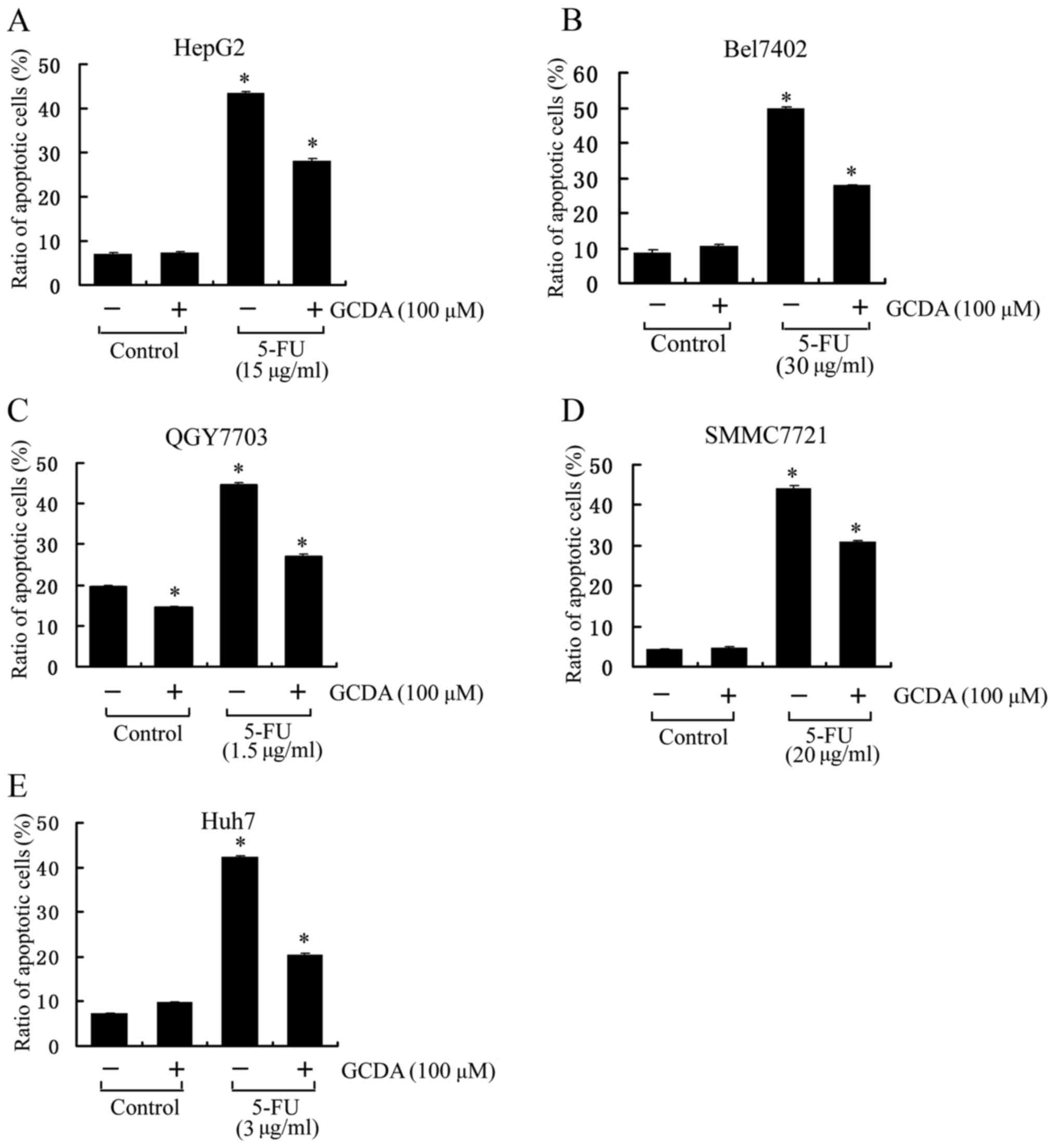
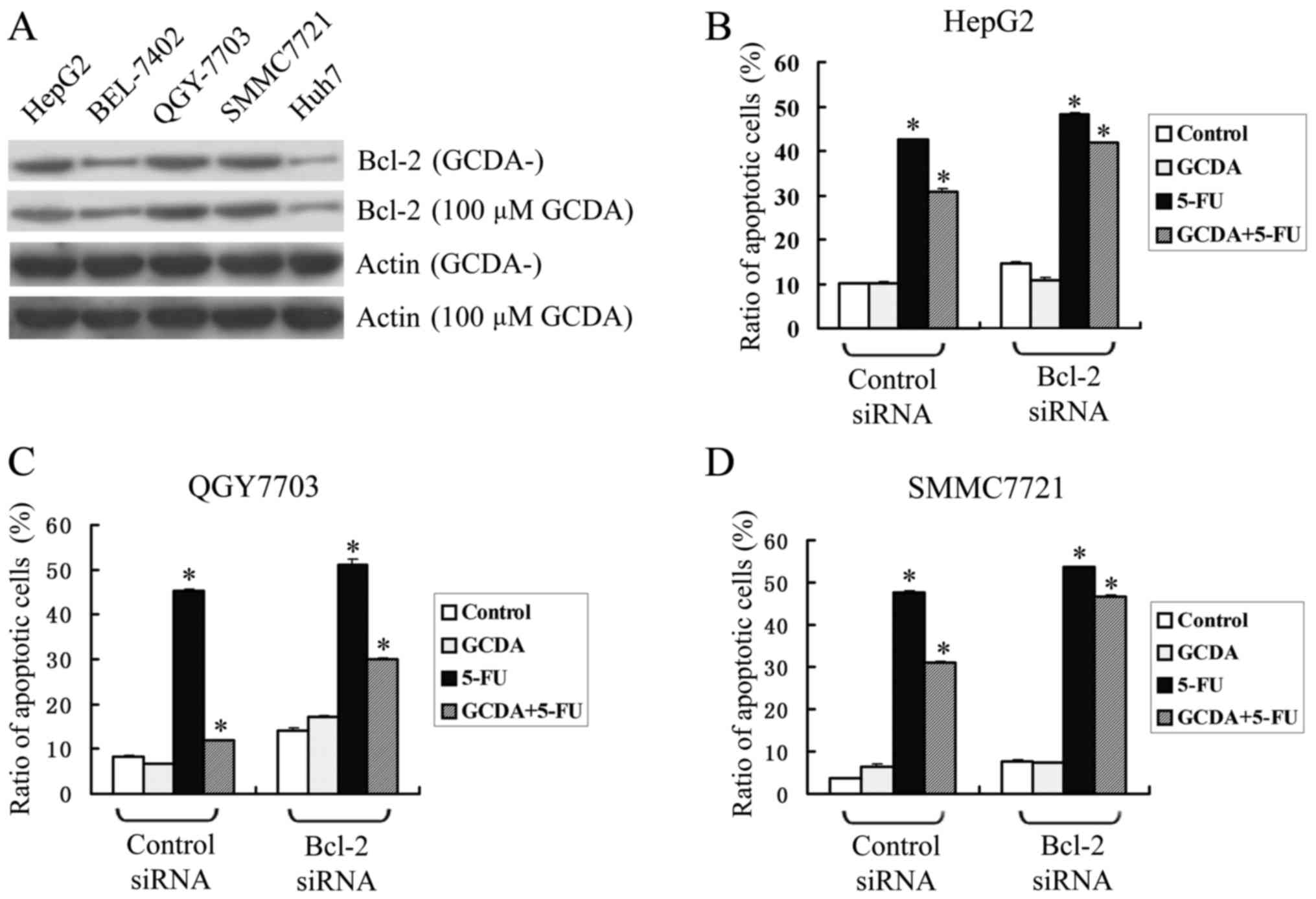
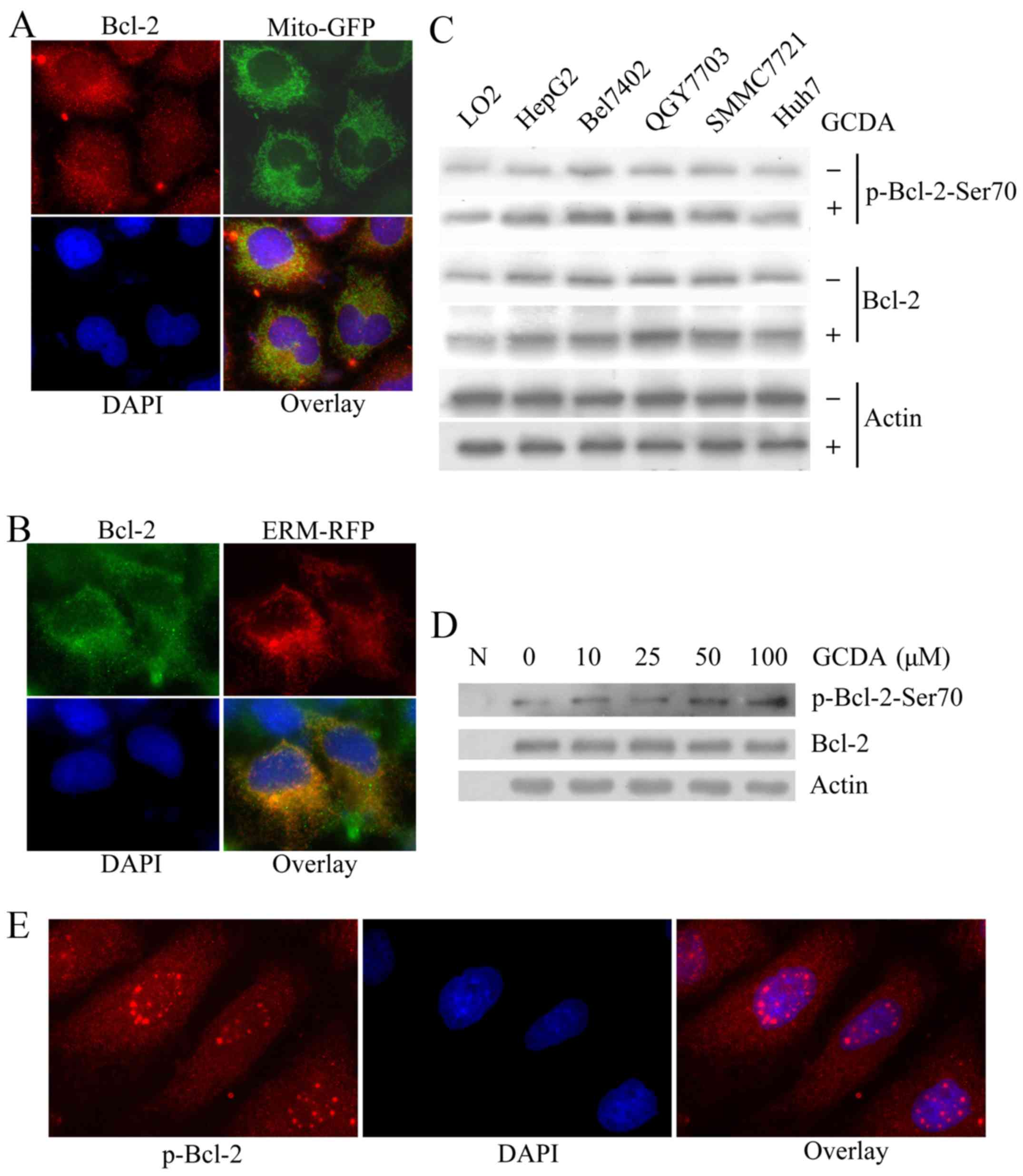
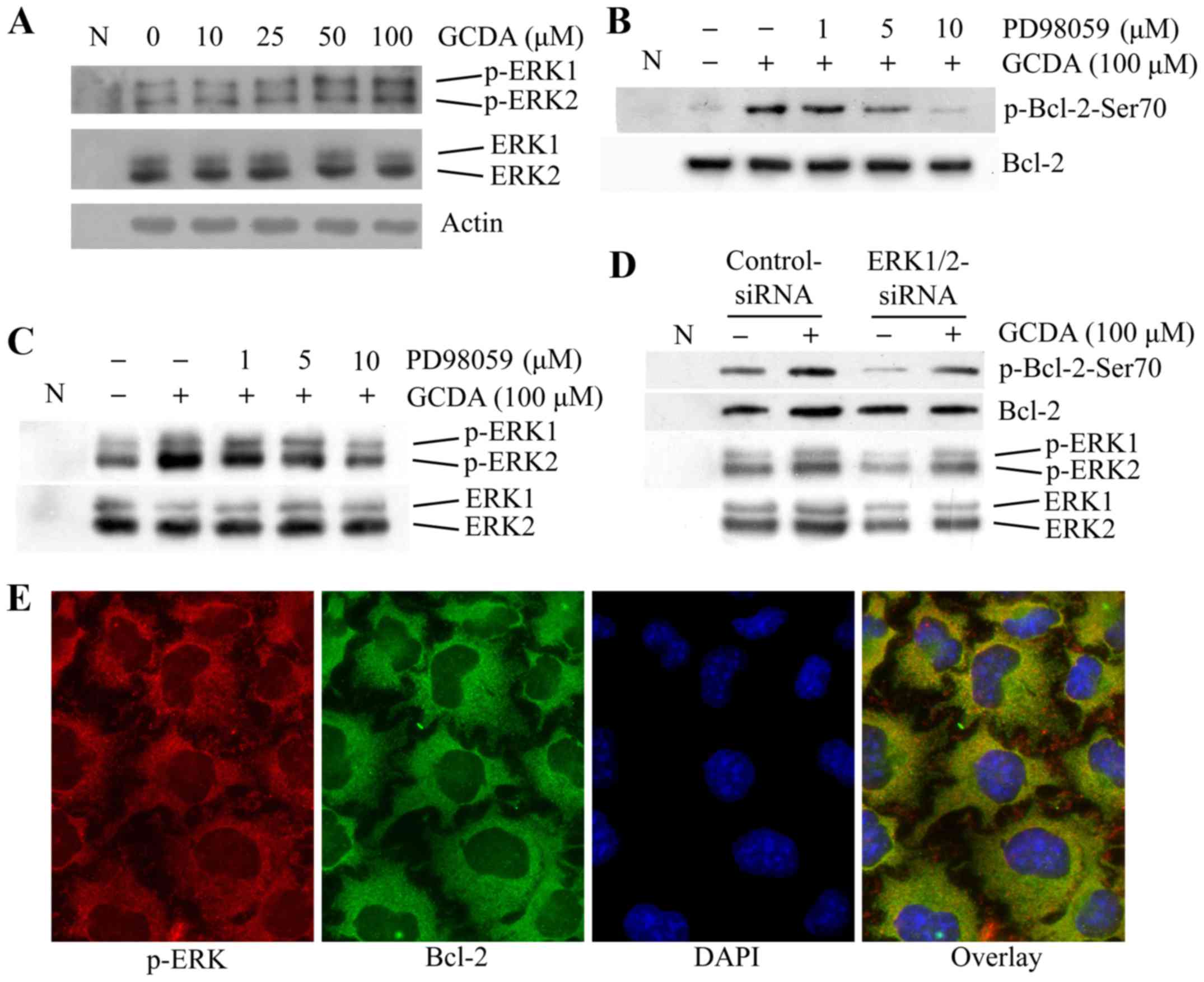
Hepatocellular carcinoma (HCC) is a highly malignant tumor and can evolve rapidly to resistance to chemotherapies. Glycochenodeoxycholate (GCDA), which is toxic and hydrophobic, is the main ingredient in the bile and associated with carcinogenesis of gastrointenstinal tumors. Bcl-2 is the most important anti-apoptotic protein and overexpressed in various human tumors. In the present study, we found that GCDA can induce the chemoresistance of human liver cancer cells and specific depletion of Bcl-2 by RNA interference blocks GCDA-stimulated chemoresistance, which indicate the pivotal role of Bcl-2 in such process. Mechanistically, GCDA simultaneously stimulates phosphorylation of Bcl-2 at Ser70 site and activates extracellular signal-regulated kinase 1/2 (ERK1/2), and inhibition of ERK1/2 by PD98059 (MAPK/ERK1/2 inhibitor) or siRNA (targeting ERK1/2) suppresses GCDA-stimulated phosphorylation of Bcl-2 and significantly attenuates the survival and chemoresistance induced by GCDA in liver cancer cells. Thus, GCDA-induced survival and chemoresistance of liver cancer cells may occur through activation of Bcl-2 by phosphorylation at Ser70 site through MAPK/ERK1/2 pathway, which may contribute to the development of human liver cancer and chemoresistance.
View Figures

Figure 1

Figure 2

Figure 3

Figure 4

Figure 5

Figure 6

View References

1 

Chen W, Zheng R, Baade PD, Zhang S, Zeng H, Bray F, Jemal A, Yu XQ and He J: Cancer statistics in China, 2015. CA Cancer J Clin. 66:115–132. 2016. View Article : Google Scholar : PubMed/NCBI

2 

Allemani C, Weir HK, Carreira H, Harewood R, Spika D, Wang XS, Bannon F, Ahn JV, Johnson CJ, Bonaventure A, et al: CONCORD Working Group: Global surveillance of cancer survival 1995–2009: Analysis of individual data for 25,676,887 patients from 279 population-based registries in 67 countries (CONCORD-2). Lancet. 385:977–1010. 2015. View Article : Google Scholar : PubMed/NCBI

3 

Faubion WA, Guicciardi ME, Miyoshi H, Bronk SF, Roberts PJ, Svingen PA, Kaufmann SH and Gores GJ: Toxic bile salts induce rodent hepatocyte apoptosis via direct activation of Fas. J Clin Invest. 103:137–145. 1999. View Article : Google Scholar : PubMed/NCBI

4 

Sodeman T, Bronk SF, Roberts PJ, Miyoshi H and Gores GJ: Bile salts mediate hepatocyte apoptosis by increasing cell surface trafficking of Fas. Am J Physiol Gastrointest Liver Physiol. 278:G992–G999. 2000.PubMed/NCBI

5 

Jones BA, Rao YP, Stravitz RT and Gores GJ: Bile salt-induced apoptosis of hepatocytes involves activation of protein kinase C. Am J Physiol. 272:G1109–G1115. 1997.PubMed/NCBI

6 

Gonzalez B, Fisher C and Rosser BG: Glycochenodeoxycholic acid (GCDC) induced hepatocyte apoptosis is associated with early modulation of intracellular PKC activity. Mol Cell Biochem. 207:19–27. 2000. View Article : Google Scholar : PubMed/NCBI

7 

Tsuchiya S, Tsuji M, Morio Y and Oguchi K: Involvement of endoplasmic reticulum in glycochenodeoxycholic acid-induced apoptosis in rat hepatocytes. Toxicol Lett. 166:140–149. 2006. View Article : Google Scholar : PubMed/NCBI

8 

Metalli V Drudi, Mancino MG, Mancino A, Torrice A, Gatto M, Attili AF, Alpini G and Alvaro D: Bile salts regulate proliferation and apoptosis of liver cells by modulating the IGF1 system. Dig Liver Dis. 39:654–662. 2007. View Article : Google Scholar : PubMed/NCBI

9 

Wang K, Brems JJ, Gamelli RL and Ding J: Reversibility of caspase activation and its role during glycochenodeoxycholate-induced hepatocyte apoptosis. J Biol Chem. 280:23490–23495. 2005. View Article : Google Scholar : PubMed/NCBI

10 

Wang K, Brems JJ, Gamelli RL and Holterman AX: Survivin signaling is regulated through nuclear factor-kappa B pathway during glycochenodeoxycholate-induced hepatocyte apoptosis. Biochim Biophys Acta. 1803:1368–1375. 2010. View Article : Google Scholar : PubMed/NCBI

11 

Webster CR, Johnston AN and Anwer MS: Protein kinase Cδ protects against bile acid apoptosis by suppressing proapoptotic JNK and BIM pathways in human and rat hepatocytes. Am J Physiol Gastrointest Liver Physiol. 307:G1207–G1215. 2014. View Article : Google Scholar : PubMed/NCBI

12 

Yoon JH, Werneburg NW, Higuchi H, Canbay AE, Kaufmann SH, Akgul C, Edwards SW and Gores GJ: Bile acids inhibit Mcl-1 protein turnover via an epidermal growth factor receptor/Raf-1-dependent mechanism. Cancer Res. 62:6500–6505. 2002.PubMed/NCBI

13 

Jaiswal K, Tello V, Lopez-Guzman C, Nwariaku F, Anthony T and Sarosi GA Jr: Bile salt exposure causes phosphatidyl-inositol-3-kinase-mediated proliferation in a Barretts adenocarcinoma cell line. Surgery. 136:160–168. 2004. View Article : Google Scholar : PubMed/NCBI

14 

Jaiswal K, Lopez-Guzman C, Souza RF, Spechler SJ and Sarosi GA Jr: Bile salt exposure increases proliferation through p38 and ERK MAPK pathways in a non-neoplastic Barretts cell line. Am J Physiol Gastrointest Liver Physiol. 290:G335–G342. 2006. View Article : Google Scholar : PubMed/NCBI

15 

Komichi D, Tazuma S, Nishioka T, Hyogo H and Chayama K: Glycochenodeoxycholate plays a carcinogenic role in immortalized mouse cholangiocytes via oxidative DNA damage. Free Radic Biol Med. 39:1418–1427. 2005. View Article : Google Scholar : PubMed/NCBI

16 

Akl H, Vervloessem T, Kiviluoto S, Bittremieux M, Parys JB, De Smedt H and Bultynck G: A dual role for the anti-apoptotic Bcl-2 protein in cancer: Mitochondria versus endoplasmic reticulum. Biochim Biophys Acta. 1843:2240–2252. 2014. View Article : Google Scholar : PubMed/NCBI

17 

Tsujimoto Y: Bcl-2 family of proteins: Life-or-death switch in mitochondria. Biosci Rep. 22:47–58. 2002. View Article : Google Scholar : PubMed/NCBI

18 

Cory S and Adams JM: The Bcl2 family: Regulators of the cellular life-or-death switch. Nat Rev Cancer. 2:647–656. 2002. View Article : Google Scholar : PubMed/NCBI

19 

Deng X, Gao F, Flagg T and May WS Jr: Mono- and multisite phosphorylation enhances Bcl2s antiapoptotic function and inhibition of cell cycle entry functions. Proc Natl Acad Sci USA. 101:153–158. 2004. View Article : Google Scholar : PubMed/NCBI

20 

Deng X, Ruvolo P, Carr B and May WS Jr: Survival function of ERK1/2 as IL-3-activated, staurosporine-resistant Bcl2 kinases. Proc Natl Acad Sci USA. 97:1578–1583. 2000. View Article : Google Scholar : PubMed/NCBI

21 

Deng X, Xiao L, Lang W, Gao F, Ruvolo P and May WS Jr: Novel role for JNK as a stress-activated Bcl2 kinase. J Biol Chem. 276:23681–23688. 2001. View Article : Google Scholar : PubMed/NCBI

22 

Zhang C, Wu Z, Hong W, Wang Z, Peng D, Chen J, Yuan C, Yu S, Xu L and Fang Y: Influence of BCL2 gene in major depression susceptibility and antidepressant treatment outcome. J Affect Disord. 155:288–294. 2014. View Article : Google Scholar : PubMed/NCBI

23 

Moreno-Galindo C, Hermsen M, García-Pedrero JM, Fresno MF, Suárez C and Rodrigo JP: p27 and BCL2 expression predicts response to chemotherapy in head and neck squamous cell carcinomas. Oral Oncol. 50:128–134. 2014. View Article : Google Scholar : PubMed/NCBI

24 

Xu P, Liu L, Wang J, Zhang K, Hong X, Deng Q, Xiang J, Zhang X, He M, Wu T, et al: Genetic variation in BCL2 3-UTR was associated with lung cancer risk and prognosis in male Chinese population. PLoS One. 8:e721972013. View Article : Google Scholar : PubMed/NCBI

25 

Mehta SV, Shukla SN and Vora HH: Overexpression of Bcl2 protein predicts chemoresistance in acute myeloid leukemia: Its correlation with FLT3. Neoplasma. 60:666–675. 2013. View Article : Google Scholar : PubMed/NCBI

26 

Dorjgochoo T, Xiang YB, Long J, Shi J, Deming S, Xu WH, Cai H, Cheng J, Cai Q, Zheng W, et al: Association of genetic markers in the BCL-2 family of apoptosis-related genes with endometrial cancer risk in a Chinese population. PLoS One. 8:e609152013. View Article : Google Scholar : PubMed/NCBI

27 

Yang TQ, Luo XJ, Wu TF, Ding DD, Zhao ZH, Chen GL, Xie XS, Li B, Wei YX, Guo LC, et al: MicroRNA-16 inhibits glioma cell growth and invasion through suppression of BCL2 and the nuclear factor-κB1/MMP9 signaling pathway. Cancer Sci. 105:265–271. 2014. View Article : Google Scholar : PubMed/NCBI

28 

Paulus A, Chitta K, Akhtar S, Personett D, Miller KC, Thompson KJ, Carr J, Kumar S, Roy V, Ansell SM, et al: AT-101 downregulates BCL2 and MCL1 and potentiates the cytotoxic effects of lenalidomide and dexamethasone in preclinical models of multiple myeloma and Waldenström macroglobulinaemia. Br J Haematol. 164:352–365. 2014. View Article : Google Scholar : PubMed/NCBI

29 

Zhen Y, Liu Z, Yang H, Yu X, Wu Q, Hua S, Long X, Jiang Q, Song Y, Cheng C, et al: Tumor suppressor PDCD4 modulates miR-184-mediated direct suppression of C-MYC and BCL2 blocking cell growth and survival in nasopharyngeal carcinoma. Cell Death Dis. 4:e8722013. View Article : Google Scholar : PubMed/NCBI

30 

Yao F, Han Q, Zhong C and Zhao H: TRAF6 promoted the tumorigenicity of esophageal squamous cell carcinoma. Tumour Biol. 34:3201–3207. 2013. View Article : Google Scholar : PubMed/NCBI

31 

Petrasek J, Iracheta-Vellve A, Csak T, Satishchandran A, Kodys K, Kurt-Jones EA, Fitzgerald KA and Szabo G: STING-IRF3 pathway links endoplasmic reticulum stress with hepatocyte apoptosis in early alcoholic liver disease. Proc Natl Acad Sci USA. 110:16544–16549. 2013. View Article : Google Scholar : PubMed/NCBI

32 

Liao WT, Ye YP, Zhang NJ, Li TT, Wang SY, Cui YM, Qi L, Wu P, Jiao HL, Xie YJ, et al: MicroRNA-30b functions as a tumour suppressor in human colorectal cancer by targeting KRAS, PIK3CD and BCL2. J Pathol. 232:415–427. 2013. View Article : Google Scholar

33 

Hu J, Fang Y, Cao Y, Qin R and Chen Q: miR-449a regulates proliferation and chemosensitivity to cisplatin by targeting cyclin D1 and BCL2 in SGC7901 cells. Dig Dis Sci. 59:336–345. 2013. View Article : Google Scholar : PubMed/NCBI

34 

Drukker L, Margulis A, Chaouat M, Levitzki R, Maiorenko E and Ben Bassat H: Changes of PI3K/AKT/BCL2 signaling proteins in congenital Giant Nevi: Melanocytes contribute to their increased survival and integrity. J Recept Signal Transduct Res. 33:359–366. 2013. View Article : Google Scholar : PubMed/NCBI

35 

Kurosawa H, Que FG, Roberts LR, Fesmier PJ and Gores GJ: Hepatocytes in the bile duct-ligated rat express Bcl-2. Am J Physiol. 272:G1587–G1593. 1997.PubMed/NCBI

36 

Wang J and Zou S: The bcl-2 mRNA expression in GCDC-induced obstructive jaundice in rats and its implication in hepatocellular apoptosis. J Huazhong Univ Sci Technolog Med Sci. 22:34–36. 2002. View Article : Google Scholar : PubMed/NCBI

37 

Liao M, Zhao J, Wang T, Duan J, Zhang Y and Deng X: Role of bile salt in regulating Mcl-1 phosphorylation and chemoresistance in hepatocellular carcinoma cells. Mol Cancer. 10:442011. View Article : Google Scholar : PubMed/NCBI

38 

Hylemon PB, Zhou H, Pandak WM, Ren S, Gil G and Dent P: Bile acids as regulatory molecules. J Lipid Res. 50:1509–1520. 2009. View Article : Google Scholar : PubMed/NCBI

39 

Sipka S and Bruckner G: The immunomodulatory role of bile acids. Int Arch Allergy Immunol. 165:1–8. 2014. View Article : Google Scholar : PubMed/NCBI

40 

Li T and Chiang JY: Bile acid signaling in metabolic disease and drug therapy. Pharmacol Rev. 66:948–983. 2014. View Article : Google Scholar : PubMed/NCBI

41 

Debruyne PR, Bruyneel EA, Li X, Zimber A, Gespach C and Mareel MM: The role of bile acids in carcinogenesis. Mutat Res. 480–481:359–369. 2001. View Article : Google Scholar

42 

Lozano E, Sanchez-Vicente L, Monte MJ, Herraez E, Briz O, Banales JM, Marin JJ and Macias RI: Cocarcinogenic effects of intrahepatic bile acid accumulation in cholangiocarcinoma development. Mol Cancer Res. 12:91–100. 2014. View Article : Google Scholar : PubMed/NCBI

43 

Yang X, Sun D, Tian Y, Ling S and Wang L: Metformin sensitizes hepatocellular carcinoma to arsenic trioxide-induced apoptosis by downregulating Bcl2 expression. Tumour Biol. 36:2957–2964. 2015. View Article : Google Scholar : PubMed/NCBI

44 

Chio CC, Lin JW, Cheng HA, Chiu WT, Wang YH, Wang JJ, Hsing CH and Chen RM: MicroRNA-210 targets antiapoptotic Bcl-2 expression and mediates hypoxia-induced apoptosis of neuroblastoma cells. Arch Toxicol. 87:459–468. 2013. View Article : Google Scholar : PubMed/NCBI

45 

Rooswinkel RW, van de Kooij B, Verheij M and Borst J: Bcl-2 is a better ABT-737 target than Bcl-xL or Bcl-w and only Noxa overcomes resistance mediated by Mcl-1, Bfl-1, or Bcl-B. Cell Death Dis. 3:e3662012. View Article : Google Scholar : PubMed/NCBI

46 

Du P, Cao H, Wu HR, Zhu BS, Wang HW, Gu CW, Xing CG and Chen W: Blocking Bcl-2 leads to autophagy activation and cell death of the HEPG2 liver cancer cell line. Asian Pac J Cancer Prev. 14:5849–5854. 2013. View Article : Google Scholar : PubMed/NCBI

47 

Ko TK, Chuah CT, Huang JW, Ng KP and Ong ST: The BCL2 inhibitor ABT-199 significantly enhances imatinib-induced cell death in chronic myeloid leukemia progenitors. Oncotarget. 5:9033–9038. 2014. View Article : Google Scholar : PubMed/NCBI

48 

Han B, Park D, Li R, Xie M, Owonikoko TK, Zhang G, Sica GL, Ding C, Zhou J, Magis AT, et al: Small-molecule Bcl2 BH4 antagonist for lung cancer therapy. Cancer Cell. 27:852–863. 2015. View Article : Google Scholar : PubMed/NCBI

49 

Mai H, May WS, Gao F, Jin Z and Deng X: A functional role for nicotine in Bcl2 phosphorylation and suppression of apoptosis. J Biol Chem. 278:1886–1891. 2003. View Article : Google Scholar : PubMed/NCBI

50 

Ruvolo PP, Deng X, Carr BK and May WS: A functional role for mitochondrial protein kinase Calpha in Bcl2 phosphorylation and suppression of apoptosis. J Biol Chem. 273:25436–25442. 1998. View Article : Google Scholar : PubMed/NCBI

51 

Jin Z, Gao F, Flagg T and Deng X: Tobacco-specific nitrosamine 4-(methylnitrosamino)-1-(3-pyridyl)-1-butanone promotes functional cooperation of Bcl2 and c-Myc through phosphorylation in regulating cell survival and proliferation. J Biol Chem. 279:40209–40219. 2004. View Article : Google Scholar : PubMed/NCBI

52 

Hou Y, Gao F, Wang Q, Zhao J, Flagg T, Zhang Y and Deng X: Bcl2 impedes DNA mismatch repair by directly regulating the hMSH2-hMSH6 heterodimeric complex. J Biol Chem. 282:9279–9287. 2007. View Article : Google Scholar : PubMed/NCBI

53 

Zhao J, Gao F, Zhang Y, Wei K, Liu Y and Deng X: Bcl2 inhibits abasic site repair by down-regulating APE1 endonuclease activity. J Biol Chem. 283:9925–9932. 2008. View Article : Google Scholar : PubMed/NCBI

Related Articles

  • Abstract
  • View
  • Download
  • Twitter
Copy and paste a formatted citation
Spandidos Publications style
Zhou M, Zhang Q, Zhao J, Liao M, Wen S and Yang M: Phosphorylation of Bcl-2 plays an important role in glycochenodeoxycholate-induced survival and chemoresistance in HCC. Oncol Rep 38: 1742-1750, 2017.
APA
Zhou, M., Zhang, Q., Zhao, J., Liao, M., Wen, S., & Yang, M. (2017). Phosphorylation of Bcl-2 plays an important role in glycochenodeoxycholate-induced survival and chemoresistance in HCC. Oncology Reports, 38, 1742-1750. https://doi.org/10.3892/or.2017.5830
MLA
Zhou, M., Zhang, Q., Zhao, J., Liao, M., Wen, S., Yang, M."Phosphorylation of Bcl-2 plays an important role in glycochenodeoxycholate-induced survival and chemoresistance in HCC". Oncology Reports 38.3 (2017): 1742-1750.
Chicago
Zhou, M., Zhang, Q., Zhao, J., Liao, M., Wen, S., Yang, M."Phosphorylation of Bcl-2 plays an important role in glycochenodeoxycholate-induced survival and chemoresistance in HCC". Oncology Reports 38, no. 3 (2017): 1742-1750. https://doi.org/10.3892/or.2017.5830
Copy and paste a formatted citation
x
Spandidos Publications style
Zhou M, Zhang Q, Zhao J, Liao M, Wen S and Yang M: Phosphorylation of Bcl-2 plays an important role in glycochenodeoxycholate-induced survival and chemoresistance in HCC. Oncol Rep 38: 1742-1750, 2017.
APA
Zhou, M., Zhang, Q., Zhao, J., Liao, M., Wen, S., & Yang, M. (2017). Phosphorylation of Bcl-2 plays an important role in glycochenodeoxycholate-induced survival and chemoresistance in HCC. Oncology Reports, 38, 1742-1750. https://doi.org/10.3892/or.2017.5830
MLA
Zhou, M., Zhang, Q., Zhao, J., Liao, M., Wen, S., Yang, M."Phosphorylation of Bcl-2 plays an important role in glycochenodeoxycholate-induced survival and chemoresistance in HCC". Oncology Reports 38.3 (2017): 1742-1750.
Chicago
Zhou, M., Zhang, Q., Zhao, J., Liao, M., Wen, S., Yang, M."Phosphorylation of Bcl-2 plays an important role in glycochenodeoxycholate-induced survival and chemoresistance in HCC". Oncology Reports 38, no. 3 (2017): 1742-1750. https://doi.org/10.3892/or.2017.5830
Follow us
  • Twitter
  • LinkedIn
  • Facebook
About
  • Spandidos Publications
  • Careers
  • Cookie Policy
  • Privacy Policy
How can we help?
  • Help
  • Live Chat
  • Contact
  • Email to our Support Team