Spandidos Publications Logo
  • About
    • About Spandidos
    • Aims and Scopes
    • Abstracting and Indexing
    • Editorial Policies
    • Reprints and Permissions
    • Job Opportunities
    • Terms and Conditions
    • Contact
  • Journals
    • All Journals
    • Oncology Letters
      • Oncology Letters
      • Information for Authors
      • Editorial Policies
      • Editorial Board
      • Aims and Scope
      • Abstracting and Indexing
      • Bibliographic Information
      • Archive
    • International Journal of Oncology
      • International Journal of Oncology
      • Information for Authors
      • Editorial Policies
      • Editorial Board
      • Aims and Scope
      • Abstracting and Indexing
      • Bibliographic Information
      • Archive
    • Molecular and Clinical Oncology
      • Molecular and Clinical Oncology
      • Information for Authors
      • Editorial Policies
      • Editorial Board
      • Aims and Scope
      • Abstracting and Indexing
      • Bibliographic Information
      • Archive
    • Experimental and Therapeutic Medicine
      • Experimental and Therapeutic Medicine
      • Information for Authors
      • Editorial Policies
      • Editorial Board
      • Aims and Scope
      • Abstracting and Indexing
      • Bibliographic Information
      • Archive
    • International Journal of Molecular Medicine
      • International Journal of Molecular Medicine
      • Information for Authors
      • Editorial Policies
      • Editorial Board
      • Aims and Scope
      • Abstracting and Indexing
      • Bibliographic Information
      • Archive
    • Biomedical Reports
      • Biomedical Reports
      • Information for Authors
      • Editorial Policies
      • Editorial Board
      • Aims and Scope
      • Abstracting and Indexing
      • Bibliographic Information
      • Archive
    • Oncology Reports
      • Oncology Reports
      • Information for Authors
      • Editorial Policies
      • Editorial Board
      • Aims and Scope
      • Abstracting and Indexing
      • Bibliographic Information
      • Archive
    • Molecular Medicine Reports
      • Molecular Medicine Reports
      • Information for Authors
      • Editorial Policies
      • Editorial Board
      • Aims and Scope
      • Abstracting and Indexing
      • Bibliographic Information
      • Archive
    • World Academy of Sciences Journal
      • World Academy of Sciences Journal
      • Information for Authors
      • Editorial Policies
      • Editorial Board
      • Aims and Scope
      • Abstracting and Indexing
      • Bibliographic Information
      • Archive
    • International Journal of Functional Nutrition
      • International Journal of Functional Nutrition
      • Information for Authors
      • Editorial Policies
      • Editorial Board
      • Aims and Scope
      • Abstracting and Indexing
      • Bibliographic Information
      • Archive
    • International Journal of Epigenetics
      • International Journal of Epigenetics
      • Information for Authors
      • Editorial Policies
      • Editorial Board
      • Aims and Scope
      • Abstracting and Indexing
      • Bibliographic Information
      • Archive
    • Medicine International
      • Medicine International
      • Information for Authors
      • Editorial Policies
      • Editorial Board
      • Aims and Scope
      • Abstracting and Indexing
      • Bibliographic Information
      • Archive
  • Articles
  • Information
    • Information for Authors
    • Information for Reviewers
    • Information for Librarians
    • Information for Advertisers
    • Conferences
  • Language Editing
Spandidos Publications Logo
  • About
    • About Spandidos
    • Aims and Scopes
    • Abstracting and Indexing
    • Editorial Policies
    • Reprints and Permissions
    • Job Opportunities
    • Terms and Conditions
    • Contact
  • Journals
    • All Journals
    • Biomedical Reports
      • Information for Authors
      • Editorial Policies
      • Editorial Board
      • Aims and Scope
      • Abstracting and Indexing
      • Bibliographic Information
      • Archive
    • Experimental and Therapeutic Medicine
      • Information for Authors
      • Editorial Policies
      • Editorial Board
      • Aims and Scope
      • Abstracting and Indexing
      • Bibliographic Information
      • Archive
    • International Journal of Epigenetics
      • Information for Authors
      • Editorial Policies
      • Editorial Board
      • Aims and Scope
      • Abstracting and Indexing
      • Bibliographic Information
      • Archive
    • International Journal of Functional Nutrition
      • Information for Authors
      • Editorial Policies
      • Editorial Board
      • Aims and Scope
      • Abstracting and Indexing
      • Bibliographic Information
      • Archive
    • International Journal of Molecular Medicine
      • Information for Authors
      • Editorial Policies
      • Editorial Board
      • Aims and Scope
      • Abstracting and Indexing
      • Bibliographic Information
      • Archive
    • International Journal of Oncology
      • Information for Authors
      • Editorial Policies
      • Editorial Board
      • Aims and Scope
      • Abstracting and Indexing
      • Bibliographic Information
      • Archive
    • Medicine International
      • Information for Authors
      • Editorial Policies
      • Editorial Board
      • Aims and Scope
      • Abstracting and Indexing
      • Bibliographic Information
      • Archive
    • Molecular and Clinical Oncology
      • Information for Authors
      • Editorial Policies
      • Editorial Board
      • Aims and Scope
      • Abstracting and Indexing
      • Bibliographic Information
      • Archive
    • Molecular Medicine Reports
      • Information for Authors
      • Editorial Policies
      • Editorial Board
      • Aims and Scope
      • Abstracting and Indexing
      • Bibliographic Information
      • Archive
    • Oncology Letters
      • Information for Authors
      • Editorial Policies
      • Editorial Board
      • Aims and Scope
      • Abstracting and Indexing
      • Bibliographic Information
      • Archive
    • Oncology Reports
      • Information for Authors
      • Editorial Policies
      • Editorial Board
      • Aims and Scope
      • Abstracting and Indexing
      • Bibliographic Information
      • Archive
    • World Academy of Sciences Journal
      • Information for Authors
      • Editorial Policies
      • Editorial Board
      • Aims and Scope
      • Abstracting and Indexing
      • Bibliographic Information
      • Archive
  • Articles
  • Information
    • For Authors
    • For Reviewers
    • For Librarians
    • For Advertisers
    • Conferences
  • Language Editing
Login Register Submit
  • This site uses cookies
  • You can change your cookie settings at any time by following the instructions in our Cookie Policy. To find out more, you may read our Privacy Policy.

    I agree
Search articles by DOI, keyword, author or affiliation
Search
Advanced Search
presentation
Oncology Reports
Join Editorial Board Propose a Special Issue
Print ISSN: 1021-335X Online ISSN: 1791-2431
Journal Cover
October-2017 Volume 38 Issue 4

Full Size Image

Sign up for eToc alerts
Recommend to Library

Journals

International Journal of Molecular Medicine

International Journal of Molecular Medicine

International Journal of Molecular Medicine is an international journal devoted to molecular mechanisms of human disease.

International Journal of Oncology

International Journal of Oncology

International Journal of Oncology is an international journal devoted to oncology research and cancer treatment.

Molecular Medicine Reports

Molecular Medicine Reports

Covers molecular medicine topics such as pharmacology, pathology, genetics, neuroscience, infectious diseases, molecular cardiology, and molecular surgery.

Oncology Reports

Oncology Reports

Oncology Reports is an international journal devoted to fundamental and applied research in Oncology.

Experimental and Therapeutic Medicine

Experimental and Therapeutic Medicine

Experimental and Therapeutic Medicine is an international journal devoted to laboratory and clinical medicine.

Oncology Letters

Oncology Letters

Oncology Letters is an international journal devoted to Experimental and Clinical Oncology.

Biomedical Reports

Biomedical Reports

Explores a wide range of biological and medical fields, including pharmacology, genetics, microbiology, neuroscience, and molecular cardiology.

Molecular and Clinical Oncology

Molecular and Clinical Oncology

International journal addressing all aspects of oncology research, from tumorigenesis and oncogenes to chemotherapy and metastasis.

World Academy of Sciences Journal

World Academy of Sciences Journal

Multidisciplinary open-access journal spanning biochemistry, genetics, neuroscience, environmental health, and synthetic biology.

International Journal of Functional Nutrition

International Journal of Functional Nutrition

Open-access journal combining biochemistry, pharmacology, immunology, and genetics to advance health through functional nutrition.

International Journal of Epigenetics

International Journal of Epigenetics

Publishes open-access research on using epigenetics to advance understanding and treatment of human disease.

Medicine International

Medicine International

An International Open Access Journal Devoted to General Medicine.

Journal Cover
October-2017 Volume 38 Issue 4

Full Size Image

Sign up for eToc alerts
Recommend to Library

  • Article
  • Citations
    • Cite This Article
    • Download Citation
    • Create Citation Alert
    • Remove Citation Alert
    • Cited By
  • Similar Articles
    • Related Articles (in Spandidos Publications)
    • Similar Articles (Google Scholar)
    • Similar Articles (PubMed)
  • Download PDF
  • Download XML
  • View XML
Article

Low co-expression of epidermal growth factor receptor and its chaperone heat shock protein 90 is associated with worse prognosis in primary glioblastoma, IDH-wild-type

  • Authors:
    • Elsa Sartori
    • Rupert Langer
    • Erik Vassella
    • Ekkehard Hewer
    • Philippe Schucht
    • Inti Zlobec
    • Sabina Berezowska
  • View Affiliations / Copyright

    Affiliations: Institute of Pathology, University of Bern, 3008 Bern, Switzerland, Department of Neurosurgery, Inselspital, Universitätsspital Bern, 3010 Bern, Switzerland
  • Pages: 2394-2400
    |
    Published online on: August 1, 2017
       https://doi.org/10.3892/or.2017.5863
  • Expand metrics +
Metrics: Total Views: 0 (Spandidos Publications: | PMC Statistics: )
Metrics: Total PDF Downloads: 0 (Spandidos Publications: | PMC Statistics: )
Cited By (CrossRef): 0 citations Loading Articles...

This article is mentioned in:


Abstract

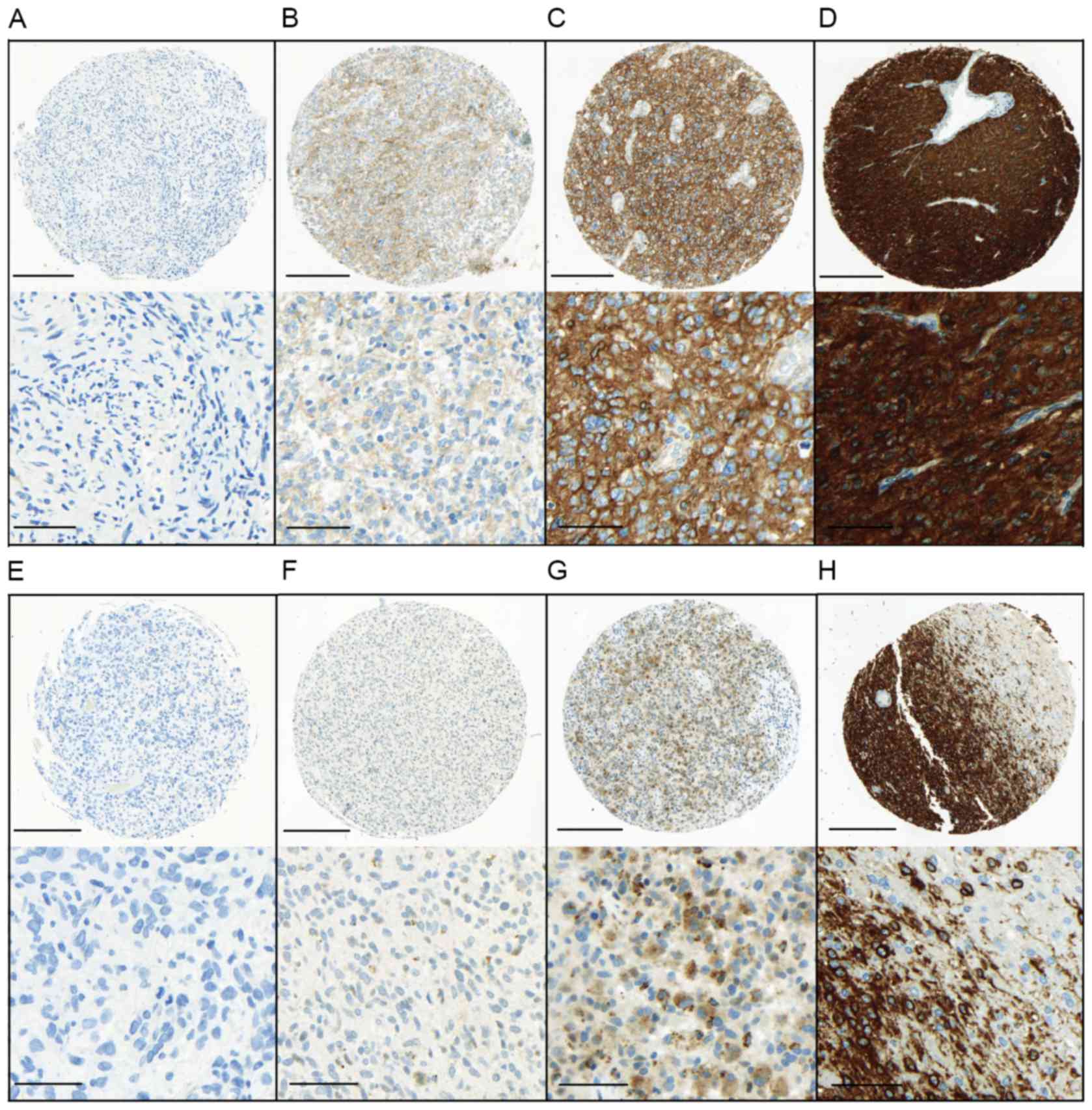
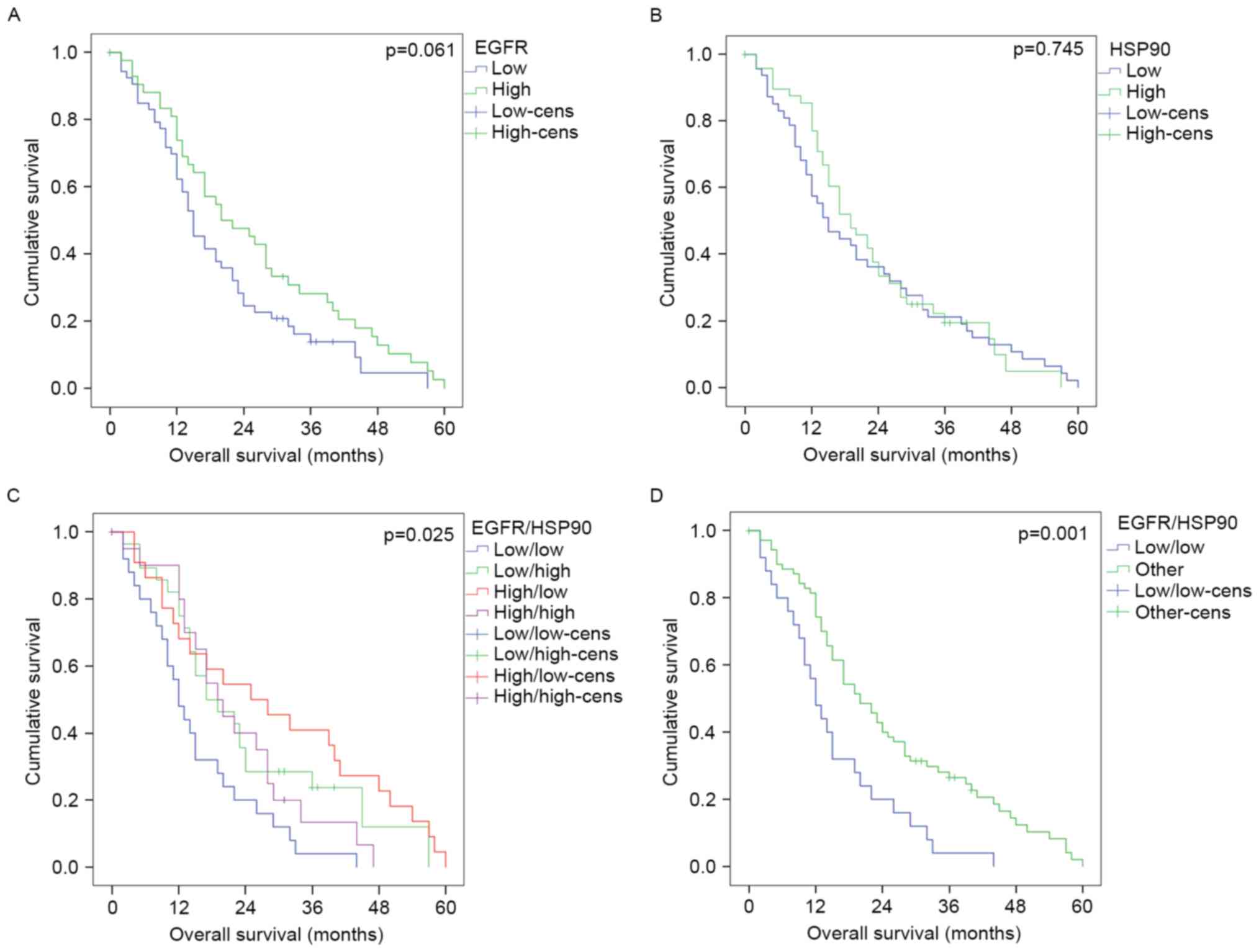
Epidermal growth factor receptor (EGFR) is a major oncogenic driver in glioblastoma (GBM) without mutations in the isocitrate dehydrogenase gene (IDH-wildtype). Heat shock protein 90 (HSP90) is a regulator of the stability of oncogenic proteins including EGFR, thereby acting as a molecular chaperone. We investigated the expression of EGFR and its chaperone HSP90 in GBM, IDH-wildtype. Tissue availability permitted analysis of 237/449 consecutive GBM cases, among them 214 IDH-wildtype (90.3%). The expression of EGFR and HSP90 was analysed by immunohistochemistry on a tissue microarray containing various tumour regions. The expression intensity (EI), and an expression score (ES) combining the percentage of stained cells with EI were determined for both markers. Overall, there was a positive correlation between EGFR and HSP90 expression (EI; r=0.275, P<0.001; ES, r=0.333, P<0.001). The expression of EGFR and HSP90 was significantly higher in the tumour centre, compared to the infiltration front (EI, P=0.002; ES, P<0.001). Survival data were available in 96 IDH-wildtype cases, and high expression of EGFR (ES only) was in trend associated with better outcome, but failed to meet statyistical significance (P=0.061). A combination of EGFR and HSP90, however, discriminated between different prognostic groups, with EGFRlow/HSP90low tumours showing the worst prognosis in univariate analysis (P=0.001), and in multivariate analysis including the other relevant prognostic factors age, MGMT status and postoperative treatment [n=76; hazard ratio (HR)=0.571; 95% confidence interval (CI) 0.328-0.996; P=0.048]. EGFR expression stratified most pronounced among HSP90low tumours, where the EGFRhigh phenotype was associated with longer survival. Our results reveal a variable reliance on the signalling pathway by EGFR in GBM, IDH-wildtype. Low co-expression was associated with worse prognosis.
View Figures

Figure 1

Figure 2

Figure 3

View References

1 

Louis DN, Suvà ML, Burger PC, Perry A, Kleihues P, Aldape KD, Brat DJ, Biernat W, Bigner DD, Nakazato Y, et al: Glioblastoma, IDH-wildtype. In: WHO Classification of Tumours of the Central Nervous System4th. Louis DN, Ohgaki H, Wiestler OD and Cavenee WK: International Agency for the Research on Cancer. Lyon: pp. 28–45. 2016

2 

Ostrom QT, Gittleman H, Fulop J, Liu M, Blanda R, Kromer C, Wolinsky Y, Kruchko C and Barnholtz-Sloan JS: CBTRUS statistical report: Primary brain and central nervous system tumors diagnosed in the United States in 2008–2012. Neuro Oncol. 17 Suppl 4:iv1–iv62. 2015. View Article : Google Scholar : PubMed/NCBI

3 

Aldape K, Zadeh G, Mansouri S, Reifenberger G and von Deimling A: Glioblastoma: Pathology, molecular mechanisms and markers. Acta Neuropathol. 129:829–848. 2015. View Article : Google Scholar : PubMed/NCBI

4 

Ohgaki H and Kleihues P: The definition of primary and secondary glioblastoma. Clin Cancer Res. 19:764–772. 2013. View Article : Google Scholar : PubMed/NCBI

5 

Hartmann C, Hentschel B, Wick W, Capper D, Felsberg J, Simon M, Westphal M, Schackert G, Meyermann R, Pietsch T, et al: Patients with IDH1 wild-type anaplastic astrocytomas exhibit worse prognosis than IDH1-mutated glioblastomas, and IDH1 mutation status accounts for the unfavorable prognostic effect of higher age: Implications for classification of gliomas. Acta Neuropathol. 120:707–718. 2010. View Article : Google Scholar : PubMed/NCBI

6 

Capper D, Weissert S, Balss J, Habel A, Meyer J, Jäger D, Ackermann U, Tessmer C, Korshunov A, Zentgraf H, et al: Characterization of R132H mutation-specific IDH1 antibody binding in brain tumors. Brain Pathol. 20:245–254. 2010. View Article : Google Scholar : PubMed/NCBI

7 

Ke EE and Wu YL: EGFR as a pharmacological target in EGFR-mutant non-small-cell lung cancer: Where do we stand now? Trends Pharmacol Sci. 37:887–903. 2016. View Article : Google Scholar : PubMed/NCBI

8 

Wells A: EGF receptor. Int J Biochem Cell Biol. 31:637–643. 1999. View Article : Google Scholar : PubMed/NCBI

9 

Ohgaki H, Dessen P, Jourde B, Horstmann S, Nishikawa T, Di Patre PL, Burkhard C, Schüler D, Probst-Hensch NM, Maiorka PC, et al: Genetic pathways to glioblastoma: A population-based study. Cancer Res. 64:6892–6899. 2004. View Article : Google Scholar : PubMed/NCBI

10 

Roskoski R Jr: ErbB/HER protein-tyrosine kinases: Structures and small molecule inhibitors. Pharmacol Res. 87:42–59. 2014. View Article : Google Scholar : PubMed/NCBI

11 

Padfield E, Ellis HP and Kurian KM: Current therapeutic advances targeting EGFR and EGFRvIII in glioblastoma. Front Oncol. 5:52015. View Article : Google Scholar : PubMed/NCBI

12 

Whitesell L and Lindquist SL: HSP90 and the chaperoning of cancer. Nat Rev Cancer. 5:761–772. 2005. View Article : Google Scholar : PubMed/NCBI

13 

Calderwood SK and Gong J: Heat shock proteins promote cancer: It's a protection racket. Trends Biochem Sci. 41:311–323. 2016. View Article : Google Scholar : PubMed/NCBI

14 

Combs SE, Schmid TE, Vaupel P and Multhoff G: Stress response leading to resistance in glioblastoma-the need for innovative radiotherapy (iRT) concepts. Cancers. 8:82016. View Article : Google Scholar :

15 

van Ommeren R, Staudt MD, Xu H and Hebb MO: Advances in HSP27 and HSP90-targeting strategies for glioblastoma. J Neuro Oncol. 127:209–219. 2016. View Article : Google Scholar

16 

Sartori E: Zusammenstellung eines Patienten- und Gewebekollektivs für die Untersuchung von Heat Shock Proteinen und ErbB Rezeptoren in Glioblastomen. Master Thesis. 1–25. 2015.

17 

McShane LM, Altman DG, Sauerbrei W, Taube SE, Gion M and Clark GM: Statistics Subcommittee of the NCI-EORTC Working Group on Cancer Diagnostics: Reporting recommendations for tumor marker prognostic studies. J Clin Oncol. 23:9067–9072. 2005. View Article : Google Scholar : PubMed/NCBI

18 

Altman DG, McShane LM, Sauerbrei W and Taube SE: Reporting Recommendations for Tumor Marker Prognostic Studies (REMARK): Explanation and elaboration. PLoS Med. 9:e10012162012. View Article : Google Scholar : PubMed/NCBI

19 

Zlobec I, Koelzer VH, Dawson H, Perren A and Lugli A: Next-generation tissue microarray (ngTMA) increases the quality of biomarker studies: An example using CD3, CD8, and CD45RO in the tumor microenvironment of six different solid tumor types. J Transl Med. 11:1042013. View Article : Google Scholar : PubMed/NCBI

20 

Guillaudeau A, Durand K, Pommepuy I, Robert S, Chaunavel A, Lacorre S, DeArmas R, Bourtoumieux S, El Demery M, Moreau JJ, et al: Determination of EGFR status in gliomas: Usefulness of immunohistochemistry and fluorescent in situ hybridization. Appl Immunohistochem Mol Morphol. 17:220–226. 2009. View Article : Google Scholar : PubMed/NCBI

21 

Siegelin MD, Habel A and Gaiser T: 17-AAG sensitized malignant glioma cells to death-receptor mediated apoptosis. Neurobiol Dis. 33:243–249. 2009. View Article : Google Scholar : PubMed/NCBI

22 

Hewer E, Beck J, Murek M, Kappeler A, Vassella E and Vajtai I: Polymorphous oligodendroglioma of Zülch revisited: A genetically heterogeneous group of anaplastic gliomas including tumors of bona fide oligodendroglial differentiation. Neuropathology. 34:323–332. 2014.PubMed/NCBI

23 

Leu S, von Felten S, Frank S, Vassella E, Vajtai I, Taylor E, Schulz M, Hutter G, Hench J, Schucht P, et al: IDH/MGMT-driven molecular classification of low-grade glioma is a strong predictor for long-term survival. Neuro Oncol. 15:469–479. 2013. View Article : Google Scholar : PubMed/NCBI

24 

Vassella E, Vajtai I, Bandi N, Arnold M, Kocher V and Mariani L: Primer extension based quantitative polymerase chain reaction reveals consistent differences in the methylation status of the MGMT promoter in diffusely infiltrating gliomas (WHO grade II–IV) of adults. J Neuro Oncol. 104:293–303. 2011. View Article : Google Scholar

25 

Yan H, Parsons DW, Jin G, McLendon R, Rasheed BA, Yuan W, Kos I, Batinic-Haberle I, Jones S, Riggins GJ, et al: IDH1 and IDH2 mutations in gliomas. N Engl J Med. 360:765–773. 2009. View Article : Google Scholar : PubMed/NCBI

26 

Xiu J, Piccioni D, Juarez T, Pingle SC, Hu J, Rudnick J, Fink K, Spetzler DB, Maney T, Ghazalpour A, et al: Multi-platform molecular profiling of a large cohort of glioblastomas reveals potential therapeutic strategies. Oncotarget. 7:21556–21569. 2016. View Article : Google Scholar : PubMed/NCBI

27 

Filippini G, Falcone C, Boiardi A, Broggi G, Bruzzone MG, Caldiroli D, Farina R, Farinotti M, Fariselli L, Finocchiaro G, et al: Brain Cancer Register of the Fondazione IRCCS (Istituto Ricovero e Cura a Carattere Scientifico) Istituto Neurologico Carlo Besta: Prognostic factors for survival in 676 consecutive patients with newly diagnosed primary glioblastoma. Neuro Oncol. 10:79–87. 2008. View Article : Google Scholar : PubMed/NCBI

28 

Horbinski C, Hobbs J, Cieply K, Dacic S and Hamilton RL: EGFR expression stratifies oligodendroglioma behavior. Am J Pathol. 179:1638–1644. 2011. View Article : Google Scholar : PubMed/NCBI

29 

Smith JS, Tachibana I, Passe SM, Huntley BK, Borell TJ, Iturria N, O'Fallon JR, Schaefer PL, Scheithauer BW, James CD, et al: PTEN mutation, EGFR amplification, and outcome in patients with anaplastic astrocytoma and glioblastoma multiforme. J Natl Cancer Inst. 93:1246–1256. 2001. View Article : Google Scholar : PubMed/NCBI

30 

Shinojima N, Tada K, Shiraishi S, Kamiryo T, Kochi M, Nakamura H, Makino K, Saya H, Hirano H, Kuratsu J, et al: Prognostic value of epidermal growth factor receptor in patients with glioblastoma multiforme. Cancer Res. 63:6962–6970. 2003.PubMed/NCBI

31 

Simmons ML, Lamborn KR, Takahashi M, Chen P, Israel MA, Berger MS, Godfrey T, Nigro J, Prados M, Chang S, et al: Analysis of complex relationships between age, p53, epidermal growth factor receptor, and survival in glioblastoma patients. Cancer Res. 61:1122–1128. 2001.PubMed/NCBI

32 

Batchelor TT, Betensky RA, Esposito JM, Pham LD, Dorfman MV, Piscatelli N, Jhung S, Rhee D and Louis DN: Age-dependent prognostic effects of genetic alterations in glioblastoma. Clin Cancer Res. 10:228–233. 2004. View Article : Google Scholar : PubMed/NCBI

33 

Tini P, Pastina P, Nardone V, Sebaste L, Toscano M, Miracco C, Cerase A and Pirtoli L: The combined EGFR protein expression analysis refines the prognostic value of the MGMT promoter methylation status in glioblastoma. Clin Neurol Neurosurg. 149:15–21. 2016. View Article : Google Scholar : PubMed/NCBI

34 

Hobbs J, Nikiforova MN, Fardo DW, Bortoluzzi S, Cieply K, Hamilton RL and Horbinski C: Paradoxical relationship between the degree of EGFR amplification and outcome in glioblastomas. Am J Surg Pathol. 36:1186–1193. 2012. View Article : Google Scholar : PubMed/NCBI

35 

Delancre C, Le Mercier M and Trepant A: P04-Use of immunohistochemistry and next generation sequencing for the classification of glioblastomas. 7th Belgian Week of Pathology. 2016.

36 

Ciocca DR and Calderwood SK: Heat shock proteins in cancer: Diagnostic, prognostic, predictive, and treatment implications. Cell Stress Chaperones. 10:86–103. 2005. View Article : Google Scholar : PubMed/NCBI

37 

Hermisson M, Strik H, Rieger J, Dichgans J, Meyermann R and Weller M: Expression and functional activity of heat shock proteins in human glioblastoma multiforme. Neurology. 54:1357–1365. 2000. View Article : Google Scholar : PubMed/NCBI

Related Articles

  • Abstract
  • View
  • Download
  • Twitter
Copy and paste a formatted citation
Spandidos Publications style
Sartori E, Langer R, Vassella E, Hewer E, Schucht P, Zlobec I and Berezowska S: Low co-expression of epidermal growth factor receptor and its chaperone heat shock protein 90 is associated with worse prognosis in primary glioblastoma, IDH-wild-type. Oncol Rep 38: 2394-2400, 2017.
APA
Sartori, E., Langer, R., Vassella, E., Hewer, E., Schucht, P., Zlobec, I., & Berezowska, S. (2017). Low co-expression of epidermal growth factor receptor and its chaperone heat shock protein 90 is associated with worse prognosis in primary glioblastoma, IDH-wild-type. Oncology Reports, 38, 2394-2400. https://doi.org/10.3892/or.2017.5863
MLA
Sartori, E., Langer, R., Vassella, E., Hewer, E., Schucht, P., Zlobec, I., Berezowska, S."Low co-expression of epidermal growth factor receptor and its chaperone heat shock protein 90 is associated with worse prognosis in primary glioblastoma, IDH-wild-type". Oncology Reports 38.4 (2017): 2394-2400.
Chicago
Sartori, E., Langer, R., Vassella, E., Hewer, E., Schucht, P., Zlobec, I., Berezowska, S."Low co-expression of epidermal growth factor receptor and its chaperone heat shock protein 90 is associated with worse prognosis in primary glioblastoma, IDH-wild-type". Oncology Reports 38, no. 4 (2017): 2394-2400. https://doi.org/10.3892/or.2017.5863
Copy and paste a formatted citation
x
Spandidos Publications style
Sartori E, Langer R, Vassella E, Hewer E, Schucht P, Zlobec I and Berezowska S: Low co-expression of epidermal growth factor receptor and its chaperone heat shock protein 90 is associated with worse prognosis in primary glioblastoma, IDH-wild-type. Oncol Rep 38: 2394-2400, 2017.
APA
Sartori, E., Langer, R., Vassella, E., Hewer, E., Schucht, P., Zlobec, I., & Berezowska, S. (2017). Low co-expression of epidermal growth factor receptor and its chaperone heat shock protein 90 is associated with worse prognosis in primary glioblastoma, IDH-wild-type. Oncology Reports, 38, 2394-2400. https://doi.org/10.3892/or.2017.5863
MLA
Sartori, E., Langer, R., Vassella, E., Hewer, E., Schucht, P., Zlobec, I., Berezowska, S."Low co-expression of epidermal growth factor receptor and its chaperone heat shock protein 90 is associated with worse prognosis in primary glioblastoma, IDH-wild-type". Oncology Reports 38.4 (2017): 2394-2400.
Chicago
Sartori, E., Langer, R., Vassella, E., Hewer, E., Schucht, P., Zlobec, I., Berezowska, S."Low co-expression of epidermal growth factor receptor and its chaperone heat shock protein 90 is associated with worse prognosis in primary glioblastoma, IDH-wild-type". Oncology Reports 38, no. 4 (2017): 2394-2400. https://doi.org/10.3892/or.2017.5863
Follow us
  • Twitter
  • LinkedIn
  • Facebook
About
  • Spandidos Publications
  • Careers
  • Cookie Policy
  • Privacy Policy
How can we help?
  • Help
  • Live Chat
  • Contact
  • Email to our Support Team