Spandidos Publications Logo
  • About
    • About Spandidos
    • Aims and Scopes
    • Abstracting and Indexing
    • Editorial Policies
    • Reprints and Permissions
    • Job Opportunities
    • Terms and Conditions
    • Contact
  • Journals
    • All Journals
    • Oncology Letters
      • Oncology Letters
      • Information for Authors
      • Editorial Policies
      • Editorial Board
      • Aims and Scope
      • Abstracting and Indexing
      • Bibliographic Information
      • Archive
    • International Journal of Oncology
      • International Journal of Oncology
      • Information for Authors
      • Editorial Policies
      • Editorial Board
      • Aims and Scope
      • Abstracting and Indexing
      • Bibliographic Information
      • Archive
    • Molecular and Clinical Oncology
      • Molecular and Clinical Oncology
      • Information for Authors
      • Editorial Policies
      • Editorial Board
      • Aims and Scope
      • Abstracting and Indexing
      • Bibliographic Information
      • Archive
    • Experimental and Therapeutic Medicine
      • Experimental and Therapeutic Medicine
      • Information for Authors
      • Editorial Policies
      • Editorial Board
      • Aims and Scope
      • Abstracting and Indexing
      • Bibliographic Information
      • Archive
    • International Journal of Molecular Medicine
      • International Journal of Molecular Medicine
      • Information for Authors
      • Editorial Policies
      • Editorial Board
      • Aims and Scope
      • Abstracting and Indexing
      • Bibliographic Information
      • Archive
    • Biomedical Reports
      • Biomedical Reports
      • Information for Authors
      • Editorial Policies
      • Editorial Board
      • Aims and Scope
      • Abstracting and Indexing
      • Bibliographic Information
      • Archive
    • Oncology Reports
      • Oncology Reports
      • Information for Authors
      • Editorial Policies
      • Editorial Board
      • Aims and Scope
      • Abstracting and Indexing
      • Bibliographic Information
      • Archive
    • Molecular Medicine Reports
      • Molecular Medicine Reports
      • Information for Authors
      • Editorial Policies
      • Editorial Board
      • Aims and Scope
      • Abstracting and Indexing
      • Bibliographic Information
      • Archive
    • World Academy of Sciences Journal
      • World Academy of Sciences Journal
      • Information for Authors
      • Editorial Policies
      • Editorial Board
      • Aims and Scope
      • Abstracting and Indexing
      • Bibliographic Information
      • Archive
    • International Journal of Functional Nutrition
      • International Journal of Functional Nutrition
      • Information for Authors
      • Editorial Policies
      • Editorial Board
      • Aims and Scope
      • Abstracting and Indexing
      • Bibliographic Information
      • Archive
    • International Journal of Epigenetics
      • International Journal of Epigenetics
      • Information for Authors
      • Editorial Policies
      • Editorial Board
      • Aims and Scope
      • Abstracting and Indexing
      • Bibliographic Information
      • Archive
    • Medicine International
      • Medicine International
      • Information for Authors
      • Editorial Policies
      • Editorial Board
      • Aims and Scope
      • Abstracting and Indexing
      • Bibliographic Information
      • Archive
  • Articles
  • Information
    • Information for Authors
    • Information for Reviewers
    • Information for Librarians
    • Information for Advertisers
    • Conferences
  • Language Editing
Spandidos Publications Logo
  • About
    • About Spandidos
    • Aims and Scopes
    • Abstracting and Indexing
    • Editorial Policies
    • Reprints and Permissions
    • Job Opportunities
    • Terms and Conditions
    • Contact
  • Journals
    • All Journals
    • Biomedical Reports
      • Information for Authors
      • Editorial Policies
      • Editorial Board
      • Aims and Scope
      • Abstracting and Indexing
      • Bibliographic Information
      • Archive
    • Experimental and Therapeutic Medicine
      • Information for Authors
      • Editorial Policies
      • Editorial Board
      • Aims and Scope
      • Abstracting and Indexing
      • Bibliographic Information
      • Archive
    • International Journal of Epigenetics
      • Information for Authors
      • Editorial Policies
      • Editorial Board
      • Aims and Scope
      • Abstracting and Indexing
      • Bibliographic Information
      • Archive
    • International Journal of Functional Nutrition
      • Information for Authors
      • Editorial Policies
      • Editorial Board
      • Aims and Scope
      • Abstracting and Indexing
      • Bibliographic Information
      • Archive
    • International Journal of Molecular Medicine
      • Information for Authors
      • Editorial Policies
      • Editorial Board
      • Aims and Scope
      • Abstracting and Indexing
      • Bibliographic Information
      • Archive
    • International Journal of Oncology
      • Information for Authors
      • Editorial Policies
      • Editorial Board
      • Aims and Scope
      • Abstracting and Indexing
      • Bibliographic Information
      • Archive
    • Medicine International
      • Information for Authors
      • Editorial Policies
      • Editorial Board
      • Aims and Scope
      • Abstracting and Indexing
      • Bibliographic Information
      • Archive
    • Molecular and Clinical Oncology
      • Information for Authors
      • Editorial Policies
      • Editorial Board
      • Aims and Scope
      • Abstracting and Indexing
      • Bibliographic Information
      • Archive
    • Molecular Medicine Reports
      • Information for Authors
      • Editorial Policies
      • Editorial Board
      • Aims and Scope
      • Abstracting and Indexing
      • Bibliographic Information
      • Archive
    • Oncology Letters
      • Information for Authors
      • Editorial Policies
      • Editorial Board
      • Aims and Scope
      • Abstracting and Indexing
      • Bibliographic Information
      • Archive
    • Oncology Reports
      • Information for Authors
      • Editorial Policies
      • Editorial Board
      • Aims and Scope
      • Abstracting and Indexing
      • Bibliographic Information
      • Archive
    • World Academy of Sciences Journal
      • Information for Authors
      • Editorial Policies
      • Editorial Board
      • Aims and Scope
      • Abstracting and Indexing
      • Bibliographic Information
      • Archive
  • Articles
  • Information
    • For Authors
    • For Reviewers
    • For Librarians
    • For Advertisers
    • Conferences
  • Language Editing
Login Register Submit
  • This site uses cookies
  • You can change your cookie settings at any time by following the instructions in our Cookie Policy. To find out more, you may read our Privacy Policy.

    I agree
Search articles by DOI, keyword, author or affiliation
Search
Advanced Search
presentation
Oncology Reports
Join Editorial Board Propose a Special Issue
Print ISSN: 1021-335X Online ISSN: 1791-2431
Journal Cover
April-2018 Volume 39 Issue 4

Full Size Image

Sign up for eToc alerts
Recommend to Library

Journals

International Journal of Molecular Medicine

International Journal of Molecular Medicine

International Journal of Molecular Medicine is an international journal devoted to molecular mechanisms of human disease.

International Journal of Oncology

International Journal of Oncology

International Journal of Oncology is an international journal devoted to oncology research and cancer treatment.

Molecular Medicine Reports

Molecular Medicine Reports

Covers molecular medicine topics such as pharmacology, pathology, genetics, neuroscience, infectious diseases, molecular cardiology, and molecular surgery.

Oncology Reports

Oncology Reports

Oncology Reports is an international journal devoted to fundamental and applied research in Oncology.

Experimental and Therapeutic Medicine

Experimental and Therapeutic Medicine

Experimental and Therapeutic Medicine is an international journal devoted to laboratory and clinical medicine.

Oncology Letters

Oncology Letters

Oncology Letters is an international journal devoted to Experimental and Clinical Oncology.

Biomedical Reports

Biomedical Reports

Explores a wide range of biological and medical fields, including pharmacology, genetics, microbiology, neuroscience, and molecular cardiology.

Molecular and Clinical Oncology

Molecular and Clinical Oncology

International journal addressing all aspects of oncology research, from tumorigenesis and oncogenes to chemotherapy and metastasis.

World Academy of Sciences Journal

World Academy of Sciences Journal

Multidisciplinary open-access journal spanning biochemistry, genetics, neuroscience, environmental health, and synthetic biology.

International Journal of Functional Nutrition

International Journal of Functional Nutrition

Open-access journal combining biochemistry, pharmacology, immunology, and genetics to advance health through functional nutrition.

International Journal of Epigenetics

International Journal of Epigenetics

Publishes open-access research on using epigenetics to advance understanding and treatment of human disease.

Medicine International

Medicine International

An International Open Access Journal Devoted to General Medicine.

Journal Cover
April-2018 Volume 39 Issue 4

Full Size Image

Sign up for eToc alerts
Recommend to Library

  • Article
  • Citations
    • Cite This Article
    • Download Citation
    • Create Citation Alert
    • Remove Citation Alert
    • Cited By
  • Similar Articles
    • Related Articles (in Spandidos Publications)
    • Similar Articles (Google Scholar)
    • Similar Articles (PubMed)
  • Download PDF
  • Download XML
  • View XML
Article

CXCR4 receptor blockage reduces the contribution of tumor and stromal cells to the metastatic growth in the liver

  • Authors:
    • Aitor Benedicto
    • Irene Romayor
    • Beatriz Arteta
  • View Affiliations / Copyright

    Affiliations: Department of Cellular Biology and Histology, University of The Basque Country, School of Medicine and Nursing, UPV/EHU, Leioa, E‑48940 Biscay, Spain
  • Pages: 2022-2030
    |
    Published online on: February 8, 2018
       https://doi.org/10.3892/or.2018.6254
  • Expand metrics +
Metrics: Total Views: 0 (Spandidos Publications: | PMC Statistics: )
Metrics: Total PDF Downloads: 0 (Spandidos Publications: | PMC Statistics: )
Cited By (CrossRef): 0 citations Loading Articles...

This article is mentioned in:


Abstract

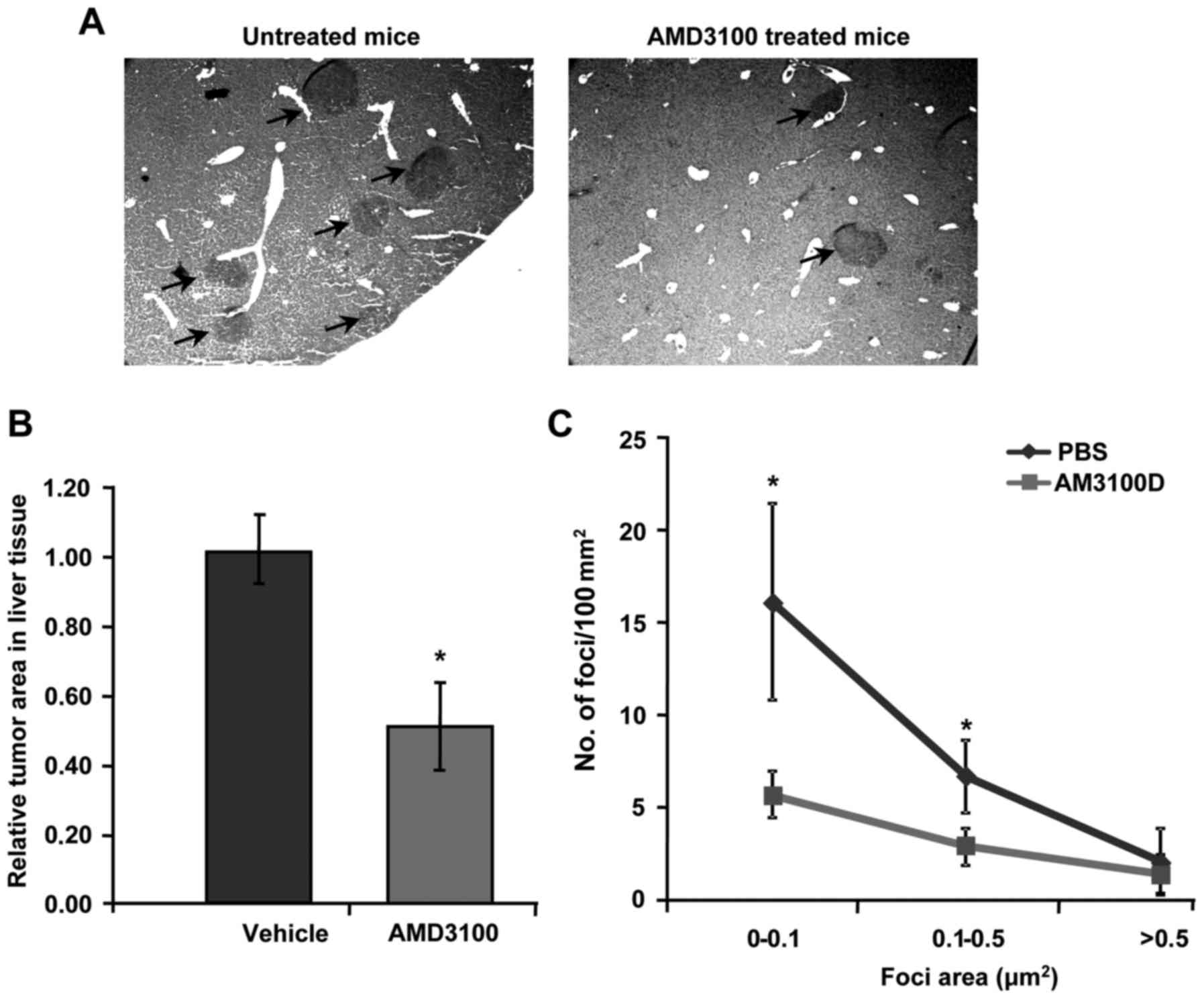
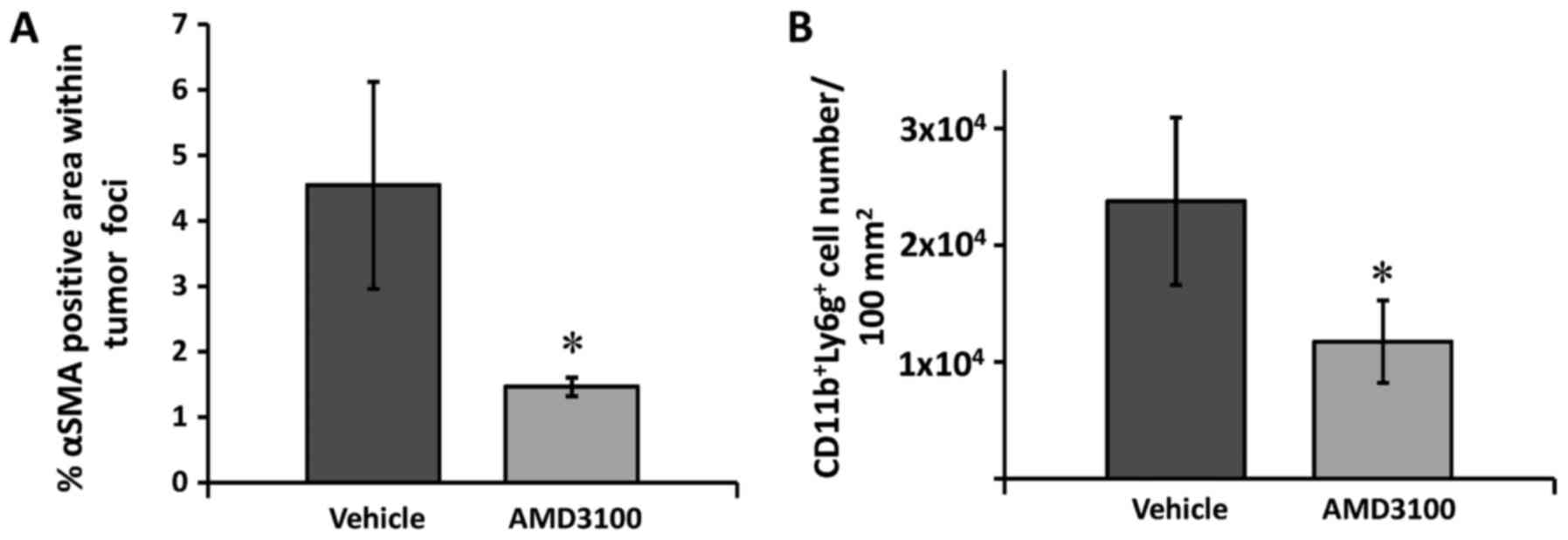
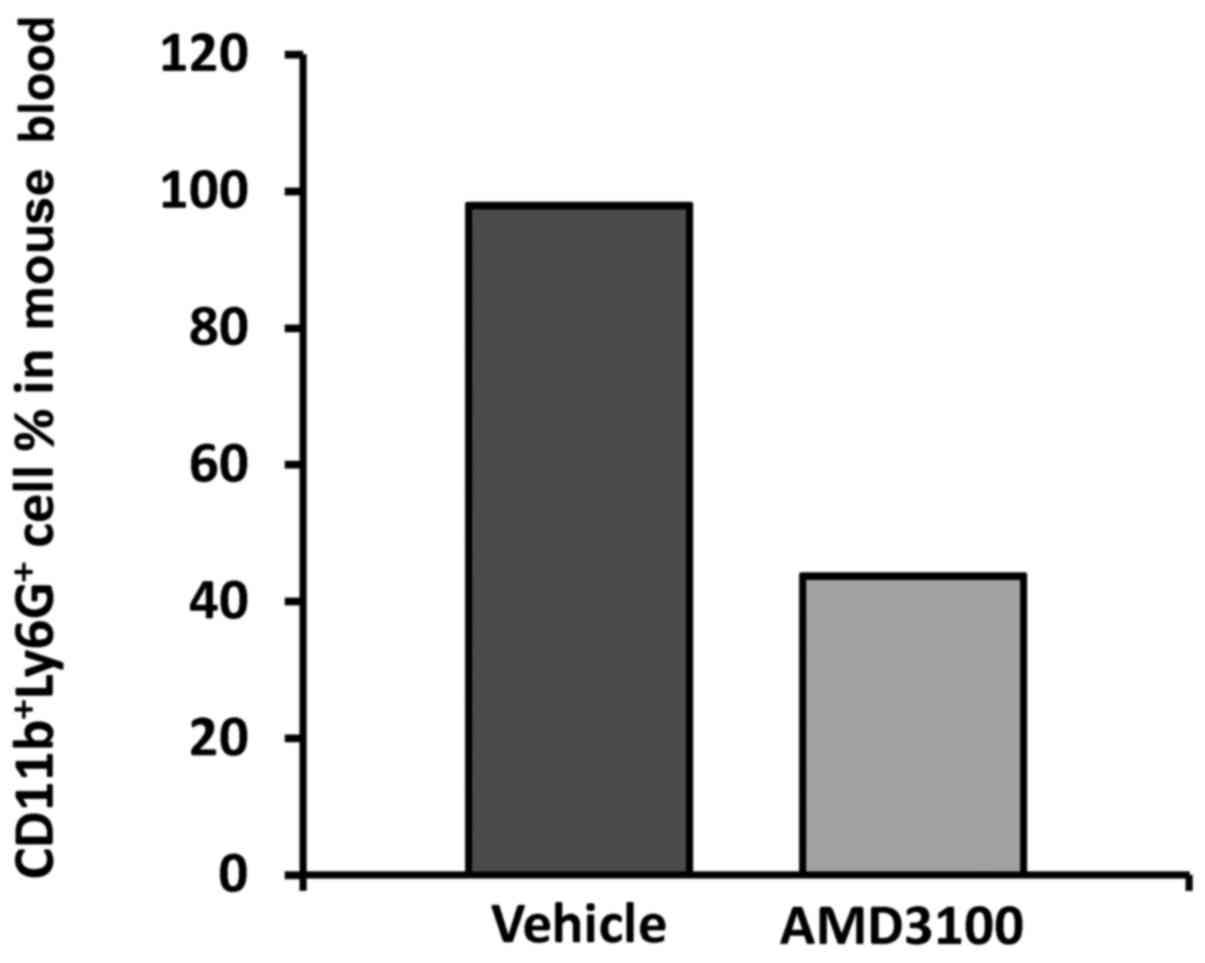
The liver is a common site for the metastatic spread of primary malignancies including colorectal cancer, and liver metastasis is a main cause of death in cancer patients. This is due to the complexity of the interactions taking place in the liver between tumor and stromal cells. In fact, cancer‑associated fibroblasts (CAFs) have been shown to support tumor growth through the CXCL12/CXCR4 axis. However, along with cancer cells, myeloid‑derived suppressor cells (MDSCs), immature dendritic cells with immunosuppressive potential, also express CXCR4. It has recently been demonstrated that reducing CXCL12 availability in the tumor microenvironment decreases liver metastasis. Therefore, blocking CXCL12 chemokine receptor CXCR4 may be a successful approach to diminish the metastatic spread of colorectal cancer to the liver. However, the subjacent mechanisms by which this chemokine influences the tumor are not fully understood. Thus, in order to uncover the role of CXCR4 during tumor cell/liver fibroblast crosstalk driving liver metastasis, the CXCR4 antagonist AMD3100 was used for in vitro studies and in an in vivo approach using an orthotopic model of liver metastasis in immune competent mice through intrasplenic injection of grafted C26 cells. In vitro blockage of CXCR4 led to an impaired migratory potential of tumor and hepatic stellate cells (HSCs) and a reduced tumor response to CXCL12. In vivo administration of AMD3100 to tumor‑bearing mice resulted in attenuated metastatic development in the liver, which was accompanied by an impaired infiltration of αSMA‑expressing cells within the tumors. In addition, a reduced CD11+Ly6G+ cell count in the liver was directly correlated with a reduction in MDSC numbers in the blood of AMD3100‑treated mice compared to the vehicle‑treated mice. Therefore, disruption of the CXCR4/CXCL12 axis by CXCR4 antagonist AMD3100 blocked the contribution of both cancer and stromal cells to the metastatic cascade in the liver.
View Figures

Figure 1

Figure 2

Figure 3

Figure 4

Figure 5

Figure 6

View References

1 

Van den Eynden GG, Majeed AW, Illemann M, Vermeulen PB, Bird NC, Høyer-Hansen G, Eefsen RL, Reynolds AR and Brodt P: The multifaceted role of the microenvironment in liver metastasis: Biology and clinical implications. Cancer Res. 73:2031–2043. 2013. View Article : Google Scholar : PubMed/NCBI

2 

Colangelo T, Polcaro G, Muccillo L, D'Agostino G, Rosato V, Ziccardi P, Lupo A, Mazzoccoli G, Sabatino L and Colantuoni V: Friend or foe? The tumour microenvironment dilemma in colorectal cancer. Biochim Biophys Acta. 1867:1–18. 2017.PubMed/NCBI

3 

Trautmann F, Cojoc M, Kurth I, Melin N, Bouchez LC, Dubrovska A and Peitzsch C: CXCR4 as biomarker for radioresistant cancer stem cells. Int J Radiat Biol. 90:687–699. 2014. View Article : Google Scholar : PubMed/NCBI

4 

Brand S, Dambacher J, Beigel F, Olszak T, Diebold J, Otte JM, Göke B and Eichhorst ST: CXCR4 and CXCL12 are inversely expressed in colorectal cancer cells and modulate cancer cell migration, invasion and MMP-9 activation. Exp Cell Res. 310:117–130. 2005. View Article : Google Scholar : PubMed/NCBI

5 

Ottaiano A, Franco R, Aiello Talamanca A, Liguori G, Tatangelo F, Delrio P, Nasti G, Barletta E, Facchini G, Daniele B, et al: Overexpression of both CXC chemokine receptor 4 and vascular endothelial growth factor proteins predicts early distant relapse in stage II–III colorectal cancer patients. Clin Cancer Res. 12:2795–2803. 2006. View Article : Google Scholar : PubMed/NCBI

6 

Yamada S, Shimada M, Utsunomiya T, Morine Y, Imura S, Ikemoto T, Mori H, Arakawa Y, Kanamoto M, Iwahashi S and Saito Y: CXC receptor 4 and stromal cell-derived factor 1 in primary tumors and liver metastases of colorectal cancer. J Surg Res. 187:107–112. 2014. View Article : Google Scholar : PubMed/NCBI

7 

Li JK, Yu L, Shen Y, Zhou LS, Wang YC and Zhang JH: Inhibition of CXCR4 activity with AMD3100 decreases invasion of human colorectal cancer cells in vitro. World J Gastroenterol. 14:2308–2313. 2008. View Article : Google Scholar : PubMed/NCBI

8 

Wendel C, Hemping-Bovenkerk A, Krasnyanska J, Mees ST, Kochetkova M, Stoeppeler S and Haier J: CXCR4/CXCL12 participate in extravasation of metastasizing breast cancer cells within the liver in a rat model. PLoS One. 7:e300462012. View Article : Google Scholar : PubMed/NCBI

9 

O'Boyle G, Swidenbank I, Marshall H, Barker CE, Armstrong J, White SA, Fricker SP, Plummer R, Wright M and Lovat PE: Inhibition of CXCR4-CXCL12 chemotaxis in melanoma by AMD11070. Br J Cancer. 108:1634–1640. 2013. View Article : Google Scholar : PubMed/NCBI

10 

Olaso E, Salado C, Egilegor E, Gutierrez V, Santisteban A, Sancho-Bru P, Friedman SL and Vidal-Vanaclocha F: Proangiogenic role of tumor-activated hepatic stellate cells in experimental melanoma metastasis. Hepatology. 37:674–685. 2003. View Article : Google Scholar : PubMed/NCBI

11 

Puche JE, Saiman Y and Friedman SL: Hepatic stellate cells and liver fibrosis. Compr Physiol. 3:1473–1492. 2013. View Article : Google Scholar : PubMed/NCBI

12 

Song Y, Kim SH, Kim KM, Choi EK, Kim J and Seo HR: Activated hepatic stellate cells play pivotal roles in hepatocellular carcinoma cell chemoresistance and migration in multicellular tumor spheroids. Sci Rep. 6:367502016. View Article : Google Scholar : PubMed/NCBI

13 

Cojoc M, Peitzsch C, Trautmann F, Polishchuk L, Telegeev GD and Dubrovska A: Emerging targets in cancer management: role of the CXCL12/CXCR4 axis. Onco Targets Ther. 6:1347–1361. 2013.PubMed/NCBI

14 

Mishra P, Banerjee D and Ben-Baruch A: Chemokines at the crossroads of tumor-fibroblast interactions that promote malignancy. J Leukoc Biol. 89:31–39. 2011. View Article : Google Scholar : PubMed/NCBI

15 

Kusmartsev S and Gabrilovich DI: Effect of tumor-derived cytokines and growth factors on differentiation and immune suppressive features of myeloid cells in cancer. Cancer Metastasis Rev. 25:323–331. 2006. View Article : Google Scholar : PubMed/NCBI

16 

Zhang H, Li Z, Wang L, Tian G, Tian J, Yang Z, Cao G, Zhou H, Zhao L, Wu Z and Yin Z: Critical role of myeloid-derived suppressor cells in tumor-induced liver immune suppression through inhibition of NKT cell function. Front Immunol. 8:1292017.PubMed/NCBI

17 

Goodwin TJ, Zhou Y, Musetti SN, Liu R and Huang L: Local and transient gene expression primes the liver to resist cancer metastasis. Sci Transl Med. 8:364ra1532016. View Article : Google Scholar : PubMed/NCBI

18 

D'Alterio C, Barbieri A, Portella L, Palma G, Polimeno M, Riccio A, Ieranò C, Franco R, Scognamiglio G, Bryce J, et al: Inhibition of stromal CXCR4 impairs development of lung metastases. Cancer Immunol Immunother. 61:1713–1720. 2012. View Article : Google Scholar : PubMed/NCBI

19 

Smedsrød B and Pertoft H: Preparation of pure hepatocytes and reticuloendothelial cells in high yield from a single rat liver by means of Percoll centrifugation and selective adherence. J Leukoc Biol. 38:213–230. 1985. View Article : Google Scholar : PubMed/NCBI

20 

Arteta B, Lasuen N, Lopategi A, Sveinbjörnsson B, Smedsrød B and Vidal-Vanaclocha F: Colon carcinoma cell interaction with liver sinusoidal endothelium inhibits organ-specific antitumor immunity through interleukin-1-induced mannose receptor in mice. Hepatology. 51:2172–2182. 2010. View Article : Google Scholar : PubMed/NCBI

21 

Xu Y, Zhao W, Xu J, Li J, Hong Z, Yin Z and Wang X: Activated hepatic stellate cells promote liver cancer by induction of myeloid-derived suppressor cells through cyclooxygenase-2. Oncotarget. 7:8866–8878. 2016.PubMed/NCBI

22 

Zhang SS, Han ZP, Jing YY, Tao SF, Li TJ, Wang H, Wang Y, Li R, Yang Y, Zhao X, et al: CD133(+)CXCR4(+) colon cancer cells exhibit metastatic potential and predict poor prognosis of patients. BMC Med. 10:852012. View Article : Google Scholar : PubMed/NCBI

23 

Kollmar O, Rupertus K, Scheuer C, Junker B, Tilton B, Schilling MK and Menger MD: Stromal cell-derived factor-1 promotes cell migration and tumor growth of colorectal metastasis. Neoplasia. 9:862–870. 2007. View Article : Google Scholar : PubMed/NCBI

24 

Oh JW, Drabik K, Kutsch O, Choi C, Tousson A and Benveniste EN: CXC chemokine receptor 4 expression and function in human astroglioma cells. J Immunol. 166:2695–2704. 2001. View Article : Google Scholar : PubMed/NCBI

25 

Odemis V, Moepps B, Gierschik P and Engele J: Interleukin-6 and cAMP induce stromal cell-derived factor-1 chemotaxis in astroglia by up-regulating CXCR4 cell surface expression. Implications for brain inflammation. J Biol Chem. 277:39801–39808. 2002. View Article : Google Scholar : PubMed/NCBI

26 

Hong F, Tuyama A, Lee TF, Loke J, Agarwal R, Cheng X, Garg A, Fiel MI, Schwartz M, Walewski J, et al: Hepatic stellate cells express functional CXCR4: Role in stromal cell-derived factor-1alpha-mediated stellate cell activation. Hepatology. 49:2055–2067. 2009. View Article : Google Scholar : PubMed/NCBI

27 

Sun X, Cheng G, Hao M, Zheng J, Zhou X, Zhang J, Taichman RS, Pienta KJ and Wang J: CXCL12/CXCR4/CXCR7 chemokine axis and cancer progression. Cancer Metastasis Rev. 29:709–722. 2010. View Article : Google Scholar : PubMed/NCBI

28 

Gassmann P, Haier J, Schlüter K, Domikowsky B, Wendel C, Wiesner U, Kubitza R, Engers R, Schneider SW, Homey B and Müller A: CXCR4 regulates the early extravasation of metastatic tumor cells in vivo. Neoplasia. 11:651–661. 2009. View Article : Google Scholar : PubMed/NCBI

29 

Alsayed Y, Ngo H, Runnels J, Leleu X, Singha UK, Pitsillides CM, Spencer JA, Kimlinger T, Ghobrial JM, Jia X, et al: Mechanisms of regulation of CXCR4/SDF-1 (CXCL12)-dependent migration and homing in multiple myeloma. Blood. 109:2708–2717. 2007.PubMed/NCBI

30 

Marra F and Tacke F: Roles for chemokines in liver disease. Gastroenterology. 147:577–594.e1. 2014. View Article : Google Scholar : PubMed/NCBI

31 

Wu Y, Peng H, Cui M, Whitney NP, Huang Y and Zheng JC: CXCL12 increases human neural progenitor cell proliferation through Akt-1/FOXO3a signaling pathway. J Neurochem. 109:1157–1167. 2009. View Article : Google Scholar : PubMed/NCBI

32 

Heinrich EL, Lee W, Lu J, Lowy AM and Kim J: Chemokine CXCL12 activates dual CXCR4 and CXCR7-mediated signaling pathways in pancreatic cancer cells. J Transl Med. 10:682012. View Article : Google Scholar : PubMed/NCBI

33 

Valcárcel M, Arteta B, Jaureguibeitia A, Lopategi A, Martínez I, Mendoza L, Muruzabal FJ, Salado C and Vidal-Vanaclocha F: Three-dimensional growth as multicellular spheroid activates the proangiogenic phenotype of colorectal carcinoma cells via LFA-1-dependent VEGF: Implications on hepatic micrometastasis. J Transl Med. 6:572008. View Article : Google Scholar : PubMed/NCBI

34 

Saiman Y, Agarwal R, Hickman DA, Fausther M, El-Shamy A, Dranoff JA, Friedman SL and Bansal MB: CXCL12 induces hepatic stellate cell contraction through a calcium-independent pathway. Am J Physiol Gastrointest Liver Physiol. 305:G375–G382. 2013. View Article : Google Scholar : PubMed/NCBI

35 

Yuan X, Xiao T, Dai F, Yu Y and Lou J: CXCL12α and CXCL12β stimulate the migration of cultured LX-2 hepatic stellate cells. Xi Bao Yu Fen Zi Mian Yi Xue Za Zhi. 31:293–296. 2015.(In Chinese). PubMed/NCBI

36 

Zhang J, Sarkar S and Yong VW: The chemokine stromal cell derived factor-1 (CXCL12) promotes glioma invasivenessthrough MT2-matrix metalloproteinase. Carcinogenesis. 26:2069–2077. 2005. View Article : Google Scholar : PubMed/NCBI

37 

Teng F, Tian WY, Wang YM, Zhang YF, Guo F, Zhao J, Gao C and Xue FX: Cancer-associated fibroblasts promote the progression of endometrial cancer via the SDF-1/CXCR4 axis. J Hematol Oncol. 9:82016. View Article : Google Scholar : PubMed/NCBI

38 

Sun X, Cheng G, Hao M, Zheng J, Zhou X, Zhang J, Taichman RS, Pienta KJ and Wang J: CXCL12/CXCR4/CXCR7 chemokine axis and cancer progression. Cancer Metastasis Rev. 29:709–722. 2010. View Article : Google Scholar : PubMed/NCBI

39 

Ma L, Qiao H, He C, Yang Q, Cheung CH, Kanwar JR and Sun X: Modulating the interaction of CXCR4 and CXCL12 by low-molecular-weight heparin inhibits hepatic metastasis of colon cancer. Invest New Drugs. 30:508–517. 2012. View Article : Google Scholar : PubMed/NCBI

40 

Heckmann D, Maier P, Laufs S, Li L, Sleeman JP, Trunk MJ, Leupold JH, Wenz F, Zeller WJ, Fruehauf S and Allgayer H: The disparate twins: A comparative study of CXCR4 and CXCR7 in SDF-1α-induced gene expression, invasion and chemosensitivity of colon cancer. Clin Cancer Res. 20:604–616. 2014. View Article : Google Scholar : PubMed/NCBI

41 

Liang Z, Brooks J, Willard M, Liang K, Yoon Y, Kang S and Shim H: CXCR4/CXCL12 axis promotes VEGF-mediated tumor angiogenesis through Akt signaling pathway. Biochem Biophys Res Commun. 359:716–722. 2007. View Article : Google Scholar : PubMed/NCBI

42 

Lang A, Sakhnini E, Fidder HH, Maor Y, Bar-Meir S and Chowers Y: Somatostatin inhibits pro-inflammatory cytokine secretion from rat hepatic stellate cells. Liver Int. 25:808–816. 2005. View Article : Google Scholar : PubMed/NCBI

43 

Chou HS, Hsieh CC, Yang HR, Wang L, Arakawa Y, Brown K, Wu Q, Lin F, Peters M, Fung JJ, et al: Hepatic stellate cells regulate immune response by way of induction of myeloid suppressor cells in mice. Hepatology. 53:1007–1019. 2011. View Article : Google Scholar : PubMed/NCBI

44 

Sawanobori Y, Ueha S, Kurachi M, Shimaoka T, Talmadge JE, Abe J, Shono Y, Kitabatake M, Kakimi K, Mukaida N and Matsushima K: Chemokine-mediated rapid turnover of myeloid-derived suppressor cells in tumor-bearing mice. Blood. 111:5457–5466. 2008. View Article : Google Scholar : PubMed/NCBI

45 

Yang L, Huang J, Ren X, Gorska AE, Chytil A, Aakre M, Carbone DP, Matrisian LM, Richmond A, Lin PC and Moses HL: Abrogation of TGF beta signaling in mammary carcinomas recruits Gr-1+CD11b+ myeloid cells that promote metastasis. Cancer Cell. 13:23–35. 2008. View Article : Google Scholar : PubMed/NCBI

46 

Ba H, Li B, Li X, Li C, Feng A, Zhu Y, Wang J, Li Z and Yin B: Transmembrane tumor necrosis factor-α promotes the recruitment of MDSCs to tumor tissue by upregulating CXCR4 expression via TNFR2. Int Immunopharmacol. 44:143–152. 2017. View Article : Google Scholar : PubMed/NCBI

Related Articles

  • Abstract
  • View
  • Download
  • Twitter
Copy and paste a formatted citation
Spandidos Publications style
Benedicto A, Romayor I and Arteta B: CXCR4 receptor blockage reduces the contribution of tumor and stromal cells to the metastatic growth in the liver. Oncol Rep 39: 2022-2030, 2018.
APA
Benedicto, A., Romayor, I., & Arteta, B. (2018). CXCR4 receptor blockage reduces the contribution of tumor and stromal cells to the metastatic growth in the liver. Oncology Reports, 39, 2022-2030. https://doi.org/10.3892/or.2018.6254
MLA
Benedicto, A., Romayor, I., Arteta, B."CXCR4 receptor blockage reduces the contribution of tumor and stromal cells to the metastatic growth in the liver". Oncology Reports 39.4 (2018): 2022-2030.
Chicago
Benedicto, A., Romayor, I., Arteta, B."CXCR4 receptor blockage reduces the contribution of tumor and stromal cells to the metastatic growth in the liver". Oncology Reports 39, no. 4 (2018): 2022-2030. https://doi.org/10.3892/or.2018.6254
Copy and paste a formatted citation
x
Spandidos Publications style
Benedicto A, Romayor I and Arteta B: CXCR4 receptor blockage reduces the contribution of tumor and stromal cells to the metastatic growth in the liver. Oncol Rep 39: 2022-2030, 2018.
APA
Benedicto, A., Romayor, I., & Arteta, B. (2018). CXCR4 receptor blockage reduces the contribution of tumor and stromal cells to the metastatic growth in the liver. Oncology Reports, 39, 2022-2030. https://doi.org/10.3892/or.2018.6254
MLA
Benedicto, A., Romayor, I., Arteta, B."CXCR4 receptor blockage reduces the contribution of tumor and stromal cells to the metastatic growth in the liver". Oncology Reports 39.4 (2018): 2022-2030.
Chicago
Benedicto, A., Romayor, I., Arteta, B."CXCR4 receptor blockage reduces the contribution of tumor and stromal cells to the metastatic growth in the liver". Oncology Reports 39, no. 4 (2018): 2022-2030. https://doi.org/10.3892/or.2018.6254
Follow us
  • Twitter
  • LinkedIn
  • Facebook
About
  • Spandidos Publications
  • Careers
  • Cookie Policy
  • Privacy Policy
How can we help?
  • Help
  • Live Chat
  • Contact
  • Email to our Support Team