Spandidos Publications Logo
  • About
    • About Spandidos
    • Aims and Scopes
    • Abstracting and Indexing
    • Editorial Policies
    • Reprints and Permissions
    • Job Opportunities
    • Terms and Conditions
    • Contact
  • Journals
    • All Journals
    • Oncology Letters
      • Oncology Letters
      • Information for Authors
      • Editorial Policies
      • Editorial Board
      • Aims and Scope
      • Abstracting and Indexing
      • Bibliographic Information
      • Archive
    • International Journal of Oncology
      • International Journal of Oncology
      • Information for Authors
      • Editorial Policies
      • Editorial Board
      • Aims and Scope
      • Abstracting and Indexing
      • Bibliographic Information
      • Archive
    • Molecular and Clinical Oncology
      • Molecular and Clinical Oncology
      • Information for Authors
      • Editorial Policies
      • Editorial Board
      • Aims and Scope
      • Abstracting and Indexing
      • Bibliographic Information
      • Archive
    • Experimental and Therapeutic Medicine
      • Experimental and Therapeutic Medicine
      • Information for Authors
      • Editorial Policies
      • Editorial Board
      • Aims and Scope
      • Abstracting and Indexing
      • Bibliographic Information
      • Archive
    • International Journal of Molecular Medicine
      • International Journal of Molecular Medicine
      • Information for Authors
      • Editorial Policies
      • Editorial Board
      • Aims and Scope
      • Abstracting and Indexing
      • Bibliographic Information
      • Archive
    • Biomedical Reports
      • Biomedical Reports
      • Information for Authors
      • Editorial Policies
      • Editorial Board
      • Aims and Scope
      • Abstracting and Indexing
      • Bibliographic Information
      • Archive
    • Oncology Reports
      • Oncology Reports
      • Information for Authors
      • Editorial Policies
      • Editorial Board
      • Aims and Scope
      • Abstracting and Indexing
      • Bibliographic Information
      • Archive
    • Molecular Medicine Reports
      • Molecular Medicine Reports
      • Information for Authors
      • Editorial Policies
      • Editorial Board
      • Aims and Scope
      • Abstracting and Indexing
      • Bibliographic Information
      • Archive
    • World Academy of Sciences Journal
      • World Academy of Sciences Journal
      • Information for Authors
      • Editorial Policies
      • Editorial Board
      • Aims and Scope
      • Abstracting and Indexing
      • Bibliographic Information
      • Archive
    • International Journal of Functional Nutrition
      • International Journal of Functional Nutrition
      • Information for Authors
      • Editorial Policies
      • Editorial Board
      • Aims and Scope
      • Abstracting and Indexing
      • Bibliographic Information
      • Archive
    • International Journal of Epigenetics
      • International Journal of Epigenetics
      • Information for Authors
      • Editorial Policies
      • Editorial Board
      • Aims and Scope
      • Abstracting and Indexing
      • Bibliographic Information
      • Archive
    • Medicine International
      • Medicine International
      • Information for Authors
      • Editorial Policies
      • Editorial Board
      • Aims and Scope
      • Abstracting and Indexing
      • Bibliographic Information
      • Archive
  • Articles
  • Information
    • Information for Authors
    • Information for Reviewers
    • Information for Librarians
    • Information for Advertisers
    • Conferences
  • Language Editing
Spandidos Publications Logo
  • About
    • About Spandidos
    • Aims and Scopes
    • Abstracting and Indexing
    • Editorial Policies
    • Reprints and Permissions
    • Job Opportunities
    • Terms and Conditions
    • Contact
  • Journals
    • All Journals
    • Biomedical Reports
      • Information for Authors
      • Editorial Policies
      • Editorial Board
      • Aims and Scope
      • Abstracting and Indexing
      • Bibliographic Information
      • Archive
    • Experimental and Therapeutic Medicine
      • Information for Authors
      • Editorial Policies
      • Editorial Board
      • Aims and Scope
      • Abstracting and Indexing
      • Bibliographic Information
      • Archive
    • International Journal of Epigenetics
      • Information for Authors
      • Editorial Policies
      • Editorial Board
      • Aims and Scope
      • Abstracting and Indexing
      • Bibliographic Information
      • Archive
    • International Journal of Functional Nutrition
      • Information for Authors
      • Editorial Policies
      • Editorial Board
      • Aims and Scope
      • Abstracting and Indexing
      • Bibliographic Information
      • Archive
    • International Journal of Molecular Medicine
      • Information for Authors
      • Editorial Policies
      • Editorial Board
      • Aims and Scope
      • Abstracting and Indexing
      • Bibliographic Information
      • Archive
    • International Journal of Oncology
      • Information for Authors
      • Editorial Policies
      • Editorial Board
      • Aims and Scope
      • Abstracting and Indexing
      • Bibliographic Information
      • Archive
    • Medicine International
      • Information for Authors
      • Editorial Policies
      • Editorial Board
      • Aims and Scope
      • Abstracting and Indexing
      • Bibliographic Information
      • Archive
    • Molecular and Clinical Oncology
      • Information for Authors
      • Editorial Policies
      • Editorial Board
      • Aims and Scope
      • Abstracting and Indexing
      • Bibliographic Information
      • Archive
    • Molecular Medicine Reports
      • Information for Authors
      • Editorial Policies
      • Editorial Board
      • Aims and Scope
      • Abstracting and Indexing
      • Bibliographic Information
      • Archive
    • Oncology Letters
      • Information for Authors
      • Editorial Policies
      • Editorial Board
      • Aims and Scope
      • Abstracting and Indexing
      • Bibliographic Information
      • Archive
    • Oncology Reports
      • Information for Authors
      • Editorial Policies
      • Editorial Board
      • Aims and Scope
      • Abstracting and Indexing
      • Bibliographic Information
      • Archive
    • World Academy of Sciences Journal
      • Information for Authors
      • Editorial Policies
      • Editorial Board
      • Aims and Scope
      • Abstracting and Indexing
      • Bibliographic Information
      • Archive
  • Articles
  • Information
    • For Authors
    • For Reviewers
    • For Librarians
    • For Advertisers
    • Conferences
  • Language Editing
Login Register Submit
  • This site uses cookies
  • You can change your cookie settings at any time by following the instructions in our Cookie Policy. To find out more, you may read our Privacy Policy.

    I agree
Search articles by DOI, keyword, author or affiliation
Search
Advanced Search
presentation
Oncology Reports
Join Editorial Board Propose a Special Issue
Print ISSN: 1021-335X Online ISSN: 1791-2431
Journal Cover
July-2018 Volume 40 Issue 1

Full Size Image

Sign up for eToc alerts
Recommend to Library

Journals

International Journal of Molecular Medicine

International Journal of Molecular Medicine

International Journal of Molecular Medicine is an international journal devoted to molecular mechanisms of human disease.

International Journal of Oncology

International Journal of Oncology

International Journal of Oncology is an international journal devoted to oncology research and cancer treatment.

Molecular Medicine Reports

Molecular Medicine Reports

Covers molecular medicine topics such as pharmacology, pathology, genetics, neuroscience, infectious diseases, molecular cardiology, and molecular surgery.

Oncology Reports

Oncology Reports

Oncology Reports is an international journal devoted to fundamental and applied research in Oncology.

Experimental and Therapeutic Medicine

Experimental and Therapeutic Medicine

Experimental and Therapeutic Medicine is an international journal devoted to laboratory and clinical medicine.

Oncology Letters

Oncology Letters

Oncology Letters is an international journal devoted to Experimental and Clinical Oncology.

Biomedical Reports

Biomedical Reports

Explores a wide range of biological and medical fields, including pharmacology, genetics, microbiology, neuroscience, and molecular cardiology.

Molecular and Clinical Oncology

Molecular and Clinical Oncology

International journal addressing all aspects of oncology research, from tumorigenesis and oncogenes to chemotherapy and metastasis.

World Academy of Sciences Journal

World Academy of Sciences Journal

Multidisciplinary open-access journal spanning biochemistry, genetics, neuroscience, environmental health, and synthetic biology.

International Journal of Functional Nutrition

International Journal of Functional Nutrition

Open-access journal combining biochemistry, pharmacology, immunology, and genetics to advance health through functional nutrition.

International Journal of Epigenetics

International Journal of Epigenetics

Publishes open-access research on using epigenetics to advance understanding and treatment of human disease.

Medicine International

Medicine International

An International Open Access Journal Devoted to General Medicine.

Journal Cover
July-2018 Volume 40 Issue 1

Full Size Image

Sign up for eToc alerts
Recommend to Library

  • Article
  • Citations
    • Cite This Article
    • Download Citation
    • Create Citation Alert
    • Remove Citation Alert
    • Cited By
  • Similar Articles
    • Related Articles (in Spandidos Publications)
    • Similar Articles (Google Scholar)
    • Similar Articles (PubMed)
  • Download PDF
  • Download XML
  • View XML
Article

Transcutaneous carbon dioxide enhances the antitumor effect of radiotherapy on oral squamous cell carcinoma

  • Authors:
    • Eiji Iwata
    • Takumi Hasegawa
    • Takeshi Ueha
    • Daisuke Takeda
    • Izumi Saito
    • Teruya Kawamoto
    • Toshihiro Akisue
    • Yoshitada Sakai
    • Ryohei Sasaki
    • Ryosuke Kuroda
    • Takahide Komori
  • View Affiliations / Copyright

    Affiliations: Department of Oral and Maxillofacial Surgery, Kobe University Graduate School of Medicine, Kobe 650-0017, Japan, Division of Rehabilitation Medicine, Kobe University Graduate School of Medicine, Kobe 650-0017, Japan, Department of Orthopaedic Surgery, Kobe University Graduate School of Medicine, Kobe 650-0017, Japan, Division of Rehabilitation Medicine, Kobe University Graduate School of Health Sciences, Kobe 650-0017, Japan, Department of Radiation Oncology, Kobe University Graduate School of Medicine, Kobe 650-0017, Japan
  • Pages: 434-442
    |
    Published online on: May 16, 2018
       https://doi.org/10.3892/or.2018.6444
  • Expand metrics +
Metrics: Total Views: 0 (Spandidos Publications: | PMC Statistics: )
Metrics: Total PDF Downloads: 0 (Spandidos Publications: | PMC Statistics: )
Cited By (CrossRef): 0 citations Loading Articles...

This article is mentioned in:


Abstract

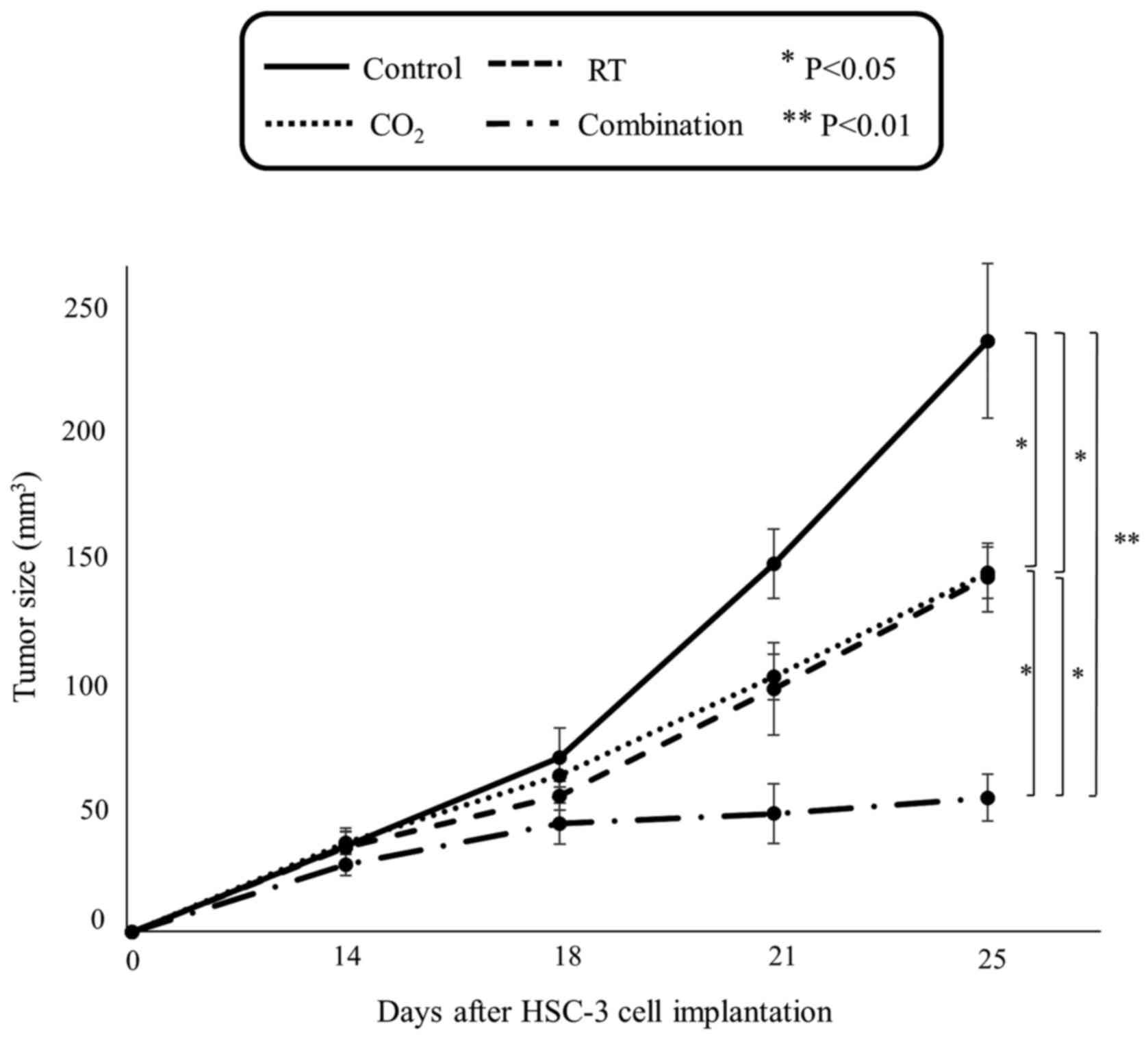
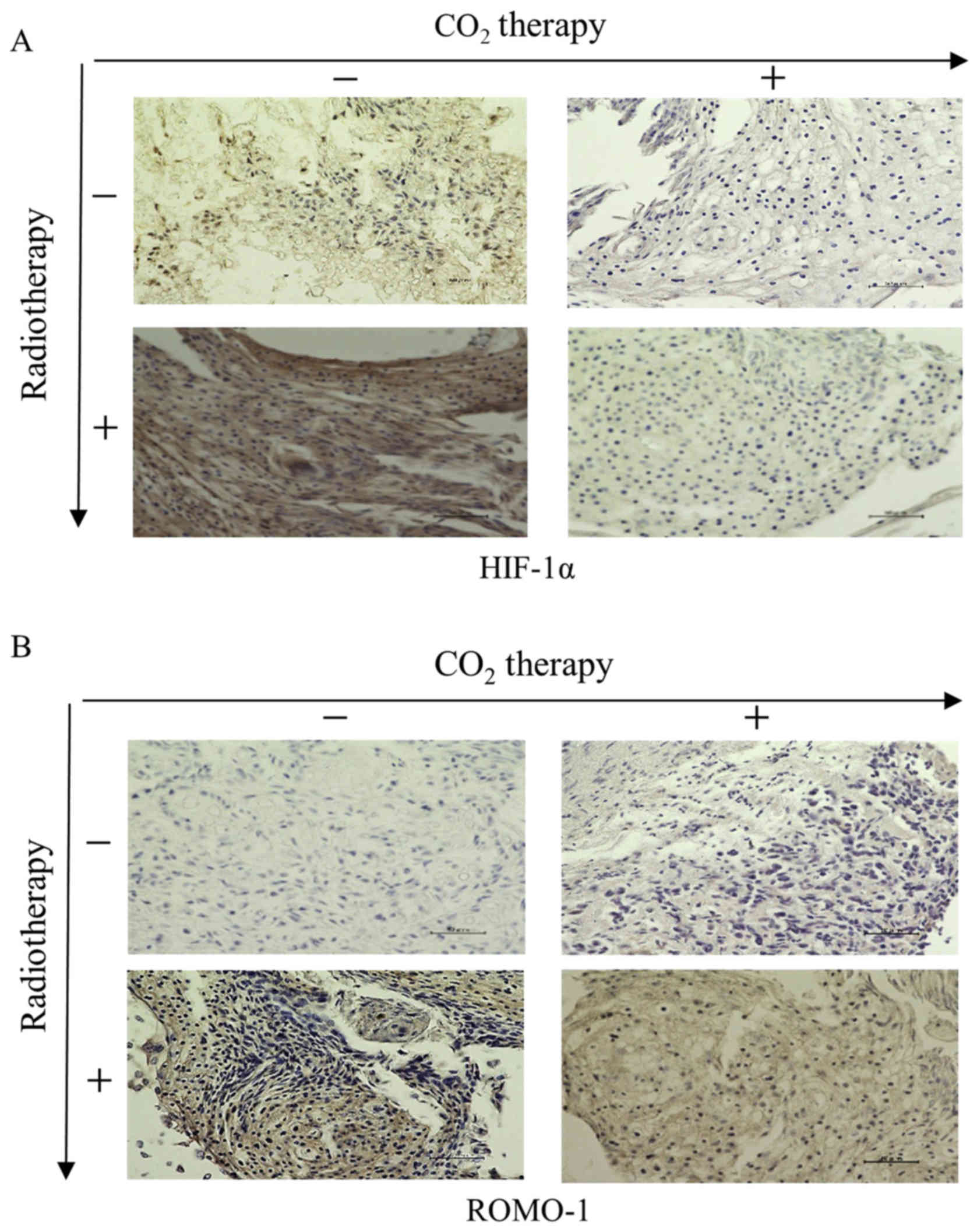
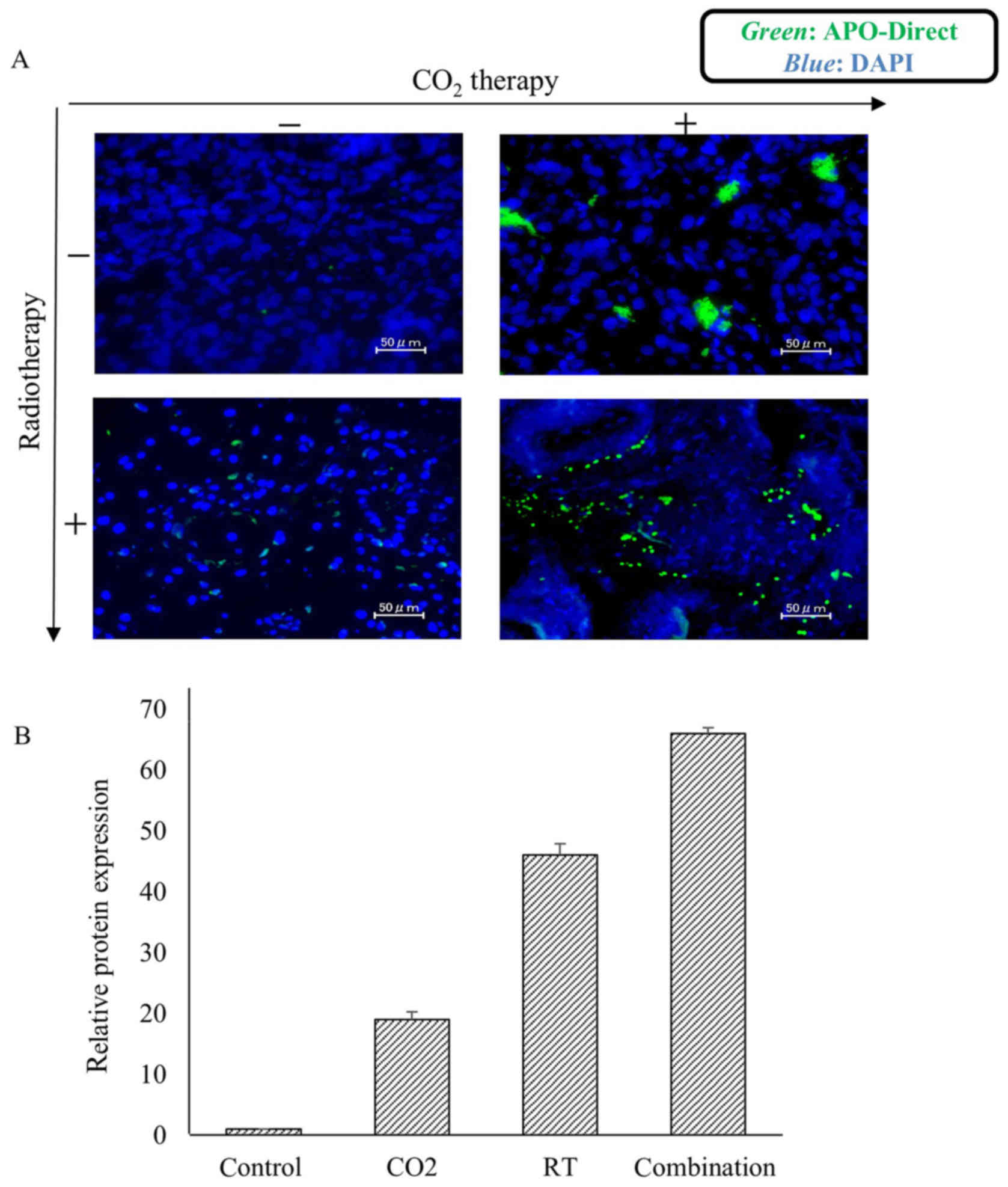
Radiotherapy (RT) is one of the main treatment modalities for oral squamous cell carcinoma (OSCC), however, radioresistance is a major impediment to its clinical success and poses as a concern that needs to be addressed. Tumor hypoxia is known to be significantly associated with radioresistance in various malignancies, hence, resolving the hypoxic state of a tumor may improve the antitumor effect of RT on OSCC. We have previously revealed that transcutaneous CO2 induced mitochondrial apoptosis and suppressed tumor growth in OSCC by resolving hypoxia. Considering the previous study, we hypothesized that transcutaneous CO2 may enhance the antitumor effect of RT on OSCC by improving intratumoral hypoxia, thereby overcoming radioresistance. In the present study, the combination of transcutaneous CO2 and RT significantly inhibited tumor growth compared with other treatments. This combination therapy also led to decreased expression of HIF-1α in parallel with increased expression of the cleaved forms of caspase-3-8-9 and PARP, which play essential roles in mitochondrial apoptosis. Additionally, the combination therapy increased the expression of ROS modulator 1 and subsequent mitochondrial ROS production, compared to RT alone. These results indicated that transcutaneous CO2 could potentially improve the antitumor effect of RT by decreasing the intratumoral hypoxia and increasing the mitochondrial apoptosis. Our findings indicated that CO2 therapy may be a novel adjuvant therapy in combination with RT for OSCC.
View Figures

Figure 1

Figure 2

Figure 3

Figure 4

Figure 5

Figure 6

View References

1 

Harrison LB, Zelefsky MJ, Pfister DG, Carper E, Raben A, Kraus DH, Strong EW, Rao A, Thaler H, Polyak T, et al: Detailed quality of life assessment in patients treated with primary radiotherapy for squamous cell cancer of the base of the tongue. Head Neck. 19:169–175. 1997. View Article : Google Scholar : PubMed/NCBI

2 

Cooper JS, Fu K, Marks J and Silverman S: Late effects of radiation therapy in the head and neck region. Int J Radiat Oncol Biol Phys. 31:1141–1164. 1995. View Article : Google Scholar : PubMed/NCBI

3 

Verastegui EL, Morales RB, Barrera-Franco JL, Poitevin AC and Hadden J: Long-term immune dysfunction after radiotherapy to the head and neck area. Int Immunopharmacol. 3:1093–1104. 2003. View Article : Google Scholar : PubMed/NCBI

4 

Hockel M, Schlenger K, Aral B, Mitze M, Schaffer U and Vaupel P: Association between tumor hypoxia and malignant progression in advanced cancer of the uterine cervix. Cancer Res. 56:4509–4515. 1996.PubMed/NCBI

5 

Chen XY, Wang Z, Li B, Zhang YJ and Li YY: Pim-3 contributes to radioresistance through regulation of the cell cycle and DNA damage repair in pancreatic cancer cells. Biochem Biophys Res Commun. 473:296–302. 2016. View Article : Google Scholar : PubMed/NCBI

6 

Wang S, Wang Z, Yang YU, Shi MO and Sun Z: Overexpression of Ku80 correlates with aggressive clinicopathological features and adverse prognosis in esophageal squamous cell carcinoma. Oncol Lett. 10:2705–2712. 2015. View Article : Google Scholar : PubMed/NCBI

7 

Koukourakis MI, Giatromanolaki A, Danielidis V and Sivridis E: Hypoxia inducible factor (HIf1alpha and HIF2alpha) and carbonic anhydrase 9 (CA9) expression and response of head-neck cancer to hypofractionated and accelerated radiotherapy. Int J Radiat Biol. 84:47–52. 2008. View Article : Google Scholar : PubMed/NCBI

8 

Harrison LB, Chadha M, Hill RJ, Hu K and Shasha D: Impact of tumor hypoxia and anemia on radiation therapy outcomes. Oncologist. 7:492–508. 2002. View Article : Google Scholar : PubMed/NCBI

9 

Moeller BJ, Richardson RA and Dewhirst MW: Hypoxia and radiotherapy: Opportunities for improved outcomes in cancer treatment. Cancer Metastasis Rev. 26:241–248. 2007. View Article : Google Scholar : PubMed/NCBI

10 

Bennett M, Feldmeier J, Smee R and Milross C: Hyperbaric oxygenation for tumour sensitisation to radiotherapy. Cochrane Database Syst Rev. 19:CD0050072005.

11 

Henke M, Laszig R, Rübe C, Schäfer U, Haase KD, Schilcher B, Mose S, Beer KT, Burger U, Dougherty C, et al: Erythropoietin to treat head and neck cancer patients with anaemia undergoing radiotherapy: Randomised, double-blind, placebo-controlled trial. Lancet. 362:1255–1260. 2003. View Article : Google Scholar : PubMed/NCBI

12 

Teppo S, Sundquist E, Vered M, Holappa H, Parkkisenniemi J, Rinaldi T, Lehenkari P, Grenman R, Dayan D, Risteli J, et al: The hypoxic tumor microenvironment regulates invasion of aggressive oral carcinoma cells. Exp Cell Res. 319:376–389. 2013. View Article : Google Scholar : PubMed/NCBI

13 

Maxwell PH, Dachs GU, Gleadle JM, Nicholls LG, Harris AL, Stratford IJ, Hankinson O, Pugh CW and Ratcliffe PJ: Hypoxia-inducible factor-1 modulates gene expression in solid tumors and influences both angiogenesis and tumor growth. Proc Natl Acad Sci USA. 94:8104–8109. 1997. View Article : Google Scholar : PubMed/NCBI

14 

Jing SW, Wang YD, Chen LQ, Sang MX, Zheng MM, Sun GG, Liu Q, Cheng YJ and Yang CR: Hypoxia suppresses E-cadherin and enhances matrix metalloproteinase-2 expression favoring esophageal carcinoma migration and invasion via hypoxia inducible factor-1 alpha activation. Dis Esophagus. 26:75–83. 2013. View Article : Google Scholar : PubMed/NCBI

15 

Moeller BJ and Dewhirst MW: HIF-1 and tumour radiosensitivity. Br J Cancer. 95:1–5. 2006. View Article : Google Scholar : PubMed/NCBI

16 

Sakai Y, Miwa M, Oe K, Ueha T, Koh A, Niikura T, Iwakura T, Lee SY, Tanaka M and Kurosaka M: A novel system for transcutaneous application of carbon dioxide causing an ‘artificial Bohr effect’ in the human body. PLoS One. 6:e241372011. View Article : Google Scholar : PubMed/NCBI

17 

Takeda D, Hasegawa T, Ueha T, Imai Y, Sakakibara A, Minoda M, Kawamoto T, Minamikawa T, Shibuya Y, Akisue T, et al: Transcutaneous carbon dioxide induces mitochondrial apoptosis and suppresses metastasis of oral squamous cell carcinoma in vivo. PLoS One. 9:e1005302014. View Article : Google Scholar : PubMed/NCBI

18 

Matsui T, Ota T, Ueda Y, Tanino M and Odashima S: Isolation of a highly metastatic cell line to lymph node in human oral squamous cell carcinoma by orthotopic implantation in nude mice. Oral Oncol. 34:253–256. 1998. View Article : Google Scholar : PubMed/NCBI

19 

Iwata E, Hasegawa T, Takeda D, Ueha T, Kawamoto T, Akisue T, Sakai Y and Komori T: Transcutaneous carbon dioxide suppresses epithelial-mesenchymal transition in oral squamous cell carcinoma. Int J Oncol. 48:1493–1498. 2016. View Article : Google Scholar : PubMed/NCBI

20 

Thomlinson RH and Gray LH: The histological structure of some human lung cancers and the possible implications for radiotherapy. Br J Cancer. 9:539–549. 1955. View Article : Google Scholar : PubMed/NCBI

21 

Brown JM and Wilson WR: Exploiting tumour hypoxia in cancer treatment. Nat Rev Cancer. 4:437–447. 2004. View Article : Google Scholar : PubMed/NCBI

22 

Ryan HE, Poloni M, McNulty W, Elson D, Gassmann M, Arbeit JM and Johnson RS: Hypoxia-inducible factor-1α is a positive factor in solid tumor growth. Cancer Res. 60:4010–4015. 2000.PubMed/NCBI

23 

Harada H, Itasaka S, Zhu Y, Zeng L, Xie X, Morinibu A, Shinomiya K and Hiraoka M: Treatment regimen determines whether an HIF-1 inhibitor enhances or inhibits the effect of radiation therapy. Br J Cancer. 100:747–757. 2009. View Article : Google Scholar : PubMed/NCBI

24 

Geng L, Donnelly E, McMahon G, Lin PC, Sierra-Rivera E, Oshinka H and Hallahan DE: Inhibition of vascular endothelial growth factor receptor signaling leads to reversal of tumor resistance to radiotherapy. Cancer Res. 61:2413–2419. 2001.PubMed/NCBI

25 

Hess C, Vuong V, Hegyi I, Riesterer O, Wood J, Fabbro D, Glanzmann C, Bodis S and Pruschy M: Effect of VEGF receptor inhibitor PTK787/ZK222584 [correction of ZK222548] combined with ionizing radiation on endothelial cells and tumour growth. Br J Cancer. 85:2010–2016. 2001. View Article : Google Scholar : PubMed/NCBI

26 

Kozin SV, Boucher Y, Hicklin DJ, Bohlen P, Jain RK and Suit HD: Vascular endothelial growth factor receptor-2-blocking antibody potentiates radiation-induced long-term control of human tumor xenografts. Cancer Res. 61:39–44. 2001.PubMed/NCBI

27 

Lund EL, Bastholm L and Kristjansen PE: Therapeutic synergy of TNP-470 and ionizing radiation: Effects on tumor growth, vessel morphology, and angiogenesis in human glioblastoma multiforme xenografts. Clin Cancer Res. 6:971–978. 2000.PubMed/NCBI

28 

Ning S, Laird D, Cherrington JM and Knox SJ: The antiangiogenic agents SU5416 and SU6668 increase the antitumor effects of fractionated irradiation. Radiat Res. 157:45–51. 2002. View Article : Google Scholar : PubMed/NCBI

29 

Dunst J, Stadler P, Becker A, Lautenschläger C, Pelz T, Hänsgen G, Molls M and Kuhnt T: Tumor volume and tumor hypoxia in head and neck cancers. The amount of the hypoxic volume is important. Strahlenther Onkol. 179:521–526. 2003. View Article : Google Scholar : PubMed/NCBI

30 

Nordsmark M and Overgaard J: A confirmatory prognostic study on oxygenation status and loco-regional control in advanced head and neck squamous cell carcinoma treated by radiation therapy. Radiother Oncol. 57:39–43. 2000. View Article : Google Scholar : PubMed/NCBI

31 

Stadler P, Becker A, Feldmann HJ, Hänsgen G, Dunst J, Würschmidt F and Molls M: Influence of the hypoxic subvolume on the survival of patients with head and neck cancer. Int J Radiat Oncol Biol Phys. 44:749–754. 1999. View Article : Google Scholar : PubMed/NCBI

32 

Nordsmark M, Overgaard M and Overgaard J: Pretreatment oxygenation predicts radiation response in advanced squamous cell carcinoma of the head and neck. Radiother Oncol. 41:31–39. 1996. View Article : Google Scholar : PubMed/NCBI

33 

Nordsmark M, Bentzen SM, Rudat V, Brizel D, Lartigau E, Stadler P, Becker A, Adam M, Molls M, Dunst J, et al: Prognostic value of tumor oxygenation in 397 head and neck tumors after primary radiation therapy. An international multi-center study. Radiother Oncol. 77:18–24. 2005. View Article : Google Scholar : PubMed/NCBI

34 

Overgaard J and Horsman MR: Modification of hypoxia-induced radioresistance in tumors by the use of oxygen and sensitizers. Semin Radiat Oncol. 6:10–21. 1996. View Article : Google Scholar : PubMed/NCBI

35 

Saunders MI, Hoskin PJ, Pigott K, Powell ME, Goodchild K, Dische S, Denekamp J, Stratford MR, Dennis MF and Rojas AM: Accelerated radiotherapy, carbogen and nicotinamide (ARCON) in locally advanced head and neck cancer: A feasibility study. Radiother Oncol. 45:159–166. 1997. View Article : Google Scholar : PubMed/NCBI

36 

Fan TJ, Han LH, Cong RS and Liang J: Caspase family proteases and apoptosis. Acta Biochim Biophys Sin (Shanghai). 37:719–727. 2005. View Article : Google Scholar : PubMed/NCBI

37 

Bosch M, Poulter NS, Vatovec S and Franklin-Tong VE: Initiation of programmed cell death in self-incompatibility: Role for cytoskeleton modifications and several caspase-like activities. Mol Plant. 1:879–887. 2008. View Article : Google Scholar : PubMed/NCBI

38 

Kuwana T and Newmeyer DD: Bcl-2-family proteins and the role of mitochondria in apoptosis. Curr Opin Cell Biol. 15:691–699. 2003. View Article : Google Scholar : PubMed/NCBI

39 

Sharpe JC, Arnoult D and Youle RJ: Control of mitochondrial permeability by Bcl-2 family members. Biochim Biophys Acta. 1644:107–113. 2004. View Article : Google Scholar : PubMed/NCBI

40 

Festjens N, van Gurp M, van Loo G, Saelens X and Vandenabeele P: Bcl-2 family members as sentinels of cellular integrity and role of mitochondrial intermembrane space proteins in apoptotic cell death. Acta Haematol. 111:7–27. 2004. View Article : Google Scholar : PubMed/NCBI

41 

Sagan L: On the origin of mitosing cells. J Theor Biol. 14:255–274. 1967. View Article : Google Scholar : PubMed/NCBI

42 

Graeber TG, Osmanian C, Jacks T, Housman DE, Koch CJ, Lowe SW and Giaccia AJ: Hypoxia-mediated selection of cells with diminished apoptotic potential in solid tumours. Nature. 379:88–91. 1996. View Article : Google Scholar : PubMed/NCBI

43 

Prasad S, Gupta SC and Tyagi AK: Reactive oxygen species (ROS) and cancer: Role of antioxidative nutraceuticals. Cancer Lett. 387:95–105. 2017. View Article : Google Scholar : PubMed/NCBI

44 

Jing L, He MT, Chang Y, Mehta SL, He QP, Zhang JZ and Li PA: Coenzyme Q10 protects astrocytes from ROS-induced damage through inhibition of mitochondria-mediated cell death pathway. Int J Biol Sci. 11:59–66. 2015. View Article : Google Scholar : PubMed/NCBI

45 

Lo YY and Cruz TF: Involvement of reactive oxygen species in cytokine and growth factor induction of c-fos expression in chondrocytes. J Biol Chem. 270:11727–11730. 1995. View Article : Google Scholar : PubMed/NCBI

46 

Locksley RM, Killeen N and Lenardo MJ: The TNF and TNF receptor superfamilies: Integrating mammalian biology. Cell. 104:487–501. 2001. View Article : Google Scholar : PubMed/NCBI

47 

Chung YM, Lee SB, Kim HJ, Park SH, Kim JJ, Chung JS and Yoo YD: Replicative senescence induced by Romo1-derived reactive oxygen species. J Biol Chem. 283:33763–33771. 2008. View Article : Google Scholar : PubMed/NCBI

48 

Kim JJ, Lee SB, Park JK and Yoo YD: TNF-alpha-induced ROS production triggering apoptosis is directly linked to Romo1 and Bcl-X(L). Cell Death Differ. 17:1420–1434. 2010. View Article : Google Scholar : PubMed/NCBI

49 

Lee SB, Kim JJ, Kim TW, Kim BS, Lee MS and Yoo YD: Serum deprivation-induced reactive oxygen species production is mediated by Romo1. Apoptosis. 15:204–218. 2010. View Article : Google Scholar : PubMed/NCBI

50 

Zheng C, Cotrim AP, Rowzee A, Swaim W, Sowers A, Mitchell JB and Baum BJ: Prevention of radiation-induced salivary hypofunction following hKGF gene delivery to murine submandibular glands. Clin Cancer Res. 17:2842–2851. 2011. View Article : Google Scholar : PubMed/NCBI

51 

Harada K, Ferdous T and Yoshida H: Investigation of optimal schedule of concurrent radiotherapy with S-1 for oral squamous cell carcinoma. Oncol Rep. 18:1077–1083. 2007.PubMed/NCBI

52 

Chiang IT, Liu YC, Hsu FT, Chien YC, Kao CH, Lin WJ, Chung JG and Hwang JJ: Curcumin synergistically enhances the radiosensitivity of human oral squamous cell carcinoma via suppression of radiation-induced NF-κB activity. Oncol Rep. 31:1729–1737. 2014. View Article : Google Scholar : PubMed/NCBI

53 

Fujii H, Sakata K, Katsumata Y, Sato R, Kinouchi M, Someya M, Masunaga S, Hareyama M, Swartz HM and Hirata H: Tissue oxygenation in a murine SCC VII tumor after X-ray irradiation as determined by EPR spectroscopy. Radiother Oncol. 86:354–360. 2008. View Article : Google Scholar : PubMed/NCBI

Related Articles

  • Abstract
  • View
  • Download
  • Twitter
Copy and paste a formatted citation
Spandidos Publications style
Iwata E, Hasegawa T, Ueha T, Takeda D, Saito I, Kawamoto T, Akisue T, Sakai Y, Sasaki R, Kuroda R, Kuroda R, et al: Transcutaneous carbon dioxide enhances the antitumor effect of radiotherapy on oral squamous cell carcinoma. Oncol Rep 40: 434-442, 2018.
APA
Iwata, E., Hasegawa, T., Ueha, T., Takeda, D., Saito, I., Kawamoto, T. ... Komori, T. (2018). Transcutaneous carbon dioxide enhances the antitumor effect of radiotherapy on oral squamous cell carcinoma. Oncology Reports, 40, 434-442. https://doi.org/10.3892/or.2018.6444
MLA
Iwata, E., Hasegawa, T., Ueha, T., Takeda, D., Saito, I., Kawamoto, T., Akisue, T., Sakai, Y., Sasaki, R., Kuroda, R., Komori, T."Transcutaneous carbon dioxide enhances the antitumor effect of radiotherapy on oral squamous cell carcinoma". Oncology Reports 40.1 (2018): 434-442.
Chicago
Iwata, E., Hasegawa, T., Ueha, T., Takeda, D., Saito, I., Kawamoto, T., Akisue, T., Sakai, Y., Sasaki, R., Kuroda, R., Komori, T."Transcutaneous carbon dioxide enhances the antitumor effect of radiotherapy on oral squamous cell carcinoma". Oncology Reports 40, no. 1 (2018): 434-442. https://doi.org/10.3892/or.2018.6444
Copy and paste a formatted citation
x
Spandidos Publications style
Iwata E, Hasegawa T, Ueha T, Takeda D, Saito I, Kawamoto T, Akisue T, Sakai Y, Sasaki R, Kuroda R, Kuroda R, et al: Transcutaneous carbon dioxide enhances the antitumor effect of radiotherapy on oral squamous cell carcinoma. Oncol Rep 40: 434-442, 2018.
APA
Iwata, E., Hasegawa, T., Ueha, T., Takeda, D., Saito, I., Kawamoto, T. ... Komori, T. (2018). Transcutaneous carbon dioxide enhances the antitumor effect of radiotherapy on oral squamous cell carcinoma. Oncology Reports, 40, 434-442. https://doi.org/10.3892/or.2018.6444
MLA
Iwata, E., Hasegawa, T., Ueha, T., Takeda, D., Saito, I., Kawamoto, T., Akisue, T., Sakai, Y., Sasaki, R., Kuroda, R., Komori, T."Transcutaneous carbon dioxide enhances the antitumor effect of radiotherapy on oral squamous cell carcinoma". Oncology Reports 40.1 (2018): 434-442.
Chicago
Iwata, E., Hasegawa, T., Ueha, T., Takeda, D., Saito, I., Kawamoto, T., Akisue, T., Sakai, Y., Sasaki, R., Kuroda, R., Komori, T."Transcutaneous carbon dioxide enhances the antitumor effect of radiotherapy on oral squamous cell carcinoma". Oncology Reports 40, no. 1 (2018): 434-442. https://doi.org/10.3892/or.2018.6444
Follow us
  • Twitter
  • LinkedIn
  • Facebook
About
  • Spandidos Publications
  • Careers
  • Cookie Policy
  • Privacy Policy
How can we help?
  • Help
  • Live Chat
  • Contact
  • Email to our Support Team