Spandidos Publications Logo
  • About
    • About Spandidos
    • Aims and Scopes
    • Abstracting and Indexing
    • Editorial Policies
    • Reprints and Permissions
    • Job Opportunities
    • Terms and Conditions
    • Contact
  • Journals
    • All Journals
    • Oncology Letters
      • Oncology Letters
      • Information for Authors
      • Editorial Policies
      • Editorial Board
      • Aims and Scope
      • Abstracting and Indexing
      • Bibliographic Information
      • Archive
    • International Journal of Oncology
      • International Journal of Oncology
      • Information for Authors
      • Editorial Policies
      • Editorial Board
      • Aims and Scope
      • Abstracting and Indexing
      • Bibliographic Information
      • Archive
    • Molecular and Clinical Oncology
      • Molecular and Clinical Oncology
      • Information for Authors
      • Editorial Policies
      • Editorial Board
      • Aims and Scope
      • Abstracting and Indexing
      • Bibliographic Information
      • Archive
    • Experimental and Therapeutic Medicine
      • Experimental and Therapeutic Medicine
      • Information for Authors
      • Editorial Policies
      • Editorial Board
      • Aims and Scope
      • Abstracting and Indexing
      • Bibliographic Information
      • Archive
    • International Journal of Molecular Medicine
      • International Journal of Molecular Medicine
      • Information for Authors
      • Editorial Policies
      • Editorial Board
      • Aims and Scope
      • Abstracting and Indexing
      • Bibliographic Information
      • Archive
    • Biomedical Reports
      • Biomedical Reports
      • Information for Authors
      • Editorial Policies
      • Editorial Board
      • Aims and Scope
      • Abstracting and Indexing
      • Bibliographic Information
      • Archive
    • Oncology Reports
      • Oncology Reports
      • Information for Authors
      • Editorial Policies
      • Editorial Board
      • Aims and Scope
      • Abstracting and Indexing
      • Bibliographic Information
      • Archive
    • Molecular Medicine Reports
      • Molecular Medicine Reports
      • Information for Authors
      • Editorial Policies
      • Editorial Board
      • Aims and Scope
      • Abstracting and Indexing
      • Bibliographic Information
      • Archive
    • World Academy of Sciences Journal
      • World Academy of Sciences Journal
      • Information for Authors
      • Editorial Policies
      • Editorial Board
      • Aims and Scope
      • Abstracting and Indexing
      • Bibliographic Information
      • Archive
    • International Journal of Functional Nutrition
      • International Journal of Functional Nutrition
      • Information for Authors
      • Editorial Policies
      • Editorial Board
      • Aims and Scope
      • Abstracting and Indexing
      • Bibliographic Information
      • Archive
    • International Journal of Epigenetics
      • International Journal of Epigenetics
      • Information for Authors
      • Editorial Policies
      • Editorial Board
      • Aims and Scope
      • Abstracting and Indexing
      • Bibliographic Information
      • Archive
    • Medicine International
      • Medicine International
      • Information for Authors
      • Editorial Policies
      • Editorial Board
      • Aims and Scope
      • Abstracting and Indexing
      • Bibliographic Information
      • Archive
  • Articles
  • Information
    • Information for Authors
    • Information for Reviewers
    • Information for Librarians
    • Information for Advertisers
    • Conferences
  • Language Editing
Spandidos Publications Logo
  • About
    • About Spandidos
    • Aims and Scopes
    • Abstracting and Indexing
    • Editorial Policies
    • Reprints and Permissions
    • Job Opportunities
    • Terms and Conditions
    • Contact
  • Journals
    • All Journals
    • Biomedical Reports
      • Information for Authors
      • Editorial Policies
      • Editorial Board
      • Aims and Scope
      • Abstracting and Indexing
      • Bibliographic Information
      • Archive
    • Experimental and Therapeutic Medicine
      • Information for Authors
      • Editorial Policies
      • Editorial Board
      • Aims and Scope
      • Abstracting and Indexing
      • Bibliographic Information
      • Archive
    • International Journal of Epigenetics
      • Information for Authors
      • Editorial Policies
      • Editorial Board
      • Aims and Scope
      • Abstracting and Indexing
      • Bibliographic Information
      • Archive
    • International Journal of Functional Nutrition
      • Information for Authors
      • Editorial Policies
      • Editorial Board
      • Aims and Scope
      • Abstracting and Indexing
      • Bibliographic Information
      • Archive
    • International Journal of Molecular Medicine
      • Information for Authors
      • Editorial Policies
      • Editorial Board
      • Aims and Scope
      • Abstracting and Indexing
      • Bibliographic Information
      • Archive
    • International Journal of Oncology
      • Information for Authors
      • Editorial Policies
      • Editorial Board
      • Aims and Scope
      • Abstracting and Indexing
      • Bibliographic Information
      • Archive
    • Medicine International
      • Information for Authors
      • Editorial Policies
      • Editorial Board
      • Aims and Scope
      • Abstracting and Indexing
      • Bibliographic Information
      • Archive
    • Molecular and Clinical Oncology
      • Information for Authors
      • Editorial Policies
      • Editorial Board
      • Aims and Scope
      • Abstracting and Indexing
      • Bibliographic Information
      • Archive
    • Molecular Medicine Reports
      • Information for Authors
      • Editorial Policies
      • Editorial Board
      • Aims and Scope
      • Abstracting and Indexing
      • Bibliographic Information
      • Archive
    • Oncology Letters
      • Information for Authors
      • Editorial Policies
      • Editorial Board
      • Aims and Scope
      • Abstracting and Indexing
      • Bibliographic Information
      • Archive
    • Oncology Reports
      • Information for Authors
      • Editorial Policies
      • Editorial Board
      • Aims and Scope
      • Abstracting and Indexing
      • Bibliographic Information
      • Archive
    • World Academy of Sciences Journal
      • Information for Authors
      • Editorial Policies
      • Editorial Board
      • Aims and Scope
      • Abstracting and Indexing
      • Bibliographic Information
      • Archive
  • Articles
  • Information
    • For Authors
    • For Reviewers
    • For Librarians
    • For Advertisers
    • Conferences
  • Language Editing
Login Register Submit
  • This site uses cookies
  • You can change your cookie settings at any time by following the instructions in our Cookie Policy. To find out more, you may read our Privacy Policy.

    I agree
Search articles by DOI, keyword, author or affiliation
Search
Advanced Search
presentation
Oncology Reports
Join Editorial Board Propose a Special Issue
Print ISSN: 1021-335X Online ISSN: 1791-2431
Journal Cover
November-2018 Volume 40 Issue 5

Full Size Image

Sign up for eToc alerts
Recommend to Library

Journals

International Journal of Molecular Medicine

International Journal of Molecular Medicine

International Journal of Molecular Medicine is an international journal devoted to molecular mechanisms of human disease.

International Journal of Oncology

International Journal of Oncology

International Journal of Oncology is an international journal devoted to oncology research and cancer treatment.

Molecular Medicine Reports

Molecular Medicine Reports

Covers molecular medicine topics such as pharmacology, pathology, genetics, neuroscience, infectious diseases, molecular cardiology, and molecular surgery.

Oncology Reports

Oncology Reports

Oncology Reports is an international journal devoted to fundamental and applied research in Oncology.

Experimental and Therapeutic Medicine

Experimental and Therapeutic Medicine

Experimental and Therapeutic Medicine is an international journal devoted to laboratory and clinical medicine.

Oncology Letters

Oncology Letters

Oncology Letters is an international journal devoted to Experimental and Clinical Oncology.

Biomedical Reports

Biomedical Reports

Explores a wide range of biological and medical fields, including pharmacology, genetics, microbiology, neuroscience, and molecular cardiology.

Molecular and Clinical Oncology

Molecular and Clinical Oncology

International journal addressing all aspects of oncology research, from tumorigenesis and oncogenes to chemotherapy and metastasis.

World Academy of Sciences Journal

World Academy of Sciences Journal

Multidisciplinary open-access journal spanning biochemistry, genetics, neuroscience, environmental health, and synthetic biology.

International Journal of Functional Nutrition

International Journal of Functional Nutrition

Open-access journal combining biochemistry, pharmacology, immunology, and genetics to advance health through functional nutrition.

International Journal of Epigenetics

International Journal of Epigenetics

Publishes open-access research on using epigenetics to advance understanding and treatment of human disease.

Medicine International

Medicine International

An International Open Access Journal Devoted to General Medicine.

Journal Cover
November-2018 Volume 40 Issue 5

Full Size Image

Sign up for eToc alerts
Recommend to Library

  • Article
  • Citations
    • Cite This Article
    • Download Citation
    • Create Citation Alert
    • Remove Citation Alert
    • Cited By
  • Similar Articles
    • Related Articles (in Spandidos Publications)
    • Similar Articles (Google Scholar)
    • Similar Articles (PubMed)
  • Download PDF
  • Download XML
  • View XML
Article

Prognostic value of monocarboxylate transporter 4 in patients with esophageal squamous cell carcinoma

  • Authors:
    • Bo Cheng
    • Xuan Chen
    • Yankang Li
    • Xiaochen Huang
    • Jinming Yu
  • View Affiliations / Copyright

    Affiliations: Department of Radiation Oncology, Shandong Cancer Hospital Affiliated to Shandong University, Jinan, Shandong 250117, P.R. China, Department of Radiation Oncology, Qilu Hospital of Shandong University, Jinan, Shandong 250012, P.R. China
  • Pages: 2906-2915
    |
    Published online on: September 13, 2018
       https://doi.org/10.3892/or.2018.6706
  • Expand metrics +
Metrics: Total Views: 0 (Spandidos Publications: | PMC Statistics: )
Metrics: Total PDF Downloads: 0 (Spandidos Publications: | PMC Statistics: )
Cited By (CrossRef): 0 citations Loading Articles...

This article is mentioned in:


Abstract

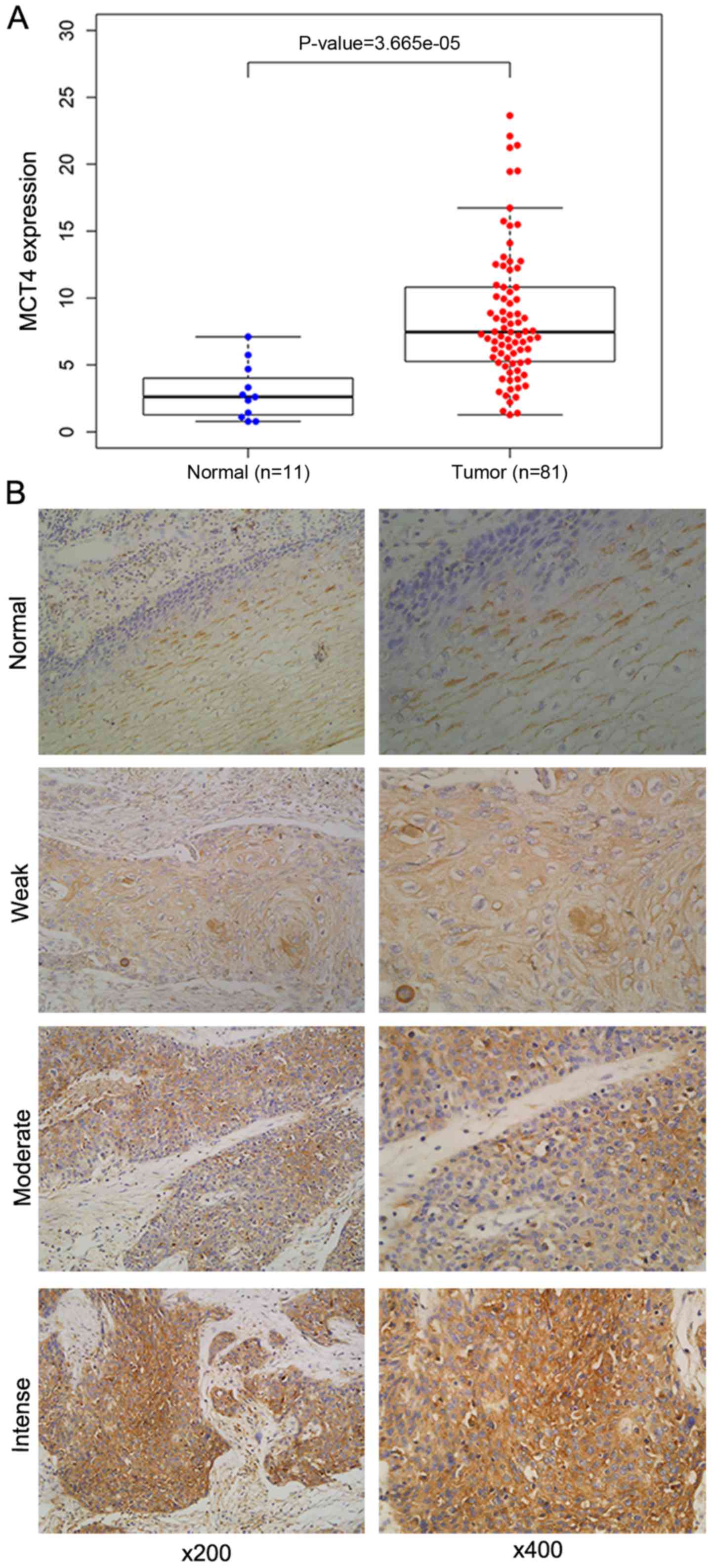
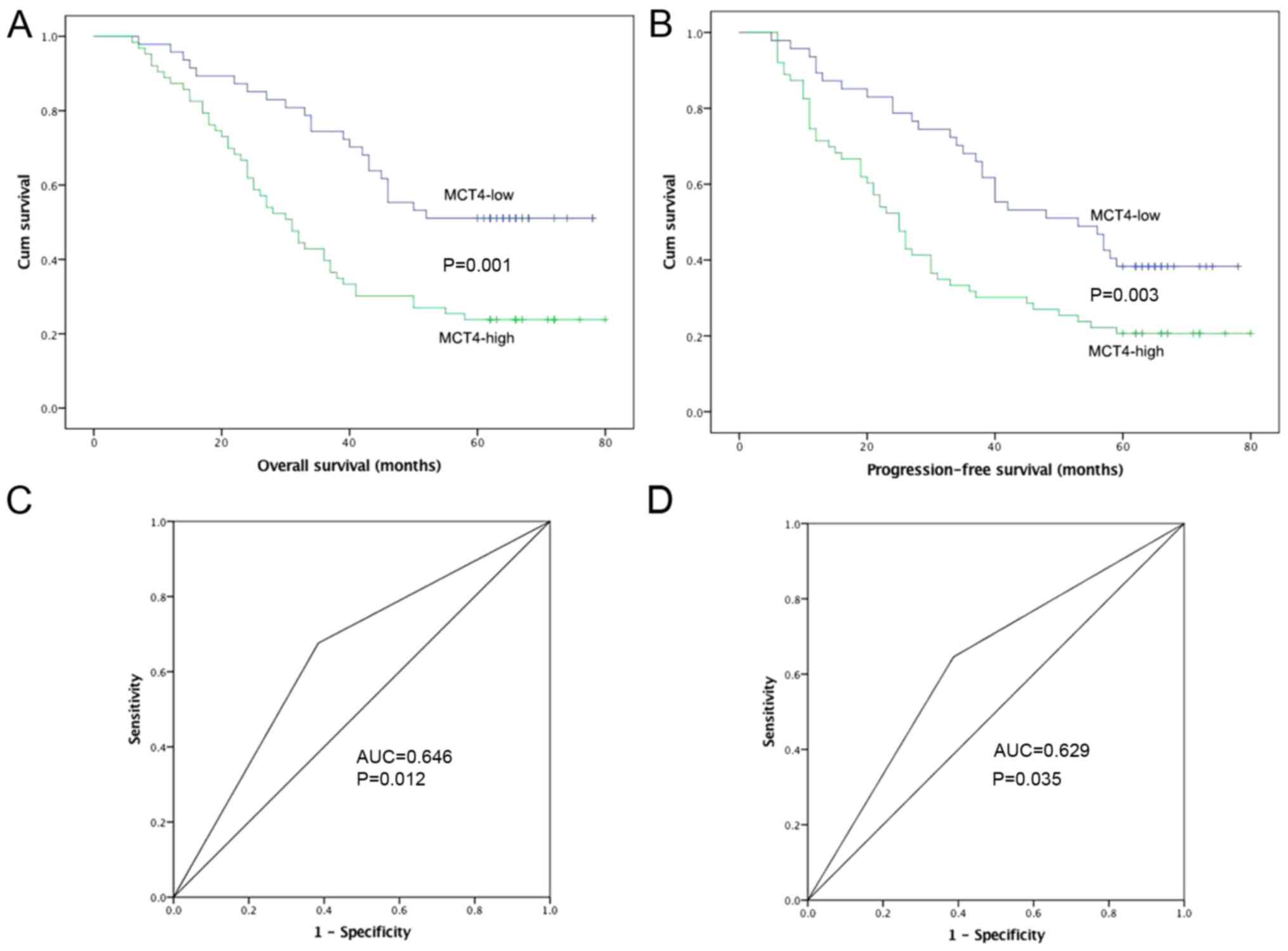
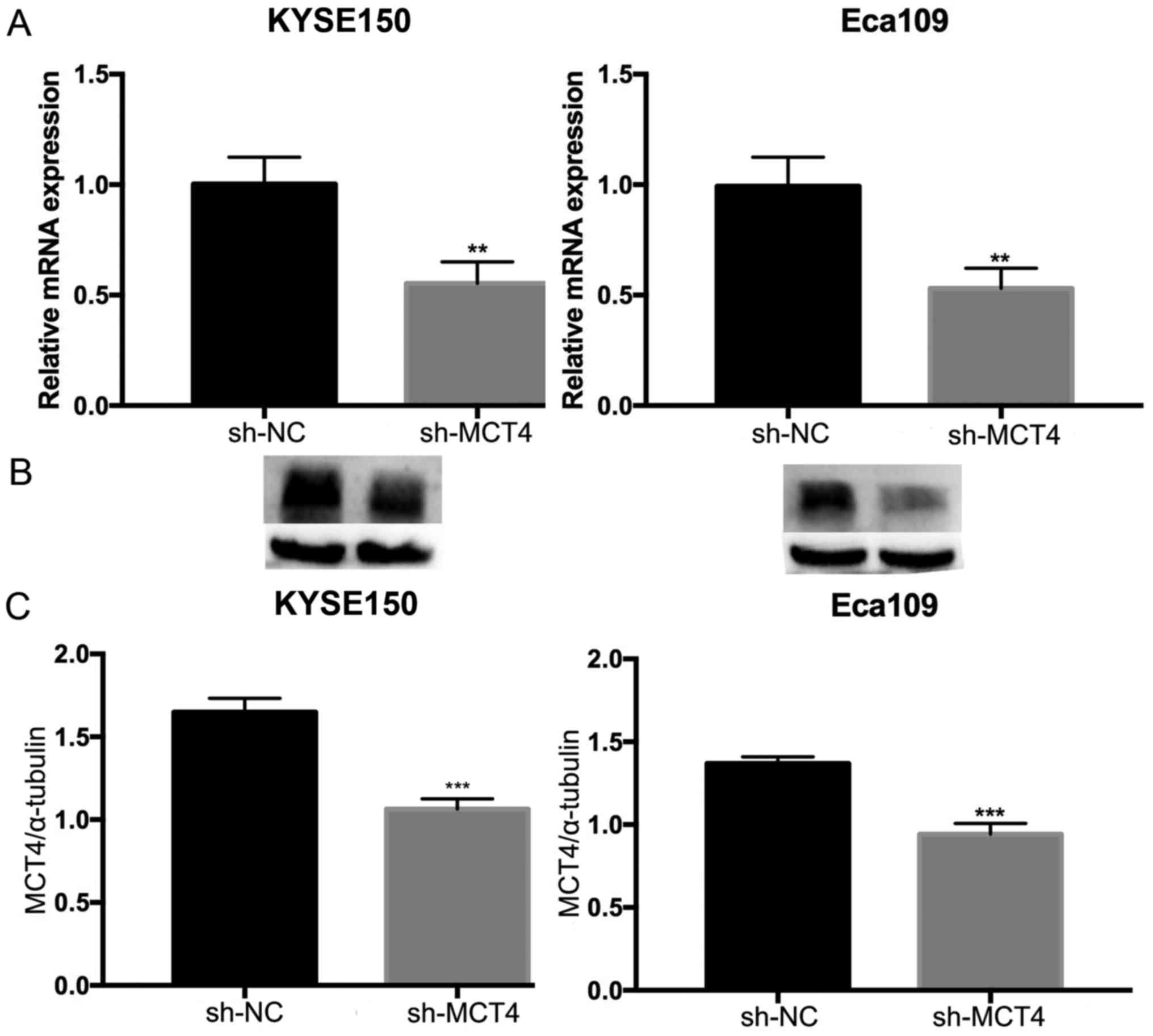
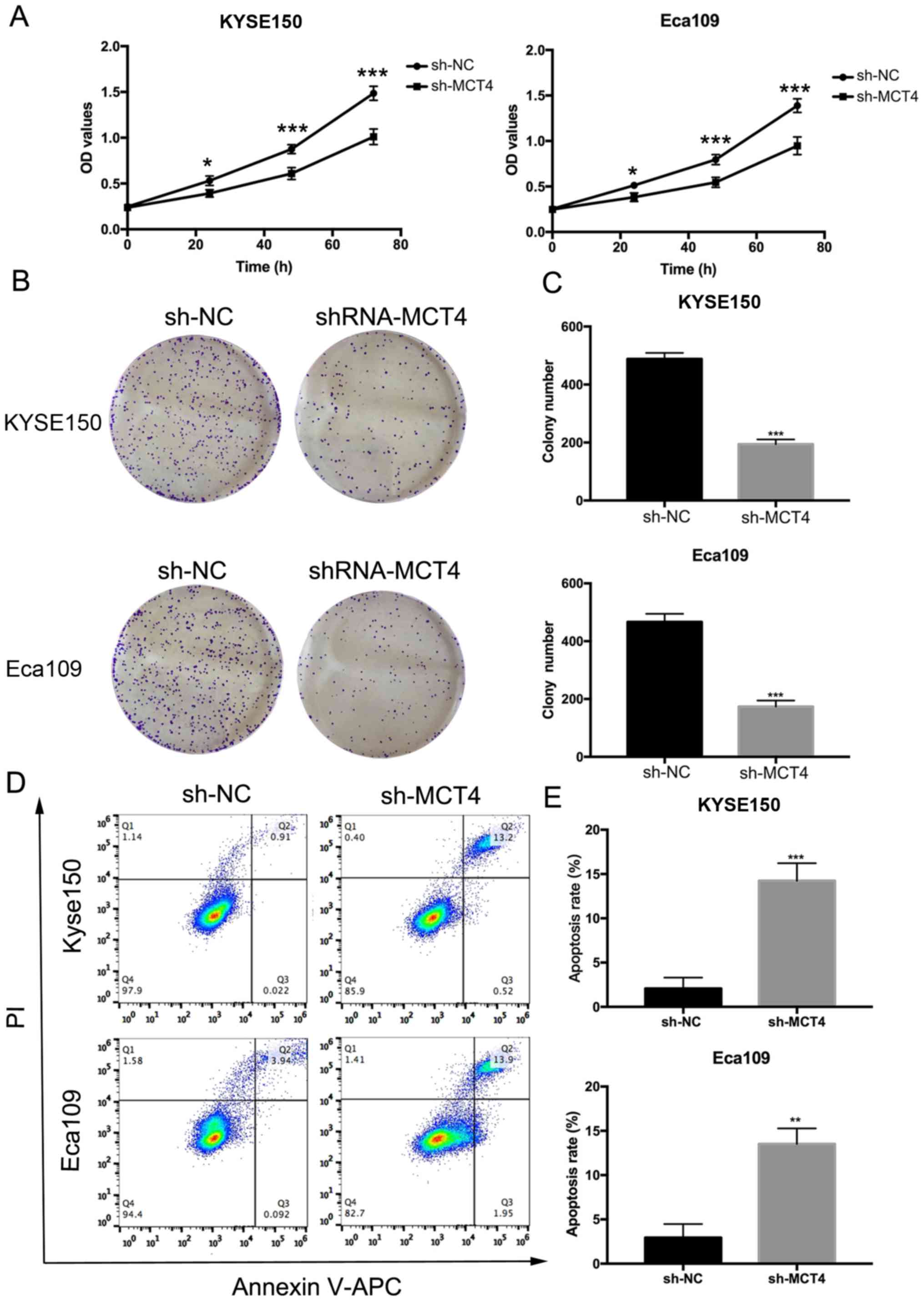
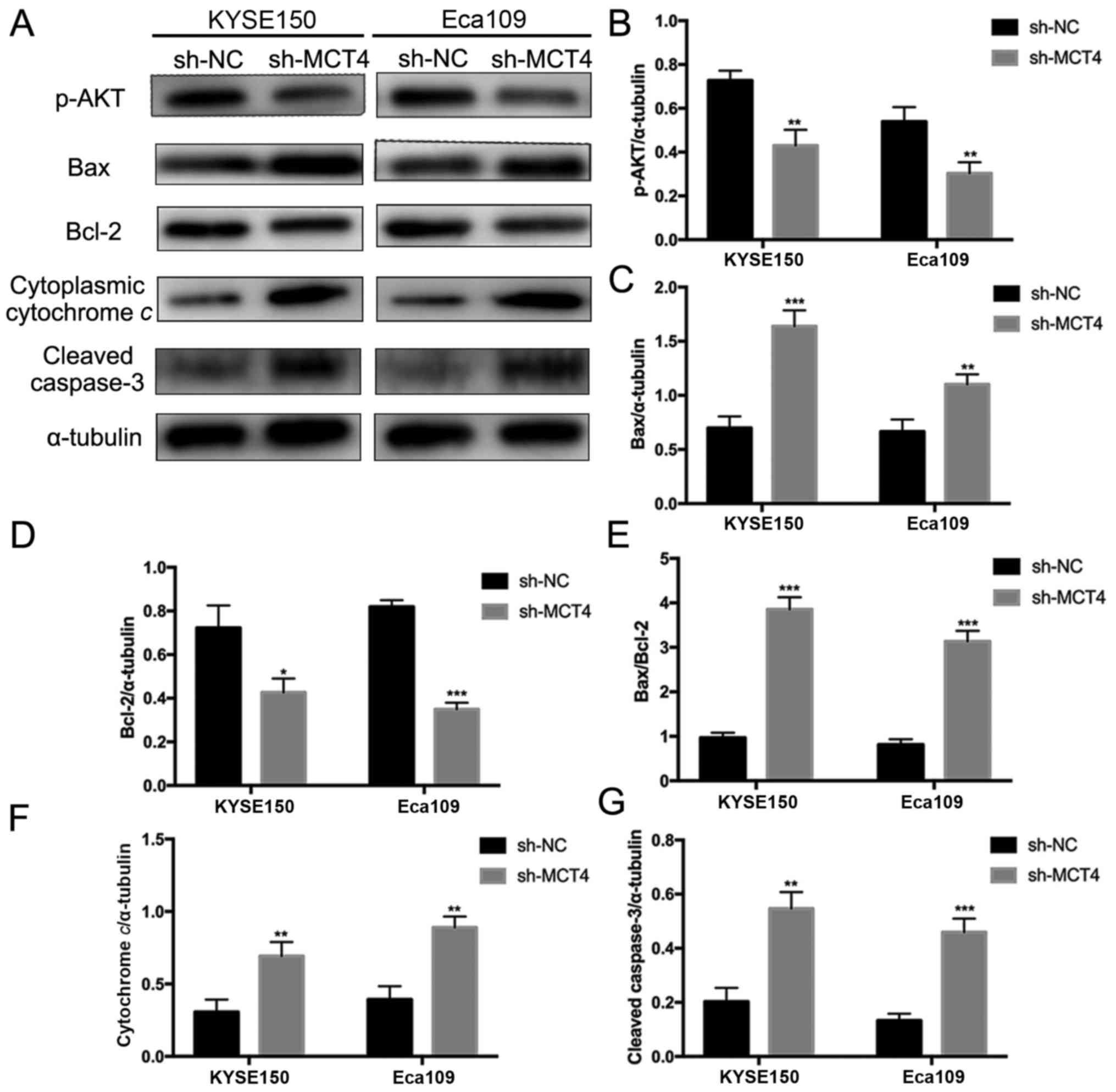
Monocarboxylate transporter 4 (MCT4) is a membrane transporter of monocarboxylates that has been reported to play an important role in tumorigenesis and progression in several solid tumor types. The present study aimed to investigate its clinical significance in esophageal squamous cell carcinoma (ESCC). After obtaining and analyzing MCT4 mRNA expression data from The Cancer Genome Atlas (TCGA) database, the prognostic potential of MCT4 was evaluated by IHC analysis. The effect of the knockdown of MCT4 by shRNA was also evaluated using Cell Counting Kit-8 (CCK-8) and clonogenic assays, in order to determine whether MCT4 inhibition affected the proliferation and survival ability of ESCC cells. Flow cytometric analysis was used to evaluate apoptosis. Western blot analysis was performed to detect the expression levels of p-Akt, Bax, Bcl-2, cytoplasmic cytochrome c and cleaved caspase-3. MCT4 expression was associated with T stage (P=0.001), N stage (P=0.020) and formalin‑fixed and paraffin-embedded (TNM) stage (P=0.042). Kaplan-Meier survival analysis indicated that patients in the high-MCT4 group had a lower overall survival (OS) rate (P=0.001) and progression-free survival (PFS) rate (P=0.003). The univariate Cox regression analysis and multivariate Cox regression analysis results indicated that MCT4 is an independent predictor of OS (P=0.001 and 0.014) and PFS (P=0.004 and 0.046). Downregulation of MCT4 inhibited cell proliferation and increased apoptosis in vitro. The proliferation rate and clone numbers were decreased and apoptotic rates were increased in the sh-MCT4 groups (all P<0.05). Furthermore, MCT4 knockdown reduced the activation of Akt and increased Bax/Bcl-2 ratios, cytochrome c release and caspase-3 cleavage (all P<0.05). Consequently, MCT4 could serve as a promising biomarker for ESCC to identify patients with poor prognosis.
View Figures

Figure 1

Figure 2

Figure 3

Figure 4

Figure 5

View References

1 

Napier KJ, Scheerer M and Misra S: Esophageal cancer: A Review of epidemiology, pathogenesis, staging workup and treatment modalities. World J Gastrointest Oncol. 6:112–120. 2014. View Article : Google Scholar : PubMed/NCBI

2 

Abnet CC, Arnold M and Wei WQ: Epidemiology of esophageal squamous cell carcinoma. Gastroenterology. 154:360–373. 2018. View Article : Google Scholar : PubMed/NCBI

3 

Mandard AM, Hainaut P and Hollstein M: Genetic steps in the development of squamous cell carcinoma of the esophagus. Mutat Res. 462:335–342. 2000. View Article : Google Scholar : PubMed/NCBI

4 

Ohashi S, Miyamoto S, Kikuchi O, Goto T, Amanuma Y and Muto M: Recent advances from basic and clinical studies of esophageal squamous cell carcinoma. Gastroenterology. 149:1700–1715. 2015. View Article : Google Scholar : PubMed/NCBI

5 

Halestrap AP and Price NT: The proton-linked monocarboxylate transporter (MCT) family: Structure, function and regulation. Biochem J. 343:281–299. 1999. View Article : Google Scholar : PubMed/NCBI

6 

Halestrap AP and Wilson MC: The monocarboxylate transporter family - role and regulation. IUBMB Life. 64:109–119. 2012. View Article : Google Scholar : PubMed/NCBI

7 

Juel C and Halestrap AP: Lactate transport in skeletal muscle - role and regulation of the monocarboxylate transporter. J Physiol. 517:633–642. 1999. View Article : Google Scholar : PubMed/NCBI

8 

Bonen A: The expression of lactate transporters (MCT1 and MCT4) in heart and muscle. Eur J Appl Physiol. 86:6–11. 2001. View Article : Google Scholar : PubMed/NCBI

9 

Bergersen L, Rafiki A and Ottersen OP: Immunogold cytochemistry identifies specialized membrane domains for monocarboxylate transport in the central nervous system. Neurochem Res. 27:89–96. 2002. View Article : Google Scholar : PubMed/NCBI

10 

Lunt SY and Vander Heiden MG: Aerobic glycolysis: Meeting the metabolic requirements of cell proliferation. Annu Rev Cell Dev Biol. 27:441–464. 2011. View Article : Google Scholar : PubMed/NCBI

11 

Doyen J, Trastour C, Ettore F, Peyrottes I, Toussant N, Gal J, Ilc K, Roux D, Parks SK, Ferrero JM, et al: Expression of the hypoxia-inducible monocarboxylate transporter MCT4 is increased in triple negative breast cancer and correlates independently with clinical outcome. Biochem Biophys Res Commun. 451:54–61. 2014. View Article : Google Scholar : PubMed/NCBI

12 

Kwon JE, Jung WH and Koo JS: The expression of metabolism-related proteins in phyllodes tumors. Tumour Biol. 34:115–124. 2013. View Article : Google Scholar : PubMed/NCBI

13 

Witkiewicz AK, Whitaker-Menezes D, Dasgupta A, Philp NJ, Lin Z, Gandara R, Sneddon S, Martinez-Outschoorn UE, Sotgia F and Lisanti MP: Using the ‘reverse Warburg effect’ to identify high-risk breast cancer patients: Stromal MCT4 predicts poor clinical outcome in triple-negative breast cancers. Cell Cycle. 11:1108–1117. 2012. View Article : Google Scholar : PubMed/NCBI

14 

Gao HJ, Zhao MC, Zhang YJ, Zhou DS, Xu L, Li GB, Chen MS and Liu J: Monocarboxylate transporter 4 predicts poor prognosis in hepatocellular carcinoma and is associated with cell proliferation and migration. J Cancer Res Clin Oncol. 141:1151–1162. 2015. View Article : Google Scholar : PubMed/NCBI

15 

Ohno A, Yorita K, Haruyama Y, Kondo K, Kato A, Ohtomo T, Kawaguchi M, Marutuska K, Chijiiwa K and Kataoka H: Aberrant expression of monocarboxylate transporter 4 in tumour cells predicts an unfavourable outcome in patients with hepatocellular carcinoma. Liver Int. 34:942–952. 2014. View Article : Google Scholar : PubMed/NCBI

16 

Baek G, Tse YF, Hu Z, Cox D, Buboltz N, McCue P, Yeo CJ, White MA, DeBerardinis RJ, Knudsen ES, et al: MCT4 defines a glycolytic subtype of pancreatic cancer with poor prognosis and unique metabolic dependencies. Cell Reports. 9:2233–2249. 2014. View Article : Google Scholar : PubMed/NCBI

17 

Nakayama Y, Torigoe T, Inoue Y, Minagawa N, Izumi H, Kohno K and Yamaguchi K: Prognostic significance of monocarboxylate transporter 4 expression in patients with colorectal cancer. Exp Ther Med. 3:25–30. 2012. View Article : Google Scholar : PubMed/NCBI

18 

Zhu J, Wu YN, Zhang W, Zhang XM, Ding X, Li HQ, Geng M, Xie ZQ and Wu HM: Monocarboxylate transporter 4 facilitates cell proliferation and migration and is associated with poor prognosis in oral squamous cell carcinoma patients. PLoS One. 9:e879042014. View Article : Google Scholar : PubMed/NCBI

19 

Zhao Z, Han F, He Y, Yang S, Hua L, Wu J and Zhan W: Stromal-epithelial metabolic coupling in gastric cancer: Stromal MCT4 and mitochondrial TOMM20 as poor prognostic factors. Eur J Surg Oncol. 40:1361–1368. 2014. View Article : Google Scholar : PubMed/NCBI

20 

Vander Heiden MG, Cantley LC and Thompson CB: Understanding the Warburg effect: The metabolic requirements of cell proliferation. Science. 324:1029–1033. 2009. View Article : Google Scholar : PubMed/NCBI

21 

Shlomi T, Benyamini T, Gottlieb E, Sharan R and Ruppin E: Genome-scale metabolic modeling elucidates the role of proliferative adaptation in causing the Warburg effect. PLOS Comput Biol. 7:e10020182011. View Article : Google Scholar : PubMed/NCBI

22 

Gatenby RA and Gillies RJ: Why do cancers have high aerobic glycolysis? Nat Rev Cancer. 4:891–899. 2004. View Article : Google Scholar : PubMed/NCBI

23 

Dimmer KS, Friedrich B, Lang F, Deitmer JW and Bröer S: The low-affinity monocarboxylate transporter MCT4 is adapted to the export of lactate in highly glycolytic cells. Biochem J. 350:219–227. 2000. View Article : Google Scholar : PubMed/NCBI

24 

Cairns RA, Harris IS and Mak TW: Regulation of cancer cell metabolism. Nat Rev Cancer. 11:85–95. 2011. View Article : Google Scholar : PubMed/NCBI

25 

Parks SK, Chiche J and Pouyssegur J: pH control mechanisms of tumor survival and growth. J Cell Physiol. 226:299–308. 2011. View Article : Google Scholar : PubMed/NCBI

26 

Blanker MH, Norg RJ and van der Heide WK: A new approach to patients with lower urinary tract symptoms. Br J Gen Pract. 62:344–345. 2012. View Article : Google Scholar : PubMed/NCBI

27 

Manning BD and Cantley LC: AKT/PKB signaling: Navigating downstream. Cell. 129:1261–1274. 2007. View Article : Google Scholar : PubMed/NCBI

28 

Youle RJ and Strasser A: The BCL-2 protein family: Opposing activities that mediate cell death. Nat Rev Mol Cell Biol. 9:47–59. 2008. View Article : Google Scholar : PubMed/NCBI

29 

Cory S, Huang DC and Adams JM: The Bcl-2 family: Roles in cell survival and oncogenesis. Oncogene. 22:8590–8607. 2003. View Article : Google Scholar : PubMed/NCBI

30 

Oltvai ZN, Milliman CL and Korsmeyer SJ: Bcl-2 heterodimerizes in vivo with a conserved homolog, Bax, that accelerates programmed cell death. Cell. 74:609–619. 1993. View Article : Google Scholar : PubMed/NCBI

31 

Riedl SJ and Salvesen GS: The apoptosome: Signalling platform of cell death. Nat Rev Mol Cell Biol. 8:405–413. 2007. View Article : Google Scholar : PubMed/NCBI

32 

Fan TJ, Han LH, Cong RS and Liang J: Caspase family proteases and apoptosis. Acta Biochim Biophys Sin (Shanghai). 37:719–727. 2005. View Article : Google Scholar : PubMed/NCBI

33 

Hsieh FY and Lavori PW: Sample-size calculations for the Cox proportional hazards regression model with nonbinary covariates. Control Clin Trials. 21:552–560. 2000. View Article : Google Scholar : PubMed/NCBI

34 

Gerlinger M, Santos CR, Spencer-Dene B, Martinez P, Endesfelder D, Burrell RA, Vetter M, Jiang M, Saunders RE, Kelly G, et al: Genome-wide RNA interference analysis of renal carcinoma survival regulators identifies MCT4 as a Warburg effect metabolic target. J Pathol. 227:146–156. 2012. View Article : Google Scholar : PubMed/NCBI

Related Articles

  • Abstract
  • View
  • Download
  • Twitter
Copy and paste a formatted citation
Spandidos Publications style
Cheng B, Chen X, Li Y, Huang X and Yu J: Prognostic value of monocarboxylate transporter 4 in patients with esophageal squamous cell carcinoma. Oncol Rep 40: 2906-2915, 2018.
APA
Cheng, B., Chen, X., Li, Y., Huang, X., & Yu, J. (2018). Prognostic value of monocarboxylate transporter 4 in patients with esophageal squamous cell carcinoma. Oncology Reports, 40, 2906-2915. https://doi.org/10.3892/or.2018.6706
MLA
Cheng, B., Chen, X., Li, Y., Huang, X., Yu, J."Prognostic value of monocarboxylate transporter 4 in patients with esophageal squamous cell carcinoma". Oncology Reports 40.5 (2018): 2906-2915.
Chicago
Cheng, B., Chen, X., Li, Y., Huang, X., Yu, J."Prognostic value of monocarboxylate transporter 4 in patients with esophageal squamous cell carcinoma". Oncology Reports 40, no. 5 (2018): 2906-2915. https://doi.org/10.3892/or.2018.6706
Copy and paste a formatted citation
x
Spandidos Publications style
Cheng B, Chen X, Li Y, Huang X and Yu J: Prognostic value of monocarboxylate transporter 4 in patients with esophageal squamous cell carcinoma. Oncol Rep 40: 2906-2915, 2018.
APA
Cheng, B., Chen, X., Li, Y., Huang, X., & Yu, J. (2018). Prognostic value of monocarboxylate transporter 4 in patients with esophageal squamous cell carcinoma. Oncology Reports, 40, 2906-2915. https://doi.org/10.3892/or.2018.6706
MLA
Cheng, B., Chen, X., Li, Y., Huang, X., Yu, J."Prognostic value of monocarboxylate transporter 4 in patients with esophageal squamous cell carcinoma". Oncology Reports 40.5 (2018): 2906-2915.
Chicago
Cheng, B., Chen, X., Li, Y., Huang, X., Yu, J."Prognostic value of monocarboxylate transporter 4 in patients with esophageal squamous cell carcinoma". Oncology Reports 40, no. 5 (2018): 2906-2915. https://doi.org/10.3892/or.2018.6706
Follow us
  • Twitter
  • LinkedIn
  • Facebook
About
  • Spandidos Publications
  • Careers
  • Cookie Policy
  • Privacy Policy
How can we help?
  • Help
  • Live Chat
  • Contact
  • Email to our Support Team