Spandidos Publications Logo
  • About
    • About Spandidos
    • Aims and Scopes
    • Abstracting and Indexing
    • Editorial Policies
    • Reprints and Permissions
    • Job Opportunities
    • Terms and Conditions
    • Contact
  • Journals
    • All Journals
    • Oncology Letters
      • Oncology Letters
      • Information for Authors
      • Editorial Policies
      • Editorial Board
      • Aims and Scope
      • Abstracting and Indexing
      • Bibliographic Information
      • Archive
    • International Journal of Oncology
      • International Journal of Oncology
      • Information for Authors
      • Editorial Policies
      • Editorial Board
      • Aims and Scope
      • Abstracting and Indexing
      • Bibliographic Information
      • Archive
    • Molecular and Clinical Oncology
      • Molecular and Clinical Oncology
      • Information for Authors
      • Editorial Policies
      • Editorial Board
      • Aims and Scope
      • Abstracting and Indexing
      • Bibliographic Information
      • Archive
    • Experimental and Therapeutic Medicine
      • Experimental and Therapeutic Medicine
      • Information for Authors
      • Editorial Policies
      • Editorial Board
      • Aims and Scope
      • Abstracting and Indexing
      • Bibliographic Information
      • Archive
    • International Journal of Molecular Medicine
      • International Journal of Molecular Medicine
      • Information for Authors
      • Editorial Policies
      • Editorial Board
      • Aims and Scope
      • Abstracting and Indexing
      • Bibliographic Information
      • Archive
    • Biomedical Reports
      • Biomedical Reports
      • Information for Authors
      • Editorial Policies
      • Editorial Board
      • Aims and Scope
      • Abstracting and Indexing
      • Bibliographic Information
      • Archive
    • Oncology Reports
      • Oncology Reports
      • Information for Authors
      • Editorial Policies
      • Editorial Board
      • Aims and Scope
      • Abstracting and Indexing
      • Bibliographic Information
      • Archive
    • Molecular Medicine Reports
      • Molecular Medicine Reports
      • Information for Authors
      • Editorial Policies
      • Editorial Board
      • Aims and Scope
      • Abstracting and Indexing
      • Bibliographic Information
      • Archive
    • World Academy of Sciences Journal
      • World Academy of Sciences Journal
      • Information for Authors
      • Editorial Policies
      • Editorial Board
      • Aims and Scope
      • Abstracting and Indexing
      • Bibliographic Information
      • Archive
    • International Journal of Functional Nutrition
      • International Journal of Functional Nutrition
      • Information for Authors
      • Editorial Policies
      • Editorial Board
      • Aims and Scope
      • Abstracting and Indexing
      • Bibliographic Information
      • Archive
    • International Journal of Epigenetics
      • International Journal of Epigenetics
      • Information for Authors
      • Editorial Policies
      • Editorial Board
      • Aims and Scope
      • Abstracting and Indexing
      • Bibliographic Information
      • Archive
    • Medicine International
      • Medicine International
      • Information for Authors
      • Editorial Policies
      • Editorial Board
      • Aims and Scope
      • Abstracting and Indexing
      • Bibliographic Information
      • Archive
  • Articles
  • Information
    • Information for Authors
    • Information for Reviewers
    • Information for Librarians
    • Information for Advertisers
    • Conferences
  • Language Editing
Spandidos Publications Logo
  • About
    • About Spandidos
    • Aims and Scopes
    • Abstracting and Indexing
    • Editorial Policies
    • Reprints and Permissions
    • Job Opportunities
    • Terms and Conditions
    • Contact
  • Journals
    • All Journals
    • Biomedical Reports
      • Information for Authors
      • Editorial Policies
      • Editorial Board
      • Aims and Scope
      • Abstracting and Indexing
      • Bibliographic Information
      • Archive
    • Experimental and Therapeutic Medicine
      • Information for Authors
      • Editorial Policies
      • Editorial Board
      • Aims and Scope
      • Abstracting and Indexing
      • Bibliographic Information
      • Archive
    • International Journal of Epigenetics
      • Information for Authors
      • Editorial Policies
      • Editorial Board
      • Aims and Scope
      • Abstracting and Indexing
      • Bibliographic Information
      • Archive
    • International Journal of Functional Nutrition
      • Information for Authors
      • Editorial Policies
      • Editorial Board
      • Aims and Scope
      • Abstracting and Indexing
      • Bibliographic Information
      • Archive
    • International Journal of Molecular Medicine
      • Information for Authors
      • Editorial Policies
      • Editorial Board
      • Aims and Scope
      • Abstracting and Indexing
      • Bibliographic Information
      • Archive
    • International Journal of Oncology
      • Information for Authors
      • Editorial Policies
      • Editorial Board
      • Aims and Scope
      • Abstracting and Indexing
      • Bibliographic Information
      • Archive
    • Medicine International
      • Information for Authors
      • Editorial Policies
      • Editorial Board
      • Aims and Scope
      • Abstracting and Indexing
      • Bibliographic Information
      • Archive
    • Molecular and Clinical Oncology
      • Information for Authors
      • Editorial Policies
      • Editorial Board
      • Aims and Scope
      • Abstracting and Indexing
      • Bibliographic Information
      • Archive
    • Molecular Medicine Reports
      • Information for Authors
      • Editorial Policies
      • Editorial Board
      • Aims and Scope
      • Abstracting and Indexing
      • Bibliographic Information
      • Archive
    • Oncology Letters
      • Information for Authors
      • Editorial Policies
      • Editorial Board
      • Aims and Scope
      • Abstracting and Indexing
      • Bibliographic Information
      • Archive
    • Oncology Reports
      • Information for Authors
      • Editorial Policies
      • Editorial Board
      • Aims and Scope
      • Abstracting and Indexing
      • Bibliographic Information
      • Archive
    • World Academy of Sciences Journal
      • Information for Authors
      • Editorial Policies
      • Editorial Board
      • Aims and Scope
      • Abstracting and Indexing
      • Bibliographic Information
      • Archive
  • Articles
  • Information
    • For Authors
    • For Reviewers
    • For Librarians
    • For Advertisers
    • Conferences
  • Language Editing
Login Register Submit
  • This site uses cookies
  • You can change your cookie settings at any time by following the instructions in our Cookie Policy. To find out more, you may read our Privacy Policy.

    I agree
Search articles by DOI, keyword, author or affiliation
Search
Advanced Search
presentation
Oncology Reports
Join Editorial Board Propose a Special Issue
Print ISSN: 1021-335X Online ISSN: 1791-2431
Journal Cover
January-2019 Volume 41 Issue 1

Full Size Image

Sign up for eToc alerts
Recommend to Library

Journals

International Journal of Molecular Medicine

International Journal of Molecular Medicine

International Journal of Molecular Medicine is an international journal devoted to molecular mechanisms of human disease.

International Journal of Oncology

International Journal of Oncology

International Journal of Oncology is an international journal devoted to oncology research and cancer treatment.

Molecular Medicine Reports

Molecular Medicine Reports

Covers molecular medicine topics such as pharmacology, pathology, genetics, neuroscience, infectious diseases, molecular cardiology, and molecular surgery.

Oncology Reports

Oncology Reports

Oncology Reports is an international journal devoted to fundamental and applied research in Oncology.

Experimental and Therapeutic Medicine

Experimental and Therapeutic Medicine

Experimental and Therapeutic Medicine is an international journal devoted to laboratory and clinical medicine.

Oncology Letters

Oncology Letters

Oncology Letters is an international journal devoted to Experimental and Clinical Oncology.

Biomedical Reports

Biomedical Reports

Explores a wide range of biological and medical fields, including pharmacology, genetics, microbiology, neuroscience, and molecular cardiology.

Molecular and Clinical Oncology

Molecular and Clinical Oncology

International journal addressing all aspects of oncology research, from tumorigenesis and oncogenes to chemotherapy and metastasis.

World Academy of Sciences Journal

World Academy of Sciences Journal

Multidisciplinary open-access journal spanning biochemistry, genetics, neuroscience, environmental health, and synthetic biology.

International Journal of Functional Nutrition

International Journal of Functional Nutrition

Open-access journal combining biochemistry, pharmacology, immunology, and genetics to advance health through functional nutrition.

International Journal of Epigenetics

International Journal of Epigenetics

Publishes open-access research on using epigenetics to advance understanding and treatment of human disease.

Medicine International

Medicine International

An International Open Access Journal Devoted to General Medicine.

Journal Cover
January-2019 Volume 41 Issue 1

Full Size Image

Sign up for eToc alerts
Recommend to Library

  • Article
  • Citations
    • Cite This Article
    • Download Citation
    • Create Citation Alert
    • Remove Citation Alert
    • Cited By
  • Similar Articles
    • Related Articles (in Spandidos Publications)
    • Similar Articles (Google Scholar)
    • Similar Articles (PubMed)
  • Download PDF
  • Download XML
  • View XML
Article

Malignant gliomas can be converted to non‑proliferating glial cells by treatment with a combination of small molecules

  • Authors:
    • Jinsoo Oh
    • Yongbo Kim
    • Daye Baek
    • Yoon Ha
  • View Affiliations / Copyright

    Affiliations: Department of Neurosurgery, Spine and Spinal Cord Institute, College of Medicine, Yonsei University, Seoul 03722, Republic of Korea
  • Pages: 361-368
    |
    Published online on: October 25, 2018
       https://doi.org/10.3892/or.2018.6824
  • Expand metrics +
Metrics: Total Views: 0 (Spandidos Publications: | PMC Statistics: )
Metrics: Total PDF Downloads: 0 (Spandidos Publications: | PMC Statistics: )
Cited By (CrossRef): 0 citations Loading Articles...

This article is mentioned in:


Abstract

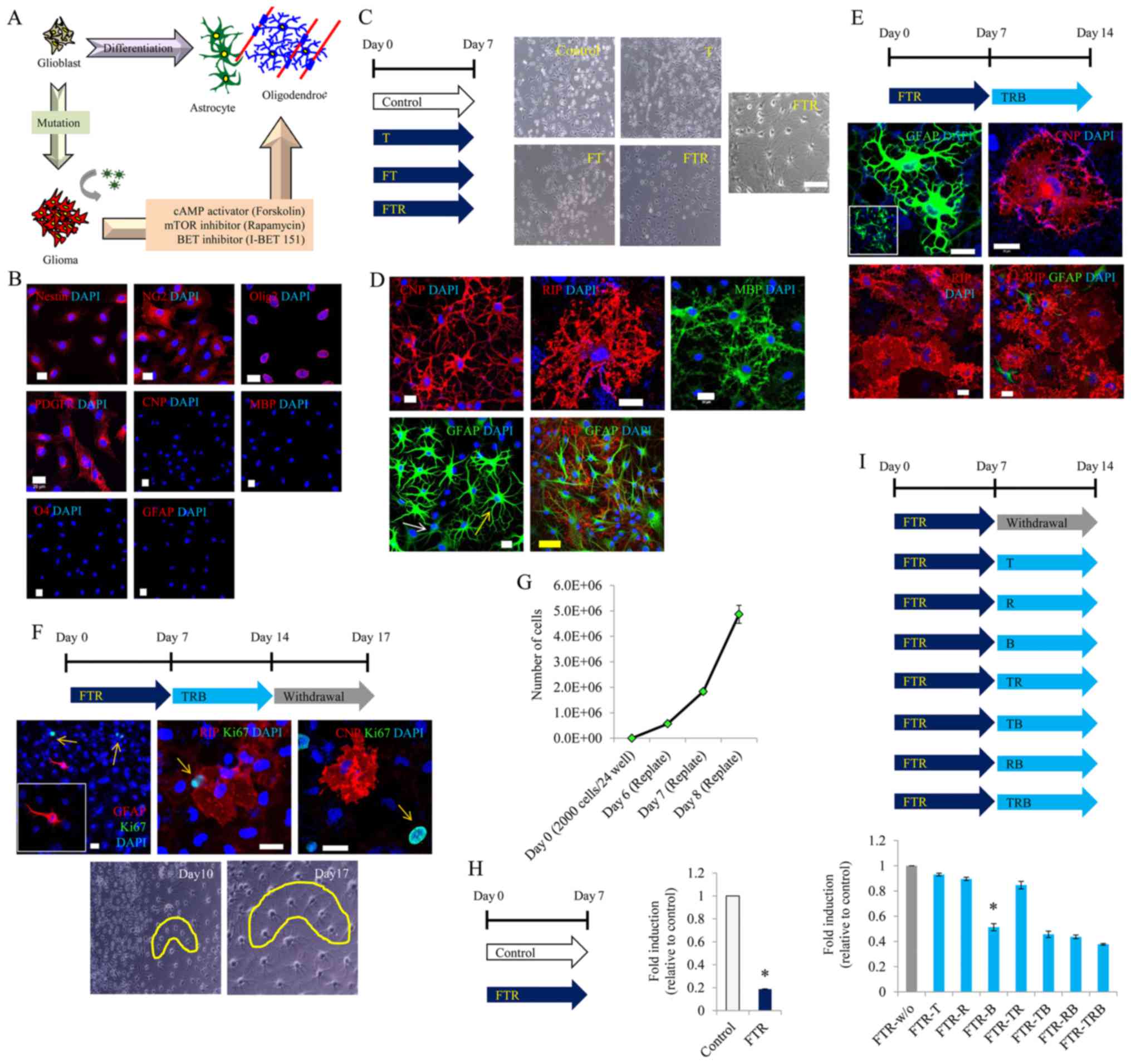
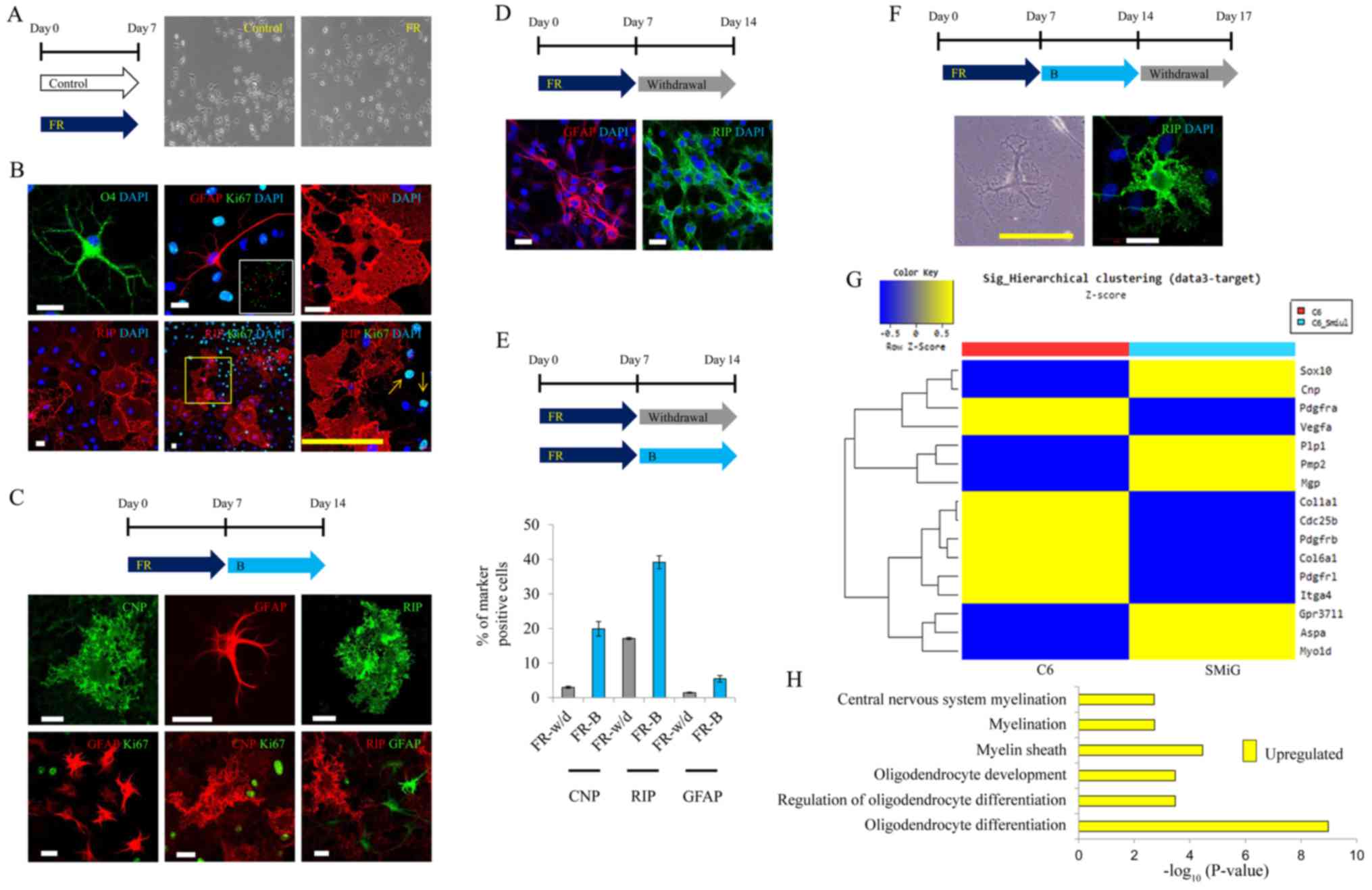
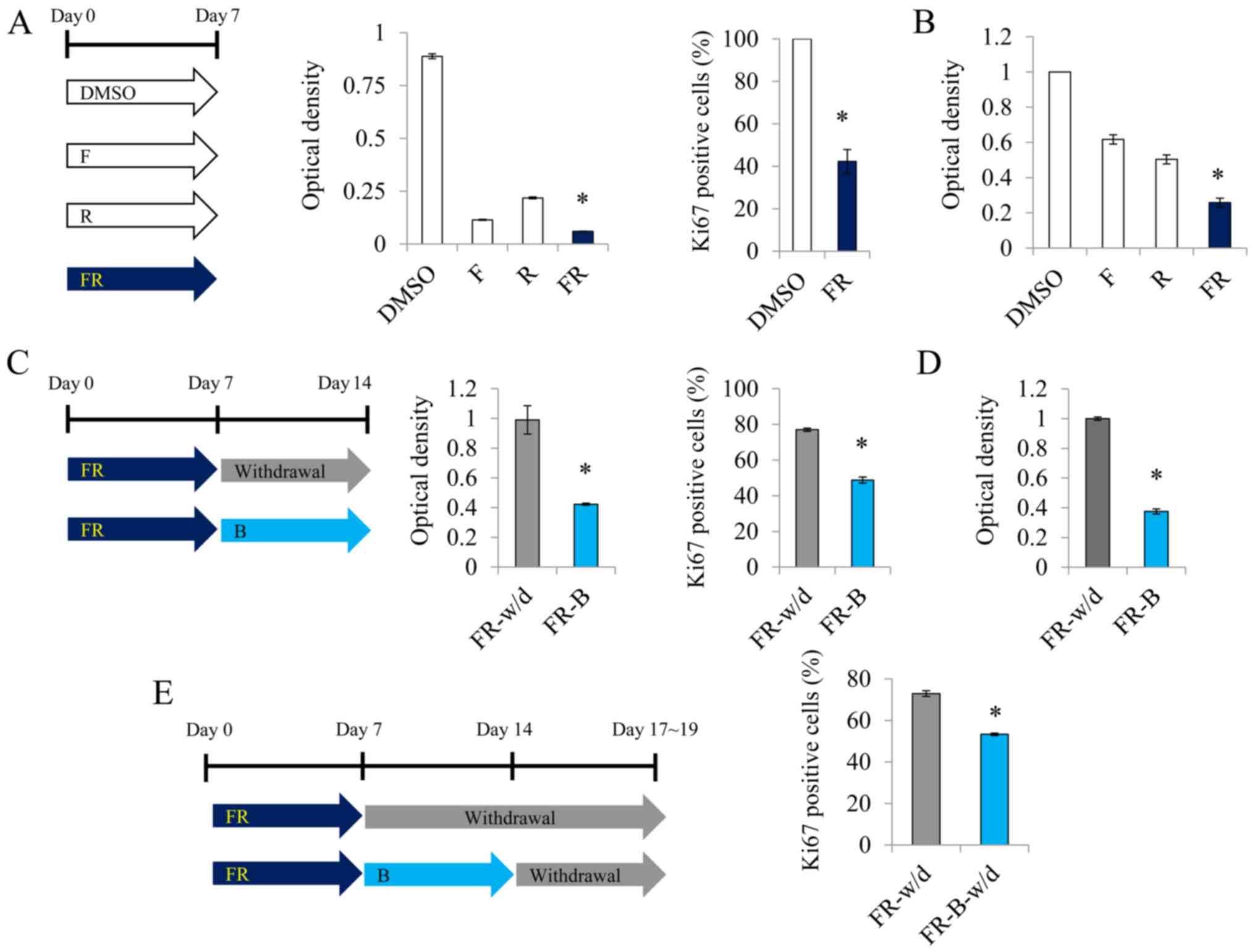
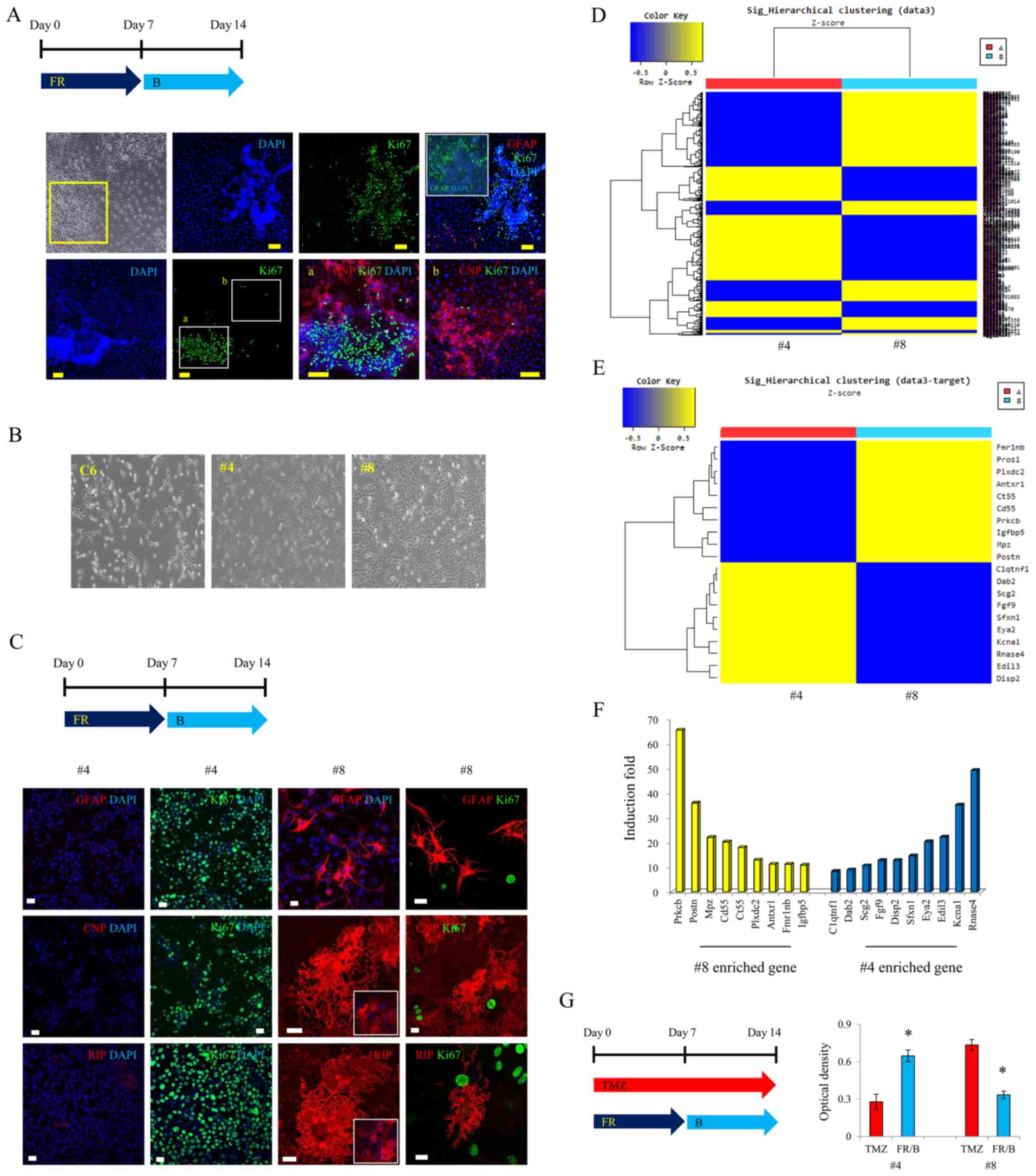
Gliomas, the most highly malignant central nervous system tumors, are associated with an extremely poor patient survival rate. Given that gliomas are derived from mutations in glial precursor cells, a considerable number of them strongly react with glial precursor cell‑specific markers. Thus, we investigated whether malignant gliomas can be converted to glial cells through the regulation of endogenous gene expression implicated in glial precursor cells. In the present study, we used three small‑molecule compounds, [cyclic adenosine monophosphate (cAMP) enhancer, a mammalian target of rapamycin (mTOR) inhibitor, and a bromodomain and extra‑terminal motif (BET) inhibitor] for glial reprogramming. Small‑molecule‑induced gliomas (SMiGs) were not only transformed into exhibiting a glial‑specific morphology, but also showed positive reactions with glial‑specific markers such as glial fibrillary acidic protein (GFAP), 2',3'‑cyclic nucleotide 3'‑phosphohydrolase (CNP) and anti‑oligodendrocyte (RIP). A microarray analysis indicated that SMiGs exhibited a marked increase in specific gene levels, whereas that of a malignant cancer‑specific gene was greatly decreased. Moreover, proliferation of the cells was markedly suppressed after the conversion of malignant glioma cells into glial cells. Our findings confirmed that malignant gliomas can be reprogrammed to non‑proliferating glial cells, using a combination of small molecules, and their proliferation can be regulated by their differentiation. We suggest that our small‑molecule combination (with forskolin, rapamycin and I‑BET151) may be the next generation of anticancer agents that act by reprogramming malignant gliomas to differentiate into glial cells.
View Figures

Figure 1

Figure 2

Figure 3

Figure 4

View References

1 

Thier M, Wörsdörfer P, Lakes YB, Gorris R, Herms S, Opitz T, Seiferling D, Quandel T, Hoffmann P, Nöthen MM, et al: Direct conversion of fibroblasts into stably expandable neural stem cells. Cell Stem Cell. 10:473–479. 2012. View Article : Google Scholar : PubMed/NCBI

2 

Tian E, Sun G, Sun G, Chao J, Ye P, Warden C, Riggs AD and Shi Y: Small-molecule-based lineage reprogramming creates functional astrocytes. Cell Rep. 16:781–792. 2016. View Article : Google Scholar : PubMed/NCBI

3 

Zhang M, Lin YH, Sun YJ, Zhu S, Zheng J, Liu K, Cao N, Li K, Huang Y and Ding S: Pharmacological reprogramming of fibroblasts into neural stem cells by signaling-directed transcriptional activation. Cell Stem Cell. 18:653–667. 2016. View Article : Google Scholar : PubMed/NCBI

4 

Caiazzo M, Giannelli S, Valente P, Lignani G, Carissimo A, Sessa A, Colasante G, Bartolomeo R, Massimino L, Ferroni S, et al: Direct conversion of fibroblasts into functional astrocytes by defined transcription factors. Stem Cell Reports. 4:pp. 25–36. 2015, View Article : Google Scholar : PubMed/NCBI

5 

Cheng L, Hu W, Qiu B, Zhao J, Yu Y, Guan W, Wang M, Yang W and Pei G: Generation of neural progenitor cells by chemical cocktails and hypoxia. Cell Res. 25:645–646. 2015. View Article : Google Scholar : PubMed/NCBI

6 

Xue Y, Ouyang K, Huang J, Zhou Y, Ouyang H, Li H, Wang G, Wu Q, Wei C, Bi Y, et al: Direct conversion of fibroblasts to neurons by reprogramming PTB-regulated microRNA circuits. Cell. 152:82–96. 2013. View Article : Google Scholar : PubMed/NCBI

7 

Ladewig J, Mertens J, Kesavan J, Doerr J, Poppe D, Glaue F, Herms S, Wernet P, Kögler G, Müller FJ, et al: Small molecules enable highly efficient neuronal conversion of human fibroblasts. Nat Methods. 9:575–578. 2012. View Article : Google Scholar : PubMed/NCBI

8 

Pang ZP, Yang N, Vierbuchen T, Ostermeier A, Fuentes DR, Yang TQ, Citri A, Sebastiano V, Marro S, Südhof TC and Wernig M: Induction of human neuronal cells by defined transcription factors. Nature. 476:220–223. 2011. View Article : Google Scholar : PubMed/NCBI

9 

Ambasudhan R, Talantova M, Coleman R, Yuan X, Zhu S, Lipton SA and Ding S: Direct reprogramming of adult human fibroblasts to functional neurons under defined conditions. Cell Stem Cell. 9:113–118. 2011. View Article : Google Scholar : PubMed/NCBI

10 

Su Z, Zang T, Liu ML, Wang LL, Niu W and Zhang CL: Reprogramming the fate of human glioma cells to impede brain tumor development. Cell Death Dis. 5:e14632014. View Article : Google Scholar : PubMed/NCBI

11 

Guichet PO, Bieche I, Teigell M, Serguera C, Rothhut B, Rigau V, Scamps F, Ripoll C, Vacher S, Taviaux S, et al: Cell death and neuronal differentiation of glioblastoma stem-like cells induced by neurogenic transcription factors. Glia. 61:225–239. 2013. View Article : Google Scholar : PubMed/NCBI

12 

Hu W, Qiu B, Guan W, Wang Q, Wang M, Li W, Gao L, Shen L, Huang Y, Xie G, et al: Direct conversion of normal and Alzheimer's disease human fibroblasts into neuronal cells by small molecules. Cell Stem Cell. 17:204–212. 2015. View Article : Google Scholar : PubMed/NCBI

13 

Li X, Zuo X, Jing J, Ma Y, Wang J, Liu D, Zhu J, Du X, Xiong L, Du Y, et al: Small-molecule-driven direct reprogramming of mouse fibroblasts into functional neurons. Cell Stem Cell. 17:195–203. 2015. View Article : Google Scholar : PubMed/NCBI

14 

Galvao RP, Kasina A, McNeill RS, Harbin JE, Foreman O, Verhaak RG, Nishiyama A, Miller CR and Zong H: Transformation of quiescent adult oligodendrocyte precursor cells into malignant glioma through a multistep reactivation process. Proc Natl Acad Sci USA. 111:E4214–E4223. 2014. View Article : Google Scholar : PubMed/NCBI

15 

Hayes J, Thygesen H, Droop A, Hughes TA, Westhead D, Lawler SE, Wurdak H and Short SC: Prognostic microRNAs in high-grade glioma reveal a link to oligodendrocyte precursor differentiation. Oncoscience. 2:252–262. 2014. View Article : Google Scholar : PubMed/NCBI

16 

Kim JB, Lee H, Araúzo-Bravo MJ, Hwang K, Nam D, Park MR, Zaehres H, Park KI and Lee SJ: Oct4-induced oligodendrocyte progenitor cells enhance functional recovery in spinal cord injury model. EMBO J. 34:2971–2983. 2015. View Article : Google Scholar : PubMed/NCBI

17 

Tyler WA, Gangoli N, Gokina P, Kim HA, Covey M, Levison SW and Wood TL: Activation of the mammalian target of rapamycin (mTOR) is essential for oligodendrocyte differentiation. J Neurosci. 29:6367–6378. 2009. View Article : Google Scholar : PubMed/NCBI

18 

Garnier JM, Sharp PP and Burns CJ: BET bromodomain inhibitors: A patent review. Expert Opin Ther Pat. 24:185–199. 2014. View Article : Google Scholar : PubMed/NCBI

19 

Shi J and Vakoc CR: The mechanisms behind the therapeutic activity of BET bromodomain inhibition. Mol Cell. 54:728–736. 2014. View Article : Google Scholar : PubMed/NCBI

20 

Gacias M, Gerona-Navarro G, Plotnikov AN, Zhang G, Zeng L, Kaur J, Moy G, Rusinova E, Rodriguez Y, Matikainen B, et al: Selective chemical modulation of gene transcription favors oligodendrocyte lineage progression. Chem Biol. 21:841–854. 2014. View Article : Google Scholar : PubMed/NCBI

21 

Meyer M, Reimand J, Lan X, Head R, Zhu X, Kushida M, Bayani J, Pressey JC, Lionel AC, Clarke ID, et al: Single cell-derived clonal analysis of human glioblastoma links functional and genomic heterogeneity. Proc Natl Acad Sci USA. 112:851–856. 2015. View Article : Google Scholar : PubMed/NCBI

22 

Tang Y, He W, Wei Y, Qu Z, Zeng J and Qin C: Screening key genes and pathways in glioma based on gene set enrichment analysis and meta-analysis. J Mol Neurosci. 50:324–332. 2013. View Article : Google Scholar : PubMed/NCBI

23 

Nanda A, Buckhaults P, Seaman S, Agrawal N, Boutin P, Shankara S, Nacht M, Teicher B, Stampfl J, Singh S, et al: Identification of a binding partner for the endothelial cell surface proteins TEM7 and TEM7R. Cancer Res. 64:8507–8511. 2004. View Article : Google Scholar : PubMed/NCBI

24 

Davies G, Rmali KA, Watkins G, Mansel RE, Mason MD and Jiang WG: Elevated levels of tumour endothelial marker-8 in human breast cancer and its clinical significance. Int J Oncol. 29:1311–1317. 2006.PubMed/NCBI

25 

Song MH, Kim YR, Lee JW, Lee CH and Lee SY: Cancer/testis antigen NY-SAR-35 enhances cell proliferation, migration, and invasion. Int J Oncol. 48:569–576. 2016. View Article : Google Scholar : PubMed/NCBI

26 

Tomiyoshi G, Nakanishi A, Takenaka K, Yoshida K and Miki Y: Novel BRCA2-interacting protein BJ-HCC-20A inhibits the induction of apoptosis in response to DNA damage. Cancer Sci. 99:747–754. 2008. View Article : Google Scholar : PubMed/NCBI

27 

Ikeda J, Morii E, Liu Y, Qiu Y, Nakamichi N, Jokoji R, Miyoshi Y, Noguchi S and Aozasa K: Prognostic significance of CD55 expression in breast cancer. Clin Cancer Res. 14:4780–4786. 2008. View Article : Google Scholar : PubMed/NCBI

28 

Park SY, Piao Y, Jeong KJ, Dong J and de Groot JF: Periostin (POSTN) regulates tumor resistance to antiangiogenic therapy in glioma models. Mol Cancer Ther. 15:2187–2197. 2016. View Article : Google Scholar : PubMed/NCBI

29 

Che Mat MF, Abdul Murad NA, Ibrahim K, Mohd Mokhtar N, Wan Ngah WZ, Harun R and Jamal R: Silencing of PROS1 induces apoptosis and inhibits migration and invasion of glioblastoma multiforme cells. Int J Oncol. 49:2359–2366. 2016. View Article : Google Scholar : PubMed/NCBI

30 

Annovazzi L, Mellai M, Caldera V, Valente G and Schiffer D: SOX2 expression and amplification in gliomas and glioma cell lines. Cancer Genomics Proteomics. 8:139–147. 2011.PubMed/NCBI

31 

Schmitz M, Temme A, Senner V, Ebner R, Schwind S, Stevanovic S, Wehner R, Schackert G, Schackert HK, Fussel M, et al: Identification of SOX2 as a novel glioma-associated antigen and potential target for T cell-based immunotherapy. Br J Cancer. 96:1293–1301. 2007. View Article : Google Scholar : PubMed/NCBI

32 

Phi JH, Park SH, Kim SK, Paek SH, Kim JH, Lee YJ, Cho BK, Park CK, Lee DH and Wang KC: Sox2 expression in brain tumors: A reflection of the neuroglial differentiation pathway. Am J Surg Pathol. 32:103–112. 2008. View Article : Google Scholar : PubMed/NCBI

33 

Wehler TC, Frerichs K, Graf C, Drescher D, Schimanski K, Biesterfeld S, Berger MR, Kanzler S, Junginger T, Galle PR, et al: PDGFRalpha/beta expression correlates with the metastatic behavior of human colorectal cancer: A possible rationale for a molecular targeting strategy. Oncol Rep. 19:697–704. 2008.PubMed/NCBI

34 

Heldin CH: Targeting the PDGF signaling pathway in tumor treatment. Cell Commun Signal. 11:972013. View Article : Google Scholar : PubMed/NCBI

35 

Golfinos JG, Norman SA, Coons SW, Norman RA, Ballecer C and Scheck AC: Expression of the genes encoding myelin basic protein and proteolipid protein in human malignant gliomas. Clin Cancer Res. 3:799–804. 1997.PubMed/NCBI

36 

Popko B, Pearl DK, Walker DM, Comas TC, Baerwald KD, Burger PC, Scheithauer BW and Yates AJ: Molecular markers that identify human astrocytomas and oligodendrogliomas. J Neuropathol Exp Neurol. 61:329–338. 2002. View Article : Google Scholar : PubMed/NCBI

37 

Nakada M, Kita D, Watanabe T, Hayashi Y, Teng L, Pyko IV and Hamada J: Aberrant signaling pathways in glioma. Cancers. 3:3242–3278. 2011. View Article : Google Scholar : PubMed/NCBI

38 

Motegi H, Kamoshima Y, Terasaka S, Kobayashi H and Houkin K: Type 1 collagen as a potential niche component for CD133-positive glioblastoma cells. Neuropathology. 34:378–385. 2014.PubMed/NCBI

Related Articles

  • Abstract
  • View
  • Download
  • Twitter
Copy and paste a formatted citation
Spandidos Publications style
Oh J, Kim Y, Baek D and Ha Y: Malignant gliomas can be converted to non‑proliferating glial cells by treatment with a combination of small molecules. Oncol Rep 41: 361-368, 2019.
APA
Oh, J., Kim, Y., Baek, D., & Ha, Y. (2019). Malignant gliomas can be converted to non‑proliferating glial cells by treatment with a combination of small molecules. Oncology Reports, 41, 361-368. https://doi.org/10.3892/or.2018.6824
MLA
Oh, J., Kim, Y., Baek, D., Ha, Y."Malignant gliomas can be converted to non‑proliferating glial cells by treatment with a combination of small molecules". Oncology Reports 41.1 (2019): 361-368.
Chicago
Oh, J., Kim, Y., Baek, D., Ha, Y."Malignant gliomas can be converted to non‑proliferating glial cells by treatment with a combination of small molecules". Oncology Reports 41, no. 1 (2019): 361-368. https://doi.org/10.3892/or.2018.6824
Copy and paste a formatted citation
x
Spandidos Publications style
Oh J, Kim Y, Baek D and Ha Y: Malignant gliomas can be converted to non‑proliferating glial cells by treatment with a combination of small molecules. Oncol Rep 41: 361-368, 2019.
APA
Oh, J., Kim, Y., Baek, D., & Ha, Y. (2019). Malignant gliomas can be converted to non‑proliferating glial cells by treatment with a combination of small molecules. Oncology Reports, 41, 361-368. https://doi.org/10.3892/or.2018.6824
MLA
Oh, J., Kim, Y., Baek, D., Ha, Y."Malignant gliomas can be converted to non‑proliferating glial cells by treatment with a combination of small molecules". Oncology Reports 41.1 (2019): 361-368.
Chicago
Oh, J., Kim, Y., Baek, D., Ha, Y."Malignant gliomas can be converted to non‑proliferating glial cells by treatment with a combination of small molecules". Oncology Reports 41, no. 1 (2019): 361-368. https://doi.org/10.3892/or.2018.6824
Follow us
  • Twitter
  • LinkedIn
  • Facebook
About
  • Spandidos Publications
  • Careers
  • Cookie Policy
  • Privacy Policy
How can we help?
  • Help
  • Live Chat
  • Contact
  • Email to our Support Team