Introduction
Head and neck tumors are major cancers threatening
human life, whose morbidity ranks sixth among all cancer types
(1). Laryngeal carcinoma is also
one of the most common head and neck tumors, with the morbidity
ranking second among all respiratory tract tumors (1). The most common subtype of laryngeal
carcinoma is squamous cell carcinoma, which accounts for about 95%
of all cases. Industrial development and increased air pollution
have resulted in the increasing morbidity of laryngeal carcinoma
(2). Research suggests an annual
rate of increase of 25% of the incidence of this tumor (2). Laryngeal carcinoma is commonly
diagnosed in middle-aged and elderly males. The global morbidity of
laryngeal carcinoma in males was estimated to be 5.1/100,000 in
2008, and the mortality in males is about 2.2/100,000 (3). New surgical methods, chemotherapeutics
and more advanced radiotherapy strategies have been applied for the
treatment of laryngeal carcinoma in the recent 30 years (3). However, according to the latest
research, the overall survival of laryngeal carcinoma patients has
not improved (4). Unfortunately,
the overall survival has shown a decreasing trend, which reaches
only approximately 50%. Moreover, the survival rate for advanced
laryngeal carcinoma is even as low as 30–40% (4).
Laryngeal carcinoma is one of the common tumors
concerning otorhinolaryngology head and neck surgery. Its genesis
and development are associated with aberrantly expressed microRNAs
(miRs or miRNAs) (5). Existing
research results have indicated the aberrant expression of multiple
miRNAs in laryngeal carcinoma tissues. Moreover, the number of
downregulated miRNAs is greater than that of upregulated ones
(5). miRNA-related research
suggests that, miRNAs will serve as novel molecular markers for
diagnosing laryngeal carcinoma, similar to other molecular markers
for laryngeal carcinoma (6). They
may aid in the early diagnosis, prediction of prognosis and
recurrence and follow-up of laryngeal carcinoma. In addition,
miRNAs are potential targets for laryngeal carcinoma treatment
(5). Notably, they present new
application prospects for designing drugs for the targeted
treatment of laryngeal carcinoma. Therefore, they will bring hope
to laryngeal carcinoma patients (5).
The PI3K/Akt pathway is an important growth factor
pathway in vivo. It can activate the anti-cell apoptosis
mechanism, glucose metabolism and protein synthesis (7), thus, promoting cell growth and
proliferation (8). Abnormality of
such a signal transduction pathway can lead to abnormal cell
proliferation and induce tumor growth. This is common in malignant
tumor tissues, such as human ovarian, breast, pancreatic, lung and
colon cancer. The PI3K/Akt pathway is verified to be involved in
the genesis and development of most tumors (9). Therefore, the PI3K/Akt pathway is
considered to be the primary pathway for cancer cell survival. It
is also named the anti-apoptosis pathway (9).
MTDH is also called stellate cell upregulated gene
1, 3D3 and lysine-rich CEACAM 1-related protein (10). It is a newly discovered oncogene.
Research indicates that MTDH is markedly upregulated in numerous
tumor cells and can activate multiple signaling pathways. These
cancer types include breast, prostate, esophageal, lung cancer,
melanoma and glioblastoma (10).
Thus, it participates in tumor growth and proliferation,
angiogenesis, invasion and metastasis and drug resistance.
Meanwhile, it is closely related to tumor progression (10).
PTEN is a tumor-suppressor gene with phosphatase
activity. The protein encoded by PTEN possesses the features and
functions of phosphoesterase (11).
Meanwhile, it shows extensive homology to cytoskeletal protein, and
is highly expressed in epithelial cells. PTEN expression product
can neutralize the protein tyrosine kinases (PTKs) and can inhibit
tumor cell growth. Moreover, it can regulate tumor cell invasion
and metastasis through interaction with local adhesion (11). The present study aimed to explore
the function and mechanism of miRNA-98 in hypopharyngeal
carcinoma.
Materials and methods
Clinical specimens
A total of 42 patients with hypopharyngeal carcinoma
(male=40 and female=42) and 12 healthy volunteers (male=6 and
female=6) were enrolled at The First Affiliated Hospital of Harbin
Medical University for participation in this study from May 2012 to
September 2012. The study protocol was approved by the Human
Research Ethics Committee of The First Affiliated Hospital of
Harbin Medical University, and all patients provided written
informed consent prior to participation in the study. Peripheral
blood was collected and centrifuged at 2,000 × g for 10 min at 4°C.
Serum was stored at −80°C.
qRT-PCR analysis
Total RNA was extracted from serum or cell samples
with TRIzol reagent (Thermo Fisher Scientific, Inc., Waltham, MA,
USA). RNA (1 µg) was reverse transcribed into cDNA using
SuperScript II reverse transcriptase (code DRR037A; Takara
Biotechnology Co., Ltd., Dalian, China). qRT-PCR was performed
using the 7500 Real-Time PCR system (Applied Biosystems, Mannheim,
Germany) at conditions of 95°C for 10 min; 40 cycles of
denaturation at 95°C for 30 sec, annealing at 58°C for 30 sec and
extension at 72°C for 70 sec. Primer sequences for RT-qPCR:
miRNA-98: F, 5′-GGGGTGAGGTAGTAAGTTGT-3′ and R,
5′-TGGGTGTCGTGGAGTC-3′; U6: F, 5′-CTCGCTTCGGCAGCACA-3′ and R,
5′-AACGCTTCACGAATTTGCGT-3′. Relative expression of the miRNA was
calculated using the comparative Ct method (12). The high expression of miRNA-98 in
patients with hypopharyngeal carcinoma was ≥0.4 of healthy
volunteers; low expression of miRNA-98 in patients with
hypopharyngeal carcinoma was <0.4 of healthy volunteers.
Gene expression profiling
Total RNA was reverse transcribed into cDNA and
hybridized to Affymetrix HG-U133 Plus 2.0 GeneChip arrays
(Affymetrix GeneChip; Affymetrix; Thermo Fisher Scientific, Inc.).
Data were analyzed through the use of the Database for Annotation,
Visualization and Integrated Discovery (DAVID Database; http://david.ncifcrf.gov/) and Qiagen's Ingenuity
Pathway Analysis (IPA; Qiagen, Redwood City, CA, USA).
Cell lines and culture conditions
The hypopharyngeal carcinoma cell line FaDu was
obtained from the Shanghai Cell Bank of the Chinese Academy of
Sciences. The cells were cultured in Dulbecco's modified Eagle's
medium (DMEM, Thermo Fisher Scientific, Inc.) containing 10% fetal
calf serum (FCS, Gibco; Thermo Fisher Scientific, Inc.), 100 U/ml
penicillin and 100 mg/ml streptomycin, at 37°C in 5%
CO2.
Transfection
MTDH plasmid, microRNA-98, anti-microRNA-98 and
negative control mimics were transfected into the cells using
Lipofectamine 2000 reagent (Invitrogen; Thermo Fisher Scientific,
Inc.) at 37°C. After transfection for 4 h, old medium was removed
and new DMEM was added into the cells. Next, after transfection for
4 h, PTEN inhibitor (20 nM, VO-Ohpic trihydrate) was added into
cells for 44 h.
MTT assay
MTT (5 mg/ml, 20 µl) was added into the cells for 4
h at 37°C. Old medium was replaced with dimethyl sulfoxide (DMSO)
(150 µl) which was added into the cells for 20 min at 37°C. The
absorbance was measured by spectrophotometry with a microplate
reader (model 680; Bio-Rad Laboratories, Hercules, CA, USA) at 490
nm.
LDH assay
Cells were assessed for LDH activity using LDH
activity kit (C0016; Beyotime Institute of Biotechnology, Haimen,
China). The absorbance was measured by spectrophotometry with a
microplate reader (model 680; Bio-Rad Laboratories) at 450 nm.
Transwell assay
The Transwell assay was used to measure the invasion
capability of the transfected FaDu cells. FaDu cells
(1×10⁵ cells/well) were added to the upper chambers of
Transwell inserts (BD Biosciences, Franklin Lakes, NJ, USA; 8-µm
pore size). DMEM with 10% FBS was added to the lower chambers.
After 48 h of incubation, cells were fixed with 100% methanol for
10 min and stained with 0.2% crystal violet for 20 min at room
temperature. Image was captured using a Leica microscope image
system at ×100 magnification (Leica Microsystems, Mannheim,
Germany).
Determination of apoptosis by flow
cytometry
Cells were washed with phosphate-buffered saline
(PBS) and fixed using 4% paraformaldehyde for 15 min and stained
with Annexin V/PI assay (cat. no. 88-8007; eBioscience, Inc., San
Diego, CA, USA) for 15 min in darkness. The apoptosis rate was
determined using FACSCalibur flow cytometer (BD Biosciences,
Sydney, Australia).
Western blot analysis
Cells were collected and lysed in
radioimmunoprecipitation assay buffer (RIPA) and the protein
samples (50 µg) were separated by electrophoresis using 10%
SDS-PAGE and then transferred to a polyvinylidene difluoride (PVDF)
membrane. The membrane was blocking with Tris-buffered saline (TBS)
containing 5% non-fat milk and 0.1% Tween-20 at 37°C for 1 h and
subsequently incubated with the primary antibodies at 4°C
overnight: Bax (dilution 1:1,000; cat. no. sc-6236), PTEN (dilution
1:1,000; cat. no. sc-133197), p-AKT (dilution 1:500; cat. no.
sc-7985-R), MTDH (dilution 1:1,000; cat. no. sc-517220) and GAPDH
(dilution 1:5,000; cat. no. sc-51631; Santa Cruz Biotechnology,
Inc., Dallas, TX, USA). Horseradish peroxidase-linked IgG was used
as the secondary antibody (dilution 1:5,000; cat. no. sc-2004;
Santa Cruz Biotechnology) for incubation for 1 h at 37°C. Protein
blots were visualized by chemiluminescence (NEN Life Science
Products, Boston, MA, USA) and analyzed using Image-Pro Plus 6.0
software (Media Cybernetics, Inc., Rockville, MD, USA).
Immunofluorescence staining
FaDu cells were fixed with 4% paraformaldehyde for
15 min at room temperature and permeabilized with 0.25% Triton
X-100 for 10 min at room temperature. Cell was blocked with 5% BSA
in PBS for 1 h at 37°C and incubated overnight at 4°C with the
antibody for MTDH (dilution 1:100; cat. no. sc-517220; Santa Cruz
Biotechnology). Cells were incubated with 555 secondary antibody
(dilution 1:1,000; cat. no. sc-362271; Santa Cruz Biotechnology)
for 1 h at 37°C and stained with DAPI assay for 15 min in darkness.
Image was captured using a Leica microscope image system (Leica
Microsystems).
Luciferase reporter
The 3′-untranslated region (3′-UTR) of MTDH and
microRNA-98 mimics were co-transfected using Lipofectamine 2000
reagent (Invitrogen; Thermo Fisher Scientific, Inc.). After 48 h,
Renilla luciferase activity was measured using a
Dual-Luciferase reporter system (Promega, Madison, WI, USA).
Luciferase activity was detected using an Orion II microplate
luminometer (Berthold Technologies, Bad Wildbad, Germany).
Statistical analysis
Data are expressed as the mean ± SEM (n=3). The
difference between two independent groups was assessed using the
Student's t-test or one-way analysis of variance (ANOVA) and
Tukey's post hoc test. Statistical analyses were conducted using
SPSS 20.0 software (IBM Corp., Armonk, NY, USA). P<0.05 was
considered to indicate a statistically significant result.
Results
Expression of miRNA-98 in
hypopharyngeal carcinoma
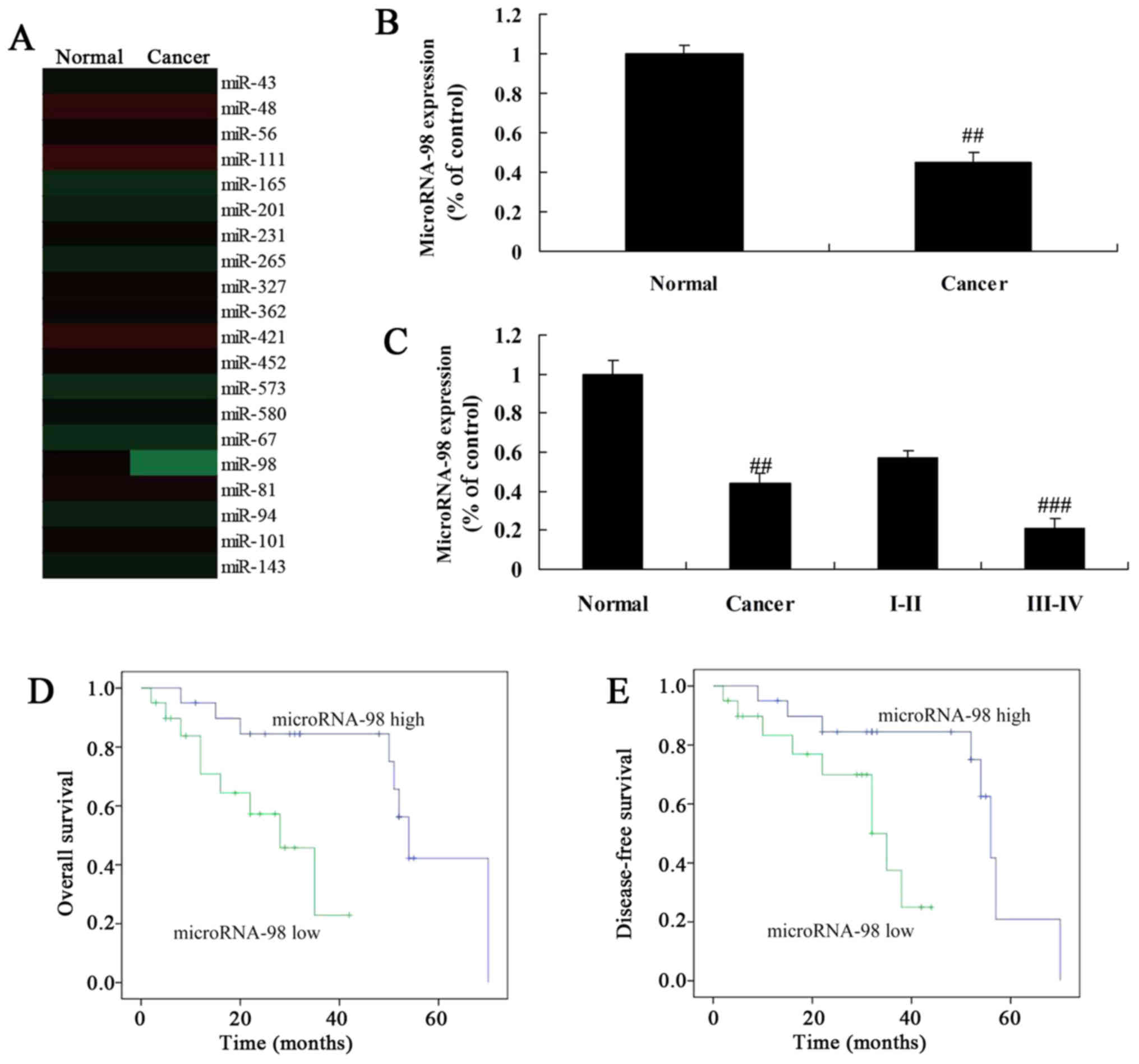
Both GeneChip and qPCR were used to detect the
expression of microRNAs in the normal and cancer tissues. The
expression of miRNA-98 was significantly downregulated in patients
with hypopharyngeal carcinoma, compared with that noted in the
control group (Fig. 1A and B).
Meanwhile, the expression of miRNA-98 in patients with stage III–IV
hypopharyngeal carcinoma was significantly lower than that in
patients with stage I–II hypopharyngeal carcinoma (Fig. 1C). Then, we analyzed the
relationship between miRNA-98 expression and the survival rate of
patients with hypopharyngeal carcinoma. To this end, Kaplan-Meier
survival analysis was carried out to evaluate the relationship of
miRNA-98 expression with overall survival (OS) and disease-free
survival (DFS) in patients with hypopharyngeal carcinoma. As a
result, the OS of patients with hypopharyngeal carcinoma with high
expression of miRNA-98 was increased when compared with the OS of
patients with hypopharyngeal carcinoma with low expression of
miRNA-98 (Fig. 1D). In other words,
patients with hypopharyngeal carcinoma with high expression of
miRNA-98 harbored obviously prolonged DFS than those with low
expression of miRNA-98 (Fig.
1E).
Downregulation of miRNA-98 increases
cell growth and migration, and decreases the apoptotic rate of
hypopharyngeal carcinoma cells
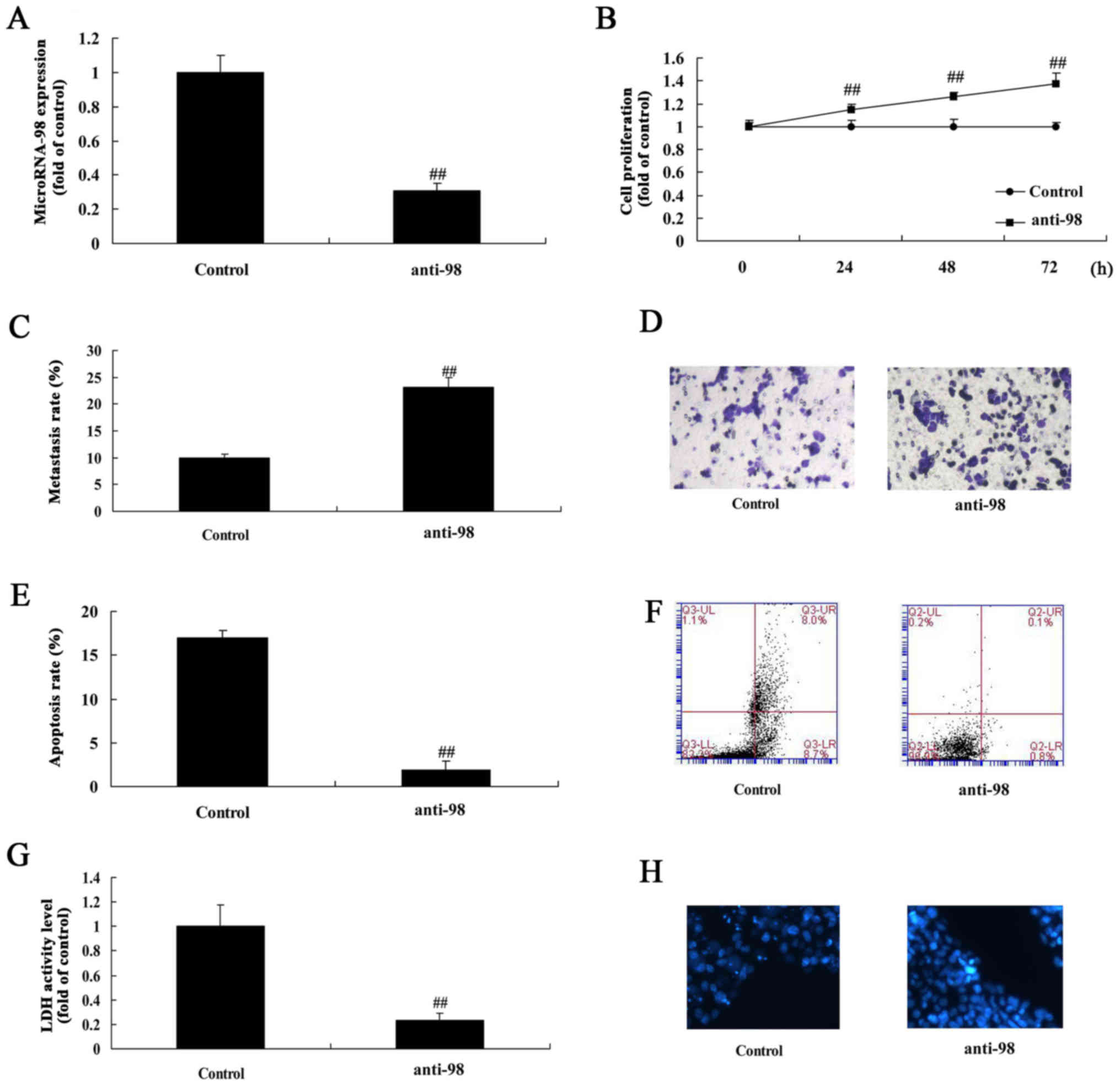
In order to study the role of miRNA-98 in the
proliferation of hypopharyngeal carcinoma cells, FaDu cells were
transiently transfected with anti-miRNA-98 mimics. miRNA-98
expression was substantially decreased in the FaDu cells, compared
with the negative control-transfected cells (Fig. 2A). Moreover, downregulation of
miRNA-98 increased cell viability and promoted migration, and
decreased the apoptotic rate of hypopharyngeal carcinoma cells,
compared with the negative control-transfected cells (Fig. 2B-H).
Overexpression of miRNA-98 increases
the apoptotic rate and inhibits the cell growth and migration of
hypopharyngeal carcinoma cells
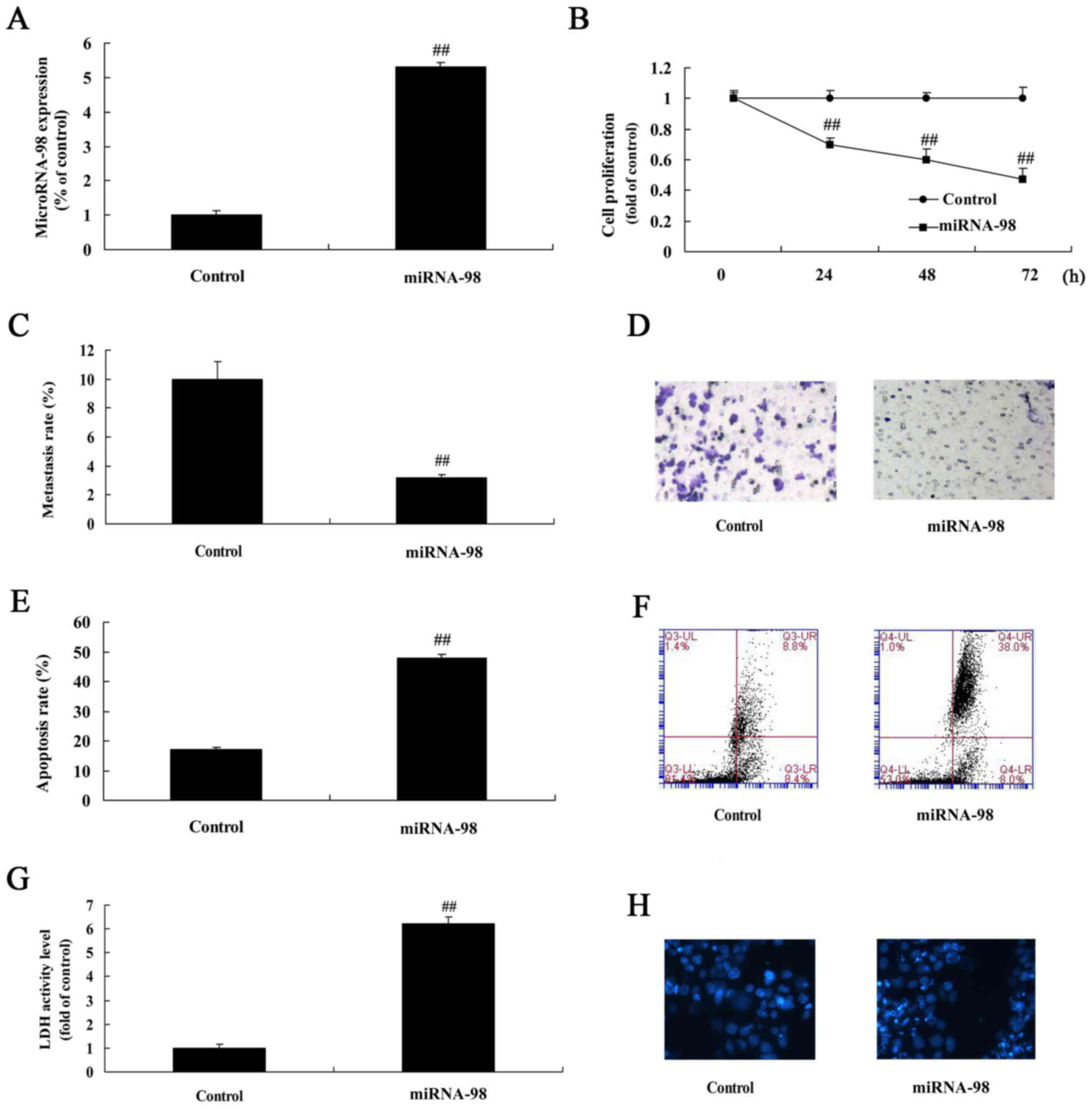
Next, we studied the function of miRNA-98 in
hypopharyngeal carcinoma. FaDu cells were transiently transfected
with micRNA-98 mimics, and miRNA-98 expression was substantially
increased in the FaDu cells, compared with that noted in the
negative control-transfected cells (Fig. 3A). Overexpression of miRNA-98
enhanced the apoptotic rate and inhibited cell growth and migration
of hypopharyngeal carcinoma cells, compared with the negative
control-transfected cells (Fig.
3B-H).
miRNA-98 regulates the PTEN/AKT
pathway by MTDH
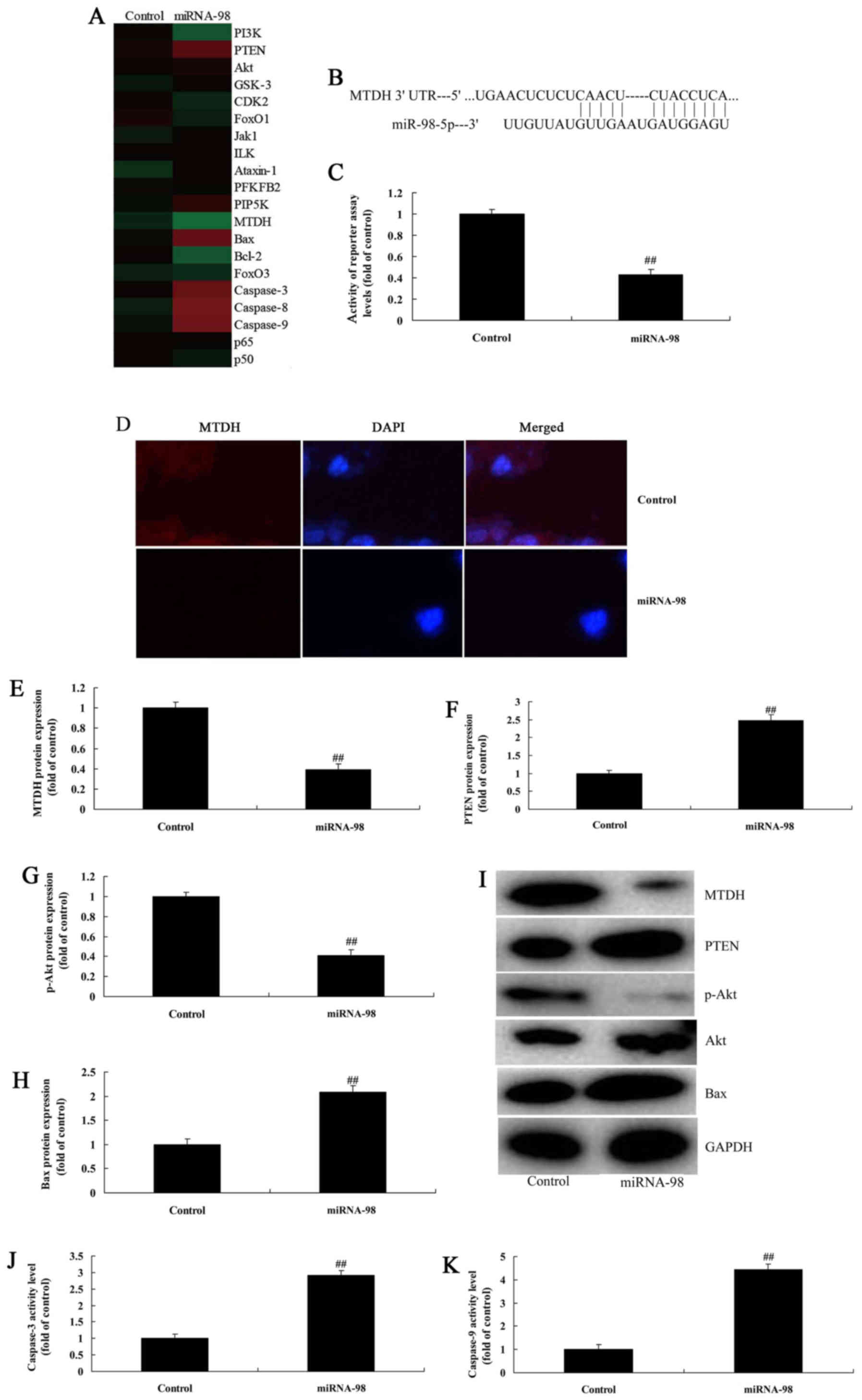
To measure the mechanism of miRNA-98 in regards to
the apoptosis of hypopharyngeal carcinoma, we analyzed the changes
in the pathways in hypopharyngeal carcinoma cell lines with
overexpression of miRNA-98. Heat map showed that MTDH expression
was suppressed, while PTEN expression was increased in the
hypopharyngeal carcinoma cell line following overexpression of
miRNA-98 (Fig. 4A). Then, the
reporter assay showed that MTDH is a target of miRNA-98, and
overexpression of miRNA-98 decreased the activity of reporter assay
levels, compared with the negative group (Fig. 4B and C). Moreover,
immunofluorescence (IF) showed that overexpression of miRNA-98
suppressed the protein expression of MTDH in hypopharyngeal
carcinoma cells, compared with that noted in the negative
control-transfected cells (Fig.
4D). Overexpression of miRNA-98 suppressed the protein
expression of MTDH and p-Akt while it induced that of PTEN and Bax
in hypopharyngeal carcinoma cells, compared with the negative
control-transfected cells (Fig.
4E-I). Additionally, overexpression of miRNA-98 promoted
caspase-3/9 activity levels in the hypopharyngeal carcinoma cells,
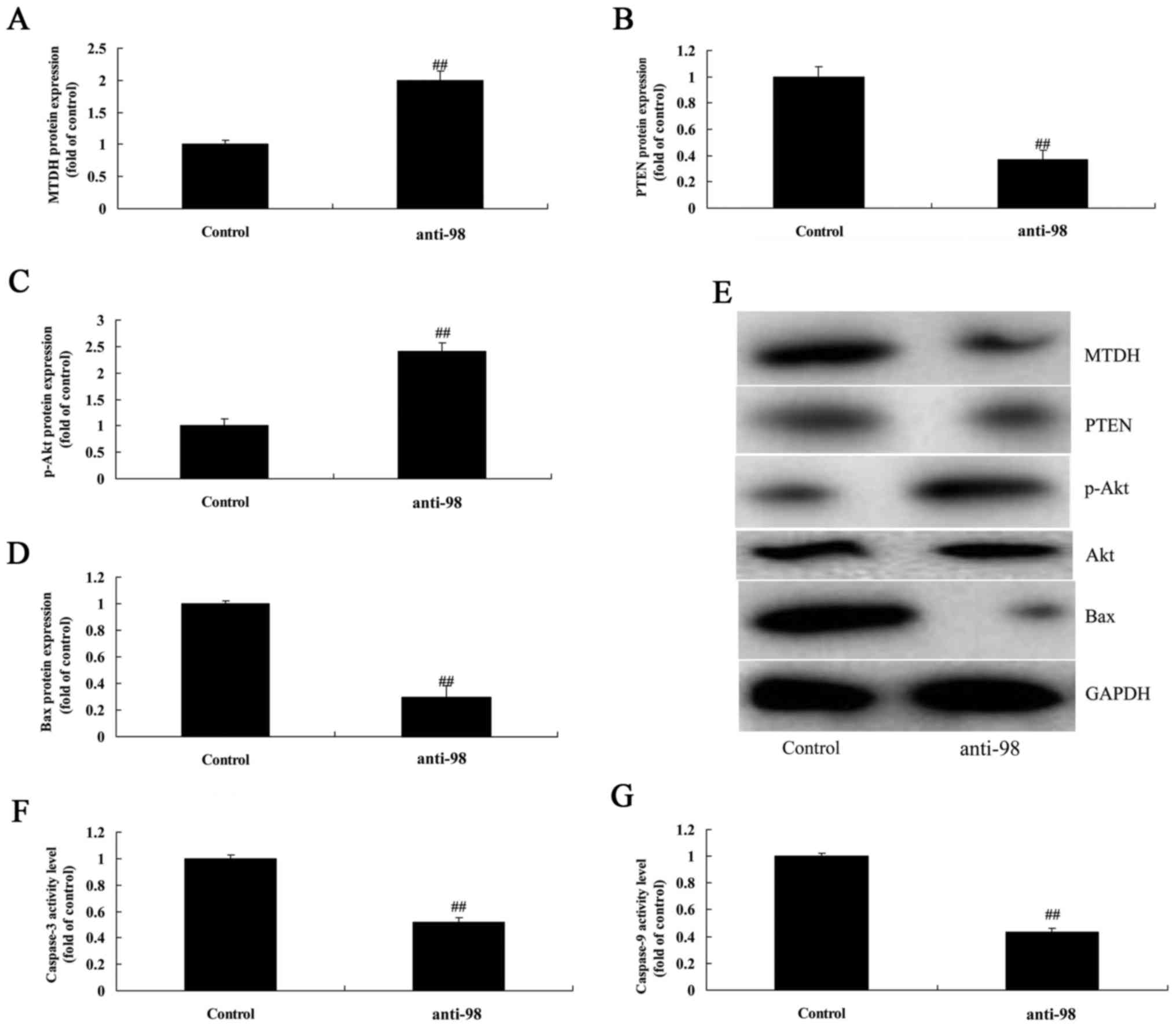
compared with the negative control-transfected cells (Fig. 4J and K). However, downregulation of
miRNA-98 induced the protein expression of MTDH and p-Akt protein
(Fig. 5A, C and E), while inhibited
that of PTEN and Bax (Fig. 5B, D and
E), and reduced caspase-3/9 activity levels (Fig. 5F and G) in hypopharyngeal carcinoma
cells, compared with the negative control-transfected cells. These
results showed that miRNA-98 induced apoptosis of hypopharyngeal
carcinoma by regulating the PTEN/AKT/caspase-3/9 pathway via
MTDH.
MTDH attenuates the anticancer
function of miRNA-98 in hypopharyngeal carcinoma via the PTEN/AKT
pathway
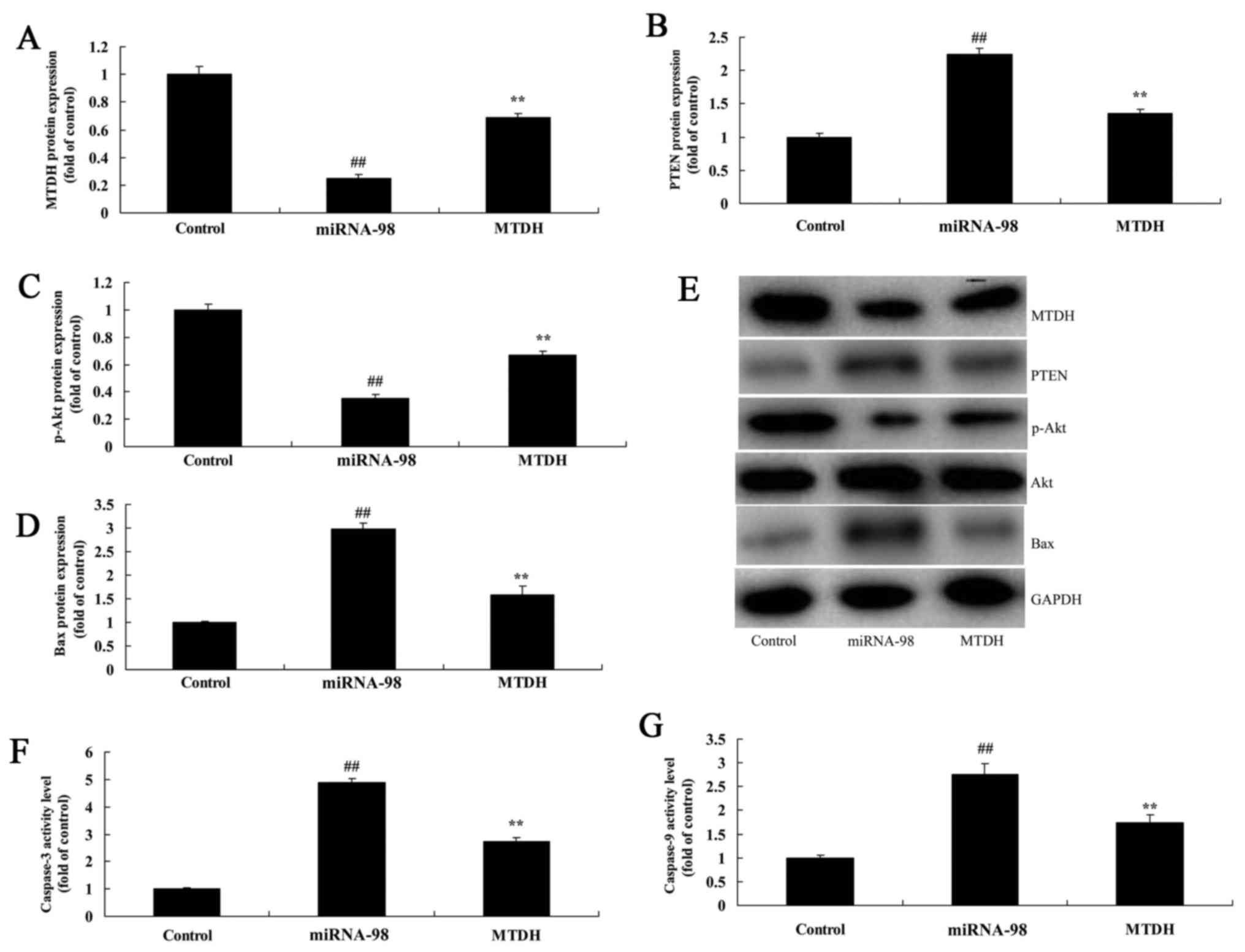
We further studied the role of MTDH in the
anticancer function of miRNA-98 in hypopharyngeal carcinoma via the
PTEN/AKT pathway. As shown in Fig.
6, the MTDH plasmid induced the protein expression of MTDH and
p-Akt, while suppressing that of PTEN and Bax, inhibited
caspase-3/9 activity levels in hypopharyngeal carcinoma by
miRNA-98, compared with the miRNA-98 group without MTDH plasmid
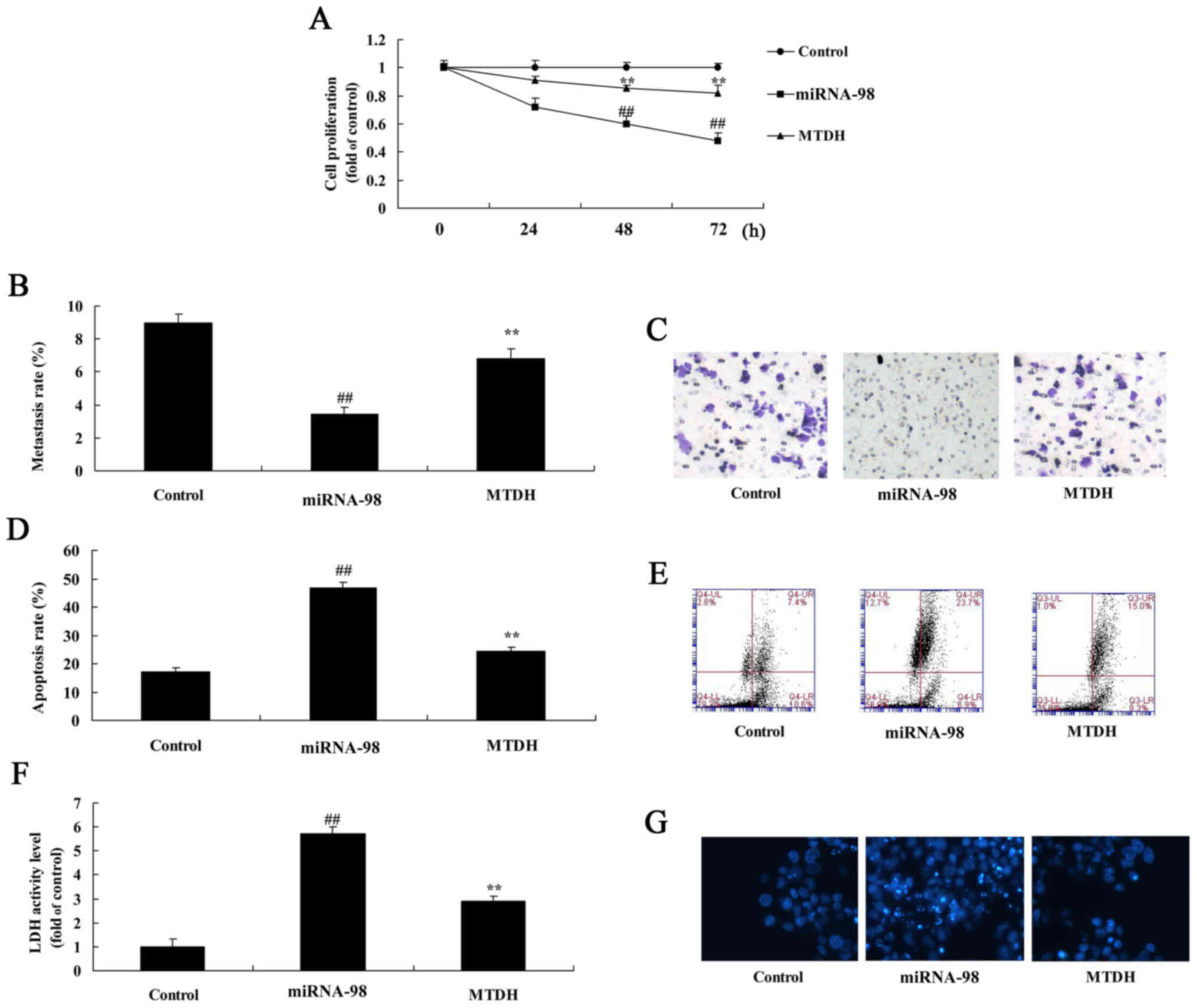
treatment. Then, the activation of MTDH attenuated the anticancer
effects of miRNA-98 on the inhibition of cell viability and
migration, and the promotion of the apoptotic rate and LDH activity
levels in hypopharyngeal carcinoma by miRNA-98, compared with the
miRNA-98 group without the activation of MTDH (Fig. 7). These results indicate that MTDH
attenuated the anticancer effects of miRNA-98 in hypopharyngeal
carcinoma via the PTEN/AKT pathway.
Inhibition of PTEN attenuates the
anticancer effects of miRNA-98 in hypopharyngeal carcinoma via the
PTEN/AKT pathway
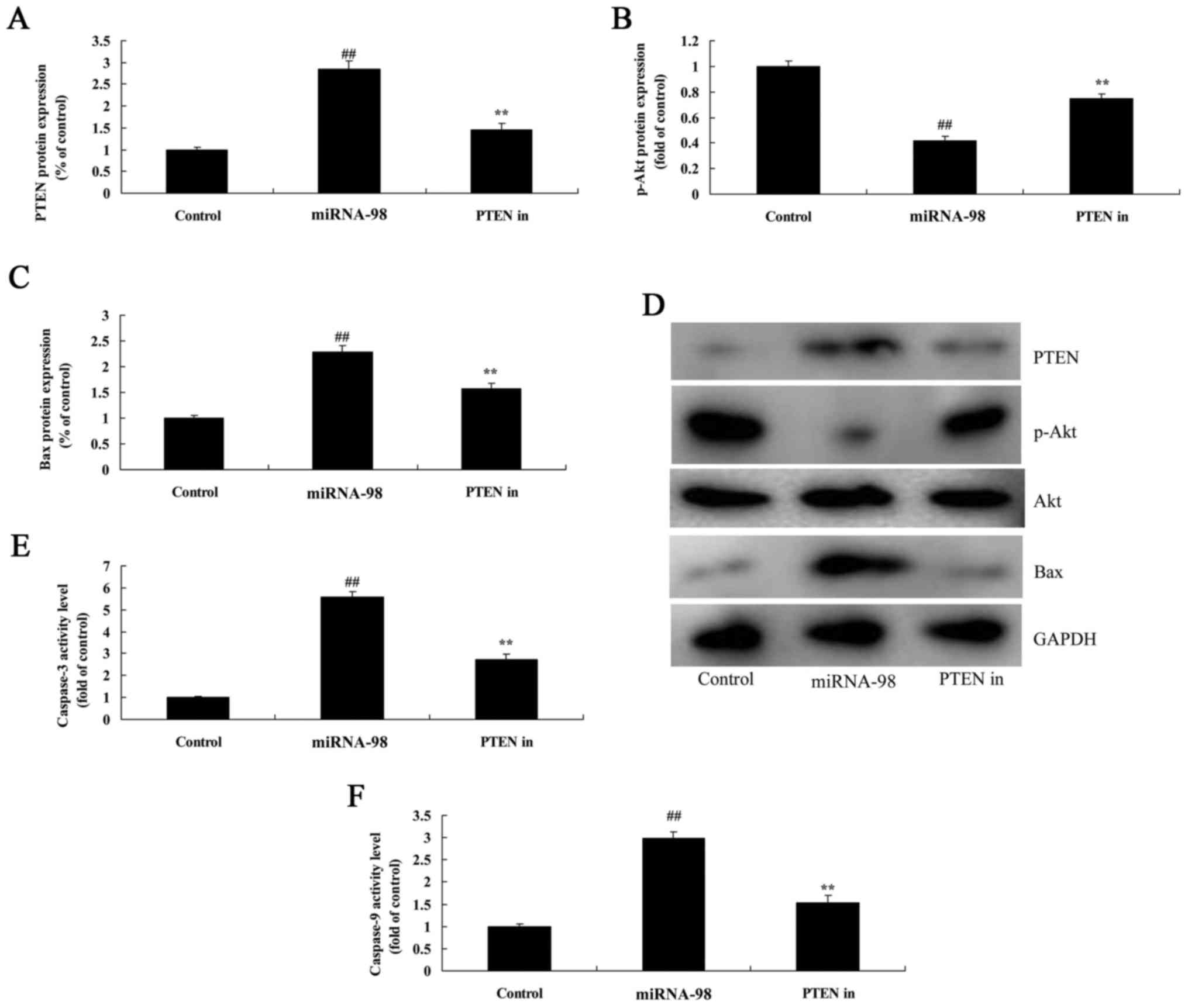
Finally, we investigated the function of PTEN in the
anticancer effects of miRNA-98 in hypopharyngeal carcinoma via the
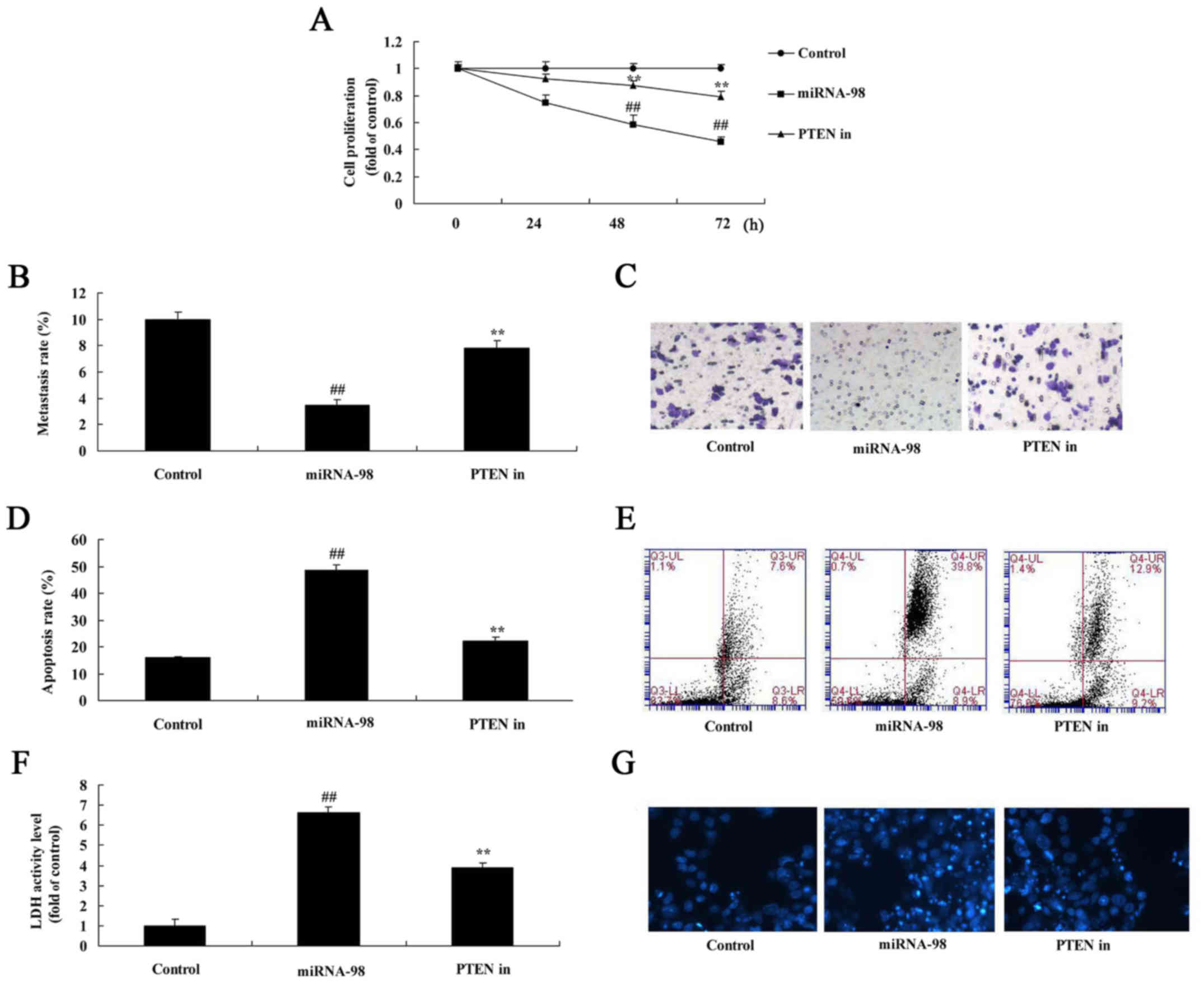
PTEN/AKT pathway. The administration of PTEN inhibitor (20 nM,
VO-Ohpic trihydrate) suppressed the protein expression of PTEN and
Bax, inhibited caspase-3/9 activity levels, and promoted p-AKT
protein expression in hypopharyngeal carcinoma by miRNA-98,
compared with the miRNA-98 group without PTEN inhibitor treatment
(Fig. 8). Then, the inhibition of
PTEN attenuated the anticancer effects of miRNA-98 on the
inhibition of cell viability and migration, and the promotion of
the apoptotic rate and LDH activity levels in hypopharyngeal
carcinoma by miRNA-98, compared with the miRNA-98 group without
PTEN inhibition (Fig. 9). These
results indicated that miRNA-98 inhibited the proliferation and
induced apoptosis in hypopharyngeal carcinoma cells via the
PTEN/AKT pathway by MTDH.
Discussion
Early diagnosis of laryngeal carcinoma and
improvement of treatment efficacy for laryngeal carcinoma is vital.
In addition, the further understanding of the mechanisms underlying
the genesis and development of laryngeal carcinoma are needed
(13). This will contribute to the
identification of novel treatment methods or early diagnosis and
treatment (13). Epidemiological
investigation has confirmed that smoking, alcohol abuse, air
pollution and occupational factors are the causes of laryngeal
carcinoma (14). Molecular
biological research has been intensively carried out. Basic
research on laryngeal carcinoma-related miRNAs has displayed their
valuable application prospect as laryngeal carcinoma treatment
targets (15). On the one hand, an
in vitro study verify that some miRNAs can suppress
laryngeal carcinoma cell proliferation. For instance, increasing
the miR-34c expression level can effectively suppress laryngeal
carcinoma cell proliferation (16).
This reveals that miR-34c a promising potential target for treating
laryngeal carcinoma. On the other hand, an in vivo study
confirmed that injection of miR-21 antisense nucleotide chain
lentiviral vector in xenografts of squamous carcinoma of the larynx
can effectively suppress laryngeal carcinoma cell growth (16). The present study showed that OS and
DFS of patients with hypopharyngeal carcinoma in a high microRNA-98
expression were prolonged when compared with that of patients with
hypopharyngeal carcinoma in a low microRNA-98 expression group.
Downregulation of microRNA-98 promoted cell growth and migratory,
and decreased the apoptosis rate of hypopharyngeal carcinoma cells.
Wang et al showed that let-7/miR-98 regulate Fas and
Fas-mediated apoptosis (17).
It was reported that MTDH is expressed in almost all
malignant tumor cells. MTDH overexpression can enhance the
proliferation, differentiation, metastasis and invasion capacity of
endometrial cancer, prostate cancer, breast cancer and human glioma
cells (18). In addition, MTDH
plays a key role in upregulating tumor genesis mediated by the
Ha-as oncogene (19). Blocking MTDH
expression can upregulate (FOXO)3A activity to induce apoptosis
(20). MTDH silencing was found to
notably restrain human neuroblastoma cell proliferation and induce
apoptosis. As a result, cells were arrested at the G0/G1 stage of
the cell cycle (20). MTDH
silencing was found to enhance cancer cell sensitivity to
chemotherapeutics such as cisplatin and doxorubicin. Thus, it can
effectively inhibit tumor cell proliferation and promote cell
apoptosis (20). In the present
study, it was found that MTDH decreased the anticancer function of
microRNA-98 in hypopharyngeal carcinoma via the PTEN/AKT pathway.
Wang et al reported that the upregulation of miR-98
inhibited apoptosis in cartilage cells in osteoarthritis (21).
The PI3K/Akt pathway is a major branch of the
receptor tyrosine kinase pathway. It is an important growth factor
pathway in vivo (7). It can
activate the anti-cell apoptosis mechanism, glucose metabolism and
protein synthesis and thus enhance cell proliferation and growth
(22). The PDK/Akt signal
transduction pathway is abnormally activated in multiple malignant
tumors (7). The following two
mechanisms have been extensively studied. One is tyrosine
kinase-mediated PI3K activation. For instance, the phosphorylated
tyrosine kinase binds with subunit p85, or the mutant Ras directly
binds with EBK to activate PI3K. The other one is somatic gene
mutation (22). For instance, PTEN
tumor-suppressor gene mutation makes it impossible to block the
PI3K pathway. It was recently discovered that the PIK3CA gene
mutation occurs in over 30% of epithelial tumors (23). The above-mentioned tyrosine
kinase-mediated abnormal PI3K activation and somatic gene mutation
can induce abnormal cell proliferation. In this way, it can induce
the genesis and development of malignant tumors such as ovarian,
breast, pancreatic, lung and colon cancer (23). The present study showed that
overexpression of miRNA-98 suppressed MTDH and p-Akt protein
expression and induced PTEN protein expression in hypopharyngeal
carcinoma cells. Chen et al showed that miRNA-98 rescues
proliferation and alleviates ox-LDL-induced apoptosis in human
umbilical vein ECs (HUVECs) by targeting LOX-1 (24).
PTEN is the first tumor-suppressor gene discovered
to date to possess phosphatase activity. The major
tumor-suppressing effect of PTEN is to promote apoptosis (25). PTEN gene mutations render loss of
all gene functions (25). Thus,
cell growth is out of control, and apoptosis cannot be carried out
in time. Low PTEN expression in laryngeal carcinoma suggests
reduced apoptosis, enhanced growth and improved invasion. The PTEN
gene can suppress tumor transcription. Moreover, it is related to
tumor pathological differentiation and prognosis (26). Notably, in the present study, the
promotion of MTDH or the inhibition of PTEN reduced the anticancer
effects of miRNA-98 in hypopharyngeal carcinoma via the PTEN/AKT
pathway. This study only analyzed one cell line, and it is a
limitation of this study. We will use more cell models or a mouse
model in further studies.
In conclusion, the function of miRNA-98 inhibits
hypopharyngeal carcinoma cell proliferation and induces apoptosis
via the PTEN/AKT pathway by MTDH. Moreover, the miRNA-98/ PTEN/AKT
signaling pathway may serve a key role in the anticancer effects of
hypopharyngeal carcinoma.
Acknowledgements
Not applicable.
Funding
The present study was supported by the Natural
Science Foundation (grant no. H2017033) and the Health and Family
Planning Commission (no. 2018019) of Heilongjiang Province of
China.
Availability of data and materials
The datasets used during the present study are
available from the corresponding author upon reasonable
request.
Authors' contributions
JL designed the experiments; QW, LT, JZ, XZ and TY
performed the experiments and collected the data; QW and JL
analyzed the data; JL wrote the manuscript. All authors read and
approved the manuscript and agree to be accountable for all aspects
of the research in ensuring that the accuracy or integrity of any
part of the work are appropriately investigated and resolved.
Ethics approval and consent to
participate
The study protocol was approved by the Human
Research Ethics Committee of The First Affiliated Hospital of
Harbin Medical University, and all patients provided written
informed consent prior to participation in the present study.
Patient consent for publication
Not applicable.
Competing interests
The authors state that they have no competing
interests.
References
|
1
|
Nakashima T, Yasumatsu R, Asai K, Uryu H,
Kogo R and Nakagawa T: Single-cycle induction chemotherapy for
resectable advanced hypopharyngeal cancer. Int J Clin Oncol.
22:442–447. 2017. View Article : Google Scholar : PubMed/NCBI
|
|
2
|
Bonner J, Giralt J, Harari P, Spencer S,
Schulten J, Hossain A, Chang SC, Chin S and Baselga J: Cetuximab
and radiotherapy in laryngeal preservation for cancers of the
larynx and hypopharynx: A secondary analysis of a randomized
clinical trial. JAMA Otolaryngol Head Neck Surg. 142:842–849. 2016.
View Article : Google Scholar : PubMed/NCBI
|
|
3
|
Damascelli B, Patelli G, Ticha V, Di Tolla
G, Frigerio LF, Garbagnati F, Lanocita R, Marchianò A, Spreafico C,
Mattavelli F, et al: Feasibility and efficacy of percutaneous
transcatheter intraarterial chemotherapy with paclitaxel in albumin
nanoparticles for advanced squamous-cell carcinoma of the oral
cavity, oropharynx, and hypopharynx. J Vasc Interv Radiol.
18:1395–1403. 2007. View Article : Google Scholar : PubMed/NCBI
|
|
4
|
Yoo GH, Moon J, Leblanc M, Lonardo F, Urba
S, Kim H, Hanna E, Tsue T, Valentino J, Ensley J and Wolf G: A
phase 2 trial of surgery with perioperative INGN 201 (Ad5CMV-p53)
gene therapy followed by chemoradiotherapy for advanced, resectable
squamous cell carcinoma of the oral cavity, oropharynx,
hypopharynx, and larynx: Report of the Southwest Oncology Group.
Arch Otolaryngol Head Neck Surg. 135:869–874. 2009. View Article : Google Scholar : PubMed/NCBI
|
|
5
|
Hess AK, Müer A, Mairinger FD, Weichert W,
Stenzinger A, Hummel M, Budach V and Tinhofer I: MiR-200b and
miR-155 as predictive biomarkers for the efficacy of chemoradiation
in locally advanced head and neck squamous cell carcinoma. Eur J
Cancer. 77:3–12. 2017. View Article : Google Scholar : PubMed/NCBI
|
|
6
|
Wang L, Mou Y, Meng D, Sun Y, Chen X, Yang
X, Jia C, Song X and Li X: MicroRNA-203 inhibits tumour growth and
metastasis through PDPN. Clin Otolaryngol. 42:620–628. 2017.
View Article : Google Scholar : PubMed/NCBI
|
|
7
|
Yang N, Hui L, Wang Y, Yang H and Jiang X:
SOX2 promotes the migration and invasion of laryngeal cancer cells
by induction of MMP-2 via the PI3K/Akt/mTOR pathway. Oncol Rep.
31:2651–2659. 2014. View Article : Google Scholar : PubMed/NCBI
|
|
8
|
Si F, Sun J and Wang C: MicroRNA-138
suppresses cell proliferation in laryngeal squamous cell carcinoma
via inhibiting EZH2 and PI3K/AKT signaling. Exp Ther Med.
14:1967–1974. 2017. View Article : Google Scholar : PubMed/NCBI
|
|
9
|
Wang B, Qin H, Wang Y, Chen W, Luo J, Zhu
X, Wen W and Lei W: Effect of DJ-1 overexpression on the
proliferation, apoptosis, invasion and migration of laryngeal
squamous cell carcinoma SNU-46 cells through PI3K/AKT/mTOR. Oncol
Rep. 32:1108–1116. 2014. View Article : Google Scholar : PubMed/NCBI
|
|
10
|
Zhang Y, Wang Y and Wang J: MicroRNA-584
inhibits cell proliferation and invasion in non-small cell lung
cancer by directly targeting MTDH. Exp Ther Med. 15:2203–2211.
2018.PubMed/NCBI
|
|
11
|
Liu J, Lei DP, Jin T, Zhao XN, Li G and
Pan XL: Altered expression of miR-21 and PTEN in human laryngeal
and hypopharyngeal squamous cell carcinomas. Asian Pac J Cancer
Prev. 12:2653–2657. 2011.PubMed/NCBI
|
|
12
|
Livak KJ and Schmittgen TD: Analysis of
relative gene expression data using real-time quantitative PCR and
the 2(-Delta Delta C(T)) method. Methods. 25:402–408. 2001.
View Article : Google Scholar : PubMed/NCBI
|
|
13
|
Elliott EA, Wright JR, Swann RS,
Nguyen-Tân F, Takita C, Bucci MK, Garden AS, Kim H, Hug EB, Ryu J,
et al: Phase III Trial of an emulsion containing trolamine for the
prevention of radiation dermatitis in patients with advanced
squamous cell carcinoma of the head and neck: Results of radiation
therapy oncology group trial 99-13. J Clin Oncol. 24:2092–2097.
2006. View Article : Google Scholar : PubMed/NCBI
|
|
14
|
Durmus K, Kucur C, Uysal IO, Dziegielewski
PT and Ozer E: Feasibility and clinical outcomes of transoral
robotic surgery and transoral robot-assisted carbon dioxide laser
for hypopharyngeal carcinoma. J Craniofac Surg. 26:235–237. 2015.
View Article : Google Scholar : PubMed/NCBI
|
|
15
|
Orosz E, Gombos K, Riedling T, Afiakurue
P, Kiss I, Pytel J, Gerlinger I and Szanyi I: Comparative miRNA
expression profile analysis of squamous cell carcinoma and
peritumoral mucosa from the meso- and hypopharynx. Cancer Genomics
Proteomics. 14:285–292. 2017. View Article : Google Scholar : PubMed/NCBI
|
|
16
|
Re M, Magliulo G, Gioacchini FM,
Bajraktari A, Bertini A, Çeka A, Rubini C, Ferrante L, Procopio AD
and Olivieri F: Expression levels and clinical significance of
miR-21-5p, miR-let-7a, and miR-34c-5p in laryngeal squamous cell
carcinoma. Biomed Res Int. 2017:39212582017. View Article : Google Scholar : PubMed/NCBI
|
|
17
|
Wang S, Tang Y, Cui H, Zhao X, Luo X, Pan
W, Huang X and Shen N: Let-7/miR-98 regulate Fas and Fas-mediated
apoptosis. Genes Immun. 12:149–154. 2011. View Article : Google Scholar : PubMed/NCBI
|
|
18
|
Li J, Li C, Li H, Zhang T, Hao X, Chang J
and Xu Y: MicroRNA-30a-5p suppresses tumor cell proliferation of
human renal cancer via the MTDH/PTEN/AKT pathway. Int J Mol Med.
41:1021–1029. 2018.PubMed/NCBI
|
|
19
|
Mizrak Kaya D, Dong X, Nogueras-González
GM, Xu Y, Estrella JS, Harada K, Lopez A, Amlashi FG, Hofstetter
WL, Maru DM, et al: Post-trimodality expression levels of
metadherin (MTDH) as a prognostic biomarker for esophageal
adenocarcinoma patients. Med Oncol. 34:1352017. View Article : Google Scholar : PubMed/NCBI
|
|
20
|
Qiao W, Cao N and Yang L: MicroRNA-154
inhibits the growth and metastasis of gastric cancer cells by
directly targeting MTDH. Oncol Lett. 14:3268–3274. 2017. View Article : Google Scholar : PubMed/NCBI
|
|
21
|
Wang GL, Wu YB, Liu JT and Li CY:
Upregulation of miR-98 inhibits apoptosis in cartilage cells in
osteoarthritis. Genet Test Mol Biomarkers. 20:645–653. 2016.
View Article : Google Scholar : PubMed/NCBI
|
|
22
|
Luo XM, Xu B, Zhou ML, Bao YY, Zhou SH,
Fan J and Lu ZJ: Co-Inhibition of GLUT-1 expression and the
PI3K/Akt signaling pathway to enhance the radiosensitivity of
laryngeal carcinoma xenografts in vivo. PLoS One. 10:e01433062015.
View Article : Google Scholar : PubMed/NCBI
|
|
23
|
Zhang XJ and Jia SS: Fisetin inhibits
laryngeal carcinoma through regulation of AKT/NF-κB/mTOR and ERK1/2
signaling pathways. Biomed Pharmacother. 83:1164–1174. 2016.
View Article : Google Scholar : PubMed/NCBI
|
|
24
|
Chen Z, Wang M, He Q, Li Z, Zhao Y, Wang
W, Ma J, Li Y and Chang G: MicroRNA-98 rescues proliferation and
alleviates ox-LDL-induced apoptosis in HUVECs by targeting LOX-1.
Exp Ther Med. 13:1702–1710. 2017. View Article : Google Scholar : PubMed/NCBI
|
|
25
|
Zhu XL, Wang ZF, Lei WB, Zhuang HW, Hou
WJ, Wen YH and Wen WP: Tumorigenesis role and clinical significance
of DJ-1, a negative regulator of PTEN, in supraglottic squamous
cell carcinoma. J Exp Clin Cancer Res. 31:942012. View Article : Google Scholar : PubMed/NCBI
|
|
26
|
Wang S, Guo D and Li C: Downregulation of
miRNA-26b inhibits cancer proliferation of laryngeal carcinoma
through autophagy by targeting ULK2 and inactivation of the
PTEN/AKT pathway. Oncol Rep. 38:1679–1687. 2017. View Article : Google Scholar : PubMed/NCBI
|