Spandidos Publications Logo
  • About
    • About Spandidos
    • Aims and Scopes
    • Abstracting and Indexing
    • Editorial Policies
    • Reprints and Permissions
    • Job Opportunities
    • Terms and Conditions
    • Contact
  • Journals
    • All Journals
    • Oncology Letters
      • Oncology Letters
      • Information for Authors
      • Editorial Policies
      • Editorial Board
      • Aims and Scope
      • Abstracting and Indexing
      • Bibliographic Information
      • Archive
    • International Journal of Oncology
      • International Journal of Oncology
      • Information for Authors
      • Editorial Policies
      • Editorial Board
      • Aims and Scope
      • Abstracting and Indexing
      • Bibliographic Information
      • Archive
    • Molecular and Clinical Oncology
      • Molecular and Clinical Oncology
      • Information for Authors
      • Editorial Policies
      • Editorial Board
      • Aims and Scope
      • Abstracting and Indexing
      • Bibliographic Information
      • Archive
    • Experimental and Therapeutic Medicine
      • Experimental and Therapeutic Medicine
      • Information for Authors
      • Editorial Policies
      • Editorial Board
      • Aims and Scope
      • Abstracting and Indexing
      • Bibliographic Information
      • Archive
    • International Journal of Molecular Medicine
      • International Journal of Molecular Medicine
      • Information for Authors
      • Editorial Policies
      • Editorial Board
      • Aims and Scope
      • Abstracting and Indexing
      • Bibliographic Information
      • Archive
    • Biomedical Reports
      • Biomedical Reports
      • Information for Authors
      • Editorial Policies
      • Editorial Board
      • Aims and Scope
      • Abstracting and Indexing
      • Bibliographic Information
      • Archive
    • Oncology Reports
      • Oncology Reports
      • Information for Authors
      • Editorial Policies
      • Editorial Board
      • Aims and Scope
      • Abstracting and Indexing
      • Bibliographic Information
      • Archive
    • Molecular Medicine Reports
      • Molecular Medicine Reports
      • Information for Authors
      • Editorial Policies
      • Editorial Board
      • Aims and Scope
      • Abstracting and Indexing
      • Bibliographic Information
      • Archive
    • World Academy of Sciences Journal
      • World Academy of Sciences Journal
      • Information for Authors
      • Editorial Policies
      • Editorial Board
      • Aims and Scope
      • Abstracting and Indexing
      • Bibliographic Information
      • Archive
    • International Journal of Functional Nutrition
      • International Journal of Functional Nutrition
      • Information for Authors
      • Editorial Policies
      • Editorial Board
      • Aims and Scope
      • Abstracting and Indexing
      • Bibliographic Information
      • Archive
    • International Journal of Epigenetics
      • International Journal of Epigenetics
      • Information for Authors
      • Editorial Policies
      • Editorial Board
      • Aims and Scope
      • Abstracting and Indexing
      • Bibliographic Information
      • Archive
    • Medicine International
      • Medicine International
      • Information for Authors
      • Editorial Policies
      • Editorial Board
      • Aims and Scope
      • Abstracting and Indexing
      • Bibliographic Information
      • Archive
  • Articles
  • Information
    • Information for Authors
    • Information for Reviewers
    • Information for Librarians
    • Information for Advertisers
    • Conferences
  • Language Editing
Spandidos Publications Logo
  • About
    • About Spandidos
    • Aims and Scopes
    • Abstracting and Indexing
    • Editorial Policies
    • Reprints and Permissions
    • Job Opportunities
    • Terms and Conditions
    • Contact
  • Journals
    • All Journals
    • Biomedical Reports
      • Information for Authors
      • Editorial Policies
      • Editorial Board
      • Aims and Scope
      • Abstracting and Indexing
      • Bibliographic Information
      • Archive
    • Experimental and Therapeutic Medicine
      • Information for Authors
      • Editorial Policies
      • Editorial Board
      • Aims and Scope
      • Abstracting and Indexing
      • Bibliographic Information
      • Archive
    • International Journal of Epigenetics
      • Information for Authors
      • Editorial Policies
      • Editorial Board
      • Aims and Scope
      • Abstracting and Indexing
      • Bibliographic Information
      • Archive
    • International Journal of Functional Nutrition
      • Information for Authors
      • Editorial Policies
      • Editorial Board
      • Aims and Scope
      • Abstracting and Indexing
      • Bibliographic Information
      • Archive
    • International Journal of Molecular Medicine
      • Information for Authors
      • Editorial Policies
      • Editorial Board
      • Aims and Scope
      • Abstracting and Indexing
      • Bibliographic Information
      • Archive
    • International Journal of Oncology
      • Information for Authors
      • Editorial Policies
      • Editorial Board
      • Aims and Scope
      • Abstracting and Indexing
      • Bibliographic Information
      • Archive
    • Medicine International
      • Information for Authors
      • Editorial Policies
      • Editorial Board
      • Aims and Scope
      • Abstracting and Indexing
      • Bibliographic Information
      • Archive
    • Molecular and Clinical Oncology
      • Information for Authors
      • Editorial Policies
      • Editorial Board
      • Aims and Scope
      • Abstracting and Indexing
      • Bibliographic Information
      • Archive
    • Molecular Medicine Reports
      • Information for Authors
      • Editorial Policies
      • Editorial Board
      • Aims and Scope
      • Abstracting and Indexing
      • Bibliographic Information
      • Archive
    • Oncology Letters
      • Information for Authors
      • Editorial Policies
      • Editorial Board
      • Aims and Scope
      • Abstracting and Indexing
      • Bibliographic Information
      • Archive
    • Oncology Reports
      • Information for Authors
      • Editorial Policies
      • Editorial Board
      • Aims and Scope
      • Abstracting and Indexing
      • Bibliographic Information
      • Archive
    • World Academy of Sciences Journal
      • Information for Authors
      • Editorial Policies
      • Editorial Board
      • Aims and Scope
      • Abstracting and Indexing
      • Bibliographic Information
      • Archive
  • Articles
  • Information
    • For Authors
    • For Reviewers
    • For Librarians
    • For Advertisers
    • Conferences
  • Language Editing
Login Register Submit
  • This site uses cookies
  • You can change your cookie settings at any time by following the instructions in our Cookie Policy. To find out more, you may read our Privacy Policy.

    I agree
Search articles by DOI, keyword, author or affiliation
Search
Advanced Search
presentation
Oncology Reports
Join Editorial Board Propose a Special Issue
Print ISSN: 1021-335X Online ISSN: 1791-2431
Journal Cover
June-2019 Volume 41 Issue 6

Full Size Image

Sign up for eToc alerts
Recommend to Library

Journals

International Journal of Molecular Medicine

International Journal of Molecular Medicine

International Journal of Molecular Medicine is an international journal devoted to molecular mechanisms of human disease.

International Journal of Oncology

International Journal of Oncology

International Journal of Oncology is an international journal devoted to oncology research and cancer treatment.

Molecular Medicine Reports

Molecular Medicine Reports

Covers molecular medicine topics such as pharmacology, pathology, genetics, neuroscience, infectious diseases, molecular cardiology, and molecular surgery.

Oncology Reports

Oncology Reports

Oncology Reports is an international journal devoted to fundamental and applied research in Oncology.

Experimental and Therapeutic Medicine

Experimental and Therapeutic Medicine

Experimental and Therapeutic Medicine is an international journal devoted to laboratory and clinical medicine.

Oncology Letters

Oncology Letters

Oncology Letters is an international journal devoted to Experimental and Clinical Oncology.

Biomedical Reports

Biomedical Reports

Explores a wide range of biological and medical fields, including pharmacology, genetics, microbiology, neuroscience, and molecular cardiology.

Molecular and Clinical Oncology

Molecular and Clinical Oncology

International journal addressing all aspects of oncology research, from tumorigenesis and oncogenes to chemotherapy and metastasis.

World Academy of Sciences Journal

World Academy of Sciences Journal

Multidisciplinary open-access journal spanning biochemistry, genetics, neuroscience, environmental health, and synthetic biology.

International Journal of Functional Nutrition

International Journal of Functional Nutrition

Open-access journal combining biochemistry, pharmacology, immunology, and genetics to advance health through functional nutrition.

International Journal of Epigenetics

International Journal of Epigenetics

Publishes open-access research on using epigenetics to advance understanding and treatment of human disease.

Medicine International

Medicine International

An International Open Access Journal Devoted to General Medicine.

Journal Cover
June-2019 Volume 41 Issue 6

Full Size Image

Sign up for eToc alerts
Recommend to Library

  • Article
  • Citations
    • Cite This Article
    • Download Citation
    • Create Citation Alert
    • Remove Citation Alert
    • Cited By
  • Similar Articles
    • Related Articles (in Spandidos Publications)
    • Similar Articles (Google Scholar)
    • Similar Articles (PubMed)
  • Download PDF
  • Download XML
  • View XML
Article

miR‑145‑5p is associated with pathological complete response to neoadjuvant chemotherapy and impairs cell proliferation by targeting TGFβR2 in breast cancer

  • Authors:
    • Frederik García‑García
    • Yarely M. Salinas‑Vera
    • Raúl García‑Vázquez
    • Laurence A. Marchat
    • Sergio Rodríguez‑Cuevas
    • José Sullivan López‑González
    • Ángeles Carlos‑Reyes
    • Rosalío Ramos‑Payán
    • Maribel Aguilar‑Medina
    • Carlos Pérez‑Plasencia
    • Erika Ruíz‑García
    • César López‑Camarillo
  • View Affiliations / Copyright

    Affiliations: Genomics Sciences Program, Autonomous University of Mexico City, Mexico City 03100, Mexico, Molecular Biomedicine Program and Biotechnology Network, Instituto Politécnico Nacional, Mexico City 07320, Mexico, Breast Diseases Institute, FUCAM, Mexico City 04980, Mexico, Lung Cancer Laboratory, National Institute of Respiratory Diseases ‘Ismael Cosio Villegas’, Mexico City 14080, Mexico, Faculty of Sciences Chemistry Biologicals, Autonomous University of Sinaloa, Culiacán Sinaloa 80040, Mexico, Genomics Laboratory, National Institute of Cancerology, Mexico City 14080, Mexico, Translacional Medicine Laboratory, National Institute of Cancer, Mexico City 14080, Mexico
  • Pages: 3527-3534
    |
    Published online on: April 5, 2019
       https://doi.org/10.3892/or.2019.7102
  • Expand metrics +
Metrics: Total Views: 0 (Spandidos Publications: | PMC Statistics: )
Metrics: Total PDF Downloads: 0 (Spandidos Publications: | PMC Statistics: )
Cited By (CrossRef): 0 citations Loading Articles...

This article is mentioned in:


Abstract

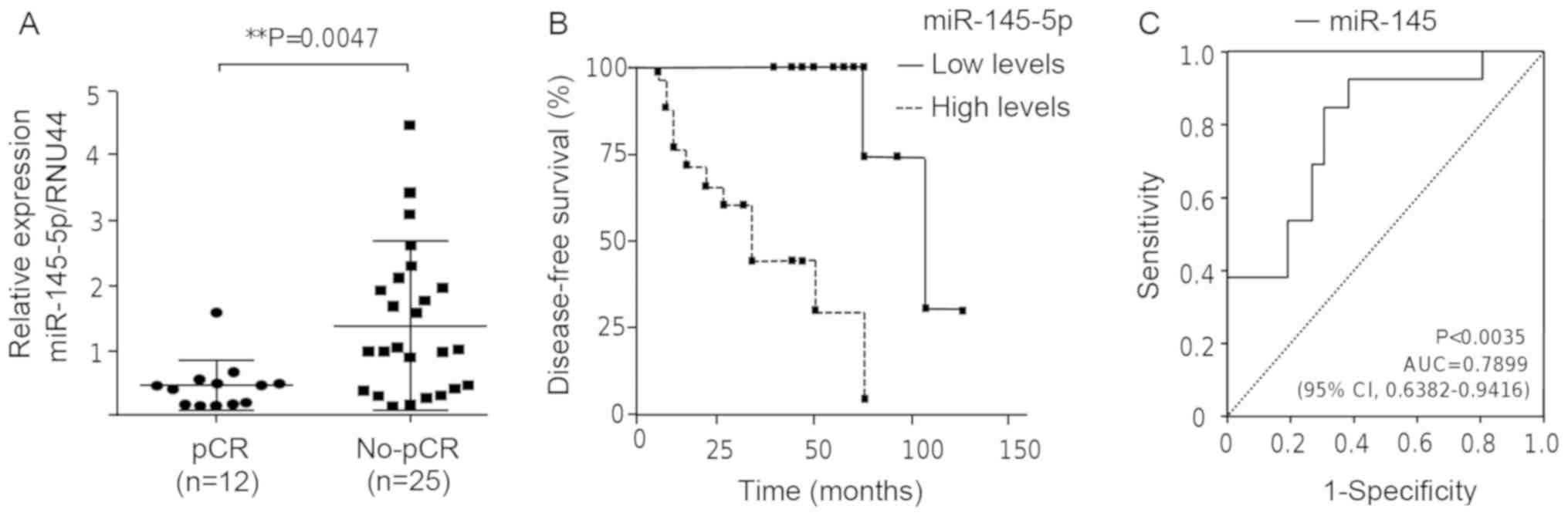
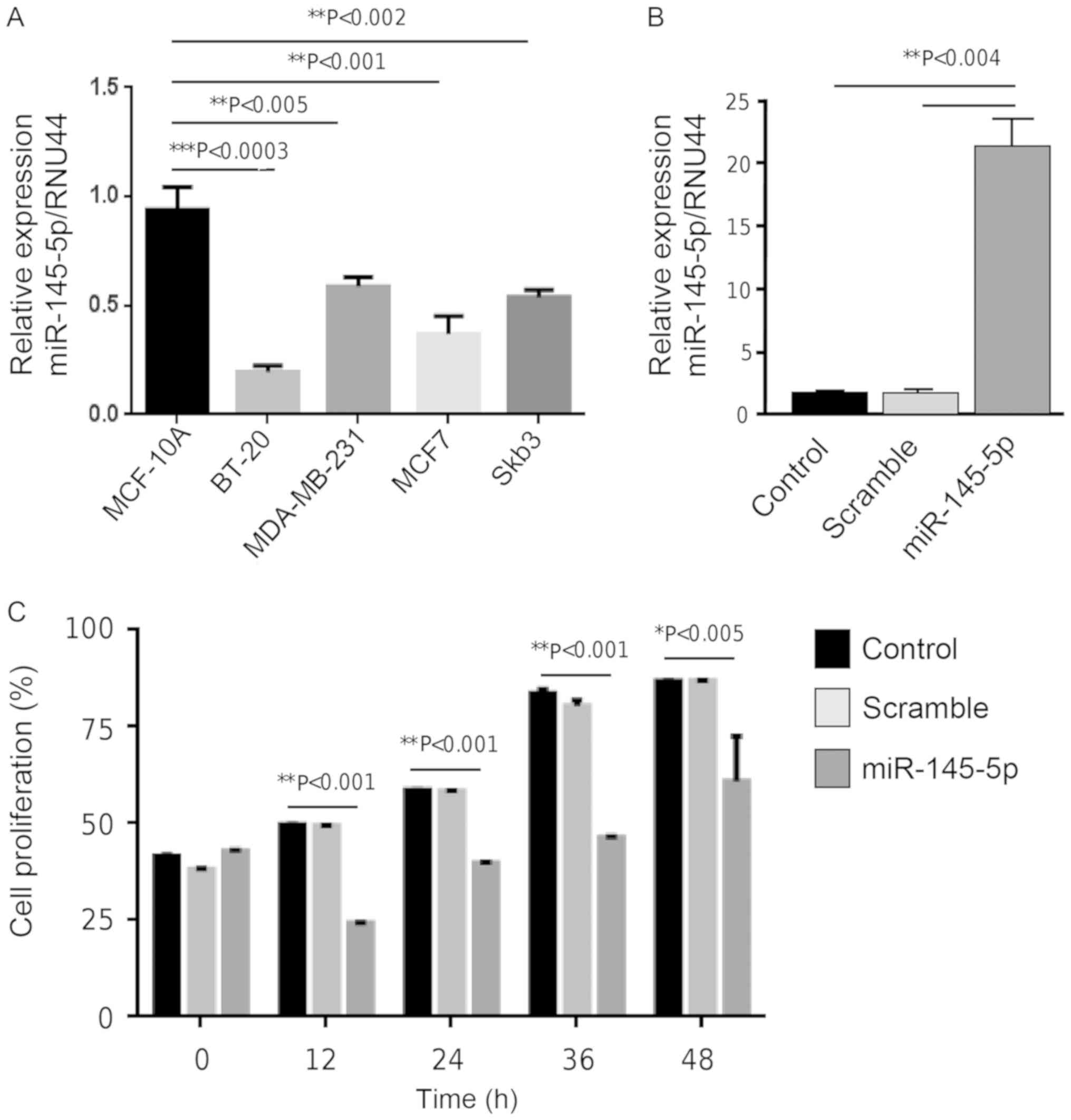
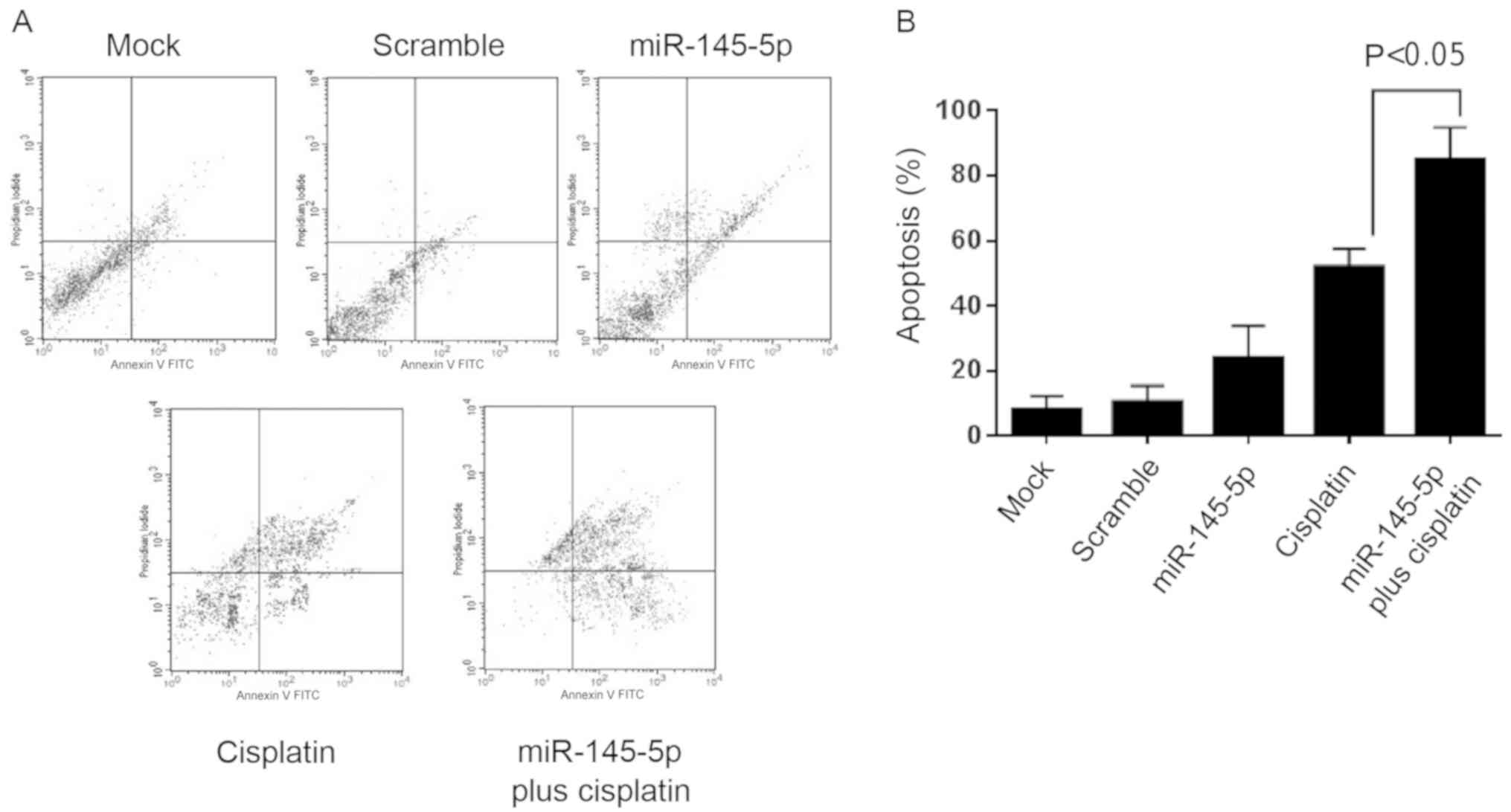
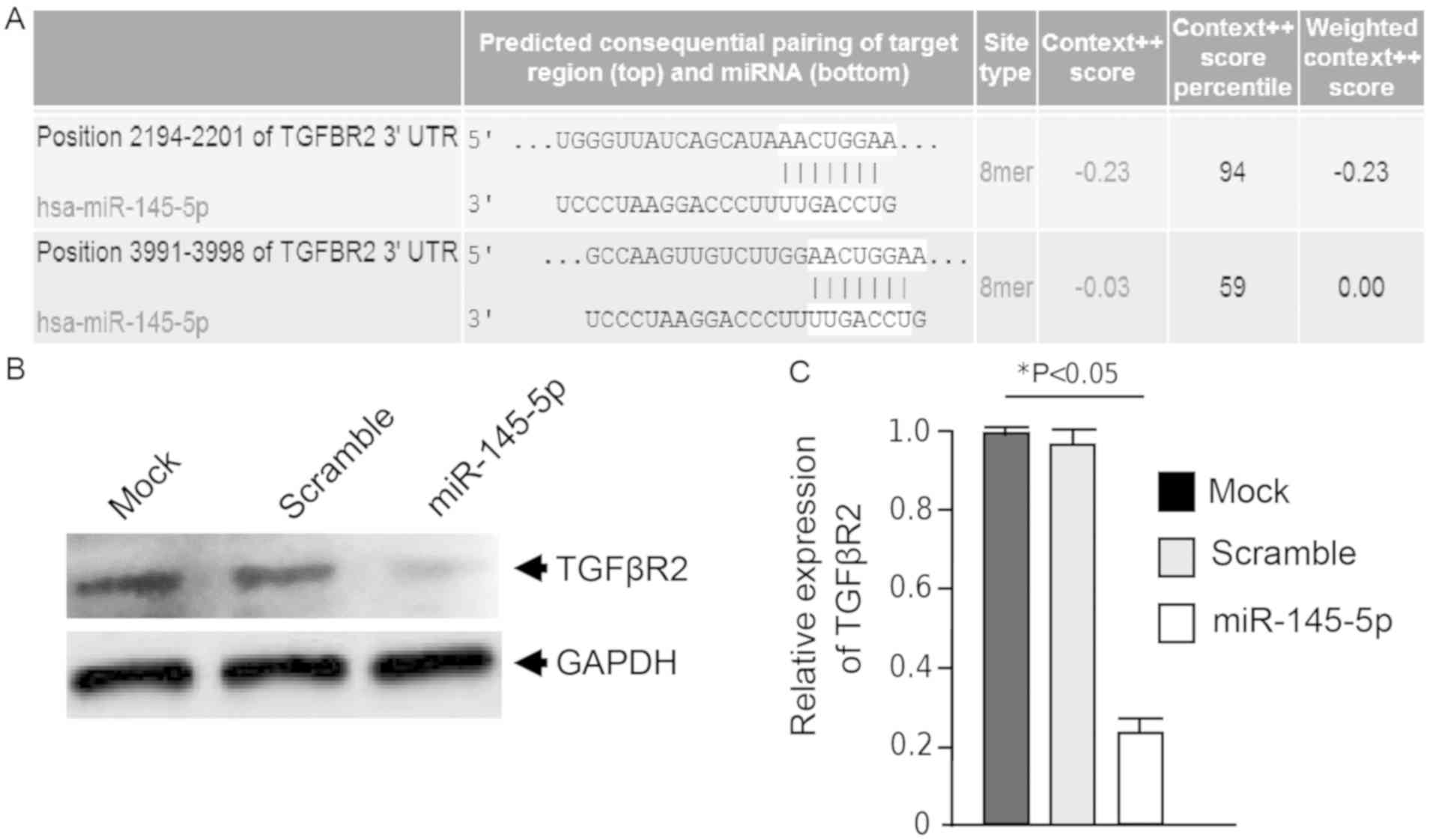
Cancer patients who better benefit from neoadjuvant chemotherapy (NeoCh) are those who achieve a successful pathological complete response (pCR) represented by the absence of residual disease. Unfortunately, no highly sensitive and specific tumor biomarkers for predicting the clinical response to NeoCh have yet been defined. The aim of the present study was to ascertain whether miR‑145‑5p could discriminate between pCR and no‑pCR in triple‑negative breast cancer patients that received a cisplatin/doxorubicin‑based neoadjuvant treatment. miR‑145‑5p expression was determined in breast tumors by quantitative RT‑PCR. Our data showed that miR‑145‑5p had a significant low expression (P<0.005) in patients that achieved pCR in comparison to the non‑responder group. Kaplan Meier analysis indicated that low levels of miR‑145‑5p were associated with increased disease‑free survival. In addition, receiver operating characteristic (ROC) curve analysis suggested that miR‑145‑5p is a good predictor of pCR (P<0.003, AUC=0.7899, 95% CI, 0.6382‑0.9416). Quantitative RT‑PCR expression analysis also revealed that miR‑145‑5p was downregulated in four breast cancer cell lines relative to normal cells. To study the functions of miR‑145‑5p, its expression was restored in triple‑negative MDA‑MB‑231 cells and its effects in cell proliferation were evaluated by MTT assays and in apoptosis using Annexin V experiments. Data revealed that ectopic expression of miR‑145‑5p resulted in a significant inhibition of cell proliferation and also induced apoptosis. Moreover, miR‑145‑5p led to sensitization of breast cancer cells to cisplatin therapy. In addition, western blot assays indicated that miR‑145‑5p downregulated the TGFβR2 protein. In conclusion, miR‑145‑5p could be a potential biomarker of clinical response to NeoCh in triple‑negative breast cancer. Functionally miR‑145‑5p may regulate cell proliferation, at least in part, by targeting TGFβR2.
View Figures

Figure 1

Figure 2

Figure 3

Figure 4

Figure 5

View References

1 

Prowell TM and Pazdur R: Pathological complete response and accelerated drug approval in early breast cancer. N Engl J Med. 366:2438–2441. 2012. View Article : Google Scholar : PubMed/NCBI

2 

Von Minckwitz G, Untch M, Blohmer JU, Costa SD, Eidtmann H, Fasching PA, Gerber B, Eiermann W, Hilfrich J, Huober J, et al: Definition and impact of pathologic complete response on prognosis after neoadjuvant chemotherapy in various intrinsic breast cancer subtypes. J Clin Oncol. 30:1796–1804. 2012. View Article : Google Scholar : PubMed/NCBI

3 

Liedtke C, Mazouni C, Hess KR, André F, Tordai A, Mejia JA, Symmans WF, Gonzalez-Angulo AM, Hennessy B, Green M, et al: Response to neoadjuvant therapy and long-term survival in patients with triple negative breast cancer. J Clin Oncol. 26:1275–1281. 2008. View Article : Google Scholar : PubMed/NCBI

4 

Kong X, Moran MS, Zhang N, Haffty B and Yang Q: Meta-analysis confirms achieving pathological complete response after neoadjuvant chemotherapy predicts favourable prognosis for breast cancer patients. Eur J Cancer. 47:2084–2090. 2011. View Article : Google Scholar : PubMed/NCBI

5 

Tanioka M, Sasaki M, Shimomura A, Fujishima M, Doi M, Matsuura K, Sakuma T, Yoshimura K, Saeki T, Ohara M, et al: Pathologic complete response after neoadjuvant chemotherapy in HER2-overexpressing breast cancer according to hormonal receptor status. Breast. 23:466–472. 2014. View Article : Google Scholar : PubMed/NCBI

6 

Zhang P, Yin Y, Mo H, Zhang B, Wang X, Li Q, Yuan P, Wang J, Zheng S, Cai R, et al: Better pathologic complete response and relapse-free survival after carboplatin plus paclitaxel compared with epirubicin plus paclitaxel as neoadjuvant chemotherapy for locally advanced triple-negative breast cancer: A randomized phase 2 trial. Oncotarget. 7:60647–60656. 2016.PubMed/NCBI

7 

Luangdilok S, Samarnthai N and Korphaisarn K: Association between pathological complete response and outcome following neoadjuvant chemotherapy in locally advanced breast cancer patients. J Breast Cancer. 17:376–385. 2014. View Article : Google Scholar : PubMed/NCBI

8 

Ring AE, Smith IE, Ashley S, Fulford LG and Lakhani SR: Oestrogen receptor status, pathological complete response and prognosis in patients receiving neoadjuvant chemotherapy for early breast cancer. Br J Cancer. 91:2012–2017. 2004. View Article : Google Scholar : PubMed/NCBI

9 

Cortazar P, Zhang L, Untch M, Mehta K, Costantino JP, Wolmark N, Bonnefoi H, Cameron D, Gianni L, Valagussa P, et al: Pathological complete response and long-term clinical benefit in breast cancer: The CTNeoBC pooled analysis. Lancet. 384:164–172. 2014. View Article : Google Scholar : PubMed/NCBI

10 

Rupaimoole R and Slack FJ: MicroRNA therapeutics: Towards a new era for the management of cancer and other diseases. Nat Rev Drug Discov. 16:203–222. 2017. View Article : Google Scholar : PubMed/NCBI

11 

Esquela-Kerscher A and Slack FJ: Oncomirs-microRNAs with a role in cancer. Nat Rev Cancer. 6:259–269. 2006. View Article : Google Scholar : PubMed/NCBI

12 

Kolacinska A, Morawiec J, Fendler W, Malachowska B, Morawiec Z, Szemraj J, Pawlowska Z, Chowdhury D, Choi YE, Kubiak R, et al: Association of microRNAs and pathologic response to preoperative chemotherapy in triple negative breast cancer: Preliminary report. Mol Biol Rep. 41:2851–2857. 2014. View Article : Google Scholar : PubMed/NCBI

13 

Hummel R, Hussej DJ and Haier J: MicroRNAs: Predictors and modifiers of chemo- and radiotherapy in different tumor types. Eur J Cancer. 46:298–311. 2010. View Article : Google Scholar : PubMed/NCBI

14 

Gasparini P, Cascione L, Fassan M, Lovat F, Guler G, Balci S, Irkkan C, Morrison C, Croce CM, Shapiro CL and Huebner K: microRNA expression profiling identifies a four microRNA signature as a novel diagnostic and prognostic biomarker in triple negative breast cancers. Oncotarget. 5:1174–1184. 2014. View Article : Google Scholar : PubMed/NCBI

15 

Ohzawa H, Miki A, Teratani T, Shiba S, Sakuma Y, Nishimura W, Noda Y, Fukushima N, Fujii H, Hozumi Y, et al: Usefulness of miRNA profiles for predicting pathological responses to neoadjuvant chemotherapy in patients with human epidermal growth factor receptor 2-positive breast cancer. Oncol Lett. 13:1731–1740. 2017. View Article : Google Scholar : PubMed/NCBI

16 

Raychaudhuri M, Bronger H, Buchner T, Kiechle M, Weichert W and Avril S: MicroRNAs miR-7 and miR-340 predict response to neoadjuvant chemotherapy in breast cancer. Breast Cancer Res Treat. 162:511–521. 2017. View Article : Google Scholar : PubMed/NCBI

17 

Pedroza-Torres A, Fernández-Retana J, Peralta-Zaragoza O, Jacobo-Herrera N, Cantú de Leon D, Cerna-Cortés JF, Lopez-Camarillo C and Pérez-Plasencia C: A microRNA expression signature for clinical response in locally advanced cervical cancer. Gynecol Oncol. 142:557–565. 2016. View Article : Google Scholar : PubMed/NCBI

18 

Petrillo M, Zannoni GF, Beltrame L, Martinelli E, DiFeo A, Paracchini L, Craparotta I, Mannarino L, Vizzielli G, Scambia G, et al: Identification of high-grade serous ovarian cancer miRNA species associated with survival and drug response in patients receiving neoadjuvant chemotherapy: A retrospective longitudinal analysis using matched tumor biopsies. Ann Oncol. 27:625–634. 2016. View Article : Google Scholar : PubMed/NCBI

19 

García-Vazquez R, Ruiz-García E, Meneses García A, Astudillo-de la Vega H, Lara-Medina F, Alvarado-Miranda A, Maldonado-Martínez H, González-Barrios JA, Campos-Parra AD, Rodríguez Cuevas S, et al: A microRNA signature associated with pathological complete response to novel neoadjuvant therapy regimen in triple-negative breast cancer. Tumour Biol. 39:10104283177028992017. View Article : Google Scholar : PubMed/NCBI

20 

Livak KJ and Schmittgen TD: Analysis of relative gene expression data using real-time quantitative PCR and the 2−ΔΔCT method. Methods. 25:402–408. 2001. View Article : Google Scholar : PubMed/NCBI

21 

Syed V: TGF-β signaling in cancer. J Cell Biochem. 117:1279–1287. 2016. View Article : Google Scholar : PubMed/NCBI

22 

Hiyoshi Y, Akiyoshi T, Inoue R, Murofushi K, Yamamoto N, Fukunaga Y, Ueno M, Baba H, Mori S and Yamaguchi T: Serum miR-143 levels predict the pathological response to neoadjuvant chemoradiotherapy in patients with locally advanced rectal cancer. Oncotarget. 8:79201–79211. 2017. View Article : Google Scholar : PubMed/NCBI

23 

Zhao H, Kang X, Xia X, Wo L, Gu X, Hu Y, Xie X, Chang H, Lou L and Shen X: miR-145 suppresses breast cancer cell migration by targeting FSCN-1 and inhibiting epithelial-mesenchymal transition. Am J Transl Res. 8:3106–3114. 2016.PubMed/NCBI

24 

Gao M, Miao L, Liu M, Li C, Yu C, Yan H, Yin Y, Wang Y, Qi X and Ren J: miR-145 sensitizes breast cancer to doxorubicin by targeting multidrug resistance-associated protein-1. Oncotarget. 7:59714–59726. 2016.PubMed/NCBI

25 

Zheng M, Wu Z, Wu A, Huang Z, He N and Xie X: MiR-145 promotes TNF-α-induced apoptosis by facilitating the formation of RIP1-FADD caspase-8 complex in triple-negative breast cancer. Tumour Biol. 37:8599–8607. 2016. View Article : Google Scholar : PubMed/NCBI

26 

Yan X, Chen X, Liang H, Deng T, Chen W, Zhang S, Liu M, Gao X, Liu Y, Zhao C, et al: miR-143 and miR-145 synergistically regulate ERBB3 to suppress cell proliferation and invasion in breast cancer. Mol Cancer. 13:2202014. View Article : Google Scholar : PubMed/NCBI

27 

Götte M, Mohr C, Koo CY, Stock C, Vaske AK, Viola M, Ibrahim SA, Peddibhotla S, Teng YH, Low JY, et al: miR-145-dependent targeting of junctional adhesion molecule A and modulation of fascin expression are associated with reduced breast cancer cell motility and invasiveness. Oncogene. 29:6569–6580. 2010. View Article : Google Scholar : PubMed/NCBI

28 

Wang S, Bian C, Yang Z, Bo Y, Li J, Zeng L, Zhou H and Zhao RC: miR-145 inhibits breast cancer cell growth through RTKN. Int J Oncol. 34:1461–1466. 2009.PubMed/NCBI

29 

Saunus JM, Smart CE, Kutasovic JR, Johnston RL, Kalita-de Croft P, Miranda M, Rozali EN, Vargas AC, Reid LE, Lorsy E, et al: Multidimensional phenotyping of breast cancer cell lines to guide preclinical research. Breast Cancer Res Treat. 167:289–301. 2018. View Article : Google Scholar : PubMed/NCBI

30 

Ding Y, Zhang C, Zhang J, Zhang N, Li T, Fang J, Zhang Y, Zuo F, Tao Z, Tang S, et al: miR-145 inhibits proliferation and migration of breast cancer cells by directly or indirectly regulating TGF-β1 expression. Int J Oncol. 50:1701–1710. 2017. View Article : Google Scholar : PubMed/NCBI

Related Articles

  • Abstract
  • View
  • Download
  • Twitter
Copy and paste a formatted citation
Spandidos Publications style
García‑García F, Salinas‑Vera YM, García‑Vázquez R, Marchat LA, Rodríguez‑Cuevas S, López‑González JS, Carlos‑Reyes Á, Ramos‑Payán R, Aguilar‑Medina M, Pérez‑Plasencia C, Pérez‑Plasencia C, et al: miR‑145‑5p is associated with pathological complete response to neoadjuvant chemotherapy and impairs cell proliferation by targeting TGFβR2 in breast cancer. Oncol Rep 41: 3527-3534, 2019.
APA
García‑García, F., Salinas‑Vera, Y.M., García‑Vázquez, R., Marchat, L.A., Rodríguez‑Cuevas, S., López‑González, J.S. ... López‑Camarillo, C. (2019). miR‑145‑5p is associated with pathological complete response to neoadjuvant chemotherapy and impairs cell proliferation by targeting TGFβR2 in breast cancer. Oncology Reports, 41, 3527-3534. https://doi.org/10.3892/or.2019.7102
MLA
García‑García, F., Salinas‑Vera, Y. M., García‑Vázquez, R., Marchat, L. A., Rodríguez‑Cuevas, S., López‑González, J. S., Carlos‑Reyes, Á., Ramos‑Payán, R., Aguilar‑Medina, M., Pérez‑Plasencia, C., Ruíz‑García, E., López‑Camarillo, C."miR‑145‑5p is associated with pathological complete response to neoadjuvant chemotherapy and impairs cell proliferation by targeting TGFβR2 in breast cancer". Oncology Reports 41.6 (2019): 3527-3534.
Chicago
García‑García, F., Salinas‑Vera, Y. M., García‑Vázquez, R., Marchat, L. A., Rodríguez‑Cuevas, S., López‑González, J. S., Carlos‑Reyes, Á., Ramos‑Payán, R., Aguilar‑Medina, M., Pérez‑Plasencia, C., Ruíz‑García, E., López‑Camarillo, C."miR‑145‑5p is associated with pathological complete response to neoadjuvant chemotherapy and impairs cell proliferation by targeting TGFβR2 in breast cancer". Oncology Reports 41, no. 6 (2019): 3527-3534. https://doi.org/10.3892/or.2019.7102
Copy and paste a formatted citation
x
Spandidos Publications style
García‑García F, Salinas‑Vera YM, García‑Vázquez R, Marchat LA, Rodríguez‑Cuevas S, López‑González JS, Carlos‑Reyes Á, Ramos‑Payán R, Aguilar‑Medina M, Pérez‑Plasencia C, Pérez‑Plasencia C, et al: miR‑145‑5p is associated with pathological complete response to neoadjuvant chemotherapy and impairs cell proliferation by targeting TGFβR2 in breast cancer. Oncol Rep 41: 3527-3534, 2019.
APA
García‑García, F., Salinas‑Vera, Y.M., García‑Vázquez, R., Marchat, L.A., Rodríguez‑Cuevas, S., López‑González, J.S. ... López‑Camarillo, C. (2019). miR‑145‑5p is associated with pathological complete response to neoadjuvant chemotherapy and impairs cell proliferation by targeting TGFβR2 in breast cancer. Oncology Reports, 41, 3527-3534. https://doi.org/10.3892/or.2019.7102
MLA
García‑García, F., Salinas‑Vera, Y. M., García‑Vázquez, R., Marchat, L. A., Rodríguez‑Cuevas, S., López‑González, J. S., Carlos‑Reyes, Á., Ramos‑Payán, R., Aguilar‑Medina, M., Pérez‑Plasencia, C., Ruíz‑García, E., López‑Camarillo, C."miR‑145‑5p is associated with pathological complete response to neoadjuvant chemotherapy and impairs cell proliferation by targeting TGFβR2 in breast cancer". Oncology Reports 41.6 (2019): 3527-3534.
Chicago
García‑García, F., Salinas‑Vera, Y. M., García‑Vázquez, R., Marchat, L. A., Rodríguez‑Cuevas, S., López‑González, J. S., Carlos‑Reyes, Á., Ramos‑Payán, R., Aguilar‑Medina, M., Pérez‑Plasencia, C., Ruíz‑García, E., López‑Camarillo, C."miR‑145‑5p is associated with pathological complete response to neoadjuvant chemotherapy and impairs cell proliferation by targeting TGFβR2 in breast cancer". Oncology Reports 41, no. 6 (2019): 3527-3534. https://doi.org/10.3892/or.2019.7102
Follow us
  • Twitter
  • LinkedIn
  • Facebook
About
  • Spandidos Publications
  • Careers
  • Cookie Policy
  • Privacy Policy
How can we help?
  • Help
  • Live Chat
  • Contact
  • Email to our Support Team