Spandidos Publications Logo
  • About
    • About Spandidos
    • Aims and Scopes
    • Abstracting and Indexing
    • Editorial Policies
    • Reprints and Permissions
    • Job Opportunities
    • Terms and Conditions
    • Contact
  • Journals
    • All Journals
    • Oncology Letters
      • Oncology Letters
      • Information for Authors
      • Editorial Policies
      • Editorial Board
      • Aims and Scope
      • Abstracting and Indexing
      • Bibliographic Information
      • Archive
    • International Journal of Oncology
      • International Journal of Oncology
      • Information for Authors
      • Editorial Policies
      • Editorial Board
      • Aims and Scope
      • Abstracting and Indexing
      • Bibliographic Information
      • Archive
    • Molecular and Clinical Oncology
      • Molecular and Clinical Oncology
      • Information for Authors
      • Editorial Policies
      • Editorial Board
      • Aims and Scope
      • Abstracting and Indexing
      • Bibliographic Information
      • Archive
    • Experimental and Therapeutic Medicine
      • Experimental and Therapeutic Medicine
      • Information for Authors
      • Editorial Policies
      • Editorial Board
      • Aims and Scope
      • Abstracting and Indexing
      • Bibliographic Information
      • Archive
    • International Journal of Molecular Medicine
      • International Journal of Molecular Medicine
      • Information for Authors
      • Editorial Policies
      • Editorial Board
      • Aims and Scope
      • Abstracting and Indexing
      • Bibliographic Information
      • Archive
    • Biomedical Reports
      • Biomedical Reports
      • Information for Authors
      • Editorial Policies
      • Editorial Board
      • Aims and Scope
      • Abstracting and Indexing
      • Bibliographic Information
      • Archive
    • Oncology Reports
      • Oncology Reports
      • Information for Authors
      • Editorial Policies
      • Editorial Board
      • Aims and Scope
      • Abstracting and Indexing
      • Bibliographic Information
      • Archive
    • Molecular Medicine Reports
      • Molecular Medicine Reports
      • Information for Authors
      • Editorial Policies
      • Editorial Board
      • Aims and Scope
      • Abstracting and Indexing
      • Bibliographic Information
      • Archive
    • World Academy of Sciences Journal
      • World Academy of Sciences Journal
      • Information for Authors
      • Editorial Policies
      • Editorial Board
      • Aims and Scope
      • Abstracting and Indexing
      • Bibliographic Information
      • Archive
    • International Journal of Functional Nutrition
      • International Journal of Functional Nutrition
      • Information for Authors
      • Editorial Policies
      • Editorial Board
      • Aims and Scope
      • Abstracting and Indexing
      • Bibliographic Information
      • Archive
    • International Journal of Epigenetics
      • International Journal of Epigenetics
      • Information for Authors
      • Editorial Policies
      • Editorial Board
      • Aims and Scope
      • Abstracting and Indexing
      • Bibliographic Information
      • Archive
    • Medicine International
      • Medicine International
      • Information for Authors
      • Editorial Policies
      • Editorial Board
      • Aims and Scope
      • Abstracting and Indexing
      • Bibliographic Information
      • Archive
  • Articles
  • Information
    • Information for Authors
    • Information for Reviewers
    • Information for Librarians
    • Information for Advertisers
    • Conferences
  • Language Editing
Spandidos Publications Logo
  • About
    • About Spandidos
    • Aims and Scopes
    • Abstracting and Indexing
    • Editorial Policies
    • Reprints and Permissions
    • Job Opportunities
    • Terms and Conditions
    • Contact
  • Journals
    • All Journals
    • Biomedical Reports
      • Information for Authors
      • Editorial Policies
      • Editorial Board
      • Aims and Scope
      • Abstracting and Indexing
      • Bibliographic Information
      • Archive
    • Experimental and Therapeutic Medicine
      • Information for Authors
      • Editorial Policies
      • Editorial Board
      • Aims and Scope
      • Abstracting and Indexing
      • Bibliographic Information
      • Archive
    • International Journal of Epigenetics
      • Information for Authors
      • Editorial Policies
      • Editorial Board
      • Aims and Scope
      • Abstracting and Indexing
      • Bibliographic Information
      • Archive
    • International Journal of Functional Nutrition
      • Information for Authors
      • Editorial Policies
      • Editorial Board
      • Aims and Scope
      • Abstracting and Indexing
      • Bibliographic Information
      • Archive
    • International Journal of Molecular Medicine
      • Information for Authors
      • Editorial Policies
      • Editorial Board
      • Aims and Scope
      • Abstracting and Indexing
      • Bibliographic Information
      • Archive
    • International Journal of Oncology
      • Information for Authors
      • Editorial Policies
      • Editorial Board
      • Aims and Scope
      • Abstracting and Indexing
      • Bibliographic Information
      • Archive
    • Medicine International
      • Information for Authors
      • Editorial Policies
      • Editorial Board
      • Aims and Scope
      • Abstracting and Indexing
      • Bibliographic Information
      • Archive
    • Molecular and Clinical Oncology
      • Information for Authors
      • Editorial Policies
      • Editorial Board
      • Aims and Scope
      • Abstracting and Indexing
      • Bibliographic Information
      • Archive
    • Molecular Medicine Reports
      • Information for Authors
      • Editorial Policies
      • Editorial Board
      • Aims and Scope
      • Abstracting and Indexing
      • Bibliographic Information
      • Archive
    • Oncology Letters
      • Information for Authors
      • Editorial Policies
      • Editorial Board
      • Aims and Scope
      • Abstracting and Indexing
      • Bibliographic Information
      • Archive
    • Oncology Reports
      • Information for Authors
      • Editorial Policies
      • Editorial Board
      • Aims and Scope
      • Abstracting and Indexing
      • Bibliographic Information
      • Archive
    • World Academy of Sciences Journal
      • Information for Authors
      • Editorial Policies
      • Editorial Board
      • Aims and Scope
      • Abstracting and Indexing
      • Bibliographic Information
      • Archive
  • Articles
  • Information
    • For Authors
    • For Reviewers
    • For Librarians
    • For Advertisers
    • Conferences
  • Language Editing
Login Register Submit
  • This site uses cookies
  • You can change your cookie settings at any time by following the instructions in our Cookie Policy. To find out more, you may read our Privacy Policy.

    I agree
Search articles by DOI, keyword, author or affiliation
Search
Advanced Search
presentation
Oncology Reports
Join Editorial Board Propose a Special Issue
Print ISSN: 1021-335X Online ISSN: 1791-2431
Journal Cover
August-2019 Volume 42 Issue 2

Full Size Image

Sign up for eToc alerts
Recommend to Library

Journals

International Journal of Molecular Medicine

International Journal of Molecular Medicine

International Journal of Molecular Medicine is an international journal devoted to molecular mechanisms of human disease.

International Journal of Oncology

International Journal of Oncology

International Journal of Oncology is an international journal devoted to oncology research and cancer treatment.

Molecular Medicine Reports

Molecular Medicine Reports

Covers molecular medicine topics such as pharmacology, pathology, genetics, neuroscience, infectious diseases, molecular cardiology, and molecular surgery.

Oncology Reports

Oncology Reports

Oncology Reports is an international journal devoted to fundamental and applied research in Oncology.

Experimental and Therapeutic Medicine

Experimental and Therapeutic Medicine

Experimental and Therapeutic Medicine is an international journal devoted to laboratory and clinical medicine.

Oncology Letters

Oncology Letters

Oncology Letters is an international journal devoted to Experimental and Clinical Oncology.

Biomedical Reports

Biomedical Reports

Explores a wide range of biological and medical fields, including pharmacology, genetics, microbiology, neuroscience, and molecular cardiology.

Molecular and Clinical Oncology

Molecular and Clinical Oncology

International journal addressing all aspects of oncology research, from tumorigenesis and oncogenes to chemotherapy and metastasis.

World Academy of Sciences Journal

World Academy of Sciences Journal

Multidisciplinary open-access journal spanning biochemistry, genetics, neuroscience, environmental health, and synthetic biology.

International Journal of Functional Nutrition

International Journal of Functional Nutrition

Open-access journal combining biochemistry, pharmacology, immunology, and genetics to advance health through functional nutrition.

International Journal of Epigenetics

International Journal of Epigenetics

Publishes open-access research on using epigenetics to advance understanding and treatment of human disease.

Medicine International

Medicine International

An International Open Access Journal Devoted to General Medicine.

Journal Cover
August-2019 Volume 42 Issue 2

Full Size Image

Sign up for eToc alerts
Recommend to Library

  • Article
  • Citations
    • Cite This Article
    • Download Citation
    • Create Citation Alert
    • Remove Citation Alert
    • Cited By
  • Similar Articles
    • Related Articles (in Spandidos Publications)
    • Similar Articles (Google Scholar)
    • Similar Articles (PubMed)
  • Download PDF
  • Download XML
  • View XML

  • Supplementary Files
    • Supplementary_Data.pdf
Article Open Access

Matrine improves skeletal muscle atrophy by inhibiting E3 ubiquitin ligases and activating the Akt/mTOR/FoxO3α signaling pathway in C2C12 myotubes and mice

  • Authors:
    • Li Chen
    • Linlin Chen
    • Lili Wan
    • Yan Huo
    • Jinlu Huang
    • Jie Li
    • Jin Lu
    • Bo Xin
    • Quanjun Yang
    • Cheng Guo
  • View Affiliations / Copyright

    Affiliations: Department of Pharmacy, Shanghai Jiao Tong University Affiliated Sixth People's Hospital, Shanghai 200233, P.R. China
    Copyright: © Chen et al. This is an open access article distributed under the terms of Creative Commons Attribution License.
  • Pages: 479-494
    |
    Published online on: June 19, 2019
       https://doi.org/10.3892/or.2019.7205
  • Expand metrics +
Metrics: Total Views: 0 (Spandidos Publications: | PMC Statistics: )
Metrics: Total PDF Downloads: 0 (Spandidos Publications: | PMC Statistics: )
Cited By (CrossRef): 0 citations Loading Articles...

This article is mentioned in:


Abstract

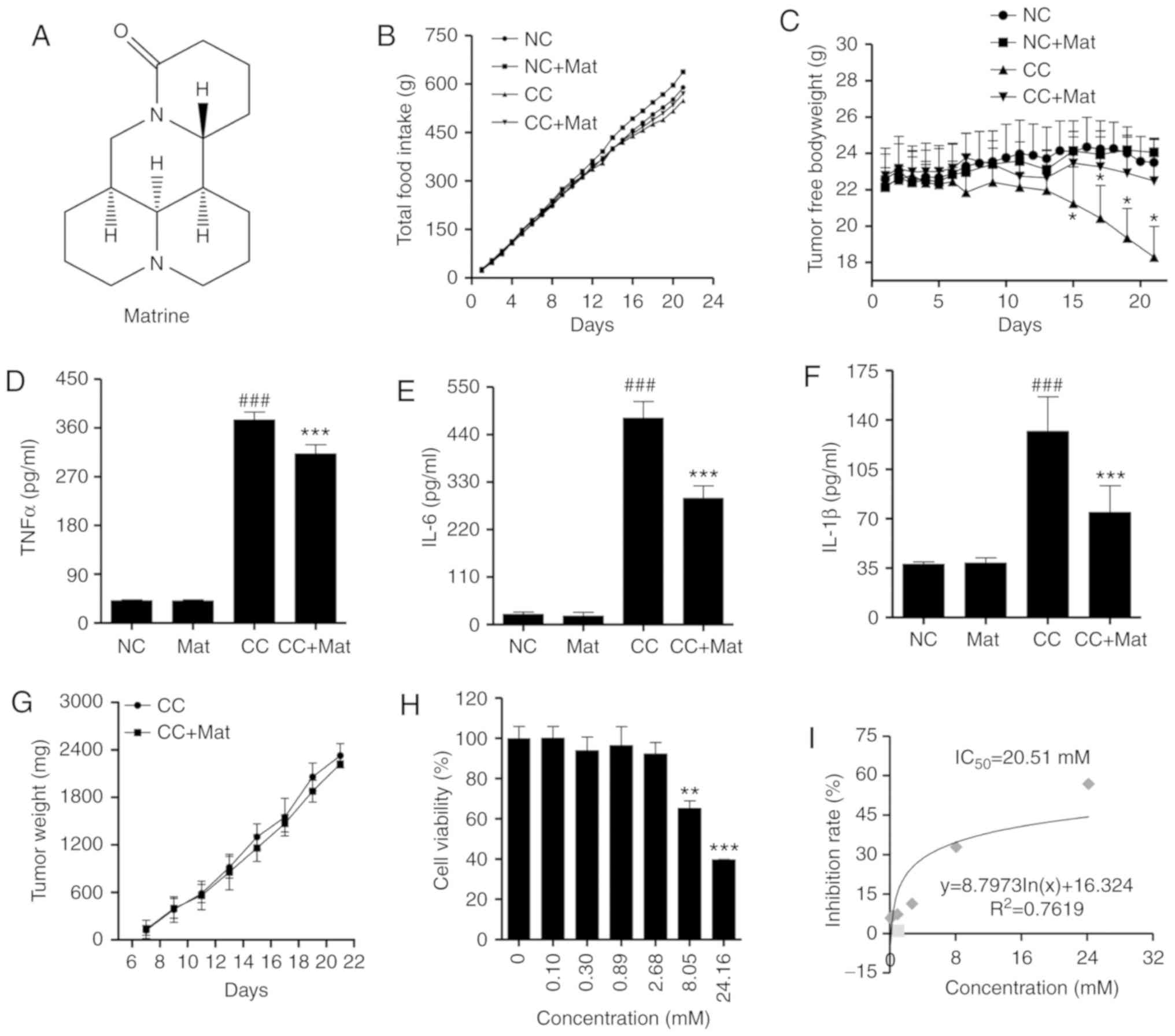
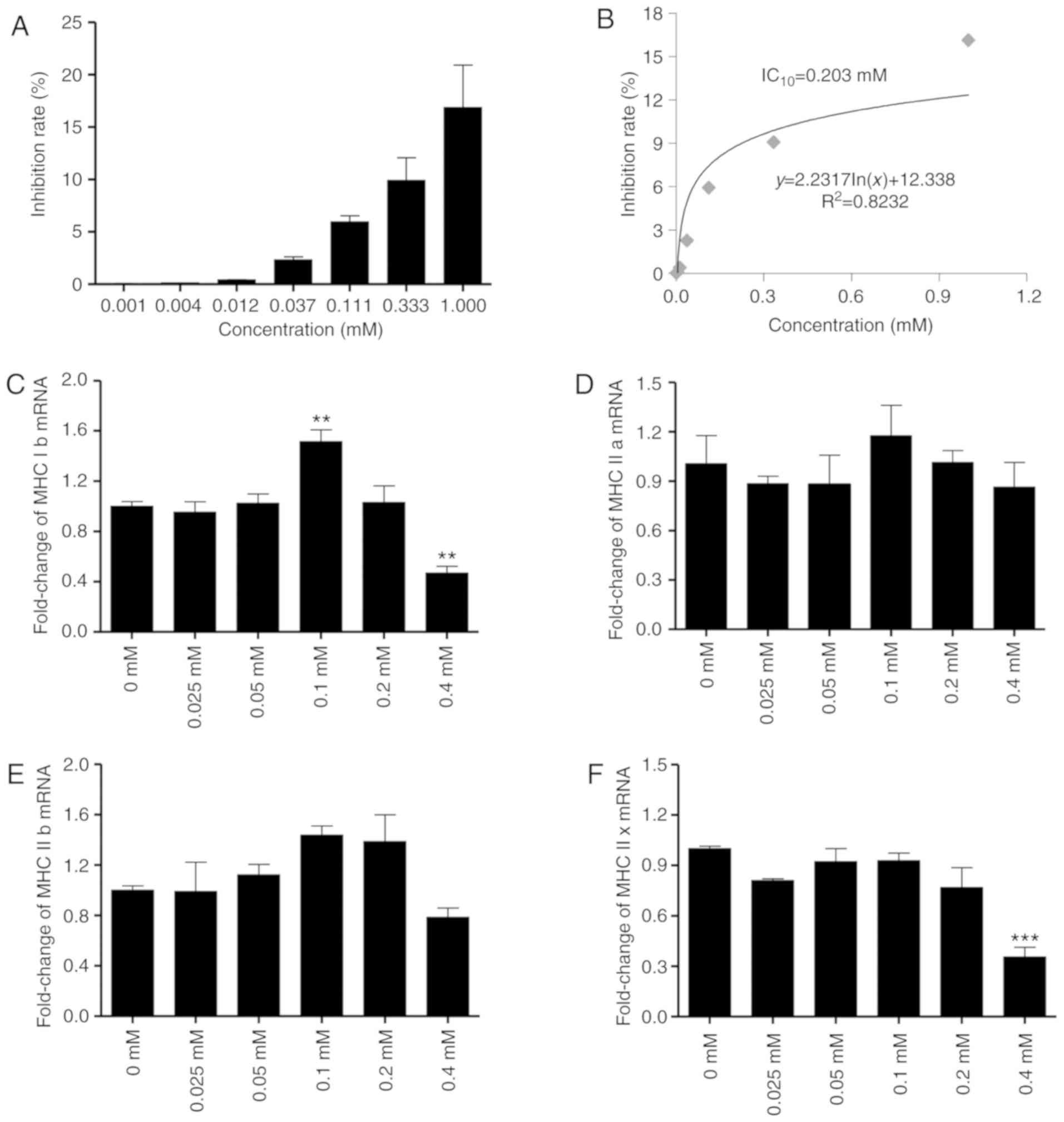
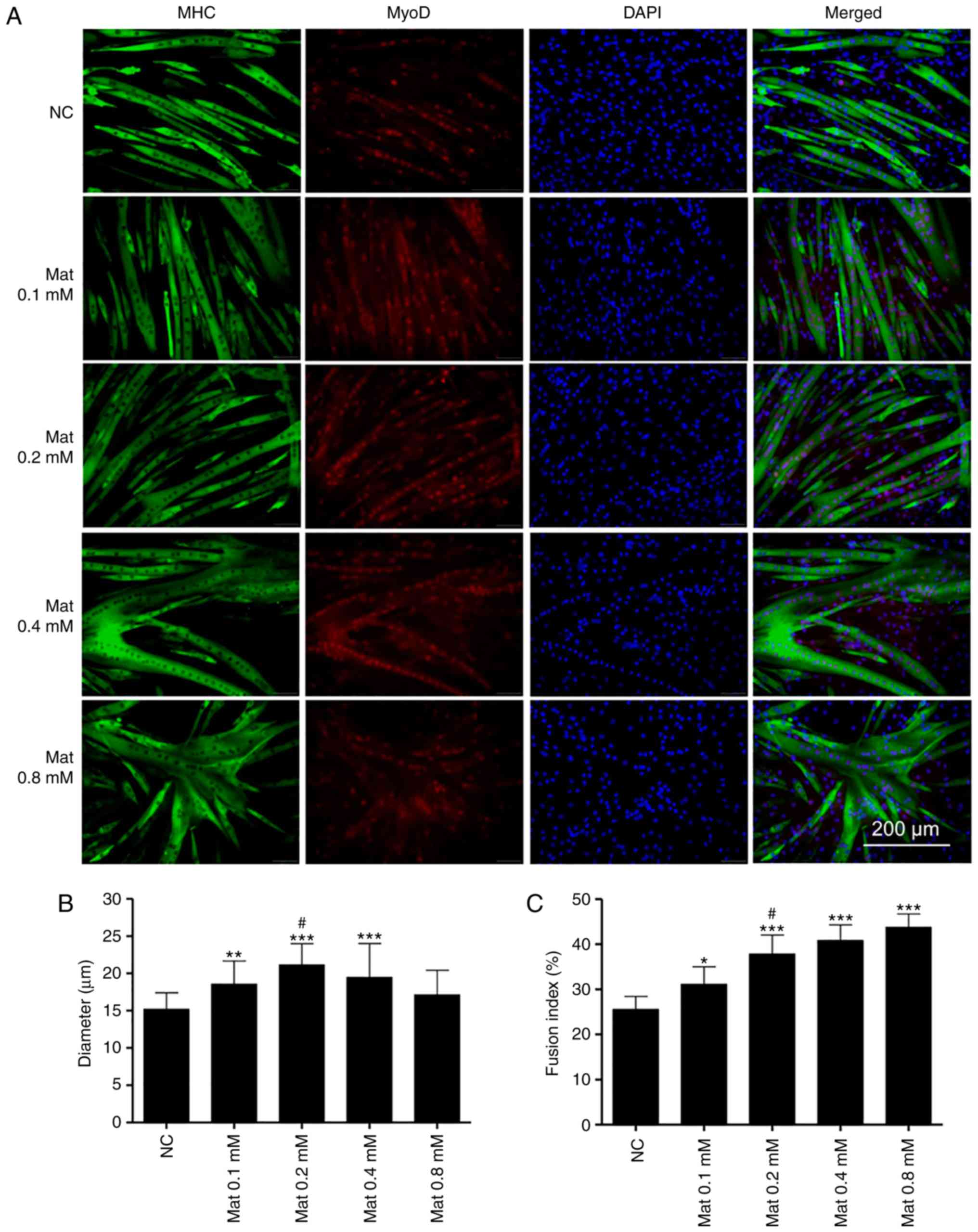
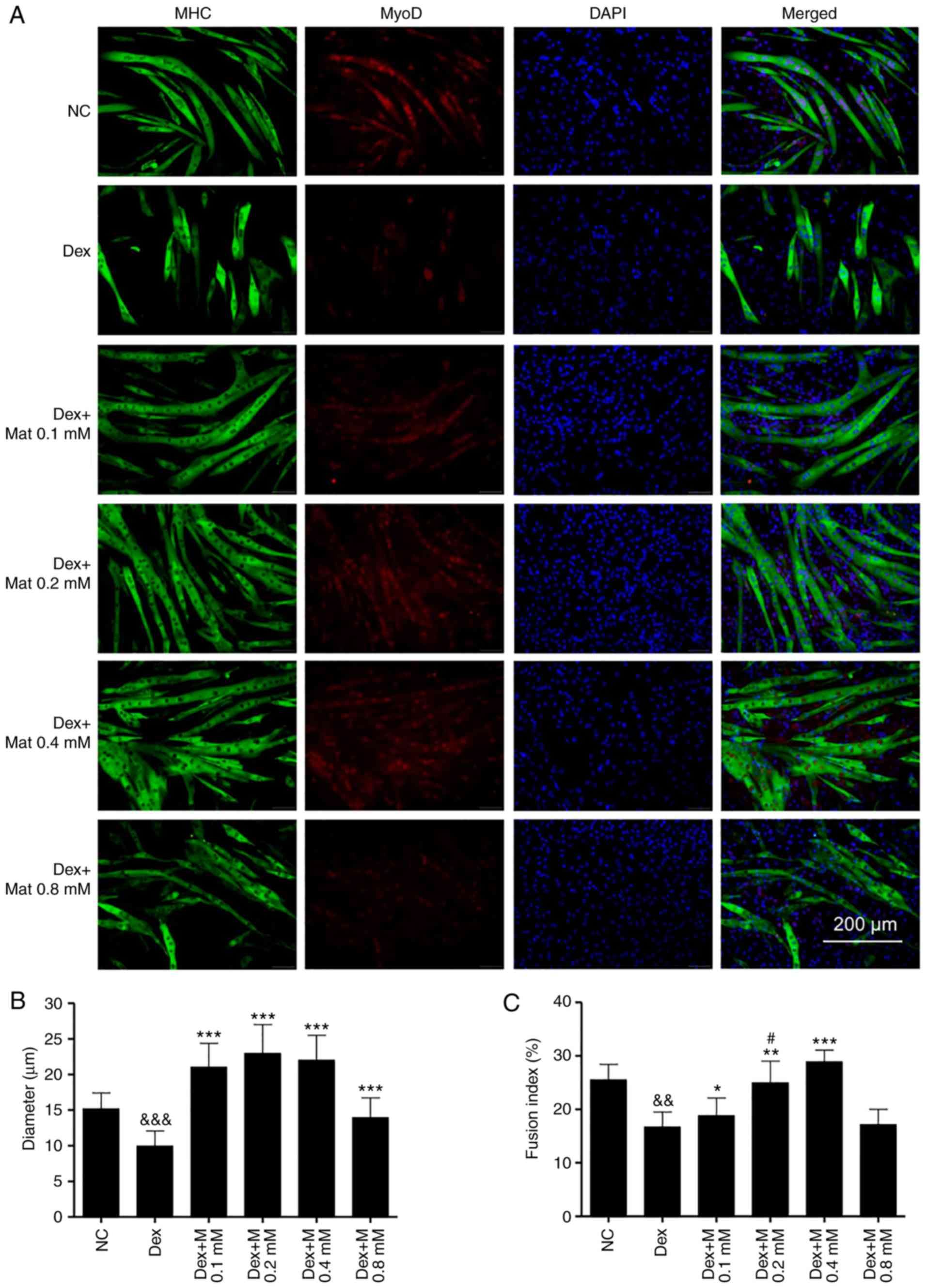
Skeletal muscle wasting is a feature of cancer cachexia that increases patient morbidity and mortality. Matrine, the main bioactive component of Sophora flavescens, has been approved for the prevention and therapy of cancer cachexia in China. However, to the best of our knowledge, its mechanism in improving muscle wasting remains unknown. The present study demonstrated that matrine increases muscle fiber size and muscle mass in an in vivo CT26 colon adenocarcinoma cachexia mouse model. Concurrently, other cachexia symptoms, including body and organ weight loss, were alleviated. In in vitro experiments, matrine substantially improved C2C12 myoblast differentiation with or without dexamethasone treatment. In addition, matrine reduced C2C12 myotube atrophy and apoptosis induced by dexamethasone, tumor necrosis factor α and conditioned medium. Two E3 ubiquitin ligases, muscle RING‑finger containing protein‑1 and muscle atrophy F­box protein, which are specifically expressed in wasting skeletal muscle, were also significantly downregulated (P<0.05) by matrine both in C2C12 myotubes and skeletal muscle. Furthermore, matrine increased the phosphorylation of Akt, mTOR and FoxO3α in the atrophying C2C12 myotube induced by dexamethasone. In conclusion, matrine can alleviate muscle atrophy and improve myoblast differentiation possibly by inhibiting E3 ubiquitin ligases and activating the Akt/mTOR/FoxO3α signaling pathway.
View Figures

Figure 1

Figure 2

Figure 3

Figure 4

Figure 5

Figure 6

Figure 7

Figure 8

Figure 9

View References

1 

Baracos VE, Martin L, Korc M, Guttridge DC and Fearon KCH: Cancer-associated cachexia. Nat Rev Dis Primers. 4:171052018. View Article : Google Scholar : PubMed/NCBI

2 

Fearon K, Strasser F, Anker SD, Bosaeus I, Bruera E, Fainsinger RL, Jatoi A, Loprinzi C, MacDonald N, Mantovani G, et al: Definition and classification of cancer cachexia: An international consensus. Lancet Oncol. 12:489–495. 2011. View Article : Google Scholar : PubMed/NCBI

3 

Argiles JM, Busquets S, Stemmler B and Lopez-Soriano FJ: Cancer cachexia: Understanding the molecular basis. Nat Rev Cancer. 14:754–762. 2014. View Article : Google Scholar : PubMed/NCBI

4 

Daly LE, Ní Bhuachalla ÉB, Power DG, Cushen SJ, James K and Ryan AM: Loss of skeletal muscle during systemic chemotherapy is prognostic of poor survival in patients with foregut cancer. J Cachexia Sarcopenia Muscle. 9:315–325. 2018. View Article : Google Scholar : PubMed/NCBI

5 

Fearon K, Arends J and Baracos V: Understanding the mechanisms and treatment options in cancer cachexia. Nat Rev Clin Oncol. 10:90–99. 2013. View Article : Google Scholar : PubMed/NCBI

6 

Yang QJ, Zhao JR, Hao J, Li B, Huo Y, Han YL, Wan LL, Li J, Huang J, Lu J, et al: Serum and urine metabolomics study reveals a distinct diagnostic model for cancer cachexia. J Cachexia Sarcopenia Muscle. 9:71–85. 2018. View Article : Google Scholar : PubMed/NCBI

7 

Quanjun Y, Genjin Y, Lili W, Bin L, Jin L, Qi Y, Yan L, Yonglong H, Cheng G and Junping Z: Serum metabolic profiles reveal the effect of formoterol on cachexia in tumor-bearing mice. Mol Biosyst. 9:3015–3025. 2013. View Article : Google Scholar : PubMed/NCBI

8 

Chen T, Li B, Xu Y, Meng S, Wang Y and Jiang Y: Luteolin reduces cancerinduced skeletal and cardiac muscle atrophy in a Lewis lung cancer mouse model. Oncol Rep. 40:1129–1137. 2018.PubMed/NCBI

9 

Chen X, Wu Y, Yang T, Wei M, Wang Y, Deng X, Shen C, Li W, Zhang H, Xu W, et al: Salidroside alleviates cachexia symptoms in mouse models of cancer cachexia via activating mTOR signalling. J Cachexia Sarcopenia Muscle. 7:225–232. 2016. View Article : Google Scholar : PubMed/NCBI

10 

Argiles JM: The 2015 ESPEN Sir david cuthbertson lecture: Inflammation as the driving force of muscle wasting in cancer. Clin Nutr. 36:798–803. 2017. View Article : Google Scholar : PubMed/NCBI

11 

Lecker SH, Jagoe RT, Gilbert A, Gomes M, Baracos V, Bailey J, Price SR, Mitch WE and Goldberg AL: Multiple types of skeletal muscle atrophy involve a common program of changes in gene expression. FASEB J. 18:39–51. 2004. View Article : Google Scholar : PubMed/NCBI

12 

Crossland H, Constantin-Teodosiu D, Gardiner SM, Constantin D and Greenhaff PL: A potential role for Akt/FOXO signalling in both protein loss and the impairment of muscle carbohydrate oxidation during sepsis in rodent skeletal muscle. J Physiol. 586:5589–5600. 2008. View Article : Google Scholar : PubMed/NCBI

13 

Bodine SC, Latres E, Baumhueter S, Lai VK, Nunez L, Clarke BA, Poueymirou WT, Panaro FJ, Na E, Dharmarajan K, et al: Identification of ubiquitin ligases required for skeletal muscle atrophy. Science. 294:1704–1708. 2001. View Article : Google Scholar : PubMed/NCBI

14 

Glass DJ: Signaling pathways perturbing muscle mass. Curr Opin Clin Nutr Metab Care. 13:225–229. 2010. View Article : Google Scholar : PubMed/NCBI

15 

Bodine SC, Stitt TN, Gonzalez M, Kline WO, Stover GL, Bauerlein R, Zlotchenko E, Scrimgeour A, Lawrence JC, Glass DJ and Yancopoulos GD: Akt/mTOR pathway is a crucial regulator of skeletal muscle hypertrophy and can prevent muscle atrophy in vivo. Nat Cell Biol. 3:1014–1019. 2001. View Article : Google Scholar : PubMed/NCBI

16 

Cai D, Frantz JD, Tawa NJ, Melendez PA, Oh BC, Lidov HG, Hasselgren PO, Frontera WR, Lee J, Glass DJ and Shoelson SE: IKKbeta/NF-kappaB activation causes severe muscle wasting in mice. Cell. 119:285–298. 2004. View Article : Google Scholar : PubMed/NCBI

17 

McFarlane C, Plummer E, Thomas M, Hennebry A, Ashby M, Ling N, Smith H, Sharma M and Kambadur R: Myostatin induces cachexia by activating the ubiquitin proteolytic system through an NF-kappaB-independent, FoxO1-dependent mechanism. J Cell Physiol. 209:501–514. 2006. View Article : Google Scholar : PubMed/NCBI

18 

Zimmers TA, Fishel ML and Bonetto A: STAT3 in the systemic inflammation of cancer cachexia. Semin Cell Dev Biol. 54:28–41. 2016. View Article : Google Scholar : PubMed/NCBI

19 

Sandri M, Sandri C, Gilbert A, Skurk C, Calabria E, Picard A, Walsh K, Schiaffino S, Lecker SH and Goldberg AL: Foxo transcription factors induce the atrophy-related ubiquitin ligase atrogin-1 and cause skeletal muscle atrophy. Cell. 117:399–412. 2004. View Article : Google Scholar : PubMed/NCBI

20 

Kitzmann M, Carnac G, Vandromme M, Primig M, Lamb NJ and Fernandez A: The muscle regulatory factors MyoD and myf-5 undergo distinct cell cycle-specific expression in muscle cells. J Cell Biol. 142:1447–1459. 1998. View Article : Google Scholar : PubMed/NCBI

21 

Long Y, Lin XT, Zeng KL and Zhang L: Efficacy of intramuscular matrine in the treatment of chronic hepatitis B. Hepatobiliary Pancreat Dis Int. 3:69–72. 2004.PubMed/NCBI

22 

Li X, Wang X, Guo Y, Deng N, Zheng P, Xu Q, Wu Y and Dai G: Regulation of endothelial nitric oxide synthase and asymmetric dimethylarginine by matrine attenuates isoproterenol-induced acute myocardial injury in rats. J Pharm Pharmacol. 64:1107–1118. 2012. View Article : Google Scholar : PubMed/NCBI

23 

Li Y, Wang B, Zhou C and Bi Y: Matrine induces apoptosis in angiotensin II-stimulated hyperplasia of cardiac fibroblasts: Effects on Bcl-2/Bax expression and caspase-3 activation. Basic Clin Pharmacol Toxicol. 101:1–8. 2007. View Article : Google Scholar : PubMed/NCBI

24 

Shao H, Yang B, HU R and Wang Y: Matrine effectively inhibits the proliferation of breast cancer cells through a mechanism related to the NF-κB signaling pathway. Oncol Lett. 6:517–520. 2013. View Article : Google Scholar : PubMed/NCBI

25 

Zhang S, Cheng B, Li H, Xu W, Zhai B, Pan S, Wang L, Liu M and Sun X: Matrine inhibits proliferation and induces apoptosis of human colon cancer LoVo cells by inactivating Akt pathway. Mol Biol Rep. 41:2101–2108. 2014. View Article : Google Scholar : PubMed/NCBI

26 

Li Q, Lai Y, Wang C, Xu G, He Z, Shang X, Sun Y, Zhang F, Liu L and Huang H: Matrine inhibits the proliferation, invasion and migration of castration-resistant prostate cancer cells through regulation of the NF-κB signaling pathway. Oncol Rep. 35:375–381. 2016. View Article : Google Scholar : PubMed/NCBI

27 

Bai S, Chen T, Yu X, Luo M, Chen X, Lin C, Lai Y and Huang H: The specific killing effect of matrine on castration-resistant prostate cancer cells by targeting the Akt/FoxO3a signaling pathway. Oncol Rep. 37:2819–2828. 2017. View Article : Google Scholar : PubMed/NCBI

28 

Zhang Y, Wang S, Li Y, Xiao Z, Hu Z and Zhang J: Sophocarpine and matrine inhibit the production of TNF-alpha and IL-6 in murine macrophages and prevent cachexia-related symptoms induced by colon26 adenocarcinoma in mice. Int Immunopharmacol. 8:1767–1772. 2008. View Article : Google Scholar : PubMed/NCBI

29 

Donohoe CL, Ryan AM and Reynolds JV: Cancer cachexia: Mechanisms and clinical implications. Gastroenterol Res Pract. 2011:6014342011. View Article : Google Scholar : PubMed/NCBI

30 

Muscaritoli M, Anker SD, Argiles J, Aversa Z, Bauer JM, Biolo G, Boirie Y, Bosaeus I, Cederholm T, Costelli P, et al: Consensus definition of sarcopenia, cachexia and pre-cachexia: Joint document elaborated by Special Interest Groups (SIG) ‘cachexia-anorexia in chronic wasting diseases’ and ‘nutrition in geriatrics’. Clin Nutr. 29:154–159. 2010. View Article : Google Scholar : PubMed/NCBI

31 

Kim H, Jang M, Park R, Jo D, Choi I, Choe J, Oh WK and Park J: Conessine treatment reduces dexamethasone-induced muscle atrophy by regulating MuRF1 and atrogin-1 expression. J Microbiol Biotechnol. 28:520–526. 2018.PubMed/NCBI

32 

Jackman RW, Floro J, Yoshimine R, Zitin B, Eiampikul M, El-Jack K, Seto DN and Kandarian SC: Continuous release of tumor-derived factors improves the modeling of cachexia in muscle cell culture. Front Physiol. 8:7382017. View Article : Google Scholar : PubMed/NCBI

33 

Xi QL, Zhang B, Jiang Y, Zhang HS, Meng QY, Chen Y, Han YS, Zhuang QL, Han J, Wang HY, et al: Mitofusin-2 prevents skeletal muscle wasting in cancer cachexia. Oncol Lett. 12:4013–4020. 2016. View Article : Google Scholar : PubMed/NCBI

34 

Aulino P, Berardi E, Cardillo VM, Rizzuto E, Perniconi B, Ramina C, Padula F, Spugnini EP, Baldi A, Faiola F, et al: Molecular, cellular and physiological characterization of the cancer cachexia-inducing C26 colon carcinoma in mouse. BMC Cancer. 10:3632010. View Article : Google Scholar : PubMed/NCBI

35 

Yang Q, Wan L, Zhou Z, Li Y, Yu Q, Liu L, Li B and Guo C: Parthenolide from parthenium integrifolium reduces tumor burden and alleviate cachexia symptoms in the murine CT-26 model of colorectal carcinoma. Phytomedicine. 20:992–998. 2013. View Article : Google Scholar : PubMed/NCBI

36 

Livak KJ and Schmittgen TD: Analysis of relative gene expression data using real-time quantitative PCR and the 2(-Delta Delta C(T)) method. Methods. 25:402–408. 2001. View Article : Google Scholar : PubMed/NCBI

37 

Neefjes ECW, van den Hurk RM, Blauwhoff-Buskermolen S, van der Vorst MJDL, Becker-Commissaris A, de van der Schueren MAE, Buffart LM and Verheul HMW: Muscle mass as a target to reduce fatigue in patients with advanced cancer. J Cachexia Sarcopenia Muscle. 8:623–629. 2017. View Article : Google Scholar : PubMed/NCBI

38 

Carr RM, Enriquez-Hesles E, Olson RL, Jatoi A, Doles J and Fernandez-Zapico ME: Epigenetics of cancer-associated muscle catabolism. Epigenomics. Sep 25–2017.(Epub ahead of print). doi: 10.2217/epi-2017-0058 2017. View Article : Google Scholar : PubMed/NCBI

39 

Haddad F, Zaldivar F, Cooper DM and Adams GR: IL-6-induced skeletal muscle atrophy. J Appl Physiol (1985). 98:911–917. 2005. View Article : Google Scholar : PubMed/NCBI

40 

Deans C and Wigmore SJ: Systemic inflammation, cachexia and prognosis in patients with cancer. Curr Opin Clin Nutr Metab Care. 8:265–269. 2005. View Article : Google Scholar : PubMed/NCBI

41 

Patel HJ and Patel BM: TNF-α and cancer cachexia: Molecular insights and clinical implications. Life Sci. 170:56–63. 2017. View Article : Google Scholar : PubMed/NCBI

42 

Scheede-Bergdahl C, Watt HL, Trutschnigg B, Kilgour RD, Haggarty A, Lucar E and Vigano A: Is IL-6 the best pro-inflammatory biomarker of clinical outcomes of cancer cachexia? Clin Nutr. 31:85–88. 2012. View Article : Google Scholar : PubMed/NCBI

43 

Fearon KC, Glass DJ and Guttridge DC: Cancer cachexia: Mediators, signaling, and metabolic pathways. Cell Metab. 16:153–166. 2012. View Article : Google Scholar : PubMed/NCBI

44 

Wang XY, Liang L, Chang JL, Yang MH and Li ZG: Toxicity of matrine in Kunming mice. Nan Fang Yi Ke Da Xue Xue Bao. 30:2154–2155. 2010.(In Chinese). PubMed/NCBI

45 

Lu ZG, Li MH, Wang JS, Wei DD, Liu QW and Kong LY: Developmental toxicity and neurotoxicity of two matrine-type alkaloids, matrine and sophocarpine, in zebrafish (Danio rerio) embryos/larvae. Reprod Toxicol. 47:33–41. 2014. View Article : Google Scholar : PubMed/NCBI

46 

Burattini S, Ferri P, Battistelli M, Curci R, Luchetti F and Falcieri E: C2C12 murine myoblasts as a model of skeletal muscle development: Morpho-functional characterization. Eur J Histochemistry. 48:223–233. 2004.

47 

Clarke BA, Drujan D, Willis MS, Murphy LO, Corpina RA, Burova E, Rakhilin SV, Stitt TN, Patterson C, Latres E and Glass DJ: The E3 Ligase MuRF1 degrades myosin heavy chain protein in dexamethasone-treated skeletal muscle. Cell Metab. 6:376–385. 2007. View Article : Google Scholar : PubMed/NCBI

48 

Castillero E, Alamdari N, Lecker SH and Hasselgren PO: Suppression of atrogin-1 and MuRF1 prevents dexamethasone-induced atrophy of cultured myotubes. Metabolism. 62:1495–1502. 2013. View Article : Google Scholar : PubMed/NCBI

49 

Adams GR, Hather BM, Baldwin KM and Dudley GA: Skeletal muscle myosin heavy chain composition and resistance training. J Appl Physiol (1985). 74:911–915. 1993. View Article : Google Scholar : PubMed/NCBI

50 

Desler MM, Jones SJ, Smith CW and Woods TL: Effects of dexamethasone and anabolic agents on proliferation and protein synthesis and degradation in C2C12 myogenic cells. J Anim Sci. 74:1265–1273. 1996. View Article : Google Scholar : PubMed/NCBI

51 

Schiaffino S, Dyar KA, Ciciliot S, Blaauw B and Sandri M: Mechanisms regulating skeletal muscle growth and atrophy. FEBS J. 280:4294–4314. 2013. View Article : Google Scholar : PubMed/NCBI

52 

Lokireddy S, McFarlane C, Ge X, Zhang H, Sze SK, Sharma M and Kambadur R: Myostatin induces degradation of sarcomeric proteins through a Smad3 signaling mechanism during skeletal muscle wasting. Mol Endocrinol. 25:1936–1949. 2011. View Article : Google Scholar : PubMed/NCBI

Related Articles

  • Abstract
  • View
  • Download
  • Twitter
Copy and paste a formatted citation
Spandidos Publications style
Chen L, Chen L, Wan L, Huo Y, Huang J, Li J, Lu J, Xin B, Yang Q, Guo C, Guo C, et al: Matrine improves skeletal muscle atrophy by inhibiting E3 ubiquitin ligases and activating the Akt/mTOR/FoxO3α signaling pathway in C2C12 myotubes and mice . Oncol Rep 42: 479-494, 2019.
APA
Chen, L., Chen, L., Wan, L., Huo, Y., Huang, J., Li, J. ... Guo, C. (2019). Matrine improves skeletal muscle atrophy by inhibiting E3 ubiquitin ligases and activating the Akt/mTOR/FoxO3α signaling pathway in C2C12 myotubes and mice . Oncology Reports, 42, 479-494. https://doi.org/10.3892/or.2019.7205
MLA
Chen, L., Chen, L., Wan, L., Huo, Y., Huang, J., Li, J., Lu, J., Xin, B., Yang, Q., Guo, C."Matrine improves skeletal muscle atrophy by inhibiting E3 ubiquitin ligases and activating the Akt/mTOR/FoxO3α signaling pathway in C2C12 myotubes and mice ". Oncology Reports 42.2 (2019): 479-494.
Chicago
Chen, L., Chen, L., Wan, L., Huo, Y., Huang, J., Li, J., Lu, J., Xin, B., Yang, Q., Guo, C."Matrine improves skeletal muscle atrophy by inhibiting E3 ubiquitin ligases and activating the Akt/mTOR/FoxO3α signaling pathway in C2C12 myotubes and mice ". Oncology Reports 42, no. 2 (2019): 479-494. https://doi.org/10.3892/or.2019.7205
Copy and paste a formatted citation
x
Spandidos Publications style
Chen L, Chen L, Wan L, Huo Y, Huang J, Li J, Lu J, Xin B, Yang Q, Guo C, Guo C, et al: Matrine improves skeletal muscle atrophy by inhibiting E3 ubiquitin ligases and activating the Akt/mTOR/FoxO3α signaling pathway in C2C12 myotubes and mice . Oncol Rep 42: 479-494, 2019.
APA
Chen, L., Chen, L., Wan, L., Huo, Y., Huang, J., Li, J. ... Guo, C. (2019). Matrine improves skeletal muscle atrophy by inhibiting E3 ubiquitin ligases and activating the Akt/mTOR/FoxO3α signaling pathway in C2C12 myotubes and mice . Oncology Reports, 42, 479-494. https://doi.org/10.3892/or.2019.7205
MLA
Chen, L., Chen, L., Wan, L., Huo, Y., Huang, J., Li, J., Lu, J., Xin, B., Yang, Q., Guo, C."Matrine improves skeletal muscle atrophy by inhibiting E3 ubiquitin ligases and activating the Akt/mTOR/FoxO3α signaling pathway in C2C12 myotubes and mice ". Oncology Reports 42.2 (2019): 479-494.
Chicago
Chen, L., Chen, L., Wan, L., Huo, Y., Huang, J., Li, J., Lu, J., Xin, B., Yang, Q., Guo, C."Matrine improves skeletal muscle atrophy by inhibiting E3 ubiquitin ligases and activating the Akt/mTOR/FoxO3α signaling pathway in C2C12 myotubes and mice ". Oncology Reports 42, no. 2 (2019): 479-494. https://doi.org/10.3892/or.2019.7205
Follow us
  • Twitter
  • LinkedIn
  • Facebook
About
  • Spandidos Publications
  • Careers
  • Cookie Policy
  • Privacy Policy
How can we help?
  • Help
  • Live Chat
  • Contact
  • Email to our Support Team