Spandidos Publications Logo
  • About
    • About Spandidos
    • Aims and Scopes
    • Abstracting and Indexing
    • Editorial Policies
    • Reprints and Permissions
    • Job Opportunities
    • Terms and Conditions
    • Contact
  • Journals
    • All Journals
    • Oncology Letters
      • Oncology Letters
      • Information for Authors
      • Editorial Policies
      • Editorial Board
      • Aims and Scope
      • Abstracting and Indexing
      • Bibliographic Information
      • Archive
    • International Journal of Oncology
      • International Journal of Oncology
      • Information for Authors
      • Editorial Policies
      • Editorial Board
      • Aims and Scope
      • Abstracting and Indexing
      • Bibliographic Information
      • Archive
    • Molecular and Clinical Oncology
      • Molecular and Clinical Oncology
      • Information for Authors
      • Editorial Policies
      • Editorial Board
      • Aims and Scope
      • Abstracting and Indexing
      • Bibliographic Information
      • Archive
    • Experimental and Therapeutic Medicine
      • Experimental and Therapeutic Medicine
      • Information for Authors
      • Editorial Policies
      • Editorial Board
      • Aims and Scope
      • Abstracting and Indexing
      • Bibliographic Information
      • Archive
    • International Journal of Molecular Medicine
      • International Journal of Molecular Medicine
      • Information for Authors
      • Editorial Policies
      • Editorial Board
      • Aims and Scope
      • Abstracting and Indexing
      • Bibliographic Information
      • Archive
    • Biomedical Reports
      • Biomedical Reports
      • Information for Authors
      • Editorial Policies
      • Editorial Board
      • Aims and Scope
      • Abstracting and Indexing
      • Bibliographic Information
      • Archive
    • Oncology Reports
      • Oncology Reports
      • Information for Authors
      • Editorial Policies
      • Editorial Board
      • Aims and Scope
      • Abstracting and Indexing
      • Bibliographic Information
      • Archive
    • Molecular Medicine Reports
      • Molecular Medicine Reports
      • Information for Authors
      • Editorial Policies
      • Editorial Board
      • Aims and Scope
      • Abstracting and Indexing
      • Bibliographic Information
      • Archive
    • World Academy of Sciences Journal
      • World Academy of Sciences Journal
      • Information for Authors
      • Editorial Policies
      • Editorial Board
      • Aims and Scope
      • Abstracting and Indexing
      • Bibliographic Information
      • Archive
    • International Journal of Functional Nutrition
      • International Journal of Functional Nutrition
      • Information for Authors
      • Editorial Policies
      • Editorial Board
      • Aims and Scope
      • Abstracting and Indexing
      • Bibliographic Information
      • Archive
    • International Journal of Epigenetics
      • International Journal of Epigenetics
      • Information for Authors
      • Editorial Policies
      • Editorial Board
      • Aims and Scope
      • Abstracting and Indexing
      • Bibliographic Information
      • Archive
    • Medicine International
      • Medicine International
      • Information for Authors
      • Editorial Policies
      • Editorial Board
      • Aims and Scope
      • Abstracting and Indexing
      • Bibliographic Information
      • Archive
  • Articles
  • Information
    • Information for Authors
    • Information for Reviewers
    • Information for Librarians
    • Information for Advertisers
    • Conferences
  • Language Editing
Spandidos Publications Logo
  • About
    • About Spandidos
    • Aims and Scopes
    • Abstracting and Indexing
    • Editorial Policies
    • Reprints and Permissions
    • Job Opportunities
    • Terms and Conditions
    • Contact
  • Journals
    • All Journals
    • Biomedical Reports
      • Information for Authors
      • Editorial Policies
      • Editorial Board
      • Aims and Scope
      • Abstracting and Indexing
      • Bibliographic Information
      • Archive
    • Experimental and Therapeutic Medicine
      • Information for Authors
      • Editorial Policies
      • Editorial Board
      • Aims and Scope
      • Abstracting and Indexing
      • Bibliographic Information
      • Archive
    • International Journal of Epigenetics
      • Information for Authors
      • Editorial Policies
      • Editorial Board
      • Aims and Scope
      • Abstracting and Indexing
      • Bibliographic Information
      • Archive
    • International Journal of Functional Nutrition
      • Information for Authors
      • Editorial Policies
      • Editorial Board
      • Aims and Scope
      • Abstracting and Indexing
      • Bibliographic Information
      • Archive
    • International Journal of Molecular Medicine
      • Information for Authors
      • Editorial Policies
      • Editorial Board
      • Aims and Scope
      • Abstracting and Indexing
      • Bibliographic Information
      • Archive
    • International Journal of Oncology
      • Information for Authors
      • Editorial Policies
      • Editorial Board
      • Aims and Scope
      • Abstracting and Indexing
      • Bibliographic Information
      • Archive
    • Medicine International
      • Information for Authors
      • Editorial Policies
      • Editorial Board
      • Aims and Scope
      • Abstracting and Indexing
      • Bibliographic Information
      • Archive
    • Molecular and Clinical Oncology
      • Information for Authors
      • Editorial Policies
      • Editorial Board
      • Aims and Scope
      • Abstracting and Indexing
      • Bibliographic Information
      • Archive
    • Molecular Medicine Reports
      • Information for Authors
      • Editorial Policies
      • Editorial Board
      • Aims and Scope
      • Abstracting and Indexing
      • Bibliographic Information
      • Archive
    • Oncology Letters
      • Information for Authors
      • Editorial Policies
      • Editorial Board
      • Aims and Scope
      • Abstracting and Indexing
      • Bibliographic Information
      • Archive
    • Oncology Reports
      • Information for Authors
      • Editorial Policies
      • Editorial Board
      • Aims and Scope
      • Abstracting and Indexing
      • Bibliographic Information
      • Archive
    • World Academy of Sciences Journal
      • Information for Authors
      • Editorial Policies
      • Editorial Board
      • Aims and Scope
      • Abstracting and Indexing
      • Bibliographic Information
      • Archive
  • Articles
  • Information
    • For Authors
    • For Reviewers
    • For Librarians
    • For Advertisers
    • Conferences
  • Language Editing
Login Register Submit
  • This site uses cookies
  • You can change your cookie settings at any time by following the instructions in our Cookie Policy. To find out more, you may read our Privacy Policy.

    I agree
Search articles by DOI, keyword, author or affiliation
Search
Advanced Search
presentation
Oncology Reports
Join Editorial Board Propose a Special Issue
Print ISSN: 1021-335X Online ISSN: 1791-2431
Journal Cover
November-2019 Volume 42 Issue 5

Full Size Image

Sign up for eToc alerts
Recommend to Library

Journals

International Journal of Molecular Medicine

International Journal of Molecular Medicine

International Journal of Molecular Medicine is an international journal devoted to molecular mechanisms of human disease.

International Journal of Oncology

International Journal of Oncology

International Journal of Oncology is an international journal devoted to oncology research and cancer treatment.

Molecular Medicine Reports

Molecular Medicine Reports

Covers molecular medicine topics such as pharmacology, pathology, genetics, neuroscience, infectious diseases, molecular cardiology, and molecular surgery.

Oncology Reports

Oncology Reports

Oncology Reports is an international journal devoted to fundamental and applied research in Oncology.

Experimental and Therapeutic Medicine

Experimental and Therapeutic Medicine

Experimental and Therapeutic Medicine is an international journal devoted to laboratory and clinical medicine.

Oncology Letters

Oncology Letters

Oncology Letters is an international journal devoted to Experimental and Clinical Oncology.

Biomedical Reports

Biomedical Reports

Explores a wide range of biological and medical fields, including pharmacology, genetics, microbiology, neuroscience, and molecular cardiology.

Molecular and Clinical Oncology

Molecular and Clinical Oncology

International journal addressing all aspects of oncology research, from tumorigenesis and oncogenes to chemotherapy and metastasis.

World Academy of Sciences Journal

World Academy of Sciences Journal

Multidisciplinary open-access journal spanning biochemistry, genetics, neuroscience, environmental health, and synthetic biology.

International Journal of Functional Nutrition

International Journal of Functional Nutrition

Open-access journal combining biochemistry, pharmacology, immunology, and genetics to advance health through functional nutrition.

International Journal of Epigenetics

International Journal of Epigenetics

Publishes open-access research on using epigenetics to advance understanding and treatment of human disease.

Medicine International

Medicine International

An International Open Access Journal Devoted to General Medicine.

Journal Cover
November-2019 Volume 42 Issue 5

Full Size Image

Sign up for eToc alerts
Recommend to Library

  • Article
  • Citations
    • Cite This Article
    • Download Citation
    • Create Citation Alert
    • Remove Citation Alert
    • Cited By
  • Similar Articles
    • Related Articles (in Spandidos Publications)
    • Similar Articles (Google Scholar)
    • Similar Articles (PubMed)
  • Download PDF
  • Download XML
  • View XML

  • Supplementary Files
    • Supplementary_Data.pdf
Article

High blood levels of soluble OX40 (CD134), an immune costimulatory molecule, indicate reduced survival in patients with advanced colorectal cancer

  • Authors:
    • Ryoichi Sawada
    • Yoshinori Arai
    • Yukiko Sagawa
    • Yusuke Nagata
    • Takashi Nishimura
    • Masaaki Noguchi
    • Katsushi Amano
    • Seiji Arihiro
    • Masayuki Saruta
    • Sadamu Homma
  • View Affiliations / Copyright

    Affiliations: Division of Gastroenterology and Hepatology, Department of Internal Medicine, The Jikei University School of Medicine, Tokyo 105‑8461, Japan, Division of Oncology, Research Center for Medical Sciences, The Jikei University School of Medicine, Tokyo 105‑8461, Japan
  • Pages: 2057-2064
    |
    Published online on: September 6, 2019
       https://doi.org/10.3892/or.2019.7304
  • Expand metrics +
Metrics: Total Views: 0 (Spandidos Publications: | PMC Statistics: )
Metrics: Total PDF Downloads: 0 (Spandidos Publications: | PMC Statistics: )
Cited By (CrossRef): 0 citations Loading Articles...

This article is mentioned in:


Abstract

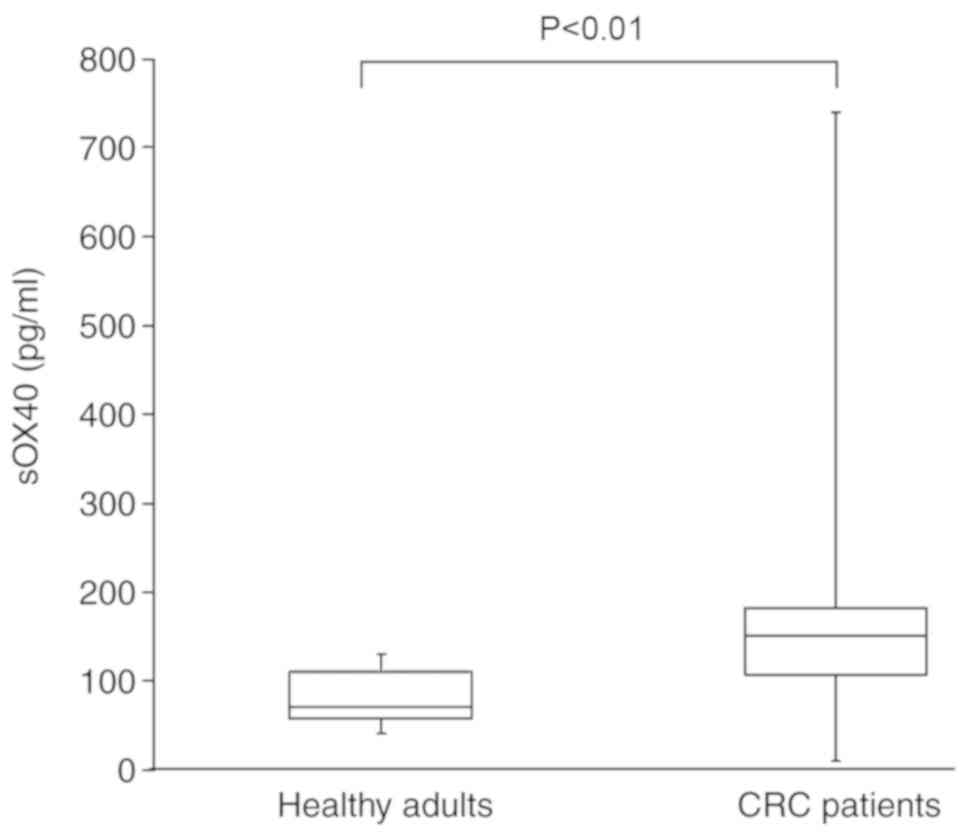
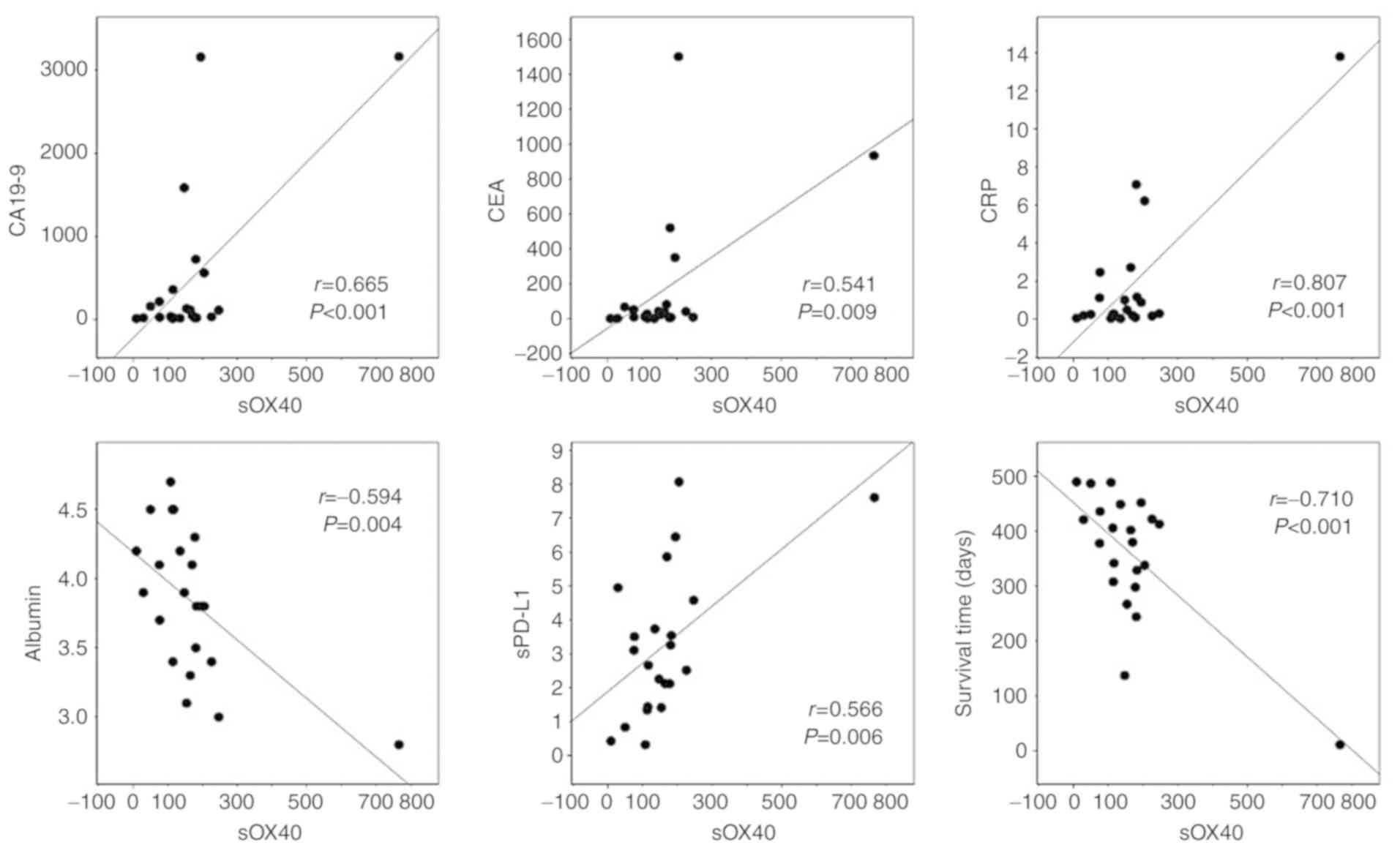
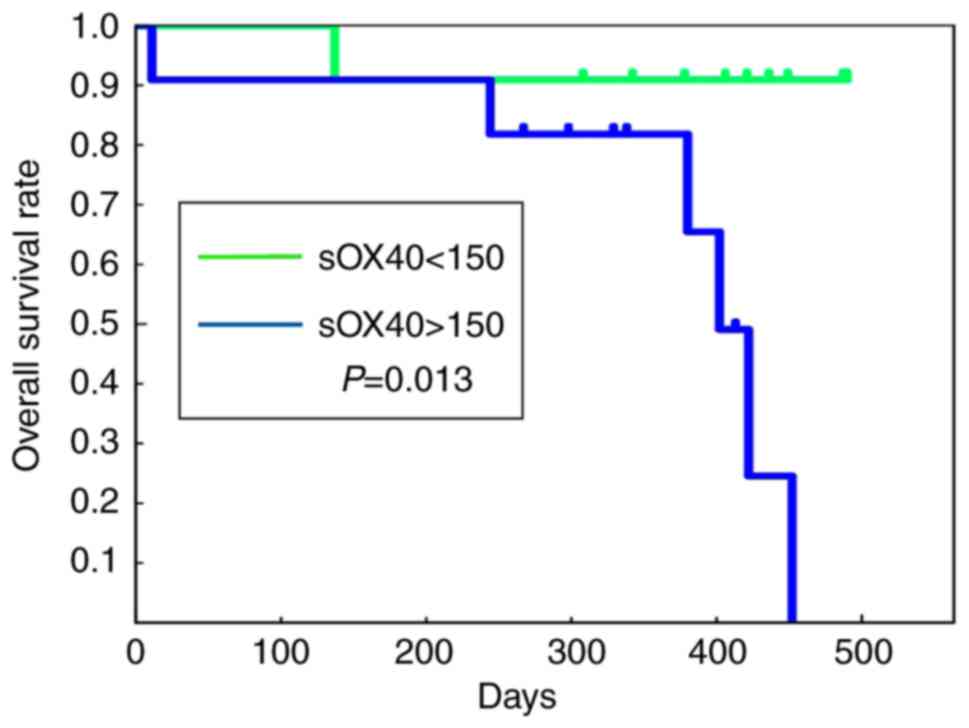
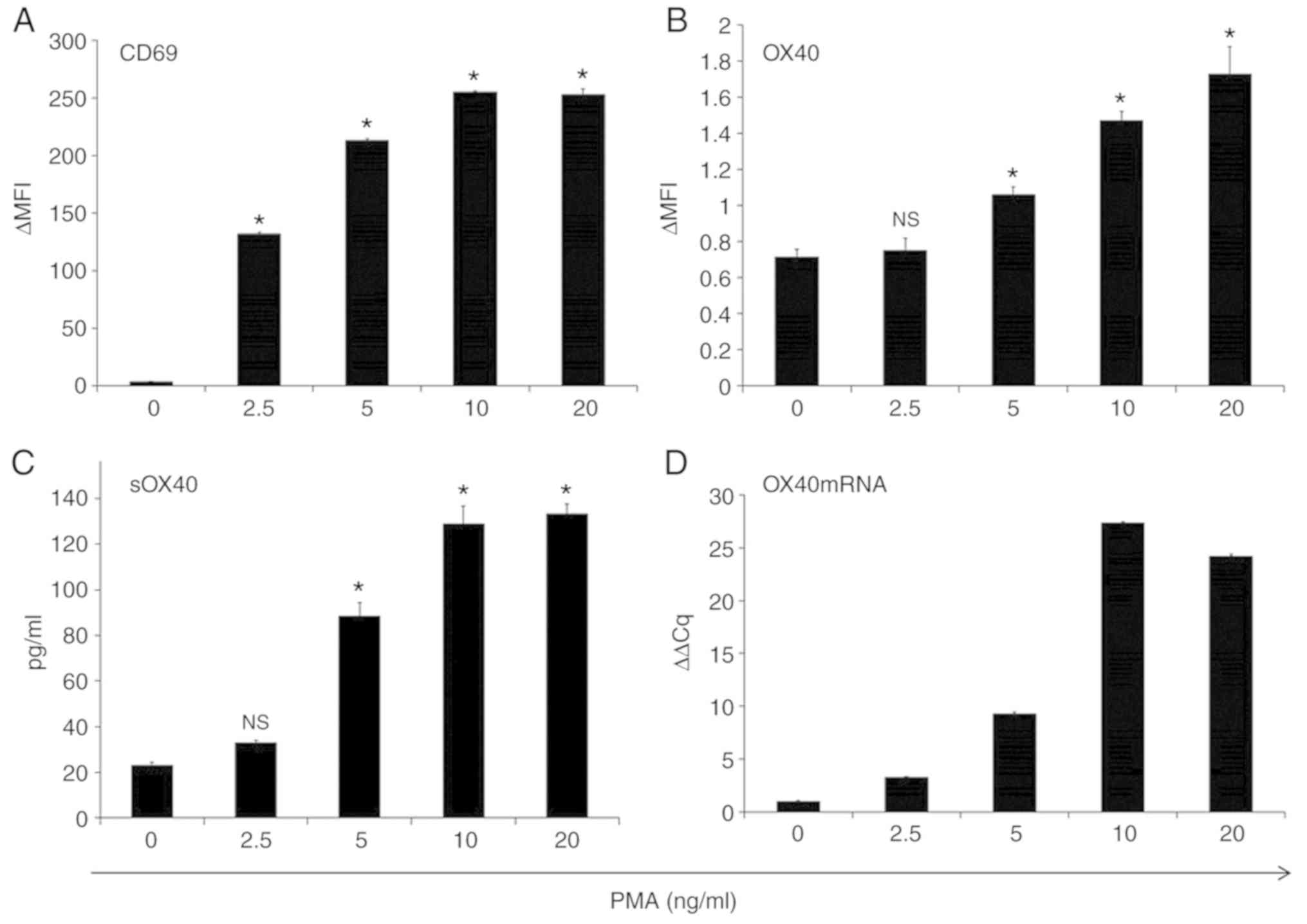
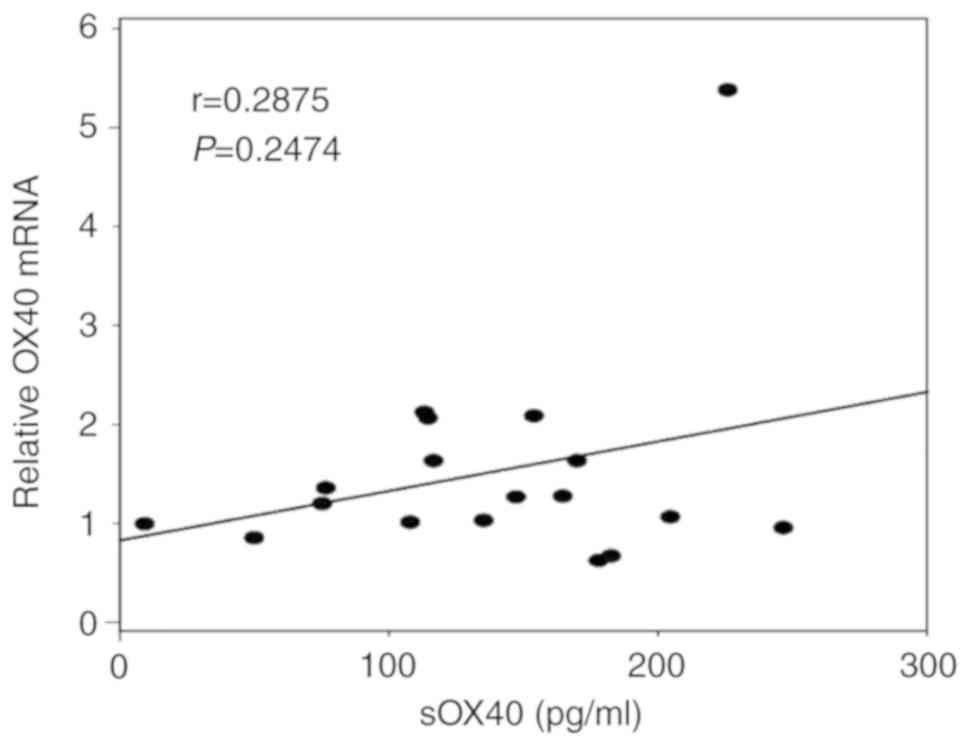
The interaction between tumor necrosis factor receptor superfamily, member 4 (OX40) on T cells and the OX40 ligand (OX40L) on antigen‑presenting cells (APCs) is a pivotal step for T‑cell activation and the promotion of antitumor immunity. However, it is hypothesized that soluble OX40 (sOX40) in blood suppresses T‑cell activation by blocking the OX40/OX40L interaction. In the present study, the association between blood sOX40 levels and the clinical characteristics of advanced colorectal cancer (CRC) patients was investigated. Blood was collected from 22 patients with advanced CRC. Blood sOX40 levels were determined by enzyme‑linked immunosorbent assay (ELISA). Messenger RNA (mRNA) expression encoding OX40 or cytokines was analyzed by quantitative RT‑PCR. Blood sOX40 levels were positively correlated with the blood levels of carbohydrate antigen (CA) 19‑9, carcinoembryonic antigen (CEA), C‑reactive protein (CRP) and soluble programmed cell death ligand‑1 (PD‑L1) in patients but negatively correlated with the blood levels of albumin. Blood sOX40 levels were not correlated with the mRNA expression of interferon (IFN)‑gamma, interleukin (IL)‑6, IL‑10 and IL‑4 in the peripheral blood mononuclear cells (PBMCs) of the patients and were not correlated with the frequency of programmed cell death‑1 (PD‑1) expressing CD4+, CD8+ and CD56+ cells. Notably, according to both univariate and multivariate analyses, high blood sOX40 levels were significantly correlated with a reduced survival time in patients. Although activated Jurkat cells (a human T cell line) exhibited an upregulation of sOX40 production and OX40 mRNA expression, the OX40 mRNA expression of the PBMCs of patients was not correlated with blood sOX40 levels. High blood levels of sOX40 were correlated with a reduced survival time in patients with advanced CRC, possibly associated with the suppression of antitumor immunity by sOX40.
View Figures

Figure 1

Figure 2

Figure 3

Figure 4

Figure 5

View References

1 

Anari F, Ramamurthy C and Zibelman M: Impact of tumor microenvironment composition on therapeutic responses and clinical outcomes in cancer. Future Oncol. 14:1409–1421. 2018. View Article : Google Scholar : PubMed/NCBI

2 

Huh JW, Lee JH and Kim HR: Prognostic significance of tumor-infiltrating lymphocytes for patients with colorectal cancer. Arch Surg. 147:366–372. 2012. View Article : Google Scholar : PubMed/NCBI

3 

Galon J, Costes A, Sanchez-Cabo F, Kirilovsky A, Mlecnik B, Lagorce-Pagès C, Tosolini M, Camus M, Berger A, Wind P, et al: Type, density, and location of immune cells within human colorectal tumors predict clinical outcome. Science. 313:1960–1964. 2006. View Article : Google Scholar : PubMed/NCBI

4 

Teng F, Mu D, Meng X, Kong L, Zhu H, Liu S, Zhang J and Yu J: Tumor infiltrating lymphocytes (TILs) before and after neoadjuvant chemoradiotherapy and its clinical utility for rectal cancer. Am J Cancer Res. 5:2064–2074. 2015.PubMed/NCBI

5 

Lee WS, Kang M, Baek JH, Lee JI and Ha SY: Clinical impact of tumor-infiltrating lymphocytes for survival in curatively resected stage IV colon cancer with isolated liver or lung metastasis. Ann Surg Oncol. 20:697–702. 2013. View Article : Google Scholar : PubMed/NCBI

6 

Kwak Y, Koh J, Kim DW, Kang SB, Kim WH and Lee HS: Immunoscore encompassing CD3+ and CD8+ T cell densities in distant metastasis is a robust prognostic marker for advanced colorectal cancer. Oncotarget. 7:81778–81790. 2016. View Article : Google Scholar : PubMed/NCBI

7 

Yasuda K, Nirei T, Sunami E, Nagawa H and Kitayama J: Density of CD4(+) and CD8(+) T lymphocytes in biopsy samples can be a predictor of pathological response to chemoradiotherapy (CRT) for rectal cancer. Radiat Oncol. 6:492011. View Article : Google Scholar : PubMed/NCBI

8 

Halama N, Michel S, Kloor M, Zoernig I, Benner A, Spille A, Pommerencke T, von Knebel DM, Folprecht G, Luber B, et al: Localization and density of immune cells in the invasive margin of human colorectal cancer liver metastases are prognostic for response to chemotherapy. Cancer Res. 71:5670–5677. 2011. View Article : Google Scholar : PubMed/NCBI

9 

Tanis E, Julié C, Emile JF, Mauer M, Nordlinger B, Aust D, Roth A, Lutz MP, Gruenberger T, Wrba F, et al: Prognostic impact of immune response in resectable colorectal liver metastases treated by surgery alone or surgery with perioperative FOLFOX in the randomised EORTC study 40983. Eur J Cancer. 51:2708–2717. 2015. View Article : Google Scholar : PubMed/NCBI

10 

Foell J, Hewes B and Mittler RS: T cell costimulatory and inhibitory receptors as therapeutic targets for inducing anti-tumor immunity. Curr Cancer Drug Targets. 7:55–70. 2007. View Article : Google Scholar : PubMed/NCBI

11 

Li J and Gu J: Efficacy and safety of PD-1 inhibitors for treating advanced melanoma: A systematic review and meta-analysis. Immunotherapy. 10:1293–1302. 2018. View Article : Google Scholar : PubMed/NCBI

12 

Valecha GK, Vennepureddy A, Ibrahim U, Safa F, Samra B and Atallah JP: Anti-PD-1/PD-L1 antibodies in non-small cell lung cancer: The era of immunotherapy. Expert Rev Anticancer Ther. 17:47–59. 2017. View Article : Google Scholar : PubMed/NCBI

13 

Ishii N, Takahashi T, Soroosh P and Sugamura K: OX40-OX40 ligand interaction in T-cell-mediated immunity and immunopathology. Adv Immunol. 105:63–98. 2010. View Article : Google Scholar : PubMed/NCBI

14 

Croft M, So T, Duan W and Soroosh P: The significance of OX40 and OX40L to T-cell biology and immune disease. Immunol Rev. 229:173–191. 2009. View Article : Google Scholar : PubMed/NCBI

15 

Gramaglia I, Weinberg AD, Lemon M and Croft M: Ox-40 ligand: A potent costimulatory molecule for sustaining primary CD4 T cell responses. J Immunol. 161:6510–6517. 1998.PubMed/NCBI

16 

Gramaglia I, Jember A, Pippig SD, Weinberg AD, Killeen N and Croft M: The OX40 costimulatory receptor determines the development of CD4 memory by regulating primary clonal expansion. J Immunol. 165:3043–3050. 2000. View Article : Google Scholar : PubMed/NCBI

17 

Bansal-Pakala P, Halteman BS, Cheng MH and Croft M: Costimulation of CD8 T cell responses by OX40. J Immunol. 172:4821–4825. 2004. View Article : Google Scholar : PubMed/NCBI

18 

Vu MD, Xiao X, Gao W, Degauque N, Chen M, Kroemer A, Killeen N, Ishii N and Li XC: OX40 costimulation turns off Foxp3+ Tregs. Blood. 110:2501–2510. 2007. View Article : Google Scholar : PubMed/NCBI

19 

So T and Croft M: Cutting edge: OX40 inhibits TGF-beta- and antigen-driven conversion of naive CD4 T cells into CD25+Foxp3+ T cells. J Immunol. 179:1427–1430. 2007. View Article : Google Scholar : PubMed/NCBI

20 

Weinberg AD, Rivera MM, Prell R, Morris A, Ramstad T, Vetto JT, Urba WJ, Alvord G, Bunce C and Shields J: Engagement of the OX-40 receptor in vivo enhances antitumor immunity. J Immunol. 164:2160–2169. 2000. View Article : Google Scholar : PubMed/NCBI

21 

Piconese S, Valzasina B and Colombo MP: OX40 triggering blocks suppression by regulatory T cells and facilitates tumor rejection. J Exp Med. 205:825–839. 2008. View Article : Google Scholar : PubMed/NCBI

22 

Pan PY, Zang Y, Weber K, Meseck ML and Chen SH: OX40 ligation enhances primary and memory cytotoxic T lymphocyte responses in an immunotherapy for hepatic colon metastases. Mol Ther. 6:528–536. 2002. View Article : Google Scholar : PubMed/NCBI

23 

Tanaka Y, Takahashi Y, Tanaka R, Miyagi T, Saito M and Fukushima T: Association of high levels of plasma OX40 with acute adult T-cell leukemia. Int J Hematol. 109:319–327. 2019. View Article : Google Scholar : PubMed/NCBI

24 

Weinberg AD, Wegmann KW, Funatake C and Whitham RH: Blocking OX-40/OX-40 ligand interaction in vitro and in vivo leads to decreased T cell function and amelioration of experimental allergic encephalomyelitis. J Immunol. 162:1818–1826. 1999.PubMed/NCBI

25 

Weiss A, Wiskocil RL and Stobo JD: The role of T3 surface molecules in the activation of human T cells: A two-stimulus requirement for IL 2 production reflects events occurring at a pre-translational level. J Immunol. 133:123–128. 1984.PubMed/NCBI

26 

Hayashi K, Nagasaki E, Kan S, Ito M, Kamata Y, Homma S and Aiba K: Gemcitabine enhances rituximab-mediated complement-dependent cytotoxicity to B cell lymphoma by CD20 upregulation. Cancer Sci. 107:682–689. 2016. View Article : Google Scholar : PubMed/NCBI

27 

Livak KJ and Schmittgen TD: Analysis of relative gene expression data using real-time quantitative PCR and the 2(-Delta Delta C(T)) method. Methods. 25:402–408. 2001. View Article : Google Scholar : PubMed/NCBI

28 

Higgins LM, McDonald SA, Whittle N, Crockett N, Shields JG and MacDonald TT: Regulation of T cell activation in vitro and in vivo by targeting the OX40-OX40 ligand interaction: Amelioration of ongoing inflammatory bowel disease with an OX40-IgG fusion protein, but not with an OX40 ligand-IgG fusion protein. J Immunol. 162:486–493. 1999.PubMed/NCBI

29 

Sadun RE, Hsu WE, Zhang N, Nien YC, Bergfeld SA, Sabzevari H, Lutsiak ME, Khawli L, Hu P and Epstein AL: Fc-mOX40L fusion protein produces complete remission and enhanced survival in 2 murine tumor models. J Immunother. 31:235–245. 2008. View Article : Google Scholar : PubMed/NCBI

30 

Okuma Y, Hosomi Y, Nakahara Y, Watanabe K, Sagawa Y and Homma S: High plasma levels of soluble programmed cell death ligand 1 are prognostic for reduced survival in advanced lung cancer. Lung Cancer. 104:1–6. 2017. View Article : Google Scholar : PubMed/NCBI

31 

Weixler B, Cremonesi E, Sorge R, Muraro MG, Delko T, Nebiker CA, Däster S, Governa V, Amicarella F, Soysal SD, et al: OX40 expression enhances the prognostic significance of CD8 positive lymphocyte infiltration in colorectal cancer. Oncotarget. 6:37588–37599. 2015. View Article : Google Scholar : PubMed/NCBI

32 

Sagiv-Barfi I, Czerwinski DK, Levy S, Alam IS, Mayer AT, Gambhir SS and Levy R: Eradication of spontaneous malignancy by local immunotherapy. Sci Transl Med. 10(pii): eaan44882018. View Article : Google Scholar : PubMed/NCBI

33 

Metzger TC, Long H, Potluri S, Pertel T, Bailey-Bucktrout SL, Lin JC, Fu T, Sharma P, Allison JP and Feldman RM: ICOS promotes the function of CD4+ effector T cells during Anti-OX40-mediated tumor rejection. Cancer Res. 76:3684–3689. 2016. View Article : Google Scholar : PubMed/NCBI

34 

Gough MJ, Ruby CE, Redmond WL, Dhungel B, Brown A and Weinberg AD: OX40 agonist therapy enhances CD8 infiltration and decreases immune suppression in the tumor. Cancer Res. 68:5206–5215. 2008. View Article : Google Scholar : PubMed/NCBI

35 

Mehrvarz Sarshekeh A, Overman MJ and Kopetz S: Nivolumab in the treatment of microsatellite instability high metastatic colorectal cancer. Future Oncol. 14:1869–1874. 2018. View Article : Google Scholar : PubMed/NCBI

Related Articles

  • Abstract
  • View
  • Download
  • Twitter
Copy and paste a formatted citation
Spandidos Publications style
Sawada R, Arai Y, Sagawa Y, Nagata Y, Nishimura T, Noguchi M, Amano K, Arihiro S, Saruta M, Homma S, Homma S, et al: High blood levels of soluble OX40 (CD134), an immune costimulatory molecule, indicate reduced survival in patients with advanced colorectal cancer. Oncol Rep 42: 2057-2064, 2019.
APA
Sawada, R., Arai, Y., Sagawa, Y., Nagata, Y., Nishimura, T., Noguchi, M. ... Homma, S. (2019). High blood levels of soluble OX40 (CD134), an immune costimulatory molecule, indicate reduced survival in patients with advanced colorectal cancer. Oncology Reports, 42, 2057-2064. https://doi.org/10.3892/or.2019.7304
MLA
Sawada, R., Arai, Y., Sagawa, Y., Nagata, Y., Nishimura, T., Noguchi, M., Amano, K., Arihiro, S., Saruta, M., Homma, S."High blood levels of soluble OX40 (CD134), an immune costimulatory molecule, indicate reduced survival in patients with advanced colorectal cancer". Oncology Reports 42.5 (2019): 2057-2064.
Chicago
Sawada, R., Arai, Y., Sagawa, Y., Nagata, Y., Nishimura, T., Noguchi, M., Amano, K., Arihiro, S., Saruta, M., Homma, S."High blood levels of soluble OX40 (CD134), an immune costimulatory molecule, indicate reduced survival in patients with advanced colorectal cancer". Oncology Reports 42, no. 5 (2019): 2057-2064. https://doi.org/10.3892/or.2019.7304
Copy and paste a formatted citation
x
Spandidos Publications style
Sawada R, Arai Y, Sagawa Y, Nagata Y, Nishimura T, Noguchi M, Amano K, Arihiro S, Saruta M, Homma S, Homma S, et al: High blood levels of soluble OX40 (CD134), an immune costimulatory molecule, indicate reduced survival in patients with advanced colorectal cancer. Oncol Rep 42: 2057-2064, 2019.
APA
Sawada, R., Arai, Y., Sagawa, Y., Nagata, Y., Nishimura, T., Noguchi, M. ... Homma, S. (2019). High blood levels of soluble OX40 (CD134), an immune costimulatory molecule, indicate reduced survival in patients with advanced colorectal cancer. Oncology Reports, 42, 2057-2064. https://doi.org/10.3892/or.2019.7304
MLA
Sawada, R., Arai, Y., Sagawa, Y., Nagata, Y., Nishimura, T., Noguchi, M., Amano, K., Arihiro, S., Saruta, M., Homma, S."High blood levels of soluble OX40 (CD134), an immune costimulatory molecule, indicate reduced survival in patients with advanced colorectal cancer". Oncology Reports 42.5 (2019): 2057-2064.
Chicago
Sawada, R., Arai, Y., Sagawa, Y., Nagata, Y., Nishimura, T., Noguchi, M., Amano, K., Arihiro, S., Saruta, M., Homma, S."High blood levels of soluble OX40 (CD134), an immune costimulatory molecule, indicate reduced survival in patients with advanced colorectal cancer". Oncology Reports 42, no. 5 (2019): 2057-2064. https://doi.org/10.3892/or.2019.7304
Follow us
  • Twitter
  • LinkedIn
  • Facebook
About
  • Spandidos Publications
  • Careers
  • Cookie Policy
  • Privacy Policy
How can we help?
  • Help
  • Live Chat
  • Contact
  • Email to our Support Team