Spandidos Publications Logo
  • About
    • About Spandidos
    • Aims and Scopes
    • Abstracting and Indexing
    • Editorial Policies
    • Reprints and Permissions
    • Job Opportunities
    • Terms and Conditions
    • Contact
  • Journals
    • All Journals
    • Oncology Letters
      • Oncology Letters
      • Information for Authors
      • Editorial Policies
      • Editorial Board
      • Aims and Scope
      • Abstracting and Indexing
      • Bibliographic Information
      • Archive
    • International Journal of Oncology
      • International Journal of Oncology
      • Information for Authors
      • Editorial Policies
      • Editorial Board
      • Aims and Scope
      • Abstracting and Indexing
      • Bibliographic Information
      • Archive
    • Molecular and Clinical Oncology
      • Molecular and Clinical Oncology
      • Information for Authors
      • Editorial Policies
      • Editorial Board
      • Aims and Scope
      • Abstracting and Indexing
      • Bibliographic Information
      • Archive
    • Experimental and Therapeutic Medicine
      • Experimental and Therapeutic Medicine
      • Information for Authors
      • Editorial Policies
      • Editorial Board
      • Aims and Scope
      • Abstracting and Indexing
      • Bibliographic Information
      • Archive
    • International Journal of Molecular Medicine
      • International Journal of Molecular Medicine
      • Information for Authors
      • Editorial Policies
      • Editorial Board
      • Aims and Scope
      • Abstracting and Indexing
      • Bibliographic Information
      • Archive
    • Biomedical Reports
      • Biomedical Reports
      • Information for Authors
      • Editorial Policies
      • Editorial Board
      • Aims and Scope
      • Abstracting and Indexing
      • Bibliographic Information
      • Archive
    • Oncology Reports
      • Oncology Reports
      • Information for Authors
      • Editorial Policies
      • Editorial Board
      • Aims and Scope
      • Abstracting and Indexing
      • Bibliographic Information
      • Archive
    • Molecular Medicine Reports
      • Molecular Medicine Reports
      • Information for Authors
      • Editorial Policies
      • Editorial Board
      • Aims and Scope
      • Abstracting and Indexing
      • Bibliographic Information
      • Archive
    • World Academy of Sciences Journal
      • World Academy of Sciences Journal
      • Information for Authors
      • Editorial Policies
      • Editorial Board
      • Aims and Scope
      • Abstracting and Indexing
      • Bibliographic Information
      • Archive
    • International Journal of Functional Nutrition
      • International Journal of Functional Nutrition
      • Information for Authors
      • Editorial Policies
      • Editorial Board
      • Aims and Scope
      • Abstracting and Indexing
      • Bibliographic Information
      • Archive
    • International Journal of Epigenetics
      • International Journal of Epigenetics
      • Information for Authors
      • Editorial Policies
      • Editorial Board
      • Aims and Scope
      • Abstracting and Indexing
      • Bibliographic Information
      • Archive
    • Medicine International
      • Medicine International
      • Information for Authors
      • Editorial Policies
      • Editorial Board
      • Aims and Scope
      • Abstracting and Indexing
      • Bibliographic Information
      • Archive
  • Articles
  • Information
    • Information for Authors
    • Information for Reviewers
    • Information for Librarians
    • Information for Advertisers
    • Conferences
  • Language Editing
Spandidos Publications Logo
  • About
    • About Spandidos
    • Aims and Scopes
    • Abstracting and Indexing
    • Editorial Policies
    • Reprints and Permissions
    • Job Opportunities
    • Terms and Conditions
    • Contact
  • Journals
    • All Journals
    • Biomedical Reports
      • Information for Authors
      • Editorial Policies
      • Editorial Board
      • Aims and Scope
      • Abstracting and Indexing
      • Bibliographic Information
      • Archive
    • Experimental and Therapeutic Medicine
      • Information for Authors
      • Editorial Policies
      • Editorial Board
      • Aims and Scope
      • Abstracting and Indexing
      • Bibliographic Information
      • Archive
    • International Journal of Epigenetics
      • Information for Authors
      • Editorial Policies
      • Editorial Board
      • Aims and Scope
      • Abstracting and Indexing
      • Bibliographic Information
      • Archive
    • International Journal of Functional Nutrition
      • Information for Authors
      • Editorial Policies
      • Editorial Board
      • Aims and Scope
      • Abstracting and Indexing
      • Bibliographic Information
      • Archive
    • International Journal of Molecular Medicine
      • Information for Authors
      • Editorial Policies
      • Editorial Board
      • Aims and Scope
      • Abstracting and Indexing
      • Bibliographic Information
      • Archive
    • International Journal of Oncology
      • Information for Authors
      • Editorial Policies
      • Editorial Board
      • Aims and Scope
      • Abstracting and Indexing
      • Bibliographic Information
      • Archive
    • Medicine International
      • Information for Authors
      • Editorial Policies
      • Editorial Board
      • Aims and Scope
      • Abstracting and Indexing
      • Bibliographic Information
      • Archive
    • Molecular and Clinical Oncology
      • Information for Authors
      • Editorial Policies
      • Editorial Board
      • Aims and Scope
      • Abstracting and Indexing
      • Bibliographic Information
      • Archive
    • Molecular Medicine Reports
      • Information for Authors
      • Editorial Policies
      • Editorial Board
      • Aims and Scope
      • Abstracting and Indexing
      • Bibliographic Information
      • Archive
    • Oncology Letters
      • Information for Authors
      • Editorial Policies
      • Editorial Board
      • Aims and Scope
      • Abstracting and Indexing
      • Bibliographic Information
      • Archive
    • Oncology Reports
      • Information for Authors
      • Editorial Policies
      • Editorial Board
      • Aims and Scope
      • Abstracting and Indexing
      • Bibliographic Information
      • Archive
    • World Academy of Sciences Journal
      • Information for Authors
      • Editorial Policies
      • Editorial Board
      • Aims and Scope
      • Abstracting and Indexing
      • Bibliographic Information
      • Archive
  • Articles
  • Information
    • For Authors
    • For Reviewers
    • For Librarians
    • For Advertisers
    • Conferences
  • Language Editing
Login Register Submit
  • This site uses cookies
  • You can change your cookie settings at any time by following the instructions in our Cookie Policy. To find out more, you may read our Privacy Policy.

    I agree
Search articles by DOI, keyword, author or affiliation
Search
Advanced Search
presentation
Oncology Reports
Join Editorial Board Propose a Special Issue
Print ISSN: 1021-335X Online ISSN: 1791-2431
Journal Cover
December-2020 Volume 44 Issue 6

Full Size Image

Sign up for eToc alerts
Recommend to Library

Journals

International Journal of Molecular Medicine

International Journal of Molecular Medicine

International Journal of Molecular Medicine is an international journal devoted to molecular mechanisms of human disease.

International Journal of Oncology

International Journal of Oncology

International Journal of Oncology is an international journal devoted to oncology research and cancer treatment.

Molecular Medicine Reports

Molecular Medicine Reports

Covers molecular medicine topics such as pharmacology, pathology, genetics, neuroscience, infectious diseases, molecular cardiology, and molecular surgery.

Oncology Reports

Oncology Reports

Oncology Reports is an international journal devoted to fundamental and applied research in Oncology.

Experimental and Therapeutic Medicine

Experimental and Therapeutic Medicine

Experimental and Therapeutic Medicine is an international journal devoted to laboratory and clinical medicine.

Oncology Letters

Oncology Letters

Oncology Letters is an international journal devoted to Experimental and Clinical Oncology.

Biomedical Reports

Biomedical Reports

Explores a wide range of biological and medical fields, including pharmacology, genetics, microbiology, neuroscience, and molecular cardiology.

Molecular and Clinical Oncology

Molecular and Clinical Oncology

International journal addressing all aspects of oncology research, from tumorigenesis and oncogenes to chemotherapy and metastasis.

World Academy of Sciences Journal

World Academy of Sciences Journal

Multidisciplinary open-access journal spanning biochemistry, genetics, neuroscience, environmental health, and synthetic biology.

International Journal of Functional Nutrition

International Journal of Functional Nutrition

Open-access journal combining biochemistry, pharmacology, immunology, and genetics to advance health through functional nutrition.

International Journal of Epigenetics

International Journal of Epigenetics

Publishes open-access research on using epigenetics to advance understanding and treatment of human disease.

Medicine International

Medicine International

An International Open Access Journal Devoted to General Medicine.

Journal Cover
December-2020 Volume 44 Issue 6

Full Size Image

Sign up for eToc alerts
Recommend to Library

  • Article
  • Citations
    • Cite This Article
    • Download Citation
    • Create Citation Alert
    • Remove Citation Alert
    • Cited By
  • Similar Articles
    • Related Articles (in Spandidos Publications)
    • Similar Articles (Google Scholar)
    • Similar Articles (PubMed)
  • Download PDF
  • Download XML
  • View XML

  • Supplementary Files
    • Supplementary_Data.pdf
Article

ARHGAP29 expression may be a novel prognostic factor of cell proliferation and invasion in prostate cancer

  • Authors:
    • Kosuke Shimizu
    • Hiroaki Matsumoto
    • Hiroshi Hirata
    • Koji Ueno
    • Masahiro Samoto
    • Junichi Mori
    • Nakanori Fujii
    • Yoshihisa Kawai
    • Ryo Inoue
    • Yoshiaki Yamamoto
    • Seiji Yano
    • Tomoyuki Shimabukuro
    • Makoto Furutani-Seiki
    • Hideyasu Matsuyama
  • View Affiliations / Copyright

    Affiliations: Department of Urology, Graduate School of Medicine, Yamaguchi University, Ube, Yamaguchi 755-8505, Japan, Center for Regenerative Medicine, Graduate School of Medicine, Yamaguchi University, Ube, Yamaguchi 755-8505, Japan, Department of Urology, Japan Community Health Care Organization Tokuyama Central Hospital, Shunan, Yamaguchi 745-8522, Japan, Kawai Urological Clinic, Hofu, Yamaguchi 747-0836, Japan, Department of Systems Biochemistry in Pathology and Regeneration, Graduate School of Medicine, Yamaguchi University, Ube, Yamaguchi 755-8505, Japan
  • Pages: 2735-2745
    |
    Published online on: October 15, 2020
       https://doi.org/10.3892/or.2020.7811
  • Expand metrics +
Metrics: Total Views: 0 (Spandidos Publications: | PMC Statistics: )
Metrics: Total PDF Downloads: 0 (Spandidos Publications: | PMC Statistics: )
Cited By (CrossRef): 0 citations Loading Articles...

This article is mentioned in:


Abstract

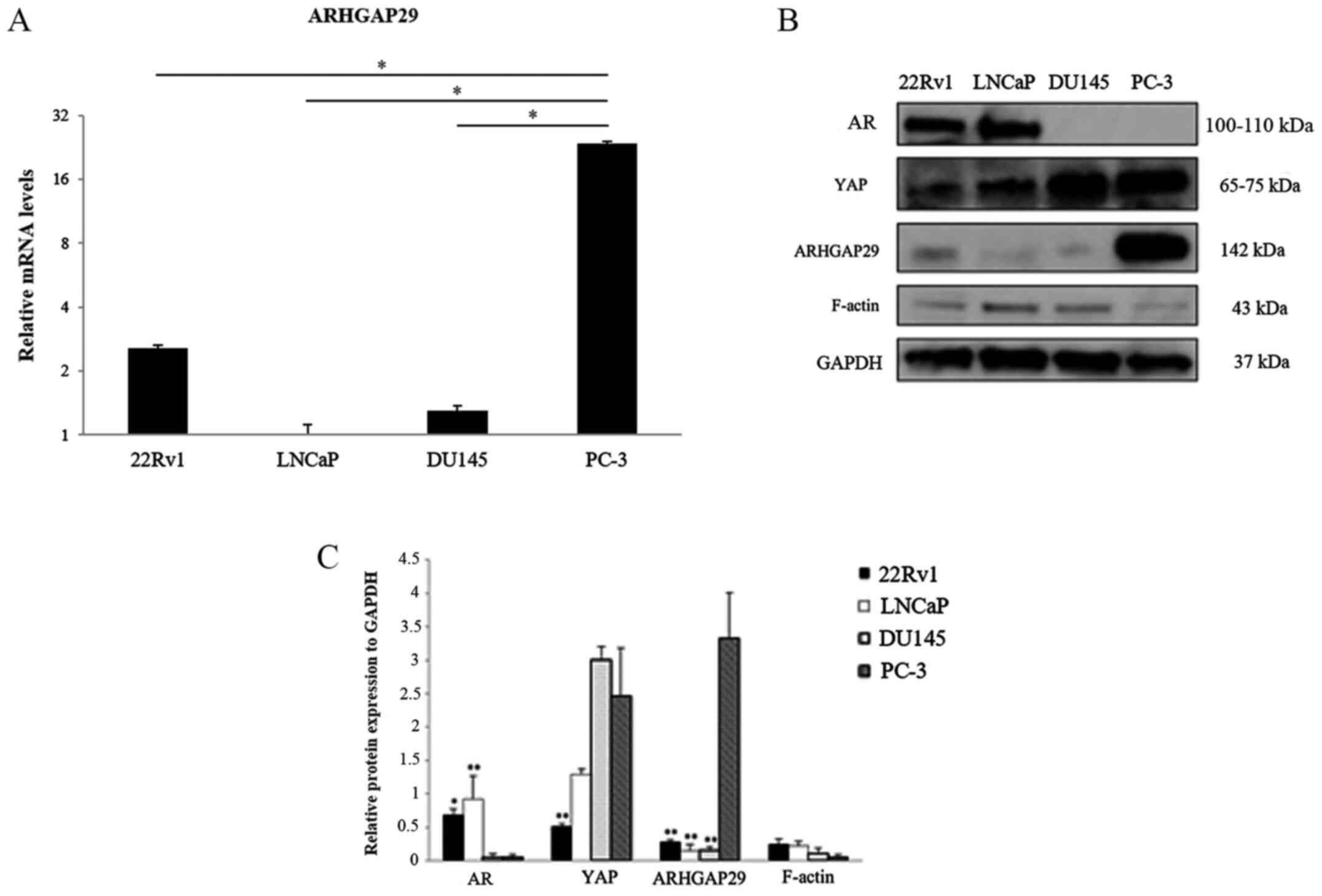
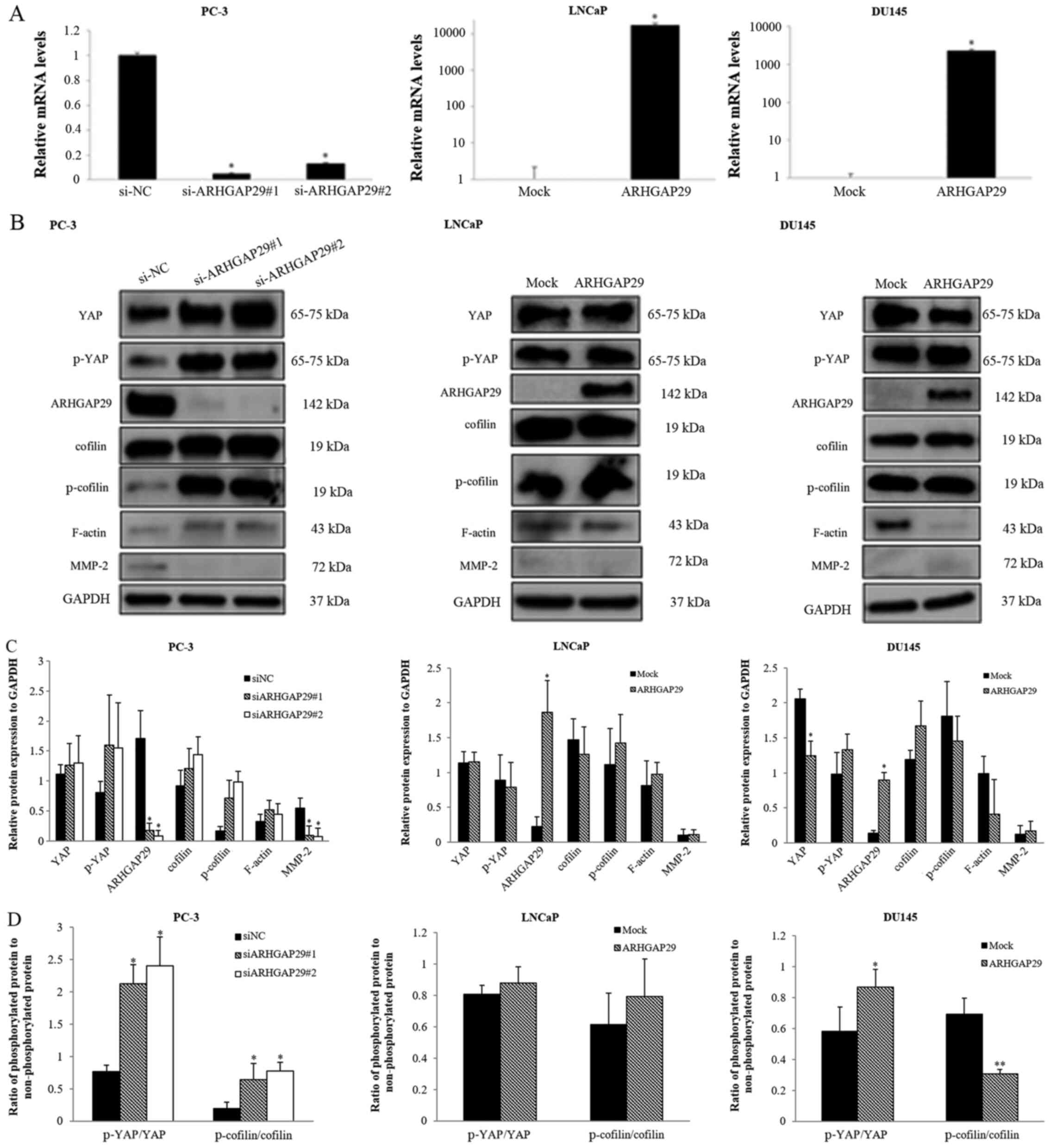
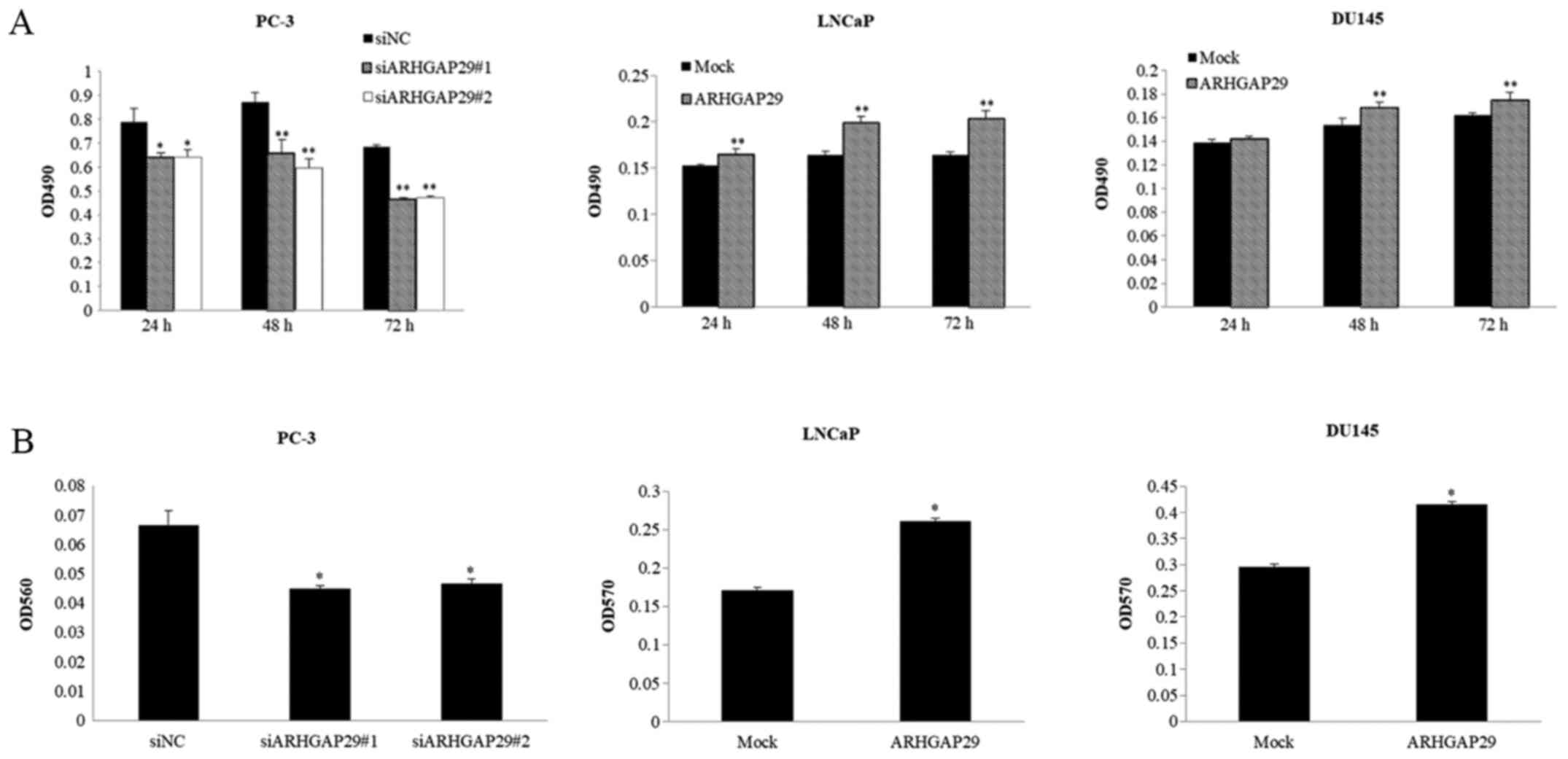
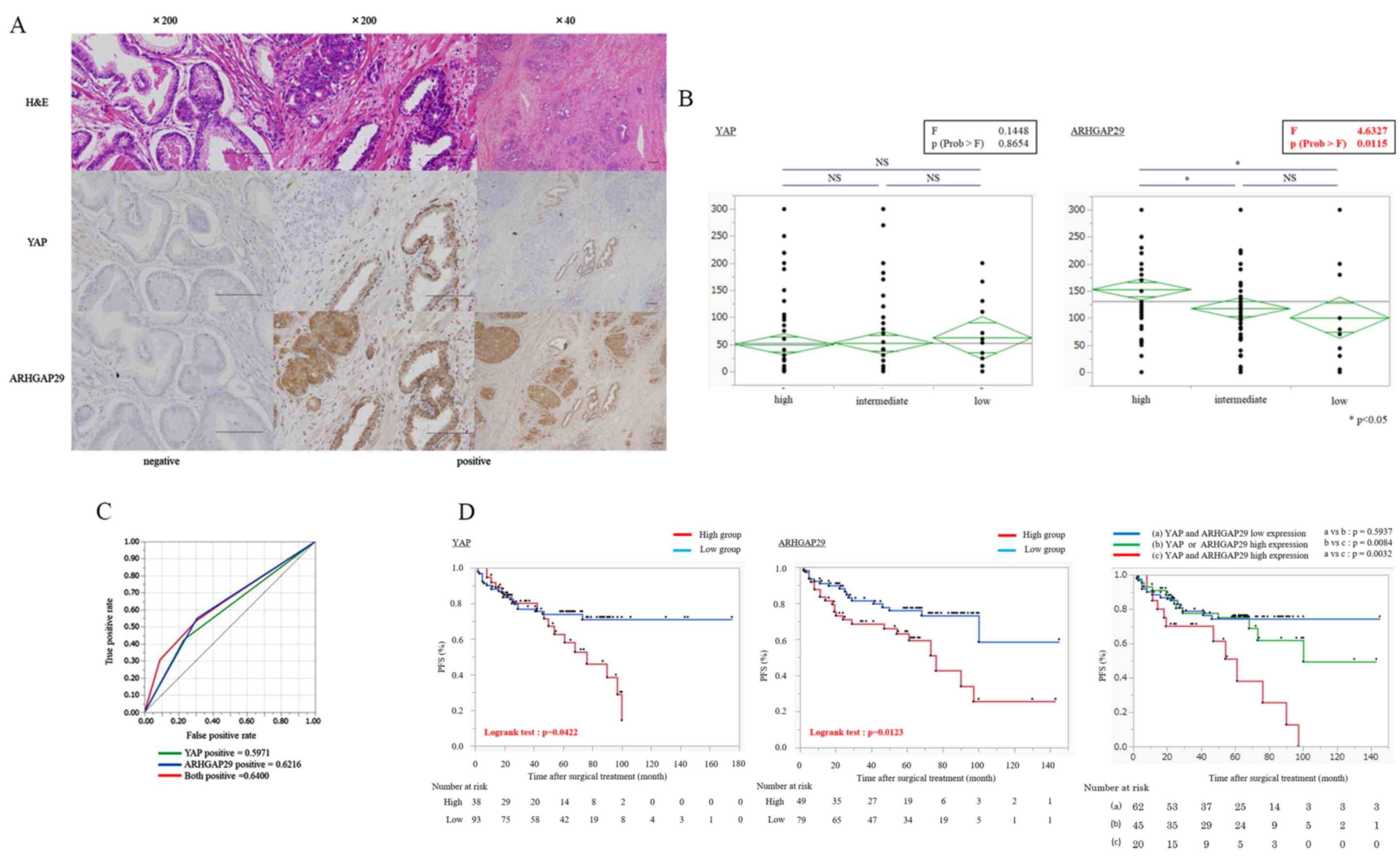
Yes‑associated protein (YAP) is a transcription‑coupling factor that plays a central role in the Hippo pathway, and its activation regulates cell proliferation and carcinogenesis. YAP activation has been reported in various malignancies, conferring tumors with migratory and invasive abilities. Several studies have suggested that YAP expression is closely associated with prostate cancer. Furthermore, YAP has been revealed to regulate destabilization of F‑actin associated with the cytoskeleton via Rho GTPase‑activating protein 29 (ARHGAP29), suggesting that ARHGAP29 is associated with cancer metastasis. In the present study, the functions of ARHGAP29 were examined in four prostate cancer cell lines (22Rv1, LNCaP, DU145 and PC‑3) and it was revealed that upregulation of ARHGAP29 in LNCaP and DU145 cells with the lowest expression of ARHGAP29 promoted cell proliferation and invasion. Conversely, ARHGAP29 knockdown in PC‑3 cells with its highest expression level significantly reduced cell proliferation and invasion. In addition, immunohistochemistry of specimens from 133 patients who underwent radical prostatectomy was performed to investigate the clinical association between ARHGAP29 expression and prognosis in prostate cancer patients. Multivariate analysis demonstrated that ARHGAP29 was an independent prognostic factor for biochemical progression‑free survival (P=0.0123). These findings indicated that ARHGAP29 in prostate cancer may be a potential prognostic biomarker and therapeutic target.
View Figures

Figure 1

Figure 2

Figure 3

Figure 4

Figure 5

View References

1 

Bray F, Ferlay J, Soerjomataram I, Siegel RL, Torre LA and Jemal A: Global cancer statistics 2018: GLOBOCAN estimates of incidence and mortality worldwide for 36 cancers in 185 countries. CA Cancer J Clin. 68:394–424. 2018. View Article : Google Scholar : PubMed/NCBI

2 

Pagliuca M, Buonerba C, Fizazi K and Di Lorenzo G: The evolving systemic treatment landscape for patients with advanced prostate cancer. Drugs. 79:381–400. 2019. View Article : Google Scholar : PubMed/NCBI

3 

Xu J, Zheng SL, Komiya A, Mychaleckyj JC, Isaacs SD, Hu JJ, Sterling D, Lange EM, Hawkins GA, Turner A, et al: Germline mutations and sequence variants of the macrophage scavenger receptor 1 gene are associated with prostate cancer risk. Nat Genet. 32:321–325. 2002. View Article : Google Scholar : PubMed/NCBI

4 

Jefferies MT, Cox AC, Shorning BY, Meniel V, Griffiths D, Kynaston HG, Smalley MJ and Clarke AR: PTEN loss and activation of K-RAS and β-catenin cooperate to accelerate prostate tumourigenesis. J Pathol. 243:442–456. 2017. View Article : Google Scholar : PubMed/NCBI

5 

Suzuki H, Freije D, Nusskern DR, Okami K, Cairns P, Sidransky D, Isaacs WB and Bova GS: Interfocal heterogeneity of PTEN/MMAC1 gene alterations in multiple metastatic prostate cancer tissues. Cancer Res. 58:204–209. 1998.PubMed/NCBI

6 

Suzuki H, Komiya A, Aida S, Ito H, Yatani R and Shimazaki J: Detection of human papillomavirus DNA and p53 gene mutations in human prostate cancer. Prostate. 28:318–324. 1996. View Article : Google Scholar : PubMed/NCBI

7 

Grignon DJ, Caplan R, Sarkar FH, Lawton CA, Hammond EH, Pilepich MV, Forman JD, Mesic J, Fu KK, Abrams RA, et al: p53 status and prognosis of locally advanced prostatic adenocarcinoma: A study based on RTOG 8610. J Natl Cancer Inst. 89:158–165. 1997. View Article : Google Scholar : PubMed/NCBI

8 

Zhou Z, Flesken-Nikitin A, Corney DC, Wang W, Goodrich DW, Roy-Burman P and Nikitin AY: Synergy of p53 and Rb deficiency in a conditional mouse model for metastatic prostate cancer. Cancer Res. 66:7889–7898. 2006. View Article : Google Scholar : PubMed/NCBI

9 

Dong JT, Li CL, Sipe TW and Frierson HF Jr: Mutations of PTEN/MMAC1 in primary prostate cancers from Chinese patients. Clin Cancer Res. 7:304–308. 2001.PubMed/NCBI

10 

Wang SI, Parsons R and Ittmann M: Homozygous deletion of the PTEN tumor suppressor gene in a subset of prostate adenocarcinomas. Clin Cancer Res. 4:811–815. 1998.PubMed/NCBI

11 

Lin HK, Hu YC, Lee DK and Chang C: Regulation of androgen receptor signaling by PTEN (phosphatase and tensin homolog deleted on chromosome 10) tumor suppressor through distinct mechanisms in prostate cancer cells. Mol Endocrinol. 18:2409–2423. 2004. View Article : Google Scholar : PubMed/NCBI

12 

Nelson PS: Molecular states underlying androgen receptor activation: A framework for therapeutics targeting androgen signaling in prostate cancer. J Clin Oncol. 30:644–646. 2012. View Article : Google Scholar : PubMed/NCBI

13 

Zhang L, Yang S, Chen X, Stauffer S, Yu F, Lele SM, Fu K, Datta K, Palermo N, Chen Y, et al: The hippo pathway effector YAP regulates motility, invasion, and castration-resistant growth of prostate cancer cells. Mol Cell Biol. 35:1350–1362. 2015. View Article : Google Scholar : PubMed/NCBI

14 

Noh MG, Kim SS, Hwang EC, Kwon DD and Choi C: Yes-associated protein expression is correlated to the differentiation of prostate adenocarcinoma. J Pathol Transl Med. 51:365–373. 2017. View Article : Google Scholar : PubMed/NCBI

15 

Collak FK, Demir U, Ozkanli S, Kurum E and Zerk PE: Increased expression of YAP1 in prostate cancer correlates with extraprostatic extension. Cancer Biol Med. 14:405–413. 2017. View Article : Google Scholar : PubMed/NCBI

16 

Jin X, Zhao W, Zhou P and Niu T: YAP knockdown inhibits proliferation and induces apoptosis of human prostate cancer DU145 cells. Mol Med Rep. 17:3783–3788. 2018.PubMed/NCBI

17 

Porazinski S, Wang H, Asaoka Y, Behrndt M, Miyamoto T, Morita H, Hata S, Sasaki T, Krens SFG, Osada Y, et al: YAP is essential for tissue tension to ensure vertebrate 3D body shape. Nature. 521:217–221. 2015. View Article : Google Scholar : PubMed/NCBI

18 

Qiao Y, Chen J, Lim YB, Finch-Edmondson ML, Seshachalam VP, Qin L, Jiang T, Low BC, Singh H, Lim CT, et al: YAP regulates actin dynamics through ARHGAP29 and promotes metastasis. Cell Rep. 19:1495–1502. 2017. View Article : Google Scholar : PubMed/NCBI

19 

Dupont S, Morsut L, Aragona M, Enzo E, Giulitti S, Cordenonsi M, Zanconato, Le Digabel J, Forcato M, Bicciato S, et al: Role of YAP/TAZ in mechanotransduction. Nature. 474:179–183. 2011. View Article : Google Scholar : PubMed/NCBI

20 

Goulding H, Pinder S, Cannon P, Pearson D, Nicholson R, Snead D, Bell J, Elston CW, Robertson JF, Blamey RW, et al: A new immunohistochemical antibody for the assessment of estrogen receptor status on routine formalin-fixed tissue samples. Hum Pathol. 26:291–294. 1995. View Article : Google Scholar : PubMed/NCBI

21 

Ishibashi H, Suzuki T, Suzuki S, Moriya T, Kaneko C, Takizawa T, Sunamori M, Handa M, Kondo T and Sasano H: Sex steroid hormone receptors in human thymoma. J Clin Endocrinol Metab. 88:2309–2317. 2003. View Article : Google Scholar : PubMed/NCBI

22 

Pirker R, Pereira JR, von Pawel J, Krzakowski M, Ramlau R, Park K, de Marinis F, Eberhardt WE, Paz-Ares L, Störkel S, et al: EGFR expression as a predictor of survival for first-line chemotherapy plus cetuximab in patients with advanced non-small-cell lung cancer: Analysis of data from the phase 3 FLEX study. Lancet Oncol. 13:33–42. 2012. View Article : Google Scholar : PubMed/NCBI

23 

Livak KJ and Schmittgen TD: Analysis of relative gene expression data using real-time quantitative PCR and the 2(-Delta Delta C(T)) method. Methods. 25:402–408. 2001. View Article : Google Scholar : PubMed/NCBI

24 

Kawakami T, Takeuchi S, Arimura Y and Soma Y: Elevated antilysosomal-associated membrane protein-2 antibody levels in patients with adult Henoch-Schönlein purpura. Br J Dermatol. 166:1206–1212. 2012. View Article : Google Scholar : PubMed/NCBI

25 

Pan Z, Tian Y, Zhang B, Zhang X, Shi H, Liang Z, Wu P, Li R, You B, Yang L, et al: YAP signaling in gastric cancer-derived mesenchymal stem cells is critical for its promoting role in cancer progression. Int J Oncol. 51:1055–1066. 2017. View Article : Google Scholar : PubMed/NCBI

26 

Chen D, Sun Y, Wei Y, Zhang P, Rezaeian AH, Teruya-Feldstein J, Gupta S, Liang H, Lin HK, Hung MC, et al: LIFR is a breast cancer metastasis suppressor upstream of the Hippo-YAP pathway and a prognostic marker. Nat Med. 18:1511–1517. 2012. View Article : Google Scholar : PubMed/NCBI

27 

Lamar JM, Stern P, Liu H, Schindler JW, Jiang ZG and Hynes RO: The Hippo pathway target, YAP, promotes metastasis through its TEAD-interaction domain. Proc Natl Acad Sci USA. 109:E2441–E2450. 2012. View Article : Google Scholar : PubMed/NCBI

28 

Xu MZ, Chan SW, Liu AM, Wong KF, Fan ST, Chen J, Poon RT, Zender L, Lowe SW, Hong W, et al: AXL receptor kinase is a mediator of YAP-dependent oncogenic functions in hepatocellular carcinoma. Oncogene. 30:1229–1240. 2011. View Article : Google Scholar : PubMed/NCBI

29 

Zhang M, Zhao Y, Zhang Y, Wang D, Gu S, Feng W, Peng W, Gong A and Xu M: LncRNA UCA1 promotes migration and invasion in pancreatic cancer cells via the Hippo pathway. Biochim Biophys Acta Mol Basis Dis. 1864:1770–1782. 2018. View Article : Google Scholar : PubMed/NCBI

30 

Hsu PC, Miao J, Huang Z, Yang YL, Xu Z, You J, Dai Y, Yeh CC, Chan G, Liu S, et al: Inhibition of yes-associated protein suppresses brain metastasis of human lung adenocarcinoma in a murine model. J Cell Mol Med. 22:3073–3085. 2018. View Article : Google Scholar : PubMed/NCBI

31 

Jin D, Guo J, Wang D, Wu Y, Wang X, Gao Y, Shao C, Xu X and Tan S: The antineoplastic drug metformin downregulates YAP by interfering with IRF-1 binding to the YAP promoter in NSCLC. EBioMedicine. 37:188–204. 2018. View Article : Google Scholar : PubMed/NCBI

32 

Tcherkezian J and Lamarche-Vane N: Current knowledge of the large RhoGAP family of proteins. Biol Cell. 99:67–86. 2007. View Article : Google Scholar : PubMed/NCBI

33 

Fang Y, Zhu X, Wang J, Li N, Li D, Sakib N, Sha Z and Song W: MiR-744 functions as a proto-oncogene in nasopharyngeal carcinoma progression and metastasis via transcriptional control of ARHGAP5. Oncotarget. 6:13164–13175. 2015. View Article : Google Scholar : PubMed/NCBI

34 

Hu Q, Lin X, Ding L, Zeng Y, Pang D, Ouyang N, Xiang Y and Yao H: ARHGAP42 promotes cell migration and invasion involving PI3K/Akt signaling pathway in nasopharyngeal carcinoma. Cancer Med. 7:3862–3874. 2018. View Article : Google Scholar : PubMed/NCBI

35 

Wang L, Shen S, Wang M, Ding F, Xiao H, Li G and Hu F: Rho GTPase activating protein 24 (ARHGAP24) silencing promotes lung cancer cell migration and invasion by activating β-catenin signaling. Med Sci Monit. 25:21–31. 2019. View Article : Google Scholar : PubMed/NCBI

36 

Dai X, Geng F, Dai J, Li M and Liu M: Rho GTPase activating Protein 24 (ARHGAP24) regulates the anti-cancer activity of sorafenib against breast cancer MDA-MB-231 cells via the signal transducer and activator of transcription 3 (STAT3) signaling pathway. Med Sci Monit. 24:8669–8677. 2018. View Article : Google Scholar : PubMed/NCBI

37 

Uehara S, Saito K, Asami H and Ohta Y: Role of ARHGAP24 in ADP ribosylation factor 6 (ARF6)-dependent pseudopod formation in human breast carcinoma cells. Anticancer Res. 37:4837–4844. 2017.PubMed/NCBI

38 

Zhang S, Sui L, Zhuang J, He S, Song Y, Ye Y and Xia W: ARHGAP24 regulates cell ability and apoptosis of colorectal cancer cells via the regulation of P53. Oncol Lett. 16:3517–3524. 2018.PubMed/NCBI

39 

Kaighn ME, Narayan KS, Ohnuki Y, Lechner JF and Jones LW: Establishment and characterization of a human prostatic carcinoma cell line (PC-3). Invest Urol. 17:16–23. 1979.PubMed/NCBI

40 

Mitchell S, Abel P, Ware M, Stamp G and Lalani E: Phenotypic and genotypic characterization of commonly used human prostatic cell lines. BJU Int. 85:932–944. 2000. View Article : Google Scholar : PubMed/NCBI

41 

Li Y, Song T, Chen Z, Wang Y, Zhang J and Wang X: Pancreatic stellate cells activation and matrix metallopeptidase 2 expression correlate with lymph node metastasis in pancreatic carcinoma. Am J Med Sci. 357:16–22. 2019. View Article : Google Scholar : PubMed/NCBI

42 

Maekawa R, Maki H, Yoshida H, Hojo K, Tanaka H, Wada T, Uchida N, Takeda Y, Kasai H, Okamoto H, et al: Correlation of antiangiogenic and antitumor efficacy of N-biphenyl sulfonyl-phenylalanine hydroxiamic acid (BPHA), an orally-active, selective matrix metalloproteinase inhibitor. Cancer Res. 59:1231–1235. 1999.PubMed/NCBI

43 

Zhang J, Wang G, Chu SJ, Zhu JS, Zhang R, Lu WW, Xia LQ, Lu YM, Da W and Sun Q: Loss of large tumor suppressor 1 promotes growth and metastasis of gastric cancer cells through upregulation of the YAP signaling. Oncotarget. 7:16180–16193. 2016. View Article : Google Scholar : PubMed/NCBI

44 

Trudel D, Fradet Y, Meyer F, Harel F and Têtu B: Significance of MMP-2 expression in prostate cancer: An immunohistochemical study. Cancer Res. 63:8511–8515. 2003.PubMed/NCBI

45 

Chen PC, Tang CH, Lin LW, Tsai CH, Chu CY, Lin TH and Huang YL: Thrombospondin-2 promotes prostate cancer bone metastasis by the up-regulation of matrix metalloproteinase-2 through down-regulating miR-376c expression. J Hematol Oncol. 10:332017. View Article : Google Scholar : PubMed/NCBI

46 

Ito Y, Ishiguro H, Kobayashi N, Hasumi H, Watanabe M, Yao M and Uemura H: Adipocyte-derived monocyte chemotactic protein-1 (MCP-1) promotes prostate cancer progression through the induction of MMP-2 activity. Prostate. 75:1009–1019. 2015. View Article : Google Scholar : PubMed/NCBI

Related Articles

  • Abstract
  • View
  • Download
  • Twitter
Copy and paste a formatted citation
Spandidos Publications style
Shimizu K, Matsumoto H, Hirata H, Ueno K, Samoto M, Mori J, Fujii N, Kawai Y, Inoue R, Yamamoto Y, Yamamoto Y, et al: ARHGAP29 expression may be a novel prognostic factor of cell proliferation and invasion in prostate cancer. Oncol Rep 44: 2735-2745, 2020.
APA
Shimizu, K., Matsumoto, H., Hirata, H., Ueno, K., Samoto, M., Mori, J. ... Matsuyama, H. (2020). ARHGAP29 expression may be a novel prognostic factor of cell proliferation and invasion in prostate cancer. Oncology Reports, 44, 2735-2745. https://doi.org/10.3892/or.2020.7811
MLA
Shimizu, K., Matsumoto, H., Hirata, H., Ueno, K., Samoto, M., Mori, J., Fujii, N., Kawai, Y., Inoue, R., Yamamoto, Y., Yano, S., Shimabukuro, T., Furutani-Seiki, M., Matsuyama, H."ARHGAP29 expression may be a novel prognostic factor of cell proliferation and invasion in prostate cancer". Oncology Reports 44.6 (2020): 2735-2745.
Chicago
Shimizu, K., Matsumoto, H., Hirata, H., Ueno, K., Samoto, M., Mori, J., Fujii, N., Kawai, Y., Inoue, R., Yamamoto, Y., Yano, S., Shimabukuro, T., Furutani-Seiki, M., Matsuyama, H."ARHGAP29 expression may be a novel prognostic factor of cell proliferation and invasion in prostate cancer". Oncology Reports 44, no. 6 (2020): 2735-2745. https://doi.org/10.3892/or.2020.7811
Copy and paste a formatted citation
x
Spandidos Publications style
Shimizu K, Matsumoto H, Hirata H, Ueno K, Samoto M, Mori J, Fujii N, Kawai Y, Inoue R, Yamamoto Y, Yamamoto Y, et al: ARHGAP29 expression may be a novel prognostic factor of cell proliferation and invasion in prostate cancer. Oncol Rep 44: 2735-2745, 2020.
APA
Shimizu, K., Matsumoto, H., Hirata, H., Ueno, K., Samoto, M., Mori, J. ... Matsuyama, H. (2020). ARHGAP29 expression may be a novel prognostic factor of cell proliferation and invasion in prostate cancer. Oncology Reports, 44, 2735-2745. https://doi.org/10.3892/or.2020.7811
MLA
Shimizu, K., Matsumoto, H., Hirata, H., Ueno, K., Samoto, M., Mori, J., Fujii, N., Kawai, Y., Inoue, R., Yamamoto, Y., Yano, S., Shimabukuro, T., Furutani-Seiki, M., Matsuyama, H."ARHGAP29 expression may be a novel prognostic factor of cell proliferation and invasion in prostate cancer". Oncology Reports 44.6 (2020): 2735-2745.
Chicago
Shimizu, K., Matsumoto, H., Hirata, H., Ueno, K., Samoto, M., Mori, J., Fujii, N., Kawai, Y., Inoue, R., Yamamoto, Y., Yano, S., Shimabukuro, T., Furutani-Seiki, M., Matsuyama, H."ARHGAP29 expression may be a novel prognostic factor of cell proliferation and invasion in prostate cancer". Oncology Reports 44, no. 6 (2020): 2735-2745. https://doi.org/10.3892/or.2020.7811
Follow us
  • Twitter
  • LinkedIn
  • Facebook
About
  • Spandidos Publications
  • Careers
  • Cookie Policy
  • Privacy Policy
How can we help?
  • Help
  • Live Chat
  • Contact
  • Email to our Support Team